Category Archives: sexism

From Dress Codes to Pornography: Miseducating Children on Love and Sex

“My first introduction to porn was in middle school watching the ‘scrambled channel’ to catch the few split seconds when the static morphed into a bare butt thrusting,” explains Tracy Clark-Flory, a journalist covering the sex industry, adding: “Officially, I thought of watching porn less as entertainment than instruction, an investigation into men’s desire more than my own.”
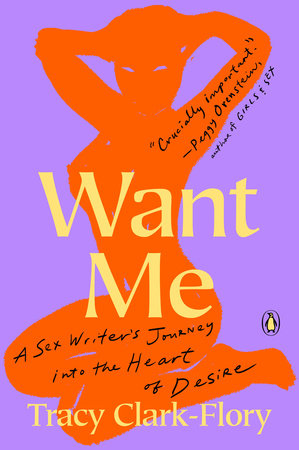
Clark-Flory notes that her experience is “typical” for young women, and her evolving lessons around pornography are powerfully framed as she further examines her earliest lessons:

It goes without saying: as I was growing up, no one had talked to me about the sexual politics of power, performance and perspective. No one – not my parents, not my sex ed classes, not the writers of glossy magazine sex advice – had bothered to go beyond basic mechanics and technique. A true sexual education has less to do with diagrams of the human reproductive system than with understanding another organ: the brain.

My porn life: what my years as a sex writer taught me about my desires

Addressing a controversy around the backstory of an American Girl doll with lesbian aunts, James Finn confronts how children are the “big losers” in the lessons they receive about love, sex, and marriage:

When straight people get married, we tell kids the truth — that the bride and groom love each other and want to spend their lives together. Don’t small children love hearing about that? I sure did when I was a kid.

So here’s the the frightening lesson being taught in this American Girl uproar: Straight people marry for love. Gay people marry for sex, and that’s so disgusting we don’t dare talk about it in front of children.

Parents SHOCKED Over Doll’s Lesbian Aunts

Both of these examples are disturbing because they expose the great failure in the U.S. to offer purposeful and healthy education for children on love and sex, leaving most of the lessons children learn to chance and taking place well outside formal schooling or the purview of parents or other caring adults.

Clark-Flory’s experiences framed as “typical” for girls and young women unmask some of the foundational messages that allow and perpetuate male-centric and misogynistic norms that create hostile and unfulfilling environments for many if not most women. Like Clark-Flory, Finn adds the alienating and harmful lessons about “normal” love, sex, and traditions such as marriage.

Even the recent rise in efforts to address pornography in formal education, “porn literacy,” tends to cause even greater harm, Clark-Flory argues, because “the goal is less to foster a thoughtful, nuanced engagement with porn, but rather to reject the medium as ‘fake.'”

“[M]oralizing around sexual behaviors that many people genuinely enjoy,” Clark-Flory concludes, “is counter to the compelling and undeniable truth offered up by porn: sex can be a great many things.”

In mainstream education and parenting in the U.S., we must admit that most teaching about love and sex is either absent or normative (and harmful).

Next to the examples offered by Clark-Flory and Finn, one of the most powerful and pervasive indirect lessons found in formal schooling become even more disturbing—the lessons taught by dress codes.

From the first days of schooling, children are taught that a great deal of who they are as well as their responsibility for other people’s behavior is linked to their clothing. And those lessons are not only harmful but also deeply gendered; research details that dress codes disproportionately impact girls and young women.

The messaging of dress codes are no different than what Finn notes about popular dolls:

Children hear what their parents are saying about American Girl. Nascent queer kids are being injected with self loathing. Kids who will grow up cis and straight are internalizing values of bullying and stigmatizing.

Why would anyone want to teach shaming and bullying to kids? Women marry one another sometimes; that’s just a fact. Same-sex marriage is legal, ordinary, and no more sexual than any other marriage. Kids can handle that reality even if their family practices a faith that doesn’t endorse same-sex marriage.

Parents SHOCKED Over Doll’s Lesbian Aunts

Similar to the normalizing messaging around American Girl dolls recognized by Finn about love, sex, and marriage, dress codes lay the foundation for slut shaming and victim blaming.

Girls are taught early and often that they are responsible for how boys respond to their clothes and their bodies. But boys are learning these lessons also.

The great and awful irony in this dynamic is that the attitudes and practices considered “normal” (and thus right)—such as honoring marriage as a celebration of love by one man and one woman or the respectability politics of dress codes—alienate and miseducate children in ways that lead to unfulfilling and abusive attitudes about love and sex.

Love and sex are central to being fully human—but not in any singular or correct way. Beneath the problems around consent and sexual abuse/assault are the many harmful lessons children are learning daily in their schools, their homes, and their communities.

Children are not incomplete humans, and avoiding lessons around love and sex as well as miseducating children about love and sex denies their humanity along with perpetuating the likelihood that in their lives love and sex will lead to fear, humiliation, and even abuse.

The problems are not pornography or dolls with lesbian aunts; the problems are the adults, themselves trapped in fear and misinformation.
The Lower Realities of Higher Education

I posted a fairly tame Tweet about the Wall Street Journal‘s recent Op-Ed attacking Jill Biden using “Dr.” and editorial doubling-down on negative responses to the Op-Ed (none of which I will link here):

The Tweet attracted conservatives with ten’s of followers, most of them misreading the Tweet and many of them attacking me for being an academic/professor (the typical snarky references to Marx, etc.) as well as being in the field of education (my university affiliation and doctorate, an EdD, are part of my Twitter bio and handle—although several Twits thought they were outing me in some way for these public facts).

While I am enormously privileged, I share with Jill Biden the paradox of holding a doctorate in an often marginalized field, education; when I attained my EdD in the mid-1990s, it was still a much lesser degree than a PhD—and remains well down the hierarchy of academic credentials since education is often discounted as a pre-professional field.

Over 37 years as an educators, I spent the first 18 as a public high school English teacher. K-12 teachers are disproportionately women, and being a K-12 teacher is a profession rarely recognized as such—mostly, I contend, because it is perceived as mere women’s work.

Like babysitting.

Now in the middle of my nineteenth year as a professor, having moved through the ranks to full professor and received tenure, I am part of a male-dominated field (especially at the higher ranks) that often warrants far more prestige than K-12 teachers but also receives a fair amount of public shaming and ridicule (notably from conservatives, as my Twitter experience illustrates).

That ridicule is based in large part on cartoonish stereotypes of the Ivory Tower (academic knowledge not being realistic or practical) and a mischaracterization of professors as radical Leftists.

What popular and conservative attacks of higher education often miss is that academia is incredibly traditional, especially in terms of policies and practices that are sexist, racist, classist, and (often) petty.

Higher education, like K-12 education, more often reflects society—the good, the bad, and the ugly—than not.

The Jill Biden debate prompted by the conservative WSJ is an opportunity to confront the gendered inequity of academia that is replicated in the racism, classism, and other inequities that permeate disciplinary hierarchies, the tenure and promotion process (along with faculty evaluation such as student evaluations of teaching [SET]), and numerous unspoken norms.

That higher education fails to be the Ivory Tower of equity is not the only paradox of academia. Many would assume, for example, that academics practice research-based policies and procedures, but one of the greatest inequities of being a professor is the use of SETs for annual evaluations and the tenure/promotion process (see here).

From 2019, Kristen Doerer reported:

“Having a female instructor is correlated with higher student achievement,” Wu said, but female instructors received systematically lower course evaluations. In looking at prerequisite courses, the two researchers found a negative correlation between students’ evaluations and learning. “If you took the prerequisite class from a professor with high student teaching evaluations,” Harbaugh said, “you were likely, everything else equal, to do worse in the second class.”…

Studies since the 1980s have found gender bias in student evaluations and, since the early 2000s, have found racial bias as well. A 2016 study of data from the United States and France found that students’ teaching evaluations “measure students’ gender biases better than they measure the instructor’s teaching effectiveness,” and that more-effective instructors got lower ratings than others did….

Despite the data, at many colleges, particularly research-based institutions, student evaluations are still the main measure, if not the only one, of teaching effectiveness in promotion-and-tenure decisions.

Just as the WSJ editorial staff doubled down on a grossly incompetent and even laughably weak Op-Ed by a classic mediocre white man, academia repeatedly doubles down on SETs, arguing that colleges must have something to evaluate teaching and casually flaunting the research base.

But even the college classroom remains inequitable for women; Lee and McCabe have found that gender inequity in the college classroom hasn’t improved over the past 40 years, as they observed:

Men students are more likely to take the floor to talk while women students are more likely to wait for their turns. Across all nine courses observed, men students talk 1.6 times as often as women. In addition, men are also more likely to speak out without raising their hands, interrupt other speakers in the classroom, and engage in prolonged conversations with the professor during class….

Despite great gains in women’s access to and achievements in higher education, contemporary college classrooms seem to have remained “chilly.” Our observations suggest that men students continue to occupy advantaged positions while women students are largely hesitant to take up space in classrooms. These differences occur regardless of students’ or professors’ awareness of these inequalities. 

A key point here is that women for many years have surpassed men in attending and achieving success in higher education. And the nonsensical WSJ Op-Ed seems to reflect anther disturbing finding about gender and higher education by Levanon, England, and Allison:

Occupations with a greater share of females pay less than those with a lower share, controlling for education and skill. This association is explained by two dominant views: devaluation and queuing. The former views the pay offered in an occupation to affect its female proportion, due to employers’ preference for men—a gendered labor queue. The latter argues that the proportion of females in an occupation affects pay, owing to devaluation of work done by women. Only a few past studies used longitudinal data, which is needed to test the theories. We use fixed-effects models, thus controlling for stable characteristics of occupations, and U.S. Census data from 1950 through 2000. We find substantial evidence for the devaluation view, but only scant evidence for the queuing view.

As women surpass men in doctorates, the prestige of that credential has diminished.

Once again, however, we need only to listen to women themselves, of course, to recognize the lower realities of higher education that have nothing to do with cancel culture, Marxism/socialism, or diversity/equity/inclusion initiatives.

Those lower realities are mostly good old American sexism.

“Contrary to what one might have expected,” Allison Miller explains while unpacking the Jill Biden controversy, “I have found that the further away from higher education I’ve gotten, the more respect for my degree colleagues have shown.”

Miller continues:

Where I have encountered most disrespect for my doctorate is actually from academics. It’s not just that all Ph.D.s are not created equal — some schools still dominate hiring and will continue to do so as the academic-job market shrinks….

[T]he fetishization of hazing hasn’t disappeared from inside academe….

Once you have a Ph.D. … you learn the lessons of academic hierarchy all over again. What’s called “collegiality” is actually deference, a willingness to get along by going along, to put up with corridor microaggressions, to smile through Professor X’s department-meeting BS — but like a whack-a-mole, there’s always another Professor X. The rules of deference are unwritten because most of them would probably be illegal. “Wait until you get tenure” is not in the faculty handbook….

The demands for deference speak to gatekeeping and a general clubbiness that is hard to penetrate without a background that includes close proximity to upper-middle-class white people. 

Three key points must be acknowledged here in order to recognize the lower realities of higher education: “hazing,” “gatekeeping,” and “clubbiness” all confront that higher education is a highly insular and sexist system that, like most formal organizations, is more concerned with conserving its structure than changing for the good of all.

Higher education is often a good ol’ boys club with more credentialing and a more arcane vocabulary.

Attaining a doctorate—PhD or EdD (JD or MD)—is a relatively rare achievement, but those credentials do not guarantee that people are better humans after they earn the opportunity to be called “Dr.”

Dr. X and Dr. Y are no less likely to be selfish and arrogant, and we have no guarantee that anyone in any field, academic or medical, wasn’t last in their class—or isn’t a charlatan, a hack.

But when medical doctors gained the label of “Dr.” (after academics) and when academic doctors were mostly men, society rarely balked at the possibility that “Dr.” didn’t make any of those guarantees.

If anyone is ready for a reckoning in the U.S. (and I doubt many are), we would be better served to question the outsized role of mediocre white men, like the recent scribe of a WSJ Op-Ed, both inside and outside the academy.

In the mean time, it’s Dr. Jill Biden who will be the next FLOTUS, and along with Kamal Harris being the vice president, there is much to celebrate about women and simply no room for adolescent Op-Eds in the WSJ that can’t rise above Ayn Rand basement level pseudo-thinking.

Diversity Hiring and the White Lie of “Most Qualified Candidate”

As the news has spread about my university being the latest case of white faculty claiming false diverse identities, I have seen on social media one of the negative consequences I anticipated from this situation—people criticizing diversity hiring.

I expected this sort of backlash because every time the issue of needing to hire a more diverse faculty has been raised among faculty, one of the first responses is, “We should always hire the most qualified candidate.”

The person voicing that position is always a white man.

And each time a new hire turns out to be a white man (again) even though the final 2 or 3 candidates include diverse people, the response is, “We hired the best candidate.”

The problem with this claim and even commitment is that white men constitute only about a third of the population, but are the majority in many fields—and almost always the majority in positions of power.

If mostly white men are making hiring decisions, there is a significant likelihood that these white men see “best candidate” in people who look like them.

With wealth and power disproportionately and historically pooled among white people, hiring has long been skewed toward white bias, cronyism, and nepotism.

If we are gong to be honest, in all fields, positions are flush with mediocre white men who have been hired for many reasons other than being the “most qualified candidate.”

And even though there is abundant evidence that white men have huge advantages in almost all fields—even ones that are predominantly Black, such as professional sports—there is a history of imposters there also.

Take the case of George O’Leary from 2001, in the world of high-level football coaching which is disproportionately made up of white men who are recycled through jobs at a mind-numbing rate:

Five days after naming George O’Leary its new head football coach, the University of Notre Dame announced today that O’Leary had resigned suddenly after admitting to falsifying parts of his academic and athletic background.

For two decades, O’Leary, 55, formerly the coach at Georgia Tech, exaggerated his accomplishments as a football player at the University of New Hampshire and falsely claimed to have earned a master’s degree in education from New York University. Those misstatements followed him on biographical documents from one coaching position to another until finally reaching Notre Dame, one of the most coveted and scrutinized jobs in college football.

Does anyone recall the rush to end the hiring of male football coaches due to high-profile cases of fraud?

Anyone calling to curb or end diversity hiring due to the rash of imposters in academia in recent years is simply grasping at a convenient and misleading reason to hide their real efforts to cling to white privilege.

“Most qualified” and “best fit” are white lies aimed at preserving the status quo.

Here are some harsh truths that must be stated:

White male exceptionalism is a lie, and white male mediocrity is extremely common across all fields.

Diversity hiring remains necessary, and hiring candidates primarily for their diversity is not only acceptable, it is in fact preferable to counter-balance countless decades of white people being hired purely for being white and connected.

Daily, mediocre white men are hired while diverse candidates are expected to be exceptional and compete among themselves for ever decreasing positions in fields such as higher education.

The fear that a candidate may not be the “most qualified” in higher education—where almost all candidates have achieved a doctorate—is particularly ridiculous.

Certainly among academic doctorates and even medical degrees, there is a range of quality, but that range is already at an advanced level. For people with academic doctorates, there is also substantial evidence that even so-called weaker candidates have significant capacities to grow, learn, and improve.

Systemic racism and sexism still make diversity hiring very challenging, and as recent cases have revealed, higher education is likely very susceptible to the sort of fraud uncovered among white women posing as diverse candidates and scholars.

But hasn’t all hiring been prone to fraud and poor hires throughout history?

Curbing or ending diversity hiring would be yet another case of demanding perfection among diverse candidates and the hiring process while having never demanded perfection in the good ol’ boy system.

Recent cases of academic imposters are not signs that diversity hiring is a problem, but a few high-profile cases of fraud cannot be allowed to pause the already very slow progress being made to create faculty in higher education who look and live more like all of the U.S.

Diversity hiring remains a necessity, and “most qualified” is a white lie designed to derail those goals.

Bully Politics, Eugenics, and the Last Days of American Pretense

If the American character included the ability to admit that the country’s founding was deeply flawed but aspirational—life, liberty, and the pursuit of happiness as goals we are still trying to achieve for all, not just some—we would not have to admit in 2020 that much of what America believes is simply lies.

Instead, the American character is often trapped in James Baldwin‘s “rigid refusal to look at ourselves,” now disturbingly embodied by the Trump/Pence administration and their bully politics.

Of the many lies at the founding of the U.S. that continue to poison our aspirations for individual liberty and robust democracy, possibly the most disturbing and immediately damning is that people fled England in pursuit of religious liberty.

For some frustrating reason, throughout my 18 years of teaching high school English, students were bombarded by American literature focusing on the Puritans, specifically reading/viewing both Nathaniel Hawthorne’s The Scarlet Letter and Arthur Miller’s The Crucible.

Students tended to recognize after these works that those first Puritans were not so much interested in religious freedom for all, but fled England in order to be no longer the oppressed, but the oppressor.

Chillingly, Hester Prynne and an assortment of women condemned as witches suffer religious tyranny that sends a powerful message to students about the role of religion in misogyny and sexism.

A novel written mid-nineteenth century and a play written mid-twentieth century (during the McCarthy Era), both set in seventeenth century North America, serve in 2020 as stark reminders that religious liberty in the U.S. is not something we aspire to but a bald-faced lie.

That bald-faced lie has no better representative than Mike Pence on the stage with Kamal Harris for the only vice presidential debate of the 2020 election.

Pence pandering for Trump and their white evangelical base evoked a false narrative that Christian faith works as a disadvantage in the U.S.—now embodied by the nomination of Amy Coney Barrett.

This flipping of the oppressor as the oppressed parallels the white nationalist message embraced by Trump; angry white Americans are emboldened under Trump because he echoes and speaks to the lie that being white in the U.S. is some sort of disadvantage.

While a great deal of evidence has supported the idea that mainstream (“moderate”) Democrats and Republicans are nearly impossible to distinguish from each other, the election of Trump has not only exposed a difference but also spurred the last days of American pretense.

If we look carefully at the nomination of Amy Coney Barrett, for example, Trump/Pence and the Trump-led Republican Party are pushing a distinctly minority agenda; 60%+ of Americans support waiting to fill Ruth Bader Ginsberg’s seat until after the election, and nearly 70% of Americans support maintaining Roe v. Wade (one of the goals of the rush to confirm Barrett is allowing states to ban abortion).

Next, consider, for example, legalizing/decriminalizing marijuana, gay marriage, trans rights, laws protecting separation of church and state (such as those governing forced prayer in public schools).

All of these expand religious and individual liberty; and notably, Republicans reject all of these while Democrats support them.

Also consider the #BlackLivesMatter movement as it has been confronted by white nationalists, neo-Nazis, and mostly white self-proclaimed militia.

Here a strong and important distinction is needed. #BlackLivesMatter is a call for extending life, liberty, and the pursuit of happiness to Black Americans—not a claim that Black people are superior to white people, not a call to take life, liberty, and the pursuit of happiness from white people.

#BlackLivesMatter, in fact, has some strong similarities with the Black Nationalist movement of the mid-twentieth century that, again, is distinct from white nationalism.

White nationalism (not only but the worst of which includes the KKK and neo-Nazis) argues for white exceptionalism and white purity. These are the vestiges of eugenics, parroted by Trump’s nod to “good genes” in his supporters and his belief in his own superior genes.

Black Nationalism and the #BlackLivesMatter movement are not about Black people being superior, but about a recognition that assimilation and equity among races have been and are currently being resisted by white Americans.

Over the past couple weeks, the country has been confronted with the Trump/Biden and Pence/Harris debates; of the four people on those stages, only Harris has displayed the highest standards of preparedness, poise, and respect for the offices, the aspirations of the U.S., and the American people.

Of those four people only Harris has had the highest bar for her performance.

Mediocre white men, Trump and Pence have been uniquely dishonest, even in the context of mainstream U.S. politics.

Like the iron-fisted tyranny of the Puritans, Trump/Pence are poised to use bully politics to impose the minority tyranny of evangelical whites on the U.S. while waving the Bible in one hand and wrapped in the American flag—a warning so compelling that we evoke it like a fact that can’t be confirmed.

We may or may not be witnessing the fall of U.S. democracy, but we are staring directly into the last days of American pretense.

And possibly the greatest pretense of all—or at least the one that best illustrates the anti-democratic aims of the Trump-led Republican Party—is that there is a pro-life movement.

“Pro-life” sloganism is not just a veneer for anti-abortion, but for forced pregnancy and birth.

Overturning Roe v. Wade and denying women reproductive rights are efforts to impose religious dogma above national ideology, an admission that religious tyranny is the goal of the Right in the U.S.—not religious or individual freedom.

Four more years of Trump/Pence may close the door to American aspirations, but it certainly will toss aside American pretense to expose what America is willing to allow for some at the expense of others, once again.

Kobe Bryant’s Celebrity Shield in the #MeToo Era

I experienced the disbelief and fascination in real time Sunday January 26, 2020 (my birthday) as my friends and I walked into Catawba Brewery on the South Slope in Asheville, NC. The place was eerily quiet; soon our smartphones alerted us that Kobe Bryant had been killed in a helicopter accident.

Strangers made eye contact and talked about their shock as if we all had somehow magically been linked because we know of Bryant, because he is a celebrity.

I followed along on Twitter as the story became more garbled and disturbing. Five dead became nine, and Bryant’s daughter along with some of her teammates were identified.

Bryant is recently retired from an elite NBA career. He is too young and too well-known, it seems, for such a tragic end to his life. While the story tended to be either “Kobe Bryant and others” or “Kobe Bryant, his daughter, and others,” I sensed we all were also mourning the entirety of a senseless loss of life.

When it was revealed his daughter was on board, I felt the pain rise in my chest; I had to resist crying.

But I also immediately recognized Bryant’s death was presenting something more than a challenge about how outsized interest in celebrities exists in the U.S. Yes, some quickly noted that the attention afforded Bryant was absent when military deaths were reported—or the hundreds of lives lost daily across the U.S. due to other tragedies left mostly ignored.

But Bryant’s life and death are far more complicated than even that. Jeremy Gordon confronted it directly in his coverage for The Outline:

The facts are not up for interpretation: On June 30, 2003, at the Lodge & Spa at Cordillera in Eagle, Colorado, Kobe invited a 19-year-old employee of the spa into his room after she’d shown him around the facility. They began kissing consensually, but when he took off his pants, she tried to leave. He then groped her, ignored her multiple requests to leave, choked her hard enough to leave bruises on her neck, physically blocked her from leaving the room, ignored more of her requests to stop, and forcibly penetrated her, only stopping when she aggressively resisted. “Every time I said no he tightened his hold around me,” she told police. The day after, a nurse observed the woman and, according to a detective from the sheriff’s office, “stated that the injuries were consistent with penetrating genital trauma. That it’s not consistent with consensual sex.”

Gordon later explains:

I don’t recap this exhaustively to be one of those smarmy people who, in the immediate wake of his death, leapt out of the woodwork to smugly assert “Uh, he was a bad person” to anyone who expresses sadness, but to point out the simple fact that Kobe committed sexual assault — which he literally admitted, in front of the entire country — and any exhaustive recapping of his life should include and reckon with this instead of basically mentioning it as an aside.

Jill Filipovic focused as well on the double assault experienced by the woman victimized by Bryant and then the effort to exonerate him:

The full weight of Kobe Bryant’s money, power and influence came down on this teenager. His lawyers suggested she was sexually promiscuous — I have no idea if that’s true, or even how we define a value-laden term like “promiscuous,” but either way, the number of sexual partners someone has had doesn’t determine whether or not they were raped by one particular person (I would also humbly suggest that someone who has had a lot of consensual sex without making false rape claims has pretty well demonstrated a history of being able to have consensual sex without making false rape claims). They emphasized how excited she was to meet Bryant. They brought up her history with depression and suicide attempts, casting her as a crazy person, a woman not to be trusted. Bryant’s lead defense attorney, Pamela Mackey — the optics of a female lawyer defending an accused rapist are just so irresistible, which is why we see Harvey Weinstein doing the same thing — used the woman’s name six times in the preliminary hearing; she brought up the number of recent sexual partners the woman had. One psychology professor studied the coverage of the case and found that more than 40 percent of news stories questioned the truthfulness of the woman’s account; only 7.7 percent questioned Kobe’s honesty. About a quarter included positive comments about his athletic career; more than 20 percent included positive comments about him as a person. By contrast, only 5 percent of news articles had anything positive to say about the woman.

The Bryant assault and his eventual rehabilitation in the media as a sports hero and celebrity were well before the #MeToo movement. Certainly, Bryant benefited from his celebrity shield over those years.

His death, however, as Filipovic’s mentioning Weinstein denotes, comes in the wake of #MeToo, demanding that greater care is taken with Bryant’s legacy than was afforded in the time after the rape.

The eulogies for Bryant overwhelmingly address his elite stature as an NBA superstar as well as his relationship with his daughter and family as evidence of his much more mature and gracious public self after his retirement from the NBA in 2016. Notably, international accounts tend to include immediately references to Bryant’s sexual assault, but U.S. media seem content with occasional token references to the incident, usually offered by a female reporter (see ESPN).

The helicopter crash that claimed Bryant’s life is tragic, including, of course, the loss of eight additional lives. Despite his celebrity, however, these deaths are no more or less significant than other deaths—some we acknowledge, some we ignore.

What we do with Bryant’s legacy is extremely important. At the very least, his death and the facts of his sexual assault raise important questions.

The first level of those questions is for every single man to interrogate his role in rape culture, sexual assault, sexual coercion, the male gaze, sexist and misogynistic language, and sexism.

Some men are deeply guilty, but all men are culpable, complicit to some degree in these realities for all women. Men must admit their roles, but they must also take action against the ways in which men devalue the humanity of women.

At another level, we all need to rethink the celebrity shield. Men of wealth and celebrity in the U.S. may not be disproportionately sexually abusive, but they certainly are shielded from the consequences when they do assault, when they do discriminate.

A final level that I think is significant in considering Bryant involves how we judge any person in the big picture of their life.

I wrote a biography for my doctoral dissertation so much of my research in grad school involved scholarship on biography and reading a large number of biographies.

Simply put, exploring the full and exposed life of almost anyone will leave you greatly disappointed in someone you may have admired or considered “great.”

In Bryant’s case, we may argue that the sexual assault was a one-time but tremendous mistake, one that irrevocably changed the life of a woman beyond her control, and that Bryant’s exceptional athletic accomplishments and seemingly good life otherwise can counter that incident so that we should mostly celebrate him after his death.

Or, as I am prone to accept, Bryant’s one-time assault cannot be excused because of his efforts to deny and hide it, and the inexcusable treatment the woman experienced in his efforts to seem innocent; celebrity and athletic excellence cannot justify the immediate physical and emotional harm he caused or his self-serving callousness in its wake.

The irony of Bryant’s celebrity shield is that his life and death against his sexual assault shine a direct light on all of us. He can no longer influence his legacy with his wealth or celebrity.

It is upon us to value the humanity of women in all circumstances, regardless of how much we may value any man or the celebrity status we have afforded him.


Note

Often, people will raise concern about false reports of sexual assault and rape. However, research shows the following:

The majority of sexual assaults, an estimated 63 percent, are never reported to the police (Rennison, 2002). The prevalence of false reporting cases of sexual violence is low (Lisak, Gardinier, Nicksa, & Cote, 2010), yet when survivors come forward, many face scrutiny or encounter barriers. For example, when an assault is reported, survivors may feel that their victimization has been redefined and even distorted by those who investigate, process, and categorize cases….

A review of research finds that the prevalence of false reporting is between 2 percent and 10 percent.

How Diverse Is Your Syllabus?

During an impromptu pre-department meeting chat with literacy colleagues, we began to think about examining our syllabi for diversity of required and recommended texts. We noted that often people examine reading lists for K-12 students in terms of diversity, such as children’s literature, adolescent literature, and the secondary canon.

Below are the texts listed on my course syllabi for all courses I currently teach on a regular basis. I have put white male authors in red text for a quick glance at diversity.

Assigned and Recommended Texts in Taught Courses

[In many courses, students choose among these texts, and in some courses, students have choice outside this list. These are texts offered on course syllabi as limited choice but required in courses.]

White male author

Why We Teach Now, Sonia Nieto

White Fragility: Why It’s So Hard for White People to Talk about Racism, Robin DiAngelo

For White Folks Who Teach in the Hood…and the Rest of Y’all Too, Chris Emdin

The Poverty and Education Reader edited by Paul C. Gorski and Julie Landsman

Hope Against Hope: Three Schools, One City, and the Struggle to Educate America’s Children, Sarah Carr

Police in the Hallways: Discipline in an Urban High School, Kathleen Nolan

Scarcity, Sendhil Mullainathan and Eldar Shafir

Beware the Roadbuilders: Literature as Resistance, P.L. Thomas

Me-Search and Re-Search: A Guide for Writing Scholarly Personal Narrative ManuscriptsRobert Nash and  DeMethra LaSha Bradley

Reading Educational Research: How to Avoid Getting Statistically Snookered, Gerald Bracey

Bad Feminist, Roxane Gay

Style: Lessons in Clarity and Grace, 12th Edition, Joseph M. Williams and Joseph Bizup

The Writer’s Practice: Building Confidence in Your Nonfiction Writing, John Warner

James Baldwin: The Last Interview: And other Conversations

Notes of a Native Son, James Baldwin

Nobody Knows My Name, James Baldwin

The Fire Next Time, James Baldwin

No Name in the Street, James Baldwin

I Am Not Your Negro, James Baldwin and Raoul Peck

Between the World and Me, Ta-Nehisi Coates

Invisible Man, Got the Whole World Watching: A Young Black Man’s Education, Mychal Denzel Smith

A House of My Own, Sandra Cisneros

Known and Strange Things: Essays, Teju Cole

The Argonauts, Maggie Nelson

The End of Imagination, Arundhati Roy

Sex Object, Jessica Valenti

We Should All Be Feminists, Chimamanda Ngozi Adichie

Men Explain Things To Me, Rebecca Solnit

Best Practice: Bringing Standards to Life in America’s Classrooms, Zemelman, Daniels, and Hyde

Classrooms that Work: They Can All Read and Write, Cunningham and Allington

Girls, Social Class and Literacy: What Teachers Can Do to Make a Difference, Stephanie Jones

Writing and Teaching to Change the World: Connecting with Our Most Vulnerable Students, Stephanie Jones

When Kids Can’t Read—What Teachers Can Do, Kylene Beers

Reading Don’t Fix No Chevys: Literacy in the Lives of Young Men, Michael Smith and Jeffrey D. Wilhelm

Finding Joy in Teaching Students of Diverse Backgrounds: Culturally Responsive and Socially Just Practices in U.S. Classrooms, Sonia Nieto

Teaching English by design, Peter Smagorinsky

Writing Instruction That Works: Proven Methods for Middle and High School ClassroomsArthur N. Applebee and Judith A. Langer

Critical Foundations in Young Adult Literature: Challenging Genres, Antero Garcia

Critical Media Literacy and Fake News in Post-truth America, Chris Goering and P.L. Thomas, eds.

Comic Connections: Reflecting on Women in Popular Culture, Susan Eckard, ed.

Course Syllabi

EDU 111: Perspectives on American Education

EDU 115 (MAYX): The Reel World: The Depiction of Schools on Film

EDU 250/ EDRD 750: Scholarly Reading and Writing in Education

FYW 1259: Reconsidering James Baldwin in the Era of #BLACKLIVESMATTER

EDU 452: Teaching English in Grades 7-12

EDU 451: Literature for Young Adults; EDRD 748: Adolescent Literature Survey

EDU 350: Curriculum and Methods of Teaching in Grades 7-12

Hall Pass

I noticed I had been tagged by a former high school student on Facebook a few days ago. “While looking for pictures of my Daddy in some old memory and picture boxes that I forgot existed,” she began, “I came across this WHS [Woodruff High School] artifact that became the deciding factor on whether or not I was punished with demerits for a week out of every month.”*

She posted these pictures of the artifacts, hall passes from my class:

No photo description available.

Image may contain: drink and indoor

The high school where I taught English for 18 years was the same high school I had attended. By the time I was reaching the end of my time there, the school had morphed into an extremely authoritarian environment—demerits issued to students for being late to class, simply going to the restroom during class (for any reason), eating in class or chewing gum, and the usual assortment of what most people would deem disciplinary issues such as fighting or causing a disturbance during class (“holding court” and talking back being the major offenses).

These strict rules meant some students found themselves issued in-school suspension (ISS) for nothing more than very minor infractions, such as needing to use the restroom several times.

As this student noted, and as is typical of school dress codes, for example, these policies were very harsh and disproportionate for young women during their menstrual cycles:

I was 15 years old and hated getting demerits for needing to use the restroom. (you know——that unfair rule that is a blatant disregard for females and the needs we biologically have zero control over. The one that punishes females because periods refuse to schedule themselves around a 12 minute break or that 4 minutes we were given to change classes.) 

Early in my career as a teacher, which began in the fall of 1984, I recognized that teaching English was often about far more than reading, writing, and literacy. My classroom, my teaching, and the school environment—all of these projected daily lessons to students about who they were and who they should be.

Frankly, I found those lessons to be extremely problematic.

One principal allowed prayer over the intercom and boldly announced that he would be proud to be punished for flagrantly breaking the law—all while expecting students to meticulously follow every rule imposed on them by the administration and teachers.

The first decade of teaching, in fact, taught me that formal education is often a way to reflect and perpetuate the very worst aspects of sexism, racism, and classism grounded in a community. In my doctoral program, I came to recognize I had been thinking and practicing critical pedagogy without any real awareness it had a formal name and philosophy.

But the restroom pass, I think, and how I navigated school and classroom rules with my students stand today as (using my former student’s language) powerful artifacts of a more basic grounding for how formal education and teaching should be guided—maintaining an awareness of and respect for basic human dignity among all students.

While the school policy for restroom visits mandated that all students were turned in for any trip during class, I initiated a policy that allowed students simply to take a prepared pass (see the artifacts above) and go to the restroom if needed, no demerits issued. Students did not need to ask and were expected to leave and return with a minimum of disruption to class.

I explained my policy and stressed to students that it was their responsibility to honor what I was offering—that using my policy to sneak a smoke, vandalize the restroom, or simply to wander the halls would put them at great risk of being punished harshly if caught by another teacher or an administrator. In other words, I could offer grace from embarrassment and demerits, but I could not control what happened once they left my room.

Throughout much of those 18 years, I was almost daily reprimanded by administration for not issuing demerits for students coming late to class, using the restroom during class, and eating or chewing gum in class. This was stressful (and petty, I felt) and genuinely helped bring my career as a public school teacher to an end.

Human dignity and professionalism also cannot be partitioned.

Another aspect of how I managed my class in opposition to school rules I found dehumanizing and (using every chance to teach) draconian included that I always explained to my students that I was not sneaking or hiding my practices as a teacher from anyone. I was openly challenging these rules and I was also willing to pay the consequences.

Once the assistant principal and athletic director/football coach stood at my door and began to yell at me since several students were eating while working on their essays. That day, I walked out of the class, past him, and to the principal, explaining what happened and noting it needed to be the last time it did.

How can we, I asked, expect students to maintain a level of behavior, tone, and deference to authority that the people charged with authority in the school flaunted daily?

I simply have never been able to separate my personal aversion to hypocrisy from my roles as teacher, coach, or parent. As I have noted in posts before, I had a sign on my wall that read: “Any fool can make a rule and any fool will mind it” (Henry David Thoreau).

The more I taught, the more I recognized that my role as a teacher of literacy was about power and human autonomy. I could not compartmentalize classroom discipline, interacting with students, and the so-called ELA curriculum from each other.

Ethically and philosophically, all of my behavior as the teacher and as a person had to be consistent with the ideals I believed in—central to that being the need to respect the human dignity and autonomy of the students assigned to my class, and all of the students in our school.

Of course, over 18 years, I made many mistakes in both how I treated students and in my teaching; I failed students from time to time as people, and I did occasional great harm to reading and writing (sigh).

But much of the time, my classroom was a safe haven for young people to be honest and genuine, for learning to be a community experience, and for lessons that were healthy and fair but not simply about Nathaniel Hawthorne or writing literary analysis.

And my classroom was a work-in-progress, searching for ways to meet Paulo Freire‘s idea of teacher/student working with students/teachers as well as creating my teaching role as authoritative, not authoritarian.

Reading the Facebook post from a former student, written 20 years after the fact, helped me understand that the hall pass was more than a loophole or a pass to use the restroom. It was a pass for a student to be fully human as a 15 year old young woman.

How often as adults, especially in schools, do we deny children and teens access to their humanity as if they need a pass for that? As if each of us is not born with inalienable rights to life, liberty, and the pursuit of happiness?

When we as adults are charged with roles of authority, our first directive should be always to see and to hear the humanity of those assigned to that authority.

It has been two decades since I left teaching high school, and one of my students reached out with kindness and once again taught me a lesson.

And a reminder for me as a person and a teacher: “But I have promises to keep,/ And miles to go before I sleep.”


* The full post reads:

While looking for pictures of my Daddy in some old memory and picture boxes that I forgot existed, I came across this WHS artifact that became the deciding factor on whether or not I was punished with demerits for a week out of every month.

I feel like I need to make this confession——20 years later. When you were my teacher in tenth grade, I accidentally brought this hall pass home in my coat pocket on like the first or second day of school. I had every intention of returning it and apologizing for the accidental theft, but I was 15 years old and hated getting demerits for needing to use the restroom. (you know——that unfair rule that is a blatant disregard for females and the needs we biologically have zero control over. The one that punishes females because periods refuse to schedule themselves around a 12 minute break or that 4 minutes we were given to change classes.)

I wasn’t searching for a loophole, but a loophole found me. I held onto to this hall pass for my entire sophomore year. I went from having to attend Saturday school regularly to have demerits erased to stave off ISS to never getting another demerit.

This hall pass did the same thing my junior and senior years. I used to look at it and remember there was at least one teacher at WHS that refused to enforce such bullshit. Tonight I looked at it and saw a symbol of how indoctrinated and conditioned we are/were to the archaic rules and punishments that infringe on our very basic needs.

Thank you for being a teacher that absolutely refused to punish girls for having functional ovaries.

Margaret Atwood’s The Testaments: Reading and Writing Beyond Gilead

Becka said that spelling was not reading: reading, she said, was when you could hear the words as if they were a song. (p. 297)

The Testaments, Margaret Atwood

“How did Gilead fall?” Margaret Atwood asks in the Acknowledgements, noting that The Testaments, set 15 years after the main action of The Handmaid’s Tale but drafted 30-plus years after that novel, “was written in response to this question” (p. 417).

Even a writer of Atwood’s talent and success probably could never have imagined that Handmaid has become the cultural and political touchstone that has occurred with the rise of Trump and the popular Hulu series.

Those who found Handmaid in the late 1980s to be powerful then and an extremely compelling work of fiction may be skeptical about Atwood’s very late return to this now modern classic. For both the newly converted and the long-time fans of Atwood, I want to assure you all that this much delayed sequel pays off quite wonderfully.

I came to Atwood as a teacher—specifically high school Advanced Placement Literature and Composition—and then as a scholar. I have also grounded a tremendous amount of my academic and public work in Atwood’s fiction and non-fiction.

With efforts here, then, to avoid as much as possible spoilers, I want to highlight a few of the ways in which Atwood maintains elements from Handmaid while also extending her writer’s urge to connect literacy with empowerment and attaining ones full humanity.

The Testaments offers the narratives of three women—notably including Aunt Lydia from Handmaid. In both novels, as is common with Atwood’s fiction, the narrations are both lending a voice to those often unheard or silenced and working as meta-narrations about the nature of truth when stories are told, retold, and examined (both novels end with Gilead being  the focus of academic scholarship).

Much of Atwood’s fiction is an exploration of what it means to tell and retell stories.

Names and renaming are also prominent in the sequel, dramatizing the power of names and (re)naming as those processes disproportionately impact women in the service of men and patriarchy.

Handmaid details the end of the U.S. and how Gilead comes into being, although much of that is limited to what Offred could have known as a handmaid. Then, many of the finer details are revealed in the Historical Notes, a scholarly examination of Gilead well after its fall.

Testaments broadens the perspectives by including one voice from an inner woman of power, a woman mostly trapped in the upper levels of the Gilead machine, and another view from outside (Canada) that is both somewhat naive and deeply cynical.

These testaments piece together a well established Gilead for the reader and also document the theocracy’s final days. Some of the most compelling elements here are the full development of Aunt Lydia and the careful examination of two characters being groomed to be Aunts (after narrowly avoiding being wed to Commanders).

Part XVII: Reading Room serves as an excellent example of where Atwood excels in combining many of the thematic and narratives elements of her dystopian speculative novel. Aunts are women designed within Gilead to control other women; Aunts are embodiments of a sort of paradoxical authority, including their legal access to reading and writing.

In their journey to becoming Aunts, Agnes and Becka—who have bonded over their fears of being married to a Commander—take on a mentee (Agnes)/mentor (Becka) relationship since Becka has learned to read and write well ahead of Agnes. The motif of reading and writing is emphasized near the end of the novel, and Gilead, I think, to highlight the power of language.

Agnes struggles:

My reading abilities progressed slowly and with many stumbles. Becka helped a lot. We used Bible verses to practise, from the approved selection that was available to Supplicants.. With my very own eyes I was able to read portions of Scripture that I had until then only heard. (p. 297)

These scenes reminded me of Atwood’s deft use in the original novel of Commanders reading scripture to the Wives and Handmaids, with the reader alerted to what Becka soon reveals to Agnes:

The day came when the locked wooden Bible box reserved for me would be brought out to the Reading Room and I would finally open this most forbidden of books. I was very excited about it, but that morning Becka said, “I need to warn you.”

“Warn me?” I said. “But it’s holy.”

“It doesn’t say what they say it says.” (p. 302)

This echoes in Handmaid when the Commander reads the Bible before the Ceremony with Offred:

The Commander pauses, looking down, scanning the page….We lean toward him a little, iron fillings to the magnet. He has something we don’t have, he has the word. How we squandered it once….

For lunch it was the Beatitudes….They played it from a tape….The voice was a man’s….I knew they made that up, I knew it was wrong, and they left things out, too, but there was no way of checking. (pp. 88-89)

In both novels, Atwood reveals that whoever controls the word maintains power. These novels should remind readers that throughout history, learning to read has been carefully controlled—who is allowed, who is not, and who remains so burdened with living that to read seems a luxury.

And so Agnes gains a sort of consciousness along with gaining literacy: “Being able to read and write did not provide the answers to all questions. It led to other questions, and then to others” (p. 299).

As Becka cautioned, Agnes confronts that “[t]he truth was not noble, it was horrible”:

This is what the Aunts meant, then, when they said women’s minds were too weak for reading. We would crumble, we would fall apart under the contradictions, we would not be able to hold firm.

Up until that time I had not seriously doubted the rightness and especially the truthfulness of Gilead’s theology. If I’d failed at perfection, I’d concluded that the fault was mine. But as I discovered what had been changed by Gilead, what had been added, and what had been omitted, I feared I might lose my faith. (p. 303)

This awakening in Agnes born of her learning to read and write leads to a larger theme for Atwood: “Once a story you’ve regarded as true has turned false, you begin suspecting all stories” (p. 307).

And in Testaments, “Beneath its outer show of virtue and purity, Gilead was rotting” (p. 308).

As compelling as Atwood’s motifs are in their deconstructing of history and the present, The Testaments if no mere “protest novel,” which James Baldwin rejected, explaining:

It must be remembered that the oppressed and the oppressor are bound together within the same society; they accept the same criteria, they share the same beliefs, they both alike depend on the same reality….

The failure of the protest novel lies in its rejection of life, the human being, the denial of his beauty, dread, power, in the insistence that it is his categorization alone which is real and which cannot be transcended. (pp. 17-18)

Atwood doesn’t stoop to simple Continue reading Margaret Atwood’s The Testaments: Reading and Writing Beyond Gilead

Isn’t This What School Should Be About?

My chest swelled and I cried when I opened the text: “Her artwork is displayed in the hallway.”

Skylar 5K artwork

“Her” is my granddaughter, Skylar, in her first few weeks of 5K in the rural primary school serving my hometown. Skylar is biracial and her parents are divorced; her school sits in a relatively high-poverty area of Upstate South Carolina, about the 11th most impoverished state in the U.S. and a deeply inequitable state by economics, race, and gender.

Usually, still, Skylar climbs onto my lap or beside me on the couch, just to be physically against me; I often hold tightly one of her small feet or she hooks an arm through mine as if we are tumbling through space and she needs to make sure we are tethered together forever.

This past weekend I watched her play at a bounce house and party facility, there for my grandson’s (Brees) third birthday party. Skylar ran with earnestness to maintain pace with a some of the children, her friends, but balked at a few of the bounce houses.

She stood nervously at one before turning to me and asking, “Is it dangerous in there?”

At another bounce house earlier, she initially refused to go in, shuffling up against my legs and softly telling me she didn’t like it. Later, she scrambled in, and as she had on another trip there, became trapped so an older boy went in to help her.

She crawled out crying.

As I looked at this artwork of hers, I was reminded of the weekend party, the bounce houses and peer pressure that proved to be nearly unbearable delight and fright for my dearest granddaughter who I love far too much.

When my daughter began to light my grandson’s birthday cake, Skyler warned her to move the cake back with “Remember. Safety first.”

Skylar, you see, already exhibits some of the anxiety and hyper-awareness I know all too well. She is a deeply sensitive child who is powerfully drawn to and deeply wary of the world she inhabits.

She inspires in me as my daughter did the urge to lift her into my arms and hold her close to me. Forever.

Of course, that is not love and that is not even remotely desirable since it would be an act (literally or metaphorically) of denying this beautiful girl her full and complicated life.

As my existential self-education taught me, our passions are our sufferings; if we seek ways not to suffer, we then must abandon our passions.

My precious Skyler will hurt in her life, be disappointed in very real ways. That’s being fully human.

I am disappointed and even angry, however, that she like all children in the U.S. is being handed a country that remains far too calloused about children, girls and women, and the many inequities that much of the country simply pretends do not exist.

I am disappointed and even angry, however, that the schooling she can expect is almost never like her artwork being displayed in the hallways but more like a prison, or a hospital.

As I told a class last night, her 3K, 4K, and 5K experiences already contain assessments of her “readiness” and how well she meets standards—and ultimately, she must meet the demands of being on grade level for that most important grade of all, third.

Many loving, kind, and gifted teachers will work uncritically as agents of this terribly flawed educational system even as they show her their love and kindness. School, then, will be one of the things I cannot protect her from, one of the things that will hurt her.

Despite Skyler’s disadvantages of race, gender, and a fractured family, she has what Barbara Kingsolver calls a “family fortune” in the love and care offered by both sets of grandparents and access to race and economic privileges in that extended family.

I often look at Skylar and Brees, recognizing that Skyler will mostly be viewed as white (although people routinely mention her tan, even in the dead of winter) and Brees will mostly be viewed as black.

Sky and Brees

Their lives will remained colored by the centering of whiteness in the U.S., again something I cannot protect either of these children from.

Skylar will be pushed a little, or even a lot, behind boys just because she is a girl, and will likely grow up to earn a fraction of those some young men who more often than not are just a fraction of her.

So my heart ached at the bounce houses as I walked around just to keep an eye on her, just to be there when she wanted to say she was feeling shy or afraid.

And I cried when I saw the artwork now hanging in her school.

I am trying very hard with my grandchildren and reminded of the speaker in Maggie Smith’s “Good Bones”:

…Life is short and the world
is at least half terrible, and for every kind
stranger, there is one who would break you,
though I keep this from my children. I am trying
to sell them the world.

And then the end of Smith’s poem, mixed as it is with tortured optimism:

This place could be beautiful,
right? You could make this place beautiful.

As I look at the artwork of a 5-year-old child, I am left with a question as well: Isn’t this what school should be about?

Teaching First-Year Students Includes More than Disciplinary Content, Skills

I have two vivid memories of my father—one when I was an older child, the other when I was a teen.

Walking down Main Street of my hometown, my father and I stopped to talk to an adult, and when I didn’t respond with the obligatory “yes, sir,” my father slapped me hard across the face.

Years later, my father was playing in a pick-up basketball game on our home court with my teenaged friends and me. During the game, I crossed the respect line with him and he turned to once again hit me hard across the face—in front of all my friends.

I was raised that children were to be seen and not heard, and all child interaction with adults had to include “sir” and “ma’am.”

Eventually as I grew into roles of authority—teacher, coach, and parent—I took on a much different lesson than my father had intended; I am extremely informal in my clothing and speech, and I avoid formal situations like the plague (because they literally make me feel ill, triggering my anxiety).

Especially as a teacher and coach, I have always worked very hard to treat children and young people with full human dignity and respect; that is something I always wanted as a young person, and those adults who showed me that respect remain important in my life.

In short, while I think all people regardless of age should treat each other with something like respect (for our collective humanity, but not roles such as authority), I also believe that anyone in a position of authority should earn the sort of trust that comes with that authority.

I don’t want students to respect me as their teacher simply because of my status, but because I have the qualities that position represents, characteristics that they in fact respect.

As the academic year is beginning again for many of us in all levels of education, these thoughts were triggered by a Twitter thread and a powerful piece on inclusive teaching.

The thread began:

And some of the replies include:

And then I added:

This exchange, I think, fits well with Sathy and Hogan’s framing of inclusive teaching:

Besides teaching content and skills in your discipline, your role is to help students learn. And not just some students. The changing demographics of higher education mean that undergraduates come to you with a wide variety of experiences, cultures, abilities, skills, and personalities. You have an opportunity to take that mix and produce a diverse set of thinkers and problem-solvers.

Teaching inclusively means embracing student diversity in all forms — race, ethnicity, gender, disability, socioeconomic background, ideology, even personality traits like introversion — as an asset. It means designing and teaching courses in ways that foster talent in all students, but especially those who come from groups traditionally underrepresented in higher education.

Since I currently teach two first-year writing seminars and typically have several first-year students in my other courses—and I have been working directly in several committees on diversity and inclusion at my university—I see a strong connection between every professor’s role in teaching beyond what the academic obligations are in each course and the discussion of students emailing professors.

This is especially true for helping students transition from high school into higher education.

My university is a selective liberal arts college with a relatively homogenous student body, often white and relatively affluent.

Although I came from a working-class background, my students tend to function in ways that would make my father proud; they are quite deferent and formal with professors.

Unlike my own upbringing, their ways of navigating adults and people in authority have more to do with spoken and unspoken rules about social capital; none the less, they tend to do the face-to-face “sir” and “ma’am” routines flawlessly.

However, these students often have limited experiences interacting with teachers through email so the concerns raised in the Twitter thread are elements of my teaching I have had to develop once I moved from teaching high school English into higher education.

Here I want to emphasize that something seemingly as superficial as teaching students how to email professors can and should be a central lesson in fostering student awareness about diversity and inclusion.

As I noted in my Twitter response, I have been properly checked in the past about my own tendency to be informal. For women, people of color, and internationals, academia often remains a constant reminder that anyone not white and male exists in marginalized spaces.

Women faculty report often that students and others seeing them in their department spaces assume these women professors to be secretarial staff; people of color have reported equally erasing experiences with similar interactions.

The micro-aggressions of sexism and racism accumulate and overwhelm over time; these experiences do not envelope the profession and lives of white males, who receive immediate deference and assumptions of “Dr.” and “professor.”

The casual email to an early-career women professor sits in these moment-by-moment micro-aggressions while white men of academia can foster low-key and informal relationships both face-to-face and through email with their students; but the latter is one more example of the advantages of privilege.

Yes, I will talk to my first-year (and all) students about emailing their professors. I will couch that in discussing, for example, that student evaluations of teaching (a process first-year students also have little or no experience with) have been shown to perpetuate sexist and racist attitudes by students and then to further entrench sexism and racism (as well as xenophobia) in the academy through tenure and promotion processes.

We will address as well respectability politics and how to navigate that against the norms of student/professor interactions.

Class session will also include exploring “Ms.” versus “Miss/Mrs.” and the rise of gender neutral, singular uses of “they” and people’s pronoun preferences.

My broad goals as a professor in all of my courses attempt to meet Sathy and Hogan’s charge that our teaching is about more than disciplinary content and skills, and that our teaching must be for all students, not simply those who already match our biases and assumptions.

For me, then, I seek to raise my students’ awareness, as opposed to seeking ways for them to acquire a set of skills that I mandate for them.

I want my students to recognize that they are always political beings, interacting with and negotiating a world driven by power dynamics (many of which are historically and inherently inequitable).

Women, people of color, and internationals—whether students or faculty—cannot take vacations from who they are and how that status fits into a world normalized as white and male.

Those of us white and male, unless we make efforts to do otherwise, can function as if our privileges do not exist; they can be invisible to us.

I have deep and personal reasons for wanting my students to interact with me in informal ways that include all of us treating everyone with dignity and kindness. I still shudder a bit at “sir” and even “Dr. Thomas.”

Ultimately, I am not asking my students to adopt some mandate or even to take on a veneer with their professors. I am introducing my students to greater awareness about how all humans interact and how those interactions conform to (or resist) conventional assumptions—norms that are likely to be inequitable, likely to perpetuate sexism, racism, and xenophobia unless everyone becomes aware and actively resists those norms.

All of this, I think, speaks to the first “common question” about (resistance to) inclusive teaching answered by Sathy and Hogan:

I don’t teach about diversity. What does diversity have to do with my course, and why should I care? 

Some instructors make the mistake of equating inclusive teaching with introducing current events or “diversity issues” into, say, a math course. Of course you should offer diverse content, texts, guest speakers, and so on, where they’re relevant, and there’s been plenty of talk about that in academe. But when we talk about teaching inclusively, we choose to focus on the teaching methods that apply to all courses.

In short, all students and their teachers are always navigating political spaces in the formal classroom, and all teachers at every level are obligated to teach inclusively because of that reality.

The first-year student often walks, speaks, and writes through their lives thoughtlessly. My role as their professor is to give them the opportunity to pause, step back, and begin again with purpose and awareness—as a human who wants and deserves their humanity dignity and as a human seeking to live their lives in ways that honor that in everyone else.