Category Archives: Teaching

RECOMMENDED: John Warner’s “The Writer’s Practice”

One of the most valuable habits I have cultivated as a teacher for 35-plus years is listening to my students in the spaces before and after class time. This is a kind of professional eavesdropping not intended to pry on my students personally but to hear who they are as students when they are relaxed and speaking with each other (not under the teacher’s gaze).

Before class during the start of this semester, I saw one of my students diligently reading and then talking with other students near her. She was reading “They Say/ I Say” for her first-year writing (FYW) seminar.

When I asked her about the text and the course, a floodgate opened; she and other students in the class truly dislike the text and the course using it.

Since I teach two sections of FYW each fall, and held a small administrative role for a few years over our retooled first-year seminar program, I often ask students to talk to me about their FYW experiences. Too often, I continue to hear that our students are in seminars that put writing instruction secondary, although writing is the primary purpose of the courses.

First-year writing for many students remains drudgery, repeating the experiences they have had in high school and throughout their K-12 courses.

As a teacher of writing, first at the secondary level for 18 years before teaching college writing currently, I have fought a long and discouraging battle against template approaches to writing instruction (typified by “They Say/I Say”), the five-paragraph essay, and rubrics.

Seeking authentic practices and teaching writing as a writer have been my guiding principles, but too often, that journey has been over rocky terrain and decidedly uphill. Writing prompts, templates, and rubrics are powerful and often necessary tools for teachers of writing with little or no experiences as writers, and these artificial tools also facilitate some of the most entrenched, and worst, practices in traditional schools—grades, testing, and accountability.

Fortunately, I have discovered an important and engaging (mostly virtual) colleague in the pursuit of effective and authentic writing instruction—writer, public intellectual, and teacher John Warner.

Quickly in the wake of his excellent Why They Can’t Write (see my review here), Warner now offers The Writer’s Practice: Building Confidence in Your Nonfiction Writing.
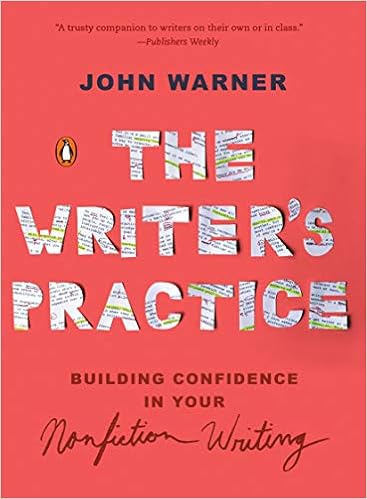
In the former volume, Warner takes solid aim at the five-paragraph essay and this work appeals primarily to teachers of writing, I think. His Practice serves more as an authoritative guide for anyone who wants to be or grow as a writer.

While I think the title offers an excellent focus for the book and how to become a writer, or better writer, “practice,” Warner’s opening framing is also extremely important: “In this book, rather than ‘assignments’ or ‘essays,’ I want us to consider what we’re doing in terms of ‘experiences.'”

This past Friday and Saturday, I attended the annual convention of the South Carolina Council of Teachers of English (SCCTE). Throughout the sessions, keynotes, and conversations among teachers, I witnessed why Warner’s newest book is so valuable.

Many who teach literacy struggle with the tension between being authoritarian and being authoritative—a foundational teaching decision emphasized in Paulo Freire’s critical pedagogy.

Writing and writing instruction driven by prompts, templates, and rubrics are authoritarian, thus simultaneously inauthentic and effective for control. Writing and writing instruction driven by structure (negotiated between teachers and students) and committed to providing students with many varied opportunities to make and practice the decisions writers make are authoritative, thus authentic but prone to uncertainty and unpredictability.

The authoritative teacher must have expertise and the ability to teach on the fly, regardless of the lesson plan.

Formal schooling tends toward the former because of the perceived need for control. However, writing is a complex behavior, and teaching writing often requires a teacher who is also a writer, who can guide novice writers through practiced experiences.

Practice, then, Warner explains, offers an authoritative text:

The goal is to provide a non-prescriptive alternative to a text like They Say/I Say while still honoring the kind of critical thinking we’re supposed to value in academia. I want that thinking to be fun, and engaging, and empowering, rather than intimidating, or something performed by rote to please a disembodied authority like a teacher, or worse, a faceless, unknowable “assessor.”

As I listened and discussed with friends and others at SCCTE, I once again recognized how many of us have failed writing instruction, allowed writing workshop and student choice to flounder because these practices have been confused with class time and student assignments devolving into unstructured and unguided license.

Writing workshop and student choice, however, are not about allowing students (who have little experience or expertise as writers) to do anything they please, but about an expert teacher providing purposeful structures within which students as novices can practice, revise, and grow as writers against their rich reading lives.

And thus, Warner’s Practice, which offers excellent opportunities for writers and teachers of writing to experiment with his framing in search of the practice that works best for them.

The volumes sections—skills drills, analytical writing, research and argument, other writing experiences (including a broad range from jokes to thinking about sentences)—are ideal for K-12 and post-secondary writing instruction that is primarily aimed at all students (not just those who want to be writers) and seeks a variety of essay writing grounded in the academic disciplines (more so than writing fiction and poetry).

Finally, a real gift of this volume is the Appendix where Warner offers some possible weekly structures for using this as a text in first-year writing.

As I did with Why They Can’t Write, I highly recommend Practice, especially for those who teach writing. It is a needed and compelling argument that writing requires structure and practice, but too often is muted by prompts, templates, and rubrics that serve an authoritarian goal but not the needs of students who could be writers.


Coming Soon (Shameless Plug Edition)

Teaching Writing as Journey, Not Destination: Essays Exploring What “Teaching Writing” Means (IAP), P.L. Thomas

“Despite the Data”: Higher Education Fails Equity, Inclusion with SETs

Entering higher education in my early 40s after 18 successful years as a high school English teacher, I remain 17 years later baffled and even disappointed at the mess of contradictions that characterizes an institution populated by the most educated people possible.

Immediately I had to hold my tongue against the pervasive culture of college professors bemoaning constantly how busy they are. When my high school teaching career ended, I was wearing a wrist brace because I was hand marking about 4000 essays and 6000 journals per year while teaching five course and about 100 students (many colleagues taught 20+ more students per year).

I also coached many of those years, with work days from about 7:30 AM until 10 or 11 PM in the evening.

By contrast, I teach two first-year writing courses each fall (as part of my full load, a minimum of five course per academic year), a total of 24 students, and my teaching schedule tends to be three days a week, often a Monday evening class included.

The Ivory Tower effect is a bit more accurate than I would prefer.

More disturbing, however, is the power of tradition among academics, a dynamic that works against practices and policies being based on evidence (and thus in a state of flux when that evidence changes).

While the U.S. has a long history of characterizing and even demonizing higher education as some sort of liberal cult, the truth is that the very worst qualities of higher education are from its conservative urges as institutions.

Of course, you can find a disproportionate number of professors who have left-leaning social and philosophical ideologies, but the most powerful department/colleges in higher education are often the most conservative—political science, economics—or the most apt to take non-political poses—the hard sciences.

This disconnect between how higher education is perceived and how higher education exists stems from, in part, I think, higher education presenting itself rhetorically as progressive—mission statements, social justice initiatives, etc.

However, with a little unpacking, we can expose that practices and policies often contradict and even work against that rhetoric and those initiatives.

One example that I have addressed again and again is the use of student evaluations of teaching (SET) to drive significantly the promotion, tenure, and reward process.

Consider a few points raised in Colleges Are Getting Smarter About Student Evaluations. Here’s How by Kristen Doerer:

“Having a female instructor is correlated with higher student achievement,” Wu said, but female instructors received systematically lower course evaluations. In looking at prerequisite courses, the two researchers found a negative correlation between students’ evaluations and learning. “If you took the prerequisite class from a professor with high student teaching evaluations,” Harbaugh said, “you were likely, everything else equal, to do worse in the second class.”

The team found numerous studies with similar findings. “It replicates what many, many other people found,” said Harbaugh. “But to see it at my own university, I sort of felt like I had to do something about it.”…

Studies since the 1980s have found gender bias in student evaluations and, since the early 2000s, have found racial bias as well. A 2016 study of data from the United States and France found that students’ teaching evaluations “measure students’ gender biases better than they measure the instructor’s teaching effectiveness,” and that more-effective instructors got lower ratings than others did….

Despite the data, at many colleges, particularly research-based institutions, student evaluations are still the main measure, if not the only one, of teaching effectiveness in promotion-and-tenure decisions.

Common among universities and colleges across the U.S., diversity and inclusion are pervasive problems. Poor students and students of color are underrepresented in many colleges, especially the so-called elite institutions; women and people of color are equally underrepresented on faculties.

Nothing rings more true or frustrating than Doerer’s use of “despite the data.”

I have rejected SETs directly in my bi-annual self-evaluation for merit raises. I have consistently advocated the administration and our faculty status committee to end or greatly reduce the influence of SETs.

In all of the situations, I have repeatedly shared the research, the data:

And without fail, those with power, who tend to be white men, offer a tepid acknowledgement of the research followed by a quick “But we have to do something.” Doerer includes a response (from a white man) that sounds all too familiar:

Ken Ryalls, president of the IDEA Center, a nonprofit higher-education consulting organization, recognizes the bias but thinks doing away with evaluations isn’t the answer. He opposes efforts to eliminate the voice of students. “It seems ludicrous,” he said, “to have the hubris to think that students sitting in the classroom have nothing to tell us.”

“The argument that you should get rid of student evaluations because there is bias inherently is a bit silly,” he said. “Because basically every human endeavor has bias.”

The “yes, but” dynamic works to maintain the inequitable status quo. And as Ryalls’s comment shows, the “yes, but” response is often a distraction.

No one is arguing to remove the voice of students, but as Doerer’s reporting confronts and as the research base shows, student evaluations of teaching are fraught with student biases that corrupt the teacher evaluation process, effectively discouraging women, people of color, and international faculty from remaining in a hostile environment with very real negative career consequences.

For example, calls to end SETs a primary or major instruments for promotion, tenure, and merit pay are often part of a larger examination of how to make student feedback more effective for teaching and learning.

Doerer notes:

That’s in large part why Oregon decided to try a midterm student-experience survey that only the applicable faculty member can view. An instructor can make changes in the middle of a semester, when students can still benefit, encouraging them to give constructive feedback.

For many years, I have asked students for feedback at midterm, and explained that I would like the opportunity to address their concerns, and also to identify what is working well, because receiving complaints after a course really benefits no one.

Further, when student feedback is for the professor only, it becomes a conversation about improving teaching and learning, and as a professor myself, I am best equipped to interpret student comments. I consistently receive feedback intended as negative by students, but will never change them because they misunderstand my role and their roles in the classroom.

Yes, student feedback is valuable, but it likely cannot be simply or easily reduced to numbers, formulas, or even verbatim interpretations of their direct words.

It has taken nearly four decades of high-stakes accountability in K-12 education for people to begin to acknowledge that high-stakes accountability causes far more harm than good.

In higher education, if equity and inclusion are real goals, we can and must seek ways that students have safe and open spaces for providing their professors feedback, we can and must better support faculty in how to interpret that feedback in ways that improve their teaching and student learning, but to reach those goals, we must end the practice of using SETs in significant ways to evaluate faculty.

Higher education must end the tradition of “despite the data,” recognize that rhetoric means less than nothing if contradicted by practices, policies, and a culture of “yes, but.”

How to Avoid the Tyranny of the Lesson Plan: Planning Less to Teach Better

woman holding marker
Teaching is a daily intimidating adventure, one that requires we find the confidence to enter each lesson with the board empty. Photo by rawpixel on Unsplash.

My journey to becoming a certified high school English teacher occurred during the early 1980s. My methods course work was solidly grounded in an era obsessed with behavioral objectives and highly detailed lesson plans.

This approach to preparing to teach centered content acquisition and the authority of the teacher. In many respects, I was trained to teach as if students didn’t even exist in the process.

I immediately entered an M.Ed. program since I graduated in December and would not find a full-time teaching position until the coming fall. Those courses further entrenched mastery learning, although I also had my first glimpse into a much broader array of educational philosophies that included reading John Dewey, Maxine Greene, and others I would eventually recognize as my own critical perspective.

Many years later, after those nearly overwhelming first years of teaching when all that philosophy and theory has to be put into some sort of practice, I was well on my way to being a student-centered and critical teacher when I had a student teacher. She was a very short black woman who taught from a script—every single lesson she taught.

I immediately thought of my initial training to teach as well as this student teacher as I was reading Christine Tulley’s How to Avoid Overprepping for Your Classes.

First, after my 18 years teaching high school, I have been working in teacher education for 17 years while also helping with providing university professors attaining and improving their writing pedagogy. In both cases, I have witnessed what Tulley confronts:

I recently consulted with a Ph.D. student who was logging long nights and weekends in her office. I knew she was trying to revise her dissertation into a book and complete a book proposal, but I soon learned that she was also using the late nights to get ready for class and “keep up” with course planning. With classes and committee work scheduled during the day, she never had time to write.

When I do classroom observations, for example, my teacher candidates feel compelled to perform, believing that “teaching” is about the lesson plan and teacher behavior (again, as if students are not present).

But it is Tulley’s next point that really sparked my memory of my student teacher from many years ago:

I often see this pattern of overpreparing among the early-career faculty members whom I mentor. Many have unwittingly fallen into what Armando Bengochea terms “the teaching trap.” Bengochea notes that such overprepping is a real problem for faculty members who suffer from impostor syndrome or use course preparation as a procrastination strategy because it sounds legitimate. They often engage in extensive lecture preparation, working to fill all available class time as a protection mechanism. The result is they have to do a time-consuming deep dive into content each week to develop lengthy lecture slides or handouts. Perhaps not surprisingly, a disproportionate number of faculty of color, non-native speakers, women and other marginalized populations prepare too much for the classes they teach.

Even though I now work at a selective university with students often benefitting from a great deal of privilege, my teacher candidates are often young women, several of whom struggle against being small in stature or “looking young.”

Tulley has prodded me to understand better why I have struggled for years to help my teacher candidates understand, and practice, a key distinction I make about teaching: Teaching is not about meticulous and detailed lesson plans but about being prepared every day you enter a classroom.

In some significant ways, I am here once again addressing that teachers need both pedagogy and expertise. The urge to hyper-plan—my student teacher who scripted every lesson—is often a self-defense mechanism, but it is one that is counter to our goals as educators.

I want here to examine briefly how to avoid the tyranny of lesson plans while also building on and pushing against Tulley’s alternative to “overprepping”:

Pattern teaching is a solution I regularly offer to faculty members who seek parameters on preparing for courses efficiently and effectively. The premise is simple and not revolutionary: develop a regular pattern or structure to the class. Often instructors create such a pattern (the first 15 minutes are used to review homework, group work is always done on Wednesdays and so on) for their students’ benefit. But pattern teaching can also influence how content is delivered, making it a useful strategy for streamline course preparation.

One nuance I would offer to Tulley’s ideas is that teachers should distinguish between planning (what we should decrease) and being prepared (an ongoing state of gaining both more effective pedagogy and greater expertise).

While I am not opposed to “pattern teaching,” I have adopted a different language cultivated in my years teaching for the Spartanburg Writing Project. We used the metaphor of writing teachers building and expanding their “teaching toolbox.”

That toolbox would be available so that daily teaching did not need to be scripted or meticulously planned. Teaching in a frame structure (for example, the writing or reading workshop guided by elements similar to Tulley’s patterns) allowed the teacher to pick and choose among the tools to apply as needed in the flow, spontaneously, of teaching.

Finally, here let me offer a few different ways of thinking about being prepared to teach daily instead of planning:

  • Create a syllabus/daily schedule and each lesson plan as tentative frames, not “that which you must execute.” The key here is that when any teacher spends an inordinate amount of time planning schedules and lesson plans, they feel compelled to follow through on that plan regardless of how it works, or doesn’t, in practice. Syllabi, daily schedules, and daily lesson plans should provide some organization and structure, but they are not exhaustive or fixed.
  • Rethink what counts as preparing to teach. Preparing to teach includes a teacher’s time spent being a student themselves, reading, researching, thinking, discussing with other teachers, etc. While Tulley recognizes many young professors lament so much time planning as a distraction from doing scholarship, I would argue all teachers at every level are preparing to teach by being scholarly; the two must not be in conflict, in other words.
  • Consider first and foremost what students will be doing in daily lesson plans. As I have noted above, too often teaching and planning to teach remain focused on teacher behaviors. The key, I think, to avoiding the tyranny of the lesson plan is to recognize that the essence of learning is student behavior, students being actively engaged in behaviors the teacher fosters and negotiates, but does not orchestrate.
  • Seek ways to build self-confidence by always being a student of how to teach and the content of courses being taught. Teaching is a state of constant learning and growing. That process occurs outside the classroom, but also in the classroom every day. Our teaching goal is to become adept at improv, not playing a role.
  • Resist the allure of being a martyr. Teaching has an unhealthy culture that includes who can make the best case about their martyrdom—lamenting in the teachers’ lounge or posting on Facebook about hours and hours spent planning and grading. There is clearly something compelling about this, but I believe it is ultimately not personally or professionally healthy.

I certainly understand why beginning teachers at all levels are drawn to over-planning, even scripting daily lessons. But I also recognize that this urge has more to do with matters not related to teaching and learning.

The lesson plan outlined down to the exact minute and governed by the teacher may leave no space for problems or look effective and efficient to anyone watching the play work out. What is sacrificed, I am certain, is student engagement and that teacher’s emotional reserves. This is not sustainable.

Teaching is a daily intimidating adventure, one that requires we find the confidence to enter each lesson with the board empty.

On Pedagogy and Expertise: Enduring False Dichotomies in Education

English educator Lou LaBrant taught in a wide variety of contexts for 65 years while also producing a significant body of scholarship from the 1920s into the late 1980s. Her career was nearly as prodigious as her attitude.

Writing in 1931, for example, LaBrant announces: “The cause for my wrath is not new or single” (p. 245). Her “wrath” was pointedly aimed at the rise of the project method in the early decades of the twentieth century.

Projects, LaBrant noticed, began to dwarf, and even replace, time students spent on authentic literacy—students reading and writing by choice, the practices LaBrant advocated for over decades as “scientific.”

As I write this 9 decades later, project based learning (PBL) is, once again, all the rage. And from my perspective, similar to LaBrant’s, I watch as teachers and students are put in impossible teaching/learning situations all in the service of “doing PBL.”

While PBL flourishes in my home state of South Carolina, I also have witnessed throughout the past four decades a mind-numbing parade of new standards, new high-stakes tests, and new regulations and processes for certifying and evaluating teachers.

Formal teacher education and K-12 education suffer from the same problem LaBrant wrestled with her entire career—the misapplication of scientific principles in the pursuit of codifying “good teaching” and “student achievement.”

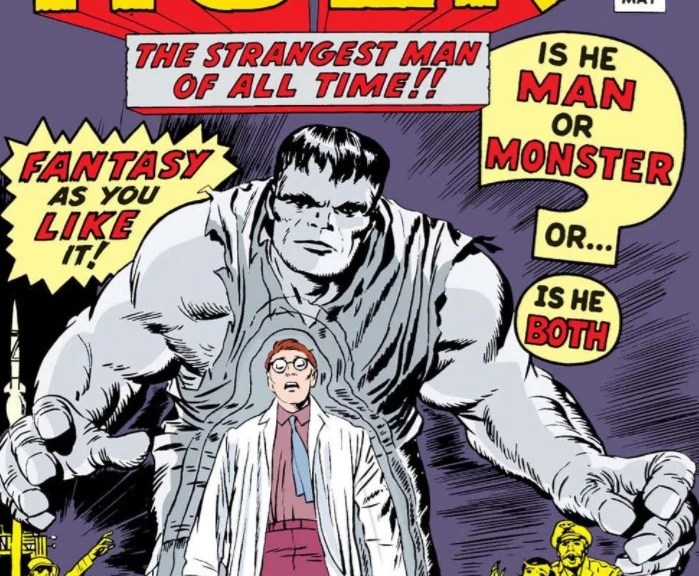
The current teacher evaluation rubric (with over 400 indicators) SC teacher educators and evaluators must navigate is disturbing proof that we have chosen The Hulk (the monster misguided science produces) over Bruce Banner (the measured scientist) in our unbridled lust to control how teachers teach and how students learn.

The Incredible Hulk showed the transformation of scientist Bruce Banner into the green monster.
The Incredible Hulk 1 (vol. 1) offers a powerful contrast between the scientist and the potential monster science can produce.

LaBrant resonates with me because I have existed in the field of education for almost 40 years now in a constant state of “wrath” because of one of the most disturbing dichotomies that define the field—the disconnect between pedagogy and expertise.

This disconnect, or false tension, is best reflected in the on-going discussions about teaching writing. To teach writing well, many of us argue, teachers must have some authentic experience and expertise in writing themselves; without that expertise, all the pedagogy one can attain is ultimately inadequate.

Expertise grounds teaching, I think, in authentic goals, also essential for any pedagogy or program to be effective.

For example, best practices in writing instruction, a well-planned and implemented workshop model, is for naught if teachers are mandating students produce five-paragraph essays that are driven by a prompt and rubric mandated by the teacher.

Now here is the problem: A seasoned and active professional writer would fair little better if tossed into a teaching situation with no experience or expertise in evidence-based pedagogy.

This false dichotomy is well represented by the contrast between K-12 teaching and higher education. K-12 is dominated by the belief that anyone can teach anything if equipped with pedagogy, programs, and accountability (see The Hulk rubric now governing teaching in SC I have confronted in the link above); higher education embraces a laissez-faire norm that anyone can teach when equipped with expertise.

My second career as a teacher educator has proven to me what I long suspected as a high school English teacher for 18 years: There are profound limits to our urge for discovering and prescribing “good teaching” and “student achievement.”

I have railed against this often, but I call this our technocratic urge, a perverse and dangerous form of “scientific” (again, The Hulk, not Bruce Banner).

During the early decades of LaBrant’s career, there was a relatively balanced tension among educational philosophies and theories that included at least two factions using the term “scientific” in dramatically different ways.

John Dewey’s progressivism, which LaBrant practiced, argued for an amorphous, classroom-based approach to what today we would call action research (each teacher is a researcher-in-practice with every different class of students). The goal here recognized that students and learning are fluid and relative.

To teach, Dewey tried to advocate, is to experiment, perpetually. What works for one student today may not work for another on that same day, in that same lesson. And what works in a lesson or unit this year may inform a future lesson or unit, but it certainly can never be reduced to a template for future teaching.

Dewey’s scientific lost, however, to the efficiency educators who sought a different type of “scientific”—one that identified a fixed prescription for what “good” teaching must look like and what “student achievement” must conform to.

Today as a teacher educator in SC, I am supposed to learn The Hulk rubric and then I am supposedly equipped to visit any teachers classroom, regardless of grade level or content, and be able to make a credible assessment if the teacher is effective or not.

This cult of pedagogy, I think, has only one compelling quality, efficiency. This is the same problem with education’s pursuit of “the” program, such as PBL. Design a program, detail the parameters of what make the program “work,” and then anyone can observe to simply verify if the program is being met.

Having taught now about an equal time—almost two decades each—as a K-12 teacher and a college professor, I am far more disturbed by the cult of pedagogy in K-12 than the laissez-faire, and even dismissive, attitude about pedagogy in higher ed.

A colleague in economics once confessed to me that he held conservative ideologies in economics and liberal social beliefs. As a result, he had decided to function mostly as a Democrat because, he believed, it was easier to teach Democrats better economics than to make Republican “give a damn” about human suffering.

I find this fits the false dichotomy I have examined here. I worry that we have two problems in teaching and learning—fostering expertise in “generalist” teachers (K-12) and fostering a greater understanding of and respect for pedagogy in experts (higher education). I suspect the latter is easier.

LaBrant ended her unpacking of the project method with a key element of how “scientific” can work in education. Science at its best requires that we define problems, generate evidence, and then conform the solutions to the problems.

The project method, LaBrant noted, was missing an obvious solution as educators lamented students either not reading or lacking reading ability:

That the making of concrete models will keep interested many pupils who would otherwise find much of the English course dull may be granted. The remedy would seem to be in changing the reading material rather than in turning the literature course into a class in handcraft. (p. 246)

Our rubrics and programs are the wrong goals, the wrong solutions, even as we occasionally recognize the problems of needing “good” teachers in order to increase student achievement.

Neither pedagogy nor expertise is itself the solution, but a complex understand of how both of these work together helps us seek the best possible pursuit of science and avoid the monster we currently embrace.

A Modest Proposal: Teaching without Students

This is not satire. Not even the sort of satire that opens with that disclaimer. But I would say this is a counterintuitive take on what it means to be a student from the perspective of a teacher.

I am considering here some of my lessons learned at the end of a semester. This fall schedule included an overload and variety of courses.

I also have been thinking about a couple of recent articles: Teaching the Students We Have, Not the Students We Wish We Had as a response to Students Evaluating Teachers Doesn’t Just Hurt Teachers. It Hurts Students.

In my young adult literature course, undergraduate and graduate students had to develop a resource unit grounded in young adult literature. They also needed to link that unit to either of the two elective texts for the course (one on critical media literacy or one on women in pop culture/comic books).

That resource unit assignment asked students to submit a proposal for the unit as the midterm exam. Of course, the purpose of the proposal is for students to have a plan by midterm and then to develop the unit over the rest of the course.

Here is the problem: Several students remained trapped in behaving as students (and not as teachers/scholars preparing a teaching unit). They viewed the proposal as an assignment instead of a proposal.

In other words, students kept asking to revise the proposal or have fretted about changing the unit as they worked. Instead of focusing on creating a powerful unit, they have felt compelled to remain true to the original proposal.

Student behaviors that are driving these problems include fulfilling assignments versus engaging with authentic behaviors and artifacts. These student behaviors lack an appreciation of discovery, and students seem unable to draft any product and to allow the process to evolve so that the final product is both high-quality and appropriate for their goals.

What students have learned for many years limits those students struggling with the proposal. For example, they have had to submit introductions and thesis statements for essays before drafting and then feel compelled to fulfill those regardless of what develops during the drafting.

Student behaviors and seeing their work as assignments also strip students of autonomy and agency. They fail to see their own role in the work because they are focusing on meeting requirements.

Across all my course, as well, students submit essays with drafting mandatory. While I have long struggled with fostering authentic drafting with students for many reasons, I encountered this semester a high rate of good students being stuck themselves in correcting based on my feedback. These students have resubmitted work too quickly, and seem unable (or unwilling) to behave with autonomy in revising and editing beyond my feedback (copyediting and highlighting).

In these situations, I am doing most of the work writers do. I resist this dynamic (while trying to avoid muting these students’ genuine interest in doing well) by highlighting areas of the drafts that target what we have covered in class and what I have addressed in my feedback.

Some students have resubmitted drafts without addressing areas highlighted, noting they didn’t do anything because they weren’t sure what to do. Another student response has been that students delete anything I have highlighted instead of revising or editing. One student deleted several excellent quotes although I had highlighted because she had formatted the quotes incorrectly.

Students not using technology as a tool contributes to the ineffectiveness of students drafting guided by my feedback (both on their essays and in conferences). Baffling to me, students submit drafts with Word Spelling and Grammar notifications (jagged underlining) enabled and ignored. Even more concerning, many students resubmit essays with elements as they were before I copyedited their drafts.

During a conference, I discovered that many students open my copyedited file beside their original file, working back and forth on two files instead of using my copyedited file. I should note that I tell them at the beginning of the course to learn how to save my returned files, rename those files for their next drafts, and then to interact with my highlighting and copyediting (using the Review features of Word).

Across these experiences with students this semester, I have seen even more evidence of my career-long fear that student behaviors are counter to rich and engaged learning, growth, and authentic creation. The young people I teach are too often paralyzed by student behaviors that mute their ability to engage with authentic work with agency and autonomy.

To be the best teacher I can be, then, means teaching without students.

For this to happen, I must find ways to deprogram students, to help them replace student behaviors with authentic behaviors. My goal is to create mentor/apprentice dynamics. I also recognize that introducing students to new ways of being in formal education can inhibit learning (my experiences with a de-grading and de-testing classroom).

My call for teaching without students is not satire, but a pretty high bar for any of us, teachers or students.

As a teacher always learning I am encouraged that there will be next semester, more students who I will urge to be different than the students they have been before.


Side Note

I revised this post using the Hemingway Editor.

RECOMMENDED: John Warner’s “Why They Can’t Write”

For my 35 years as an educator, I have taught writing and fought a seemingly fruitless battle against know-nothings who either pontificate about or make policy for education.

If I weren’t already an eager fan of John Warner’s blogging at Inside Higher Ed, I feel sure I would have immediately blown a gasket over his newest book’s title: Why They Can’t Write. Although almost immediately the subtitle would have definitely given me hope: Killing the Five-Paragraph Essay and Other Necessities.

I can assure you right off that this is not the sort of drivel the title echoes—Why Johnny Still Can’t Read — And What To Do About It—and instead is a very powerful call for teaching writing well from Warner who is both an accomplished writer and a seasoned writing teacher.

In fact, my strongest recommendation for this book is based on Warner’s expertise across writing and teaching combined with his commitment to remaining himself a student of both. Warner embodies my argument that teaching writing and writing are journeys, not destinations.

The opening, “Our Writing ‘Crisis,'” makes a really important and contrarian argument that, I think, guides the entire book. To the title’s assertion/question, Warner explains: “‘They’re doing exactly what we’ve trained them to do; that’s the problem.'”

As a first-year writing teacher at the college level, Warner has witnessed much of the same dynamics I have experienced over about the same time period; if students struggle with writing in ways that are expected at the college level, much of that disconnect can be seen in those students having been taught what is essentially bad practice—focusing on correctness and correcting, conforming to prompts and templates, having over-simplified concepts of evidence and citation, performing very limited writing capabilities that parallel very weak thinking (linked to the five-paragraph essay that Warner rejects).

An excellent evidence-based companion to Warner’s book, in fact, is Applebee and Langer’s research on the teaching of writing at the middle and high school levels. They detail that while most teachers in all disciplines know more than ever about how to teach writing well (in ways Warner outlines in his book), students write less often and shorter pieces in English as well as their other courses.

The culprit? High-stakes accountability in the form of standards and, most of all, testing.

All teachers who have some responsibilities teaching writing should read this book, but those engaged with first-year writing may be most compelled by Warner’s messages.

Another strong aspect of this work is that Warner’s writing is always engaging while remaining very practical—something practitioners tend to demand.

I think his Part II really shines by highlighting problems: atmosphere (“‘School sucks'”), surveillance, assessment and standardization, education fads, technology hype, folklore, and precarity. Many of these are recurring concerns I have experienced teaching high school English throughout the 1980s and 1990s as well as college-level writing since 2002.

Stylistically, Warner has chosen to be conversational, so this volume is not heavily cited with current research on composition. While some may bristle at this choice, I am very comfortable noting that Warner’s critiques and recommendations match well with that research base (again, consider Applebee and Langer, but also Peter Smagorinsky and a long list of K-12 researchers and practitioners advocating writing workshop).

What teachers find in Warner is a confession that writing and teaching writing are damned challenging. But he also offers foundational concepts and practices if our goal is to foster developing writers who think and compose by choice and with purpose.

This is not about test-prep. This is not about inauthentic compliance masquerading as writing.

Being a writer and teaching writing are mostly about problems. Warner recognizes the problems (and if you teach writing, so will you), and the challenges, but also provides some important reassurances that we can teach writing better, probably well, and then, our students? Well, they can write if offered the opportunity.

Navigating the Trivial in Writing Instruction

Most teachers charged with writing instruction at all levels from K-12 through graduate education have far too little time and almost impossible learning conditions in order to teach writing well, much less completely.

After decades of teaching writing, I have far more questions, and goals, than I have answers.

But I do have two guiding principles that I believe help my writing instruction to be more effective, if still lacking: (1) no writing-intensive course is an inoculation (writing and students are not diseased things to be cured), and (2) to invoke Thoreau, it is not any writing teacher’s duty to do everything, but to do something well.

With those in mind, this Twitter exchange provides an excellent entry point to how we should navigate the trivial in our very challenging work teaching writing:

Drezner’s original Tweet and Warner’s reply provide an important tension that all writing teachers face, the tension between the trivial (elements such as format, grammar, mechanics, and usage) and the substantive (expression, credibility of claims and evidence, audience awareness, purposefulness, etc.).

Broadly, this debate sits within the prescriptivist versus descriptivist approaches to language. For teachers of writing, I think we must acknowledge that prescriptivism remains the norm in both formal education and social norms. In other words, many people are prone to see (or hear) “errors” and then to draw some evaluative conclusions from those “errors” regardless of the credibility or effectiveness of the whole text or expression.

Drezner is typical of those who cannot look past the trivial (confusing “it’s” and “its”) in order to recognize the ultimate whole of the text.

Like Warner, I rest in the camp that rejects prescriptivism and seek ways to focus my instruction, and student drafting, on the substance of their writing as well as their journey to being writers and scholars.

But this is no new tension, as Lou LaBrant (1946) expresses, many decades before Warner’s retort: “As a teacher of English, I am not willing to teach the polishing and adornment of irresponsible, unimportant writing.”

With limited time and reduced teaching and learning conditions, teachers of writing must focus on priorities—fostering purposeful, thoughtful, and risk-taking young writers who have an awareness of prescriptivism and the consequences of so-called “errors” in their writing.

As a first-year writing teacher, I can attest that most of my students enter my writing-intensive classes mostly viewing their work as students to be about correctness and then when prompted to revise or rewrite, to be about correcting.

Their priorities learned in formal schooling about writing are the inverse of LaBrant’s mantra above; students believe correctness trumps content because they have often submitted “irresponsible, unimportant writing,” driven by the teacher’s prompts, and received high grades simply for having conventional surface features.

One example of how I try to navigate the trivial in writing instruction is the current debates about “they” as a singular gender neutral pronoun.

I offer students a mini-lesson on how language changes, a short overview of the history of the English language with some examples (grain/corn, the demonizing of “ain’t” and the tortured construction “Aren’t I?” that grew out of that), and then I introduce them to the “they” debate.

We examine pronoun/antecedent agreement and concerns about sexist language (the use of “he” as gender neutral, for example) before I detail for them that they are living in a time of language flux; many formal publications and organizations now have standardized “they” as a singular gender neutral pronoun (see especially NCTE).

However, I also address with them that many people remain trapped in the fading prescriptive view of pronoun/antecedent agreement. I caution students that they may (likely will) encounter professors and others who will, as Drezner’s Tweet in the opening shows, make conscious or unconscious decisions about their credibility as writers based on the developing convention of “they” as a singular gender neutral pronoun.

I often follow this with a discussion of my own experiences as a student in the 1970s and 1980s that included drills and workbook exercises on “shall” and “will”—noting that poor “shall” is now deceased. This leads me to the certain impending demise of “whom” coming, I think, in my students’ lifetime.

As their writing teacher, I am committed to fostering purposefulness in my students, and to help them rise above the paralysis of correctness. I want them to have healthy attitudes about language and writing, much as linguists and writers do.

Yet, this effort to raise their awareness about the specter of the language police while prioritizing their content, organization, style, and such as purposeful writers is no easy task.

It is nearly impossible to break them from habits formed over years—viewing their job as being correct or correcting their drafts—and my own practice, I fear still seems to them to prioritize the trivial.

One of my strategies embedded in my requirement that students draft and conference with me during each essay is that I use highlighting in Word to draw their eyes to the trivial (issues of grammar, mechanics, usage, and format) and reserve comments and the conferences for what I consider to be substance.

I will still highlight, for example, a singular gender neutral use of “they,” and may add a comment asking if they have used this with purpose and with awareness, but I have no policy about their grades based on that use (I do not grade writing at all in fact).

Since many of the elements I highlight are what most teachers would call “errors,” students tend to ask me why I highlight, leading to a mini-lesson. Occasionally, the highlighting works, and students self-edit, if needed.

My work as a teacher of writing, then, is defined in many ways by the tension in the Tweet exchange above. I feel mostly compelled to foster my students as purposeful writers and scholars with healthy attitudes about language and writing.

But I also feel an ethical obligation to make my students aware that language use is political, that language use (often the trivial) has real consequences for them as students and in their lives beyond formal schooling.

I do invite them to join me is changing the norm of prescriptivism, to challenge the language police, but I also am deeply aware that is a tall task to ask of any of us.

LaBrant (1952) lamented that “thousands of teachers seem to resent or refuse to recognize change.” This, I think, is a grand failure when we are teaching writing and ultimately thinking.

Language is in constant flux, and our students are both agents and victims of that change.

Navigating the trivial in writing instruction is ultimately about honoring the human dignity of our students because language is an essential part of that humanity.

Free Speech and Diversity of Thought?

Andy Smarick has joined a growing sub-genre of Trojan Horse commentary across mainstream media with his Why Schools Must Safeguard Free Speech at Education Week.

Certainly, a plea for free speech and diversity of thought in education is something everyone can stand behind regardless of ideologies or partisan politics?

And that’s the Trojan Horse here because the veneer of calling for diversity of thought as a free speech concern thinly masks that this sub-genre of commentary is primarily a blitzkrieg by conservative pundits to further erode the public’s trust in education, especially higher education, and to dismantle what is left of evidence-based discourse.

I entered the classroom as a teacher in the fall of 1984, standing in the same classroom where I had taken sophomore and junior English taught by the person who would become my professional mentor, Lynn Harrill.

Growing up in this rural South Carolina town in the 1960s and 1970s, I was duly indoctrinated into a conservative ideology that emphasized tradition and a strict compliance to authority. Looking back, I can recognize that “tradition” was also a veneer for the less delicate realities that my hometown was deeply racist and sexist, as was my home.

Entering college, I was a recent convert to the reverse racism mantra that was growing just as Ronald Reagan was elected president after the relentless shaming of Jimmy Carter that allowed a country to seemingly forget the deep pit that was the Richard Nixon lesson then ignored.

By my junior and senior years of college, majoring in secondary English education, I had shaken off the embarrassing ignorances of my adolescence, mostly saved, I think, by my English professors, notably Nancy Moore, who introduced me to the works of Langston Hughes, Alice Walker, Toni Morrison, and a list far too long including voices unlike the conservative bigotry of my upbringing.

I returned to my hometown to teach as a changed young man, not fully formed yet, but deeply changed. Often I had to check myself against Alice Walker’s warning against missionary zeal in her powerful The Color Purple, but I did have a mission.

With freedom of speech and diversity of thought in mind, I invite you to consider two moments from my high school English teaching career, both involved white male students and their parents—young men who in many ways reflected the person I was not so many years before I stood there as their teacher.

Early in my career, during the mid-1980s, one student submitted his argumentative essay on interracial marriage. He launched into a vigorous rejecting of marriage between blacks and whites (a recurring problem in my hometown throughout my youth and while I was a teacher there).

In those early years, I was developing my use of minimum standards for student work—as an alternative to grading—and this assignment allowed students to write on any topic they chose, but they were required to support their arguments with credible evidence.

This student’s essay was very brief, and he included not one sliver of support for any claim in the essay. I refused to accept the essay, prompting the student to resubmit with the required evidence.

The next submission, the student had essentially copied the earlier essay and added a perfunctory “it’s in the Bible” as his evidence. I rejected the essay again while explaining to him that if in fact he had evidence in the Bible to support his argument, he was required to quote and cite that evidence.

One aspect of my minimum requirement approach included that all work had to be submitted to pass the grading quarter; thus, this student knew that if the essay was not accepted, he would fail.

This stalemate resulted in a parent-teacher conference that included me, the student, the student’s father, and my principal (who had been my principal when I was a student). The father was a measured but red-faced man barely able to withhold his anger at me.

The principal had me explain the situation, which I did, and then the man interrupted, his anger slipping out some; he explained that he and his son had met with their preacher, who assured them the Bible did in fact reject interracial marriage. Although the three of them scoured the Bible for hours, he explained, they were never able to find the proof.

My principal brought the meeting to an end with “Well, I believe your son needs to find another topic.”

Several years later, probably around 1990, my American literature classes were starting a unit I taught most if not all of my high school teaching career, anchored in Martin Luther King Jr.’s “Letter from Birmingham City Jail.” As I was handing out the essay copies, one male student backhanded the photocopy I placed on his desk onto the floor with an abrupt, “I ain’t reading that [racial slur].”

I picked up the essay, placed it on his desk with my hand firmly on the papers, and calmly explained to him he would never utter a comment like that again in my class and he would in fact read MLK. The class included black and white students, but these students also, as some shared with me, had been handed KKK propaganda smearing MLK in their churches.

A few brought me the crude pamphlets that represented about three decades ago that fake news is not a recent invention.

By holding the student to the same standard I held all students concerning the use of evidence in argumentation, by silencing a student who believed he was justified to reduce MLK to a racial slur and to refuse the curriculum I had provided—were these classrooms hostile to free speech, classrooms shutting the door on diversity of thought?

So let me return to Smarick’s disingenuous and frankly lazy argument. So many of these think pieces have sprung up lately, they suffer from circular reasoning because they tend to cite each other—Smarick leaps onto the easily discredited long-read on this same topic, The Coddling of the American Mind.

This commentary is a bit more ambitious than my student’s baseless and racist screed against interracial marriage, but it fails the credibility test in its use of evidence. Even more damning, these calls for free speech and diversity of thought seem to entirely misunderstand the concepts they claim to support.

These commentaries expose that conservatives think “free speech” and “diversity of thought” guarantee that people who have no evidence for their “opinions” should be afforded equal space to those with grounded and evidence-based positions. Their cries for both are cover for racist/sexist language without consequences.

Certainly as an educator, I strongly support academic freedom, but the classroom and scholarship are specifically seeking ways to navigate “thought” with discernment. To teach means to guide students toward credible and ethical thought, not to a lazy marketplace of ideas in which all speech carries the same intellectual weight.

Some ideas are simply not in debate. Typically in formal education, for example, the Holocaust is not taught as a debate that has equal sides between Holocaust scholars and Holocaust deniers. Some students are never exposed to those denials.

Some ideas remain in debate, but for education, even ideas in debate require credibility among all the positions expressed.

Conservative hand wringing about a lack of diversity of thought in classrooms are simply partisan pandering to ideologies bereft of ethical or empirical evidence—sexism, racism, homophobia, nationalism, and more.

Finally, another way to understand these commentaries are insincere is to note conservative pundits will not, however, have an honest and open discussion about the reality that free speech and diversity of thought are not about license, not freedom from accountability. They rarely discuss that some ideas have no place in discourse, that “let’s agree to disagree” is simply a way to maintain a status quo of inequity.

Some thought need not be aired, but it does need to be confronted and eradicated. When have you read those pleas from the right?

Conservatives cannot afford to support classrooms and academic settings that are about evidence-based, grounded discourse, but are not spaces for people just to say whatever they think, believe, or want.

Like my hometown, conservative ideology in the U.S. remains inextricably tied to ideologies the pundits dare not utter, bigotry of many kinds usually masked as “tradition” or “nationalism.”

Vapid arguments that education is some sort of liberal indoctrination are, ironically, jumbled efforts to indoctrinate, desperate efforts to maintain power by erasing the power of careful and evidence-based thinking, the very thing teaching and education must remain grounded in if we genuinely believe in freedom of thought.

Dear Media, Stop Misrepresenting Reading Instruction, Please

From Education Week to the Hechinger Report to The Answer Sheet (the latter two typically good sources for education journalism), the media simply cannot resist publishing misguided takes on how we do and should teach reading.

Citing the National Reading Panel as credible (it isn’t), misrepresenting whole language and balanced literacy (as somehow anti-phonics), hand-wringing about third-grade reading ability, and taking broad uneven swipes at teacher education—these are the hallmarks of bad journalism and garbled takes (usually with ulterior motives) on the reading wars.

Since I simply cannot continue to make the same points over and over, I suggest below a bit of actual reading to clarify why the media continually misrepresents the reading wars:

Here is a final note worth emphasizing: Phonics-intense and phonics-only reading instruction is a gold mine for textbook publishers, reading program shills, and the testing industry.

Consider carefully the who and why of public commentaries screeching about reading instruction, especially when the arguments are full of easily identifiable holes in their credibility and logic.