Category Archives: Teaching

Banned in the U.S.A. Redux 2021: “[T]o behave as educated persons would”

We know of course there’s really no such thing as the ‘voiceless’. There are only the deliberately silenced, or the preferably unheard.

–  Arundhati Roy

The matrix of a poet’s work consists not only of what is there to be absorbed and worked on, but also of what is missing, desaparecido, rendered unspeakable, thus unthinkable. It is through these invisible holes in reality that poetry makes it way—certainly for women and other marginalized subjects and for disempowered and colonized peoples generally, but ultimately for all who practice art at any deep levels. The impulse to create begins—often terribly and fearfully—in a tunnel of silence.

“Arts of the Possible,” Adrienne Rich

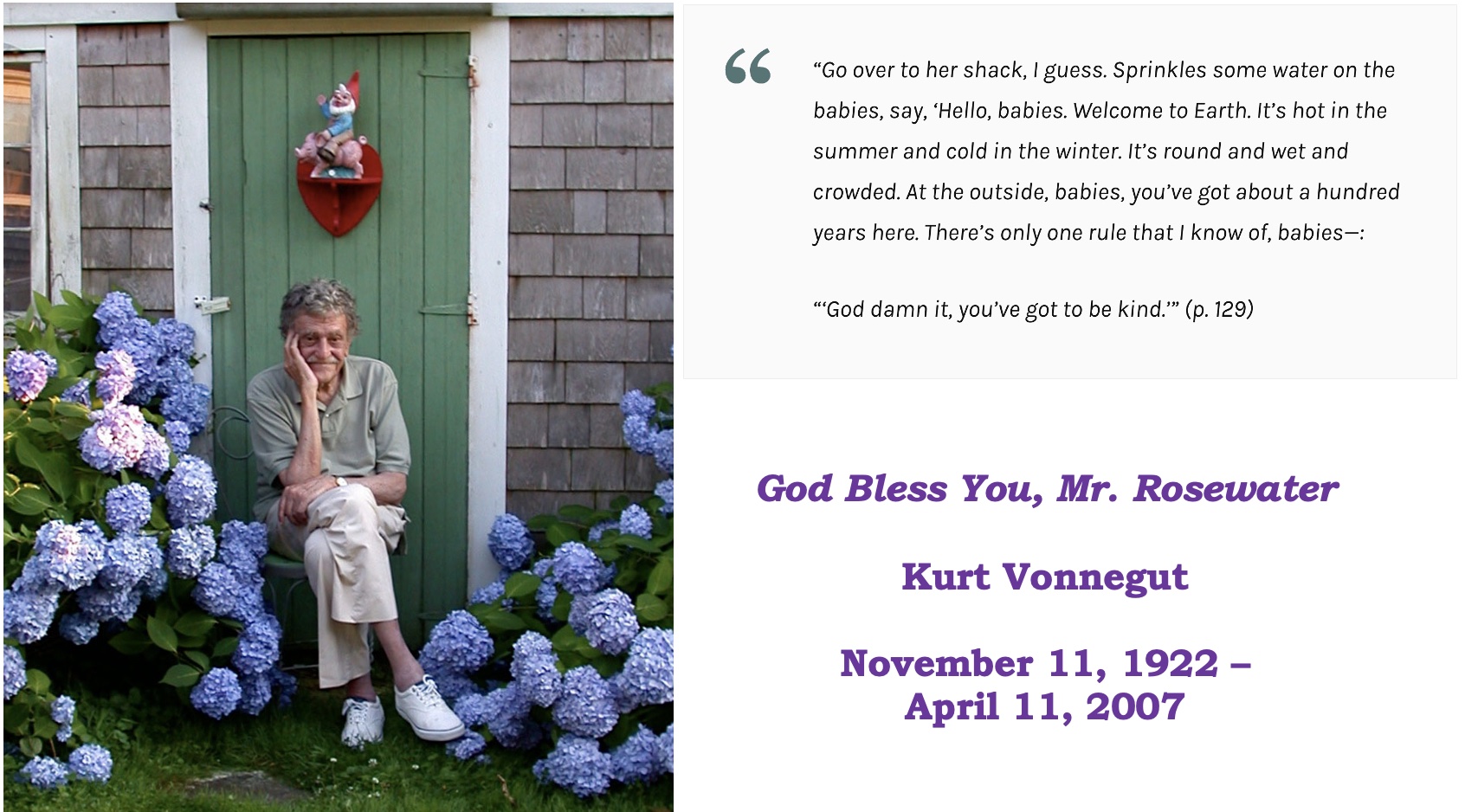
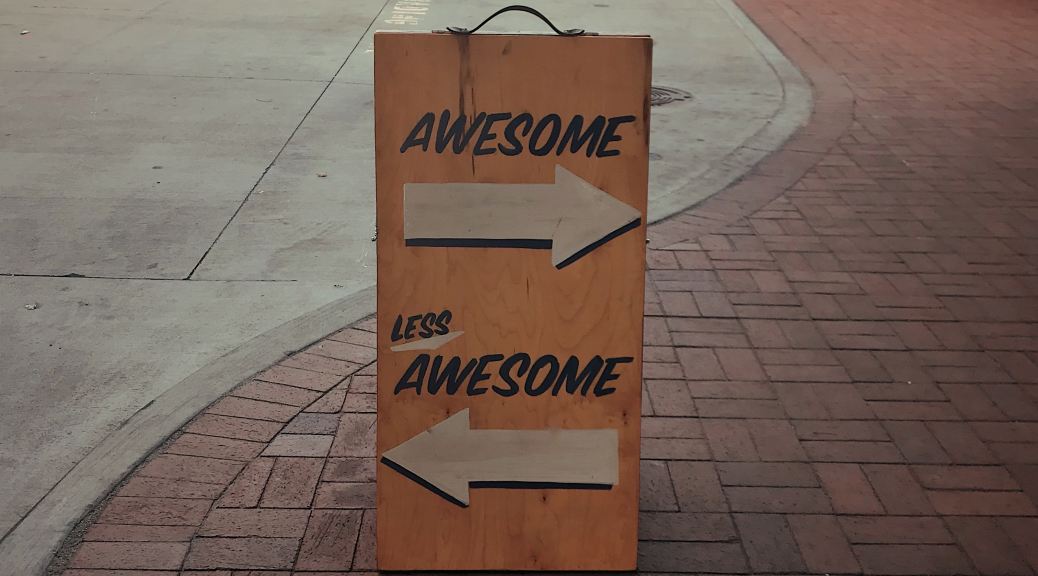
It is the morning of November 11, 2021, and I spend some of that time creating gentle memes to post in honor of Kurt Vonnegut’s day of birth:

I wanted to highlight Vonnegut’s career-long plea for a secular kindness, rooted in his faith in humanism, and I have long admired Vonnegut as an anti-war crusader.

Celebrating the birthday of a person after their death is always bittersweet, but on this morning, the act was awash in a very ugly sort of irony. As I loaded The State (Columbia, SC) web page, I saw this as the lead story:

My home state of South Carolina is heavily conservative—first to secede and uniformly conservative in politics throughout the decades of Democratic control of the South and then Republican in the wake of Strom Thurmond changing parties and later Ronald Reagan leading a conservative Christian shift in the South.

Gov. McMaster is not often “first to” about anything, but he is an uncritical and resolute soldier in the Republican culture war regardless of what that means.

Vonnegut—while alive and since his death—has often had his works challenged and even banned; one of the most enduring things he ever wrote, in fact, was a response to censorship:

In October of 1973, Bruce Severy — a 26-year-old English teacher at Drake High School, North Dakota — decided to use Kurt Vonnegut‘s novel, Slaughterhouse-Five, as a teaching aid in his classroom. The next month, on November 7th, the head of the school board, Charles McCarthy, demanded that all 32 copies be burned in the school’s furnace as a result of its “obscene language.” Other books soon met with the same fate. On the 16th of November, Kurt Vonnegut sent McCarthy the following letter. He didn’t receive a reply.

Letters of Note

In part, Vonnegut replied as follows:

Certain members of your community have suggested that my work is evil. This is extraordinarily insulting to me. The news from Drake indicates to me that books and writers are very unreal to you people. I am writing this letter to let you know how real I am.

I want you to know, too, that my publisher and I have done absolutely nothing to exploit the disgusting news from Drake. We are not clapping each other on the back, crowing about all the books we will sell because of the news. We have declined to go on television, have written no fiery letters to editorial pages, have granted no lengthy interviews. We are angered and sickened and saddened. And no copies of this letter have been sent to anybody else. You now hold the only copy in your hands. It is a strictly private letter from me to the people of Drake, who have done so much to damage my reputation in the eyes of their children and then in the eyes of the world. Do you have the courage and ordinary decency to show this letter to the people, or will it, too, be consigned to the fires of your furnace?…

If you were to bother to read my books, to behave as educated persons would, you would learn that they are not sexy, and do not argue in favor of wildness of any kind. They beg that people be kinder and more responsible than they often are. It is true that some of the characters speak coarsely. That is because people speak coarsely in real life. Especially soldiers and hardworking men speak coarsely, and even our most sheltered children know that. And we all know, too, that those words really don’t damage children much. They didn’t damage us when we were young. It was evil deeds and lying that hurt us….

If you are an American, you must allow all ideas to circulate freely in your community, not merely your own.

I am very real, Kurt Vonnegut, November 16, 1973

Reading about the censorship wildfire spreading to SC on Vonnegut’s birthday adds insult to injury, but this is not mere partisan politics, not something as innocuous or abstract as a “culture war.”

Just as Vonnegut ends his letter with “I am very real,” I want to stress that the missionary zeal behind removing and burning books from school libraries is also “very real”:

Calls for censorship, book removal from school libraries, and book burning are the logical next step in the Republican/conservative assault on Critical Race Theory and the 1619 Project; at the core of this movement is a misguided demand for parental rights that grows beyond any parents’ children to all children.

Some parents and political leaders on the Right have mistaken Ray Bradbury’s Fahrenheit 451 as a manual for partisan politics instead of, as Neil Gaiman (born a day before Vonnegut 38 years later) explains in the 60th anniversary edition of the novel:

This is a book of warning. It is a reminder that what we have is valuable, and that sometimes we take what we value for granted….

People think—wrongly—that speculative fiction is about predicting the future, but it isn’t; or if it is, it tends to do a rotten job of it….

What speculative fiction is really good at is not the future but the present—taking an aspect of it that troubles or is dangerous, and extending and extrapolating that aspect into something that allows the people of that time to see what they are doing from a different angle and from a different place. It’s cautionary.

Fahrenheit 451 is speculative fiction. It’s an “If this goes on…” story. Ray Bradbury was writing about his present, which is our past.

Introduction, Fahrenheit 451, Neil Gaiman

In my early days as a public high school English teacher, I had a book challenge targeting John Gardner’s Grendel, but it was clearly mostly about attacking me as a young teacher. While I think we are careless and even cavalier in the U.S. about any parents’ right to control what their children read and learn, I experienced first-hand the power of a few parents to determine what all students read and learn.

I must return to Vonnegut here and stress, “If you are an American, you must allow all ideas to circulate freely in your community, not merely your own.”

Removing books from libraries, banning books from schools, and book burnings are never justified; these are acts of tyranny, of fascism—and not in any way a gesture of what we like to call “American.”

There is no individual freedom without the freedom of the mind. Banning a book is closing the mind.

In Athens-based R.E.M.’s “Its the End of the World as We Know It (And I Feel Fine),” the lyrics include a verse that is haunting in 2021:

Six o’clock, TV hour, don’t get caught in foreign tower
Slash and burn, return, listen to yourself churn
Lock him in uniform, book burning, blood letting
Every motive escalate, automotive incinerate
Light a candle, light a votive, step down, step down
Watch your heel crush, crushed, uh-oh
This means no fear, cavalier renegade and steering clear
A tournament, a tournament, a tournament of lies
Offer me solutions, offer me alternatives, and I decline

“Its the End of the World as We Know It (And I Feel Fine)”

The Republican assault on teaching, learning, reading, and thinking is nothing more than a “tournament of lies” aimed at partisan political power.

Simply put, censorship and book burning are UnAmerican; to ban a book is to dismantle the American Dream.


Resources

Statement on Censorship and Professional Guidelines (NCTE)

Guidelines for Dealing with Censorship of Instructional Materials (NCTE)

NCTE Intellectual Freedom Center

The Students’ Right to Read (NCTE)

See Also

The 451 App (22 August 2022)

Teen’s Eyes Begin Glowing Red While Reciting Forbidden Knowledge From Book On Critical Race Theory

On Positive and Negative Feedback to Student Writing

Several students in my literacy course in our MAT program chose to read Donna Alvermann’s Effective Literacy Instruction for Adolescents. While the initial discussion around Alvermann’s essay focused on those students struggling with the density of her academic writing, they emphasized the importance and power of her addressing student self efficacy in the fostering of student literacy development:

Adolescents’ perceptions of how competent they are as readers and writers, generally speaking, will affect how motivated they are to learn in their subject area classes (e.g., the sciences, social studies, mathematics, and literature). Thus, if academic literacy instruction is to be effective, it must address issues of self-efficacy and engagement.

Effective Literacy Instruction for Adolescents

That discussion led to some very insightful comments about the importance of providing students feedback, as opposed to grades, on their writing as part of the drafting and workshop process (anchored in their reading Graham and Perin’s 2007 Writing Next analysis of research on teaching writing).

As a long-time advocate of feedback and someone who practices de-grading the classroom as well as delaying grades (assigning grades for courses but not on assignments), I strongly supported this discussion, and was impressed with the thoughtfulness of the students.

That discussion had a subtext also—a concern raised by several students about the need for teachers to provide students positive feedback (so students know what they are doing well), and not just negative feedback. (Some of that subtext, I am sure, was an unexpressed feeling among some of these graduate students that they received mostly or exclusively “negative” feedback from me on their first submitted essays.)

After several students worked through this argument for positive feedback, I asked them to step back even further to consider, or -re-consider, what counts as “positive” or “negative” feedback.

In the sort of way Alanis Morrissette perceives irony, I found on social media Your Essay Shows Promise But Suffers from Demonic Possession posted at McSweeney’s Internet Tendency—a brilliant portrayal of the tensions created by teachers giving students feedback on their essays, which begins:

I appreciate the hard work that went into this essay. It has many merits, but it also has something profoundly and disturbingly wrong with it. In fact, I’m writing this feedback on my phone, cowering in the bathtub with my wife, after your essay terrorized and nearly destroyed us….

The essay was formatted correctly, and each sentence was more or less intelligible in itself. But altogether, the effect was—disorientation. Worse, actually. Pure senselessness. The Void.

Your Essay Shows Promise But Suffers from Demonic Possession

This satirical piece does exactly what my MAT students requested, blending positive (“many merits”) with negative (“something profoundly and disturbingly wrong with it”) feedback; and I think, herein is the problem with the dichotomy itself.

Once dramatically while I was teaching high school and often since I have been teaching at my current selective liberal arts university, I have encountered students who perceive all feedback as negative and reject having to revise their writing.

My argument to my MAT students was that actionable feedback on student writing is not inherently “negative” even though it does suggest something is “wrong” and needs “correcting” (perceptions grounded in students’ experiences in traditional classrooms that focus on the error hunt and punish students with grades).

However, I am well aware over almost four decades that part of my challenge as a writing teacher is how to help students see and respond to feedback as supportive and not an attack on their work or them as people (we had a great discussion about whether or not students can or should see their writing as inextricable from them as people).

In other words, affect matters.

Throughout the past 20 years teaching in higher education, I have been struggling against the perception by students than my written feedback is “mean,” “harsh,” “negative,” etc., while they simultaneously find my face-to-face feedback supportive and “good.”

I continue to seek ways to make feedback on student writing more effective as a key aspect of helping students grow as writers and thinkers as well as fostering their independence as writers and thinkers (learning to revise and edit their work on their own).

Students persist, however, in finding the feedback “negative,” and occasionally shutting down.

If there is a path to moving past the dichotomy of negative/positive feedback to student writing, I think it lies in the following concepts and practices:

  • Having explicit discussions with students about the inherent need for all writers to revise writing, ideally in the context of feedback from an expert and/or supportive writer/teacher. I often share with students samples of my own work submitted for publication with track changes and comments from editors.
  • Rejecting high-stakes for low-stakes environments in the writing workshop format. This is grounded in my commitment to de-grading the classroom that honors that writing is a process (see More Thoughts on Feedback, Grades, and Late Work).
  • Adopting strategies and rhetoric that rejects deficit ideology and the error hunt (Connie Weaver). It is important for teachers and students to prefer “revising” and “editing” instead of “error,” “mistake,” and “correcting” as the language surrounding the writing process. The pursuit in writing must be grounded in the recognition that all writing can be better even when it is currently quite good (and especially if is is somewhat or deeply flawed).
  • Clarifying for students that challenging and critical feedback is intended as actionable by students as writers, and thus, inherently positive. One of the recurring tone issues I experience with students viewing my written feedback as negative is misreading questions; students often read questions as sarcastic or accusatory when I am asking in order to elicit a response (for example, when I write “Did you look at the sample?” how I move forward with helping a student depends on that answer). As my MAT students expressed in the context of Alvermann, students absolutely do need to see themselves as writers and do need to trust they will be successful, but they also must embrace the need to revise and the awareness that no one produces “perfect” writing in one (or even several) drafts.

Feedback and the dynamic between teachers and students (including trust) are the lifeblood of the writing process when students are young and developing. As I noted above, affect matters and the teacher/student relationship inevitably impacts how effective the teacher is.

As teachers providing feedback, we must be careful and purposeful in our feedback, focusing on actionable feedback and creating/maintaining a culture of support and encouragement.

To that end, I believe we cannot reduce feedback to a positive/negative dichotomy that serves only to reinforce the cultures and practices we need to reject, deficit ideologies and the error hunt.

In the McSweeney’s parody above, the writing teacher and their wife are ensnared in a demon-possessed student essay, but the more horrifying detail of this piece is the ending—the realization that teachers and students are actually trapped in an even greater hellscape:

“I did it,” she sobbed. “I killed it. I killed it.”

“You did it,” I said, climbing into the bathtub with her, holding my wife close. “It’s over. It’s all over now.”

Silence.

Then she said, “It’s not over.”

“What—”

“You still have to grade it.”

80%

Your Essay Shows Promise But Suffers from Demonic Possession

Yes, let’s work on feedback and the affect created around the writing process, but let’s not ignore that their are larger dynamics (grades and testing) at play that erode the teacher/student relationship as well as the effectiveness of teaching and the possibilities of learning.


See Also

Student Agency and Responsibilities when Learning to Write: More on the Failure of SETs

The Problem of Student Engagement in Writing Workshop

Teaching and Learning as Collaboration, not Antagonism

The Trap: The Ends v. Means Tension in the Pursuit of Content Knowledge

Over the course of almost 40 years, I have taught writing/composition to high school, undergraduate, and graduate students. I am well aware of the cumulative toll of reading and responding to 10s of thousands of essays by students who are both learning to think and learning to write.

Those essays are often vapid and jumbled, and thus, the work of a writing teacher can be incredibly tedious.

The Onion parody of student writing, Since The Beginning Of Time, Mankind Has Discussed What It Did On Summer Vacation, is too accurate for me to laugh since, despite sharing the piece with students, I still often read essays that begin with the same sort of dramatic and over-simplified claims fictitious Jeremy Ryan offers:

For as far back as historians can go, summer vacations have been celebrated by people everywhere as a time for rest and relaxation. Many advancements have been made in summer breaks since these early times, but it is also true that many different traditions have lived on and continue to remain with us today. This is why, since the beginning of time, mankind has discussed what it did on its summer vacation.

This is what I intend to prove within the course of this essay.

Since The Beginning Of Time, Mankind Has Discussed What It Did On Summer Vacation

So when I noticed a Twitter thread about teachers/professors struggling with responding to student essays, I offered the following responses:

The trap, as I note above, results from any teacher’s perception of the role of content knowledge and the acquisition of the knowledge in the teaching/learning process.

Is that content knowledge the ends of instruction and learning, or the means of instruction and learning?

I think Rod Graham speaks for many teachers who incorporate student writing in order to assess whether or not students have acquired essential content knowledge as an ends of the lesson, unit, or course.

However, I have a different view of what constitutes “content” and I tend to place that content in the context of the means of learning.

For example, this week in my first-year writing seminars we have begun our journey toward their submitting a formally cited essay. My guiding goals for this assignment is helping students make the transition from high school thinking and writing to behaving and thinking as writers and scholars (especially in ways that are expected in undergraduate education).

First, I cautioned students about what it means to gather sources in order to write a cited essay. Students tend to begin their search of sources with a predetermined outcome in mind (they will lament, often, that they didn’t find what they wanted to find) so I tell them they are seeking a body of evidence in order to learn more deeply about a topic (thus, start with a question, not a conclusion/claim); and then, their job as student-scholars is to credibly represent what the evidence shows (whether that is what they “wanted” to find or not).

Next, I introduce them to the difference between mainstream approaches to topics (the “both sides” approach) and scholarly approaches to topics (more nuanced, and often resulting in only one credible “side”).

To engage with the problems of “both sides” approaches, I shared the current controversy in Texas: Books on Holocaust should be balanced with ‘opposing’ views, Southlake school leader tells teachers.

Several students were visibly shocked by the “both sides” mandate about the Holocaust (much to my relief) so we explored exactly what those “sides” might be, and then applied that to other topics such as slavery in the U.S., sexual assault, etc.

However, when I shared my own work on corporal punishment and the negative backlashes I experience for my public work against corporal punishment, the student reactions shifted dramatically; as is typical, several students argued for corporal punishment (although I clearly noted the evidence overwhelmingly rejects any positive outcome for corporal punishment).

Of course, this is an ideal example of the power of cultural norms and ideology (specifically religious training and beliefs) to trump empirical evidence, and it serves my larger instructional goals, but this dynamic is troubling none the less.

This lesson as well as the cited essay assignment represents my practice of using content as a means to acquiring authentic ways of thinking and writing (a different type of “content”) regardless of the content knowledge being interrogated or explored.

Students are free to choose any topic for this essay, and ultimately, I will be assessing how well they explore and incorporate sources and then how credibly they represent their sources over the course of synthesizing a coherent essay; I also trust that these students will acquire content knowledge (ends) as a result of interacting with that content as a means.

I do recognize that many teachers will and should continue to use writing as a mechanism for assessing the acquisition of content/knowledge, but I also must stress that this dynamic will necessarily be tedious for teachers and students—and that it likely inhibits many important goals for students as independent thinkers/scholars and writers.

As I Tweeted above, students experience content as an ends far too often, and are invited to use content as a means far too rarely.

Prompts and rubrics do most of the work for students, and in effect, infantilize those students, guaranteeing any acquisition of content is superficial and transitory.

If we want students to think and write with sophistication and nuance, we must provide students many, many opportunities to choose what content they engage with and then practice those sophisticated and nuance moves with content/knowledge as a means to their own growth as scholars and writers.

Transitioning from High School to College: (Re)considering Citation Edition

My first really challenging experience with citation as a student/scholar occurred fairly late in life, during my mid- to late 30s while I was in my doctoral program.

Although I had undergraduate and graduate degrees in secondary English education, I had functioned, essentially, as an English major in my academic as well as personal writing. That means I had done mostly textual analysis and worked my way over the years through the many versions of MLA—from footnotes to endnotes to parenthetical citation.

Before entering my doctoral program, I had been teaching high school English for a decade while also actively pursuing a career as a writer (submitting literary analysis, original fiction, and original poetry for publication). Frankly, my approach to citation as a teacher and writer had been uncritical and rigidly practical.

Even my dissertation—where I certainly learned how to navigate APA since I produced a final manuscript of over 300 pages with about 10 pages of references—was nothing more than a glimpse of the social science scholar and writer I would become; writing a biography allowed me to remain primarily focused on textual analysis, often more like a humanities (history, English) scholar than a social science scholar (writing educational biography). I culled a life of Lou LaBrant out of her memoir, her published scholarship, and her personal letters, augmented with a few interviews and a couple pieces of scholarship on her published before I took on my project.

Two pivotal experiences in my doctoral program changed me profoundly—being introduced to Joseph William’s Style (and later Jacques Barzun) and transitioning to APA citation and style after many decades using only MLA.

For about 15 years now, I have been fortunate to teach first-year writing at the college level, where I have dramatically changed how I approach citation and the teaching of writing. Much of my focus for undergraduates is fostering genre awareness and disciplinary conventions (including citation).

My approaches have pulled back considerably to the wide view so that students are invited to see and navigate at the conceptual level regardless of the writing or disciplinary circumstance they find themselves in.

I see in my eager and very bright students how paralyzing a reduced high school writing experience can be. These students have written almost entirely in English, primarily doing literary analysis (especially if they took Advanced Placement Literature and Language) and, as one student announced angrily, “memorizing MLA.”

When I explain to them that many (if not most) of them will navigate college and never use MLA again, that all of them will be expected to write at a high level across all the disciplines, and that each discipline has different style sheets and conventional ways of writing, they look deflated, if not outright angry.

At the broadest level, I think students and future scholars need to understand why academia incorporates sources and uses formal citation. There are two reasons, I think. First, students and scholars serve knowledge best by having intellectual humility—starting all writing and research projects by assuming other people have examined a topic already, likely many people with a great deal more expertise and experience that the student or scholar.

If a scholar is fortunate, they can eventually find themselves as one of the or the dominant voice on a topic, but this is rare (I am likely the Lou LaBrant scholar in the world, for example).

And second, related to that first foundational concept, students and scholars establish and gain credibility by “standing on the shoulders of giants”—those scholars, thinkers, and writers who have come before and already spent many years thinking and studying a topic.

Thus, most writing by students and scholars must begin with primary and secondary sources.

Next, students and developing scholars must understand the essential concepts that constitute citation.

In the positive sense, citation is clear and adequate attribution given to other people’s words, ideas, research conclusions, original creations (writing, photography, artwork, performances, etc.), and so forth.

In the negative sense (often how formal education approaches the topic), citation is avoiding plagiarism, which falls along a spectrum from purposefully to carelessly/accidentally presenting someone else’s words, ideas, etc., as your original work.

Finally, the most tedious aspect of citation—especially for students—is navigating the various standards for proper attribution in a variety of writing contexts.

For example, print journalism has a fairly simple (compared to academia) bar for attribution; for example, see this from an article in the New York Times by Anahad O’Connor:

“Sweetened beverages are a common purchase in all households across America,” Kevin Concannon, the U.S.D.A. under secretary for food, nutrition and consumer services, said in an interview. “This report raises a question for all households: Are we consuming too many sweetened beverages, period?”

In the Shopping Cart of a Food Stamp Household: Lots of Soda

Print journalists often use direct attribution in the writing (no complex citation or bibliographies provided). However, online journalism and publications have added another level of citation, the hyperlink; see this from Joe Soss in Jacobin:

In a New York Times story over the weekend, Anahad O’Connor massages and misreports a USDA study to reinforce some of the worst stereotypes about food stamps. For his trouble, the editors placed it on the front page. Readers of the newspaper of record learn that the end result of tax dollars spent on food assistance is a grocery cart full of soda. No exaggeration. The inside headline for the story is “What’s in the Shopping Cart of a Food Stamp Household? Lots of Sugary Soda,” and the front-page illustration shows a shopping cart containing almost nothing but two-liter pop bottles.

O’Connor tells us that “the No. 1 purchases by SNAP households are soft drinks, which account for about 10 percent of the dollars they spend on food.” Milk is number one among non-SNAP households, we are told, not soft drinks.

Food Stamp Fables

I have students write in these contexts (journalism and using hyperlinks) to practice clear and adequate attribution (citation) and finding credible sources, but most students and scholars eventually must navigate formal citation such as MLA, APA, and Chicago Manual of Style.

For many students who recently graduated high school and now must write and cite in college, they must shift to disciplinary writing and recognize that each writing situation has different conventions depending on the field of study.

Academic and scholarly writing (as noted above) require evidence for all claims, often incorporating sources as that evidence. Many students enter college confusing “evidence” with “quoting” because they have written a great deal of literary analysis.

While literature and history scholars often incorporate direct quotes from primary and secondary sources and forefront the authors and titles of those sources (conventions of MLA), most disciplines prefer paraphrasing and synthesis (citing multiple sources with the same content supporting your point) as well as forefronting the content from the sources, and not the sources themselves, as in this sample of synthesis:

From the 1980s (a hot decade for rebooting origins, highlighted by Frank Miller’s Batman) and into the early 2000s, Captain America’s origin continued to be reshaped. Notable for a consideration of race is Truth: Red, White and Black from 2003, which details a remarkable alternate origin as a medical experiment on black men (echoing Tuskegee), resulting in Isaiah Bradley ascension as the actual first Captain America (Connors, 2013; Hack, 2009; McWilliams, 2009; Nama, 2011).

Thomas, P.L. (2017). Can superhero comics defeat racism?: Black superheroes “torn between sci-fi fantasy and cultural reality.” In C.A. Hill (ed.), Teaching comics through multiple lenses: Critical perspectives (pp. 132-146). New York, NY: Routledge.

Quoting, then, is simply one way to support claims and build credibility, and quoting should be confined in academic writing to textual analysis or highlighting passages from a source that demonstrates a uniquely powerful way of expressing the content.

Just as most students can navigate college without using MLA, they will incorporate many other types of evidence that are not quoting (and students will discover that some disciplines see quoting as weak stylistic choices of immature students and scholars).

Ultimately, academic and formal citation is about following a prescribed system while also understanding why each system exists. APA includes publication dates in-text because in the social sciences when research has been conducted matters; for literary scholars, when scholarship was published matters less than the credibility and stature of the critic (so all dates in MLA reside in the bibliographies, not the parenthetical citation in the text).

The mechanics of each citation system require students and scholars to pay attention to details and to copyedit carefully. Students must recognize that their credibility and authority are in part built on following those (often arcane) mechanics.

Of course, the quality of students’ original writing and the sources they depend on matter more, but citation systems exist in part to support what constitutes citation—clear and adequate attribution given to other people’s words, ideas, research conclusions, original creations (writing, photography, artwork, performances, etc.), and so forth.

On their journey to being writers and scholars, students are best served with these broad approaches to why academics depend on sources and how proper attribution/citation varies across writing situations and different disciplines.

Teaching and Learning as Collaboration, not Antagonism

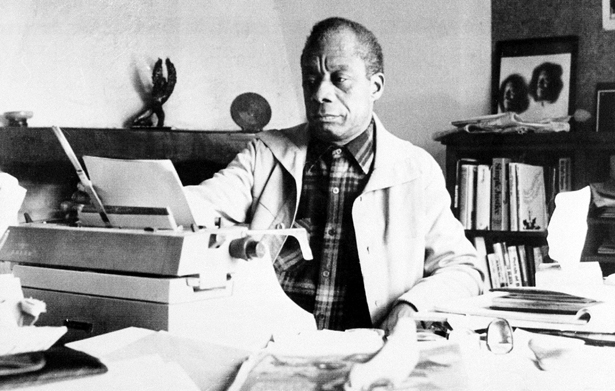
James Baldwin wrote in 1966 about the antagonistic relationship between Black Americans and the police; his willingness to interrogate that dynamic provides a powerful framework for rethinking the antagonism between educators and students. (The Nation)

Teaching in my third academic year impacted by the Covid pandemic, I am feeling nostalgic for some (but not all) of the pre-pandemic dynamics in the classroom.

My university established and followed strict protocols throughout the 2020-2021 academic year that allowed many courses to be taught face-to-face (while professors were allowed to teach remotely and courses provided many hybrid opportunities to address student needs). But last year was a very stilted teaching and learning experience with faculty and students fully masked and social distancing (maintaining the six-feet requirement typical pre-vaccine).

This fall we are face-to-face, masked, but not social distancing; therefore, I am enjoying being able to do small group work in class again. A return to semi-normalcy in the classroom means that Monday, as my first-year writing seminar students formed groups to discuss their reading of Baldwin, I waited a few minutes before strolling around the room to listen to the discussions.

Anyone who teaches knows what happened; as I approached each group, students fell silent, and several looked up, concerned.

I always take these moments to begin a discussion about the antagonistic relationship that exists between teachers and their students. Students admit that a teacher approaching makes them afraid they are doing something wrong, even when they are fully engaged in the assignment.

Many of us who went through teacher training or conduct teacher training have discussed walking toward students as a classroom management technique.

It does work, but we rarely unpack why and almost never interrogate that the technique should not “work.”

My first-year students at a selective liberal arts college (having almost all been very successful in K-12, either straight-A students or close to that) are quick to acknowledge the many ways that they feel antagonism from and toward their teachers. From dress codes to bathroom restrictions to grading policies to late-to-class rules—students find the school days filled with landmines policed by their teachers.

Of note is how difficult it is for first-year college students to shift away from student behaviors (raising hands, asking to go to the bathroom) and toward autonomous adult behaviors (we explicitly focus on the difference between access to going to the bathroom in high school and college).

Part of this reductive and dehumanizing dynamic is the prevalence of uncritical embracing of simplistic behaviorism grounded most vividly in the punishment/reward elements of school rules and grading.

Despite my commitment to creating a classroom environment driven by collaboration and not antagonism, students still primarily experience antagonistic relationships with their teachers/professors when learning formally.

As a professor, I witness that reality because of one of the worst aspects of the teaching profession—educators publicly shaming student behaviors.

When I started teaching high school in 1984, I quickly learned to avoid the teachers’ lounge, where my colleagues tended to gather and endlessly rail against (by name) students that I taught (and loved). What I noticed was a proclivity for teachers to angrily berate teenagers for behaving like teenagers.

One of my fortunate gifts as a teacher is that I chose to teach high school and that I genuinely love teenagers because they have reached an early stage of adulthood but also maintain some of the most endearing qualities of childhood. I very much enjoyed discovering and unpacking the world with teenagers who found everything to be new (even as I realized that none of it was new).

Jump about four decades later, and I see that played out just a bit differently on social media, where teachers and professors routinely hold forth in anger about a student’s email asking if they missed anything when absent. This sort of public (although anonymous) student shaming seems to be common at the beginning and end of semesters so there has been a flurry of them over the past few weeks.

Tip toeing the line of subtweeting, I Tweeted this yesterday with those type of social media posts in mind:

Later, I added this:

Throughout my career as a high school teacher and now a college professor, I have worked diligently to be student-centered in the way that honors the autonomy and human dignity of my students; I have also embraced Paulo Freire’s concepts of choosing to be authoritative and not authoritarian as a teacher, parent, and coach.

This critical commitment has often been well embraced by my students (although not all of them) but rebuffed by many, if not most, of my colleagues. A typical criticism I hear (which I confront in the second Tweet above) is that if adult authority figures are not authoritarian, students will take advantage of them.

The nasty (and false, I think) Puritanical belief that humans (especially children and teenagers) left alone will behave in base and selfish ways seems to be how many teachers/professors view their students. This deficit perspective is pervasive in education, often manifested as racism, classism [1], sexism, and agism but masked as “necessary” lest we lose all control!

I firmly reject that my job as a teacher is to “fix” inherently flawed young humans and instead embrace that to teach is to provide the guidance necessary for young people to develop their autonomy and recognize their and other’s basic human dignity.

Over almost 40 years of teaching, I have had very few students attempt to take advantage of me, and most of them have suffered the consequences they deserved for that behavior while many of them have directly reached out to me over the years to apologize.

A low-stakes teaching and learning environment has allowed me to be very demanding, having extremely high standards for students, and I have found that students respond well to high expectations couched in clear expectations, detailed support and feedback, and patience paired with firm guidelines for student behavior and artifacts of their learning.

I have documented on social media several times that my students submit work on time at well over 90-95% rates although I do not grade assignments and do not record or deduct for late work. Almost all the work that is late can be traced tp legitimate reasons (the types of real-world justifications for late work that adults enjoy).

Students and educators deserve a teaching/learning environment grounded in collaboration and not antagonism—where everyone has their autonomy and human dignity honored, and even celebrated.

If K-12 and undergraduate students already knew and behaved in all the ways adults want, why would they need to be in our classes?

When Student Y sends a preposterous email, our job as educators is to teach the student why it is preposterous, and how to engage with another human in ways that show respect to both the student and the teacher.

And that teaching—even when our last nerve is tested—must be as patient as possible, although firm, and our students must trust that we are here to work with them for their success, not to police them for their flaws until they are properly “fixed.”

At its core, I think James Baldwin’s view of policing serves us well here: “The law is meant to be my servant and not my master, still less my torturer and my murderer.”

And so, many days while teaching, I explain to students that I work for them, and when all is going as it should, I actually am there to work with them.

None the less, every time I walk toward a small group of students, they fall silent and look up, faces expecting antagonism and not yet sure we are there for the same thing—whatever any student needs to live autonomous lives where their human dignity is seen and appreciated.


[1] See:

The return of the deficit signifies a depressing symmetry in demographic trends and public policy. Deborah Stone (1997), writing on the art of political decision­making, argues that “political reasoning is [about] metaphor­making and category­making . . . strategic portrayal for persuasion’s sake, and ultimately for policy’s sake” (p. 9). Portraying disproportionate school failure among Black and Hispanic youth in terms of “personal troubles” (Mills, 1959) or cultural deficiencies sustains public policies that emphasize individual self interest and personal responsibility (e.g., welfare reform, high stakes testing), leaving no reason to consider the effects of poverty and discrimination or underfunded schools and deteriorating facilities on children’s learning.

Dudley-Marling, Curt (2007) “Return of the Deficit,” Journal of Educational Controversy: Vol. 2 : No. 1 , Article 5.
Available at: https://cedar.wwu.edu/jec/vol2/iss1/5

Moving from “All Students Must” to “Each Student Deserves”

Since publishing my book, How to End the Reading War and Serve the Literacy Needs of All Students, that examines the current “science of reading” (SoR) version of the Reading War, I have given several interviews and presentations on that work.

I have also continued to blog about the movement, and in all of these experiences, I am forced to rethink and think more complexly through what I know and understand about the SoR movement as well as how to teach reading and literacy.

The most recent interview, by literacy expert Sam Bommarito, proved to be an enlightening experience on several levels.

First, Sam’s experience and expertise in the field of literacy were a welcomed change from being interviewed by generalists and journalists because his questions dove directly into the core of the issues surrounding SoR and those questions challenged me to think more deeply and carefully.

Our exchange between people with similar levels of expertise on the subject allowed (or even required) us to focus on how best to offer any viewers nuanced but clear explanations of a deeply complex topic; as I noted (and emphasize often now), the evidence on teaching reading is not simple, and not settled.

But the larger take-away for me after the interview was that Sam’s third question—Does it make any sense to effectively ban selected practices found in balanced approaches to reading, e.g., reading recovery, workshop teaching or guided reading?—prompted me to explain in greater detail a core concept that grounds a fundamental reason I reject the SoR movement.

Whether I am addressing literacy specifically or teaching pedagogy broadly, I have relied for many years on the best practice concepts expressed by Zemelman, Daniels, and Hyde.

Each chapter in their book (now in its fourth edition) ends with a chart that suggests instructional practices that teachers should increase or decrease; for example, on writing instruction (download sample here):

Key to note is that best practice is grounded in broad and diverse bodies of research on teaching and learning, and that best practice philosophy neither requires nor bans any specific instructional approach; whether a teacher uses any pedagogy is directly linked to student need (not a prescription form some authority such as standards or an adopted program).

When SoR advocates call for “all students must” (for example, systematic intensive phonics for all students and universal screening for dyslexia), they are misrepresenting what we know about teaching and learning: There is no universal silver bullet for “all students.”

Best practice structures promote research and evidence as a spectrum, a range of practices for every teacher’s toolbox; best practice also recommends that instruction begin with individual students, their demonstrated known, unknown, and misconceptions.

If we think carefully about decoding and direct instruction in phonics and phonemic awareness, teachers will face a wide diversity of students in any class in terms of where they are in their reading development; in short, there simply is no situation where “all students must” serves students well.

Literacy is not simple, and literacy development is not linear, sequential, or systematic.

For example, most people do not accumulate vocabulary in order to be able to read, but develop their vocabulary by reading.

Context (in terms of so-called literacy skills) and engagement are extremely important when students are developing their literacy; regretfully, many misguided movements during the history of the Reading War have eroded an essential aspect of literacy that must be honored—literacy as holistic.

Here, we must address a fundamental paradox in the SoR movement.

Several different kinds of advocacy are fueling the SoR movement—from parents advocating for greater awareness of dyslexia to Black and poor parents advocating for under-/un-served populations of students to advocates for the needs of emerging bilingual students.

The common denominator here is a genuine concern for the under-/un-served student, a pervasive belief that for a number of reasons, too many students are being failed by the system itself (although some elements of the SoR movement are also directly blaming teachers and teacher educators for those failures).

The paradox is that the aggressive advocacy behind the SoR movement is driving an all-or-nothing silver-bullet approach to teaching reading, which will mis-serve students as much or more than the current conditions of teaching and learning in U.S. public schools.

So this leads me to Sam’s effort to bridge the divisions in the Reading War (something I am far more skeptical about, as I address in Sam’s question 5: Cambourne and Crouch recently said we should stop using the Reading Wars metaphor and replace it with the metaphor of the Reading Quilt- with different “sides” adding different pieces to the quilt. Do you see any hope for that point of view? Do you see hope for an end to the divisive discourse?  Do you see hope for ending the reading wars? [13:20]).

I am no fan of compromise (as I explain in the interview) but I think we do have common ground in terms of two beliefs: (1) Far too many students are being under-/un-served in our current K-12 public school system (notably in their literacy), and (2) the under-/un-served are disproportionately marginalized and vulnerable populations of students (Black students, poor students, emerging bilinguals, students with special needs).

Not a compromise, but my modest proposal is that all of us concerned with reading and literacy among K-12 students need to set aside the “all students must” mandate and commit instead to “each student deserves.”

“All students must” be screened for dyslexia is a guaranteed disaster for students (consider the over-diagnosing of ADHD as one example), but “each student deserves” access to ample books and other texts in their homes and schools fulfills what we know about literacy development without being overly simplistic or harmful.

Each student deserves whatever teaching and learning experiences they need and want in order to grow and develop at the rate unique to them (not some manufactured and artificial “grade level” proficiency).

This commitment shifts our instruction and assessment gaze away from compliance to a reading program or to a set of prescribed standards and toward the demonstrated needs and wants of each student who enters any classroom.

The ultimate irony here is that the whole language (WL), reading/writing workshop, and balanced literacy (BL) movements (all falsely demonized since the 1990s) offer that exact commitment along with very high standards for teacher expertise (each of us in charge of any student must have a very complex toolbox for teaching and also must be prepared to individualized instruction).

Again, as I stated in the interview, WL, workshops, and BL did not fail our students, but we have certainly failed the core commitment of those movements—serving the learning needs of each student.

What we know about teaching reading is not simple or settled, but I think we can and must all agree that instead of falling prey to the overly simplistic and harmful “all students must,” a better way forward is a resolute commitment to “each student deserves.”


The Politics of Childhood in an Era of Authoritarian Education

While on vacation, a friend and I were discussing the paradox of parenting.

A parent often feels a tension between fostering and supporting a child to be the person they want to be as that contrasts with dictating what is best for the child (knowing as adults do that children, teens, and young adults often make decisions necessarily without the context of experience that would certainly change many decisions).

That paradox, that tension has existed for me as a teacher/professor, parent, grandparent, and coach.

I am constantly checking myself in roles of authority to determine if I am imposing my authority onto children and young people (authoritarian) or if I am mentoring and fostering those humans in the cone of my authority in ways that support their own autonomy and development along lines they actively choose for themselves (authoritative).

This is a dichotomy examined by Paulo Freire [1], and a central concern for any critical educator.

The current misguided attacks on anything “critical” is particularly frustrating for critical educators since these attacks are designed to fulfill the demands of authoritarian systems, partisan politics and formal education.

It has occurred to me recently that I have been in roles of authority for a very long time, beginning with working as a lifeguard in my mid- to late teens. My role of authority literally began, then, with the expectations that I would guard human life—any human life that came into the sphere of the pool where I was charged with monitoring swimming and the safety of not only individual swimmers but all of the people in the pool.

I was a very good and capable swimmer, and for a teen, I was reasonably responsible (although I cringe thinking about being a head lifeguard when only 17 or so). But having the level of authority and responsibility that being a lifeguard entails was quite likely asking far more of me that I deserved.

Those days of lifeguarding set me on course for being the responsible person for the next 40-plus years, exacting a significant toll on me psychologically and emotionally.

Maintaining a critical authoritative pose when in positions of authority is extremely hard, much harder than being authoritarian.

Way back in the 1980s and 1990s, I was practicing in many ways the sort of critical teaching that is coming under attack in 2021, even resulting in a teacher in Tennessee being fired:

At issue was Hawn assigning the essay “The First White President” by Ta-Nehisi Coates to students in his Contemporary Issues class in February, and later in March, playing a video of “White Privilege,” a spoken word poem by Kyla Jenée Lacey to the same students.

A Tennessee teacher taught a Ta-Nehisi Coates essay and a poem about white privilege. He was fired for it

Many conservatives see the work of Coates, for example, as radical, while those of us on the left would argue Coates’s work is quite mainstream and accessible—but far from radical. This is the same dynamic around Barack Obama, for example; Obama is a moderate and an incrementalist, but certainly not a radical leftist or Marxist (as conservatives like to suggest).

While I taught high school English in the very conservative rural South, I was mostly allowed to teach texts with only occasional complaints from parents. What looks quite odd now is that I included Howard Zinn in my classes for many years without a peep from anyone (Zinn is a key target of the ant-CRT movement now).

But I also included Joseph Campbell’s comparative mythology in my classes in order to help students navigate metaphorical approaches to narratives (a key skill needed in the Advanced Placement course I taught and as preparation for college).

Including Campbell did cause problems since his work complicated the literalism many of students experienced in their religious lives. Fundamentalist Christianity was the background of nearly all my students, and Campbell’s casual claims that all religions and mythologies told similar archetypal stories stepped on the toes of arguments that accepting Jesus was the only way into heaven.

I aroused similar complaints by including Gandhi in my Emerson/Thoreau/MLK unit.

The parental challenges to Campbell and Gandhi were grounded in a type of insecurity that had never been examined critically by those parents, all of which was the result of having been raised in authoritarian environments.

I did have my students interrogate that Sunday school and preaching were not places where they were encouraged to ask questions or challenge any of the “lessons” they received.

So in 2021, I cannot stress too much that the Republican attack on critical race theory and how history is taught is simply a battle for the integrity of the mind of children, teens, and young adults.

Learning and knowledge—especially if we genuinely believe in human autonomy and democracy—are not simply about accumulating facts determined to be true or important by some authority, but are about learning how to know what we believe is true and why.

Human freedom is most threatened by unexamined beliefs, not by the act of questioning itself.

Authority doesn’t just resist questioning, but entirely rejects it as an act.

Republicans and the conservatives drawn to authoritarianism do not trust human agency, do not believe in the free exchange of ideas, and do not believe in the essential power of questioning, especially when the questions are aimed at their authority.

Nothing is as simple as “both sides,” and certainly we should never fall into traps of “only know this.”

There can never be free people, however, without free minds cultivated in the guarantee of academic freedom.

And the free exchange of ideas will never be spaces without discomfort, which now seems to be a smokescreen used by Republicans in their pursuit of securing authority.

Suddenly, Republicans are concerned about uncomfortable white students, but seem oblivious to the discomfort, for example, of thousands and thousands of Black students experience reading The Adventures of Huckleberry Finn or To Kill a Mockingbird.

Teachers must now tip-toe around the uncomfortable texts and conversations about race and racism because of the possibility of white discomfort (note that Black discomfort about Huck Finn has been repeatedly swept aside under the guise of “classic literature”)—a stance once again disregarding the daily discomfort of Black children experiencing racism.

Intellectual discomfort (what texts and discussions prompt in formal schooling) is often necessary for learning, but existential discomfort (what targets of racism and sexism experience) are not necessary and are essentially harmful.

Authoritarian education is willing to sacrifice the existential comfort of marginalized children in order to shield some children from intellectual discomfort.

Even more disturbing, however, is that what is really being protected is the frailty of those students’ parents and those people in authority who are not willing to risk being challenged or questioned in any way.


[1] Paulo Freire and Peace Education, Lesley Bartlett:

Freire’s early call for a “horizontal” relationship generated a staggering amount of debate over the teacher’s role in a democratic classroom. In his later writings, Freire refined his notion of directivity and the teacher-student relationship. In Pedagogy of Hope, he explained: “Dialogue between teachers and students does not place them on the same footing professionally; but it does mark the democratic position between them” (Freire, 1994, p. 116-117). In his “talking” books of the 1980s and 90s, Freire distinguished between authoritative and authoritarian teachers:

“I have never said that the educator is the same as the pupil. Quite the contrary, I have always said that whoever says that they are equal is being demagogic and false. The educator is different from the pupil. But this difference, from the point of view of the revolution, must not be antagonistic. The difference becomes antagonistic when the authority of the educator, different from the freedom of the pupil, is transformed into authoritarianism. This is the demand I make of the revolutionary educator. For me, it is absolutely contradictory when the educator, in the name of the revolution, takes power over the method and orders the pupil, in an authoritarian way, using this difference that exists. This is my position, and therefore it makes me surprised when it is said that I defend a nondirective position. How could I defend the fact that the nature of the educational process is always directive whether the education is given by the bourgeoisie or the working class” (Freire 1985, p. 76).

Dear Parents, Your Children’s K-12 Education Is Already Very Conservative

I entered public education in the fall of 1984, a naive and idealistic first-year English teacher vividly aware of the literary significance of that year.

Of course, I was not yet aware that I was completely wrong about the essential purposes of public education because I had been gifted parents who trusted not only my intellect but the foundational good of knowledge and academic freedom.

My parents were wrong about quite a lot, it turns out, but they were magnificent in the freedom they allowed my mind and the support they gave to my often wonderful teachers.

The first few years of my teaching career included a series of visits to the principal’s office to discuss complaints from parents. It was something akin to the hazing period people experience when joining fraternities.

One of the earliest clashes I had with parents—and I should note that my students were often deeply appreciative of my classes, supportive of the work I was doing—centered on complaints about my assigning John Gardner’s Grendel to my advanced tenth graders (students on track to take Advanced Placement their senior year).

Grendel is a retelling of the Beowulf epic poem in novel form, and it does include a few graphic scenes and some so-called adult language. But these were 15 and 16 year olds planning to go to college, and unbeknownst to their parents, many of these students were sexually active and used language that was far more profane that the few “offensive” words in the novel. (Treating young adults as intellectual children when they are asserting adult behavior in their lives outside of school is inexcusable, I think.)

Yet, a few (maybe only two) parents launched a campaign to teach this new teacher a lesson about what parents expected from their children’s teachers.

Of course, the short version of this is that the novel was removed from my required list (although I left copies on my shelf and many students continued to choose the novel along with many other commonly banned works).

This pattern continued for several years: I was challenging my students intellectually, often seeking ways to prepare them for college, and parents here and there asserted disproportionate influence on whether or not I was allowed to do my work as an educator.

A key moment in those first years was me sitting once again in the principal’s office listening to Mr. Simpkins (also the man who was principal when I attended this school and father of two of my childhood friends) chastise me about crossing lines parents created; these sessions were also punctuated with not-so-subtle threat that my teaching career could be ended at any moment (South Carolina is a right-to-work state, by the way).

One time, exasperated, I responded with, “Mr. Simpkins, I am simply trying to teach these students to think.”

With a half-smile and without hesitation, Mr. Simpkins replied, “Paul, some parents don’t want their children to think.”

It is important to emphasize here that his comment carried the implication “and thus, we have no right to make those students think.”

Fast forward almost 40 years, over which I have been in education in SC the entire time, and consider that those experiences I encountered in the mid-1980s are now how the entire nation is dealing with K-12 education in the U.S.

Republicans are creating a false narrative about public schools indoctrinating students in leftwing ideologies (often mislabeled as Critical Race Theory or Marxism) and whipping up parental anger at their local schools.

And the paradox, of course, is that Republicans are passing and signing legislation that is designed to indoctrinate:

Florida Gov. Ron DeSantis announced new state programs for students Tuesday that will require civics and patriotism education as well as CPR training.

“Once students graduate high school, some will go to college, some of them will do other things…whatever you do, this civics is gonna be relevant because you are going to be a citizen,” DeSantis said at an afternoon news briefing in Fort Myers.

It will also require high school students to learn about “the evils of communism and totalitarian ideologies.”

Florida will require schools to teach civics and ‘evils of communism’

Currently, about 25 states are doing something similar to Florida—mandating what and how schools teach about race, racism, and history.

Two points need to be made about these efforts.

First, K-12 public education in the U.S. has always been and remains very conservative.

Let me emphasize that my experience noted above is common for new teachers, who quickly learn to self-censor and avoid parental complaints and administrative reprimands.

As I have written about before, I taught with a wonderful young teacher, himself a well-known and well-loved active Christian in the church just across the street from the high school, who taught geography. He found himself “in trouble” because he taught Middle East geography, including how the countries were aligned with different religions.

One parent was outraged, and asked that his son be moved to another teacher because the parent didn’t want his son to know there were religions other than Christianity.

What did the principal do? Moved the student to a geography class taught by a coach (a very conservative man who taught in ways that would likely thrill Republicans).

This leads to a second point: Conservatives are deeply confused about indoctrination and education.

And a great example of that misconception comes from an unlikely place, a brilliant response from chairman of the Joint Chiefs of Staff, Gen. Mark Milley, about charges by Republicans that the military is “woke” (another misuse of a term designed by conservatives to be a criticism):

“I’ve read Mao Zedong. I’ve read Karl Marx. I’ve read Lenin. That doesn’t make me a communist. So what is wrong with understanding — having some situational understanding about the country for which we are here to defend?” Milley said.

He continued brusquely: “And I personally find it offensive that we are accusing the United States military, our general officers, our commissioned, noncommissioned officers of being, quote, ‘woke’ or something else, because we’re studying some theories that are out there.”…

“I want to understand white rage, and I’m white, and I want to understand it,” he said. “So what is it that caused thousands of people to assault this building and try to overturn the Constitution of the United States of America? What caused that? I want to find that out.”

Top General Defends Studying Critical Race Theory In The Military

Gen. Milley understands—like my parents—that knowledge, reading, and awareness are powerful, but that simply being exposed to an idea doesn’t mean anyone is immediately indoctrinated by those ideas.

Most of us have studied the Holocaust, and we know the ideology of Hitler and the Nazis. Yet, most people decide to reject those ideas and beliefs.

I also want to emphasize that Gen. Milley is defending academic freedom, the essential nature of an academic institution and the sacredness of the human mind.

These are concepts entirely lost on Republicans who seek ways to use schools to decide for students what they learn and what they believe.

I want to end by returning to the central point everyone should understand, especially parents: U.S. K-12 public education is extremely conservative.

A vivid example of that is the enduring ways that children are taught about Hellen Keller, through the play The Miracle Worker.

Keller has been and remains a tool of educational indoctrination aimed at inculcating into children a belief in rugged individualism; if a person such as Keller can overcome her many sensory challenges, the message goes, then anyone can pull themselves up by the bootstraps.

But just like the mis-teaching of Martin Luther King Jr. in public schools (the overemphasis on his “I Have a Dream” speech and the de-contextualizing of his “content of their character” assertion), Keller of The Miracle Worker is not the full and complicated (or even accurate) story of this woman.

Keller was a socialist and political activist—something I am certain most students never hear in a K-12 classroom.

The Miracle Worker is the sort of “safe” text that most teachers default to, like King’s “I Have a Dream,” in order to avoid the relentless interference of parents and administrators.

K-12 public education is mostly conservative because teachers learn to self-censor, to tip-toe around anything that the most extreme parents may complain about.

Critical Race Theory and liberal indoctrination simply do not exist in K-12 public schools in the U.S.

But there is a problem parents should be concerned about; your children are often being cheated out of knowledge and awareness because academic freedom died a long time ago when the first administrator defaulted to parental complaints at the expense of any student’s right to read and think widely and openly.

Should South Carolina Ban Critical Race Theory and the 1619 Project?

[UPDATE: See published version here: MY TURN: Should South Carolina cancel Critical Race Theory?]

“In total, lawmakers in at least 15 states have introduced bills that seek to restrict how teachers can discuss racism, sexism, and other social issues,” reports Sarah Schwartz for Education Week.

South Carolina (H630) has joined Republicans across the U.S. challenging Critical Race Theory (CRT) and the 1619 Project.

The key problem with this copycat legislation is CRT isn’t implemented in K-12 education and the 1619 Project is not adopted curriculum.

CRT is rare in higher education, reserved for some graduate programs (specifically among legal scholars), but CRT provides a way to examine systemic racism, not simply the actions of individual racists.

For example, CRT is an academic process for trying to understand why police kill Black people disproportionately to white people. According to CRT, the killing of Tamir Rice is rooted in systemic racism (viewing Black boys as older than their biological age) that does not require the officer being consciously a racist individual.

Ultimately, legislation aimed at CRT or the 1619 Project is misleading, a threat to academic freedom and the education of students in SC. As Eesha Pendharker reports in Education Week: “[E]xperts say the laws ultimately will unravel years of administrators’ fitful efforts to improve educational opportunities and academic outcomes for America’s children of color, who today make up the majority of the nation’s student body.”

What, then, is occurring in SC K-12 education in terms of race and racism?

  • Diversity, equity, and inclusion (DEI) training that covers implicit bias, systemic racism and racial privilege, and microaggressions. This training is now common for educators and students, but worth monitoring because DEI training is often not effective and can serve as superficial distractions allowing schools to avoid harder diversity work.
  • Diversifying faculty and the curriculum. Public school teachers are about 80% white, less diverse than society and the population of students in public schooling (increasingly Black and brown). Also, for many years, a greater representation of Black and brown voices and history have been included in what students are taught (typically in English/ELA and history/social studies). Diversifying the curriculum has prompted controversial legislation by Republicans, however.
  • Implementing culturally relevant teaching. The work of Gloria Ladson-Billings has gained momentum in K-12 education. Culturally relevant teaching, as she defines it, is “a threefold approach to ensuring that all children are successful. That approach requires a focus on students’ learning, an attempt to develop their cultural competence, and to increase their sociopolitical or critical consciousness.” This focus seeks to honor all children while acknowledging that differences remain among students by race, gender, culture, etc.
  • Adopting responsive discipline. Decades of research have revealed racially inequitable discipline in schools, popularly known as the school-to-prison pipeline. Many schools have begun to reconsider inequitable practices such as zero-tolerance policies and expulsion/suspension, for example.
  • Expanding educational access and improving educational quality for children of color. Black and brown students are under-represented in advanced programs (such as Advanced Placement and gifted programs), and often are taught by teachers with the least experience, who are under-/un-certified, and sit in classrooms with the highest student/teacher ratios. Public schools are not the “great equalizers” politicians claim, and often reflect and perpetuate inequity.

State legislation and the Superintendent of Education targeting CRT and the 1619 Project is political theater, a solution in search of a problem. Race and racism remain a significant part of life as well as education in SC. Republicans are poised to ruin the very good and needed, but incomplete, work identified above.

It is critical that teachers and students are free to examine the truth of our past and our present so that we can create the future we believe is possible.

Unpacking Nonsense: Knowledge as Commodity

Make your money with a suit and tie
Make your money with shrewd denial
Make your money expert advice…
You can lie
As long as you mean it

“King of Comedy,” R.E.M.

The school choice debate, reaching back into the twentieth century, tends to be framed around either/or concepts such as the free market (the Invisible Hand) versus public institutions (the Commons). But school choice that pits universal public education against private schools, charter schools, and homeschooling (as well as unschooling) is at its core a debate about the autonomy and humanity of children and teens along with a rarely interrogated idealism about parents and parental choice.

The U.S. has a long history of struggling badly with childhood and exactly when a human is an autonomous adult—from child labor to the garbled array of ages at which teens and young adults are allowed to behave as full adults (15-16 for driving, 18 for voting and joining the military, 21 for alcohol, and dozens of conflicting ages and laws across the country governing sexual autonomy, etc.).

If anyone clings to the foundational commitment to universal public education (often associated with the arguments posed by Thomas Jefferson) as necessary for creating and preserving a democracy, a so-called free people, then we must admit that a public education grounded in knowledge that is critically interrogated must be preserved against the forces of indoctrination.

Education is about asking, What do we know? How do we know it? And who does this knowledge benefit (or leave out)?

This final point is one of the tensions with religious education or church-grounded schools. I have taught in a graduate program that included teachers from a nearby Christian school where every lesson taught had to be linked directly to passages from the Bible.

Regardless of your faith or lack thereof, this is a necessarily distorted education—one that is being presented to children and teens as facts or t/Truth.

I have taught many students at my university, also, who came from religious schooling and noted that they had never been taught evolution (for example) or, when we covered evolution in my foundations course, they explained that their education had presented the scientific concept significantly differently than what we examined.

Whether we call what students learn in school “knowledge” or “content” or “curriculum,” we always must be aware that what students are taught is always chosen by someone for some reason; in other words, there is no politically, ethically, or intellectually neutral “knowledge.”

In fact, every classroom is by its nature of humans interacting with different levels of power a political space.

All of this lies beneath the current attack from conservatives and Republicans on Critical Race Theory (CRT) and the 1619 Project (what we teach in U.S. history).

The reasons these attacks on public schooling are relevant to the school choice debate are, as I recently noted, that all alternatives to universal public schooling (private schools, charter schools, homeschooling, and unschooling) benefit from a discredited (and demonized) public education system.

Now one of the natural consequences of the rightwing attack on schooling is waving the “For Sale” sign:

Let me note here that this isn’t parody, but a very real addition to the school choice/homeschooling movement.

Elements of this “anti-woke” version of U.S. history are stunning, although predictable.

First, Anzaldua frames herself as an early career high school history teacher, who “was not just a leftist, but a full-blown socialist, intersectional feminist, and ‘antiracist’.” She adds (seemingly unaware of the irony) that her own anti-woke wokeness can be attributed to one of the most discredited academics of our time, Jordan Peterson.

But more importantly, the course that is being advertised as “fact based history” has several supporting links that perpetuate misinformation—scary uses of red and imagery linking CRT to “communism!” and CRT resources that are simply a list of links to misinformation and more scare tactics.

From “communism” and “socialism” to “CRT” and any use of the term “critical,” conservatives are uniformly misinformed [1], and thus, all of their arguments are invalid since they start with a false premise—the most significant of which is that essentially no one in public education is teaching history/social studies from a CRT lens.

Even in higher education, CRT is rare.

Setting aside that the exact people accusing public education of being politicized by the Left are themselves politicizing the teaching of history, what is wrong with this entry into the market place of ideas for education children and young adults in the U.S.?

How about considering the textbook choice—published in 1888!

Here is a fundamental problem with the long history of debates about the teaching of history in the U.S., a complete misunderstanding about what history is, how history is always biased and evolving.

Conservatives are often some of the loudest about combating the “rewriting of history” (consider the debates about statues and memorials to Confederate generals and the Civil War)—as if there is anything other than the perpetual rewriting of history.

In other words, history is the writing and rewriting of history.

Offering seventh graders a textbook 133 years old is educational malpractice; it is making a conscious decision to deny children (who have no political power and very little intellectual autonomy) the wealth of historical thinking that has occurred in the century-plus.

Consider that in 1888, women could not vote and the U.S. existed under Jim Crow laws of segregation.

So a U.S. history course grounded in a textbook from 1888 can be yours (or your children’s) for a mere $900.

While many (too many) culture war debates in the U.S. are overly simplistic—Us v. Them—a reasonable person can recognize that some aspects of human existence are well suited for the free market while others are not (the military or legal system working for the highest bidder).

This brings us back to the Commons. Tax-funded roads and highway systems are some of the most powerful and important contributions to the free market thriving, for example, and thus, evidence that the free market and the Commons are not in competition, but symbiotic.

But just as essential are public schools, and I would argue, universal healthcare.

As this homeschooling course proves, knowledge can be a commodity—truth determined by the consumer (and even for the consumer).

But knowledge must not be a mere commodity if we value learning and a well-informed citizenry, populated continually by children growing through adolescence into whatever moment we deem them adults.

Counter to the cartoon version of critical educators (as Leftist, Marxist indoctrinators), all aspects of critical education are in fact committed above all else to this: “Critical pedagogy wants to know who’s indoctrinating whom.”

Critical educators are invested in helping foster critical students; these are acts of interrogating knowledge, not indoctrinating anyone.

While the attacks from conservatives and Republicans are both an affront to the discipline of history and the founding principles of teaching and learning, this is another example of idealizing parental choice over the autonomy of children, adolescence, and young adults.

I have explained often that I was raised in a home and community that taught me directly and indirectly incredibly harmful “knowledge” as t/Truth (much of it racism, and a great deal of it sexist). I am biased about the value of universal public education because my school and teacher experiences were opportunities for me to discover knowledge and embrace my own intellectual autonomy that was corrupted and even stunted by the choices made by my parents and community.

As a career-long educator, a critical educator, I must tell you when it comes to “anti-woke, pro-American, and fact based history education,” don’t buy it.


[1] Consider that Anzaldua identifies as a “freethinker,” a term that has a meaning I suspect she is completely unaware exists: “freethinking is most closely linked with secularism, atheism, agnosticism, humanism, anti-clericalism, and religious critique.”