Category Archives: Writing

Writing, Unteachable or Mistaught?

Let’s not tell them what to write.
Lou LaBrant, The Psychological Basis for Creative Writing (1936)

Kurt Vonnegut was a genre-bending writer and a Freethinker, a lonely pond fed by the twin tributaries of atheism and agnosticism. So it is a many-layered and problematic claim by Vonnegut, also a writing teacher, that writing is “unteachable,” but “something God lets you do or declines to let you do.”

This nod to the authority of God, I think, is more than a typical Vonnegut joke (the agnostic/atheist writer citing God) as it speaks to a seemingly endless debate over the five-paragraph essay, which has resurfaced on the NCTE Connected Community.

To investigate the use of the five-paragraph template as well as prompted writing as dominant practices for teaching writing in formal schooling to all children, I want to begin by exploring my own recent experience co-writing a chapter with a colleague and also couch the entire discussion in a caution raised by Johnson, Smagorinsky, Thompson, and Fry: “Just as we hope that teachers do not oversimplify issues of form, we hope that critics do not oversimplify intentions of the legions of teachers who take this approach” (p. 171).

Writers and People Who Write

My colleague Mike Svec and I are working on a chapter in a volume, and we are examining our work as teacher educators who have working-class backgrounds.

Mike is an academic who occasionally writes. I am a writer who happens to be an academic.

And therein lies a problem for our work as co-writers. Mike spends a great deal of time mulling, reading, planning, and fretting (my word) before committing anything to the virtual page.

I write as part of my brainstorming, and fill up the virtual page so I will have something to wrestle with, revise, reshape and even abandon.

Filling up virtual paper is Mike’s late stage. Filling up virtual paper is my first stage.

This experience has highlighted for me two important points:

  1. Most people (students and academics/teachers included) are not writers, but people who occasionally write (and then, that occasion is often under some compelling requirement and not the “choice” of the person writing).
  2. Especially people who occasionally write, and then most often under that compelling reason or situation, suffer from an inordinate sense of paralysis (I am going to argue further below) because they have been mistaught how to write (predominantly by template and prompt).

Since most teachers of English/ELA and any discipline in which the teacher must teach writing are themselves not writers, the default approach to writing is at least informed by if not couched in Mike’s view of writing—one that has been fostered by template and prompted writing instruction (the authoritarian nod in Vonnegut invoking God above).

And this is my big picture philosophical and pedagogical problem with depending on the five-paragraph essay as the primary way in which we teach students to write: Visual art classes that aim to teach students to paint do not use paint-by-numbers to prepare novices to be artists, and I would argue, that is because those teachers are themselves artists (not teachers who occasionally paint).

However, most teachers of writing in all disciplines are themselves not writers, but teachers who occasionally (or in the past occasionally) write (wrote).

Why Scripts, Templates, and Prompts Fail Students and Writing

In a graduate summer course for English/ELA teachers, I had the students read a commentary by Mike Royko (syndicated columnist) on flag burning. I asked them to mark the parts of the essay and underline the thesis as they read.

And these students who were also teachers dutifully did so.

Royko’s piece in most ways does not conform to the five-paragraph essay, but the teachers marked and labeled an introduction, body, and conclusion—underlining a sentence as the thesis. They immediately imposed onto the essay the script they taught their students (the script they were taught).

When we shared, they noticed differences in their labeling and marking. Most notable was the thesis: Royko’s piece is a snarky, sarcastic commentary that directly states support for flag burning laws but in fact rejects flag burning laws by sarcastic implication.

As a consequence, no direct thesis exists—although we can fairly paraphrase one.

I continue to use examples such as this with first-year students to investigate and challenge templates for essays they have been taught (for example, essays by Barbara Kingsolver) in order to work toward what Johns calls “genre awareness” instead of “genre acquisition.”

Yes, essays have openings that tend to focus the reader, but most openings are primarily concerned with grabbing and maintaining the reader’s interest. And openings are typically far more than one paragraph (essays have paragraphs of many different lengths as well, some as brief as one word or sentence).

Essays then proceed in many different ways—although guided by concepts such as cohesion and purpose.

And then, essays end some way, a way I would argue that is not “restate your introduction in different words” (the Kingsolver essay linked above frames the essay on attitudes toward children with an opening and then closing personal narrative about Spain).

Ultimately, the five-paragraph essay allows both teachers and students to avoid the messy and complicated business that is writing—many dozens of choices with purpose and intent.

Scripts, templates, and prompts do most of the work for student—leaving them almost no opportunities to experiment with the writer’s craft, whether that be in the service of history, science, or any other discipline. Without purposeful practice in the business of writing (making purposeful decisions while implementing the writer’s genre awareness against the constraints of the writing expectations), students (and even academics) are often left in some degree of paralysis when asked to perform authentically as writers.

As Zach Weiner’s comic succinctly illustrates, the five-paragraph template/script and writing prompt serve greater ease in assigning and grading writing (absolving the writing teacher of having expertise and experience as a writer, in fact), but as the student in the comic declares: “Suddenly I hate writing.”

And as Jennifer Gray details:

[M]any of [the students] checked out of the writing process and merely performed for the teacher. Their descriptions about their writing lack enthusiasm and engagement; instead, they reflect obedience and resignation. That is not the kind of writer I want in my classes; I want to see students actively engaged with their work, finding value and importance in the work.

As much as I love Vonnegut, I disagree about writing being unteachable. And his own role as mainly a writer who occasionally taught writing presents another lesson:

Nothing is known about helping real writers to write better. I have discovered almost nothing about it during the past two years. I now make to my successor at Iowa a gift of the one rule that seemed to work for me: Leave real writers alone.

Well, yes, we do know quite a great deal about teaching writing—and we have for many decades. So if “leave them alone” means do not use artificial scripts, I am all in, but certainly developing writers of all ages can be fostered directly by the teacher.

I am left to worry, then, that the main problem we have with teaching writing is that for too long, we have mistaught it as people who occasionally write, and not as writers and as teachers.

This is a herculean ask, of course, that we be writers and teachers.

But for the many who do not now consider themselves writers but must teach writing, it is the opportunity to begin the journey to being a writer with students by committing to genre awareness instead of genre acquisition.

Awareness comes from investigating the form you wish to produce (not imposing a template onto a form or genre). Investigate poetry in order to write poetry; investigate essays in order to write essays.

But set artificial and simplistic templates and scripts aside so that you and your students can see the form you wish to write.

Kingsolver’s warning about child rearing also serves us well as teachers lured by the Siren’s song of the five-paragraph essay: “Be careful what you give children, or don’t, for sooner or later you will always get it back.”

Appreciating the Unteachable: Creative Writing in Formal Schooling

Benjamin Bloom’s eponymous taxonomy has been bastardized, oversimplified, and misunderstood for as long as it has been a staple of teaching.

My major professor for my doctoral work, Lorin Anderson, was a student of Benjamin Bloom, and Anderson has also spent a great deal of scholarship revising Bloom’s taxonomy as well as refuting the ways it is typically misused.

In the revised taxonomy, noting that seeing the taxonomy as linear and sequential is distorting, the earlier elements of “synthesis” and “evaluation” (often interpreted as evaluation being the highest) have been revised to “evaluating” and “creating,” again with the implication often being that “creating” is the highest.

I would argue that some elements of the taxonomy are more complicated but not necessarily qualitatively better, but it does seem credible to suggest that creating is an advanced act by anyone, especially a student, since it involves synthesis—the drawing together into a new whole parts that may or may not have previously been considered related.

And here we come to art, the hard-to-define product of synthesis, purpose, and expression.

Written art, fiction writing, has now been examined by neuroscience, revealing as Carl Zimmer explains:

Some regions of the brain became active only during the creative process, but not while copying, the researchers found. During the brainstorming sessions, some vision-processing regions of volunteers became active. It’s possible that they were, in effect, seeing the scenes they wanted to write.

Other regions became active when the volunteers started jotting down their stories. Dr. Lotze suspects that one of them, the hippocampus, was retrieving factual information that the volunteers could use.

One region near the front of the brain, known to be crucial for holding several pieces of information in mind at once, became active as well. Juggling several characters and plot lines may put special demands on it.

For teachers, especially English/ELA teachers or all teachers who teach their students to write, this study, although limited, should help push them away from traditional template and prompted writing assignments and toward a redefinition of “creative writing” that Lou LaBrant called for in her 1936 piece, “The Psychological Basis for Creative Writing.”

Consider these excerpts from LaBrant, urging teachers to foster authentic, and thus creative, writing by students:

Although teachers of English should be an especially discriminating group when verbal products are concerned, unfortunately we have been as guilty as other educators in devising equivocal phrases and vague statements. We have talked about “tool writing,” “mechanics of reading,” “creative writing,” and “functional grammar.” We have suggested a knowledge as to where grammar ceases to be functional and becomes formal, although grammarians have assured us that all formal grammar is derived from speech. We have verbally separated good usage from grammar, reading skills from reading, and implied other such distinctions. “Creative writing” is probably another one of these vague inventions of our lips. (pp. 292-293)

For in truth every new sentence is a creation, a very intricate and remarkable product. By the term “creative writing” we are, however, emphasizing the degree to which an individual has contributed his personal feeling or thinking to the sentence or paragraph. This emphasis has been necessary because too frequently the school has set up a series of directions, to this extent limiting what we may think of as the creative contribution: the teacher names the topic, determines the length of the paper, and even sometimes assigns the form. For the purposes of this paper I shall, perhaps arbitrarily, use the term “creative writing” to include only that written composition for which the writer has determined his own subject, the form in which he presents it, and the length of the product [emphasis added]. (p. 293)

Before continuing I should make it clear that in discussing creative writing and its basis in child need, I am not suggesting that this is the total writing program. There is no necessity for deciding that formal, carefully organized papers have no place in the high-school student’s writing; but neither is there need to conclude that the necessity for writing assigned and limited history papers precludes the possibility of creative work. In my own classes both needs are recognized. (p. 294)

The foregoing are the chief reasons I see for a program of creative writing. Such a program as here outlined is not easy to direct nor is it a thing to be accepted without careful thought. It demands a recognition of each pupil as an individual; a belief in the real force of creative, active intelligence; a willingness to accept pupil participation in the program planning. I have heard many teachers argue that, given a free hand, pupils will write very little. I can only say that has not been my observation nor my teaching experience…. (p. 299)

Let’s not tell them what to write. (p. 301)

Somewhat tongue-in-cheek, Kurt Vonnegut declared in “Teaching the Unteachable”: “You can’t teach people to write well. Writing well is something God lets you do or declines to let you do.”

Of course, Vonnegut was speaking about fiction writing, and although we may disagree with him about his broad claim that it is unteachable, his implication remains important: Teaching creative writing is extremely complex because creative writing itself is extremely complex.

But let’s also acknowledge that having students write creatively (“that written composition for which the writer has determined his own subject, the form in which he presents it, and the length of the product”) must not be reserved for gifted students only, but something every student deserves to explore.

Redefining creative writing in school (rejecting template and prompted essays) and inviting all students to write creatively raise expectations while also insuring equity.

What Does “Teaching Writing” Mean?

Over the past decade, my home university has adopted and implemented a new curriculum that is, in part, built on shifting to a first year seminar (FYS) concept (instead of the traditional first year composition model commonly known as ENG 101 and 102).

In the most recent three years, I have chaired the First Year Seminar Faculty Oversight Committee and been named Faculty Director, First Year Seminars—all of which has led to my role on a newly formed Task Force to consider how to revise (possibly significantly) our commitment to two first years seminars with one being writing intensive (FYW).

While the university is addressing a number of curricular issues related to the FYS program, a central concern involves the teaching of writing in the FYW—specifically issues related to direct writing instruction (including direct instruction on scholarly citation) and the consistency of the writing-intensive element across all FYWs.

Several elements impact these issues and our possible resolutions: (i) the university does not have a formal writing center/institute, (ii) the university doesn’t have an explicit or formal writing program or stated goals/commitments, and (iii) the commitment to the FYS program included the assumption that all faculty across all disciplines are equipped to teach writing.

I have been teaching writing and researching what that means for over thirty years—the first 18 as a high school English teacher and then at the undergraduate and graduate levels over much of those years, including teaching future teachers of English to teach writing. A number of my scholarly articles, chapters, and books also address teaching writing.

And while I learned how to teach writing painstakingly over those wonderful and challenging two decades of teaching high school, I cannot overemphasize what I have learned about the challenges of supporting quality writing instruction in the last three years—highlighted, I think, by coming against the range of insufficient to misguided understanding of what we mean when we call for teaching writing.

What Does “Teaching Writing” Mean?

At the risk of oversimplifying, I can answer this question by how I address students who want to learn to write poetry, a wonderful and impossible task that is a subset of the wonderful and impossible task of teaching writing (to which you should read the glorious and hilarious Teaching the Unteachable by Kurt Vonnegut).

Step one, I explain, is read, read, read poetry—preferably immersing yourself into entire volumes by poets you enjoy and want to emulate.

Step two, I add, is to write, write, write poetry.

And then, step three is to share those drafts with a poet/teacher who can give you substantive feedback—wherein we find ourselves at “teaching writing.”

If those students follow my guidelines, and then send me poems for my feedback, what do I do?

Central to teaching writing, I must stress, is both the authority of the teacher as well as the attitude of that teacher about writing, which I have proposed for the Task Force as follows:

  • Faculty who recognize that all aspects of writing are a process and that undergraduate students continue to struggle with and need guided practice with formal written expression (including the conventions of the disciplines, citation, and grammar/mechanics).

To teach writing, then, you must not be caught in the trap of thinking anyone can be finished learning to write and the concurrent trap of thinking that direct writing instruction is some sort of remediation (since that implies a lockstep sequence of skills that must be acquired).

For example, one challenge we are facing at my university has been brought to my attention by a librarian who works with FYS/W faculty and receives student referrals from the Academic Discipline Committee. She noted that a number of students were being labeled academically dishonest because they lacked the background in proper citation and that faculty were not teaching citation, but simply labeling it incorrect.

This issue with citation, again, is a subset of not understanding that teaching writing is ongoing for all students (and any writers)—not something to master at a set point during formal education.

The teaching of writing includes, as I note above about teaching poetry, creating the conditions within which a student can learn to write and then managing the sort of feedback and opportunities to revise/draft that leads to growth as a writer.

Creating conditions includes reading and examining a wide variety of texts by genre, mode, and media—and that examination must be not only traditional literary analysis but reading like a writer. Reading like a writer entails close consideration of what a text says and how, while navigating the purposeful relationship between the genre and form the writer has chosen for expression and then how the writer has and has not conformed to the conventions of those genres/forms.

Students and the teacher read an Op-Ed from The New York Times in order to confront what Op-Eds and argument tend to do as texts and how in order to determine if the claims in the Op-Ed are sound and how successful the piece ultimately is.

These conditions also include that students always use reading like a writer as a foundation for drafting original writing.

Feedback, then, becomes the element of teaching writing that is both often only what people think of as teaching writing and then the most misunderstood phase.

The primary problematic view of responding to student writing is “correcting,” which overemphasizes and misunderstands the role of conventions in writing (grammar, mechanics, usage).

What many think of as “correcting,” I would argue is editing, and thus, its priority in the teaching of writing is after we have addressed much more important aspects of text, as Lou LaBrant argued:

As a teacher of English, I am not willing to teach the polishing and adornment of irresponsible, unimportant writing….I would place as the first aim of teaching students to write the development of full responsibility for what they say. (p. 123)

And it is at this implication by LaBrant—responsible and important writing—that I think we must focus on what it means to teach writing.

As teachers of writing, we must give substantive feedback that encourages awareness and purpose in our students as well as prompts them in concrete ways to revise. That feedback must address the following:

  • The relationship between the genre/form students have chosen for their writing and then how effective the piece is within (or against) those conventions.
  • Purposefulness of sentence, paragraph, and form/mode creation.
  • Appropriateness and effectiveness of diction (word choice), tone, and readability (in the context of the designated audience).
  • Weight and clarity of claims (notably in the context of disciplinary, genre, and mode conventions). [As a note: novice writers tend to be claim-machines, overwhelming the reader with too many and often overstated claims, and almost no evidence or elaboration.]
  • Credibility and weight of evidence (again, tempered by the conventions of the disciplines and thus the expectations for citation).
  • Effectiveness and weight of elaboration—achieving cohesion through rhetorical and content strategies (such as detailed examples or narrative) that support the reader’s need for clarity, subordination/coordination of ideas, transition, and one or more unifying themes/theses.

Teaching writing, then, is a monumental task, one that may rightly be called impossible (as Vonnegut somewhat tongue-in-cheek claims); however, we who are tasked with teaching writing should understand the first directive above—learning to write is a process that no one can ever finish—and find solace in Henry David Thoreau (excusing the sexism of his language):

A man has not everything to do, but something; and because he cannot do everything, it is not necessary that he should do something wrong.

No single writing-intensive class or individual teacher should be expected to accomplish any prescribed outcome for students as writers.

Instead, the teaching of writing must be guided by the basic concepts I outlined above for teaching a student to write poetry—creating the conditions within which writing can be explored, conditions that include reading like a writer, drafting original writing, and receiving substantive feedback from a mentor.

Teaching writing has a long history of being a challenge, one recognized by LaBrant in 1953:

It ought to be unnecessary to say that writing is learned by writing; unfortunately there is need. Again and again teachers or schools are accused of failing to teach students to write decent English, and again and again investigations show that students have been taught about punctuation, the function of a paragraph, parts of speech, selection of “vivid” words, spelling – that students have done everything but the writing of many complete papers. Again and again college freshmen report that never in either high school or grammar school have they been asked to select a topic for writing, and write their own ideas about that subject. Some have been given topics for writing; others have been asked to summarize what someone else has said; numbers have been given work on revising sentences, filling in blanks, punctuating sentences, and analyzing what others have written….Knowing facts about language does not necessarily result in ability to use it. (p. 417)

Any student taking a seat in our classes deserves the patience and time necessary for teaching writing, something extremely difficult to do but possible if we can embrace its complexity and offer students, as LaBrant argues, ample opportunities to practice being writers.

Recommended

Genre awareness for the novice academic student: An ongoing quest, Ann M. Johns

Writing Instruction That Works: Proven Methods for Middle and High School Classrooms, Arthur N. Applebee and Judith A. Langer

What do College Professors Want from Incoming High School Graduates?

Inducing Students to Write (1955), Lou LaBrant

Teaching High-School Students to Write (1946), Lou LaBrant

Writing Is More than Structure (1957), Lou LaBrant

The Individual and His Writing (1950), Lou LaBrant

Three Eyes: Writer, Editor, Teacher

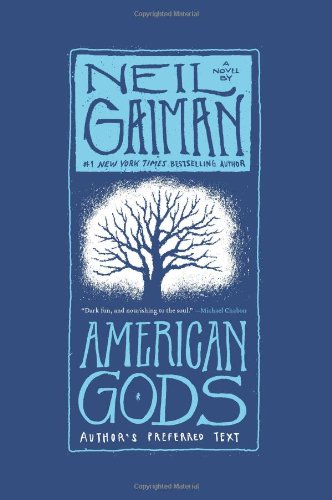
Note: My 2014 end-of-year, holiday gift to myself has been re-reading Neil Gaiman’s American Gods (author’s preferred edition). While considering a post about advice to teachers and professors as scholarly and public writers, I came across a post from a smaller blog of mine, DISCOURSE as quilting from 16 June 2013: remnant 21: “I began feeling more and more uncomfortable with the text that they would be using.” This piece, I think, touches on many things I want to share with readers of my main blog so I am reposting below with small revisions.

remnant 21: “I began feeling more and more uncomfortable with the text that they would be using.”

This is the story of one narrator with three eyes: writer, editor, teacher.

No, not three physical eyes, but ways of seeing writing.

It starts (the story, not the chronology of what actually happened) in a bookstore.

I must admit (shame on me) that I order a great deal of books online. I am still a hard-copy sort who loves the cover and texture and weight of books—although I recognize the possible need to shift into the virtual world.

I also must add that my book fetish overrides my concern about BIG online sellers and chain bookstores. Somehow my moral compass is skewed enough to forgive almost anything as long as the sanctity of the book is honored. (I hasten to add, not much here in my soul to respect, by the way; no delusions on my end about that—although I do love children quite deeply and genuinely because I hold out a tiny speck of hope for the future inside a very dark cloud of certainty it’s not going to happen.)

So I was at the chain bookstore to grab a few Haruki Murakami volumes, I hoped. I had plowed through in about a year all his English-language novels, but had yet to venture into his short stories and non-fiction. I expected a chain store had at least some of what I didn’t yet own, and although I had promised myself not to buy any more books until after I received the then soon-to-be-released Neil Gaiman, and read that, I was jonesing for some Murakami and I gave in like a heroine addict—or worse, like someone who loves to read.

I pulled two collections of Murakami short stories off the shelf and touched the covers, testing their weight, and felt suddenly happier than normal. The store was well air conditioned, and I had spent most of the day doing a somewhat hellish bicycling ride with four friends—75 miles into the North Carolina mountains during a warm, almost-summer day in South Carolina.

The bookstore and holding two new books had brought me some calm so I just began to look around, touching and holding books I’d never read, glancing over displays of “Summer Reading” (mostly the sorts of books we cram down children’s throats in school) and noticing that I had read just about all of them.

Then I saw this:

My first thought was how beautiful the cover is, followed quickly by: This is not the cover of the copy I own. I reached for it, touched the cover, tested the weight, and then noticed: “American Gods, author’s preferred text.”

The comic book industry discovered that powerful nerd instinct (something akin to OCD, or simply OCD) that compels some of us to own multiple versions of the same thing. An episode of The Big Bang Theory, “The 21-Second Excitation,” centers on a new cut of Raiders of the Lost Ark containing, yep, 21 more seconds.

I understand this because I was a comic book collector throughout adolescence, I still hoard some comics and many books, and I own the DVD of the multitude of versions of Blade Runner—noting to a friend recently when lending him the set that he should watch only the Final Cut.

Thus, I slipped this version of Gaiman’s novel into my hand with the two Murakamis, but this was more than the careless hoarding of a nerd. This story is about Gaiman’s “A Note on the Text”:

The book you’re holding is slightly different from the version of the book that was previously published….

As they told me about the wonderful treats they had planned for the limited edition—something they planned to be a miracle of the bookmaker’s art—I began to feel more and more uncomfortable with the text that they would be using.

Would they, I inquired rather diffidently, be willing to use my original, untrimmed text?

Now the story loops backward in time.

Maybe a couple of months ago and then a few weeks ago (at the time this post was originally written).

I have been teaching writing in a variety of ways (high school students, graduate students, undergraduate students) for almost thirty years now. I have been a writer (or better phrased, I should note the amount of time that has passed since I realized I am a writer) since a spring day in 1980 when I sat in my third-story dorm room writing what I consider “my first poem,” an e.e. cummings homage about throwing a Frisbee. And I have been an editor of columns and books for several years now, close to a decade, I believe.

As a scholar, I often submit work and have essentially the same sorts of responses from the editors in charge of my work, responses that rise above the essential and welcomed editing that all writing needs and deserves.

Often, the editor doesn’t want my work; the editor wants the piece s/he would have written.

Now back to Gaiman’s “author’s preferred text.”

I looked at that marvelous blue cover, and thought, What? Neil Gaiman had a text published that he didn’t quite want?

So buying this edition of American Gods, first, was to appease my own psychoses. Next, it was a political act to honor Gaiman’s “preferred text,” a political act from a not-really-very-important writer (but a damned loyal reader) to a real-honest-to-god writer. A deposit in the intersection of karmas among writers, readers, lovers of art.

But all of this leaves me sad ultimately, sad in a way that will from this moment on inform me as a writer, editor, and teacher.

When I was younger (not much) and couldn’t get anyone to publish my work, I dutifully worked through the nearly-all-red track changes of edited submissions. Like the mother’s boy I am, I wanted so badly to please—and be published.

Over the last several years, however, I have gained the luxury of being well published, and despite my eternal quest to be wanted, to have others say my writing matters, I have twice now pulled scholarly pieces from projects after the editors and I spent a great deal of time revising my initial pieces.

And sitting there with Gaiman’s “preferred text” beside the computer, I was working toward being at peace with this idea:

Once a piece of my writing stops being mine, and starts being yours, I have to say with all due respect that maybe you should just write the piece yourself.

Although I am not completely sure this is true, I used to share with students that Ernest Hemingway wrote The Sun Also Rises to show he could write a better The Great Gatsby. (And he did, I think.) All in all, seems the right thing to do. We are the richer for it, and what a shame if one had simply edited the other into writing only the one book?

And since I have ignored all conventions of chronology here, let me slip again to a moment when I had to make that decision.

An editor (a kind and careful soul) had heavily edited a piece, moving large sections of text, and then noting (and this will seem quite trivial) that she had changed my final subhead to “Conclusion.”

The straw that broke the camel’s back—I couldn’t allow a piece published with my name have a subhead I have been urging my students and works under my editorship to avoid. Conclusion?

Is there anything more lifeless than that? Anything that tells the reader that this writer doesn’t really have anything to offer? That this writer is just getting on with it, getting this thing over?

Writing is collaboration, and so is reading.

As writer, editor, and teacher, however, I must respect the piece the writer wants to share, lest we all sit alone talking to ourselves.

The story ended there. I had to work on a poem about lavender silk monkeys and continued to avoid working on three chapters due for scholarly books in a few months.

Writing versus Being a Writer

It is a key distinction, but one we often ignored in daily life—that between choice and recognition.

At lunch, we choose the meal we prefer, or while shopping, we choose the outfit in the color that appeals to us. And it is there that we are a bit careless about words and concepts; those choices are actually about recognition.

After about 20+ years of choosing not to eat beef, a couple of years ago, I returned to steak on occasion. I order steaks medium-rare because I recognize that a wide variety of qualities of taste and texture appeal to me in aesthetic/palpable ways in a medium-rare steak.

As clumsy as all this may seem, after having been a teacher of writing for over 30 years and a so-called serious writer for a handful of years longer than that, I believe people fall into two camps related to writing: those who need to or are required to write and those who are writers, the first being somewhat in the arena of choice and the second, a recognition of Self.

Both those who choose (or are compelled) to write and those who are writers can be taught to write well, I am convinced, but I think in much different ways and with a much different attitude by the teacher (notably, recognizing that one is not better than the other, simply different).

As the fall semester of 2014 ended, which included two classes of first year writing, and as I continued to teach and write simultaneously, I watched the documentary Regarding Susan Sontag and read James Baldwin: The Last Interview and Susan Cheever‘s e. e. cummings: A Life.

“I suppose finally the most important thing was that I am a writer,” Baldwin explained to Studs Terkel in a 1961 interview, adding:

That sounds grandiloquent, but the truth is that I don’t think that, seriously speaking, anybody in his right mind would want to be a writer. But you do discover that you are a writer and then you haven’t got any choice. You live that life or you won’t live any. (p. 20)

In Cheever’s examination of poet e.e. cummings, the life of the writer is highlighted:

Cummings seems like a man with an enviably successful career; but like many American writers he had years of anxiety and hardship, of being sniped at and attacked, of struggling to make a living, to buy food and pay the rent. This kind of rejection is part of being a writer. Men and women who are somehow constituted to get energy from rejection—no matter how painful that might be—are the ones who survive as writers. (p. 114)

And here I stress that being a writer is a recognition, some could argue a compulsion, that certainly can and should be fostered, but is not likely something that can be instilled in others. Sontag, cummings, and Baldwin, it seems to me, had little choice in the matter, but also mostly embraced that inevitable of who they saw themselves to be.

Teaching Poetry as Teaching Writing

As a writer and a writing teacher, I often come back to the power of teaching poetry (reading and wrestling with poetry) and asking students to write poetry, fully aware that most people are not poets. This, I think, is a powerful subset of what it means to teach writing broadly: We are not creating writers, necessarily, and it is not our calling as teachers of writing to treat all students as writers.

So let me offer just a brief consideration of teaching writing to those who choose (or who are compelled) to write as that stands against teaching writing to those who are writers (who recognize “[y]ou live that life or you won’t live any”).

As its essence, writing is about producing an artifact, and understanding that the written thing itself is static, although the meaning (Rosenblatt’s interaction of reader, writer, text) is organic. Many other forms of text (film, visual art, etc.) fall under this same quality, but writing is a static thing restricted to the word and both the conventional and unconventional units made up of words.

To write poetry, then, is to confront that poetry shares with prose the conventional word > phrase > clause > sentence grammar of written language. However, poetry is distinguished from prose by the construction of purposeful lines and stanzas (prose tends to remain within sentence/paragraph boundaries, and thus, not conscious of how those words form on the visual page; prose poetry remains poetry because it is a purposeful rejection of conventional lines and stanzas).

For example, William Carlos Williams write, “so much depends upon a red wheelbarrow glazed with rain water beside the white chickens”—a grammatical sentence crafted into poetry by the transition into lines and stanzas that impact the reader visually. Or consider “our happiness” by Eileen Myles—a poem remaining fully grammatical but raised to poetry by the craft of lines and stanzas.

To sit down and write poetry, then, the writer must consider the essentials of all effective writing, a complex web of choices that ultimately result in that artifact that is paradoxically both static (a visual construction of words) and organic (reader, writer, text). Those essentials include the following:

  • Form, medium, and genre—conventions. To construct a poem is to face conventions (writers must either conform to those conventions or reject those conventions, purposefully) about form (lines, stanzas, rhyme, meter, etc.—for poetry), medium (print or visual text), and genre (broadly imaginative [fiction] or factual [non-fiction]; and then, narrowly, realism, fantasy, etc.). Writing is not the inverse of reading, but the product of synthetic discourse of being a reader: The more sophisticated the reader, the more craft the writer. For those choosing or compelled to write, this can be overwhelming; for writers, there is pain in this process for sure, but it is both necessary and never-ending.
  • Purposefulness. Although any writer may certainly begin writing without a clear purpose, the final artifact of writing must be shaped with both the awareness noted above and then the guiding purpose intact. Since poems tend to be brief, writing poetry is an ideal avenue to understanding, recognizing, and maintaining purpose in a piece of original writing. In different contexts and types of writing, we call this “thesis” or “focus,” but ultimately, writing is about making purposeful decisions mechanical, aesthetic, expressive, and transmissional. If we turn back to cummings, Cheever notes that many who responded negatively to cummings raised concerns about whether or not he sought in any way to communicate with readers; for a writer, few charges could be more damning.
  • Audience. When I conference with students, I ask questions: What is this thing you are writing (see first bullet)? What are trying to say (second bullet)? And then, who is this for, and why would anyone read this (thus, audience)? If we again return to Rosenblatt, and consider trees falling in the woods with no one around, that static thing called a poem (or essay, or novel) spawned out of a writer’s purpose ultimately seeks an audience in order (again, Rosenblatt) to achieve meaning (the organic and difficult thing possibly most mistreated by formal education). For those choosing to write or compelled to write, the audience is often imposed, mechanical—a key reason prompted and formal school writing is so miserably lifeless. Writers, however, are nothing without an audience, a love/hate relationship not unlike being in a family.
  • Coherence. And finally, as a static thing, all writing achieves coherence—something or some things designed by the writer to hold it all together. Writing is cobbling, crafting, synthesizing, shaping—especially the poem. In those conferences, we talk about framing a piece of writing, organization, and how the student-as-writer has decided to move the reader from here to there and there and then ultimately there.

So let me end with some offerings.

During my most recent semester teaching first year writing, we read “Gate A-4” by poet Naomi Shihab Nye. My students loved the piece, and we approached it as an essay, but I have seen it called a short story and a poem (so, what is it?). [Pair with her poem, “Trying to Name What Doesn’t Change.”]

What mattered most to me, however, is that my students were eager to say that it was clearly written by a poet, and that means to me, although they are far from finished in most ways as writers, they somehow get it. Few compliments could be higher for a piece, for a writer.

I end this musing with something quite wonderful from Nye, about a found poem,“When Did You Stop Being a Poet?” Naomi Shihab Nye ~ the charm of and lesson in “One Boy Said”:

Teaching Essay Writing through Poetry

As a writer and teacher, I am pained to admit, but in the big picture I do agree with Kurt Vonnegut who opens “Teaching the Unteachable” with “You can’t teach people to write well. Writing well is something God lets you do or declines to let you do. Most bright people know that….”

My caveat, however, is about what we mean by “writing well.” Vonnegut above and my agreement are confronting what I would call those who are by their nature and inclinations writers first—those who labor over poetry, fiction, essays, and the like for months and even years (and decades) without any real hope anyone will ever publish that work. These are writers who write because they have to, but not necessarily because they want or need to.

For over thirty years now, I have taught primarily high school and undergraduate students to write—but that effort is rarely about the sort of writer mentioned above; instead I am teaching writing that is essentially functional and disciplinary. And it is there that I diverge from Vonnegut because I know for a fact that we can teach people to write well in the disciplines, often extremely well even when they do not particularly like to write, even when they insist they are not very good writers.

One of the most effective approaches to teaching disciplinary-based essay writing is to focus on large concepts about effective writing and then grounding that in examining poetry in order to teach those concepts. Using poetry to reinforce essay writing helps highlight the universal qualities of powerful writing and continues to push students in their awareness of genre, form, and medium as they impact expression.

This fall, in fact, I have had several students directly challenge my focus on being specific—the importance of details, concrete language, and, as Flannery O’Connor has argued, triggering as many of the reader’s senses as possible.

Kingsolver’s “What the Janitor Heard in the Elevator” and the Essay

Barbara Kingsolver from her collection Another America/Otra America begins “What the Janitor Heard in the Elevator” with “The woman in the gold bracelets tells her friend:,” and then continues:

I had to fire another one.
Can you believe it?
She broke the vase
Jack gave me for Christmas.
It was one of those,
you know? That worked
with everything. All my colors.
I asked him if he’d mind
if I bought one again just like it.
It was the only one that just always worked.

Her friend says:
Find another one that speaks English.
That’s a plus.

The woman in the gold agrees
that is a plus.

In class, we begin to read and examine this poem, but I use this discussion to highlight the craft of writing (especially as that relates to disciplinary essay writing), not to do the traditional poetry analysis most students expect.

Here are some of the elements of effective writing I highlight:

  • After we begin discussing the poem, I steer the students back to the title, which in this case is extremely important. Thus, I emphasize the importance of the title as well as discuss the art and craft of subheads in disciplinary essays. Many students have not focused on titles, and often submit essays without titles so this is typically a key lesson for first year students.
  • Next, we highlight the use of “gold” in the opening line and the final stanza. The points I stress are about word choice, connotation, and framing. I believe essay writing must begin at the word level for young writers; they need a greater sense of purpose in the words they choose, notably specificity, concreteness, appropriateness (key here is that words have specialized meanings in the disciplines), and clarity. And that connects with connotations of words; in the poem, “gold” carries a great deal of important information about the scene, issues related to wealth and privilege. My students are quick to admit that Kingsolver has chosen “gold” with intent, purpose. Further, “gold” serves as a framing motif since she incorporates the word in the opening line and the end. I stress to students that essays are often framed (and to avoid the mechanistic introduction and conclusion format they have learned in high school). Framing and motifs add powerful and concrete elements to writing that young writers often lack.
  • We also confront Kingsolver’s use of “one” and “it,” especially the latter since I have stressed the problems with the pronoun to my students. In this poem, “one” and “it” create meaning in their repetition but also in their mixed implications about both the domestic worker and the vase. The point of emphasis is that Kingsolver, again, chooses and repeats words with purpose to create meaning, and this contrasts with how students are apt to repeat and use empty or vague language from carelessness.
  • Finally, we discuss the effectiveness of writing with characters and plot as well as the impact of showing versus telling. People doing things are powerful, much more powerful than abstractions. Kingsolver in her poem trusts the reader to know the abstractions she is showing; however, young writers tend to make many grand announcements (often overstated) and fail to show or support those claims.

This fall I followed the discussion of Kingsolver’s poem with Martin Luther King Jr.’s “Letter from Birmingham City Jail,” and the result was impressive. We were able to identify these craft lessons immediately in King’s essay; students were also significantly more willing to embrace the concepts once we worked through the poem and then into King’s writing.

While there is a cynical irony to Vonnegut’s claims about teaching the unteachable—written by a writer who often taught at writing conferences and legendary writing workshops—ones that do elicit laugher, I am convinced that we teachers of writing who serve primarily students who will have to write while in formal education and then may go on to write in the disciplines can be very successful, but only if we take the teaching of writing seriously, and seek ways in which students can grow as writers.

Focusing on the universals of effective writing and then allowing students to examine and practice those universal are essential. And to do that, I find that poetry is an excellent resource for teaching the writing of essays.

For Further Reading

Are we teaching students to be good writers? 

Why Are We (Still) Failing Writing Instruction?

More on Failing Writing, and Students

From Failing to Killing Writing: Computer-Based Grading

Misguided Reading Policy Creates Wrong Lessons for Students as Writers

Teaching English as “the most intimate subject in the curriculum”

On Twitter, John Warner offered a few reviews of his new book of short stories, Tough Day for the Army, followed by this Tweet:

Warner’s comment is grounded in his being a writer, but I suspect also in his being a reader and a teacher. I want to stress his #agoodthing and use this brief but insightful moment to push further against the mostly dispassionate academy where New Criticism has flourished and laid the foundation for its cousin “close reading.”

With a sort of karmic synergy, I read Warner’s Tweet above just as I was diving into a new Haruki Murakami short story, “Scheherazade,” and the companion interview with Murakami about the story.

“Scheherazade” is classic Murakami—odd, awkward, and then ultimately an unmasking of the human condition. As a writer myself (my creative, expressive writing exclusively now poetry), I was laid bare as a reader and writer toward the end of the story:

It was also possible that he would, at some point, be deprived of his freedom entirely, in which case not only Scheherazade but all women would disappear from his life. Never again would he be able to enter the warm moistness of their bodies. Never again would he feel them quiver in response. Perhaps an even more distressing prospect for Habara than the cessation of sexual activity, however, was the loss of the moments of shared intimacy. What his time spent with women offered was the opportunity to be embraced by reality, on the one hand, while negating it entirely on the other. That was something Scheherazade had provided in abundance—indeed, her gift was inexhaustible. The prospect of losing that made him saddest of all.

A recurring motif of my creative self is confronting exactly what Murakami states directly: “Perhaps an even more distressing prospect for Habara than the cessation of sexual activity, however, was the loss of the moments of shared intimacy.”

And it is this type of lucidity in stories, novels, poems, and films when I often cry because I am filled too full of feeling deeply what the author has both expressed and felt (I assume), what I know as well.

If we turn to the interview by Deborah Treisman, however, we can see Warner’s point above clearly since Murakami repeatedly deflects Treisman’s efforts to mine meaning from the story; for example, Murakami replies to two separate questions with:

Sorry, but I don’t know the exact circumstances that brought about the situation, either….Because what’s important isn’t what caused Habara’s situation but, rather, how we ourselves would act in similar circumstances….

I don’t know, but things certainly don’t look very good for Habara….

What matters to Treisman as a reader (and interviewer) appears insignificant to Murakami.

These exchanges highlight that text has both author intent and reader inference (think Rosenblatt’s reader, writer, text triangle)—but the exchanges also allow us to consider (or reconsider) that text meaning often depends on a power dynamic that involves who decides what matters and how.

Murakami’s “Scheherazade” focuses on an unnamed character (called “Scheherazade” by Habara, the other character in the story) who is a source of both sex and storytelling for Habara, who is mysteriously restricted to his house:

Habara didn’t know whether her stories were true, invented, or partly true and partly invented. He had no way of telling. Reality and supposition, observation and pure fancy seemed jumbled together in her narratives. Habara therefore enjoyed them as a child might, without questioning too much. What possible difference could it make to him, after all, if they were lies or truth, or a complicated patchwork of the two?

Whatever the case, Scheherazade had a gift for telling stories that touched the heart. No matter what sort of story it was, she made it special. Her voice, her timing, her pacing were all flawless. She captured her listener’s attention, tantalized him, drove him to ponder and speculate, and then, in the end, gave him precisely what he’d been seeking. Enthralled, Habara was able to forget the reality that surrounded him, if only for a moment. Like a blackboard wiped with a damp cloth, he was erased of worries, of unpleasant memories. Who could ask for more? At this point in his life, that kind of forgetting was what Habara desired more than anything else.

As readers, we share with Habara a brief journey through Scheherazade’s episodic tales of her own adventures, leading to the end where Murakami appears to suggest that her storytelling is more intimate for Habara, and thus more important, than the sex she shares.

Just as Murakami’s interview reveals the range of what matters in text, that Habara “enjoyed [Scheherazade’s stories] as a child might, without questioning too much” (and we might add, as Treisman does in the interview) speaks against the dispassionate ways in which formal schooling frames text and dehumanizes the reading experience for and with children and young adults (hence, New Criticism, close reading, and the enduring “evidence hunt” of reducing text to what can—or should—be mined from that text).

In her “Language Teaching in a Changing World,” Lou LaBrant (1943) warned:

Too frequently we give children books which have enough value that we call them “good,” forgetting that there are other, perhaps more important values which we are thereby missing. It is actually possible that reading will narrow rather than broaden understanding. Some children’s books, moreover, are directed toward encouraging a naive, simple acceptance of externals which we seem at times to hold as desirable for children….Let us have no more of assignments which emphasize quantity, place form above meaning, or insist on structure which is not the child’s. (p. 95)

LaBrant, then, builds to her key point: “Teachers should consider carefully what they are doing with the most intimate subject in the curriculum” (p. 97).

Teaching English as “the most intimate subject in the curriculum” is connected to, as LaBrant explains in “The Place of English in General Education” (1940), the essential element of being human: “Language is a most important factor in general education because it is a vital, intimate way of behaving. It is not a textbook, a set of rules, or a list of books” (p. 364).

Seven decades since LaBrant made these arguments, we must ask—especially in the context of Warner’s Tweet and Murakami’s story and interview—why do we persist in reducing text to the dispassionate responses demanded in the academy, whether that sits within the mechanistic processes of New Criticism or the decontextualized demands of close reading? Where in formal schooling is there room to “[enjoy] [text] as a child might, without questioning too much”?

In the answer-driven classrooms that have traditionally and currently mis-served both the text being analyzed and the students evaluated by how they analyze those texts, Murakami sends a much different message:

Habara is a man who has experienced an irrevocable turning point in his life. Was the turning point moral, or legal, or was it a metaphorical, symbolic, psychological kind of thing? Did he turn the corner voluntarily, or did someone force him? Is he satisfied with the results or not? I don’t know the answers to any of these questions. The instant he turned that corner, though, he became a “desert island.” Things can’t go back to the way they were, no matter what he does. I think that is the most important aspect of this story.

As author of this story, Murakami is interested in the questions raised, what is left unknown to him: “I don’t know. Scheherazade is a riddle to me, as well—what she is thinking, what she is looking for.”

Fiction and poetry seek the mysteries of the human condition, the unknown, the unanswerable. As LaBrant and Murakami tell us, language and teaching are about the intimacy of being human—not about the dispassionate calculation of meaning, the objective pose that is both misleading and efficient as well as manageable.

Unlike Habara, we are not in fact trapped in the house of such dispassion; we have chosen to remain there. Instead we should step outside, to enjoy text “as a child might, without questioning too much.”

Misguided Reading Policy Creates Wrong Lessons for Students as Writers

Having taught writing to teenagers and young adults at the high school and undergraduate levels for over thirty years now, I have a standard approach to the first few classes: We identify and then unpack and challenge the lessons the students have learned about writing.

For these foundational lessons to work, however, I have to gain the trust of my students so that they are open and honest about the real lessons (or more accurately framed as “rules” they have conformed to implementing). One of the best moments in this process is when I very carefully ask them to explain to me how they decide when to use commas.

Usually someone is willing to confess: “I put commas when I pause.” And then I ask who else uses that strategy, and essentially every time most, if not all, of the students raise their hands.

Next, I help them trace just how this completely flawed rule entered into their toolbox as writers. I note that when they were first learning to read, especially when they were being taught to read aloud, teachers in the first, second, and third grades likely stressed how we pause slightly at commas and a bit more at periods when reading aloud.

Students usually nod their heads, recalling those early lessons, and even specific teachers.

The next part is tricky and really important. Throughout elementary, middle, and high school, then, students receive a good deal of direct grammar instruction, often framed as rules (although this is a key problem of such instruction), often done in isolation (the ultimate fatal flaw of grammar instruction), and almost universally offered well before students have reached the level of abstract reasoning (brain development) necessary to understand how grammar works as a system [1].

Throughout most of my teaching career at the high school level, students were issued a traditional grammar text (Warriner’s [2]), and in that text, commas had an entire chapter and something like 47 rules. Since most students were uninterested, unmotivated, and incapable of understanding all that dense information on commas, they simply did what most humans would do—fabricate something they could manage from the information they understood.

Thus many students flip a reading aloud guideline that associates commas with pausing into a horribly inadequate “rule” for punctuating sentences.

As a teacher of writing, then, I am vividly aware of how we have traditionally misled students with both our reading and our writing policies, significantly grounded in prescriptive and mechanistic approaches to language—approaches that teach the wrong lessons and do more harm than good.

That awareness leads me to recognize that the current Common Core movement is likely to increase that problem, not address the need to implement effective and thoughtful reading and writing policy.

For one example is the concern raised in Common Core calls for kids to read books that ‘frustrate’ them. Is that a good idea? by Russ Walsh:

The Common Core, in its pursuit of “college and career readiness,” calls for ramping up the complexity of texts read by children in all grades after second grade. Some reading educators, including University of Illinois Professor Emeritus Tim Shanahan, have argued that this means we should not be focused on having students read in texts at their instructional level, but in texts that are at their frustration level.

This call for students reading at the “frustration level,” sadly, is nothing new.

Student have typically been required to read texts that don’t match either their language development or their background or perceptions of existence—works that are to them needlessly complex and difficult simply to comprehend (much less interpret).

Take for example nearly any student reading Shakespeare or Nathaniel Hawthorne’s The Scarlet Letter. Setting aside that plays were never intended to be read texts, both of these works are variations of English so far removed from contemporary students that (just as they have done with comma/pausing rules) they decide that all good writing must be impenetrable—arcane words, labyrinthine sentences.

As a result, when I stress that good writing must be specific, concrete, coherent, and above all else clear, students are baffled.

Common Core, again, appears to me nothing new; as I have noted “close reading” is New Criticism repackaged. But I do fear that calls for students reading at frustration levels are likely to perpetuate the very worst of traditional reading policies and practices.

Reading and writing are the core of all learning, and as such, we should take much greater care that our reading and writing policy is grounded in healthy and effective approaches to literacy. We must also recognize that our reading practices feed our writing practices.

As has been all too common in formal schooling, Common Core appears poised to once again drive misguided reading policy that will teach our students the wrong lessons as young writers.

And if nothing else, that puts me at a constant frustration level.

[1] See Ann L. Warner’s “If the Shoe No Longer Fits, Wear It Anyway?” English Journal, (September 1993):

Why Do Students Not Retain Knowledge of Grammar?

We English teachers must ask ourselves why students do not retain what they learn about grammar. Is it because we don’t hold them accountable for it? Are high-school teachers right to complain that they shouldn’t have to teach grammar because their students should already know it? Or is it possible that students don’t retain this knowledge because they aren’t intellectually ready to understand it before high school? Are the linguistic concepts of grammar too abstract for younger students?Jean Piaget, Laurence Kohlberg, and other psychologists maintain that individuals experience sequential levels of cognitive development. Some studies suggest that only about half the adolescent and adult population reaches the highest levels of formal operational thinking (Reimer 1983, 37)—which may well be the level of abstraction required to grasp the fundamentals of traditional English grammar. Jean Sanborn, in her article “Grammar: Good Wine Before Its Time,” maintains that “The study of grammar, of the ‘rules,’ belongs at the end of this process of linguistic development…” (1986, 77).

Tate Hudson’s dissertation work, reported briefly in “Great, No, Realistic Expectations: Grammar and Cognitive Levels” (1987), confirms Sanborn’s position. In her research, Hudson found that failure rates on grammar tests were dramatically higher for students not yet functioning at the abstract or formal stage of development. Only fourteen percent of the middle-school students she tested were at the stage of formal operations.

Perhaps the reason many students don’t retain grammar information is because they can’t. Ironically, the least verbally capable students are often the ones subjected to the most grammar instruction.

[2] I recommend instead Style, Joseph Williams

Stephen King: On Teaching

My life as a reader and film goer overlapped significantly with Stephen King’s rise to fame as a horror writer, and then while I was teaching in the summer institute for a regional National Writing Project (Spartanburg Writing Project), we assigned King’s On Writing: A Memoir of the Craft.

I have recently reconnected with King through his Doctor Sleep (see my review) and Mr. Mercedes. But thanks to Jessica Lahey’s How Stephen King Teaches Writing, I have been drawn back into King as not just a writer’s writer, but also a teacher.

As an article at The Guardian suggests, please read the whole interview, but I want here to highlight a few points.

On teaching grammar:

Jessica Lahey: You write that you taught grammar “successfully.” How did you define “success” when you were teaching?

Stephen King: Success is keeping the students’ attention to start with, and then getting them to see that most of the rules are fairly simple. I always started by telling them not to be too concerned with stuff like weird verbs (swim, swum, swam) and just remember to make subject and verb agree. It’s like we say in AA—KISS. Keep it simple, stupid….

Lahey: You write, “One either absorbs the grammatical principles of one’s native language in conversation and in reading or one does not.” If this is true, why teach grammar in school at all? Why bother to name the parts?

King: When we name the parts, we take away the mystery and turn writing into a problem that can be solved. I used to tell them that if you could put together a model car or assemble a piece of furniture from directions, you could write a sentence. Reading is the key, though. A kid who grows up hearing “It don’t matter to me” can only learn doesn’t if he/she reads it over and over again.

The discussion of teaching writing has never and can never stray too far from the G word so I am always compelled by the urge to dive right into grammar when anyone discusses teaching writing (see Why Are We (Still) Failing Writing Instruction? and More on Failing Writing, and Students; see also the work of Lou LaBrant). King’s comments here and his role as a teacher of writing, I think, help highlight the power of teaching writing by those who have authoritative stances as writers themselves.

On favorite works to teach:

Lahey: When people ask me to name my favorite books, I have to ask them to narrow their request: to read or to teach? You provide a fantastic list of books to read at the end of On Writing, but what were your favorite books to teach, and why?

King: When it comes to literature, the best luck I ever had with high school students was teaching James Dickey’s long poem “Falling.” It’s about a stewardess who’s sucked out of a plane. They see at once that it’s an extended metaphor for life itself, from the cradle to the grave, and they like the rich language. I had good success with The Lord of the Flies and short stories like “Big Blonde” and “The Lottery.” (They argued the shit out of that one—I’m smiling just thinking about it.) No one puts a grammar book on their list of riveting reads, but The Elements of Style is still a good handbook. The kids accept it.

For nearly two decades, I anchored my poetry unit for high students with the songs of R.E.M. and the poetry of James Dickey; I was thrilled to see King mention Dickey’s “Failling.” See R.E.M./Dickey poems lessons here, and I recommend highly Dickey’s “A Dog Sleeping on My Feet,” “Cherrylog Road,” “For the Last Wolverine,” “The Heaven of Animals,” “The Hospital Window,” “The Lifeguard,” and “The Performance.”

On diagramming sentences:

Lahey: While I love teaching grammar, I am conflicted on the utility of sentence diagramming. Did you teach diagramming, and if so, why?

King: I did teach it, always beginning by saying, “This is for fun, like solving a crossword puzzle or a Rubik’s Cube.” I told them to approach it as a game. I gave them sentences to diagram as homework but promised I would not test on it, and I never did. Do you really teach diagramming? Good for you! I didn’t think anyone did anymore.

As I have addressed recently, like discussions of teaching grammar, debates about diagramming sentences seem to recur—notably in a recent NPR piece. I think King here finds a way to make diagramming less controversial, posing it as one avenue to playing with language. In my work on writers—Barbara Kingsolver, Kurt Vonnegut, Margaret Atwood, Ralph Ellison, and James Baldwin—I have noticed a consistent pattern of word play among those who are drawn to reading and writing.

On conferencing with students as writers:

Lahey: By extension, how can writing teachers help students recognize which words are required in their own writing?

King: Always ask the student writer, “What do you want to say?” Every sentence that answers that question is part of the essay or story. Every sentence that does not needs to go. I don’t think it’s the words per se, it’s the sentences. I used to give them a choice, sometimes: either write 400 words on “My Mother is Horrible” or “My Mother is Wonderful.” Make every sentence about your choice. That means leaving your dad and your snotty little brother out of it.

Over my thirty-plus years teaching writing primarily to high school students and undergraduates, I have come to mark far less of student essays (about the first third with track-changes and comments focusing on prompting revision) and depending much more on conferences. In my conferences, I always start with “What were you trying to accomplish or say in this?” And then we can begin to discuss how they have or have not met those goals (ones they can often say aloud but cannot bring to fruition as well in their writing).

On writing without fear:

Lahey: You extol the benefits of writing first drafts with the door closed, but students are often so focused on giving teachers what they want and afraid of making mistakes that they become paralyzed. How can teachers encourage kids to close the door and write without fear?

King: In a class situation, this is very, very hard. That fearlessness always comes when a kid is writing for himself, and almost never when doing directed writing for the grade (unless you get one of those rare fearless kids who’s totally confident). The best thing—maybe the only thing—is to tell the student that telling the truth is the most important thing, much more important than the grammar. I would say, “The truth is always eloquent.” To which they would respond, “Mr. King, what does eloquent mean?”

This is extremely important and speaks against the inordinate amount of writing students do to someone else’s prompts (and even someone else’s nearly entirely prescribed content and scripted form). King also challenges the use of grades, and recognizes how harmful grads are to coming to be a writer. If students are to become writers, they must be allowed to make the sorts of decisions writers make and then produce the sorts of authentic forms writers produce.

On what students should read:

Lahey: English teachers tend to fall into one of two camps when it comes to literacy: Those who believe we should let students read anything they want so they will be more likely to engage with books, and those who believe teachers should push kids to read more challenging texts in order to expose them to new vocabulary, genres, and ideas. Where would you pitch your tent?

King: You don’t want to leave them in despair, which is why it’s such a horrible idea to try teaching Moby-Dick or Dubliners to high school juniors. Even the bright ones lose heart. But it’s good to make them reach a little. They’ve got to see there are brighter literary worlds than Twilight. Reading good fiction is like making the jump from masturbation to sex.

Choice is not only important for learning to write, but also for reading, and here King examines perfectly the delicate balance of in-school reading—fostering a love of reading that includes choice and attaining a sophistication about text that comes from reading more complex and challenging works—especially as that is guided by an expert reader (the teacher).

On teaching as craft or art:

Lahey: You refer to writing as a craft rather than an art. What about teaching? Craft, or art?

King: It’s both. The best teachers are artists.

The interview ends perfectly, I think, with these words from King.

Diagramming Sentences and the Art of Misguided Nostalgia

Having been a serious competitive and recreational cyclist (not “biker”) for all but a handful of years over three decades, I cringe and must bite my tongue every time people refer to their bicycle “seat” (it is a “saddle”). During those years committed to cycling, I have also become well acquainted with the history of the professional sport and a fairly accomplished bicycle mechanic.

I can take apart and assemble a high-end road bicycle, and I know the proper names for all the parts.

All of that knowledge and skill, however, have not made me a better cyclist. And since I have spent those same approximate years also pursuing careers as a writer and teacher (mainly of English, specifically writing), I remain baffled at both recurring arguments found in Juana Summer’s NPR piece and the public responses to it:

When you think about a sentence, you usually think about words — not lines. But sentence diagramming brings geometry into grammar.

If you weren’t taught to diagram a sentence, this might sound a little zany. But the practice has a long — and controversial — history in U.S. schools.

And while it was once commonplace, many people today don’t even know what it is….

But does it deserve a place in English class today? (The Common Core doesn’t mention it.)

I found this article through Facebook, where the original posting was praising sentence diagramming and many who commented followed suit. Oddly—although not surprising—when I weighed in with a century of research refuting the effectiveness of sentence diagramming for teaching writing, my comments were brushed off as a “viewpoint” and one person even boldly stated that no one could convince her that sentence diagramming wasn’t effective.

During a teaching career—mostly in English—that spanned over six decades and included a term as president of the National Council of Teachers of English (NCTE), Lou LaBrant [1] confronted the grammar debate, including sentence diagramming, in 1952:

Let us admit that in thousands of schoolrooms our teaching of punctuation has concerned sentences no child ever made, errors which adults and publishing houses provided, books which we have spent hours trying to “motivate,” and corrections of so-called “errors” which are approved forms everywhere except in our classrooms. We have wasted hours on diagramming dull sentences when what a sentence calls for is not to be drawn but to be understood. Who understands “Thou shalt not steal” the better for having written not on a slanting line under shalt steal? Our first step is clearing away busy work, meaningless matters, and getting at the problems of speaking about something worth saying and writing with sincerity and zest. Reading is not to be “something I had”; it should be “something I do.”

Six years previous, LaBrant identified the research base examining isolated direct grammar instruction and teaching writing:

We have some hundreds of studies now which demonstrate that there is little correlation (whatever that may cover) between exercises in punctuation and sentence structure and the tendency to use the principles illustrated in independent writing.

In 1953, although there is a danger in her simple phrasing, LaBrant offered an eloquent argument about the job of teaching writing:

It ought to be unnecessary to say that writing is learned by writing; unfortunately there is need. Again and again teachers or schools are accused of failing to teach students to write decent English, and again and again investigations show that students have been taught about punctuation, the function of a paragraph, parts of speech, selection of “vivid” words, spelling – that students have done everything but the writing of many complete papers. Again and again college freshmen report that never in either high school or grammar school have they been asked to select a topic for writing, and write their own ideas about that subject. Some have been given topics for writing; others have been asked to summarize what someone else has said; numbers have been given work on revising sentences, filling in blanks, punctuating sentences, and analyzing what others have written….Knowing facts about language does not necessarily result in ability to use it.

And thus, we come to LaBrant’s most powerful metaphor for teaching writing:

Knowing about writing and its parts does not bring it about, just as owning a blueprint does not give you a house….The end has all along been writing, but somewhere along the way we have thought to substitute mechanical plans and parts for the total. We have ceased to build the house and have contented ourselves with blueprints. Whatever the cost in time (and that is great), and whatever the effort, our students must be taught to write, to rewrite, to have the full experience of translating ideas into the written word. This is a deep and full experience, one to which each in his own way has a right.

At mid-twentieth century, then, LaBrant expressed evidence-based positions on teaching writing (and the ineffectiveness of isolated direct grammar instruction and sentence diagramming) that have been replicated by numerous teachers and scholars for decades—notably the work of Connie Weaver and George Hillocks. Hillocks, for example, has shown that isolated direct grammar instruction has negative consequences on students as writers:

grammar negative
Teaching Writing as Reflective Practice, George Hillocks

NCTE has catalogued the same debates, misunderstandings, and research base: Guideline on Some Questions and Answers about Grammar and Resolution on Grammar Exercises to Teach Speaking and Writing. And despite a cumulative and clear recognition of the effective and ineffective approaches to teaching children to write (see Writing Next), we find articles such as the NPR piece above and the responses I witnessed on Facebook.

And while I don’t suffer the delusion that I can stem the grammar/sentence diagramming debates, I want to offer here some framing clarifications that I think may help both teachers and the public better understand the issues:

  • Isolated direct grammar instruction (including sentence diagramming) is ineffective in general for fostering students as writers. If our goal, however, is to teach grammar, then isolated grammar instruction would be justifiable.
  • And thus, isolated direct grammar instruction fails writing instruction because (i) it too often replaces time better spent reading and writing by students, (ii) it requires a great deal of instruction related to terminology and systems that (a) does not transfer to composition and (b) again consumes huge amounts of classroom time, and (iii) formal and isolated grammar instruction remains decontextualized for students since grammar (like algebra) requires abstract reasoning by children and teens who may have not yet reached the level of brain development necessary to navigate or understand the system at the explicit level.
  • However, the two key points here include the following: we are discussing writing instruction as the primary goal and we are confronting isolated direct grammar instruction. So let me be very clear: No one in literacy suggests not teaching grammar; the question is not if, but how and when. Thus, once students are required and allowed to have rich and extended experiences reading and writing by choice, direct instruction is very effective after those experiences and when anchored in those students’ own demonstrations of language acquisition, misunderstanding, or gaps.
  • Connected to the context and when of direct grammar instruction is the importance of balanced literacy, which calls for literacy teachers to incorporate any practice (including sentence diagramming, including grammar exercises) that helps individual students (which may rub against generalizations found in the research base):
Spiegel
  • And finally, many people have a distorted nostalgia about why they have learned so-called standard English. While people are quick to ascribe harsh and traditional grammar instruction as effective in their own learning, that doesn’t make it so. In fact, many people grew as readers and writers in spite of traditional practices—or what is often the case, they can’t recognize their existing facility for language (often brought from home), which made them good at direct grammar exercises and sentence diagramming, as the actual cause of that success.

So I return to LaBrant, and her plea that teaching young people to write is about goals and weighing what truly matters:

There are many ways of writing English, and the teacher of composition must know, before he thinks of means for teaching, what kind of writing he thinks important to teach. He may be content if the writing is composed of sentences with correct structure, with periods neatly placed, verbs correctly ended, pronouns in the right case, and all attractively placed on the page. I have heard teachers say that if their pupils do all this, and spell with reasonable correctness, they (the teachers) are content. I am willing to admit that a conventional paper, such as is just described, tempts one to be satisfied; but I am not willing to admit that it represents a worth-while aim. As a teacher of English, I am not willing to teach the polishing and adornment of irresponsible, unimportant writing….I would place as the first aim of teaching students to write the development of full responsibility for what they say.

If we seek to teach young people to write, and thus to think, in complex and original ways, we remain confronted by the need to see that writing is learned by writing—just as I have honed my skills as a cyclist by riding a bicycle about 5000 to 10,000 miles annually for most of the last thirty years.

Naming correctly the parts of the bicycle, taking apart and putting together a bicycle—these have not made me a better cyclist. For students as writers, blueprints, still, are not houses, diagramming is not composing.

Simply stated, then: The effective writing classroom must never be absent the direct teaching of grammar (again, not if, but when and how), but the grammar-based classroom has often been and continues to be absent writing by students—and therein is the failure.


Recommended

Teaching the Unteachable, Kurt Vonnegut

[1] See Chapter 7 in Missing Chapters, Lou LaBrant: An Annotated Bibliography, and Lou LaBrant: A Woman’s Life, a Teacher’s Life.