A couple of weeks ago, I received an email from communications associate at WalletHub.com, identified in the email as “(one of the leading outlets covering the personal finance industry).” The associate wanted me to respond to a series of questions and provide a picture for an article in their “consumer education section” and (maybe?) national media.
Of course, WalletHub is the source of one of the worst and most popular practices around U.S. education—ranking states by educational quality, 2022’s States with the Best & Worst School Systems. I noticed when searching my email, I had been contacted before by WalletHub, but likely deleted without replying. This time I sent a pointed response that since I focus on equity in my work, I would not want to be associated with their harmful and misleading ranking.
The exchange was irritating and frustrating—and just business as usual in terms of how the media, politicians, and the public label education. And then I read this in the Post and Courier (Charleston, SC):
Scores from 2020-21 showed only 31% of our public school fourth graders read competently, according to the National Assessment of Education Progress.
That means 69% of our children cannot read well enough to complete work at their grade level. It would be worse without the many homes where parents teach their children to read.
Part of the responsibility rests with the South Carolina Department of Education.
There is so much wrong here—the data, the claims about teaching and reading, the influence of ranking on how the public views education, etc.—I cannot address it all, but let’s just focus on the ranking and suggesting there are valid ways to label states as “best” or “worst” in education.
The problems with ranking educational quality among states are many, and I recommend simply Googling “Gerald Bracey” and “educational rankings” if you want to explore the granular issues with statistics, etc.
The short version is that the urge to rank is itself a problem since to rank, you must create metrics that will produce a spread among whatever is being ranked. It is a sort of self-fulfilling process that necessitates that some things are labeled “best” and some “worst.”
But at the deeper level, the metrics and data used to rank are always something other than what is being ranked to begin with. In education, rankings often claim to be labeling educational quality while using metrics and data that are mostly about issues of equity—poverty, race, native language, school funding, student/teacher ratios, teacher experience and certification, etc.
Therefore, there is a great deal of overlap in WalletHub’s nonsensical “best” and “worst” rankings and the following:
At the most basic level—and the issues are far more complex than this—note the tremendous overlap of “worst” and poverty:
Here is the ugly truth: State rankings by educational quality are mostly rankings by poverty, race/racism, racial diversity/equity, etc.
Here is an even uglier truth: Schools and education systems tend to reflect, not change or overcome, the inequities of states and communities.
There are many aspects of schooling we should (must?) address, such as teaching and learning conditions and access to high-quality teachers, curriculum (such as content being banned by Republicans), and materials (such as the books being banned by Republicans).
But separate from that, we must reject rankings as, well, rank, having a foul and offensive smell.
Howard Zinn was born 100 years ago today, and I cite, quote, and draw inspiration from his work often. My public work and scholarship are grounded in one of Zinn’s central concepts:
From that moment on, I was no longer a liberal, a believer in the self-correcting character of American democracy. I was a radical, believing that something fundamental was wrong in this country—not just the existence of poverty amidst great wealth, not just the horrible treatment of black people, but something rotten at the root. The situation required not just a new president or new laws, but an uprooting of the old order, the introduction of a new kind of society—cooperative, peaceful, egalitarian.
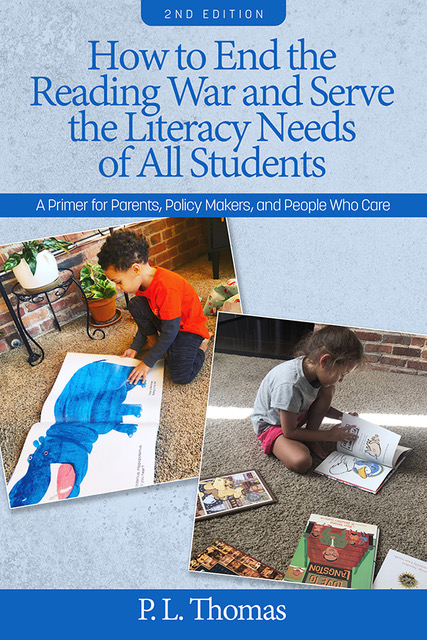
The twenty-first century Reading War is, in fact, nothing new, but some of the details are unique to our current culture driven by social media. This volume seeks to examine the current Reading War in the context of the historical recurrence of public and political debates around student reading abilities and achievement.
Grounded in a media fascination with the “science of reading” and fueled by a rise in advocates for students with dyslexia, the current Reading War has resulted in some deeply troubling reading policy, grade retention and intensive phonics programs.
This primer for parents, policy makers, and people who care confronts some of the most compelling but misunderstood aspects of teaching reading in the U.S. while also offering a way toward ending the Reading War in order to serve all students, regardless of their needs.
The revised/expanded 2nd edition adds developments around the “science of reading,” including the expanding impact on state policy and legislation as well as robust additions to the research base around teaching students to read.
CONTENTS Introduction: Parent Advocacy and the New (but Still Misguided) Phonics Assault on Reading. Acknowledgments. CHAPTER 1: A Historical Perspective of the Reading War: 1940s and 1990s Editions. CHAPTER 2: The 21st Century Reading War: “The Science of Reading,” Dyslexia, and Misguided Reading Policy. CHAPTER 3: Misreading Reading: The Good, the Bad, and the Ugly. CHAPTER 4: How to End the Reading War and Serve the Literacy Needs of All Students: Shifting Our Deficit Gaze, Asking Different Questions About Literacy. CHAPTER 5: The “Science of Reading” in 2022, and Beyond: Not Simple, Not Settled. Conclusion: The Science of Literacy—A 5-Decades Journey and Counting. Appendix A: Recommended Reading. Appendix B: Fact Checking the “Science of Reading”—A Quick Guide for Teachers.
One of the most important aspects of understanding any issue or field of knowledge, I think, is to have nuanced historical perspective. That is vividly true about education and especially reading.
The current reading crisis, often referred to as the “science of reading” movement, and the incredibly chilling impact of curriculum bans, book censorship, and attacks on teaching and learning are not, I regret to emphasize, all that new (except the degree of the bans are in many ways unprecedented).
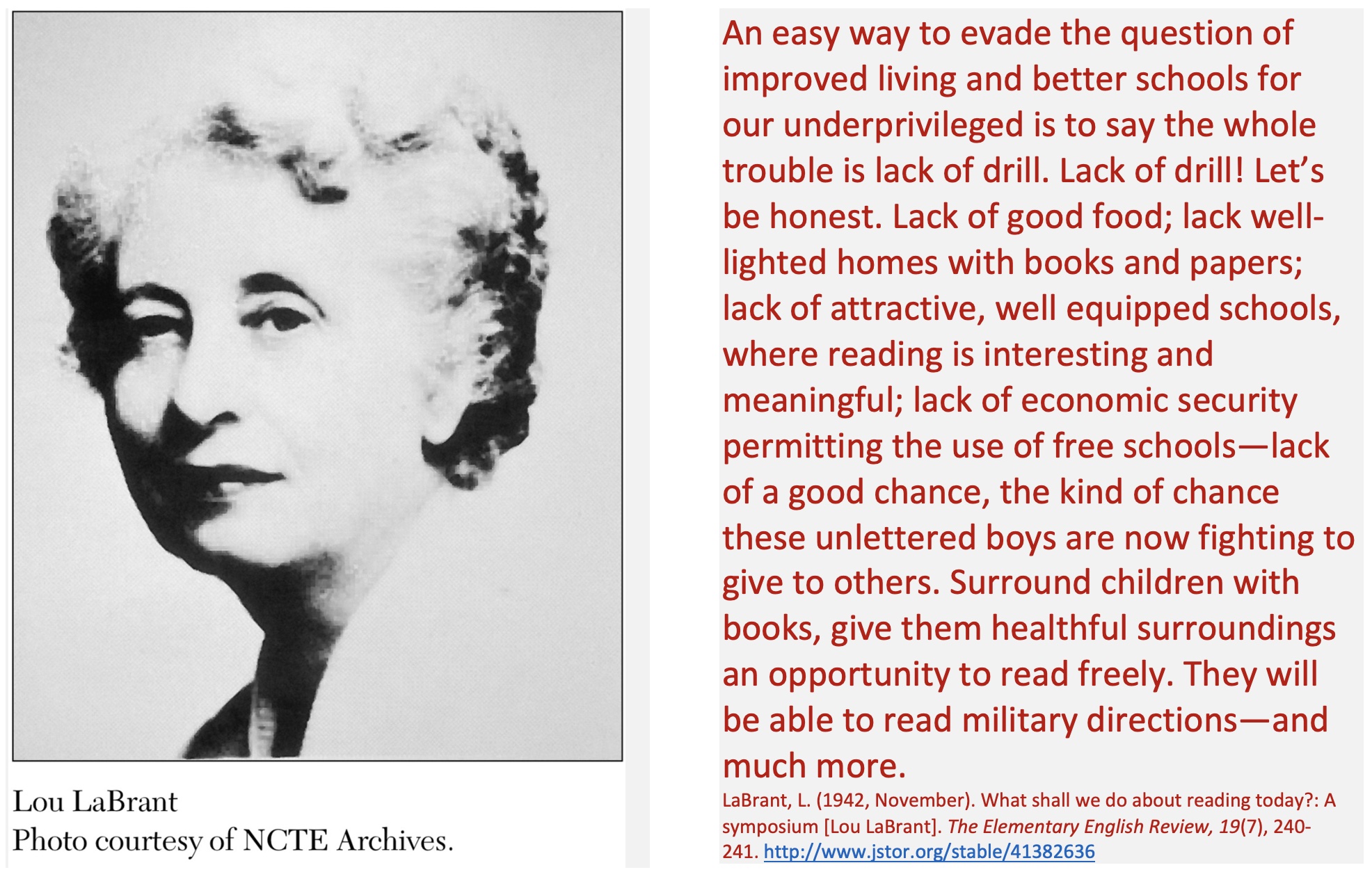
I am currently working on completing my online annotated bibliography of Lou LaBrant, and offer below some historical perspective on teaching reading and why censorship is always wrong for education and democracy.
Access my blog post on each work by clicking the hyperlink in the essay titles; many of her publications can also be accessed through JSTOR (links at end of bibliographies when available). I am including memes of key passages from LaBrant with the recommended works below.
Back to school 2022 looks different than any of my many years as a student and even more as a teacher. “Back to school” now means curriculum bans for teachers and censorship for students.
It’s the Upside Down of the American Dream and academic freedom.
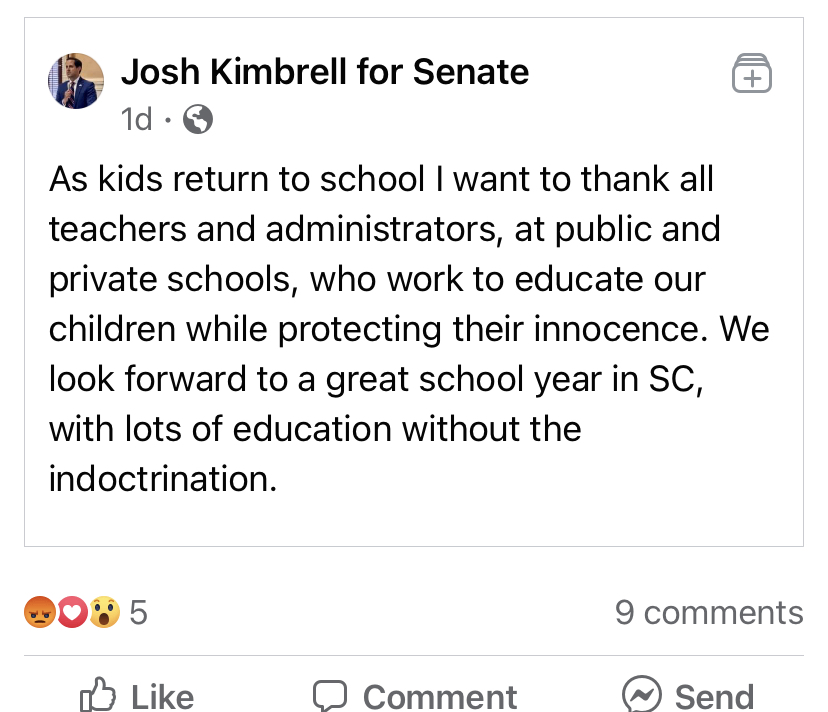
One recurring (and misleading) justification by Republicans banning curriculum and censoring books is a manufactured crisis around “age-appropriate” content; however, several Republicans have also directly begun including in their claims that the role of school and teachers is to protect childhood innocence:
As a parent, grandparent, and almost 40-years a teacher, I want to emphasize that the role any adult plays in mentoring, parenting, or teaching children is not to protect their innocence (more on why later), but to provide support and guidance as children mature and come to know the full, complicated, and often disturbing real world.
To keep a child or teen innocent is to deny them their full humanity and autonomy.
As a reader and teacher of literature, I am aware of the power and allure of idealizing innocence.
Setting aside for a moment the tremendous problems with author J.D. Salinger, his career was built on a nearly fawning adoration of his central motif, the “catcher in the rye” imagery of Holden Caulfield’s quest to protect his sister’s (and all children’s) innocence because he clearly has been traumatized by his entry into the adult world.
Author Eudora Welty praised Salinger as a writer in her review of Nine Stories in 1953:
The stories concern children a good deal of the time, but they are God’s children. Mr. Salinger’s work deals with innocence, and starts with innocence: from there it can penetrate a full range of relationships, follow the spirit’s private adventure, inquire into grave problems gravely–into life and death and human vulnerability and into the occasional mystical experience where age does not, after a point, any longer apply. Mr. Salinger’s world urban, suburban, family, mostly of the Eastern seaboard is never a clue to the way he will treat it: he seems to write without preconception of shackling things.
Like Salinger (and nearly as problematic as a human), e.e. cummings idealized childhood and seemed to lament adulthood: “children guessed(but only a few/and down they forgot as up they grew.” Like many writers and artists throughout history, cummings portrayed childhood innocence as being closer to God (or the Universe); adulthood is a forgetting.
Both of these authors were attractive to me as a young writer, teacher, and even scholar, but the most compelling work about innocence was always William Blake, who complicated the innocence/experience dynamic. Blake’s work shows the necessary duality of life without idealizing innocence—even as he detailed the darkness of experience.
What is innocence?
It is a lack of awareness, a lack of knowledge, the absence of living life that is idealized not only in literature but in Christianity—the fall from grace, eating the fruit of the Tree of Knowledge, being cast out of the idyllic innocence of the Garden of Eden.
But innocence is extremely dangerous, and the innocent are easily manipulated, easily controlled.
And here is the truth about curriculum bans and book censorship: Republicans, conservatives, and Christian fundamentalists are primarily concerned about control—especially controlling women and children.
There is no crisis in our schools concerning exposing children and teens to content and books that are not age appropriate. If anything, traditional schooling still coddles children and teens—and especially young adults.
Protecting the innocence of children is not a valid goal for teachers or schooling; protecting the innocence of children is cruel and dehumanizing, in fact.
But that is not what Republicans are concerned about.
This is pure and simple a power grab, a way to control minds and impose a worldview on others.
[NOTE: This is the next installment of a series begun at Comics Bookcase, which has made some changes; therefore, I am completing the series here, with this and then two final posts. I also hope to develop these posts into a book proposal because I think Black Widow deserves a deep dive into how the character has been underestimated (and hypersexualized) throughout Marvel’s less-than-adequate handling of the character.]
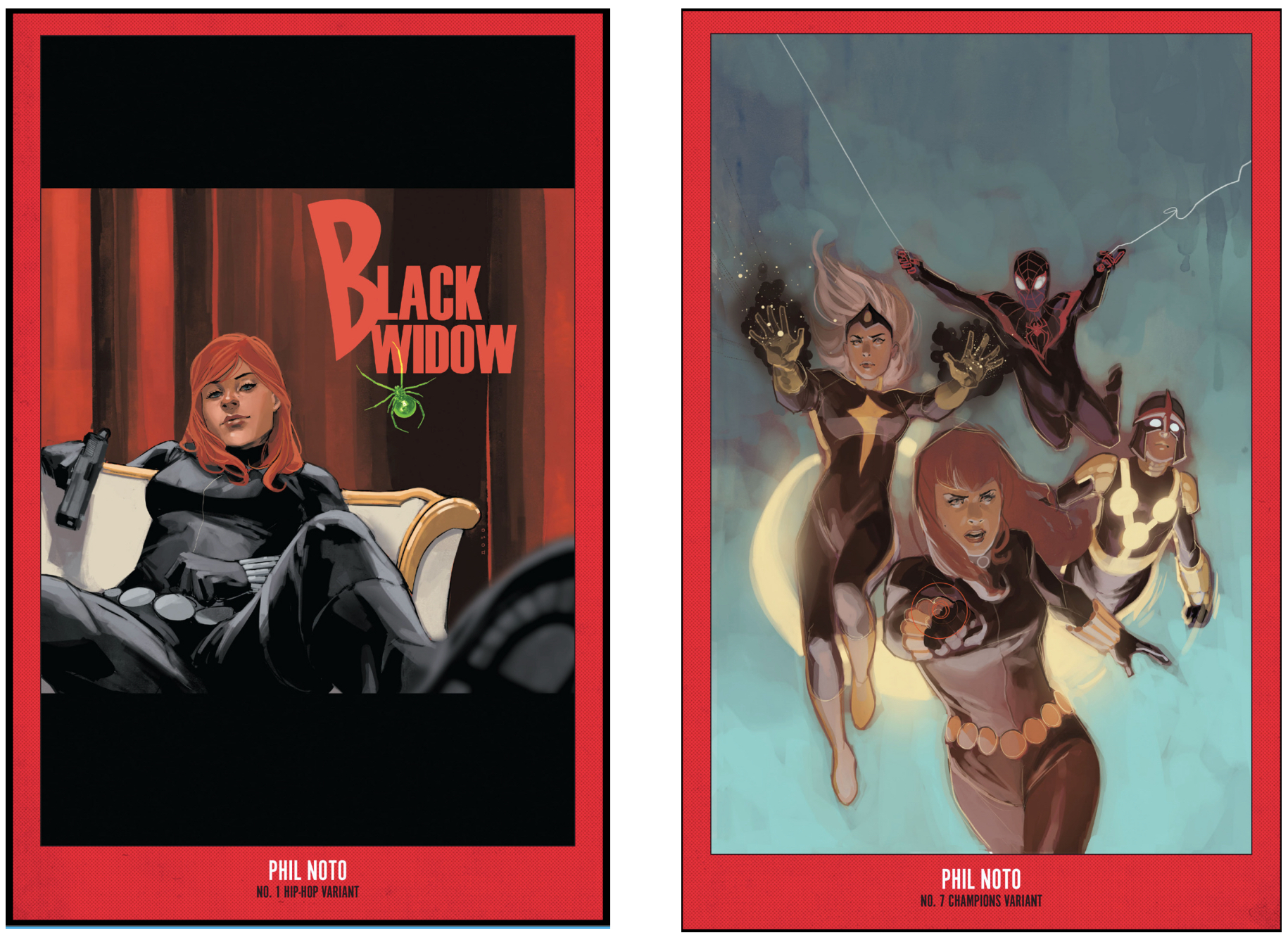
After Nathan Edmondson, writer, and Phil Noto, artist, set the bar very high in v.5 of Black Widow—avoiding the pitfalls of underestimating and hypersexualizing her—another all-star team took over with v.6, Chris Samnee handling pencils and co-writing with Mark Waid. This reboot repeats many aspects of previous volumes: a Daredevil team trying their hands at Natasha Romanov and portraying Natasha as possibly disloyal because of the ghosts of her abusive past that cannot be exorcized.
Yet, Samnee and Waid maintain the momentum set by Edmondson and Noto, especially with a visually compelling 12-issue run that also does not stoop to focusing on exposed cleavage and Black Widow bound by chains or rope.
A couple covers do involve Black Widow embraced—although these portrayals fit well into the tone and imagery of the run without reducing Black Widow’s agency as a character and a woman.
Covers for issue 002 and 009 feature Black Widow embraced. Pencil by Chris Samnee and ink by Matthew Wilson.
Enemy of S.H.I.E.L.D. (Again?)
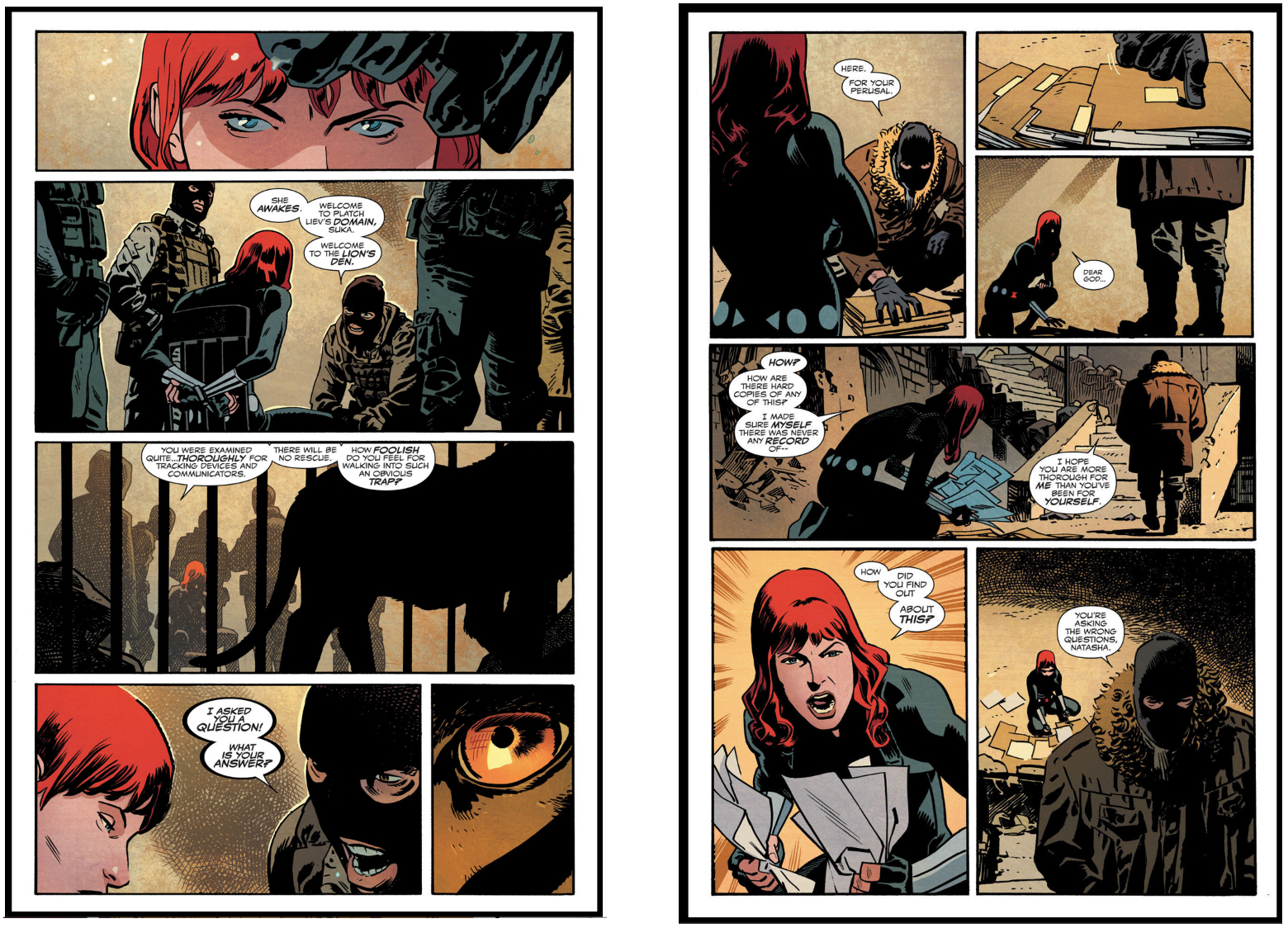
Issue 001 opens with dynamic action and panels; Samnee (pencil and ink) and Wilson (colors) set the tone for the series by centering Black Widow’s athleticism and intelligence. However, once again, readers are in for another exploration of Natasha’s trustworthiness and how damaged she remains because of the trauma of her childhood training as an assassin.
Samnee and Wilson build to Black Widow’s dramatic escape in the opening pages of issue 001 in v.6, highlighting Samnee’s panel designs and Wilson’s brilliant coloring.
Similar to Noto, Samnee carries the narrative through textless panels and creates a film effect for much of the volume. After her dramatic escape from S.H.I.E.L.D., Natasha finds her foe for the volume in issue 002, Weeping Lion, and is again threatened with having her deepest secrets revealed. In many ways the focus of this series feels overworked already, but visually Samnee and Wilson maintain a compelling narrative.
Samnee and Waid also craft a smart approach to old topics because they clearly honor the complexity of Natasha/Black Widow as a rich and complicated human as well as superhero.
Once again, Black Widow finds herself bound and threatened in issue 002, but Samnee and Waid never stumble into the hypersexualized and reductive patterns in early volumes.
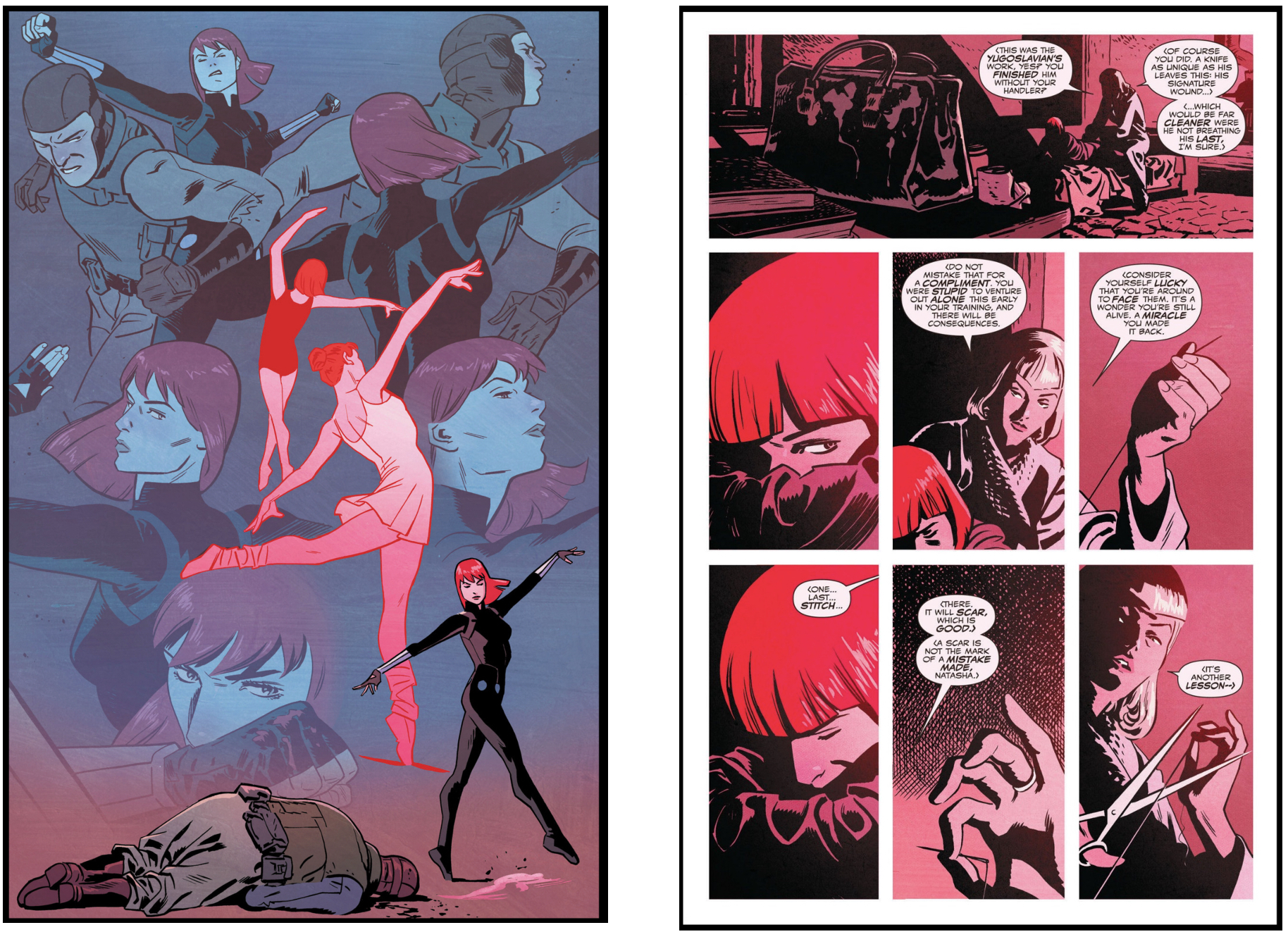
Instead of focusing on Natasha’s exposed body, Samnee depicts Black Widow in the context of images as a ballerina through the use of pastel colors and emphatic shading. As well, Natasha remains physically vulnerable, often battered, stabbed, and brought to exhaustion through a relentless parade of battles for her life.
A perfect scene for Natasha/Black Widow, in fact, in issue 003 involves her being stitched up in a flashback mixed in with her actual return to the Catacombs in the Red Room Academy. Natasha is told: “It will scar, which is good. A scar is not the mark of a mistake made, Natasha. It’s another lesson.”
Natasha as Black Widow is a life lived among scars, pain, and seemingly lessons that never end.
Issue 003 offers powerful uses of pastels—blues, pinks—contrasted with black shade and faded images.
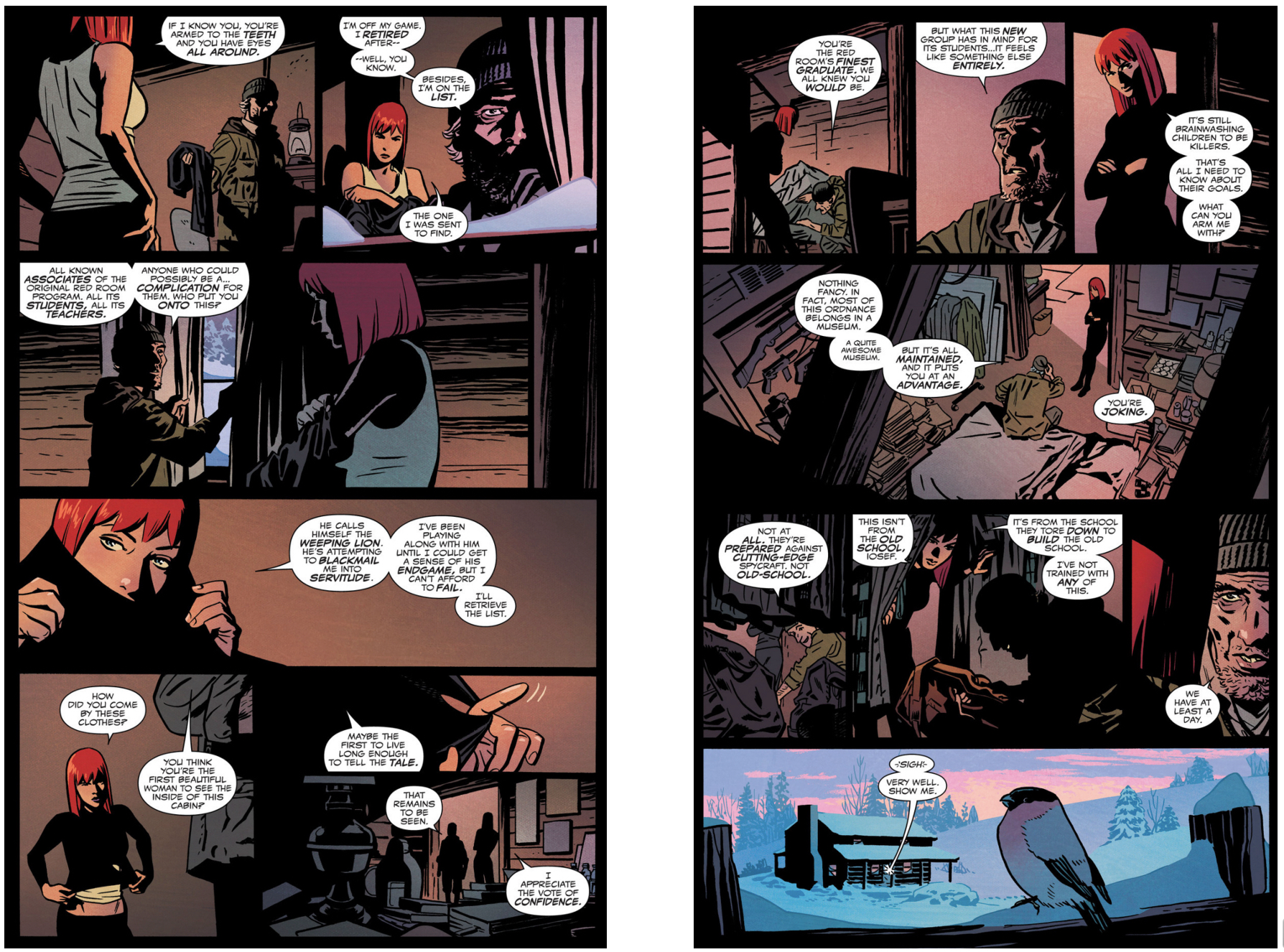
Natasha is badly wounded and finds the help of Iosef in issue 004. Caught between the Weeping Lion and S.H.I.E.L.D., Natasha must secure the tools, old weapons from Iosef, to confront the Headmistress and Recluse in the Dark Room Academy, a replacement of the Red Room Academy, where young girls continue to be trained as assassins like Natasha was.
Samnee and Waid use parallel narratives—present and flashback—and motifs well despite this being overworked ground with Black Widow. The issues continue to be visually dynamic and compelling, breathing life into stories and conflicts we have read again and again.
Natasha and Iosef are one of the better pairings used in Black Widow series, at times playful but absent the empty sexual banter and tension too often present in Natasha’s relationship with men.
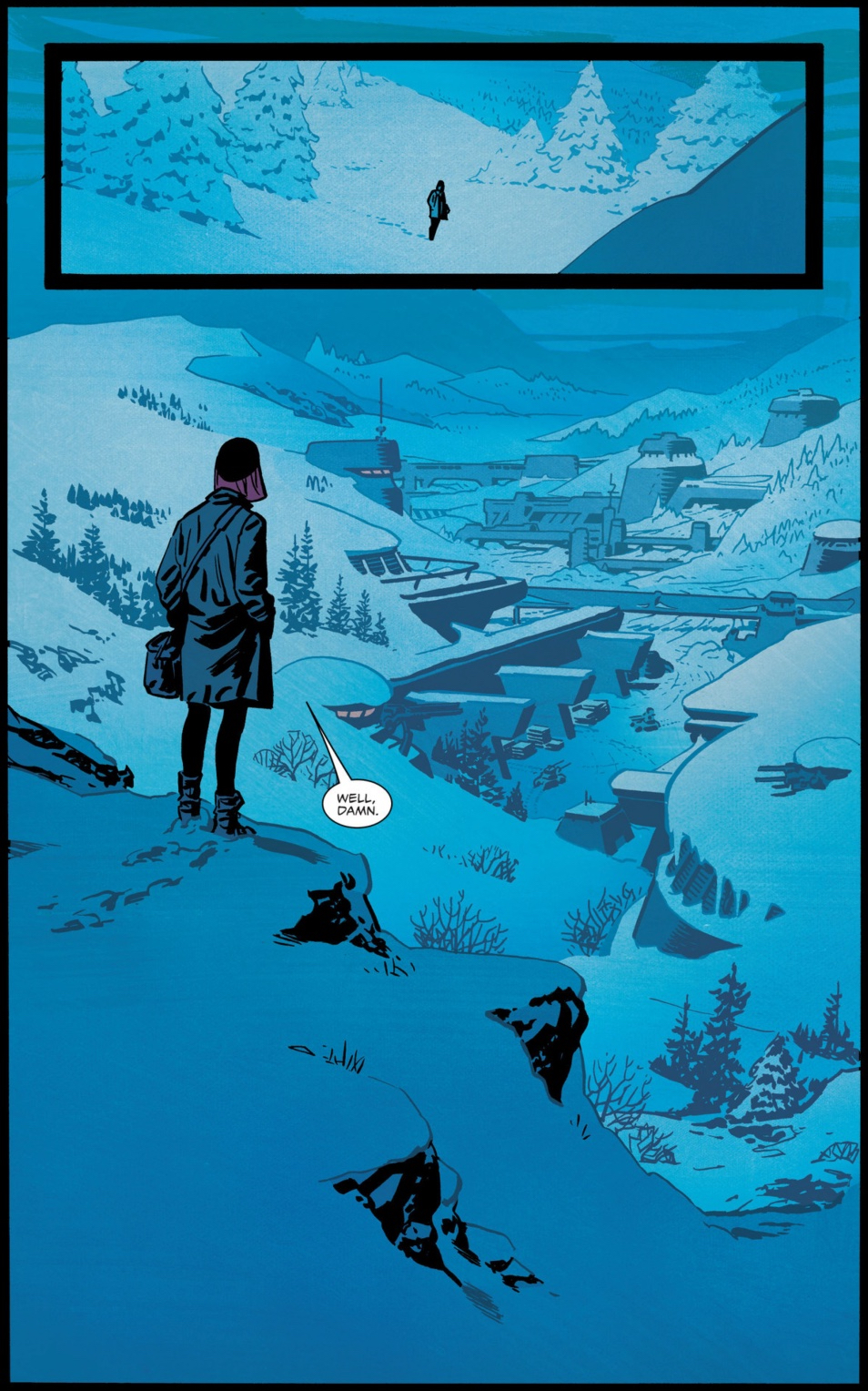
Issue 004 also highlights the power of images, the use of color and dynamic paneling, and either textless or sparse-text full-page spreads. Samnee gives this volume the same presence and visual weight that Noto provided in v.5.
The use of blue on this full-page panel and the simple “Well, damn” captures the vastness of Nastasha living in the present while continuing to fight the past.
The Arc of Black Widow’s Universe
After parallel stabbings—from her past and in the present, returning to the Catacombs—Natasha confronts the Red Room Headmistress and Recluse, complicating the main narrative involving S.H.I.E.L.D. and Weeping Lion. After recovering with Iosef’s help, Natasha moves to her mission to recover intel for Weeping Lion, which goes wrong, dramatically and violently with S.H.I.E.L.D. involved. The lingering question of Natasha’s loyalty is left in the balance.
The next test is Tony Stark/Iron Man joining issue 006, mixed with another flashback of Natasha’s life as a ruthless assassin. The Stark scene shows Natasha manipulating Stark: “Makeup and acting, Tony. You’ve always been a sucker for both. Thanks for the access.”
The “former lover” motif is a return to a pattern found in many Black Widow series; however, Samnee and Waid insert a power shift and portray Stark as the weaker of the two instead of hypersexualizing or reducing Natasha to stereotypes that do not suite her character.
The access she secures leads to Natasha discovering that Weeping Lion is part of a duo, including the telepath brother Ilija Knezevic in issue 006. Black Widow now turns the focus of the plot to her confronting the Headmistress and Recluse to rescue the girls from the Dark Room.
“No one gets into my head unless I let them,” Natasha informs Ilija Knezevic after turning Stark’s weapon on him. “And I rarely let them.”
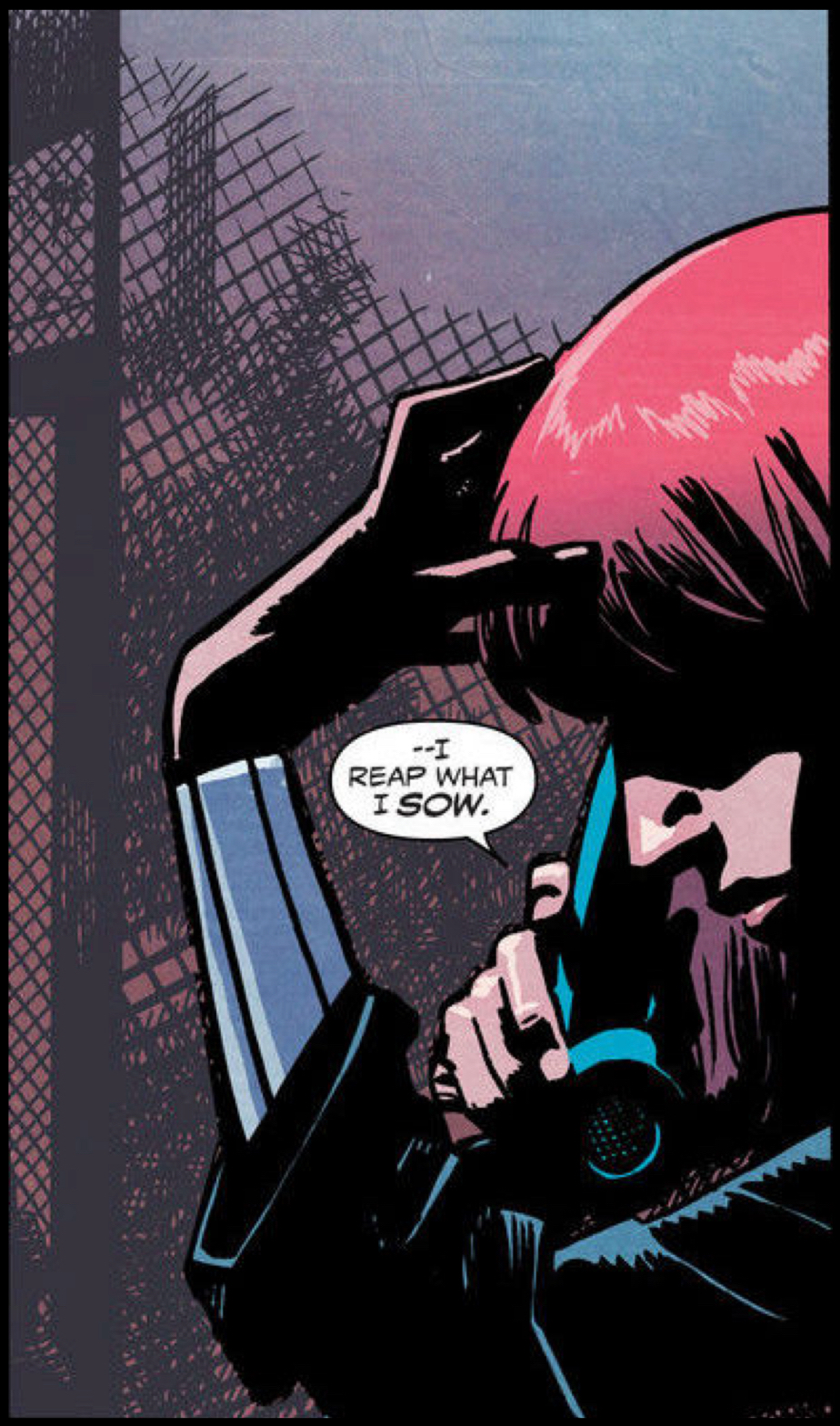
Possibly the perfect tagline for Natasha/Black Widow is found in issue 006: “I reap what I sow.”
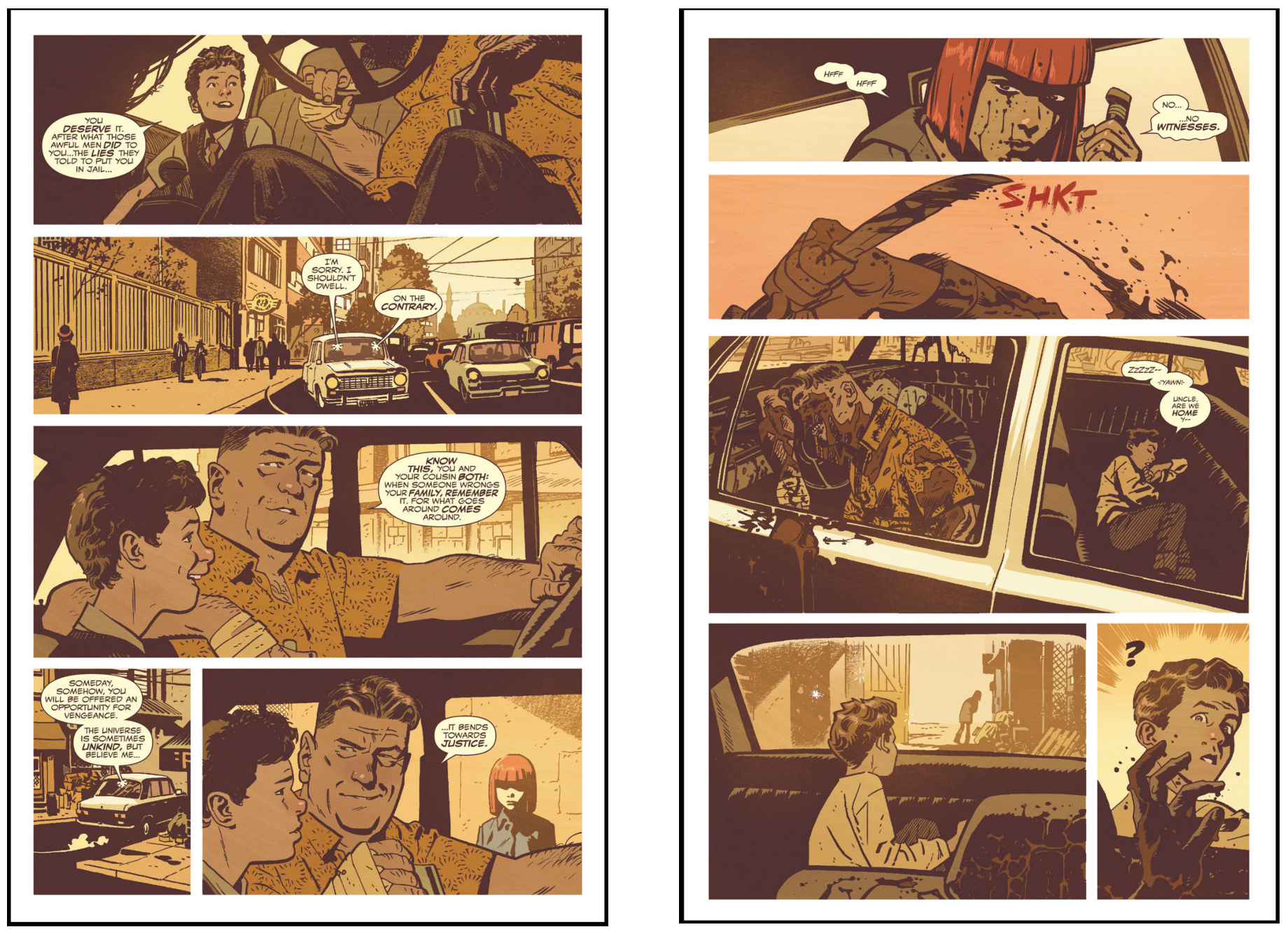
In issue 007, “No More Secrets,” readers witness a truly violent and disturbing flashback that centers both this series and Natasha/Black Widow by alluding to Martin Luther King Jr.’s “the arc of the moral universe is long but it bends toward justice.”
Natasha as a child assassin was supremely dedicated to her mission, a sort of moral code that is graphically displayed in the flashbacks depicting cold and calculated violence even in the face of innocence, notably other children—more of the weight of Natasha reaping what she has sown.
Issue 007 forces the reader to consider “justice” but also reveals the moral tension of the assassin’s mandate to leave no witnesses.
Natasha, the duo that is Weeping Lion, the Headmistress, and Recluse are all entangled by the end of issue 007 in a web of violence and an urge to seek justice warped by revenge and under the dark cloud of their pasts because Natasha failed to follow the full mandate of her assassin’s creed. After Headmistress’s death, Natasha claims, “…her mother did just die. I am not a monster.” The issue ends with Knezevic’s ominous, “Right.”
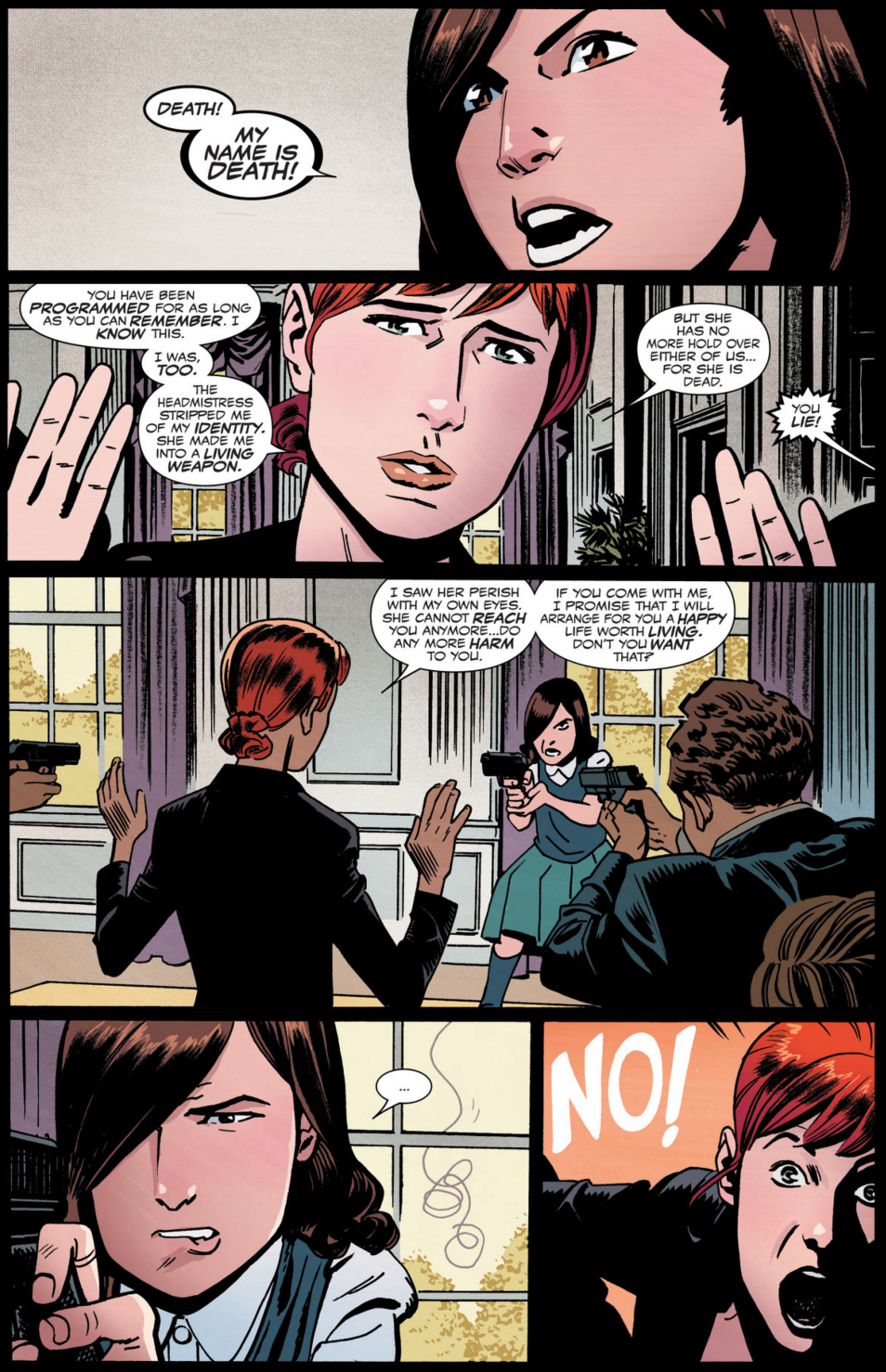
Issue 008 involves current-day child assassins in the White House with Natasha undercover. When the child assassins are exposed, Natasha confronts the girl calling herself “Death” with “You have been programmed for as long as you can remember. I know this. I was too.” Natasha adds that the Headmistress made her a “living weapon.”
Here, an important question about who is culpable and for how long when the actions are extreme, but the person is only a child, a child behaving in ways that they have been indoctrinated to believe and act upon.
Black Widow seeking to save these child assassins foreshadows later issues with Bucky Barnes involving tensions of savior and sacrifice.
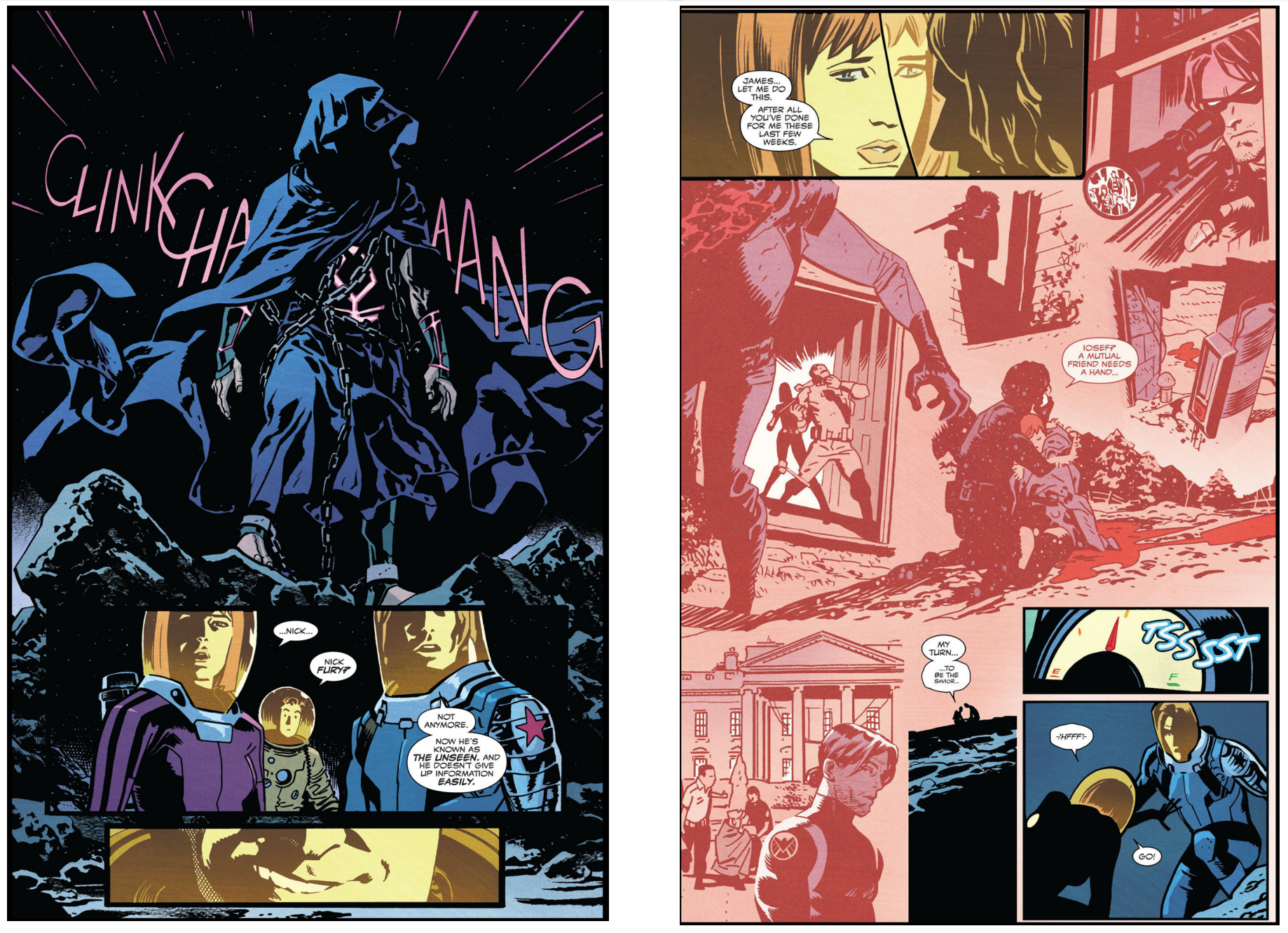
The killing of Iosef in issue 009 adds to Natasha’s fear of death in the wake of anyone knowing her, and sets up her confrontation with Recluse, who has captured Bucky Barnes. Natsha chastises Barnes for wanting to protect her, but Barnes has another mission, bringing Black Widow to Nick Fury, now The Unseen.
On the moon in issue 010, Black Widow, Weeping Lion (telepath), and Bucky meet Fury/The Unseen. This dense issue includes the death of the telepath, a child assassin stowaway, and a familiar plot element, Natasha demanding that she be sacrificed: “My turn…to be the savior.”
Paneling and color continue to stand out as some of the most powerful work on v.6.
In the final two issues, Natasha must subvert the plan of a group of child assassins, charged with destroying S.H.I.E.L.D. and eventually confront Recluse.
The determination and skill of Natsha/Black Widow are highlighted in v.6.
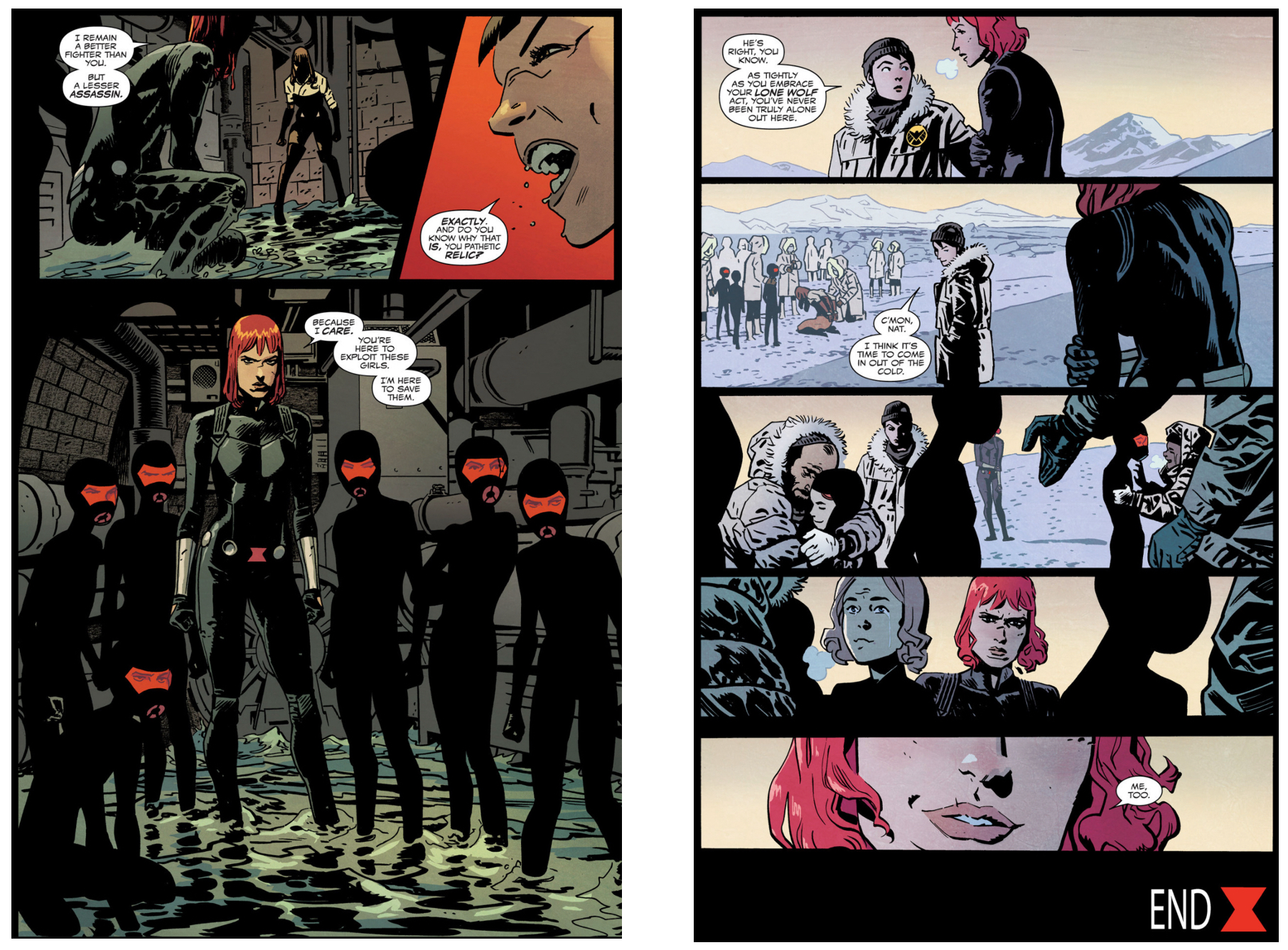
The series ends with a climactic battle between Black Widow and Recluse, displaying some of Samnee’s finest work. The issue is also well written by Samnee/Waid as the plot builds to Natasha surrounded by the child assassins stating to Recluse, “I remain a better fighter than you. But a lesser assassin.”
Here is Natasha as savior without being sacrificed.
Yet, when all is said and done (including another scene with Stark), Natasha is asked to confront that her “lone wolf act” doesn’t mean she is alone. To that, Natasha agrees to “come in out of the cold.”
Samnee and Waid’s run on Black Widow fulfills the message of the universe bending toward justice, at least momentarily, at least for some.
Regretfully, Marvel abandons Black Widow again, until v.7 in 2019, a brief 5-issue run that regresses to early, weaker runs and breaks the excellent momentum created by Edmondson/Noto and Samnee/Waid.
Since this is a real thing, I want to state clearly for anyone aspiring to be a writer or (which is the case for many of us) for anyone currently being a writer and trying to continue our journey, don’t write like the NYT.
I am not being satirical, by the way, and I am not being hyperbolic.
The NYT provides an unmatched platform for their journalists and opinion columnists:
The New York Times (NYT) is an American daily newspaper, founded and continuously published in New York City since September 18, 1851. It has won 112 Pulitzer Prizes, more than any other news organization. Its website is one of America’s most popular news sites, and the most popular among all the nation’s newspapers, receiving more than 30 million unique visitors per month as reported in January 2011. The paper’s print version remains the largest local metropolitan newspaper in the United States and third-largest newspaper overall, behind The Wall Street Journal and USA Today. Following industry trends, its weekday circulation has fallen to fewer than one million daily since 1990. Nicknamed The Gray Lady, The Times is long regarded within the industry as a national “newspaper of record”. It is owned by The New York Times Company. Arthur Ochs Sulzberger Jr., whose family has controlled the paper since 1896, is both the paper’s publisher and the company’s chairman. Its international version, formerly the International Herald Tribune, is now called the International New York Times. The paper’s motto, “All the News That’s Fit to Print”, appears in the upper left-hand corner of the front page. Its website has adapted it to “All the News That’s Fit to Click”. It is organized into sections: News, Opinions, Business, Arts, Science, Sports, Style, Home, and Features. The New York Times stayed with the eight-column format for several years after most papers switched to six, and was one of the last newspapers to adopt color photography.
Yet, invariably, nearly daily, the NYT and its journalists badly mangle their public duty to report the news and offer high-quality and informed opinions from what can be argued as the loftiest perch in print/online newspapers in the U.S.
Being this big and this powerful, it seems, has simply allowed the NYT to be arrogant and incredibly lazy—even petty.
A search on my blog site reveals that over the past ten years I have blogged dozens of times about the inaccurate, misleading, and even harmful articles that are essentially what is common in the NYT.
In a 2017 open letter to the NYT, I detailed why the newspaper of record is failing its mission, including a list of posts where I detail those failures:
And over the past five years, I have continued to catalogue the many predictable ways that the NYT fumbles their relentless coverage of education (and specifically teaching reading) and other topics:
So here, at no cost, I want to outline why no one should write like the NYT, and ironically, how reading critically the NYT can serve as a “what not to do” as a conscientious and credible writer.
First, at a superficial and practical level, the NYT simply represents that mainstream media and journalism are in serious decline (however, I want to emphasize, as I will explain below, that the NYT essentially is deeply flawed because of traditional and long-standing journalistic standards of writing). Even major newspapers have been firing editors and journalists for many years.
The field of journalism has contracted significantly, and one of the great costs has been a reduction in editing and editorial oversight as well as shifting the workforce from veterans with full-time, well paid positions to younger (read: cheaper) and even part-time (or freelance) journalists who often have to survive through their own blogging even while being traditional journalists or after they lose their full-time position. (For a little peak at the consequences, I recommend following Typos of the New York Times on Twitter.)
More substantially, however, the NYT is a bastion of bad writing that is a reflection of bad thinking—again, in part, because that is how journalists are trained to write (and think).
In the posts I include above, I have detailed all these essential problems with bad writing/thinking at the NYT and all across mainstream media, but here let me make an accessible list of those problems:
Both-sides journalism. The NYT is certainly among almost all journalism in this flaw, but, again, the outsized platform that is the NYT makes their impact far greater, and more harmful. Journalists are taught to look for and present “both sides” of issues to give the appearance of not being biased (see more on this below). First, presenting any issue as a “both sides” argument is lazy, the sort of thinking I would not allow in my first-year writing students. Next, by presenting “both sides,” journalists often give the impression the sides are equally valid (and they often are not).
Press-release journalism. As a result of the contracting industry, journalists have ceded investigative journalism and research to aggressive think tanks and advocacy organizations. Too often, articles in the NYT and across mainstream media are simply repackaged versions of press releases, regardless of the credibility of the information or perspective. Readers are left with deeply biased information presented as credible and unbiased “news” coverage of a topic.
Crossing the Big Foot Line. Press release journalism is one aspect of a larger shift in journalism. At one point, tabloid journalism and the type of credible journalism found in the NYT were distinct. The example I use is Big Foot. The National Inquirer (tabloid) used to run when I was growing up repeated stories about someone seeing Big Foot. The scam was that the tabloid simply covered that someone made the claim (there was no effort to verify the claims of the source). Just because a tabloid printed a story that Bob claimed the world was going to end in October didn’t mean the tabloid actually was reporting the world would end in October; the article was about Bob claiming the end of the world. Not to be nostalgic or to oversimplify, but mainstream media at that time decades ago would not have touched that sort of story. Yet, during the Trump era and again because the field is contracting, more and more mainstream media simply covers a topic without seeking verification of credibility of any claims (see the many years of Trump when mainstream media simply reported Trump saying false things but refusing to label his claims as “lies”).
Peddling stereotypes. One of the most insidious flaws with the NYT is grounding journalism and commentary in stereotypes and “common sense” thinking. The NYT perpetuates stereotypes about people living in poverty, public education, policing, race/racism, and essentially every topic they cover. The NYT is absent any critical interrogation of assumptions—mostly because journalists and commentators have little or no background in the topics covered.
Lacking historical context and crisis rhetoric. Journalists tend to have backgrounds in journalism (a problem as noted above). Without expertise in a topic, journalists and commentators are often trapped in presentism, and the result is Christopher Columbus journalism—the delusion that you have discovered something new and the failure to realize there is a history and likely many experts on the topic to draw from. This is common in coverage of education topics. Because of the lack of context, the coverage often frames topics in crisis rhetoric. Over the past few years, the media coverage of reading is a classic example of misreading a topic, failing to offer historical context, and misidentifying an issue as a “crisis.”
Taking an objective/non-political pose (and fearing the “liberal media” label). The journalism especially, but the commentary also, at the NYT is mostly discredited by the relentless effort to take an objective pose. That is inherently a lie since everything is subjective, and political. By simply choosing to cover a topic, journalism is biased; by deciding which “side” of “both sides” to present first, journalism is biased. As I have noted before, when I interact with journalists and challenge them for framing “both sides” as equally credible (when they are not), those journalists have often retorted, “It isn’t my job to determine if the position is credible or not.” Yet, in fact, that certainly should be their job. Since journalism and the NYT are often slandered as “liberal media,” the NYT seems determined to prove otherwise—resulting in a constant gaze into the minds of conservative America. The key point here is that the NYT (and any media) cannot be unbiased, objective, or non-political; instead, the NYT could make a much greater effort to be biased toward nuanced and valid claims about the topics they choose to cover.
Suffice it to say, don’t write like the NYT.
And don’t believe most of what you may read in the NYT because the “national ‘newspaper of record'” is broken.
I am not in Kansas
I can't slow down and I can't stand it
Broadcast News into Hallelujah
Hanne Darboven had a great idea
Make a list, write it down
Shave your head, draw a crown
Move back home with mom and dad
The pool is drained and they're not there
My bedroom is a stranger's gun room
Ohio's in a downward spiral
I can't go back there anymore
Since alt-right opium went viral

"Not in Kansas," The National
This was going to be a different blog post. In early July and then again in early August, I drove cross country—from SC to CO and then back.
This drive crosses for significant stretches Kansas and Missouri. And driving for hours along Interstate 70 in those states is a vivid and disturbing snapshot of the U.S.A. in 2022.
After posting about driving to OH and back, I had begun to think even more deeply about the current political state of the union. We are not a country divided by Right v. Left or Republican v. Democrat.
The division involves those of us who favor community and those who are seeking authoritarianism. I was motivated to continue this idea after seeing a Tweet from Allison Gaines:
This is why I don't want a country run by people's religious beliefs. And FYI, the "no religion" group seems to have the ideology most respectful of other people's beliefs. I encourage you folks to dig deep as to why this is pic.twitter.com/J3ep8kpgdv
I agree with her, and I think that poll captures the divide I identified above; non-religious and Jewish people have chosen community, and Catholics, Protestants, and Mormons have chosen authoritarianism.
The problem is that these ideologies are being leveraged in our political system. The very real and immediate danger is that those seeking authoritarianism are using government to impose those ideologies onto everyone—and they are winning. Those seeking community—people who believe democracy is a way to provide everyone space to live freely in ways that are diverse and not mandated by an authority—are losing. Badly.
As I wrote in my post on provincialism, you can learn a lot about how people think by the billboards (professional and homemade) that line our highways.
Kansas and Missouri billboards tell you that you are in Trump Country, that you are surely going to hell, that we are baby killers, that being gay or trans is a ticket to hell, that pornography is killing us.
Those billboards also tell you to follow and trust in Jesus—and “every glock is in stock.”
God. Country. Family. Guns.
I was driving just before Kansas voters were going to polls to amend their constitution. Like many other states, Kansas was attempting to further restrict access to abortion. The campaigns, advertising, and signs along the interstate were a garbled mess of misinformation and scare tactics.
Lots of Jesus. Lots of Hell. Lots of babies.
During the drive, I would have guaranteed another state was turning against women.
And then, hope?
Kansas voters chose to maintain the right to abortion in their state constitution by a significant majority.
One of the most troubling aspects of the push to ban abortion and the success in overturning Roe V. Wade is that polls overwhelmingly show a solid majority—about 2/3 of Americans—support the right to abortion.
None the less, the minority view that all abortion must be banned is winning. The political system in the U.S. is not a democracy, not a voice of the majority and not a mechanism for protecting the rights of minorities.
Our government is firmly the tool of conservatives. Republicans dominate state governments and use that power to ban, censor, and remove freedoms that have been painstakingly gained over decades of progressive efforts.
And here is the essential problem with authoritarian ideology:
Recent library book challenge from a mom in North Texas. “I read every page expecting to be offended.” But after finding “Ash” by Malinda Lo to be filled with “kindness and caring,” parent Mary Smith wanted it banned anyway because it “normalizes lesbian love.” pic.twitter.com/Jh7RJ98xB3
No one loses anything because other consenting adults have different ways of being sexual, of expressing gender, but this parent is offended by “normalizing” even after reading a book and finding it “filled with ‘kindness and caring.'”
The authoritarian urge is mainly among white religious people who are essentially fundamentalist in their beliefs. For fundamentalists (I was born and have lived my entire life in the fundamentalist South), their beliefs and ways of living are not simply how they want to live; they are not seeking a country that allows them the freedom to believe and live as they choose.
Fundamentalists see it as their sacred duty to God to impose their beliefs on everyone else. Fundamentalists have missionary zeal, the arrogance of thinking their beliefs are not just right for them, but right for you (and you may not even know it!).
This is why Republicans and conservatives are banning books and censoring curriculum and instruction in schools. Republicans and conservatives are not trying to fight indoctrination; they are demanding that only they have the power to indoctrinate.
Republicans are afraid of books, history, ideas, and diversity even when none of these materially take anything away from them, when none of these are using the power of government and law to deny people their own freedoms and choices.
We on the left are materially afraid of gun violence, police killing people before they can be proven guilty or innocent, pandemics, laws denying women body autonomy, and literally losing our freedoms because of laws passed exclusively by Republicans (abortion bans, anti-CRT laws, book bans, etc.).
And that is what this blog post was originally about—false equivalence.
Every day our mainstream media—demonized by the Right as liberal—feeds us the false “both sides” narrative that suggests using government to ban abortion, censor what students can be taught, and erase freedoms gained is somehow the same as protesting abortion bans and curriculum gag orders, somehow the same as calling for expanding freedoms and rights for all regardless of race, beliefs, sexuality, gender, etc.
Authoritarian power grabs of the government are in no way the same as using democracy to create a more perfect union that allows individual and consensual freedom for everyone.
As my post on driving to OH examined, this remains a problem of rural v. urban.
Driving across rural Kansas and Missouri is a disturbing harbinger of the country the authoritarian right wants, that the authoritarian right is actively building.
God. Country. Family. Guns.
Mass shootings? No problem.
School shootings? Just the cost of the Second Amendment.
The world view of fundamentalist religious Americans lacks logic, is absent coherence, and is built on lies.
Back in SC, I am not in Kansas.
But I am well aware that the fundamentalism and authoritarianism of my home state is not unique, not simply a feature of the South.
Rural America is determined to control us all, determine to mandate what counts for everyone’s life, liberty, and pursuit of happiness.
That is not America, at least not the ideal we were raised to believe.
I am afraid that it is too late.
Should the vote in Kansas give us hope?
Maybe, but hope means nothing without action.
And for now, the authoritarians are the ones willing to make their world happen.
The media have a long and muddled fascination with children and students reading, especially declaring that we are experiencing a reading crisis. However, even more concerning that this misguided click-bait approach to journalism is that the media more often than not promote crisis rhetoric with misinformation.
[UPDATES IV and V below]
I. Education Week
Possibly the most (un)impressive example of this is from Education Week. In just the last few weeks, EdWeek has posted a catalogue of misinformation about their favorite topic—the science of reading:
Here are a few reminders about the nonsense and misinformation that EdWeek will not set aside:
Published in the Newsweek Expert Forum, an “invitation-only network of influential leaders, experts, executives and entrepreneurs.” (This response was not invited.) Forsa cannot be reached by email or telephone. She is the president of Savvas, formerly Pearson K12.
It is widely believed that failure at grade 3 predicts school failure later on in school (Forsa, “A love to read by three,” 7/25/22).
If true, we should study what factors predict success by the end of grade 3.
In Lao, Lee, McQuillan and Krashen (2021), we summarized the results of three studies of ten -year old children on a test of reading comprehension, the PIRLS test, 10 year olds in 45 countries in 2006, in 57 countries in 2011 and in 61 countries in 2016.
The number of children tested ranged from 3349 to 18,245 and was administered in the national language of the country.
In agreement with Forsa’s recommendation, the best predictor was access to reading material, represented here as the presence of a school library). High levels of poverty meant lower levels of reading competence, as did the amount of reading instruction in school and whether children had developed some reading competence before starting school.
The clear winner: access to books. There was the most popular recommendation among the public, direct instruction in reading, was not a strong predictor. There is plenty of support for this predictor from other studies, see especially the work of Keith Curry Lance. https://keithcurrylance.com and S. Krashen (2004).
Krashen, S. 2004. The Power of Reading. Libraries Unlimited.
Lao, C., Lee, S-Y., McQuillan, J., and Krashen, S. 2021. Predicting reading ability among ten-year olds: Poverty (negative), school libraries (positive), instruction (zero), early literacy (zero). Language Magazine 20,10: 20-21. https://tinyurl.com/cn3nekc4
It is important to connect the dots and recall that states have banned reading programs, as reported here:
The Arkansas Division of Secondary and Elementary Education announced in October 2019 that any curriculum that utilizes cueing strategies won’t be approved for use in the state, meaning that Calkins’ materials and another popular program, Fountas and Pinnell Classroom, are effectively banned. Colorado released a list of approved core reading curriculum, and Calkins’ programs weren’t on the list. A group outside St. Louis sent a letter signed by 216 parents, students and taxpayers to the school board asking that Calkins, and Fountas and Pinnell be dropped. The Oakland Unified School District, whose use of Calkins’ products was highlighted in the 2019 APM Reports story, announced it was forming a committee to consider adopting new curriculum. And Student Achievement Partners, a nonprofit consulting group, published a review that concluded Calkins’ curriculum materials are “unlikely to lead to literacy success for all of America’s public schoolchildren.”
Republican legislation has begun to erode academic freedom among previously respected academic publishers, such as Heinemann. The combination of politics and the market is bad news for teachers, bad news for education, and bad news for students.
The expansive piece follows a now old and tired pattern of misrepresenting nearly everything about reading and teaching reading. In fact, the article almost comically fails the fact checking guidelines I developed years ago.
The post opens with a garbled defense of the reading program Open Court, blaming (of course) teachers for abandoning the program (and characterizing those teachers as driven by wokeness, not concern for students). Here is what is left out: Open Court was at the center of the Reading First scandal, and careful reviews of the program have shown that it simply does not meet the exact standards the science of reading movement calls for. (See McQuillan’s review and the review at phonics-friendlyEdReports.)
Misinformation by omission.
Luscombe offers yet another, and somewhat breezy, inaccurate portrayal of whole language:
There are many schools of thought on how best to aid this process, but the main contretemps has been about whether kids need to be taught how to sound out words explicitly or whether, if you give them enough examples and time, they’ll figure out the patterns. The latter theory, sometimes known as whole language, says teaching phonics is boring and repetitive, and a large percentage of English words diverge from the rules. (Hello there, though,thought, through, trough and tough!) But if you immerse children in beautiful stories, they’ll be motivated to crack the code, to recognize each word. The counterargument is that reading is as connected to hearing as it is to sight. It begins, phonics advocates say, with speech. This understanding, and the data that supports it, has become known as the science of reading.
The goal is to frame whole language (and balanced literacy; see later in the article) as nothing more than a whim and elevate the real “science of reading.” See here for a full and accurate understanding of whole language, and here and here for balanced literacy.
Of course misinformation articles on reading must cite and greatly misrepresent the National Reading Panel (NRP). Once again, the NRP reports were deeply flawed since the panel was underfunded and understaffed; the panel also lacked any teachers and limited their review of research to narrow quantitative studies. See a fuller examination of NRP here.
The piece builds as expected to focusing on dyslexia and making a pretty huge (and inaccurate) claim:
Just as most children, no matter how many times they’ve been in a car, still need to be taught to drive, most readers benefit from being explicitly taught how sounds and letters go together. This is true not just for dyslexics (who represent about 10% of all learners) but for the majority of readers.
One of the worst aspects of the “science of reading” movement and the state legislation it has prompted is that all students are being treated as if they are dyslexic, or struggling. Not only are the movement and parent advocate misrepresenting the research on dyslexia, they are pathologizing all reading. See here and here for a more nuanced and complex understanding of dyslexia and addressing struggling readers.
And no misinformation piece on reading is complete now with the “Mississippi Miracle” propaganda. To be brief, there is no credible research showing Mississippi improved NAEP scores by using the “science of reading”; in fact, it is likely the score bumps come from excessive grade retention. See a full analysis of Mississippi’s NAEP scores here.
Part of the Mississippi and “science of reading” propaganda relies on general readers simply accepting that everything being endorsed is, well, “scientific”; however, once again, the article champions the power of LETRS, a program to train teachers in phonics and reading instruction. Another example of misinformation by omission since:
A growing number of U.S. states have funded and encourage and/or require teachers to attend professional development using Moats’s commercial LETRS program, including Alabama, Arkansas, Kansas, Mississippi, Missouri, Oklahoma, Rhode Island, and Texas. This is despite the fact that an Institute of Education Sciences study of the LETRS intervention found almost no effects on teachers or student achievement (Garet et al., 2008). (p. S259)
Hoffman, J.V., Hikida, M., & Sailors, M. (2020). Contesting science that silences: Amplifying equity, agency, and design research in literacy teacher preparation. Reading Research Quarterly, 55(S1), S255-S266. https://doi.org/10.1002/rrq.353
The article ends by praising Emily Hanford and trashing teacher education—the former has no credibility and the latter is simply more misinformation. See just one example on Hanford here, and here for teacher education.
Just like cries of reading “crisis,” the Time article offers nothing new by traveling down a well-worn path of misinformation that now seems the only direction mainstream media can see.
V. The New York Times (Again) [UPDATED]
Let’s end 2022 with some context.
I recommend this scholarly analysis of media coverage of SOR by MacPhee, Handsfield, & Paugh (2021):
MacPhee, D., Handsfield, L.J., & Paugh, P. (2021). Conflict or conversation? Media portrayals of the science of reading. Reading Research Quarterly, 55(S1), S145-S155. https://doi.org/10.1002/rrq.384
I also recommend the series of blogs posts from Aukerman addressing media coverage of SOR (HERE, HERE, and HERE).
This latest coverage of reading by Sarah Mervosh almost reads like parody now since the mainstream media is recycling over and over the initial and inaccurate coverage by Emily Hanford (see the links above), but this time suggesting this false narrative applies to high school.
What does this newest article get predictably wrong?
First, the uncritical acceptance of the “science of reading” movement and then of course the mischaracterization of balanced literacy:
The program in Memphis is an extension of a growing national movement to change the way younger children are taught to read, based on what has become known as “the science of reading.” And it is a sign of how sharply the pendulum has swung in the decades-long, contentious debate over reading instruction, moving away from a flexible “balanced literacy” approach that has put less emphasis on sounding out words, and toward more explicit, systematic teaching of phonics.
Next a quick reference (no citation) to “brain research” and then a hyperlink to the out-dated and (again) misrepresented NRP report:
Brain science has shown that reading is not automatic, and longstanding research supports the need for sequenced sound-it-out instruction, along with books that build vocabulary and knowledge.
I recommend seeing the recent and much more complex research base on brain research and phonics instruction HERE.
Tennessee like many other states have turned to retraining teachers, a market boom for education business (again):
Tennessee has aggressively pushed for statewide change. Last year, the state’s Republican legislature and governor, Bill Lee, passed a law that required all elementary schoolteachers be trained in a phonics-based approach, with optional literacy training for middle and high school teachers. More than 40,000 teachers have participated in the training so far, according to the state’s education department.
The article returns to misrepresenting balanced literacy by linking to Hanford, a discredited article by Goldstein in the NYT, and Education Week, which routinely repackages Hanford’s narrative:
In the early to mid-2010s, when high schoolers today were in elementary school, many schools practiced — and still practice — “balanced literacy,” which focuses on fostering a love of books and storytelling. Instruction may include some phonics, but also other strategies, like prompting children to use context clues — such as pictures — to guess words, a technique that has been heavily criticized for turning children away from the letters themselves.
The article ends by mimicking Hanford’s original article and her misleading coverage of Mississippi; here the implied “miracle” is Tennessee.
As Coles exposed in Hanford’s original coverage of Pennsylvania, don’t buy it.
The great irony facing us now is that the very worst place to read about reading is mainstream media—unless you are prepared to do the hard work journalists are not doing and interrogate the tired and relentless misinformation at the center of all the misguided crisis rhetoric around reading.














 dr. p.l. (paul) thomas