I began my teaching career in 1984, coinciding with the current era of high-stakes accountability driving education reform in the wake of A Nation at Risk.
One of my favorite units as a teacher of American literature to tenth and eleventh graders in the rural South was the Transcendentalism era—Ralph Waldo Emerson, Henry David Thoreau, and (the often ignored) Margaret Fuller.
Students did not enjoy reading these authors, I must confess, but the unit itself was often very compelling.
In the late 1980s, I added a consideration of the “Reeboks let U.B.U” campaign featuring Emerson:
I tracked down the advertising agency responsible for the ad, and my students wrote a letter calling out the campaign for being contradictory.
Shockingly, we did receive a letter from the person over the campaign. They confessed that my students’ were on target with their criticism, but added that Reebok believed they were a unique shoes company and felt their campaign highlighted that fact.
As a part of that unit also I had a recording from MTV News covering a Madonna look-alike contest.
Among the dozens of prepubescent girls, one was interviewed and she excitedly stated that the girls were there to express their individuality.
While students were no more eager to read Emerson, teens soon found themselves compelled by Emerson’s “A foolish consistency is the hobgoblin of little minds, adored by little statesmen and philosophers and divines.”
Over the past 40-plus years, I think about this unit and my students often—as well as Emerson’s enduring arguments in “Self-Reliance.”
The world of education reform, I regret to acknowledge, is dominated by “little minds,” drawn to and selling the same false stories of educational crisis and miracles.
I would amend Emerson’s list a bit, adding to “statesmen” education journalists.
The current reading crisis, often identified as the “science of reading” (SOR) movement, is yet another example of selling the manufactured reading crisis and education reform miracles that are actually mirages.
Since the 1980s, no education reform has worked.
New standards after new standards have not worked.
New high-stakes tests after new high-stakes tests have not worked.
Accountability for students, teachers, and schools has not worked.
No a single fear-mongering prediction or promise has been fulfilled.
With each new hot reform, the missionary zeal doesn’t fades; it just switches teams.
I am drawn to a line from Blade Runner as I contemplate the fate of the current SOR movement: “The light that burns twice as bright burns half as long – and you have burned so very, very brightly, Roy” (Tyrell).
The uncritical support for the SOR story has been as fervent as any reform movement, so I must wonder if we are on the cusp of buyer’s remorse.
Are these canaries in the coalmine foreboding an end to yet another era of unfounded claims of a reading crisis?
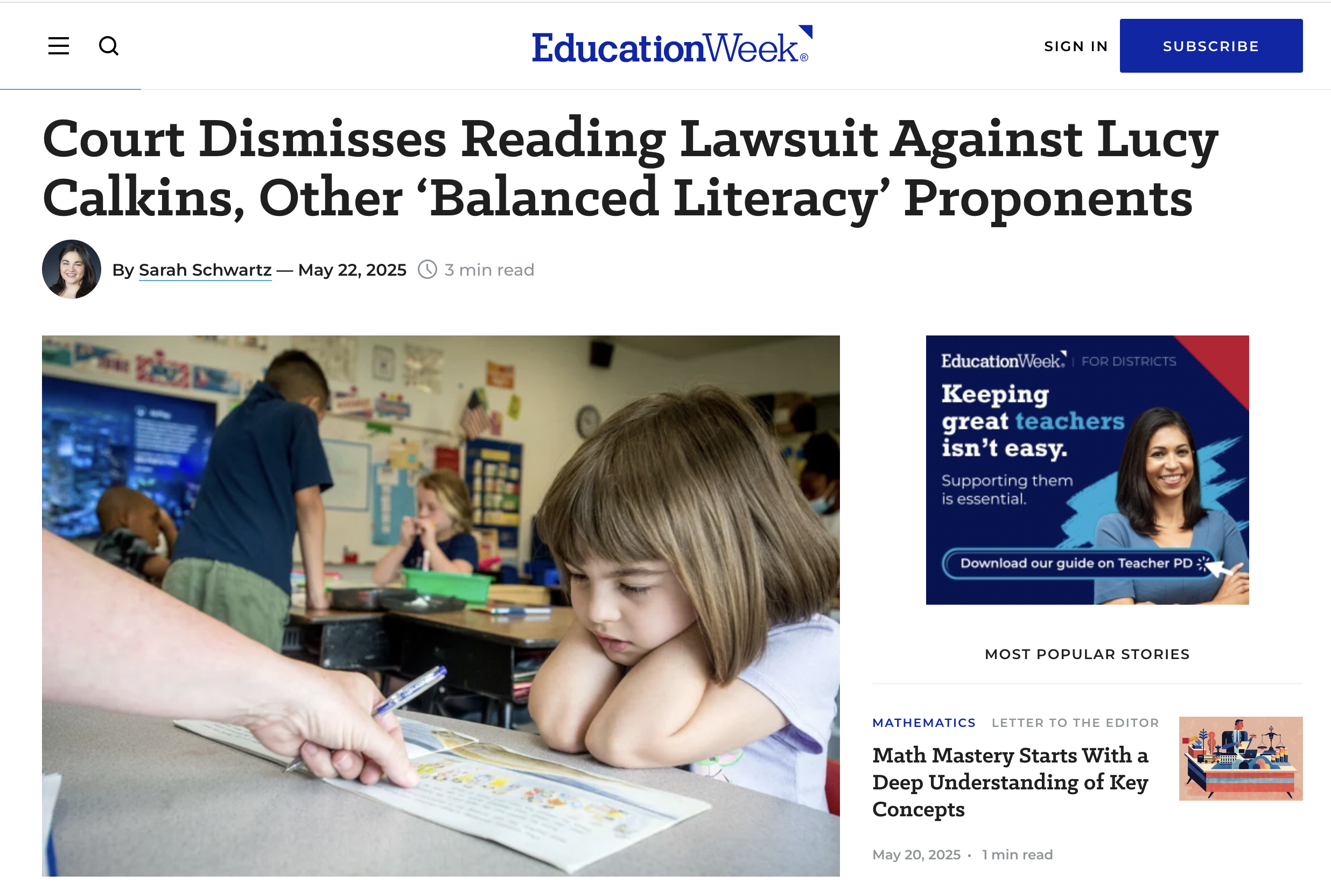
A judge in Massachusetts rejected a frivolous lawsuit grounded in the story being sold that a reading crisis was caused by a few reading programs and the scapegoat of the moment, balanced literacy (and three cueing).
Unlike mainstream media, Snopes corrected Trump-appointed Secretary of Education’s claim about student reading proficiency based on the Big Lie about NAEP.
Possibly most surprising is this call from Perry Bacon Jr. to set aside the crisis rhetoric around education, including this acknowledgement about NAEP:
The overwhelming majority of American students are reaching “baseline proficiency” in math, reading and science, according to PISA. That’s almost certainly because of our public school systems, where about 87 percent of students in grades K-12 get their education. U.S. politicians for a while were pushing the aspirational idea that most students should score proficient or above on the NAEP tests. That is a very high and probably unrealistic standard. Most of America’s students are reaching the NAEP “basic” level, mirroring the PISA results.
The impending buyer’s remorse for buying the reading story being sold will come with tremendous costs.
As Bacon warns: “But the alarmist portrayals of our schools are wrong and undermine support for public education.”
The SOR movement has wasted huge amounts of public funding and time; students are also paying a high price because of the caustic nature of scripted reading programs and grade retention.
As I read mainstream journalists and political leaders parrot the same false reading story over and over, I cannot help thinking about the preteen girls dressed like Madonna and the Reebok add that even my high school students were able to shake their heads at in disappointment.
Thomas, P.L. (TBD). Navigating (another) reading crisis as an administrator: Rethinking the “science of reading” movement. Journal of School Administration, Research and Development. https://ojed.org/JSARD/article/view/6706
Responding to the symposium question “What Shall We Do about Reading Today?” Emmett A. Betts, professor of Education at Pennsylvania State College, opened the first article in a professional journal for elementary education with a broad claim:
In a democracy, the people get the kind of schools they want. One of the many functions of an educator is to point the way to ever better schools. If the people want many public and private institutions for the preparation of teachers regardless of the quality of the work or the teacher supply and demand, the people get them. If the people want better schools plants and instruction, they make their will known at the polls and they get what they want. In a democracy, the quantity and quality of educational opportunity is the product of what people want, and what they want is to no small degree conditioned by the educational leadership they have elected to follow. (p. 226)
This may read a bit idealistic or naive, but Betts, I think, offers an accurate characterization of the very complex public education system in the US—a system bound necessarily to the political system itself.
Betts then warns:
Very soon strong pressure will be felt by elementary school teachers to intensify instruction in certain areas, such as reading. This pressure will be brought to bear by non-educators who have found a deficiency but who may may offer no other solution than a “stronger prescription.” Years of fruitful research on learning many be cast aside in order to “do something about reading instruction….” To prevent this wastage, educators must be prepared to bring to bear a considerable accumulation of information that permits an adequate resolving of this problem. (p. 226)
Later in that issue, William S. Gray, University of Chicago, expands on Betts’s warning:
[R]ecent editorials…maintain that current deficiencies in reading are the product of “pseudo-scientific bungling and the innovation of so-called progressive methods of teaching. The solution advocated by one editor was the elimination of “impractical non-essentials,” which were not defined, and of “undisciplined dabbling with practical essentials. The implication of these vague criticisms is that recent innovations in teaching reading have been adopted without due consideration of essentials and of methods of achieving desired ends. Such assumptions are as unsound and merit no more consideration than a purely defensive attitude. (p. 235)
In forty-plus pages, eleven literacy scholars confront the same problems with a reading crisis that may sound familiar to people in 2025.
However, this is from 1942
And in a mere two decades, guess what the state of reading the US entailed?
“After half a century of [progressive reform and expanding public education],” wrote Jacques Barzun in Tomorrow’s Illiterates: The State of Reading Instruction Today (1961), “we who run businesses, carry on professions, work for the government, or engage in teaching itself are forced to admit that illiteracy is still with us” (xii-xiii).
Barzun adds, “the citizen who is interested (and who has managed to learn to read) [may have their] hair [stand] on end at hearing what folly has been condoned as educational theory during the past thirty years” (p. xiv).
Editor of this volume and author of chapters 1 and 7, Charles Child Walcutt argues: “One way to describe the reading problem is to say that it is a teacher problem and—even more—that it is a problem of the teaching of teachers” (p. 18).
And of course: “The assertion that the reading experts do not understand the theory of their system can be demonstrated if we point out the false assumptions, the faulty extrapolations from scientific research, and the absolute contradictions that appear in its central propositions and procedures” (pp. 19-20).
Over sixty years ago, a reading crisis was declared (twenty years after on just before it), teachers were blamed, and reading experts were accused of not understanding the science behind their own field.
Déjà vu all over again.
There is a recurring story—one that is profitable and easy to sell—that education in the US is a failure, notably reading and math education.
The problem with this story is that it has existed since the mid-1800s in some fashion; but as I share above, an intense era of education (reading and math) crisis is at least 80 years and running.
And then, the last 40 years has been characterized by perpetual education reform, several cycles of new standards, new tests, and constant high-stakes accountability.
At no point in the US has the public, the media, or political leaders declared education (reading or math) effective.
But since the 1980s, after the hyper-crisis panic of A Nation at Risk, the US has doubled and tripled down on in-school only reform—”pressure will be brought to bear by non-educators,” as Betts noted in 1942.
The story that isn’t compelling and is hard to sell is this: The history of education crisis and reform has been grounded in misdiagnosing educational problems, casting misguided blame, and mandating solutions that are destined to fail—and even cause harm.
However, here is a story told in research that the US will not accept:
Almost 63% of the variance in test performance was explained by social capital family income variables that influence the development of background knowledge. Background knowledge is a known predictor of standardized test results. Family income variables are immutable by schools. Only public policies, outside the control of school personnel, can influence family income….
Policy makers and education leaders should rethink the current reliance on standardized test results as the deciding factor to make decisions about student achievement, teacher quality, school effectiveness, and school leader quality. In effect, policies that use standardized test results to evaluate, reward, and sanction students and school personnel are doing nothing more than rewarding schools that serve advantaged students and punishing schools that serve disadvantaged students. (Maroun and Tienken, 2024)
In other words, the ways we measure school and teacher effectiveness as well as student achievement are in fact mostly measuring out-of-school factors.
So, what is really wrong with education?
Ideology/politics and market forces.
The disconnect between public, political, and media beliefs about education and decades of research reinforced by Maroun and Tienken is entirely ideological/political.
Many people in the US are bound to rugged individualism and the meritocracy myth, both of which feed into another belief that education transforms society.
So we are now at the story the US hates, refuses to acknowledges, and thus, does not sell: Schools reflect our society, but do not (cannot) transform it (reread the opening quote from Betts above).
There is a core libertarian belief in the US rejecting the dominance of systemic forces that drives crisis rhetoric about education as well as the politics and policy mandating how we implement our schools.
US public education has never been a singular process. There has never been one program or learning/teaching theory driving schools.
However, the ideological attacks on schools, teachers, and students have always reduced claims of crisis to simplistic problems and blame (reading the entire journal issue from 1942 or the book from 1961 is eerie and frustrating).
But possibly as powerful and problematic as ideology/politics is the impact of market forces on educational practices.
To be blunt, the education market benefits from perpetual education crisis, not from successful education reform. (See also: The healthcare market benefits from perpetual illness, not curing diseases and healthy people.)
Education crisis and reform, then, have been almost entirely ideological/political and market driven.
Ironically, perpetual crisis/reform benefits both ideology/politics and the market.
Regretfully, perpetual crisis/reform does not benefit schools, teachers, or students.
This also is a story that doesn’t sell: The current “science of” movement (science of reading, science of math, science of learning) is nothing new; in fact, this is simply the science of ideology (again).
Because of the outsized impact of ideology/politics and the market on how we talk about, judge, and implement schooling in the US, we do not have a crisis, but an entrench set of failures we lack the political will to address: perpetual opportunity and achievement gaps between affluent, white students and minoritized/marginalized students (Black and brown students, impoverished students, multilingual learners, and special needs students).
Yet those gaps have been about the same for many decades and across all areas of learning (there is no gap in reading, for example) that isn’t also in math or science, or even civics).
But as Maroun and Tienken show, those measured gaps are more about social inequity than education—even though those measures also show in-school inequity as well that magnifies systemic inequities.
The ideology/politics driving how we view and implement our schools is corrupted by a fatalism about needed social reform.
It isn’t that we cannot build a better society; it isn’t that we cannot build better schools.
It is that we simply have chosen that neither matters more than our sacred—and misguided—beliefs and market.
The overwhelming majority of American students are reaching “baseline proficiency,” in math, reading and science, according to PISA. That’s almost certainly because of our public school systems, where about 87 percent of students in grades K-12 get their education. U.S. politicians for a while were pushing the aspirational idea that most students should score proficient or above on the NAEP tests. That is a very high and probably unrealistic standard. Most of America’s students are reaching the NAEP “basic” level, mirroring the PISA results.
While many fear the irrevocable decline of the US from Presidential executive orders, there appears to be some hope that courts may save us—and recently specifically save public education.
Although likely not as prominent on the national radar, more good news:
While parents, the media, and political leaders have uncritically supported false claims about reading for about a decade now, this ruling supports what scholars have noted about the “science of reading” (SOR) movement.
Now moving to the reading instruction, there’s a narrative that has been sold to the American public and policymakers. There’s a literacy crisis because teachers do not teach the science of reading because they were not taught the science of reading in colleges of education. I have tried to identify the evidence that was used to construct this claim, and I actually have not found this evidence yet.
A perceived crisis demands attention and creates an impetus for urgently needed solutions. The Course takes that tack, arguing that there is a national crisis in reading and then promoting phonics as the cause (there is not enough of it) and the solution (more of it is needed). As we argue here, there is no indisputable evidence of a national crisis in reading, and even if there were a crisis, there is no evidence that the amount of phonics in classrooms is necessarily the cause or the solution.
To be blunt, the mainstream argument that the US has a reading crisis caused by a few balanced-literacy based reading programs lacks scientific research—a disturbing fact considering that claim is the basis for the SOR movement.
This court decision also comes on the heals of Snopes confronting Secretary of Education McMahon’s claim on social media, “When 70% of 8th graders in the U.S. can’t read proficiently, it’s not the students who are failing—it’s the education system that’s failing them”:
National Assessment of Educational Progress scores are not representative of grade-level performance, per the Department of Education’s website. According to 2022 data, most state reading standards are closer to the NAEP Basic level, and 67% of eighth-graders in 2024 met that standard.
You can add to the fact-free claims of the SOR movement, then, that 2/3 of students are not “proficient” (used incorrectly to mean not on “grade level”) readers based on misrepresenting or misunderstanding NAEP data.
As a country, we have never been happy with the reading achievement of our students. But decades of education reform and the current reading crisis based in misinformation and hyperbole are not serving our students, teachers, or schools well.
All of this reinforces a garbled truism: “A lie can travel halfway around the world while the truth is still putting on its shoes” (a quote misattributed to Mark Twain, somewhat ironically).
Maybe the truth about reading is finally putting on its shoes and will finds its legs.
Dr. Elena Aydarova – “Science of Reading” and the Educational Reform Movement: Actors, Networks, and Agendas
Dr. Paul Thomas – “Science of” Movements as Trojan Horse Education Reforms
Shawna Coppola – Literacy for All: A Framework for Anti-Oppressive Teaching Presented
Dr. Catherine Compton-Lilly – Centering Readers Means Centering Equity
Dr. Barbara Flores, Dr. Edgar Lampkin, Dr. Jill Kerper Mora, and Dr. Esteban Díaz – Pushing Back Against Science of Reading Mandates: The California Story
Dr. Rachael Gabriel – The Science-Policy Gap: Impacts and Possibilities of Speculative Policy-Making
Dr. Peter Johnston and Kathy Champeau – Just & Equitable Literacy Learning: Developing Children’s Social, Emotional, & Intellectual Lives
Dr. Alan Flurky, Dr. Peter Duckett, and Dr. Maria Perpetua Liwanag – Reading as a Meaning Making Process: Insights from Miscue Analysis
Dr. Andy Johnson – Context Matters: LETRS, SoR Research Standards, and Baloney
Dr. Steven Strauss, Dr. Jill Kerper Mora, Dr. Barbara FRlores, and Dr. Edgar Lampkin — Debunking Science of Reading Neuroscience Claims
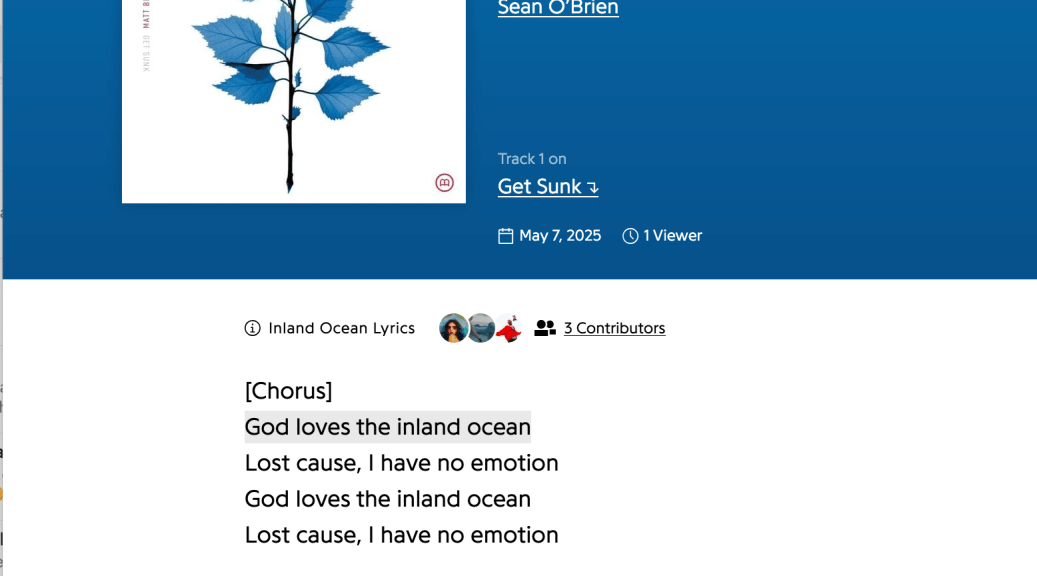
[Header image via Genuis, lyrics by Matt Berninger]
As I have noted often, over my forty-plus years teaching students to write, a few patterns remain constant, one of which is students lacking genre awareness.
On the first day of class, I often ask students what novels they read in high school English, and invariably, students include The Crucible or simply say “Shakespeare.”
They read these plays in book form, and have conflated anything in book form with “novel.”
Also, they mostly are experienced in being students who write, not writers.
So I spend a great deal of time and effort in my writing courses helping students become engaged with authentic writing practices, specifically fostering stronger writing purposes (and understanding writing forms/genres) and processes.
As a fan of The National and lead singer/lyricist Matt Berninger, I was particularly struck by this new interview [1] as Berninger begins promoting his second solo album, Get Sunk:
I think this interview is a really wonderful and brief entry point to discussing writer purpose and process (note that Berninger does use some profanity and references pot smoking).
Berninger is an endearing and quirky as his lyrics. And while he may seem flippant at first (“I’ll start fucking around with stuff”), he makes some very sophisticated and accessible observations about purposeful writing and the importance of the writing process (he has begun scribbling lyrics on baseballs instead of his standard journal, for example).
When the interviewer mentions his favorite lyric from Boxer (The National), Berninger offers a brief window into the importance of being a reader as well as the recursive nature of texts: “I stole that from Jonathan Ames.”
Berninger’s lyrics often pull from books, authors, and other song lyrics. Here is an ideal place to discuss with students the conventions of allusion and references as that creates tension with plagiarism (a great opportunity to tie in so-called canonized writers such as Marianne Moore and T.S. Eliot).
But the core comments I think students need to hear and then practice in the writing are about understanding different writing purposes/forms:
I do think songwriting is a very specific kind of thing…. It’s not—there’s poetry and there’s songwriting…. And I think they’re as different as like swimming and ice skating…. It’s like it’s still just words or just water but they’re totally different things.
This distinction and metaphor are powerful because they acknowledge the complexity of choosing and writing in different ways, for different purposes, and for different audiences.
Berninger also talks about his use of scribbling on baseballs for writing ideas. While quirky, this really captures the writing process in an authentic way (not the scripted way often taught in school).
As a teacher of writing and a writer (as well as avid reader), I want students to be fully engaged as writers—not as students performing a stilted essay for the teacher/professor.
We want for our students a sense of purpose, a demonstration of intent, an awareness of form and audience, and ultimately, a writing product of their choosing and for their purposes.
And in the era of intensified AI, I want to stress that AI has no place in these goals because students need and deserve opportunities to experience all of these aspects of brainstorming, drafting, and presenting a final product.
It may seem crude, careless, and flippant, but if we listen carefully, Berninger’s “fucking around” demonstrates the power and complexity of being a writer—and thus, being a teacher of writing.
[1] I highly recommend this blog post on Bon Iver/Justin Vernon as a companion to the Berninger interview.
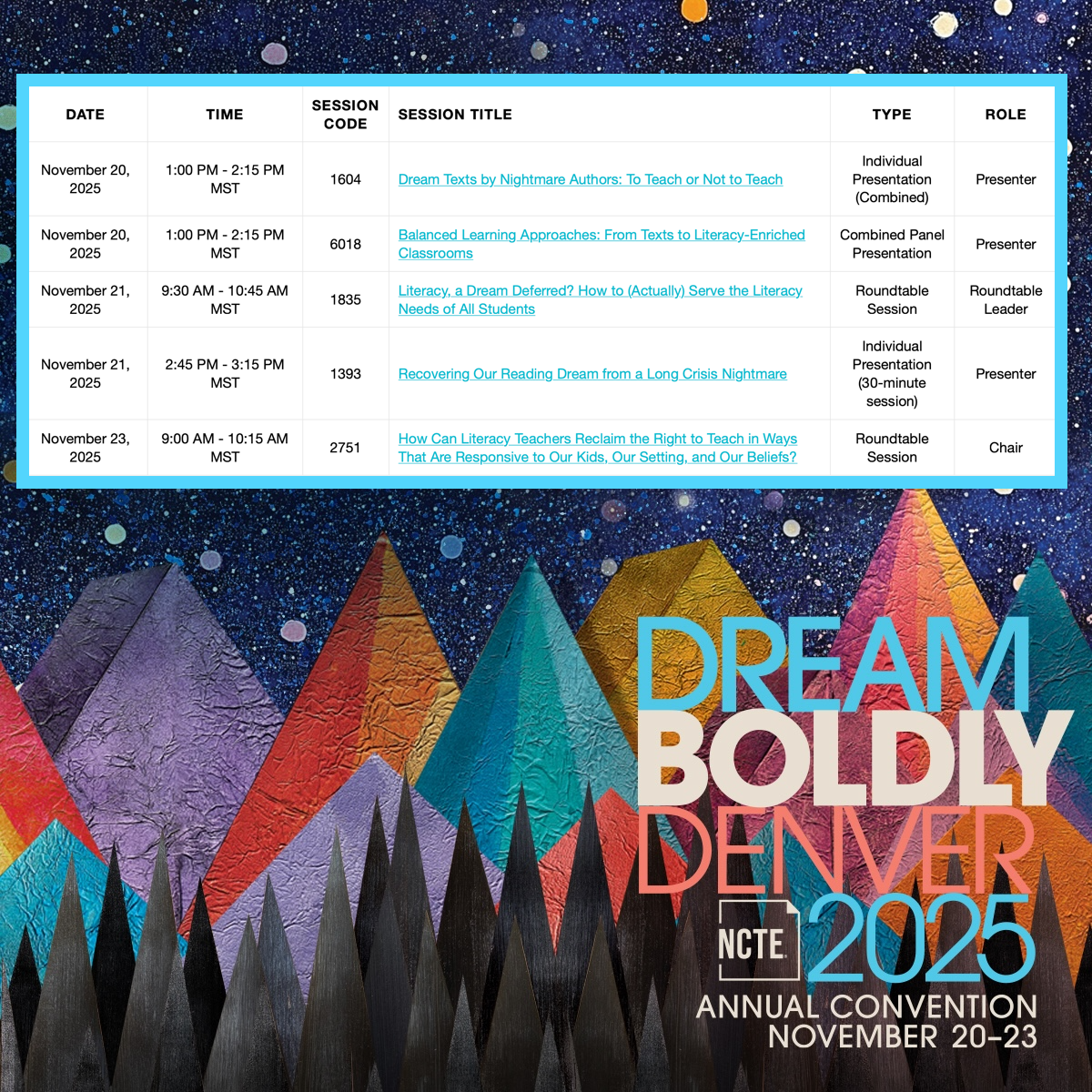
Many beloved authors have been exposed as abusive people or advocates for offensive beliefs. From the revelations about Neil Gaiman to the anti-trans stance by JK Rowling, whether to teach their works despite those failures or controversies confronts teachers throughout K-16 literacy classrooms. This session examines if and why teachers should or should not teach dream texts by nightmare authors.
Roundtable: Literacy, a Dream Deferred?: How to (Actually) Serve the Literacy Needs of All Students
11/21/2025 – 9:30 – 10:45, Room 108/110
Roundtable Presentation
Literacy and Literature as Casualties of Reading Wars
Access a PDF of the presentation HERE [Updated 11/21/25]
Reading Wars often have two overlapping components, debates about how reading should be taught and what texts students should (and should not) read. Both of these elements tend to promote ideological agendas at the expense of authentic approaches to literacy and literature.
Individual Presentation: Recovering Our Reading Dream from a Long Crisis Nightmare
11/21/2025 – 2:45 – 3:15, Mile High Ballroom 1A/1B
In 1961, Jacques Barzun in Tomorrow’s Illiterates declared “illiteracy is still with us.” Charles Child Walcutt added: “[N]o further ‘research’ into methods of reading instruction is necessary.” This session examines reading crisis/reform cycles to reconsider the stories told about reading and offer a new approach for reform that serves the needs of students and supports teacher professionalism.
Roundtable: How Can Literacy Teachers Reclaim the Right to Teach in Ways that are Responsive to Our Kids, Our Setting, and Our Beliefs?
11/23/2025 – 9:00 – 10:15, Room 107/109/111
Talk
Fact Checking “The reading wars are ending. Phonics won.” (Washington Post Editorial Board)
The Editorial Board at The Washington Post published a bold claim: The reading wars are ending. Phonics won. Here, that claim is fact checked focusing on the false claim that California adopted Mississippi-style “science of reading” legislation. A brief examination of the misleading comparison of CA and MS shows that the WaPo Editorial Board has declared a false end to the reading war as well as mischaracterizing the role of phonics.
This roundtable will share with teachers four “red flags” (Chris Ferguson) to critically engage with media coverage of educational issues and research (highlighting the “science of” coverage): RED FLAG 1: Claims that all the evidence is on one side of a controversial issue; RED FLAG 2: Reversed burden of proof. “Can you prove it’s not the smartphones?”; RED FLAG 3: Failing to inform readers that effect sizes from studies are tiny, or near zero, only mentioning they are “statistically significant.”; RED FLAG 4: Comparisons to other well-known causal effects.
Big Lies of Education: “Science of” Era Edition [Access PP PDF Here]
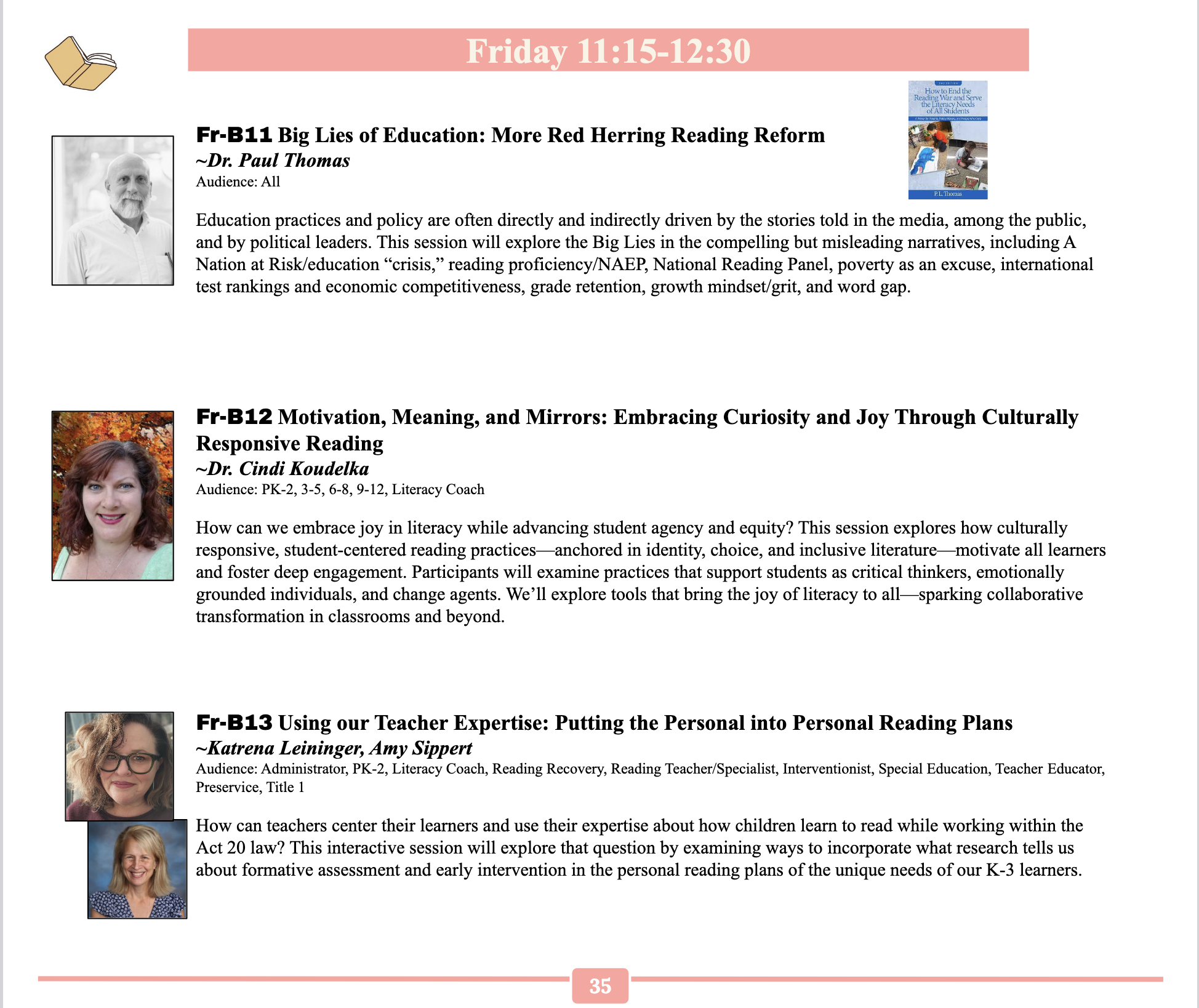
Education practices and policy are often directly and indirectly driven by the stories told in the media, among the public, and by political leaders. This session will explore the Big Lies in the compelling but misleading narratives, including A Nation at Risk/education “crisis,” reading proficiency/NAEP, National Reading Panel, poverty as an excuse, international test rankings and economic competitiveness, grade retention, growth mindset/grit, and the word gap.
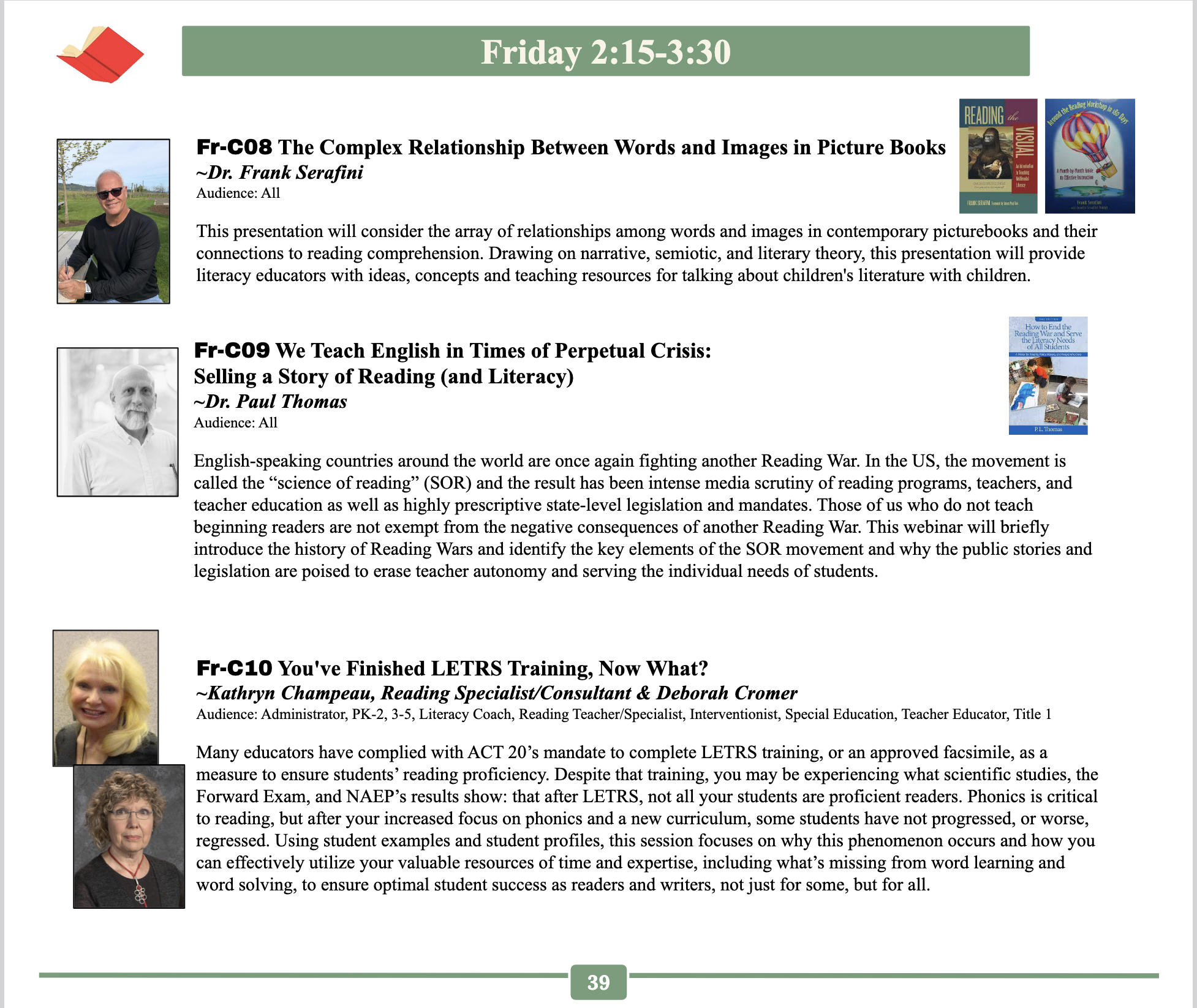
English-speaking countries around the world are once again fighting another Reading War. In the US, the movement is called the “science of reading” (SOR) and the result has been intense media scrutiny of reading programs, teachers, and teacher education as well as highly prescriptive state-level legislation and mandates. Those of us who do not teach beginning readers are not exempt from the negative consequences of another Reading War. This presentation will briefly introduce the history of Reading Wars and identify the key elements of the SOR movement and why the public stories and legislation are poised to erase teacher autonomy and serving the individual needs of students.
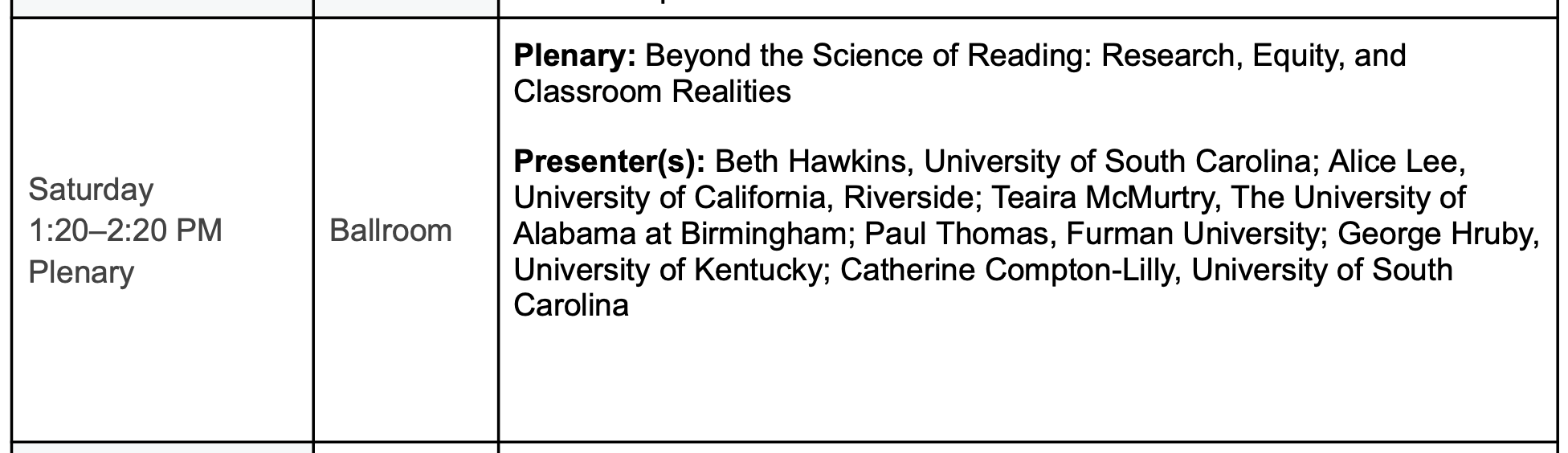
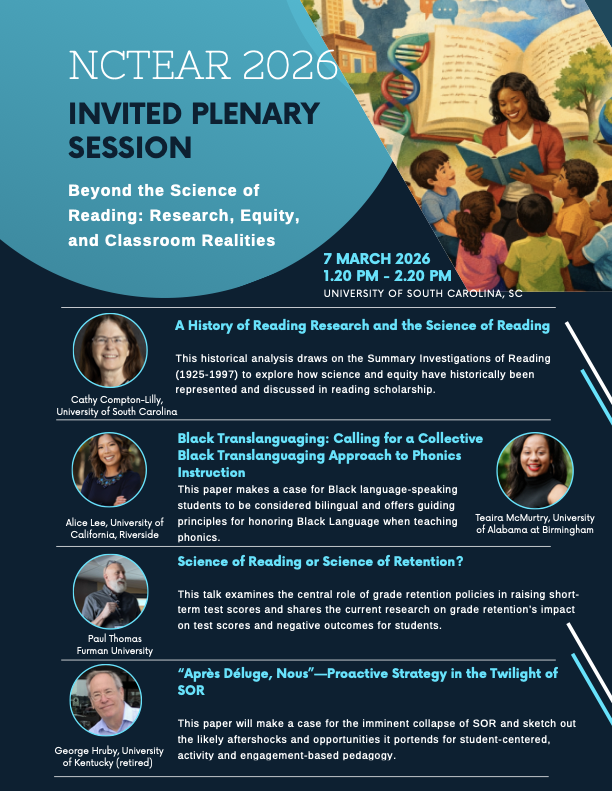
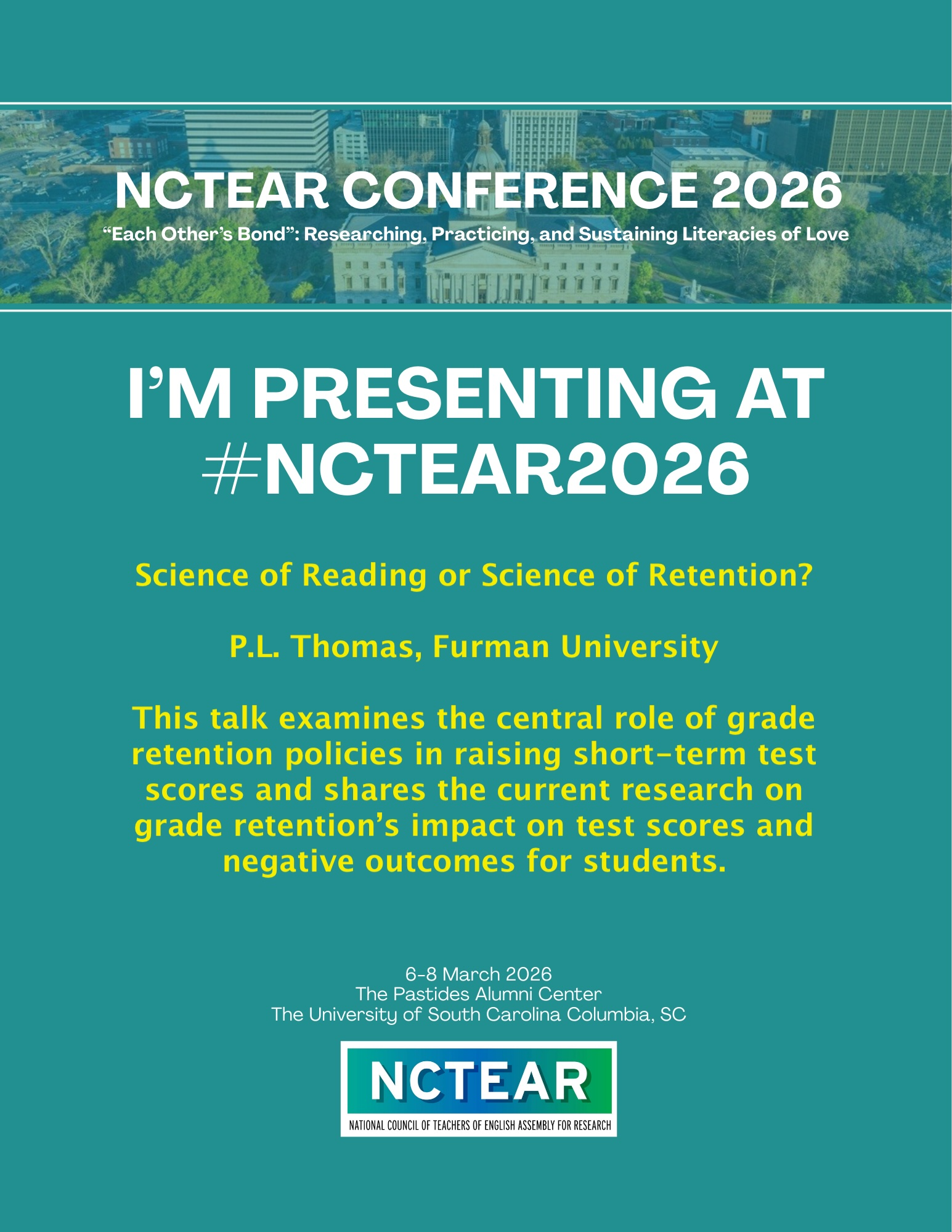
This talk examines the central role of grade retention policies in raising short-term test scores and shares the current research on grade retention’s impact on test scores and negative outcomes for students.
Alaska Task Force on the National Assessment of Education Progress (NAEP)
Keynote Title: “From Accountability to Understanding: Using Transparent Evidence to Improve Literacy Teaching and Assessment”
The Presenter, Paul L. Thomas, shall design and deliver a keynote that invites educators to shift their mindset from “ accountability” toward “transparency” and a deeper understanding of literacy learning and teaching, encouraging participants to adopt a reflective and inquiry-oriented mindset and how transparent use of evidence can support more thoughtful and context-responsive decisions about curriculum, instruction, and student evaluation.
WORKSHOP
Workshop Date: Tuesday, June 30, 2026
Workshop Time: 1:00 pm – 3:00 pm (2 hr)
Workshop Title: “From Accountability to Understanding: Using Transparent Evidence to Improve Literacy Teaching and Assessment”
Building from the keynote, this interactive workshop led by Paul L. Thomas will support educators in applying a mindset of inquiry and understanding to everyday classroom decisions about literacy teaching and assessment.











 dr. p.l. (paul) thomas