
Tag Archives: America

Listen 2 and Watch: #Ferguson #FergusonDecision #TamirRice

And I must say tonight that a riot is the language of the unheard. And what is it America has failed to hear? It has failed to hear that the plight of the negro poor has worsened…. It has failed to hear that the promises of freedom and justice have not been met. And it has failed to hear that large segments of white society are more concerned about tranquility and the status quo than about justice and humanity.

Rev. Martin Luther King Jr., “The Other America” 14 March 1968

Elahe Izadi and Peter Holley report:

A rookie Cleveland police officer responding to a 911 call jumped out of a cruiser and within seconds shot and killed a 12-year-old boy wielding what later turned out to be a BB gun, according to surveillance video released by authorities Wednesday.

Video of the fatal Saturday shooting of Tamir Rice, 12, by officer Timothy Loehmann, 26, was made public at the request of Tamir’s family. “It is our belief that this situation could have been avoided and that Tamir should still be here with us. The video shows one thing distinctly: the police officers reacted quickly,” reads a statement from the family, who also called on the community to remain calm. [See video at beginning of the report.]

Later in the report, Izadi and Holley add:

The gun turned out to be an Airsoft gun. Authorities had said it resembled a semiautomatic handgun and lacked the orange safety marker intended to signal that it’s a fake.

“Shots fired, male down, um, black male, maybe 20,” one of the officers radioed in. “Black hand gun.”

Stacey Patton’s In America, black children don’t get to be children calls our attention to a historical reality that illuminates the shooting of Tamir Rice:

In 1955, after 14-year-old Emmett Till was beaten and killed by a group of white men, one of his killers said Till “looked like a man.” I’ve found this pattern in news accounts of lynchings of black boys and girls from 1880 to the early 1950s, in which witnesses and journalists fixated on the size of victims who ranged from 8 to 19 years old. These victims were accused of sexually assaulting white girls and women, stealing, slapping white babies, poisoning their employers, fighting with their white playmates, or protecting black girls from sexual assault at the hands of white men. Or they were lynched for no reason at all.

And from the Journal of Personality and Social Psychology, “The Essence of Innocence: Consequences of Dehumanizing Black Children,” the abstract reads:

The social category “children” defines a group of individuals who are perceived to be distinct, with essential characteristics including innocence and the need for protection (Haslam, Rothschild, & Ernst, 2000). The present research examined whether Black boys are given the protections of childhood equally to their peers. We tested 3 hypotheses: (a) that Black boys are seen as less “childlike” than their White peers, (b) that the characteristics associated with childhood will be applied less when thinking specifically about Black boys relative to White boys, and (c) that these trends would be exacerbated in contexts where Black males are dehumanized by associating them (implicitly) with apes (Goff, Eberhardt, Williams, & Jackson, 2008). We expected, derivative of these 3 principal hypotheses, that individuals would perceive Black boys as being more responsible for their actions and as being more appropriate targets for police violence. We find support for these hypotheses across 4 studies using laboratory, field, and translational (mixed laboratory/field) methods. We find converging evidence that Black boys are seen as older and less innocent and that they prompt a less essential conception of childhood than do their White same-age peers. Further, our findings demonstrate that the Black/ape association predicted actual racial disparities in police violence toward children. These data represent the first attitude/behavior matching of its kind in a policing context. Taken together, this research suggests that dehumanization is a uniquely dangerous intergroup attitude, that intergroup perception of children is underexplored, and that both topics should be research priorities.

And thus, if you think “I don’t understand rioters,” or “I’m tired of all this about Ferguson,” or “Why does it always have to be about race,” please do the following: (i) do not say or write any of those thoughts, (ii) open your eyes and your ears, (iii) watch and listen with empathy and not with judgment, and then (iv) ask yourself what you can do to insure that no one feels again the genuine need to protest, a need bred in the toxic soil of powerlessness.

Listen. Watch.

Related

Happening Yesterday, Happened Tomorrow: Teaching the ongoing murders of black men, Renee Watson
Education in Black and White: Beware the Roadbuilders

On Children and Childhood

“They’re All Our Children”

Ali: “You must listen to me”

1972

James Baldwin declared in his No Name in the Street:

The truth is that the country does not know what to do with its black population now that the blacks are no longer a source of wealth, are no longer to be bought and sold and bred, like cattle; and they especially do not know what to do with young black men, who pose as devastating a threat to the economy as they do to the morals of young white cheerleaders. It is not at all accidental that the jails and the army and the needle claim so many, but there are still too many prancing around for the public comfort. Americans, of course, will deny, with horror, that they are dreaming of anything like “the final solution”—those Americans, that is, who are likely to be asked: what goes on in the vast, private hinterland of the American heart can only be guessed at, by observing the way the country goes these days. (Baldwin, 1998, pp. 432-433) [1]

George Carlin opened one of his best routines singing Muhammad Ali’s name as part of his album Class Clown (“Muhammad Ali – America the Beautiful”), explaining about Ali’s exile for refusing to fight in Vietnam:

He said, “No, that’s where I draw the line. I’ll beat ’em up, but I don’t want to kill ’em.” And the government said, “Well, if you won’t kill people, we won’t let you beat ’em up.”

1967-1970

From March 1967 to October 1970, Muhammad Ali lived in America the Beautiful, not as a free man, but as the embodiment of Baldwin’s declaration in 1972. Ali as African American and Black Muslim was trapped between the rule of law and his own code of ethics—which he explained as alternatives:

I have two alternatives: either go to jail or go to the army. But I would like to say that there is another alternative: and that alternative is justice.

This Ali in a suit and tie behind a microphone, glancing down to read from his prepared statement, stood in stark contrast to the Ali draped in a towel and swarmed in the boxing ring where he declared, “I shook up the world!”

1968

John Carlos and Tommy Smith stood, fists raised at the Summer Olympics.

Ali sat for an interview:

Black people actually’ve been in jail for 400 years, we’ve been here in America….They can’t believe that I’m this strong. They thought they would weaken me and put fear in me by threatening to go to jail and taking my earning power. And they won’t let me work in America…

2013

My colleague, Scott Henderson, and I are currently editing a volume on James Baldwin, and during the review of the draft chapters for the collection, I began to see ads for a film about Muhammad Ali produced by HBO, Muhammad Ali’s Greatest Fight. The ads called to me in the same way I am always moved when I hear Carlin singing Ali’s name: “Muhammad Ali, Muhammad Ali, Muhammad Ali, it’s a nice musical name, Muhammad Ali.”

So I found myself watching the HBO film, at first not yet clear if it was a documentary (my hope) or a fictional film; I was certain I wasn’t interested in watching someone portray Ali. I wanted Ali.

And there he was, Muhammad Ali, archival footage to open the film, and then, despite the film focusing on the Supreme Court and the all-white crew of young men working at the Court, Ali appears throughout the story again and again. The real Ali—each time I could not stop myself from smiling at his bravado and his ability to float like a butterfly and sting like a bee outside the boxing ring.

But there is a subtext to this film focusing on the Supreme Court dominated by old white men. There is a subtext in 2013 about why now—why now is Ali’s fight with the government about his refusal to fight in Vietnam being recognized and validated?

Ali, once again, is pushed to the background in the HBO film, a work that becomes in many ways a layered narrative of privilegewhite privilege and male privilege.

Some of those layers can be found in the book that provides the basis for HBO’s film.

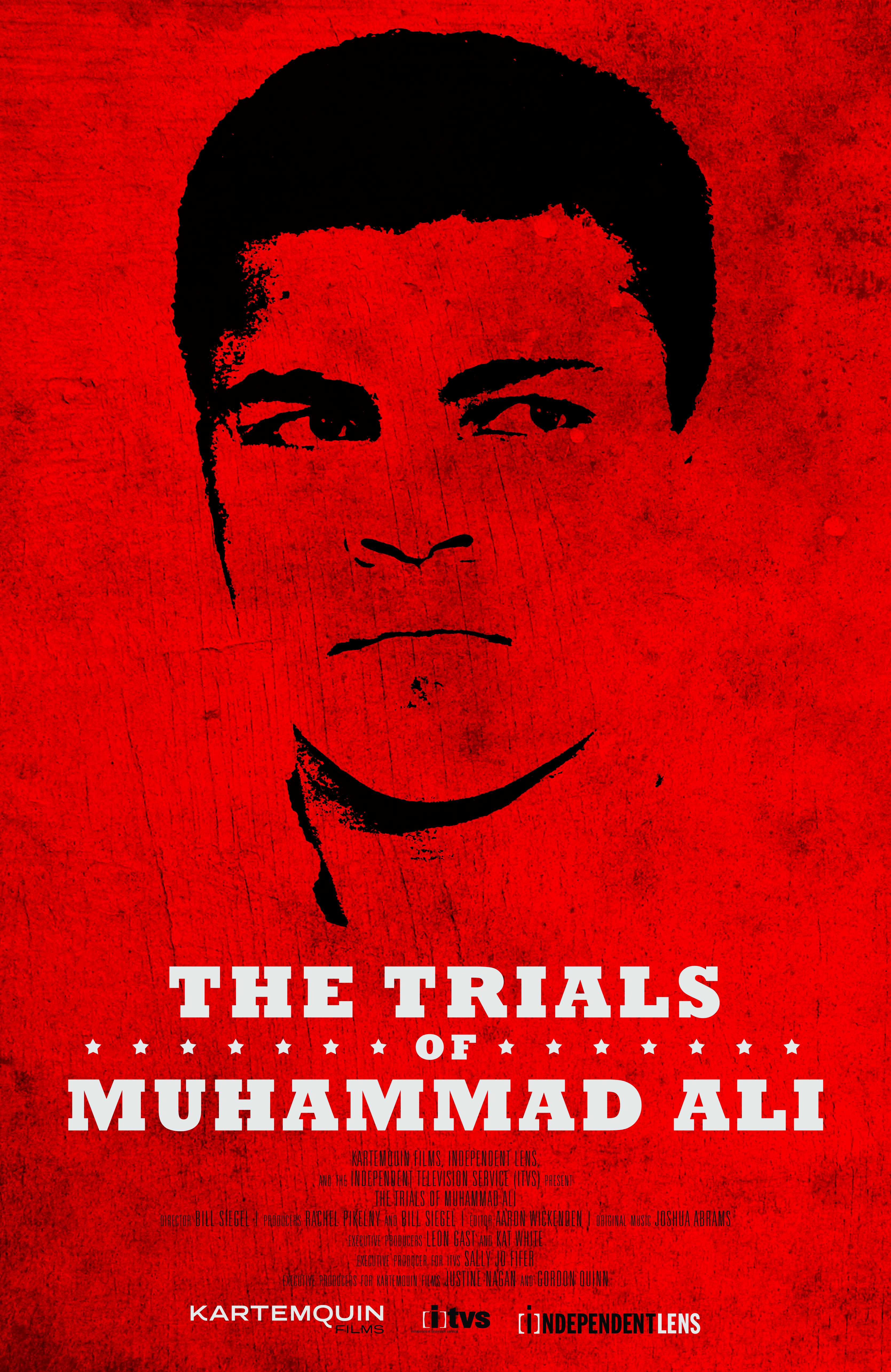
Some of those layers can be found in the documentary that doesn’t appear to share the privileged status of an HBO production: The Trials of Muhammad Ali.

ali_v01_11x17

Privilege is a closed space.

That space is behind a wall that provides the privileged their perch of authority as well as a walling out those Others.

Ali, Carlos, Smith, and Malcolm X lived outside the wall, and still remain under the gaze of privilege—to be acknowledged and explained when the time is right, when those with privilege see fit.

Ali remains mostly cartoon in America, reduced to his athletic bravado (“I am the Greatest!”) in the same way Martin Luther King, Jr. is tolerated as a passive radical, but not as the voice of protest and action that complimented Ali’s anti-war convictions:

We must move past indecision to action. We must find new ways to speak for peace in Vietnam and for justice throughout the developing world, a world that borders on our doors. If we do not act, we shall surely be dragged down the long, dark, and shameful corridors of time reserved for those who possess power without compassion, might without morality, and strength without sight.

1933

Carter Godwin Woodson confronted The Mis-education of the Negro:

[T]he educational system as it has developed both in Europe and America [is] an antiquated process which does not hit the mark even in the case of the needs of the white man himself….The so-called modern education, with all its defects, however, does others so much more good than it does the Negro, because it has been worked out in conformity to the needs of those who have enslaved and oppressed weaker people….The same educational process which inspires and stimulates the oppressor with the thought that he is everything and has accomplished everything worth while, depresses and crushes at the same time the spark of genius in the Negro by making him feel that his race does not amount to much and never will measure up to the standards of other peoples. The Negro thus educated is a hopeless liability of the race. (pp. 4-5) [2]

1963

Baldwin asked, “Who is the nigger?”:

1966

And then Baldwin wrote in The Nation:

This is why those pious calls to “respect the law,” always to be heard from prominent citizens each time the ghetto explodes, are so obscene. The law is meant to be my servant and not my master, still less my torturer and my murderer. To respect the law, in the context in which the American Negro finds himself, is simply to surrender his self-respect….

These things happen, in all our Harlems, every single day. If we ignore this fact, and our common responsibility to change this fact, we are sealing our doom. Here is the boy, Daniel Hamm, speaking—speaking of his country, which has sworn to bung peace and freedom to so many millions. “They don’t want us here. They don’t want us—period! All they want us to do is work on these penny-ante jobs for them—and that’s it. And beat our heads in whenever they feel like it. They don’t want us on the street ’cause the World’s Fair is coming. And they figure that all black people are hoodlums anyway, or bums, with no character of our own. So they put us off the streets, so their friends from Europe, Paris or Vietnam—wherever they come from—can come and see this supposed-to-be great city.”

There is a very bitter prescience in what this boy—this “bad nigger”—is saying, and he was not born knowing it. We taught it to him in seventeen years. He is draft age now, and if he were not in jail, would very probably be on his way to Southeast Asia. Many of his contemporaries are there, and the American Government and the American press are extremely proud of them. They are dying there like flies; they are dying in the streets of all our Harlems far more hideously than flies. A member of my family said to me when we learned of the bombing of the four little girls in the Birmingham Sunday school, “Well, they don’t need us for work no more. Where are they building the gas ovens?” Many Negroes feel this; there is no way not to feel it.

Privilege is a spider’s web.

Where is the space for Ali to speak for Ali? When will that space exist, and how?

I agree with Carlin that there is music in Ali’s name, but the song remains bittersweet—too hard to swallow in 2013.

I cannot disentangle the web of history that remains attached to all of us, regardless of how hard we try to pull the invisible strings from our faces, our clothes, and our skin.

That web we cannot free ourselves from is privilege—and privilege demands only two alternatives.

But as Ali explained, there is a third alternative and “that alternative is justice.”

It is time, we must listen to Ali.

[1] Baldwin, J. (1998). James Baldwin: Collected essays. New York, NY: The Library of America. Originally published in 1972, No Name in the Street.

[2] Woodson, C. G. (1933). The mis-education of the negro. New York, NY: Tribeca Books.

—–

For Further Viewing and Reading

To Jimmy (and Jose), with Love: I Walk Freely among Racism

James Baldwin (Aug. 2, 1924 – Dec. 1, 1987)

“The Deliberately Silenced, or the Preferably Unheard”

What Would James Baldwin Do (Say, Write)?

A Report from Occupied Territory, James Baldwin (1966)

Knocked the Hell Out by ‘The Trials of Muhammad Ali’, David Zirin

The Trials of Muhammad Ali