Tag Archives: god

Celebrating Violence Is a Type of Violence—But So Are Words

[Header Photo by Jon Tyson on Unsplash]

Somewhere around tenth grade, I began to recognize in myself a strong belief in nonviolence.

One day in English class remains a seminal moment in my life—one that included people who would shape my life profoundly as an educator.

I was in Lynn Harrill‘s class. Lynn would become my mentor and friend, the man influenced who I am in ways that rivaled my own father’s influence.

Lynn’s English class was unlike any English class I had ever sat in before. We had to write essays (English classes in junior high had been mostly working in grammar textbooks and diagramming sentences), and Lynn grounded his teaching in robust class discussions.

And many of us loved those discussions, and him.

One class period, we found ourselves in a heated class debate about who would willingly fight in a war if drafted. Coincidentally, that day the principal, Mr. Clark Simpkins, was observing Lynn, and Mr. Simpkins was the husband of my 6th-grade math teacher (who I loved) and father of two sons around my age. Most significantly, Mr. Simpkins would be the person who hired me for my first job teaching English.

As the debate unfolded, a clear division developed—all of the male students eagerly expressed a desire to fight in a war, except for me, the lone male student speaking for nonviolence with the young women in the class.

The day of my interview about 7 years later, Mr. Simpkins reminded me of that day, and honestly, there was a bit more than a veiled implication that my beliefs could keep me from being hired—one of many moments when, even after I was hired, these implications were used to keep me in my place.

Being a advocate for nonviolence in the South was perceived as unmanly, unpatriotic; it certainly was one of many of my beliefs that made me unlike the culture of my home and my career.

None the less, one of my recurring units as a teacher, one that my students appreciated and seemed to strongly engage with, included an exploration of nonfiction writing through the writings and activism of Henry David Thoreau, Gandhi, and Martin Luther King Jr.

The thread running through these men and their lives, of course, was advocacy for civil disobedience and nonviolence.

The goals of this unit were primarily about helping students grow as critical readers and writers, but I also very much wanted my students to consider and reconsider their own beliefs about violence.

I had grown up in the same Southern culture of my students, and I know most of them had not had that opportunity.

This, of course, is a long way to say emphatically that I without qualification believe that celebrating violence is a type of violence.

And I reiterate that in the wake of the inexcusable killing of Charlie Kirk.

Here I want to add that I am also concerned about the aggressive whitewashing of Kirk’s rhetoric and agenda by many conservatives who are using Kirk’s death for political and ideological gain.

That, I believe, is almost equally as offensive as callously celebrating or joking about the gruesome public murdering of a person in what should be a free and safe society.

As just one example of the debates on social media about what Kirk did and did not promote, let’s look at the claim that Kirk advocated for the death penalty for being gay, linked to his quoting Leviticus 20:13 and calling that “God’s perfect law.”

[I will not link the video here because I do not want to platform Kirk, but this is easy to search and confirm. If you doubt anything here, please find the clip yourself.]

This moment by Kirk is, in fact, an example of words as violence because simply mentioning stoning gay people to death because of God’s law is, at best, a veiled threat to the lives of anyone who is gay.

It is a reminder of what has been. It is a warning about what could be again.

History is replete with religious and institutional torturing, imprisoning, and killing people simply for being gay, and often these acts were grounded in religious dogma.

If Kirk was as smart as his advocates claim, he was quite aware of what he was doing by citing Leviticus and saying the law is “perfect.”

This was a threat, a form of rhetorical violence.

But what strikes me as the most concerning aspect of this moment is that Kirk is grinning and smiling throughout. He sees this little reference to stoning gay people to death as a joke, just a cool guy making a “by the way” point to engage in civil debate and discourse.

Despite Kirk being framed as a champion of free speech and an advocate for civil discourse, the content of what Kirk said often contained misinformation and hostile claims about marginalized people; that isn’t civil discourse, and “free speech” doesn’t mean people are not held accountable for what they say.

If Kirk’s agenda cannot be fully articulated after his death, that suggests it wasn’t valid to begin with.

For LGBTQ+ people, quoting Leviticus devalues to their lives and threatens their happiness; it is not a podcast joke, not simply a way to play “gotcha” in an online debate.

This is their lives, and all they request is that they have the same access to life, liberty, and the pursuit of happiness that Kirk along with his family and followers also want and deserve.

To be blunt, there are many examples like this that discredit the whitewashing of Kirk being perpetrated by people with political and ideological agendas, people who seem unconcerned about using Kirk’s death for their gains.

There are only a few fair options among those of us who fully condemn and reject the killing of Kirk; we all must start with the truth about who Kirk was and what he advocated for, and then we must reject it or embrace it. The latter is the only way praise and honoring Kirk by his advocates can be taken seriously.

If anyone has to misinform or lie to praise someone, that calls into question whether that person, in fact, deserves praise.

For me the only way to honor Kirk is to condemn the senseless killing and then to accurately describe who Kirk was and what he championed.

To cheer for his death or to misrepresent his life’s work is to dishonor not only Kirk but all of use.
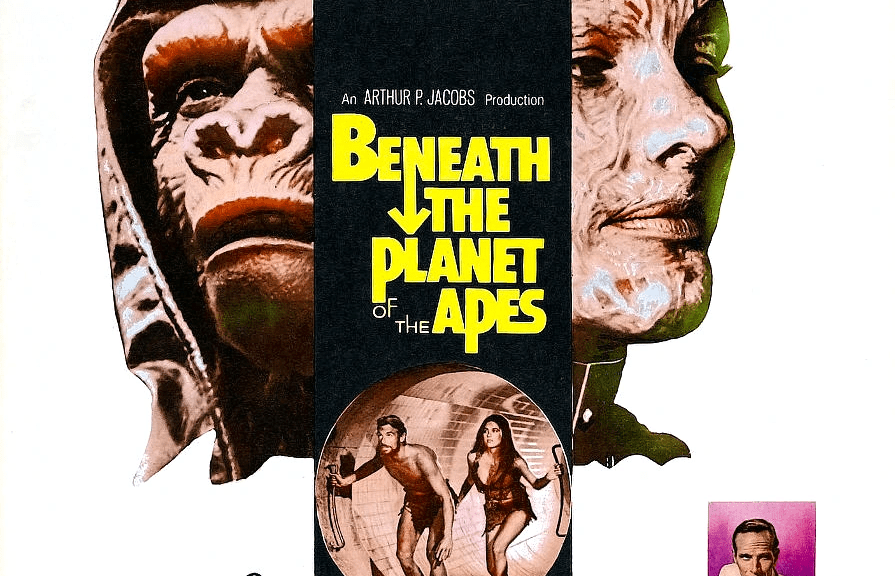
Humans Will Not Survive Religion: “The Bomb is a holy weapon for peace”

[Header image fair use]

Of the original five Planet of the Apes films that were first released starting in 1968, Beneath the Planet of the Apes is likely the least appreciated but most relevant in 2025.

Critics blasted the film, but the cataclysmic ending—the actual destruction of earth—put the fate of the series in a sort of science fiction quandary that the next three films had to navigate.

Kurt Vonnegut was fond of playing with end-of-the world scenarios, such as his brilliant Cat’s Cradle and the threat of ice-nine.

Like Cat’s Cradle, Beneath the Planet of the Apes is an exploration of the intersections of militarism, religion, and the self-destructive nature of sentient beings.

The shocking end to the original Planet of the Apes—the astronaut Taylor discovering the collapsed Statue of Liberty and realizing he is on Earth, then ruled by apes—was likely impossible for the first sequel to match, but this second film does have surprising reveals.

It is 3955 when a second spaceship lands, but only one astronaut, Brent, survives to later reunite with Taylor and Nova from the first film.

And as the title suggests, beneath the planet, Brent, Taylor, and Nova discover that this new world of apes is the result of nuclear holocaust. Mutated telepathic humans and the new religion are also encountered:

Two lines from the film seem eerily significant now:

John Brent: That thing out there, an atomic bomb… is your god?…

Fat man: You don’t understand, Mr. Brent. The Bomb is a holy weapon for peace.

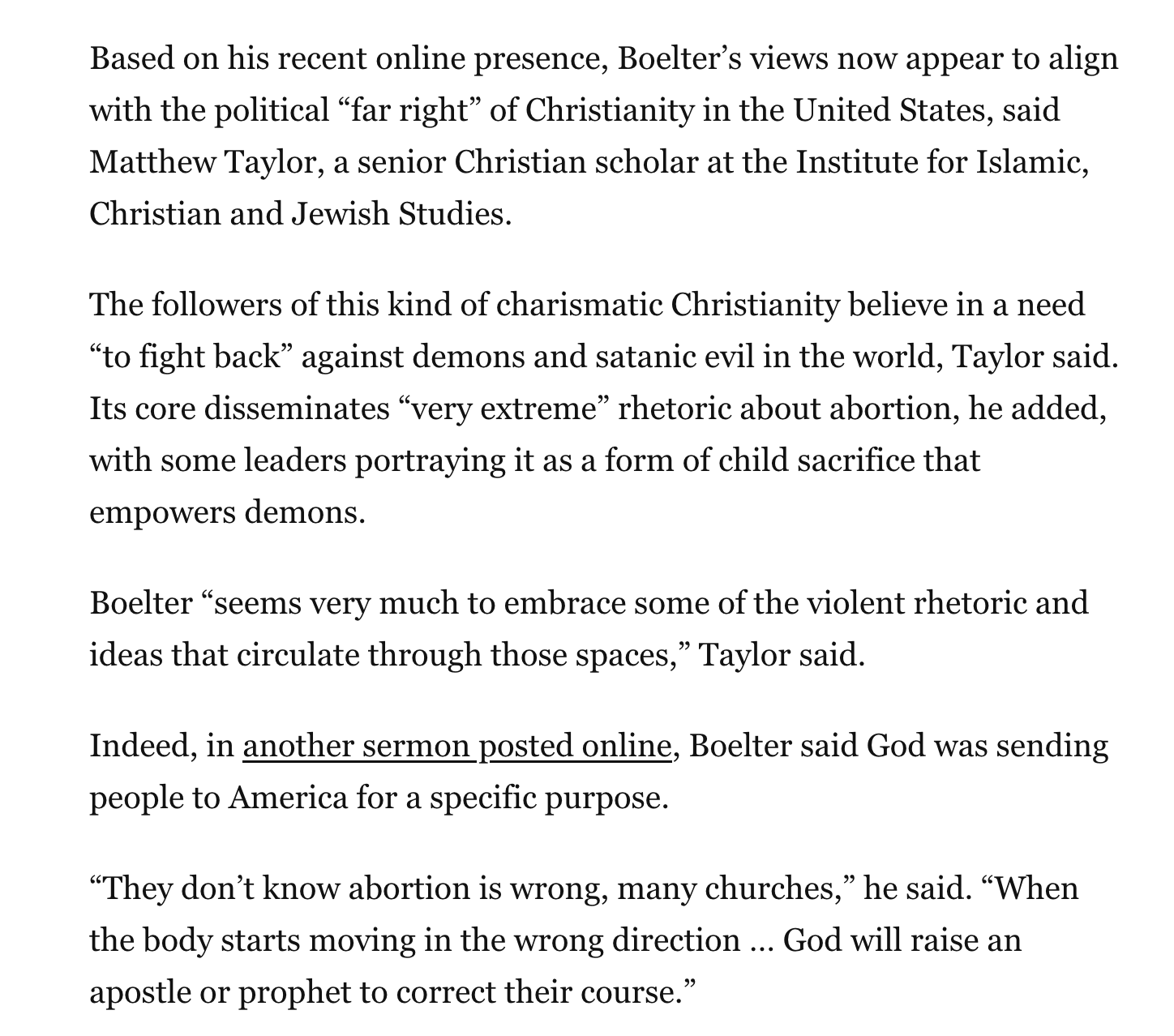
The US is experiencing a rise in Christian Nationalism, boosted by the MAGA movement and re-election of Trump.

And recent events are terrifying with the assassination and shooting of Minnesota Democrats by a radicalized religious zealot:

But this extreme example shouldn’t distract us from what is now being normalized:

Neither the dynamics in Beneath nor the examples of our current political climate in the US are extreme or unique.

History is replete with religion justifying and inciting hate, intolerance, and violence.

Most major religions use dogma and invoke God to deny women their full humanity, to require corporal punishment of children (and women), to justify war, and to criminalize and persecute non-normative people such as people who are LGBTQ+.

Organized religions tend to lose the focus of love and humanity because, as Bertrand Russell argued:

Religion is based, I think, primarily and mainly upon fear. It is partly the terror of the unknown, and partly, as I have said, the wish to feel that you have a kind of elder brother who will stand by you in all your troubles and disputes. Fear is the basis of the whole thing—fear of the mysterious, fear of defeat, fear of death. Fear is the parent of cruelty, and therefore it is no wonder if cruelty and religion has gone hand-in-hand. It is because fear is at the basis of those two things.

I fell in love with science fiction as a child and teen about the same time I came to realize that I, too, am not a Christian, that I am not religious.

That realization in my Self is grounded in that I have come to recognize that I choose love and the human dignity of all people—not dogma, not sword rattling, not pretending that I know the mind of God.

The world is proving to us now that religion is the enemy of moral and ethical behavior because humans—like Cruz and Johnson—too often get lost in the worst of human beliefs, like the mutants and apes in a science fiction film.

The great irony, of course, is that the fatal flaw of end-times religiosity is that it likely is a self-fulfilling prophesy, a final destruction that, unlike in Hollywood, there is no plot twist that will rectify the eradication of humans and Earth as we know it.

Two more lines from Beneath makes me shudder:

Negro: Mr. Taylor, Mr. Brent, we are a peaceful people. We don’t kill our enemies. We get our enemies to kill each other.

Cornelius: [reads from the holy scripts] “Beware the beast man, for he is the devil’s pawn. Alone among God’s primates, he kills for sport or lust or greed. Yea, he will murder his brother to possess his brother’s land. Let him not breed in great numbers, for he will make a desert of his home, and yours. Shun him… for he is the harbinger of death.”

The truths of love and peace that can save humanity are often lost or ignored, regretfully, because religion, again, seems bound to fear and hate.

We are living in the real world, not some post-apocalyptic fiction, but the last line of Beneath seems to be our most likely fate:

Ending Voiceover: In one of the countless billions of galaxies in the universe, lies a medium-sized star, and one of its satellites, a green and insignificant planet, is now dead.


Recommended

Why I Am Not a Christian  (1927), Bertrand Russell

The Man in the High Castle and Cat’s Cradle in Trumplandia

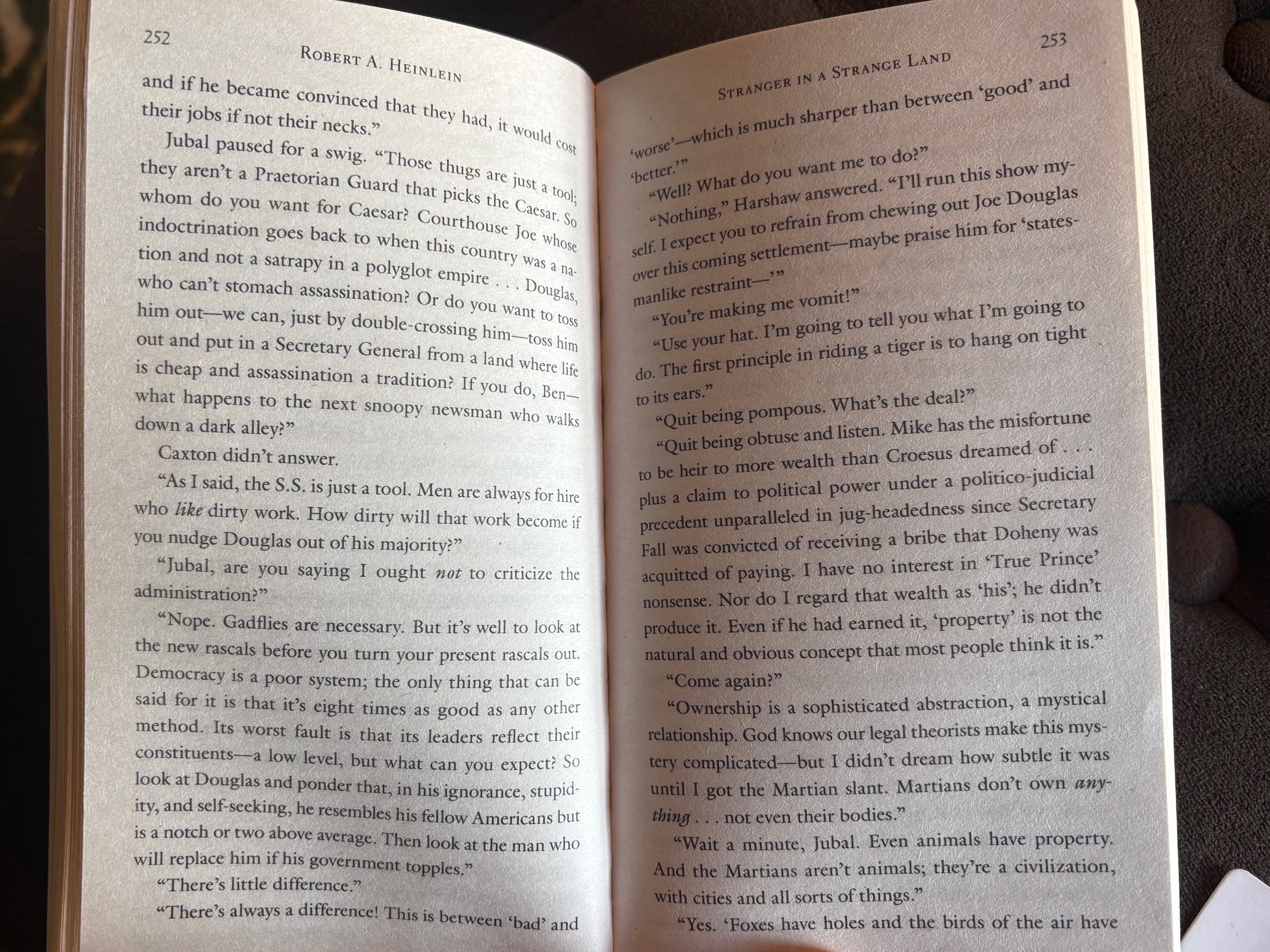
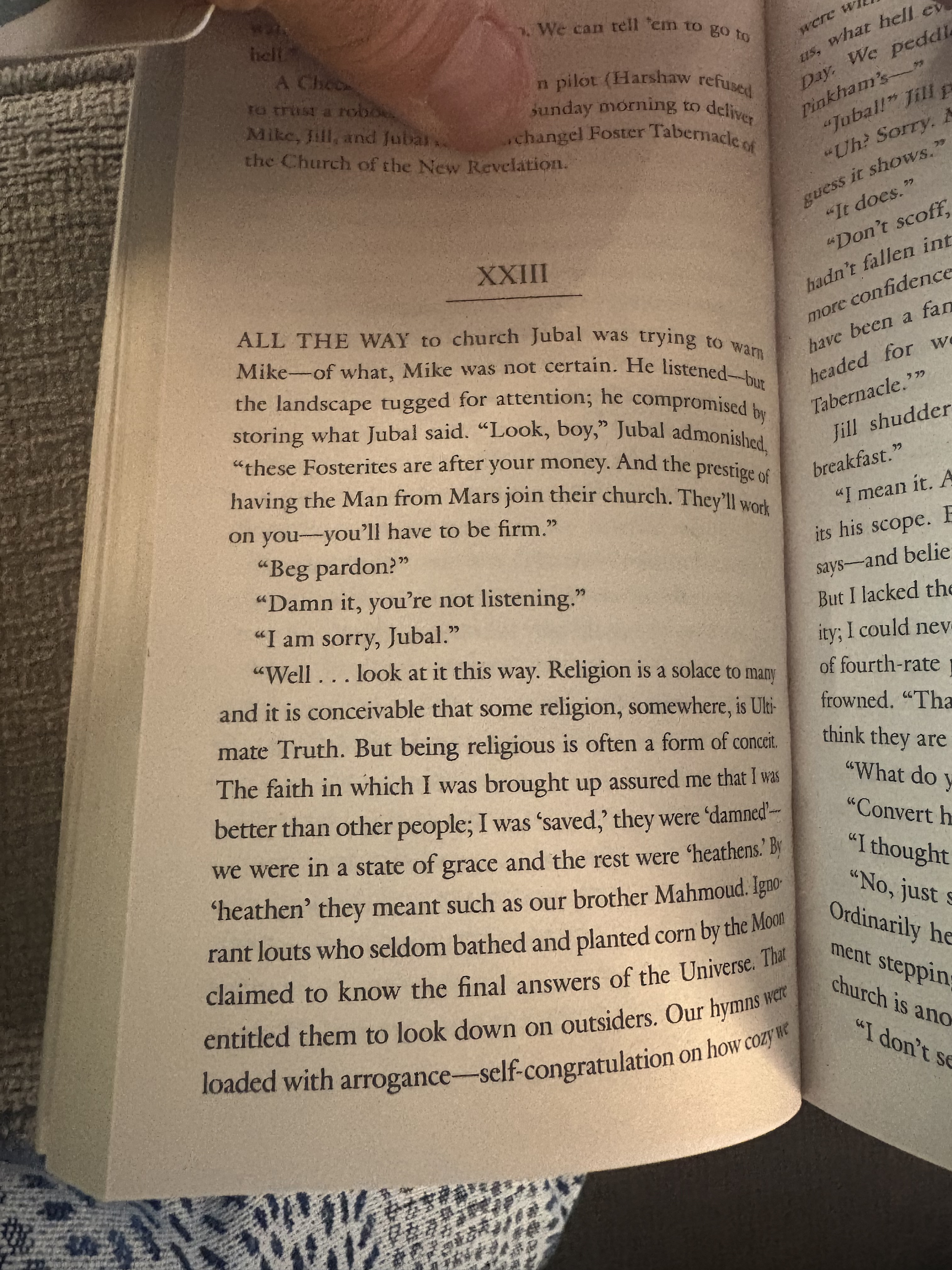
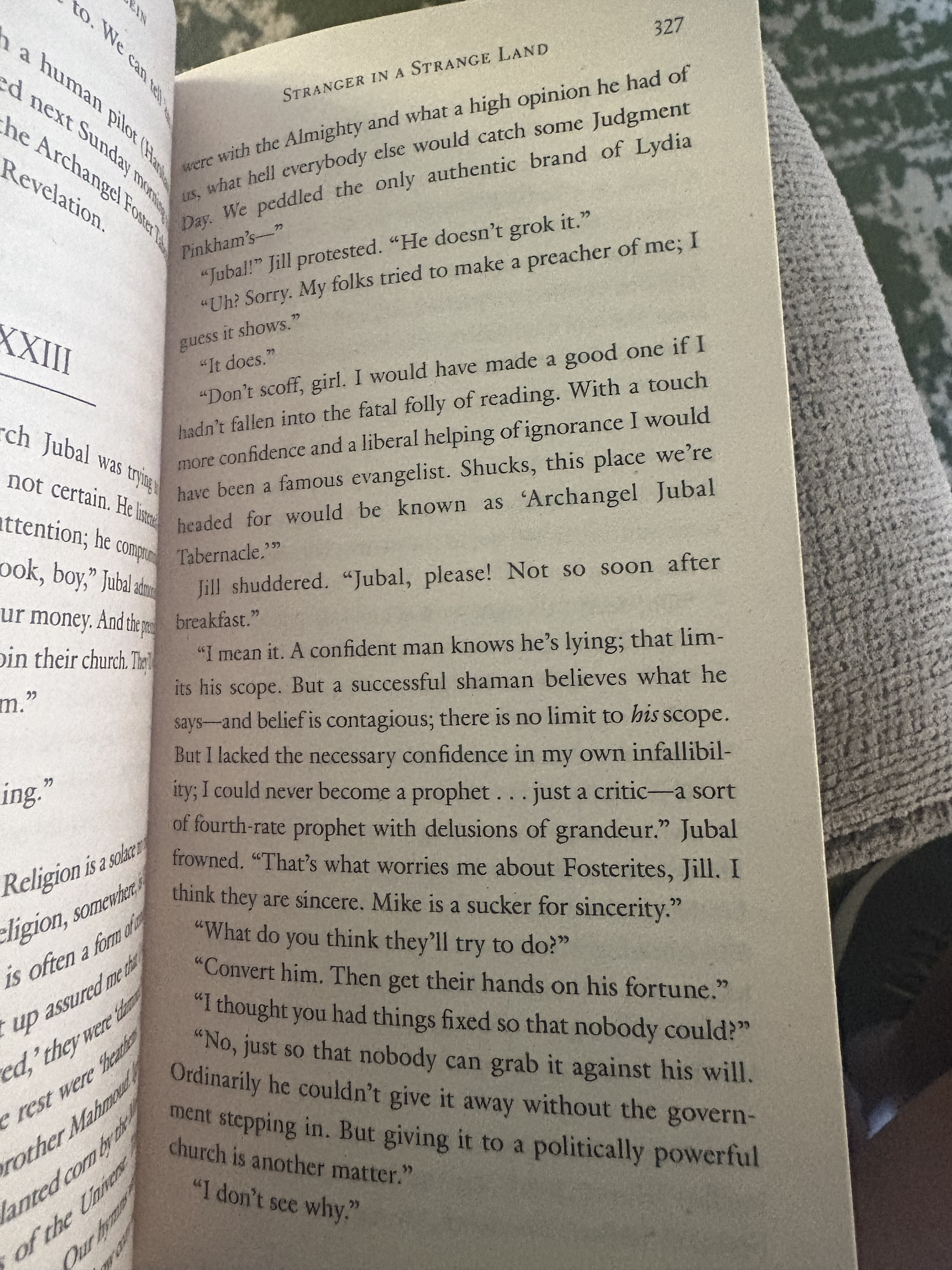
Stranger in a Strange Land, Robert A. Heinlein

Wherefore Art Thou, Jesus?

[Header Photo by Stephanie Klepacki on Unsplash]

With Easter just behind us, mainstream Christians in the US have experienced a high period of religious holidays and celebrations starting around Thanksgiving and then intensely punctuated with Christmas and Easter.

As an atheist/agnostic who seeks to live a good life as a humanist, I witness during these celebrations that much of what passes as religious is mostly pagan rituals and free market capitalism.

The irony, of course, is that these contradiction do, in fact, represent well what mainstream Christianity is in practice and reality for most people in the US.

To further that irony, the claim by the most fervent Christians in the country that the US is a Christian nation is perfectly reflected in the Bacchanalian orgy of branding and spending in the name of Jesus born, crucified, and risen as the stories go.

I was born, raised, and have always lived in the Bible Belt, specifically in the Upstate of South Carolina where many people are Southern Baptist or some other type of fundamentalist Christian.

Something in my DNA, I think, made me not just immune but resistant to authoritarian environments—in my home and family, in schooling, and most significantly in church and religion.

I don’t care much for commandments and blind faith.

My relationship with religion evolved into the sort of embarrassing sardonic nonchalance of adolescence that spilled over into being downright mean during my first two years of college.

In high school, it was a joke. I was elected president of the Fellowship of Christian Athletes as a ploy by some of my friends to have me on student council (they knew I would speak up because I was already viewed as anti-authority).

I think I was the lone person in my peer group openly admitting non-belief, and I had also exposed myself among those friends as a heavy beer drinker—something I had honed growing up on a golf course and playing golf.

That experience working at the golf course is one the most formative moments of my life. The golfers, you see, were adults I knew from my hometown, all very Christian men and most holding jobs that were well regarded with a few much wealthier than I could imagine anyone being (my own family was solidly working class, aspiring to middle class).

The golf course, however, served as an alternate universe of sorts, a perverse sanctuary where these Christian men used profanity, drank heavily, smoked marijuana, and hurled racist and sexist language at a nearly compulsive rate.

And several of these men as well used the golf course for their adultery sanctuary; a few had me monitoring their phone calls as I was tasked to distinguish between calls from their wives and their girlfriends.

The message was clear: Being a Christian was almost entirely rhetorical so that everyone could pretend to embrace the norms of what people were supposed to believe and do (even as almost no one practiced what anyone preached).

I also had to sit quietly and patiently occasionally while good Christians witnessed to me, quoting from the Bible in order to justify their racism and sexism.

Black people descended from Cain mating with apes, I was assured, for example. Something they had learned in church.

By college, I was a nasty atheist to my peers, attending a Methodist college where many were naive, even sweet, true believers.

In those first two years of college, I immersed myself in Sartre, Camus , and Kierkegaard, but that intellectualism lacked the very things I found infuriating in the Christians I was determined to discredit—kindness, human dignity, and love.

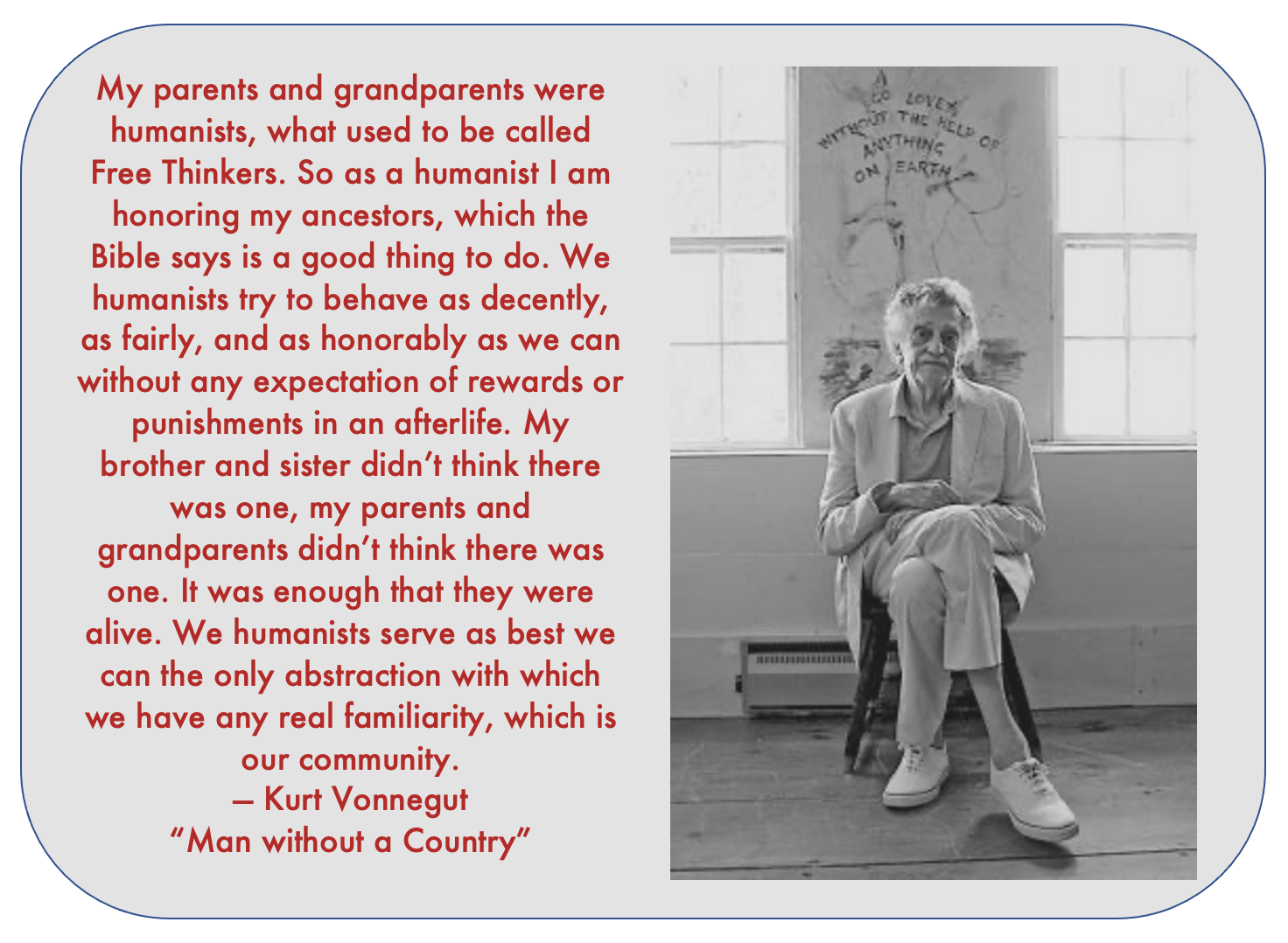
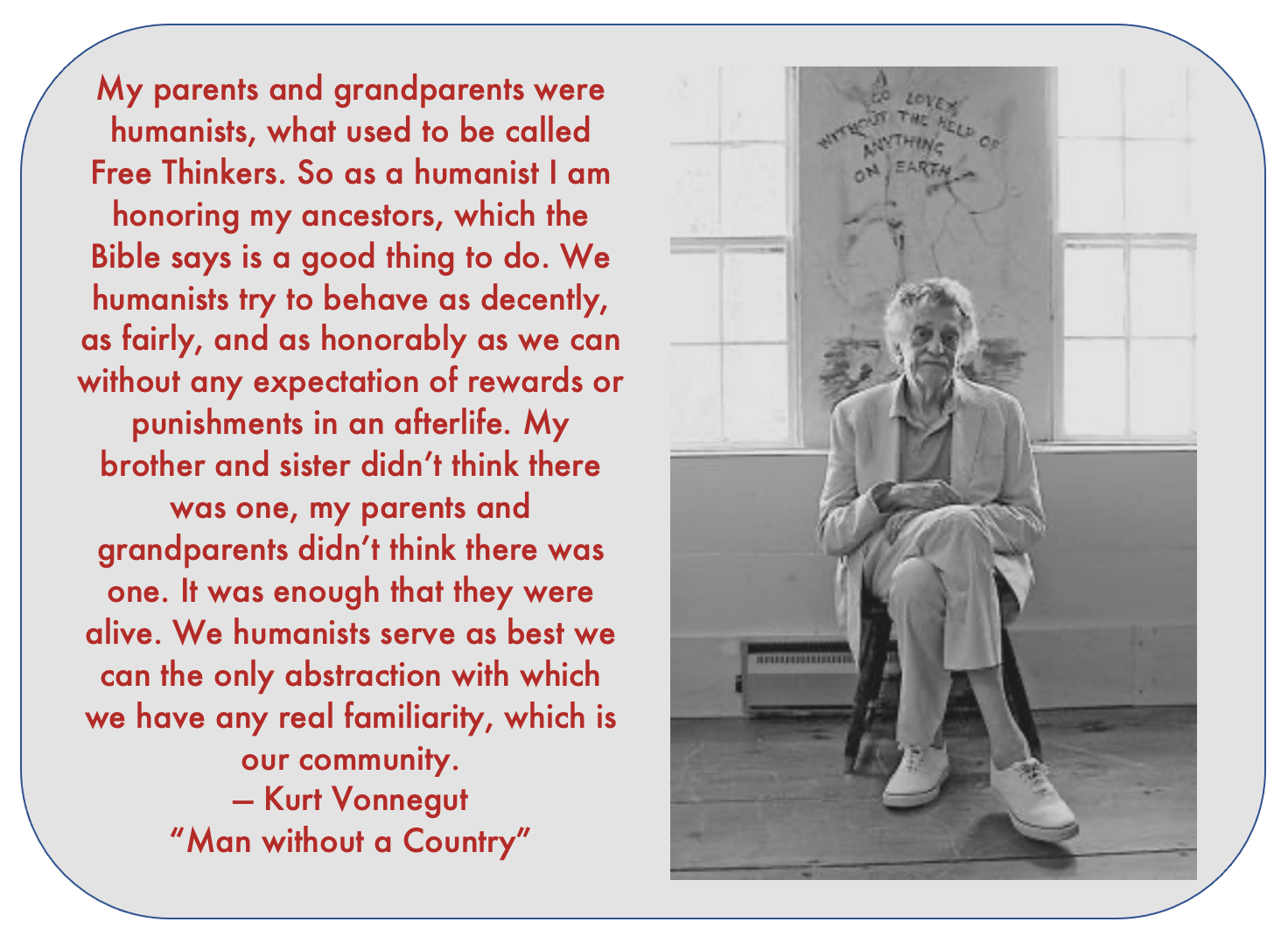
Fortunately for me, I found literature and gradually settled into a relatively harmless state of agnosticism anchored to Kurt Vonnegut’s missives on humanism:

So I sit here post-Easter 2025 when the US has fully realized the very worst warnings I have anticipated about being a Christian nation since I was a teen in the 1970s.

Almost 70% of registered voters did not vote for a second Trump term as president, but his base is mostly driven by Christians, specifically fundamentalist Christians.

And his hellscape of policy since January has been punctuated with Christian intent.

This Christianity reminds me of a larger-scale version of the golf course experiences I had—lots of hypocrisy, almost entirely rhetorical without a single ounce of Christian love or respect for human decency.

This Christianity is authoritarian and fueled by hate, fear, and judgment bereft of any logic, morals, or ethics.

US Christianity has proven that distinguishing between a cult and a religion is a distinction without a difference.

There has been an insidious long game reaching back to the Reagan era, the rise of the so-called Moral Majority, that has gradually eroded both Christianity and democracy in the US (watch Shiny Happy People to understand this).

Regardless of the historical accuracy of the stories about Jesus—and the validity of the mystical aspects of miracles and such—there simply is nothing in the cult of Trump that is remotely Jesus-like, just as his behavior as president lacks any hint of democracy.

But there is ample evidence that any optimism anyone has had for the human race is at least naive if not delusional.

I am confident that stories about crucifixion and resurrection are not literally true; I am also confident that Jesus’s simple messages of love each other, lay down your worldly possessions, and do unto others are the very least each human can do to live the good life for ourselves and for others.

Commandments otherwise are mere authoritarianism, ways for a few to control the many.

But a rabid minority in the US has rejected that Jesus nonsense and fully embraced hatred, fear, judgment, and punishment in the embodiment of one the most vile people existing in the US today.

Fools will choose fools to lead them.

And here we are.

“May Auspiciousness Be Seen Everywhere”

[Header Photo by Ditto Bowo on Unsplash]

Through my journey with clinical anxiety, I have come to realize that anxiety is not a monolithic thing for all of us even as our own personal anxiety may be of a specific kind.

None the less, I think it is fair to say that anxiety comes from a disconnect between our inner selves and the the world around us, especially when that disconnect seems oppressive, judgmental, and inescapable.

Sometimes anxiety is the result of recognizing who we truly are is unlike how we are expected to be or how we perceive most other people to be. Other times, anxiety is the result of becoming (too) aware of impending doom—both the possibility of something real that is foreboding but (too) often a manufactured doom that isn’t realistic or rational.

For what most or many people simply consider living or the human condition, we anxious are fully charged with an awareness, an expectation of impending doom.

I suspect that all humans long for a sort of life that allows us to be fully who we are, and thus, I have always been drawn to a simple but now fully dismantled American ideal, guaranteeing all humans life, liberty, and the pursuit of happiness.

What a beautiful thing, filled with a sort of relief that allows our full humanity—the pursuit of happiness.

My existential self finds this wonderful because I believe the pursuit of happiness is itself happiness, like Sisyphus and his rock, “The struggle itself toward the heights is enough to fill a [hu]man’s heart. One must imagine Sisyphus happy.”

There is a sort of paradox to this pursuit of individual happiness, however, a paradox that is expressed by Eugene V, Debs:

Your Honor, years ago I recognized my kinship with all living beings, and I made up my mind that I was not one bit better than the meanest on earth. I said then, and I say now, that while there is a lower class, I am in it, and while there is a criminal element I am of it, and while there is a soul in prison, I am not free.

And then, in this fiction of Kurt Vonnegut, whose life and work were inspired by Debs:

There is another paradox.

Writers and thinkers were the first experiences I had with recognizing other people who thought like me existed, unlocking a sort of awareness that I was mostly unlike the people and place of my birth and young life.

One of those first authors for me was J.D. Salinger and the small novel-in-two-parts Franny and Zooey.

Salinger appeared to be himself on a sort of personal journey to awareness, one that was grounded in something like a Christian mysticism. Eventually the bulk of Salinger’s work was grounded in the Glass family with a Christ-figure, Seymour, who commits suicide but remains the moral core for his siblings.

That is where Franny and Zooey sits, one of Seymour’s brothers, Zooey, and his sister, Franny, continuing their own spiritual quests—”a sort of prose home movie.”

While Salinger’s fiction laid the groundwork for me as a reader and writer, he also taught me a much harder and uglier lesson. Salinger himself, Salinger the real-world man, proved to be not only incapable of fulfilling the idealized spiritual goals he wrote about through Seymour, but also incapable of being a decent human being.

And despite his failures as a person and the now insensitive choices he made for Seymour as the speaker of Jesus-like parables, the end of Franny and Zooey fits into the continuum the reached my embracing Debs and Vonnegut (above) and then, below, David Lynch.

Seymour mentored his siblings while all the children were performers on a radio show; Seymour implored them all the be their best for the “Fat Lady,” his metaphor for the least among us, an uncomfortable but sincere effort at teaching these children Christian charity and love.

As Franny is crumbling mentally, Zooey explains: “But I’ll tell you a terrible secret—Are you listening to me? There isn’t anyone out there who isn’t Seymour’s Fat Lady.”

And then Zooey continues: “Don’t you know the goddam secret yet? And don’t you know—listen to me now—don’t you know who that Fat Lady really is? … Ah, buddy. Ah, buddy. It’s Christ Himself. Christ Himself, buddy.”

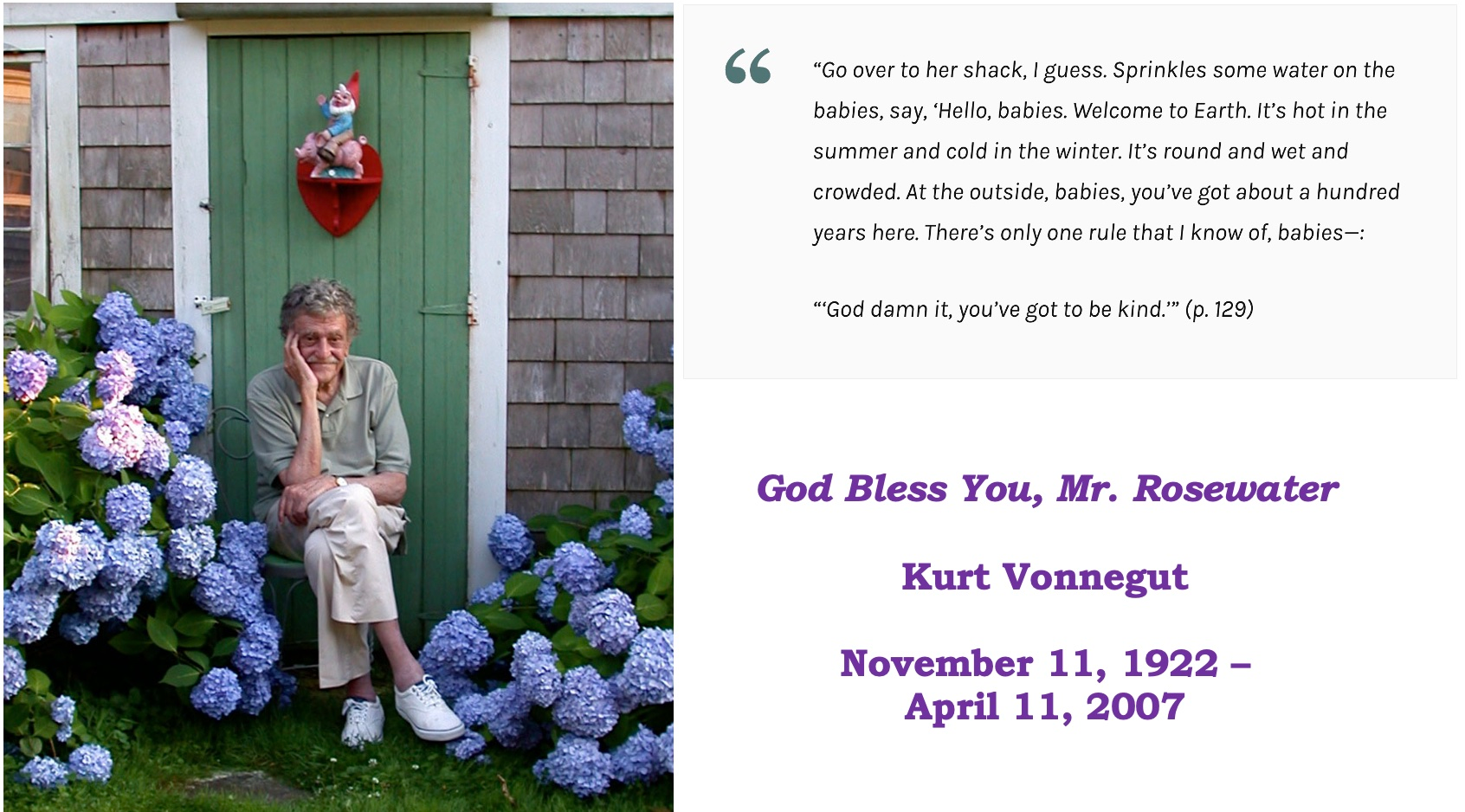
Not a paradox at all, but Salinger’s humanistic and even practical rendition of Christianity makes perfect sense as I found and settled into Vonnegut’s persistent efforts to spread the message of Christian kindness through his own humanism and atheism:

On a smaller scale than Salinger, I had to realize that Vonnegut, too, struggled to be the human he asked all of us to be—although on balance, I think Vonnegut was just flawed in the ways most of us are because we are human.

What causes me greater sadness and, yes, anxiety, is that in our current world, the dominant Christians in the US are collectively as horrible as Salinger was on the individual level.

We are a people bereft of kindness, Christian charity, Christian love.

We are a people aggressively imposing hatred and fear onto others.

I have always been a skeptical person, but now I am slipping—as many do as they grow older—into perpetual cynicism.

I want to believe that it is possible to live the life we want, to be our full and true selves—life, liberty, and the pursuit of happiness—while dedicating ourselves to insuring that everyone has that freedom as well.

Our happiness and the happiness of others are not in tension, in competition.

Our happiness and the happiness of others are dependent on each other.

The weight of my cynicism is harder and harder to carry into my mid-60s.

But there is one person who seems to have found something, found some way to live the ideals that I also embrace and believe with my entire self would make our lives collectively happier, erasing our anxieties.

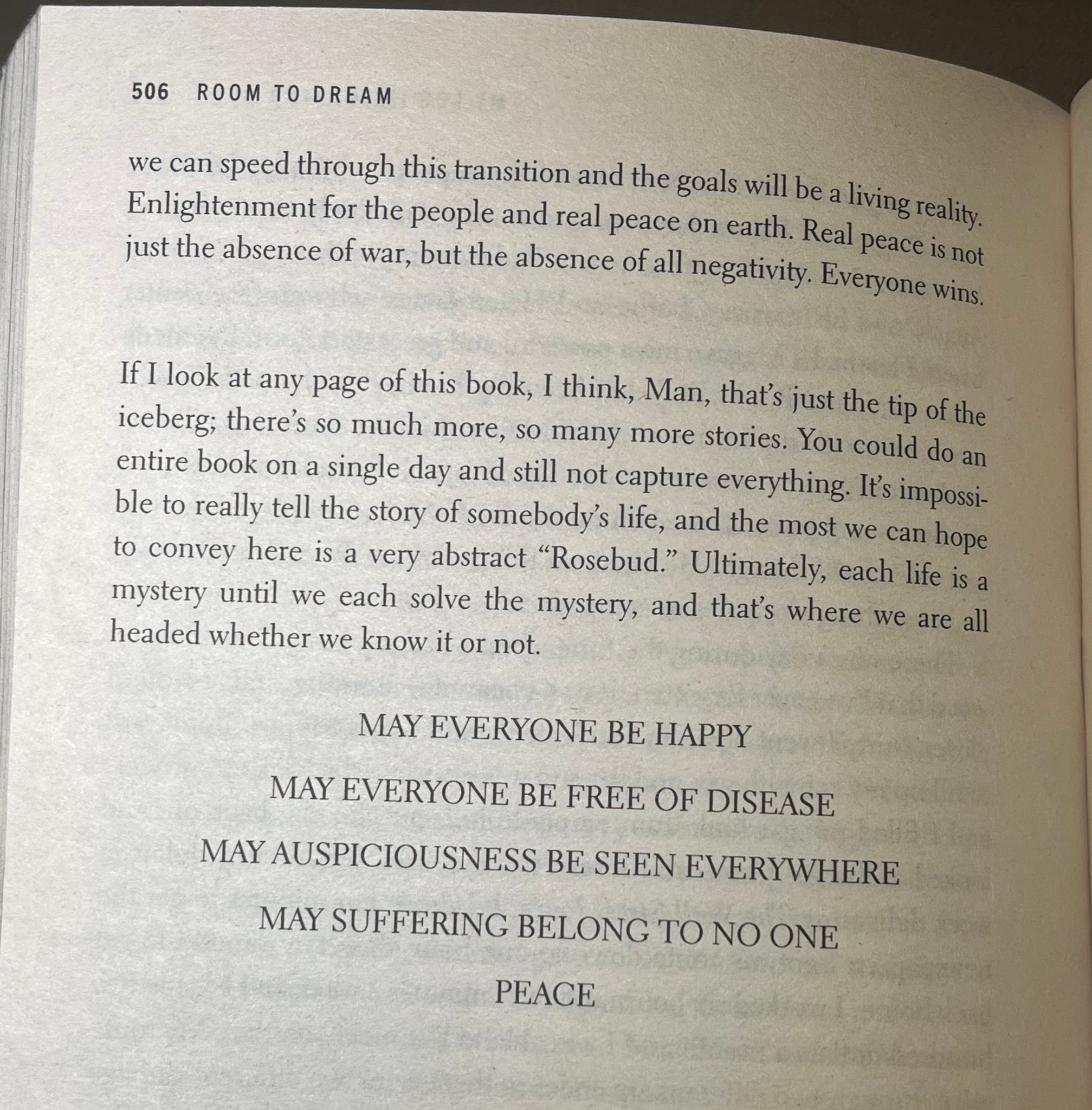
David Lynch, who wrote in his memoir:

Room to Dream, David Lynch and Kristine McKenna

This seems obvious. It seems simple.

Maybe that’s the problem.

Maybe these ideals are beyond the capabilities of human beings.

Now we are back to Vonnegut who played around with the essential flaw in humans—”the only true villain in my story: the oversized human brain.”

It is harder and harder each day, but I keep trying to have hope, hoping Maggie Smith is right: “This place could be beautiful,/right? You could make this place beautiful.”