More than a decade ago, close to one of the most celebrated birthdays, turning 50, I was ghosted.
Although I understand why, and even in some ways, accept that may have been the only option, since this was a person for whom I cared deeply, the experience was difficult—for many years.
Life altering.
But one thing just before that event has stayed with me; the person acknowledged we could no longer have a relationship but stressed they had no regrets.
In my last couple of days at 63—turning 64 Sunday—I know that I have made many mistakes but also that I have a life now that is often quite wonderful despite the inevitable tensions of living across seven decades.
Big picture, then, I do not regret the life that I have lived to get to the life I have.
Yes, I regret I forgot my father’s birthday (also my parents’ anniversary) just a year or so before he died. I realized that the next day and felt truly horrible—so lost in my own daily life, so unnecessarily lost in my daily life.
Yes, I regret that the night my mother died in Hospice, I was home, asleep; I slept through the call. I wasn’t there when she died.
But at nearly 64, I am aware that we mostly can only be the person we are capable of being at any moment in this life.
I simply don’t have time for regret—or blame.
I am fond of giving myself and others a break more often than not.
There may be some use in regret when we fall short of who we are and who we expect ourselves to be.
But most of the things of my life that others would judge me for, frankly, I don’t find to be anything done wrong; in fact, those are often those things that best reflect who I am and not who others expect me to be.
Melancholia
After I finished classes and lunch today, I had my usual nearly-hour drive home ahead of me. For an early birthday present to myself, I listened to The National’s First Two Pages of Frankenstein.
Lately, a couple of those songs have been on repeat in my mind—”Grease in Your Hair” and “Ice Machines.”
But the album is book-ended by two beautiful songs filled with melancholia—”Once Upon a Poolside” and “Send for Me.”
The first time I listened to “Send for Me,” I was in New Orleans the day after giving an invited presentation. F2PF was released that morning, so I sat in the hotel room after waking up early, my partner sleeping, to have a first listen.
When the final song played, I wept through it entirely. I was wrenched by the sweetness, the sadness, and the gentle humanity of the song.
Less than 48 hours from turning 64, I am filled with melancholia because aging is a heaviness.
I am fighting literal heaviness with my weight ticking up slightly year after year (and for someone who has lived as a serious cyclist weight has been an ever-present obsession for someone who looks mostly thin but persists in fretting over a bit of new weight here and there).
But aging is another heaviness.
The heaviness of awareness, the heaviness of knowledge.
I know a great deal, but most of all, I know what I don’t know.
The heaviness of the unknown, the heaviness of the unknowable.
Growing older may be as much bittersweet as melancholia because I am not sad. I am maybe as happy and content as ever.
It can be easier to come to peace with yourself and others with age.
And in the last days of my year 63, David Lynch died, just 5 days before his January birthday.
His creative works were incredibly important throughout my life so his death near my birthday feels heavier than it probably should.
As I told my students, I cried in public reading a story about Lynch requesting Cheetos in his dressing room in his last performance as an actor.
I have cried over the death of George Carlin (when he died and at the end of a documentary on Carlin’s life).
There is something sweet and frail about someone of Lynch’s stature making a demure request for Cheetos.
And as sad as his death is, it has brought day after day of articles and videos sharing the quirky man Lynch was—a man at a sort of peace and self-awareness that makes me jealous, gives me hope.
As is usual, people I love and people who love me have asked what I want for my birthday, and I give my usual reply—nothing.
At least no gift, nothing special.
I want to wake up Sunday and continue with this life, this thing that is what it is and will be something I cannot predict.
So I hope that you will do the same for the rest of your lives. When things are going sweetly and peacefully, please pause a moment, and then say out loud, “If this isn’t nice, what is?”
What Really Matters: I Am Thinking about People Tonight
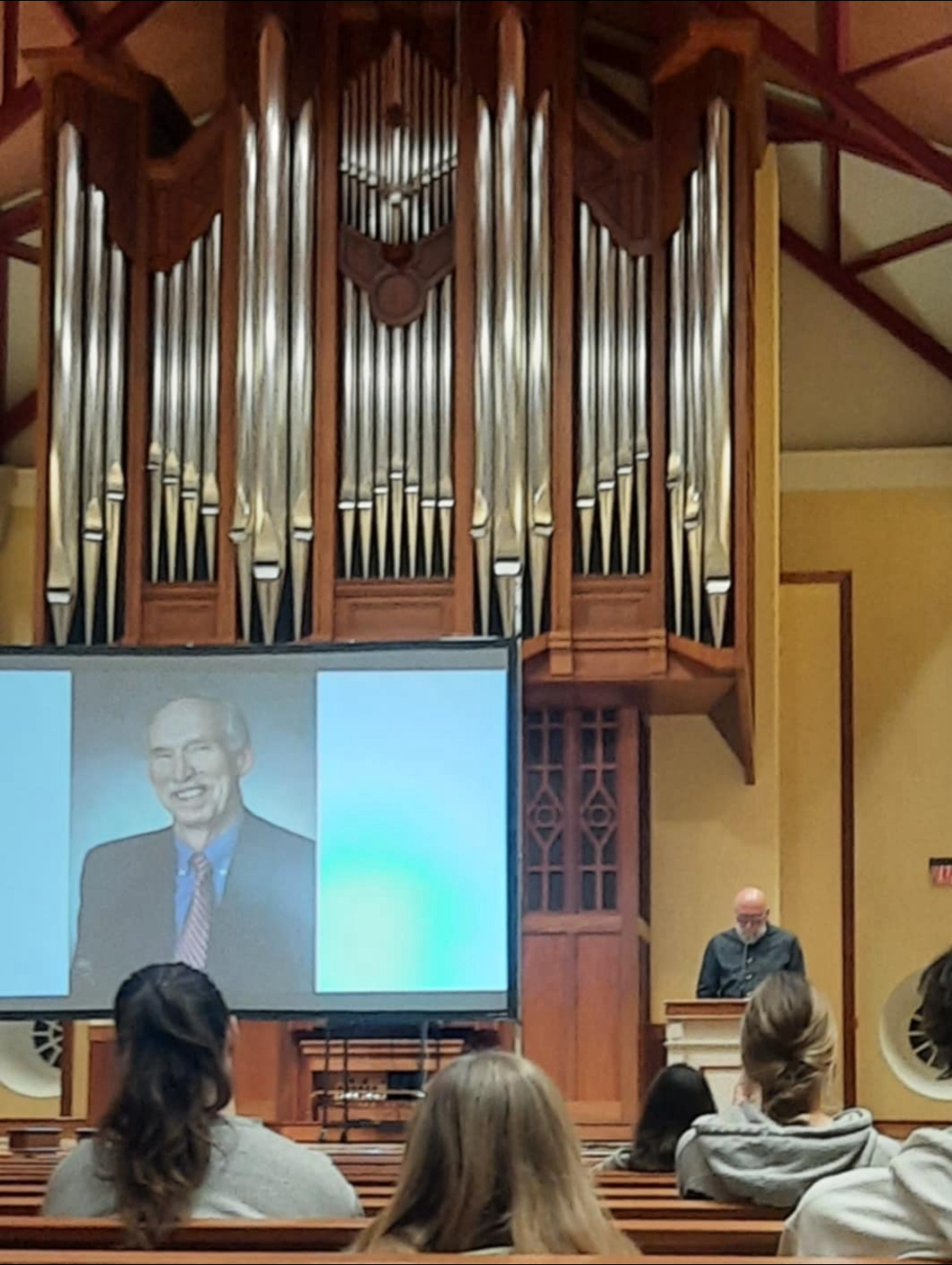
P.L. Thomas, Furman University
Prelude
This is a prelude. This is not what I had originally written for tonight.
Just over a week ago, I woke to learn that Trump had been elected again as the president of the US. Along my immediate despair, I felt that I would not be able to give this talk, to share What Really Matters when so many people had just chosen that so little matters.
I almost immediately thought about a former student who has a trans daughter. I have watched that family choose love and also watched how that choice of love has been met with anger and hate, making their journey more difficult than necessary. Far less humane.
I love my former student and her wonderful family. A family facing an impending doom that is now darkening their frail but blossoming hope.
We are connected on social media, and watching this all unfold in their daily lives is overwhelming, saddening, and even maddening.
Of course, I cannot give in to despair, and so, next is what I had planned, an early draft written in a rush of inspiration when I was so kindly invited to share this with you tonight.
This then is my …
What Really Matters
I am thinking about people tonight.
I am thinking about Jim Edwards.
Jim was a much loved and highly respected professor of philosophy for 41 years at Furman, his alma mater.
If you look up anything about Jim, you see he was born in Columbia, SC, but he always went out of his way to say he was a son of Woodruff, my hometown.
Any time I would see Jim he would smile and say, “Who would have ever imagined two boys from Woodruff, professors at Furman University.” You could hear in that voice a kindness, a reverence for both that town and this university.
I wish Jim could be here because I know what he’d be thinking.
I am thinking about people tonight.
I am thinking about my mom and my dad, Rose and Keith Thomas.
My father and mother both died in 2017. My father in late June. And then my mother in early December, just several days before her birthday.
The end was slow, awful, and premature for my parents. I watched them die while living the reality of the consequences of having little money at the end of your life.
My parents’ death taught me a lesson, in fact: The healthcare system in the US doesn’t care about anyone’s health. It is the bank account that matters.
But I have so much of my parents in my memory, a memory that I am learning is flawed at best.
After tropical storm Helene devastated Western North Carolina and Asheville, I have been trying to recover, trying to recreate as much of my family as I can, specifically my mother’s family who lived for about a decade in Asheville during the 1960s.
After my parents died, my nephews and I cleaned out my parents’ house, the only real capital they left behind and likely the thing they were most proud of. Part of what we held onto was hundreds of pictures that my oldest nephew, Tommy, sifted through and had many scanned.
I have been looking through them all trying to find Asheville pictures. Recently, Tommy dropped by two containers of pictures and other things, most of which have not been scanned.
And there among the pictures, I found letters. A few from my mother to my father in 1960 while they attended Spartanburg Junior College (now Spartanburg Methodist College).
The college was very strict about relationships, including no public displays of affection. However, one day on my mother’s lunch break while working as a cashier at a grocery store, my mom and dad slipped off and were married at the courthouse, although marriage was also not allowed for anyone attending the college.
This led to their coded dialogue. Dad was “Honeybun” and Mom was “Nut,” the only two words on the envelope of one letter. As long as I can remember, my dad would say to my mom, “You tickled me nut,” meaning “I love you.”
My father told stories about that courtship over and over throughout my life. They were happy stories, and they reinforced the happy parents I enjoyed during my childhood and teen years.
I also found a stack of letters my mother wrote from Lumberton, NC just after I turned one year old. My mother, you see, had left my father and moved back in with her parents (who moved constantly, mostly around NC but in SC also).
The letters have the return address at Southern National Bank where Mom was working. We also have her social security card issued while in Lumberton.
These letters are sad and imploring, and often confusing. By spring, my mother began signing letters “Love always, Rosie + Paul + ?” because she was pregnant with my sister.
One letter, as well, is a sweet one from my mother to my father’s dad, Tommy (my namesake since his given name was Paul Lee Thomas).
And then there are letters from my mom to my dad in 1964, three from Asheville and four from Woodruff/Enoree (they lived in a small mill village, Enoree, just south of the slightly larger mill town of Woodruff, SC).
My father was in the National Guard and training in Fort Gordon, GA. Similar to the love letters in college and the letters from Lumberton, these letters are filled with love and missing my father by my mom, my sister, and me.
But in all these letters, the thing missing is my father. No letters back, and several times my mother asking if he has forgotten how to write letters.
I do not know what to do with my parents.
Because I have now begun to recreate a new version of them, a new version captured well I think in many of the pictures that remain.
But I am recreating what I can with what I have, and this new version, I think, will find a new place in my heart that doesn’t have to know everything.
I wish my parents could be here because I do know what this would mean to them.
I am thinking about people tonight.
I am thinking about Pat Lanford. She was my first-grade teacher, and my first surrogate mother.
For those who know me, this will not be a surprise, but I was a momma’s boy. My mom taught me to read and play cards well before school. And instilled in me a love for science fiction. Her favorite movie was The Day the Earth Stood Still, and she introduced me to the sci-fi horror classics like Vincent Price’s The Fly.
So that transition to school was a hard one. I cried, I resisted.
But Mrs. Lanford was always loving and patient.
The story goes I was sitting in the back of class making car revving noises once. Mrs. Lanford said, “Paul, stop it!” So I made a loud tires-screeching-to-a-stop noise.
I think Mrs. Lanford that year adopted a common refrain, “Now, Paul!”
I am thinking about people tonight.
I am thinking of Mrs. Townsend, my second-grade teacher. She was a small woman, and her husband was Mr. Townsend, a highway patrolman. I was terrified of her.
The first day of school, she called the roll, and when she came to my name, she said I was named after my father.
This was Woodruff. Every knew everyone, and everyone knew my father and my grandfather, who ran the Pure Oil and then 76 gas station in the middle of town.
I said, “No, ma’am, I was named after my grandfather.”
First day of second grade I was sent to the hall for talking back.
That gas station I mentioned, it was Tommy’s 76, and everyone in Woodruff knew my grandfather as Tommy. But his name was Paul Lee Thomas, and I was Paul Lee Thomas II.
I had carefully explained that, and that if I were named after my father, Paul Keith Thomas, I would be Jr. and not II.
In the hallway I was terrified of my fate once I got home, but the next day, Mrs. Townsend took me in the hall—not in front of the class—and apologized. That was over 50 years ago, and I remember that as if it were last week.
A couple decades later, I was a teacher at Woodruff High. On the first day of class, I was checking roll, including a student Billy Laughter (spelled L A U G H T E R). Thinking I would be funny, I pronounced his name as “laughter.” Billy was a big guy, redneck in overalls, and I watched as his neck and face began to turn red.
I quickly added, “Billy, I thought I was being funny. I know your family name is Laughter and I also know that wasn’t funny. Sorry.”
The red subsided and Billy stopped contemplating how much trouble he would be in for strangling a teacher.
A lesson Ms. Townsend never knew she taught me. A lesson that both Billy and I appreciate.
I am thinking about people tonight.
I am thinking about people, you may be starting to recognize, who profoundly shaped me to be the person I am standing before you.
That began with my parents, but this list so far and to come, I must emphasize, has mostly been teachers, the profession I too have chosen—or the profession, like being a writer, that I came to recognize is who I am.
I think that recognition of being a teacher is in part out of a debt I feel to all of those people, all of those teachers, in and out of classrooms.
Sometimes I take a few moments and recall all of their names, and I can name nearly every teacher I had from first grade through my doctoral program.
I don’t want to forget.
I am thinking about people tonight.
I am thinking about Mrs. Parks, my first Black teacher, third grade, who taught me the year Woodruff incorporated the previously Black-only schools into its school system.
Integrating came to Upstate SC slowly, into the late 1960s and even into the 1970s.
My mother took a job in the school office that year because my sister and I would be attending that school in the Black neighborhood of Woodruff, Pine Ridge, that literally sat on the other side of the railroad tracks.
Mrs. Parks delivered the first lesson of my life about racism because a student had uttered the N-word. She made us all get out our dictionaries and proceeded to explain to us that the racial slur had its roots in a word that meant “dirty.”
She was calm, stern, and amazingly practical with a room full of third graders, many of us white students living daily in racist homes where that word was commonly used by our parents and nearly every white person we knew.
It was the first time I started to understand there was something profoundly wrong about the words and anger of white culture while I spent my days at school with friends both Black and white.
I am thinking about people tonight.
I am thinking about Mrs. Simpkins.
Mrs. Simpkins was my 6th-grade math teacher. She had two sons, one a year younger and one a year older than me, Clark and Scott. We went through school and played basketball together. A few after she was my teacher, her husband was my high school principal and would also be my first principal when I became a teacher.
They were from Moncks Corner, SC, and once when I was over playing basketball with Scott and Clark, Mrs. Simpkins warned us, “Now, boys, don’t you get in that rud.”
Like most of her students, I loved but was also terrified of Mrs. Simpkins, and I found myself worried about her warning. When I asked her sons what the “rud” was, they laughed and clarified, “The road, the road!”
I am thinking about people tonight.
I am thinking about Harold Scipio.
By high school, Mrs. Simpkins and other teachers had instilled in me a belief that I was a math and science student. Mr. Scipio taught me chemistry and physics, and further convinced me that my future lay in the sciences.
Mr. Scipio was a tall, thin, and even-speaking Black man who printed meticulously on the overhead as he taught. He referred to all his students with “Mr.” and “Miss” and our last names—I was Mr. Thomas—explaining that since we had to address him as Mr. Scipio, he felt he should do the same.
At a banquet near the end of my senior year, as we were cleaning up afterward, he smiled and called me Paul. It was after school hours and I was about to graduate. He was telling me we were both just people, we were equals.
I can still see and hear that moment today.
And the other moments I will never forget were when we took tests. Mr. Scipio would casually walk in and out of the room, often staying out of sight in the back of the lab cleaning lab equipment.
The first time that happened, we all looked around making eye contact, realizing that these tests were about more than chemistry or physics.
He never said a word about this behavior, but I knew even as a teenager that Mr. Scipio was showing us you don’t cheat or lie, especially to those people who treated you with dignity and respect.
Many years after I graduated and had taught high school for almost two decades, I was at dinner being interviewed for this job at Furman. Nelly Hecker, Hazel Harris, and I were talking after a day of interviewing when I saw Mr. Scipio sitting at a table nearby.
I walked over, and when I told him what I was doing, he beamed.
I think at that moment I knew I would take the position if offered.
I am thinking about people tonight.
I am thinking about Lynn Harrill.
Strands of the webs of my life keep breaking.
That is an inevitable consequence of living into your 60s, and hopefully beyond.
I received a text message in July that my high school math teacher and later teaching colleague had informed a group of people that my high school English teacher, Lynn Harrill, passed away.
He had been suffering from Alzheimer’s—something I found out about second hand, explaining several months of fruitless phone calls from him when he never spoke—but the end came quite awfully after Covid prompted a stroke.
I sat on the couch with my partner, and there was nothing I could do except a sudden and deep burst of crying.
This reminded me too much of my mother’s death—a sudden stroke and then dying of cancer a few months later—and my father dying sitting beside my mother right after that stroke.
The end is always too, too awful, and humans, we are too, too frail.
Lynn was a wonderful human and a life-changing teacher who willed me to be a teacher and a reader and a writer.
Lynn taught me two years of high school English, and like Mr. Scipio, profoundly shaped me as a person.
I was that student who wandered into Mr. Harrill’s room any time I was free, talking endlessly, likely consuming time he didn’t have to spare.
Once he said I should consider teaching, and I laughed, thinking it was a ridiculous idea.
About 6 years later, I was sitting in the exact chair Mr. Harrill had been sitting in, teaching in the position he had left for the district office.
And that position here at Furman I interviewed for seeing Mr. Scipio at dinner? Lynn Harrill had just left Furman, and my office is the one he picked out and furnished when Hipp Hall was first opened.
Few days pass without me thinking of Lynn.
No one had a greater impact on who I am than Lynn, and as he would attest, that is what teachers do.
I cannot move on from Lynn with sharing a poem from Emily Dickinson, who Lynn loved:
I am thinking about Steve Brannon and Dean Carter.
I now live in a converted textile mill just a couple miles from my first college, Spartanburg Methodist Junior College. It is there that my life transformed, grounded in Mr. Scipio but fulfilling what Mr. Harrill saw well before I did.
Mr. Brannon introduced me to e.e. cummings in his speech class, and I still recall the day I realized I am a poet and a writer while sitting in the dorm I pass when driving from my apartment to downtown Spartanburg, a poem mimicking cummings.
Dean Carter taught me survey literature courses, and when he wasn’t chastising me for wearing my high-top, leather Converse All-Stars unlaced, he convinced me to begin tutoring for the course, and it was during that experience I discovered my love for teaching.
At SMC, Dean Carter and Mr. Brannon gave me the gifts of being a writer and being a teacher, gifts built on all the gifts of teachers before them.
I am thinking about people tonight.
I am thinking about Richard Predmore and Nancy Moore.
Called USC-Spartanburg at the time, my undergraduate experience became a journey in English and education thanks to Mr. Brannon and Dean Carter.
Dr. Predmore, meticulously writing in pencil on my essays, and Dr. Moore—introducing me to Ralph Ellison, Langston Hughes, and Alice Walker—completed the transformation of my nerdy math and science self into the person who would spend his life with books, literature, and teaching.
Richard was demanding, and Nancy was encouraging and kind. I find myself always trying to emulate those qualities as I teach my college students.
I am thinking about people tonight.
I am thinking about Ann Shelley, John and Mark.
Dr. Ann Shelley taught me at USC-S during my MEd, and after that, she and I did research together in my classroom at Woodruff High. Ann was gracious to have me co-author my first scholarly works years before my doctoral program.
But I also would become colleagues with her son Mark at WHS, where he started a long and stellar career as an educator. And as many of you here know, I would later be a colleague with Dr. John Shelley a cherished faculty member at Furman for decades in the religion department.
I am thinking about people tonight.
I am thinking about Lorin Anderson and Craig Kridel, the chair and anchor of my doctoral committee. [Craig is kindly here with us tonight.]
Once again, Ann’s foundation of me as a scholar was finally fully realized in my doctoral program, one recommended by Lynn Harrill.
I cannot stress the great fortune it was for me to have Lorin Anderson as my committee chair. He was practical, patient, and above all else, like many of the people I have mentioned tonight, incredibly supportive of me as a scholar.
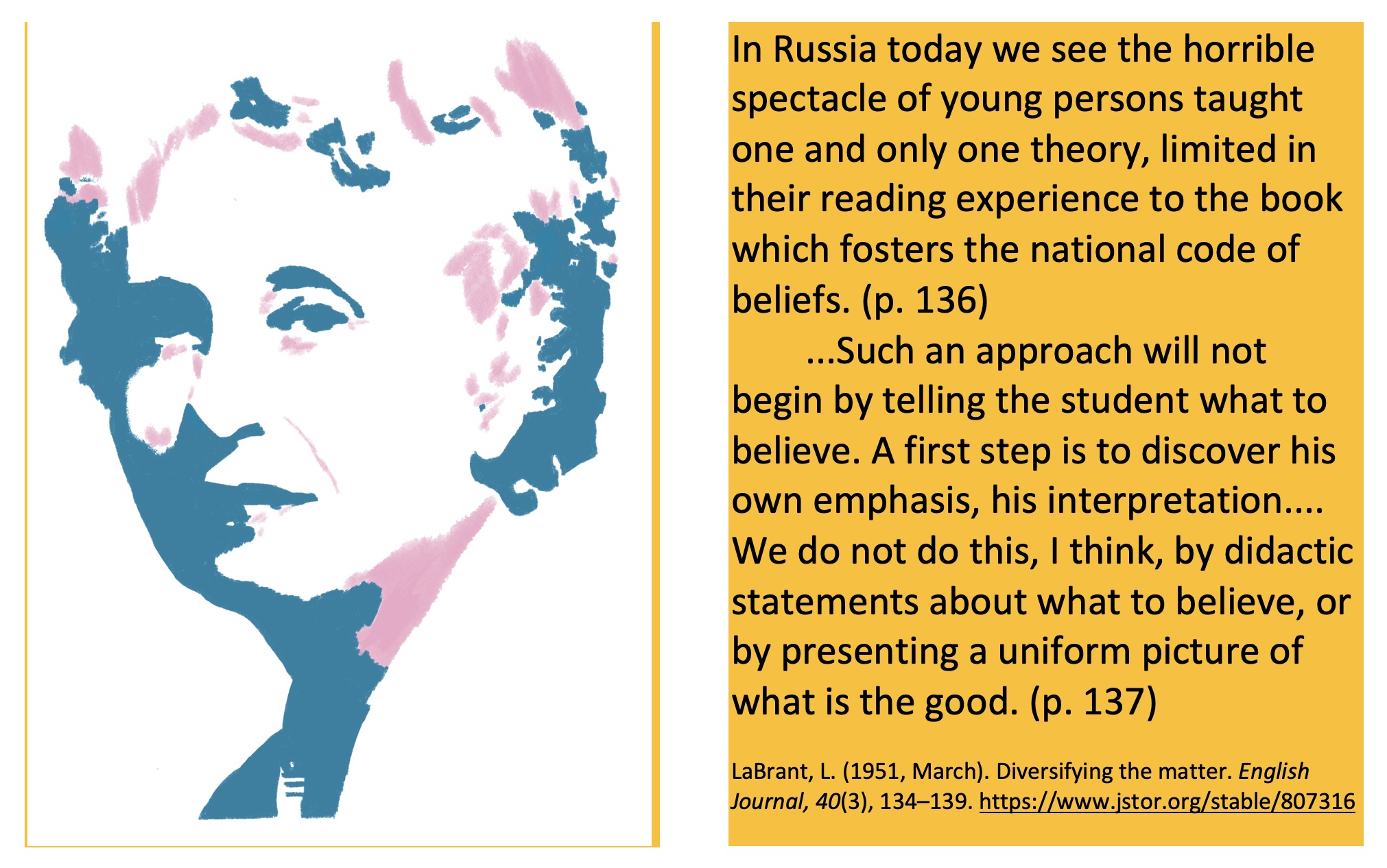
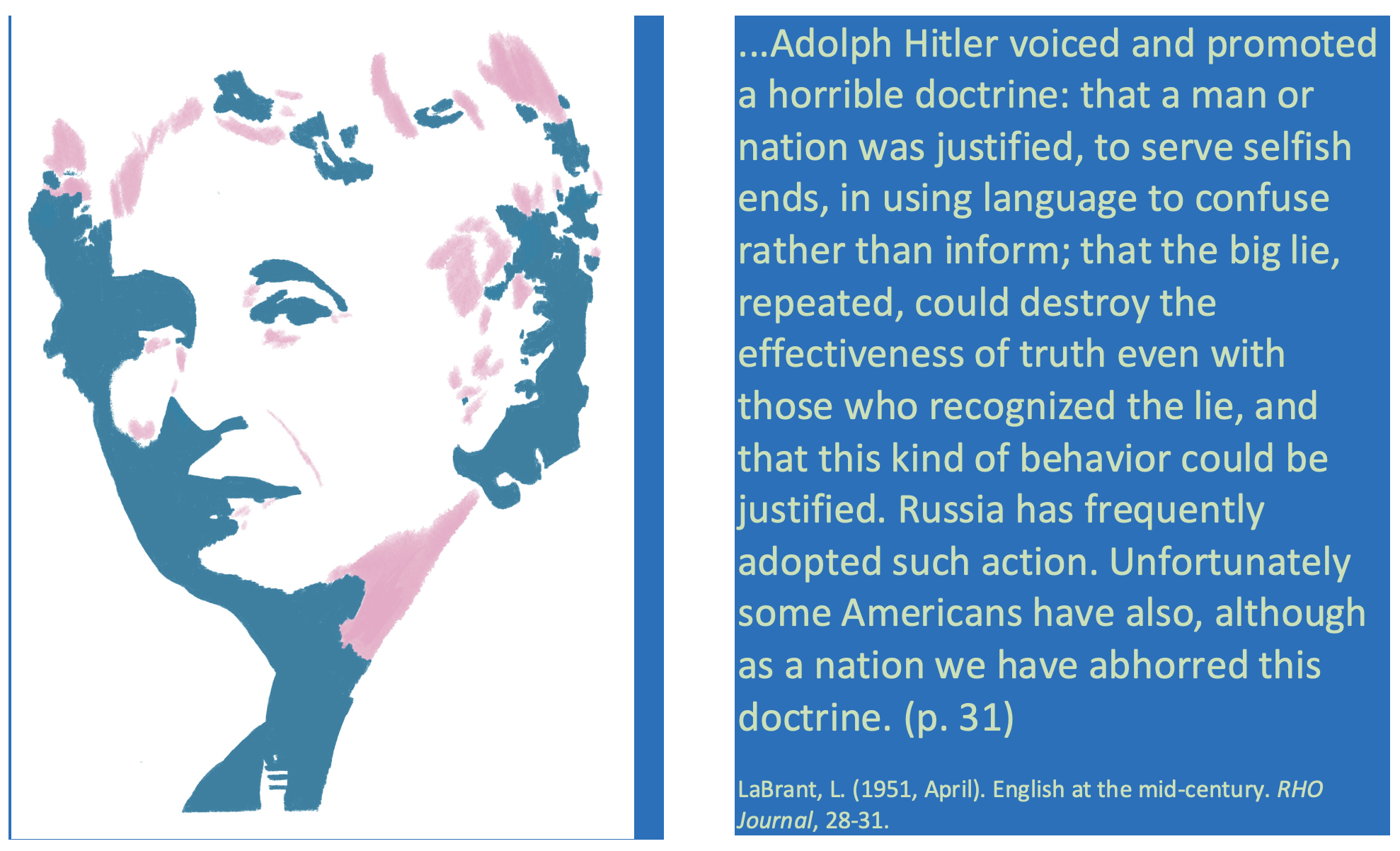
And Craig Kridel introduced me to Joseph Williams’s book Style, and one of the most important people I have yet to mention tonight—Lou LaBrant.
Craig is a giant in the world of educational biography, a field—what I have tried to do here tonight—that centers people to stress what really matters.
Through Craig, I met in person Maxine Greene, and interviewed Louise Rosenblatt.
But most of all, I was entrusted with the legacy of LaBrant, for which I can never repay Craig, himself a person who has always treasured that people above all else, people are what really matter.
I am too much indebted to Craig to simply thank him, so instead, I want to share a few words from LaBrant, a now constant voice, a sort of sound track for my life who continues to speak into a world too often like hers mid-twentieth century:
LaBrant, L. (1951, April). English at the mid-century. RHO Journal, 28-31.
I am thinking about people tonight.
I am thinking about the people devastated by Hurricane/Tropical Storm Helene. Especially in WNC and Asheville.
Asheville was a central part of my life in the 1960s when my mother’s family lived there.
My mother’s parents can be fairly described as “characters.” Even as a small child, I found them fascinating, fun, and a treat to visit. The thing that is most distinct about them—Harold Sowers and Edith Mize—was that most people called them Slick and Deed.
And then there is their Asheville.
It sweeps over me, more than a memory, more like a flashback, every time we drive into Asheville on Hwy 25 and pass through a tunnel.
The rock tunnels of Asheville and the very distinct area of West Asheville are buried in my child’s brain from trips in the 1960s and 1970s.
As an adult, much of my life included the close mountains of Tryon and Saluda, NC as well as frequent trips to Asheville—for MTB trails, gravel riding, and the explosion of breweries that many people now associate with the bohemian city.
Asheville has become gentrified, and the South Slope introduced the town to tourist beer drinkers. I know locals and long-time Asheville folk (my aunts and uncle included) likely regret these changes, but my life has spanned both Ashevilles in almost completely positive ways.
But with the help of my aunt Lynda (second oldest of five children by Slick and Deed, my mom the oldest by several years), I have reassembled some of what my fractured memory holds.
Slick and Deed moved the remaining family (my mother was married and living in Enoree, SC) from Roanoke Rapids, NC to Asheville in 1963. Moving was normal for the Sowers family; my mother attended 4 high schools, including in Pendleton (SC), Concord (NC), Lumberton (NC) and Union (SC), graduating finally from the latter.
Slick had trouble keeping work, although he mostly moved the family from mill town to mill town.
Asheville proved to be some stability for Lynda, Buddy, Mary, and Patsy—my aunts and uncle. However, they lived in four different houses, and Deed eventually secured the managing job at a motel on 690 Merrimon Avenue, Sunset Court Motel.
My aunts and uncle lived through the often violent integration era for schools in Asheville, attending Asheville High (which was named Lee H. Edwards High School from 1935 to 1969).
Uncle Buddy was eventually expelled from there—he had pictures of the bruises from repeated beatings he received as a high school student—and moved in with my parents in Woodruff where he graduated high school before serving in Vietnam.
Two of the most traumatic events for the Sowers family occurred in Asheville.
Slick fell and broke his leg while drunk, but Deed refused to help him.
I recall my mom talking on the phone and finding out he had a compound fracture and had to drag himself inside to call for help while Deed sat on the porch.
Soon after, Slick, drunk again, threatened Deed with a gun.
These extreme events, it seems, prompted Deed to seek the motel managing work to help provide the family some stability.
Another place that likely has the most consistent memories for me with family is Myrtle Beach, SC.
It was about a four-hour drive from Woodruff in the Upstate of SC, and for most people, Myrtle Beach was a somewhat expensive vacation destination (but, to be fair, this was a working class and middle class beach with the beaches for wealthy people further south near Charleston or North Myrtle Beach).
My working-class parents visited Myrtle Beach in off seasons; I mostly recall the beach in December, in fact. We have many pictures of Myrtle Beach covered in snow; I think we were there for the heaviest snowfall recorded for the area.
Slick and Deed loved Myrtle Beach, but as a family with very meager resources (often as a result of Slick’s alcoholism), they were also resourceful.
Usually in the off season as well, Slick and Deed arranged to help manage the Victory Motel in Myrtle Beach.
In many ways, the Sowers’ world was volatile like the 1960s, but my childhood was more than an hour away, allowing me to hold onto idealistic memories of my family.
And finally.
I am thinking about people tonight.
I am thinking about John Irving, Kurt Vonnegut, Maggie Smith, Eugene V. Debs, Ralph Ellison, and James Baldwin.
I am an old—in more ways than one—English teachers so you’ll have to excuse my ending with literature. Like teachers, authors are the people who made me, the people who saved my life and continue to save my life.
One of my favorite writers is Kurt Vonnegut, who was not only an era defining novelist but also a teacher of writing. And Vonnegut on occasion has noted that one of his best pupils was novelist John Irving, who gained famed for The World According to Garp and The Cider House Rules, both of which were popular novels and films.
In John Irving’sA Prayer for Owen Meany, which builds to being something of a Vietnam War novel, John Wheelwright, narrator and friend of the titular character Owen Meany, offers a key scene in Chapter 1:
We were in Rye, passing the First Church, and the breeze from the ocean was already strong. A man with a great stack of roofing shingles in a wheelbarrow was having difficulty keeping the shingles from blowing away; the ladder, leaning against the vestry roof, was also in danger of being blown over. The man seemed in need of a co-worker—or, at least, of another pair of hands.
“WE SHOULD STOP AND HELP THAT MAN,” Owen observed, but my mother was pursuing a theme, and therefore, she’d noticed nothing unusual out the window….
“WE MISSED DOING A GOOD DEED,” Owen said morosely. “THAT MAN SHINGLING THE CHURCH—HE NEEDED HELP.” (pp. 33-34, 35)
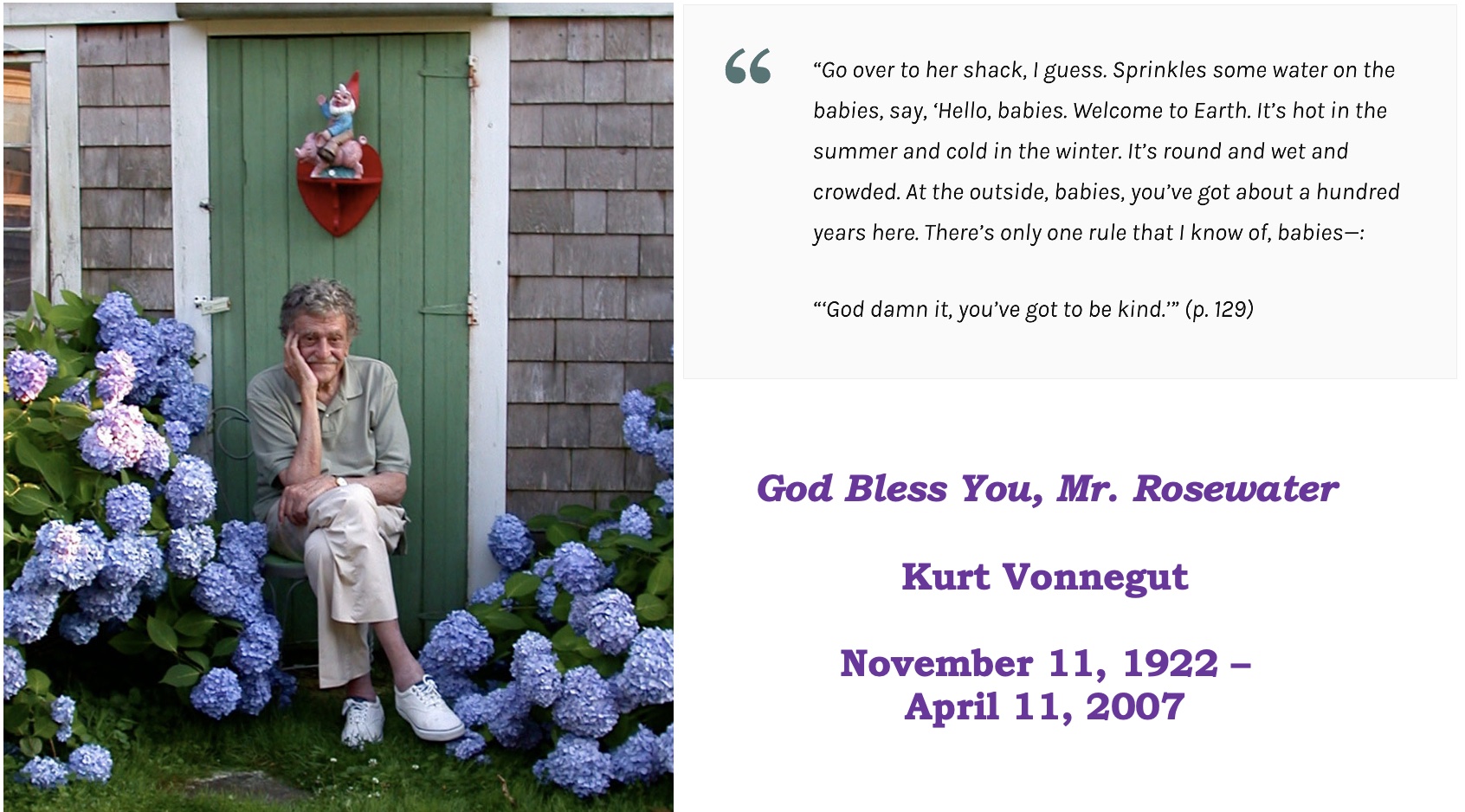
“Go over to her shack, I guess. Sprinkles some water on the babies, say, ‘Hello, babies. Welcome to Earth. It’s hot in the summer and cold in the winter. It’s round and wet and crowded. At the outside, babies, you’ve got about a hundred years here. There’s only one rule that I know of, babies—:
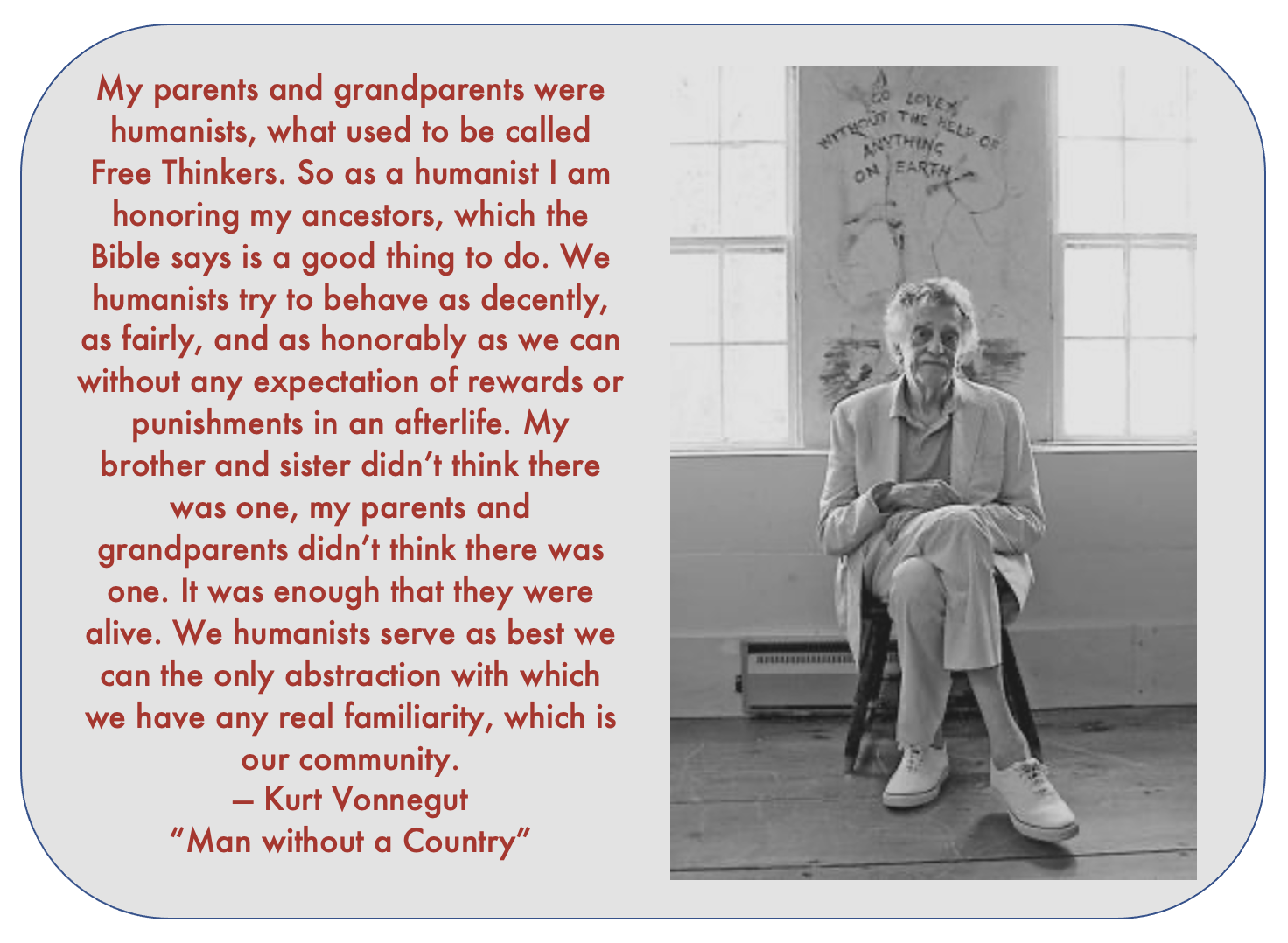
My parents and grandparents were humanists, what used to be called Free Thinkers. So as a humanist I am honoring my ancestors, which the Bible says is a good thing to do. We humanists try to behave as decently, as fairly, and as honorably as we can without any expectation of rewards or punishments in an afterlife. My brother and sister didn’t think there was one, my parents and grandparents didn’t think there was one. It was enough that they were alive. We humanists serve as best we can the only abstraction with which we have any real familiarity, which is our community.
Screenshot
Vonnegut also made a name for himself giving graduation speeches.
This is a long-delayed puberty ceremony. You are at last officially full-grown women—what you were biologically by the age of 15 or so. I am as sorry as I can be that it took so much time and money before you could at last be licensed as grown-ups.
If graduation speeches are meant to punctuate ceremony, then Vonnegut was going to throw cold water on ceremony.
If graduation speeches offer one last moment for sage advice from elders to the young, Vonnegut was going to say something to displease adults and disorient the young.
But always wrapped inside his curmudgeon paper was a recurring gift, one that tied all of his work together: Vonnegut was tragically optimistic and even gleeful about this world.
On cue, then, at Agnes Scott, Vonnegut rejected the Code of Hammurabi, revenge, and admitted he was a humanist, not a Christian, adding:
If Christ hadn’t delivered the Sermon on the Mount, with its message of mercy and pity, I wouldn’t want to be a human being.
I would just as soon be a rattlesnake.
Finally, to those young women, Vonnegut concluded:
I’ll want a show of hands after I ask this question.
How many of you have had a teacher at any level of your education who made you more excited to be alive, prouder to be alive, than you had previously believed possible?
Hold up your hands, please.
Now take down your hands and say the name of that teacher to someone else and tell them what that teacher did for you.
All done?
If this isn’t nice, what is?
I can’t end without more poetry because while my refrain here tonight is designed to argue that people really matter, I also believe that one of the most human of human behaviors is our urge to create and enjoy poetry, the very human urge to produce song with only words, to utter the unutterable.
One of the very best written in recent years, one that resonated when Trump was first elected and has, regretfully, gained renewed power, is “Good Bones” by Maggie Smith.
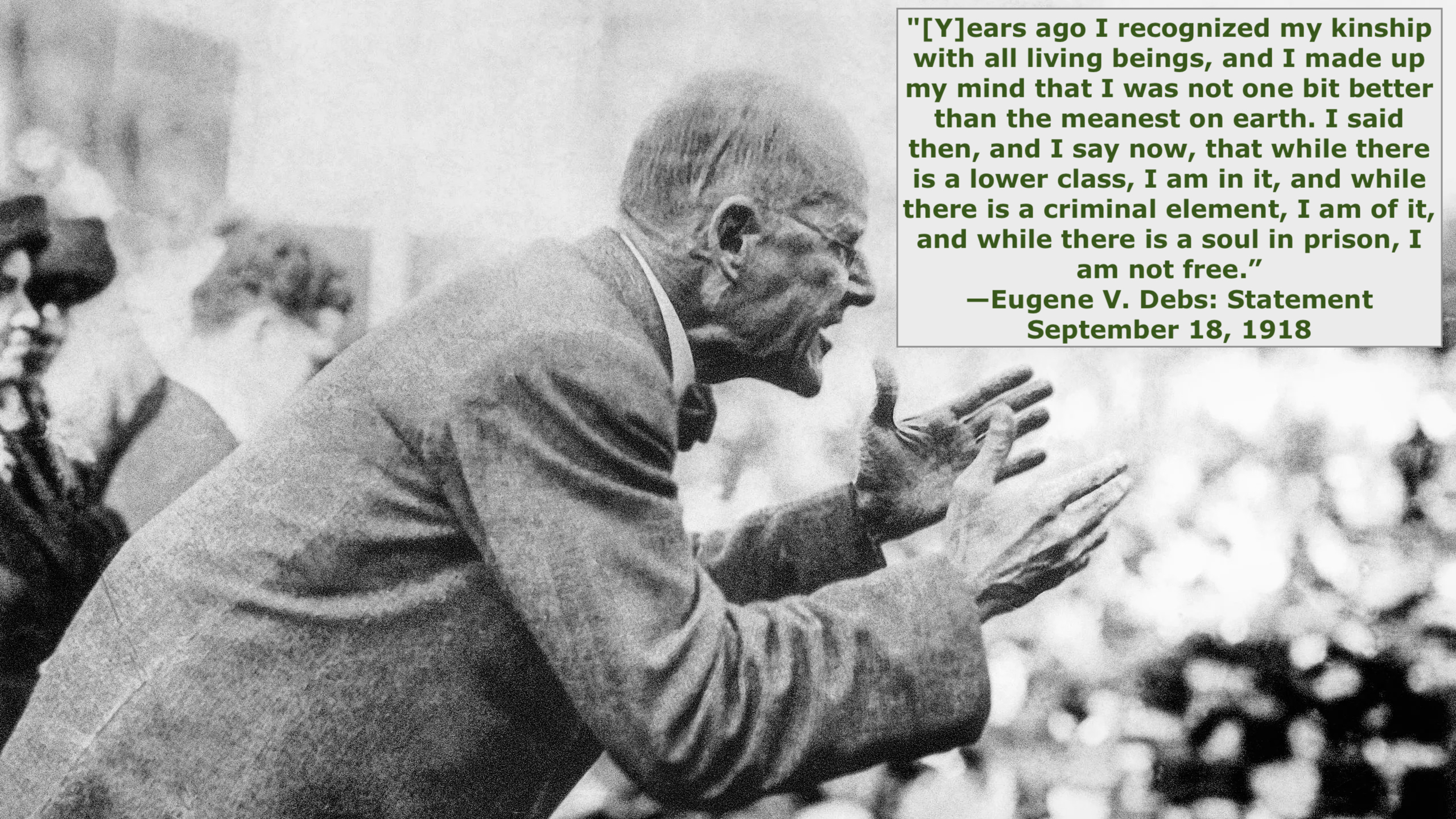
Because of Vonnegut, as well, I am indebted to Eugene V. Debs, a prominent Socialist candidate for president and activist.
I return to his words often:
[Y]ears ago I recognized my kinship with all living beings, and I made up my mind that I was not one bit better than the meanest on earth. I said then, and I say now, that while there is a lower class, I am in it, and while there is a criminal element I am of it, and while there is a soul in prison, I am not free.
In my teaching and writing, I also return often to Ralph Ellison, celebrated author of Invisible Man.
But the work that resonates is his talk to teachers, “What These Children Are Like,” from 1963. Ellison challenges the conventional wisdom about drop-outs and the deficit beliefs about language among rural and Black people. He ends with a wonderful recognition about the place of honoring who people are:
I don’t know what intelligence is. But this I do know, both from life and from literature: whenever you reduce human life to two plus two equals four, the human element within the human animal says, “I don’t give a damn.” You can work on that basis, but the kids cannot. If you can show me how I can cling to that which is real to me, while teaching me a way into the larger society, then I will not only drop my defenses and my hostility, but I will sing your praises and help you to make the desert bear fruit.
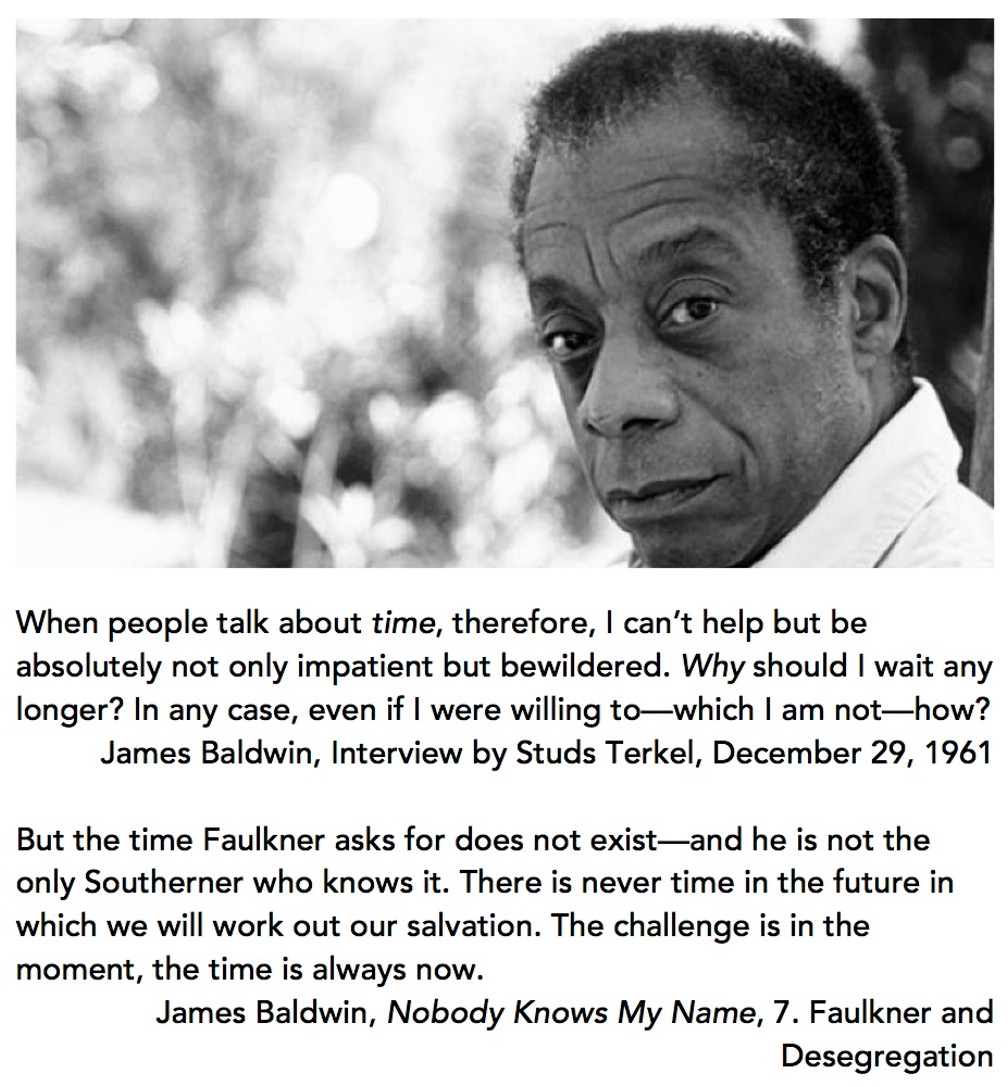
Jame Baldwin also gave a talk to teachers in 1963. Now 60-plus years ago, Baldwin could as easily be speaking to us today:
The purpose of education, finally, is to create in a person the ability to look at the world for himself, to make his own decisions, to say to himself this is black or this is white, to decide for himself whether there is a God in heaven or not. To ask questions of the universe, and then learn to live with those questions, is the way he achieves his own identity. But no society is really anxious to have that kind of person around. What societies really, ideally, want is a citizenry which will simply obey the rules of society. If a society succeeds in this, that society is about to perish. The obligation of anyone who thinks of himself as responsible is to examine society and try to change it and to fight it — at no matter what risk. This is the only hope society has. This is the only way societies change.
In the Prelude, I admitted my despair, and my momentary hesitation about trying to share tonight What Really Matters, but again, I must stand on the shoulders of giants, again Baldwin who argued, “There is never time in the future in which we will work out our salvation. The challenge is in the moment, the time is always now.”
I am thinking about people tonight.
What really matters? It may seem simple, but what really matters is people.
Love them while you have them here. Speak their names when they are gone to keep them in this moment.
We are all standing on the shoulders of giants, the people who were our teachers whether in classrooms of not.
We are all giants when we choose to be.
Be brave, be kind.
educator, public scholar, poet&writer – academic freedom isn't free

 dr. p.l. (paul) thomas