Tag Archives: Marvel

What Marvel’s Black Widow Helps Us Understand about Women in Pop Culture

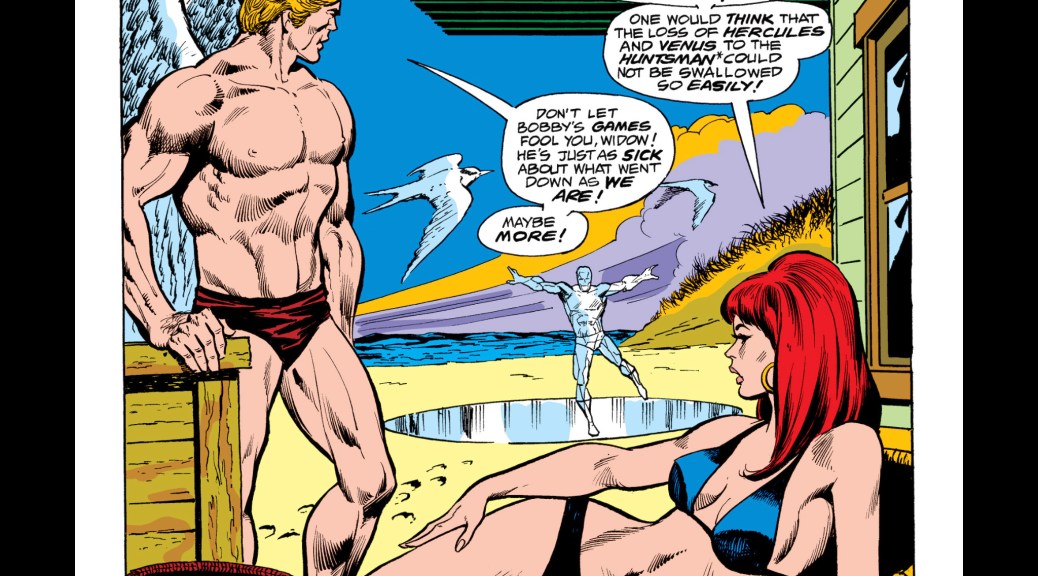
[Header (The Champions v.1, 3, George Tuska pencils, Vince Colletta, inks) and all images used under Fair Use unless otherwise identified]

Scarlett Johansson and Charlize Theron are two of the most successful and highly regarded celebrities in contemporary pop culture. These two women have been in the news recently in ways that seem at first contradictory.

Johansson “has become the top-grossing star according to total global ticket sales,” writes Andrew McGowan, on the heels of headlining Jurassic World: Rebirth.

However, just a few days before that accomplishment, Theron, as reported by Zack Sharf, “called out a Hollywood double standard when it comes to action movies. The Oscar winner…said studios often give female actors just one shot to have an action movie hit. When it comes to men, however, they can have a box office flop but still land multiple follow-up projects.”

One of Johansson’s highest profile characters, Marvel’s Black Widow, offers a window into how Theron’s criticism remains valid even in the context of Johansson’s success.

Black Widow first appeared in 1964, nearly unrecognizable to today’s fans as a foil to Iron Man in Tales of Suspense 52. This origin portrays Black Widow in a different color costume on the cover than in the interior, but she is mostly a one-dimensional Cold War temptress.
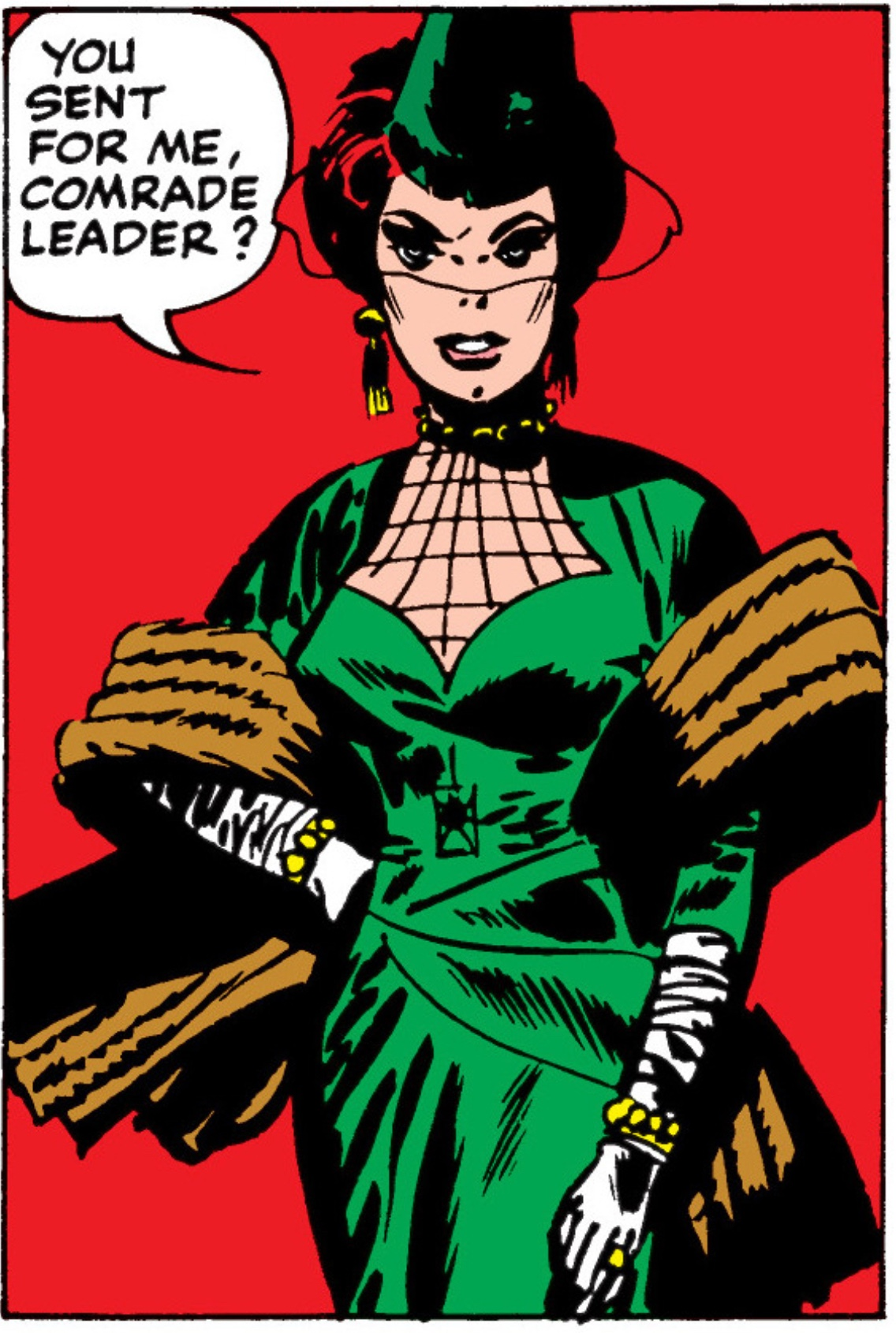
Tales of Suspense (v1) 52, writers Stan Lee and N. Korok (Don Rico), artist Don Heck

Over the next 60 years, Marvel’s stewardship of Black Widow reflects the ongoing fate of women in pop culture—being underestimated and hypersexualized.

“He Underestimates Me”

Along with her Academy Award for Monster, Theron has performed in a number of action and superhero films—The Italian Job, Æon Flux, Atomic Blonde, Mad Max: Fury Road, and Hancock.
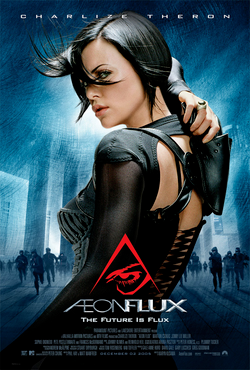
Notably, Theron’s criticism focuses on action roles, as covered by Sharf:

“Yeah, it’s harder. That’s known,” Theron said when asked about gender disparity in the action genre. “Action films with female leads don’t get greenlit as much as the ones with male leads. I think the thing that always frustrates me is the fact that guys will get a free ride.”

In my book-length analysis of Marvel’s Black Widow in print comic books across seven decades, one of the key themes of Natasha Romanov’s characterization is directly stated by Nat in issue 1 of volume 3, by the creative team of Richard K. Morgan and Bill Sienkiewicz: “He’s young—younger than me, anyway. And he’s fast. And he has a knife he knows how to use. But like most men in the end, he underestimates me.”

For current fans of the MCU, Black Widow/Nat as portrayed by Johansson may seem like a much larger character than has been portrayed in the comic books. Marvel has committed to 8 solo-title volumes, although most have been extremely brief. Black Widow has had one 20-issue run, and the critically praised last series, volume 8, only survived 15 issues despite an all-star creative team of women—Kelly Thompson, Elena Casagrande, and Jordie Bellaire.

Superhero comic books and films represent a key tension in pop culture among market forces, fans, and social biases such as sexism.

Theron, I think, is making a valid point that is reflected in Nat’s acknowledgement above; pop culture remains mostly controlled by men—the funders, the creators, and the fan base—who continue to underestimate women as characters and creators.

“[T]alked about … Like a Piece of Ass, Really”

Johansson as Black Widow/Nat entered the MCU in Iron Man 2, and with hindsight, it seems to be a huge understatement that Marvel underestimated the power of both Johansson and Black Widow for the Avengers and MCU.

Johansson, in fact, has addressed that Black Widow was hypersexualized:

All of that is related to that move away from the kind of hyper-sexualization of this character and, I mean, you look back at ‘Iron Man 2’ and while it was really fun and had a lot of great moments in it, the character is so sexualized, you know? Really talked about like she’s a piece of something, like a possession or a thing or whatever — like a piece of ass, really. And Tony even refers to her as something like that at one point.

Unfortunately, this early objectification of Black Widow in the MCU is comic book accurate since many of the depictions of the character in the print comic books has been for the male gaze.
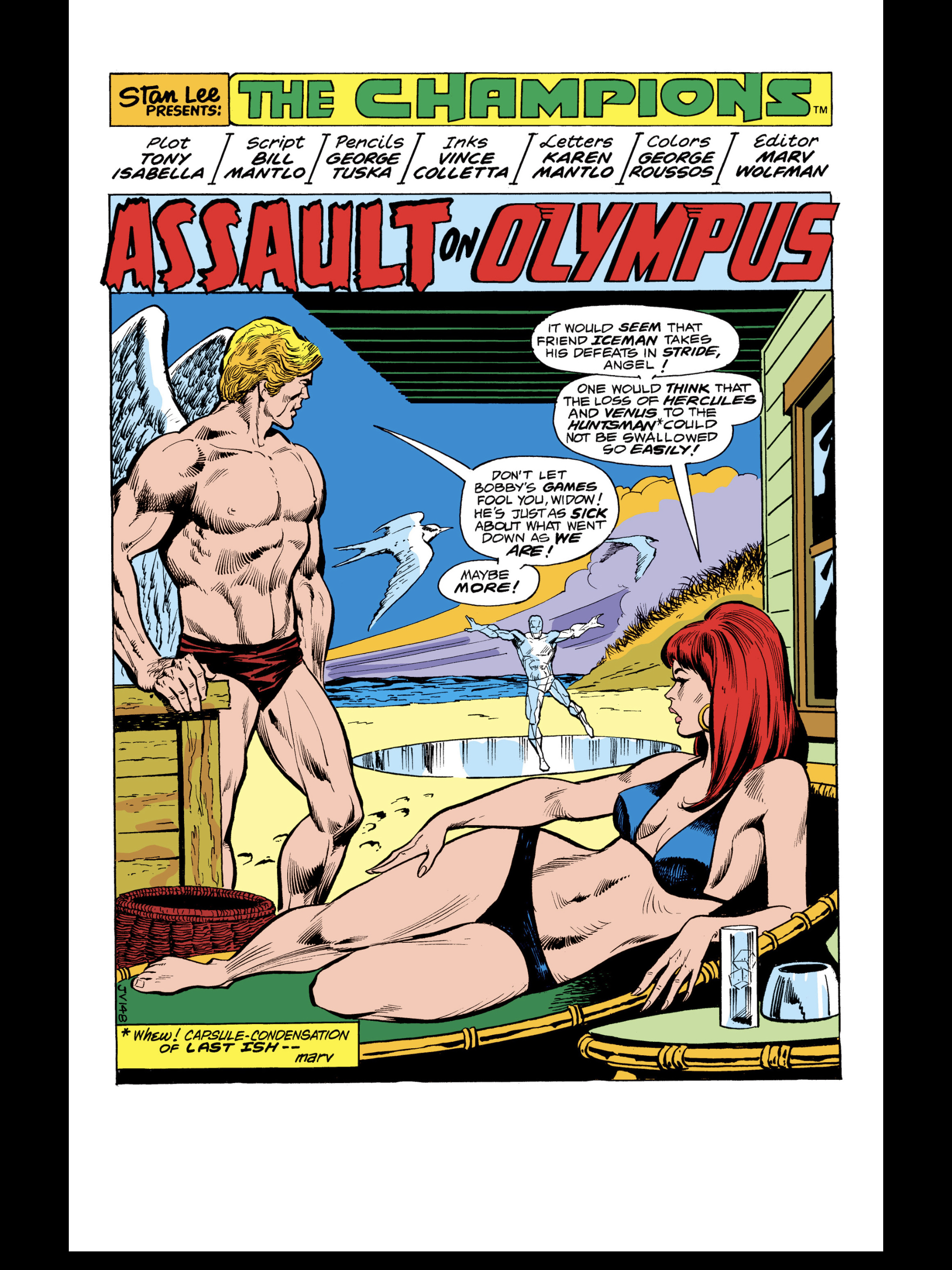
The Champions v.1, 3, George Tuska pencils, Vince Colletta, inks

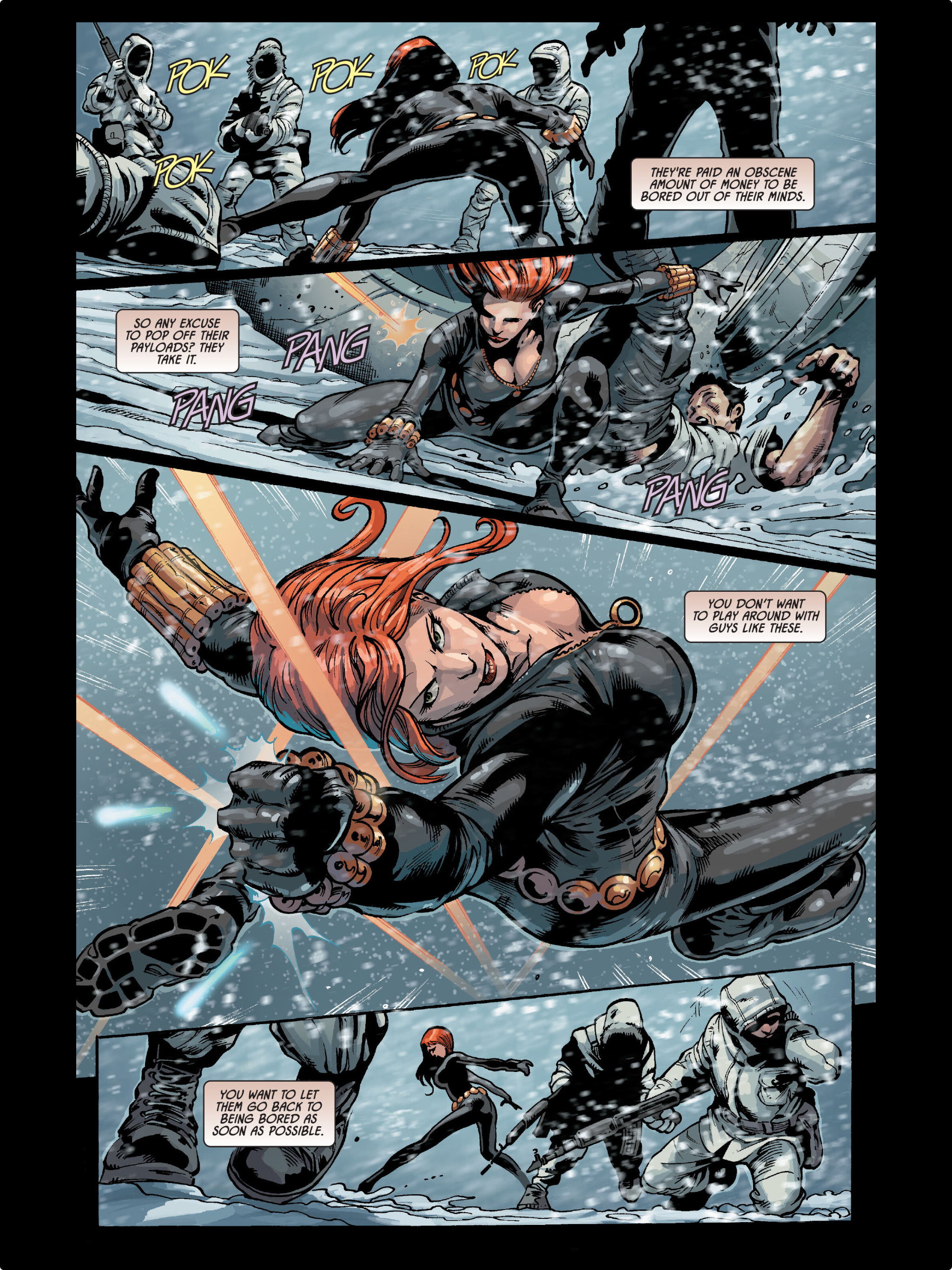
That hypersexualization has included extremes such as plunging necklines, exposed mid-drifts, and cat fights involving Black Widow and Yelena Belova
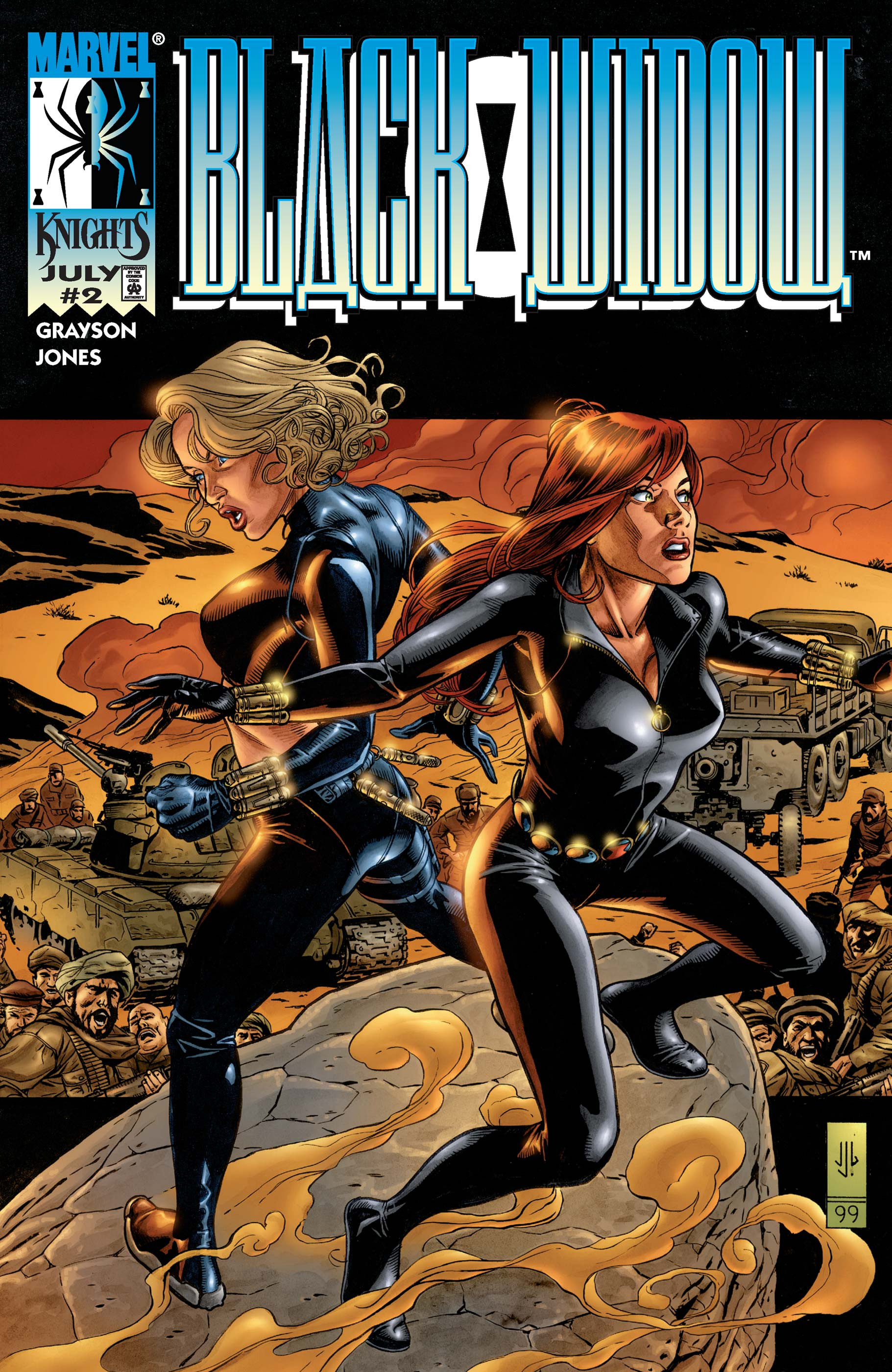
Black Widow volume 1, issue 2
Black Widow volume 4, issue 7

For women characters and creators, then, Black Widow represents that women are often underestimated because they are hypersexualized.

While it seems likely that pop culture will continue to reflect society—especially the worst of society—instead of changing culture for the better, it seems there can be a time and place that pop culture resists underestimating and hypersexualizing women.

Honoring Women in Superhero Comics, Pop Culture, and Beyond

I think volume 8 of Black Widow by the creative team of Thompson and Casagrande represents the power of women creators working with complex women characters. And Kelly Sue DeConnick’s Wonder Woman Historia: The Amazons at DC matches that excellence with a classic superhero.

These, none the less, are outliers, and it seems likely derivative women characters (such as She-Hulk), hypersexualizing and underestimating
women characters, and giving women creators work as tokenism will persist at the Big Two, Marvel and DC.

Women as victims of sexism are not responsible for changing these realities from a position of less power; however, Johansson and Theron are providing important voices as well as demonstrating their exceptional roles in pop culture.

The irony is that what Theron labels “risk” seems more bankable than yet another film propping up an aging white man paired with a woman half his age—even as we acknowledge that Johansson with a woman writer/director made that work also.


NEW: Black Widow Underestimated and Hypersexualized: “I Am What I Am” (Brill)
Black Widow Series

Daredevil and the Paradox of Justice: “You and your goddam system”

Born in 1961, I experienced pop culture during the formative decades of the 1960s and 1970s.

The foundation of my pop culture awareness and fandom was my mother, who loved science fiction and horror B-movies from the first half of the twentieth century.

But my pre-teen and early teen years were grounded in rogue police and vigilante films by Clint Eastwood and Charles Bronson.

And then, by the mid-1970s, I discovered super-hero comic books and became a devoted fan and collector of Marvel comics.

I was, as seems expected, immediately a fan of Spider-Man, who was in those years strongly connected to Kingpin and The Punisher. But soon, I found myself gravitating to Daredevil.

Recently, I recommitted to collecting and reading comics, completing a full run of Daredevil. And I also am an ardent fan of the Netflix/Disney+ Daredevil series.

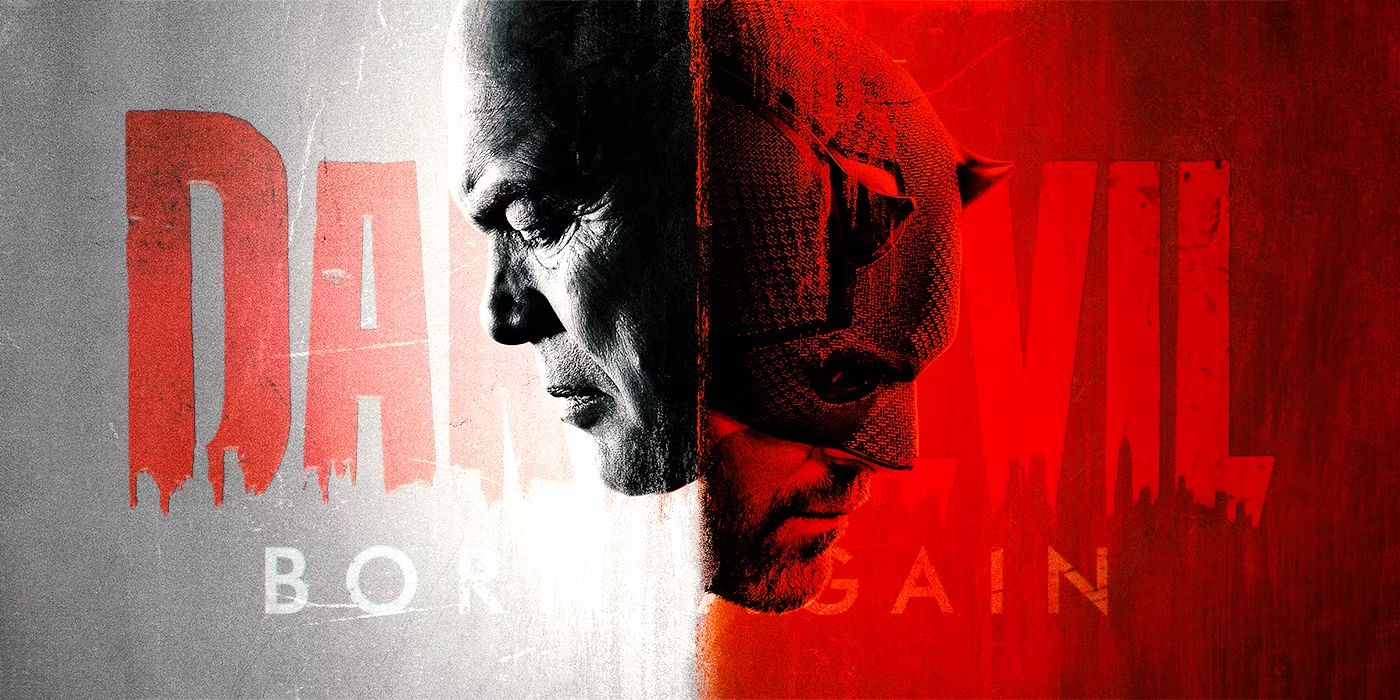
With the Disney+ reboot currently being released, I want to speak to Episode 4 of Daredevil: Born Again as a way to examine why Daredevil is a compelling character and how the motif of vigilantism is central to the wider public appeal of Daredevil as well.

“You and your goddam system”

Marvel in print comic books and film/series adaptations has many iterations of narratives around the ethics of superhero vigilantism as well as the often catastrophic collateral damage created by superheroes defending mere mortals.

The current story line of Born Again repeats at least two versions of Marvel exploring Wilson Fisk/Kingpin as Mayor of New York hell-bent on erasing masked vigilantes from the city (see Mayor Fisk and Devil’s Reign).

Born Again E4 also reintroduces the classic ethics debate between Matt Murdock (Daredevil) versus Frank Castle (The Punisher).

Murdock as lawyer and masked vigilante is resolute about his no-kill rule as well as working somewhat within the legal system or at least contributing to the existing system.

Castle as The Punisher is an ethical vigilante who directly rejects the system as corrupt, and thus, personifies a sort of utilitarian approach to eradicating evil in order to protect the good and innocent.

When Murdock and Castle reunite in E4, then, we have this powerful and foundational scene:

With “You and your goddam system” Castle serves as sort of a perverse moral compass, suggesting for the series that eventually Murdock will break and return—with vengeance—to his role as Daredevil (and thus the final scene of E4).

While these motifs and narratives are nothing new in Daredevil lore (and seem almost tired or derivative at this point), Born Again is a fresh re-examination in live action of a powerful ethical dilemma: What do good people with unique powers do when the “system” is profoundly corrupt?

Fisk now is very much a commentary on Trump and the blurring of who is a criminal or a political leader.

But one of the most interesting elements of Born Again is the growing negative portrayal of the police in the series. Murdock’s apartment fight in E2, the Punisher tattoos on police, and the Punisher t-shirt of White Tiger’s killer all suggest that the real ethical battle will be against these corrupt police and Fisk’s corrupt administration.

And the irony, of course, will be that while in power, Mayor Fisk can have the superheros labeled criminals.

Power (and superpower), corruption, and what counts as right and wrong/ good and bad have long served as the core of why, I think, Daredevil has endured in the Marvel Universe (and MCU now).

Murdock as lawyer and Murdock as a reluctant superhero often seems naive, especially against the blunt realism of Castle as The Punisher.

Born Again began (E1) with Daredevil seeming to cross his line (the roof-top scene with Bullseye) and repeats the line crossing when Murdock brutally beats two policemen (E2).

Like the Netflix series, Born Again appears committed to the foundational Daredevil narrative while also finding ways to breath fresh approaches to enduring themes and questions about justice and moral actions.

In 2025, Castle’s disgust with the “system” resonates more powerfully than ever, and as viewers, we are poised and even eager to watch as Murdock/Daredevil finds his way past the paralysis of that “system” commitment and back to doing the good he was called to do.

Should We Marvel at a Black Captain America?

[See an expanded version here: Should We Marvel at a Black Captain America?]

Technically, in order to celebrate the first black Captain America, we’d have to resort to the sort of contortions common in the comic book universe—the time machine.

Truth: Red, White & Black was a seven-issue series in 2003 with, yes, a black Captain America [1], as Joshua Yehl noted when the more recent announcement of a black Captain America surfaced: “While it is notable that this will be a black Captain America, it turns out that he’s not the first. Isaiah Bradley was not only the first black Captain America, but he held the mantle even before Steve Rogers.”

But the comic book universe is also noted for acting as if the same-old-same-old is NEW!!! for decades—with reboots (and more reboots), renumbering long-standing titles, killing superheroes, having those superheroes’ sidekicks take over for the dead superheroes, and then resurrecting the superheroes.

It’s exhausting.

But in 2012, Marvel rebooted Captain America (again) after recently killing off Steve Rogers, having his sidekick (Bucky Barnes aka The Winter Soldier) take over, and then bringing Rogers back (sound familiar?), building a two-year journey to issue #25 announcing the new Captain America, as Yehl explains:

Tonight on The Colbert Report, Marvel Comics’ Chief Creative Officer Joe Quesada revealed that the new Captain America is Sam Wilson aka The Falcon.

With Steve Rogers losing his super powers in the pages of his solo series written by Rick Remender, readers have been guessing who the new Captain America would be, and now we have our answer. General audiences will recognize Falcon from this summer’s Captain America: The Winter Soldier movie with Anthony Mackie playing the winged superhero.

The new Captain America by Stuart Immonen

A few aspects of this move to have a black Captain America are worth noting. First, as the announcement above shows, Marvel’s commitment to films is significantly impacting their comics.

As well, making Sam Wilson/The Falcon the new Captain America takes a step further a decision by Marvel in 2011 with creating a bi-racial Spider-Man in the alternate universe Ultimate Spider-Man.

Sam Wilson/Captain America appears to be solidly in the mainstream Marvel Universe, and Captain America as superhero comic character reaches back to 1941.

Should We Marvel at a Black Captain America?

My serious comic book collecting years were mainly in the 1970s, and I was drawn always to Captain America because The Falcon was one of my favorite characters. The series featured The Falcon by name and image on each issue’s cover for most of the 1970s, in fact.

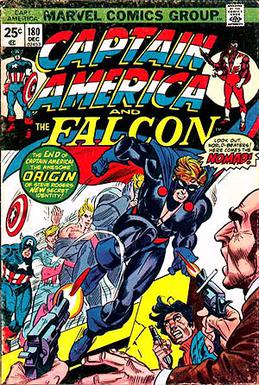
Captain America #180 (Dec. 1974). Art by Gil Kane and Frank Giacoia.

My teenaged self lurking below a few decades of the 50+ self is, then, quite excited about Sam Wilson/Captain America; however, that adolescent nerd-glee is significantly tempered by the social justice adult I have become, leaving me to ask: Should we marvel at a black Captain America?

Captain America #25 opens with Steve Rogers remembering Sam Wilson—Wilson’s warrior nature, his losing both parents (minister and community organizer) and raising a brother and sister, his resilience in the face of prejudice. Notably as well, Sam Wilson was, according to Rogers, “just a man. A man dedicated to showing what one person could accomplish after a lifetime of misfortune.”

Too often, comic book narratives remain firmly entrenched in the cliche (of course, if your audience is primarily children/teens, most anything can seem new to them, and is), but where comic book narratives have failed over about eight decades is that they mostly reflect social norms, even the biases and stereotypes (see Hugh Ryan on Wonder Woman), uncritically.

Readers in the first pages of issue #25 are led to believe (as the surrounding superheroes do) that Wilson has died heroically—and Rogers is about to pronounce Wilson a martyr. Until Wilson speaks.

The issue then turns to the aging Steve Rogers, no longer invigorated by super-soldier serum, who speaks to The Avengers in order to announce Sam Wilson/Captain America. This reboot ends with Wilson/Captain America in a hybrid uniform—red, white, and blue, Captain’s shield, and Falcon wings—shouting, “Avengers assemble!”

The All-New Captain America #1, interestingly, comes in a variant edition—all-white cardboard cover with only the title blazoned across the top. And with a somber and powerful opening page in which Sam Wilson recalls his father’s sermons and death, and his mother’s murder soon after, building to a refrain alluding the Martin Luther King Jr.’s dream, the black Captain America takes flight.

I mentioned Wonder Woman above because I am now reading Jill Lepore’s The Secret History of Wonder Woman. If Wonder Woman was born out of the rise of twentieth century feminism, as Lepore details, and then the series itself in action and image contradicts those feminist ideals, what good a female superhero?

And there I am stuck about the black Captain America, built up in Captain America #25 as the rugged individual, the exceptional human (superhuman) who lifted himself up by the bootstraps (wings didn’t hurt, there) and overcame every obstacle, including racism.

And there I am haunted by Ta-Nehisi Coates:

There is no evidence that black people are less responsible, less moral, or less upstanding in their dealings with America nor with themselves. But there is overwhelming evidence that America is irresponsible, immoral, and unconscionable in its dealings with black people and with itself. Urging African-Americans to become superhuman is great advice if you are concerned with creating extraordinary individuals. It is terrible advice if you are concerned with creating an equitable society. The black freedom struggle is not about raising a race of hyper-moral super-humans. It is about all people garnering the right to live like the normal humans they are.

If a black Captain America reinforces the “terrible advice” confronted by Coates, if black Captain American continues to perpetuate crass militarism and unbridled vigilante violence, I am left to ask, what good a black superhero?

[1] See Sean P. Connors on this series in Chapter 9 of Thomas, P. L. (ed.). (2013). Science fiction and speculative fiction: Challenging genres. Netherlands: Sense Publishers.