Tag Archives: Richard Pryor

I Swear: On “Grit,” Adult Hypocrisy, and Privilege

I’m gonna cuss on the mic tonight.
“Rockin’ the Suburbs,” Ben Folds

My parents taught me that if you swear, it’s a sign of a poor vocabulary.
If I expect my players to be disciplined, then I have to be, too.
Dean Smith

Few things have been more important to me than discovering George Carlin during my teens years in the 1970s. Soon to follow was Richard Pryor.

Profanity and the art of crafting humor are easily the foundations for my life of words as avid reader and writer.

And yes, I swear.

But in both Carlin and Pryor I learned something far more important than how to swear in ways that gained me credibility among my peers (despite my frail nerdom); I had the curtain pulled back on adult authority—the hypocrisy of the “do as I say, not as I do” adult world.

Carlin and Pryor were my first critical teachers.

I grew up in a rural Southern town and school system where adults demanded children respect authority and tradition while behaving in ways that were inexcusable—racial slurs, profanity, drinking, smoking, you name it.

This was particularly pronounced among the coaches in the public schools.

Years after I graduated, I returned to that school to teach. A sophomore came into my class one day, stunned that the head football coach/athletic director/assistant principal had just given the student demerits for swearing—and had yelled profanities at the student during the issuing of those demerits.

So as I have noted before about Coach K and my fandom for Duke University basketball, I have a great deal of trouble with the berating, profane coach demanding character and discipline from his/her players—often children, teens, and young adults.

And we live in a world still where a coach launches into a profane tirade to reprimand his player for lacking class and a white, privileged male moralizes cluelessly, perched not on his own morality but his privilege (see Elizabeth Stoker Bruenig’s Poor People Don’t Need Better Social Norms. They Need Better Social Policies).

When Dean Smith recently passed away, the coverage did highlight Smith’s unique convictions as a coach—including that he did not use profanity, but also that he led a social activist life that was often ignored.

But let’s be clear that Smith’s convictions are about not just talking the talk, but walking the walk: “If I expect my players to be disciplined, then I have to be, too.”

So when I came across a profile of Angela Duckworth, who is the central person in the “grit” phenomenon mostly aimed at impoverished and minority children, I had the same reaction to some details as I have when Coach K screams profanities on the sidelines, when the Vanderbilt coach lost it, and when the privileged make moral demands of the impoverished—and as I noted above, my problem is not the profanity, but the hypocrisy.

Early in the profile of Duckworth, we learn:

Assistant Professor of Psychology Angela Duckworth Gr’06 has another explanation. Before she entered graduate school at Penn in 2002 she spent five years teaching math and science in poor urban neighborhoods across the United States. In that time she concluded that the failure of students to acquire basic skills was not attributable to the difficulty of the material, or to a lack of intelligence, or indeed to any of the factors mentioned above. Her intuition told her that the real problem was character [emphasis added].

“Grit” research claims that some people are successful and others are not because of something like resiliency, which is a subset of the larger character issue.

However, later in the profile, we also discover:

Duckworth jokes that the job-hopping she did in her twenties was a case study in “how not to be gritty,” but it seems more a function of the intensity and dynamism of her personality. In the course of reporting this article I heard colleagues call Duckworth the most extroverted person, the quickest learner, and the fastest thinker (and talker) they’d ever met.

On the day I visited she had a half-dozen bubble gum containers on her desk, suggesting an atmosphere of restless activity and a need to replenish the saliva that’s lost through such rapid-fire speech. She also uses expletives in a way that might impress even high-powered cursers like Rahm Emanuel. In the course of a 90-minute conversation she called a principal she knew “an asshole,” described the opinion of a leading education foundation as “fucking idiotic,” and did a spot-on impression of a teenager with attitude when explaining the challenge of conducting experiments with adolescents: “When you pay adults they always work harder but sometimes in schools when I’ve done experiments with monetary incentives there’s this like adolescent ‘fuck you’ response. They’ll be like ‘Oh, you really want me to do well on this test? Fuck you, I’m going to do exactly the opposite.’”

So when I Tweeted this, I found out that others immediately assumed I was concerned about Duckworth’s profanity.

Again, I swear. Quite a lot.

But the issue with the above is that I see in Duckworth more evidence of what William Deresiewicz confronts in Don’t Send Your Kid to the Ivy League and his book, Excellent Sheep: The Miseducation of the American Elite and The Way to a Meaningful Life:

Our system of elite education manufactures young people who are smart and talented and driven, yes, but also anxious, timid, and lost, with little intellectual curiosity and a stunted sense of purpose: trapped in a bubble of privilege [emphasis added], heading meekly in the same direction, great at what they’re doing but with no idea why they’re doing it.

Privilege and success are dangerous combinations:

Elite schools like to boast that they teach their students how to think, but all they mean is that they train them in the analytic and rhetorical skills that are necessary for success in business and the professions. Everything is technocraticthe development of expertiseand everything is ultimately justified in technocratic terms [emphasis added].

Such as identifying, measuring, and labeling children by their “grit”? A technocratic view of the world that ignores inequity, privilege?

And thus, I fear that the “grit” narrative as a veneer for privilege is part of the problem noted by Deresiewicz: “This system is exacerbating inequality, retarding social mobility, perpetuating privilege, and creating an elite that is isolated from the society that it’s supposed to lead.”

There is an arrogance, a self-righteousness, a contempt for others—carried by the flippancy of profanity—that make me convinced that, yes, “grit” is a veneer for privilege, a way to reduce marginalized people through a deficit view.

To be pointed, I am deeply concerned about the racism and classism beneath those embracing and endorsing “grit”—and Duckworth’s mockery of adolescents suggests a lack of awareness that reinforces my concern.

The formula: I worked hard and succeeded. You are struggling so it must be you aren’t working hard enough!

So the missionary zeal bothers me:

For Duckworth, however, the challenge of her research question is part of its appeal. She spent the first decade of her professional life unsure of how to apply her abundant talent. Now she no longer has any doubts. “I have complete conviction that this is an incredibly important scientific question,” she says. “If we can figure out the science of behavior and behavior change, if we can figure out what is motivation and how to motivate people, what is frustration and how do we manage it, what is temptation and why do people succumb to it—that to me would be akin to the semiconductor.”

The facts refuting that formula bother me even more: Educational attainment (a clear marker for effort) is often significantly trumped by race and class.

If we accept that “grit” includes “perseverance and passion for long-term goals” (such as achieving more education), I find the above details about Duckworth more evidence of the adult hypocrisy I experienced while growing up. Is her cavalier attitude and profanity any different than the attitude she is condemning among teens?

So my concerns are not personal, or personal attacks—because Duckworth is certainly not alone in her good intentions behind “grit” research or practices.

And my concerns are grounded in Paul Gorski’s scholarship in which he shares his own self-reflection, as have I, as I continue to do. Gorski explains:

Unfortunately, my experience and a growing body of scholarship on intercultural education and related fields (such as multicultural education, intercultural communication, anti-bias education, and so on) reveal a troubling trend: despite overwhelmingly good intentions, most of what passes for intercultural education practice, particularly in the US, accentuates rather than undermines existing social and political hierarchies (Aikman 1997; Diaz-Rico 1998; Gorski 2006; Hidalgo, Chávez-Chávez, and Ramage 1996; Jackson 2003; Lustig 1997; Nieto 2000, 1995; Schick and St. Denis 2005; Sleeter 1991; Ulichny 1996). (p. 516)

Further, I remain guided in my criticism of “grit” by Gorski’s questions:

The questions are plenty: do we advocate and practice intercultural education so long as it does not disturb the existing sociopolitical order?; so long as it does not require us to problematize our own privilege?; so long as we can celebrate diversity, meanwhile excusing ourselves from the messy work of social reconstruction?

Can we practice an intercultural education that does not insist first and foremost on social reconstruction for equity and justice without rendering ourselves complicit to existing inequity and injustice? In other words, if we are not battling explicitly against the prevailing social order with intercultural education, are we not, by inaction, supporting it?

Such questions cannot be answered through a simple review of teaching and learning theory or an assessment of educational programs. Instead, they oblige all of us who would call ourselves intercultural educators to re-examine the philosophies, motivations, and world views that underlie our consciousnesses and work. Because the most destructive thing we can do is to disenfranchise people in the name of intercultural education. (p. 516)

I am not, then, being a petty prude. (Want to listen to my CAKE or Ben Folds/Five mix CDs?)

I am not stooping to ad hominem, and this has nothing to do with who I like or dislike (as I don’t know Duckworth, and the other key “grit” advocates). I suspect, actually, they are good and decent people dedicated to doing the right thing.

This is about the hypocrisy of adult demands aided by the technocratic use of “grit” as a veneer for privilege.

I remain convinced that the appeal of the “grit” narrative is mostly a failure to do what Gorski notes above: “Such questions…oblige all of us who would call ourselves intercultural educators to re-examine the philosophies, motivations, and world views that underlie our consciousnesses and work.”

So when an award-winning researcher tells me poor and minority children simply lack “grit” or a New York Times pundit explains the moral shortcomings of the poor, I hear Ben Folds singing, “Let me tell y’all what it’s like/ Being male, middle class and white/ It’s a bitch”—except Folds in his profanity is being satirical and his work is mostly harmless entertainment.
My Redneck Past: A Brief Memoir of Two’s

If you’re afraid they might discover your redneck past
There are a hundred ways to cover your redneck past

“Your Redneck Past,” Ben Folds Five

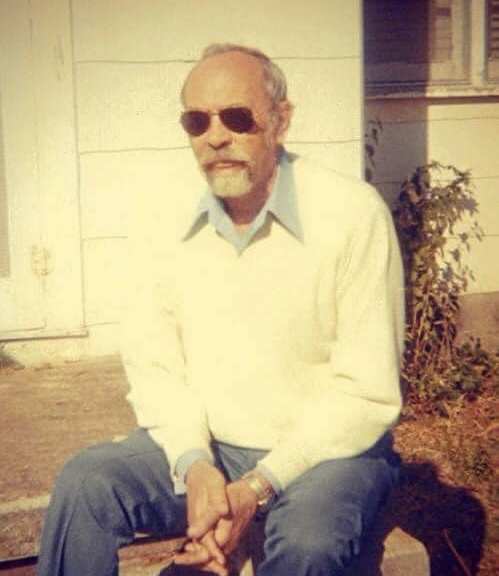
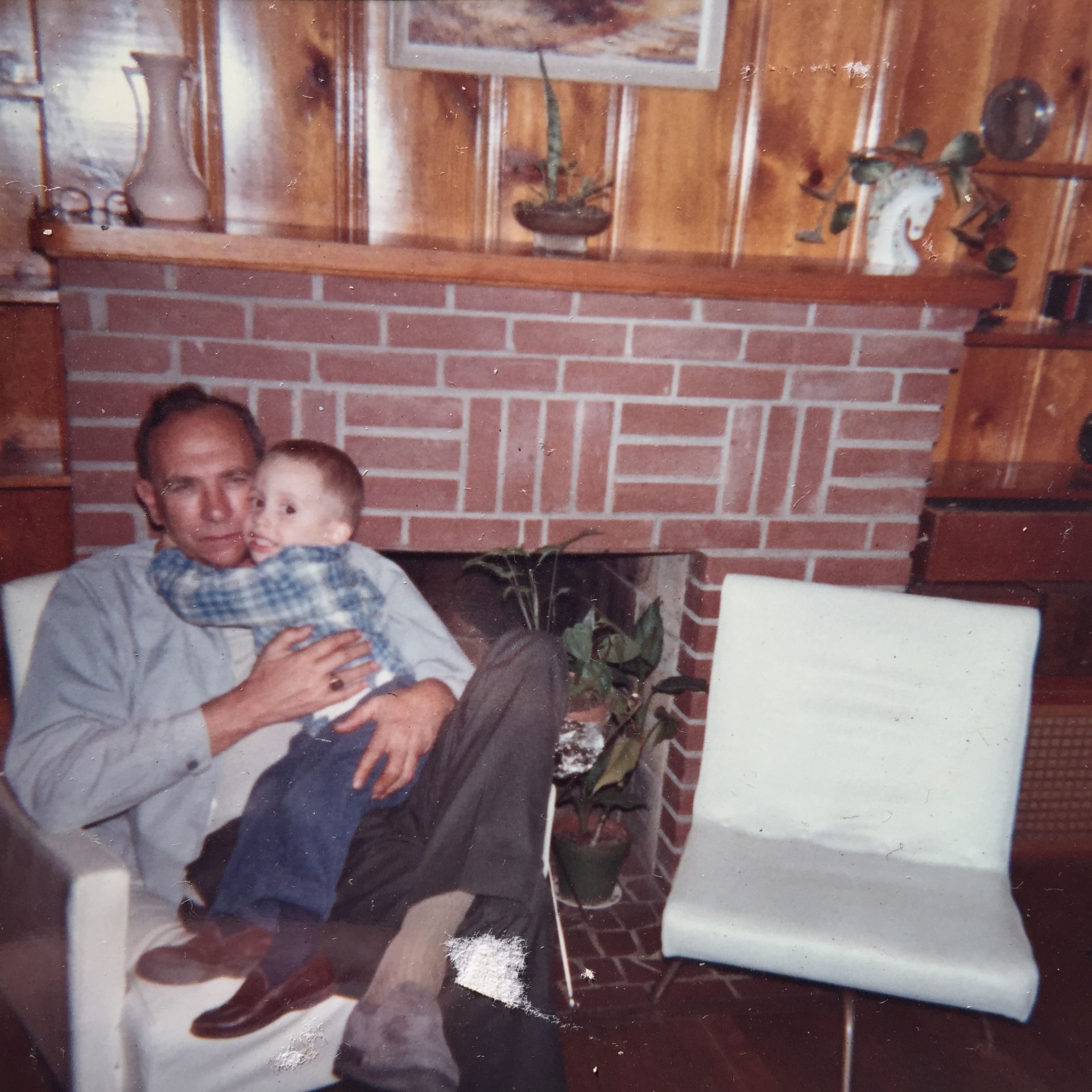
My maternal grandfather’s given name was Harold, but he went by “Slick.” As his first grandchild, however, I christened him “Tu-Daddy”—a child’s twisting of “two,” as in my second father.

Tu and me
Tu-Daddy holding me as a small child—oddly, with shoes and a shirt on.

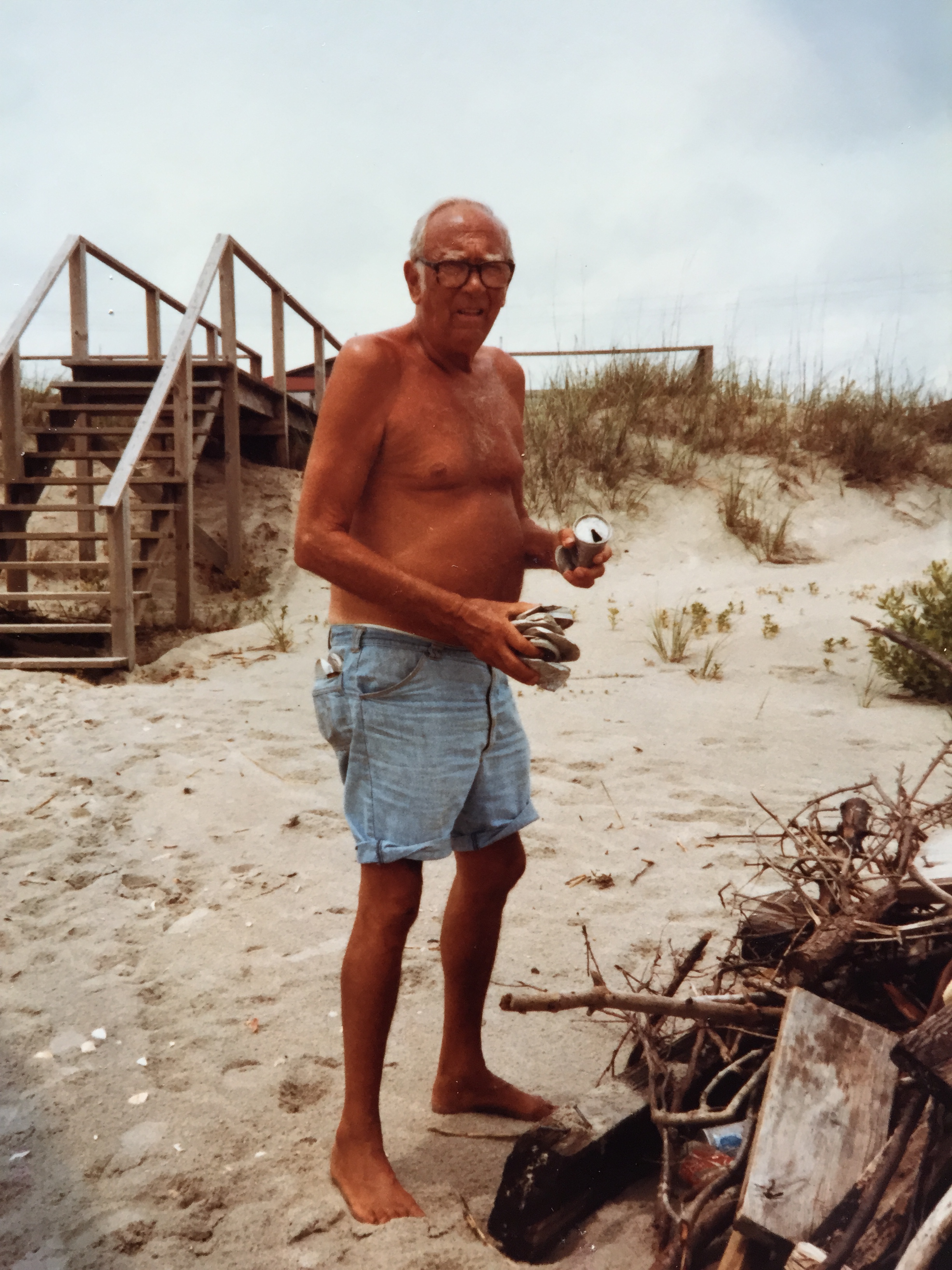
But “two” also captures the two enduring images I have of him: (1) Harold/Slick lost his little finger on his left hand in the machinery of the yarn dyeing mill where he worked in the hills of North Carolina [see note below], and (2) virtually every time I saw him, Harold/Slick was barefoot—typically, sitting outside in nothing except a pair of cut-off jeans, silent and alone.

TuDaddy 1
Harold Sowers (Tu-Daddy) collecting beer cans at Myrtle Beach, where he spent winters helping run a hotel.

My name is also connected with “two” because I am a second, named after my paternal grandfather, Paul Lee Thomas, who people in my second hometown of Woodruff, SC, knew only as Tommy. And it was in second grade when my teacher, Mrs. Townsend, sent me into the hallway for arguing with her about my name.

When she took the first role (everyone in Woodruff knew everyone), Mrs. Townsend informed me that I was a junior, named after my father she stated with the assurance of a teacher, but I explained, “No, ma’am, I am named after my grandfather. I am a second.”

school picts x2
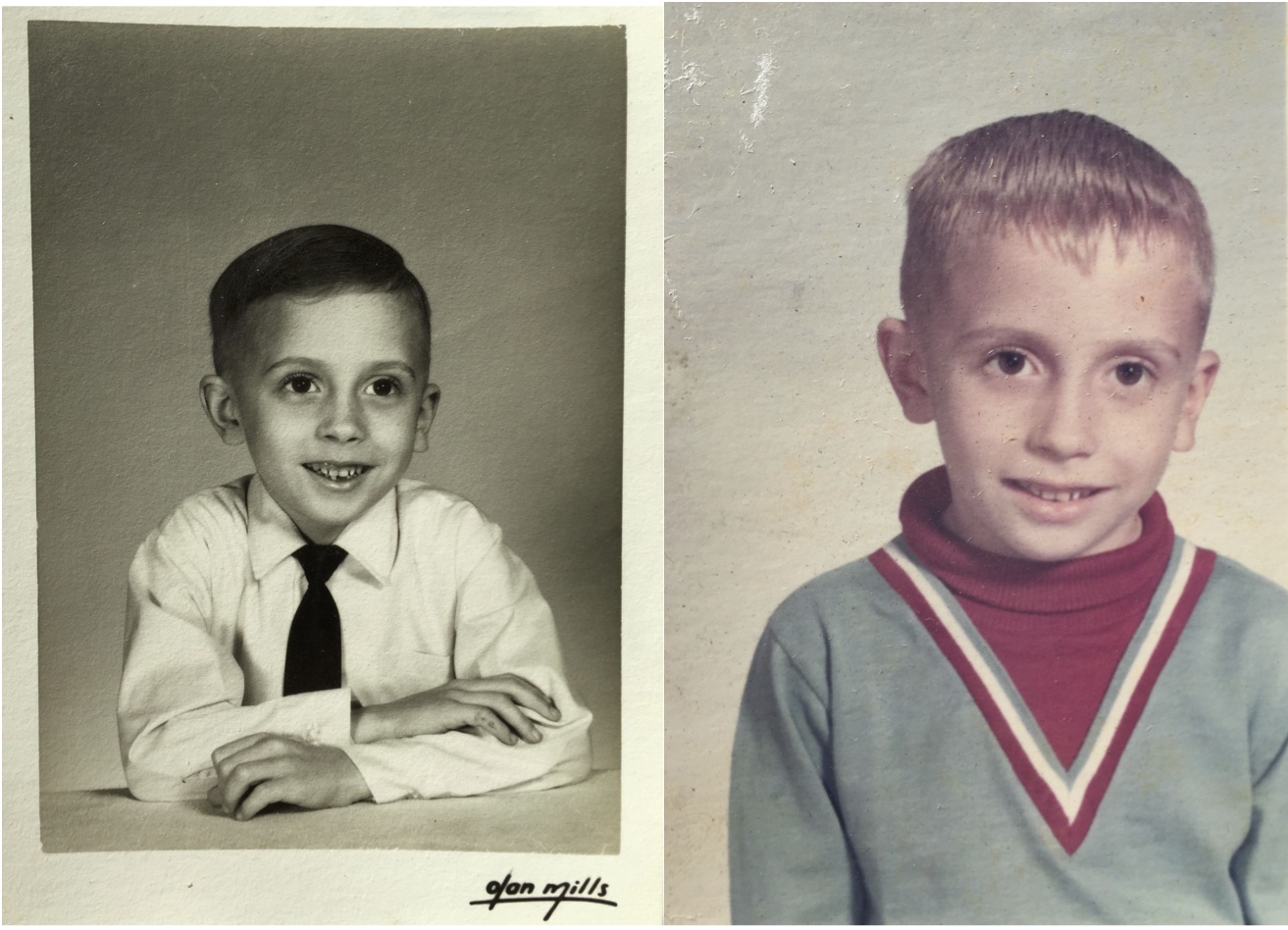
Me, childhood pictures, school picture on the right.

As was the case in my home, in school, children did not argue or correct adults so to the hall I went—although I was right, and she was wrong.

I was already petrified of Mrs. Townsend, a small woman, because I knew her husband, Corporal Townsend, a highway patrolman, whom I had met at my grandfather’s gas station that sat in the middle of town—the sign prominently stating, “Tommy’s 76.”

The yarn mills in the hills of North Carolina to the mill villages of Upstate South Carolina, then, are the fertile soil of my redneck past—working class families sometimes disrupted by alcoholism on one side and mostly living their lives with little or minimal formal education.

My mother finished one year of college (after attending 7 high schools because her family constantly moved), and my father graduated junior college (by then already with a full set of false teeth, having lost all his in high school).

IMG_0720
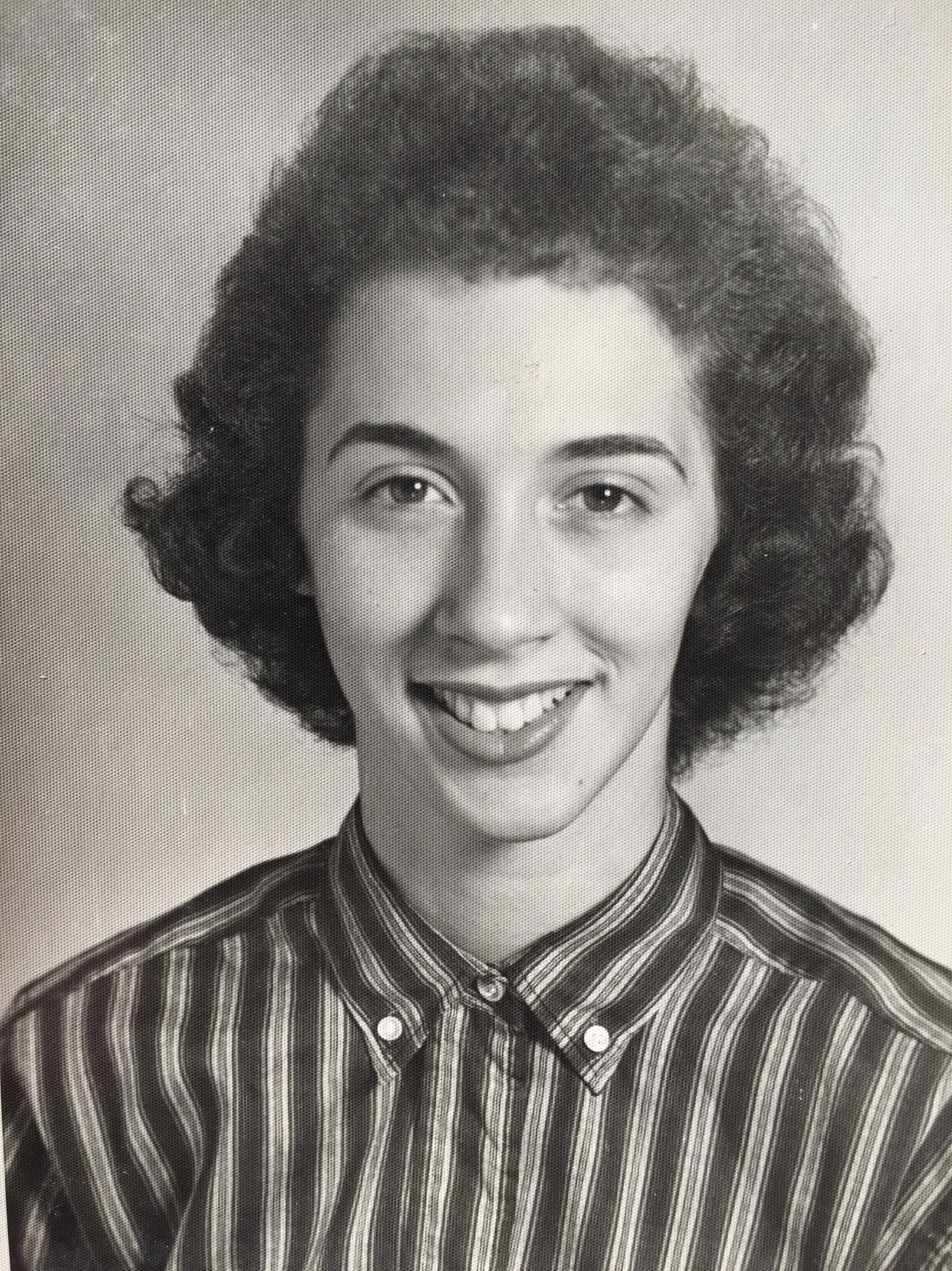
Rose, my mother.

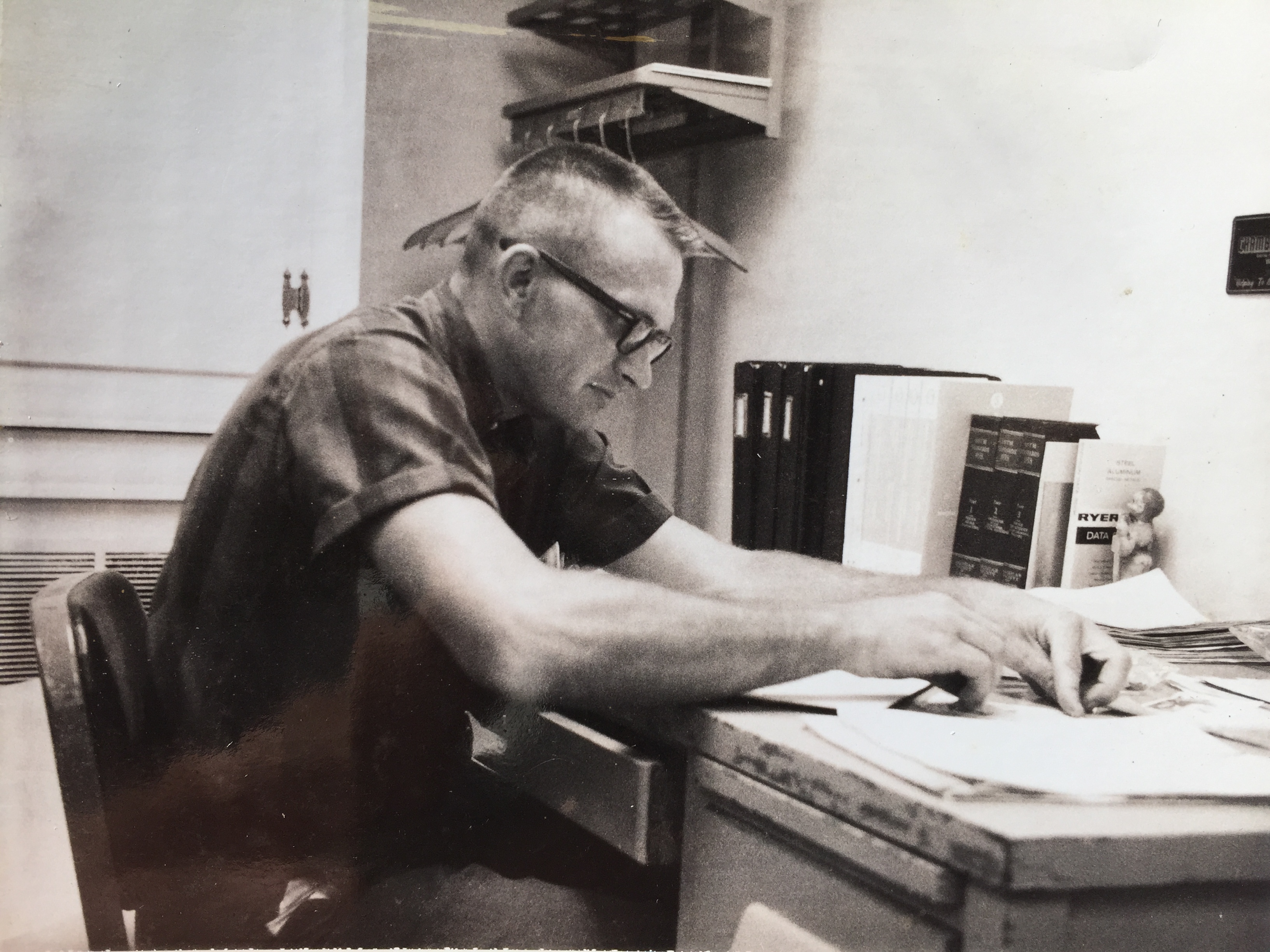
My father as an adult worked in machine shops, quality control, most of my childhood, and often came home with black grease under his fingernails and in the lines of his hands.

IMG_0723
Keith, my father.

Even after retiring, my father worked in a machine shop part-time, under the weight of manual labor that taxed his arthritic shoulders (he depended on the kindness of his co-workers who often lifted parts for him).

This working-class upbringing that began for 6 or 7 years in Enoree, SC (nothing more than cross roads at the edge of the Enoree River) and then in Woodruff just to the north (a mill town with a wide main street that if you stood on one end you could see the other and the two stop lights along the way), however, was one of privilege as it was also nearly idyllic because my parents worked relentlessly to provide for my sister and me far above our working-class means.

IMG_0716
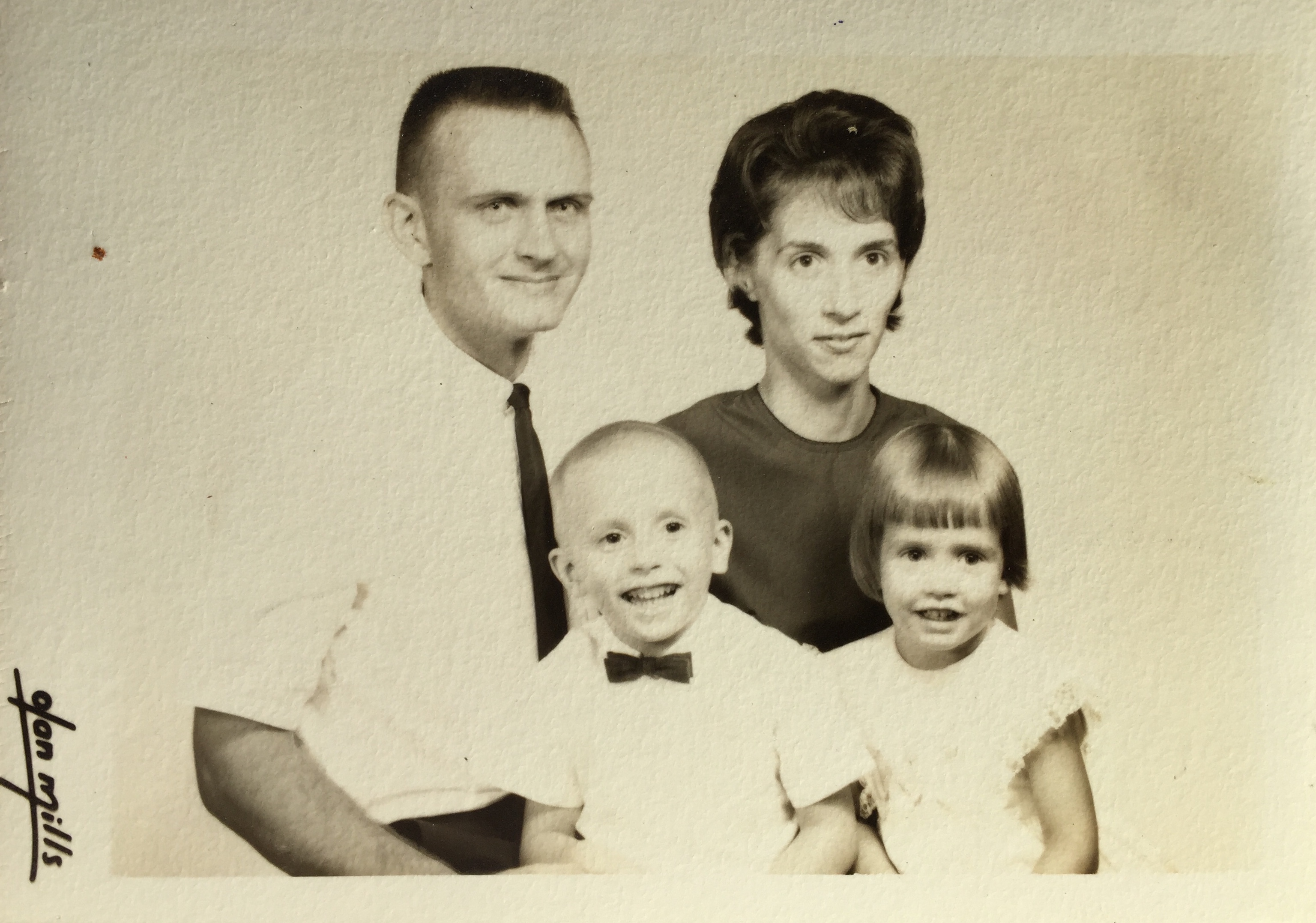
Keith, Rose, Paul, and Eydie Thomas— the family.

The fruits of that work ethic in the 1960s and 1970s by working-class white families benefitted from a racial privilege in the South that working-class and working-poor families in the twenty-first century do not experience—primarily because of the shifts in racial demographics in how class has evolved in my lifetime.

However, my working-class background was real in the sense that my upbringing and eventual (and unusual for my family) series of college degrees resulting in a doctorate (all from state schools) have left me still extremely uncomfortable with affluence and imprinted on me a Southern drawl that many people continue to hold against me.

I am frequently accused of being ungrammatical when I talk (when I have not been), and I have even had students say directly to my face that I don’t sound smart—even though they know I am smart.

When students enter my university office, typically their first comment is—after scanning the entire wall of shelved books that loom over the small space—”Have you read all those books?” That seems unfathomable to these mostly affluent young people who do not suspect that this wall of books represents a very real self-defense mechanism of a permanent redneck.

You are damned right, I do not say, I have read all these books. Instead, I smile, explaining, “Of course, and there are this many more in my library at home.”

Formality, dressing up, fine dining, ceremony—all the trappings of upper-middle- and upper-class normality make me incredibly anxious, still—despite all my formal and informal education, however.

I am the embodiment of a powerful lesson about life: You can leave your redneck past behind, but you cannot erase your redneck past.

My formative years of junior and then high school included my uncle, aunts, and mother introducing me to The Firesign Theatre, Richard Pryor, and George Carlin. Concurrent with those revelations, I was wrestling with my desire to be an athlete.

By the age of ten, I had moved with my family from downtown Woodruff to the golf course just outside of town—itself a contradiction as a very redneck country club, including its racially segregating policies (blacks were not allow to join).

Redneck past 1
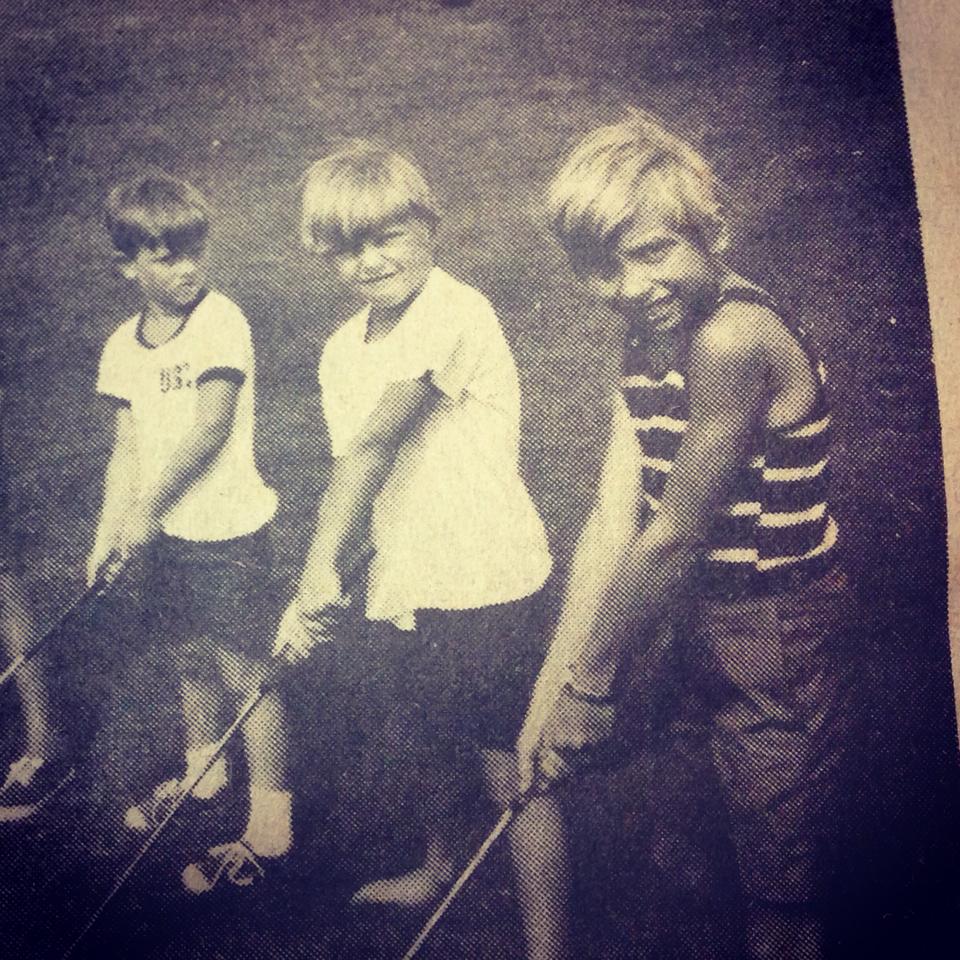
Young redneck golfer, me, sleeveless no less.

I fluctuated, then, between two vastly different athletic worlds as I worked at being a golfer and a basketball player—a very white world coming against a very black world.

I lived on a golf course that excluded blacks, and in my home town, blacks literally lived across the tracks in a neighborhood called Pine Ridge.

In tenth grade, I was the only white player on a 13-person junior varsity basketball team. At that time, I was sitting often in my room listening to Carlin and Pryor comedy albums over and over—perfecting their routines and crafting my own dexterity with the power of profanity.

The gift of swearing (possibly my first defense mechanism to mask my crippling low self-esteem), of course, transferred seamlessly from the basketball court onto the golf course, but basketball courts and golf courses could have easily in the 1970s been two different planets.

Those two different planets, though, were better schools than the school I attended, where I made As and Bs, mostly floundering on the bench of the school basketball teams.

My working-class, redneck upbringing had two important features (“two” again): my world was mostly a racist one, and the language I grew up in and with was deeply engrained with what people consider non-standard grammar, vocabulary, and pronunciation.

All of that collided, of course, with the education I was receiving from vinyl 33 1/3 albums that taught me lessons about race, class, and language that I was certainly not hearing in my home, community, or school.

After finishing my undergraduate degree, I returned to Woodruff to teach English (of all things) at the high school where I had graduated just five years before. My students were from Cross Anchor (even smaller then Enoree), Enoree, and Woodruff—the people and places of my early life.

Throughout nearly two decades teaching there, racial tensions remained, and most of my students reflected back at me my tangled history with the English language. We often laughed in those high school classrooms—my students and I. We often laughed at ourselves.

When I read William Faulkner’s As I Lay Dying aloud to my Advanced Placement students, we smiled, we laughed.

When I told them about the local news coverage of a tornado, and the person interviewed saying on air, “I knowed it, I seen it coming, it blowed the trailer off the cinder blocks,” we smiled, we laughed.

Many of the redneck white males I taught reminded me of my two grandfathers—slow moving, suspicious of everyone, and nearly silent.

A less funny joke of those years was that Woodruff was still 1957—frozen in time.

A few days ago, my Saturday cycling group took a course that rolled south of Spartanburg (the “city” of my childhood) into Enoree. When I told my friends I had grown up there, most were shocked; typically, I tell everyone I am from Woodruff.

Enoree that Saturday morning looked almost as it had when I was a child—except the mills are all dead, abandoned, just as they are throughout the back streets of Woodruff and all across the Upstate of SC.

I imagine people see poverty and my redneck past when they see Enoree or even Woodruff for the first time, but I certainly don’t.

I see a richness of memories—things I have overcome, things I carry with me still.

I imagine people hear a redneck when I talk aloud, despite my best effort to leave all that behind with book learning (I think of Huck Finn being berated by his abusive father).

These two places of my childhood were gifts, like my parents, precious gifts.

I often think of Tu-Daddy sitting alone, barefoot, turning a deep brown in the summer sun he adored.

TuDaddy3
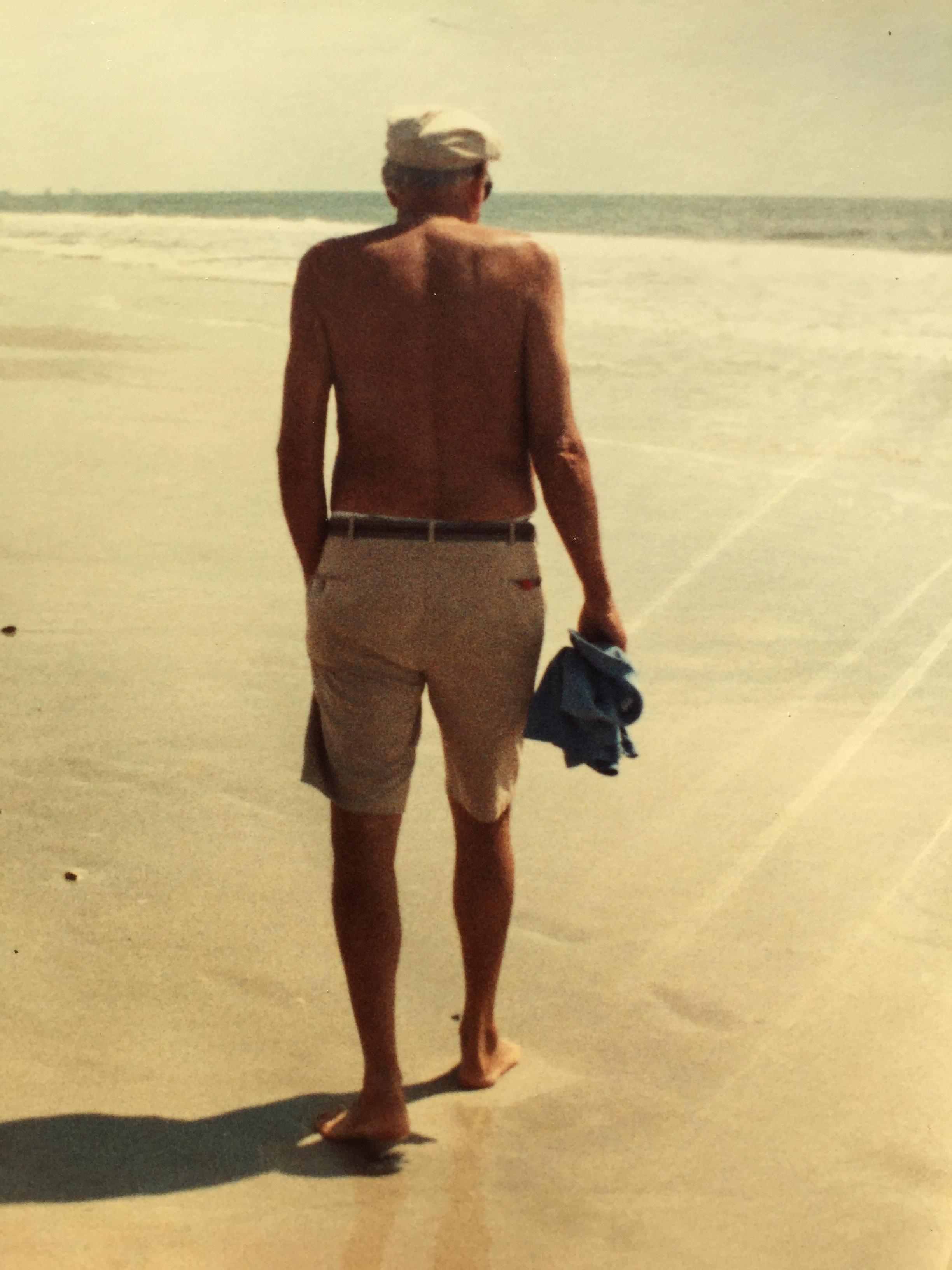
Tu-Daddy walking the beach at Myrtle Beach, SC; no shirt, no shoes, and his cap.

Most of my childhood, he and my grandmother (people knew her as “Deed,” but we called her “Granny”) lived on a road named the same as their family name, “Sowers.”

A few acres were all that remained of a vast stretch of land once owned by their family before my grandfather.

IMG_0722
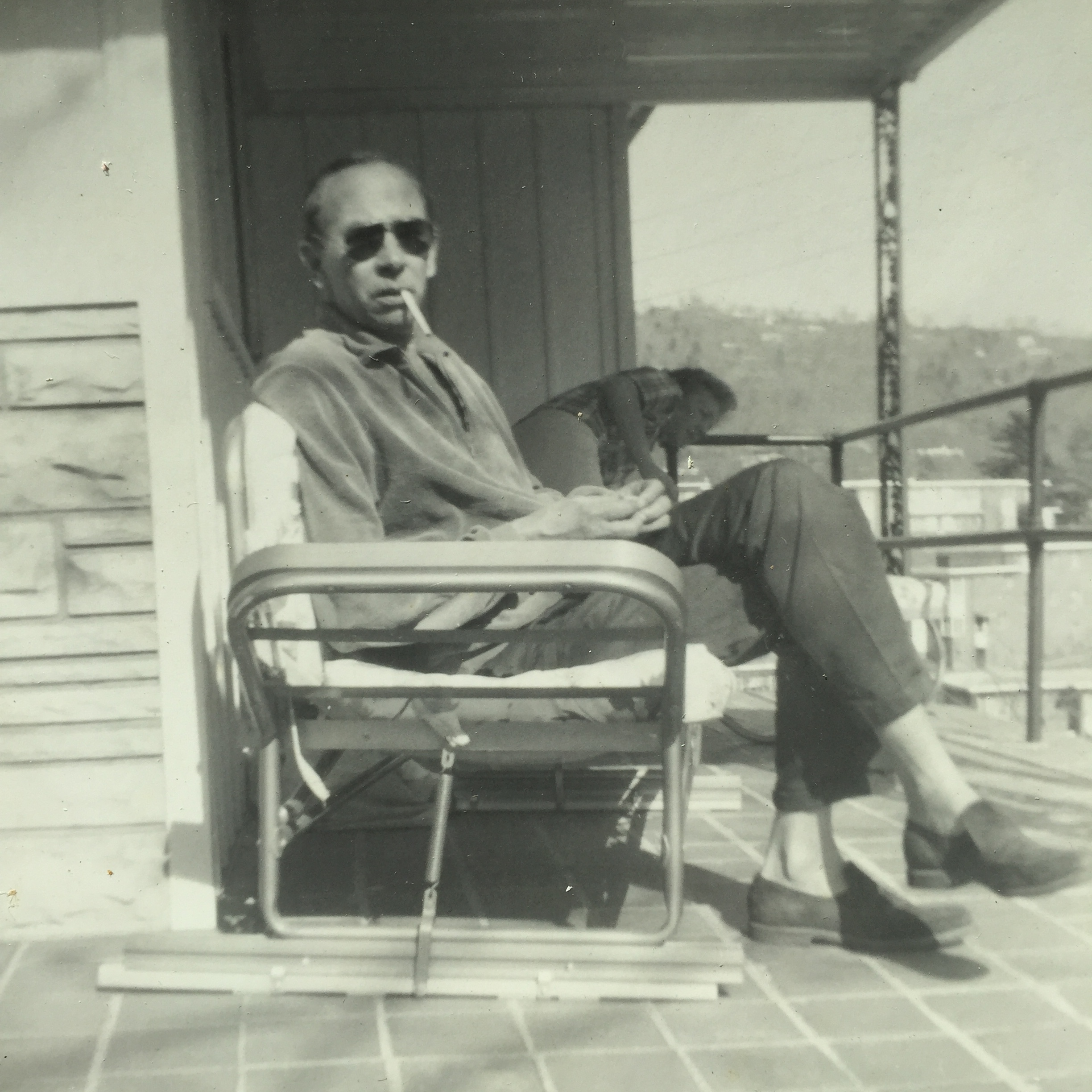
Harold/ Slick—shirt, shoes, no socks, and smoking on the front porch.

I have watched as the world has pulled away from my working-class family. The poor, the working poor, and the working class have become sources of derision (not the friendly laughing at ourselves of my high school classes)—for their financial poverty, for their so-called poverty of language.

Like the two worlds of the golf course and the basketball court of my youth, two worlds have materialized around me as I have buried myself in books as a great escape from my redneck past.

And in the end, I am still that second grader, banished to the hall, embarrassed and frustrated because even when I am right, I feel inadequate, powerless.

I am the second, I think in a whisper, I am the second.


Note

The story of how Tu-Daddy lost the little finger appears to be a jumbled family legend. Several of us (an aunt and a cousin along with me) agree with the version I have in this post—that he lost the finger at work—but my uncle says Tu-Daddy lost the finger working on a running car engine. There seems to have been a serious hand accident at work as well, but the exact details of the lost little finger have a life of their own.

Banned in the U.S.A.

When students come to my university office for the first time, they typically utter, “You have a lot of books,” followed by noting the clutter.

For those students, they cannot see the lineage I can now recognize: Go, Dog. Go!, Green Eggs and Ham, One Fish Two Fish Red Fish Blue Fish, Stuart Little, Charlotte’s Web, 7000 Marvel comic books, Arthur C. Clarke, and then that day in my high school sophomore English teacher’s classroom during break.

In the mid- and late-1970s, I was a so-called good student, making mostly As and some Bs, but I considered myself solidly a math and science student, planning upon graduation to major in physics in college. Sitting in my English teacher’s room during breaks, we would talk. On one occasion when I was a tenth grader, Mr. Harrill began recommending that I read real literature, and not the science fiction (SF) I was consuming at high rates.

Since he knew my parents and what they allowed me to read, he nudged me toward D.H. Lawrence—and thus my transition to literary fiction began.

During those same formative years in my teens, my mother and her family had introduced me to The Firesign Theatre, George Carlin, and Richard Pryor.

It was books and comedians, then, who have been and continue to be banned that who I am was built on—the reason I have an office packed with books (and even more on shelves at home, and even more stacked here and there waiting to be read since I buy at a rate with which I cannot keep pace) and write every day.

So during Banned Book Week 2014, I am compelled to recall some of my experiences with books being challenged during my 18 years as a public high school English teacher in rural South Carolina.

Likely my first experience came relatively early in my career when I taught American literature to advanced sophomores tracking into Advanced Placement. I was deeply into John Gardner and learning to write myself so I assigned Gardner’s Grendel.

This was a powerful learning experience because it combined a young and idealistic teacher, bright and excited students, the power of a few angry parents, and the essentially conservative nature of public school administration.

Several years later, when I was English department chair, we revisited our required reading list, seeking ways to add female and minority authors to the Old White Male canon. We did add Zora Neale Hurston’s Their Eyes Were Watching God, to be taught primarily by our African American female teacher in the department.

The first time we assigned Hurston’s classic, a challenge was submitted by a parent, a parent who was a leader of a local KKK chapter. It wasn’t difficult to see through the challenge to the ugliness driving the complaint, but nonetheless, this challenge also exposed the power of parents despite their lack of credibility in traditional schooling.

And my final example of the threat of censorship while I was teaching remains the most troubling since the school’s own librarian considered challenging my use of Alice Walker’s The Color Purple in my AP Literature course for seniors, a course her child was scheduled to take the next year. Again, the concerns were being raised by the librarian, who argued with me that the work wasn’t literature despite her own library shelves holding several books of criticism addressing The Color Purple as just as credible as the so-called classics (again, mostly authored by Old White Men).

Censorship to shield children. Censorship as a weapon of racism. Censorship as a conservative ideal.

I must add here that censorship is even more insidious and pervasive in our public schools in the form of self-censorship—teachers seeking works that will not cause complaints and avoiding works that may be controversial.

So banned in the U.S.A. remains powerful often in forms that are mostly invisible, mostly part of the norm feared by Ray Bradbury and dramatized in his Fahrenheit 451.

In the 60th anniversary edition of Fahrenheit 451, several of Bradbury’s essays (and a brilliant introduction by Neil Gaiman) are included, one of which notes: “There is more than one way to burn a book. And the world is full of people running about with lit matches” (p. 209).

Like Bradbury, Kurt Vonnegut and Sherman Alexie have confronted the power of censorship as well as the misguided desire of a free people to ban not just books, but ideas.

ban2

Vonnegut’s letter to those who sought to ban his work explains:

If you were to bother to read my books, to behave as educated persons would, you would learn that they are not sexy, and do not argue in favor of wildness of any kind. They beg that people be kinder and more responsible than they often are. It is true that some of the characters speak coarsely. That is because people speak coarsely in real life. Especially soldiers and hardworking men speak coarsely, and even our most sheltered children know that. And we all know, too, that those words really don’t damage children much. They didn’t damage us when we were young. It was evil deeds and lying that hurt us.

Alexie’s powerful Why the Best Kids Books Are Written in Blood builds to his personal defense of books:

And now I write books for teenagers because I vividly remember what it felt like to be a teen facing everyday and epic dangers. I don’t write to protect them. It’s far too late for that. I write to give them weapons–in the form of words and ideas-that will help them fight their monsters. I write in blood because I remember what it felt like to bleed.

As a lover of books, as a writer, and as a life-long teacher, I am indebted to my childhood and teenage freedom to read, to listen to, and to consider ideas other than the ones endorsed by my home, my community, and my school.

George Carlin and Richard Pryor talked about the world in ways that my parents, my peers, and my community never did; they both praised Muhammad Ali with language both profane and poetic as was fitting for their comedy and for Ali’s own bravado against an inequitable world to which he would not bend a knee—a quality admirable and shared among Ali, Carlin, and Pryor.

“A book must be the axe for the frozen sea within us,” Franz Kafka wrote in his Letter to Oskar Pollak 1904.

Books are sacred because ideas are sacred, or must be if a people truly seeks to be free. Talking about Fahrenheit 451 in 1993, Bradbury said, “You don’t have to burn books to destroy a culture. Just get people to stop reading them.”

Banning books has no place in a free society, but each time we remain passive, allowing a book to be silenced, we are “running about with lit matches.”

Preserving access to all books for all people, especially children, is at the core of our humanity because the only dangerous idea is the one not allowed.