I attended public schools in the rural South from 1967 to 1979, including three years in junior high school from 1973 to 1976 (punctuated by the US Bicentennial).
Junior high included grades 7 through 9; some of those ninth graders could drive so mornings a few students would roll into the parking lot and smoke would billow out of the car, students emerging like rock stars through the cloud of the cigarettes and pot they were smoking.
The bathrooms at that school were also filled constantly with a gray and yellow fog, the smell of marijuana strong throughout the school and on most of our clothes simply from going to the bathroom between classes.
I was always a good student, and frankly, school was easy for me even in the top classes. I was on the basketball team and had many friends who were not in those top classes.
And, as almost everyone has experienced, we were mostly told by the adults that we were dumb and lazy as a box of rocks—not like in their day as young people.
I entered the classroom as a teacher of high school students in 1984 right out of college so I have been directly in the formal education system across seven decades.
My doctoral work was grounded in the history of education, that work reaching back into the beginning of the twentieth century.
And here is the problem: “Kids today” at every point that I can find (not across just decades but centuries) are always considered at any point of now to be dumb and lazy as a box of rocks.
This graphic is causing a stir on social media:
We are in a high point as well of adults shouting that “kids today” cannot do math, cannot read, and of course, “kids today” don’t read.
I currently teach at a selective liberal arts college. The students are among the top high school students, having come out of elite private schools and many have been in Advanced Placement and International Baccalaureate programs.
Since the “kids today” mantra has included a current wave of bashing college students (another tired mantra)—they don’t read, and they can’t read extended texts, like complete books—I have asked my students about those charges (and of course, I assign a great deal of reading, including books, as well as all of my students write essays).
As much or maybe even more so than my students over 42 years of teaching, these students have, in fact, been assigned many books in high school, often in their college classes, and even read by choice, many eagerly sharing their favorite writers and series.
I can attest without hesitation that “kids today” over my teaching career have been mostly about the same as you’d expect teens and young adults to be, but if anything, they are smarter and have more challenging K-12 educations year after year.
I do think that the Covid era has had some unique negative consequences for current cohorts of students, and some of that is reflected in the reductive ways we determine if students are learning, mostly test scores.
And that leads back to the chart above; I don’t see anyone noting this is data from NAEP (a national random-selected population of students) and it is self-reported by the students (who are not held accountable in any way for their test scores or the data they provide).
I have never been convinced that NAEP scores are that valuable in terms of what and how student learning is measured, but I can assure you that self-reported data by those students is likely even weaker evidence of anything.
NAEP scores, in fact, like all standardized testing is a far greater reflection of the lives students are living outside of schools than of the quality of their learning in formal schooling.
Children and teens living without food or housing security as well as with little or no access to healthcare are likely finding little time or motivation to read for pleasure, and their intellectual batteries are drained by the lives resulting in not being able to fully engage with the few hours a day for about half the year when they are in classes that may be overcrowded or taught by an un- or under-certified teacher being paid poorly and attacked as a groomer and an indoctrinator by the current political climate.
Most of my college students have had much more privileged lives than the average child or teen in the US so it is worth nothing, as well, that they invariably say they want to read more but the main reason they don’t is schooling. They simply do not have time to read while they are taking courses, and they add that the assigned reading tends to also discourage them from reading (the pervasive obsession with assigning novels and focusing on the canon has never worked to motivate students).
There seems to be something futile and hollow about “adults today” perpetually criticizing “kids today,” particularly when adults today were themselves kids at some point in their lives also then accused of being dumb and lazy as a bag of rocks.
The “kids today” crisis rhetoric, I believe, is much more a reflection of adults, the cynicism of aging and the loss we all feel as we move further and further away from our childhood and teens years.
Kids today are not dumb and lazy as a bag of rocks, but they do have something we adults can never recover—youth.
But I can assure you that finding children and young people fascinating, fun, and surprising is a far better way to navigate growing older.
I am very lucky as a teacher of young people, and equally blessed by young grandchildren, who I assure you are not dumb and lazy as a bag of rocks.
I will always resist the crisis rhetoric around education and “kids today” because it defies logic that “kids today” have always been dumb and lazy as a box of rocks.
However, if anyone would like to launch into a criticism of adults today, I may be willing to join in.
This fall was the start to year 42 for me as an education, the first 18 as a high school English teacher and the rest as a college professor. I have been noting that career in my presentations at NCTE 2025 in Denver, adding that I am toying with at least making it to year 50.
As I ponder that number, I often return to the sense of awe I always feel when I mention my doctoral work, an educational biography of Lou LaBrant—a former NCTE president (1954) who lived to be 102 and taught for a staggering 65 years (1906-1971).
I was thinking about LaBrant during my presentation yesterday, Recovering Our Reading Dream from a Long Crisis Nightmare, because in her memoir, LaBrant expressed her frustration with the back-to-basics movement during the Reagan administration that orchestrated the 80s education crisis with the melodramatic and misleading A Nation at Risk.
LaBrant noted that over eight decades as an educator she worked through several education crisis cycles and multiple back-to-basics movements—notably the 1940s reading crisis spurred by low literacy rates for draftees during WWII.
While my career pales in many ways compared to LaBrant’s, I feel her pain; with education crisis it is déjà vu all over again.
The only thing, it seems, as common as the media announcing yet another education crisis is people rejecting my arguments against education crisis rhetoric.
The media obsession with declaring an education crisis is so commonplace that I started to just scroll on, but, regretfully, I began to read:
Math scores in the U.S. have been so bad for so long that teachers could be forgiven for trying anything to improve them. Unfortunately, many of the strategies they’re using could be making things worse. It’s a crisis decades in the making.
In the early 20th century, education reformers including John Dewey and William Heard Kilpatrick developed a theory – drawing from the work of Jean-Jacques Rousseau – that came to be known as constructivism. The idea was that learning happens best when students immerse themselves in a problem and find their own solution. By the late 1980s, math standards had embraced “discovery-based learning.”
I expected the lazy and unsupported “math scores” opening, but that second paragraph is the stunner. In 2025, the media still looks for a way to blame John Dewey for the education crisis they repeatedly manufacture.
It was at the core of the reading crisis in the 1940s, and again, in Tomorrow’s Illiterates (1961) noted above
Also in my presentation yesterday, I uttered Dewey’s name and suggested the attendees track down Alfie Kohn’s Progressive Education: Why It’s Hard to Beat, But Also Hard to Find, which does an excellent job of detailing how Dewey’s progressive education is simultaneously blamed and almost never implemented in formal schooling [1].
I immediately posted on social media that the editorial writers could have just search on Wikipedia and avoided the utter nonsense they wrote about constructivism.
Just a few weeks ago, as well, I covered in my 100-level educational philosophy course that behaviorism and constructivism are educational theories (grounded in the scientific method), distinct from philosophies (grounded in rhetoric and logic, such as Dewey’s progressivism).
Learning theories like educational philosophies are contested spaces, but as I plan to share tomorrow in a roundtable presentation, this math crisis editorial triggers several red flags, notably opening the commentary by exposing the editors lack the basic expertise on education to be making any claim of crisis.
If they wanted to blame constructivism, they could have and should have invoked Piaget and Vigotsky (and plenty of “science of learning” folk have already been doing that, often badly and with the sort of caricature I expect).
The media’s education crisis narrative, however, follows a script you can count on—including misunderstanding or misrepresenting test scores, ignoring social context for educational outcomes, and blaming some cartoon version of a leftist education system that, again, has never existed in the US.
When I mentioned Dewey in my presentation, I joked that almost nobody understood Dewey, including Dewey, which, I think, is a pretty good joke because Dewey (and LaBrant) represented a sort of beautiful and illusive scientific approach to their philosophy of education and their instructional practices.
You see, when Dewey progressives say “scientific,” they mean an organic type of experimentation whereby the educator is always in the process of experimenting and drawing real world conclusions that are evolving (it is better, in fact, to think of Dewey’s ideology as pragmatism, associated with William James).
Theirs is a science of teaching and learning that is grounded in and starts with each individual student in the pursuit of skills, knowledge, and critical awareness. This is distinct from essentialist and perrenialist beliefs that begin with knowledge, basic skills, and Great Books, for example.
Teaching as an experiment only matters in the practical, not any Platonic ideal, and thus, is never settled (one red flag is when anyone makes a claim and bases that on settled science [2]).
A key reason blaming Dewey or progressive education for any education crisis is misguided is that Dewey himself refused to offer prescriptions, calling for every school and every teacher to seek what works best in the evidence before them, the unique set of students who always change.
In short, in teaching and learning, there is no silver bullet, no script, no program that can or will serve the needs of all students.
You can, if you must, insert any content area—math, reading, writing, civics, science, etc.—and shout “Crisis!” But you will be embarrassing yourself.
Just do a little searching, and I dare you to find a single moment over the past century when someone declared that “kids today” are excelling in math, reading, etc.
My point, which is often as misunderstood as Dewey, is not that current teaching and learning are fine, that I am somehow endorsing the status quo.
I am a critical educator; I became an educator to change teaching and learning, and I am disappointed to say that over my 5-decades career, very little has changed, including the popular urge to declare education crisis.
And what remains most disturbingly unchanged is that a vulnerable population of students have always been and continue to be under-served or nearly completely ignored.
But my point also includes that education reform alone (while needed, just not the mainstream way most often tried over and over) will never serve those vulnerable students, whose measurable education outcomes mostly reflect the inequity of their full lives of which the school day is only a fraction:
Almost 63% of the variance in test performance was explained by social capital family income variables that influence the development of background knowledge. Background knowledge is a known predictor of standardized test results. Family income variables are immutable by schools. Only public policies, outside the control of school personnel, can influence family income.
There is some math the education crisis folk never want to calculate.
If you find yourself worrying about your child’s ability to read or do math, I promise you that Dewey is not to blame.
If you find yourself worrying about other people’s children’s ability to read or do math, I promise you that Dewey is not to blame.
Crisis rhetoric, however, doesn’t help; it never has.
Finger pointing and blame probably aren’t very useful either, especially when those pointing fingers go out of their way to show their blame doesn’t quite add up.
In formal education, we have always had and will always have a range of students who excel, struggle, and fail.
As teachers, our job is to serve them all, and serve them better based on who they are and what they need.
However, teachers and schools alone can never be successful.
If evidence of student failure means anything (and those test scores often don’t), it is that we as a democracy are failing not only those students, but also those children, teens, and young adults—many of whom do not have adequate healthcare, food or home security, or the sorts of lives that universal public education, the so-called Founding Fathers, and, yes, John Dewey envisioned that a free people could guarantee.
If you are looking for someone to blame because of those disappointing math scores, well, I hate to tell you that the enemy is us.
[1] I highly recommend also: LaBrant, L. (1931, March). Masquerading. The English Journal, 20(3), 244-246. http://www.jstor.org/stable/803664. Here LaBrant rejects the misunderstood and misapplied project method in the teaching of literature:
The cause for my wrath is not new or single. It is of slow growth and has many characteristics. It is known to many as a variation of the project method; to me, as the soap performance. With the project, neatly defined by theorizing educators as “a purposeful activity carried to a successful conclusion,” I know better than to be at war. With what passes for purposeful activity and is unfortunately carried to a conclusion because it will kill time, I have much to complain. To be, for a moment, coherent: I am disturbed by the practice, much more common than our publications would indicate, of using the carving of little toy boats and castles, the dressing of quaint dolls, the pasting of advertising pictures, and the manipulation of clay and soap as the teaching of English literature. (p. 245)
[2] For example, the math crisis editorial announces authoritatively and with no links to proof:
Unfortunately, a robust body of research has since found that such approaches often fail early math learners (and readers, for that matter). Math rules and facts such as multiplication tables must be taught explicitly, memorized and mastered through practice. Only when this foundation is established can students progress to more complex concepts. Math, it’s often said, is cumulative.
The metaphors for education reform are far too easy, and thus, becoming themselves cliches—deja vous all over again, beating a dead horse, and for me, the most apt, zombies.
Education reforms are championed, and then implemented; invariably, these reforms never achieve what is promised—charter schools/ school choice, reading reform, accountability built on (new) standards and (new) standardized tests, and then, of course, merit pay for teachers.
It took a whole lot of years, and a state education superintendent who advocates some really smart ideas and some really bad ones, but the S.C. Legislature seems finally to have settled into supporting the idea of paying at least a few teachers based at least partially on performance, rather than simply the amount of time they’ve been teaching and the degrees they have.
This lede seems as hastily written (the double “at least) and thought out. However, one aspect of politics and education reform that my students are currently analyzing is that people tend to rely on their beliefs over empirical evidence when advocating for policies.
Further, “performance” and “simply” are doing some heavy and misleading lifting.
Over 15 years ago while I was researching and writing a book on school choice, I found a fascinating research report from a conservative think tank in Wisconsin (renamed in 2017 from the Wisconsin Policy Research Institute), which had one of the longest and most robust school choice policies in the US.
The report you are reading did not yield the results we had hoped to find. We had expected to find a wellspring of hope that increased parental involvement in the Milwaukee Public Schools (MPS) would be the key ingredient in improving student performance.
So that there is no misunderstanding, WPRI is unhesitant in supporting school choice. School choice is working and should be improved and expanded. School choice is good for Milwaukee ‘s children.
Here is a key moment in education reform: Despite the evidence to the contrary, the reformers remain steadfast in supporting the policy because they believe in it. [2]
And that brings us to merit pay for teachers, a policy that has been tried over and over (as well as often in the private sector) without ever yielding the outcomes promised.
In fact, research has shown that merit pay produces negative consequences without the positives promised.
And in education, we must acknowledge that competition is incompatible with the work of educators; under merit schemes, teachers are being incentivized to have their students outperform other teacher’s students—a gross distortion of the ethics of teaching.
Let’s turn back to “performance,” which suggests that all teachers can be objectively or fairly evaluated for the quality of their teaching in the context of dozens of students with an incredibly wide range of abilities.
This always means standardized testing (note here that many teachers work in areas that are not tested, making the merit schemes a nightmare of evaluation or an astronomical increase in testing of students).
The US is only about a decade away from one of the most intense eras of teacher evaluation based on “merit,” the value-added methods policies under the Obama administration.
VAMs should be viewed within the context of quality improvement, which distinguishes aspects of quality that can be attributed to the system from those that can be attributed to individual teachers, teacher preparation programs, or schools. Most VAM studies find that teachers account for about 1% to 14% of the variability in test scores, and that the majority of opportunities for quality improvement are found in the system-level conditions. Ranking teachers by their VAM scores can have unintended consequences that reduce quality.
Teachers have extremely small measurable impacts on tested student learning, and, this is key to note, “the majority of opportunities for quality improvement are found in the system-level conditions.”
Again, the research conflicts with bootstrapping myths in the US, but decades of evidence shows what the ASA discovered, notably in a 2024 study from Maroun and Tienken:
Almost 63% of the variance in test performance was explained by social capital family income variables that influence the development of background knowledge. Background knowledge is a known predictor of standardized test results. Family income variables are immutable by schools. Only public policies, outside the control of school personnel, can influence family income….
The influence of family social capital variables manifests itself in standardized test results. Policy makers and education leaders should rethink the current reliance on standardized test results as the deciding factor to make decisions about student achievement, teacher quality, school effectiveness, and school leader quality. In effect, policies that use standardized test results to evaluate, reward, and sanction students and school personnel are doing nothing more than rewarding schools that serve advantaged students and punishing schools that serve disadvantaged students.
The evidence is overwhelming, then, that there simply is no justification for advocating for or trying again merit pay for teachers.
The scheme will invariably be costly, produce negative outcomes, and not worked as promised by those who simply believe merit pay is the thing to do.
We should pay teachers more, and we should fund and support our public schools in ways that improve the teaching and learning conditions in those schools.
However, the policies that will have the greatest impact on teaching and learning remain social policies such as universal healthcare, food security, housing and home security, access to books in the home, and as Mauron and Tienken argue, a matrix of “public policies, outside the control of school personnel.”
You see, what we need to do is not supported by what many in the US choose to believe despite what the evidence shows us.
[1] Dodenhoff, D. (2007, October). Fixing the Milwaukee public schools: The limits of parent-driven reform. Wisconsin Policy Research Institute Report, 20(8). Thiensville, WI: Wisconsin Policy Research Institute. https://www.badgerinstitute.org/wp-content/uploads/2022/08/vol20no8.pdf
[2] Note that choice advocates in Wisconsin have persisted:
I entered the classroom as a high school English teacher somewhat ominously in 1984, an academic year when Orwell’s classic was increasingly assigned but also when in South Carolina, where I taught, the high-stakes accountability era began with a vengeance.
From 1995 until 1998, I completed an EdD in Curriculum and Instruction while teaching full-time and even taking on some adjunct work at local colleges. Unlike most of those in my EdD cohort, I have no plans to leave K-12 teaching once I graduated from the program.
However in 2002, my former high school English teacher, Lynn Harrill (whose position I had taken where I was teaching English), left his position at Furman University, which was within driving distance for me. In a flurry of a few weeks, I was offered the job, and frankly, I had almost no idea what committing to teacher education would entail.
To be blunt, teacher education was incredibly frustrating and disappointing because much of my work was bureaucracy—nearly endless cycles of new standards and documenting that we were addressing those standards. Accreditation and certification rendered the quality of teaching pre-service teacher to teach a mere ghost of what we wanted to do, what we were capable of doing.
I have written before about how and why teacher education struggles both to foster new teachers and to challenge misleading and inaccurate (mostly by politicians, media, and pundits) attacks about the failures of teacher education, teachers, students, and public schools (see more HERE).
The piece below represents my uncomfortable position in teacher education because I believe in teacher education as a field and degree but am at least skeptical if not cynical about accreditation/certification.
It seems my time in teacher education has come to a close (my department is transitioning away from teacher certification toward education studies), and since the piece below failed to find a journal home, I am offering it here (and I also prefer open-access).
This is a complicated topic, but I hope this does a fair job because I do love teachers of all kinds and find the “bad teacher” myth one of the most misguided narratives in the US.
Teacher Education in (Another) Era of the “Bad Teacher” Myth
P.L. Thomas, Furman University
In 2018, a simplistic but compelling story was established: Teachers do not know how to teach children to read because teacher educators have failed to teach the “science of reading” (SOR) in teacher preparation programs (Aukerman, 2022a, 2022b, 2022c). These misleading narratives about teacher education, National Assessment of Educational Progress (NAEP) data, and reading have gained momentum and now drive reading policy and legislation in practically every state in the US (Aydarova, 2023, 2024; Reinking, Hruby, & Risko, 2023).
There is an ironic truism—“a lie can travel halfway around the world while the truth is still putting on its shoes”—most often incorrectly attributed to Mark Twain that describes the misguided SOR movement’s central claims wrapped in the initial mantra that SOR is both simple and settled. Here, though, are two more nuanced and evidenced-based counter-points to the SOR story being sold (Thomas, 2024b, 2024c, 2024d):
Reading instruction can and should be significantly reformed (in the context of addressing wider systemic inequities), but the SOR version of causes and solutions are false.
Teacher education can and should be significantly reformed, but the SOR version of causes and solutions are false.
I have been a strong advocate for education reform, beginning when I entered the field in 1984, and subsequently a strong advocate for teacher education reform, starting with entering higher education and teacher education in 2002. Writing about Maxine Greene over a decade ago, I noted about teacher education: “As teacher educators, we are trapped between the expectations of a traditional and mechanistic field and the contrasting expectations of best practice guided by critical pedagogy” (Thomas, 2010).
Further, critical pedagogy acknowledges that all teaching and learning are political acts (Kincheloe, 2005), which require teachers and teacher educator to reject the norms of teaching being apolitical. The current SOR movement and concurrent re-emergence of the “bad teacher” myth have created a hostile environment for teachers at all levels, and thus, the time is now for re-imagining being teacher educators as well as K-12 teachers who advocate for teacher professionalism and the individual needs of all students.
The Anti-Teacher (and Sexist) Roots of Rejecting Teacher Autonomy
Over the past few years, both traditional and social media have uncritically reanimated the “bad teacher” myth (Bessie, 2010; Thomas, 2023b) with the following stories:
Elementary teachers are failing to teach reading effectively to US students.
That failure is “because many deans and faculty in colleges of education either don’t know the science or dismiss it,” according to Hanford (2018).
Elementary, literature/ELA teachers, and history teachers are brainwashing students with CRT (Pollock & Rogers, 2022).
Elementary and literature/ELA teachers are grooming children to be gay or transgender by forcing them to read diverse books and stories.
Except for teachers themselves and some education scholars, these new “bad teacher” myths are both extremely compelling and almost entirely false. Writing more than a decade ago during a peak “bad teacher” movement in the US, Adam Bessie (2010) explains about the bad teacher stories represented then by Michelle Rhee and perpetuated by the Obama administration and Bill Gates:
The myth is now the truth.
The Bad Teacher myth, [Bill] Ayers admits, is appealing, which is why it’s spread so far and become so commonly accepted. Who can, after all, disagree that we “need to get the lazy, incompetent teachers out of the classroom?” Even Ayers agrees that he, like all of us, “nods stupidly” along with this notion. As a professor at a community college and former high school teacher, I nod stupidly as well: I don’t want my students held back, alienated, or abused by these Bad Teachers.
This myth is also seductive in its simplicity. It’s much easier to have a concrete villain to blame for problems school systems face. The fix seems easy, as well: all we need to do is fire the Bad Teachers, as controversial Washington, DC, school chancellor superstar Michelle Rhee has, and hire good ones, and students will learn. In this light, Gates’ effort to “fix” the bug-riddled public school operating system by focusing on teacher development makes perfect sense. The logic feels hard to argue with: who would argue against making teachers better? And if, as a teacher, you do dare to, you must be “anti-student,” a Bad Teacher who is resistant to “reforms,” who is resistant to improvements and, thus, must be out for himself, rather than the students.
Bessie (2010) concludes, “The only problem with the Bad Teacher myth, as anyone involved with education is intimately aware of, is that problems in education are anything but simple,” and ultimately, these myths are not supported by the evidence.
One challenge of doing public work and advocacy addressing education, education reform, and teachers/teaching is framing clear and accessible messages that avoid being simplistic and misleading. Since I have spent years of challenging the overly simplistic and misleading SOR movement (Thomas, 2022), I have attempted to carefully craft some direct and brief messages, including “not simple, not settled,” “teach readers, not reading” (Afflerbach, 2022), and my core commitments to teacher autonomy and the individual needs of all students.
One would think that these core commitments attract support even among those who disagree on other aspects of teaching and education policy. Yet, I face a persistent resistance to supporting teacher autonomy, grounded in a fundamental distrust of all teachers. Teacher autonomy is essential for teaching to be a profession (Kraft & Lyon, 2024), but autonomy is also essential because education is a high-accountability field. One of the historical and current mechanisms to reduce or eliminate teacher autonomy is the norm of teaching as apolitical, discouraging teachers at all levels from advocating for themselves or their students.
The problematic tension in education is that teachers are routinely held accountable for mandates (not their professional decisions and practices) and how well they comply with the mandates, repeated currently in the SOR movement. Since many education mandates are flawed (such as current SOR reading legislation) and for decades have failed, teachers are then blamed for that failure even though they didn’t impose the mandates and were simply the mechanisms for required practices.
Most education crisis rhetoric and education reform have been grounded for decades in anti-teacher sentiments. Currently, the reading crisis movement blames reading teachers for being ill-equipped to teach reading (failing children) and teacher educators for not preparing those teachers, for example (Aukerman, 2022a). One of the strongest elements of rejecting teacher autonomy, in fact, is among SOR advocates who promote structured literacy, often scripted curriculum (Compton-Lily, et al., 2020) that reduces teachers to technicians and perpetuates holding teachers accountable for fidelity to programs instead of supporting teacher expertise to address individual student needs.
Let me be clear that all professions with practitioner autonomy have a range of quality in that profession (yes, there are some weak and flawed teachers just as there are weak and flawed medical doctors). To reject teacher autonomy because a few teachers may not deserve it is a standard not applied in other fields. But the heightened resistance to teacher autonomy is likely grounded in gender bias.
K-12 teaching (especially elementary teaching) is disproportionately a woman’s career since about 8 in 10 public school teachers are women. And while teacher pay is low compared to other professions, the pay inequity is more pronounced in areas where the proportion of women is even higher at the elementary level (Will, 2022). As a frame of reference, a more respected and better rewarded teaching profession is in higher education where professor have professional autonomy, except the gender imbalance exposes a similar sexist pattern. While the gender balance is better in higher education than K-12, the pay and security of being a professor increases where men are a higher proportion of the field (Quinn, 2023).
Autonomy, pay, and respect track positively for men and negatively for women in teaching, and the resistance to autonomy for K-12 teachers strongly correlates with the field being primarily women. A key but ignored element of education reform must include better pay for all K-12 teachers and supporting teacher autonomy so that individual student needs can be met. The historical and current resistance to teacher autonomy exposes the lingering sexism in how we view, treat, and reward educators.
Therefore, at its core, the “bad teacher” myth and requiring teachers to remain apolitical, objective, or neutral serve indirectly to further de-professionalize teachers at both the K-12 level and in teacher education. This leads to the role of science in de-professionalizing teachers when examined as part of the SOR movement.
“Science of Reading” Playing Numbers Games Not Supported by Science
One of the most effective elements of the SOR movement that helps reinforce the “bad teacher” myth is the rhetorical power of “science” in the claims. It appears that the use of “science” has reinvigorated the push to impose scripted curriculum on schools, a central effort of George W. Bush while governor of Texas. While that wave of scripted curriculum failed, in the 2020s, many advocates and legislators have completely caved on teacher autonomy as state after state is mandating scripted reading programs based on stories in the media that misrepresent teacher expertise about reading, teacher educators, and a reading crisis.
At the core of the SOR movement, then, is the pernicious use of numbers games within the rhetoric of “science.” A foundational example is the misrepresentation of NAEP reading scores to declare that 60% or 2/3 of students are not proficient readers and/or not reading at grade level (Hanford, 2018; Kristof, 2023). This numbers shell game is based in the misleading use of “proficient” by NAEP as well as the combination of ignorance about those achievement levels and willful ignorance about those achievement levels (Loveless, 2016, 2023; Thomas, 2025). The NAEP numbers game is frustrating because the claim shuffles “not proficient” and “not on grade level” while literally inverting the valid claim based on NAEP. In fact, for 30 years, NAEP grade 4 reading data show that about 60%+ of students are reading at grade level and above since NAEP “basic” (not “proficient”) is equivalent to grade level reading (See NAEP National Achievement-Level Results, n.d.).
Further, and even more frustrating, is that this numbers game distracts us from the real issues: (1) The US has no standard for “grade level” reading, (2) we have never fully interrogated the need for a standard “age level” instead of “grade level” metric, and most importantly, (3) the real challenge (even failure) is the disproportionate number of marginalized and minoritized students in the below grade level data pool.
Along with the misleading NAEP story, as well, is a numbers game that hasn’t been fully unpacked—the claim that 90-95% students can be proficient if we simply implement SOR. As a side note, those SOR advocates making this shifting claim (sometimes it is 90%, sometimes it is 95% or 96%) have not, along with most of mainstream media, clarified how this claim is based in scientific research while also avoiding a compelling example of the possibility that the 90-95% proficiency is achievable: Department of Defense (DoDEA) schools have close to that rate of achievement (see below).
Now as the SOR movement has grown over the past 6 years, the 90-95% claim has been repeated more and more although that numbers game still has less traction than the 2/3 not proficient claim. However, when I began my review of a recent National Council on Teacher Quality (NCTQ) report (Thomas, 2023a), I took the time to interrogate the 90% claim by the anti-teacher education think tank: “With effective reading instruction, we could take that [student reading proficiency] to more than 90%” (Teacher Prep Review, 2023, p. 4)
That claim by NCTQ has a footnote to a few studies, but the most interesting evidence is the final citation to a blog post by Nathaniel Hansford (2023) who admits at the beginning, “it has always stuck out to me as a strange figure” because:
First, most academic research does not typically use percentages in this sort of manner. Second, I often see this figure unaccompanied by a citation. And third, it seems low; I find it hard to believe that 5% of students just cannot learn how to read.
When Hansford (2023) asked for scientific evidence for the claim, this is what he discovered:
Some of the citations I was sent were policy papers, by authors and institutions that used this claim. However, these papers were not experimental and usually cited popular Science of Reading books, not experimental research. There was also, interestingly, one research paper sent to me from the 1980s, that made the claim, but did not cite any evidence to support it. So it appears that this claim has been in circulation for a long time. The most common source listed for this claim seemed to be Louisa Moats, who has written about this rule on numerous occasions. However, she does not claim that 95% of students can reach grade level, based on just core instruction, but rather in totality. Louisa Moats cites 4 sources in support for this rule. In Kilpatrick’s book Essentials of Assessing, Preventing, and Overcoming Reading Difficulties; a 2009 paper by Lim, et al. on students with Down Syndrome; a 2005 paper by Mathes, et al, examining the rate of risk reduction for struggling reading, with intensive intervention instruction, and a literature review of risk reduction, by Joseph Torgersen. In my opinion, the last two citations provide some experimental evidence to support this claim.
I have found no better conclusion about the 90-95% claim than the one offered by Hansford (2023); there is scarce and dated scientific evidence to support, at best, that the 90-95% claim is a valid aspirational goal of reading proficiency: “This all said, it does seem there is some level of support for 96% being a benchmark goal [emphasis added], for reading proficiency rates.”
Key here is that like the NAEP misrepresentation, the 90-95% claim is in no way a scientific claim being used by a movement that has used “scientific” as a rhetorical lever to promote their ideological (not scientific) agenda targeting K-12 teachers and teacher educators. The SOR numbers games are essentially distractions. Regretfully, we certainly need to address reading proficiency in students, especially for marginalized and minoritized students.
But the real problems and achievable solutions are likely not to make the education marketers money but will require a different way to view education, one that acknowledges the key number that education reformers and SOR advocates ignore. That number is 60+%.
A recent study confirms a statistic that has been repeated by scientific research for decades—about 60+% of measurable student achievement is causally linked to out-of-school (OOS) factors (not reading programs, not instructional practices, not teacher quality, not teacher education): “Almost 63% of the variance in test performance was explained by social capital family income variables that influence the development of background knowledge” (Maroun & Tienken, 2024).
That fact of measurable student achievement discredits claims that reading proficiency, for example, is mostly a problem of reading programs and reading instructional practices. Reading reform for decades has simply shuffled programs and reading theory, which amounts to rearranging chairs on the deck of the Titanic. Yet as I noted above, there is credible evidence that something approaching 90% reading proficiency is achievable; this evidence does not rely on the “bad teacher” myth but does require addressing those OOS factors. Notable, yet mostly ignored, the reading achievement of DoDEA students on NAEP in 2022 are impressive—79% at or above grade level in grade 4 and 91% at or above grade level in grade 8 (See State achievement-level results, n.d.).
The DoDEA story isn’t one of reading programs, reading theory, or teacher/teacher educator bashing; in fact, there is a compelling story here that demonstrates the importance of addressing living as well as teacher and learning conditions so that students and teachers can be successful:
How does the military do it? In large part by operating a school system that is insulated from many of the problems plaguing American education.
Defense Department schools are well-funded, socioeconomically and racially integrated, and have a centralized structure that is not subject to the whims of school boards or mayors….
But there are key differences.
For starters, families have access to housing and health care through the military, and at least one parent has a job.
“Having as many of those basic needs met does help set the scene for learning to occur ,” said Jessica Thorne, the principal at E.A. White Elementary, a school of about 350 students.
Her teachers are also well paid, supported by a Pentagon budget that allocates $3 billion to its schools each year, far more than comparably sized school districts. While much of the money goes toward the complicated logistics of operating schools internationally, the Defense Department estimates that it spends about $25,000 per student, on par with the highest-spending states like New York, and far more than states like Arizona, where spending per student is about $10,000 a year .
“I doubled my income,” said Heather Ryan, a White Elementary teacher . Starting her career in Florida, she said she made $31,900; after transferring to the military, she earned $65,000. With more years of experience, she now pulls in $88,000.
Competitive salaries — scaled to education and experience levels — help retain teachers at a time when many are leaving the profession. At White Elementary, teachers typically have 10 to 15 years of experience, Ms. Thorne said. (Mervosh, 2023)
The SOR movement is playing a harmful and duplicitous numbers game that fits into decades of ineffective and harmful education reform. But the SOR movement is also following the corrosive playbook of using “science” as a rhetorical veneer for ideological agendas. Like scientific racism, the SOR movement is disturbingly absent science for many of their foundational claims, and the collateral damage is not just students but teaching as a profession.
Numbers games have consequences, and ironically, the research emerging from SOR policies is beginning to show that SOR legislation is whitewashing the curriculum (Rigell, et al., 2022) and de-professionalizing teachers (Blaushild, 2023). While there are several shifting numbers in the SOR movement, no science supports the foundational claims. And the numbers that are being ignored are the huge taxpayers’ costs for shuffling reading programs to line the pockets of many of the people promoting those numbers games. Unless teacher educators and K-12 teachers use their political voices to reject and resist the false stories and numbers games, the teaching profession will continue to be eroded.
If Teacher Education Is Failing Reading, Where Is the Blame?
The current SOR climate surrounding public education in the U.S. has its roots, ironically, in misreading (or at least reading uncritically) A Nation at Risk, a report during the Ronald Reagan administration that was widely reported by mainstream media. The politically driven and deeply flawed report also prompted the accountability movement in the U.S.—state standards and high-stakes testing—that eventually enveloped the entire country by the 1990s.
The report established a false but compelling cultural truism that is too rarely interrogated: Public schools in the U.S. are failing. Since the early 1980s, political leadership has decided that the failure is due to a lack of accountability, but accountability of whom or what has shifted over the past 40 years.
The first blame narrative focused on students and schools, ushering in high-stakes testing at 3rd grade, 8th grade, and high school (exit exams) as well as school and district report cards. Eventually high-stakes accountability of students and schools seemed not to change the measurable outcomes that advocates had promised; there were also unintended consequences such as exit exams increasing the number of students not completing high school.
Gradually after No Child Left Behind (NCLB), the blame narrative moved to teachers, in part driven by George W. Bush’s popularizing the slogan “soft bigotry of low expectations,” the rise of charter schools embracing “no excuses,” and the same messages and buy-in for Bush era education policy by Barack Obama’s administration and Department of Education. For about a decade the blame narrative focused on teachers, and political leaders rushed to intensify teacher evaluation, notably the use of value-added methods (VAM). Once again, the outcomes promised by advocates did not come to fruition. Eventually, in fact, the tide turned against the use of VAM and other types of punitive teacher evaluations (ASA, 2014).
The vacuum left in the blame narrative did not remain long. Concurrent with the SOR movement that claims public school teachers are not teaching reading guided by the SOR is the next round of blame—teacher education. The blame narrative makes for strange bedfellows. While mainstream media have begun to blame teacher education consistently, a leading literacy professional organization, the International Literacy Association (ILA), reinforced the story as well. Education Week has led this charge; for example, Madeline Will (2020):
Decades of research have shown that teaching explicit, systematic phonics is the most reliable way to make sure that young students learn how to read words. Yet an Education Week analysis of nationally representative survey results found that professors who teach early-reading courses are introducing the work of researchers and authors whose findings and theories often conflict with one another, including some that may not be aligned with the greater body of scientific research.
EdWeek‘s survey data were confirmed, it seemed, by ILA’s survey data: 60% of respondents claim their teacher education programs did not prepare them well to teach reading (Top takes, 2020).
First, we should pause at media and professional organizations citing survey data while also embracing a very rigid and narrow demand for SOR. Survey data have many problems, and in this case, we may want to know if disgruntled teachers (and disgruntled for many valid reasons unrelated to teacher preparation or literacy) were disproportionately motivated to reply. None the less, it is quite a different thing to say “60% of respondents claimed X” than “60% of teachers claimed X.” Are these survey data representative of all teachers of reading?
Let’s assume this is true, that more than half of teachers charged with reading instruction believe they are not properly prepared to teach reading. But let’s also unpack how that came to be, and ultimately answer in a fair way, where the blame rests.
For the past 30-40 years, teachers and teacher educators have had less and less professional autonomy; or stated a different way, the professional autonomy of teachers and teacher educators has been reduced to how well they can address mandated standards and produce measurable outcomes that prove those standards were addressed and effective. In the high-stakes accountability era, then, if we are going to accept that 60% of teachers were not well prepared in their teacher education programs, we must be willing to acknowledge that those programs were governed most often by the accreditation process. Organizations such as NCATE and CAEP have been holding teacher education accountable along with the coordination of professional organizations (often generating tensions between accountability and teacher autonomy).
How teacher education approached literacy broadly and reading specifically was grounded in standards designed by ILA (elementary) and the National Council of Teachers of English (NCTE) (secondary), and those programs were periodically monitored by ILA and NCTE for if or how well the programs met those standards. If we currently believe that the teaching of reading in our public schools is failing our students, we must also acknowledge that teachers are implementing state standards of reading and preparing students for state tests of reading; those teachers were also taught how to teach in teacher education programs implementing national standards determined by ILA and NCTE under duress to produce measurable student outcomes linked to state-mandated standards and high-stakes testing.
Accepting the survey data as valid, then, the blame for these failures rests at least in part in the accountability and accreditation process, of which teachers and teacher educators are mere agents. After being a classroom teacher of ELA for 18 years and then a teacher educator for the last 24 years, I believe I have a strong and well-informed view of what is happening. This is a better explanation, but not a simple one that the media would prefer or a politically expedient one that politicians would prefer.
Education has never been the type of failure proclaimed by A Nation at Risk, and a lack of accountability was never the cause of what the true failures in education were then and are today. Formal education reflects and a perpetuates inequity in the U.S. Public schools are not game changers. Therefore, it is true that far too many students are not being taught to read well enough, and that on balance, public education is failing far too many students.
Counter to the story being sold, however, those failures are about inequity—inequity of opportunities both outside and inside schools that disproportionately impacts poor students, Black and brown students, multi-lingual learners, and special needs students (populations the SOR movement has correctly identified as being under-served). And as jumbled as the journey has been, the logic experiment I offer above reaches a credible conclusion: the accountability era has failed and once again disproportionately impacting vulnerable populations of students.
But accreditation has failed just as much. Accountability grounded in standards and high-stakes assessment is not conducive to teaching, learning, or scholarship. As a former K-12 classroom teacher, I can attest to that fact; as a teacher educator, I can confirm that the bureaucracy surrounding compliance with accreditation and certification mandates often dilute my courses and overburden my professional work to the exclusion of scholarship and research as well as teaching. Accountability structures are disproportionately bureaucracy within a political system, and thus can be a distraction from effective teaching, learning, or professional behavior.
While I am frustrated with mainstream media misrepresenting reading and reading instruction, I am concerned with the necessity for professional organizations such as ILA and NCTE to work within and through the political bureaucracy of accountability, accreditation, and certification because of the necessary tensions related to accountability and teacher autonomy. Those professional organizations are put into no-win situations similar to the experiences of K-12 teachers and teacher educators. The result is well intentioned and hard-working professionals often work against our bests interests.
Here, then, is a larger lesson of this entire four-decades mess: Let’s stop looking for people to scapegoat in the blame narrative, and recognize instead that systems are failing us, especially when we are complying to them. Professional autonomy for K-12 teachers and teacher educators is a process we have not tried, but one far more likely to give our schools and our students a better chance if we also acknowledge that social and educational equity need the same financial and administrative focus we have given accountability since the early 1980s.
Teacher Educators and the Politics of Resisting Systemic Failure
Media and political stories have for decades perpetuated a story of student, teacher, and school failure. The current SOR movement has expanded the false story of the “bad teacher” by blaming “bad” teacher educators for producing reading teachers ill equipped to serve the most vulnerable students in our schools. The effectiveness of these myths depends on maintaining the blame gaze on individuals to mask systemic failures and the politics of calling for no politics.
What often appears to be student or teacher failure, however, is the negative consequences of failed systems. Both the larger inequity of society and schooling combined with the inherently flawed accountability paradigm constitutes the cause agents for the outcomes (almost always high-stakes testing data) used to determine student achievement. If we want something to change, then, teacher educators must assume a political stance against systemic failures, and part of that stance must include preparing future (and current) teachers also to assume a political stance.
At mid-twentieth century, Lou LaBrant (1952), who would soon after serve as president of NCTE, wrote on English Journal: “When I finished college my teachers thought I was ‘prepared to teach English’” (p. 345). Yet, what she recognized, and advocated for in this article, was a need for change: “It is time to examine the patched and worn bottles into which we have put this magnificent, live wine of language” (p. 347). I suspect, if LaBrant were still with us today, she would make the same call for how we prepare our teachers in the 2020s, acknowledging that to have different outcomes, we need to change the systems that overwhelmingly cause those outcomes.
Teacher educators, to be change agents, must embrace a new politics of resisting systemic failures, which have been unfairly portrayed as “bad teachers.” We are in the same place of crisis and reform after forty years of accountability linked to standards and testing, all of which has driven repeated cycles of new standards for certification and accreditation. Those systems have not only failed but have distracted from the sort of systemic reform needed to address the inequity of living and schooling that guarantees failure. For all teachers, our only option is a new politics of teacher education and teaching.
References
Afflerbach, P. (2022). Teaching readers (not reading): Moving beyond skills and strategies to reader-focused instruction. Guilford Press.
Aydarova, E. (2024). What you see is not what you get: Science of reading reforms as a guise for standardization, centralization, and privatization. American Journal of Education. https://www.journals.uchicago.edu/doi/10.1086/730991
Aydarova, E. (2023). ‘Whatever you want to call it”: Science of reading mythologies in the education reform movement. Harvard Educational Review, 93(4), 556–581, https://doi.org10.17763/1943-5045-93.4.556
Blaushild, N.L. (2023). “It’s just something that you have to do as a teacher”: Investigating the intersection of educational infrastructure redesign, teacher discretion, and educational equity in the elementary ELA classroom. The Elementary School Journal, 124(2), 219-244.
Compton-Lilly, C.F., Mitra, A., Guay, M., & Spence, L.K. (2020). A confluence of complexity: Intersections among reading theory, neuroscience, and observations of young readers. Reading Research Quarterly, 55(S1), S185-S195. https://doi.org/10.1002/rrq.348
Ellis, V., Gatti, L., & Mansell, W. (2024). The new political economy of teacher education: The enterprise narrative and the shadow state. Policy Press.
Hoffman, J.V., Hikida, M., & Sailors, M. (2020). Contesting science that silences: Amplifying equity, agency, and design research in literacy teacher preparation. Reading Research Quarterly, 55(S1), S255–S266. https://doi.org/10.1002/rrq.353
Kincheloe, J.L. (2005). Critical pedagogy primer. 2nd ed. Peter Lang USA.
Kraft, M.A., & Lyon, M.A. (2024). The rise and fall of the teaching profession: Prestige, interest, preparation, and satisfaction over the last half century. EdWorkingPaper 22-679. https://doi.org/10.26300/7b1a-vk92
Maroun, J., & Tienken, C.H. (2024). The pernicious predictability of state-mandated tests of academic achievement in the United States. Education Sciences, 14(2), 129-142. https://doi.org/10.3390/educsci14020129
Pollock, M., & Rogers, J. (2022, January). The conflict campaign: Exploring local experiences of the campaign to ban ‘critical race theory’ in public k–12 education in the u.s., 2020–2021. IDEA. https://idea.gseis.ucla.edu/publications/the-conflict-campaign/
Reinking, D., Hruby, G.G., & Risko, V.J. (2023). Legislating phonics: Settle science of political polemic? Teachers College Record. https://doi.org/10.1177/01614681231155688
Rigell, A., Banack, A., Maples, A., Laughter, J., Broemmel, A., Vines, N., & Jordan, J. (2022, November). Overwhelming whiteness: A critical analysis of race in a scripted reading curriculum. Journal of Curriculum Studies, 54(6), 852–870, https://doi.org10.1080/00220272.2022.2030803
Thomas, P. L. (2010) “Of rocks and hard places—The challenge of Maxine Greene’s mystification in teacher education.” Journal of Educational Controversy 5(1). https://cedar.wwu.edu/jec/vol5/iss1/10
Thomas, P.L. (2022). The Science of Reading movement: The never-ending debate and the need for a different approach to reading instruction. Boulder, CO: National Education Policy Center. http://nepc.colorado.edu/publication/science-of-reading
Tierney, R.J., & Pearson, P.D. (2024). Fact-checking the Science of Reading: Opening up the conversation. Literacy Research Commons. https://literacyresearchcommons.org
If more parents who were themselves the recipients of a decent education could be made aware of the asinine statements about the teaching of the English language which are being spewed forth by today’s educational theorists, there would be an armed uprising among the Parent-Teacher Associations all over the United States.
Yes, 1959.
And where does the blame lie?
That inheritance is being endangered by various forces operant in our society: by the hucksters of Madison Avenue, by the tiresome circumlocutions of the bureaucrats; by the tortured locutions of the sociologists, psychologists and symbol-haunted critics. However erosive these may be, the root responsibility for the decline in standards of English rests, I think, with the teachers of English in our primary and secondary schools, and even more so, with the teachers of education who produced them. These are the people whom you can chiefly thank for the fact that so many college entrants cannot spell, punctuate, or put together a coherent sentence in their own tongue, let alone any other….
[And] THERE is an organization called the National Council of Teachers of English, whose attitudes and activities constitute one of the chief threats to the cultivation of good English in our schools.
65 years ago, it seems, schools were focusing, alas, on the wrong things:
Today, the emphasis is placed, with unutterable stupidity, upon teaching the things that cannot be taught, the things that have to be learned, by trial and error, by oneself, such as social adjustment. High schools undertake to teach safe driving: you can teach someone to drive, but you cannot teach him to drive safely; the temperamental and emotional factors involved are beyond the reach of the instructor. But reading, spelling, punctuation, grammar and arithmetic can be taught: yet students enter college badly lacking in these fundamental skills, and with the most fragmentary notions of geography and history.
My high school English teacher and eventual mentor, Lynn Harrill, told me in my junior year that I should be a teacher.
I laughed, and certainly as teens are apt to do, hurt his feelings.
Almost fifty years later, and I have been a career educator since 1984.
I realized I wanted to be a teacher and a writer during my junior college years—the former because I had a job as a tutor and the latter because my speech teacher, Steven Brannon, introduced my to e.e. cummings.
I declared my secondary English education major when I transferred the fall of my junior year. And then, almost immediately, I learned a harsh lesson about becoming an education major: It was a “lesser” degree.
I took as many English courses as I could as an undergrad, and in ever class, I had to out myself as an education major, not an English major (almost most of my close friends were English majors).
Over the next five decades, I have had to navigate that “lesser” status when I tried to enter an MFA program while teaching high school full-time (nope), tried to apply for a PhD in English while teaching high school full time (nope), and then completed an EdD (yet another “lesser” degree to go with with my BA in English Education and MEd).
And since 2002, I have had to correct people who assume I am in the English department; nope, I am in Education.
In the good ol’ U.S. of A., as well, the standard beliefs are that education is failing, teachers are people who can’t do (and were mostly weak students themselves), and the discipline of education is a joke.
Just as a recent example, see this on social media:
Why does Hattie's plagiarism & misconduct matter?
Because it exposes the lie at the heart of what is called the 'science of learning', 'evidence-based' or 'education reform' movement.
This movement is not about 'science', but about 'management science', and it's destructive ⬇️ https://t.co/ODuGOTdAX5
Visible Learning, promoted by Tom Bennett, Nick Gibb, Carl Hendrick, & Daisy Christodoulou in the most glowing terms, is a far deeper & more pernicious myth than any of these.
I have recently submitted a book chapter, in fact, on two “pernicious” fads in education—grit and growth mindset.
However, I believe the standard attacks on education, teachers, and then the discipline of education are gross oversimplifications that miss almost entirely the real problems (what Vainker is addressing above and what I am confronting in my chapter on grit and growth mindset).
There are layers to the problem.
First, education as a discipline is robust and valid. My own recognition of that, however, did not fully develop until my EdD program where I was engaged with the scholarship, philosophy, and theory of the field of education—and not distracted by issues of certification and bureaucracy.
Now, that means when people are attacking “education” and the “pernicious fads” they are in fact not criticizing the discipline.
Here are the layers of problems that dilute a valid field:
Certification and accreditation bureaucracy. Regretfully, education is a profession that feels compelled to mimic more respected fields like medicine and law, where credentials are required. However, that layer has more often than not been reductive for the discipline because of the inherent flaws with credentialing and bureaucracy.
The education market place. The current “science of reading” (SOR) movement is repeating what happened during the Common Core era—the education market place using branding (SOR, CC) to spur purchasing cycles in education. To be blunt, the single most powerful and corrupting aspect of education as a field is the market. Any credible or valid education research is necessarily reduced when it is packaged and sold; this is exactly what happened with multiple intelligences, learning styles, grit, growth mindset, etc., creating the perception that the research isn’t credible instead of acknowledging that the marketing is the problem (although in some cases, the market is perpetuating flawed research as well). In short, education reform is an industry, not a process for improving teaching and learning in the US.
Education celebrities. A parallel problem with education market forces is the education celebrity who corrupts the field of education by selling programs, fads, or themselves as “experts” (and sometimes, all of these at once). This is a problematic concern since many of us who work in education, of course, are paid as professionals. Simply being paid as a professional is not something to criticize in a capitalistic society, of course, but money can and does corrupt. One of the best (worst?) examples of how an education celebrity can distort significantly credible and valid research is Ruby Payne, who cashed in (literally) on NCLB mandates and funding. Payne peddled stereotypes about poverty and teaching children in poverty—even though a robust body of research on poverty refuted nearly everything she packaged, promoted, and sold. Part of the problem here is that education celebrities and the market can easily prey on education and educators because the US has been politically negligent in providing schools, teachers, and students the sort of conditions in which all children can learn.
Sexism. Here is a fact at the core of many problems in education: More than 7 out of 10 K-12 teachers and most teacher educators/scholars are women. I leave this as the last point for emphasis because I believe sexism is the foundation of why education remains disrespected as a field and why there is so little political and public support for teachers as professionals (note the current rush to support scripted curriculum as one example). The current focus on “science,” as well, is another sexist movement (repeating the same sort of claims during NCLB) since the quantitative/qualitative divide in what research matters is highly gendered (men do “hard” science, but women do “soft” science).
Bashing student achievement, school and teacher quality, and teaching as a profession as well as education as a field are all a sort of lazy and unexamined national past time in the US.
These sorts of attacks and criticisms are shrugged off as common knowledge and even jokes; again, I believe, primarily because we still see teaching as just something women do with children.
While there is some validity to criticizing educational research that is packaged and sold, this is not something unique to education as a field.
Consider as just one example the perversion of the 10,000 rule in psychology, and the power of Malcolm Gladwell as “celebrity” to do just that.
Psychology and economics, in fact, have experienced crises of replication that should tarnish those fields at least as much as how we marginalize education.
Yet, psychology and economics are seen as men’s professions, and thus, professions, and receive a huge pass when they simply do not deserve that.
We should stop bashing education as a field, but we should also be far more vigilant about protecting educational research and practice from the corrosive impact of bureaucracy, the market, celebrities, and sexism.
Mainstream media loves a compelling story. And, regretfully, media tends to care very little how accurate or complete that story is.
Media coverage of education is almost entirely a series of misleading stories grounded in either crisis or miracle rhetoric.
One of the darlings of the media is the charter school, the one aspect of the school choice movement that has garnered bipartisan support.
However, as a type of school choice, charter schools must market themselves and recruit. So when media and school marketing combine, I urge “Buyer Beware”:
Here, The State (Columbia, SC) has platformed the principal of a charter school, who makes a couple important (but misleading) claims: the charter school is exceptional and that is because the school practices separating boys and girls for instruction.
“Exemplary High Performing School” is causally connected by Wooten to the boy/girl instructional segregation; however, rarely can a school conduct the sort of scientific research in-house to determine causation, and more importantly, student achievement (test scores) remain overwhelmingly a reflection of the students’ socioeconomic status (60+%), not the school, instruction, or teacher quality.
Here is the missing parts to this story:
Note that Langston Charter Middle has the third lowest poverty index (PI) in the state (12.9), and for comparison, in the same district, the Washington Center has one of the highest PI (96) in the state. [Note that Greenville has a incredibly wide range of low and high poverty schools because the district is large and covers an area of the state with significant pockets of poverty and affluence; and thus, neighborhood schools tend to reflect that socioeconomic reality.]
Further, if we look at Langston Charter Middle’s state report card, the “exceptional” seems to be missing:
Yes, the academic achievement is “excellent,” but again, this data point reflects mostly the very low PI for the students being served.
Note that when Langston Charter Middle is compared to schools with similar student demographics (Daniel Island School, 8.2PI, and Gold Hill Middle, 11.5 PI), the “exceptional” appears to be typical among similar schools:
Media and marketing do more harm than good for public education. When the media is fixated on incomplete and misleading stories and schools feel compelled to market themselves for customers, we all lose.
The OpEd run by The State is not about an exceptional school or the success of separating girls and boys for instruction (although that does speak into a current political ideology that wants this to be true).
The story, as usual, is incomplete, and the marketing is at best misleading.
Once again, many in the US do not want to hear or see the full story: Our schools and student achievement mostly reflect the socioeconomic status of the students’ parents, homes, and communities.
When it comes to media coverage of our schools, I must emphasize: Don’t buy the story being sold.
I almost feel sorry for Louisiana. (See Update 2 below)
When the 2024 reading scores for NAEP were released, LA seemed poised to be the education “miracle” of the moment for the media and political leaders.
Since mainstream media seems to know only a few stories when covering education—outliers, crises, and miracles—the outlier gains by LA compared to the rest of the nation, reportedly still trapped in the post-Covid “learning loss,” was ripe for yet another round of manufacturing educational “miracles.”
To maintain the MS “miracle” message, journalists must work incredibly hard to report selectively, and badly.
For example, Aldeman celebrates, again, MS as a outlier for for the achievement of the bottom 10% of students (carelessly disregarding that outlier data is statistically meaningless when making broad general claims):
But one state is bucking this trend: Mississippi. Indeed, there’s been a fair amount of coverage of Mississippi’s reading progress in recent years, but its gains are so impressive that they merit another look.
Next, Aldeman highlights reading gains by Black students in MS, omitting a damning fact about the achievement of Black (and poor) students in MS (which mirrors the entire nation):
That’s right, MS has the same racial and socio-economic achievement gaps since 1998, discrediting anything like a “miracle.”
But the likely most egregious misrepresentation of MS as a reading “miracle” is Aldeman “debunking” claims that MS gains are primarily grounded in grade retention, not the “science of reading.”
Notably, Aldeman seems to think linking to the Fordham Institute constitutes credible evidence; it isn’t.
So let’s look at the full picture about grade retention and MS’s reading scores on NAEP.
First, the research on increased reading achievement has found that only states with retention have seen score increases. Westall and Cummings concluded in a report on reading policy: “[S]tates whose policies mandate third-grade retention see significant and persistent increases in high-stakes reading scores in all cohorts…. [T]here is no consistent evidence that high-stakes reading scores increase in states without a retention component [emphasis added].” [Note that Aldeman selective refers to this study late in the article, but omits this conclusion.]
The positive impact of retention on test scores has not been debunked, but confirmed. What hasn’t been confirmed is that test score gains are actual achievement gains in reading acquisition.
Next, MS (like FL and SC, for example) has risen into the top 25% of states in grade 4 reading on NAEP, but then plummets into the bottom 25% of states by grade 8 (despite their reading reform having been implemented for over a decade), suggesting those grade 4 scores are a mirage and not a miracle:
A final point is that media always omits the most important story, what research has shown for decades about student achievement:
Almost 63% of the variance in test performance was explained by social capital family income variables…. The influence of family social capital variables manifests itself in standardized test results. Policy makers and education leaders should rethink the current reliance on standardized test results as the deciding factor to make decisions about student achievement, teacher quality, school effectiveness, and school leader quality. In effect, policies that use standardized test results to evaluate, reward, and sanction students and school personnel are doing nothing more than rewarding schools that serve advantaged students and punishing schools that serve disadvantaged students.
High-poverty states and states with high percentages of so-called racial minorities are not, in fact, beating the odds—again, note that states have not closed the racial achievement gap or the socio-economic achievement gap.
Yes, too often our schools are failing our most vulnerable students. But the greater failures are the lack of political will to address the inequity in the lives of children and the lazy and misleading journalism of the mainstream media covering education.
The goal is de-professionalizing teachers and teaching, not improving student reading proficiency.
Updated 2
The political, market, and media hype over both MS and LA are harmful because that misrepresentation and exaggeration drive the fruitless crisis/reform cycles in education and distracts reform from the larger and more impactful causes of student achievement.
Funded and maintained by the National Center for Youth Law (NCYL) and The Schott Foundation for Public Education, the Opportunity to Learn Dashboard tracks 18 indicators across 16 states. The project seeks to provide information about factors impacting the degree to which children of different ethnicities and races are exposed to environments conducive to learning.
However, indicators directly related to schools explain only a minority of the variation in achievement-related outcomes. Therefore, the dashboard includes out-of-school factors such as access to health insurance and affordable housing, as well as within-school factors such as exposure to challenging curricula and special education spending.
For both MS and LA, we must acknowledge the significant and robust systemic (out-of-school) disadvantages minoritized and impoverished students continue to face in both states:
Note here my points raised about lingering opportunity/achievement gaps exposed by NAEP scores in both states:
To emphasize again, NAEP scores do not reveal education “miracles” in either MS or LA. In fact, NAEP scores continue to show that education reform as usual is a failure.
Children who can’t read have been cheated by their teachers, who fail to teach reading skills such as phonics.
And our national reading crisis is a threat to our very nation, especially our international economic competitiveness.
However, there are a few problems with this story.
If you were to find a Time Machine, you could travel to any year over the past century and hear the exact same story.
As well, this crisis rhetoric has been used historically and currently with math—and every other content area tested in the US.
Here is a story about reading you probably are not familiar with: There is no reading crisis, and there is no evidence that reading test scores are driven by reading instruction or programs.
Further, again, there is nothing unique or catastrophic about reading test scores or reading achievement by US students.
Historically and currently, reading test scores and achievement reflect a fact that has been replicated for decades:
Almost 63% of the variance in test performance was explained by social capital family income variables….The influence of family social capital variables manifests itself in standardized test results. Policy makers and education leaders should rethink the current reliance on standardized test results as the deciding factor to make decisions about student achievement, teacher quality, school effectiveness, and school leader quality. In effect, policies that use standardized test results to evaluate, reward, and sanction students and school personnel are doing nothing more than rewarding schools that serve advantaged students and punishing schools that serve disadvantaged students.
Now, consider a newer story: Post-Covid students are suffering a historic learning loss:
Reardon’s call for “long-term structural reform” must follow a new story about reading and a different approach to reading reform.
First, since the vast majority of causal factors reflected in reading standardized test scores are out-of-school conditions, the new reading story and different reform must address universal healthcare, food security and eliminating food deserts, home and housing stability, and stable well-paying job for parents.
Another out-of-school reform needed for reading is guaranteeing students have access to books and texts in their homes, communities (public libraries), and then in their schools (school and classroom libraries).
A simple program that gives every child from birth to high school graduation 20 books a year (10 chosen by the child/parents and 10 common texts) would build a library and ensure access to texts, one of the strongest research-based elements of reading acquisition.
Without social reform, reading scores will likely remain flat and inadequate.
The most important different aspects of a new story and reading reform is confronting traditional approaches to in-school reform in the US common since the 1980s. A different approach to reading reform must include the following:
De-couple reading reform and instruction from universal or prescribed reading programs and center teaching children to read (not implementing reading programs with fidelity). Admit there is no one way to teach all students to read, and provide the contexts that allow teachers to serve individual student needs.
Reform the national- and state-level testing of reading. The US needs a standard metric for “proficient” and “age level” (instead of”grade level”) shared on NAEP and state tests in grades 3 and 8; and that achievement level needs to be achievable and not “aspirational” (such as is the case with NAEP currently). National and state testing must be age-based and not grade-based to better provide stable data on achievement.
End grade retention based on standardized testing. Retention is punitive, and it harms children while also distorting test data.
Monitor and guarantee vulnerable populations of students who are below “proficient” to insure they are provided experienced and certified teachers and assigned to classes with low student/teach ratios.
Address teaching and learning conditions of schools, including teacher pay and autonomy.
Honor and serve students with special needs and multi-lingual learners.
While we have no unique or catastrophic reading crisis in the US—and even hand wringing over learning loss seems unfounded—we have allowed a century (or more) of political negligence to ignore the negative impact of children’s lives on their learning.
We have remained trapped in a manufactured story of reading crisis and that poverty is an excuse.
All the available evidence suggests otherwise.
Crisis, miracles, blame, and punishment have been at the center of the story everyone is familiar with. That story has never served the interests of students, teachers, or public education.
In an era of intense political hatred and fearmongering, this is a tenuous call, but if we really care about students learning to read, and if we truly believe literacy is the key to the economic and democratic survival of our country, reading deserves a new story, an accurate story, and a different approach to reform grounded in the evidence and not our cultural mythologies and conservative ideologies.
What Really Matters: I Am Thinking about People Tonight
P.L. Thomas, Furman University
Prelude
This is a prelude. This is not what I had originally written for tonight.
Just over a week ago, I woke to learn that Trump had been elected again as the president of the US. Along my immediate despair, I felt that I would not be able to give this talk, to share What Really Matters when so many people had just chosen that so little matters.
I almost immediately thought about a former student who has a trans daughter. I have watched that family choose love and also watched how that choice of love has been met with anger and hate, making their journey more difficult than necessary. Far less humane.
I love my former student and her wonderful family. A family facing an impending doom that is now darkening their frail but blossoming hope.
We are connected on social media, and watching this all unfold in their daily lives is overwhelming, saddening, and even maddening.
Of course, I cannot give in to despair, and so, next is what I had planned, an early draft written in a rush of inspiration when I was so kindly invited to share this with you tonight.
This then is my …
What Really Matters
I am thinking about people tonight.
I am thinking about Jim Edwards.
Jim was a much loved and highly respected professor of philosophy for 41 years at Furman, his alma mater.
If you look up anything about Jim, you see he was born in Columbia, SC, but he always went out of his way to say he was a son of Woodruff, my hometown.
Any time I would see Jim he would smile and say, “Who would have ever imagined two boys from Woodruff, professors at Furman University.” You could hear in that voice a kindness, a reverence for both that town and this university.
I wish Jim could be here because I know what he’d be thinking.
I am thinking about people tonight.
I am thinking about my mom and my dad, Rose and Keith Thomas.
My father and mother both died in 2017. My father in late June. And then my mother in early December, just several days before her birthday.
The end was slow, awful, and premature for my parents. I watched them die while living the reality of the consequences of having little money at the end of your life.
My parents’ death taught me a lesson, in fact: The healthcare system in the US doesn’t care about anyone’s health. It is the bank account that matters.
But I have so much of my parents in my memory, a memory that I am learning is flawed at best.
After tropical storm Helene devastated Western North Carolina and Asheville, I have been trying to recover, trying to recreate as much of my family as I can, specifically my mother’s family who lived for about a decade in Asheville during the 1960s.
After my parents died, my nephews and I cleaned out my parents’ house, the only real capital they left behind and likely the thing they were most proud of. Part of what we held onto was hundreds of pictures that my oldest nephew, Tommy, sifted through and had many scanned.
I have been looking through them all trying to find Asheville pictures. Recently, Tommy dropped by two containers of pictures and other things, most of which have not been scanned.
And there among the pictures, I found letters. A few from my mother to my father in 1960 while they attended Spartanburg Junior College (now Spartanburg Methodist College).
The college was very strict about relationships, including no public displays of affection. However, one day on my mother’s lunch break while working as a cashier at a grocery store, my mom and dad slipped off and were married at the courthouse, although marriage was also not allowed for anyone attending the college.
This led to their coded dialogue. Dad was “Honeybun” and Mom was “Nut,” the only two words on the envelope of one letter. As long as I can remember, my dad would say to my mom, “You tickled me nut,” meaning “I love you.”
My father told stories about that courtship over and over throughout my life. They were happy stories, and they reinforced the happy parents I enjoyed during my childhood and teen years.
I also found a stack of letters my mother wrote from Lumberton, NC just after I turned one year old. My mother, you see, had left my father and moved back in with her parents (who moved constantly, mostly around NC but in SC also).
The letters have the return address at Southern National Bank where Mom was working. We also have her social security card issued while in Lumberton.
These letters are sad and imploring, and often confusing. By spring, my mother began signing letters “Love always, Rosie + Paul + ?” because she was pregnant with my sister.
One letter, as well, is a sweet one from my mother to my father’s dad, Tommy (my namesake since his given name was Paul Lee Thomas).
And then there are letters from my mom to my dad in 1964, three from Asheville and four from Woodruff/Enoree (they lived in a small mill village, Enoree, just south of the slightly larger mill town of Woodruff, SC).
My father was in the National Guard and training in Fort Gordon, GA. Similar to the love letters in college and the letters from Lumberton, these letters are filled with love and missing my father by my mom, my sister, and me.
But in all these letters, the thing missing is my father. No letters back, and several times my mother asking if he has forgotten how to write letters.
I do not know what to do with my parents.
Because I have now begun to recreate a new version of them, a new version captured well I think in many of the pictures that remain.
But I am recreating what I can with what I have, and this new version, I think, will find a new place in my heart that doesn’t have to know everything.
I wish my parents could be here because I do know what this would mean to them.
I am thinking about people tonight.
I am thinking about Pat Lanford. She was my first-grade teacher, and my first surrogate mother.
For those who know me, this will not be a surprise, but I was a momma’s boy. My mom taught me to read and play cards well before school. And instilled in me a love for science fiction. Her favorite movie was The Day the Earth Stood Still, and she introduced me to the sci-fi horror classics like Vincent Price’s The Fly.
So that transition to school was a hard one. I cried, I resisted.
But Mrs. Lanford was always loving and patient.
The story goes I was sitting in the back of class making car revving noises once. Mrs. Lanford said, “Paul, stop it!” So I made a loud tires-screeching-to-a-stop noise.
I think Mrs. Lanford that year adopted a common refrain, “Now, Paul!”
I am thinking about people tonight.
I am thinking of Mrs. Townsend, my second-grade teacher. She was a small woman, and her husband was Mr. Townsend, a highway patrolman. I was terrified of her.
The first day of school, she called the roll, and when she came to my name, she said I was named after my father.
This was Woodruff. Every knew everyone, and everyone knew my father and my grandfather, who ran the Pure Oil and then 76 gas station in the middle of town.
I said, “No, ma’am, I was named after my grandfather.”
First day of second grade I was sent to the hall for talking back.
That gas station I mentioned, it was Tommy’s 76, and everyone in Woodruff knew my grandfather as Tommy. But his name was Paul Lee Thomas, and I was Paul Lee Thomas II.
I had carefully explained that, and that if I were named after my father, Paul Keith Thomas, I would be Jr. and not II.
In the hallway I was terrified of my fate once I got home, but the next day, Mrs. Townsend took me in the hall—not in front of the class—and apologized. That was over 50 years ago, and I remember that as if it were last week.
A couple decades later, I was a teacher at Woodruff High. On the first day of class, I was checking roll, including a student Billy Laughter (spelled L A U G H T E R). Thinking I would be funny, I pronounced his name as “laughter.” Billy was a big guy, redneck in overalls, and I watched as his neck and face began to turn red.
I quickly added, “Billy, I thought I was being funny. I know your family name is Laughter and I also know that wasn’t funny. Sorry.”
The red subsided and Billy stopped contemplating how much trouble he would be in for strangling a teacher.
A lesson Ms. Townsend never knew she taught me. A lesson that both Billy and I appreciate.
I am thinking about people tonight.
I am thinking about people, you may be starting to recognize, who profoundly shaped me to be the person I am standing before you.
That began with my parents, but this list so far and to come, I must emphasize, has mostly been teachers, the profession I too have chosen—or the profession, like being a writer, that I came to recognize is who I am.
I think that recognition of being a teacher is in part out of a debt I feel to all of those people, all of those teachers, in and out of classrooms.
Sometimes I take a few moments and recall all of their names, and I can name nearly every teacher I had from first grade through my doctoral program.
I don’t want to forget.
I am thinking about people tonight.
I am thinking about Mrs. Parks, my first Black teacher, third grade, who taught me the year Woodruff incorporated the previously Black-only schools into its school system.
Integrating came to Upstate SC slowly, into the late 1960s and even into the 1970s.
My mother took a job in the school office that year because my sister and I would be attending that school in the Black neighborhood of Woodruff, Pine Ridge, that literally sat on the other side of the railroad tracks.
Mrs. Parks delivered the first lesson of my life about racism because a student had uttered the N-word. She made us all get out our dictionaries and proceeded to explain to us that the racial slur had its roots in a word that meant “dirty.”
She was calm, stern, and amazingly practical with a room full of third graders, many of us white students living daily in racist homes where that word was commonly used by our parents and nearly every white person we knew.
It was the first time I started to understand there was something profoundly wrong about the words and anger of white culture while I spent my days at school with friends both Black and white.
I am thinking about people tonight.
I am thinking about Mrs. Simpkins.
Mrs. Simpkins was my 6th-grade math teacher. She had two sons, one a year younger and one a year older than me, Clark and Scott. We went through school and played basketball together. A few after she was my teacher, her husband was my high school principal and would also be my first principal when I became a teacher.
They were from Moncks Corner, SC, and once when I was over playing basketball with Scott and Clark, Mrs. Simpkins warned us, “Now, boys, don’t you get in that rud.”
Like most of her students, I loved but was also terrified of Mrs. Simpkins, and I found myself worried about her warning. When I asked her sons what the “rud” was, they laughed and clarified, “The road, the road!”
I am thinking about people tonight.
I am thinking about Harold Scipio.
By high school, Mrs. Simpkins and other teachers had instilled in me a belief that I was a math and science student. Mr. Scipio taught me chemistry and physics, and further convinced me that my future lay in the sciences.
Mr. Scipio was a tall, thin, and even-speaking Black man who printed meticulously on the overhead as he taught. He referred to all his students with “Mr.” and “Miss” and our last names—I was Mr. Thomas—explaining that since we had to address him as Mr. Scipio, he felt he should do the same.
At a banquet near the end of my senior year, as we were cleaning up afterward, he smiled and called me Paul. It was after school hours and I was about to graduate. He was telling me we were both just people, we were equals.
I can still see and hear that moment today.
And the other moments I will never forget were when we took tests. Mr. Scipio would casually walk in and out of the room, often staying out of sight in the back of the lab cleaning lab equipment.
The first time that happened, we all looked around making eye contact, realizing that these tests were about more than chemistry or physics.
He never said a word about this behavior, but I knew even as a teenager that Mr. Scipio was showing us you don’t cheat or lie, especially to those people who treated you with dignity and respect.
Many years after I graduated and had taught high school for almost two decades, I was at dinner being interviewed for this job at Furman. Nelly Hecker, Hazel Harris, and I were talking after a day of interviewing when I saw Mr. Scipio sitting at a table nearby.
I walked over, and when I told him what I was doing, he beamed.
I think at that moment I knew I would take the position if offered.
I am thinking about people tonight.
I am thinking about Lynn Harrill.
Strands of the webs of my life keep breaking.
That is an inevitable consequence of living into your 60s, and hopefully beyond.
I received a text message in July that my high school math teacher and later teaching colleague had informed a group of people that my high school English teacher, Lynn Harrill, passed away.
He had been suffering from Alzheimer’s—something I found out about second hand, explaining several months of fruitless phone calls from him when he never spoke—but the end came quite awfully after Covid prompted a stroke.
I sat on the couch with my partner, and there was nothing I could do except a sudden and deep burst of crying.
This reminded me too much of my mother’s death—a sudden stroke and then dying of cancer a few months later—and my father dying sitting beside my mother right after that stroke.
The end is always too, too awful, and humans, we are too, too frail.
Lynn was a wonderful human and a life-changing teacher who willed me to be a teacher and a reader and a writer.
Lynn taught me two years of high school English, and like Mr. Scipio, profoundly shaped me as a person.
I was that student who wandered into Mr. Harrill’s room any time I was free, talking endlessly, likely consuming time he didn’t have to spare.
Once he said I should consider teaching, and I laughed, thinking it was a ridiculous idea.
About 6 years later, I was sitting in the exact chair Mr. Harrill had been sitting in, teaching in the position he had left for the district office.
And that position here at Furman I interviewed for seeing Mr. Scipio at dinner? Lynn Harrill had just left Furman, and my office is the one he picked out and furnished when Hipp Hall was first opened.
Few days pass without me thinking of Lynn.
No one had a greater impact on who I am than Lynn, and as he would attest, that is what teachers do.
I cannot move on from Lynn with sharing a poem from Emily Dickinson, who Lynn loved:
I am thinking about Steve Brannon and Dean Carter.
I now live in a converted textile mill just a couple miles from my first college, Spartanburg Methodist Junior College. It is there that my life transformed, grounded in Mr. Scipio but fulfilling what Mr. Harrill saw well before I did.
Mr. Brannon introduced me to e.e. cummings in his speech class, and I still recall the day I realized I am a poet and a writer while sitting in the dorm I pass when driving from my apartment to downtown Spartanburg, a poem mimicking cummings.
Dean Carter taught me survey literature courses, and when he wasn’t chastising me for wearing my high-top, leather Converse All-Stars unlaced, he convinced me to begin tutoring for the course, and it was during that experience I discovered my love for teaching.
At SMC, Dean Carter and Mr. Brannon gave me the gifts of being a writer and being a teacher, gifts built on all the gifts of teachers before them.
I am thinking about people tonight.
I am thinking about Richard Predmore and Nancy Moore.
Called USC-Spartanburg at the time, my undergraduate experience became a journey in English and education thanks to Mr. Brannon and Dean Carter.
Dr. Predmore, meticulously writing in pencil on my essays, and Dr. Moore—introducing me to Ralph Ellison, Langston Hughes, and Alice Walker—completed the transformation of my nerdy math and science self into the person who would spend his life with books, literature, and teaching.
Richard was demanding, and Nancy was encouraging and kind. I find myself always trying to emulate those qualities as I teach my college students.
I am thinking about people tonight.
I am thinking about Ann Shelley, John and Mark.
Dr. Ann Shelley taught me at USC-S during my MEd, and after that, she and I did research together in my classroom at Woodruff High. Ann was gracious to have me co-author my first scholarly works years before my doctoral program.
But I also would become colleagues with her son Mark at WHS, where he started a long and stellar career as an educator. And as many of you here know, I would later be a colleague with Dr. John Shelley a cherished faculty member at Furman for decades in the religion department.
I am thinking about people tonight.
I am thinking about Lorin Anderson and Craig Kridel, the chair and anchor of my doctoral committee. [Craig is kindly here with us tonight.]
Once again, Ann’s foundation of me as a scholar was finally fully realized in my doctoral program, one recommended by Lynn Harrill.
I cannot stress the great fortune it was for me to have Lorin Anderson as my committee chair. He was practical, patient, and above all else, like many of the people I have mentioned tonight, incredibly supportive of me as a scholar.
And Craig Kridel introduced me to Joseph Williams’s book Style, and one of the most important people I have yet to mention tonight—Lou LaBrant.
Craig is a giant in the world of educational biography, a field—what I have tried to do here tonight—that centers people to stress what really matters.
Through Craig, I met in person Maxine Greene, and interviewed Louise Rosenblatt.
But most of all, I was entrusted with the legacy of LaBrant, for which I can never repay Craig, himself a person who has always treasured that people above all else, people are what really matter.
I am too much indebted to Craig to simply thank him, so instead, I want to share a few words from LaBrant, a now constant voice, a sort of sound track for my life who continues to speak into a world too often like hers mid-twentieth century:
LaBrant, L. (1951, April). English at the mid-century. RHO Journal, 28-31.
I am thinking about people tonight.
I am thinking about the people devastated by Hurricane/Tropical Storm Helene. Especially in WNC and Asheville.
Asheville was a central part of my life in the 1960s when my mother’s family lived there.
My mother’s parents can be fairly described as “characters.” Even as a small child, I found them fascinating, fun, and a treat to visit. The thing that is most distinct about them—Harold Sowers and Edith Mize—was that most people called them Slick and Deed.
And then there is their Asheville.
It sweeps over me, more than a memory, more like a flashback, every time we drive into Asheville on Hwy 25 and pass through a tunnel.
The rock tunnels of Asheville and the very distinct area of West Asheville are buried in my child’s brain from trips in the 1960s and 1970s.
As an adult, much of my life included the close mountains of Tryon and Saluda, NC as well as frequent trips to Asheville—for MTB trails, gravel riding, and the explosion of breweries that many people now associate with the bohemian city.
Asheville has become gentrified, and the South Slope introduced the town to tourist beer drinkers. I know locals and long-time Asheville folk (my aunts and uncle included) likely regret these changes, but my life has spanned both Ashevilles in almost completely positive ways.
But with the help of my aunt Lynda (second oldest of five children by Slick and Deed, my mom the oldest by several years), I have reassembled some of what my fractured memory holds.
Slick and Deed moved the remaining family (my mother was married and living in Enoree, SC) from Roanoke Rapids, NC to Asheville in 1963. Moving was normal for the Sowers family; my mother attended 4 high schools, including in Pendleton (SC), Concord (NC), Lumberton (NC) and Union (SC), graduating finally from the latter.
Slick had trouble keeping work, although he mostly moved the family from mill town to mill town.
Asheville proved to be some stability for Lynda, Buddy, Mary, and Patsy—my aunts and uncle. However, they lived in four different houses, and Deed eventually secured the managing job at a motel on 690 Merrimon Avenue, Sunset Court Motel.
My aunts and uncle lived through the often violent integration era for schools in Asheville, attending Asheville High (which was named Lee H. Edwards High School from 1935 to 1969).
Uncle Buddy was eventually expelled from there—he had pictures of the bruises from repeated beatings he received as a high school student—and moved in with my parents in Woodruff where he graduated high school before serving in Vietnam.
Two of the most traumatic events for the Sowers family occurred in Asheville.
Slick fell and broke his leg while drunk, but Deed refused to help him.
I recall my mom talking on the phone and finding out he had a compound fracture and had to drag himself inside to call for help while Deed sat on the porch.
Soon after, Slick, drunk again, threatened Deed with a gun.
These extreme events, it seems, prompted Deed to seek the motel managing work to help provide the family some stability.
Another place that likely has the most consistent memories for me with family is Myrtle Beach, SC.
It was about a four-hour drive from Woodruff in the Upstate of SC, and for most people, Myrtle Beach was a somewhat expensive vacation destination (but, to be fair, this was a working class and middle class beach with the beaches for wealthy people further south near Charleston or North Myrtle Beach).
My working-class parents visited Myrtle Beach in off seasons; I mostly recall the beach in December, in fact. We have many pictures of Myrtle Beach covered in snow; I think we were there for the heaviest snowfall recorded for the area.
Slick and Deed loved Myrtle Beach, but as a family with very meager resources (often as a result of Slick’s alcoholism), they were also resourceful.
Usually in the off season as well, Slick and Deed arranged to help manage the Victory Motel in Myrtle Beach.
In many ways, the Sowers’ world was volatile like the 1960s, but my childhood was more than an hour away, allowing me to hold onto idealistic memories of my family.
And finally.
I am thinking about people tonight.
I am thinking about John Irving, Kurt Vonnegut, Maggie Smith, Eugene V. Debs, Ralph Ellison, and James Baldwin.
I am an old—in more ways than one—English teachers so you’ll have to excuse my ending with literature. Like teachers, authors are the people who made me, the people who saved my life and continue to save my life.
One of my favorite writers is Kurt Vonnegut, who was not only an era defining novelist but also a teacher of writing. And Vonnegut on occasion has noted that one of his best pupils was novelist John Irving, who gained famed for The World According to Garp and The Cider House Rules, both of which were popular novels and films.
In John Irving’sA Prayer for Owen Meany, which builds to being something of a Vietnam War novel, John Wheelwright, narrator and friend of the titular character Owen Meany, offers a key scene in Chapter 1:
We were in Rye, passing the First Church, and the breeze from the ocean was already strong. A man with a great stack of roofing shingles in a wheelbarrow was having difficulty keeping the shingles from blowing away; the ladder, leaning against the vestry roof, was also in danger of being blown over. The man seemed in need of a co-worker—or, at least, of another pair of hands.
“WE SHOULD STOP AND HELP THAT MAN,” Owen observed, but my mother was pursuing a theme, and therefore, she’d noticed nothing unusual out the window….
“WE MISSED DOING A GOOD DEED,” Owen said morosely. “THAT MAN SHINGLING THE CHURCH—HE NEEDED HELP.” (pp. 33-34, 35)
“Go over to her shack, I guess. Sprinkles some water on the babies, say, ‘Hello, babies. Welcome to Earth. It’s hot in the summer and cold in the winter. It’s round and wet and crowded. At the outside, babies, you’ve got about a hundred years here. There’s only one rule that I know of, babies—:
My parents and grandparents were humanists, what used to be called Free Thinkers. So as a humanist I am honoring my ancestors, which the Bible says is a good thing to do. We humanists try to behave as decently, as fairly, and as honorably as we can without any expectation of rewards or punishments in an afterlife. My brother and sister didn’t think there was one, my parents and grandparents didn’t think there was one. It was enough that they were alive. We humanists serve as best we can the only abstraction with which we have any real familiarity, which is our community.
Screenshot
Vonnegut also made a name for himself giving graduation speeches.
This is a long-delayed puberty ceremony. You are at last officially full-grown women—what you were biologically by the age of 15 or so. I am as sorry as I can be that it took so much time and money before you could at last be licensed as grown-ups.
If graduation speeches are meant to punctuate ceremony, then Vonnegut was going to throw cold water on ceremony.
If graduation speeches offer one last moment for sage advice from elders to the young, Vonnegut was going to say something to displease adults and disorient the young.
But always wrapped inside his curmudgeon paper was a recurring gift, one that tied all of his work together: Vonnegut was tragically optimistic and even gleeful about this world.
On cue, then, at Agnes Scott, Vonnegut rejected the Code of Hammurabi, revenge, and admitted he was a humanist, not a Christian, adding:
If Christ hadn’t delivered the Sermon on the Mount, with its message of mercy and pity, I wouldn’t want to be a human being.
I would just as soon be a rattlesnake.
Finally, to those young women, Vonnegut concluded:
I’ll want a show of hands after I ask this question.
How many of you have had a teacher at any level of your education who made you more excited to be alive, prouder to be alive, than you had previously believed possible?
Hold up your hands, please.
Now take down your hands and say the name of that teacher to someone else and tell them what that teacher did for you.
All done?
If this isn’t nice, what is?
I can’t end without more poetry because while my refrain here tonight is designed to argue that people really matter, I also believe that one of the most human of human behaviors is our urge to create and enjoy poetry, the very human urge to produce song with only words, to utter the unutterable.
One of the very best written in recent years, one that resonated when Trump was first elected and has, regretfully, gained renewed power, is “Good Bones” by Maggie Smith.
Because of Vonnegut, as well, I am indebted to Eugene V. Debs, a prominent Socialist candidate for president and activist.
I return to his words often:
[Y]ears ago I recognized my kinship with all living beings, and I made up my mind that I was not one bit better than the meanest on earth. I said then, and I say now, that while there is a lower class, I am in it, and while there is a criminal element I am of it, and while there is a soul in prison, I am not free.
In my teaching and writing, I also return often to Ralph Ellison, celebrated author of Invisible Man.
But the work that resonates is his talk to teachers, “What These Children Are Like,” from 1963. Ellison challenges the conventional wisdom about drop-outs and the deficit beliefs about language among rural and Black people. He ends with a wonderful recognition about the place of honoring who people are:
I don’t know what intelligence is. But this I do know, both from life and from literature: whenever you reduce human life to two plus two equals four, the human element within the human animal says, “I don’t give a damn.” You can work on that basis, but the kids cannot. If you can show me how I can cling to that which is real to me, while teaching me a way into the larger society, then I will not only drop my defenses and my hostility, but I will sing your praises and help you to make the desert bear fruit.
Jame Baldwin also gave a talk to teachers in 1963. Now 60-plus years ago, Baldwin could as easily be speaking to us today:
The purpose of education, finally, is to create in a person the ability to look at the world for himself, to make his own decisions, to say to himself this is black or this is white, to decide for himself whether there is a God in heaven or not. To ask questions of the universe, and then learn to live with those questions, is the way he achieves his own identity. But no society is really anxious to have that kind of person around. What societies really, ideally, want is a citizenry which will simply obey the rules of society. If a society succeeds in this, that society is about to perish. The obligation of anyone who thinks of himself as responsible is to examine society and try to change it and to fight it — at no matter what risk. This is the only hope society has. This is the only way societies change.
In the Prelude, I admitted my despair, and my momentary hesitation about trying to share tonight What Really Matters, but again, I must stand on the shoulders of giants, again Baldwin who argued, “There is never time in the future in which we will work out our salvation. The challenge is in the moment, the time is always now.”
I am thinking about people tonight.
What really matters? It may seem simple, but what really matters is people.
Love them while you have them here. Speak their names when they are gone to keep them in this moment.
We are all standing on the shoulders of giants, the people who were our teachers whether in classrooms of not.
We are all giants when we choose to be.
Be brave, be kind.
educator, public scholar, poet&writer – academic freedom isn't free


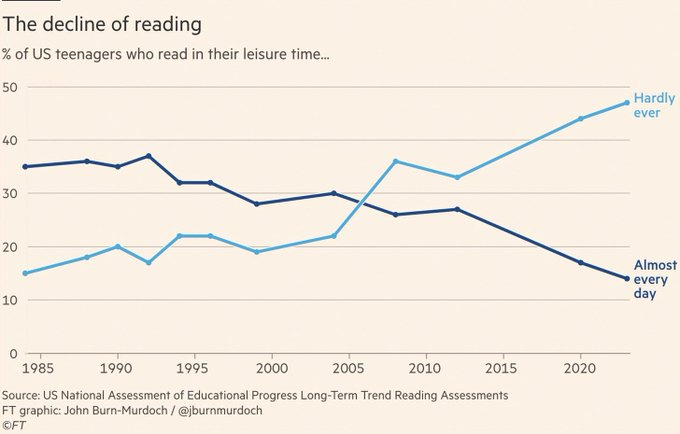

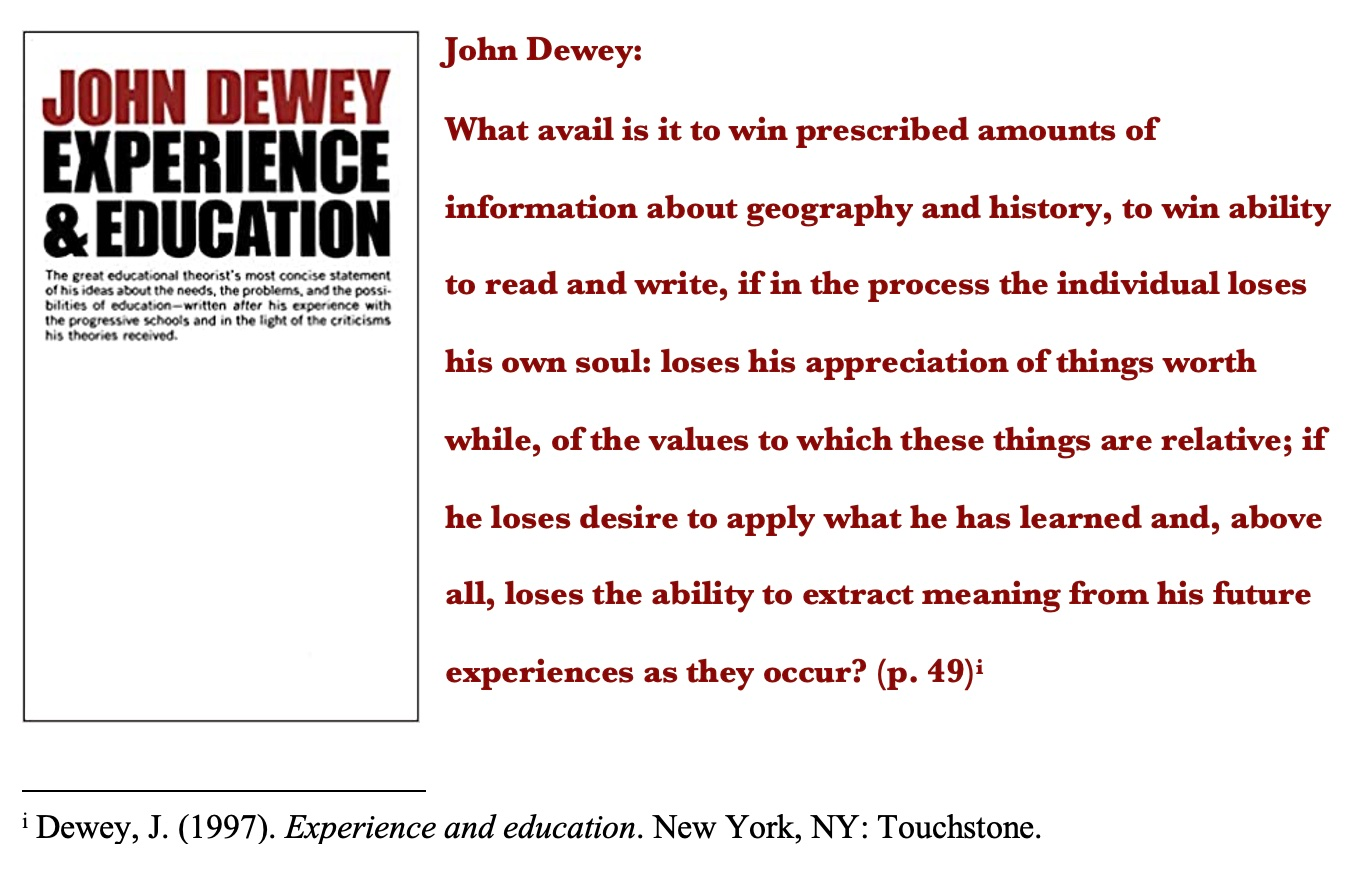

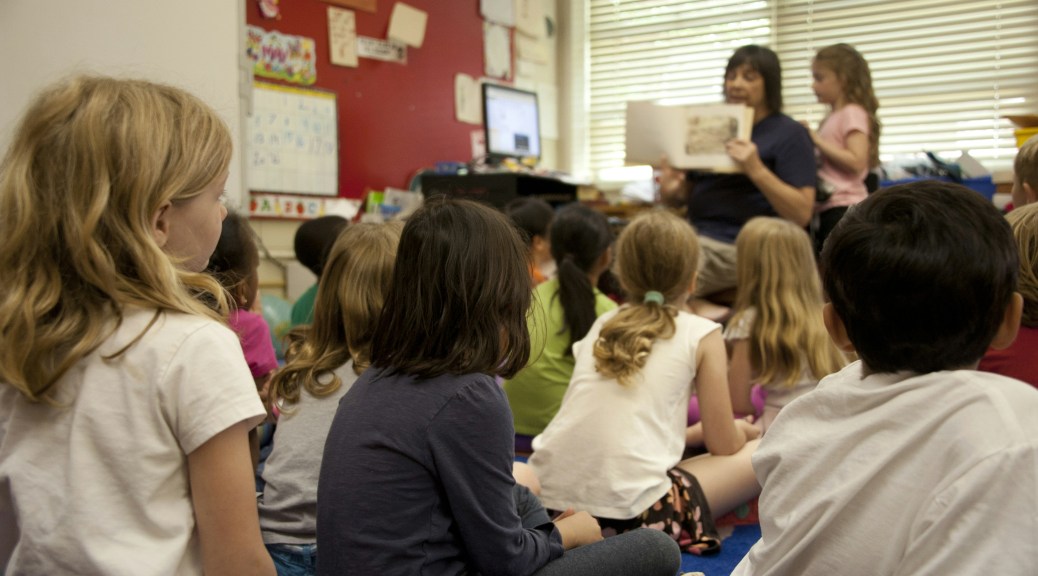





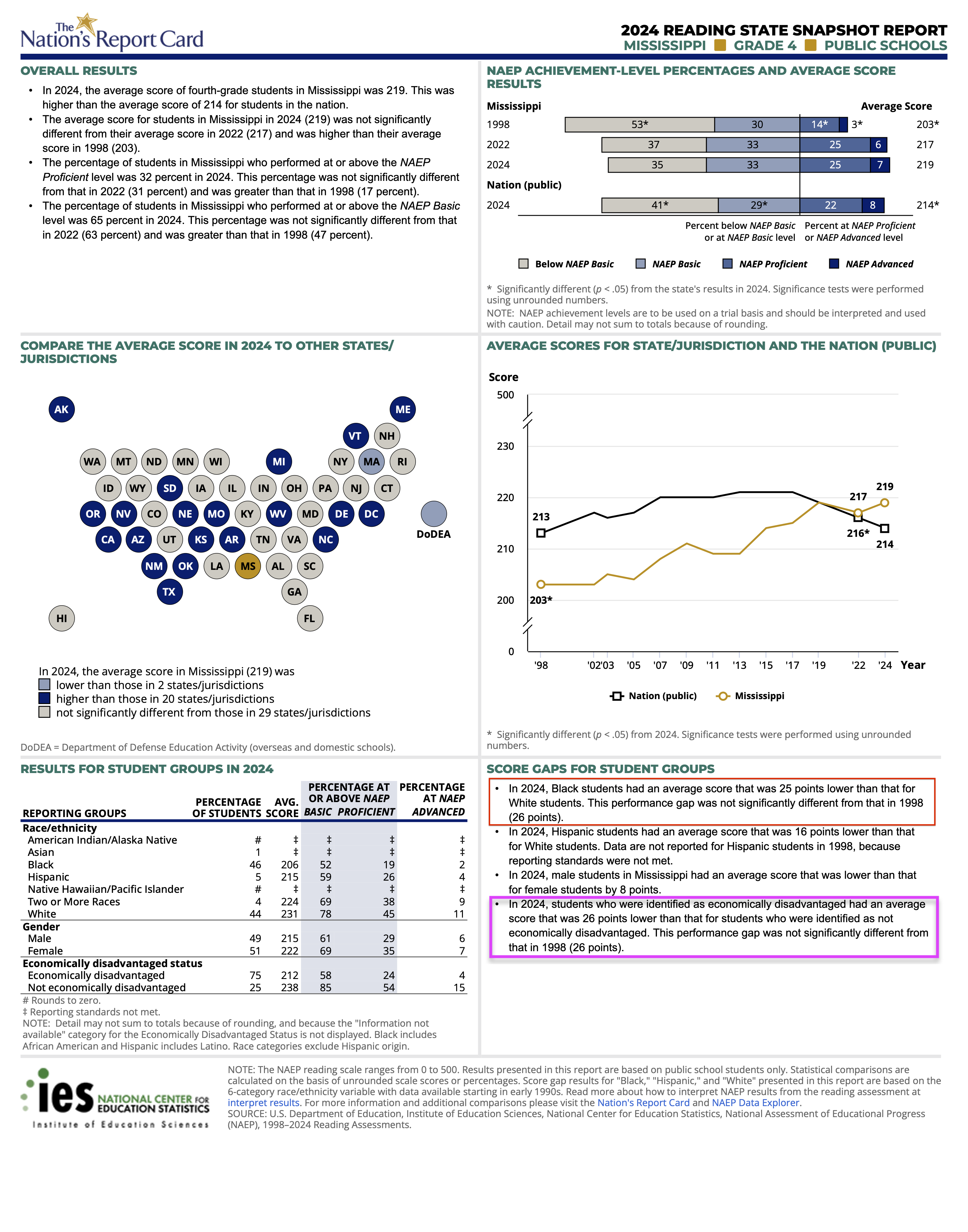


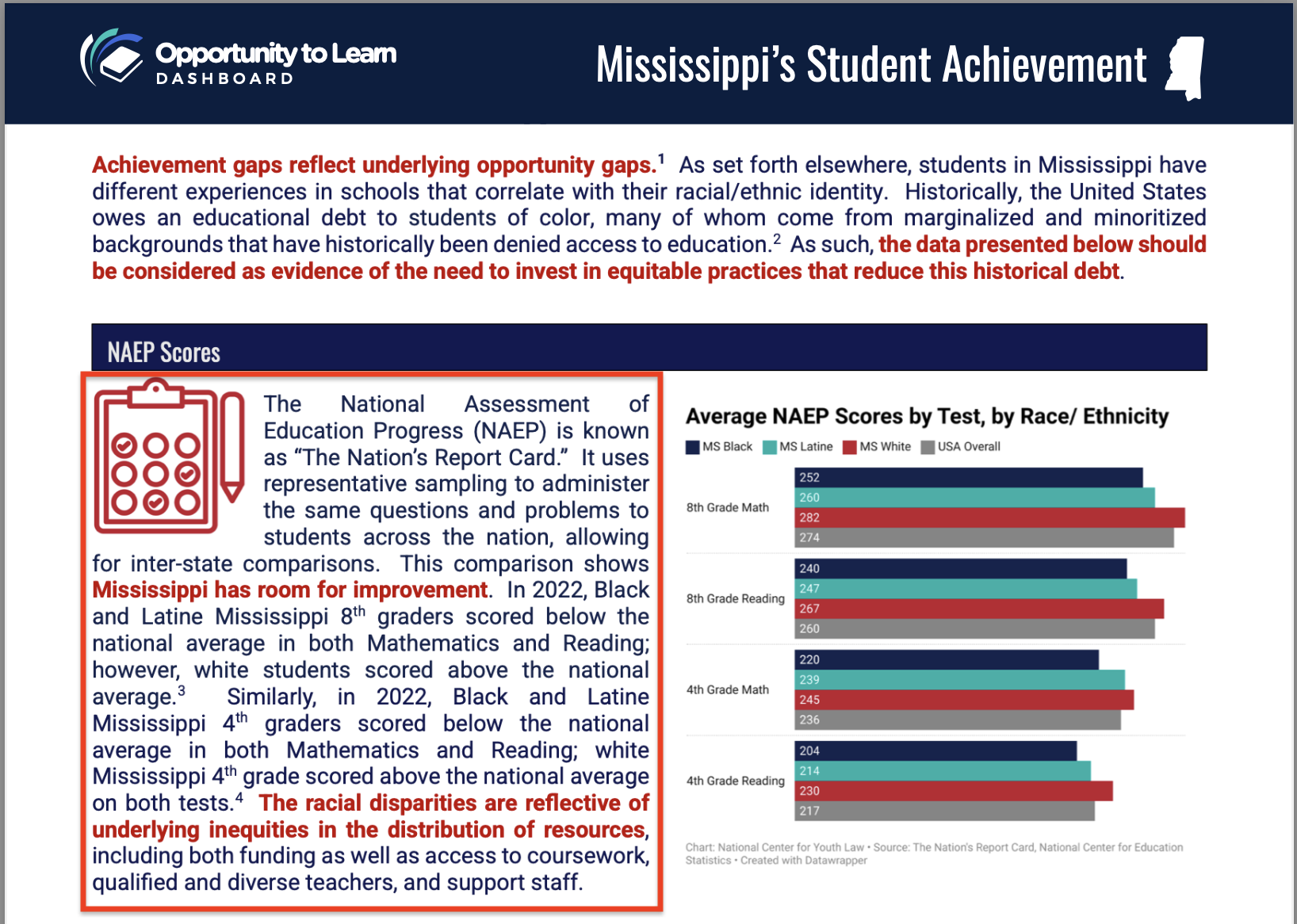



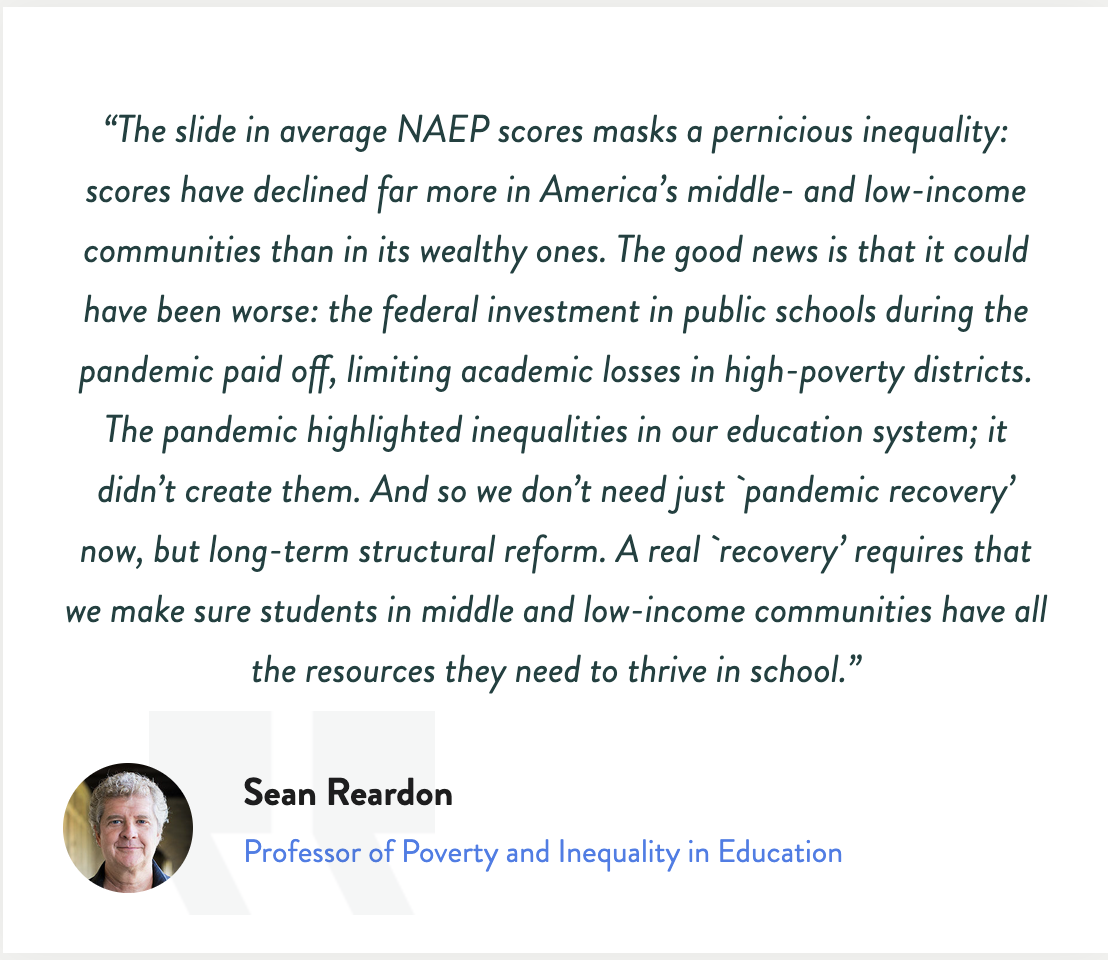
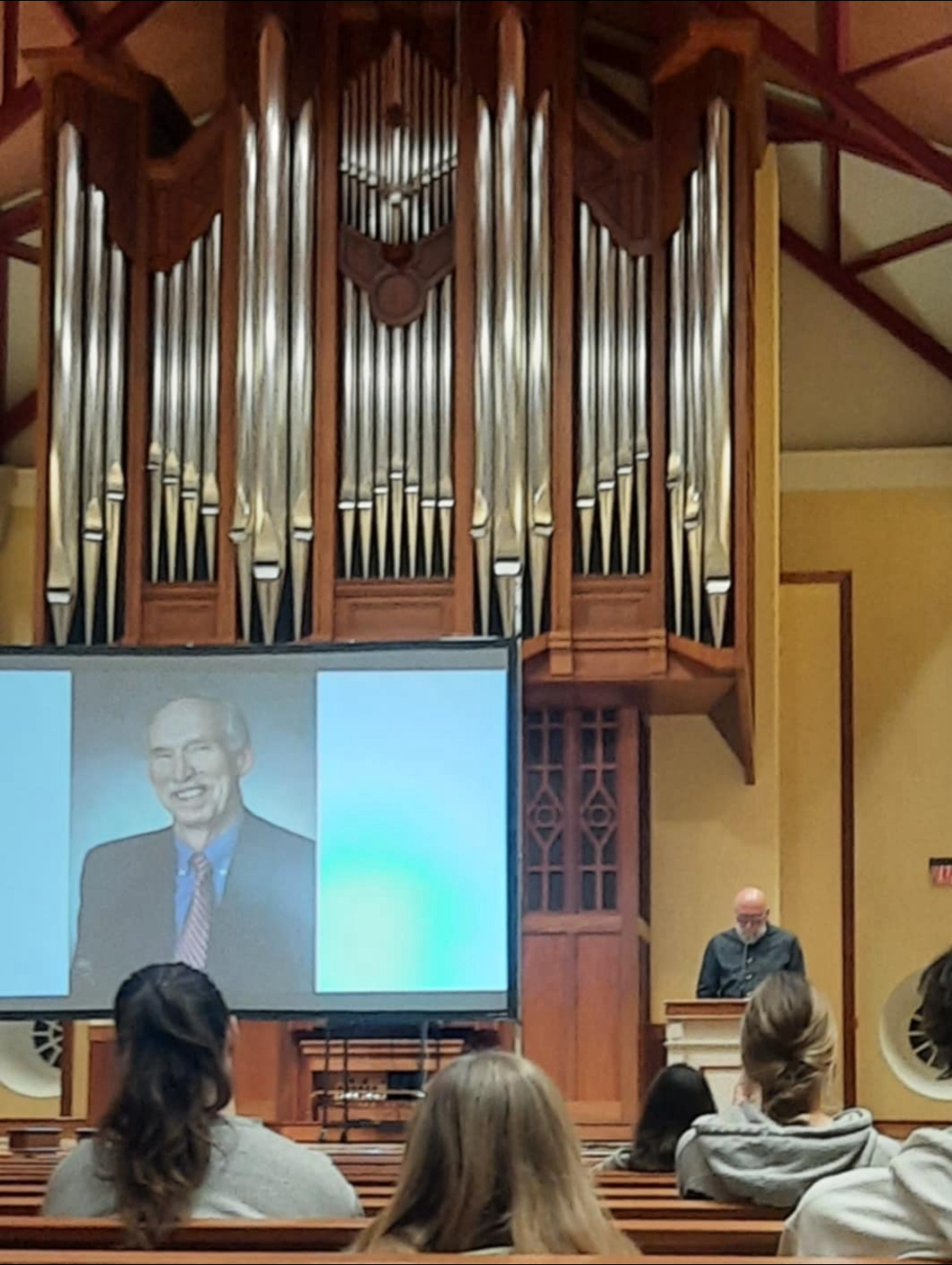

 dr. p.l. (paul) thomas