
“No, no. You’ve got something the test and machines will never be able to measure: you’re artistic. That’s one of the tragedies of our times, that no machine has ever been built that can recognize that quality, appreciate it, foster it, sympathize with it.”
Paul Proteus to his wife Anita in Kurt Vonnegut’s Player Piano
“So much depends upon a red wheel barrow glazed with rain water beside the white chickens” is, essentially, a grammatical sentence in the English language. While the syntax is somewhat out of the norm, the diction is accessible to small children—the hardest word likely being “depends.” But “The Red Wheelbarrow” by William Carlos Williams is much more than a sentence; it is a poem:
so much depends
upona red wheel
barrowglazed with rain
waterbeside the white
chickens.
A relatively simple English language sentence shaped into purposeful lines and stanzas becomes poetry. And like Langston Hughes’s “Harlem” and Gwendolyn Brooks’s “We Real Cool,” it sparks in me a profoundly important response each time I read these poems: [Expletive], I wish I had written that.
It is the same awe and wonder that I felt as a shy and deeply self-conscious teenager when I bought, collected, and read comic books, marveling at the artwork I wish I had drawn.
•
Will we soon wake one morning to find the carcasses of poems washed up on the beach by the tsunami of the Common Core?
That question, especially during National Poetry Month, now haunts me more every day, notably because of the double-impending doom augured by the Common Core: the rise of nonfiction (and the concurrent erasing of poetry and fiction) from the ELA curriculum and the mantra-of-the-moment, “close reading” (the sheep’s clothing for that familiar old wolf New Criticism):
It seems we have come to a moment in the history of the US when we no longer even pretend to care about that which is the result of the human heart: Art.
And poetry, I contend, is the most human of the arts because—although it is quite challenging often to distinguish humans from other mammals—we have two attributes that do set us apart: our too-big brains and our faculty for language.
Poetry is the very human effort to utter order out of chaos, meaning out of the meaningless: “Daddy, daddy, you bastard, I’m through” (Sylvia Plath, “Daddy”).
•
The course was Speech, taught by Mr. Brannon. I was a freshman at a junior college just 15-20 miles from my home, the college my parents had attended when they first fell in love and married secretly.
Despite the college’s close proximity to my home, my father insisted that I live on campus. But that class and those first two years of college were more than living on campus; they were the essential beginning of my life.
In one of the earliest classes, Mr. Brannon read aloud and gave us a copy of “[in Just-]” by e. e. cummings. I imagine that moment was, for me, what many people describe as a religious experience.
That was more than thirty years ago, but I have two precious books still that followed from that day in class: cummings’s Complete Poems and Selected Poems:
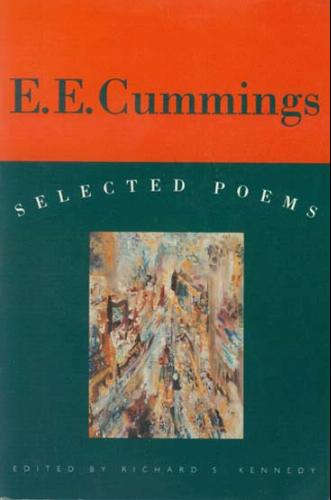
Several years later, Emily Dickinson‘s Complete Poems would join my commitment to reading every poem by those poets who made me respond over and over: [Expletive], I wish I had written that.
But that introduction to cummings was more than a young and insecure man finding the poets he wanted to read; it was when I realized I am a poet.
Now, when the words “j was young&happy” come to me, I know there is work to do—I recognize the gift of poetry.
•
As a high school English teacher, I divided my academic year into quarters by genre/form: nonfiction, poetry, short fiction, and novels/ plays. The poetry quarter, when announced to students, initially received moans and even direct complaints: “I hate poetry.”
To be honest, that always broke my heart, crushed my soul. Life and school had already taken something very precious from these young people:
children guessed(but only a fewand down they forgot as up they grew (“[anyone lived in a pretty how town],” e.e. cummings)
Gradually and then always, I taught poetry in conjunction with popular songs. Although my students in rural South Carolina were overwhelmingly country music fans, I focused my nine weeks of poetry on the songs of alternative group R.E.M.
For the record, that too elicited moans from students in those early days of exploring poetry (see that unit now on the blog “There’s time to teach”).
Concurrently, throughout my high school teaching career, students always gathered in my room during our long mid-morning break and lunch (much to the chagrin of administration). And almost always, we played music.
The epitome of that unspoken norm of my classroom was two students who, after I introduced them to The Violent Femmes, would close my door in order to dance and sing along with their songs.
Many of those students are in their 30s and 40s, but it is common for them to contact me—often on Facebook—and recall fondly R.E.M. and our poetry unit. Those days and years meant something to them that lingers, that matters in ways that cannot be measured.
I can still see and hear those two students dancing, singing, and laughing. It was an oasis of happiness in their days at school, an oasis of happiness in their lives.
•
e.e. cummings begins “since feeling is first,” and then adds:
my blood approves,
and kisses are better fate
than wisdom
lady i swear by all flowers. Don’t cry
—the best gesture of my brain is less than
your eyelids’ flutter….
And each year when my students and I examined this poem, we would discuss that cummings—in Andrew Marvell fashion—offers an argument that is profoundly unlike what parents, teachers, preachers, and politicians claim.
So I often paired this poem with Coldplay’s “The Scientist,” focusing on:
I was just guessing at numbers and figures
Pulling your puzzles apart
Questions of science, science and progress
Do not speak as loud as my heart
Especially for teenagers, this question, this tension between heart and mind, mattered. Just as it recurs in the words of poets and musicians over decades, centuries.
Poetry, as with all art, is the expressed heart—that human quest to rise above our corporeal humanness:
•
I have loved a few people intensely. So deeply that my love, I believe, resides permanently in my bones. If you read my poetry, you will recognize that motif, I am sure.
One such love is my daughter, and she now carries the next human who will add to that ache of being fully human—loving another beyond words.
And that, I contend, is poetry.
Poetry is not identifying iambic pentameter on a poetry test or discussing the nuances of enjambment in an analysis of a Dickinson poem.
Poems are not fodder for close reading.
Poetry is the ineluctable “Oh my heart” that comes from living fully in the moment of being human, the moment that draws us to words as well as inspires us toward words.
We read a poem, we listen to a song, and our hearts rise out of our eyes as tears.
That is poetry.
And like the picture books of our childhood, poetry must be a part of our learning, essential to our school days—each poem an oasis of happiness that “machines will never be able to measure.”
•
Will we soon wake one morning to find the carcasses of poems washed up on the beach by the tsunami of the Common Core?
Maybe the doomsayers are wrong, and maybe, just maybe, poetry will not be erased from our classrooms.
School with less poetry is school with less heart. School with no poetry is school with no heart.
Both are tragic mistakes because if school needs anything, it is more heart. And poetry? Oh my heart.
—
See Also
The Dying of the Light: How Common Core Damages Poetry Instruction
No Place for Poetry on My Son’s Common Core ELA Test
NOTE: This post was drafted in the wake of driving to work while listening to Coldplay’s A Rush of Blood to the Head. Or to be perfectly honest, while singing loudly along with each song and occasionally crying. There. So keep that in mind.
 dr. p.l. (paul) thomas
I love this post and everything it stands for. I am sending it to everyone I know. Here, in my little classroom in my small school in my own tiny corner of the world I am waving the flag for poetry and heart and soul and art. So much depends on it.
Much thanks.
Can I give this a thousand likes? 🙂
Kindness appreciated.
Poetry is my only memory of high school and the best memories of my childhood
Mimi
Thank you sir for this post. We wonder why we continue to do this teaching gig and are sometimes reminded.
Your post should be mandatory reading for every school board, every dean, and anyone responsible for unlocking young hearts so they can learn and grow.
Grateful for your poetry post.
I wish I’d written that.
Brilliantly kind…
The Common Core follows the NAEP framework for more “informational text,” but “because the ELA classroom must focus on literature (stories, drama, and poetry) as well as literary nonfiction, a great deal of informational reading in grades 6-12 must take place in other classes.” Poetry will live on in school. No carcasses. (But thanks for the imagery… it’s why we need poetry!)
This article brought tears to my eyes, as did some of the comments. If you teach poetry, you might also be lucky enough to receive poems written by your students at the end of the year. One of the best thank you gifts I’ve ever received was the poem by a fifth grade boy who was inspired by Walt Whitman’s poetry to write a poem for me that began “Oh teacher, my teacher!”
“Will we soon wake one morning to find the carcasses of poems washed up on the beach by the tsunami of the Common Core?”
This is a question/concern shared by many of us. Wonderful post!
Lovely poetry it is .made my day .thanks
Thank you for a great read.
Oh my heart. Working on my bachelors in creative writing, but I remember so clearly my lonely excitement for the few short days we spent reading poetry in my high school. It was those moments that made me recognize what it felt like to be alive, to be full, and it’s devastating to realize that so many will not experience the pure humanness that poetry is made of. I’m thankful for people and teachers like you who understand that education and living is more than facts and tests, but about feeling and art and language and thought and learning how to be. Poetry is one of the few things that teaches us all of those things. Never stop advocating for poetry. Never stop defending the truest material of our humanity. Thanks so much.
Such an important read.
You can’t erase poetry, it is a part of us, calls to us to create it, to read it, to experience it, it is as intimate as our inner selves, or as much as our own skin. Hoping everyone joins my new page of poetry for all original and unique poems. Thank you so much.
Yes. Very true
I wish I had you as my teacher.
I wish ( without expletives) I had written that post, but I could not, so I did not😒
“Will we soon wake one morning to find the carcasses of poems washed up on the beach by the tsunami of the Common Core? – Hope not now that common core is nearly dead.
Reactions from my friends when they come to know that I write poems : “Oh! you must be very depressed”, or ” Good, you write poetry. How wonderful. Now, can we change the subject to something meaningful.” etc.
Thank you for writing this. It makes me proud of the fact that I’m one of those kids who write poems about anything and everything and find poetry in everything that appeals to me.
I used to write poems back when I was in High School and those days were the best.
This has inspired me to practice my poetry again!
This is a fabulous mediation on the importance of poetry in school. It is such a shame to hear that poetry is being side lined by common core (though I remember, when I was in highschool before common core, my favorite English teacher struggling to be able to introduce us to meaningful, relevant and engaging poems for our class because of limitations the administration put on him…so maybe it pre-dates common core, at least in some areas, but common core speeds it along?)
I am primarily a fiction writer but I’ve recently been delving much deeper into poetry. One thing I’ve learned is that poetry is beginning to take on new forms in accordance with the evolution of the internet, providing greater opportunities for artists and writers to collaborate across state, country, and cultural lines in addition to across forms and media. Hopefully students who might not be introduced to poetry in a meaningful way in a classroom setting will be able to discover and engage with it online.
I loved reading this. So true.
Very inspiring post! It’s a beautiful reminder to not live life solely from the head… wonderful!
I teach seniors and freshmen, and I really believe that students need poetry. They crave it, and they don’t even know it. They are wonderful writers of it, and always seem surprised when I tell them they are good at it. Sometimes I think it’s simply important just to tell them that they too are poets with something to say. There is power in poetry, and I really love the song pairing ideas in this post. Thank you!
Very well written. Poetry is truly something that needs to be felt and taught with the heart.
e.e.cummings. My favorite Especially in just Spring. Sometimes I forget how delightful poetry is and wonder why I don’t read it more.
I’m so happy you mentioned cold play!
I dont exactly know how to describe my feeling after reading this. But you have somehow awakened something that people has long forgotten and denied; poetry. People do love the songs and the songs come from poems/poetries but before it turns into a music, it will mostly be neglected poems. People cannot see the rhyme before they hear the sound.
Thank you so much, for posting this.
This is uplifting
God knows how I came across this post from 2 years ago, but I am so grateful for it. You have truly captured the glory of poetry that we can all honour in little ways everyday through the words we use, the things we read and the music we listen to. I hope poetry remains forever an inextinguishable part of our lives, in high schools and beyond. Thank you.
I have been retired now for thirteen years and I still miss the classroom. Magic happens when teaching poetry! No more magic in the classroom? I’m going to have to read on the notorious “Common Core.”
So true….our times are advanced cruel…but poetry saves the soul!!great blog….
Uplifting and beautiful!
I am so happy to have found you. I am like you, and your students whose lives were changed by poetry. Recently poetry changed me as well.
Thank you so much for putting my thoughts that I couldn’t quite understand yet into words.
Blessings, Jess
Inspiring. And completely reminds me of my lack of poetic talent. 🙂
– pathswewalk.com
If there was option of a century likes, I could have did it forthright
Thank you. I carried my complete works of the German poet Hilde Domin with me when moving across three continents, it gave my heart a place to call home in the dust storms of Northern Ghana. Now my seven year old, in her last school book writing project drew and wrote a book about how she loves to write poems about food and chickens and the sky. And, one thing I find interesting in the age of the internet: The short poem is a perfect form for online reading. And: The internet allows poems to publish irrespective of what the publishing industry thinks. So don’t worry, poetry is quite alive.
Reblogged this on The Darkness in the Light.
Am not poetic but i really love poetry
Excited for this great piece.
Poetry in Africa especially Ghana is reclaiming is glory in the form of spoken word. Though there is still more work to be done to make it part and parcel of the school curriculum,there is hope for poetry sir. Our fears won’t come to pass. #ohmyheart
Great. ..