Three Questions about the Mississippi Reading “Miracle” [Updated December 2025]

[Header Photo by USGS on Unsplash]

Update [December 2025]
Here I want to note that Q1 and Q3 have been answered, and the answer is exactly what I have been suggesting.

First, let me recommend How much of “Mississippi’s education miracle” is an artifact of selection bias?, which examines the analysis answering two of the questions below: On education miracles in general (and those in Mississippi in particular), Howard Wainer, Irina Grabovsky and Daniel H. Robinson.

Here are the highlights, although I recommend reading the entire piece:

In 1748, famed Scot David Hume defined nature. He elaborated such a law as “a regularity of past experience projected by the mind to future cases”. He argued that the evidence for a miracle is rarely sufficient to suspend rational belief because a closer look has always revealed that what was reported as a miracle was more likely false, resulting from misperception, mistransmission, or deception….

A careful examination confirms that enthusiasm to emulate Mississippi should be tempered with scepticism….

This provides a boost of about $111.63 of extra funding annually for each pupil. Comparing this amount to what are annual contemporary per pupil expenditures nationally, we have to agree that if such small expenditures can make a visible difference in student performance it truly is a miracle – a Mississippi version of St. John’s loaves and fishes.

But it was the second component of the Mississippi Miracle, a new retention policy, perhaps inspired by New Orleans’ Katrina disaster a decade earlier, that is likely to be the key to their success….

Prior to 2013, a higher percentage of third-graders moved on to the fourth grade and took the NAEP fourth-grade reading test. After 2013, only those students who did well enough in reading moved on to the fourth grade and took the test.

It is a fact of arithmetic that the mean score of any data set always increases if you delete some of the lowest scores (what is technically called “left truncation of the score distribution”)….

Strangely though, for the eighth-grade literacy test, the state’s rank dropped to a tie for 42nd place!…

(Note that this works especially well for student height, for after retaining the shortest third-graders for an extra year they will likely be taller when they are measured again a year later. It would be nice if the same were true for students struggling in academic subjects.)…

Were we to do this we would find that most of Mississippi’s gains are due to the retention rate.

It is disappointing, but not surprising, that the lion’s share of the effects of the “Mississippi miracle” are yet another case of gaming the system. There is no miracle to behold. There is nothing special in Mississippi’s literacy reform model that should be replicated globally. It just emphasises the obvious advice that, if you want your students to get high scores, don’t allow those students who are likely to get low scores to take the test. This message is not a secret….

 Find a way to prevent the lowest test scorers from taking the exam and the average score will increase….

Second, besides weak empirical data, educational reformers like Patrinos should have given greater weight to the extant literature on the Mississippi Miracle. The miracle had already been convincingly debunked.10 Fourth-grade gains had vanished by the time the students reached eighth grade.


Question 1: Why is Mississippi retaining about 9000-12,000 K-3 students annually since 2014?

One of the key assertions of the “science of reading” (SOR) movement is that students across the US are mostly not proficient readers because teachers rely on balanced literacy to teach reading.

And then, SOR advocates argue that 95% of students can be proficient readers, and the key to that success is SOR.

That raises an important question about Mississippi, which has implemented both SOR reading policy and grade retention for over a decade.

SOR advocates have called MS’s jump in grade 4 NAEP scores a “miracle”; however, MS has continued to retain about 9000-12,000 students annually in K-3.

Certainly, a decade is enough time to reach the 95% rate of proficiency, and thus, retention numbers should have dropped dramatically or be near 0.

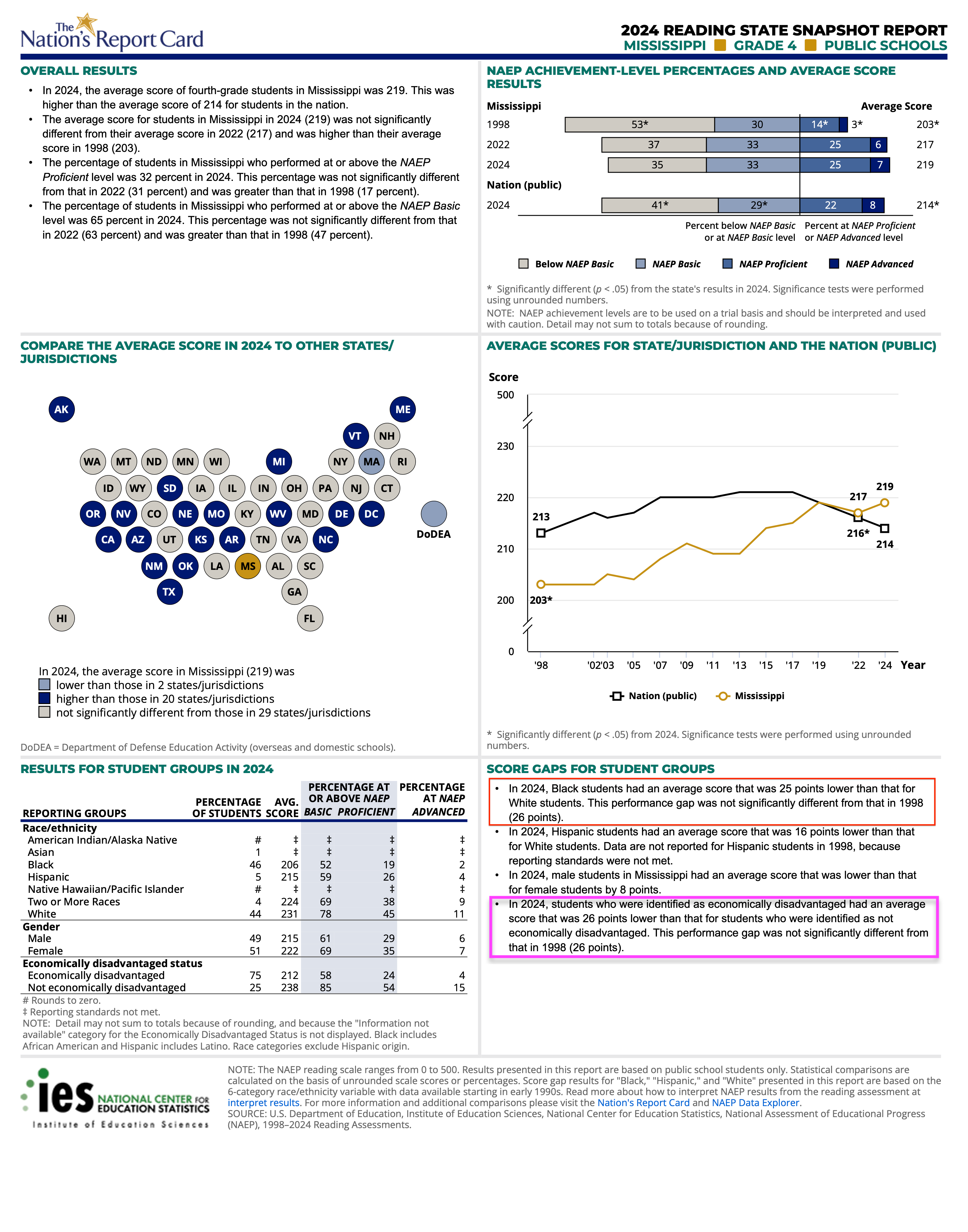
Question 2: How is Mississippi a “miracle” if the achievement gap for race and socioeconomic status is the same as 1998?

As shown in MS’s 2024 NAEP reading scores for grade 4:
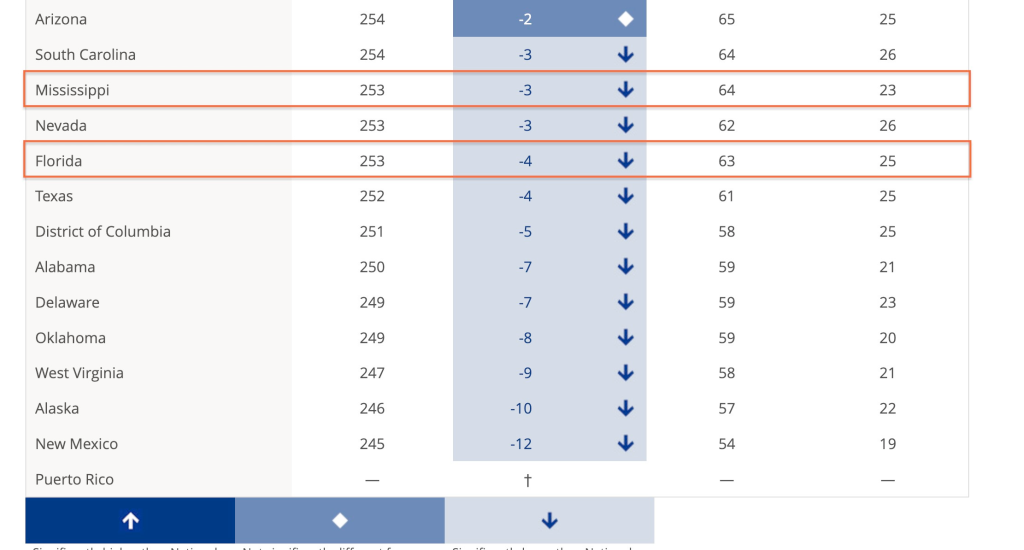
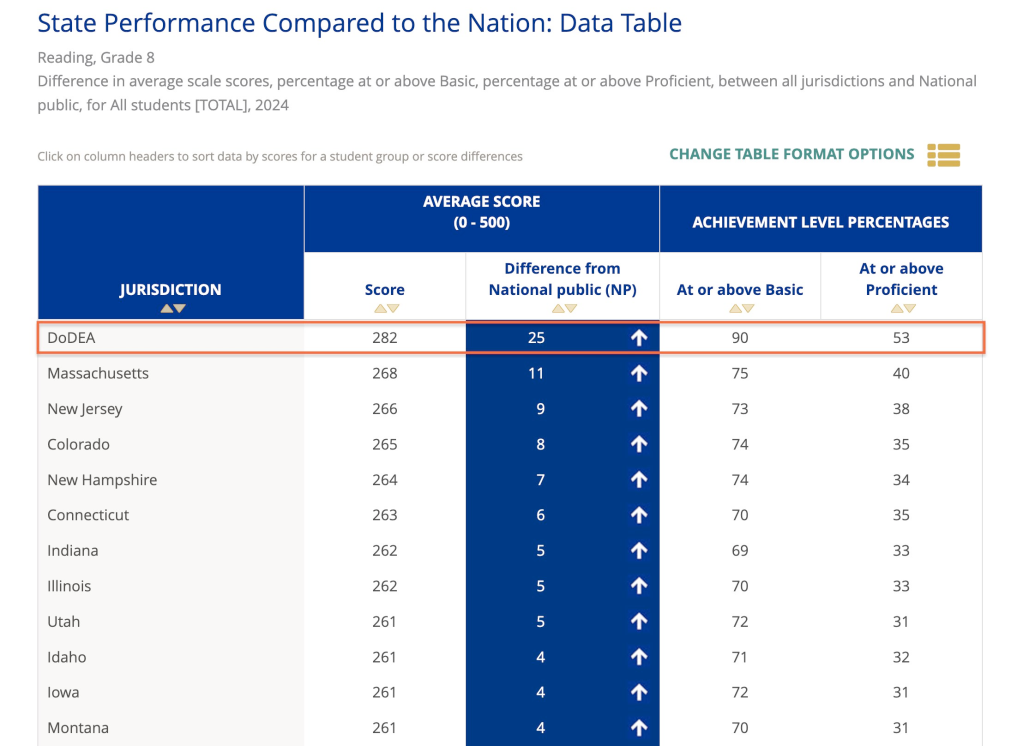
Question 3: Why has Mississippi’s grade 8 NAEP scores remained in the bottom 25% of states despite the grade 4 NAEP scores jumping into the top 25%?

For 2024, MS NAEP grade 8 reading scores drop to eleventh from the bottom of state scores:

An analysis of reading reform found that states with comprehensive reform that includes grade retention have experienced short-term increases in test scores.

However, the analysis does not identify why these comprehensive reforms (including grade retention) are correlated with those short-term scores increases.

Research on education “miracles” have found that virtually none exist, and even when a school or program appears to be “high flying” there is little evidence those can be scaled up meaningfully.

Mississippi’s grade 4 NAEP scores in reading, then, raise questions that must be answered; instead, it is now politically cool to adopt copy-cat legislation from the state without proper evidence that there is valid success or a solid understanding of what is happening and why.


Recommended

Big Lies of Education: Grade Retention

1959: “yet students enter college badly lacking in these fundamental skills”

[Header Photo by Austin on Unsplash]

It is 1959, and J. Donald Adams in the New York Times is lamenting the lack of basic skills among college students in the US:

If more parents who were themselves the recipients of a decent education could be made aware of the asinine statements about the teaching of the English language which are being spewed forth by today’s educational theorists, there would be an armed uprising among the Parent-Teacher Associations all over the United States.

Yes, 1959.

And where does the blame lie?

That inheritance is being endangered by various forces operant in our society: by the hucksters of Madison Avenue, by the tiresome circumlocutions of the bureaucrats; by the tortured locutions of the sociologists, psychologists and symbol-haunted critics. However erosive these may be, the root responsibility for the decline in standards of English rests, I think, with the teachers of English in our primary and secondary schools, and even more so, with the teachers of education who produced them. These are the people whom you can chiefly thank for the fact that so many college entrants cannot spell, punctuate, or put together a coherent sentence in their own tongue, let alone any other….

[And] THERE is an organization called the National Council of Teachers of English, whose attitudes and activities constitute one of the chief threats to the cultivation of good English in our schools.

65 years ago, it seems, schools were focusing, alas, on the wrong things:

Today, the emphasis is placed, with unutterable stupidity, upon teaching the things that cannot be taught, the things that have to be learned, by trial and error, by oneself, such as social adjustment. High schools undertake to teach safe driving: you can teach someone to drive, but you cannot teach him to drive safely; the temperamental and emotional factors involved are beyond the reach of the instructor. But reading, spelling, punctuation, grammar and arithmetic can be taught: yet students enter college badly lacking in these fundamental skills, and with the most fragmentary notions of geography and history.

One must wonder how we survived …


H/T Ralph Pantozzi

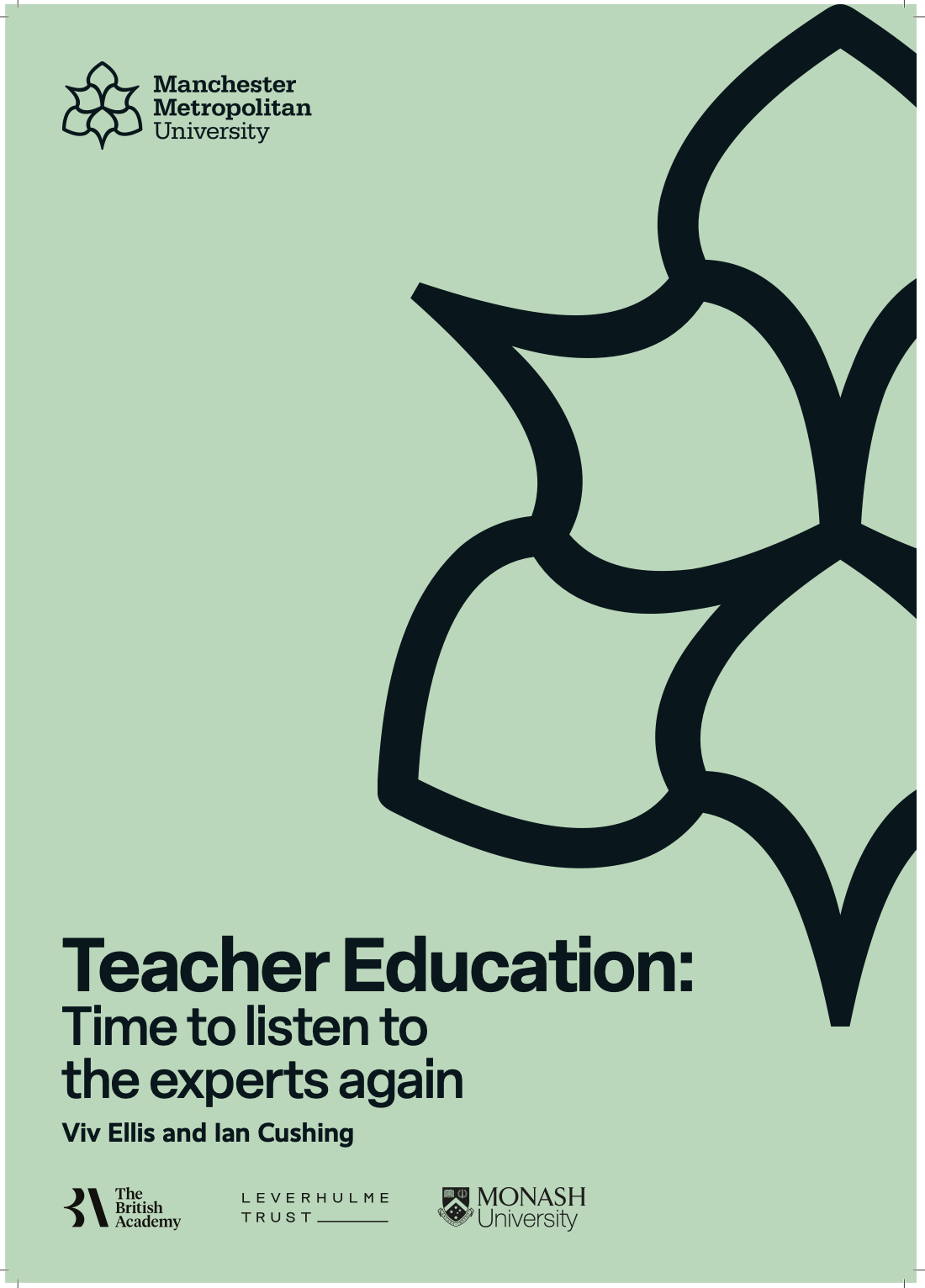
Recommended: Teacher Education: Time to listen to the experts again (UK)

In the US, teacher education as well as teachers have suffered a long history of low respect and support.

A significant aspect of that dynamic, I think, is that the profession in over 70% women.

During the accountability reform movement since the early 1980s, teacher education and teachers have been held accountable without having the autonomy to set the conditions for teaching and learning needed for success.

Here I recommend a new report from the UK: Teacher Education: Time to listen to the experts again.

During the recent rise in “science of” education reform, teacher autonomy and teacher education have been even more significantly eroded, notably with increased education legislation and the shift to scripted curriculum and programs (specifically in reading).

Here are further pieces to consider along with the new report above:

Humans Will Not Survive Religion: “The Bomb is a holy weapon for peace”

[Header image fair use]

Of the original five Planet of the Apes films that were first released starting in 1968, Beneath the Planet of the Apes is likely the least appreciated but most relevant in 2025.

Critics blasted the film, but the cataclysmic ending—the actual destruction of earth—put the fate of the series in a sort of science fiction quandary that the next three films had to navigate.

Kurt Vonnegut was fond of playing with end-of-the world scenarios, such as his brilliant Cat’s Cradle and the threat of ice-nine.

Like Cat’s Cradle, Beneath the Planet of the Apes is an exploration of the intersections of militarism, religion, and the self-destructive nature of sentient beings.

The shocking end to the original Planet of the Apes—the astronaut Taylor discovering the collapsed Statue of Liberty and realizing he is on Earth, then ruled by apes—was likely impossible for the first sequel to match, but this second film does have surprising reveals.

It is 3955 when a second spaceship lands, but only one astronaut, Brent, survives to later reunite with Taylor and Nova from the first film.

And as the title suggests, beneath the planet, Brent, Taylor, and Nova discover that this new world of apes is the result of nuclear holocaust. Mutated telepathic humans and the new religion are also encountered:

Two lines from the film seem eerily significant now:

John Brent: That thing out there, an atomic bomb… is your god?…

Fat man: You don’t understand, Mr. Brent. The Bomb is a holy weapon for peace.

The US is experiencing a rise in Christian Nationalism, boosted by the MAGA movement and re-election of Trump.

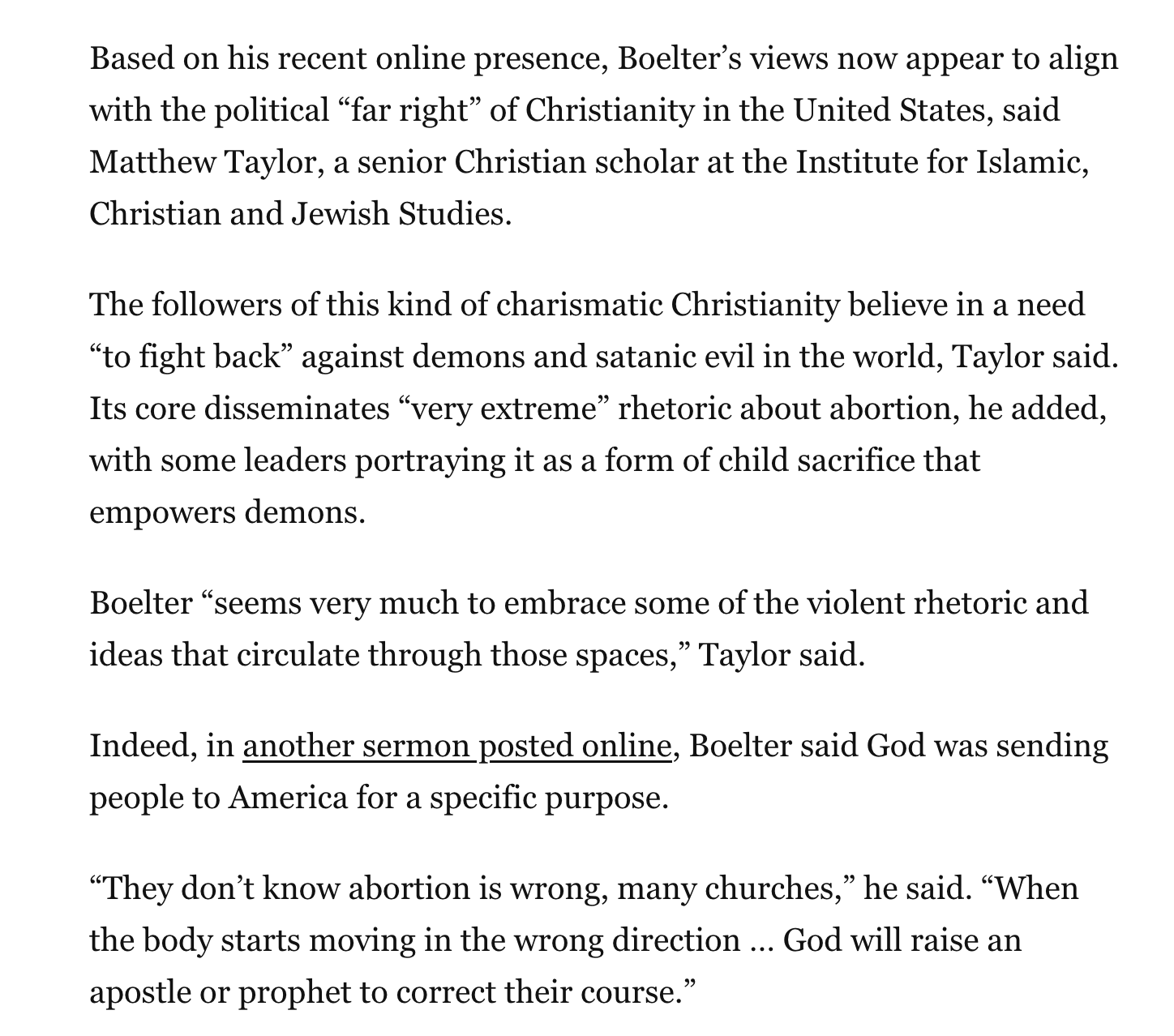
And recent events are terrifying with the assassination and shooting of Minnesota Democrats by a radicalized religious zealot:

But this extreme example shouldn’t distract us from what is now being normalized:

Neither the dynamics in Beneath nor the examples of our current political climate in the US are extreme or unique.

History is replete with religion justifying and inciting hate, intolerance, and violence.

Most major religions use dogma and invoke God to deny women their full humanity, to require corporal punishment of children (and women), to justify war, and to criminalize and persecute non-normative people such as people who are LGBTQ+.

Organized religions tend to lose the focus of love and humanity because, as Bertrand Russell argued:

Religion is based, I think, primarily and mainly upon fear. It is partly the terror of the unknown, and partly, as I have said, the wish to feel that you have a kind of elder brother who will stand by you in all your troubles and disputes. Fear is the basis of the whole thing—fear of the mysterious, fear of defeat, fear of death. Fear is the parent of cruelty, and therefore it is no wonder if cruelty and religion has gone hand-in-hand. It is because fear is at the basis of those two things.

I fell in love with science fiction as a child and teen about the same time I came to realize that I, too, am not a Christian, that I am not religious.

That realization in my Self is grounded in that I have come to recognize that I choose love and the human dignity of all people—not dogma, not sword rattling, not pretending that I know the mind of God.

The world is proving to us now that religion is the enemy of moral and ethical behavior because humans—like Cruz and Johnson—too often get lost in the worst of human beliefs, like the mutants and apes in a science fiction film.

The great irony, of course, is that the fatal flaw of end-times religiosity is that it likely is a self-fulfilling prophesy, a final destruction that, unlike in Hollywood, there is no plot twist that will rectify the eradication of humans and Earth as we know it.

Two more lines from Beneath makes me shudder:

Negro: Mr. Taylor, Mr. Brent, we are a peaceful people. We don’t kill our enemies. We get our enemies to kill each other.

Cornelius: [reads from the holy scripts] “Beware the beast man, for he is the devil’s pawn. Alone among God’s primates, he kills for sport or lust or greed. Yea, he will murder his brother to possess his brother’s land. Let him not breed in great numbers, for he will make a desert of his home, and yours. Shun him… for he is the harbinger of death.”

The truths of love and peace that can save humanity are often lost or ignored, regretfully, because religion, again, seems bound to fear and hate.

We are living in the real world, not some post-apocalyptic fiction, but the last line of Beneath seems to be our most likely fate:

Ending Voiceover: In one of the countless billions of galaxies in the universe, lies a medium-sized star, and one of its satellites, a green and insignificant planet, is now dead.


Recommended

Why I Am Not a Christian  (1927), Bertrand Russell

The Man in the High Castle and Cat’s Cradle in Trumplandia

Stranger in a Strange Land, Robert A. Heinlein

Recommended: Your Brain on ChatGPT

[Header Photo by Levart_Photographer on Unsplash]

Recently, advocacy for educators to fully embrace Artificial Intelligence (AI) as a key part of how students learn has increased.

Ohio State University, for example, will now require AI training for students.

As a literacy educator for over 40 years, specifically as a teacher of writing, I have stated a solid “no AI” policy both in my courses and as a public stance.

While I am certainly not anti-technology, I am a technology skeptic and have acknowledged that popular technology used in education tends to be quite bad—for example, Turnitin.com.

My core reason for a “no AI” policy in my courses, specifically my writing courses, is that AI such as ChatGPT tends to do for students the very behaviors they need to be practicing in order to learn.

As a comparison, I have a “no AI” policy for the same reason I reject rubrics and writing prompts for teaching writing since rubrics and prompts, again, are making decisions for students that they need to be making as developing writers.

I recommend, then, a new analysis of ChatGPT: Your Brain on ChatGPT: Accumulation of Cognitive Debt when Using an AI Assistant for Essay Writing Task.

Here are key findings that support my “no AI” policy:

I want to stress that my experience with students is that they often either fail to use useful technology (such as the grammar and spelling check in Word) or they are quite bad at using technology, despite being seen as technology natives.

That students need help in formal education with being better at using technology is a given, but it is not a contradiction to acknowledge that some technology is counter-educational; and that is the case with AI/ChatGPT.


Recommended

CAUTION: Technology!

ChatGPT and a New Battle in the Citation Gauntlet for Students and Teachers

Technology Fails Plagiarism, Citation Tests

It’s the End of Writing as We Know It (And I Feel Fine)

The Training Wheel Fallacy for Teaching Writing

More Than Words: How to Think About Writing in the Age of AI, John Warner

The “Science of” Movements: Another Education Reform Red Herring

[Header image misocrazy from New York, NY, CC BY 2.0 https://creativecommons.org/licenses/by/2.0, via Wikimedia Commons]

“Red herring” perfectly describes the bulk of education reform in the US since the Reagan administration because thosee reforms have been based on false claims to distract from needed social and educational reform in the interests of students, teachers, and public education.

The US (and many English-speaking nations around the world) have remained in a perpetual state of education and reading crises for decades.

The US has never stopped using crisis rhetoric or blaming schools, teachers, and students, but policy has been a revolving door of new standards, new tests, and new “miracle” solutions—none of which ever produce the positive outcomes promised.

The dirty little secret is that perpetual crisis/reform in education (and reading) is its own goal because constant crisis/reform is politically and economically profitable to those fanning the flames of crisis.

In 2018, the “science of reading” (SOR) became a tired and constant refrain of the media, spreading to parent advocacy and then legislation and policy.

By 2025, the “science of” has added “math” and “learning,” including many English-speaking countries where a reading crisis is the norm.

And thus, education reform in the US and other countries has now adopted at the core of education reform “science of” rhetoric, claims, blame, and policy.

Parallel to education reform since the 1980s, the “science of” education reform is not grounded in credible claims about education crisis or problems, and therefore, the blame and solutions are also not credible or effective.

The “science of” approach to education reform has been extremely effective since “science” is being weaponized, and when anyone dare to challenge the movement, those people are accused of being anti-science, often compared to the anti-vaccination movement.

Here’s the problem: Those of us challenging the “science of” movement are not rejecting scientific research in education; we are acknowledging that “science of” advocacy is misrepresenting educational challenges, educational research, and educational practice for ideological, political, and market purposes.

Journalists, educators/scholars, education “celebrities,” the education marketplace, and politicians have made their careers on false “science of” claims and unfounded attacks on anyone calling them out for not being credible.

Ironically, the evidence supports those of us who are critics of “science of” education/reading reform, and consequently, “science of” claims are red herrings, distractions from the valid education challenges and potential reforms that would serve the interests of students, teachers, and public education.

Here, then, is the core evidence that the “science of” movements are, in fact, red herring education reform.

Is there an education or reading crisis? No.

Elena Aydorova; Reinking, Hruby, and Risko; and Larsen, as just a few examples, have explained that the data/evidence simply does not support claims of crisis.

Further, “science of” advocates tend to move quickly from the false claims of “crisis” to offering false blame.

Just as there is no evidence of crisis, there is simply no scientific studies showing, for example, that the US has a reading crisis caused by a few reading programs, the implementation of balanced literacy, or the failure of teacher education to prepare teachers.

Again, there is a paradox in the “science of” movement whereby the advocates of “science of” themselves do not adhere to the narrow use of “science” to support their major claims.

For example, in the US, SOR advocates and SOR-based policy and legislation include support for a number of practices, claims, and programs that lack scientific evidence—decodable texts, LETRS, 95% rule, Orton-Gillingham, systematic phonics first for all students, nonsense word assessments (DIBLES), etc.

Broadly, also, “science of” advocates’ most damning red herring is that they are weaponizing “science” as a veneer to take a non-ideological pose although “science of” advocates are themselves mostly making ideological claims.

Direct instruction and skills-based instruction have long been at the core of conservative ideology.

Once we acknowledge that “science of” claims of crisis and who/what they blame are not evidence-based, we can also acknowledge they are mostly making ideological arguments, and then, we must unpack why.

Noted above, there is a great deal of profit in crying education/reading crisis and maintaining a constant state of reform.

As long as that reform never works.

And it never has, it never will.

The “science of” movements, then, are grounded in misinformation, oversimplification, and ideological bias.

The “science of” movements are another form of red herring education reform.

The distraction is also ideological, grounded in a rejection of the power of systemic forces and a belief in rugged individualism as well as the bootstrapping myth.

The “science of” movement is also a distraction from other ulterior motives, such as de-professionalizing teachers with scripted curriculum and imposing AI/computer program approaches for teaching students.

More irony: Education reform is designed to keep our eyes on individual people—students, teachers—and not the overwhelming evidence:

Almost 63% of the variance in test performance was explained by social capital family income variables that influence the development of background knowledge. Background knowledge is a known predictor of standardized test results. Family income variables are immutable by schools. Only public policies, outside the control of school personnel, can influence family income….

Policy makers and education leaders should rethink the current reliance on standardized test results as the deciding factor to make decisions about student achievement, teacher quality, school effectiveness, and school leader quality. In effect, policies that use standardized test results to evaluate, reward, and sanction students and school personnel are doing nothing more than rewarding schools that serve advantaged students and punishing schools that serve disadvantaged students. (Maroun and Tienken, 2024)

Here is the science that critics of the “science of” movement recognize.

And fun fact, we are not trying to sell you anything or get your vote.

Don’t be distracted.

Recommended

Aukerman, M. (2022a). The Science of Reading and the media: Does the media draw on high-quality reading research? Literacy Research Association Critical Conversations. CC BY 4.0 license. https://literacyresearchassociation.org/stories/the-science-of-reading-and-the-media-does-the-media-draw-on-high-quality-reading-research/

Aukerman, M. (2022b). The Science of Reading and the media: How do current reporting patterns cause damage? Literacy Research Association Critical Conversations. CC BY 4.0 license. https://literacyresearchassociation.org/stories/the-science-of-reading-and-the-media-how-do-current-reporting-patterns-cause-damage/

Aukerman, M. (2022c). The Science of Reading and the media: Is reporting biased? Literacy Research Association Critical Conversations. CC BY 4.0 license. https://literacyresearchassociation.org/stories/the-science-of-reading-and-the-media-is-reporting-biased/

Aydarova, E. (2023). “Whatever you want to call it”: Science of reading mythologies in the education reform movement. Harvard Educational Review, 93(4), 556–581, https://doi.org10.17763/1943-5045-93.4.556

Aydarova, E. (2024). What you see is not what you get: Science of reading reforms as a guise for standardization, centralization, and privatization. American Journal of Education. https://www.journals.uchicago.edu/doi/10.1086/730991

Reinking, D., Hruby, G.G., & Risko, V.J. (2023). Legislating phonics: Settle science of political polemic? Teachers College Record. https://doi.org/10.1177/01614681231155688

Thomas, P.L. (2025). Navigating (another) reading crisis as an administrator: Rethinking the “science of reading” movement. Journal of School Administration, Research and Development, 10(1), 38-48. https://ojed.org/JSARD/article/view/6706

Thomas, P.L. (2024, November). We teach English in times of perpetual crisis: For all ELA teachers, “the time is always now.” English Journal, 114(2), 21-26. https://publicationsncte.org/content/journals/10.58680/ej2024114221

Thomas, P.L. (2024, September). We teach English in times of perpetual crisis: The media continue to misread teaching reading and literacy. English Journal, 114(1), 14-19. https://publicationsncte.org/content/journals/10.58680/ej2024114114

Thomas, P.L. (2024, May). Teaching English in the “science of reading” era: We teach English in times of perpetual crisis: Selling a story of reading. English Journal, 113(5), 16-22. https://publicationsncte.org/content/journals/10.58680/ej2024113516 [Open Access https://publicationsncte.org/content/journals/10.58680/ej202411342]

Thomas, P.L. (2024, March). We teach English in times of perpetual crisis: The long (and tedious) history of reading crisis. English Journal, 113(4), 21-26. https://publicationsncte.org/content/journals/10.58680/ej2024113421

Tierney, R.J., & Pearson, P.D. (2024). Fact-checking the Science of Reading: Opening up the conversation. Literacy Research Commons. https://literacyresearchcommons.org

Who Controls Science Controls: “we all need to conform to the science”

[Header Photo by Markus Spiske on Unsplash]

While there is ample and disturbing evidence to keep our focus on the tremendous destructive outcomes of the second Trump administration, we should also recognize that the seeds of these worst policies for education were planted by George W. Bush as both governor of Texas and president of the US.

The recent release of the government report with fake citations (likely from using AI) is just one of the most chilling examples of the cumulative effect of government control of what counts as “science,” and thus, Why Trump’s push for ‘gold-standard science’ has researchers alarmed.

So, first, we must note that Bush education agenda in Texas included scripted curriculum, and then, more significantly, Bush’s signature No Child Left Behind (NCLB) was grounded in mandating “scientifically based” instruction and programs.

Ironically, despite NCLB’s “scientifically based” mandate, in the second decade after implementation, the media, politicians, and pundits declared a reading crisis and ascribed the cause to teacher education and teachers failing to know and use the “science of reading” (SOR).

SOR has, then, spawned the “science of math” and more broadly the “science of learning.”

Similar to the bi-partisan support for NCLB and most education reform since the 1980s, a politically diverse coalition has embraced and endorsed the “science of” movement, although few people have acknowledged that the agenda is mostly conservative ideology.

Some are, however, starting to recognize that “science of” policies are working to de-professionalize teachers through mandating scripted curriculum.

Rachael Jefferson confronts this reality:

There is not enough evidence behind the science of learning to justify it being enshrined in our education system, Jefferson contends. 

“It posits science really as an absolute, and it also suggests explicitly that nobody can question its authority because it is the ‘science’ of learning.

“In other words, ‘whatever [teachers have] been doing for the last few decades is unimportant now, we all need to conform to the science’.

“That’s a very heavy-handed way of approaching pedagogy and also approaching teachers in the field who are very, very experienced in this,” Jefferson tells EducationHQ.

The problem here is not “science,” but who controls what counts as science and how “science” is used as control.

NCLB codifying what counted as “scientifically based” was cause for concern. But over the past two decades, a narrow definition of “science” has evolved, reinforcing the contradictory “science of” movement that demands applying that narrow view of “science” as a veneer for an ideological agenda.

What counts as “science” and credible evidence in education—and all fields—should not be abdicated to government bureaucracy (as evidenced by the current Trump administration).

Ultimately, the “science of” movement has proven to be less about teaching and learning or reforming education, and more about political and ideological control (parallel to the current misuse of “science” by Health and Human Services [HHS] Secretary Robert F. Kennedy Jr.)

For teaching and learning, scientific research certainly provides important and powerful evidence for teaching and teachers; however, the “science of” movement is distorting and controlling what counts as “science” for ideological and political agendas.

The Trump agenda for so-called “gold-standard science” is the logical and catastrophic logical outcome of many decades of political mandates for education reform.

The lesson?

Who controls science controls.


Recommended

The problem with vibes-based cellphone reporting – Kappan Online

A4PEP Webinars

  • Rob Rogers and Melissa Hendrix unpacked the history and grave threat that Christian nationalism is posing to our public education system.
  • Paul Thomas revealed how lies and false messaging from the media have been used to try and convince the public that schools are failing, when in fact, they are not.
  • Derek Black outlined some of the history behind this movement and how it still is so relevant today as the Trump administration promotes federal vouchers and more money for charter schools.

Upcoming

Faith, Power, and Public Schools: Christian Nationalism’s Assault on Education in Colorado and Beyond, Katherine Stewart

Date & Time: Jun 22, 2025 04:00 PM

Register