

[Header Photo by Axel Lopez on Unsplash; cropped]
Pluribus is a science fiction series that moves very slowly, often beautifully, and echoes other post-apocalyptic films.
While we were watching S1E7, The Gap, my partner recognized parallels with I Am Legend (and that sparked for me The Omega Man).
The series fits into my favorite type of science fiction, often films that dramatize the existential dread of the human condition through stark settings and extreme isolation—The Andromeda Strain and 2001: A Space Odyssey, for example.
The Gap, for me, solidifies the core motifs of the series through Carol Sturka’s simmering rage against her painful loneliness. But the focus in S1E7 on Manousos intensifies the existential motif through his stubbornly self-defeating trek—a quasi-Sisyphean pilgrimage (with a clever twist on Chekhov’s gun).
My journey to existentialism has an unusual origin (a seed planted in the rich soil of my childhood introduction to science fiction films by my mother)—Billy Joel’s “The Stranger” and “My Life.”
Carol’s loss of her partner, her excruciating loneliness in the wake of that loss, and then her growing attraction to Zocia reminded me of Joel’s songs that deeply impacted my teen years before I started reading and studying existential philosophy on my own in college:
Did you ever let your lover
See the stranger in yourself?
And:
They will tell you you can’t sleep alone in a strange place
Then they’ll tell you you can’t sleep with somebody else
Ah, but sooner or later, you sleep in your own space
Either way, it’s okay, you wake up with yourself.
Carol and Manousos are desperately clinging to their humanity while simultaneously experiencing and dramatizing the most horrifying aspects of that humanity—precarity.
Creators of science fiction often have to remind people that post-apocalyptic narratives are less warnings of what may come to be and more slightly exaggerated reflections of how things are.
Like Carol and without the impact of an alien virus, we humans are all completely alone—we always wake up with ourselves—and we long for being with others, often a special other, a monogamous other.
One of my favorite authors bristled at being called a science fiction writer, Kurt Vonnegut, but his works often did include key elements of science fiction such as aliens, time travel, total destruction of humanity, and yes, those existential elements of human loneliness and even fatalism.
But Vonnegut offers an interesting tension in his thematic grounding; he used his fiction to advocate for our potential to embrace our full humanity, our kindness, and the need to form and cultivate communities, extended families.
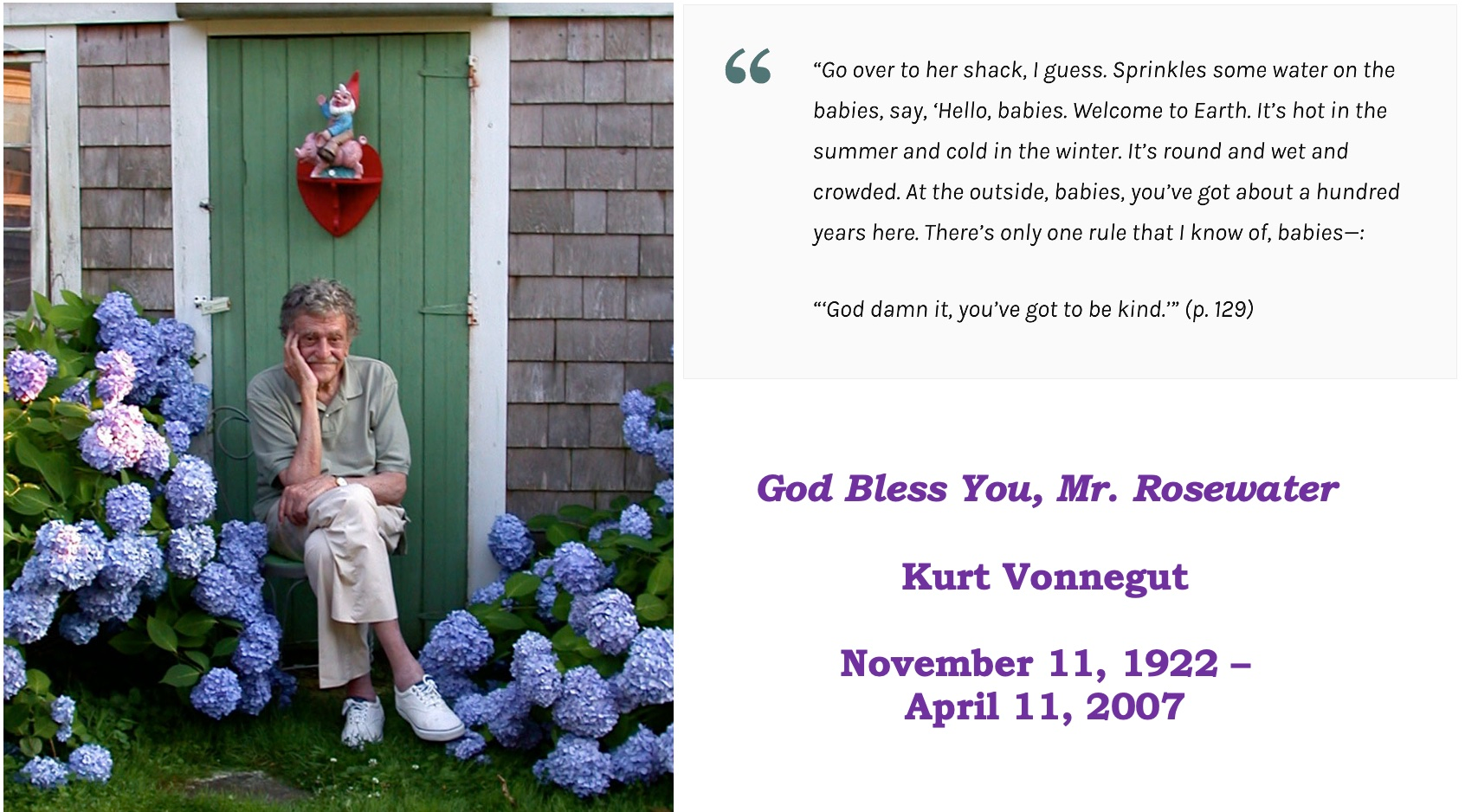
Vonnegut’s humanism and socialism sit just beneath the surface of his narratives that tend to darkly satirize the dehumanizing systems that people both create and tolerate. Player Piano is a brutal satire of corporate America decades before The Office or Office Space.
Some aspects of human precarity are inevitable, our bodies are prone to disease and they age inevitably to death.
And, yes, we often find our anxieties picking at the scab of our mortality.
But in Pluribus, death is at the edges in many ways (Helen dies and that sparks Carol’s intense loneliness). The focus of the story, however, is the fierce anger and determination of Carol to maintain and save her and everyone’s humanity, a determination seen in Manousos turned up a few notches.
Then there is the other precarity, the one created by systems, the one those systems need so that precarity is cultivated in horrible and dehumanizing ways.
Our Sisyphean existence in the US is dutifully and daily playing our roles as workers, and that role is carefully constructed to be a precarious one.
If we don’t work, we don’t eat.
If we lose our jobs, we lose healthcare, retirement, and frankly, our humanity.
Most people in capitalism cannot define themselves without their jobs. And few things bring more shame that losing a job.
It is subtle, but in S1E8, Charm Offensive, Carol and Zocia become lovers; the next morning, Carol writes again, returning to her job as a writer.
Few things are wasted in Pluribus—Manousos is warned about the spikes on the trees, and Zocia tells Carol “we” are excited she is writing again when Carol lies that she is.
Nothing is wasted, like the title of S1E1, We Is Us.
The paradox of the human condition, our precarity, e pluribus unum.
Out of many, one.

Make a one-time donation
Make a monthly donation
Make a yearly donation
Choose an amount
Or enter a custom amount
Your contribution is appreciated.
Your contribution is appreciated.
Your contribution is appreciated.
DonateDonate monthlyDonate yearly dr. p.l. (paul) thomas