All posts by plthomasedd

P. L. Thomas, Professor of Education (Furman University, Greenville SC), taught high school English in rural South Carolina before moving to teacher education. He is a former column editor for English Journal (National Council of Teachers of English), current series editor for Critical Literacy Teaching Series: Challenging Authors and Genres (Brill), and author of Teaching Writing as Journey, Not Destination: Essays Exploring What ‘Teaching Writing’ Means (IAP, 2019) and How to End the Reading War and Serve the Literacy Needs of All Students: A Primer for Parents, Policy Makers, and People Who Care (IAP, in press). NCTE named Thomas the 2013 George Orwell Award winner. He co-edited the award-winning (Divergent Book Award for Excellence in 21st Century Literacies Research) volume Critical Media Literacy and Fake News in Post-Truth America (Brill, 2018). Follow his work @plthomasEdD and the becoming radical (https://radicalscholarship.wordpress.com/).

A Call for Social Media Solidarity: “This Is Our House”

Let me start with an image.

Whether you have witnessed this in person or on TV, picture a college football stadium during a special event game when the fans organize a “white out” (or other appropriate color). The effect is impressive with the stadium almost entirely one color, a statement by the fans that “this is our house.”

Now, let me make a case about creating that same sort of solidarity among educators and public education advocates through social media.

Historically and significantly during the last three decades, U.S. public education policy and public discourse have been dominated by politicians, political appointees, billionaire hobbyists, pundits, and self-appointed entrepreneurs—most of whom having no or little experience or expertise in the field of education or education scholarship.

In fact, the “white out” in the media is inversely proportional to the expertise in the field:

Across MSNBC, CNN, And Fox, Only 9 Percent Of Guests In Education Segments Were Educators. On segments in which there was a substantial discussion of domestic education policy between January 1, 2014, and October 31, 2014, there were 185 guests total on CNN, MSNBC, and Fox, only 16 of whom were educators, or 9 percent. Media Matters

Next, allow me to chase what may appear to be a brief tangent.

While teaching high school English in rural SC for 18 years, I always enjoyed my U.S. literature unit on Arthur Miller’s The Crucible. One of the lines from the play was particularly enjoyable—when Tituba exclaims, “No, no, sir, I don’t truck with no Devil!”

Having grown up in the 1960s and 1970s, my mind always goes to this [1]:

Art and property of Robert Crumb.

But students often found the phrasing odd, despite my affinity for the metaphor and power of Tituba’s language.

To this day, I am apt to adopt Tituba’s stance when expressing my allegiances, and that brings me back to the point of this call for social media solidarity among educators and public education advocates.

Over about two years of blogging at my own site and engaging regularly on Twitter and other social media platforms, I have gradually adopted a stance that I do not truck with those who are disproportionately dominating the field of and public discourse about education.

Yes, I have done my share of calling out, discrediting, and arguing with, but except on rare occasions, I am done with that. Those who have tried to include me in the “@” wars on Twitter may have noticed my silence when the other side is added.

Each time we invoke their names, their flawed ideas, or their policies, we are joining the tables they have set. Once again, look at the chart above.

Also, don’t forget the Oliver Rule in which one-on-one debates imply for the public equal credibility between two people debating. As well, to debate implies that a position is debatable [2], and some issues simply aren’t up for debate.

Therefore, I am now asking that educators, scholars, and public education advocates who are active on social media (blogging, Tweeting, etc.) to make an effort to dedicate a day, a week, a month, or as I have done, a policy to creating our own educators’ “white out” on social media—establishing our place for our voices as a model against the mainstream media dedicated to those with authority (elections, appointments, wealth) but without credibility.

Don’t spend blogs rejecting their public claims and education policy.

Don’t engage them on Twitter, or “@” them into a Twitter exchange.

Symbolic messages matter, and the strongest message we can send about those who shall not be named is exactly that: erase them from the spaces they have dominated without deserving that space.

And in that open arena, let us raise our voices.

Our cases about what is not working and why, our evidence-based proposals for reform, our struggles in the classroom, our successes with students, our recognition of social and educational inequity, our commitment to social justice driven by educational equity—and all on our terms, not theirs.

This is our house.

See Also

Claiming the Education Reform Narrative

Whose Reform?: Claiming the Education Reform Narrative, pt. 2

[1] The term “keep on truckin'” likely reaches back to at least early twentieth century Jazz musicians; Robert Crumb popularized this in the late 1960s, however.

[2] Please examine how anti-evolution forces have “won” in the public arena by making teaching an evolution a debate, notably detailed in the documentary Flock of Dodos.
Three Eyes: Writer, Editor, Teacher

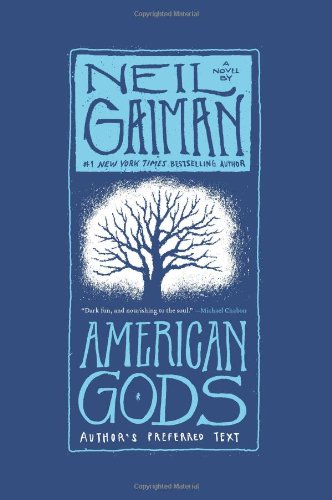
Note: My 2014 end-of-year, holiday gift to myself has been re-reading Neil Gaiman’s American Gods (author’s preferred edition). While considering a post about advice to teachers and professors as scholarly and public writers, I came across a post from a smaller blog of mine, DISCOURSE as quilting from 16 June 2013: remnant 21: “I began feeling more and more uncomfortable with the text that they would be using.” This piece, I think, touches on many things I want to share with readers of my main blog so I am reposting below with small revisions.

remnant 21: “I began feeling more and more uncomfortable with the text that they would be using.”

This is the story of one narrator with three eyes: writer, editor, teacher.

No, not three physical eyes, but ways of seeing writing.

It starts (the story, not the chronology of what actually happened) in a bookstore.

I must admit (shame on me) that I order a great deal of books online. I am still a hard-copy sort who loves the cover and texture and weight of books—although I recognize the possible need to shift into the virtual world.

I also must add that my book fetish overrides my concern about BIG online sellers and chain bookstores. Somehow my moral compass is skewed enough to forgive almost anything as long as the sanctity of the book is honored. (I hasten to add, not much here in my soul to respect, by the way; no delusions on my end about that—although I do love children quite deeply and genuinely because I hold out a tiny speck of hope for the future inside a very dark cloud of certainty it’s not going to happen.)

So I was at the chain bookstore to grab a few Haruki Murakami volumes, I hoped. I had plowed through in about a year all his English-language novels, but had yet to venture into his short stories and non-fiction. I expected a chain store had at least some of what I didn’t yet own, and although I had promised myself not to buy any more books until after I received the then soon-to-be-released Neil Gaiman, and read that, I was jonesing for some Murakami and I gave in like a heroine addict—or worse, like someone who loves to read.

I pulled two collections of Murakami short stories off the shelf and touched the covers, testing their weight, and felt suddenly happier than normal. The store was well air conditioned, and I had spent most of the day doing a somewhat hellish bicycling ride with four friends—75 miles into the North Carolina mountains during a warm, almost-summer day in South Carolina.

The bookstore and holding two new books had brought me some calm so I just began to look around, touching and holding books I’d never read, glancing over displays of “Summer Reading” (mostly the sorts of books we cram down children’s throats in school) and noticing that I had read just about all of them.

Then I saw this:

My first thought was how beautiful the cover is, followed quickly by: This is not the cover of the copy I own. I reached for it, touched the cover, tested the weight, and then noticed: “American Gods, author’s preferred text.”

The comic book industry discovered that powerful nerd instinct (something akin to OCD, or simply OCD) that compels some of us to own multiple versions of the same thing. An episode of The Big Bang Theory, “The 21-Second Excitation,” centers on a new cut of Raiders of the Lost Ark containing, yep, 21 more seconds.

I understand this because I was a comic book collector throughout adolescence, I still hoard some comics and many books, and I own the DVD of the multitude of versions of Blade Runner—noting to a friend recently when lending him the set that he should watch only the Final Cut.

Thus, I slipped this version of Gaiman’s novel into my hand with the two Murakamis, but this was more than the careless hoarding of a nerd. This story is about Gaiman’s “A Note on the Text”:

The book you’re holding is slightly different from the version of the book that was previously published….

As they told me about the wonderful treats they had planned for the limited edition—something they planned to be a miracle of the bookmaker’s art—I began to feel more and more uncomfortable with the text that they would be using.

Would they, I inquired rather diffidently, be willing to use my original, untrimmed text?

Now the story loops backward in time.

Maybe a couple of months ago and then a few weeks ago (at the time this post was originally written).

I have been teaching writing in a variety of ways (high school students, graduate students, undergraduate students) for almost thirty years now. I have been a writer (or better phrased, I should note the amount of time that has passed since I realized I am a writer) since a spring day in 1980 when I sat in my third-story dorm room writing what I consider “my first poem,” an e.e. cummings homage about throwing a Frisbee. And I have been an editor of columns and books for several years now, close to a decade, I believe.

As a scholar, I often submit work and have essentially the same sorts of responses from the editors in charge of my work, responses that rise above the essential and welcomed editing that all writing needs and deserves.

Often, the editor doesn’t want my work; the editor wants the piece s/he would have written.

Now back to Gaiman’s “author’s preferred text.”

I looked at that marvelous blue cover, and thought, What? Neil Gaiman had a text published that he didn’t quite want?

So buying this edition of American Gods, first, was to appease my own psychoses. Next, it was a political act to honor Gaiman’s “preferred text,” a political act from a not-really-very-important writer (but a damned loyal reader) to a real-honest-to-god writer. A deposit in the intersection of karmas among writers, readers, lovers of art.

But all of this leaves me sad ultimately, sad in a way that will from this moment on inform me as a writer, editor, and teacher.

When I was younger (not much) and couldn’t get anyone to publish my work, I dutifully worked through the nearly-all-red track changes of edited submissions. Like the mother’s boy I am, I wanted so badly to please—and be published.

Over the last several years, however, I have gained the luxury of being well published, and despite my eternal quest to be wanted, to have others say my writing matters, I have twice now pulled scholarly pieces from projects after the editors and I spent a great deal of time revising my initial pieces.

And sitting there with Gaiman’s “preferred text” beside the computer, I was working toward being at peace with this idea:

Once a piece of my writing stops being mine, and starts being yours, I have to say with all due respect that maybe you should just write the piece yourself.

Although I am not completely sure this is true, I used to share with students that Ernest Hemingway wrote The Sun Also Rises to show he could write a better The Great Gatsby. (And he did, I think.) All in all, seems the right thing to do. We are the richer for it, and what a shame if one had simply edited the other into writing only the one book?

And since I have ignored all conventions of chronology here, let me slip again to a moment when I had to make that decision.

An editor (a kind and careful soul) had heavily edited a piece, moving large sections of text, and then noting (and this will seem quite trivial) that she had changed my final subhead to “Conclusion.”

The straw that broke the camel’s back—I couldn’t allow a piece published with my name have a subhead I have been urging my students and works under my editorship to avoid. Conclusion?

Is there anything more lifeless than that? Anything that tells the reader that this writer doesn’t really have anything to offer? That this writer is just getting on with it, getting this thing over?

Writing is collaboration, and so is reading.

As writer, editor, and teacher, however, I must respect the piece the writer wants to share, lest we all sit alone talking to ourselves.

The story ended there. I had to work on a poem about lavender silk monkeys and continued to avoid working on three chapters due for scholarly books in a few months.

Wonder Woman and a (Surprising) Brief History of U.S. Feminism

By sheer coincidence, or at the bidding of the book gods [1], I discovered a connection between U.S. poet E.E. Cummings and Wonder Woman creator William Moulton Marston:

And then, on Thursday, June 24, 1915, an unseasonably cold day, Marston graduated from Harvard. In exercises held at Sanders Theatre, E.E. Cummings, a member of Marston’s class, delivered a speech about modernism called “The New Art.” (Lepore, p. 42)

After reading Susan Cheever’s compact and engaging E.E. Cummings: A Life, I turned to Jill Lepore’s The Secret History of Wonder Woman, completely unaware of the connection. Paired, however, these well written and researched books are also powerful histories that reveal the (possibly distorted) influence of Harvard in the U.S. as well as insight into the intersection of early twentieth century intelligentsia, art, and pop culture.

My initial interest in Lepore’s examination of Wonder Woman rested on my comic book background—although I was a Marvel collector in the day and quite not DC. However, Lepore’s volume is much more than about Wonder Woman or even a solid biography of Marston; this is a somewhat shocking story about U.S. feminism and sexual politics, commercialization, pop culture, and the enduring power of myth.

As a lifelong educator who essentially hid my comic book reading/collecting throughout junior and high school, I was initially sympathetic to Marston, who struggled at Harvard:

“I had to take a lot of courses that I hated,” [William Moulton Marston] explained. English A: Rhetoric and Composition was a required course for freshmen. “I wanted to write and English A, at Harvard, wouldn’t let you write,” he complained. “It made you spell and punctuate. If you wrote anything you felt like writing, enjoyed writing, your paper was marked flunk in red pencil.” (p. 6)

Especially in the wake of reading again about how Cummings developed while at Harvard, I recognized in Marston’s life (among his proclivities for living with and fathering children by multiple women) the development of creativity as an act against the norms of one’s time or community.

The short version of Lepore’s work is that Marston stumbled—often badly—through a career as a scholar/academic and inventor of the lie detector test until he created Wonder Woman in the foundational years of superhero comic books, the 1930s-1940s. However, what Lepore details well is that Marston’s creation grew significantly from the U.S. feminism movement in the early twentieth century and his relationships with Sadie Elizabeth Holloway, Margaret Sanger, and Olive Byrne.

While comic books and superheroes in the early decades of the medium from the 1930s and into the 1950s were often discounted and even savagely attacked as corrupting of children, Lepore builds a case not for Marston (who certainly comes off poorly as often a charlatan and essentially a self-centered hypocrite) but for the potential of pop culture as social activism.

Wonder Woman was created and written by Marston (with significant help, it appears, from the many women in his life) as a manifesto for women’s liberation, equality—sexual liberation, reproductive rights, work-place equality.

The farther Wonder Woman drifted from Marston, who wrote most of her comic book adventures from the early to late 1940s, the less that ideal held against the influence of the market, where traditional womanhood sold better than radical feminism (or least, that is what publishers believed).

Superheroes as pop icons have entered the U.S. consciousness through many media—comic books, television (Batman, The Hulk, and Wonder Woman, notably), and film. At any given moment in history, then, the “hot” superhero is often dictated by the medium of prominence. As a result, few people are likely aware that Wonder Woman was among the first big three in superhero comics, along with Superman and Batman.

covers copy
Wonder Woman then: Sensation Comics #1 (January 1942) and Wonder Woman #1 (Summer 1942). Art by Harry G. Peter.

And while all three have endured 70-plus years in pop culture—with all three having peaks, valleys, and fairly dramatic reboots—Wonder Woman has certainly not maintained either Marston’s original intent or the same weight as Superman and Batman.

That in itself is a message about how far women have yet to go in the journey to equality so well detailed by Lepore in her portrayals of Holloway, Sanger, Byrnes, and others.

Regretfully, after reading Secret History, I have a parallel concern I raised about a black Captain America: If Wonder Woman reinforces female stereotypes, objectifies women, what good a woman superhero?

141216-wonder-woman-tease_lif9rf
Wonder Woman now: Art by David Finch

Hugh Ryan shares this concern by considering both the new team writing and drawing Wonder Woman, David and Meredith Finch, and how that essentially spits in the face of Wonder Woman as feminist ideal:

That comics are a bastion of sexism is a truism so banal it almost goes without saying. But it is particularly galling to watch the feminist superhero be treated in such a way. The Finches have made no small point of the fact that Meredith is one of only a handful of women to ever write Wonder Woman. “I love the idea that it’s a woman writing a woman,” David said in an interview with USA Today, “because we’re trying to appeal to more female readers now.”

Seeking to be celebrated for simply hiring a woman is tokenizing and offensive. From writer Gail Simone to artist Fiona Staples, there are incredible women already working in the industry. Let’s celebrate them. The Finch’s ideas of feminism, strength, and what appeals to women today seem retrograde, borderline misogynistic, and—to be frank—boring. Wonder Woman deserves better.

Cheever’s biography of Cummings and Lepore’s exploration of Wonder Woman reveal that truly flawed men (in these two cases) are often behind genuinely marvelous creation. And thus, the irony increases: Just as Cummings and Marston created as often flawed reactionaries, in spite of their environments, against the norms, we are now faced with rejecting a popular media failing not just Wonder Woman, but women once again.

See Also

In the U.S., Where the Female Nipple Is More Dangerous Than a Gun

[1] Since I am currently re-reading Neil Gaiman’s American Gods (author’s preferred text), I concede the possibility of the latter.

Magical Murakami Nightmares

I was afraid
I’d eat your brains
Cause I’m evil

“Conversation 16,″ The National

The foundations of my own quest to be a poet and fiction writer were laid while reading and hoping to be e.e. cummings and J.D. Salinger (hence, P.L. Thomas). Both share an idealizing of childhood and innocence against a skeptical, if not jaded and cynical view of adulthood.

Salinger’s short fiction also spoke to my early faith in craft; his stories are like diamonds so perfectly and carefully cut that one is both unable to look at or away from them.

Also—and quite logically in hindsight—I became fascinated with Franz Kafka, who posed a problem for my obsession with writer’s craft since his work was in translation and there was something unnamable in his stories and diaries/letters that moved me unlike cummings or Salinger.

More or less thirty years later, I am a much different writer as well as a much different reader. Part of my more recent journey has been the work of Haruki Murakami, who now bookends my Kafka phase with his magical nightmares that seem to defy much that I know about writing and reading (notably any clear concepts of genre).

The Murakami bounty in the last year-plus has been magnificent: “Samsa in Love,” “Scheherazade,” Colorless Tsukuru Tazaki and His Years of Pilgrimage, and Matthew Carl Strecher’s critical work, The Forbidden Worlds of Haruki Murakami.

But the work that has lingered for me is his The Strange Library because it captures nearly everything both marvelous and difficult about Murakami.

Many years ago I read The Nightmare of Reason: A Life of Franz Kafka by Ernst Pawel and have always thought the title was perfect. It is the Kafkan in Murakami—and notably in The Strange Library—that pushes me to magical nightmare for Murakami.

As a book lover and library advocate, I first noticed The Strange Library is a physical argument for the power of hard-copy books (not ebooks). The clever flap opening, the stunning illustrations, the heft of the cover and paper, the neoclassic typewriter font, the occasional blue type, the ink smell, the odd and final tiny-print paragraph—all of these publishing craft elements shout out for the enduring beauty of buying and holding a real-life, printed book.

The Strange Library, Haruki Murakami. Book design and illustrations by Chip Kidd.

Having recently presented at NCTE’s national convention on the importance of libraries—highlighting Ray Bradbury, Neil Gaiman, and Louise DeSalvo—I was even more eager to read Murakami’s story since he has included libraries before (see Kafka on the Shore).

While DeSalvo’s memoir, Vertigo, opens with the library as sanctuary, The Strange Library is immediately ominous: “The library was even more hushed than usual,” it begins with the main character’s shoes making a “hard, dry sound…unlike my normal footsteps.”

Although the nameless boy frequents this library, the librarian is unfamiliar, and this experience reveals the library to be a labyrinth and a magical nightmare leading to the boy imprisonment and horrifying fate:

The sheep man cocked his head to one side. “Wow, that’s a tough one.”

“Please, tell me. My mother is waiting for me back home.”

“Okay, kid. Then I’ll give it to you straight. The top of your head’ll be sawed off and all your brain’ll get slurped right up.”

I was too shocked for words.

“You mean,” I said, when I had recovered, “you mean that old man’s going to eat my brains?”

“Yes, I’m really sorry, but that’s the way it has to be,” the sheep man said, reluctantly.

The sheep man has also appeared in Murakami before: Dance Dance Dance and A Wild Sheep Chase.

The story is brief, but layered in the way that makes Murakami, Murakami: places and people are not simple dualities, but simultaneously opposing forces, to the point of being irreconcilable.

The Strange Library leaves a great deal unsaid in the wake of nearly too many aesthetic messages, a magical nightmare of childhood that almost reminds me of Neil Gaiman (almost).

The melancholy loneliness that clings to everything Murakami—”After that, I never visited the city library again”—remains once you carefully interlock the flip opening, much as those giant cartoon eyes seem to demand.

However, my heart is warmed because this book demands to be read and re-read, held solidly in your hands that remain somewhat unsure what to do with this odd little book.


For Further Reading

remnant 37: “‘If you think of someone enough, you’re sure to meet them again'”

remnant 61: “The right words always seemed to come too late”

remnant 70: “I was afraid I’d eat your brains”

Responsibilities of Privilege: Bearing Witness, pt. 2

On my post Bearing Witness: Hypocrisy, Not Ideology, Bill Boyle left a long and thoughtful comment, highlighted by a central question I often receive when I confront privilege: “For instance, does the relative wealth I have accumulated via my privilege make any of my statements on addressing poverty hypocritical?”

In many versions, I have been asked about what right do whites have to hold forth on race, what right do the relatively affluent have to hold forth on poverty, what right do men have to hold forth on gender—if privilege, then, discredits the privileged?

My short answer is that one’s privilege is not the determining factor in a person’s credibility, but what one does with that privilege is.

As an educator for over thirty years, a writer and scholar for most of that time, and then a public commentator during the more recent past, I have often had to negotiate my own privilege (significantly in the dominant statuses in the U.S. that drive much of the inequity, bias, and prejudice in the country) against my social justice commitments as well as my developing commitment to bear witness in the tradition of James Baldwin.

The most difficult example of that journey (one begun in the pages of literature when I was in college, discovering and learning from Ralph Ellison, Richard Wright, Jean Toomer, Langston Hughes, Toni Morrison, Zora Neale Hurston, and Alice Walker) has been my own discomfort over bearing witness to the segregating and racist intentions and consequences of the charter school movement (specifically among KIPP charter schools and the many copy-cat “no excuses” charter schools) in the context of evidence that black parents were strongly supporting and rushing to choose those very schools (see Sarah Carr’s Hope Against Hope, which documents that phenomenon).

I was able to rectify that deeply uncomfortable sense that I was being privileged, I was whitesplaining, I was being paternalistic by reading and taking great care to listen carefully to Michelle Alexander’s The New Jim Crow, in which she identifies and addresses a similar paradox in the mass incarceration debate; as I have explained:

For example, Carr reports that African American parents not only choose “no excuses” charter schools in New Orleans, but also actively cheer and encourage the authoritarian policies voiced by the schools’ administrators. But Alexander states, “Given the dilemma facing poor black communities, it is inaccurate to say that black people ‘support’ mass incarceration or ‘get-tough’ policies” because “if the only choice that is offered blacks is rampant crime or more prisons, the predictable (and understandable) answer will be ‘more prisons'” (p. 210).

New Orleans serves as a stark example of how this dynamic works in education reform: Given the choice between segregated, underfunded and deteriorating public schools and “no excuses” charters – and not the choice of the school environments and offerings found in many elite private schools – the predictable answer is “no excuses” charters.

Here, then, I want to answer Bill Boyle’s concerns a bit more fully—outlining some key responsibilities of those with privilege as a guide for seeking ways to rise above that privilege, to avoid the trap of hypocrisy:

  • Acknowledge privilege. The most telling sign of privilege is the knee-jerk denial (often angry) of that privilege. Self-awareness is key for managing your privilege and seeking a path to empathy.
  • Respond to privilege with humility instead of arrogance. Another powerful signal of the worst aspects of privilege is now a cliche: Being born on third base but thinking you have hit a triple. I call this the Ozymandias Syndrome: “Look on my Works, ye Mighty, and despair!” Many of us with privilege have been quite successful, and have even worked very hard, so we are apt to flaunt that success—”Look what I accomplished, and so can you!” Instead, we must recognize that much of our accomplishments have their roots in huge advantages not of our making, and thus, humility.
  • Use privilege in the service of others. Instead of building privilege from privilege or leveraging privilege for personal gain, the advantages of privilege can and should be aimed at dismantling, ironically, the systems that bestowed them. Instead of “Look on my Works,” we must ask, “How do we build a world in which everyone begins as I did?”
  • Understand and avoid appropriation. Privilege breeds a sense of normal among the privileged and thus an otherness onto any unlike the privileged class. One consequence of creating the other is to appropriate those othered in reductive, insensitive, and manipulative ways. The analogy is one of the great faults of privileged good intentions gone wrong: U.S. slavery of blacks, the Holocaust, the Japanese Internment reduced to the analogy game in order to score political points.
  • Shut up and listen. As a white, male, privileged teacher and writer, I am apt to hold forth. I am extremely verbal, and I often struggle against my good intentions and passion coming off as arrogance. As I noted above, my commitment as witness is firmly grounded in reading and listening to those who suffer the burden of bias, prejudice, and oppression. My silence, however, is important since it returns space to the open market of ideas; my intent listening is also essential to my never-ending journey toward compassion that must be central to my role as witness.
  • Understand and avoid paternalism. My warning—beware the roadbuilders—represents well where I am on my journey to use my privilege in the service of others and to eradicate inequity because “roadbuilders” [1] is drawn from Alice Walker’s The Color Purple, and it rejects directly the cancerous paternalism in bleeding-heart liberalism (confronted by Martin Luther King Jr.). Privilege as paternalism (the roadbuilders) imposes itself on others for their own good, but instead, we must ask, “What do you want, need from me?” [2]
  • Be responsible for your own empathy. Another seemingly good intention among the privileged is requesting that so-called marginalized groups guide one’s path out of arrogant privilege; such requests are simply more burden, more evidence of the weight of privilege heaped on the othered.
  • Step aside. Just as being quiet in order to listen returns space to the common good, an important act among the privileged is to step aside so that others may occupy those spaces automatically denied by the consequences of privilege. Again in my rush to do good, I not only clung to the spaces afforded me because of my privilege, but gobbled up all that I could additionally. In recent years, however, I have begun using my privilege and role as witness to move away from authored scholarly books and toward edited volumes (more voices, and more opportunities for those who otherwise would have been ignored, silenced), edited columns, and other projects in which I can facilitate access to spaces otherwise filled by the privileged. As well—although against the norms of scholarship—my work has been dedicated to preserving the voices of the giants upon whose shoulders I stand by quoting instead of simply paraphrasing and citing.
  • Bear witness to the roadbuilders. The privileged must certainly be willing to call out the arrogance of privilege, and here is likely the most valid way to use privilege in the service of others. Reaching out instead of attacking—but being firm and consistent in bearing witness to the folly and harm done by paternalism, whitesplaining, mansplaining, and the many microaggressions of privilege. This witnessing, I think, is essential for building an empathetic environment in which privilege is no longer allowed to impose itself (Idea X or Comment Y is not valid until Privileged A says so) and in which oversimplification is replaced by nuance (no more monolithic “black culture,” “homosexuality,” “women,” etc., against the privileged norm).

None of this is mine, of course, and none of this is thus justified because I have deemed it so. Therein lies the great paradox of privilege and living in ways that seek to eradicate privilege.

Today this is the best I have to offer because of the many wise and kind people who have lent themselves to my education, to the lifting of the veil of privilege from my eyes. But tomorrow …

Toward the end of his last interview, James Baldwin explains: “Because you can’t be taught anything if you think you know everything already, that something else—greed, materialism, and consuming—is more important to your life.”

And that is something worthy of bearing witness: our humility, and as Baldwin always reminded us, grounded in love.

[1] “Beware the roadbuilders” as a refrain and analogy creates tension against my warning about appropriation and analogy, but it is that tension I use when making decisions about how to frame my necessarily evolving efforts to bear witness and use privilege in the service of others.

[2] An offer that may reveal, as Baldwin argues, “The only thing that really unites all black men everywhere is, as far as I can tell, the fact that white men are on their necks.”

See Also
Roxane Gay’s “Peculiar Benefits”

Gina Crosley-Corcoran’s “Explaining White Privilege to a Broke White Person…”

Education Reform as the New Misogyny: A Reader

The Funny Thing about Privilege, Imani Gandy

White Privilege: Unpacking the Invisible Knapsack, Peggy McIntosh

Bearing Witness: Hypocrisy, Not Ideology

Unless this is mangled memory (and in my advancing age, it may well be), when the sit-com Seinfeld interspersed Jerry Seinfeld doing stand-up with the main show, I was struck by one routine about sports fandom. Seinfeld noted that since the players on any team are constantly changing, fans are essentially pulling for the jerseys.

As observational humor goes, that joke is funny, but I also think it essentially nails what is wrong with partisan politics when anyone defends her/his party (team) regardless of behaviors while simultaneously illuminating every slip of the other party (team) as if the world is coming to an end.

For that reason mainly, I have removed myself entirely from partisan politics (inspired by the late and great George Carlin, who is the team to which I lend my loyalty).

Recently, I have noticed Democrats posting on social media a news story concerning Rudy Giuliani’s daughter being arrested for shoplifting. I ignored the posts at first, but since I certainly have found Giuliani in the past and recently to be beyond loathsome in his commentary (notably when paired with equally loathsome Bill O’Reilley), I happened to click the link once to discover the story is from 2010.

All of this puts me in an ethical/intellectual bind because in many respects the Giuliani-as-law-and-order-politician/daughter-as-criminal dynamic does highlight what I believe is how we must judge both leadership and privilege in the U.S. But the context in which I have found this story (and it being from 2010) still reeks of partisan sniping and pettiness (especially if we consider the recent ugliness surrounding comments about the Obama daughters).

In the U.S., political leadership, wealth and success, and privilege are nearly inseparable—despite the meritocracy myth perpetuated by the privileged to mask their greased paths to power and wealth.

And thus, the genuine differences between Democrats and Republicans remain mostly in word only—platforms, speeches, and published commentaries. War mongering, accountability-driven public education reform, economic policy, etc., remain significantly similar regardless of political party affiliation in the U.S., particularly is we assess the policy against the larger ideology justifying those policies (free market mechanisms, neoliberalism, etc.).

Participating in partisan politics, then, in the same ways we participate in team sport allows privileged leadership to continue serving the interests of the privileged at the expense of the great majority of people in the U.S.—notably the marginalized.

While I am not suggesting ideology doesn’t matter, I am calling for placing judgments of leaders and the privileged in the context of hypocrisy first. Let me offer some context.

Both Democrats and Republicans champion market forces for reforming public education, notably parental choice as a driving mechanism for reform.

However, when controlling for student demographics (and conditions such as selection exclusivity and attrition), among private, charter, and public schools, virtually no differences in major outcomes exist.

But let’s go further, many endorsing market forces (whether vouchers on the right or charter schools on the left) often claim issues such as class size do not matter—assertions that must be tested against not only those making the claims but also the evidence from the market itself.

Bill Gates, for example, has pushed for classes of 40 students with teachers paid bonuses for those large class sizes; however, Gates himself attended elite private schools with extremely low class sizes.

And therein lies the problem with hypocrisy.

While private schools do not in fact outperform public schools (both forms of schooling have a wide range of so-called quality), the market dynamics around private schools responding to parental choice clearly show that low class sizes are important—in fact, justifying larger financial investments by parents.

And I think now we can circle back to how Giuliani and his daughter can and should matter.

Privileged leadership in the U.S. represents word and deed designed for everyone else except the privileged class; in education, what privileged leaders are saying is that, for example, class size doesn’t matter for other people’s children (but it does for mine and my privileged friends).

Giuliani’s tone-deaf and offensive claims about law enforcement and black/brown people/families reveal the arrogance of leadership and privilege—and thus, he should be held accountable for his hypocrisy. But not as yet another partisan mask for letting those on the “other” political team slide (which is what I believe most of the posts I have seen are doing).

Kurt Vonnegut’s Cat’s Cradle, among many things, is about the puppet show that is partisan politics as team sport. Vonnegut’s dystopia, however, is playing out before us now whenever we fail to see past the veneer of ideological claims, whenever we continue to pull for the jerseys.

To judge leadership/privilege against hypocrisy is a moral imperative that is lost in ideological team sport.

“But to recommend thrift to the poor is both grotesque and insulting,” wrote Oscar Wilde. Why? Because the people demanding thrift among the poor are not themselves living under the same directive; if fact, the wealthy who demand thrift of the poor wallow in waste and excess.

Those demanding “no excuses,” as with those rejecting the importance of class size, for example, tend to live in abundance and slack—among the very riches of excuses.

And so I believe that a key part of our fight for public education and democracy is that we cannot have genuine ideological battles until we hold all ideologies responsible for the validity of their own investment in those ideologies.

Hypocrites have no moral authority. Without moral authority, a person deserves no political authority.

As long as we allow hypocrisy, however, in order to preserve our partisan politics as team sport, we are part of the problem.

In a 1961 interview by Studs Terkel, James Baldwin states: “People don’t live by the standards they say they live by, and the gap between their profession and the actuality is what creates this despair, and this uncertainty, which is very, very dangerous.”

Baldwin, then, as writer/artist describes himself—in a 1984 interview by Julius Lester—as a witness: “Witness to whence I came, where I am. Witness to see what I’ve seen and the possibilities that I think I see.”

Every people, every generation needs the artists-as-witnesses, but a democracy requires that each one of us serves as witness in the way Baldwin explains:

Lester: You have been politically engaged, but you have never succumbed to ideology, which has devoured some of the best black writers of my generation.

Baldwin: Perhaps I did not succumb to ideology, as you put it, because I have never seen myself as a spokesman. I am a witness. In the church in which I was raised you were supposed to bear witness to the truth. Now, later on, you wonder what in the world the truth is, but you do know what a lie is….

A spokesman assumes that he is speaking for others. I never assumed that—I never assumed that I could….No society can smash the social contract and be exempt from the consequences, and the consequences are chaos for everybody in the society.

Hypocrisy is that obvious lie we must bear witness to by rising above mere ideology.

Whose Reform?: Claiming the Education Reform Narrative, pt. 2

For thirty years, the education reform movement committed to accountability linked to standards and high-stakes testing has been mostly orchestrated by the privileged class and imposed onto (while also creating) marginalized groups as the Others: black and brown students, English language learners, high-poverty students, special needs students, schools disproportionally serving any of these populations, and more recently, teachers and even parents who advocate for students and public education.

Resistance to that reform has mostly been reactionary, and thus, voices and actions of resistance have remained within the reform structure dictated by the reformers.

As I called for ways to claim the education reform narrative, I acknowledged the need for all marginalized groups to step outside being cast as the Other—but James Baldwin and Audre Lourde make that case far more powerfully than I:

My own point of view, speaking out of black America, when I had to try to answer the stigma, that species of social curse, it seemed a great mistake to answer in the language of the oppressor. As long as I react as a “nigger,” as long as I protest my case on evidence and assumptions held by others, I’m simply reinforcing those assumptions. As long as I complain about being oppressed, the oppressor is in consolation of knowing that I know my place, so to speak. (James Baldwin: The Last Interview, p. 72)

For the master’s tools will never dismantle the master’s house. They may allow us temporarily to beat him at his own game, but they will never enable us to bring about genuine change. (The Master’s Tools Will Never Dismantle the Master’s House, Audre Lorde)

As we move into 2015, I invite you to join me in avoiding the “great mistake” by claiming the education reform movement on our own terms, in our own language.

Compassionate Teaching: “a hug and a little bit of extra attention”

As I examined a week ago, while many people anticipate Santa Claus, family reunions, and peace on earth during the Christmas/New Year’s season, I await the inevitable worrying, anxiety, and stress. And there is nothing rational about either the anticipation or the days and even weeks struggling against the weight of all that anxiety.

Firmly underneath that this year (tempered briefly when I sit quietly with my granddaughter sleeping on my chest), I was immediately drawn to two moments on social media.

First (either on Twitter or Facebook), I saw this quote attributed to Gandhi:

There is nothing that wastes the body like worry, and one who has any faith in God should be ashamed to worry about anything whatsoever.

And then, this headline at Valerie Strauss’s The Answer Sheet: Mom: How I know my anxious daughter’s kindergarten teacher is great.

What I would call normal (for lack of a better word) worrying and anxiety can be exhausting—even if it is rational and based in healthy responses to the world.

But irrational and relentless worrying and anxiety are characterized by the fear of the unknown, the uncontrollable, and (I think, worst of all) highly negative “what if” thinking.

As an adult and life-long sufferer of anxiety, I can attest that these psychological experiences are physically taxing, nearly debilitating even though many of us have learned how to mask for others (in 1999, my family physician could not diagnose my panic attacks because he said I always seemed so relaxed) and how to function in self-denial (we fear admitting our own human frailties, I think, because we anxious are also perfectionists).

As I read Jane Dimyan-Ehrenfeld’s celebration of her anxious daughter’s kindergarten teacher, I started seeing more clearly how my discomfort with our field of education grows directly out of my own lived experiences with anxiety.

“As you can imagine, I too love my daughter’s teacher, Mrs. Brooks,” Dimyan-Ehrenfeld explains, adding:

Although she is an anxious kid, she loves school, not only because in her classroom learning goes hand in hand with joy and inquiry and creative exploration, but also because she adores Mrs. Brooks, who knows how to solve my daughter’s nervous stomachaches with a hug and a little bit of extra attention, who understands and honors her strengths, and who makes her laugh and teaches her funny sayings like, “Wake up and smell the cappuccino!” My daughter has watched Mrs. Brooks and learned kindness and compassion, becoming an important friend to a student with severe developmental disabilities in the classroom, no doubt in large part because she saw how much Mrs. Brooks. adored this little boy (Mrs. Brooks cried when he left for another school, and threw him a beautiful party on his last day). Where other teachers might have been relieved to lose a high-needs student from their rooms, Mrs. Brooks mourned the loss of a sweet kid, and my daughter watched this and learned.

Dimyan-Ehrenfeld’s point focuses on the current failure of addressing teacher quality by emphasizing measurable teacher impact on student test scores. And here, I agree, but I think the issue is even larger than that.

Education has historically trained teachers under some dictums I have always rejected: don’t be friends with your students, don’t touch students, and start the year as a strict disciplinarian (you can always ease off a bit later).

So I think Dimyan-Ehrenfeld’s essay about her daughter’s kind and compassionate teacher is a charge against historical and current failures about what it means to be an effective teacher.

In part, it makes sense that education and schooling focus mostly in the cognitive domain; of course, that is what learning is, I suppose.

But we fail education and our students if we ignore that teaching and learning exist in the emotional realities of being a human.

In my high anxiety phases, I am much less capable of attending to myself, but I also must retract from the needs of others (anxiety drains our ability to be the compassionate people we wish to be, and need from others)—even if that is nearly imperceptible to others.

And worrying/anxiety share a quality with poverty (as examined in Scarcity) that must be central to our work as teachers: No one—especially children, teens, and young adults—can take a vacation from anxiety, stress, or poverty because they are pervasive states beyond the control of many people.

“Don’t worry” or “relax” serves about the same purpose as “stop being poor” by placing all the emphasis (and possibly blame) on the person who is actually under the control of the anxiety/poverty but not necessarily capable of overcoming those forces alone or under that weight due to personal failure or weakness.

All humans—especially children and the young—need the empathy of others, a community of support grounded in having the awareness of what others may be experiencing if it is beyond your own experiences.

For me, part of the urge to mask grows from how exhausting it is to explain irrational anxiety to someone with no context for understanding what I struggle against. There’s a certain peace among we anxious commiserating, but those who have no experience with “what if” worrying must have empathy in order to grasp something beyond their world.

Thus, when Dimyan-Ehrenfeld emphasizes “kindness and compassion,” I was compelled by her “I too love my daughter’s teacher” to consider more deeply just why I have set out to confront corporal punishment, grade retention, and “no excuses”/deficit ideologies related to children and students: they all breed stress and anxiety unnecessarily in children/students.

Public schooling has a long history of creating stress and anxiety in the education and lives of children; over the past thirty years, that historical reality has been amplified under the guise of rigor, standards, and “no excuses”—all of which erase any hope for kindness and compassion unless each teacher her/himself is willing to risk either.

Teaching the whole child is often trivialized, and mostly marginalized—even mocked. But the great paradox of honoring the cognitive growth of children and students is that we must create lives and classrooms filled with kindness and compassion first before those cognitive goals can matter.

Recess, friendships, laughing, reading by choice, art, band, chorus, clubs, athletics—these are the moments of formal schooling that remain with children and teachers because they are filled with emotional and interpersonal meaning.

Of course, we want our students to learn and our children and youth to grow, but those aspirations are not purely cognitive and not measurable in any valid ways.

Teachers who love their students in word and deed, students who love their teachers in word and deed—these are the foundational conditions of high quality teaching and excellent student achievement.

If we start with kindness, compassion, empathy, and love, and if we remain always true to those ideals, we have a much better chance to achieve the so-called high expectations many champion while creating heartless and soulless schools that impose stress and anxiety on children that erode their capacities for learning and growing.

This is the ultimate immeasurable of being a teacher, the humanity of “a hug and a little bit of extra attention.”