James Baldwin: Challenging Authors
A. Scott Henderson and P. L. Thomas, editors
Critical Literacy Teaching Series: Challenging Authors and Genres
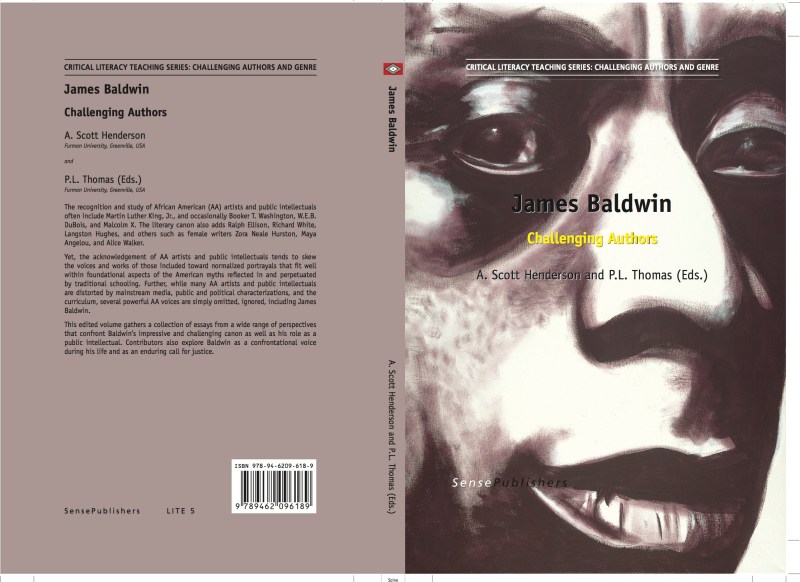

James Baldwin: Challenging Authors
A. Scott Henderson and P. L. Thomas, editors
Critical Literacy Teaching Series: Challenging Authors and Genres
ac·a·dem·ic: adjective \a-kə-ˈde-mik\ having no practical importance; not involving or relating to anything real or practical.
###
Currently, I have three seniors on track to certify as secondary English teachers doing extended field experiences in local schools—one is placed in an eighth-grade ELA class and another is teaching college-bound students in a high school.
While observing at the middle school, I arrived early one day while the full-time teacher was finishing a discussion of Walter Dean Myers’s Monster. The teacher had to cut the read aloud short, and one student begged for him to continue reading. The teacher asked for the books to be passed forward, prompting that same student to ask to hold on to his copy so he could keep reading (the teacher arranged for the student to retrieve a copy later, by the way).
In the high school class, the teacher-to-be has been teaching poetry by Adrienne Rich and Sylvia Plath—I observed a wonderful discussion of Plath’s “Metaphors”—but the full-time teacher has stressed that students not be offered biographical background information so students could focus on reading the texts cold—in part, as preparation for Advanced Placement Literature testing.
###
An essential element in the ELA Common Core standards is “close reading,” endorsed by David Coleman (now president of the College Board, home of AP and SAT testing):
Close reading, as it appears in the Common Core, requires readers to emphasize “what lies within the four corners of the text” and de-emphasize their own perspective, background, and biases in order to uncover the author’s meaning in the text.
Although “close reading” is a relatively new term, I have noted that its foundational elements are essentially perpetuating the dominant literary analysis focus of public education throughout the 20th and into the 21st centuries, New Criticism.
As Ferguson explains, “close reading” is only part of the literacy approach needed by students:
Critical reading, in contrast, concerns itself with those very differences between what does and does not appear in the text. Critical reading includes close reading; critical reading is close reading of both what lies within and outside of the text. For Paulo Freire, critical reading means that “reading the world always precedes reading the word, and reading the word implies continually reading the world.”…
Critical literacy argues that students’ sense of their own realities should never be treated as outside the meaning of a text. To do so is to infringe on their rights to literacy. In other words, literacy is a civil and human right; having your own experiences, knowledge, and opinions valued is a right as well. Despite praise for King’s rhetoric, Coleman promotes a system that creates outsiders of students in their own classrooms.
“Close reading,” then, is reading out of context—and ultimately, it isn’t reading at all because the reader and the world are rendered irrelevant.
###
Prompted by an analysis of people of color in children’s books (what Christopher Myers calls “[t]his apartheid of literature”), Walter Dean Myers examines his own journey as a reader and then a writer in Where Are the People of Color in Children’s Books?
Myers recalls finding books and reading in his mother’s lap, which led to comic books and eventually what many would consider classic literature:
But by then I was beginning the quest for my own identity. To an extent I found who I was in the books I read. I was a person who felt the drama of great pain and greater joys, whose emotions could soar within the five-act structure of a Shakespearean play, or find quiet comfort in the poems of Gabriela Mistral. Every book was a landscape upon which I was free to wander.
The first part of Myers’s story appears nearly idyllic, and could have served as an argument for requiring all students to read the canon, the Great Books argument. But when Myers’s family experienced “dark times,” he concludes:
But there was something missing. I needed more than the characters in the Bible to identify with, or even the characters in Arthur Miller’s plays or my beloved Balzac. As I discovered who I was, a black teenager in a white-dominated world, I saw that these characters, these lives, were not mine. I didn’t want to become the “black” representative, or some shining example of diversity. What I wanted, needed really, was to become an integral and valued part of the mosaic that I saw around me.
And although Myers struggled against his own personal “dark times”—”My post-Army days became dreadful, a drunken stumble through life, with me holding on just enough to survive”—he did discover James Baldwin:
Then I read a story by James Baldwin: “Sonny’s Blues.” I didn’t love the story, but I was lifted by it, for it took place in Harlem, and it was a story concerned with black people like those I knew. By humanizing the people who were like me, Baldwin’s story also humanized me. The story gave me a permission that I didn’t know I needed, the permission to write about my own landscape, my own map.
Ultimately, Myers’s journey is a story itself, a story about the context of reading, the humanity of reading, the inescapable web of reader, writer, text, and world:
Books transmit values. They explore our common humanity. What is the message when some children are not represented in those books? Where are the future white personnel managers going to get their ideas of people of color? Where are the future white loan officers and future white politicians going to get their knowledge of people of color? Where are black children going to get a sense of who they are and what they can be?
###
Late to the party, I finally read 1Q84 a few years ago, setting off a passionate love affair with the writing of Haruki Murakami.
I have read all of his books and am now awaiting the English translation of Colorless Tsukuru Tazaki and His Years of Pilgrimage. As I typically do, Murakami has a bit of a shrine on my office book shelf:

Until I began reading What I Talk About When I Talk About Running, however, I was missing a very important element in my love of Murakami’s work. Unlike Myers’s recognition of himself in his discovery of James Baldwin, I did not think about my Self in Murakami, who is Japanese and a generation removed from me about halfway between my father and me.
Since Running is part memoir, I began to see comments by Murakami about his essential nature—claims of his true Self that speak very much to me as well as about me. Murakami, despite the details of our races and our histories, share many traits that I am convinced are at the root of my love for his fiction.
###
I was also late to the Breaking Bad party, and coincidentally, I was reading Murakami’s Running while I was just getting to Season 3 of Breaking Bad. So I was taken aback when the character Gale Boetticher shared with the main character, Walter White, how he came to cook meth—a journey of rejecting the merely academic world of science for the magic of the lab.
To fully explain his reasons, and despite his embarrassment about his being a self-proclaimed nerd, Boetticher quotes Walt Whitman:
When I Heard the Learn’d Astronomer
Walt Whitman
When I heard the learn’d astronomer,When the proofs, the figures, were ranged in columns before me,When I was shown the charts and diagrams, to add, divide, and measure them,When I sitting heard the astronomer where he lectured with much applause in the lecture-room,How soon unaccountable I became tired and sick,Till rising and gliding out I wander’d off by myself,In the mystical moist night-air, and from time to time,Look’d up in perfect silence at the stars.
###
I am reading Murakami’s Running and pausing again and again as his confessions of his true Self are ones I too could make—confessions about solitude, about assuming others will not like him.
But I am also struck by Murakami’s comments about formal education:
I never disliked long-distance running. When I was at school I never much cared for gym class, and always hated Sports Day. This was because these were forced on me from above. I never could stand being forced to do something I didn’t want to do at a time I didn’t want to do it. Whenever I was able to do something I liked to do, though, when I wanted to do it, and the way I wanted to do it, I’d give it everything I had….
If you’ll allow me to take a slight detour from running, I think I can say the same thing about me and studying. From elementary school up to college I was never interested in things I was forced to study….I only began to enjoy studying after I got through the educational system and became a so-called member of society….
I always want to advise teachers not to force all junior and senior high school students to run the same course, but I doubt anybody’s going to listen to me. That’s what schools are like. The most important thing we ever learn at school is the fact that the most important things can’t be learned at school. (pp. 34-35, 45)
###
It is 1943, and English educator Lou LaBrant is deeply concerned about the teaching of language in a world combating Hitler:
Today in a world of hyperbole, it is easy to make sweeping statements and to have them accepted. We must therefore be cautious when thinking of our work. Teachers are, by the nature of their work, largely outside immediate war activities. They spend their days with children, whose greatest contribution will be made after the war….
Far too often as a people we are led astray by orators or writers whose words sound fine and smooth, but whose meanings are false, shallow, or misleading. We make their path easy when we approve essays, stories, or poems which are imitations or are full of words used for the sake of sound. (pp. 93, 95)
It is 2014, and I am deeply concerned that LaBrant’s warnings are as significant today as teachers of English face the “sweeping statements” of “orators or writers whose words sound fine and smooth” in regards to Common Core and “close reading.”
And I am certain her criticism of how books are assigned rings true today:
Too frequently we give children books which have enough value that we call them “good,” forgetting that there are other, perhaps more important values which we are thereby missing. It is actually possible that reading will narrow rather than broaden understanding. Some children’s books, moreover, are directed toward encouraging a naive, simple acceptance of externals which we seem at times to hold as desirable for children. (p. 95)
###
Close reading of books assigned to children, books in which children cannot find themselves, is reading out of context, it is merely academic, and without the magic—”I was lifted by it,” Walter Dean Myers says about Baldwin—our students will likely “bec[o]me tired and sick,/Till rising and gliding out [they will wander] off by [themselves],” concluding that teachers, schools, and books have no meaning for them.
Close reading and de-contextualizing books will, I fear, contribute to more of Christopher Myers’s denounced “apartheid of literature”; instead, he asserts:
The children I know, the ones I meet in school visits, in juvenile detention facilities like the Cheltenham Youth Facility in Maryland, in ritzy private schools in Connecticut, in cobbled-together learning centers like the Red Rose School in Kibera, Nairobi — these children are much more outward looking. They see books less as mirrors and more as maps. They are indeed searching for their place in the world, but they are also deciding where they want to go. They create, through the stories they’re given, an atlas of their world, of their relationships to others, of their possible destinations.
We adults — parents, authors, illustrators and publishers — give them in each book a world of supposedly boundless imagination that can delineate the most ornate geographies, and yet too often today’s books remain blind to the everyday reality of thousands of children. Children of color remain outside the boundaries of imagination. The cartography we create with this literature is flawed….
So now to do my part — because I can draw a map as well as anybody. I’m talking with a girl. She’s at that age where the edges of the woman she will become are just starting to press against her baby-round face, and I will make a fantastic world, a cartography of all the places a girl like her can go, and put it in a book. The rest of the work lies in the imagination of everyone else along the way, the publishers, librarians, teachers, parents, and all of us, to put that book in her hands.
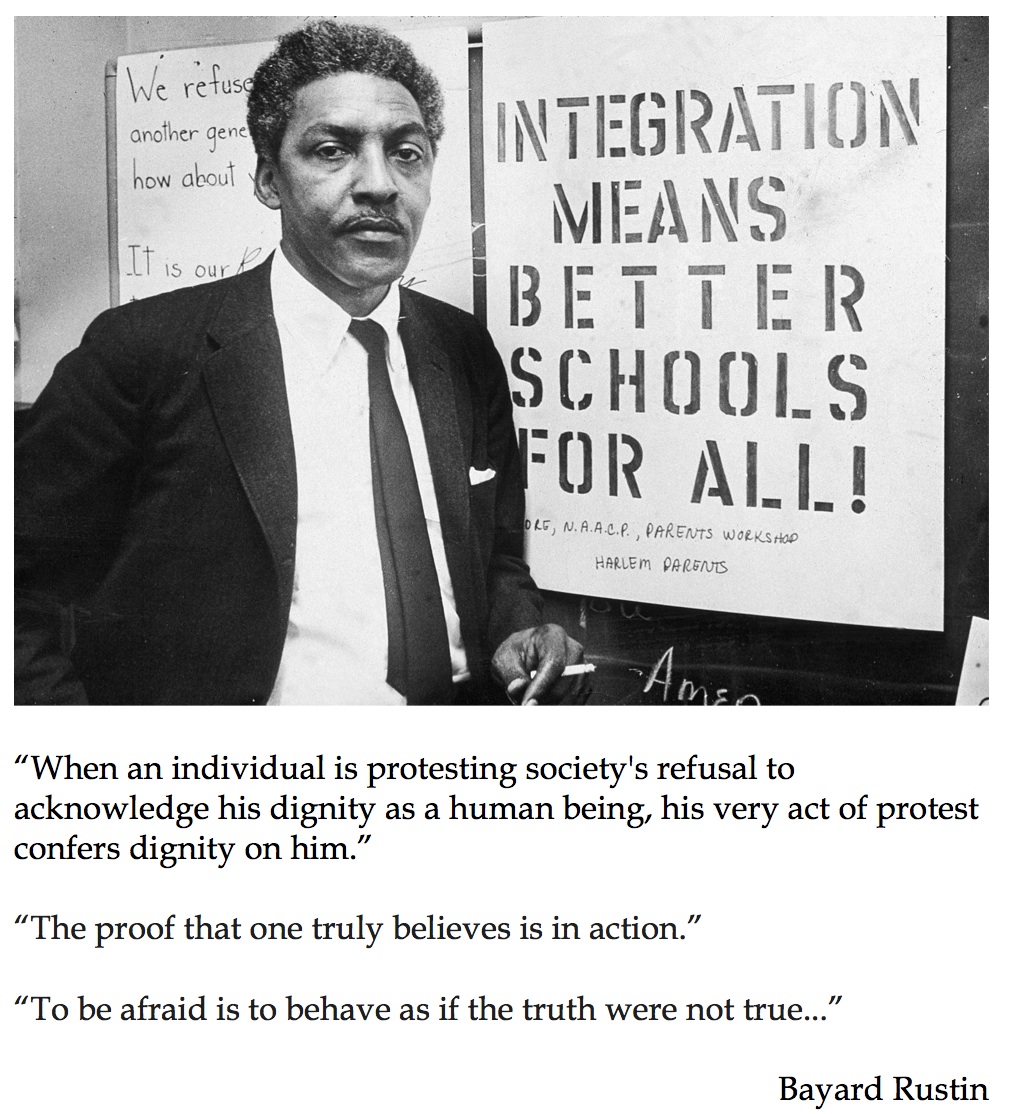
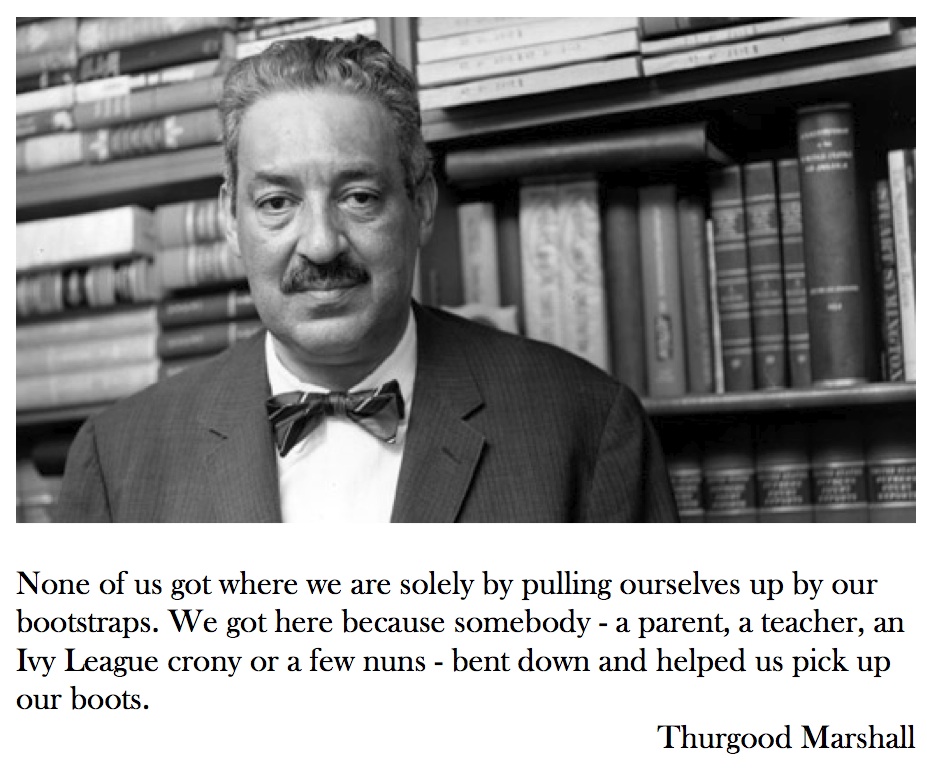
hagiography (n.) ha·gi·og·ra·phy \-gē-ˈä-grə-fē, -jē-\ (1) a book about someone’s life that makes it seem better than it really is or was, (2) a biography that praises someone too much
[A]s we put into practice an education that critically provokes the learner’s consciousness, we are necessarily working against myths that deform us. As we confront such myths, we also face the dominant power because those myths are nothing but the expression of this power, of its ideology. (Freire, 2005, p. 75)
•
For most people in 2014, that children were taught for many years in U.S. public schools that George Washington could not tell a lie (the old cherry tree myth) may seem quaint, and to others, a remnant of the distant past.
But the whole truth about this mythologizing of a Founding Father is that much of the knowledge imparted to students through formal schooling remains more propaganda than fact.
From Hellen Keller to Martin Luther King Jr. to Nelson Mandela, children are spoon-fed passive radical myths and distortions of selected exceptional people in order not to capture who those people were but to perpetuate cherished cultural myths (regardless of their veracity).
So if we return to NPR’s whitewashing of the “grit” narrative, we can see how corrosive “myths that deform us” are. The “grit” narrative is itself false, and thus, personal narratives must be manufactured to reinforce that foundational but false narrative.
All of this works, of course, among the shiny happy people who push the “grit” narrative.
Everyone is very happy.
But about those “myths that deform us”; recall the grit lesson in the NPR piece concerning Steve Jobs:
That message underlies every lesson at the Lenox Academy for Gifted Middle School Students in Brooklyn, N.Y., a public school that has been trying to make kids grittier for the past three years. On a recent day, in a typical lesson, a social studies class is studying Steve Jobs. Kids raise their hands to offer examples of Jobs’ grit.
“He had failed one of the Mac projects he was creating,” says one student.
“He used his mistakes to help him along his journey,” says another.
I wonder if students will be told the full story?:
One thing he wasn’t, though, was perfect. Indeed there were things Jobs did while at Apple that were deeply disturbing. Rude, dismissive, hostile, spiteful: Apple employees—the ones not bound by confidentiality agreements—have had a different story to tell over the years about Jobs and the bullying, manipulation and fear that followed him around Apple. Jobs contributed to global problems, too. Apple’s success has been built literally on the backs of Chinese workers, many of them children and all of them enduring long shifts and the specter of brutal penalties for mistakes. And, for all his talk of enabling individual expression, Jobs imposed paranoid rules that centralized control of who could say what on his devices and in his company.
Just as we conveniently ignore the full story about other shiny happy billionaires filled with grit.
There might be some problems with that story too:
Eichenwald’s conversations reveal that a management system known as “stack ranking”—a program that forces every unit to declare a certain percentage of employees as top performers, good performers, average, and poor—effectively crippled Microsoft’s ability to innovate. “Every current and former Microsoft employee I interviewed—every one—cited stack ranking as the most destructive process inside of Microsoft, something that drove out untold numbers of employees,” Eichenwald writes. “If you were on a team of 10 people, you walked in the first day knowing that, no matter how good everyone was, 2 people were going to get a great review, 7 were going to get mediocre reviews, and 1 was going to get a terrible review,” says a former software developer. “It leads to employees focusing on competing with each other rather than competing with other companies.”
And despite what valid criticisms we can offer about Malcolm Gladwell, he makes a pretty compelling case that Gates’s success is the result of as much good fortune as it is talent and effort.
The truth is that “grit,” or effort, is at best a secondary quality (and even then it is likely overemphasized as a key element in success) because the most powerful element at the causational level for most success (and failure) is the context in which any person finds her/himself.
Privilege and slack are conducive to excelling while scarcity tends to breed failure.
The root cause is systemic, not personal. The same person in a condition of slack and a condition of scarcity performs differently and experiences different outcomes.
The lesson, then, is if your primary message for children requires that you make up stories (or cherry-picking, if you will) to prove the myth is accurate, you are likely telling children “myths that deform us” (and that isn’t very hagiography-George-Washington of you).
And in no case is that justifiable.
Reference
Freire, P. (2005). Teachers as cultural workers: Letters to those who dare to teach (D. Macedo, D. Koike, & A. Oliveira, Trans.). Boulder, CO: Westview Press.
Albeit from different ideologies, NPR and Fox News have something really disturbing in common: Bias masked as, to use the Fox slogan, “fair and balanced.” In fact, the breezy tone of NPR makes its uncritical bias potentially more dangerous* than Fox’s essentially cartoonish balance.
And thus, when NPR discovers “grit,” we get this: Does Teaching Kids To Get ‘Gritty’ Help Them Get Ahead?
While the story does acknowledge critics, the piece clearly forefronts “grit” research as well as the credibility of “Angela Duckworth, a psychology professor at the University of Pennsylvania who coined the term ‘grit’ — and won a MacArthur ‘genius grant’ for it.”
How can any criticism of “grit,” and thus indirectly Duckworth, hold up to that?
Despite the framing bias of the story—and that breezy tone that suggests everything is fine—I do recommend examining Alfie Kohn’s work challenging the “grit” narrative:
But the greatest failure of the NPR look into “grit” is what, once again, is missing: Not a single mentioning of race, of the strong critical rejection of the “grit” narrative as a not-so-thinly masked appeal to racism.
“Grit” is a mask, a marker for privilege and slack that suggests people who succeed do so because of their effort (and not their privilege and the slack of their lives) and that people who fail do so because of a failure of character (and not due to the scarcity that overburdens them).
The “grit” narrative is essentially a whitewashing of the power of privilege as that is a product of lingering racism. And thus, the “grit” narrative is primarily aimed at children of color and they are routinely encouraged to honor Gritty White Hopes like (as the NPR story reveals) Steve Jobs:
That message underlies every lesson at the Lenox Academy for Gifted Middle School Students in Brooklyn, N.Y., a public school that has been trying to make kids grittier for the past three years. On a recent day, in a typical lesson, a social studies class is studying Steve Jobs. Kids raise their hands to offer examples of Jobs’ grit.
“He had failed one of the Mac projects he was creating,” says one student.
“He used his mistakes to help him along his journey,” says another.
And thus, let me suggest the following:
My posts on “grit”:
The Poverty Trap: Slack, Not Grit, Creates Achievement
The “Grit” Narrative, “Grit” Research, and Codes that Blind
Misreading “Grit”: On Treating Children Better than Salmon or Sea Turtles
Kids Count on Public Education, Not Grit or “No Excuses”
Learning and Teaching in Scarcity: How High-Stakes ‘Accountability’ Cultivates Failure
An Open Apology, with Explanations: Math, Behaviorism, and “Grit”
Snow Blind: “Trapped in the Amber of This Moment”
From Ira Socol:
Paul Tough v. Peter Høeg – or – the Advantages and Limits of “Research”
“Grit” Part 2 – Is “Slack” What Kids Need?
“Grit” – Part 3: Is it “an abundance of possibility” our kids need?
Grit Part 4: Abundance, Authenticity, and the Multi-Year Mentor
Angela Duckworth’s Eugenics – the University of Pennsylvania and the MacArthur Foundation
From Katie Osgood:
Ignoring Mental Health in the Grit Debate
And (please see the discussion thread):
Does “Grit” Need Deeper Discussion?
Note Living in Dialogue post from Lauren Anderson, EdWeek Editor’s Note, and comments:
Lauren Anderson: Grit, Galton, and Eugenics
And a consideration of Anderson:
Grit and Galton; Is psychological research into traits inherently problematic? Cedar Rienar
Also
I Think a MacArthur Genius Is Wrong About ‘Grit,’ John Warner
—
* Revised for tone from previous version.
Born and raised in a very small rural town in upstate South Carolina, I have lived my entire 53 years in the South. Most of that life has been spent teaching, and a large span of that career was in the high school I attended, among children mostly just like me, where we explored literature.
A key text for me each year was William Faulkner’s “A Rose for Emily,” and if you are not from the South, and you want to come close to understanding the South, read the story carefully. The shocking revelation at the end of the story—behind the locked door, the pillow and the bed, the “iron-gray hair”—is as close as you can come to understanding the South if you are not from here. (If you want to make a unit of this project to examine the South, read also Alice Walker’s “Everyday Use” and Flannery O’Connor’s “A Good Man Is Hard to Find.”)
We are a self-defeating people, we Southerners, a sort of ignorant pride, a blind faith in tradition and a steely determination to do as we damn well please. We’d rather cling to our ignorance (a long-standing tradition) than do the right thing—especially if someone else is telling us to do the right thing. The South, you see, is stuck in a perpetual arrested development, a fixed childhood/adolescence: We’re going to smoke, drink, and make out in our own car and there is nothing you can say or do to stop us.
That “we,” however, is the white South (both literally and its controlling psyche), and that is the problem. (One element of “A Rose for Emily” that is important here is the “we” narration of the town. “When Miss Emily Grierson died, our whole town went to her funeral,” it begins.)
So if you think 8 disturbing trends that reveal the South’s battered psyche—which asks, “So what is it that perpetuates decades of poverty in the Deep South?”—helps you understand the South, you need to consider carefully what is absent in the 8 trends:
1. Southern states have the most poor people….
2. Deep South states have no minimum wage….
3. Deep South has lowest economic mobility….
4. South has lowest per capita spending [b]y state government….
5. Forget about decent preventative healthcare….
6. One result: people self-medicate in response….
7. Forget the lottery, just pray to Jesus….
8. And hold onto that gun!
What is essentially absent in this piece, an examination of trends that confuses markers for root causes?
Race, and more directly, racism.
Notably, the piece mentions race in only one place, and then only “white,” with blacks reduced to a negation, not white:
As you would expect, the vast majority of people falling under the poverty line in the poorest states do not have white faces—although there are poor whites. The Henry J. Kaiser Family Foundation compiles state poverty rates by race. In the poorest states, whites account for 15 percent to 20 percent of the poor.
Yes, the piece is examining poverty, but that may be the problem.
“Poverty” is the convenient term in the U.S. that can be uttered as a device for ignoring poverty and denying racism.
Mention the disturbing racial imbalance of drug arrests (whites and blacks use marijuana at the same rates, but blacks suffer the brunt of arrests) or mass incarceration (white males outnumber black males 6 to 1 in society, but black males outnumber white males 6 to 1 in prisons), and the response will invariably turn to the suggestion that poverty is the cause, not racism.
Of course, if mass incarceration were a function of poverty and not racism, since twice as many whites as blacks are in poverty, the prison populations would be two white males to every black male.
So in order to answer why the 8 trends noted above exist, why they are tolerated, we must name and then confront the reason: racism. Racism as a historical scar. Racism as a contemporary and undiagnosed, untreated cancer.
The self-defeating South is the function of right-wing political leadership that campaigns with coded language and images (the infamous Jesse Helms “hands” commercial in his run against Harvey Gantt, for example) and then implements policy along racial lines—even when the consequences of that policy also negatively impacts the large white poverty populations in the South: right-to-work laws, limited social program funding, shrinking funding for public institutions, resisting universal healthcare, lingering calls for breaking the wall between church and state, supporting school choice, ignoring the re-segregation of schools (public, charter, and private), and doubling down on gun access and ownership.
If we are seeking root causes to answer “So what is it that perpetuates decades of poverty in the Deep South?,” we must acknowledge the lingering power of racism and then we must also confront how rurality in the South allows that racism to remain powerful, even though it now is mostly coded (although blatant expressions of racism remain common in the South).
In 2014, we must not discuss inequity and poverty, especially in the context of the South, without also naming the historical and contemporary racism driving many of the consequences of social dynamics and public policy.
“The violence of breaking down the door seemed to fill this room with pervading dust”—Faulkner’s collective narration of “A Rose for Emily” describes the climax of an entire community finally facing the truth.
For the U.S., I would argue, the South is our Emily and we remain unwilling, possibly unable, to break down the door, look at the hair on the pillow and admit that we have skeletons in our closet—racism, both a scar and a cancer we refuse to treat.
—
Recommended Documentaries
 dr. p.l. (paul) thomas