
Now That the SAT’s Writing Section is Gone, It’s Time to Rethink How We Teach Composition
All posts by plthomasedd
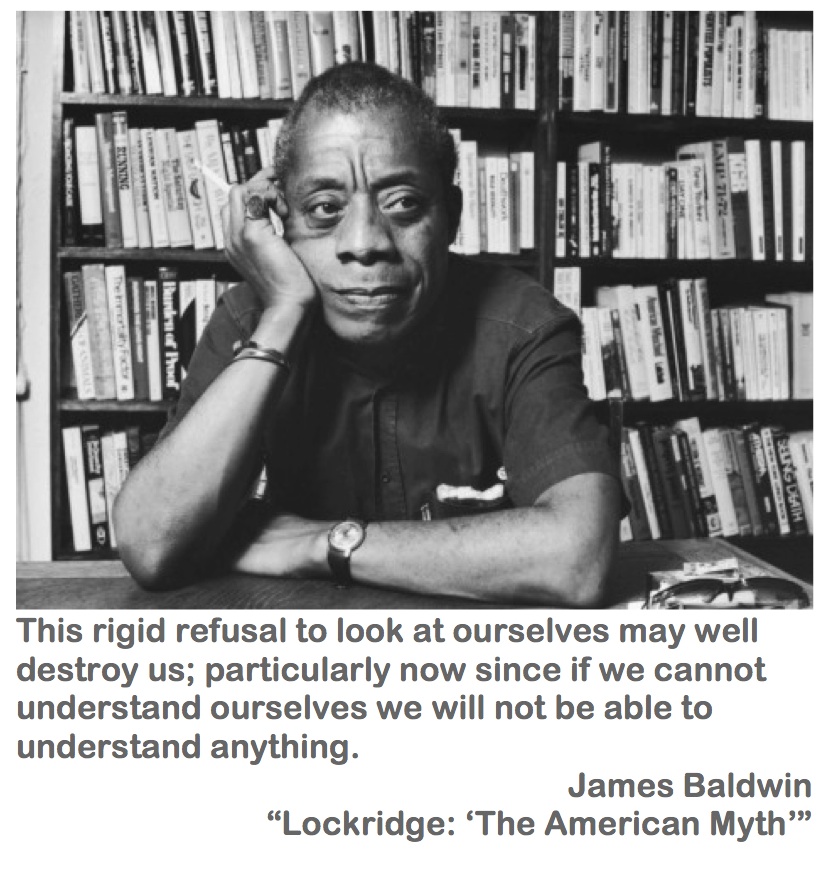
“This rigid refusal to look at ourselves may well destroy us” James Baldwin
“The truth is…” James Baldwin

Beyond “Doubly Disadvantaged”: Race, Class, and Gender in U.S. Schools and Society
The U.S. Department of Housing and Urban Development (HUD) established the Moving to Opportunity (MTO) for Fair Housing program in the mid-1990:
MTO recruited more than 4,600 families with children living in severely distressed public housing projects in five cities (Baltimore, Boston, Chicago, Los Angeles, and New York City). HUD offered some MTO families the opportunity to use a housing voucher to move into private-market housing in lower poverty neighborhoods and did not make the same offer to others.
“The Long-Term Effects of Moving to Opportunity on Youth Outcomes” (2012) reveals the following from that program:
These patterns [school dropout, low test scores, and delinquency] have led to a longstanding concern that neighborhood environments may exert an independent causal effect on the life chances of young people. Because low-income individuals comprise nearly one-half of the 8.7 million people living in census tracts with poverty levels of 40 percent or higher (Kneebone, Nadeau, and Berube, 2011), poor children growing up in neighborhoods of concentrated poverty may be “doubly disadvantaged”—they face potential risks from growing up in a low-income household and in an economically poor neighborhood. (See a full discussion HERE)
The disadvantages of being born poor and then attending public schools in impoverished neighborhoods are far greater than doubled, however. The disadvantages are exponential and involve race, class, and gender.
NPR has presented two brief looks at new analyses from MTO—one directly about Study: Boys Report PTSD When Moved Out Of Poverty, and the other a related story, ‘Prep School Negro’ Shows Struggle Between Poverty And Plenty.
David Green reports on the MTO research:
Now a new study in the Journal of the American Medical Association finds that boys from these families did not thrive. They found that the move took a toll on their emotional well being, a toll not experienced by girls….
Professor at Harvard Medical School, Ronald Kessler explains about the research findings:
Well, the hope was originally that the educational opportunities for the kids would increase because of better schools, that the opportunities for the parents finding jobs would increase because they moved to places where there were higher employment rates so that in the long run the kids, as they moved out, would have better socioeconomic achievement than they would have otherwise….
Well, we found something that we hadn’t expected, which was the effect of the intervention was quite positive for girls, but boys had the opposite effect. Boys were more depressed. They were more likely to have post traumatic stress disorder. They were more likely to have conduct problems if they were in families that were offered vouchers than in the control group that wasn’t involved in any kind of move.
Although not part of the WTO experimental group, Andre Robert Lee represents that alienation felt by African American and poor males and identified by Kessler and his team:
I kind of feel like when you’re black, sometimes you have to be twice as good. I was kind of, you know, sad by it, you know. I’m a people person and to go to a school where you can’t be yourself – I was being myself, but people not to embrace you is just – it kind of sucked.
This research and personal experience must be placed in several social and educational contexts.
First, the unique and negative experiences of impoverished males, including impoverished African American males, are complicated by the research on how people view African American children:
Asked to identify the age of a young boy that committed a felony, participants in a study routinely overestimated the age of black children far more than they did white kids. Worse: Cops did it, too.
The study, published in the Journal of Personality and Social Psychology, aimed at figuring out the extent to which black children were likely to be treated differently than their white peers solely based on race. More specifically, the authors wanted to figure out the extent to which black kids were dehumanized. “Children in most societies are considered to be in a distinct group with characteristics such as innocence and the need for protection,” author Phillip Atiba Goff of UCLA told the American Psychological Association. “Our research found that black boys can be seen as responsible for their actions at an age when white boys still benefit from the assumption that children are essentially innocent.”
Second, the more specific context of how society sees and treats African American young men is captured in the controversies surrounding the shootings of Trayvon Martin and Jordan Davis as well as the controversies surrounding Richard Sherman (and the coded use of “thug”) and Marcus Smart.
Third, the Office for Civil Rights (USDOE) has detailed that in-school discipline policies and retention are disproportional by gender and race, and that access to high-quality courses and experienced teachers is also inequitable. “No excuses” practices and zero tolerance policies tend to target high-poverty and racial minority students as well:
There is abundant evidence that zero tolerance policies disproportionately affect youth of color. Nationally, black and Latino students are suspended and expelled at much higher rates than white students. Among middle school students, black youth are suspended nearly four times more often than white youth, and Latino youth are roughly twice as likely to be suspended or expelled than white youth. And because boys are twice as likely as girls to receive these punishments, the proportion of black and Latino boys who are suspended or expelled is especially large. Nationally, nearly a third (31 percent) of black boys in middle school were suspended at least once during the 2009–10 school year. Part of this dynamic is that under-resourced urban schools with higher populations of black and Latino students are generally more likely to respond harshly to misbehavior. (p. 3)
Fourth, the race, class, and gender inequity found in school discipline is replicated and intensified in the mass incarceration of African American males in the U.S.
Finally, and possibly most importantly, the historical context must be addressed. Consider first James Baldwin speaking in 1963, Take This Hammer:
And also, consider Baldwin writing in 1966, A Report from Occupied Territory:
Here is the boy, Daniel Hamm, speaking—speaking of his country, which has sworn to bung peace and freedom to so many millions. “They don’t want us here. They don’t want us—period! All they want us to do is work on these penny-ante jobs for them—and that’s it. And beat our heads in whenever they feel like it. They don’t want us on the street ’cause the World’s Fair is coming. And they figure that all black people are hoodlums anyway, or bums, with no character of our own. So they put us off the streets, so their friends from Europe, Paris or Vietnam—wherever they come from—can come and see this supposed-to-be great city.”
There is a very bitter prescience in what this boy—this “bad nigger”—is saying, and he was not born knowing it. We taught it to him in seventeen years. He is draft age now, and if he were not in jail, would very probably be on his way to Southeast Asia. Many of his contemporaries are there, and the American Government and the American press are extremely proud of them. They are dying there like flies; they are dying in the streets of all our Harlems far more hideously than flies.
How much different, then, is our world when we listen carefully to Lee:
Yeah, it’s hard. And when a kid walks in and they’re immediately seen as a delinquent, that perception and notion is thrust upon a person immediately. Despite the fact that I’m quote-unquote successful and have a career and have a graduate degree, you know, I still have a darn hard time getting a cab, and this is even if I’m in a suit or not.
If you’re not a really strong person, it can destroy you ’cause it’s constant chipping away at your psyche, you know, and I realized this in 9th grade. I thought there’s inequity in the world and it’s not going to change. What am I going to do?
The conclusions about impoverished males drawn from the WTO experiment and Lee’s personal story suggest that Baldwin’s warnings remain disturbingly true:
This rigid refusal to look at ourselves may well destroy us; particularly now since if we cannot understand ourselves we will not be able to understand anything. (“Lockridge: ‘The American Myth’”; Baldwin, 1998, p. 593)
The truth is that the country does not know what to do with its black population now that the blacks are no longer a source of wealth, are no longer to be bought and sold and bred, like cattle; and they especially do not know what to do with young black men, who pose as devastating a threat to the economy as they do to the morals of young white cheerleaders. It is not at all accidental that the jails and the army and the needle claim so many, but there are still too many prancing around for the public comfort. Americans, of course, will deny, with horror, that they are dreaming of anything like “the final solution”—those Americans, that is, who are likely to be asked: what goes on in the vast, private hinterland of the American heart can only be guessed at, by observing the way the country goes these days. (No Name in the Street; Baldwin, 1998, pp. 432-433)
The disadvantage of being impoverished, African American, and male remains powerfully staggering, far beyond “doubly” and something we seem unable to confront much less address.
Segregation and Charter Schools: A Reader
In The link between charter school expansion and increasing segregation, Iris C. Rotberg highlights that problems exist in both re-segregation of schools in the U.S. and the rise of charter schools as separate and interrelated forces.
Schools in the U.S. are re-segregating, regardless of type—public, private, and charter.
And charter schools are not creating the education reform charter advocates claim, with one failure of the charter movement being segregating students by race and class.
Thus, it is important to focus on the evidence that shows the need to reconsider how to address segregation and the flawed support continuing for expanding charter schools.
Let me offer below a reader for such evidence:
- Made in America: Segregation by Design
- The Lingering Legacy of Segregation
- Segregated South Rises Again
- Charter Schools Not the Answer, Especially if We Fail to Identify the Question
- Charter Schools: A Primer
Some key points from Rotberg include the following:
#1. There is a strong link between school choice programs and an increase in student segregation by race, ethnicity, and income….
#2. The risk of segregation is a direct reflection of the design of the school choice program….
#3. Even beyond race, ethnicity, and income, school choice programs result in increased segregation for special education and language-minority students, as well as in increased segregation of students based on religion and culture….
I am not under the illusion that by modifying federal policy on charter schools we would solve the basic problem of segregation. But we could at least eliminate one factor exacerbating it: the federal pressure on states and school districts to proliferate charter schools, even in situations that might lend themselves to increased segregation. Instead of serving as a cheerleader for charter schools, the federal government might instead support diversity in schools and, at the same time, publicize the risks of increased student stratification.
Even apart from the negative effect of increased segregation, justifying federal advocacy of charter school expansion is difficult when there’s no evidence that charter schools, on average, are academically superior to traditional public schools or even that they can be more innovative given the Common Core State Standards and the testing associated with them.
Revisiting “Cliches and Abstractions” in the Context of Race, 2014
Writing in 1949 in the wake of World War II, Lou LaBrant opens a consideration of cliche and abstractions by focusing on a student essay, in which the student discussed her assumptions instead of the text she was examining:
Only after inch-by-inch progress was she able to see that from “orphan,” for which the novelist was undoubtedly responsible, my student had jumped to the whole cliche “poor, defenseless orphan” and consequent accusations against at least three other characters in the story.
…But of serious account is her tendency or that of any reader to accept a cliche and so permit it to stand between himself and a fact or understanding. (p. 275)
In 1987, the College Board included Sylvia Plath’s “Sow” on the Advanced Placement Literature exam; the prompt read:
1987 Poem: “Sow” (Sylvia Plath)
Prompt: Read the poem. Then write an essay in which you analyze the presentation of the sow. Consider particularly how the language of the poem reflects both the neighbor’s and the narrator’s perceptions of the sow and how the language determines the reader’s perceptions. Be certain to discuss how the portrayal of the sow is enhanced by such features as diction, devices of sound, images, and allusions.
Typical of A.P. literature prompts, the focus of the response is on three sets of perceptions. Scores for that written section in 1987 were notoriously low. Students, it seemed, experienced something very similar to what LaBrant identified in her students: “to accept a cliche and so permit it to stand between himself and a fact or understanding.”
I used that prompt for students to practice for the exam when I taught A.P. Lit, and we always discussed how students struggled against their own perceptions of “sow,” or pigs.
Let me offer, now, three further points in the context above.
First, consider our assumptions about language. When I teach ELA methods, I often raise the issue of how people respond to the so-called non-standard use of “aks” (instead of the standard “ask”)—highlighting that the non-standard “aks” is immediately and almost universally associated with African Americans, and then if not simultaneously, consequentially, with being uneducated or unintelligent.
However, when placed in historical and cultural context, those simplistic assumptions fall apart. And, “aks” is but one of many words in the English language that demonstrates “metathesis”:
Wasp used to be waps; bird used to be brid and horse used to be hros. Remember this when the next time you hear someone complaining about aks for ask or nucular for nuclear, or even perscription. It’s called metathesis, and it’s a very common, perfectly natural process.
And while “aks” carries both racial and intelligence baggage, President George W. Bush experienced the brunt of intelligence jokes because of “nucular.”
Second, consider the assumptions bound in not the words we hear or use, but what we see:
Asked to identify the age of a young boy that committed a felony, participants in a study routinely overestimated the age of black children far more than they did white kids. Worse: Cops did it, too.
The study, published in the Journal of Personality and Social Psychology, aimed at figuring out the extent to which black children were likely to be treated differently than their white peers solely based on race. More specifically, the authors wanted to figure out the extent to which black kids were dehumanized. “Children in most societies are considered to be in a distinct group with characteristics such as innocence and the need for protection,” author Phillip Atiba Goff of UCLA told the American Psychological Association. “Our research found that black boys can be seen as responsible for their actions at an age when white boys still benefit from the assumption that children are essentially innocent.”
Third, consider Glenn Ford:
A Louisiana man who has spent nearly three decades on death row walked free on Tuesday, after prosecutors asked a judge to set aside his first-degree murder conviction and death sentence, citing new evidence in the case that exonerated him.
Glenn Ford, 64, a black man, was convicted by an all-white jury in the 1983 robbery and murder of Isadore Rozeman, a 56-year-old Shreveport watchmaker, who was found shot to death behind the counter of his jewelry shop.
Acting on new information that exonerated Ford, a judge in Shreveport ordered him released from Louisiana State Penitentiary in Angola, where he has been held on death row since March 1985.
As I have stated before, denying racism has an evidence problem—one that is recurring and recurring.
As LaBrant warns in her examination of cliches and abstractions, humans are predisposed to read texts and the world in ways that are shaded, and thus distorted, by their assumptions, the codes they have embraced uncritically.
The line between cliches and abstractions in careless student writing, and prejudices and bigotry in the way people live their lives is razor thin, and possibly the only things between a young person and crossing that line are the sorts of experiences in their formal schooling that ask students to reconsider assumptions, reconsider abstractions and generalizations.
Teaching English, teaching reading and writing, is about more than the 1987 prompt on the A.P. exam above—a prompt grounded in New Criticism and little different than what students will be bound to do under the new regime of “close reading” in the Common Core (a strategy designed to ask students not to consider context beyond the text itself).
How students read and re-read the world, how students write and re-write the world, then, must be framed differently. Students require context and they require some basis in their own realm of understanding in order to move beyond their provincialism:
It should be noted that such analysis is made much more easily when the writer is dealing with a problem in which he has some stake and for which he has assumed the initiative in writing. If the statement comes from a workbook or from the teacher’s assignment, it is impossible to hold the writer to an understanding of meaning. Sometimes we ourselves deliver definitions (generalizations) meaningless to children.
…We assign topics for writing, well knowing that they are beyond the real understanding of our pupils and that consequently these young writers must fall back on vague and meaningless generalizations. (p. 277)
It is not just about the words and people we see around us; it is about what we assume we see in the words and people around us—often despite evidence to the contrary.
That fact of the power of bias, assumption, prejudice, and bigotry has powerful consequences:
The less the black kids were seen as human, the less they were granted “the assumption that children are essentially innocent.” And those officers who were more likely to dehumanize black suspects overlapped with those who used more force against them.
What cliches-as-prejudice persist that keep political leaders, the media, and the public from reading that reality?
Analysis of Cliches and Abstractions (1949)
Writing Is a Journey: Thoughts on Writing, College, and the SAT
A writer’s writer often ignored is James Baldwin, who examines his drive to write in the context of race:
INTERVIEWER
If you felt that it was a white man’s world, what made you think that there was any point in writing? And why is writing a white man’s world?
BALDWIN
Because they own the business. Well, in retrospect, what it came down to was that I would not allow myself to be defined by other people, white or black. It was beneath me to blame anybody for what happened to me. What happened to me was my responsibility. I didn’t want any pity. “Leave me alone, I’ll figure it out.” I was very wounded and I was very dangerous because you become what you hate. It’s what happened to my father and I didn’t want it to happen to me. His hatred was suppressed and turned against himself. He couldn’t let it out—he could only let it out in the house with rage, and I found it happening to myself as well. And after my best friend jumped off the bridge, I knew that I was next. So—Paris. With forty dollars and a one-way ticket. (The Paris Review interview)
•
Prompted by the announcement from the College Board that the SAT would be revamped in 2016, including dropping the writing section added in 2005, The New York Times has included a Room for Debate on Can Writing Be Assessed?
So, unlike the moment when the SAT added writing (one that heralded only doom for the field of composition), I want to take this moment to examine writing and the teaching of writing because dropping writing from the SAT may prove to be a positive watershed moment for both.
First, let me offer a few points of context.
I am 53 and have been teaching for 31 years, most of that life and career dedicated to writing and teaching writing. I read and write every day—much of that reading and writing is serious in that it is connected to my professional work. But I also read and write extensively for pleasure, including my life as a poet.
Two facts about my writing life: (1) I write because I must, not because I choose to, and (2) I am always learning to write because writing is a journey, not something one can acquire fully or finish.
As well, I strongly embrace the foundational belief that writing is an essential aspect of human liberty, autonomy, agency, and dignity; this is part of the grounding of my work as a critical educator. Living and learning must necessarily include reading, re-reading, writing, and re-writing the world (see Paulo Freire, bell hooks, and Maxine Greene, just to mention a few).
Writing is also integral to academics, in terms of learning and scholarship. Writing is part of the learning process, but it is also a primary vehicle for scholarly expression.
Next, considering the importance of writing in human agency and education, any effort to standardized the assessment of writing or to use writing assessments as gatekeepers for any child’s access to further education are essentially corrupt and corrupting.
Adding writing to the SAT in 2005, then, was one of several powerful contexts that have seriously crippled the teaching of writing in formal education; those forces include also:
- A historical and lingering conflating of “teaching grammar” (teaching correctness) with teaching writing.
- The entire accountability era begun in the early 1980s (see Applebee and Langer and Why Are We (Still) Failing Writing Instruction?).
All three of the above fail the fundamental value in writing because they distract from the process and act of writing as well as misread writing a a fixed skill that can be attained at some designated point along the formal education continuum.
As the Faculty Director of First Year Seminars at my university, I focus primarily on how we address the teaching of writing in those seminars (and throughout the curriculum). That role has highlighted for me a lesson I also learned while teaching high school English for 18 years: Many teachers, including English teachers, do not see themselves as writing teachers and often expect that students should come to their courses already proficient writers.
Essentially, then, using a writing assessment of some sort to identify students as college-ready as writers perpetuates the idea that we can and should have students demonstrating some fixed writing outcomes before we allow them access to higher education; this presumes in some ways that college will not be a place where people can and should learn to write.
In much the same way that the accountability paradigm is misguided in fixating on outcomes over conditions, seeing writing as a measurable skill useful for gatekeeping college entrance shifts our focus away from what experiences students need so that their continual learning to write in college can be better supported.
Yes, student outcomes matter, and samples of student writing in the right contexts may provide some powerful evidence of what students know as writers and what students need as writers. But something in the addition of writing to the 2005 SAT must not be forgotten: One-draft, timed, and prompted writing scored by rubrics, and even by computers, works against the important goals of writing [1].
Just as grading should be shunned for feedback when teaching writing (see my chapter here), the question is not if writing can be assessed, but how do we insure that all students have access to the common experiences necessary at all point along the formal education experience?
What, then, are those common experiences—and once we implement those, how do we document those experiences in order to support both students having equitable access to higher education and to the continual learning to write that must be central throughout higher education?
Some thoughts on common experiences:
- Rich and multi-genre/media reading experiences that include choice and assigned reading. Students need to develop genre awareness and discipline-specific awareness as readers.
- Rich and multi-genre/media writing experiences that include the following: choice and assigned writing, peer and teacher feedback and conferences, workshop experiences drafting short and extended multi-draft compositions, and discipline-specific writing experiences.
- Analysis of and experiences with a wide range of citation and documentation style sheets for integrating primary and secondary sources in original writing.
- Continual consideration of expectations for writing both in academic/school settings and real world settings—challenging school-based norms such as thesis sentences and template essay formats.
While this isn’t meant to be exhaustive, the point is that instead of seeking ways in which we can assess well test-based writing or continuing to explore tests and metrics that correlate strongly with actual writing proficiencies, we must commit ourselves to all students having the sorts of common experiences with writing necessary to grow as writers—both for their own agency and their academic pursuits.
Finally, if we can commit to these conditions of learning instead of outcomes, we should then find ways to gather artifacts of these common experiences to use instead of metrics as we guide students through—and not gatekeep them from—formal education.
•
INTERVIEWER
Did what you wanted to write about come easily to you from the start?
BALDWIN
I had to be released from a terrible shyness—an illusion that I could hide anything from anybody. (The Paris Review interview)
[1] See The New Writing Assessments: Where Are They Leading Us? (Newkirk), From Failing to Killing Writing: Computer-Based Grading, and More on Failing Writing, and Students.
NOTE: For a historical perspective on teaching writing see selected works by Lou LaBrant.
James Baldwin, The Art of Fiction No. 78
James Baldwin, The Art of Fiction No. 78
INTERVIEWER
Do you think painters would help a fledgling writer more than another writer might? Did you read a great deal?
BALDWIN
I read everything. I read my way out of the two libraries in Harlem by the time I was thirteen. One does learn a great deal about writing this way. First of all, you learn how little you know. It is true that the more one learns the less one knows. I’m still learning how to write. I don’t know what technique is. All I know is that you have to make the reader see it. This I learned from Dostoyevsky, from Balzac. I’m sure that my life in France would have been very different had I not met Balzac. Even though I hadn’t experienced it yet, I understood something about the concierge, all the French institutions and personalities. The way that country and its society works. How to find my way around in it, not get lost in it, and not feel rejected by it. The French gave me what I could not get in America, which was a sense of “If I can do it, I may do it.” I won’t generalize, but in the years I grew up in the U.S., I could not do that. I’d already been defined.
American Hustle: Ignoring Poverty in U.S. Needs More than 50-Year Anniversary
It is 2014, and publications such as Education Week are offering 50th-year anniversary looks at the War on Poverty.
It is 2014, and race and racism remain words that shall not be spoken, lingering scars on the American character [1] that are routinely concealed beneath a heavy foundation (something in a Caucasian, please) and a bold but not too flashy shade of red lipstick.
It is 2014, and almost everyone will say poverty, but the great irony is that this American Hustle is achieved through constantly mentioning poverty in order to ignore it.
The trick is to keep the public gaze in the U.S. transfixed on people trapped in poverty, to reinforce the myth that poverty is the result of individual weaknesses (a lack of “grit,” for example), and to perpetuate the idea that the wealthy and privileged have earned that wealth and privilege.
This American Hustle allows politicians, the media, and the public to wash their collective hands of actually doing anything except demanding that the lazy poor step up to the American Dream home plate and take their swings like everyone else.
And our literature, for example, has ample evidence that being poor in the U.S. is above all other things embarrassing—see works from The Great Gatsby to eleanor & park.
Finger pointing, ignoring systemic inequity, and embarrassment—these are the crucibles in which inequity and privilege thrive, and these are the crucibles that must be confronted in ways that rise above 50th anniversaries.
Since education, privilege, poverty, and race are inextricably interrelated, we must confront some real lessons gained during the 50 years we now associate with a War on Poverty [2]:
- Poverty/affluence and race remain nearly indistinguishable factors at a system level driving the opportunity gaps for people in the U.S. However, poverty and race can and must be addressed both as related markers for inequity/privilege as well as separately. Gender adds another axis of complexity, and thus must be viewed in conjunction with socioeconomic status and race as well as separately.
- Affluence is the U.S. is gained primarily through privilege and slack—not through the superior personal characteristics of those experiencing wealth. Poverty is the result primarily of scarcity [3].
- The two evidence-based failures of K-12 public schools in the U.S. include (1) that schools often reflect the inequities found in the communities those schools serve and (2) that schools often perpetuate the inequities found in the communities those schools serve [4].
- Calls for in-school-only education reform as the sole mechanism for overcoming social inequity have never worked and cannot work. The evidence is clear that the accountability paradigm built on standards and high-stakes testing hasn’t address inequity (closing the so-called and misleading “achievement gap”) and cannot address inequity [5].
As each of us considers this American Hustle, let me recommend a series of readings that I think help reframe how we view poverty and how we view the role education plays against poverty:
- On the Front Lines in the War on Poverty, Deborah Meier
- Poor Teaching for Poor Children…in the Name of Reform, Alfie Kohn
- The Pedagogy of Poverty Versus Good Teaching, Martin Haberman
But there is another step beyond dialogue, reading, thinking, and writing about the War on Poverty as the American Hustle.
We must act, we must do something directly about inequity while naming poverty, racism, and sexism as very real and not merely as token political discourse in order to mask those realities.
As Haberman implores: “Before we can make workers, we must first make people. But people are not made—they are conserved and grown” (p. 294).
—
[1] Please see Denying Racism Has an Evidence Problem and The Mistrial of Jordan Davis: More Evidence Problems for Denying Racism.
[2] Please see Ending Poverty Requires Community, Not War.
[3] Please see Learning and Teaching in Scarcity: How High-Stakes ‘Accountability’ Cultivates Failure.
[4] Please see Studies Suggest Economic Inequity Is Built Into, and Worsened by, School Systems, Schools Can’t Do It Alone: Why ‘Doubly Disadvantaged’ Kids Continue to Struggle Academically, and Education Reform in the New Jim Crow Era.
[5] Please see What We Know (and Ignore) about Standards, Achievement, and Equity.
 dr. p.l. (paul) thomas