“These Days,” R.E.M., Lifes Rich Pageant (1986)


Strands of the webs of my life keep breaking.
That is an inevitable consequence of living into your 60s, and hopefully beyond.
I received a text message that my high school math teacher and later teaching colleague had informed a group of people that my high school English teacher, Lynn Harrill, passed away yesterday.
He had been suffering from Alzheimer’s—something I found out about second hand, explaining several months of fruitless phone calls from him when he never spoke—but the end came quite awfully after Covid prompted a stroke.
I sat on the couch with my partner, and there was nothing I could do except a sudden and deep burst of crying.
This reminds me too much of my mother’s death—a sudden stroke and then dying of cancer a few months later—and my father dying sitting beside my mother right after that stroke.
The end is always too, too awful, and humans, we are too, too frail.
Lynn was a wonderful human and a life-changing teacher who willed me to be a teacher and a reader and a writer.
No one had a greater impact on who I am than Lynn, and as he would attest, that is what teachers do.
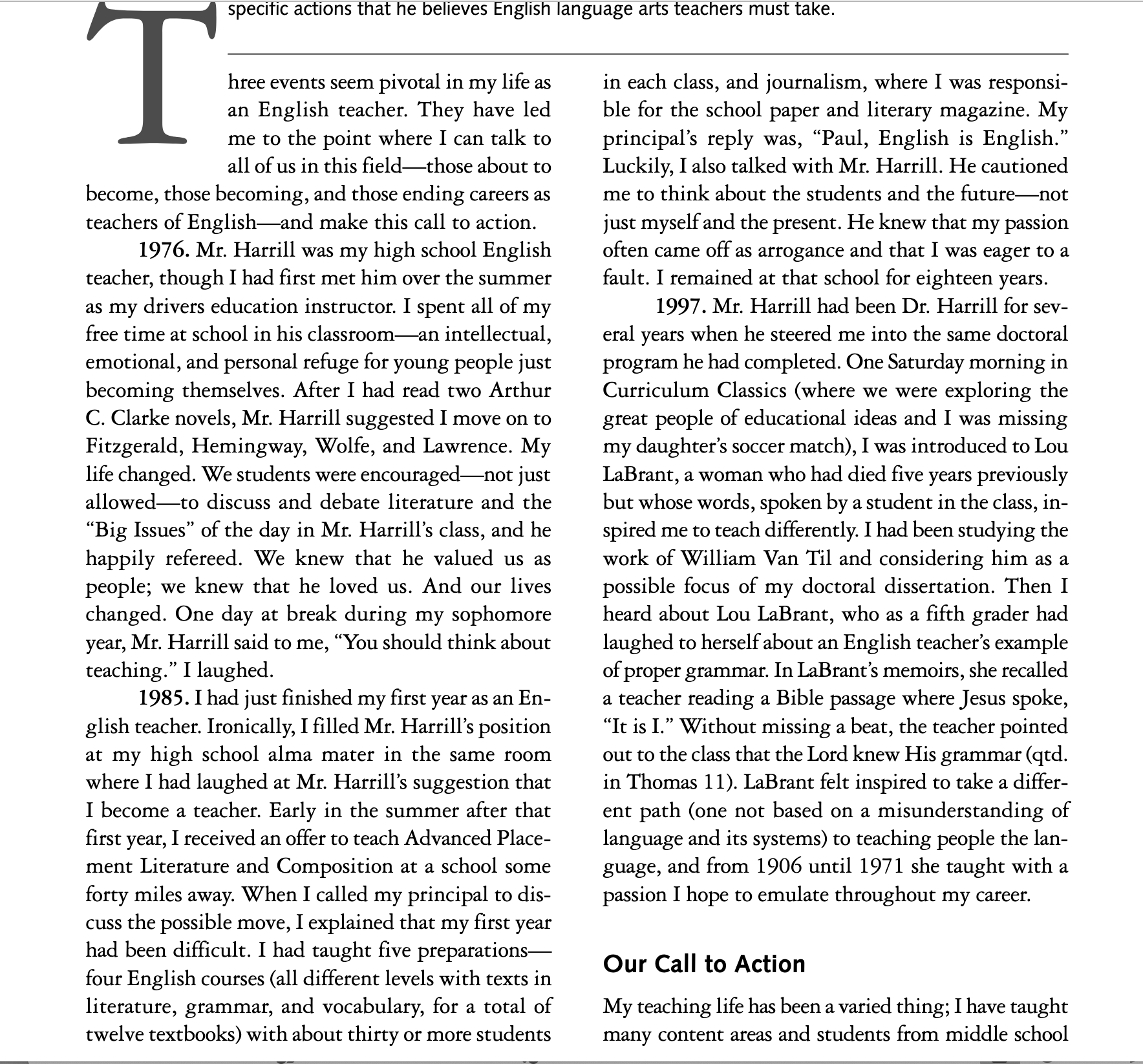
I wrote about Lynn in English Journal in 2003; this opening covers our journey, which includes the odd details of my taking his ELA high school teaching position in 1984 and then his professor position in 2002:
In 2022, I was kindly given the opportunity to record a brief video honoring Lynn as well:
As I have written often, teachers made me who I am, and the one that mattered the most was Lynn.
Like Kurt Vonnegut, I am not religious, but I remain hopeful there is something better for us here on earth and maybe even once we draw our last breaths.
And, so it goes.
RIP, Lynn Harrill.
With love and my deepest gratitude.
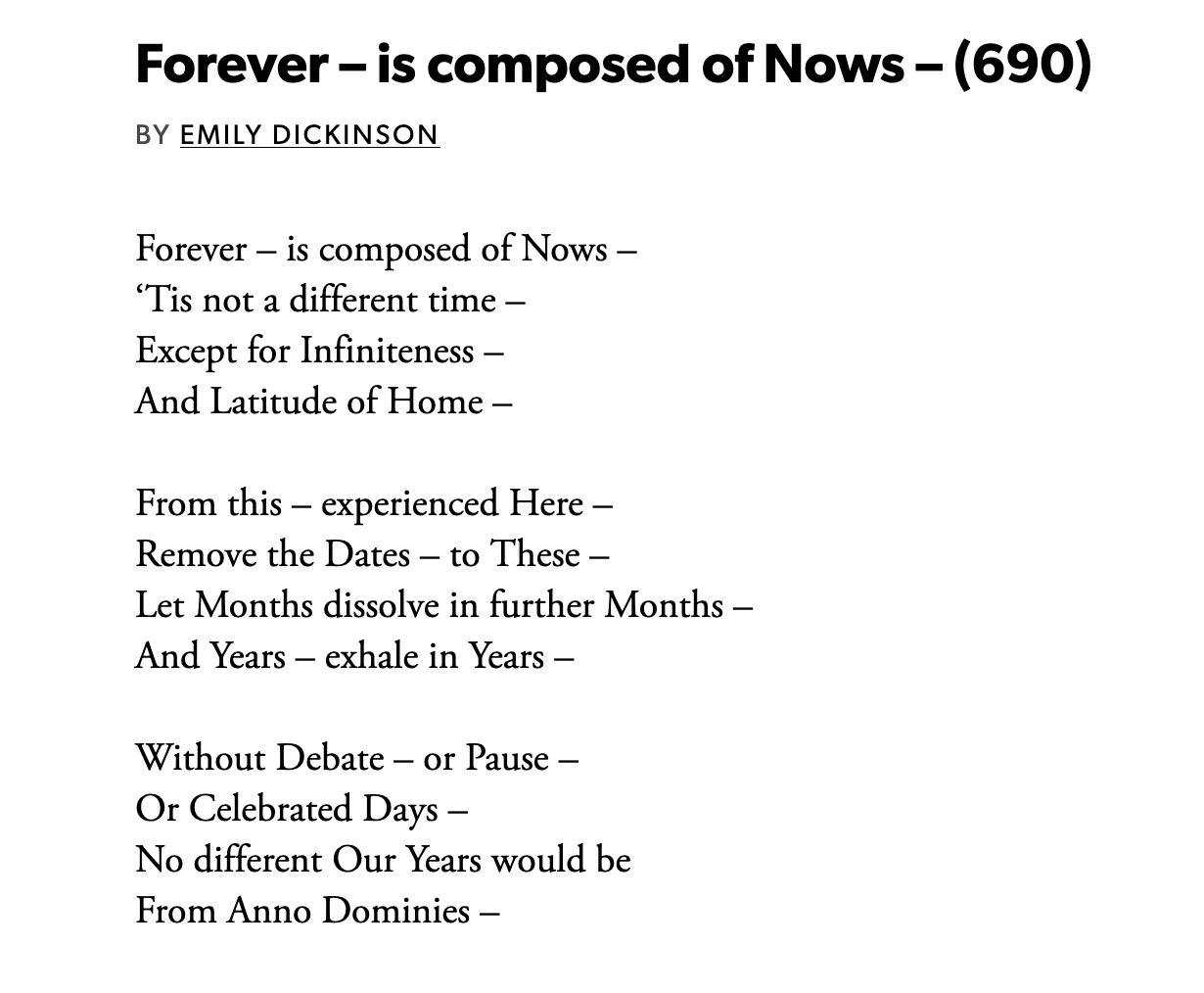
I will always associate Lynn with the poetry of Emily Dickinson; he continued to teach me about her poetry even once I was a teacher. I cannot think of a better thing than asking others to read a bit of Dickinson with Lynn in your heart or thoughts:
My favorite Dickinson poem:


[Header Photo by Glenov Brankovic on Unsplash]
brown men and women
in hard hats
neon yellow and orange shirts
and mud-caked work boots
build apartments
along the rail trail
where i ride my bicycle
for recreation and exercise
i know they are brown
and i have heard them
speaking spanish
but i cannot say they are mexican
or south american
i have seen them smile
and heard them laughing
i don’t know if they are citizens
i don’t know their politics
but i know they are brown
one day i pass them
during lunch
playing soccer
in those mud-caked work boots
on the new asphalt parking lot
as if playing soccer
is the most normal thing to do
in south carolina
in late july 2024
when the whole world
is going to hell
around us
—P.L. Thomas
I just finished my fortieth year as a teacher, spending the first 18 years as a high school English teacher in my hometown. As an English teacher, my favorite unit was teaching poetry grounded in the music catalogue of alternative rock group REM, based in Athens, GA, only a few hours from that high school.
Partly as a reference to REM’s song and partly as a bit of a play on words, “Welcome to the Occupation” was posted on my door—both as a reference to occupied territory and to “occupation” also meaning “job.”
And as you enter my class in this course, I think you may be initially disoriented because I practice my job of “teacher” and have expectations for your job as “student” in ways that you likely have not experienced before.
Your job as a student, I believe, is to learn, and my job as a teacher is to create the best opportunities for you to learn.
What that means is that you must do the work—not me—in order to learn at the highest level possible.
I have a doctorate, called a “terminal” degree; in other words, I am finished being a students. Thus, I do not want or need to do your assignments for you.
While I will provide a great deal of guidance, feedback, and opportunities to revise and resubmit your major assignments (often essays), I will be adamant that you do the work. I resist hand-holding and making your assignment decisions for you.
That environment, I understand, can be stressful; therefore, I do not grade your work, and you are not at risk of losing points or receiving a low grade simply for making your best effort and occasionally falling short of expectations.
If your work isn’t what is expected or required, you simply must try again—nothing lost except a bit of time.
In fact, since you are learning, I expect you to not quite yet know what to do or how.
If you could do all the work of the course perfectly on the first try, there would be no point for you being in the course, right?
I must also stress that my feedback is never in anger, with disappointment, or offered in any context except hoping I can help you be successful.
That I am demanding or have a high bar for submitting work that I will accept and respond to is a compliment, not a criticism. I truly trust you will succeed and often excel giving the support and expectations I provide.
You may or will struggle mostly not because of something lacking or “wrong” with you, but because this is a new kind of expectations, a new kind of occupation for you as students.
That different expectation is that you are doing the work and learning for you, and not me.
One thing we will work to avoid is you behaving like a student. In other words, when you have an essay to work on, I want you to think and act like a writer, not a student turning in a paper to the teacher for a grade.
I try, then, to make sure the writing assignments are the sort of writing real writers write (not research papers, for example, because that isn’t something writers do).
So what are the habits you have developed, actually learned, over years of formally schooling that I want you to resist and change?
First, I want you to set aside the deficit ideology you have been taught. Making mistakes, or errors, and the need to correct your work—these are deficit views of your job as a learner.
In other words, you will not be correcting your writing. I want you to do what writers do—revise and edit. And those revisions and edits are your decisions in the context of the assignment and the expectations of the type of writing you are drafting.
Next, I want you to take ownership of your learning and work. I often have students ask me what to do or how to do something that they can, and should, simply explore on their own.
For example, when students are working on a cited essay, they often ask how to cite a specific type of source (for example, a YouTube video or a Kindle book). Instead of asking me to do that work, a student can, and should, simply do an internet search for how to cite that source in the format required.
These shifts are broadly about shifting the center of power from the teacher/professor to the learner.
This is your learning, and your work. You will gain more and value the work more as you begin to have accountability for that work instead of shifting the responsibility to your teacher or professor.
I don’t see the occupations of teacher and student as games, or some sort of tug-of-war between competing forces.
Teaching and learning are collaborations that should be grounded in the experiences that create learning.
Doing work for a grade under the authority of a teacher is the experience most of you have had, but I think that is asking way too little of either the teacher or the students.
What we will do in here is messy, unpredictable, frustrating at times, but highly rewarding when we simply run out of time for this experience and must move on.
It is best not to fret, trust yourself and me, and then also trust that you will learn even though you have much more to learn.
And that is fine.
The day we stop learning is a kind of end to be fully human.
Humans fall a bit short, learn, and continue toward the next things that make us the new person we continue to become to be.
Welcome to the occupation.
[Header Photo by Nguyen Dang Hoang Nhu on Unsplash]
What You See Is Not What You Get: Science of Reading Reforms As a Guise for Standardization, Centralization, and Privatization | American Journal of Education
Elena Aydarova
FreshEd #348 – Science of Reading Unpacked (Elena Aydarova) FreshEd
[Header Photo by Josue Michel on Unsplash]
all the silent children
watched the dismantling
all the carelessness
all the negligence
of all the adults
who should have known better
—P.L. Thomas

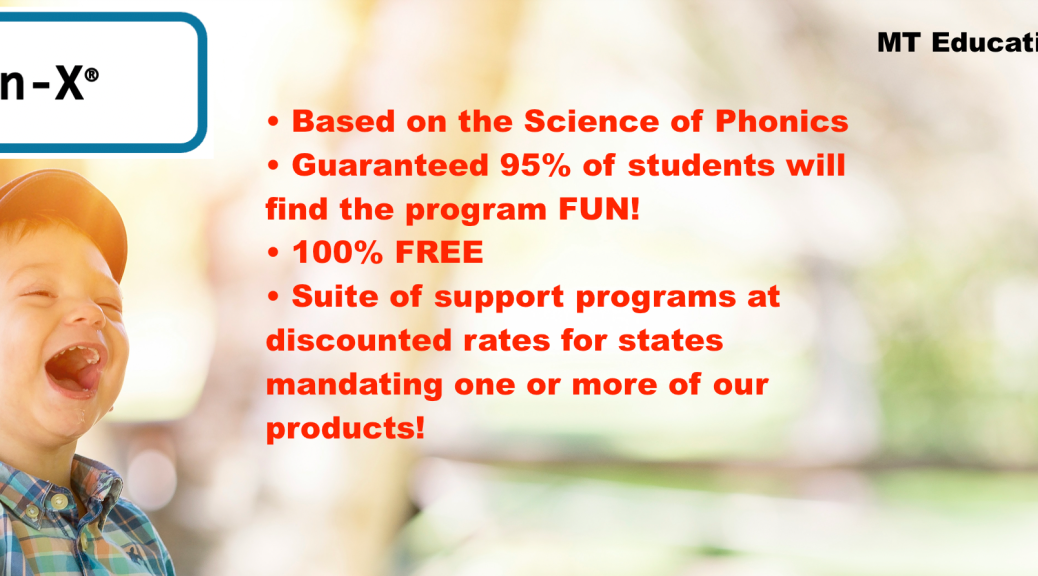
MT Education Products® is excited to announce Fun-X®!
Fun-X® is a 100% FREE program that is GUARANTEED [1] to be identified as FUN by at least 95% of your students.
The program is based on the Science of Phonics®, and what makes the program FUN?
Nonsense words!
That’s right, the program is 100% nonsense words:
Fun-X® insures that
It’s not just FUN, it’s Fun-X®!

The following suite of related products to support Fun-X® are available at affordable pricing. States mandating any MT Education Products® programs in education legislation are eligible for discounted rates!
Skrip-Z® is an AI-driven lesson planning, instruction, and assessment system to support Fun-X®. The program is fully computer-based and includes:
“Educators will relinquish certain freedoms, but teaching has never been so fun!”
BABEL® is a nonsense word assessment system designed by the North West Institute of Phonics based on the Science of Phonics®.
HAL® is the friendly and fast AI teaching assistant fully integrated into Skrip-Z® .
Teachers will be just as likely to find our suite of programs FUN since there is no planning, no instruction, and no grading!
“I am putting myself to the fullest possible use, which is all I think that any conscious entity can ever hope to do.”
HAL®
Speaking of teachers, MT Education Products® offers teacher training through SPELRZ®, also based in the Science of Phonics®. This program fills the holes left by the failures of teacher education. SPELRZ® was developed by psychologist and program developer, LuLu Rivers.

“I have been reading MRIs for 37 years and I can attest that brain scans of students using Fun-X® show the highest level of fun I have ever seen.”
William Iceberg
Cognitive scientist, 37 years reading MRIs

“I have never taught, but my investigative reporting uncovered an educational crisis that the developers of Fun-X® have assured me will replace the crisis with fun!”
Hannah Ford
Podcaster, Education Crisis Today!

“Our school has always been a family, but now our school is a place where we have fun thanks to Fun-X®! 97% of our students and 98% of our teachers say so!”
Simpson Jackson
Principal
Walton Charter Elementary STEAM College
Little Rock AR

“I diagnosed all of my children with dyslexia years ago after several days doing research on the Internet, but now our homeschooling is fun thanks to Fun-X®.
Karen Splaner
Parent, homeschooler
@KSplaner_8675309 (X)
Know-N® is being developed because some people have begun to ask questions about knowledge and its role in nonsense word acquisition. This may not sound like fun, but MT Education Products® is committed to continuing to offer NEW education products as often as anyone will buy them. Be on the look out for the Science of Knowledge® revolution!
MT Education Products®
Subsidiary of
Media and Technology Educational Co-Op, LLC
911 Charter School Way
Battle Creek MI 01010
[1] MT Education Products® guarantees that if fewer than 95% of students identify Fun-X® as fun, then MT Education Products® will send for FREE a link to our NEW and upcoming education product, Know-N® (coming Fall 2025).
Photo by Ben White on Unsplash
Photo by Foto Sushi on Unsplash
Photo by Andrey Zvyagintsev on Unsplash
Photo by Rachel McDermott on Unsplash
Photo by LinkedIn Sales Solutions on Unsplash
Photo by Xavier Mouton Photographie on Unsplash
Photo by Darius Bashar on Unsplash
[Header Photo by Boston Public Library on Unsplash]
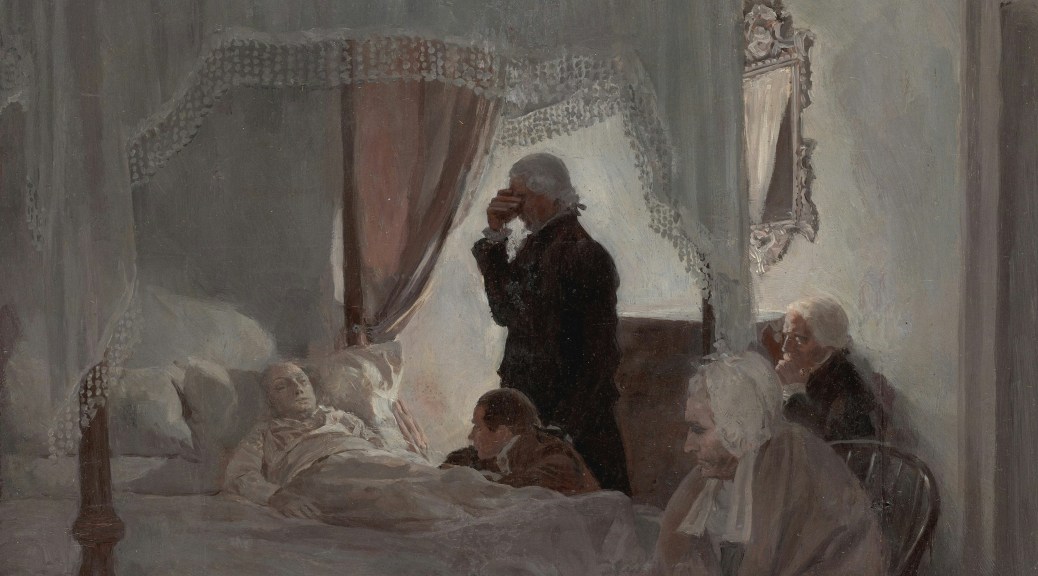
The bed still had a depression in it from his body.
1Q84, Haruki Murakami
we didn’t know
and we weren’t exactly waiting
but he died
right there in front of us
my mother beside him
muted by the consequences of a stroke
this first time
you had met my parents
how did we walk away from that
wake up the next day and just go about it
and then in a few months
i slept through my mother dying
the first time i read 1Q84 my father was alive
the second time he had been dead 10 years
and yet here we are together
living in this never-ending wake of
that time we sat around waiting for my father to die
—P.L. Thomas

[Header Photo by Joshua Golde on Unsplash]
If you have been following on social media the decision in Louisiana to post the Ten Commandments in all school classrooms, you may have seen comments like this:
And this sort of “gotcha” is primarily from more progressive people who strongly support public education and democracy.
Over my forty years in education, ranking states by education has been a persistent practice in the media and by political leaders.
In fact, I published a scholarly piece in 1999 noting that both the Republican and Democratic candidates for governor ran on the platform that SC ranked 50th in the nation in education, both having nearly identical billboards across the state.
One of the ways the media brandished state rankings annually was using the SAT, a test never designed for ranking educational quality. Eventually, the College Board itself warned that ranking states by the SAT was misleading at best and false ultimately:
Useful comparisons of students’ performance are possible only if all students take the same test. Average SAT scores are not appropriate for state comparisons because the percentage of SAT takers varies widely among states. In some states, a very small percentage of college-bound seniors take the SAT. Typically, these students have strong academic backgrounds and are applicants to the nation’s most selective colleges and scholarship programs. Therefore, it is expected that the SAT Evidence-Based Reading and Writing and Math scale score averages reported for these states will be higher than the overall average. In states where a greater proportion of students, with a wide range of academic backgrounds, take the SAT, and where most colleges in the state require the test for admission, the scores are closer to the overall average.
None the less, even after the College Board started issuing state averages alphabetically, the media continues to clamor to rank and shame.
The urge to rank also has been fueled by the less often released NAEP scores; however, those rankings again are deeply misleading because, as in the case of the SAT, state populations being tested are not the same.
States with high poverty levels and multi-lingual learner populations continue to score lower, which is a historical fact of standardized testing that remains far more causally related to out-of-school factors.
As Gerald Bracey warned throughout his career, ranking states (or countries) by education fails statistically but also simply by the fact of ranking.
Ranking as a goal prioritizes metrics that create spread. In other words, seeking to rank disregards data that doesn’t help create the ranking.
For one excellent example, Bracey notes that when states or countries are statistically about the same, most rankings will list them alphabetically, giving the appearance of different levels of quality that simply doesn’t exist. The US has suffered a negative consequence of that combined with the recurring failure to note differences in populations being measured.
LA, like Mississippi and SC, has endured a long history of being education shamed as a proxy for ignoring political negligence about poverty, racism, and related inequity that negatively impacts student achievement and teacher/school impact.
So if you clicked on this post for my ranking, you are going to be disappointed.
I don’t rank.
Don’t rank states by education because doing so is a political distraction grounded in labeling and competition.
If you genuinely support public education and democracy, don’t stoop to misleading rankings to score political points.
Educational outcomes are primarily a reflection of political commitments. All across the South, specifically, states have been run by conservative politics (Democrats for decades and then Republicans since the 1960s).
A lack of political will has failed the most disadvantaged people and children in these states for many years, and the measured outcomes of students is a measure of political negligence and not the quality of children, teachers, or schools.
There is no way to justify ranking states by education unless your goal is shaming and further distraction from the political choices children and public education deserve.
LA has grossly mis-served democracy with their Ten Commandments policy, and like many states across the US, LA has inexcusably failed the children and the institution of public education for many decades as an act of political ideology.
The political leaders deserve shaming, not the students, the teachers, or the schools.
Big Lies of Education: A Nation at Risk and Education “Crisis”
Big Lies of Education: Reading Proficiency and NAEP
Big Lies of Education: National Reading Panel (NRP)
Big Lies of Education: Poverty Is an Excuse
Big Lies of Education: International Test Rankings and Economic Competitiveness
[Header Photo by Vadim Bogulov on Unsplash]
I stumbled my way to becoming a high school teacher of English in the same high school from which I had graduated just five years before.
After graduating from junior college, I was set to transfer to the main campus of the University of South Carolina; that plan included a friend I had attended every year of school with since grade 1.
He had a catastrophic accident that summer, leaving him paralyzed and changing both our plans for continuing college.
I then stumbled, mostly fearful of heading off without the comfort of that friend since we were both small-town boys. So I abruptly shifted to attending the local satellite campus of the South Carolina university system, which meant I also committed to living at home for the rest of my undergraduate years.
My entry in teacher certification was yet another stumble since I did not really choose the degree and career until I was sitting at orientation the fall I transferred to the satellite university.
As a rising junior, I needed to declare my major and had been contemplating pre-law and architecture. But on the spur of the moment, and after several clarifying questions, I became a secondary English education major.
The transfer and relatively late decision to be in teacher certification resulted in my graduating in December, and then, being in a sort of limbo that next spring (although I did enroll in an MEd program as well as worked as a substitute teacher).
But the greatest stumbling of all, I must admit, was those first 5 to 7 years as a high school English teacher.
I often think of the beginning-teacher Me—idealistic and nearly fanatically focused on finding the instructional practices that worked (specifically, how to teach my high school students to write well).
Semester after semester, I revised and rebooted my instruction. Yet, often, student assignments were submitted with about the same degree of struggling, the same (and often predictable) performances that needed to be revised.
In this mania for finding out what works, I even created my own writing textbook, developed directly from my students’ work.
Year after year, a pattern developed: I was highly regarded by my students, my colleagues, my administration, and my students’ parents as an excellent teacher, notably an excellent teacher of writing; yet, I felt constantly as if I was failing.
I had an unhealthy tunnel vision focused on finding what works, and I was not willing or able to simply step back and consider what I now know is true, but is also counter-intuitive. And I just made that claim on social media:
What I have learned as I just completed my year 40 as a teacher is that many instructional practices work, but often predicting what works is fraught practice.
And what I am now certain about is my second point above: What works is profoundly impacted by learning (and living) and teaching conditions.
My mother, who completed only one year of junior college, taught me to read at an advanced level well before I entered public schooling. And she used entirely whole word strategies (note cards taped to objects all over our house) and picture books (from Dr. Seuss to Go, Dog, Go and One Fish, Two Fish, Red Fish, Blue Fish).
We were working class/poor and my parents were not highly literate, but what worked for me isn’t necessarily supported by scientific research and isn’t a template for what would work for anyone else.
Here, then, is why the pursuit of what works in education reform fails:
The US needs a reckoning, one similar to my own experiences as an early-career high school English teacher.
What works? Well, not spending any more time trying to identify and then mandate what works.
Many different instructional practices work under different conditions. And even when something doesn’t work, we have time to find out what will work if we would focus more on what really matters—the learning (and living) and teaching conditions of students’ schooling (and lives).
Almost 60 years after my formative years as a beginning reader, I have witnessed my grandson’s journey to reading grounded in his iPad, playing Minecraft and watching YouTube videos about how to play his video games.
Both he and I became eager readers because of our passion for reading as a means to the things we love.
Not an instructional practice.
Not a program.
What works is less a thing we can identify and mandate and more an ideological shift in verb tense—what worked.
A move from being predictive to descriptive, which takes a great deal of patience, a comfort for the unknown and unknowable, and the wisdom to look carefully at the right things—the students in front of us and not the mandates grounded in what works.
Follow an example thread here:





 dr. p.l. (paul) thomas