
Why Is the Secretary of Education Doing a Rush/Beck Routine?.
All posts by plthomasedd
High and Reasonable Expectations for Student Writing
Closing Gaps?: Addressing Privilege and Poverty
With the release of her Reign of Error, Diane Ravitch continues to identify the failures of education reform, exemplified by the charter school movement.
As the evidence mounts discrediting much of the movement, and more of the public discourse recognizes that evidence, we may be poised for rethinking education reform.
If current reform commitments are misguided, then what are our alternatives? Broadly, new ways of thinking about public education must occur before the U.S. can fulfill its obligation to the promise of universal public schools:
- We have failed public education; public education has not failed us.
- Education has never, cannot, and will never be a singular or primary mechanism for driving large social change.
- And, thus, public education holds up a mirror to the social dynamics defining the U.S. In other words, achievement gaps in our schools are metrics reflecting the equity and opportunity gaps that exist in society.
One aspect of these new ways of thinking about public education that is rarely discussed is that seeking laudable goals (such as closing the achievement gap in schools and the income and upward mobility gaps in society) requires that we address both privilege and poverty—the top and the bottom. Historically and currently, our gaze remains almost exclusively on the bottom.
Richard Reeves in the “The Glass-Floor Problem” poses a provocative and necessary admission about the polar ends of class in the U.S.:
When it comes to the economic malaise facing America, the biggest problem is not the widening gap between rich and poor, but the stagnation of social mobility. When the income gap of one generation becomes an opportunity gap for the next, inequality hardens into social stratification….
These solutions may sound easy, but they are not. While politicians discuss social mobility as a pain-free goal, the unspoken, uncomfortable truth is that relative mobility is a zero-sum game. Opening more doors to applicants from low-income backgrounds often means closing more doors to affluent applicants.
This is delicate territory. Nobody wants parents to stop trying hard for their children. But nor do we want a society in which the social market is rigged in favor of those born into affluence. If we want a competitive economy and an open society, we need the best and brightest to succeed. This means some of the children of the affluent must fail.
In other words, the declining social mobility in the U.S. includes not only that those at the bottom are victims of poverty being destiny, but also that those at the top are reaping the benefit of privilege being destiny. In both extremes, then, the ideal of a U.S. meritocracy is negated.
Beneath simplistic claims that higher educational attainment (effort) is rewarded with greater income potential lie the ugly truth that poverty blocks children from high-quality educational opportunities while privilege insures better schools, advanced degrees, and access to jobs linked to the networking of privilege.
The lives of adults in the U.S. are more often than not the consequences of large and powerful social dynamics driven by poverty and privilege—and not by the character or tenacity of any individual.
That fact is the basis for the needed new ways of thinking about education posed above.
One example of thinking differently about education is Ravitch, who explains that school-only reform over the past three decades is essentially a “mistake”; instead, social reform must come first so that school reform can work:
And income inequality in our nation is larger than at any point in the last century.
We should do what works to strengthen our schools: Provide universal early childhood education (the U.S. ranks 24th among 45 nations, according to the Economist); make sure poor women get good prenatal care so their babies are healthy (we are 131st among 185 nations surveyed, according to the March of Dimes and the United Nations); reduce class size (to fewer than 20 students) in schools where students are struggling; insist that all schools have an excellent curriculum that includes the arts and daily physical education, as well as history, civics, science, mathematics and foreign languages; ensure that the schools attended by poor children have guidance counselors, libraries and librarians, social workers, psychologists, after-school programs and summer programs.
Schools should abandon the use of annual standardized tests; we are the only nation that spends billions testing every child every year. We need high standards for those who enter teaching, and we need to trust them as professionals and let them teach and write their own tests to determine what their students have learned and what extra help they need.
Annie Murphy Paul also challenges the in-school only focus on seeking ways to close gaps, shifting away from schools and into the home:
When it comes to children’s learning, are we focusing too much on schools—and not enough on parents?
“There is, quite rightly, a cacophonous debate on how to reform schools, open up colleges, and widen access to pre-K learning,” notes a new article, “Parenting, Politics, and Social Mobility,” published by the Brookings Institution, a Washington think tank. “But too little attention is paid to another divide affecting social mobility—the parenting gap.”
Given all the roiling debates about how America’s children should be taught, it may come as a surprise to learn that students spend less than 15% of their time in school. While there’s no doubt that school is important, a clutch of recent studies reminds us that parents are even more so. A study by researchers at North Carolina State University, Brigham Young University and the University of California-Irvine, for example, finds that parental involvement—checking homework, attending school meetings and events, discussing school activities at home—has a more powerful influence on students’ academic performance than anything about the school the students attend.
Another study, published in the Review of Economics and Statistics, reports that the effort put forth by parents (reading stories aloud, meeting with teachers) has a bigger impact on their children’s educational achievement than the effort expended by either teachers or the students themselves. And a third study concludes that schools would have to increase their spending by more than $1,000 per pupil in order to achieve the same results that are gained with parental involvement (not likely in this stretched economic era).
So parents matter—a point made clear by decades of research showing that a major part of the academic advantage held by children from affluent families comes from the “concerted cultivation of children” as compared to the more laissez-faire style of parenting common in working-class families.
While Paul’s challenge pulls us one step back from school-only reform, this doesn’t go quite far enough (and stumbles if her argument is interpreted as “blame the parents”)—especially in the last comment quoted above. From Paul’s argument, we must ask ourselves why affluent parents and impoverished parents appear to parent differently.
“Laissez-faire” is a dangerous and potentially ugly word here.
Impoverished adults are not in poverty primarily due to laziness. Impoverished children do not score poorly on standardized tests because their parents do not care about school or are too lazy to parent properly (read: as affluent parents do).
Poverty is a social dynamic that does not allow people to behave in ways that we view as effective or productive. Privilege is a social dynamic that allows people to behave in ways that we mistakenly suggest is grounded in those people’s superior character.
Just as the achievement gap in schools is a marker for the equity gap in society, parenting style differences are reflections of the social dynamics experienced by those parents.
An affluent family with one parent staying home to support the children is allowed to behave in ways that an impoverished single parent working two part-time jobs (with no retirement or healthcare) cannot.
Privilege is a safety net, poverty is a prison.
Ultimately, we must acknowledge both privilege and poverty if we genuinely wish to close gaps in society and schools. Just as Reeves warns, however, recognizing that both privilege and poverty are unfair calls into question the advantages of children born into affluence.
It seems important that we ask as a culture some foundational questions:
- Is ending the momentum of privilege “taking something away” from a child?
- Is ending the momentum of poverty “giving something for free” to a child?
- What are the foundational promises a country must make to insure the human dignity all people deserve, and expressed in that country’s foundational documents (in the U.S., life, liberty, and the pursuit of happiness)?
These questions can only be answered and then acted upon if we make one additional change to how we think—in the larger scale (not in the schools, not in the home, but in society), how we think about the relationship between the Commons (publicly-funded institutions) and the free market.
The free market, we must admit, is amoral; the free market is Social Darwinism: competition produces losers and winners, not equity.
The Commons are potentially the collective ethics of a people.
And finally, then, in order for a free market to work for the common good, the Commons must be primary in the commitment of any people.
The Commons are the foundation upon which the market can do good.
As long as the U.S. views the Commons and the Market as an either/or proposition, and as long as the U.S. prefers the Market, privilege and poverty will continue to be destiny for our children. And for us all.
Let’s go back now to the second new way of viewing public schools from the beginning—reframed within a primary commitment to the Commons:
- Public education has never, cannot, and will never be a singular or primary mechanism for driving large social change as long as social inequity remains and as long as those public schools perpetuate those social inequities.
If we commit to social reform and education reform seeking equity and opportunity, then my first claim at the beginning will be proven wrong.
Here’s to my being wrong.
The Assault on Public Education in SC Continues: More Innovation!
The Assault on Public Education in SC Continues: More Innovation!
via The Assault on Public Education in SC Continues: More Innovation!.
Why Poverty and Mass Incarceration Do Not Matter in the U.S.
Ever wonder why poverty and mass incarceration do not matter in the U.S.?
Poverty disproportionately impacts women and children (see p. 15):
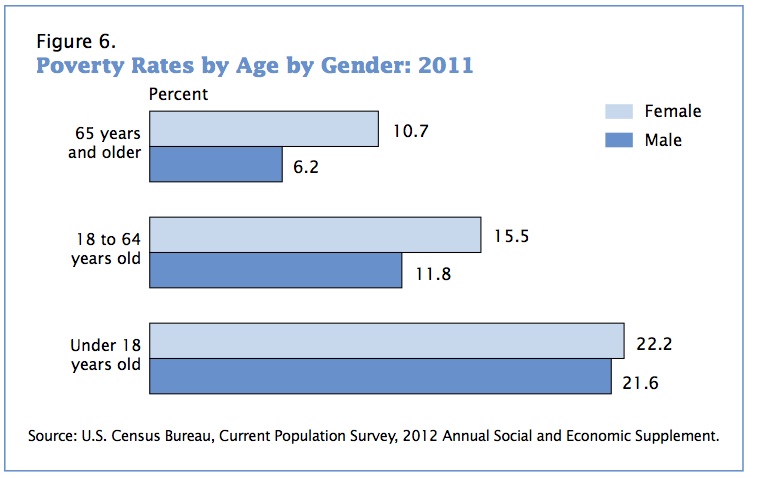
[click image to enlarge]
Mass incarceration disproportionately impacts African American males. While white males outnumber AA males about 5 to 1 in society, AA males outnumber white makes about 6 to 1 in prison:

—–
Government and business in the U.S. remains dominated either by privileged white males or the norms associated with privileged white males.
Our leaders have no empathy.
Our leaders have wealth, privilege, child care, health care, food security, and job security—and they all believe they have earned it all. They also believe those who haven’t are lazy—also deserving their poverty.
Our leaders cannot and will not acknowledge their privilege.
Leadership without empathy is tyranny.
If poverty and mass incarceration were white male problems, we’d be working to end both.
Petrilli’s Embarrassing Post about Poor Mothers Being “Bad”
How Bill Gates Views the World (And Why It’s a Problem)
Disaster Capitalism and Charter Schools: Revisiting New Orleans Post-Katrina

Words and Deeds: The U.S. Is No Christian Nation
[Header Photo by Edward Cisneros on Unsplash]
In Chapter 1 (“The Foul Ball”) of John Irving’s A Prayer for Owen Meany, the narrator, John Wheelwright, declares on the first page, “I am a Christian because of Owen Meany.” Later in the chapter, John and Owen are in the car with John’s mother:
We were in Rye, passing the First Church, and the breeze from the ocean was already strong. A man with a great stack of roofing shingles in a wheelbarrow was having difficulty keeping the shingles from blowing away; the ladder, leaning against the vestry roof, was also in danger of being blown over. The man seemed in need of a co-worker—or, at least, of another pair of hands.
“WE SHOULD STOP AND HELP THAT MAN,” Owen observed, but my mother was pursuing a theme, and therefore, she’d noticed nothing unusual out the window….
“WE MISSED DOING A GOOD DEED,” Owen said morosely. “THAT MAN SHINGLING THE CHURCH—HE NEEDED HELP.” (pp. 33-34, 35)
If you are looking for the U.S., there it is—John Wheelwright’s mother, who “noticed nothing unusual out the window.”
•
D.H. Lawrence’s “The Rocking-Horse Winner” presents the reader with a young boy, Paul, talking with his mother:
“Is luck money, mother?” he asked, rather timidly.
“No, Paul. Not quite. It’s what causes you to have money.”
“Oh!” said Paul vaguely. “I thought when Uncle Oscar said filthy lucker, it meant money.”
“Filthy lucre does mean money,” said the mother. “But it’s lucre, not luck.”
“Oh!” said the boy. “Then what is luck, mother?”
“It’s what causes you to have money. If you’re lucky you have money. That’s why it’s better to be born lucky than rich. If you’re rich, you may lose your money. But if you’re lucky, you will always get more money.”
“Oh! Will you? And is father not lucky?”
“Very unlucky, I should say,” she said bitterly.
If you are looking for the U.S., there it is—a working class fascination with luck and wealth, passed on to children, instead of the charity Owen calls for throughout Irving’s novel
•
From the grave, Addie Bundren reveals her philosophy of life in William Faulkner’s As I Lay Dying:
So I took Anse. And when I knew that I had Cash, I knew that living was terrible and that this was the answer to it. That was when I learned that words are no good; that words dont ever fit even what they are trying to say at. (p. 171)
If you are looking for the U.S., there it is—the failure of words against the possibility of deeds.
•
“With a clamor of bells that set the swallows soaring, the Festival of Summer came to the city Omelas, bright-towered by the sea,” opens Ursula Le Guin’s “The Ones Who Walk Away from Omelas.”
Later in the story, however, the narrator explains:
Do you believe? Do you accept the festival, the city, the joy? No? Then let me describe one more thing.
In a basement under one of the beautiful public buildings of Omelas, or perhaps in the cellar of one of its spacious private homes, there is a room. It has one locked door, and no window. A little light seeps in dustily between cracks in the boards, secondhand from a cobwebbed window somewhere across the cellar. In one corner of the little room a couple of mops, with stiff, clotted, foul-smelling heads stand near a rusty bucket. The floor is dirt, a little damp to the touch, as cellar dirt usually is. The room is about three paces long and two wide: a mere broom closet or disused tool room. In the room a child is sitting. It could be a boy or a girl. It looks about six, but actually is nearly ten. It is feeble-minded. Perhaps it was born defective, or perhaps it has become imbecile through fear, malnutrition, and neglect. It picks its nose and occasionally fumbles vaguely with its toes or genitals, as it sits hunched in the corner farthest from the bucket and the two mops. It is afraid of the mops. It finds them horrible. It shuts its eyes, but it knows the mops are still standing there; and the door is locked; and nobody will come. The door is always locked; and nobody ever comes, except that sometimes–the child has no understanding of time or interval–sometimes the door rattles terribly and opens, and a person, or several people, are there. One of them may come in and kick the child to make it stand up. The others never come close, but peer in at it with frightened, disgusted eyes. The food bowl and the water jug are hastily filled, the door is locked, the eyes disappear. The people at the door never say anything, but the child, who has not always lived in the tool room, and can remember sunlight and its mother’s voice, sometimes speaks. “I will be good,” it says. “Please let me out. I will be good!” They never answer. The child used to scream for help at night, and cry a good deal, but now it only makes a kind of whining, “eh-haa, eh-haa,” and it speaks less and less often. It is so thin there are no calves to its legs; its belly protrudes; it lives on a half-bowl of corn meal and grease a day. It is naked. Its buttocks and thighs are a mass of festered sores, as it sits in its own excrement continually.
They all know it is there, all the people of Omelas. Some of them have come to see it, others are content merely to know it is there. They all know that it has to be there. Some of them understand why, and some do not, but they all understand that their happiness, the beauty of their city, the tenderness of their friendships, the health of their children, the wisdom of their scholars, the skill of their makers, even the abundance of their harvest and the kindly weathers of their skies, depend wholly on this child’s abominable misery.
If you are looking for the U.S., there it is—the sacrificed child, the dull resignation toward inequity.
•
While Daisy and Tom Buchanan flee, essentially unscathed, to Europe, the images of Myrtle Wilson dead in the road and Jay Gatsby face-down in his swimming pool haunt Nick Carraway’s final lines of F. Scott Fitzgerald’s The Great Gatsby:
Gatsby believed in the green light, the orgiastic future that year by year recedes before us. It eluded us then, but that’s no matter—tomorrow we will run faster, stretch out our arms farther….And one fine morning—
So we beat on, boats against the current, borne back ceaselessly into the past. (p. 182)
If you are looking for the U.S., there it is—Myrtle’s corpse in the wake of Daisy driving a gold Rolls Royce, Gatsby and George Wilson both dead at George’s disillusioned hand.
•
The U.S. is no Christian nation—of that I am reminded, like Owen Meany witnesses again and again, each time I make a case that the U.S. is the wealthiest nation in the world, in human history, and that we tolerate and even loathe the growing number of poor, including poor children, who populate our country.
When I suggest we should end poverty directly, cries ring out for the interests of the wealthy: How dare I suggest that we take from the rich and give to the poor!
Certainly a sentiment that Jesus espoused often? No, in fact, Jesus speaks most about the least among us, the need to lay down our worldly possessions, and our moral obligation of charity.
The U.S. will have none of that, however.
A country will ultimately be measured by how the privileged treat the impoverished. About many things I am unsure, but about that, I am certain.
Many stood in line to buy the newest iPhone (which will be obsolete very soon so everyone yet again can line up for the new iPhone) while almost no one lined up to do something about 22% of children in the U.S. living in poverty.
If you are looking for the U.S., there it is—in line for the new iPhone.
Echoing the words of Jesus in many ways, Henry David Thoreau in Walden (Economy) recognized even in mid-nineteenth century:
Most of the luxuries, and many of the so-called comforts of life, are not only not indispensable, but positive hindrances to the elevation of mankind. With respect to luxuries and comforts, the wisest have ever lived a more simple and meagre life than the poor….
The life which men praise and regard as successful is but one kind….
No man ever stood the lower in my estimation for having a patch in his clothes; yet I am sure that there is greater anxiety, commonly, to have fashionable, or at least clean and unpatched clothes, than to have a sound conscience….We know but few men, a great many coats and breeches….
We worship not the Graces, nor the Parcæ, but Fashion.
I imagine most in the U.S. would scoff at Thoreau, much as they scoff at my suggesting that the privileged have more than they need, and that what they have earned isn’t earned at all—and that those people and children trapped in poverty are our obligations to charity, not people to be shunned or ignored.
The U.S. is no Christian nation.
Although humanist Kurt Vonnegut, may he rest in peace, seemed to understand:
How do humanists feel about Jesus? I say of Jesus, as all humanists do, “If what he said is good, and so much of it is absolutely beautiful, what does it matter if he was God or not?”
But if Christ hadn’t delivered the Sermon on the Mount, with its message of mercy and pity, I wouldn’t want to be a human being.
I’d just as soon be a rattlesnake. (pp. 80-81)
Amen.

The Doable We Refuse to Do: End Poverty, Confront Privilege
Since I have recently challenged the word magic behind claims that education is the one true path out of poverty and that the free market can ever address poverty and inequity, I want to highlight that the unwillingness of political leaders and the public to acknowledge the importance and potential of the Commons results in a refusal to end directly poverty and confront privilege.
Austin Nichols offers a powerful argument that We can end child poverty. Or, at least, do more:
We could effectively end child poverty now, at least in the short run. The question is whether we’re willing to do that.
If the United States offered cash benefits to children in poor families, we could cut child poverty by more than half. According to calculations using the 2012 Current Population Survey, poor children need $4,800 each, on average, to escape poverty. That’s $400 a month for each child.
If we issued a $400 monthly payment to each child, and cut tax subsidies for children in higher-income families, we would cut child poverty from 22 percent to below 10 percent. If we further guaranteed one worker per family a job paying $15,000 a year, and each family participated, child poverty would drop to under 1 percent.
A child benefit is now common across developed countries, with amounts of about $140 a month in the UK, $190 in Ireland, $130 in Japan, $160 in Sweden, and $250 in Germany. A smaller child benefit of $150 per month would chop child poverty from 22 percent to below 17 percent. Adding the job guarantee would lower child poverty to 8 percent.
As important as the need and ability to end poverty directly is the need to face the power of privilege, as detailed by Richard Fry’s The growing economic clout of the college educated. Note specifically the following data displays:


Fry explains the growing disparity:
For the first time on record, households headed by someone with at least a bachelor’s degree received nearly a majority (49.7%) of aggregate U.S. household income; nearly one out of every two dollars went to the college educated. In 2012 one-in-three households was college educated, so, put another way, half of the aggregate U.S. income goes to one third of the households.
Buried in the strong correlation between level of education attained and household income is the very real causational relationship between privilege and access to that education (both the quality and attainment). While it remains statistically true that higher earning is associated with higher educational attainment, it is also likely that higher educational attainment is simply a marker for the privilege that led to that attainment.
In other words, identifying any person’s educational attainment may be more about that person’s relative privilege or poverty and not that person’s effort, ability, or genuine achievement. (Please note Bruenig’s recognition that birth-wealth without college still has higher income potential than birth-poverty and college attainment.)
The evidence is overwhelming that poverty and affluence are destiny, that inequity is growing in the U.S., and that the best and most effective methods for ending poverty and closing the equity gap is through direct action by our publicly funded institutions (and not waiting on the magic of the Invisible Hand).
 dr. p.l. (paul) thomas