All posts by plthomasedd

P. L. Thomas, Professor of Education (Furman University, Greenville SC), taught high school English in rural South Carolina before moving to teacher education. He is a former column editor for English Journal (National Council of Teachers of English), current series editor for Critical Literacy Teaching Series: Challenging Authors and Genres (Brill), and author of Teaching Writing as Journey, Not Destination: Essays Exploring What ‘Teaching Writing’ Means (IAP, 2019) and How to End the Reading War and Serve the Literacy Needs of All Students: A Primer for Parents, Policy Makers, and People Who Care (IAP, in press). NCTE named Thomas the 2013 George Orwell Award winner. He co-edited the award-winning (Divergent Book Award for Excellence in 21st Century Literacies Research) volume Critical Media Literacy and Fake News in Post-Truth America (Brill, 2018). Follow his work @plthomasEdD and the becoming radical (https://radicalscholarship.wordpress.com/).

What Is the Relationship among NAEP Scores, Educational Policy, and Classroom Practice?

Annually, the media, public, and political leaders over-react and misrepresent the release of SAT and ACT scores from across the US. Most notably, despite years of warnings from the College Board against the practice, many persist in ranking states by average state scores, ignoring that vastly different populations are being incorrectly compared.

These media, public, and political reactions to SAT and ACT scores are premature and superficial, but the one recurring conclusion that would be fair to emphasize is that, as with all standardized test data, the most persistent correlation to these scores includes the socio-economic status of the students’ families as well as the educational attainment of their parents.

Over many decades of test scores, in fact, educational policy and classroom practices have changed many times, and the consistency of those policies and practices have been significantly lacking and almost entirely unexamined.

For example, when test scores fell in California in the late 1980s and early 1990s, the media, public, and political leaders all blamed the state’s shift to whole language as the official reading policy.

This was a compelling narrative that, as I noted above, proved to be premature and superficial—relying on the most basic assumptions of correlation. A more careful analysis exposed two powerful facts: California test scores were far more likely to have dropped because of drastic cuts to educational funding and a significant influx of English language learners and (here is a very important point) even as whole language was the official reading policy of the state, few teachers were implementing whole language in their classrooms.

This last point cannot be emphasized enough: throughout the history of public education, because teaching is mostly a disempowered profession (primarily staffed by women), one recurring phenomenon is that teachers often shut their doors and teach—claiming their professional autonomy by resisting official policy.

November 2019 has brought us a similar and expected round of making outlandish and unsupported claims about NAEP data. With the trend downward in reading scores since 2017, this round is characterized by the sky-is-falling political histrionics and hollow fist pounding that NAEP scores have proven policies a success or a failure (depending on the agenda).

If we slip back in time just a couple decades, when the George W. Bush administration heralded the “Texas miracle” as a template for No Child Left Behind, we witnessed a transition from state-based educational accountability to federal accountability. But this moment in political history also raised the stakes on scientifically based educational policy and practice.

Specifically, the National Reading Panel was charged with identifying the highest quality research in effective reading programs and practices. (As a note, while the NRP touted its findings as scientific, many, including a member of the panel itself [1], have discredited the quality of the findings as well as accurately cautioning against political misuse of the findings to drive policy).

Here is where our trip back in history may sound familiar during this current season of NAEP hand wringing. While Secretary of Education (2005-2009), Margaret Spellings announced that a jump of 7 points in NAEP reading scores from 1999-2005 was proof No Child Left Behind was working. The problem, however, was in the details:

[W]hen then-Secretary Spellings announced that test scores were proving NCLB a success, Gerald Bracey and Stephen Krashen exposed one of two possible problems with the data. Spellings either did not understand basic statistics or was misleading for political gain. Krashen detailed the deception or ineptitude by showing that the gain Spellings noted did occur from 1999 to 2005, a change of seven points. But he also revealed that the scores rose as follows: 1999 = 212; 2000 = 213; 2002 = 219; 2003 = 218 ; 2005 = 219. The jump Spellings used to promote NCLB and Reading First occurred from 2000 to 2002, before the implementation of Reading First. Krashen notes even more problems with claiming success for NCLB and Reading First, including:

“Bracey (2006) also notes that it is very unlikely that many Reading First children were included in the NAEP assessments in 2004 (and even 2005). NAEP is given to nine year olds, but RF is directed at grade three and lower. Many RF programs did not begin until late in 2003; in fact, Bracey notes that the application package for RF was not available until April, 2002.”

Jump to 2019 NAEP data release to hear Secretary of Education Betsy DeVos shout that the sky is falling and public education needs more school choice—without a shred of scientific evidence making causal relationships of any kind among test data, educational policy, and classroom practice.

But an even better example has been unmasked by Gary Rubinstein who discredits Louisiana’s Chief of Change John White (praised by former SOE Arne Duncan) proclaiming his educational policy changes caused the state’s NAEP gain in math:

So while, yes, Louisiana’s 8th grade math NAEP in 2017 was 267 and their 8th grade math NAEP in 2019 was 272 which was a 5 point gain in that two year period and while that was the highest gain over that two year period for any state, if you go back instead to their scores from 2007, way before their reform effort happened, you will find that in the 12 year period from 2007 to 2019, Louisiana did not lead the nation in 8th grade NAEP gains.  In fact, Louisiana went DOWN from a scale score of 272.39 in 2007 to a scale score of 271.64 in 2019 on that test.  Compared to the rest of the country in that 12 year period.  This means that in that 12 year period, they are 33rd in ‘growth’ (is it even fair to call negative growth ‘growth’?).  The issue was that from 2007 to 2015, Louisiana ranked second to last on ‘growth’ in 8th grade math.  Failing to mention that relevant detail when bragging about your growth from 2017 to 2019 is very sneaky.

The media and public join right in with this political playbook that has persisted since the early 1980s: Claim that public education is failing, blame an ever-changing cause for that failure (low standards, public schools as monopolies, teacher quality, etc.), promote reform and change that includes “scientific evidence” and “research,” and then make unscientific claims of success (or yet more failure) based on simplistic correlation and while offering no credible or complex research to support those claims.

Here is the problem, then: What is the relationship among NAEP scores, educational policy, and classroom practice?

There are only a couple fair responses.

First, 2019 NAEP data replicate a historical fact of standardized testing in the US—the strongest and most persistent correlations to that data are with the socio-economic status of the students, their families, and the states. When students or average state data do not conform to that norm, these are outliers that may or may not provide evidence for replication or scaling up. However, you must consider the next point as well.

Second, as Rubinstein shows, the best way to draw causal relationship among NAEP data, educational policy, and classroom practices is to use longitudinal data; I would recommend at least 20 years (reaching back to NCLB), but thirty years would add in a larger section of the accountability era that began in the 1980s but was in wide application across almost all states by the 1990s.

The longitudinal data would next have to be aligned with the current educational policy in math and reading for each state correlated with each round of NAEP testing.

As Bracey and Krashen cautioned, that correlation would have to accurately align when the policy is implemented with enough time to claim that the change impacted the sample of students taking NAEP.

But that isn’t all, even as complex and overwhelming as this process demands.

We must address the lesson from the so-called whole language collapse in California by documenting whether or not classroom practice implemented state policy with some measurable level of fidelity.

This process is a herculean task, and no one has had the time to examine 2019 NAEP data in any credible way to make valid causal claims about the scores and the impact of educational policy and classroom practice.

What seems fair, however, to acknowledge is that there is no decade over the past 100 years when the media, public, and political leaders deemed test scores successful, regardless of the myriad of changes to policies and practices.

Over the history of public education, also, before and after the accountability era began, student achievement in the US has been mostly a reflection of socio-economic factors, and less about student effort, teacher quality, or any educational policies or practices.

If NAEP data mean anything, and I am prone to say they are much ado about nothing, we simply do not know what that is because we have chosen political rhetoric over the scientific process and research that could give us the answers.


[1] See:

Babes in the Woods: The Wanderings of the National Reading Panel, Joanne Yatvin

Did Reading First Work?, Stephen Krashen

My Experiences in Teaching Reading and Being a Member of the National Reading Panel, Joanne Yatvin

I Told You So! The Misinterpretation and Misuse of The National Reading Panel Report, Joanne Yatvin

The Enduring Influence of the National Reading Panel (and the “D” Word)

 

On Normal, ADHD, and Dyslexia: Neither Pathologizing, Nor Rendering Invisible

[Header Photo by Artem Beliaikin on Unsplash]

In 1973, Elliott Kozuch explains, “the American Psychiatric Association (APA) — the largest psychiatric organization in the world — made history by issuing a resolution stating that homosexuality was not a mental illness or sickness. This declaration helped shift public opinion, marking a major milestone for LGBTQ equality.”

Homosexuality in many eras and across many cultures has been rendered either invisible (thus, the “closet” metaphor) or pathologized as an illness (thus, the horror that is conversion therapy).

This troubling history of responses to homosexuality confronts the inexcusable negative consequences of shame and misdiagnosis/mistreatment against the more humane and dignified recognition that “normal” in human behaviors is a much broader spectrum than either invisibility or pathologizing allows.

How we determine “normal” in formal education is profoundly important, and the current rise of dyslexia advocacy as that impacts and drives reading legislation and practice for all students parallels the dangers identified above with rendering invisible or pathologizing children who struggle with reading.

woman sitting on bed while holding book
Photo by David Lezcano on Unsplash

Further, this more recent focus on dyslexia looks incredibly similar to the increased diagnosis of ADHD, which was initially left invisible and then pathologized (probably over-diagnosed and heavily medicated).

Let’s focus first, then, on ADHD, and how the dynamic of “normal,” “invisible,” and “pathologized” impacts children.

In 2013 Maggie Koerth-Baker reported:

The number of diagnoses of Attention Deficit Hyperactivity Disorder has ballooned over the past few decades. Before the early 1990s, fewer than 5 percent of school-age kids were thought to have A.D.H.D. Earlier this year, data from the Centers for Disease Control and Prevention showed that 11 percent of children ages 4 to 17 had at some point received the diagnosis — and that doesn’t even include first-time diagnoses in adults.

But here is the problem:

That amounts to millions of extra people receiving regular doses of stimulant drugs to keep neurological symptoms in check. For a lot of us, the diagnosis and subsequent treatments — both behavioral and pharmaceutical — have proved helpful. But still: Where did we all come from? Were that many Americans always pathologically hyperactive and unable to focus, and only now are getting the treatment they need?

Probably not. Of the 6.4 million kids who have been given diagnoses of A.D.H.D., a large percentage are unlikely to have any kind of physiological difference that would make them more distractible than the average non-A.D.H.D. kid. It’s also doubtful that biological or environmental changes are making physiological differences more prevalent. Instead, the rapid increase in people with A.D.H.D. probably has more to do with sociological factors — changes in the way we school our children, in the way we interact with doctors and in what we expect from our kids.

For context, when I was exploring the ADHD phenomenon in 2013, I ran across a provocative piece from 2012 about ADHD in France, Why French Kids Don’t Have ADHD, published in Psychology Today. Immediately, this spoke to my concern about both pathologizing human behavior that may be within a broader understanding of normal and my skepticism about immediately medicating, instead of addressing diet, environment, etc.

However, the situation in France is far more complicated as noted in a piece also published by Psychology Today in 2015 , French Kids DO Have ADHD, this time acknowledging:

In other words, it’s not that French kids, or Europeans, don’t have ADHD, says French child psychiatrist Michel Lecendreux, but that they’re clinically invisible. “It’s just not very well understood, nor is it very well-diagnosed, nor well-treated.” Lecendreux, a researcher at the Robert Debre Hospital in Paris who also heads the scientific commission for the French ADHD support group HyperSupers, told me that his research suggests that fewer than one-third of French children who have ADHD are being diagnosed.

The circumstances around ADHD in France reveal the power of narratives and cultural responses to human behavior, any people’s perception of “normal.” A study by Sébastien Ponnou and François Gonon from 2017, in fact, details the pervasiveness of different narratives about ADHD in French media:

Two models of attention deficit hyperactivity disorder (ADHD) coexist: the biomedical and the psychosocial. We identified in nine French newspapers 159 articles giving facts and opinions about ADHD from 1995 to 2015. We classified them according to the model they mainly supported and on the basis of what argument. Two thirds (104/159) mainly supported the biomedical model. The others either defended the psychodynamic understanding of ADHD or voiced both models. Neurological dysfunctions and genetic risk factors were mentioned in support of the biomedical model in only 26 and eight articles, respectively. These biological arguments were less frequent in the most recent years. There were fewer articles mentioning medication other than asserting that medication must be combined with psychosocial interventions (14 versus 57 articles). Only 11/159 articles claimed that medication protects from school failure. These results were compared to those of our two previous studies. Thus, both French newspapers and the specialized press read by social workers mainly defended either the psychodynamic understanding of ADHD or a nuanced version of the biomedical model. In contrast, most French TV programmes described ADHD as an inherited neurological disease whose consequences on school failure can be counteracted by a very effective medication. (abstract)

Back in the US, in Room for Debate from 2016, several experts challenged overpathologizing children with ADHD labels, the racial disparity in that pathologizing, and the dangers of medicating for ADHD as an avenue to controlling children.

Thus, the interaction among the fields of medicine and psychology, media representations of clinical conditions, and the spectrum along “normal,” “invisible,” and “pathologized” has profound consequences for children/teens and formal education.

Currently, we are witnessing mainstream media build a compelling narrative about the “science of reading” and the needs of children with dyslexia; this is a narrative about children with dyslexia being rendered invisible and there existing a “science of reading” that is the medicine necessary to cure that pathology.

However, as the examinations of homosexuality and ADHD above demonstrate, when it comes to the humanity and dignity of children being served by the institution of public education, we cannot tolerate either rendering them and their behaviors invisible or over-pathologizing, and thus misdiagnosing/mistreating, them.

This leads to the current rush to assess and identify dyslexia as a foundational part of teaching all children to read, policies about which the International Literacy Association (2016) offer several concern:

Errors in reading and spelling made by children classified as dyslexic are not reliably different from those of younger children who are not classified as dyslexic. Rather, evidence suggests that readers with similar levels of competence make similar kinds of errors. This does not suggest a greater incidence of dyslexia, but instead that some difficulties in learning to work with sounds are normal.

International Literacy Association (2016)

Yet, the rise in advocacy for identifying dyslexia has gained significant momentum in state policy even as ILA warns:

Some have advocated for an assessment process that determines who should and should not be classified as dyslexic, but this process has been shown to be highly variable across states and districts in the United States, of questionable validity, and too often resulting in empirically unsupported, one-size-fits-all program recommendations [emphasis added].

International Literacy Association (2016)

No child struggling to read should have that struggle rendered invisible, but pathologizing behavior that does not conform to a narrow definition of normal also carries significant and negative consequences. As ILA notes above, a more reasonable approach is simply to expand the spectrum of normal while building a supportive environment tempered with patience.

I teach a graduate student whose child is now in a school for dyslexic children. That child was floundering personally and academically in traditional school, and now flourishes, something everyone would applaud.

The parent, however, made a really powerful observation, noting that the child’s recent success comes in a school that champions Orton-Gillingham-based reading programs [1] (often OG for short).

Advocates for universal screening for dyslexia also advocate for systematic intensive phonics for all students, specifically OG. Yet, this child is now in a school with a 1-8 teacher-student ratio and a guaranteed 1.5 hours a day with 1-2 teacher-student ratio instruction.

The parent stated flatly that almost any child would flourish in those conditions and the different way the child is being taught to read is not necessarily the real cause of the new success. I must add, we absolutely have no research exploring these dynamics and controlling for variables that would help us understand the importance of reading programs versus learning/teaching conditions (see, for example, unfounded and overstated responses to 2019 NAEP reading scores).

Struggling to read is, in fact, quite normal, and a long, chaotic process. Teaching reading is very complex, unique to each child, and as ILA clarifies, “there is no certifiably best method for teaching children who experience reading difficulty.”

Demands that all children attain some prescribed proficiency in reading by third grade are artificial and themselves unnatural, abnormal.

No child should be invisible in schools, but pathologizing childhood behavior that is quite normal because some adults have irresponsible deadlines and expectations for those children is inexcusable.

Teaching children to read needs a new normal, one that acknowledges the power of learning and living conditions while avoiding the dangers of finding fault in any child that we can simply cure with some magical quick fix.


[1] From ILA:

[R]esearch does not support the common belief that Orton-Gillingham–based approaches are necessary for students classified as dyslexic (Ritchey & Goeke, 2007; Turner, 2008; Vaughn & Linan-Thompson, 2003). Reviews of research focusing solely on decoding interventions have shown either small to moderate or variable effects that rarely persist over time, and little to no effects on more global reading skills. Rather, students classified as dyslexic have varying strengths and challenges, and teaching them is too complex a task for a scripted, one-size-fits-all program (Coyne et al., 2013; Phillips & Smith, 1997; Simmons, 2015). Optimal instruction calls for teachers’ professional expertise and responsiveness, and for the freedom to act on the basis of that professionalism.

International Literacy Association (2016)

Resisting the Silver Bullet in Literacy Instruction (and Dyslexia): “there is no certifiably best method for teaching children who experience reading difficulty”

The Mind, Explained episode 1, Memory, introduces readers to some disorienting facts about human memory, transported in the soothing and authoritative voice-over by Emma Stone.

The episode shares a 9-11 memory from a young woman, recalling sitting as a child in her classroom and watching the smoke from the Twin Tower collapse billowing past the window as she worried about her mother working in the city.

Her memory is vivid and compelling, but it also factually wrong—both the detail of the billowing smoke (the window didn’t face that direction and the proximity of the school would not have allowed that event to occur) and her mother was not in the city that day.

Memory, the episode reveals, is often deeply flawed, as much a construction by the person as any sort of accurate recall.

Watching this, I thought about one of the most misinterpreted poems commonly taught in schools, Robert Frost’s “The Road Not Taken.”

This poem, and how people almost universally misread it, is parallel to the problems with memory in that people tend to impose onto text what we predict or want that text to say; and the verbatim elements of a text, the raw decoding of words, also depends heavily on schema, what the reader knows and the correlations that reader makes with words and phrases.

Frost’s poem, by the way, is about the significance of choosing, in that when we choose we determine our path. But the poem literally states multiple times that the paths are the same; therefore, the poem is not some inspirational poster about making the right choice—although this is the sort of simplistic message many people want to read.

Since I have been wrestling with the recent rise of dyslexia advocates calling for intensive systematic phonics instruction and dyslexia screening for all students as well as the over-reaction to the 2019 reading data from NAEP, I believe the memory and poem interpretation phenomena help explain how and why the “science of reading” narrative is so effective while simultaneously being deeply misguided (and misleading).

The media and most people find a single explanation for reading problems compelling; the argument that more students have dyslexia than are being identified and that one program type (intensive systematic phonics, usually Orton-Gillingham–based) will cure the low reading achievement crisis matches what people want to hear.

The disturbing irony is that those oversimplifying reading challenges and solutions as “the science of reading” are themselves not being very scientific even as they idealize “scientific research.”

I have argued against this in education for many years, and have identified this broadly as technocratic, an over-reliance on narrow types of measurement in order to control the teaching/learning process in ways that are not realistic in real-world classrooms.

The call for reading instruction driven by the “science of reading,” then, comes against several problems. First, literacy acquisition and instruction are both inherently messy and chaotic. Despite our seeking efficient and effective methods, mandating that all students develop the same ways and at the same rates is futile, and harmful. Concurrent with that reality, highly structured teaching of literacy is something that is manageable but likely ineffective, and again, harmful.

Narrow expectations for “scientific” tend to include controlling for external factors and reaching generalizable conclusions—both of which can be inappropriate for guiding teaching real students in an actual classroom.

Should reading policy and practice be informed by scientific studies? Of course, but any teacher must frame that against the needs of each student, needs that may dictate practices outside the parameters of narrow research. And every teacher has another type of evidence—their practice.

We must also, recognize, however, that the science of reading, and the science around dyslexia, are both not as clearcut as some advocates seem to suggest.

When we ask the questions being posed now—Is there a reading crisis (distinct from the historical trends of reading test scores)? Is there a dyslexia crisis? Should all students be screened for dyslexia? Should all students receive intensive systematic phonics instruction?—the answers do not match the current media and advocacy frenzy.

The 2016 International Literacy Associations Reading Advisory on Dyslexia offers a much different framing of “scientific,” in fact:

Both informal and professional discussions about dyslexia often reflect emotional, conceptual, and economic commitments, and they are often not well informed by research.

First, some children, both boys and girls, have more difficulty than others in learning to read and write regardless of their levels of intelligence or creativity. When beginning literacy instruction is engaging and responsive to children’s needs, however, the percentage of school children having continuing difficulty is small (Vellutino et al., 1996; Vellutino, Scanlon, & Lyon, 2000).

Second, the nature and causes of dyslexia, and even the utility of the concept, are still under investigation [emphasis added]….

Third, dyslexia, or severe reading difficulties, do not result from visual problems producing letter and word reversals (Vellutino, 1979)….

Errors in reading and spelling made by children classified as dyslexic are not reliably different from those of younger children who are not classified as dyslexic. Rather, evidence suggests that readers with similar levels of competence make similar kinds of errors. This does not suggest a greater incidence of dyslexia, but instead that some difficulties in learning to work with sounds are normal [emphasis added]….

[I]nterventions that are appropriately responsive to individual needs have been shown to reduce the number of children with continuing difficulties in reading to below 2% of the population [emphasis added] (Vellutino et al., 2000).

As yet, there is no certifiably best method for teaching children who experience reading difficulty [emphasis added] (Mathes et al., 2005). For instance, research does not support the common belief that Orton-Gillingham–based approaches are necessary for students classified as dyslexic [emphasis added] (Ritchey & Goeke, 2007; Turner, 2008; Vaughn & Linan-Thompson, 2003)….

Some have advocated for an assessment process that determines who should and should not be classified as dyslexic, but this process has been shown to be highly variable across states and districts in the United States, of questionable validity, and too often resulting in empirically unsupported, one-sizefits-all program recommendations [emphasis added].

The science of reading actually suggests we should not see a reading crisis in our test data, and not conflate low test scores in reading with special needs such dyslexia.

And we must reject calls to adopt singular evaluation processes and reading programs that claim to address the natural development and challenges of 98% of students.

All general population students and students with special needs need rich and robust literacy instruction that helps teachers recognize their needs in order to foster their natural development over many years (resisting as well the false notion that 3rd grade is a magical moment for all students to attain the same mastery of literacy).

While there are certainly good intentions behind calls for identifying and serving students with dyslexia, the over-reaction to reading test scores and oversimplification of “scientific” are pathologizing and stigmatizing students, and eroding effective teaching and authentic learning.

Like memory and poems by Frost, teaching reading and becoming a reader are complicated. Many find that so unpleasant, they have retreated into a mantra that isn’t itself very well grounded in evidence, the hallmark of “scientific.”

The evidence we use on reading, test scores, has for at least a century shown us that there really is no normal development of reading at predictable benchmarks and that measurable reading achievement has always been and continues to be a powerful marker for the socio-economic status of the students tested.

Technocrats do not want evidence that is historical and sociological, however, preferring instead to impose a problem and a solution onto the data in ways that are as comforting as a detailed, though significantly flawed, memory.

See Also

Scientific evidence on how to teach writing is slim

Proof Points (Writing Instruction)

The Big Lie about the “Science of Reading”: NAEP 2019 Edition

After the release of the 2017 NAEP reading scores, states such as Mississippi launched a campaign to celebrate the success of their reading legislation. This effort coincided with a recent explosion in states adopting reading legislation driven by dyslexia advocates who promote systematic intensive phonics for all students.

The claims coming from Mississippi didn’t seem credible, so I began what turned into a very long (and maybe endless) examination of the growing power of dyslexia advocates to drive what are essentially very bad forms of reading legislation, notably third grade retention and systematic intensive phonics for all students.

In my initial analysis of 2017 NAEP reading scores for 4th and 8th grades, I addressed the use of “the science of reading” as veneer for ideological advocacy; I also focused on the misuse by dyslexia/phonics advocates and the media of the National Reading panel and flawed claims about and definitions of “balanced literacy” and “whole language,” including mostly ahistorical understandings of how reading has been taught and discussed in political and public forums.

With the release of 2019 NAEP data, as we should expect, the same folk are back at over-reacting and misunderstanding standardized reading test data (mostly mainstream media), and dyslexia/phonics advocates are cherry picking evidence to reinforce their ideological advocacy.

All in all, these responses to NAEP data are lazy, and incredibly harmful.

Broadly, responses by the media and advocates have been overly simplistic, and lacking even a modicum of effort to tease out in a scientific way (ironic, eh?) mere correlations from actual causal associations among student demographics, reading policy, reading programs, the fidelity of implementing policy/programs, NAEP testing quality (how valid a proxy is NAEP reading tests for critical reading ability?), etc.

In a Twitter thread, I attempt to make a case against rushing to judgment based on 2019 NAEP reading data:

A little NAEP thread:

In 2017 MS made overstated claims about their NAEP reading scores, hiding the fact that 4th grade bumps disappeared by 8th grade and that NAEP scores remain mostly correlated with poverty; see:

The Big Lie about the “Science of Reading” (Updated)

2019 NAEP reading scores are likely to be a reboot of that for MS since 4th grade reading is an outlier among states in terms of gains but MS remains about average in 4th grade.

But very low still in 8th.

Only fair things to say about new round of NAEP reading scores:

• The US has never had a period over the last 100 years when we said “reading scores are where they should be.”
• There is always a claim of “reading crisis.”
• This is irrespective of how reading is taught.
• NAEP scores, like all standardized test scores, are mostly (60% +) correlated to out-of-school factors.
• NAEP scores only marginally about student achievement/reading, teacher/teaching quality, reading program effectiveness.
• NAEP scores are very pale proxies of reading

Recent rounds of NAEP reading scores, however, are revealing how really bad reading policies (grade retention, intensive systematic phonics for all) can in the short term raise scores while likely deeply harming reading and readers. 4th-grade reading score bumps are mirages.

Equity gap between rich/poor reflected in NAEP reading scores amplifies the reality in the US that the rich get richer while the poor get poorer. Wealth = high achievement; poverty = low achievement. Student outcomes are a consequence of social negligence not student ability.

Placed in recent context of 2017 NAEP reading data and a wider recognition that student demographics (race, socioeconomic status) are historically and currently the greatest causal factors in student standardized test scores, the most fair argument to make in the wake of NAEP 2019 is that the matrix of reading policies and whether or not the policies are implemented at all or well (elements that we do not have data to support in any fashion) cannot be identified as success or failure. We may, however, be able to suggest that focusing on policy, standards, programs, and high-stakes testing simply does not change measurable reading outcomes in positive ways.

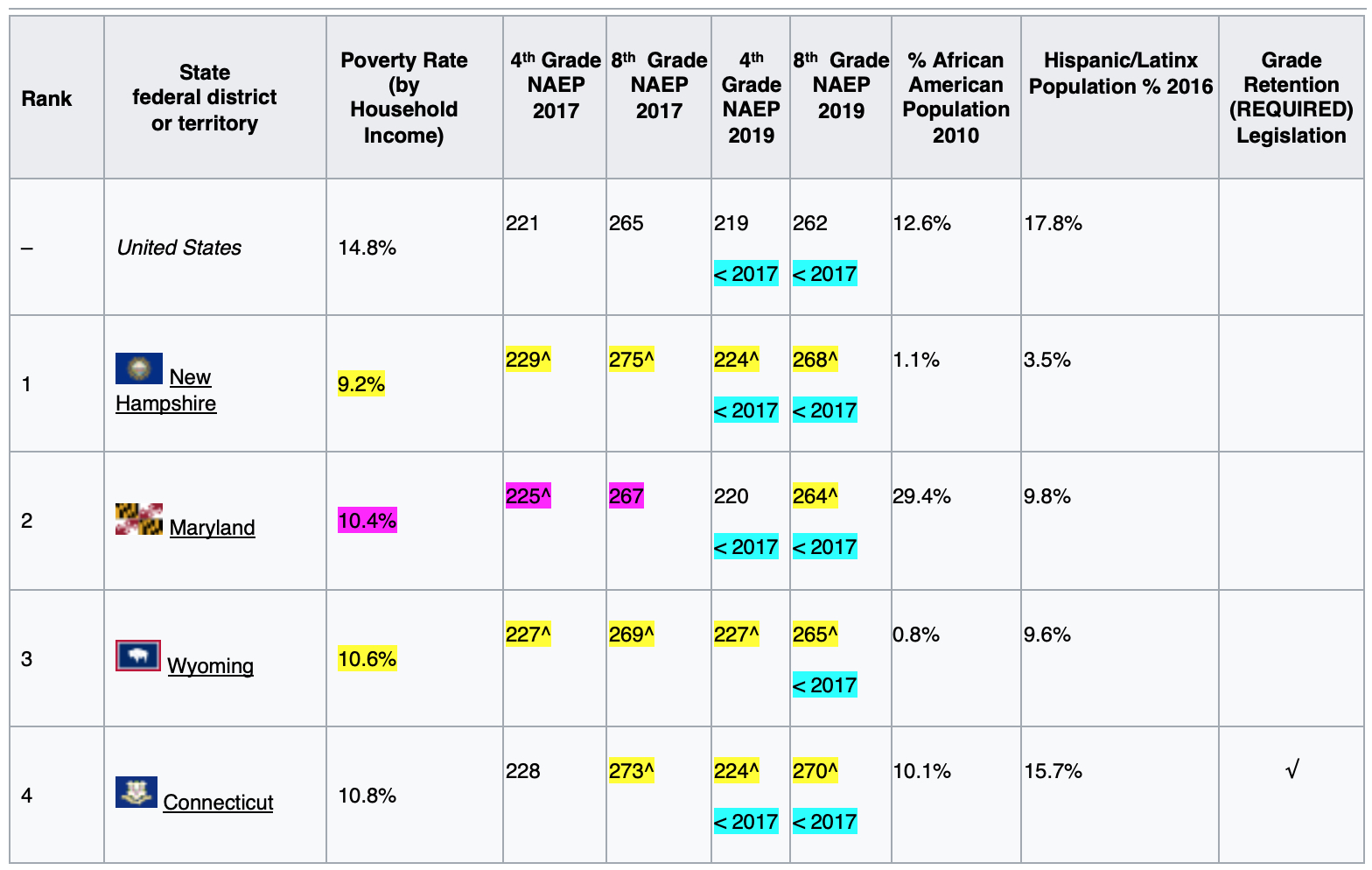
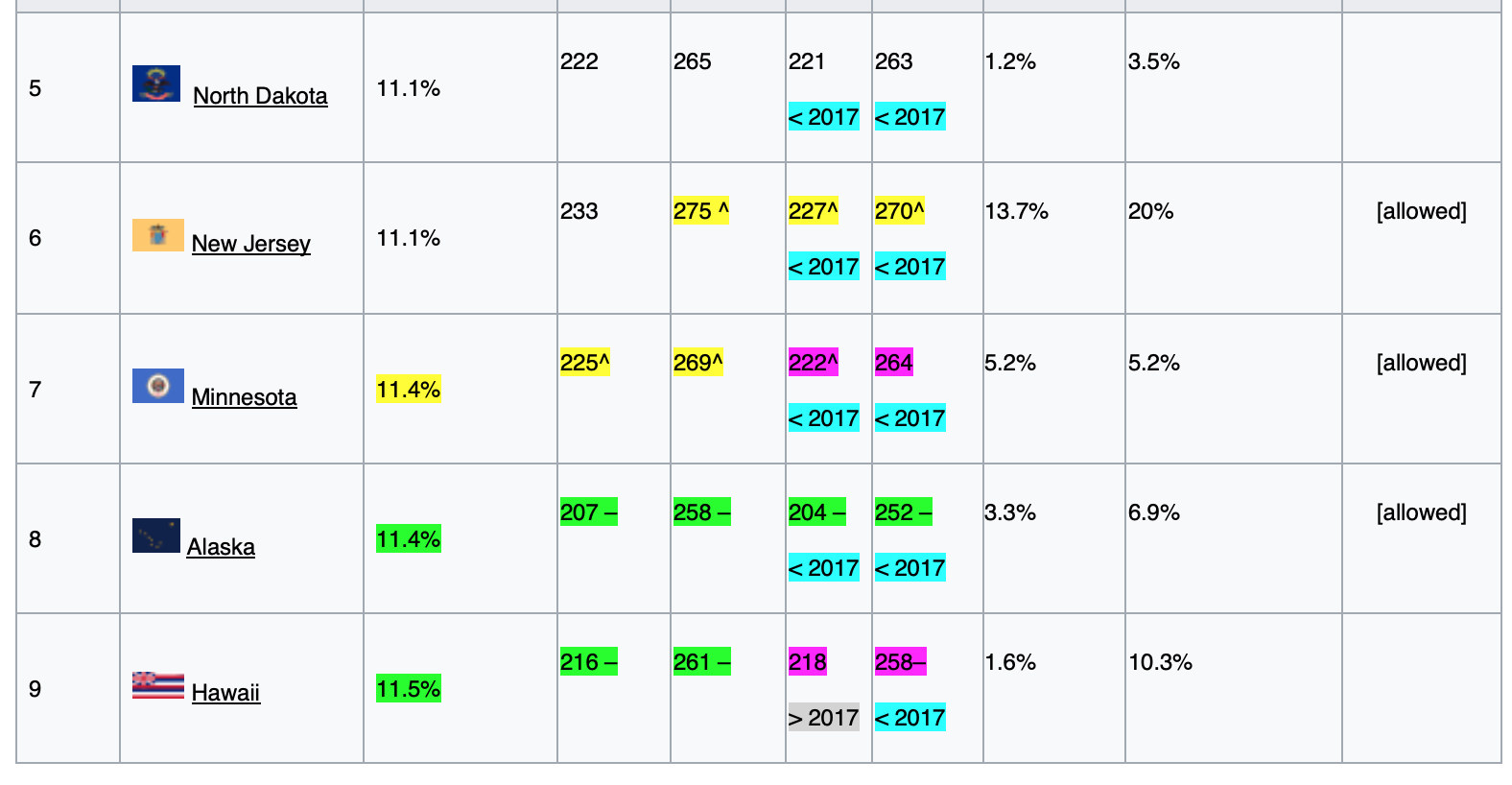
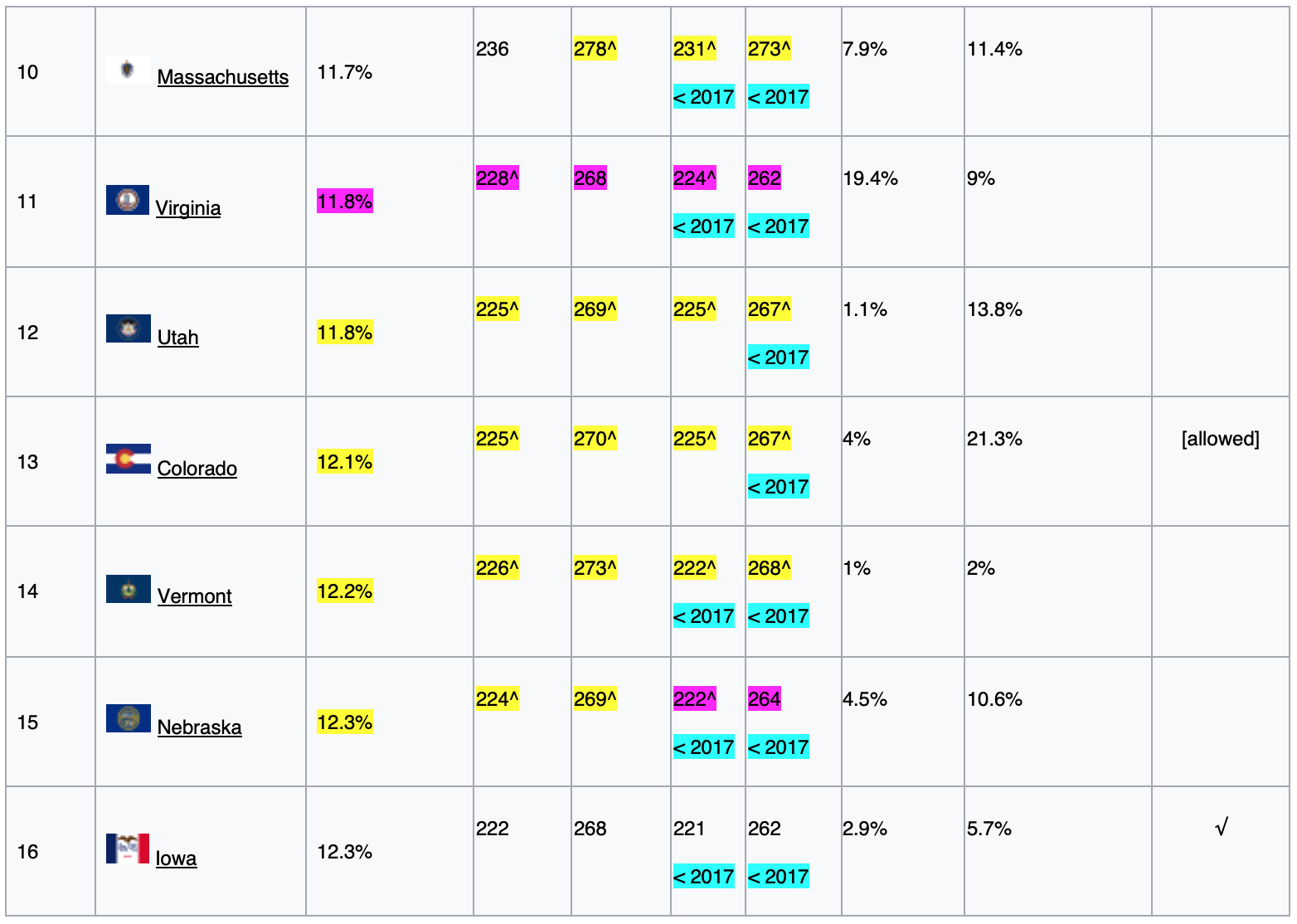
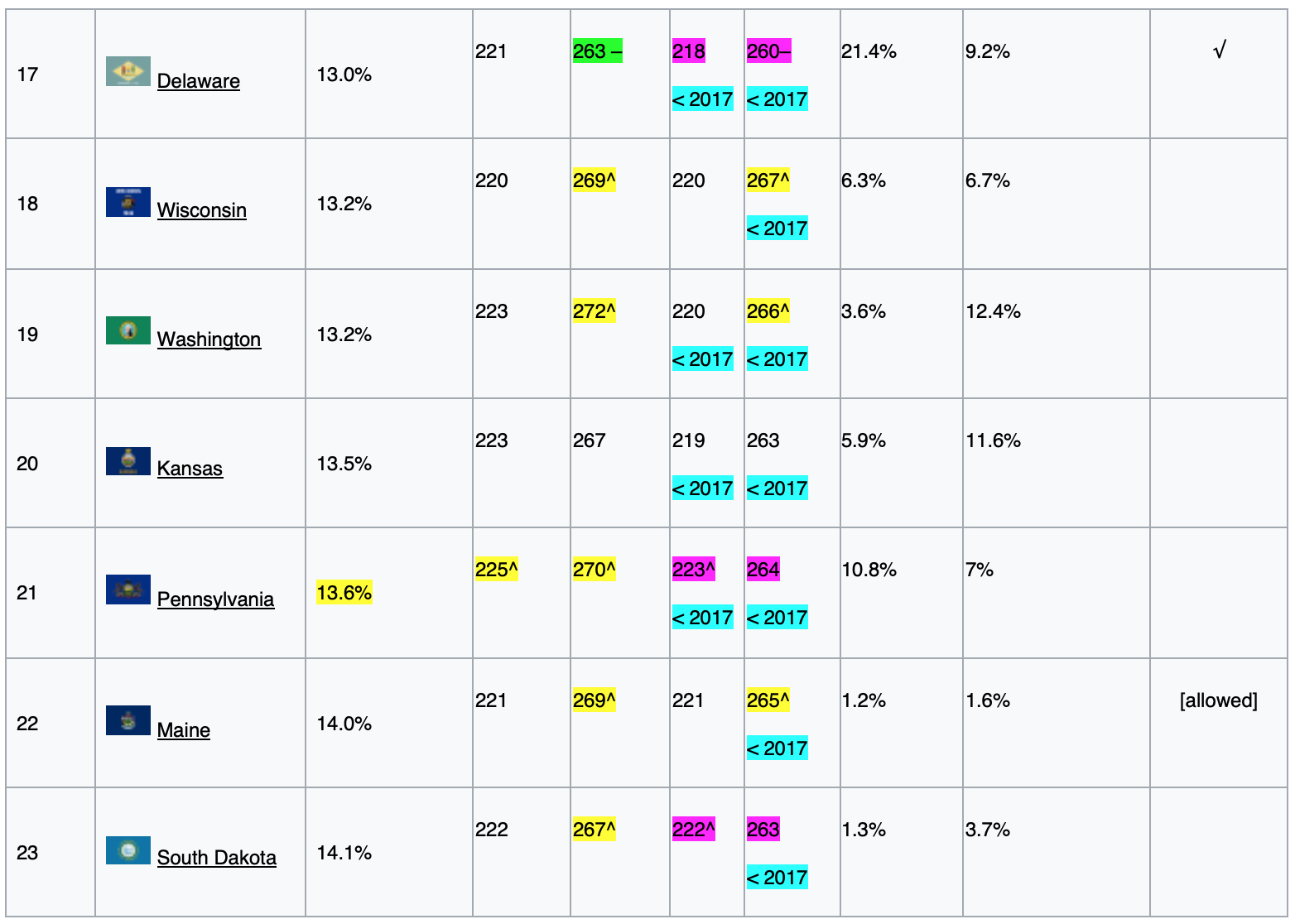
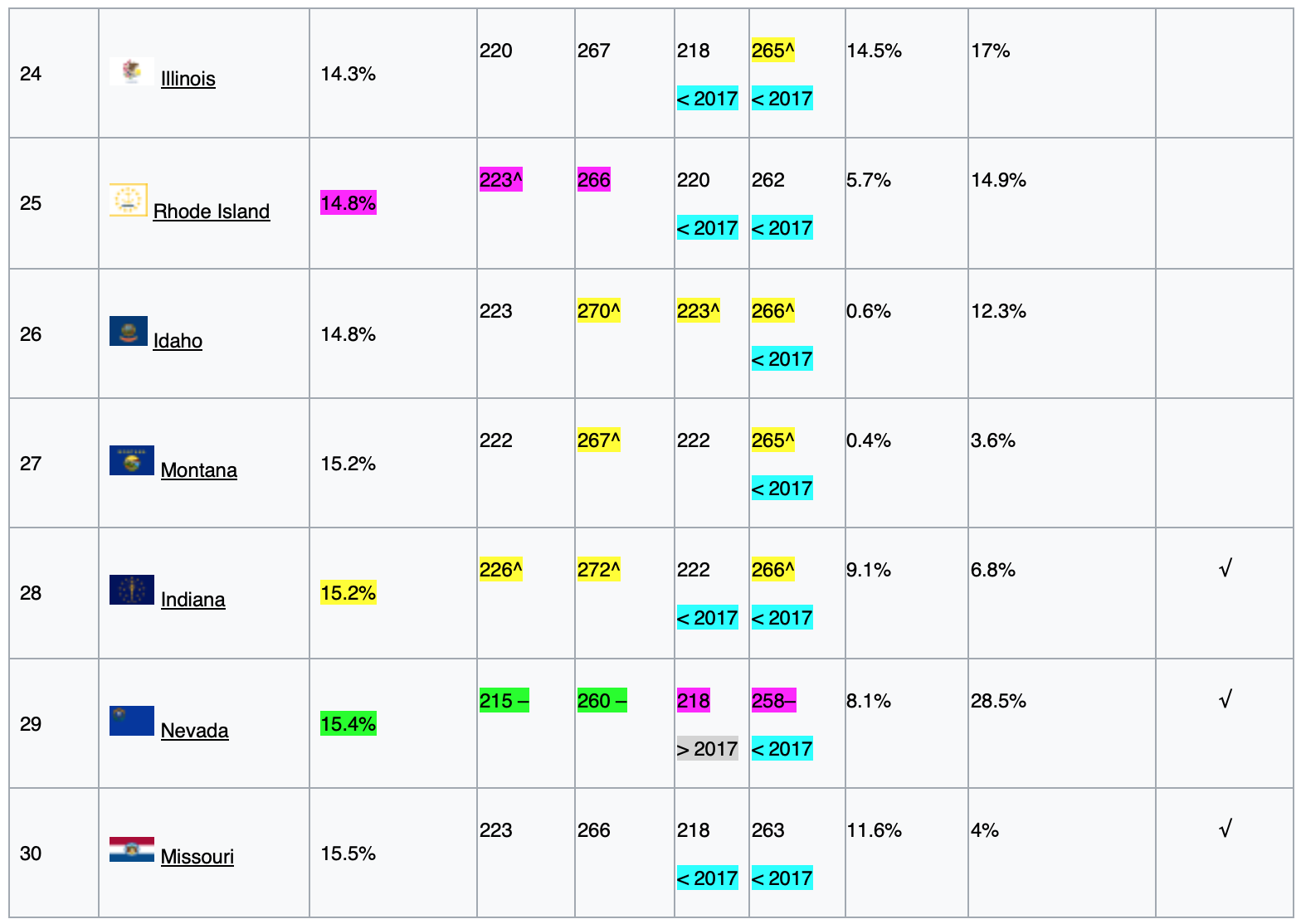
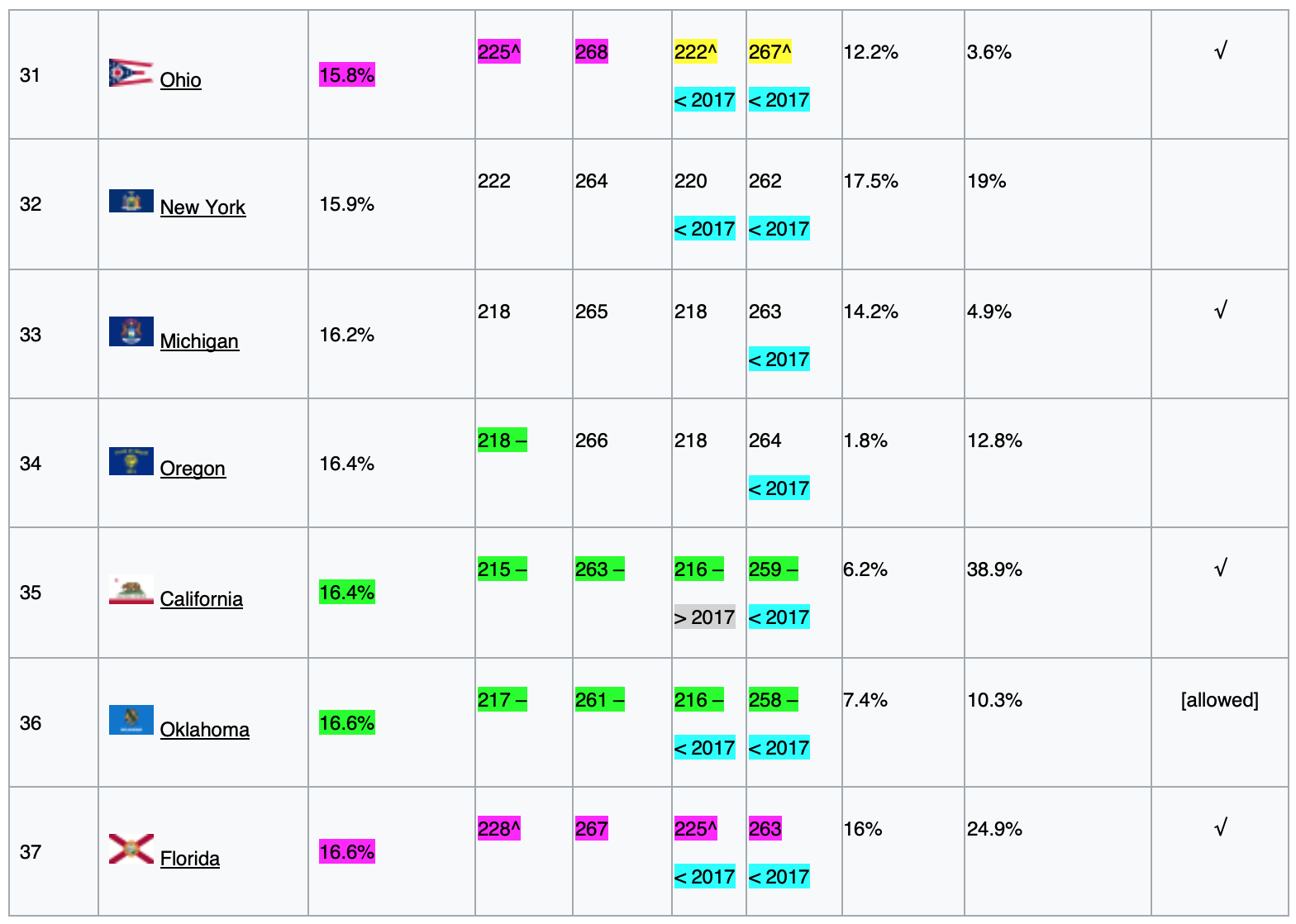
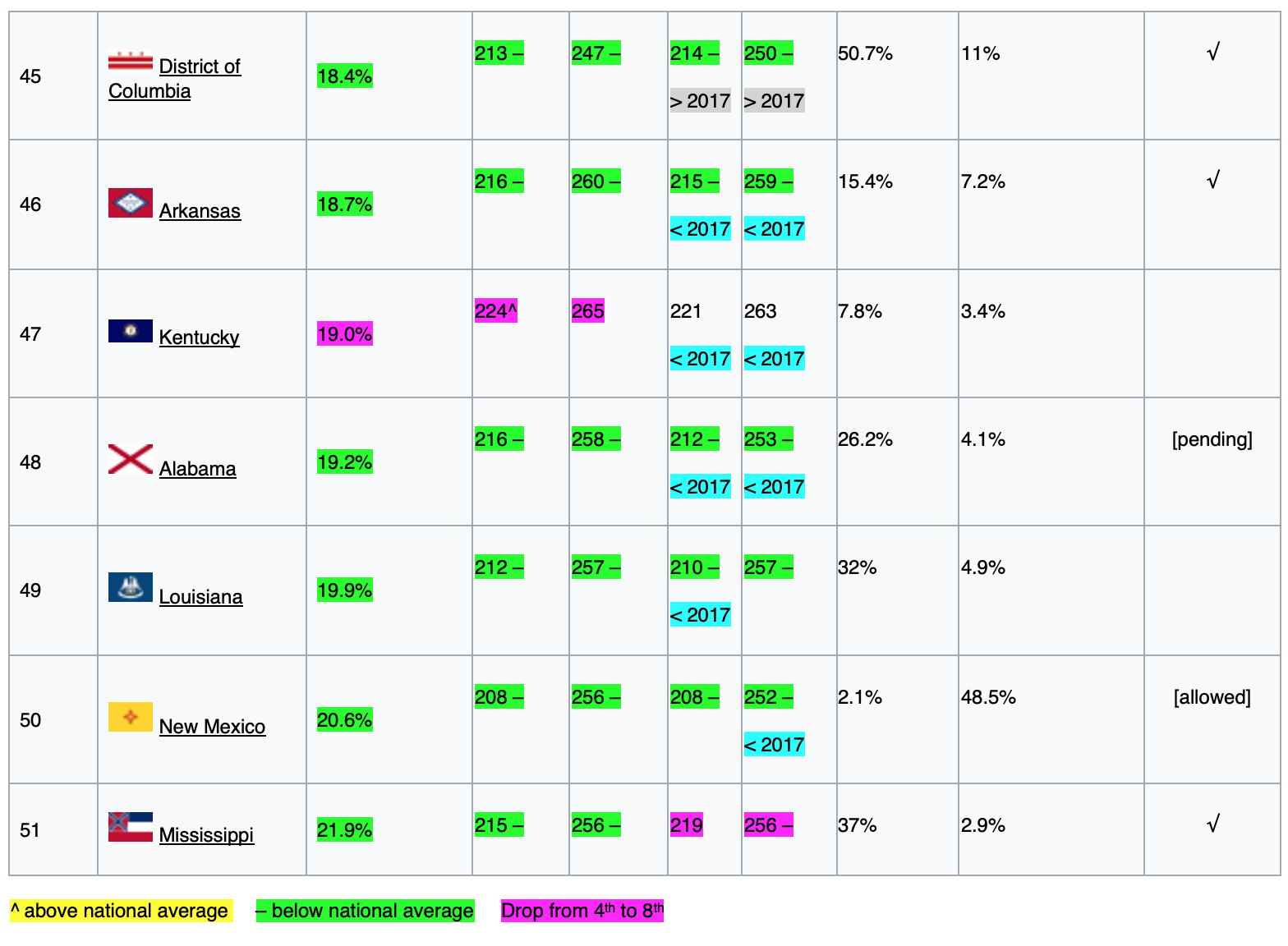
If you are fair and careful with the data I am including below, the correlations among all of the factors do not paint any clear picture at all about the effectiveness of programs or policy (again, even if we assume those programs and policies are being implemented at all or well).

Anyone using this data to claim “grade retention works” or “systematic intensive phonics works” is simply being deeply dishonest because no one has done any of the necessary work to tease out those claims in a scientific way (random sampling, controlling for non-instructional factors, investigating fidelity to policies and programs, etc.).

In other words, those advocating for the “science of reading” are making no effort to be scientific themselves in the pursuit of proving if their claims are valid, or not.

None the less, here are the updated data in a manageable chart:

NAEP R 2019 1

NAEP R 2019 2b

NAEP R 2019 3NAEP R 2019 4NAEP R 2019 5NAEP R 2019 6NAEP R 2019 7NAEP R 2019 8

If we genuinely believe a few points here or there, comparing entirely different populations of students under ever-shifting conditions both in their lives and in their education, are in fact not just statistically significant but significant, then we have a wealth of evidence above to suggest that all the standards, testing, and policies are actually degrading student reading achievement.

Finally, I want to stress, the greatest problem exposed by how the media and dyslexia/phonics advocates are responding to NAEP 2019 is that reading is too often a political and ideological football, and students in real classrooms and real lives are being reduced to petty games.

Again, at no point over the past 100 years have the crisis and failure arguments about reading achievement been any different than at this exact moment—regardless of how students have been taught to read (including peak years of intensive phonics and jumbled claims of implementing whole language).

How states mandate and implement reading instruction as well as relentlessly test it in the worst possible formats is a tale of too many cooks in the kitchen, with most of them having no credibility.

See Also

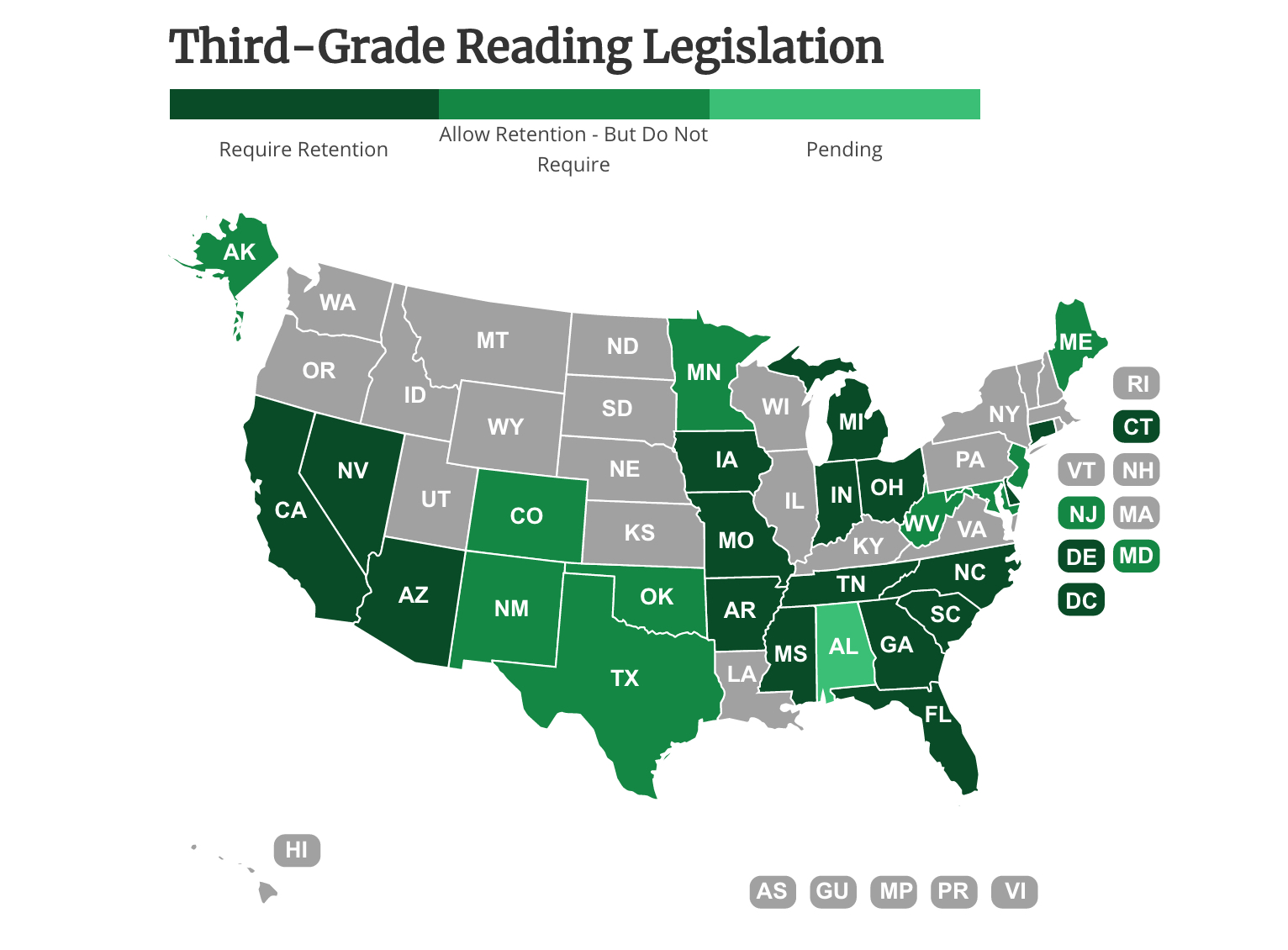
Third-Grade Reading Legislation

retention legislation UPDATED

Third Grade Reading Policies (2012)

From Bruce Baker


FYW Students Respond to Warner’s The Writer’s Practice: Progress, Not Perfection

When John Warner released The Writer’s Practice: Building Confidence in Your Nonfiction Writing soon after his Why They Can’t Write, I highly recommended both volumes for those teaching writing (here and here). Of course, a much better barometer of the value of books on how to write and how to teach writing is to put them in the hands of students and teachers.

A bit past midway through this fall semester of 2019, my first-year writing students have just finished reading and reflecting on The Writer’s Practice; the final reflections and our in-class debrief yesterday revealed high praise and key lessons we who teach writing can learn from what my students valued about the book, and how they framed those lessons for them as students and writers.

One student began her reflection as follows:

As I opened up The Writer’s Practice to read the final section, I felt myself experiencing emotions similar to those when I am about to finish a really wonderful piece of fictional writing. This feeling for me is more guttural, and it comes about when I am truly sad or upset to be finishing a piece. Most of the time it is because there is a change in the plot that I didn’t enjoy, or I just truly don’t want the happily ever after to conclude. But I was genuinely confused as to why I experienced this feeling when reading the final few sentences of this piece. Never in my life has I been saddened by the conclusion of reading a book for school, fiction or nonfiction, besides The Catcher and the Rye and now this book. Because of this, I have come to the conclusion that I truly did enjoy reading this book. And I believe it was mostly because of the informal language used throughout. The way in which Warner speaks to the audience is something very intriguing to me, and it made me feel like I was holding a conversation with an actual person instead of reading a boring and monotonous book for school.

In the two sections of FYW I teach, I read in reflections and heard in our discussion some powerful patterns throughout the student endorsements of Warner’s book as an effective textbook for teaching writing. Those patterns include the following:

  • One student expressed relief that Warner encouraged progress, and not perfection. In fact, many students recognized that Warner’s lessons combined with my approach to teaching writing had significantly reduced their levels of stress and anxiety about writing. The overwhelming result of reducing stress and anxiety for students as writers is that they are more eager to write, they produce better early drafts of their essays, and they are also more motivated to revise (and even begin again) in order to produce the essays they want to write. In short, Warner’s messages resonate with and compliment my commitment to having students choose their topics and types of essays as well as my low-stakes approached to teaching (delaying grades, emphasizing feedback and revision, and fostering a writing and learning community among students and with me as a mentor/teacher).
  • Several students responded directly to Warner speaking from his own humble authority as a practicing writer, an authority grounded in his recognition that becoming a writing is a journey, and not a destination. Here, I think, was one of the most powerful aspects of how students praised Warner’s book: students valued that Warner did not speak down to them; they felt respected and appreciate the casual and empathetic tone Warner maintains throughout the book. A common response was that teaching and textbooks can too often be condescending, and students have found that this book and some of the different aspects of my teaching and writing instruction honored their basic human dignity.
  • In terms of nuts-and-bolts writing lessons that were effective because of Warner’s text, I would highlight that students almost universally came to recognize and value the role of having a clear audience at the center of their work as writers. I have always struggled with helping students move away from writing for the teacher/professor (working mostly as compliant students) and toward thinking and working more as writers (drafting for real audiences). Students reading and engaging with Warner’s text while completing my second essay assignment, a public essay that incorporates hyperlinks for citation, was mentioned as very effective experiences for a number of students, especially in terms of writing with an audience in mind and writing by choice about a topic that interests and even invigorates the writer/students.
  • Broader and foundational lessons (ones that are essential for students making the transition from high school to college, from writing like a student to writing as a scholar) include students rethinking what essay writing entails (different disciplines have different expectations for essays), students moving away from rules-based thinking to conventional awareness, and students thinking and working more purposefully through their writing process. The one-size-fits-all effect of the five-paragraph essay (which all of my students bring to the class in some form) and the tyranny of grammar rules and writing mandates definitely were at least strongly confronted if not entirely debunked through the combination of students reading Warner and receiving similar messages in my class.

As a teacher, specifically of writing, this experience with assigning Warner’s The Writer’s Practice has reinforced the importance of the relationship among the teacher, students, and the textbook. When the messages and learning environment are cohesive, like a good piece of writing, everything is more effective.

My initial recommendation for this book is now strongly supported by actually incorporating it into my FYWs, but I must hasten to add a final word of caution as well.

This really positive experience with teaching writing and with students showing real and  often observable learning as writers also exposes one of the most challenging aspects of formal writing instruction and learning in formal schooling: Even as first-year college students, these young writers are at a very early stage of development as writers, and thinkers.

Once again, placing too much emphasis on evaluating my teaching, evaluating the students’ writing, or evaluating the effectiveness of an FYW course is quite dangerous and likely very misleading.

Many of the students expressing effusive praise for Warner stumbled mightily in the writing of those reflections, and continue to struggle in their formal essay assignments. People evaluating as outsiders those students’ writing would likely find it hard to identify the growth (or quality), especially the changes in attitudes these students have experienced about writing forms and the writing process.

For students as writers and me as a teacher of writing, it remains as issue of progress, not perfection.

Students as Writers and Thinkers: Another Grading Dilemma

A high school ELA teacher who completed the certification program where I teach was telling me recently about one of her students. The student, the teacher explained, had submitted an essay that the student worked diligently on, completing multiple drafts.

The teacher noted that the final essay showed marked improvement in the writing, but grading the essay also posed a dilemma because despite substantive feedback on the content from the teacher, the student simply made very little progress in thinking well about the topic.

person holding ballpoint pen writing on notebook
Photo by Thought Catalog on Unsplash

Having taught high school ELA and then at the college level for 18 years each, I quipped, “That’s what Bs are for,” adding, “Maybe a B+.”

I wasn’t being as cavalier as it seems because I have navigated this problem hundreds of times since most of my teaching of writing has been situated in the lives of teenagers and young adults. Compounding the concern for brain development—that this age group is still developing the ability to think critically and deeply—is, for me, my own practice of de-grading and de-testing my classes.

In other words, this scenario is one of dozens that highlights why grading is often misleading and almost always harmful to the learning process.

In a reasonable world, this teacher would be allowed simply to express to the student this reality—the writing is exceptional for showing improvement, but the thinking on the topic remains trapped in simplistic and unsupported ways.

And that assessment in the form of expository feedback can be shared in this spirit: This is not a negative criticism of your effort, or your ability, but a fair reflection of your current growth, a snapshot of your journey to writing and thinking more complexly and in more compelling ways.

For teachers of writing, this problem also asks us to face key elements of giving students feedback and grading when required. The challenge revolves around having clear goals for the writing assignment, and then being able to contextualize those goals by student characteristics such as brain development (a really challenging concern).

Here are some of the common issues teachers of writing face when working with teenagers and young adults, problems that occur at the intersection of writing proficiency and thinking well:

  • Students make a large number of extreme claims, rarely offering credible evidence in compelling ways. Yet, the students have a high command of the language and construct effective sentences and paragraphs as well as relatively cohesive essays.
  • Students submit a jumbled draft, seemingly carelessly constructed (surface features, formatting), but includes several strong claims linked to solid evidence. Sentence structure, paragraphing, and essay coherence are spotty at best.
  • Students submit a well structured essay with solid sentence and paragraph formation; surface features are also solid. The essays pose a manageable number of reasonable claims linked to evidence in traditional ways (for example, all claims about a text are connected to quotes from the text); however, that evidence is thin, from sources that are not credible, or doesn’t support the claim (the quote doesn’t support the claim).

Just to name a few common challenges above, but the focus here is that each of these situations is common and made complicated by the need to grade; each is, in fact, not as challenging for offering feedback, especially to support revision.

The evaluation culture of schooling works against both student growth as writers and thinkers, in fact, because summative evaluation de-contextualizes artifacts of learning from the larger realities of human development.

Grades also stunt some of the essential elements of learning, notably that errors are often not to be avoided, but are essential for growth.

For example, many of my students in first-year college writing submit work that is mostly claims, no evidence, or work that is narrowly grounded in the “all evidence is quoting” trap they have mis-learned from writing too much literary analysis in high school (such as in Advanced Placement Literature and Composition).

Less of my instruction is about writing in those cases, although I tend to find that young writers are lazy and careless with word choice, sentence formation, and paragraphing, but more about the substance of their claims and their ability to find, choose, and incorporate effective evidence.

Young people, we must remember, live in experiences outside of schooling where being persistent, loud, or assertive results in simplistic or even false claims being viewed as credible. And young people often have not reached a level of brain development to investigate critically claims and evidence.

To teach writing is inextricable from teaching thinking. Simultaneously, those of us teaching writing can distinguish between something like good writing that can sit next to poor thinking, and flawed writing that includes important aspects of complex thinking.

Much to our chagrin, we almost always have to grade the submitted writing sample—even when we are aware that many of our teenagers and young adults simply will not think complexly for several more years despite our best effort to nudge them along that path.

Ultimately, assigning, responding to, and then assessing/grading student writing requires that we very clearly identify what our goals are for the writing assignment and the students, that we acknowledge the tension between responding to and assessing/grading both the writing and thinking in writing samples, and that we find ways to resolve how assessment/grading inhibits and even deforms those learning goals (such as delaying grades).

As I approach forty years of teaching teenagers and young adults to write and think, I have remained fairly vigilant in my demands for their ability to grow as writers while also becoming more and more patient with the time it takes for them to become the critical thinkers I hope they will be.

2019 NCTE Annual Convention, Baltimore, MD, November 21-24, 2019

Access all presentation materials at this LINK.

first spring (Baltimore is burning)


(A.02) Teaching Beyond Fear: Inquiry Around Gun Violence in the English Language Classroom

Date: Thursday, November 21, 2019
Time: 9:30 a.m. – 10:45 a.m.
Location: Ballroom II

Beginning with a keynote from YA author Tom Leveen, this roundtable utilizes experiences and expertise from English educators, young adult literature authors, classroom teachers, and mental health professionals in order to consider how secondary English Language Arts can address school gun violence. More specifically, presenters will discuss using young adult literature and writing strategies to guide students as they explore difficult issues, such as violence in schools. 

Roundtable Leader: Paul Thomas: History of Violence: Guns, U.S. Education, and American Exceptionalism

See Also

Let’s Not Fail School Safety as We Have School Reform

School Safety and Security: Research and Evidence


(B.06) Misreading the Science of Reading

Date: Thursday, November 21, 2019
Time: 11:00 a.m. – 12:15 p.m.
Location: 306

In pursuit of helping all children to become readers, this session by the Elementary Steering Committee will address the misleading narratives that assert that all children acquire reading in the same way, featuring several reading scholars who will discuss the multiple ways the “Science of Reading” is misread and misleading.

Co-presenter: Paul Thomas

See Also

Dear Media, Stop Misrepresenting Reading Instruction, Please

The Big Lie about the “Science of Reading” (Updated)

Checklist: Media Coverage of the “Science of Reading”


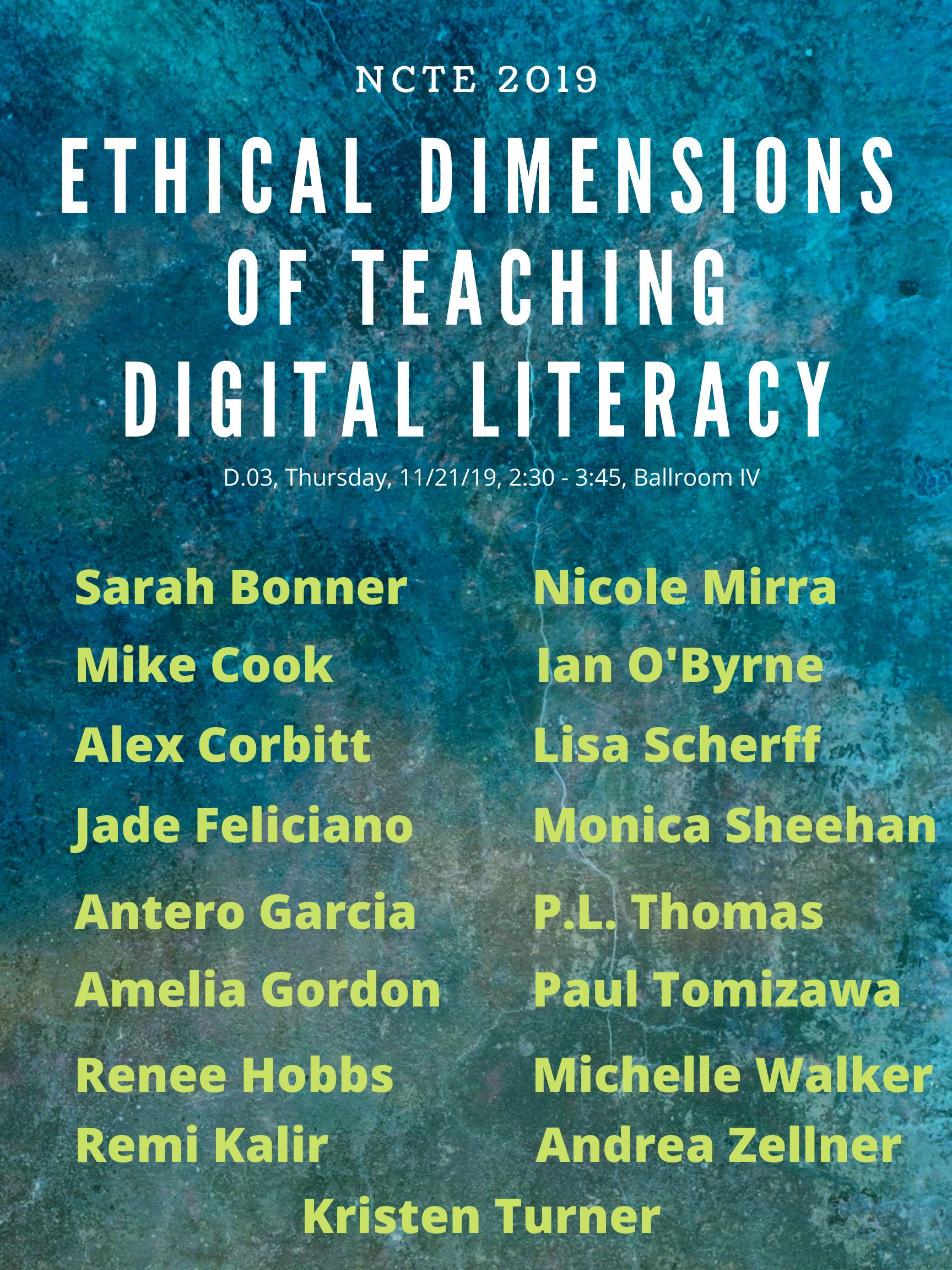
(D.03) Ethical Dimensions of Teaching Digital Literacy

Date: Thursday, November 21, 2019
Time: 2:30 p.m. – 3:45 p.m.
Location: Ballroom IV

How do we teach students to be responsible, ethical citizens in a digital world? From reading and writing online to social interactions, teachers have responsibilities in teaching the ethical dimensions of digital literacy. This session will provide practical applications across grade levels.

Roundtable Leader: Paul Thomas: The Ethical Dilemma of Satire in an Era of Fake News and the Brave New World of Social

Image

See Also

The Ethics of Digital Literacy: Developing Knowledge and Skills Across Grade Levels


(E.09) Expanding the Canon: New Voices, New Inquiry, New Ideas

Date: Friday, November 22, 2019
Time: 9:30 a.m. – 10:45 a.m.
Location: 307

At NCTE 2018, Chimamanda Ngozi Adichie confessed that she still reads “dead white men” even as she advocated for expanding the canon. In other words, expanding the canon does not mean erasing authors, but rather incorporating new perspectives, asking new questions, sharing new ideas. This roundtable session explores what it means to expand the canon by making contemporary connections. Participants will select among 13 tables, each offering units grounded in canonical text(s) and exploring critical and contemporary ways to investigate those texts. After brief opening comments, participants will have the opportunity to circulate among 3 of the 13 roundtables.

Roundtable Leader: Paul Thomas: Haruki Murakami and The Great Gatsby

See Also

Re-reading Faulkner in Trumplandia: “[H]is ferocious conviction in the rightness of his own actions”

The “Vast Carelessness” of White America

Cormac McCarthy’s Mostly White, Male Mythology: Rethinking the Canon


(F.02) Critical Media Literacy in English Education

Date: Friday, November 22, 2019
Time: 11:00 a.m. – 12:15 p.m.
Location: Ballroom IV

The roundtable session on critical media literacy in English education focuses on the ways in which English educators advocate with others for critical media literacy. Linking to the conference theme, several roundtable presenters inquire into our conception and practices of critical media literacies, including the ways of consuming, producing and distributing critical media literacies in an age of post-truth politics.

Opening Comments: Paul Thomas: What Is Teaching English?

See Also

On Pedagogy and Expertise: Enduring False Dichotomies in Education

The Right Remains Wrong about Teaching, Learning, and Critical Thinking

Teacher Preparation and the Kafkan Nightmare of Accreditation


(G.02) L. Ramon Veal Research Seminar

Date: Friday, November 22, 2019
Time: 12:30 p.m. – 1:45 p.m.
Location: Ballroom IV

The L. Ramon Veal Research Seminar is an ELATE-sponsored session that supports graduate students and teacher researchers engaged in educational research through directed discussion with senior scholars in ELA teacher education.

Respondent: Paul Thomas


(H.01) The Intersection of Literacy, Sport, Culture, and Society

Date: Friday, November 22, 2019
Time: 2:00 p.m. – 3:15 p.m.
Location: Ballroom II

This roundtable session invites attendees to explore contemporary literacies and diverse teaching practices by using sports content and an examination of sports culture to create learning environments that empower students to think critically about issues impacting the world around them.

Roundtable Leader: Paul Thomas: Race, Athleticism, and Intelligence in Media Narratives of Athletes

See Also

Racism not Below the Surface in U.S., Still

Richard Sherman’s GPA and “Thug” Label: The Codes that Blind

The Politics of Wealth and Power

The NFL and the Politics of Lies

Kaeptain America?: On Respectability Politics


(M.43) Nurturing an Inquisitive Spirit and Fostering Our Public Selves Through Social Media

Date: Saturday, November 23, 2019
Time: 2:45 p.m. – 4:00 p.m.
Location: 346

Teaching necessitates attending to the learning and growth of other people, but how, as teachers, can we nurture our own creative and intellectual development? In this interactive session, attendees will dialogue with educators who, through bogging, podcasting, and tweeting, are using social media to foster their public selves.

Co-presenter: Sean Connors
Co-presenter: Paul Thomas
Co-presenter: John Warner

See Also


Teaching in Hostile Times

There is a long-time joke at my university that has far more than a grain of truth in it—the campus and the university environment captured in a metaphor, the bubble. Referring to the bubble elicits smiles and even laughter, until the bubble bursts.

Over three M-W-F morning courses this fall, I teach 40 students—39 are first-year students, and 39 are white. Most, as is typical of my university are women, and most are significantly privileged in a number of ways.

During fall break this year, vandalism and theft invaded the bubble, including Swastikas and sexually hostile language written on young women’s dormitory doors and marker boards.

So far the university response has been a mostly silent investigation and one official email from the Chief Diversity Officer and University Chaplain. When I engaged one class in a conversation about the incident, I heard the following concerns from students, which I shared with the President, Provost, Academic Dean, and CDO:

  • Students are concerned with a lack of information, and that only one email from two FU admins has been sent [1]. Some mentioned that email was in their spam folder.
  • Students expressed concern that almost no professors have addressed these events in class.
  • Students openly wondered if this is being “swept under the rug,” and fear that if/when people responsible are discovered, what the consequences will be.
  • More broadly, students expressed some trepidation about the open-campus nature, and seemed unsure how to alert and who to alert with specific concerns.

The second point stands out to me because a couple students directly noted that in one class the discussion planned for a class session was about how things used to be bad at the university—highlighting offensive pictures in old year books and such—yet the professor left the discussion there, failing to use that moment to link to the current evidence that things are still bad at the university.

Of the 15 students in that class, only one had been in a class that addressed the hostile vandalism; that class is taught by Melinda Menzer, professor of English, who has been quoted by media extensively on the incident:

“We are in a time where, nationally and internationally, white supremacists and their rhetoric have become more visible and more violent,” Menzer said. “We’ve seen Nazis and neo-Nazis marching on our streets, and they feel empowered in a way they have not felt empowered in decades.”

Menzer is a member of Temple of Israel in Greenville. Her grandfather immigrated to the United States from Lithuania in 1925 — the rest of his family was murdered in the Holocaust.

“None of this is abstract to me or my family, and I also think it shouldn’t be seen in isolation,” Menzer said. “They (white supremacists) don’t just hate Jews — they hate Muslims, they hate African Americans, they have strong anti-immigrant rhetoric. Those things are tied together in their manifestos. It is a matter for all good people to speak up against this hatred, now.”

Menzer said for her and others on campus, the graffiti is not something that can be brushed off as a joke.

“It is easy to say, ‘They’re just trying to scare people,’ or, ‘This is a joke,'” Menzer said. “It’s not that they are trying to scare people — it’s that they are scaring people. They are creating a negative environment, and that is why we all must speak out.”

Menzer said she does not feel that Furman is unique or more dangerous than other campuses because of the incident, but that the graffiti is a reflection of the rise in white supremacy worldwide.

“It is more important than ever before for a group of people to speak up and to name hate when they see it and to denounce it,” Menzer said. “All of us who have a voice need to send a clear message — this is hate, and we denounce it,” Menzer said.

Her careful and direct analysis and call for action, however, as my students have witnessed, have fallen mostly on deaf ears among faculty.

Faculty chair, Christopher Hutton, offered his own call to action to faculty in the first faculty meeting after the vandalism, in part concluding:

In the meantime, it is easy to feel powerless. What can we do as faculty? Well? We can teach [emphasis in original]. The messages we convey to students can be powerful. We can use this incident as a reminder that we must condemn acts of hatred and intolerance. We can be present [emphasis in original], taking an active part in the multiple efforts that are already underway across campus such as FaithZone, SafeZone, the recently announced anti-racism workshop coming up in a few weeks, CLP events, and other opportunities for inclusive dialogue. We can keep an eye out for those who might be most affected by the incident and provide support. What we can not do is to let the abhorrent behavior of a few individuals overshadow the good work that all of you are doing with students every day. We can, indeed we must [emphasis in original] continue to strive towards an inclusive environment in which the academic mission of the university can thrive. I stand here today to say that I plan to take part in that process and that I trust that you will also.

These calls both focus on the role of professors to teach in times of hostility.

As I have allowed and encouraged conversations in my classes, I have discovered that my students were uninformed about important concepts—gaslighting, the male gaze, the sexist origins of “hysterical,” and the traditional resistance in academia toward professors being political, either being public intellectuals or bringing so-called politics into their teaching.

Despite these conversations being grounded in horrible events, and despite these conversations being off-topic in that they were not in my original lesson plans and were only tangentially related to the content of the courses, the lessons were powerful and deeply academic, firmly grounded in the very essence of liberal arts and formal education in the pursuit of an ethical democracy.

These were examinations of personal autonomy, breeches of consent, and the rise of emboldened hatred—even as we all anticipate the perpetrators claiming it was all a joke.

The absence of addressing these events in classrooms is not surprising to me since the traditional view of teaching—K-12 and college—includes somehow requiring that teachers and professors remain dispassionate and politically neutral. At my university, the norm is clearly that professors should just teach their classes, that professors can and must be politically neutral.

Professor of political science and author of Comrade, Jodi Dean has recently weighed in on that tension with an argument for The Comradely Professor:

Etymologically, comrade derives from camera [emphasis in original], the Latin word for room, chamber, and vault. The generic function of a vault is producing a space and holding it open. This lets us hone in on the meaning of comrade: Sharing a room, sharing a space generates a closeness, an intensity of feeling and expectation of solidarity that differentiates those on one side from those on the other. Politically, comradeship is a relation of supported cover, that is, the expectation of solidarity that those on the same side have of each other. Comrade, then, is a mode of address, figure of political belonging, and carrier of expectations for action. When we call ourselves comrades, we are saying that we are on the same side, united around a common political purpose.

And the problem with comradely professors?:

The comradely scholar is committed, fierce, and resolutely partisan. That means that she is more likely to be hated than loved in the academy. Her commitments are political, not disciplinary or professional commitments, which of course does not mean that she is undisciplined or unprofessional.

Like Dean, I argue and practice the ideology, critical pedagogy, that scholarship and teaching are inextricable from each other and both can only be political—even taking the neutral pose is political.

The professors at my university not discussing the hostile vandalism as part of class are making political choices and political stances, yet only those of us addressing these events directly in class will be framed as being the political ones. Comments online with the news article have born that out.

Most of my students are young women and some are Jewish; as Menzer noted, it doesn’t matter the claimed intent of the hostile vandalism because those acts have intimidated people, they have incited fear.

Teaching in hostile times requires a great deal of teachers, even more than in so-called normal times.

Our classrooms are not bubbles, our schools and colleges are not bubbles, and our ethical duties include a recognition that nothing is merely academic, that nothing is politically neutral.

Teaching in hostile times means teaching students’ lived lives, it means inviting their entire experiences into the classroom so that we as teachers and professors can listen, learn, and fully teach.

See Also

Diversity Has Become a Booming Business. So Where Are the Results?


[1] In my original email, I noted “one” admin inaccurately; the one email is signed by two admins as noted earlier in the post above.

In the News

These SC colleges don’t require SAT, ACT scores for admission. Here’s why, Ariel Gilreath (The Greenville News)

Gatekeepers of college education

Paul Thomas, a professor of education at Furman University and educator for 36 years, said that although creators of standardized tests have been working against bias for decades, they are still biased.

“There’s quite a lot of body of research that standardized tests are far more strongly correlated with out-of-school factors than they are to in-school factors,” Thomas said. “Standardized tests are a stronger reflection of factors beyond a child’s control than they are of a child’s ability.”

Among Thomas’ critiques of using standardized tests like the SAT are flaws that other critics have pointed out — that some students are bad test-takers, that poorer students are less likely to have access to test preparation materials and tutors, that the outcome of a high-stakes test could be determined on whether the student slept well the night before.

“The SAT is one data point from one time period. GPA is dozens of data points over years,” Thomas said. “GPA is a single number that is a richer data point.”

But Thomas’ biggest critique of the SAT and ACT is their use as gatekeepers for college education.

“The SAT and ACT are gatekeepers that are not good data for student ability, and they’re not good data for who deserves to go to college,” Thomas said.

The weight of SAT and ACT scores in admissions decisions also make it an easy target for misuse — a test administrator in Los Angeles was central to a lucrative scheme discovered earlier this year where student scores were fixed by a tutor who took the test for them or corrected their incorrect answers.

While the number of test-optional schools in the country are rising, Thomas said the path to reducing standardized testing in education is a difficult one — annual standardized scores are widely published and often used to rank state education systems and even individual schools.

“The SAT and the ACT are very powerful. These are organizations that generate a huge amount of money,” Thomas said. “Americans believe in this stuff.”

Swastikas and ‘sexually explicit’ graffiti found at Furman University dorm, Ariel Gilreath (The Greenville News)

Paul Thomas, a professor of education at the school, said in an email to his students that the graffiti was “neither funny nor inconsequential.”

“Where you live these four years and where you learn, I think, are sacred spaces – and while no one can promise these spaces will be perfect, we must all work diligently to insure they are safe and inclusive,” Thomas said in the statement.

Nicholas Buccola’s The Fire Is Upon Us: “For the American Right, the price of power has been a deal with the devil of white supremacy”

William F. Buckley, I suppose, would have wanted to be remembered as a powerful and charismatic public intellectual for conservatism and one of the foundational thinkers in the late 20th-/early 21st-century formation of conservative thought and the current Republican Party.

While Buckley failed as a political candidate and may in many ways be lost to history, his goals have been mostly accomplished—creating a Republican movement that succeeded in significant ways from Ronald Reagan’s rise through the election of Donald Trump, with only minor detours for centerists such as Bill Clinton (anti-welfare and “tough on crime” advocate) and Barack Obama.

What did Buckley envision?

His was a political ideology that shifted the 1950s Republican moderates and liberals to a reactionary party grounded in (when convenient) libertarian principles and Christian values that stood firm against the rising tide of Brown v. Board (school integration) and the Civil Rights Act of the mid-1960s as well as the violent civil rights movement swelling from the 1950s into the 1970s.

Buckley repeatedly argued that Black people killed during the Civil Rights Era had provoked the violence, for example. He was a “know your place” sort of racist.

Buckley held firm throughout his public career that Southern whites had the right to their beliefs, even if those beliefs were racist, and that the federal government must not impede on those rights (Constitutionally wrong, was his thin argument), even if those efforts sought to gain the full rights of Black people.

Yes, Buckley was a racist, the sort of racist who admitted racism was a plight on humanity and the U.S., but he argued, it was a plight that must be allowed to play out somewhat organically and not spurred by the influence of government mandate (whether through the courts or legislation). Buckley was also the sort of racist who claimed whites were superior to Black people at the moment, even as he wasn’t going to argue directly there were genetic differences (although he was fine with letting such claims linger).

Buckley rarely even flinched and sometimes eagerly trafficked with those who did make much more gross and hateful claims—George Wallace, James Jackson Kilpatrick, etc.

In Nicholas Buccola’s The Fire Is Upon Us, using the James Baldwin/Buckley debate as the crux of his examination, Buccola draws a powerful conclusion about Buckley’s impact on U.S. politics: “For the American Right, the price of power has been a deal with the devil of white supremacy” (p. 365).

The line from Buckley to the Reagan Revolution and then to the current Trump administration is straight and direct. For those who want to claim that Trump is an aberration, a distortion of modern/contemporary Republicanism, Buccola’s book is a harsh slap in the face.

Trump and the current Republican Party is at least a logical conclusion to what Buckley and other conservatives started in the 1940s-1950s.

Buckley mastered what we now see as typical Trumpisms: claiming belief trumps evidence, cozying up to blatant racists for partisan political expediency, making sweeping ideological claims about “the individual” while refusing to recognize the inequities that weigh on real individuals (especially if those individuals are not white), resorting to American exceptionalism and framing any enemy as being “anti-American,” promoting boot-strapping over government intervention, and refusing to acknowledge one’s own enormous privilege while also claiming great accomplishment from hard work and intellectual superiority.

In short, Buckley wrote Trump’s playbook, although Trump is a slightly more buffoonish version of Buckley, himself a stylized character, more theater than substance despite Buckley’s penchant for arcane vocabulary.

However, I must stress here that despite my initial focus on Buckley, Buccola’s outstanding scholarship and compelling writing has one star: James Baldwin.

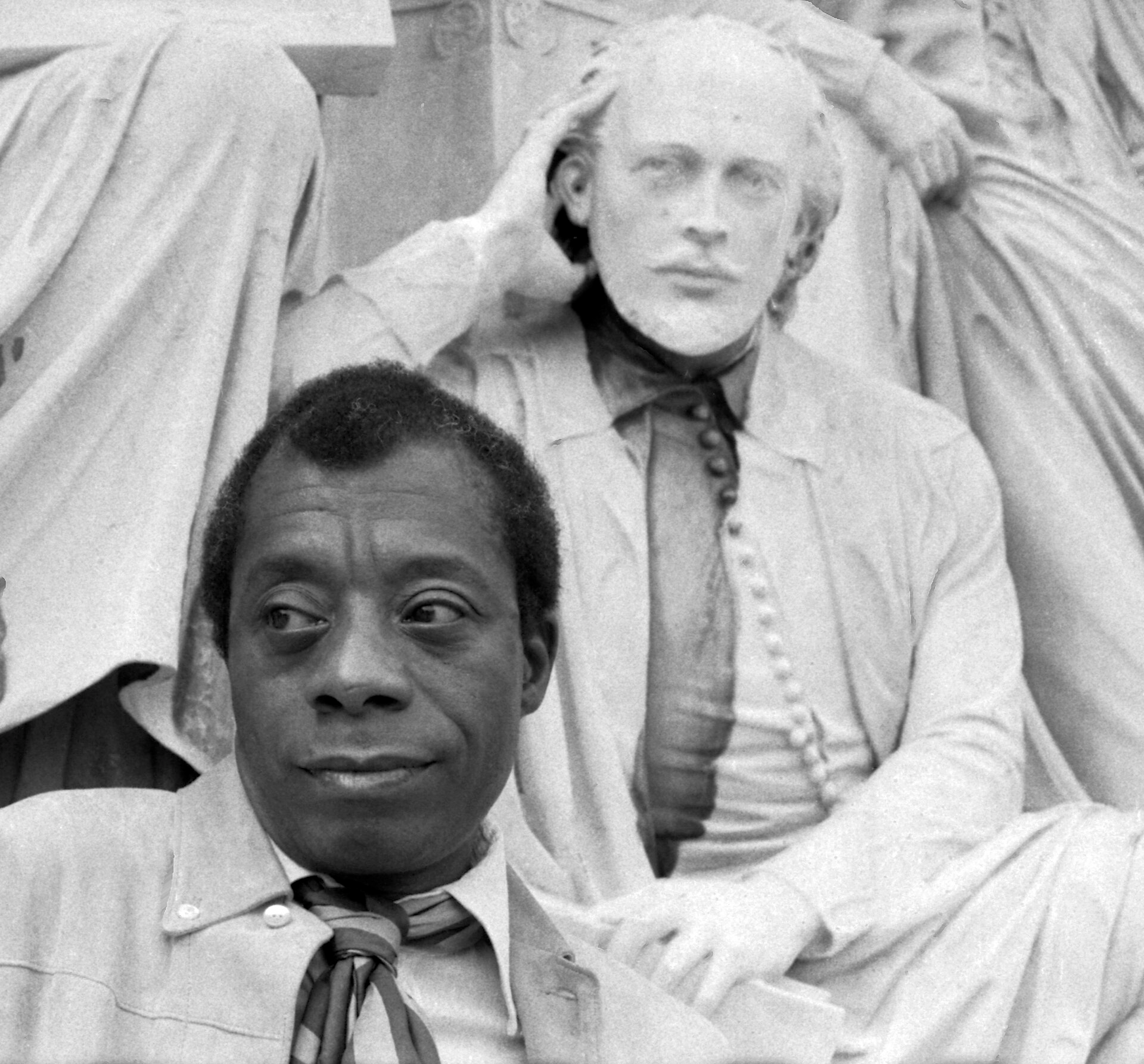
Baldwin photographed by Allan Warren. CC BY-SA 3.0

Just as Baldwin was often the complicated and complicating moral compass while he was alive, Baldwin provides not only context, but the moral counterbalance to Buckley’s inexcusable dispassionate dogmatism.

As someone who has often written about and teaches from Baldwin, I recognize in Buccola an essential primer on Baldwin’s evolving thought throughout the key decades surrounding the Buckley debate in 1965.

Readers witness Baldwin being smeared as a communist (and his explanations to the contrary), labeled “anti-American” (although he repeatedly argues that to criticize the U.S. is to love it), provoked to pick sides between Martin Luther King Jr. and Malcolm X (Baldwin resisted, praising both men but cautioning against the dangers of any strict obligations to organized religion), and characterized as a leading cause of racial violence (maybe the central target of Buckley’s “blame the victims” campaign).

While Baldwin sought always to live the life of an artist, he was drawn time and again into his role as public intellectual, journalist, practitioner of the jeremiad, public speaker, and debater.

Even Malcolm X was apt to warn others that Baldwin was always his own man—so what he said and when he said it remained Baldwin’s.

Guiding Baldwin was his own conception of love:

In order to achieve freedom of this sort, Baldwin contended, we must love one another. His understanding of love was deep and complex, and the love he prescribed was difficult and often unsettling. To love someone, he explained, is to deny them “spiritual and social ease,” which “hard as if may sound,” is “the most important thing that one human being can do for another.” Love requires us to force each other to confront the delusions that we rely on to avoid taking responsibility for our lives. “Love takes off the masks,” Baldwin declared, “that we fear we cannot live without and know we cannot live within.” (From The Fire Is Upon Us, Nicholas Buccola, p. 163, quoting from Baldwin’s “Down at the Cross,” pp. 335, 341)

And that commitment rested against Baldwin’s consternation about white America:

“There are days—this is one of them—when you wonder what your role is in this country and what your future is in it … [and] how you are going to communicate to the vast, heedless, unthinking, cruel white majority that you are here.” … “I am terrified,” [Baldwin] said, “by the  moral apathy, the death of the heart that is happening in my country. These people have deluded themselves for so long that they really don’t think I am human …. And this means that they have become … moral monsters.” (p. 186)

Ultimately, Baldwin had the irrefutable last word on race in the U.S.:

Every white person in this country—and I do not care what he or she says—knows one thing. They may not know, as they put it, “what I want,’ but they know they would not like to be black here. If they know that, then they know everything they need to know, and whatever else they say is a lie. (On Language, Race and the Black Writer, James Baldwin, Los Angeles Times, 1979)

And as Buccola quotes Baldwin talking to “students at Cambridge”:

What is happening in the poor woman, the poor man’s mind. They have been raised to believe, and by now they helplessly believe, that no matter how terrible their lives may be, and their lives have been quite terrible, and no matter how far they fall, no matter what disaster overtakes them, they have one enormous knowledge and consolation which is like a heavenly revelation: at least they are not black. (p. 259)

Yet, Buccola paraphrases Baldwin arguing “most white Americans live in a state of denial” (p. 347).

Buccola makes a deeply compelling choice by framing the racial/racist history of the U.S., and how that drives and intermingles with U.S. partisan politics as well as media, with one moment in U.S. history—when Buckley and Baldwin directly debate “the motion of the American dream is at the expense of the American Negro” (p. 376; note that this volume includes the most intact transcript existing of the debate, another gem of this book).

These two men, born within a year of each other although Baldwin was in Harlem and Buckley, in extreme wealth and privilege, are not mere tokens of history, but valid voices of the current tensions in a country that wants to call itself free and equitable but often, like Buckley, refuses to acknowledge our sins (as Baldwin did) or do anything about them.

Reading Buccola’s extended exegesis of the debate, I am reminded of comedian George Carlin: “It’s called the American Dream because you have to be asleep to believe it.”

And, of course, more Baldwin: “The gulf between our dream and the realities that we live with is something we do not understand and do not want to admit” (“Lockridge: ‘The American Myth,’” 1948).

In the Epilogue, Buccola shares Baldwin’s recollection of Buckley avoiding an elevator packed with Baldwin and his Black friends:

“He will say, of course, if challenged, that the elevator was crowded, but I remember the split second—the twinkling of an eye—in which he looked at me and he saw me looking at him. Okay. But I [emphasis in original] would have gotten on the elevator.”

Racist. Liar. Coward. These are the words that came into Baldwin’s mind when he thought of Buckley. (p. 361)

Apt words, chilling words, that serve us, sadly, now.