Category Archives: #BlackLivesMatter

The Politics of Teaching: #BlackLivesMatter Edition

On a social media group for educators, a teacher asked for clarification about the legal grounds for an administrator requesting that the teacher remove #BlackLivesMatter and LGBTQ+ support posters from their room.

The responses were illuminating since they tended to drift toward larger and different concerns about ideology and of course the standard claim that teachers should “not be political.”

This was a discussion among teachers in South Carolina, where I taught public high school English throughout the 1980s and 1990s; I also attended SC public schools from 1967 until 1979.

Not to be simplistic, but my experience teaching in SC, and my subsequent two decades working with public schools and teachers, has shown that what is technically legal isn’t as important and how administration—supported by community standards—views what is “allowed” or “banned.”

Therefore, at the root of this teacher’s dilemma is the fundamental problem with the term “political” and how teaching and education are framed as “not political” (or more clearly, how teaching and education should not be “political”).

Public schools tend to reflect and perpetuate community, state, and national norms, what we often call “culture.” Rarely, in fact, are public schools mechanisms for confronting, rejecting, or reforming traditional assumptions and behaviors.

As I noted above, during my public school teaching career from 1984 until 2002, my principals allowed prayer over the intercom each morning despite coerced and organized prayer being prohibited in the 1960s (NOTE: Prayer by individual choice has always been and remains allowed and protected in public schools; forced or coerced prayer was prohibited, not individual prayer by choice).

Because of state law and community standards as well, students were required to stand during the morning Pledge of Allegiance (and some teachers required students to participate, speaking the words with hand over the heart).

In that situation, teachers monitoring students in order to make them comply with the Pledge was never seen as “political,” even though not monitoring by teachers and students not participating often were seen as political acts.

Recall the controversy in the NFL over Colin Kaepernick kneeling during the National Anthem; Kaepernick was always framed as injecting politics into sports, but the NFL playing the Anthem was never confronted as what it most certainly is—a political statement.

If we return to the teacher’s dilemma about having #BLM and LGBTQ+ posters in their room, we must confront two important aspects.

First, we must begin to educate everyone about the term “political,” especially as that contrasts with the term “partisan.”

In situations with a hierarchy of authority—such as teachers interacting with students—those with authority (teachers) must remain neutral in terms of “partisan” advocacy. In other words, teachers must refrain from making partisan endorsements in the classroom, never advocating for a specific political party or candidate.

However, every act a teacher does or does not do is a political act since “politics” is the negotiation of power in any human interaction. Teachers are sending political messages when they are agents of any rules or laws.

Complying with rules, laws, or social norms are often seen as “not political” when in fact they are just as political (endorsement) as when people reject or break with rules, laws, or social norms.

Again, while a teacher is being compelled not to display support for #BLM and LGBTQ+, those teachers who have no social justice messaging in their classrooms are equally political; silence and taking a so-call neutral pose are the politics of compliance, rendered “not political” or invisible because of the support of authority (not because they are in fact “not political”).

As I have examined before, demanding that anyone conform to not being political is a political demand. Administrators in public schools requiring teachers to monitor student participation in the Pledge is political; administrators requesting teachers remove social justice messaging from the classroom is political.

Let’s be clear that all of these circumstances are political, and therefore, the reason that teacher is being asked to remove the social justice messaging is clearly not to render the classroom and school “not political,” but to insure that the teacher, students, and classroom conform to the politics supported by the administration, community, and state.

To teach is to be political, and instead of pretending there are options (preferred options) for being “not political” in classrooms and schools, teachers and administrators must be more intentional and open about the moral and ethical implications of education—that schooling is continually sending political messages, some endorsed by authority and some discouraged or silenced by authority.

Howard Zinn’s dictum that we cannot be neutral on a moving train is apt for being a teacher; silence, absence, and compliance send messages of support for the conditions that currently exist.

Removing #BLM and LGBTQ+ messaging as well as not having that messaging in class suggests that the current state of the country is equitable or that the inequity is acceptable (to those with power at least).

We teachers and all educators are political agents in everything we do; our task is not to be “not political” but to be intentional and ethical/moral in the politics of our roles as educators and our stewardship of authority over children and young adults.

I regret the dilemma faced by the teacher being asked to remove social justice messaging from their room; I recognize that solving that tension by determining what the legal basis is for removing or keeping those messages is tenuous, likely to fall on either side based on who is making the interpretation.

But I also must stress that, as Martin Luther King Jr. emphasized in “Letter from Birmingham City Jail,” laws or rules can be unjust, and thus, breaking the law or rule can often be the moral/ethical way to behave:

[T]here are two types of laws: just and unjust. I would be the first to advocate obeying just laws. One has not only a legal but a moral responsibility to obey just laws. Conversely, one has a moral responsibility to disobey unjust laws. I would agree with St. Augustine that “an unjust law is no law at all.”

Regardless of what the teacher is required to do with the social justice messages in the classroom, we cannot pretend that having those messages visible is political but removing them is not political.

All teaching is political and that means our work as educators is moral and ethical work each time we chose to do or not do something in the context of rules, laws, and expectations.
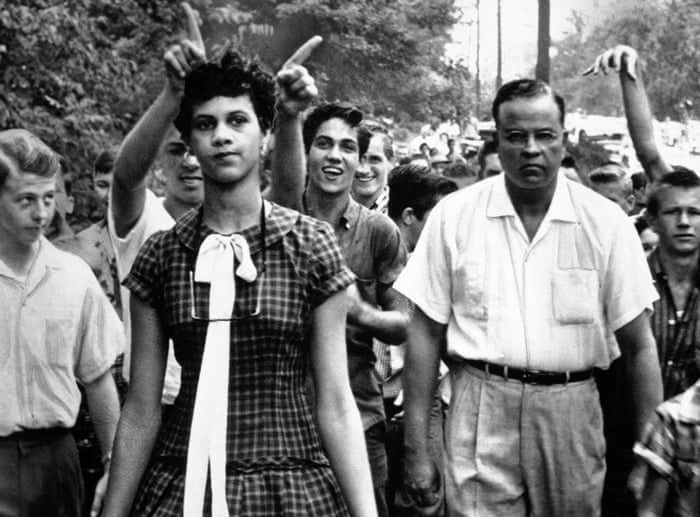
Why Dorothy Counts?

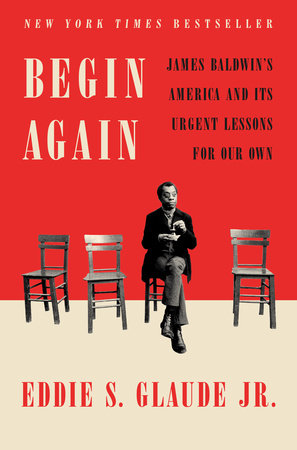
“I must admit this is a strange book,” Eddie S. Glaude Jr. explains in the “Introduction” to Begin Again, explaining:

It isn’t biography, although there are moments when it feels biographical; it is not literary criticism, although I read Baldwin’s nonfiction writings closely; and it is not straightforward history, even though the book, like Baldwin, is obsessed with history. Instead, Begin Again is some combination of all three in an effort to say something meaningful about our current times. (p. xviii)

One such “something meaningful” is quite large: “A moral reckoning is upon us, and we have to decide, once and for all, whether or not we will truly be a multiracial democracy” (p. xix).

Begin Again by Eddie S. Glaude Jr.
Begin Again, Eddie S. Glaude Jr.

Addressing that large scope for the book, Glaude navigates James Baldwin witnessing and confronting “the lie“:

The lie is more properly several sets of lies with a single purpose. If what I have called the “value gap” is the idea that in America white lives have always mattered more than the lives of others, then the lie is a broad and powerful architecture of false assumptions by which the value gap is maintained. These are the narrative assumptions that support the everyday order of American life, which means we breathe them like air. We count them as truths. We absorb them into our character. (p. 7; see Chapter One excerpt for a full explication of “the lie”)

But as Glaude notes about his own transition form Ralph Ellison to Baldwin—”Baldwin was too personal. In contrast, Ellison remained hidden behind his elegant words and powerful insight” (p. xxiv)—another “something meaningful” is as small as an individual person, a jumbled intersection with Baldwin, Dorothy Counts:

This picture signaled an end to segregation. Why has so little ...
Photograph: Douglas Martin/AP

Chapter Two, “Witness,” opens with the harrowing story or Dorothy “Dot” Counts, a Black teenager carrying the weight of integrating Harding High School in Charlotte, NC, in 1957.

“Dot walked a racist gauntlet to enter Harding High School,” Glaude details. “She made the walk for just three more days before deciding never to return” (p. 30).

The racist anger launched repeatedly at a fifteen-year-old young woman personifies the lie, but that indelible image of Dot Counts became a twisted mythology for Baldwin (even as he fumbled details and the facts of history):

[I]n No Name in the Street, [Baldwin] would start at the beginning, with the image of her amid the hatred on her first day, and use the famous photo [above] of Dorothy to justify his own decision to join the fray….

Looking back, after the deaths of Medgar Evers, Malcolm X, and Martin Luther King, Jr., the photo with all of its pathos, anguish, and pride represented for Baldwin in 1972 the demand to bear witness to what was happening in 1957 and to what had transpired since, which led to his [mistaken] recollection of it in No Name in the Street. Dot’s eyes captured the trauma of that journey. Baldwin sought to narrate what happened on the eve of a social movement that would attempt to transform the country, and to testify to that odd combination of trauma and grit, which he now knew so well, seen in a fifteen-year-old black girl’s courage that spurred him, so he believed, to leap into the fire. (p. 43)

So, why Dorothy Counts?

Glaude weaves a motif of trauma through this work, and certainly there is trauma linking Baldwin and Counts, the latter more often than not ignored by white America: “It has never been America’s way to confront the trauma directly, largely because the lie does not allow for it” (p. 46). The result, Glaude notes, is “historical gaslighting.”

That did not happen, or That did not happen that way, or That is only the past, not who we [Americans] are today—so it goes.

While Baldwin’s mythology of Counts and his charge to bear witness are a narrative of the South, it certainly has become a prescient story about all of America, especially those supporting Trump:

The white southerner had to lie continuously to himself in order to justify his world. Lie that the black people around hum were inferior. Lie about what he was doing under the cover of night. Lie that he was Christian. For Baldwin, the accumulation of lies suffocated the white southerner. (p. 49)

That was then; this is now:

We are told every day not to believe what we see happening all around us or what we feel in the marrow of our bones. We are told, for example, that Trumpism is exceptional, a unique threat to our democracy. thus view that Trump, and Trump alone, stresses the fabric of the country lets us off the hook. It feeds into the lie that Baldwin spent the majority of his life trying to convince us to confront. It attempts to explain away as isolated events what today’s cellphone footage exposes as part of our everyday experience. Exceptionalizing Trump deforms our attention…. Trump represents a reassertion of the belief that America is, and always will be, a white nation. (p. 54)

Read Glaude’s exceptional work grounded in Baldwin and you will soon learn that there is no question why Dorothy Counts.


Dorothy Counts-Scoggins Still Fighting

This picture signaled an end to segregation. Why has so little changed?

From Observer archives (2007): Dorothy Counts at Harding High, a story of pride, prejudice

Where Are They Now?: Dorothy Counts

Big Time Football: “angry white man society”

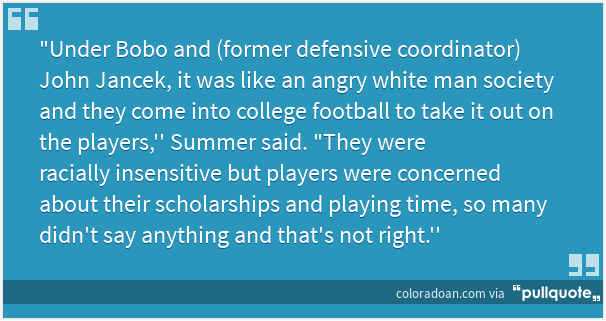
While Trevor Lawrence—probably the highest profile white Division I college football player in 2020—has become the face for the #WeWantToPlay campaign calling for a start to college football amidst a pandemic, the Colorado State University football program has been forced to reckon with a racially toxic culture, implicating their former coach and current assistant coach at the University of South Carolina (Mike Bobo).

The #WeWantToPlay campaign appears to be garnering greater media and public coverage, but the CSU controversy should not be ignored, and should not be examined as a culture problem somehow centered only at CSU or in the individual coaches named in that coverage.

Charges by Black players at CSU are powerful and damning:

Image

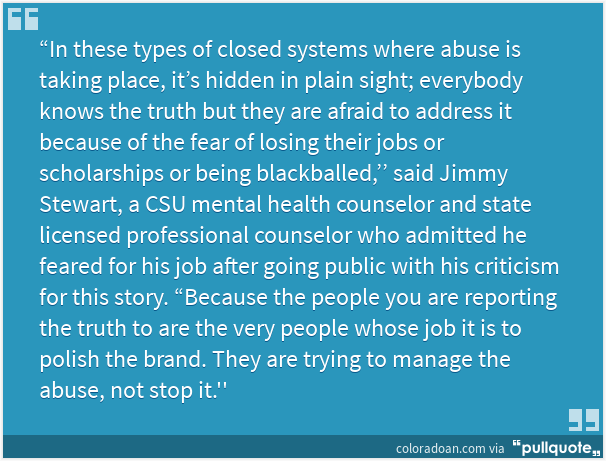
However, again, this is not about CSU solely or a few high-profile coaches; this is about “closed systems” and a normalized culture of abuse “hidden in plain sight”:

Image

Black athletes describing the culture of their football program as “an angry white man society” can and should be amplified to describe the entire system of big time football in the U.S. Start by considering the numbers:

Div I head coach race football
NCAA Demographics Database

The power-base of college football is significantly skewed toward white men, disproportionate to percentage of white men in general U.S. society as well as disproportionate to the demographics of men who play the sport:

In mass media and popular culture, sport is often presented as a level playing field where the most skilled and committed athletes rise to the top. The racial composition of American football is often presented as evidence of the supposed meritocracy of sport. While 13.2 percent of the U.S. population is black, 47.1 percent of NCAA Division I football players and 68.7 percent of National Football League (NFL) players are black.

White Americans hold the vast majority of power and wealth in the U.S., skewed significantly toward white men. Yet, white Americans tend to struggle with concepts of systemic inequity (racism, sexism, etc.) that depend on understanding the invisibility of white privilege for white people and the key statistical concept exposed above, “disproportion.”

Even as the killing of George Floyd by a police officer has reignited awareness and public protests about police violence being racist, this movement has not silenced or erased the “but police shoot and kill more white people” response, echoed by the current white nationalist POTUS.

For people with power, then, grasping data about disproportion is often a paradoxical experience (Simpson’s Paradox) because of white denial and white fragility:

The people making this argument don’t dispute the fact that police kill Black people at disproportionate rates. A Black person in America is roughly three times more likely than a white person to be killed by police. But according to this argument, the disparity is rooted in crime rates and more frequent encounters with police, not racism. In 2018, the rate of arrests for violent crime was 3.6 times higher for Black people than white people. So actually, the argument goes, Black people are underrepresented as victims of police killings, after controlling for the number of encounters.

Big time college football is both a reflection and perpetuation of the larger systemic inequities (such as racism and sexism) throughout the U.S.

But the current charges against coaches and the program (culture) at CSU are not merely a condemnation of CSU or the former and current head coaches. These charges are historical and current features of sports across the U.S., starting when athletes are children and running through the very small percentage who make sports their livelihoods.

The mythology that coaches (overwhelmingly white men) are building character in their athletes and are nearly universally “God-fearing, good family men” is one of the ugliest lies in American culture.

Sports in the U.S. is never about building character and certainly isn’t in the service of God (despite the veneer of Christianity that is layered onto every aspect of scholastic sports in the U.S.), but about winning and the wealth and aggrandizement of coaches and the institutions associated with those teams at the expense of the athletes (often disproportionately Black bodies):

“After watching George Floyd being humiliated before he died, it triggered in me the times I saw or heard about certain coaches humiliate student-athletes and the fact that not going public made me complicit and compromised my integrity,” said the 65-year-old Stewart, who is white. “I also became conscious that racism is about being a bully. In that encounter with the Black student-athlete, Coach Addazio had this attitude that he’s bigger and more powerful than the student-athlete. The student was enslaved.”

The day-to-day normalized behavior of coaches—yelling, berating, swearing, threatening—would be viewed as bullying and abuse in virtually all other situations where there is the sort of power, age, and racial imbalance as there exists in sports.

The abrupt and sustained pauses created by the Covid-19 pandemic have the potential for not only the needed reckonings echoing around many of the foundational aspects of American culture but also long-overdue revolutions in those institutions, including how we educate young people as well as how young people are invited into and coached through sports (since in the U.S. formal education and sports are nearly inextricably intertwined).

White men coaches are reinforced at every turn that they are “good men” despite their behaving as bullies, despite their racist and sexist ideologies mostly veiled or closeted behind the secrecy of male bonding and locker rooms:

A member of CSU’s football staff said Addazio has downplayed the COVID-19 health threat and Black Lives Matter movement, which have dominated public discussion in recent months, calling both a “distraction from football” to be managed.

“He’s smart enough not to come right out in public and say it, but he thinks BLM (Black Lives Matter) is a crock of s—, and that has come out in meetings,” said the football staff member who wished to remain anonymous. “When we had the incident with the player (a Black CSU football player was held at gunpoint by a white man while working in Loveland), the players wanted to march with shirts that had BLM on it, make posters and say chants. He told them if you are going to do that we aren’t marching.”

CSU and the University of South Carolina likely have some hard decisions to make, and probably are hoping to sweep all this under the rug while people struggle against the avalanches of crises surrounding them—from the Covid-19 pandemic to the rumbles of a 5.1 magnitude earthquake at the North Carolina/Virginia border.

I suspect these universities will issue a few more statements, probably conduct some investigations and also create reports months down the line; there may be some very mild consequences for the coaches named (but their already earned millions will not be touched, of course).

The white coaching shuffle, in which mediocre white men fail upward while stepping on those Black bodies for leverage, will continue, however.

The messages coming from Black football players at CSU are not just about CSU, or big time college football, or the most disturbing aspects of coaching; the messages coming from Black football players at CSU are about systemic inequities pervading all aspects of the U.S.

Big time college football is an important subset of American culture, a point being fumbled by Lawrence calling for #WeWantToPlay.

The U.S does not need major college football to return to normal and resume as soon as possible in the coming weeks, the fall of 2020.

A full and complete unmasking of big time college football would be welcomed, and should precede any efforts to return to our contemporary and slightly sanitized gladiator event that was always about sacrificing some Other bodies.

UPDATE

ACC players speak out against Trevor Lawrence 

See Also

Dabo Swinney and the White-Man No-Apology Apology

The Christian Veneer: On Dabo Swinney and Donald Trump

Confronting Aaron Hernandez, Big Time Football, and Toxic Masculinity

The United States of Hypocrisy: Scholastic Sports

College Athletes’ Academic Cheating a Harbinger of a Failed System

Coach K, Sports Fandom, and More on My Redneck Past

I Swear: On “Grit,” Adult Hypocrisy, and Privilege


Neil Young v. Lynyrd Skynyrd 2020: “Southern Man” Redux

What happens to a dream deferred?

“Harlem,” Langston Hughes

My empty-headed adolescence spanned the 1970s—I turned 18 and graduated high school in 1979—in rural upstate South Carolina, only about 25 minutes away from where I live now.

Lynyrd Skynyrd’s “Sweet Home Alabama” and “Free Bird” were persistent background music on the radio and in dance clubs well into my college life. I never owned a Lynyrd Skynyrd album, but I knew every word to both songs and gleefully (and mindlessly) sang along to them in my car or holding a long-neck Budweiser on 25-cent beer night at O’Sullivan’s.

I was a very conflicted, insecure, and anxious-to-near-paralysis teenager, and my musical tastes reflected the jumble of the mindlessness (Tom Petty, Eagles) with my late-to-develop serious interest in music that I didn’t just know the lyrics, but began to think about their implications (Parliament, Pink Floyd).

My deep and careful affection for Neil Young did not develop until the 1980s. But like most people, I was always aware of the so-called feud between Young and Lynyrd Skynyrd.

The songs that are permanently intertwined are Young’s “Southern Man” and “Alabama” (which Young has distanced himself from in moments of self-criticism) that spurred Lynyrd Skynyrd’s “Sweet Home Alabama” with the infamous lines:

Well I heard Mr. Young sing about her (Southern man)
Well, I heard ol’ Neil put her down
Well, I hope Neil Young will remember
A Southern man don’t need him around, anyhow

And that band’s iconic single cover art also sent a pretty strong symbolic message:

While the band’s relationship with the Confederate Flag is complicated, Lynyrd Skynyrd as a band and MCA Records were certainly intentional about fostering a strong relationship with some of the worst realities about Southern pride.

Young’s “Southern Man” and “Alabama,” of course, took square aim at those Southern sins, prompting (as some have tried to clarify) Lynyrd Skynyrd to write “Sweet Home Alabama” as a rebuttal anthem along the lines of “Not all Southerners.”

Young has noted that his songs may have painted with too broad a brush, but Lynyrd Skynyrd’s revisionist explanations stretch credulity.

Both the tension and controversy surrounding Young and Lynyrd Skynyrd were grounded in a sort of regionalized ideological divide that remains today—Young as the liberal Canadian and Lynyrd Skynyrd as the conservative Southerners.

I was born and raised in the racist, redneck Southern culture that embraced and celebrated Lynyrd Skynyrd and the Confederate Flag. Both are steeped in a sort of jumbled logic about tradition and pride that refuses to acknowledge the harsh realities of racism that created the South but also lingers in the South and its traditions (such as the Confederate Flag and idealized mythologies about Dixie and the Lost Cause whitewashing of the Civil War).

It took a great deal of critical introspection for me to slay that past, deconstruct and then reject it, and it took too much time for that process, a transition occurring while I was an undergraduate (a racial awakening overlapping with many nights at O’Sullivan’s singing along to “Free Bird” and holding a long-neck Budweiser).

In Young, the Self I constructed out of the shell that chose to walk away from my racist upbringing found the music and lyrics that resonated with the person I wanted to become.

Recently, I saw a post on social media asking people to choose between Neil Young or Lynyrd Skynyrd. At first, it seemed out of place in 2020.

Like others who replied, my first thought was there is no choice here; it is Young because of the many problems surrounding Lynyrd Skynyrd, including “Sweet Home Alabama” and their embracing the Confederate Flag.

Over five decades, however, there really is nothing simple about that choice because it is 2020.

The Southern-apologist strategy is alive and well in 2020 even as states have taken more aggressive approaches to renaming buildings and removing statues honoring Civil War figures who unequivocally were racists and slavery enablers.

The jumbled history of Lynyrd Skynyrd and the band’s relationship with both the Old South and the New South are an aging quilt, but the threads of that quilt are being disturbingly re-spun in support for Trump by reinvigorated white nationalists in the U.S.

And while conservatives have long clung to “Sweet Home Alabama” and “Free Bird” as right-wing anthems, Republicans have also co-opted Young’s “Rockin’ in the Free World,” and Bruce Springsteen’s “Born in the U.S.A.”—seemingly (mis)understood with the same sort of empty-headedness I practiced as a redneck singing along to “Sweet Home Alabama” in the 1970s.

History has been far more kind to Young’s efforts at social consciousness through his music than to Lynyrd Skynyrd regardless of to what degree you backward (re)construct their messages about the South and its iconography (people claim, for example, the “Boo! Boo! Boo!” following “In Birmingham they love the governor” as both rejecting and endorsing infamous racist George Wallace).

There is an irony to asking people to choose between Young and Lynyrd Skynyrd—the former a flawed but earnest choice and the latter a tarnished if not irreparably stained choice.

There was never room for the Confederate Flag, and “Not all Southerners” is a coward’s plea against the historical and lingering systemic racism that plagues not just the South but the entire U.S.A.

But 2020 has proven James Baldwin’s edict: “the time is always now.”

Lynyrd Skynyrd, the original band, and the reconstructed Lynyrd Skynyrd as well as their fans are real-life examples of the great failure of the South, clinging to the old ways simply because they are the old ways.

So much of literature has warned about the folly of pride that it feels cliche, but “Proud to be a Southerner” and “Proud to be an American” both fall flat against the “rigid refusal” to acknowledge our sins past and current.

Now, Young recognizes his warning “Southern change gonna come at last” ( applies to the entire country, not just the region he targeted:

Young posted a 2019 performance of the song on his Archives Wednesday, writing: “Here’s me as an old guy singin’ his 50-year-old song that was written after countless years of racism in the USA. And look at us today! This has been going on for way too long. It’s not just ‘Southern Man’ now. It’s everywhere across the USA. It’s time for real change, new laws, new rules for policing.”

It’s 2020 and there is no credible way to justify Lynyrd Skynyrd, just as there is no credible way to justify Trump.

It’s 2020 and there really is no choice, but it certainly is time to make the choice in ways other than mere words or simply clinging to something that should have never been held dear to begin with.


Academic Freedom, Pedagogy, White Privilege, and Racism in Higher Education

“Reckoning” is an imposing word for those with power and privilege; for white people in the U.S. the threat or possibility of a reckoning is often terrifying, triggering what has now been identified as white fragility.

For those abused, assaulted, or marginalized by racism, sexism/misogyny, homophobia, transphobia, xenophobia, etc., the possibility of a reckoning is exhilarating—although tinted with at least skepticism if not cynicism about any reckoning coming to fruition.

Amidst a pandemic, however, the murder of George Floyd at the knee of a police officer seems to have reignited with a renewed stamina the #BlackLivesMatter movement.

Professional sports, including even the ultra-conservative NFL, have blinked finally against the call for police reform and racial reform across all aspect of the U.S.

Like the symbolism now being allowed and celebrated in the NBA and WNBA, the diversity and inclusion initiatives in U.S. higher education remain mostly rhetoric (and seemingly endless committee work).

While higher education is often characterized (and demonized) as some sort of insular liberal and progressive playground for college professors, the truth is that colleges and universities—like K-12 schools—are deeply conservative and mostly a reflection of society and the populations they serve.

Yes, a good portion of college faculty talk the talk of moderates and progressives, but almost all institutions are conservative by nature in order to exist; revolutionary behavior fits poorly with the economics of running a college or university.

Public universities are governed by politicians (mostly conservative and right-leaning moderate across the U.S.), and college and university boards tend to be populated by wealthy and conservative advocates for sustaining the institution (not brainwashing students with Marxism).

We of a genuine leftist persuasion, Marxists or critical scholars, are small outliers on college and university campuses; we are at best begrudgingly tolerated, often with significant consequences to our professional and personal lives.

Here’s the ugly truth—colleges and universities are systemically inequitable places. The campus, dorm, and classroom cultures are more often than not hostile to marginalized groups.

Black students, for example, are under-represented on college campuses (except at HBCUs), and even though women are the majority of students at those colleges and universities, they still must navigate sexual assault and harassment cultures with weak university support as well as significant inequities in access to majors as well as extracurricular activities such as athletics.

At my university, there have been a number of diversity and inclusion movements over the years, and we have fairly recently hired a Chief Diversity Officer.

The university has also been relatively proactive in confronting the racism in the founding of the institution, creating a report, Seeking Abraham, and establishing a series of action steps to address the racism built into the institution.

Yet, a new reckoning appears to be upon the university, best represented by an Instagram account, Black at Furman.

Alumni have been posting anonymously, detailing that the campus, dorms, and classrooms have been and remain hostile environments for students who have been marginalized by race, gender, nationality, sexuality, etc.

To their credit, administration at the university has responded positively so far to a petition by those running the IG account. Faculty seem also more motivated than in the past to acknowledge and address campus-wide inequities, especially those impacting Black students.

Along with other faculty, I have created a Equity, Anti-Racism, and Anti-Bias Statement, fore-fronting it on all course materials across my fall load:

#BlackLivesMatter

In my teaching, scholarship, public writing, and life, I am fully committed to racial, gender, and all forms of equity not yet realized throughout the U.S. and world. While academic spaces are often intellectually challenging and even uncomfortable, I will not tolerate in any aspect of this course language, ideas, or behavior/symbolism that are hostile to marginalized/oppressed groups (racism, sexism/misogyny, homophobia, transphobia, xenophobia, etc.).

Academic freedom for students and professors is tethered to consequences, and is not license. (See Free Speech and Diversity of Thought?)

Students uncertain about what language and ideas are not acceptable because they are hostile or offensive are invited to discuss those questions with me privately and are guaranteed those exchanges will be treated confidentially and respectfully. I am eager to share evidence, research, and reading to help anyone better understand goals of equity, anti-racism, and anti-bias (see materials in Box, Race and Racism).

If you witness or experience any form of bias, please report here:

Bias Incident Report

Anti-racism and anti-bias practice has been central to my teaching career for almost four decades; students are well aware of where I stand against the -isms that deform us, and my public work (such as my blogs) and my scholarship are firmly grounded in critical pedagogy, critical race theory, and critical discourse analysis.

I have also been a vocal critic of the ways in which my university falls short of critical practice and ant-racism/anti-bias commitments.

Yet, the IG account has highlighted in vivid and disturbing ways that far too often—and like many colleges and universities—inexcusable behavior is tolerated in dorms, across campus, and in classrooms because of tradition, fear of upsetting students and parents as customers, and more insidious ideologies such as academic freedom and narrow (traditional) expectations for research, scholarship, and teaching.

Central to my statement above, I think, is a confrontation of academic freedom and how it has been weaponized in the name of white privilege and racism.

Again, read the experiences of Black students in courses at my university, class sessions where language and comments that have no credibility have been allowed and have created hostile learning environments for Black students.

As I note in the statement, academic freedom is not license; it is not about “anyone can says anything in a class setting.”

For example, biology professors might acknowledge creationists and their rejecting Darwinism/evolution, but many do not, and certainly none suggest that “counter opinion” is credible in the field fo science.

How much time is spent in courses on World War II allowing Holocaust deniers equal time? Do we allow students to hold forth about the credibility of exterminating Jews?

In other words, academic freedom is about the boundaries of a discipline, and who determines the boundaries. Biology professors determine the boundaries for teaching evolution (not the university’s board of directors), and that is academic freedom.

Academia is not about knowledge bereft of moral or ethical parameters.

I will not sit in a classroom and allow students to create the sort of hostile environment former students lived and learned through because of the negligence of their professors and the university’s administration.

In the U.S., our government failure is a lack of political will, allowing and perpetuating what is ethically wrong because doing so gains political capital.

This, I fear, is an equally valid commentary on higher education.

College and university administrators and faculty too often lack the political and ethical will to simply do the right thing.

Academic freedom, how we teach (pedagogy), and what we teach are sacred and even potentially beautiful things, enormously valuable to the students who walk the grounds and sit in our classrooms.

But we have failed too, too many of those students; we have hidden behind a tarnished vision of academic freedom and proper pedagogy.

Let’s hope this reckoning is the real thing. It is long past due.

Recommended

This Ain’t Another Statement! This is a DEMAND for Black Linguistic Justice!

What White Folk Want

KEEP AMERICA PURE

WITH

LIBERTY PAINTS.

(Invisible Man, Ralph Ellison, p. 196)

What do white folk want?

Rigid accountability for other people.

License for “me” (the white view of the world is rugged individualism masking white nationalism/supremacy).

And “whiteness” never to be named, never voiced—only allowed to be embedded as an understood in “human” (“There is only one race, the human race”) or “lives” (“All Lives Matter”).

This last point is vital for the first two, in fact, and appeared recently on a Twitter exchange:

Reich is recognized as a Democrat, a progressive or liberal associated with Bill Clinton.

Yet Reich offers what he intends as a racially woke Tweet, only to expose the power of whiteness not to be named. Reich, of course, means “Black people weren’t even considered people by white people on July 4, 1776,” but omits the white context because in the U.S. whiteness is a given.

Even or maybe especially to, as Martin Luther King Jr. described, the “white liberal who is more devoted to ‘order’ than to justice, who prefers tranquility to equality.”

The mythologies masquerading as history leave out that white people came to the Americas to escape a specific religious persecution of them—in order to establish their own brand of persecution with them in charge.

The eventual rebellion from England, again, was not about universal human freedom, but about restarting white/man dominance on stolen land:

Let’s put our heads together
And start a new country up
Our father’s father’s father tried
Erased the parts he didn’t like (“Cuyahoga,” R.E.M.)

July 4, 1776, represents another independence for white men, the wealthy a bit more free than others. And, like Reich’s Tweet, the Preamble has a glaring omission: “We hold these truths to be self-evident, that all [white] men are created equal, that they are endowed by their Creator with certain unalienable Rights, that among these are Life, Liberty and the pursuit of Happiness.”

That independence for white men begun in the summer of 1776 also included their freedom to enslave humans as well as freedom to rape the enslaved.

But that use of “freedom” is also misleading because with the Declaration we witness a country established in the first two points above—accountability for other people who are not white or male, and license (not freedom) for “me.”

Well into the next century, the U.S. begrudgingly ended enslavement, and not until the next century did women earn the right to vote. Four decades after that, civil rights were acknowledged for Black people (again begrudgingly as well as with violent resistance and symbolic protests often by white political leaders in the South).

Life, liberty, and the pursuit of happiness have come quite a bit later and in our recent past for LGBQTIA+ people.

However in 2020, to understand the U.S., as James Baldwin repeated throughout his career, you can still expose whiteness by its relationship to Black people and Blackness; for example, the Reich/Moore Tweets.

What do white folk want?

Black Americans who assimilate into the unspoken whiteness called “American.”

But in that assimilation, there can be no confronting of whiteness. Certainly no dismantling.

White folk want Tiger Woods or Michael Jordan, not Muhammad Ali or Colin Kaepernick.

White folk want Ben Carson or Clarence Thomas, not Barack Obama (a master assimilator who, however, rose too high).

White folk want the passive radical myth of Martin Luther King Jr., only tolerating MLK until he rose too high and had to be sacrificed to make that myth possible, not Malcolm X or James Baldwin.

White folk want white Jesus, not historical Jesus.

White folk want O.J. Simpson and Bill Cosby, not Dave Chappelle.

White folk want Ta-Nehisi Coates, not #BlackLivesMatter.

Fit in to get in but don’t rock the boat.

Along with the unspoken given of whiteness and the essential rugged individualism myth to maintain white privilege comes the need for holding other people accountable and clinging to white license.

The frailty of whiteness has been exposed by Covid-19, in fact, even as the virus disproportionately ravages Black Americans—a painful real-life science fiction allegory of U.S. racial inequity.

The anti-face mask movement is white denial, white privilege, and white fragility in real time acknowledging very little about individual or public health but demonstrating that white folk want license, not universal human freedom.

Driving intoxicated is not freedom, it is license.

Public smoking is not freedom, it is license.

Refusing vaccines is not freedom, it is license.

Not wearing a face mask is not freedom, it is license.

But whiteness requires that the world be seen only as “I” and never “we” because “individual freedom” is a powerful code for white license.

White Americans are panicking because they sense a loss of white privilege, of white license.

The sort of white license that allows you to murder Black people but have your name emblazoned on public buildings, ground your political career in racism but have your name emblazoned on public buildings, lead a military revolt against your country to protect the license to enslave people but have statues built in your honor, or boast about grabbing women by the “pussy” but become president of the U.S.

It is 2020 and what do white folk want?

Rigid accountability for other people.

License for “me.”


Confronting DiAngelo’s “White Fragility” in the Time of #BlackLivesMatter

For a book on racism written by an academic, Robin DiAngelo’s White Fragility has experienced a level of popularity over the last two years that is interesting, if not surprising.

With the #BlackLivesMatter movement re-ignited after the killing of George Floyd by a police officer, DiAngelo’s book has also experienced another significant boost in readership, primarily by white Americans seemingly having a long-overdue come-to-Jesus moment with their whiteness and complicity in systemic racism.

On social media, however, blog posts and Twitter threads have warned “don’t read White Fragility” and “don’t worship DiAngelo.” These warnings come from Black scholars and advocates for anti-racism activism, creating a powerful and important tension in that fight to eradicate white privilege and racism in the U.S.

There is also an insidious challenge to DiAngelo and White Fragility that comes from and speaks to white denial and white nationalism; this denial is grounded in a dishonest use of “science” calling into question DiAngelo’s statistics, methods, and scholarship.

This rebuttal is ironic proof of the existence and resilience of white denial and racism. It has no credibility and is a distraction.

Black voices, however, challenging the centering of DiAngelo in the conversation about race and racism must be acknowledged by anyone—especially white people—claiming to be anti-racism.

Having been raised in a racist home (with parents who embraced white celebrities such as Elvis Presley whose celebrity erased Black entertainers) and community throughout the 1960s and 1970s, I have documented that my journey to awareness about white privilege, white denial/fragility, and systemic racism has been grounded in Black writers and scholars.

When I first read DiAngelo’s essay, I found nothing new or surprising, except that a book existed and that people seemed to be reading it.

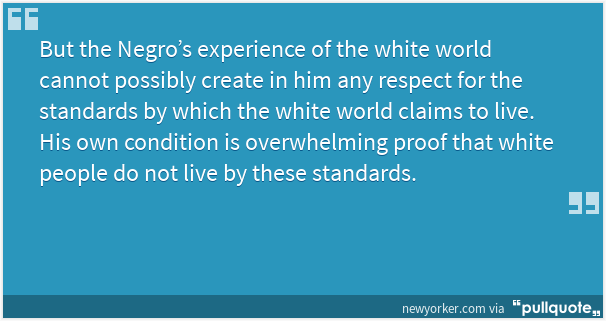
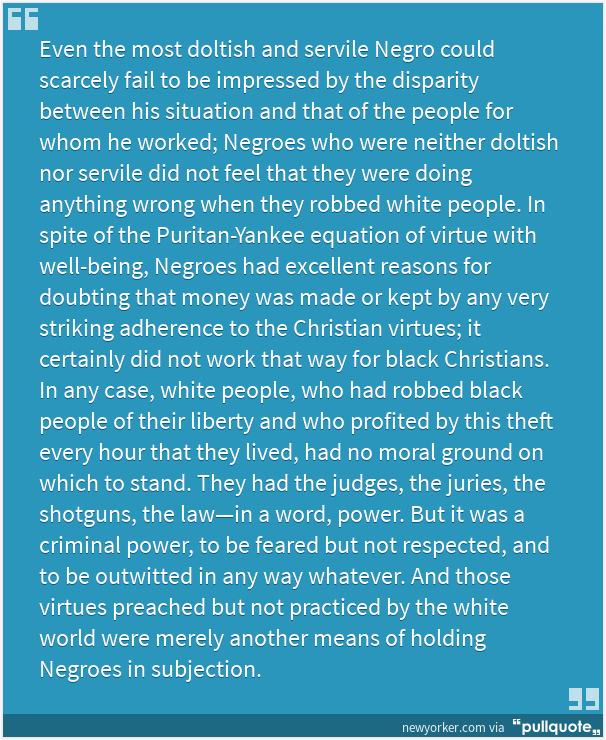
If anyone had wanted to understand white America or white fragility, James Baldwin unpacked all that often, for example in 1962’s “Letter from a Region in My Mind”:

quote 8
quote 9

My reading and scholarship on race, whiteness, and racism began in the late 1970s and early 1980s, including Malcolm X, James Baldwin, Alice Walker, Audre Lorde, Ralph Ellison, Richard Wright, Langston Hughes, Carter Godwin Woodson, bell hooks, Paulo Freire, Martin Luther King Jr., Nikki Giovanni, Frederick Douglass, Nina Simone, Claude McKay, Zora Neale Hurston, W.E.B. Du Bois, Bayard Rustin, and others.

I cannot emphasize enough the essential role social media has played in my evolving racial awareness through my being able to connect to an invaluable wealth of Black and multi-racial scholars, academics, writers, and creators whose voices drive my own commitments to anti-racism: Natalie Hopkinson, Jose Vilson, Chris Emdin, Trina Shanks, Camika Royal, Theresa Runstedtler, Nikki Jones, Mariame Kaba, Robert Jones Jr., Mychal Denzel Smith, Andre Perry, Ernest Morrell, Seneca Vaught, Michah Ali, Nikole Hannah-Jones, Rhondda R. Thomas, Jay Smooth, Greg Carr, Imani Gandy, Lou Moore, Simone Sebastian, Yvette Carnell, Asadah Kirkland, Venus Evans-Winter, Roxane Gay, John Ira Jennings, Jacqueline Woodson, Cornelius Minor, Stacey Patton, Jessica Moulite, Chenjerai Kumanyika, Brittney Cooper, Lisa Stringfellow, Angela Dye, Sherri Spelic, Bree Newsome Bass, Zoe Samudzi, Eddie S. Glaude Jr., Jonathan W. Gray, A.D. Carson, Terrenda White, Clint Smith, David E. Kirkland, Dereca Blackmon, Alondra Nelson, Teju Cole, Colin Kaepernick, Morgan Parker, Tressie McMillan Cottom, Crystal Fleming, Eve L. Ewing, Johnny E. Williams, DeMisty Bellinger, Imani Perry, Josie Duffy Rice, Kareem Abdul-Jabbar, Etan Thomas, Ijeoma Oluo, Natalie Auzenne, Ja’han Jones, Howard Bryant, The Root, Jemele Hill, Ibram X. Kendi, Nnedi Okorafor, Jason Reynolds, Jamil Smith, Valerie Kinloch, Michael Harriot, Bomani Jones, Rashawn Ray, Walter D. Greason, Hanif Abdurraqib, Sarah Thomas, Joshua Bennett, Marc Lamont Hill, Sarah J. Jackson, Clarkisha Kent, Robert Randolph Jr., Peter Darker, Tanji Reed Marshall, Sil Lai Abrams, Sami Schalk, Bianca Nightengale-Lee, Jessica Owens-Young, Andre M. Carrington, Christena Cleveland, Christopher Cameron, Val Brown, Kim Pearson, Kim Parker, Nicole Sealey, Margaret Kimberley, Malaika Jabali, Lisa Sharon Harper, Benjamin Dixon, Tade Thompson, Maria Taylor, Terri N. Watson, Zaretta Hammond, Shea Martin, and Kim Gallon.

There simply is an enormous wealth of Black voices historical and contemporary that white people should read and listen to, often easily accessible online, in fact.

DiAngelo is finding a place in mainstream and fragile America in a similar way that Ta-nehisi Coates and Michelle Alexander have, the latter two Black writers having also received criticism from Black scholars and public intellectuals for appeasing whiteness even as they confront racism.

I have included DiAngelo’s book as a choice reading in my courses as I have introduced students to Coates and Alexander—with caveats and in the context of required reading from critical Black writers, thinkers, and scholars.

White privileged students have admitted openly in class sessions that they finally listened to DiAngelo, even though they have heard and resisted claims of white privilege and systemic racism before.

DiAngelo’s White Fragility and her celebrity from that work fit into what I have called the paradox of centering whiteness to de-center whiteness (a paradox of which I am a part).

DiAngelo represents centering whiteness, acknowledging racism and Black suffering only in proximity to whiteness, and Black voices given space because of white approval; these all work against anti-racism and are in fact racism.

Simultaneously, and paradoxically, DiAngelo represents the importance of and power in white-to-white confronting of and naming racism as well as white denial and fragility.

Yes, we should all feel skeptical about celebrity status and capitalizing from racism, just as we should resist monetizing and career-boosting that surrounds poverty studies as well as poverty workshops and simulations.

White people must not worship DiAngelo or her book, and no one should be recommending that white people read only White Fragility or read it instead of Black voices.

My students who have been introduced to DiAngelo know that dozens of Black writers, thinkers, and scholars made the case against whiteness and racism over decades starting at least a century ago (in terms of the works I offer as required reading).

I take the warnings of “don’t read DiAngelo” from Black scholars very seriously, and find compelling without qualifications the alternative offered—read Black voices, listen to Black voices, and believe Black voices on their own merit.

I also think there remains a place for DiAngelo’s work—even as it has one foot solidly in centering whiteness—as long as it is an element of de-centering whiteness and eradicating white privilege and racism.

My critical commitments make me concerned this caveat is a mistake, yet another concession to that white fragility which DiAngelo is naming.

Is a contextualized place for DiAngelo necessary as white people continue to wrestle with racism? I think that is likely true.

“Don’t rely on only white voices about whiteness and racism” is the goal, the ideal.

Since we find ourselves in the midst of the paradox of centering whiteness to de-center whiteness, at the very least white people committed to anti-racism must reject calls for reading only DiAngelo or reading DiAngelo instead of Black voices.

White celebrity and white authority can no longer be allowed to rise on the backs and instead of Black labor and experiences, as that whiteness occupies spaces that erase or bar Black voices.

There simply is no place left for approaching the work of anti-racism while tip-toeing around the delicacy of white people.

Ultimately that is the sort of white fragility we must recognize, name, and check.


Recommended

You Want a Confederate Monument? My Body Is a Confederate Monument, Caroline Randall Williams

Monuments of Honor, Monuments of Shame

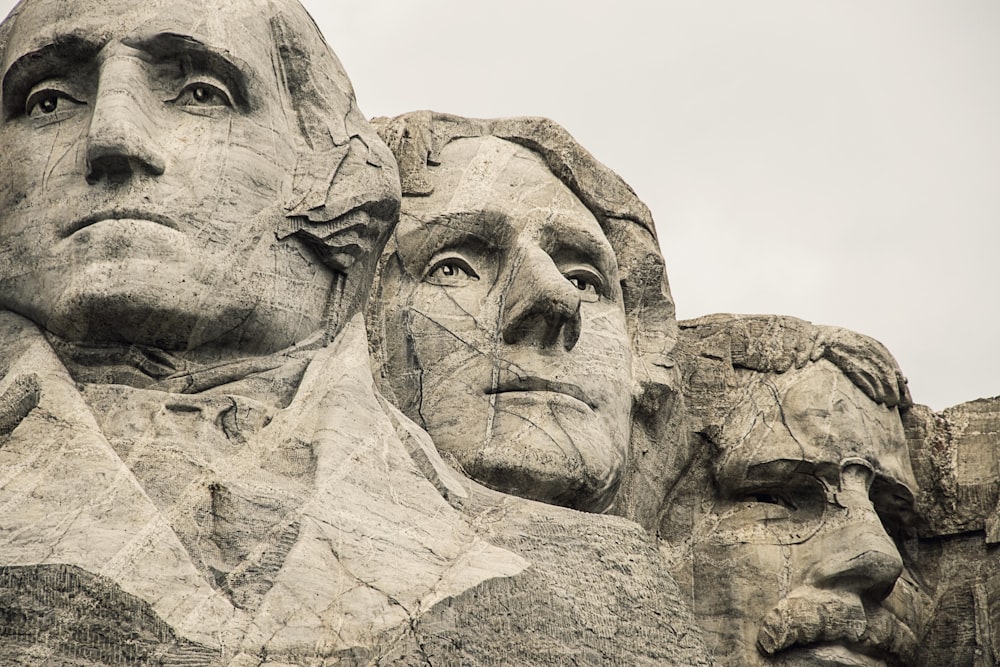
Mount Rushmore
Photo by John Bakator on Unsplash

Gun advocates often proclaim that guns don’t kill people, but that people kill people. Of course, this has a kernel of truth to it while also glossing over the inherent violent potential in those guns.

That sort of truth can also be applied to any published text.

The enslavement of Black people in the U.S. was supported by citing Biblical passages among, for example, Southern Baptists.

In other words, meaning tends to be less objectively in any object and more so in the intent of those imposing meaning on that thing.

With the election of Donald Trump as the U.S. president, many in the country became more ad more concerned about the possibility of fascism and totalitarianism coming to a free people grown lazy in their consumerism.

Margaret Atwood’s The Handmaid’s Tale and George Orwell’s 1984 saw a surge in popularity among those troubled by Trump and his supporters.

During the Covid-19 pandemic, however, the U.S. is now facing another potential tipping point among free people—a renewed public uprising over police brutality disproportionately impacting Black people. The killing of George Floyd has expanded and reignited the #BlackLivesMatter movement, which has nudged the country a bit farther along in confronting its racial and racist sins often memorialized and honored in building names and statues across the country.

One of America’s literary monuments of shame is William Faulkner, considered a giant of Southern letters despite being a Southern apologist (see James Baldwin’s “Faulkner and Desegregation”). However, there is an irony in Faulkner because his precise depictions of the South prove, not Faulkner, but Baldwin correct.

In 2020, conservatives who have lined up behind Trump (and seemingly forgotten their roots in Ronald Reagan who famously demanded “Mr. Gorbachev, tear down this wall”) are rushing to defend racists whose names emblazon buildings and images stand permanently as statues of honor across the country, even as we know most of these purposeful celebrations occurred in defiance of Black liberation and full entry into our so-called free country.

Conservatives are shouting that renaming buildings and removing statues are acts of erasing history. Trump conservatives are our contemporary Emily, discovered at the end of Faulkner’s story to have been spending her nights clinging to the corpse of the lover she could not have and killed instead to hold onto forever.

This thing that has never existed, I shall hold onto always.

And in another monumental irony, these Trump conservatives are quoting Orwell’s 1984 as a warning about the current racial reckoning in the U.S. targeting monuments to racists:

“Every record has been destroyed or falsified, every book rewritten, every picture has been repainted, every statue and street building has been renamed, every date has been altered. And the process is continuing day by day and minute by minute. History has stopped. Nothing exists except an endless present in which the Party is always right.”

Here Winston is explaining to Julia how “history” is a tool of the Party, a weapon of totalitarian rule.

The problem, of course, is that in a time of memes and social media—when many people routinely post quotes that are misattributed at best and simply false at worst—most conservatives quoting Orwell have never read his work, or 1984, and have completely misread the purpose of this passage since it is taken out of context.

Southern Baptist preachers were fond of quoting every possible passage using master/slavery analogies in the Bible, decontextualized and twisted (making the metaphorical literal) to show that God endorsed a master/slave relationship.

Orwell’s fiction is anti-fascism, anti-totalitarianism, in fact, but the novel was not written as prediction; it was a dark parody of the imminent threat to freedom in Orwell’s lifetime.

This passage is no simple warning about the renaming of buildings or the removal of statues. Orwell’s narrative dramatizes for readers that history is determined by those with power. Totalitarian regimes must control history to control people.

What Trump conservatives also miss is that the call to rename buildings and remove statues is not coming from authoritarian leaders, but from the people, people recognizing that honoring racists has no place among free people.

The U.S. is an admirable idea, something beautiful to aspire to—life, liberty, and the pursuit of happiness. But Trump conservatives misread the American Dream just as they misread Orwell.

America has never yet been great for all people; American has mostly been great for a few white people at the expense of other people, often Black Americans.

Langston Hughes writes of the tension between what America can be and how it continues to fail:

O, let America be America again—
The land that never has been yet—
And yet must be—the land where every man is free.
The land that’s mine—the poor man’s, Indian’s, Negro’s, ME—
Who made America,
Whose sweat and blood, whose faith and pain,
Whose hand at the foundry, whose plow in the rain,
Must bring back our mighty dream again.

The names and statues honoring Ben Tillman, John C. Calhoun, Robert E. Lee, and countless other racists and white supremacists are monuments of shame portraying “[t]he land that never has been yet.”

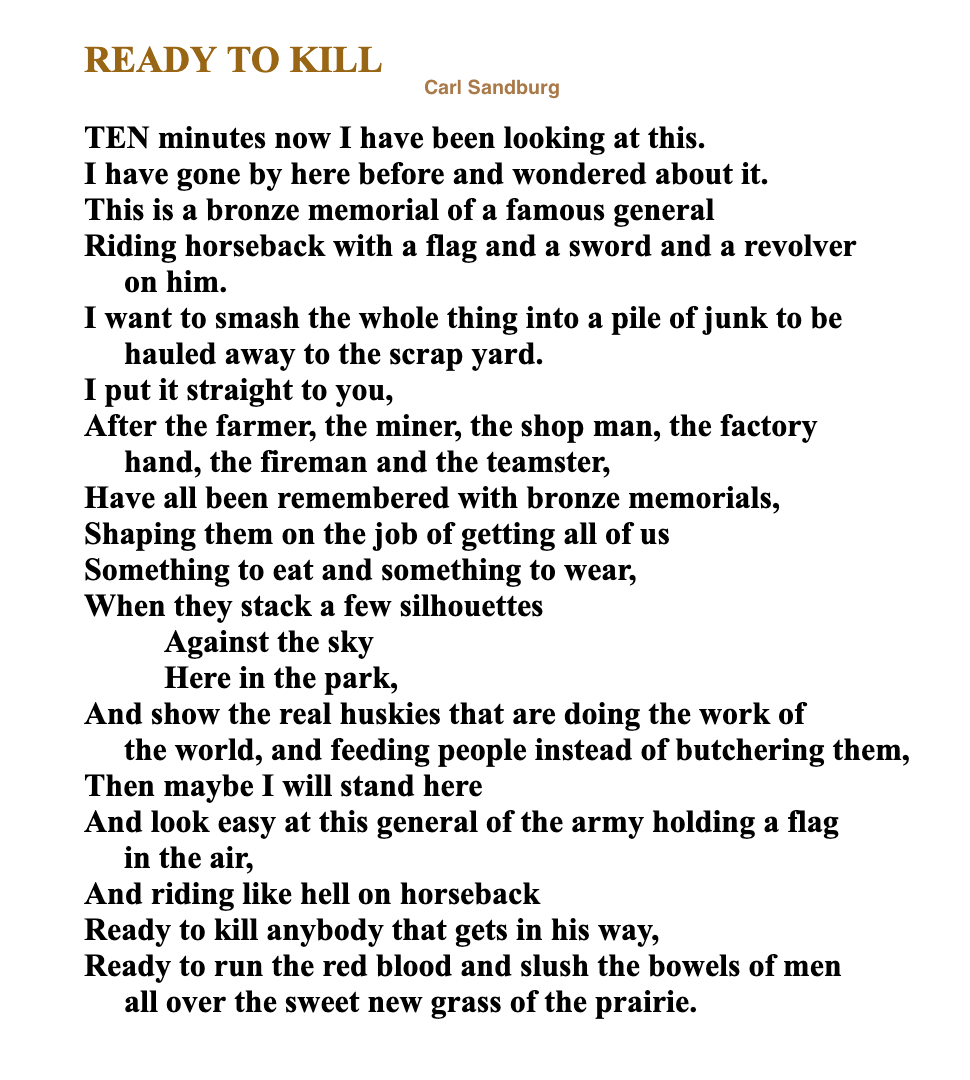
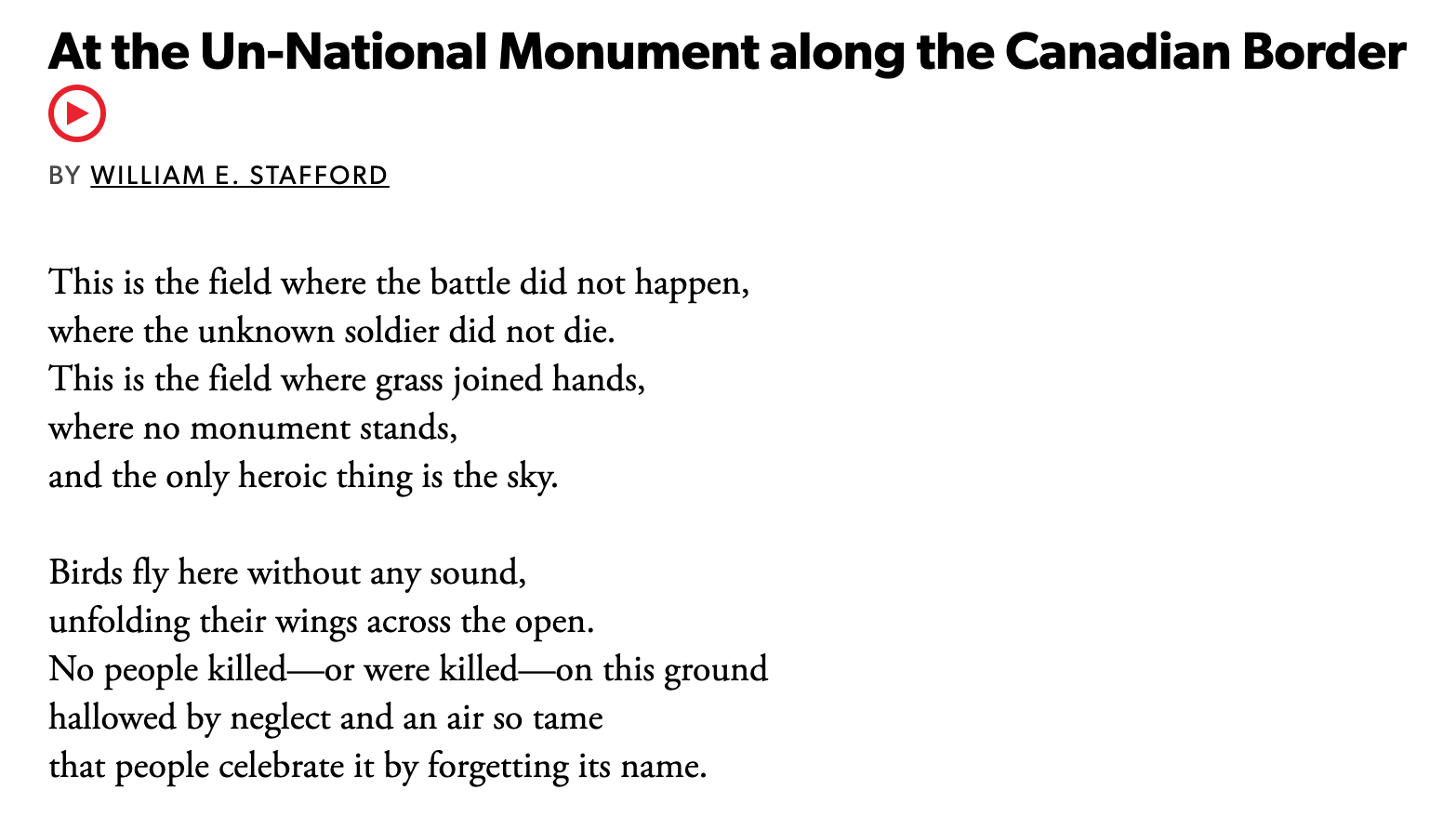
Along with Langston Hughes‘s “Theme for English B” and “Let America Be America Again”—and instead of misreading Orwell—let me offer better literary commentaries on the call to remove the names and images of our racist past from Carl Sandburg and William Stafford:

Ready to Kill Carl Sanburg

Stafford Monument

Democracy is also a beautiful idea, one Americans have failed by choosing consumerism and rugged individualism over “liberty and justice for all.”

Renaming and removing the whitewashed history of our ugly past is not erasing history, but acknowledging, like Hughes and Sandburg and Stafford, that to finally build a free and equitable people, ugly things must be torn down so that we can start again.


Recommended

On Memory and History: What’s in a Name?

Dismantling Monuments: History as a Living Document

Clemson’s Tillman Hall and the Tragedy of Southern Tradition

accidental monuments to their shame 

A Conversation in 2020 with James Baldwin’s “Letter from a Region in My Mind”

One of the worst forms of propaganda about text and reading in formal schooling is that any text has a fixed meaning, independent of the reader, the reader’s history, or the writer and the writer’s history.

Traditionally, K-12 schooling, often in English courses, has implemented a very reduced version of New Criticism that frames all text meaning as a static formula whereby the reader adds up the techniques and discovers an authoritative meaning (that is singular and, again, not grounded in the people creating meaning or the conditions surrounding either the writing or the reading). More recently this anemic approach to text and reading has been reinvigorated by the “close reading” movement embedded in the failed Common Core era.

In 2020 as the Trump era could be coming to a close and the U.S. is being ravaged by a pandemic and another round of something like mainstream racial awareness, I re-read James Baldwin’s “Letter from a Region in My Mind.”

The 1962 publication of this essay (which becomes a section of The Fire Next Time) had a distinct historical and personal set of purposes—Baldwin’s relationship with the church and Christianity as well as his being courted by Elijah Muhammad for the Nation of Islam.

This essay has a powerful online presence for The New Yorker currently:

Main image

One of Baldwin’s persistent messages in his nonfiction is the inextricable relationship between white and Black America, and, as he stated, “[t]this rigid refusal to look at ourselves [that] may well destroy us” (“Lockridge: ‘The American Myth'”). “Ourselves” and “us” are telling in that Baldwin sought a new self-awareness for both white and Black Americans even as he was especially focusing on white fragility and denial.

As I re-read a few days ago, I shared quotes on social media, drawn to how this essay speaks vividly to now and to the lingering white problem in the U.S., a white problem that fuels racism, still, through white denial.

One of the first essays by Baldwin I invite my first-year writing students to read in my Baldwin/#BlackLivesMatter seminar is “A Report from Occupied Territory” since this 1966 essay details the historical/systemic racial/racist inequity of police violence in the U.S. that is a part of the two Americas confronted early in “Letter” by Baldwin:

quote 1

A paradox of racism driven by white supremacy narratives is that white power has demands for “other people” that white leaders and most white people cannot and do not maintain. While some confront the tendency of hypocrisy in leadership, we far too rarely ascribe that to a feature of white supremacy narratives and cultural myths. In fact, this hypocrisy may be more embedded in whiteness than any aspect of leadership.

One of those white lies is being replayed in the respectability politics of white people focusing on marches and demonstrations by framing them as “rioting” and “looting.” This misguided attention (distractions from the police shootings and killing that prompted the demonstrations) is also a calculated effort to ignore or erase the white violence and economic theft that are essential to white dominance and capitalism.

U.S. enslavement of Black people made capitalism “successful” for white America, and white economic theft of Black people and on the backs of Black people remains a daily aspect of this country’s “success”—as Baldwin explains:

quote 2

The role of racism in capitalism and the U.S. market is paralleled by that same corruption of Christianity, with Baldwin’s message prescient for the deplorable embracing of Trump by conservative Christians:

quote 3

Racism is a race lie, an economic lie, and a religious lie.

For Baldwin, the latter meant that Black Americans needed to walk away from a fatally corrupted Christianity:

quote 4

Compared to Martin Luther King Jr., Baldwin poses a much blunter confrontation of the white progressive and the hollowness of progressive policies, the incredibly slow incrementalism bending (maybe) toward King’s “justice”:

quote 5

As some in the U.S. feel hopeful in 2020 that the promise of racial justice seems closer at hand, Baldwin, again, acknowledged this possibility in the need for the types of disruptions filling the streets across the country in the wake of the killing of George Floyd:

quote 6

That American Dream is a myth not framing Truth but myth that is a lie—as Paulo Freire explains, “myths that deform us”:

quote 7

Few moments are more apt in 2020 than this closing question, which also forces the reader to consider that white denial also ignores that the house is, in fact, burning even as white supremacy maintains the myth of white superiority.

Baldwin continues his rhetorical brilliance by confronting the corrosive nature of deficit ideology (whereby Black people are framed always as lacking white qualities) as he builds again to his recognition of white people refusing to see themselves even as they beg to always be at the center of everyone’s consciousness:

quote 8

This essay becomes a brilliant and enduring unmasking of white America:

quote 9

Being white is inevitably being “the slightly mad victims of their own brainwashing.”

By the end, Baldwin returns to a moral grounding and phrase that has remained connected to Baldwin as has his resilient hope and trust in the power of love:

quote 10

Baldwin’s writing as hope and prophesy seems too long delayed, a “dream deferred” because, as Langston Hughes also mused, “(America never was America to me.)”

The Paradoxes of Dismantling Racism and White Privilege

If you just clicked on a link and are reading this, you are experiencing one of the paradoxes of dismantling racism and white privilege because by writing this and making it available across the Internet, I have centered my whiteness and the voice of (yet another) man.

As a white man, I simultaneously have an ethical obligation to dismantle racism and white privilege (and gender inequity) that sits in contrast to another ethical obligation that I (to cite a group of white men) need to STFU and not occupy the spaces where Black and women’s voices must be centered and embraced.

My scholarship and public work have for many years now been focused on class, gender, and race inequity, especially as they intersect with formal education.

Any credibility in addressing racism and white privilege that I have earned comes from my critical unpacking of my own whiteness and of my racist heritage in my home and community of birth, but I also have manufactured a greater level of racial awareness by reading and listening to Black voices—notably Black artists/writers and Black scholars.

My teaching seeks always to center Black voices and the voices of women, which I have documented by detailing who is included in my syllabi.

However, there I stand in front of my classes, centered by my role of authority, my whiteness, and my being a man with the additional weight of almost 6 decades.

Two situations, one recent and one a year or so ago, have pushed me to continue to wrestle with the paradoxes of my activism dedicated to dismantling racism and white privilege.

More immediately, I have been disturbed to see a blog post discrediting Robin DiAngelo’s White Fragility being shared across social media, often by Black academics and friends. This challenge to DiAngelo’s work, I discovered, comes from a source that is neither credible nor reliable.

The other situation came over a year ago when I was invited to speak on whiteness and racism at a university (in a series of programs that also included DiAngelo before I spoke there).

What these two contexts have in common, I think, is one of the most difficult paradoxes of dismantling racism and white privilege: centering whiteness to de-center whiteness.

If and how any of us dedicated to anti-racism work engage with DiAngelo’s concept of white fragility is itself a problem and a paradox.

I added DiAngelo’s popular book to the choice reading selections in my foundations of education course recently, and the book proved to be popular and effective with my students who tend to be white, privileged, and conservative (or from conservative homes).

Many students confessed that they went into the book not believing in white privilege or systemic racism but that DiAngelo had opened their eyes and changed their minds.

These students also read For White Folks Who Teach in the Hood…and the Rest of Y’all Too by Chris Emdin as well as essays by James Baldwin and Ralph Ellison; they are introduced to bell hooks and Maxine Greene as well.

But there is always a risk of centering white works such as DiAngelo’s since that can imply that Black voices and experiences with racism are valid only when verified by white witnesses or when in proximity to white witnesses.

Black advocates for anti-racism embracing the “don’t read DiAngelo” is coming from, I think, recognizing that risk and from their own experiences where only white voices are allowed in formal education. White witnesses to confirm their lived experiences and white proximity giving credibility to the moment-by-moment stress of their being Black in the U.S.

It is a powerful and important question to ask why white people do not find this credible itself, without white confirmation:

To be a Negro in this country and to be relatively conscious, is to be in a rage almost all the time. So that the first problem is how to control that rage so that it won’t destroy you. (James Baldwin from “The Negro in American Culture,” Cross Currents, XI [1961], p. 205)

As I opened in this post about my white man’s voice, DiAngelo is in fact not only occupying spaces where Black voices are not being read or heard, but also profiting on anti-racism, the capitalism paradox of dismantling racism and white privilege.

Activism, scholarship, and the Market are invariably going to overlap in the U.S., and even as we worship at the alter of capital, we also become skeptical when activists and scholars gain celebrity status or simply earn money from other people’s inequity.

It is inexcusable in the U.S. to ignore that racism has always fueled capitalism and profited almost exclusively white people.

I remain resolute that the primary obligation of anti-racism work dedicated to dismantling racism and white privilege belong to white people. But that drives the paradox of centering whiteness and can perpetuate the muting or erasing of Black voices.

The paradoxes of white people doing anti-racism work cannot deteriorate into fatalism, however.

For white people, awareness of racism, white privilege, white fragility, and the paradoxes of dismantling racism and white privilege as a white person is a first step often wrapped in the paradox of centering whiteness to de-center whiteness.

For far too long, there have been far too many white-only spaces, and the work of anti-racism by white people must seek shared spaces among all races, not just creating but allowing through white absence enough space so that voices do not have to compete and so that whiteness does not justify or regulate whose voice ultimately matters.