Category Archives: #BlackLivesMatter

Dabo Swinney and the White-Man No-Apology Apology

After a series of critical challenges to the highest paid college football coach in the U.S., Dabo Swinney, concerning weak responses to the uttering of racial slurs by a Clemson coach (and Swinney) and Swinney sporting a “Football Matters” shirt in the wake of George Floyd’s death underneath the knee of a police office, a calloused death sentence executed in 8:46, Swinney wants everyone to believe he is offended equally by the N-word and GD:

You see, Swinney’s racial awareness is as hollow as his Christianity, worn on his sleeve 24/7.

In a statement lasting about 5-plus minutes longer than Floyd’s last breaths, Swinney launches into the white-man no-apology apology.

Swinney isn’t the first, and won’t be the last, to practice the art of no-apology apologies, but he hits all the key elements.

We weren’t there, and we don’t understand.

There were no racial slurs directed at players, but simply uttered near players.

All the white men in charge took care of the situations, and since we weren’t there, we simply don’t know, and can’t understand.

The assistant coach in question is a fine man, Swinney assures us, as all white men are when they have power and are inexplicably held accountable.

We have watched this play out fairly recently, in gross relief from any kind of decency at Penn State, another fine university where Football Matters, but not the humanity of those consumed in the process.

Swinney, like some of his fellow elite-coaches such as Nick Saban and Mike Krzyzewski, has made his millions and built his authority mostly on the backs of unpaid Black labor. And while, yes, a small percentage of these amateur athletes reap huge salaries as pros and a fair share of them receive mostly reduced college degrees, the elite-coach fraternity is where the real power and money are.

This college football monstrosity of abuse and hypocrisy is dwarfed only by the Holy Grail waiting at the end of some players’ rainbow—the NFL.

An important lesson that seems less obvious during the current wave of civil unrest and calls for racial equity—for an end to racism and white privilege—is that if you are surprised at the corruption and hypocrisy in policing in the U.S., wait until you take a similar critical look at coaching—from the pee-wee leagues all the way through professional leagues.

Like Swinney, coaches are the least likely people to accept accountability, and they rarely embody the principals they demand of the players who have no power in their charge.

Take one of the stumbles in Swinney’s no-apology apology concerning whether or not he banned players from participating in racial protests at Clemson several years ago when See the Stripes and other groups called for the renaming of Tillman Hall.

Once again, Swinney explains that we weren’t there, and that he didn’t ban players from attending the rallies. Swinney did warn in his most Christian fatherly role that athletes at Clemson have lofty statuses and that they should be careful about what they associate themselves with and consider how their presence at the rallies could be interpreted.

[Note: Swinney determines who plays and when on the team, and someone with Swinney’s power need not directly ban player behavior in order to effectively ban player behavior.]

Of course, this is the same Swinney who just recently wore a Football Matters shirt directly in the moments of civil unrest focusing on #BlackLivesMatter, a movement not well supported in the state of South Carolina, where Clemson resides.

Swinney’s supporters are often the Blue Lives Matter and All Lives Matter folk.

Clemson University, we must note, is a public university whose founding and funding originated from one of the most notorious racists in the state’s history, Ben Tillman, and has until recently also included the honors college being named for another virulent SC racist, John C. Calhoun.

Not insignificant, Clemson University is funded in a state including a population that is nearly 30% Black, but out of the top 100 universities in the U.S., the university ranks 98th in diversity with under 7% of undergraduates identified as Black.

Swinney wants us to believe that for him Black lives matter, but as he so eloquently warned his players, his high profile actions suggest that Black doesn’t matter as much as white or, especially, green.

Since Swinney’s no-apology apology, “hotbed of reality” Don Lemon was taken to task by Dave Chappelle in his 8:46:

Chappelle is not the first to challenge Lemon’s role as a prominent Black voice in the media, but Lemon’s measured, calm response to criticism serves as a powerful contrast to the white-man no-apology apology from Swinney.

Lemon doesn’t tell us we weren’t there, that we don’t understand. Lemon accepts Chappelle’s criticism but also takes responsibility for his own words without denying them or gaslighting his audience.

Lemon makes a strong point about two high-profile Black men agreeing and disagreeing in a very public forum. And unless I am being naive, I have been watching Lemon evolve during the Trump years in a way that stands in stark contrast to the stubborn sameness we watch in Swinney or the “rigid refusal” that seems to have finally begun to crumble in Roger Goodell and Jim Harbaugh.

Swinney’s white-man no-apology apology sits in a long tradition in the South where honor and tradition allow men with power to cling to the rotting corpses of the region’s past without acknowledging that it is far past time to do the right thing, not the thing we have always done.

Like the perpetual gaslighter in the White House, Swinney cannot walk the talk, cannot embody the ethics or behavior he demands of his players; and he will not because he doesn’t have to.

One of the few completely honest things Swinney has done recently is the shirt, Football Matters.

I wouldn’t expect anything more because Swinney has no reason to be the man he demands his players to be.
A Reader for Confronting Whiteness, Supporting #BLM: “How Do I Open Their Eyes?”

A former student and current college student sent me an email with the subject line “How Do I Open Their Eyes?”

Their story is one that resonates with me since they have found themselves quarantined during Covid-19 “with my parents and neighbors, all of which I would say are very religiously right leaning.” During the more recent re-energized #BlackLivesMatter movement, they have experienced yet another challenge as they confronted those around them to support #BLM, but “was unable to get a word in because I was simply outnumbered by conservative white men.”

This is a journey that fits into this racism scale that details the challenges facing white people who genuinely seek to rise to the level of allyship/abolitionist:

Racism scale copy

The work of dismantling racism includes confronting whiteness and white privilege in order to eradicate both—and this is the work of white people in confrontation with white people.

There is a sizable faction of “conservative white men” who will not listen, will never listen, and will never move beyond their white fragility and white denial.

But racism cannot be overcome in a state of fatalism.

Here then is a reader, some resources for doing the work by white people and for white people who aspire to allyship/abolitionist:

“Science of Reading” Advocacy Stumbles, Falls

First, the stumble.

Yet another education journalist (also identified as a novelist and historian), Natalie Wexler, has weighed in on the “science of reading” (SoR). Wexler isn’t an educator, and she seems to suffer from the Columbus Syndrome far too common among journalists covering education.

I am not linking to the article, but it has already been updated since Wexler has received strong challenges to her tactics in this over-stated and misleading article

Accompanying the standard misrepresentations about teaching reading in the U.S., Wexler attempts to cast an accusatory shadow—invoking racism—over teaching reading by joining the “science of reading” propaganda movement.

However, Zaretta Hammond set the record straight on Twitter. In brief, Hammond challenges Wexler’s jumbled attempts at calling out racism and misguided references to recent racist police violence as well as implicating Hammond’s work in Wexler’s claims.

As Hammond notes, Wexler’s failure exposes the problems with fanning a Reading War that, once again, keeps our gaze on so-called failed students and failing teachers instead of systemic inequity and racism.

Wexler is wrong about reading and racism, but the criticism her article prompted has only nudged her to retract the racism stumbles, whitewashing her mistakes by apologizing on Twitter and revising her article.

Now, the fall.

One of the most damaging aspects of the “science of reading” movement has been how swiftly advocates of SoR and dyslexia have translated their movement into state-level reading legislation.

While I have been helping literacy educators and activists resist these efforts to change state education laws, some of us saw at least a pause in the SoR momentum with the Covid-19 pandemic, an unfortunate consequence that now seems to have had unintended positive outcomes for education (flawed reading legislation not passing for financial stress prompted by the pandemic).

For example, “A bid to improve Louisiana’s dismal reading skills for its youngest students died near the legislative finish line, leaving backers baffled on just what happened,” writes Will Sentell.

The surprise at this defeat comes, as Sentell explains, because “[t]he proposal, House Bill 559, had led something of a charmed life until it wilted at the end.”

However, as with other state-level reading legislation agendas across the U.S., this bill was grounded in misinformation about reading achievement as well as claims about the “science” they claim is missing in reading instruction.

Advocacy for the SoR has a fatal flaw found in both Wexler’s article and the “charmed” but failed bill in Louisiana—a “rigid refusal” to address first and fully the systemic inequity that is at the root of all educational measurements, including reading achievement.

SoR advocacy is grounded in a deficit lens that sees only individuals (students, teachers) and measures them against very reduced and narrow ideas of what counts as “normal.”

This advocacy also falls victim to silver-bullet solutions, reducing teaching to “all students must” and suggesting that this program is better than that program (without recognizing that the problem is reducing reading instruction to any program).

SoR advocacy is a misuse of “science” and a misunderstanding of human nature and the teaching/learning dynamic.

There is a powerful relationship among measurable reading achievement by students, reading instruction provided students in formal schooling, and the corrosive persistence of racism and systemic inequity in U.S. society and schools—systemic racism and inequity.

Since the SoR playbook is wrong on all of that, as Hammond ends her Twitter thread, “Know the difference.”

See Also

NEW: How to End the Reading War and Serve the Literacy Needs of All Students: A Primer for Parents, Policy Makers, and People Who Care (IAP)

Policy Statement on the “Science of Reading”


All White People Must Confront How the System Only Works in Total Whiteness

I was born in 1961, after Brown v. Board but before the Civil Rights Act.

My childhood in the upstate of South Carolina included the assassination of John F. Kennedy, Martin Luther King Jr., Malcolm X, and Robert Kennedy as well as vivid memories of my mother’s family living through the racial unrest in nearby Asheville, North Carolina and my uncle being shipped off to the Vietnam War.

My parents had been raised in the 1940s and 1950s throughout North and South Carolina; they were among the white Americans who disapproved of King, and I recall vividly my parents’ animosity for Muhammad Ali that sat next to their anger at the mainstream media for bringing down Richard Nixon.

I was born in 1961, but I was baptized and washed daily in whiteness.

I believed in whiteness even as I was conditioned never to see it because my accusatory gaze was trained on blackness, and any racial identity not white.

These were the lessons of my home, my community, my school, and nearly every moment of the media I was consuming through news or entertainment.

My history books, TV shows, movies, novels, and comic books were filled with white saviors—and all that was wrong with the world shaded in darkness, blackness.

By the time I entered college during the fall of Jimmy Carter and the rise of Ronald Reagan, I believed entirely in the reverse racism narrative that buoyed Reagan’s ascent.

Despite the challenges of growing up in a working class family in the South at mid-twentieth century, I had been afforded tremendous privileges of race, gender, and more that, once again, were rendered invisible to me, and in that un-self-aware blindness, I was allowed to pity myself at every perceived disadvantage.

College, however, was a paradox; it was my ticket out of white denial even as it helped intensify my white privilege.

In 2020, I am the small percentage of people with a doctorate, and my salary as a tenured professor places me in a life of comfort and leisure that is well beyond what I have earned, what I deserve by the mere content of my character.

My working-class roots certainly contributed to my work ethic, but they also allowed me to believe the rewards I garnered were mostly about effort, even as white privilege supported me at every turn.

For about 40 years, then, I have been on a journey to confront not only my whiteness but also all whiteness.

Here is what I can confess at this moment on that journey.

Even as I did not create racism and white privilege, even as I have come to denounce the forces at the root of both (the enslavement of Black people, capitalism, etc.), I have daily benefitted from racism and white privilege.

Daily.

Moment by moment.

To be white in the U.S. is never to be neutral about race. Whiteness has a lift and momentum that carry me and all white people unless we actively resist it—and even then, at best, we are applying meager brakes, merely slowing that incessant force.

A person of the rural South, I know in my bones what Southern white poverty and ignorance look and sound like. I know they are real, and I have heard and still hear the voices of that angry whiteness who feel cheated by life, who can only exist in white denial because of the inability to confront their whiteness.

Systemic racism and white privilege can work invisibly to those who benefit from it. The mythologies of America have come out of racism and white privilege, working to maintain them and keep them invisible.

Rugged individualism and individual freedom implore us all to think about the individual person, and maintain a lie about individuality that keeps in place blinders hiding how the system only works in total whiteness.

Whiteness is the most powerful vaccination in the U.S., but like even the best vaccination, it isn’t universally effective.

White people fail, and white people struggle—while some Black people succeed, and some Black people seem to rise effortlessly above the barriers of racism and white privilege.

Confronting racism and white privilege, however, means coming to recognize that when white people fail and struggle, it isn’t because of their whiteness, but in spite of their whiteness.

Black people are daily, moment by moment, living under the weight their blackness because of racism and white privilege.

Despite the ever-trivialized manipulation of King’s “content of their character” message, in the U.S. whiteness trumps character and blackness renders character irrelevant.

In my journey confronting whiteness, then, I cannot be complacent simply in that confronting. White people created racism and white privilege; white people maintain racism and white privilege, both actively and in naive neutrality.

Only white people can dismantle racism and white privilege.

The very things that have allowed my success must be eradicated, and I must lend my hand to the dismantling.

Two acknowledgements sustain me in that quest.

Howard Zinn explored his life through a metaphor for understanding whiteness, warning that you cannot be neutral on a moving train.

And James Baldwin offered possibly the best discrediting of white denial in 1979:

Every white person in this country—and I do not care what he or she says—knows one thing. They may not know, as they put it, “what I want,” but they know they would not like to be black here [emphasis in original]. If they know that, then they know everything they need to know, and whatever else they say is a lie.

The system only works in total whiteness.

The system must change.


Imagine a Unites States …

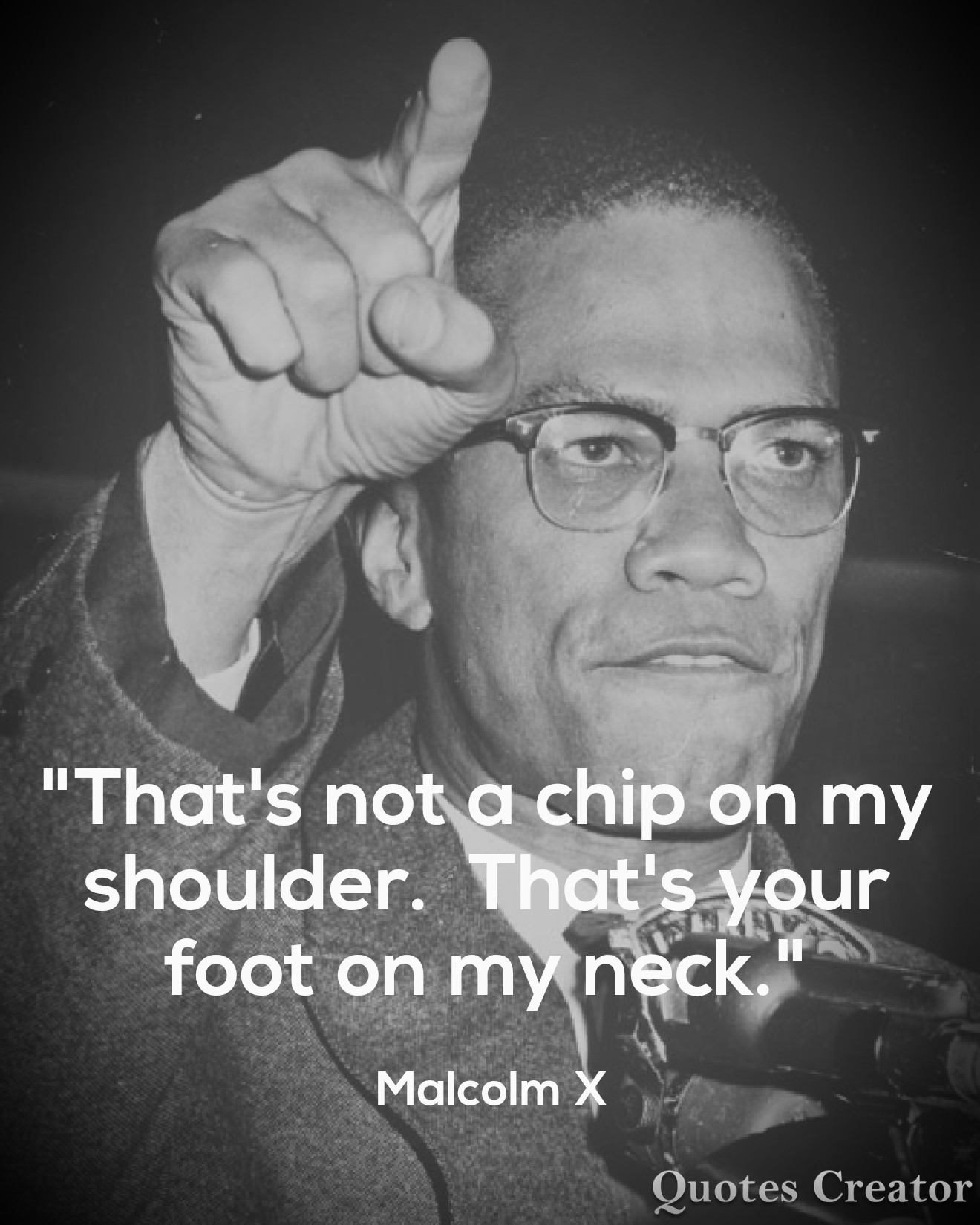
Malcolm X knee

People often either over-idealize or reject as a “bad” song the lyrics to John Lennon’s “Imagine,” but the concept serves a useful purpose.

Imagine a United States where the public and political leadership took seriously Colin Kaepernick’s peaceful protests against the racially inequitable policing and justice system in the US.

Imagine white America taking action because they listened, believed, and truly wanted an equitable and just country.

Imagine the many Black lives that would be with us today, alive and mostly anonymous in those lives.

Imagine no marches, no protests or signs emblazoned with “George Floyd” or “Black Lives Matter.”

But, instead, white America attacked Kaepernick, retreated into their comfortable white denial.

But, instead, white America today points accusatory fingers at “riots” and laments the loss of property, proving that for many whites, Black lives in fact do not matter.

White America created this, and only white America can end it.

Baldwin law

Now.

Imagine a country where the police protect and serve.

To make that real, white America must admit that the police protect and serve white interests at the expense of those lives that do not matter.

If you suffer white denial, if you are fretting over the protests and not the blue knee that took George Floyd’s Black life, I am providing a reader below.

But this is not a place for your white denial or white arguments.

“There is never time in the future in which we will work out our salvation. The challenge is in the moment, the time is always now,” James Baldwin, Nobody Knows My Name (“Faulkner and Desegregation”)

Reader

James Baldwin: “the time is always now”

False Equivalence in Black and White

James Baldwin: “It’s a trauma because it’s such a traumatized society”

Understanding Racism as Systemic and about Power

All Lives Matter as a response to #BlackLivesMatter is offensive because…

James Baldwin’s “They Can’t Turn Back” (1960): “On such small signs and symbols does the southern cabala depend”

The “White Gaze” and the Arrogance of Good Intentions

This Is U.S.: “To be a Negro in this country…”

“The Other America,” Martin Luther King Jr. 14 March 1968

“Every white person in this country…knows one thing,” James Baldwin (1979)

Nicholas Buccola’s The Fire Is Upon Us: “For the American Right, the price of power has been a deal with the devil of white supremacy”

William F. Buckley, I suppose, would have wanted to be remembered as a powerful and charismatic public intellectual for conservatism and one of the foundational thinkers in the late 20th-/early 21st-century formation of conservative thought and the current Republican Party.

While Buckley failed as a political candidate and may in many ways be lost to history, his goals have been mostly accomplished—creating a Republican movement that succeeded in significant ways from Ronald Reagan’s rise through the election of Donald Trump, with only minor detours for centerists such as Bill Clinton (anti-welfare and “tough on crime” advocate) and Barack Obama.

What did Buckley envision?

His was a political ideology that shifted the 1950s Republican moderates and liberals to a reactionary party grounded in (when convenient) libertarian principles and Christian values that stood firm against the rising tide of Brown v. Board (school integration) and the Civil Rights Act of the mid-1960s as well as the violent civil rights movement swelling from the 1950s into the 1970s.

Buckley repeatedly argued that Black people killed during the Civil Rights Era had provoked the violence, for example. He was a “know your place” sort of racist.

Buckley held firm throughout his public career that Southern whites had the right to their beliefs, even if those beliefs were racist, and that the federal government must not impede on those rights (Constitutionally wrong, was his thin argument), even if those efforts sought to gain the full rights of Black people.

Yes, Buckley was a racist, the sort of racist who admitted racism was a plight on humanity and the U.S., but he argued, it was a plight that must be allowed to play out somewhat organically and not spurred by the influence of government mandate (whether through the courts or legislation). Buckley was also the sort of racist who claimed whites were superior to Black people at the moment, even as he wasn’t going to argue directly there were genetic differences (although he was fine with letting such claims linger).

Buckley rarely even flinched and sometimes eagerly trafficked with those who did make much more gross and hateful claims—George Wallace, James Jackson Kilpatrick, etc.

In Nicholas Buccola’s The Fire Is Upon Us, using the James Baldwin/Buckley debate as the crux of his examination, Buccola draws a powerful conclusion about Buckley’s impact on U.S. politics: “For the American Right, the price of power has been a deal with the devil of white supremacy” (p. 365).

The line from Buckley to the Reagan Revolution and then to the current Trump administration is straight and direct. For those who want to claim that Trump is an aberration, a distortion of modern/contemporary Republicanism, Buccola’s book is a harsh slap in the face.

Trump and the current Republican Party is at least a logical conclusion to what Buckley and other conservatives started in the 1940s-1950s.

Buckley mastered what we now see as typical Trumpisms: claiming belief trumps evidence, cozying up to blatant racists for partisan political expediency, making sweeping ideological claims about “the individual” while refusing to recognize the inequities that weigh on real individuals (especially if those individuals are not white), resorting to American exceptionalism and framing any enemy as being “anti-American,” promoting boot-strapping over government intervention, and refusing to acknowledge one’s own enormous privilege while also claiming great accomplishment from hard work and intellectual superiority.

In short, Buckley wrote Trump’s playbook, although Trump is a slightly more buffoonish version of Buckley, himself a stylized character, more theater than substance despite Buckley’s penchant for arcane vocabulary.

However, I must stress here that despite my initial focus on Buckley, Buccola’s outstanding scholarship and compelling writing has one star: James Baldwin.

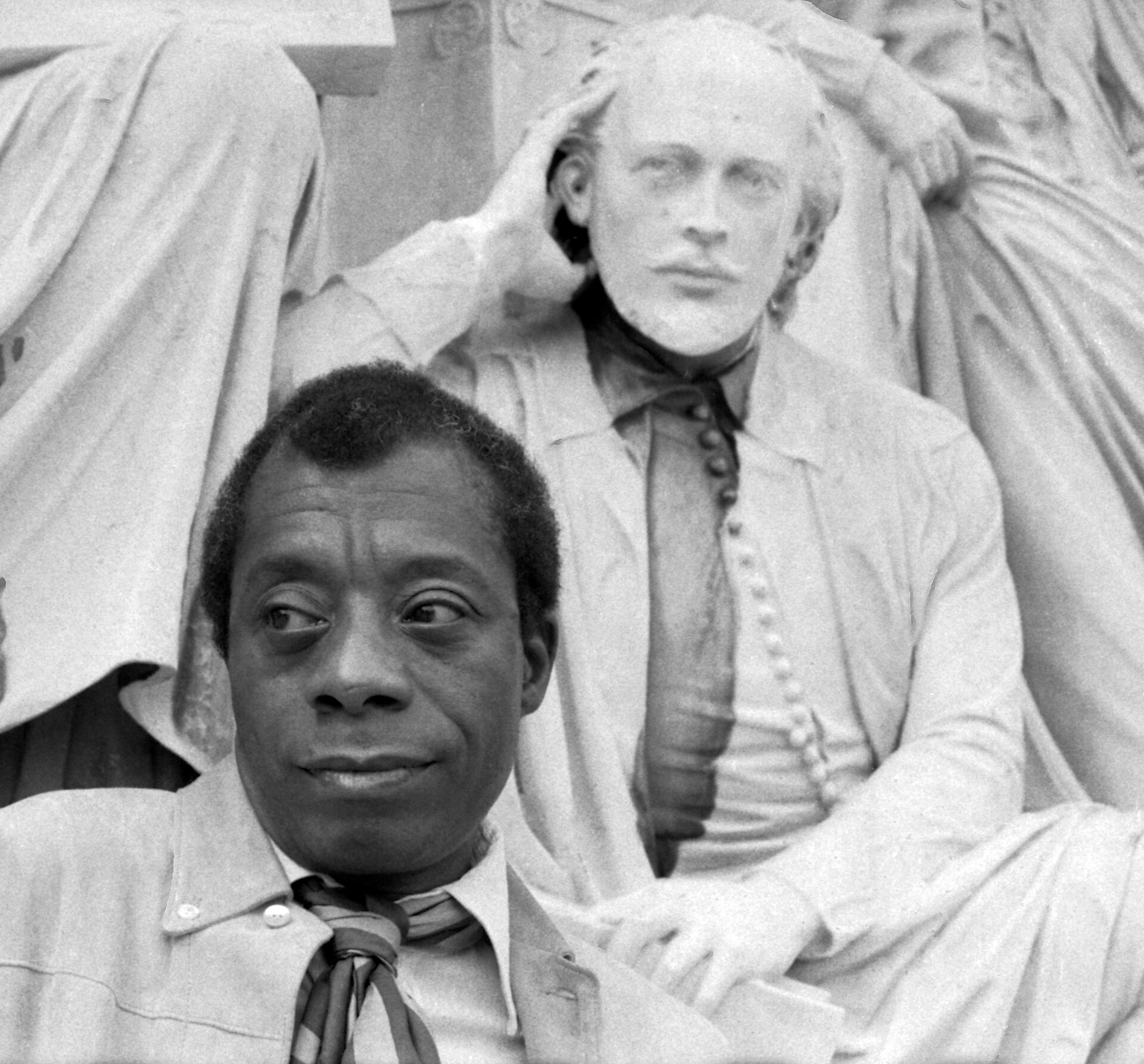
Baldwin photographed by Allan Warren. CC BY-SA 3.0

Just as Baldwin was often the complicated and complicating moral compass while he was alive, Baldwin provides not only context, but the moral counterbalance to Buckley’s inexcusable dispassionate dogmatism.

As someone who has often written about and teaches from Baldwin, I recognize in Buccola an essential primer on Baldwin’s evolving thought throughout the key decades surrounding the Buckley debate in 1965.

Readers witness Baldwin being smeared as a communist (and his explanations to the contrary), labeled “anti-American” (although he repeatedly argues that to criticize the U.S. is to love it), provoked to pick sides between Martin Luther King Jr. and Malcolm X (Baldwin resisted, praising both men but cautioning against the dangers of any strict obligations to organized religion), and characterized as a leading cause of racial violence (maybe the central target of Buckley’s “blame the victims” campaign).

While Baldwin sought always to live the life of an artist, he was drawn time and again into his role as public intellectual, journalist, practitioner of the jeremiad, public speaker, and debater.

Even Malcolm X was apt to warn others that Baldwin was always his own man—so what he said and when he said it remained Baldwin’s.

Guiding Baldwin was his own conception of love:

In order to achieve freedom of this sort, Baldwin contended, we must love one another. His understanding of love was deep and complex, and the love he prescribed was difficult and often unsettling. To love someone, he explained, is to deny them “spiritual and social ease,” which “hard as if may sound,” is “the most important thing that one human being can do for another.” Love requires us to force each other to confront the delusions that we rely on to avoid taking responsibility for our lives. “Love takes off the masks,” Baldwin declared, “that we fear we cannot live without and know we cannot live within.” (From The Fire Is Upon Us, Nicholas Buccola, p. 163, quoting from Baldwin’s “Down at the Cross,” pp. 335, 341)

And that commitment rested against Baldwin’s consternation about white America:

“There are days—this is one of them—when you wonder what your role is in this country and what your future is in it … [and] how you are going to communicate to the vast, heedless, unthinking, cruel white majority that you are here.” … “I am terrified,” [Baldwin] said, “by the  moral apathy, the death of the heart that is happening in my country. These people have deluded themselves for so long that they really don’t think I am human …. And this means that they have become … moral monsters.” (p. 186)

Ultimately, Baldwin had the irrefutable last word on race in the U.S.:

Every white person in this country—and I do not care what he or she says—knows one thing. They may not know, as they put it, “what I want,’ but they know they would not like to be black here. If they know that, then they know everything they need to know, and whatever else they say is a lie. (On Language, Race and the Black Writer, James Baldwin, Los Angeles Times, 1979)

And as Buccola quotes Baldwin talking to “students at Cambridge”:

What is happening in the poor woman, the poor man’s mind. They have been raised to believe, and by now they helplessly believe, that no matter how terrible their lives may be, and their lives have been quite terrible, and no matter how far they fall, no matter what disaster overtakes them, they have one enormous knowledge and consolation which is like a heavenly revelation: at least they are not black. (p. 259)

Yet, Buccola paraphrases Baldwin arguing “most white Americans live in a state of denial” (p. 347).

Buccola makes a deeply compelling choice by framing the racial/racist history of the U.S., and how that drives and intermingles with U.S. partisan politics as well as media, with one moment in U.S. history—when Buckley and Baldwin directly debate “the motion of the American dream is at the expense of the American Negro” (p. 376; note that this volume includes the most intact transcript existing of the debate, another gem of this book).

These two men, born within a year of each other although Baldwin was in Harlem and Buckley, in extreme wealth and privilege, are not mere tokens of history, but valid voices of the current tensions in a country that wants to call itself free and equitable but often, like Buckley, refuses to acknowledge our sins (as Baldwin did) or do anything about them.

Reading Buccola’s extended exegesis of the debate, I am reminded of comedian George Carlin: “It’s called the American Dream because you have to be asleep to believe it.”

And, of course, more Baldwin: “The gulf between our dream and the realities that we live with is something we do not understand and do not want to admit” (“Lockridge: ‘The American Myth,’” 1948).

In the Epilogue, Buccola shares Baldwin’s recollection of Buckley avoiding an elevator packed with Baldwin and his Black friends:

“He will say, of course, if challenged, that the elevator was crowded, but I remember the split second—the twinkling of an eye—in which he looked at me and he saw me looking at him. Okay. But I [emphasis in original] would have gotten on the elevator.”

Racist. Liar. Coward. These are the words that came into Baldwin’s mind when he thought of Buckley. (p. 361)

Apt words, chilling words, that serve us, sadly, now.


One-Time
Monthly
Yearly

Make a one-time donation

Make a monthly donation

Make a yearly donation

Choose an amount

$5.00
$15.00
$100.00
$5.00
$15.00
$100.00
$5.00
$15.00
$100.00

Or enter a custom amount

$

Your contribution is appreciated.

Your contribution is appreciated.

Your contribution is appreciated.

DonateDonate monthlyDonate yearly

The Politics of Wealth and Power

Celebrated author of the graphic novel Maus, Art Spiegelman, and former NFL quarterback Colin Kaepernick may seem to have little in common except for their respective fame and success in their fields.

But Spiegelman’s recent experience with Marvel Entertainment has exposed a much more significant parallel, as Spiegelman concludes about having his work excluded by the company for being too political:

A revealing story serendipitously showed up in my news feed this week. I learned that the billionaire chairman and former CEO of Marvel Entertainment, Isaac “Ike” Perlmutter, is a longtime friend of Donald Trump’s, an unofficial and influential adviser and a member of the president’s elite Mar-a-Lago club in Palm Beach, Florida. And Perlmutter and his wife have each recently donated $360,000 (the maximum allowed) to the Orange Skull’s “Trump Victory Joint Fundraising Committee” for 2020. I’ve also had to learn, yet again, that everything is political… just like Captain America socking Hitler on the jaw.

This moment of being policed for being too political experienced by Spiegelman has been Kaepernick’s life outside of the playing field for the past three years.

Kaepernick’s NFL sin leading to his being banished from the Gridiron of Eden that is professional football was protesting during the National Anthem—an act often cast as protesting about the National Anthem and thus rejecting the good ol’ U.S. of A.

Despite their fame and success, Spiegelman and Kaepernick are embodiments of workers in the U.S., and thus, they share the burden of workers to be apolitical.

Yet, the context of those demands are important to emphasize: Marvel Entertainment chairman Perlmutter, like many of the owners in the NFL, is allowed his politics of donation.

Politics, then, in the U.S. is reserved for the wealthy and the powerful because the term itself is code for the status quo of power dynamics. The wealthy and powerful must protect their ability to maintain the status quo (that’s their politics regardless of party affiliation) by demanding that workers remain subordinate through taking always the apolitical (thus, non-threatening) stance.

When the owner class claims to be apolitical, that argument represents how “politics” in the U.S. is about what has become normal (thus “apolitical”) versus what is being unmasked (thus “political”).

During the Kaepernick controversy about protesting during the National Anthem, for example, little was noted about the political nature of the anthem being played at a sporting event, about the role of U.S. military endorsement deals with the NFL.

U.S. women’s soccer national team captain Megan Rapinoe and athletes at the recent Pan Am games have also chosen to protest during the anthem and ceremonies—often receiving the same sort of framing by political leaders and the mainstream media: The acts of protest are political (and disrespectful) but the anthems and ceremonies are left as if they are themselves apolitical (since they are normal, common).

If we pull back from that dynamic, this helps characterize why remaining silent about systemic racism or individual acts of racism are not themselves labeled “political,” but naming and confronting racism tend to be cast as not only political but radical, dangerous.

In the U.S., it remains more disruptive to confront and name racism than to be racist.

Racism, sexism, and politics are all matters of power, and we must resist simplistic framings of the terms and their consequences.

The irony of Spiegelman’s and Kaepernick’s experiences is that they are simultaneously punished for being political while those in power doing the punishing are themselves exercising their politics—directly the politics of their status and wealth and then tangentially their partisan politics that they prefer to be ignored if not outright hidden.

Concurrent with Marvel policing Spiegelman’s politics and Kaepernick’s three-year anniversary for being banned from the NFL as too political, the owner of the Miami Dolphins actively campaigns for Trump while a player for the Dolphins exists in the expectations that he remain apolitical (no protesting) and even apologizes for criticizing the hypocrisy between that owner’s claimed ideals and the realities of Trump’s politics and personal bigotry and misogyny.

As a lifelong educator, first in K-12 public schools and then at the university level, I have lived an entire career steeped in the demand for objectivity and somehow teaching in an apolitical mode.

While teaching often includes this directive as central to how we are trained and then how we are monitored and evaluated, nearly all workers exist under these norms while the ownership class maintains very direct and powerful political lives that they want to be, again, ignored or hidden even as their businesses and personal actions benefit from and perpetuate that politics.

Much of this is cloaked in respectability politics and a sort of business culture that is grounded in layers of “proper,” “professionalism,” and “appropriate” for so-called work environments.

Kaepernick, you see, as a professional must exist while at work as if the real-world around him doesn’t exist.

Like a majority of the NFL, Kaepernick as a young black man, then, cannot acknowledge or use his unique influence to confront this:

About 1 in 1,000 black men and boys in America can expect to die at the hands of police, according to a new analysis of deaths involving law enforcement officers. That makes them 2.5 times more likely than white men and boys to die during an encounter with cops.

The analysis also showed that Latino men and boys, black women and girls and Native American men, women and children are also killed by police at higher rates than their white peers. But the vulnerability of black males was particularly striking.

“That 1-in-1,000 number struck us as quite high,” said study leader Frank Edwards, a sociologist at Rutgers University. “That’s better odds of being killed by police than you have of winning a lot of scratch-off lottery games.”

The number-crunching by Edwards and his coauthors also revealed that for all young men, police violence was one of the leading causes of death in the years 2013 to 2018.

Kaepernick and NFL athletes are also supposed to defer to societal expectations of power as expressed by the Attorney General:

After telling the crowd that “we need to get back to basics,” Barr said that public figures in the media and elsewhere should “underscore the need to ‘comply first, and, if warranted, complain later.'”

“This will make everyone safe — the police, suspects, and the community at large,” he said. “And those who resist must be prosecuted for that crime. We must have zero tolerance for resisting police. This will save lives.”

Yet, human existence is perpetually a state of politics.

What Spiegelman’s and Kaepernick’s experiences represent is that those with wealth and power see the world as theirs and seek to maintain the rest of us as their working class—passive, compliant, and apolitical.

The politics of wealth and power is expressed in a demand that everyone else remain silent and passive, that everyone else conform to being apolitical.

The NFL and the Politics of Lies

Much Gesture, from the Pulpit –
Strong Hallelujahs roll –

“This World is not Conclusion” (373), Emily Dickinson

I taught throughout the 1980s and 1990s in my small rural hometown in Upstate South Carolina. That town literally had a railroad track separating the black and white sides of town.

The very small school district includes only four schools—primary, elementary, middle (junior, when I attended), and high—that encircled the largest church in town, Woodruff First Baptist, its steeple looming prominently over the schools and the town.

white church near trees at daytime
Photo by Aaron Burden on Unsplash

Many of my students attended that church, and for a time, virginity pledges became a thing. Sunday morning services included girls and young women coming forward to pledge their virginity until marriage.

These young women received praise and recognition throughout the town and at school. At one point when this trend was at a peak, a group of young women came to me upset that, as they explained, most of their peers taking the virginity pledge were far from virgins, before the pledge or after.

These young women taking the pledge were playing a powerful game of making public displays that gave them social capital but required in no way that they practice what they proclaimed.

The young women who had not pledged, were mostly not sexually active, and felt a great deal of resentment also informed me that one of the young women who had recently been praised in front of the student body, and was also a very popular student and cheerleader, was among a secret group of young women who helped each other pay for and acquire abortions.

I have dozens and dozens of these stories, since I grew up in the deep South and am well acquainted with the power and hypocrisy of the Christian veneer.

While I have mostly stopped watching all organized sports, college or professional, I was wrangled last night into viewing the 2019 Super Bowl. What resonated with me above the lackluster game itself and the disappointment of another success story for the New England Patriots (with a coach and quarterback who personify all that is wrong with the NFL and the U.S.) was the clear drumbeat throughout the event by the NFL that the organization is deeply committed to social justice.

Over the past few years, the NFL has ostracized Colin Kaepernick for political protests and perpetuated the vapid notion that some of the athletes have sullied the game with their politics.

This same NFL began the most recent Super Bowl, as usual, with nothing except politics, the National Anthem and a military flyover. But most disgusting of all was the use of Martin Luther King Jr., ostensibly since the game was played in Atlanta, GA, to associate billionaire owners and the league with social justice.

I have never seen anyone look more out of place than the images of Commissioner Roger Goodell touring Atlanta and marking great places and moments in civil rights.

The NFL is a master of the politics of lies, playing up its own brand while simultaneously beating down any millionaire worker who has the audacity to be anything other than a player-drone for the billionaires who own them.

I understand how many NFL players feel compelled to remain stooges for the corporation that pays many of them well, even as the evidence is mounting that almost all of them are being physically and mentally maimed, that virtually all of them are just cogs, expendable. None the less, I cringed when Marshawn Lynch showed up in one of the most popular feel-good spots portraying the NFL as all that is good and happy:

There is a world unlike this one in which I imagine Marshawn Lynch as the hero and not bent by the great burdening weight of the NFL.

But that is not this world.

Concurrent with the Super Bowl has been a brewing controversy about the governor of Virginia, which Chris Emdin confronts broadly:

Today, as everyone indicts the governor for his racism and everyone professes to stew in anger at how he has let down his constituents, I am most disturbed by the ways that we allow folks to construct progressive public personas that are allowed to mask a problematic past even as the country endorses the past and the masking. WE have allowed people to use buzzwords like equity and social justice to mask their racism. WE have allowed sitting next to the right people or hanging the right painting to erase things they have done that cause pain. WE have failed to allow folks to face their history and the part they play in what they profess to fight against. It is easy to advocate for something without acknowledging that you are part of what caused it. It is easy for the governor to denounce the hatred in Charlottesville without acknowledging that he is a branch of the tree that the hate there grew from.

Emdin unmasks the progressive veneer that works like the Christian veneer—for some. Mostly for the privileged who use that veneer to maintain a death-grip on their unearned power.

In this age of Trump politics, we must recognize that billionaire NFL owners are no more committed to social justice than Trump is to Christianity.

Billionaires have been afforded their billions because of inequity, and the only real threat to their egregious wealth is equity, the cleansing sunshine of social justice.

The NFL exists on lies, it needs lies. The NFL is a microcosm of U.S. capitalism that exists on poverty, that needs poverty.

Kaepernick was sacrificed exactly because he was the Truth, unadulterated because the banishment was swift and seemingly invisible, silent. Allowed to return to the NFL, like Lynch, Kapernick likely and excusably would have merged into the fold in some uncomfortable way—like Jim Brown’s face if the commercial above is paused just right.

The NFL’s lie is just another Great America Myth, another cultural lie. The Super Bowl was its crowning act of this year’s season of lies.

The perfect team, the Patriots, now sit on that throne of duplicity like an arrogant middle finger to all that is decent and humane.

Like the church steeple ringed by my home town’s only schools.

Viewing Pleasantville in Trumplandia

Twenty years ago, we could marvel at Pleasantville for its technology, the allegorical take on racism and censorship, and the acting brilliance of lesser-known (then) Reese Witherspoon, Tobey Maguire, Joan Allen, and William H. Macy.

Viewing the film in 2018 includes a somber recognition of a young Paul Walker and Jane Kaczmarek before Malcolm in the Middle. But it may be the character of Whitey (David Tom) and watching the overt racism, near-sexual assault of Betty Parky (Allen), and rioting scenes that take on more than a critical reconsideration of mid-twentieth century America and force us to re-see in this film in contemporary Trumplandia:

Related image
‘White supremacy’ is really about white degeneracy, Keith Kahn-Harris (The Guardian)

Whitey, not so subtly, utters “colored girlfriend”— about Margaret (Marley Shelton)—with sneering disgust and leads a group of young men taunting Betty, until Bud (Maguire) steps in and asserts his full humanity (something that appears to be at the root of what characters turn from black-and-white to color) by knocking Whitey, bloodied, to the ground:

Image result for pleasantville whitey

In the wake of Trump being elected president, viewing this film—and rewatching Breaking Bad, for example—exposes how whiteness works often to center itself regardless of the context.

Walter White, in Breaking Bad, is a white man who is doing well—a teaching career with a stable family and home—but feels wronged by fate (others more successful in the career he leaves behind) and nature (diagnosed with cancer). This entire series centers White (whiteness) and his not-so-subtle libertarian ideologies in the same way the mainstream media now center so-called white rural Americans (the narrative goes) paralyzed by economic fear.

While Break Bad is far more problematic in its depiction of fragile masculinity and racism, Pleasantville in the context of Trumplandia comes off now just a bit lazy.

The allegory of race remains itself powerful, but fragile masculinity is allowed to play as a joke, the white men who resist change in the TV sit-com are buffoons—a stark contrast to the genuine pain demonstrated in the more compelling existential angst in the outlier white man, Bill Johnson (Jeff Daniels), and powerfully in Betty:

The near sexual assault of Betty and the riot scene must be reconsidered as very damning messages about white and male fragility—dramatic harbingers of the #MeToo movement and the right-wing violence in Charlottesville, VA, in August 2017.

Yes, Pleasantville works as something of an allegorical take on social change and the scar of racism in the U.S. But it also unwittingly embodies some of the consequences the U.S. now suffers from failing ever to confront directly that calls for tradition tend to be grounded in maintaining the worst sorts of bigotry—racism and sexism.

And while I think Whitey remains an increasingly significant character as we rewatch Pleasantville now, I also want to focus on the Mayor, Big Bob (J.T. Walsh)—a couple speeches specifically.

As a political leader, Big Bob’s rhetoric demonstrates the use of language as a veneer, as Big Bob argues: “Up until now everything around here has been, well, pleasant. Recently certain things have become unpleasant. Now, it seems to me that the first thing we have to do is to separate out the things that are pleasant from the things that are unpleasant.”

The “pleasant/unpleasant” dichotomy is quite sordid underneath the term. “Pleasant” is women knowing their place, and a community with no “coloreds.”

And as I noted above, many of the scenes depicting white male fragility are played for laughs, hyperbolic concerns about dinner not being on the table or clothes ruined while ironing:

Yet, Big Bob’s discourse even against the cartoonish solidarity of these men watching their world’s change is illuminating:

My friends, this isn’t about George’s dinner. It’s not about Roy’s shirt. It’s a question of values. It’s a question of whether we want to hold on to those values that made this place great. So, a time has come to make a decision. Are we in this thing alone or are we in it together?

While some criticized Alice Walker for an uncharacteristically happy ending in her The Color Purple, we should not be surprised Pleasantville as a fantasy and comedy allows all these heavy issues to resolve with a bit of light-heart “aw-shucks” in a final park bench scene where Betty moves from George to Bill (note that the film remains mired in the importance of women in conjunction with some man):

The narrative, in hindsight, of Pleasantville is incomplete, but we are disturbingly equipped now to decode it. Part of that decoding must be that the narrative the mainstream media is feeding us isn’t incomplete; it is dishonest and lazy.

The white male fragility that created Trump and now is actively emboldened by Trump is not the buffoonery of the film. It is deadly serious and it must not be ignored, or simply explained away.


See Also

To Kill a Mockingbird, White Saviors, and the Paradox of Obama and Race

Jeff Daniels and Tobey Maguire in Pleasantville (1998)

Invisible in Plain Sight: On Refusal

I am invisible, understand, simply because people refuse to see me.

Ralph Ellison, Invisible Man

A few days into my first-year writing seminars, I have begun to guide students toward reading like writers, navigating texts for the what and how of written expression.

As a way to interrogate their misconceptions about the essay (grounded mostly in inauthentic templates), we walk very carefully through the first six paragraphs of James Baldwin’s A Report from Occupied Territory, published 11 July 1966 in The Nation.

The essay exposes students to the historical realities of racial and racist police brutality—which we connect to Colin Kaepernick and NFL protests—as well as Baldwin’s powerful craft as a writer of non-fiction and a more rich and subtle awareness of the essay. This report helps, for example, students re-imagine how effective writer’s create essay openings—not functional single-paragraph introductions with unimaginative thesis sentences.

Each time I explore this essay with first-year students, however, I am reminded of how some of the best elements of the work—Baldwin’s use of “occupied territory” and “a foreign jungle but in the domestic one”—remain mostly invisible to those students.

Baldwin is referencing war, the Vietnam War that was pervasive at the time of the essay, in order to create a critical portrayal of the police as militaristic. Many students are inhibited from recognizing this analogy.

They have a sanitized view of war (contemporary war as drone attacks has been rendered invisible). I grew up in the 1960s watching the Vietnam War on the nightly news.

They are also blinded by their assumptions about authority figures, such as the police.

While not all of my students view the police positively (perspectives among races and social class vary among my students as we explore the NFL protests, for example), they have recently left K-12 education where the norm is that all authority must be respected, where the adults in authority appear mostly uniform in that deference to all authority.

Dominant ideologies, then, have the power to create invisibility in plain sight. Once anything becomes normal, many simply refuse to see what is right their before their eyes.

Consider the dilemma by a woman scholar, Nikki Usher, prompted to cite a scholar she had actively worked to avoid because of his sexism:

And for those men whose academic sexism hasn’t risen to the level of actionable correction, and very likely won’t — while they continue ignoring female scholars and belittling their work on a daily basis — their reputation overall will remain clean. A serial sexist is unlikely to cite the work of female scholars, but if he is a predominant voice in your field or subfield, there is no way for you to avoid having to continue to build his academic reputation through citations, even if you would like to avoid doing so.

In my first-round submission, instead of mentioning this male professor’s work, I found and cited a half-dozen other scholars who made the points I needed for my theoretical scaffolding, although not in the same foundational articles. But of course the journal reviewers went looking in my manuscript for a citation of the serial sexist’s name and work.

This is a bind that we have yet to account for — how the process of building on academic work itself burnishes the reputations of people whose scholarship is good and sometimes even foundational, but whose characters are awful. In the case of a sexist jerk, you are often left without recourse: Cite him, or look like you don’t know what you’re talking about to reviewers and readers.

Sexist men scholars not citing women often works invisibly and makes women scholars invisible, when the field refuses to see that, of course.

Scholars taking the faux pose of objectivity (citing the seminal work of men scholars, and claiming not to be endorsing the scholar as a person or his behavior) create another level of invisibility—both of which work to perpetuate disciplinary status simultaneously along with refusing to hold abusive scholars accountable.

Those who refuse to see white and male privilege are complicit in maintaining both as invisible in plain sight.

One problem with invisibility as refusal, however, can be seen in my students reading Baldwin and Usher struggling to manage her own scholarship and status.

That problem is grounded in how the marginalized are often positioned with the responsibility to bring that which has been rendered invisible into the light while also being poised to suffer the greatest consequences for that unmasking.

The student stepping back from idealized views of the police in order to acknowledge Baldwin’s criticism is taking a risk in a context that is mostly authoritarian.

A woman scholar taking ethical stances against the powerful current of her field is assuming risk in a context that maintains a false veneer of objectivity and high rigor.

To focus on Usher’s dilemma, this is a nuanced aspect of the #MeToo movement that itself has been rendered invisible, micro-aggressions of scholarship dominated and controlled by men. There is a pretense here that scholarship is somehow distinct from the personal, the person.

I imagine for those outside of academia, sexist men scholars systematically ignoring women scholars (not citing) seems a pale thing when compared to Harvey Weinstein and Louis CK.

For women, however, the cumulative and ultimate consequences of all types and degrees of sexism and gender-based aggression are similarly erasing, paradoxically creating women as invisible in plain sight.

I think about Margaret Atwood recalling that when she attended an all-male graduate course at Harvard, the professor sent her for coffee—Atwood the woman as scholar was rendered invisible behind her perceived status as servant to men.

Ultimately, those left invisible in plain sight remain trapped by the system that perpetuates itself, as Usher exposes.

Ralph Ellison’s Invisible Man recognizes his invisibility and in the novel’s end has embraced it, reclaimed it, hibernating himself as a sort of resignation.

This too is a paradox, the incredible weight of invisibility, the burden of being erased through refusal.

If we are to experience a revolution of recognition, the leverage of those with privilege is essential, to pry away the cloaking in order to see what has been right their in front of our eyes all along.