Category Archives: Censorship

Guest Post: A Modest Proposal from Peter Smagorinsky

[Header Photo by Filip Urban on Unsplash]

It’s Time To Dig the Dirt Out Of Our Libraries

Peter Smagorinsky

These are critical times for the children and youth of our nation. Thank Heaven that we have a squad of sharp-eyed citizens who are on the lookout for corrupting influences. Among their greatest contributions to society has been their scrubbing of pornography from our libraries and schools. The delicate sensibilities of children and youth are increasingly free from the threats to their souls that words present.

As is always the case, Florida has led the charge in restoring our purity of mind and manner. They have begun by eradicating from our libraries and classrooms our greatest and most present danger: books about gay people and people with dangerously dark skin. 

With these most execrable of books removed, it’s time to zero in on what only the most discerning of eyes can detect. To this point, our hard-working vigilantes have wisely removed such offensive and disgusting texts as the Merriam-Webster Dictionary from libraries to prevent the spread of filth that follows from defining words that refer to body parts and their functions. This movement has now broadened to banish additional dictionaries with their obscene terms, and a slew of encyclopedias that have corrupted our children with their erotic propaganda.

We are on our way to making America great again. But have we gone far enough?

I would like to propose some additional materials that should comprise the next wave of book bans. The first to go should be gardening magazines and books, the most subtly menacing of volumes to be found anywhere. 

Let’s start with their seemingly harmless pronunciation guides. To some, these innocuous listings simply tell people how to pronounce biological names of plants. According to my careful analysis, however, these guides instead provide an insidious way of implanting corrupt thoughts and encouraging immoral behavior in our children. 

Here, for instance, are some of the terms and their pronunciations that I have found in materials somehow overlooked by our guardians of decency:

Diascia (dy-ASS-see-ah)

Mahonia (ma-HO-nee-ah)

Ajuga (ah-JEW-gah)

What would happen if a child were to come across these sinister guides, lured in by the enticing prospect of pronouncing words correctly? To what degree are our libraries grooming an uncouth generation of degenerates and predators by including gardening books and magazines?

Might children begin to refer to an unmentionable human body part through such a vile vulgarity? Might they be enticed into a life of sluttiness by speaking the name of a shrub whose name is bad enough, but whose cultivar, the Leatherleaf Mahonia, might promote sadomasochism? Might our innocent children join the forces of World Domination by speaking the name of a dark and devious groundcover, a plot we’ve known about since the publication of the Protocols of the Learned Elderberries of Zion? And is it just a coincidence that the flower known as ‘Zion Plum’ is an Osteospermum? I’m just asking.

Any fool can see the horrors wrought upon our nation by gardening books and magazines. Once the abominations appearing on their pages have been read, they can’t be unread. 

And it’s not just plant pronunciation guides. Perverts have been naming plants for years. Imagine that your child innocently takes a gardening book off the shelf, and reads these names:

Botryotinia fuckeliana

Family Jewels Milkweed

Narcissus assoanus

Nipplewort

Penis passion fruit (Passiflora quadrangularis ‘Erotica’)

Pinus Rigida

Shagbark 

Shaggy soldier 

Sticky willie 

Stiffcock 

Stinking willie (Trillium erectum)

Well, at least there’s a Virgin Thistle. But some of these books also include some pretty filthy animal names:

Arses insularis

Bluefooted booby

Bugeranus

Cock-of-the-Rock

Dicksissle

Fartulum

Hellbender

Robin redbreast

Rough-faced shag

Satanic goatsucker

Tufted titmouse

Turdus maximus

Woodcock

Wunderpus

If impressionable children come across these names, next thing you know they’ll be asking for a litter box for their school bathroom in which to deposit their Turdus maximus. I can hear the sky falling just thinking about it.

Many of these volumes have extensive sections on sexual and asexual plant propagation. It’s only a short hop from there to obscene human sexuality, which our children must never learn about. And what is this “asexual” propagation? Why isn’t it called abstinence propagation? How treacherous can these gardening magazine editors possibly be?

One gardening book I inspected actually recommended that we install a bust for people to stare at. And then, to put it next to a bush. That sounds like a Trojan Horse to me. Some even refer to snakes, and we know what that’s really all about. And what’s with all this about birds and bees? Sounds pretty salacious to me.

It’s time to get our collective head out of the depths of our Arses insularis. The best place to start is in the school and public libraries, and in classrooms where radicalized Marxist teachers are turning our students gay. I’m reminded of the sly British thinker Horace Walpole, who said that he understands “diversity to proceed partly from our climate, partly from our government: the first is changeable, and makes us queer; the latter permits our queerness to operate as they please.” 

Here we get the whole liberal plot to promote reading: DEI, climate change, and the gay lifestyle agenda. All because of books and their infernal words, supported by the Deep State. Gardening books and magazines are now the greatest threat to our nation’s security. We must remove them from all public spaces immediately, lest we slip ever more fatefully toward societal extinction.

Only Monsters Attack Libraries and Books

[Header Photo by Jen Theodore on Unsplash]

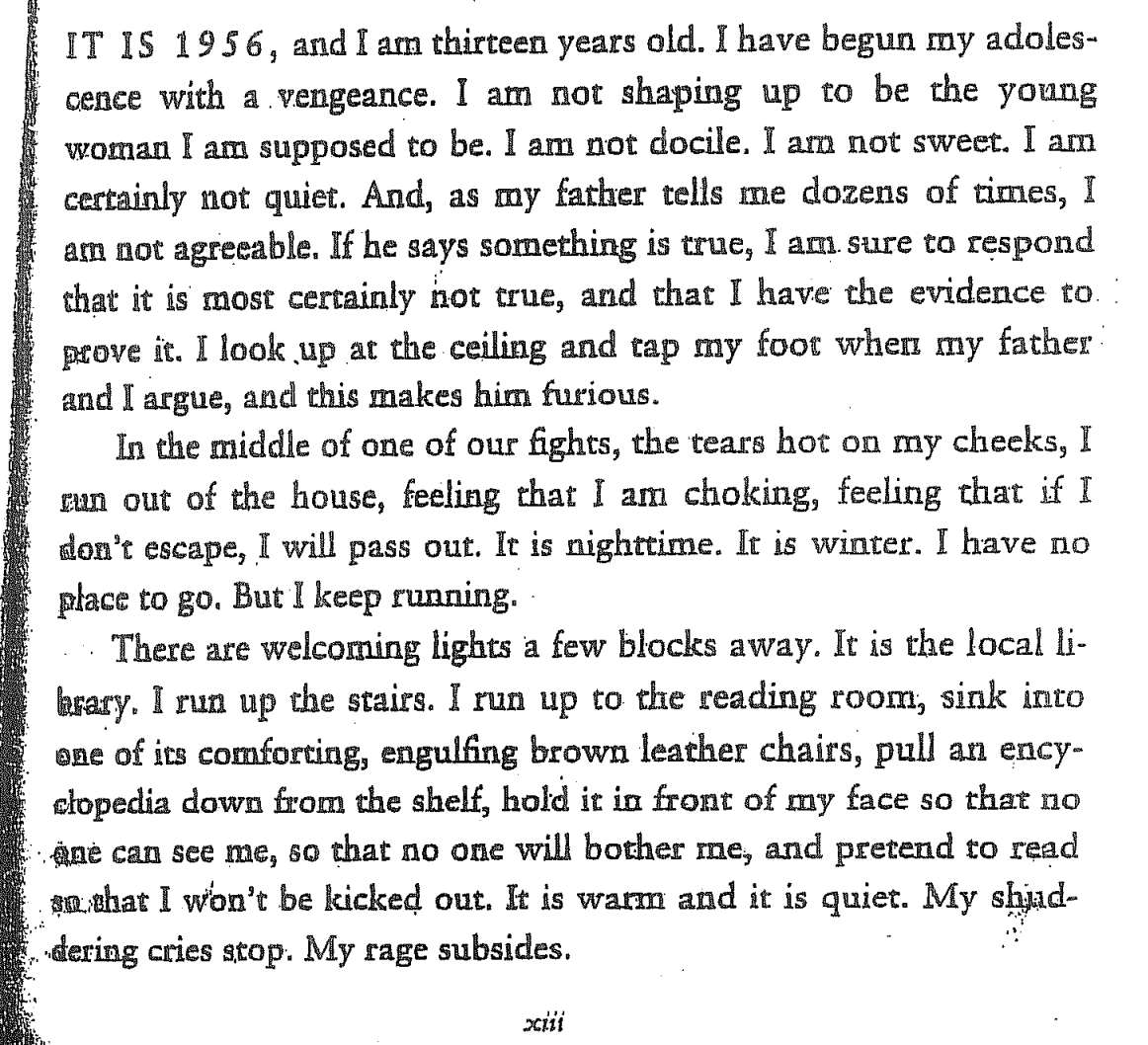
One of the most powerful texts I use in teaching writing is the Prologue to Louise DeSalvo’s memoir, Vertigo.

We read only the first page, but it is charged with purposeful writing and engaging storytelling of a young woman fleeing the angers of her home and seeking sanctuary:

The narrative voice of DeSalvo as an adult, a Virginia Woolf scholar, echoing herself at thirteen helps establish that tension, that dichotomy—an emotionally unsafe home contrasted with the “welcoming lights a few blocks away,” the library.

This memoir is one of trauma, but DeSalvo develops a motif of the sanctuary that libraries and books offer her throughout her life.

Her life story challenges the idealizing of family and the demonizing of schools, libraries, books, and frankly, education.

Not as dramatically but similar to DeSalvo, my own life story is one of breaking free of the intellectual and ethical shackles of my home where racism and other bigotries were the norm; like DeSalvo’s experiences, my sanctuaries were school and books, and education.

I had a former friend and colleague who died relatively recently, and I will carry with me always his telling me that he had an argument with his father once about how the two of them had diverged dramatically in beliefs and ideologies. His father shouted that his greatest regret was sending his son to college.

That fills me with a tremendous sadness, and I also feel fortunate because despite the same dynamic in my family with my parents—I am dramatically unlike them in beliefs and ideology—my parents, now deceased, always encouraged my books, my thinking, my learning, and my education.

In fact, my father often stopped strangers to tell them I earned my doctorate, a thing both embarrassing and heart warming.


It is 2024. And the world is filled with monsters:

On Monday, bill sponsor  Del. Brandon Steele, R-Raleigh, called for support of his legislation in a fiery speech, in which he said libraries were “the sanctuary for pedophilia” where people needed to be held accountable for exposing children to obscene content.

“I’m voting to protect children from being groomed and targeted by pedophiles and get rid of the sanctuary that was set up in our code 25 years ago,” Steele said to members of the House Committee on the Judiciary.

He continued, “If it’s a crime in the parking lot, it’s a crime in the building — period. I hope the chilling effect chills the pedophiles. We’re not going to create a safe space for them.”

West Virginia House to Vote on Bill That Could Lead to Librarians Facing Jail Time

The culture wars in the US have taken an ugly turn, and the core of those battles is that tension between the family and the child as well as the ways in which every child can and should find their true Self often masked by the expectations of that home life.

As adults, most of us have experienced that break, that necessary journey that includes disagreeing with our parents, seeing that who we are is not the same as who our parents want us to be.

Sometimes it is ideology, sometimes it is sexuality, sometimes it is gender.

These tensions, these breaks are none the less difficult and even painful.

I was talking with a colleague about the ways in which education, especially higher education, is often popularly and falsely characterized as institutions of indoctrination. The dynamic is actually very similar to DeSalvo’s opening story in her memoir.

For many college students, college is a first major opportunity to be free of home expectations, a place to not only explore who they truly are but a place to discover who they are or want to be.

If a young person seems to suddenly be a different person, parents and the public may misinterpret that as college or professors causing the change. What is more likely is that college is the place where young people have the first opportunity to express that true Self.

Exposure to new or different ideas, in fact, are not necessarily what causes anyone to change who they are, but allows people to see who they are.

Ironically, places that indoctrinate and groom children the most are their homes and their churches—the sources today of those most likely to accuse others of indoctrination and grooming.

Also ironically, universal public education was a foundational commitment (ideologically well before afforded everyone) of the US because being educated was recognized as necessary for a democracy and individual freedom.


There is a little parable by Haruki Murakami. In it, the manufactured terrors by conservatives seem to come true. A boy finds himself imprisoned in a labyrinthine library, confronting a horrifying fate:

The sheep man cocked his head to one side. “Wow, that’s a tough one.”

“Please, tell me. My mother is waiting for me back home.”

“Okay, kid. Then I’ll give it to you straight. The top of your head’ll be sawed off and all your brain’ll get slurped right up.”

I was too shocked for words.

“You mean,” I said, when I had recovered, “you mean that old man’s going to eat my brains?”

“Yes, I’m really sorry, but that’s the way it has to be,” the sheep man said, reluctantly.

The Strange Library

Murakami’s brief Kafkan nightmare, it seems, parallels what some people believe is a reality of libraries—a place where the brains of children are eaten.

The Strange Library is a sort of twisted fantasy, fitting into the tradition of children’s fears like the belief that a monster lurks under your bed or in your closet.

State representatives attacking libraries and books—that is no twisted fantasy. It is real and it is wrong.

Only monsters attack libraries and books.

And they aren’t hiding under our beds or in our closets.

They are elected officials filing bills and making outrageous pronouncements.


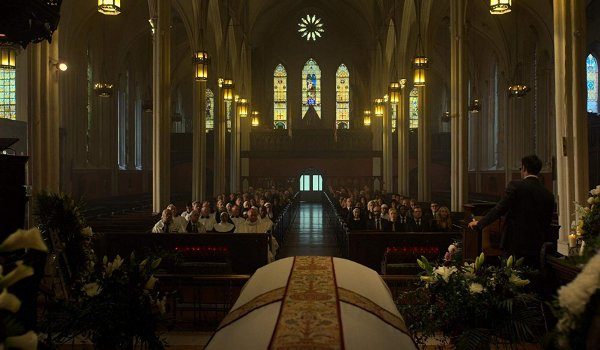
We have been rewatching the Daredevil series that ran for three seasons on Netflix. In the season 3 and series finale, Matt Murdock (Daredevil) gives a eulogy for Father Paul Lantom, Murdock’s surrogate father after his father’s death:

For me, personally, he spent many years trying to get me to face my own fears. To understand how they enslaved me, how they divided me from the people that I love. He counseled me to transcend my fears, to be brave enough to forgive and see the possibilities of being a man without fear. That was his legacy. And now it’s up to all of us to live up to it.

A New Napkin (S3 E13)

Culture wars are mostly about fear, but the worst thing about them is that they are about irrational fears, manufactured horrors.

Libraries and books are sanctuaries, not labyrinths where children have their brains eaten.

Once Murdock embraced being the man without fear, he became Daredevil, a superhero, a person who saves those in need. And by assuming this alter-ego, he found his true Self.

Fear of libraries, books, education, and knowledge is a fear of our Selves, our true Selves.

Only monsters attack libraries and books.


Update

West Virginia House passes bill allowing prosecution of librarians

When Media Misinformation Becomes Conservative Education Legislation Over-Reach: Reading Proficiency Edition

What happens when years of media misinformation become a powerful talking point for extreme conservative advocacy groups and extreme conservative elected officials?

Consider this:

From the misleading and inaccurate work of Emily Hanford in 2018 to the more recent nonsense written by Nicholas Kristof in 2023, the lie that won’t die (2/3 of children are not reading at grade level) has ultimately—see above—driven a wave of conservative education reform that blurs curriculum and book banning legislation with “back-to-basics” reform touting the “science of reading.”

The key problem with the reading proficiency lie is that student reading proficiency is possibly the exact opposite of the lie because NAEP achievement levels are incredibly (purposefully?) confusing:

NAEP student achievement levels are performance standards that describe what students should know and be able to do. Results are reported as percentages of students performing at or above three NAEP achievement levels (NAEP Basic, NAEP Proficient, and NAEP Advanced). Students performing at or above the NAEP Proficient level on NAEP assessments demonstrate solid academic performance and competency over challenging subject matter. It should be noted that the NAEP Proficient achievement level does not represent grade level proficiency as determined by other assessment standards (e.g., state or district assessments). See short descriptions of NAEP achievement levels for each assessment subject.Scale Scores and NAEP Achievement Levels


While still a complicated statistic and claim, the reality is that if we use NAEP data as evidence, about 2/3 of students in the US read at or above grade level.

A better pair of claims, however, is that we do not have a universal definition of reading proficiency and that “grade level” is a far less valuable metric than “age level” for assessing reading proficiency.

This reading proficiency lie that won’t die is helping feed one of the worst waves of conservative assaults on schools even considering the 40-plus years of conservative education reform also based on the Nation at Risk lie.

Here is a reader for both reading proficiency and conservative education reform:

Reading Proficiency

ILEC RESPONSE: MAINSTREAM MEDIA COVERAGE OF READING PROFICIENCY, TEACHERS OF READING, NAEP SCORES, AND TEACHER PREPARATION

WHAT DO WE REALLY KNOW ABOUT READING PROFICIENCY IN THE US?

UNDERSTANDING AND REFORMING THE READING PROFICIENCY TRAP

THE PROFICIENCY TRAP AND THE NEVER-ENDING CRISIS CYCLES IN EDUCATION: A READER

EVEN MORE PROBLEMS WITH GRADE-LEVEL PROFICIENCY

THE POLITICS OF READING PROFICIENCY (AND CHARTER SCHOOLS)

BEWARE GRADE-LEVEL READING AND THE CULT OF PROFICIENCY

Conservative Education Reform

EDUCATION REFORM HAS BEEN BIPARTISAN AND CONSERVATIVE FOR MORE THAN 40 YEARS: WHAT WOULD PROGRESSIVE EDUCATION REFORM LOOK LIKE?

THE INDOCTRINATION PARADOX: THE CHRISTIAN CONSERVATIVE CRUSADE FOR PUBLIC SCHOOLS

SOR MOVEMENT MAINTAINS CONSERVATIVE ASSAULT ON TEACHERS AND PUBLIC SCHOOLS [UPDATED]

TEACHING IN A TIME OF CONSERVATIVE TYRANNY

CONSERVATIVES ARE WRONG ABOUT PARENTAL RIGHTS

DEAR PARENTS, YOUR CHILDREN’S K-12 EDUCATION IS ALREADY VERY CONSERVATIVE

Education in the Media: A Reader, August 2023

Fall sessions of a new school year have begun or are soon beginning across the US.

Just as predictable as a new academic year, the media maintains its constant negative drumbeat about schools, education, students, and teachers. Below is a reader of some of the issues and coverage of education, including the rise in censorship and curriculum bans as well as the tired arguments about a reading crisis.

Notable is Susan Ohanians piece about the NYT, but this reader includes both samples of really bad journalism and excellent coverage of key education issues:

Schedule: Fall 2023 – Winter/Spring 2024

Below I will keep an updated listing of presentations and other public work for Fall 2023 through Spring 2024.

I am available for webinars, podcasts, presentations, white papers, blog posts, etc., on a number of education and literacy topics (browse my blog posts for topics):

  • Censorship, CRT/Curriculum Bans
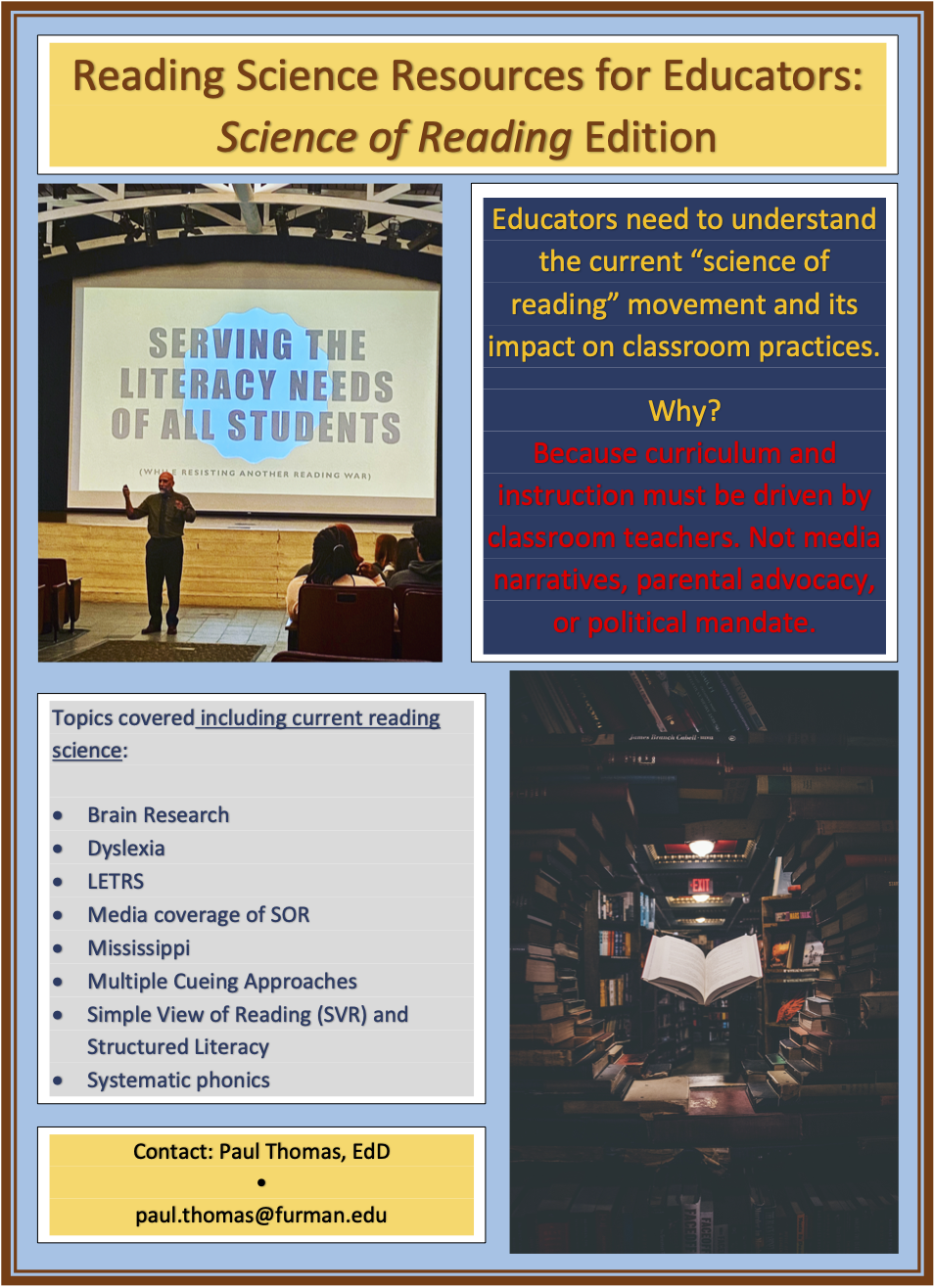
  • Reading Legislation/Policy, “Science of Reading”
  • Writing
  • Education Reform
  • Politics and Education
  • NCTQ

New York State Reading Association

Leadership Workshop: Making Sense of the Science of Reading

August 5, 2023, 12:45 – 1:45


Furman University/ Cultural Life Program

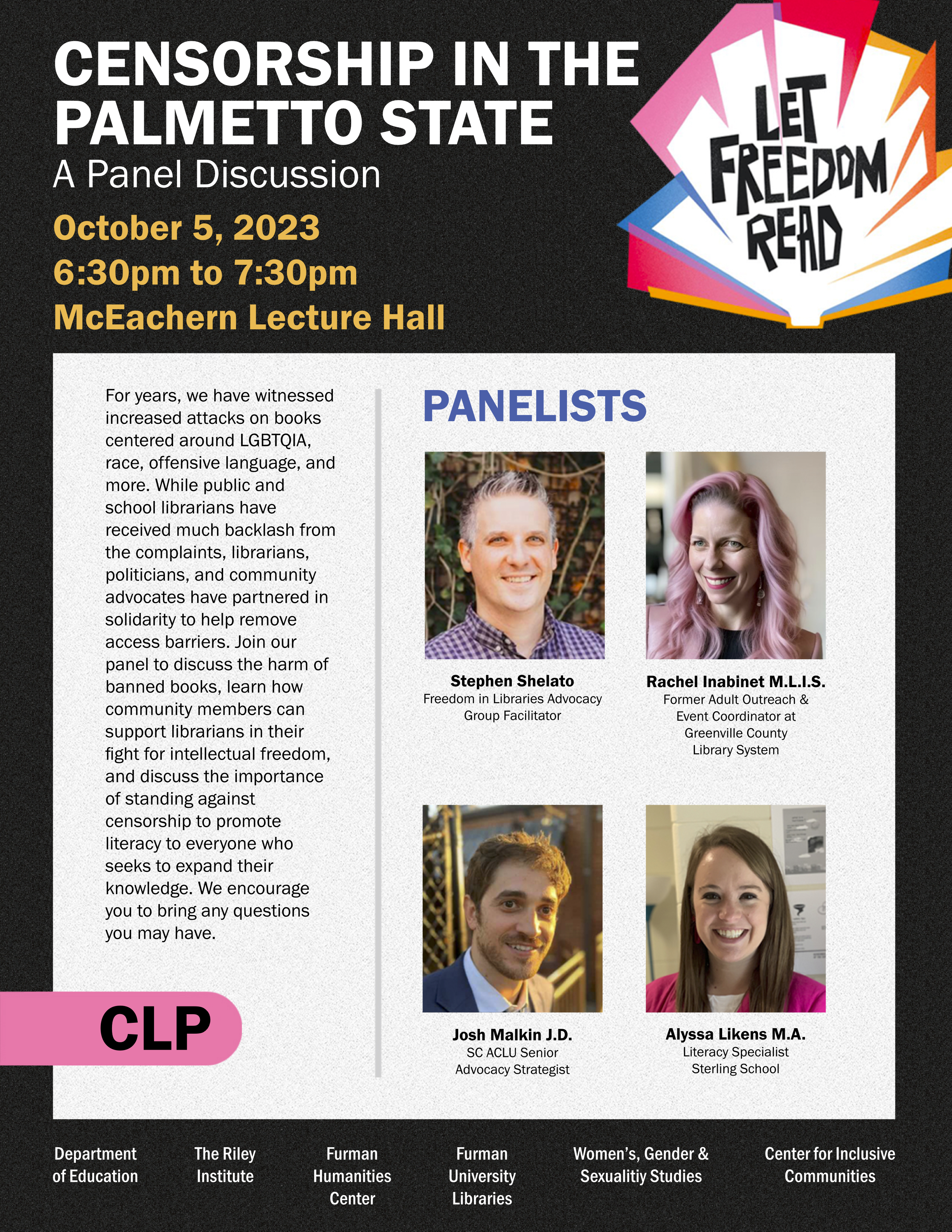
Title: Censorship in the Palmetto State: A Panel Discussion

Date: October 5

Time: 6:30 PM

Location: McEachern Lecture Hall – Furman Hall 214

Description: For years, we have witnessed increased attacks on books centered around LGBTQIA, race, offensive language, and more. While public and school librarians have received much backlash from the complaints, librarians, politicians, and community advocates have partnered in solidarity to help remove access barriers. Join our panel to discuss the harm of banned books, learn how community members can support librarians in their fight for intellectual freedom, and discuss the importance of standing against censorship to promote literacy to everyone who seeks to expand their knowledge. We encourage you to bring any questions you may have.  

Title: Libraries are Worthwhile: Why We Need Them and How We Will Keep Them

Date: October 10

Time: 7:00 PM

Location: Hartness Pavilion 

Description: Emily Drabinski, interim chief librarian at The Graduate Center, City University of New York and the 2023-2024 president of the American Library Association (ALA) will give a talk on the importance of libraries and librarians and how we can protect them in the face of ongoing censorship attempts.


NCTE Annual Conference

Conexiones 2023

Columbus, OH – November 16-19, 2023

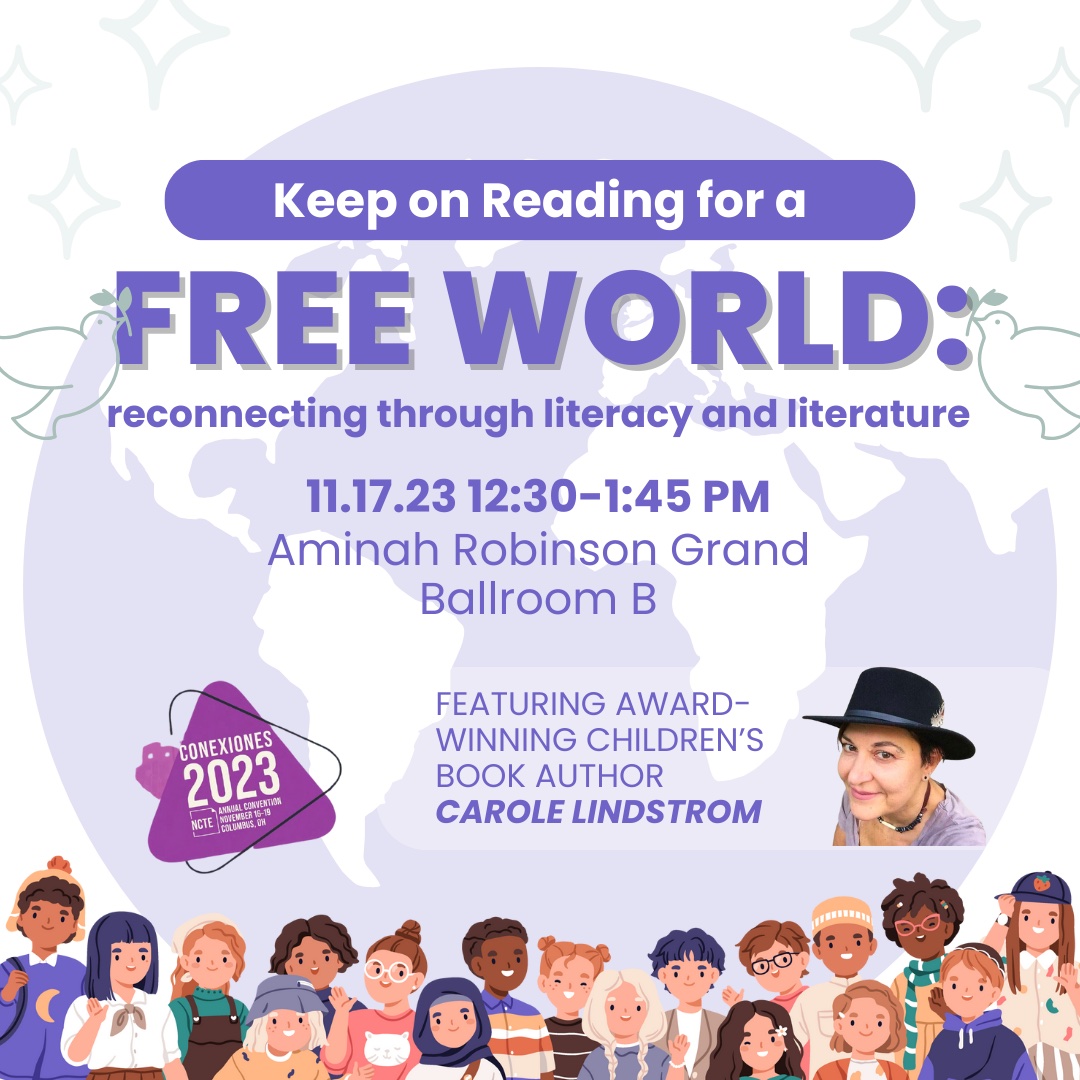
Keep on Reading for a Free World: Reconnecting through Literacy and Literature (Roundtable) – 11/17/2023 12:30 – 1:45; Aminah Robinson Grand Ballroom B [Reading Wars and Censorship: A Long and Shared History click for PDF]

Connecting Teachers with their Professional Autonomy in the “Science of Reading” Era click for PDF (Presentation) – 11/18/2023 – 11:00 – 12:15; A-214/215


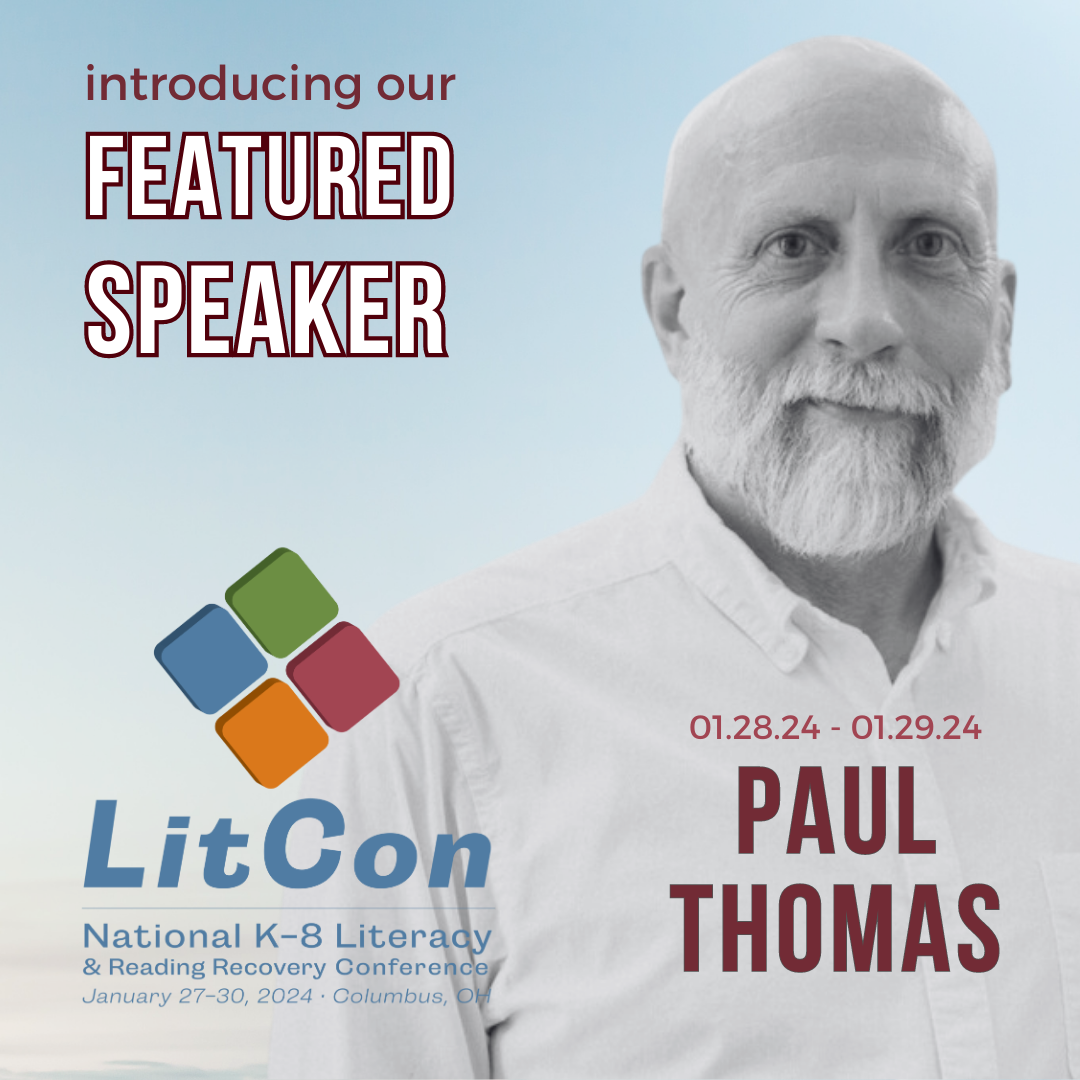
LitCon 2024

Columbus, OH – January 27-30, 2024

Sessions

Featured Speaker

Where Are We Going, Where Have We Been?: Prioritizing Teacher Autonomy in the SOR Era

Download PP HERE

Over the last decade, states have passed new or revised reading legislation, often grounded in the “science of reading” (SOR) movement. The SOR movement has perpetuated many oversimplified and misleading stories that portray teachers negatively. This featured session will prioritize teacher autonomy by exploring the following topics: reading crisis, NAEP reading data, reading programs, teacher training and LETRS, dyslexia, and the complicated full body of reading research.

Sunday, January 28, 3:15 pm – 4:15 pm

Monday, January 29 4:15 – 5:45 pm


SCCTE 2024

West Beach Conference Center at Kiawah Island Resort, Kiawah, SC from Friday-Saturday, February 2-3, 2024

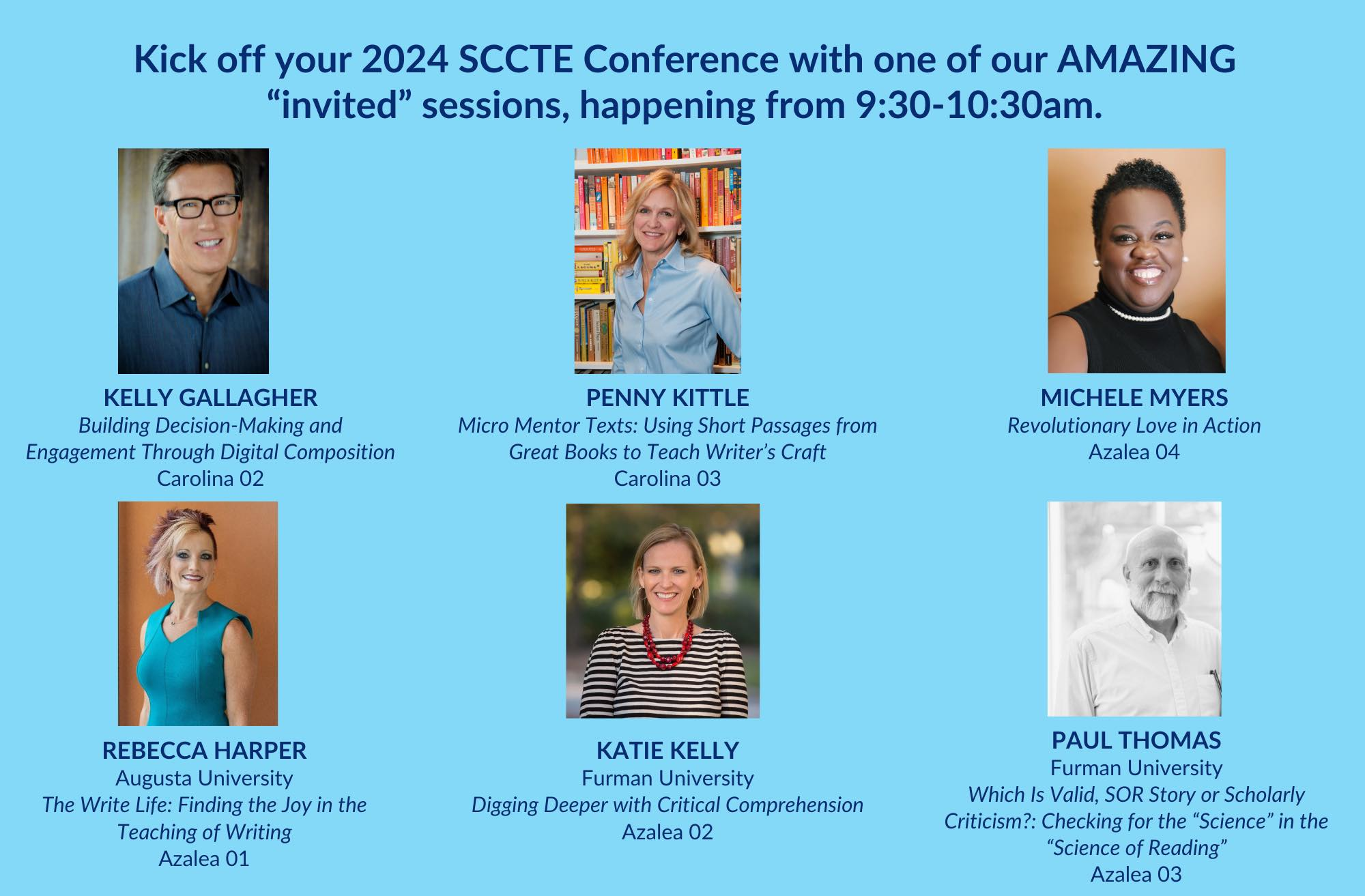
February 2, 2024, 9:30-10:30

Which Is Valid, SOR Story or Scholarly Criticism?: Checking for the “Science” in the “Science of Reading”

P.L. Thomas, Professor of Education, Furman University

Download PP HERE

The “science of reading” (SOR) movement has shifted from media stories to state legislation and instructional policy. This workshop invites teachers to critically examine media claims about reading, teachers of reading, and teacher educators against the full body of reading science. The topics will include history of reading crises, the simple view of reading, NAEP, the Mississippi “miracle,” balanced literacy and reading programs, dyslexia, three cueing, brain science, and an overview of reading science.


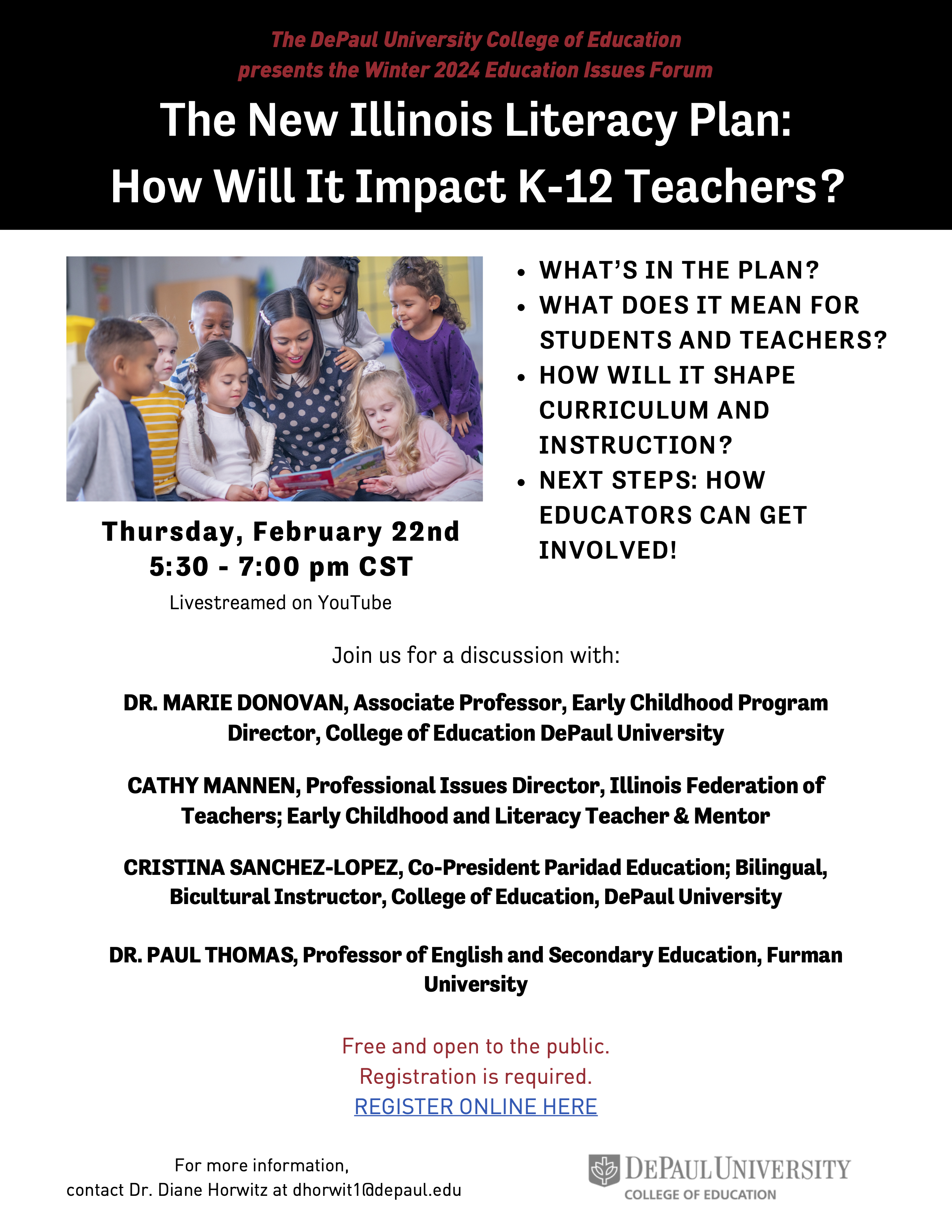
2024 COE Winter Education Forum

6:30 – 8:00 EST

Buyer Beware: Avoiding the Unintended (But Predictable) Consequences of SOR Legislation [access PDF here]


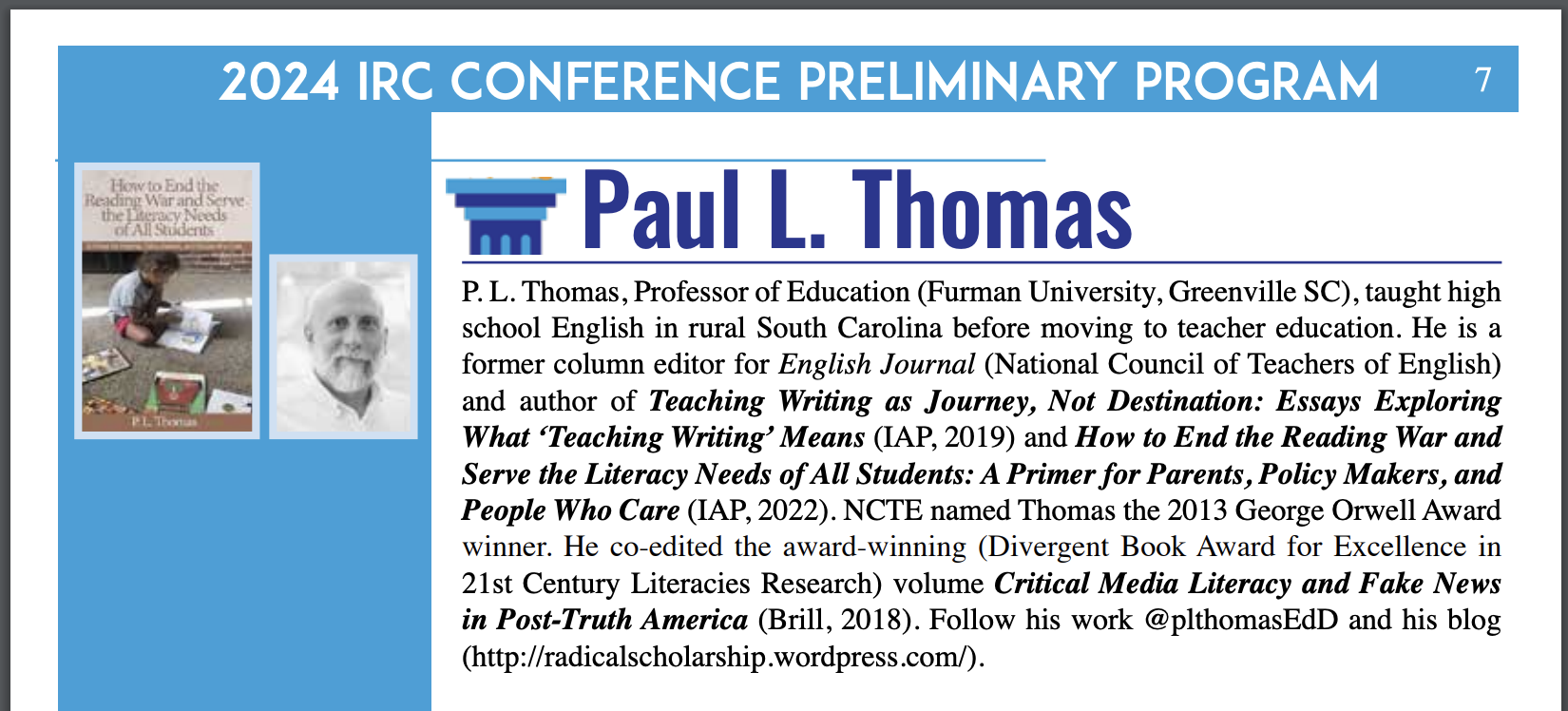
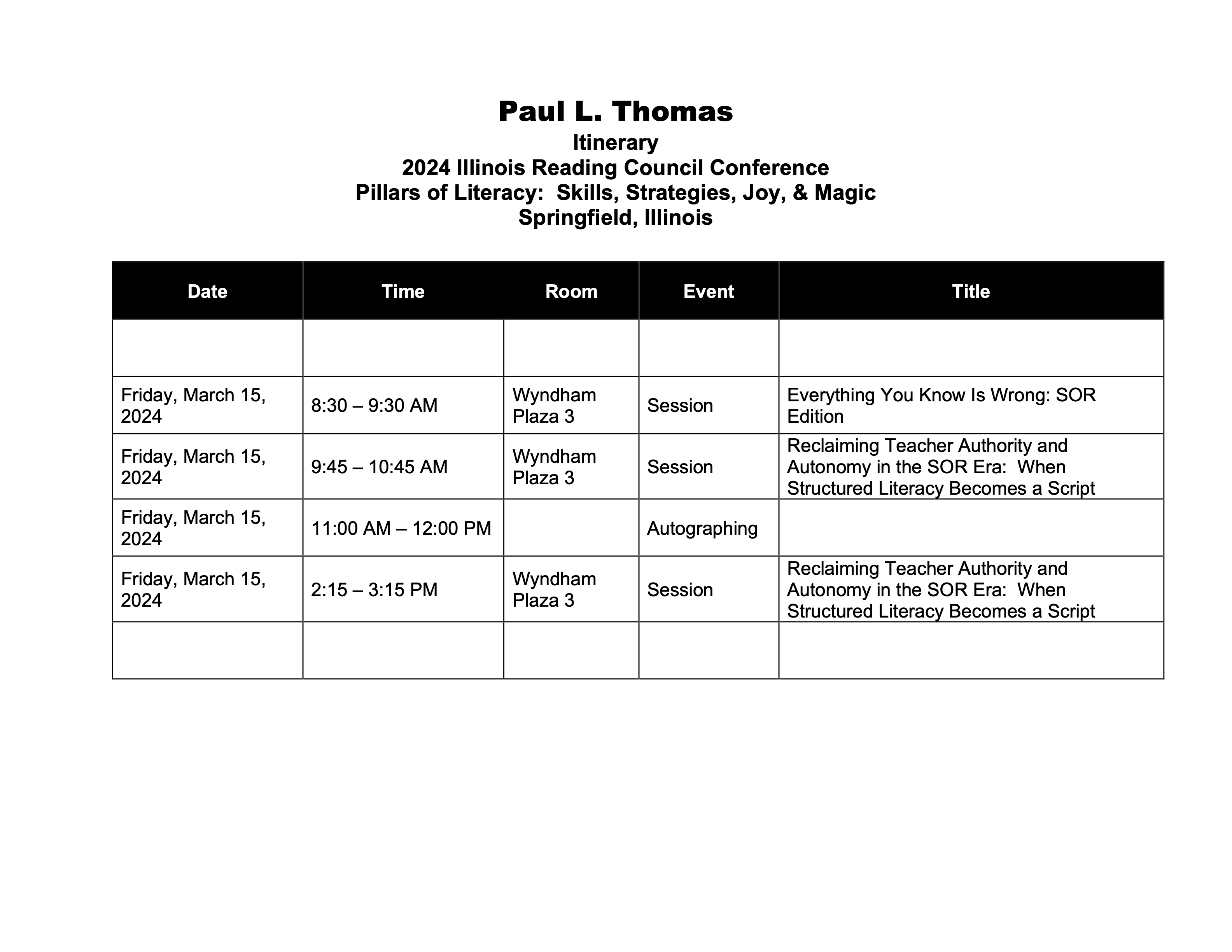
2024 Illinois Reading Council Conference

March 14-15, 2024 – Springfield, Illinois

Program

Everything You Know Is Wrong: SOR Edition

[Access PDF HERE]

Friday March 15 8:30-9:30

The “science of reading” movement has perpetuated several compelling and highly influential stories about reading; however, much of those claims are misleading or even completely false. This session will examine some of those stories and claims in the context of the full body of evidence. Topics include NAEP reading data, grade retention, the Mississippi “miracle,” phonics research, dyslexia, teacher education (NCTQ), multiple cueing, and reading programs and theories (balanced literacy).

Reclaiming Teacher Authority and Autonomy in the SOR Era: When Structured Literacy Becomes a Script

[Access PDF HERE]

Friday March 15 9:45-10:45; 2:15-3:15

Increasingly since 2013, states have adopted reading legislation identified as the “science of reading.” Since curriculum and instruction should be driven by classroom teachers, not media narratives, parental advocacy, or political mandate, this session examines key reading topics framed with current research to support teacher authority and autonomy.


BustED Pencils LIVE – Monday, March 25th, 2024


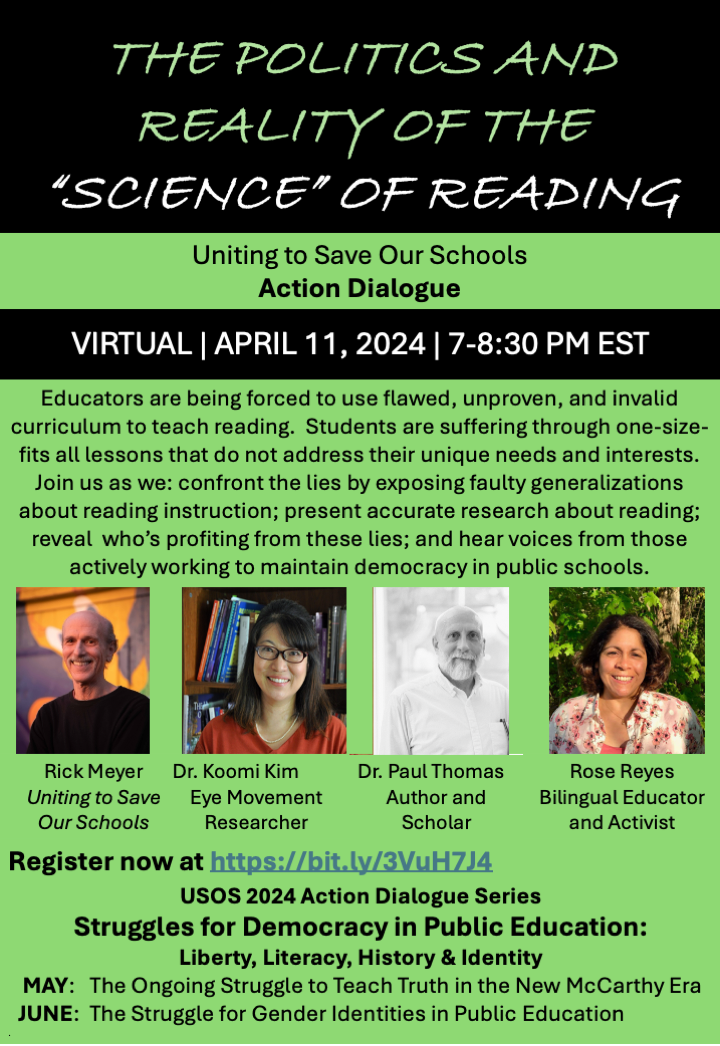
USOS: The Politics and Reality of the “Science” of Reading


The Fundamentalist Trap: Why We Should Be Losing Our Religion

[Header Photo by Joshua Hoehne on Unsplash]

Having watched Shiny Happy People a second time, I cannot emphasize enough that the documentary is far more than an expose on the Duggar family, Bill Gothard, or the Institute in Basic Life Principles (IBLP).

This is a warning for people living in a free society, a warning about the essential threat that authoritarian movements pose for a democracy grounded in the rights of individuals.

And it is a horrifying portrayal of the ways in which children are indoctrinated and groomed by organized religion and parents, the ways women are reduced to serving the purposes of men (primarily by reproduction).

For fundamentalists, there is a fixed Truth and it is their sacred duty to impose that fixed Truth not only on those within their belief community but everyone.

I grew up in the fundamentalist South, and repeatedly was taught that to be Christian you must witness. That sacred duty to witness, in part because media has helped promote fundamentalists as shiny happy people, has exploded into an aggressive political machine poised for national indoctrination.

As the documentary explains, IBLP built a political movement as part of its mission, a mission that is inherent across the US in all sorts of fundamentalist denominations.

Several so-called mainstream Republicans have started openly saying that the separation of church and state isn’t really a founding principle in the US; the same group that treats the Second Amendment as sacred, by the way.

Imposing dogma is the goal of fundamentalism, the only goal, by any means necessary.

Nothing represents that ends-justify-the-means mentality more than the idolatry around Trump among fundamentalists. Trump the person is irrelevant as long as he remains an effective mechanism for imposing their dogma.

Two realities face Americans.

First, the separation of church and state, religious freedom, asserts that everyone has the right to embrace or reject whatever religious dogma they choose, but no one has the right to impose that dogma on others, notably not through the mechanism of government.

Therefore, the separation of church and state is a threat to the essential mandates of fundamentalism, witnessing and converting everyone to a singular way of thinking and living.

Second, fundamentalism is at the core of all organized religion at varying degrees of intensity; fundamentalism also by its nature is authoritarian.

And as the documentary on the Duggars dramatizes, authoritarianism is a mechanism of centering male authority—women and children must be subservient. (See also Sister Wives.)

Authoritarianism is a threat to democracy and individual freedom—especially in the form of religious fundamentalism that asserts dogma as the word and will of God.

These tensions now represent the primary core of politics in the US. We are no longer faced with choosing the best candidate (if we ever were), we are no longer faced with choosing between Democrats or Republicans, but we are faced with choosing between democracy and authoritarianism.

The parental rights movement built on charges of indoctrination and grooming has its roots in fundamentalism, but that political movement is not about actual indoctrination or grooming of children in the public sphere (specifically K-16 education).

The parental rights movement is projection because fundamentalists are indoctrinating and grooming; any alternative to a fundamentalist way of thinking and living, again, is a threat to fundamentalist goals for everyone conforming to that singular world view.

Like “Shiny Happy People,” “Losing My Religion” is associated with the alternative rock group R.E.M., who introduced the Southern saying to the world.

“Losing my religion” isn’t about religion, but a metaphorical statement of exasperation. “Son, you’re about to make me lose my religion” is a warning that someone is about to lose patience, to act in ways counter to how they believe they should act.

So let me be clear here: I am calling for a literal use of “losing our religion.”

Despite their numerous flaws, the so-called Founding Fathers were mostly secular men who valued human reason; many of them ascribed to a non-dogmatic view of “god” and belief that allowed for a free people to govern themselves.

In many ways, this is idealistic but a wonderful thing, I think. The problem is that granting fundamentalists religious free is a paradox since fundamentalists will not (cannot) honor the freedom for the rest of us to believe or not as we choose.

No child or woman in a fundamentalist church or home is given that freedom, and fundamentalists believe that their soul depends on them demanding compliance from the rest of us.

Between democracy and authoritarianism, only democracy allows everyone life, liberty, and the pursuit of happiness.

Everyone should watch Shiny Happy People.

Everyone should step back and recognize this documentary is not a narrow snapshot of an outlier family or some rare religious cult.

Authoritarianism is coming for us. All of us.

If fundamentalists get their way, there is no choice.

This is our future.


See Also

Reading Wars and Censorship Have a Long and Shared History

Christian Nationalists Can’t Wait for This School in Oklahoma to Open

For Boebert and Greene, faith — and Christian nationalism — sells

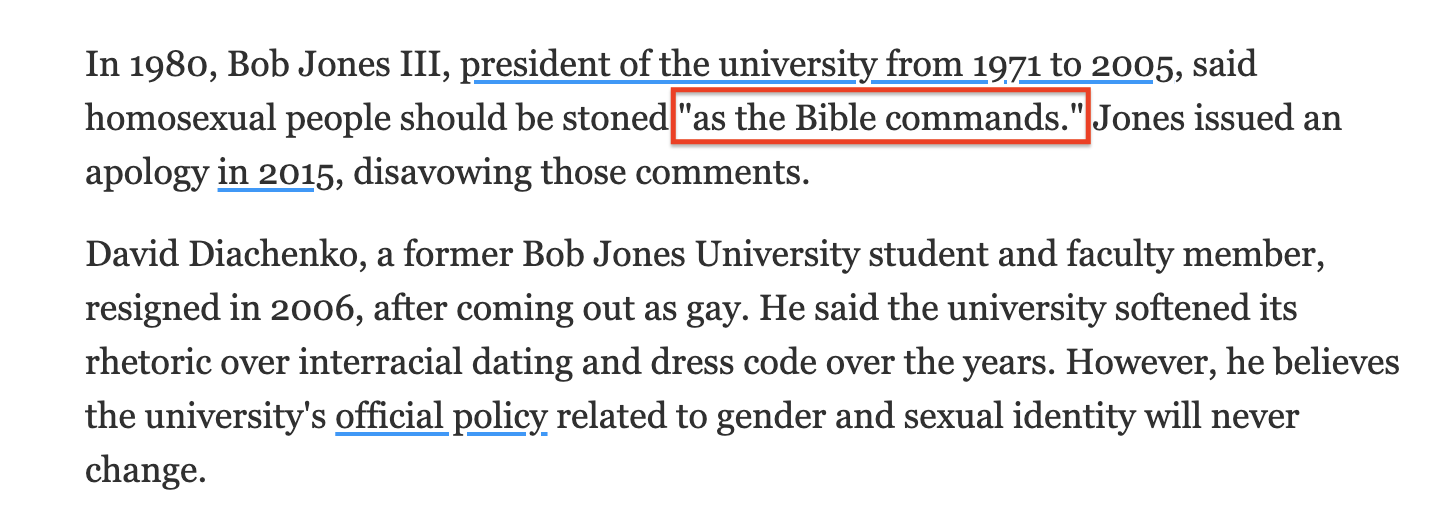
Former Bob Jones University students describe experience, exit from evangelical college


FL Whitewashes Black History: A Reader

One of the many ways that Florida has been dismantling education in their state and influencing similar actions across the country is whitewashing Black history.

Below is a reader addressing this assault on history, Black people, and efforts to create a more equitable democracy:


See Also

“Every white person in this country…knows one thing,” James Baldwin (1979)

Listening to Langston Hughes about “Make America Great Again”

Arthur Miller’s The Crucible: 2023

Over 18 years of teaching high school English, I taught American literature for English III (mostly a course for juniors) as part of the required curriculum in South Carolina.

Our required reading list of novels and plays was quite bad, overwhelmingly white authors and so-called classic works of literature (although the “classic” was merely the entrenched modernist works common in most public schools).

Along with the overkill of white men writers and characters, I found the American literature required list inordinately obsessed with Puritanism; students were required to study both Nathaniel Hawthorne’s (god awful) The Scarlet Letter and Arthur Miller’s The Crucible.

Either one would have been more than enough, and frankly, only The Crucible should have been included, if either at all. Students barely tolerated discussing The Scarlet letter, and I think very few actually read the novel (with the entire experience confirming for most of them that they hated to read).

However, we often had a good experience with Miller’s metaphorical/historical confrontation of the McCarthy Era. Over the years, I turned The Crucible unit into a world-wind of an experience that included listening to an audio version of the play (later in the mid-1990s, we watched the film version), an opening activity using R.E.M.’s “Exhuming McCarthy,” and a closing activity centered around watching the original film version of Invasion of the Body Snatchers (1956).

What I think made The Crucible resonate with high school students in the South in the 1980s and 1990s was my effort to help them navigate how the play was designed to address patterns of human behavior that had occurred in Puritan America and then repeated in the McCarthy Era; Miller, of course, was suggesting that this pattern would continue if humans were not vigilant to recognize it.

I have always found compelling the scene when Proctor is confronted with the accusations about witches; he responds that he has not realized “the world is gone daft with this nonsense.”

That nonsense is a fatal combination of religious fever/ missionary zeal, political authoritarianism (the blurring of church and state), and an incredibly dangerous commitment to manufactured evidence.

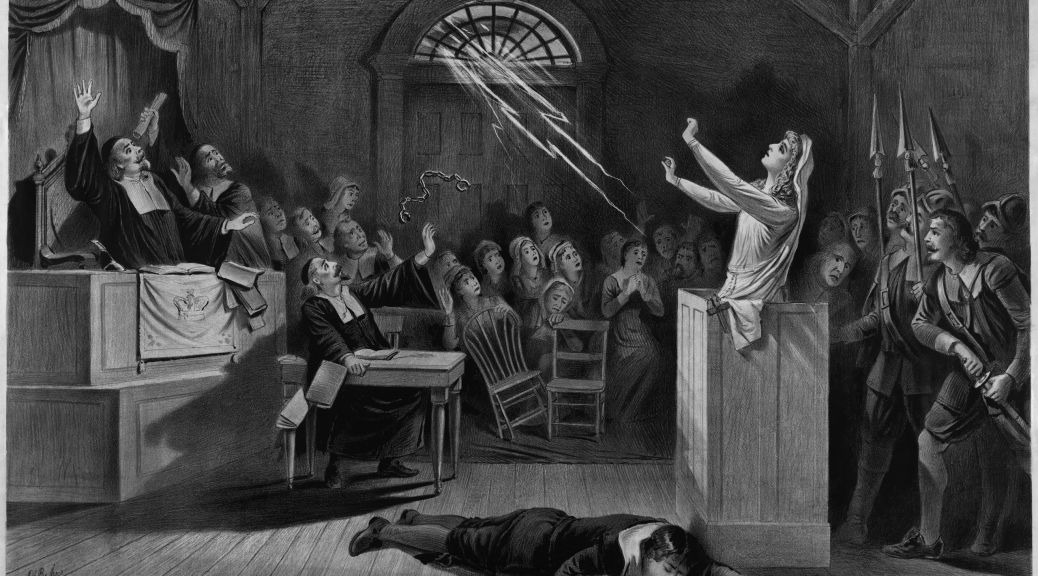
While The Crucible dramatizes a political/ religious/ legal tragedy mostly anchored in real historical events, in 2023, it is a powerful allegory about our current political over-reaches related to schools and radiating out into our culture and personal liberties.

The same toxic combination of religious fever/ missionary zeal, political authoritarianism (the blurring of church and state), and an incredibly dangerous commitment to evidence can be seen in all of the following:

  • Anti-CRT and anti-woke legislation.
  • Book bans and censorship targeting race/racism and LGBTQ+ content and authors.
  • Anti-trans and anti-drag legislation and rhetoric.
  • Reading legislation committed to the “science of reading.”

In each case, “”the world is gone daft with this nonsense.”

The core problem we are experiencing in the US in 2023 is that religious fever/ missionary zeal among some Americans is being leveraged by Republicans to bolster their political power, skewing toward totalitarianism.

That combination corrupts the evidence being used to push these agendas.

Evidence is being reduced to whatever suits the political/authoritarian goals, and as a report out of UCLA notes regarding specifically the anti-CRT movement, the “conflict campaign thrives on caricature.”

Caricature and misinformation to drive political agendas include how “CRT,” “woke,” banned novels and authors, trans care, drag shows, and elements of reading instruction (such as three-cueing and balanced literacy) are mischaracterized in order to attack the mischaracterization.

Social media is flooded with false definitions of “woke,” for example, grounding outlandish calls for “protecting children.”

For Americans who value life, liberty, and the pursuit of happiness, we must acknowledge Miller’s message that evidence cannot survive in the context of religious fervor/ missionary zeal and totalitarian politics (the consequential inevitability in theocracies).

While there is no such thing as objective evidence, there is a value in dispassionate evidence decoupled from authority.

The US was founded in part on a recognition that the church/state dynamic was oppressive, necessarily so, and despite the many flaws of the so-called Founding Fathers, they were drawn to the Enlightenment and a move toward scientific inquiry.

Despite the continued misuse of the term, “science” rightly understood is about grounding claims and conclusions in a careful analysis of evidence regardless of who makes the claims (decoupling from authority). And science is not about dogma (fixed Truth) but about the pursuit of truth by a community.

In 2023, we are living in the same “nonsense” Proctor named because too many are willing to abdicate the sanctity of evidence for their religious fervor/ missionary zeal and because there are enough political leaders eager to use that to leverage their pursuit of power at any cost to others.

If Nero fiddled while Rome burned, we are conveniently distracted by our many screens while life, liberty, and the pursuit of happiness are reduced to ash.

“Freedom From” as Totalitarian Rhetoric

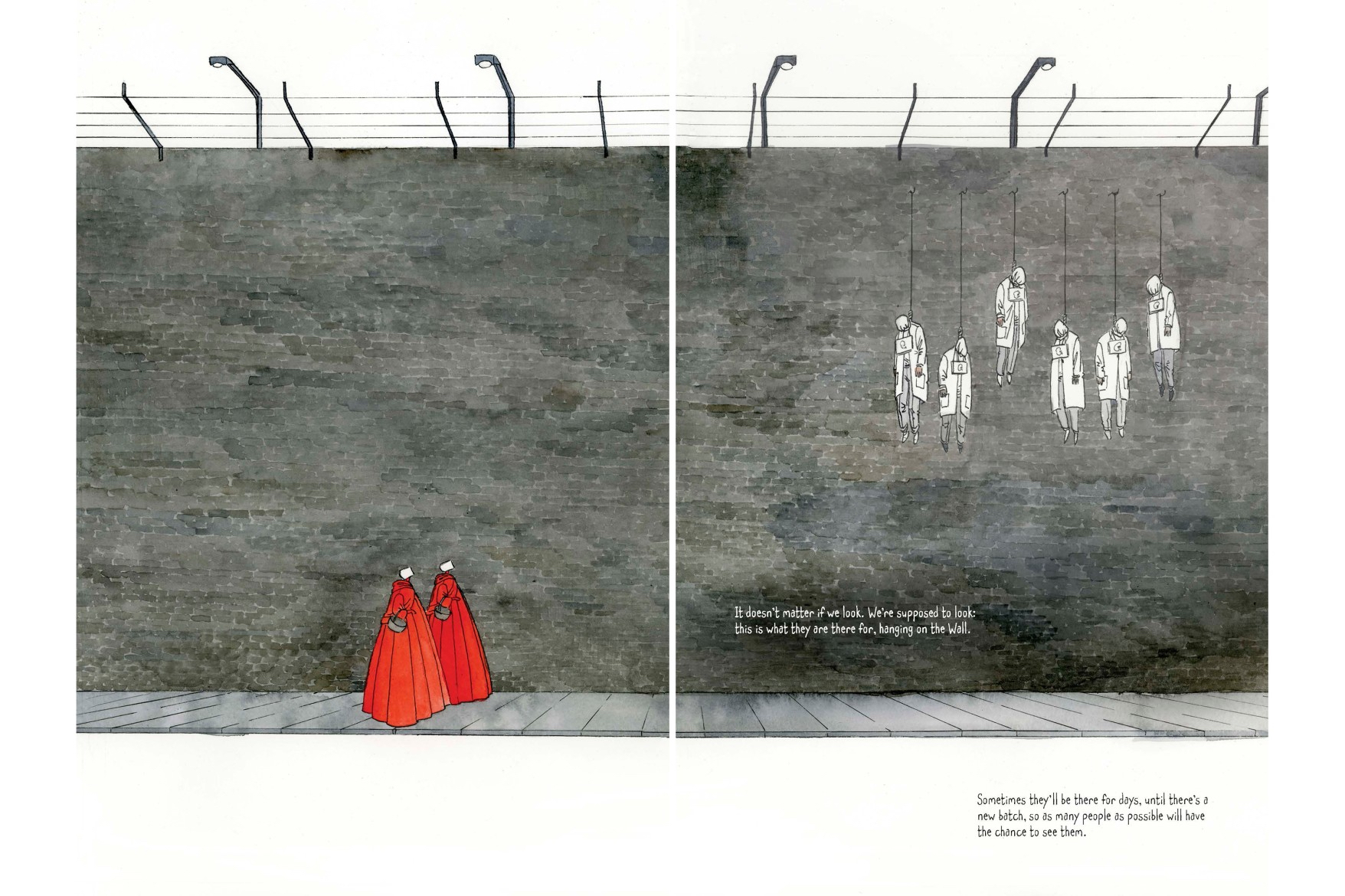
“But in The Handmaid’s Tale, nothing happens that the human race has not already done at some time in the past, or that it is not doing now, perhaps in other countries, or for which it has not yet developed technology,” explains Margaret Atwood in “Writing Utopia,” adding, “We’ve done it, or we’re doing it, or we could start doing it tomorrow.”

Or, we must admit, we are doing it right now.

Atwood’s most well know work is morphing itself into daily headlines, notably featuring a Republican governor from Florida:

As Atwood has warned, “freedom from” is the rhetoric of totalitarianism. In The Handmaid’s Tale, a few women are manipulated to control other women. The handmaid’s are trained by Aunts, who instill the propaganda:

There is more than one kind of freedom, said Aunt Lydia. Freedom to and freedom from. in the days of anarchy, it was freedom to. Now you are being given freedom from. Don’t underrate it….

We were a society dying, said Aunt Lydia, of too much choice. (pp. 24, 25)

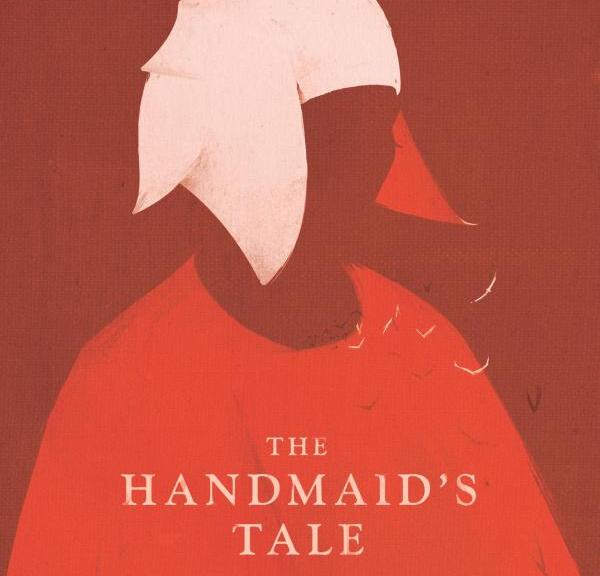
The Handmaid’s Tale

Throughout the novel, readers must navigate how Offred (June) weaves the overlap of her own original ideas and vocabulary as that intersects with the propaganda of Gilead:

Will I ever be in a hotel room again? How I wasted them, those rooms, that freedom from being seen.

Rented license. (p. 50)

The Handmaid’s Tale

“Freedom” and “license” are exposed as bound words, the meanings contextual.

As Offred (June) continues to investigate rooms, she discovers a powerful but foreign phrase:

I knelt to examine the floor, and there it was, in tiny writing, quite fresh it seemed, scratched with a pin or maybe just a fingernail, in the corner where the darkest shadow fell: Nolite te bastardes carborundorum.

I didn’t know what it meant, or even what language it was in. I thought it might be Latin, but I didn’t know any Latin. Still it was a message, and it was in writing, forbidden by that very fact, and it hadn’t been discovered. Except by me, for whom it was intended. It was intended for whoever came next. (p. 52)

The Handmaid’s Tale

The power to control language includes defining words, often characterizing them incorrectly in the pursuit of political aims (such as “CRT” and “woke”), but also denying access to language—forbidding reading and writing, literacy, to those in bondage.

And then, Offred (June) explains about her life before Gilead:

We lived, as usual, by ignoring. Ignoring isn’t the same as ignorance, you have to work at it.

Nothing changes instantaneously: in a gradually heating bathtub you’d be boiled to death before you knew it….The newspaper stories were like dreams to us, bad dreams dreamt by others. How awful, we would say, and they were, but they were awful without being believable. They were too melodramatic, they had a dimension that was not the dimension of our lives.

We were the people who were not in the papers. We lived in the blank white spaces at the edges of the print. It gave us more freedom.

We lived in the gaps between the stories. (pp. 56-57)

The Handmaid’s Tale

And from that previous life of “ignoring” the other since it wasn’t about them, Offred (June) finds herself the procreation slave of a Commander, in “reduced circumstances” where she realizes: “There wasn’t a lot of choice but there was some, and this is what I chose” (p. 94).

It takes a special kind of “ignoring” to allow “freedom to” to be erased by the calloused allure of “freedom from” uttered with a smile by a totalitarian.

Better that we listen to a novelist: “We’ve done it, or we’re doing it, or we could start doing it tomorrow.”

Beware lest we all no longer have any of the words needed to be free at all.

Republicans Seek IndoctriNation

[Header Photo by Markus Spiske on Unsplash]

Books, ideas, and knowledge are not inherently dangerous.

Political control of education, books, ideas, and knowledge, however, is likely the end of individual freedom as we know it, and which we claim to embrace.

Republicans have now fully committed to banning books, censorship, and mandating what can and cannot be taught in all levels of formal education.

Ironically, there are some dangerous books for Republicans: George Orwell’s 1984, Ray Bradbury’s Fahrenheit 451, and Margaret Atwood’s The Handmaid’s Tale.

These are cautionary tales about totalitarian governments, book banning and censorship, and theocracies. Yet, Republicans have apparently misread them as how-to manuals.

It is also important to recognize that Republicans have sought to control the teaching of history since banning novels is merely attacking imagined worlds.

Again, Republicans appear to have completely misunderstood what history is, why history is taught, and something that has now become nearly cliche to express: Those who ignore history are doomed to repeat it.

Consider the language and justification for book bans and burnings here:

At the meeting places, students threw the pillaged and “unwanted” books onto bonfires with great ceremony, band-playing, and so-called “fire oaths.” In Berlin, some 40,000 persons gathered in the Opernplatz to hear Joseph Goebbels deliver a fiery address: “No to decadence and moral corruption!” Goebbels enjoined the crowd. “Yes to decency and morality in family and state! I consign to the flames the writings of Heinrich Mann, Ernst Gläser, Erich Kästner.”

Holocaust Encyclopedia

If we sanitize the past—as Republicans demand in the name of objectivity—we find ourselves banning books and ideas in the name of protecting children and “morality.”

If we pay attention to Orwell, for example, we recognize that the Nazi’s were using “decency and morality” as a cover for totalitarian aims.

And then, when Republicans claim to be against politicizing education and indoctrination, we must recognize they are actually politicizing education and seeking indoctrination:

Most of us, especially on the left, completely agree with a sincere charge that “a university should not involve political indoctrination,” and therefore, we would be forced to point out that Florida and other Republican-led states are rushing to create exactly that—universities that are nationalistic and Christian-based political indoctrination.

It would behoove Republicans (most of whom have university degrees and ironically disprove their own claims that colleges brainwash students into being “woke” zombies) to sit in on any of my courses.

Republicans have a really hard time with words and concepts, especially the ones they are most angry about; they routinely cannot define the concepts they seek to control and ban—”CRT,” “woke,” and even “free.”

You see, education is not indoctrination because education is mostly about how to navigate knowledge, discourse, and the world—not about endorsing or embracing any predetermined set of ideas or ideologies.

For example, consider if a student expresses the two following brief claims:

“I do not believe in evolution because I do not think humans came from monkeys.”

“I believe God created humans because of my Christian faith.”

In an education setting (putting aside concerns for what the course may be), what would be appropriate responses to these claims by the teacher?

The first should be challenged—not because the student rejects evolution but because the claim is sloppy (scientific theory is not something to “believe” or not) and it makes an implication that incorrectly defines evolution (evolution is a theory, thus proven with evidence, that never claims humans “came from monkeys”).

Therefore, that first claim fails to fully and correctly define terms in order to make evidence-based claims, which has nothing to do with whether or not the student personally accepts evolution as a concept.

The second claim, of course depending on whether or not it is relevant to the course objectives, is completely solid, making no false implications and drawing a reasonable conclusion. Again, the credibility of that second claim has nothing to do with what the teacher believes (or not) and certainly isn’t in any way related to wanting a student to believe or not in any supreme being.

Rhetorically and logically the second statement is far more valid in an education setting than the first. The ideologies of the student and teacher are, therefore, irrelevant to how these fit into the student being educated (and not indoctrinated).

More complicated is whether these claims are relevant in specific fields of knowledge such as biology and religion; students well educated learn that field-based claims are not necessarily in conflict but based on different ways of thinking and knowing.

The first may be better suited for biology, and the second, for religion, but as the liberal arts embraces, these both may be better examined in a full range of disciplines and ideologies that understand science and religion as complimentary, not adversarial.

Faith-based people can understand evolution, of course, but those different ways of knowing may create tension in a person’s journey to understanding the world as a free person.

Education often involves and even requires discomfort, something Republicans seek to eliminate as part of their indoctrination package.

The problem facing the US, of course, is that Republicans cannot fathom a place where the human mind is trusted, where education is the goal and indoctrination is genuinely rejected.

Republicans can only envision people with power indoctrinating those over whom they have power so they are seeking complete control of education-as-indoctrination.

As I have noted often, those of us on the left were likely compelled to that ideological viewpoint because critical pedagogy (grounded in Marxism) is antithetical to indoctrination. As my all-too-brief mentor Joe Kincheloe explains, “Critical pedagogy wants to know who’s indoctrinating whom.”

I have been teaching across five decades, and I have never demanded that a student accept or endorse any ideologies or concepts. I have repeatedly offered challenges to students’ assumptions and worldviews in order for them to fully understand and live with whatever they choose to believe and accept.

Can students fully and accurately define the concepts and words they use? Can students make claims and draw conclusions baed on credible evidence or logic?

That’s it.

Nothing more nefarious or sinister than that.

Like Emerson and Thoreau, I believe in and trust the human mind when it is free of indoctrination, fear, and coercion.

I believe in the possibility of humans who have critically challenged themselves and the assumptions of their families, their communities, and their countries.

I believe in the beauty and power of the human imagination—often found in books, art, and all sorts of creations that bring us to tears, laughter, doubt, wonder, and a whole host of emotions that make us fully human.

And I know deep into my bones that “only cowards ban books” and ideas because cowards are seeking ways to hold onto their power or control over any and everyone else.

There can be no human dignity or freedom without a free mind, and a free mind deserves an education that is grounded in academic freedom and open access to all the possibilities found in books and lessons that cannot be mandated by or restricted by mere government (political) mandate.

Small-minded Republicans are the sort of cowards Orwell, Bradbury, and Atwell—among millions of others—have warned us about.

Cowards and bully politics are seeking an IndoctriNation that a free people must not allow.


Update

Rightwing ‘PragerU’ content is now available through SC education department portal