Category Archives: comic books

Netflix’s Daredevil Adaptation: Miller Lite

The origin story for superhero comic books rests in the 1930s and 1940s, but those creators remained in relative obscurity, often with little or no financial reward. However, the 1980s and 1990s ushered in an era of comic book creators as superstars.

One of the most iconic and influential superstars from that period was Frank Miller, who built his comic book capital on a staple of the industry—the reboot.

Miller reimagined the canon for and resurrected Daredevil (Marvel) as well as Batman (DC). Some argue that his work on Batman: Year One (with David Mazzucchelli) and The Dark Knight Returns (with Klaus Janson and Lynn Varley) is among the best in the history of superhero comic books.
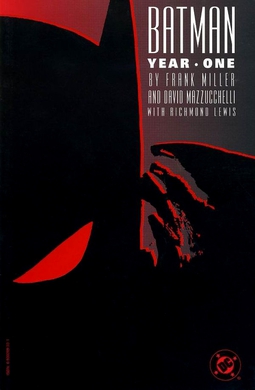
Batman-Year One (cover).jpg

Miller’s artwork also proved to be a visually impressive source for film—notably his Sin City and 300.

Superstardom for Miller hasn’t avoided stumbles (his script for RoboCop 2) or controversy, as Sean Howe detailed in 2014:

But, as if Miller were one of his own antiheroes, his stark individualist philosophy has also led him down some lonely corridors. He’s written graphic novels that many of his fans recoil from—including one that WIRED called “one of the most appalling, offensive, and vindictive comics of all time.” And he followed that up with ferocious online musings that provoked an outcry, even from some of his most stalwart supporters. In recent years, he’s withdrawn from the public eye.

One of the newest renditions of  Miller’s work has itself been mostly hidden from the public eye: Miller’s The Man without Fear and his “Born Again” arc as source material for Netflix’s now cancelled Daredevil series.
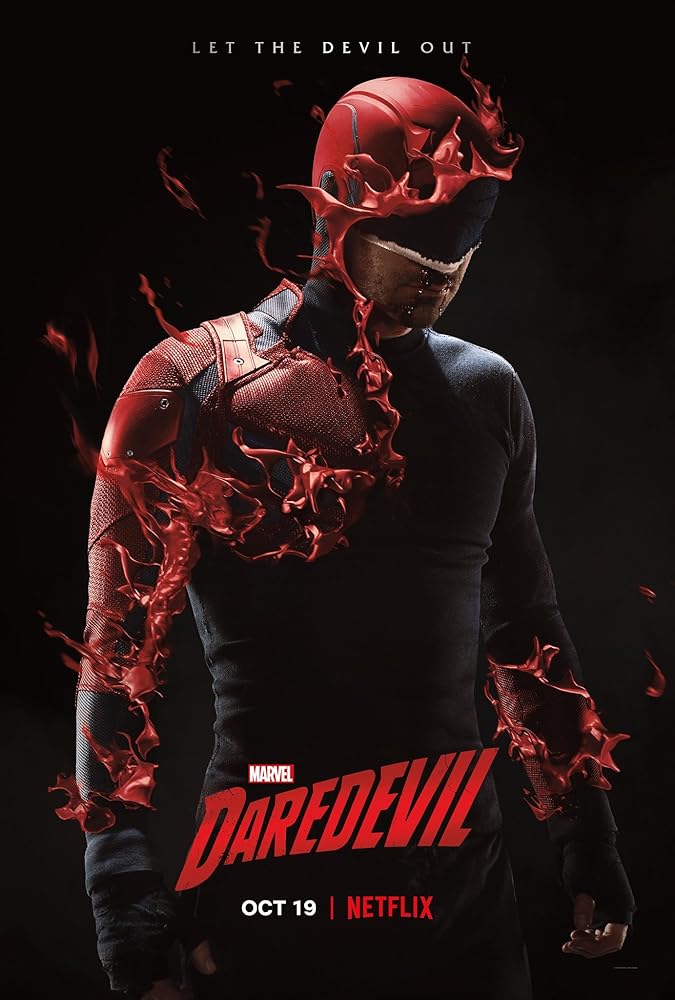
Charlie Cox in Daredevil (2015)

The Many Universes of Superheroes: Netflix’s Miller Lite Adaptation

While rebooting characters and entire universes became a standard convention of comic books at Marvel and DC, the adaptation of superheroes from print to film sputtered throughout the 1970s, 1980s, and into the 1990s.

Marvel has mastered the film adaptation, and many in the public are far more familiar with the film Marvel Universe than the many universes of the comic books. Concurrent with the feature film success of Marvel and struggles with DC-based films other than Batman, Netflix launched serialized superhero adaptations in conjunction with Marvel: Jessica Jones, Daredevil, Luke Cage, Iron Fist, The Defenders, and The Punisher.

These adaptations, I thought, held much greater potential than feature films; they matched the current generation’s lust for binge watching, but they also maintained one of the most compelling features of comic books, extended serialization.

The Netflix approach was well-suited to Jessica Jones since the adaptations downplay some of the main conventions of superhero comic books, such as elaborate and identifiable superhero costumes.

To their credit, Netflix adaptations have been character driven, often as much about the everyday person as the superhero alter-ego.

Season 1 of Daredevil traveled that muted approach to superheroes, and found the perfect source in Miller’s arc, later published as a graphic novel, The Man without Fear, written by Miller with dynamic artwork from John Romita Jr. (pencils) and Al Williamson (inks).
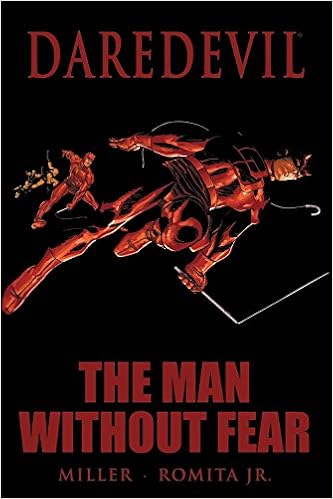
This first season follows a softened and tweaked Miller narrative and draws significantly from Romita Jr.’s art, notably the black non-costume Matt Murdock dons in most of the season:
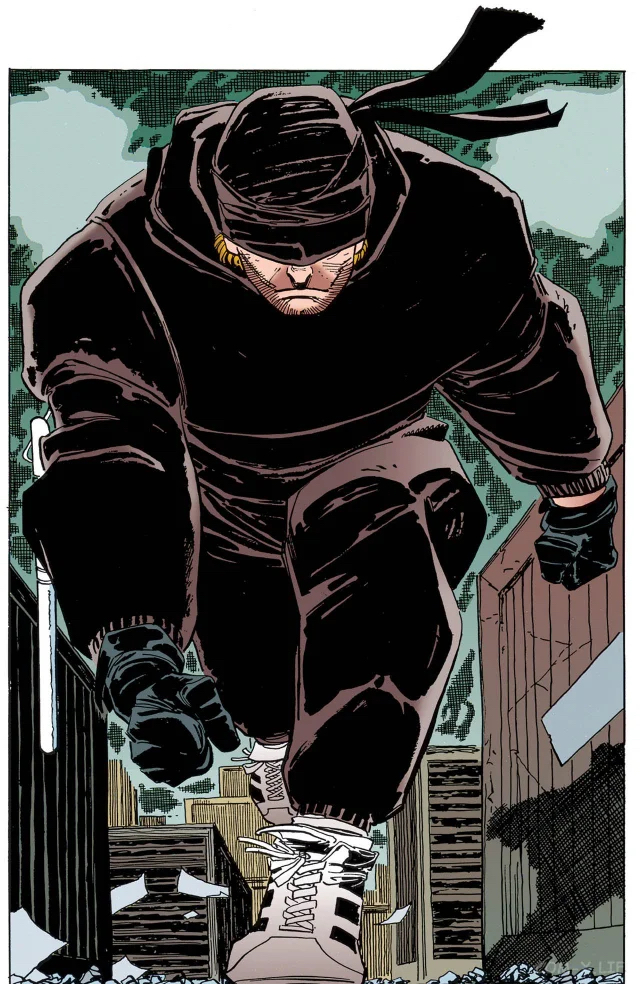
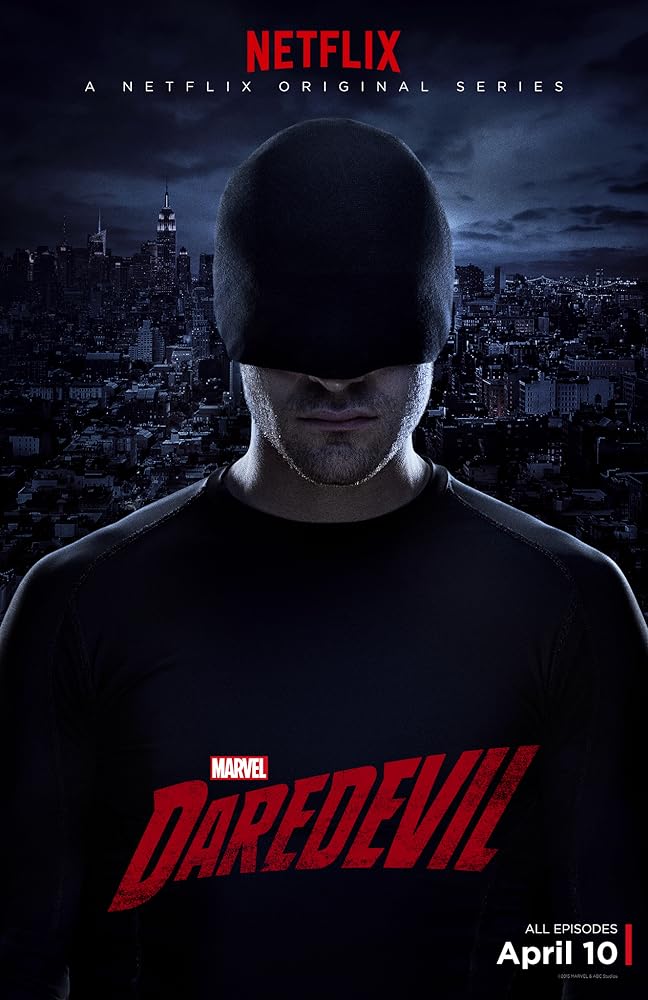
Daredevil: The Man without Fear 5 (John Romita Jr. and Al Williamson)

While I have examined The Man without Fear and its relationship with the Netflix series [1], I want below to look at Season 3 and the use of the “Born Again” arc as more Miller Lite.

Daredevil Born Again, and Again

The “Born Again” arc (Daredevil vol. 1, issues 227-231, and often including 232-233) features Miller and Mazzucchelli, who also paired on Batman: Year One. This storyline builds on the rebooted Daredevil fashioned by Miller and includes some powerful religious imagery and themes.

Daredevil Born Again.jpg

Daredevil as a mythology and narrative has survived, I think, like other major superheroes because in its essence that mythology has compelling elements—structural justice versus vigilante justice, tensions surrounding the idea that “justice is blind,” etc. However, the serial rebooting of the character and the adaptations of the comic book medium into feature films and serialized filmed formats suggest at least that these essential elements have not in some real way been fulfilled.

This is where the differences between the source material and the adaptation come into play. Netflix’s S3 of Daredevil uses “Born Again” as the primary frame, as S1 used The Man without Fear. But S3 also pulls directly and loosely from other sources in the comic book universes as well.

Jesse Schedeen offers 9 changes made in S3 to the comic book sources:

  1. Schedeen focuses on Karen Page’s role in Wilson Fisk/Kingpin discovering Matt Murdock is Daredevil; Karen is manipulated into revealing Murdock’s secret in “Born Again” because Miller has reimagined her as a drug addict and failed-actress-turned-porn-performer. I want to add and emphasize here that the Netflix version of Karen is an important shift from Miller’s trite and reductive Karen. Netflix’s adaptation has clearly sought ways to keep Karen flawed (her backstory revealed in S3 is brutal and dark) but maintain a far more complex and fully human character than Miller has allowed. Like Matt, Karen feels a great deal of guilt and self-loathing in S3, but this adaptation resists a common flaw in comic book narratives to reduce women to one dimension.
  2. Another change involves pulling from a different source, “Guardian Devil” from 1998, as Schedeen notes. This change fits into my point above, I think, in that S3 character Benjamin “Dex” Poindexter (an adaptation of the Marvel character Bullseye) kills Father Lantom instead of Karen. Again, I see these changes allowing a richer and more complex version of Miller’s Karen Page and the wider Daredevil contemporary canon (in this case crafted by Kevin Smith and Joe Quesada).
  3. S3 maintains the “Born Again” reveal of Matt Murdock discovering Sister Maggie is his mother, as Schedeen details, developing more tension in the adaptation version.
  4. The teasing out of Wilson Fisk/ Dex (Bullseye) and another assassin, Nuke, between “Born Again” and S3 demonstrates how the Netflix series often streamlines source narratives and characters while also in many ways blunting superhero elements.
  5. One of the most distinct differences is the use of Dex, and dropping the name “Bullseye” as well as the superhero uniform, in S3. Netflix’s adaptation has chosen to emphasize Dex as mentally unstable, paralleling, I think, in many ways the motif throughout the series concerning childhood trauma (shared by Dex, Fisk, and Murdock) and authority conflicts—the parent/child pattern seen also with Karen.
  6. The paralysis of Bullseye is shared between S3 and the comic book source, and as the Netflix S3 ends, Dex’s surgery clearly was designed to propel the series into another season.
  7. One of the key characters in the Daredevil myth is Foggy, and the Netflix version also develops from the foundational source character into a more complex and even realistic person, a necessary change, I think, in terms of how Foggy parallels Karen as they interact with Matt.
  8. Fisk’s love interest, Vanessa, proves to be another interesting adaptation in S3, much like the changes made with Karen. As Schedeen explains, “In the comics, though, Vanessa has a much more complicated relationship with her husband and his criminal empire.” Here, I think, the viewer of S3 is forced to consider Vanessa as a more fully human and independent character, again in similar ways to how we view Karen. In comic books, as in literature, women are often reduced to being merely symbolic or muses for men as heroes, or villains.
  9. Similar to Dex (Bullseye), Fisk (Kingpin) is essentially drawn from the comic book Marvel universe, and “Born Again,” but the superhero/villain elements are greatly muted. The “Born Again” Kingpin projects the sort of large ego we see in S3, but the fights and outcome for Fisk vary substantially in the adaptation. Schedeen adds, “Fisk doesn’t suffer quite so resounding a defeat in ‘Born Again.’ He does overplay his hand in his attempts to destroy Matt Murdock, eventually causing the deaths of dozens of Hell’s Kitchen residents when he unleashes the out-of-control Nuke.”

With the Netflix run of Daredevil finished, in midstream, we can see how Miller’s version has provided a powerful and compelling frame for the adaptation. But we should also recognize the potential and purpose of adaptation from one medium to another.

The Netflix series as Miller Lite presents an important argument for the urge in the comic book universe to reboot and retell. Daredevil as a foundational superhero myth has extremely important characters, motifs, and themes, but too often the array of creators positioned to soar with those elements has tended to flutter, falter, and even fail.

S1 of Daredevil was exciting in its potential, even as I found the filming too dark (although the dark tendency of the comic book with some artists, such as Alex Maleev, has been among my favorite qualities). By S3 and the abrupt end, I was increasingly hopeful that this adaptation was working its way in the right direction.

While episode 13 of S3 charged viewers with Matt’s “man without fear” speech at Father Lantom’s funeral, we are left once again with less than we had hoped for.


[1] Thomas, P.L. (2019). From Marvel’s Daredevil to Netflix’s Defenders: Is justice blind? In S. Eckard (ed.), Comic connections: Building character and theme (pp. 81-98). New York, NY: Rowman and Littlefield; Thomas, P.L. (2012). Daredevil: The man without fearElektra lives again; science fiction.  [entries]. In Critical Survey of Graphic Novels: Heroes and Superheroes. Pasadena, CA: Salem Press.

Daredevil in Trumplandia: “The Kingpin’s weakness is vanity”

The humanities have a long history of being discredited in the U.S. as impractical majors in college. The good ol’ U.S. of A. tends to calculate investment and return at a very simplistic level to determine when the cost of a college major can be linked directly to earnings in a career.

Business majors are destined to make bank, goes the investment/return narrative, but what you going to do with an English major?

Current times are particularly hard for the humanities, especially literature as a track of English as a major.

Here is the real-world irony in the era of Trumplandia: With Donald Trump at the center of 17 investigations, some have questioned why Trump would have pursued the presidency, which clearly opened the door to exposing his criminality.

The explanation lies, you guessed it, in literature.

While many of us found Greek and Shakespearean tragedy serious drudgery in our formal schooling, these dramas told a tale all too familiar: How the mighty are destined to fall because of their unbridled hubris, excessive pride.

Trump born into excessive and ill-got wealth has skirted along his entire life—cut to the scene where young bone-spurred Trump skips past active duty in war—without consequences for his greed, arrogance, and (to tick another work of literature) his pathological mendacity. (See also, like a good parallel subplot in Shakespeare, the Brett Kavanaugh saga.)

Keeping in mind that universal themes in literature are deeply problematic, we have abundant evidence that motifs such as the dangers of excessive pride are at least enduring, and for good reason.

Recently, I have been reconnecting with one of my favorite comic book superheroes, Daredevil.

Season 3 of the Netflix series, despite all the flaws in this adaptation and the original comic book created in 1964 by Stan Lee, Bill Everett, and Jack Kirby, represents what makes Daredevil compelling—the complex investigation of justice in the context of both human and spiritual justice. S3 draws on Frank Miller’s “Born Again” (1986) while maintaining the Netflix toned down approach to superhero narratives.

Matt Murdock as righteous lawyer and simultaneously the morally ambiguous vigilante Daredevil (the Devil of Hell’s Kitchen)*, at its best, is a much more powerful and compelling examination of justice than, for example, Batman.

While the religious debates in S3 are key elements of why I am drawn to Daredevil, picking up the Conclusion to The Death of Daredevil (612) serves well my point above about the value of literature and the enduring motif about the folly of excessive pride.

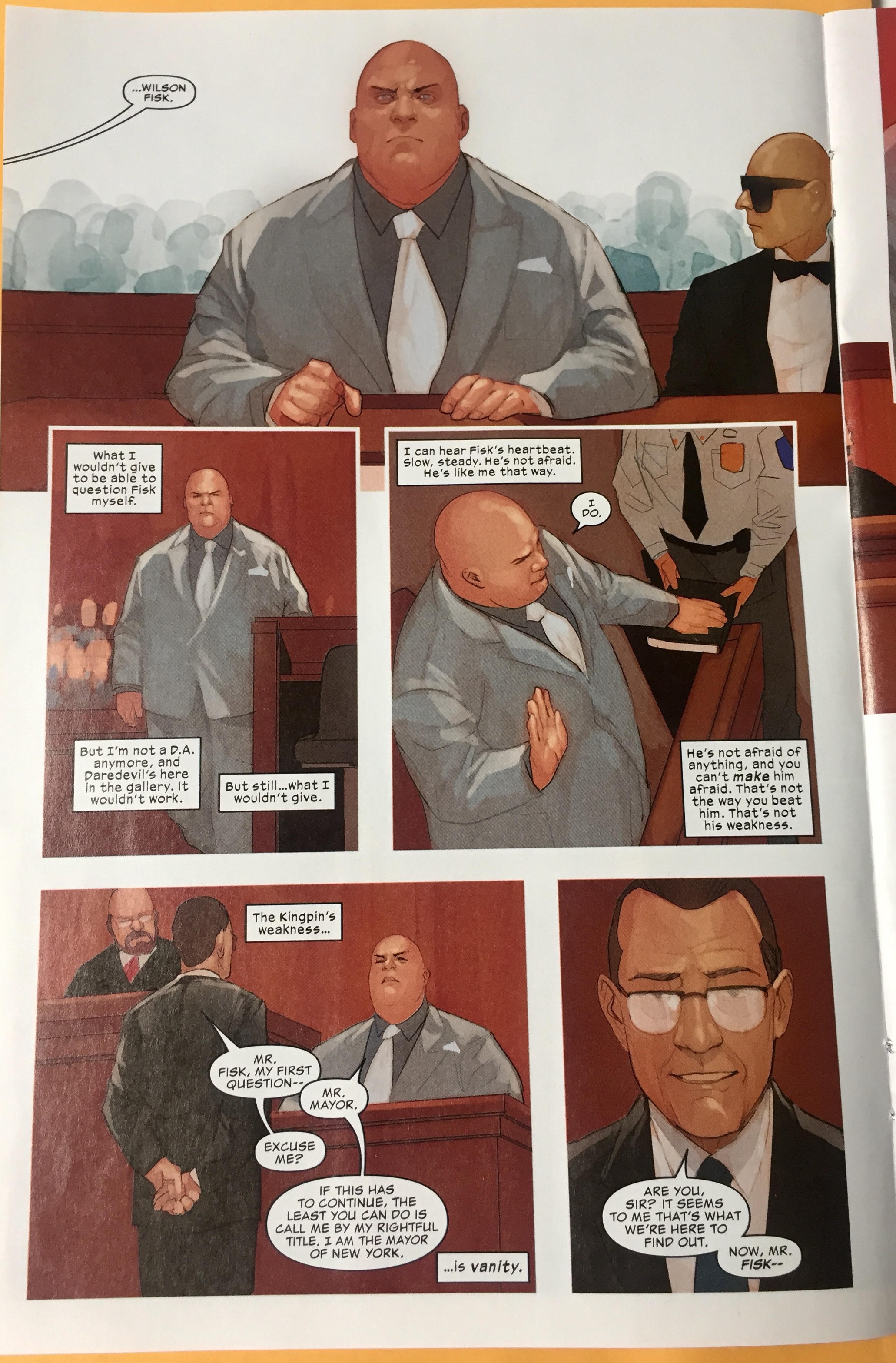
Charles Soule (writer) and Phil Noto (artist) dramatize the Murdock/Daredevil duality well as Murdock seeks Daredevil as a witness to remove Wilson Fisk/The Kingpin as mayor of New York.

Four pages provide a thinly veiled indictment of not only Fisk/The Kingpin, but also Donald Trump.

When Murdock confronts the district attorney, we witness how political might trumps ethics and even the law:

DD 612 3

Murdock’s idealism is highlighted in his plea: “But Wilson Fisk is a criminal. He does not deserve that office.” And this exchange also addresses how those connected to an administration are themselves complicit; as Murdock asks the question often repeated in the real world of Trumplandia:

Can you really keep working for an administration you know is illegal and corrupt at its core when you know there’s a way to take it down?

Yes, it’s a risk. But even if you lose it all, you’ll go out as who you are, not the compromised shadow of yourself the Kingpin’s hoping you’ll be.

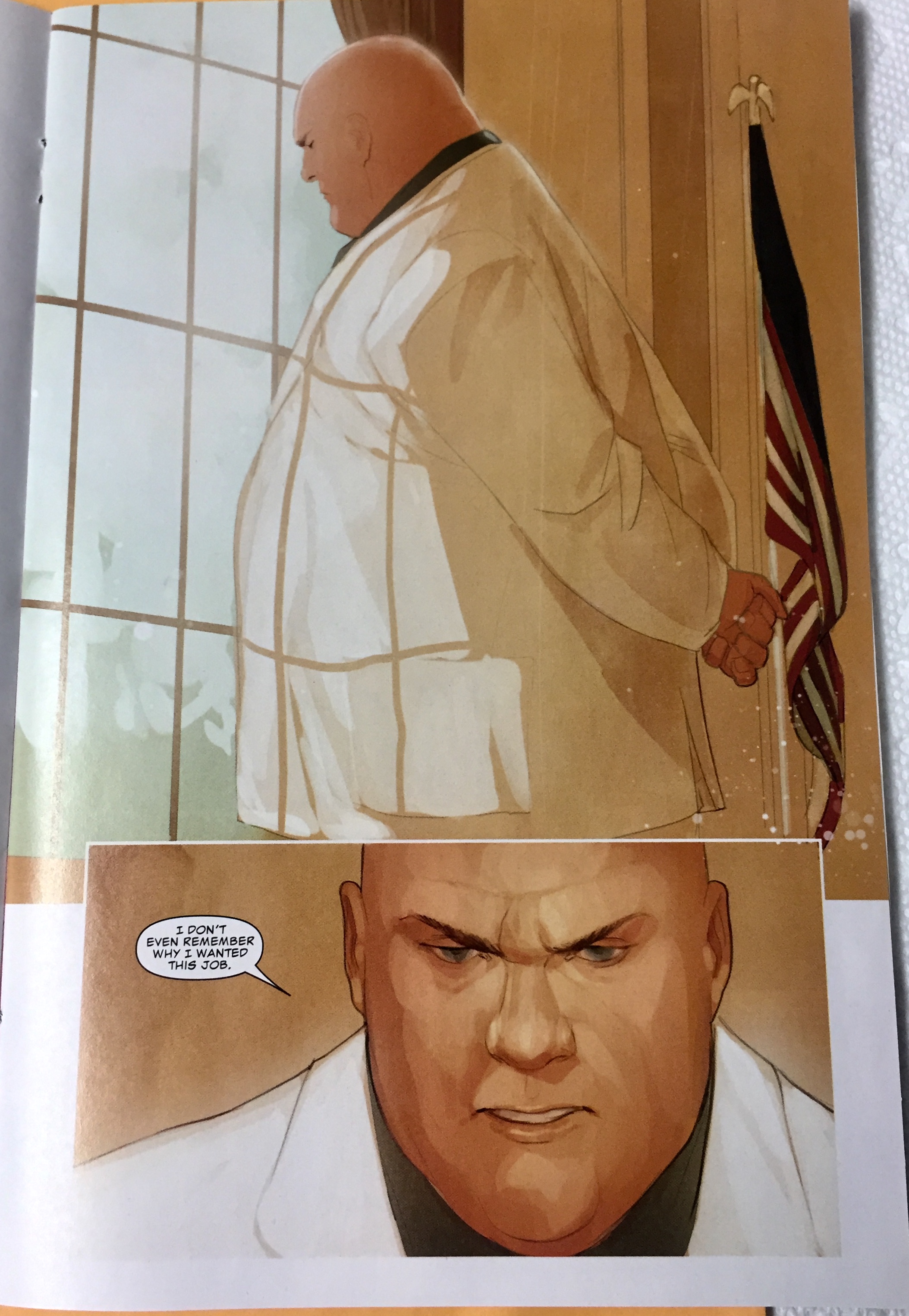
It is, however, Fisk on the witness stand and then alone in his office that speak directly to Trump:

DD 612 5
DD 612 6
DD 612 4

Murdock/Daredevil narrates the scene and notes:

I can hear Fisk’s heartbeat. Slow, steady. He’s not afraid. He’s like me that way.

He’s not afraid of anything, and you can’t make him afraid. That’s not the way you beat him. That’s not his weakness.

The Kingpin’s weakness…is vanity.

Fisk as an allegory of Trump is yet another tale of excessive pride, hubris.

Not afraid and certain he is above accountability, Fisk storms from the stand: “Enough. This is a farce, and I will not stand for it any longer.” Might we hear “fake news” in the background?

The dynamic page with Fisk being introspective precedes his being removed from office. It appears the fantasy world of comic books still clings to some sliver of justice even as the real world seems unable or unwilling to take such stands against criminals in office.

However, this is only appearances as there is a twist; justice, you see, is no more simple in Daredevil than in our real world of Trumplandia. The battle between good and evil is never-ending, and more things than justice seem blind—and paralyzed.

The Death of Daredevil ends: “I cannot see the light. So I will be the light. I am Daredevil. And I am not afraid.” And let us not forget, walking unafraid is a trait shared by our so-called heroes and so-called villains.


* Season 2 effectively challenges Murdock/Daredevil’s righteousness with The Punisher, and others, noting little difference among Daredevil, The Punisher, and Wilson Fisk/The Kingpin.

See Also

Thomas, P.L. (2019). From Marvel’s Daredevil to Netflix’s Defenders: Is justice blind? In S. Eckard (ed.), Comic connections: Building character and theme (pp. 81-98). New York, NY: Rowman and Littlefield.

Thomas, P.L. (2012). Daredevil: The man without fearElektra lives again; science fiction.  [entries]. In Critical Survey of Graphic Novels: Heroes and Superheroes. Pasadena, CA: Salem Press.

Comic Book, Graphic Novel Scholarship and Blogs

Thomas, P.L. (2019). From Marvel’s Daredevil to Netflix’s Defenders: Is justice blind? In S. Eckard (ed.), Comic connections: Building character and theme (pp. 81-98). New York, NY: Rowman and Littlefield.

Thomas, P.L. (2018). Wonder Woman: Reading and teaching feminism with an Amazonian princess in an era of Jessica Jones. In S. Eckard (ed.), Comic connections: Reflecting on women in popular culture (pp. 21-37). New York, NY: Rowman and Littlefield.

9781138649903

Thomas, P.L. (2017). Can superhero comics defeat racism?: Black superheroes “torn between sci-fi fantasy and cultural reality.” In C.A. Hill (ed.), Teaching comics through multiple lenses: Critical perspectives (pp. 132-146). New York, NY: Routledge.

TeachingDemocracy cover

Thomas, P.L. (2014). Adventures in adaptation: Confronting texts in a time of standardization. In Eds. P. Paugh, T. Kress, & R. Lake, Teaching towards democracy with postmodern and popular cultural texts (pp. 7-20). Rotterdam, The Netherlands: Sense Publishers.

CritSurveyGN2012

—–. (2012). Daredevil: The man without fear; Elektra lives again; science fiction.  [entries]. In Critical Survey of Graphic Novels: Heroes and Superheroes. Pasadena, CA: Salem Press.
BoyCulture2010

—–. (2010). Comics and graphic novels. [entry]. In S. R. Steinberg, M. Kehler, & L. Cornish (Eds.), Boy Culture, vol. 2 (pp. 319-328). Santa Barbara, CA: Greenwood Press.

ComicsGN2010
—–. (2010). Challenging genres: Comic books and graphic novels. Netherlands: Sense Publishers.

See Comic Book and Graphic Novel blogs HERE.

NEW: Comic Connections Building: Character and Theme

Comic Connections Building: Character and Theme, Sandra Eckard, editor

Comic Connections: Building Character and Theme is designed to help teachers from middle school through college find exciting new strategies to help students develop their literacy skills. Each chapter has three pieces: comic relevance, classroom connections, and concluding thoughts; this format allows a reader to pick-and-choose where to start. Some readers might want to delve into the history of a comic to better understand characters and their usefulness, while other readers might want to pick up an activity, presentation, or project that they can fold into that day’s lesson. This volume in Comic Connections series focuses on two literary elements—character and theme—that instructors can use to build a foundation for advanced literary studies. By connecting comics and pop culture with these elements, students and teachers can be more energized and invested in the ELA curriculum.

Table of Contents

Preface: Becoming a Teacher

Acknowledgements

Introduction: Building Character and Theme, Sandra Eckard

1: Tales and Dreams: Neil Gaiman’s The Sandman and Critical and Creative Thinking in the English Classroom, Carmela Delia Lanza

2: Marvelous Families, Epic Dysfunction: Combining Norse Mythology, the Thor Comics, and Marvel Films in a General Education Literature Course, Holly M. Wells

3: Flip the Hero Script: Kamala Khan and Katniss Everdeen Search for Agency, Purpose, and Identity, Mary T. Christel

4: Marvel’s Civil War: Interrogating Vigilantism and the Superhero Myth in the Post-9/11 Era, Jane Coulter and Keith McCleary

5: From Marvel’s Daredevil to Netflix’s Defenders: Justice Is Blind?, P.L. Thomas

See: Daredevil and Marvel Rising at Netflix 

6: Comics and Philosophy: Batman and the Nature of Evil, Jon Ostenson

7: Discovering and Discussing Tall Tale Elements Through Lemke’s Tall Great American Folktales: The Comic Anthology, Jennifer Toney

8: Finding the Panther: Marvel Comics’ Black Panther Socio-Historical Roots and Their Influences on Character Development, Scott Honeycutt, Karin Keith, Renee Rice-Moran, LaShay Jennings, Huili Hong

9: 21st Century Creature: Analyzing Frankenstein in the Medium of Comic, Jeffrey Hayes

10: Word from Krypton: Analyzing the Character of Superman, Richard Harrison

About the Authors


See Also

Comic Connections: Reflecting on Women in Popular Culture

“[A]ll this fiddle”: On Genre Wars in a Time of Craft Beer

Poetry MM

“Poetry,” Marianne Moore

Several years ago I was initiated into the craft beer world—having been a serious drinker of beer since high school but being a somewhat resolute low-brow consumer in many ways eschewing the snobbery I witnessed among wine connoisseurs.

Along with my cycling friends Rob and Brian, I made a couple trips to Colorado for bicycling and beer; while on those trips, I was gradually indoctrinated into a more refined understanding of craft beer, mostly guided by Brian.

Today, I frequent local and regional breweries almost exclusively for my beer drinking—along with my one remain low-brow habit of grande Dos Equis ambers a couple times a week at Mexican restaurants.

I remain far too naturally unsophisticated to ever grasp wine nuances, although I have friends who can easily convince me to enjoy wine with them, but my beer palate is moderately well educated, and I do enjoy a wide range of craft beers that I am certain baffles the mostly Bud Light crowd of my hometown and state.

Having come to beer snobbery late in life, I find the distinctions about “good” or “bad” beer quite similar to the genre wars that I have been living since I was a teen since my introduction to so-called literary fiction was significantly primed by my initial love for science fiction (mere “genre” fiction) and comic books (not any sort of literature at all!).

In Literary fiction or genre? When Megan Abbott and Naomi Novik are writing, who cares, Michale Robbins opens by confronting: “If there’s a distinction between ‘genre fiction’ and ‘literary fiction,’ it’s certainly not that the former isn’t literary and the latter isn’t generic. It’s mostly that the generic conventions of the latter are those that critics and professors are trained to value most.”

A former student, who was a top-notch English major and now teaches English, recently finished reading Donna Tartt’s The Goldfinch and drew the same conclusion—if we remain in a formalist paradigm of what counts as “literary,” then Tartt’s novel may well be pronounced so much popular fiddle.

Yet, as my former student noted, the novel could just as easily be praised if we change our metrics, set aside our snobbery.

John Warner’s Is ‘The Great Gatsby’ really required reading? Disrupt Texts challenges teachers to reconsider the classics also ventures into the debate about such snobberies grounded in the canon:

Much of the discussion among educators focuses on how using these texts can be enhanced by injecting marginalized perspectives. This is the “disrupt” part of Disrupt Texts. Rather than taking a single perspective as representative for all, the discussion challenges the notion of a single, fixed history. This is the root of critical thinking and a pre-requisite to lasting learning.

Education isn’t merely transmitting information; students must be taught to make meaning for themselves.

Warner’s last point can be extended, I think, to giving students not the right or only lens for evaluating texts (using the often unnamed New Criticism approach to dissecting text often written with New Criticism’s emphasis on craft and meaning in mind) but many and varied opportunities to examine texts in order to draw their own ways to navigate texts (a variety of lens, some more formal such as feminist or Marxist) and their own guidelines for what makes texts compelling, satisfying, and even “good.”

My former student and I continued to discuss her experience with The Goldfinch, the challenges, I noted, of making a really long novel satisfying. Tartt’s work, she said, was enjoyable to read, but she felt it failed in some important ways—ways I categorize as achieving or not that “satisfying.”

This discussion prompted me to think about Haruki Murakami’s 1Q84, a very long and complex work.

When I first read 1Q84, I was initially drawn to the rotating main characters, but when a third focal character is introduced, I began to feel uncomfortable, a sense that the novels’ cohesion was being compromised.

Also I was uneasy with Murakami’s novel being labeled “science fiction”; I could not see anything about the work as I read it that would make me classify it as that genre (maybe something like fantasy or magical realism?).

I find all of Murakami compelling so I read quite eagerly even as I was uncomfortable with the possibility that the long work would not remain cohesive (I am sure my English training in New Criticism and literary snobbery were in play here as well). However, the work came together, fell into place—although how that happens is at least fantastical (one would argue a convention of genre not literary fiction).

All of this is to say that as an experienced and autonomous reader I have developed capacities for interrogating texts, mostly to determine if I enjoyed the work and the writer.

Some of my formal background as a student and English education major/English teacher actually inhibits my joy as a reader—a reality all too common for students.

The genre wars, then, often create barriers to reading and reading for pleasure.

In Moore’s “Poetry,” her second stanza evokes “high-sounding interpretation,” “unintelligible,” and “we/ do not admire what/ we cannot understand.”

Writers, like Moore and others, it seems, do themselves play into the genre wars and all that snobbery, especially about what constitutes the “good” writers as distinct from the hacks. But in the end, writers are mostly about having readers, readers eager to read, readers satisfied by a compelling and cohesive text—wishing for a next story, or book, or essay, or poem.

I cannot shake from my own mind as a reader the importance of texts being satisfying, cohesive. But I also think about my joy as a reader.

Two of the most wonderful texts I have ever read are Roxane Gay’s “There is No ‘E’ in Zombi Which Means There Can Be No You Or We”  and Carmen Maria Machado’s “The Husband Stitch”—beautiful, compelling works of fiction that depend heavily on so-called genre conventions but rise well above the bar of satisfying (even if we cannot resist the allure of evaluation, whether they are “literature”).

As a reader I am seeking writing that demonstrates purpose, a fidelity, I think, to the sort of writing the writer intends, the sort of text I am choosing to read.

Everything else is just fiddle, like calling Miller High Life “The Champagne of Beers.”

“If the book we’re reading doesn’t wake us up with a blow on the head, what are we reading it for?” (Franz Kafka)

There is a paradox to my formative years that I vividly recognize but cannot fully understand.

My parents weren’t well educated or prone to intellectualism, and they raised me in some truly toxic ideologies that stunted the human I have been trying to be ever since I recognized those ideologies as toxic.

But my dear parents also—and this remains baffling—allowed and even supported for me an intellectual freedom that completely contradicted everything else about my upbringing.

No book, magazine, film, music, or comedian was ever off limits, denied to me—or banned. In fact, my parents despite out modest working class budget eagerly bought me anything I wanted to read or listen to, including a subscription to Playboy and albums by George Carlin and Richard Pryor.

And because of this great fortune of my youth, I am compelled by all bold art—what some call adult or explicit, even profane—and concurrently, by radical, confrontational ideas. Along side the regrets I feel for much of my early life, this gift from my parents rises above everything else as something for which I could never repay them.

As a voracious reader and a would-be writer as I entered college, I fell in love with Franz Kafka, nearly a cliche for would-be writers, I suppose, but incredibly important for me none the less.

And this has remained a refrain for me since I first discovered Kafka: his January 1904 letter to Oskar Pollack:

I think we ought to read only the kind of books that wound and stab us. If the book we’re reading doesn’t wake us up with a blow on the head, what are we reading it for? So that it will make us happy, as you write? Good Lord, we would be happy precisely if we had no books, and the kind of books that make us happy are the kind we could write ourselves if we had to. But we need the books that affect us like a disaster, that grieve us deeply, like the death of someone we loved more than ourselves, like being banished into forests far from everyone, like a suicide. A book must be the axe for the frozen sea inside us. That is my belief.

<||>

My home state, South Carolina, remains too much like the very worst of my early life—notably the coastal city Charleston.

Charleston has a rich but deeply scarred history of racism and economic inequity that remains in many ways today. Charleston is also notorious in contemporary times for the horrific shooting at the Emanuel AME church and a police officer killing Walter Scott.

Yet, like William Faulkner’s Emily, some despite that context persist in clinging to the corpse of race and class bigotry, blinded by James Baldwin’s “rigid refusal”—as in this case highlighting that the fear of books is the fear of ideas that is the fear of Truth:

Two books causing controversy in Charleston County are All American Boys by Jason Reynolds and Brendan Kiely, and The Hate U Give by Angie Thomas. They are on the summer reading list for Wando High School’s English I class.

In The Hate U Give, the main character’s best friend is unarmed, and shot and killed by police. In All American Boys, one of the main characters is brutalized by a police officer after a misunderstanding when the character is falsely accused of stealing. Both books address racism and police brutality which is making some local law enforcement officers upset.

President of the Fraternal Order of Police Tri-County Lodge #3, John Blackmon, says, “Whether it be through social media, whether it be through text message, whether it be phone calls, we’ve received an influx of tremendous outrage at the selections by this reading list.”

He says in just the past two days, he has received hundreds of messages from police and community members.

Blackmon says, “Freshmen, they’re at the age where their interactions with law enforcement have been very minimal. They’re not driving yet, they haven’t been stopped for speeding, they don’t have these type of interactions. This is putting in their minds, it’s almost an indoctrination of distrust of police and we’ve got to put a stop to that.”

<||>

“In the summer of 1997, when I was eleven, I had an abnormal appetite for books,” recalls Carmen Maria Machado. Specifically, she fell in love with Lois Duncan—despite the problem Duncan’s genre created:

Horror novels had been banned in my family since I was seven, when an older kid on the bus let me borrow his copy of “Night of the Living Dummy,” and it gave me such terrible nightmares that I insisted on sleeping with the lights on for a week. So, when my mother picked me up from the library, I pleaded my case. Most of them had been written in the nineteen-seventies, I told her. (I had checked.) How scary could they be?

Machado’s story represents the journey of many writers, how falling in love with writers and books combined with an exhilarating freedom to read as one pleases leads to a life of becoming and being a writer.

To a life of unconventional ideas, a life adultexplicit, profane.

For Machado, Duncan appears to have been a doorway into unconventional ideas about gender:

Her prose is unfussy and clean. She centered her books on young women, and her writing considers themes that have come to obsess me as an adult: gendered violence, psychological manipulation, the vulnerability of outsiders. She writes about folie à deux and mass hysteria, doppelgängers, sociopathy, revenge. She portrays psychic powers and past-life regressions with a kind of realism; she recognized that even a supernatural evil must have a human heart.

In hindsight, Machado realizes:

After that, I re-read “Daughters of Eve,” which had seemed revolutionary when I was eleven. In college, I’d recounted the plot to a friend and started to wonder about its politics. But now it strikes me as a cautionary tale about the potential of radical ideology to empower or destroy, and about the circumstances under which it can take hold. Second-wave, to be sure, and imperfect, of course, but chilling and complicated and uncondescending to its audience. I realized that her books paved the path toward my adult love of novelists such as Shirley Jackson and Patricia Highsmith. Some of her plots still show up in my dreams.

What if Machado had continued to be blocked from horror novels, banned for being too frightening for a young girl or too radical in their ideologies?

Like Machado, I bumped against teachers discouraging me from reading comic books and outright barring me from choosing another science fiction book when we had novel choices for class.

Yet, comic books and science fiction are my Lois Duncan.

<||>

“If you read this story out loud” becomes a parenthetical refrain in Machado’s “The Husband Stitch,” a story about telling stories (“I have always been a teller of stories,” reveals the narrator) and the horrifying messages in those stories about the fate of girls and women; for example:

The moral of that story, I think, is that being poor will kill you. Or perhaps the moral is that brides never fare well in stories, and one should avoid either being a bride, or being in a story. After all, stories can sense happiness and snuff it out like a candle.

Once you have read about Machado’s early love of Duncan, this story blossoms even from the tips of the many blossoms built into the narrator’s mysterious green ribbon and the interjected brief stories punctuating the main story.

Early, the story is about unconventional ideas, the sexuality of girls, the tension between being fully sexual and “good”:

The boy is not facing me. I see the muscles of his neck and upper back, how he fairly strains out of his button-down shirts. I run slick. It isn’t that I don’t have choices. I am beautiful. I have a pretty mouth. I have a breast that heaves out of my dresses in a way that seems innocent and perverse all at the same time. I am a good girl, from a good family. But he is a little craggy, in that way that men sometimes are, and I want.

It then becomes a story of awakenings, the inevitable demands of men on women, and the brutal consequences of the world for any, or every woman—like the narrator.

I think Machado’s story is brilliant and awesome, in the purest sense of the root “awe,” and I hesitate to dig deeper, share more because much of that awe is in the reading and the very careful unveiling, the lust and the terrifying.

But as a teacher and a teacher of English teachers, I bring this story here because it is the exact sort of story young people should read, must read, but because it is graphic in its depiction of young sexuality, I can hear my former students who now teach high school explain to me that they can’t teach this story.

It is the sort of fiction that is an “axe for the frozen sea inside us”; it is meant to stir our bodies, our souls, and our minds.

And like the novels challenged by police in Charleston, this story is frightening to the social order, the sort of things police, schools, and churches seek to maintain.

Adults with authority, if truth be known, are terrified of young people aroused in mind, body, and spirit.

In one story within the main story, the narrator concludes: “I don’t need to tell you the moral of this story. I think you already know what it is.”

And this is why fiction is frightening; it presents us with inconvenient truth. It isn’t so much that we don’t know it, but that it must not be uttered into reality.

As poet Adrienne Rich has confronted: “The study of silence has long engrossed me. The matrix of a poet’s work consists not only of what is there to be absorbed and worked on, but also of what is missing, desaparecido, rendered unspeakable, thus unthinkable” (p. 150).

Fiction is almost always terrifying, and it certainly is far more dangerous than fake news.

Fiction tells the inconvenient truth about the police.

Fiction tells the inconvenient truth about the dangers a man’s world pose for all women.

Banning books is banning ideas, the very ideas that liberate anyone to recreate the world in the name of justice and human dignity. There simply is no place for banning books among free people.

That, in fact, is yet another paradox: banning books is an unspeakable crime against human dignity.

Margins

Although I am sure more people have blocked me on social media, I remain aware of and concerned about two of those—both women, one black and one white.

The reason for my concern is that I would count them both members of the communities I support, ideologically and practically. Also, since I am blocked, I remain mostly uncertain of why, although with one I did have an exchange on an email forum about her perceptions of me (what I view as unwarranted assumptions).

Being blocked, I recognize however, was the result of both these women functioning in much narrower margins than I do because of my privileges of gender, race, and economics. In other words, regardless of my good intentions, regardless of whether or not I behaved in any way that warranted being blocked, these women do not have the margins to risk examining whether I am part of the toxic masculinity, toxic whiteness, or toxic affluence that threatens them moment by moment.

Sendhil Mullainathan and Eldar Shafir in their Scarcity: Why Having Too Little Means So Much label the margins of economic privilege and disadvantage as “slack” (privilege and thus huge margins) and “scarcity” (disadvantage and thus very thin margins). I think those terms apply equally as well to gender and race.

In retrospect, I am reminded of a moment from my teaching high school English when a white boy brushed a copy of Martin Luther King Jr.’s “Letter from Birmingham City Jail” from his desk when I handed them out, announcing that he wasn’t reading that “[racial slur].” The student was adamant that King was an adulterer, having a pamphlet that excoriated King; the pamphlet, if one bothered to look carefully, had been created by the KKK, which had a vibrant following in the small town just south of the high school.

The margins (scarcity) for MLK—using “adultery” as a veneer for racism—must be placed against, for example, the social slack afforded John F. Kennedy, who is allowed his claimed accomplishments despite his personal indiscretions, unlike how any small failure by MLK is used to discredit all of his work.

More recently, the US has witnessed eight years of unrelenting discrediting of Barack Obama as president through unfounded claims about his birthplace; Obama as the first black president had to be perfect or completely discredited.

Immediately succeeding Obama is Donald Trump, who survived video/audio evidence of language and attitudes toward women most people would not tolerate in children; in other words, Trump’s gender, race, and economic privilege (slack) is so powerful, he appears nearly capable of doing anything with impunity.

Trump himself declared this himself during his campaign:

This is the most vivid and gross example of the power of slack grounded in race, gender, and economic privilege.

Black Film/ White Film: More on Slack and Scarcity

Since I am a comic book advocate, having collected Marvel comics throughout the 1970s and more recently published scholarship on the intersections of race and gender in superhero comics, I have watched and listened carefully to the public responses to Black Panther, the most recent Marvel Universe film.

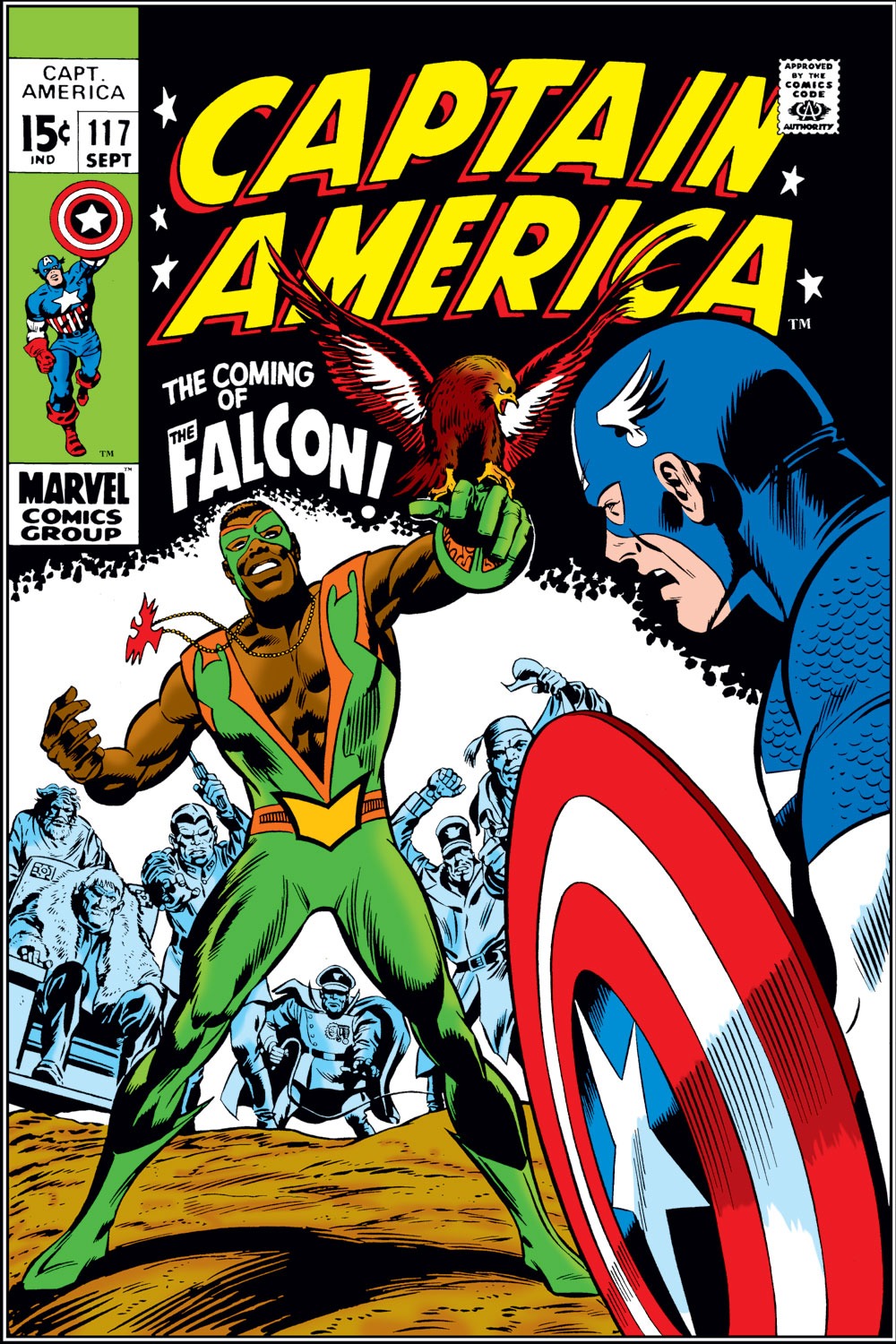
While I have not yet seen the film, I have followed the sputtering path of the character Black Panther since he was introduced in the 1960s; as a teenager collecting comics, I was a fan of Black Panther as well as The Falcon, who was cover-billed along with Captain America throughout much of the 1970s.

Black_Panther_Vol_1_1  Captain_America_Vol_1_117

I lacked critical discernment as a teen, but can recognize that these two characters laid a foundation for my discovering black authors and thinkers in college as I struggled to cast off the worst aspects of my upbringing in the racist and intolerant South.

Most have responded to Black Panther the film with enthusiasm and even glee, and the box office has reflected some powerfully positive messages about black films and actors. But a few have begun to unpack problems with nationalism and the white savior trope in the narrative.

Here we may be inclined to argue that the highest form of equity, the absence of racism, would require that the film receive something akin to objective analyses—not unduly criticized (veneers for racism) and not sheltered from criticism as a sort of inverse racism.

There, however, this claim is not as simple as it may seem—especially if we ground how we respond to the film in terms of slack and scarcity, in terms of the King/Kennedy inequity.

Certainly, the film cannot be above credible criticism, but in that pursuit, we must guard against the perfection bar often manifested as scarcity when applied to disadvantages associated with race, class, and gender.

White films, for example, are not called “white,” but simply films. Adam Sandler and Kevin James, for example, have long resumes of films that certainly have been allowed an incredible amount of slack—forgiven the nearly unforgivable (think Trump) for hopes of some glimmer of humor nestled among the truly cliche, offensive, and just plain lazy.

Black Panther, even in the praise, is rendered into scarcity as a black film, and by implication must carry the weight of all black films, all black actors, all black writers (although the character was spawned by white creators in a very white, often racist industry).

Since Kevin James was allowed Paul Blart: Mall Cop 2, just how close to perfect does Black Panther need to be?

The truest test of equity may be that all films have the same degree of slack.

School Safety: Slack and Scarcity as a Matter of Life and Death

While many in the US are reveling in the pop culture frenzy around Black Panther, the ugliest aspects of American culture once again expose how our on-screen violences pale against our gun culture and the ever-present threat of mass shootings, especially at the expense of students in school.

Although most mass shooters are white men, gun violence tends to prompt concerns about gangs and black-on-black crime, yet another demonstration of inequitable margins: White male mass shooters never prompt outcries about all white men (since the shooters are often framed as mentally ill) even though simply the threat of terrorism evokes blanket narratives and even policies about Muslims.

The paradox of gun violence and mass shootings in the US is that Americans have experienced increasingly less crime over the past four or so decades, even as the rate of mass shootings and gun violence remains disturbingly high when compared to other countries.

Debates about gun violence become yet more evidence of slack and scarcity linked to race.

Why has the country responded so positively to the teens speaking out after the shooting in Parkland, Florida but tended to reject or ignore the outcries from teens surrounding the all-to-frequent police shootings of young blacks, the #BlackLivesMatter movement?

Simply stated, when anything appears to encroach on the huge slack whites perceive (safety in this case), mainstream responses flair, but the margins for safety are so thin for blacks, for example, that to live in danger as a black person has become normalized beneath the implication that blacks themselves are the ones perpetuating violence.*

Whites as victims (slack), and blacks as violent (scarcity).

Taking care about whether or not we criticize Black Panther holds some important symbolic value, but in terms of how we respond to a school shootings, we are now making decisions that are life and death.

Responses to the Parkland, Florida shooting have focused on how to make schools safer—in part, to avoid the larger gun control debate that is muted by the NRA.

Arming teachers is one extreme, but in an Op-Ed for The State (Columbia, SC), Will Britt argues:

My recommendations are all achievable and avoid the most controversial ideas, so that they have a chance of happening. Still, they will require unified and emphatic parental endorsement: Install metal detectors, restrict campus and building access and connect 360-degree interior and exterior video monitoring for every public school.

This is a compelling argument to those living in the slack of race privilege, but is a red flag to those living in slack, in very thin margins.

First, Britt’s argument is solidly refuted by evidence:

Impact of Security Measures on Violence

  • There is no clear evidence that the use of metal detectors, security cameras, or guards in schools is effective in preventing school violence, 8,9,10,11 and little is known about the potential for unintended consequences that may accompany their adoption.12
  • There has not been sufficient research to determine if the presence of metal detectors in schools reduces the risk of violent behavior among students. 13
  • Some researchers have expressed concern about the widespread use of guards, cameras, and other security technologies, given that so little is known about their effectiveness. 14,15
  • Research has found security strategies, such as the use of security guards and metal detectors, to be consistently ineffective in protecting students16 and to be associated with more incidents of school crime and disruption17 and higher levels of disorder in schools. 18
  • Evidence from a school–police partnership implemented in New York City reveals that students in these schools continue to experience higher than average problems linked directly to future criminality, compared to students in other New York City schools not involved in the partnership. 19
  • Surveillance cameras in schools may have the effect of simply moving misbehavior to places in schools or outside of schools that lack surveillance. Even more troubling, it’s possible that cameras may function as enticement to large-scale violence, such as in the case of the Virginia Tech shooter who mailed video images of himself to news outlets.20
  • Research suggests that the presence of security guards and metal detectors in schools may actually increase levels of violence in schools by strengthening the influence of youth “street” culture with its emphasis on self-protection.21

If these measures do not work, why are they compelling?

Calls for more security, research shows, in fact is more veneer for racism since extreme measures such as metal detectors and surveillance cameras are more common in high-minority schools even when discipline issues are not more pronounced.

White slack dictates that white safety must be protected at all costs; black/brown scarcity dictates that there is no margin of error for protecting against black/brown violence.

American culture is today awash in a triumphant celebration of Black Panther jammed against a national scramble to confront our daily violences in the form of guns.

Turning our schools into fortresses if not prisons, and even arming teachers, presents those with race, gender, and economic slack a much different picture (more safety) than those with race, gender, and economic scarcity (more violence).

Margins still define us, and margins left unchecked are apt to destroy us in the end.


* The mainstream media and political focus on black-on-black crime allows whites to ignore that all crime is mostly same-race since white-on-white crime rates are nearly identical to black-on-black crime rates.

Research excerpt sources:

8 Garcia, C. A. (2003). School safety technology in America: Current use and perceived effectiveness. Criminal Justice Policy Review, 14, 30-54.

9 Addington, L. A. (2009). Cops and cameras: Public school security as a policy response to Columbine. American Behavioral Scientist, 52, 1424-1446.

10 Borum, R., Cornell, D. G., Modzeleski, W., & Jimerson, S. R. (2010). What can be done about school shootings? A review of the evidence. Educational Researcher, 39, 27-37.

11 Casella, R. (2006). Selling us the fortress: The promotion of techno-security equipment in schools. New York: Routledge.

12 Addington, L. A. (2009). Cops and cameras: Public school security as a policy response to Columbine. American Behavioral Scientist, 52, 1424-1446.

13 Hankin, A., Hertz, M., & Simon, T. (2011). Impacts of metal detector use in schools: Insights from 15 years of research. Journal of School Health, 81, 100-106.

14 Birkland, T. A., & Lawrence, R. G. (2009). Media framing and policy change after Columbine. American Behavioral Scientist, 52, 1405-1425.

15 Green, M. B. (2005). Reducing violence and aggression in schools. Trauma, Violence and Abuse, 6, 236-253.

16 Schreck, C. J., & Miller, J. M., & Gibson, C. L. (2003). Trouble in the school yard: A study of the risk factors of victimization at school. Crime & Delinquency, 49, 460-484.

17 Nickerson, A. B., & Martens, M. R. (2008). School violence: Associations with control, security/enforcement, educational/therapeutic approaches, and demographic factors. School Psychology Review, 37, 228-243.

18 Mayer, M. J., & Leaone, P. E. (1999). A structural analysis of school violence and disruption: Implications for creating safer schools. Education and Treatment of Children, 22, 333-356.

19 Brady, K. P., Balmer, S., & Phenix, D. (2007). School-police partnership effectiveness in urban schools: An analysis of New York City’s Impact Schools Initiative. Education and Urban Society, 39, 455-478.

20 Warnick, B. R. (2007). Surveillance cameras in schools: An ethical analysis. Harvard Educational Review, 77, 317- 343.

21 Phaneuf, S. W. (2009). Security in schools: Its effect on students. El Paso, TX: LFB Scholarly Publishing LLC.

The Politics of Education Policy: Even More Beware the Technocrats

Man Prefers Comic Books That Don’t Insert Politics Into Stories About Government-Engineered Agents Of War (The Onion) includes a simple picture of a 31-year-old white male with the hint of a soon-to-be Van Dyke:

The fictional “man,” Jeremy Land, explains:

“I’m tired of simply trying to enjoy escapist stories in which people are tortured and experimented upon at black sites run by authoritarian governments, only to have the creators cram political messages down my throat,” said Land, 31, who added that Marvel’s recent additions of female, LGBTQ, and racially diverse characters to long-running story arcs about tyrannical regimes turning social outsiders into powerful killing machines felt like PC propaganda run amok. “Look, I get that politics is some people’s thing, but I just want to read good stories about people whose position outside society makes them easy prey for tests run by amoral government scientists—without a heavy-handed allegory for the Tuskegee Study thrown in. Why can’t comics be like they used to and just present worlds where superheroes and villains, who were clearly avatars for the values of capitalism, communism, or fascism, battle each other in narratives that explicitly mirrored the complex geopolitical dynamics of the Cold War?”

The satire here is the whitesplaining/mansplaining inherent in the politics of calling for no politics.

It strains the imagination only slightly to understand how this commentary on comic book fanboys also parallels the persistent combination in education of calling for no politics while using policy and a narrow definition of data and evidence to mask the racial and gender politics of formal schooling.

Let’s imagine, then, instead of the fictional Land an image of David Coleman (who parlayed his Common Core boondoggle into a cushy tenure as the head of the College Board) or John Hattie (he of the “poverty and class size do not matter” cults that provide Hattie with a gravy train as guru-consultant).

A close reading of David Coleman’s mug shot reveals a whole lot of smug.

In his “visible learning” hustle, John Hattie likely prefers to keep his enormous profits invisible.

Coleman and Hattie as technocrats feed the systemic racism, classism, and sexism in formal education policy and practice by striking and perpetuating an objective pose that serves as a veneer for the normalized politics of political and economic elites in the U.S.

As Daniel E. Ferguson examines, Coleman’s Common Core propaganda, the rebranded traditional mis-use of New Criticism into “close reading,” argues:

Close reading, as it appears in the Common Core, requires readers to emphasize “what lies within the four corners of the text” and de-emphasize their own perspective, background, and biases in order to uncover the author’s meaning in the text.

However, Ferguson adds,

Critical reading, in contrast, concerns itself with those very differences between what does and does not appear in the text. Critical reading includes close reading; critical reading is close reading of both what lies within and outside of the text. For Paulo Freire, critical reading means that “reading the world always precedes reading the word, and reading the word implies continually reading the world.”

And thus, close reading serves the cult of efficiency found in the high-stakes standardized testing industry that depends on the allure of believing all texts have singular meanings that can be assessed in multiple-choice formats—a dymanic Ferguson unmasks: “The story beyond the four corners of Coleman’s video is one of a man whose agenda is served by teachers following a curriculum that requires students to read in a way assessable through standardized tests he oversees and profits from.”

Simultaneously, of course, keeping students and teachers laser-focused on text only detracts them from the richer context of Martin Luther King Jr. and the broader implications of racism and classism informed by and informing King’s radical agenda.

Simply stated, close reading is a political agenda embedded in the discourse of objectivity that whitewashes King and denies voice and agency to King, teachers, and students.

Concurrently, Hattie’s catch phrase, “visible learning,” serves the same political agenda: Nothing matters unless we can observe and quantify it (of course, conveniently omitting that this act itself determines what is allowed to be seen—not the impact of poverty or the consequences of inequity, of course).

Hattie’s garbled research and data [1] match the recent efforts in education reform to isolate student learning as the value added (VAM) by individual teachers, yet another off-spring of the cult of efficiency manifested in high-stakes standardized testing.

Just as many have debunked the soundness of Hattie’s data and statistics, the VAM experiment has almost entirely failed to produce the outcomes it promised (see the school choice movement, the charter school movement, the standards movement, etc.).

Coleman and Hattie work to control what counts and what matters—the ultimate in politics—and thus are welcomed resources for those benefitting from inequity and wishing to keep everyone’s gaze on anything except that inequity.

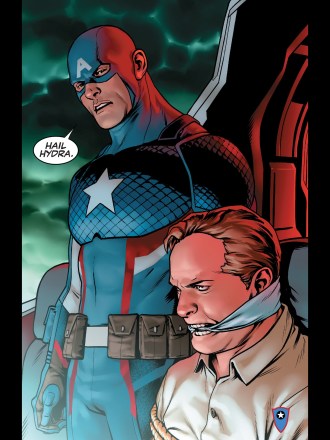
The misogyny and racism among comic book fanboys allows the sort of political ignorance reflected in The Onion‘s satire.  If we remain “within the four corners of the text” of Marvel’s Captain America, for example, we are ignoring that, as I have examined, “Captain America has always been a fascist. … But … Captain America has always been our fascist, and that is all that matters.”

3e281
Captain America: Steve Rogers #1 (c) Marvel

The politics of education policy seeks to point the accusatory finger at other people’s politics, and that politics of policy is served by the technocrats, such as Coleman and Hattie, who feed and are fed by the lie of objectivity, the lie of no politics.


[1] See the following reviews and critiques of Hattie’s work:

NEW: Comic Connections: Reflecting on Women in Popular Culture

Comic Connections: Reflecting on Women in Popular Culture

Sandra Eckard, editor

Eckard_Comic Connections_Women[1] copy

See my chapter:

Wonder Woman: Reading and Teaching Feminism with an Amazonian Princess in an Era of Jessica Jones, P. L. Thomas

[Sample excerpt from Classroom Connections section]

Women Superhero Costumes and Sexism in Student Dress Codes

“The original Wonder Woman comics included page after page of bondage imagery, scads of cross-dressing villains, and really remarkably unrepressed lesbian eroticism[i],” explains Noah Berlatsky, examining The New 52 reboot of Wonder Woman, adding: “The best Azzarello/Chiang can do, in contrast, is to have their Amazons pose like Playboy models while Eros makes sophomoric cracks about the quest for seminal mortal vessels.”[ii] The tension between the potential for a woman superhero to confront and change corrosive social norms such as sexism, misogyny, toxic masculinity, and objectifying/sexualizing women and the too-often reality of pop culture to reflect and reinforce those norms is throughout Wonder Woman, including how she is physically depicted as a superhero.

While comic books and graphic novels can be effective in classes as ways to reach beyond traditional texts, using Wonder Woman to lead into topics directly relevant to students is also recommended. Consider the controversial issue of dress codes for students as that is dramatized in depictions of Diana Prince and Wonder Woman.

In The New 52 rebooting of Wonder Woman, many have confronted the sexualizing of Wonder Woman in her costume and poses.[iii] These debates about objectification of females as well as slut shaming and body shaming can be introduced through Wonder Woman (Wonder Woman: Blood and the Meredith and David Finch runs before Rebirth), and then, students can research and debate the gender bias often found in school dress codes. Some resources for the latter include:

  • Shame: A Documentary on School Dress Code[iv]. This is a documentary by a 17-year-old student, available on YouTube. This could be a text in this unit or a model for documentaries created by students.
  • “Why School Dress Codes Are Sexist,” Li Zhou (The Atlantic).[v] This is a well-written work of journalism that covers the topic of sexism in dress codes well and serves as a strong model for public writing that uses hyperlinks as citation.
  • “Sexualization, Sex Discrimination, and Public School Dress Codes,” Meredith J. Harbach.[vi] Here, students can examine a scholarly approach to the issues of sexism and dress codes.
  • “The Unspoken Messages of Dress Codes: Uncovering Bias and Power,” Rosalind Wiseman (Anti-Defamation League).[vii] A curriculum resource and excellent overview, this can serve as a guideline for students lobbying for changes to dress codes and/or writing alternative codes that avoid bias.
  • “Baby Woman,” Emily Ratajkowski (Lenny).[viii] Ratajkowski is a contemporary celebrity, model and actress, who takes a strong public position as a feminist, despite her association with provocative and sexualized media (controversial music videos and TV commercials). Her personal narrative is a strong model of the genre, but it also complicates views of feminism and female sexuality as well as objectification.

Using the texts above, students can write persuasive essays, cited essays, and new dress codes; they can participate in formal or informal debates; and they can develop projects around identifying how popular media and culture objectify and shame women based on physical appearance and clothing. A unit on dress code linked to Wonder Woman is a provocative and rich unit that challenges students on many levels.

Finally, in this section on teaching through Wonder Woman, I am listing some additional resources for other units of study:

  • Robert Jones Jr., “Bumbling: DC Super Hero Girls and the White Racial Imagination,” The Middle Spaces.[ix]
  • Eliana Dockterman, “Wonder Woman Breaks Through,” Time.[x]
  • Christopher J. Hayton, “Evolving Sub-Texts in the Visual Exploitation of the Female Form: Good Girl and Bad Girl Comic Art Pre- and Post-Second Wave Feminism,” ImageTexT: Interdisciplinary Comics Studies 4 (2014), www.english.ufl.edu/imagetext/archives/v7_4/hayton/
  • Charlotte E. Howell, “‘Tricky’ Connotations: Wonder Woman as DC’s Brand Disruptor,” Cinema Journal.[xi]
  • Mitra C. Emad, “Reading Wonder Woman’s Body: Mythologies of Gender and Nation,” The Journal of Popular Culture.[xii]

Kelli E. Stanley, “‘Suffering Sappho!’: Wonder Woman and the (Re)Invention of the Feminine Ideal,” Helios.[xiii]

[i] Noah Berlatsky, “Comic Books Have Always Been Gay,” Slate, June 1, 2012, accessed February 10, 2017, http://www.slate.com/blogs/xx_factor/2012/06/01/gay_comic_books_have_been_around_since_the_birth_of_wonder_woman.html

[ii] Berlatsky, “Wonder Woman’s Violent, Man-Pandering Second Act.”

[iii] Ryan, “Wonder Woman Takes a Big Step Back” and Berlatsky, “Wonder Woman’s Violent, Man-Pandering Second Act.”

[iv] Maggie Sunseri, Shame: A Documentary on School Dress Codes, YouTube, may 29, 2015, accessed February 10, 2017, https://www.youtube.com/watch?v=XDgAZO_5U_U

[v] Li Zhou, “Why School Dress Codes Are Sexist,” The Atlantic, October 20, 2015, accessed February 10, 2017, https://www.theatlantic.com/education/archive/2015/10/school-dress-codes-are-problematic/410962/

[vi] Meredith Johnson Harbach, “Sexualization, Sex Discrimination, and Public School Dress Codes,” 50 U. Rich. L. Rev. 1039 (2016), access February 10, 2017, http://scholarship.richmond.edu/cgi/viewcontent.cgi?article=2275&context=law-faculty-publications

[vii] Rosalind Wiseman, “The Unspoken Messages of Dress Codes: Uncovering Bias and Power,” Anti-Defamation League, September 2014, accessed February 10, 2017, http://www.adl.org/education-outreach/curriculum-resources/c/the-unspoken-language-of-bias-and-power.html

[viii] Emily Ratajkowski, “Baby Woman,” Lenny, February 16, 2016, accessed February 2, 2017, http://www.lennyletter.com/life/a265/baby-woman-emily-ratajkowski/

[ix] Robert Jones Jr., “Bumbling: DC Super Hero Girls and the White Racial Imagination,” The Middle Spaces, May 10, 2016, accessed February 2, 2017, https://themiddlespaces.com/2016/05/10/bumbling-dc-super-hero-girls/

[x] Eliana Dockterman, “Wonder Woman Breaks Through,” Time, December 26, 2016–January 2, 2017.

[xi] Charlotte E. Howell, “‘Tricky’ Connotations: Wonder Woman as DC’s Brand Disruptor,” Cinema Journal 55.1 (2015, Fall), DOI: 10.1353/cj.2015.0072.

[xii] Mitra C. Emad, “Reading Wonder Woman’s Body: Mythologies of Gender and Nation,” The Journal of Popular Culture 39.6 (2006).

[xiii] Kelli E. Stanley, “‘Suffering Sappho!’: Wonder Woman and the (Re)Invention of the Feminine Ideal,” Helios 32.2 (2005).

Toxic Masculinity, Predatory Men, and Male Paralysis

How can anybody know
How they got to be this way?

“Daughters of the Soho Riots,” The National

This is my sixth decade as a human, as a white, straight male.

Here I want to attempt confession, possibly seeking greater understanding, but fully aware of the huge complexities of making these claims, raising these personal struggles in the context of my many privileges.

I am treading lightly but committed to rise above the problematic satire of Ben Folds’ “Rockin’ the Suburbs”—which both speaks to me and makes me cringe:

Let me tell y’all what it’s like
Being male, middle-class, and white
It’s a bitch, if you don’t believe
Listen up to my new CD

My formative years over the 1960s and 1970s were spent in the redneck South. Just as I was reared to be a racist, I was taught very clearly to objectify women, even as that was tempered in my immediate family by direct and indirect messages about respecting and loving women/girls.

Growing up, I was a Mama’s boy, I was very close to my sister (my only sibling), and I had strong and warm relationships with aunts and my maternal grandmother.

As a so-called pre-sexual boy, then, I genuinely learned to feel deep and healthy affection for women/girls—to whom I have always been drawn more strongly than any male bonds.

As a teen, however, I was significantly enculturated into objectifying women, sowing the seeds for potentially behaving in ways that fed into and participated in predatory masculinity and even the various degrees of rape culture.

My classroom was, at first, superhero comic books and then soft-core pornography (such as Playboy and Penthouse)—but the wider popular culture was always reinforcing the worst possible models for how men treat women.

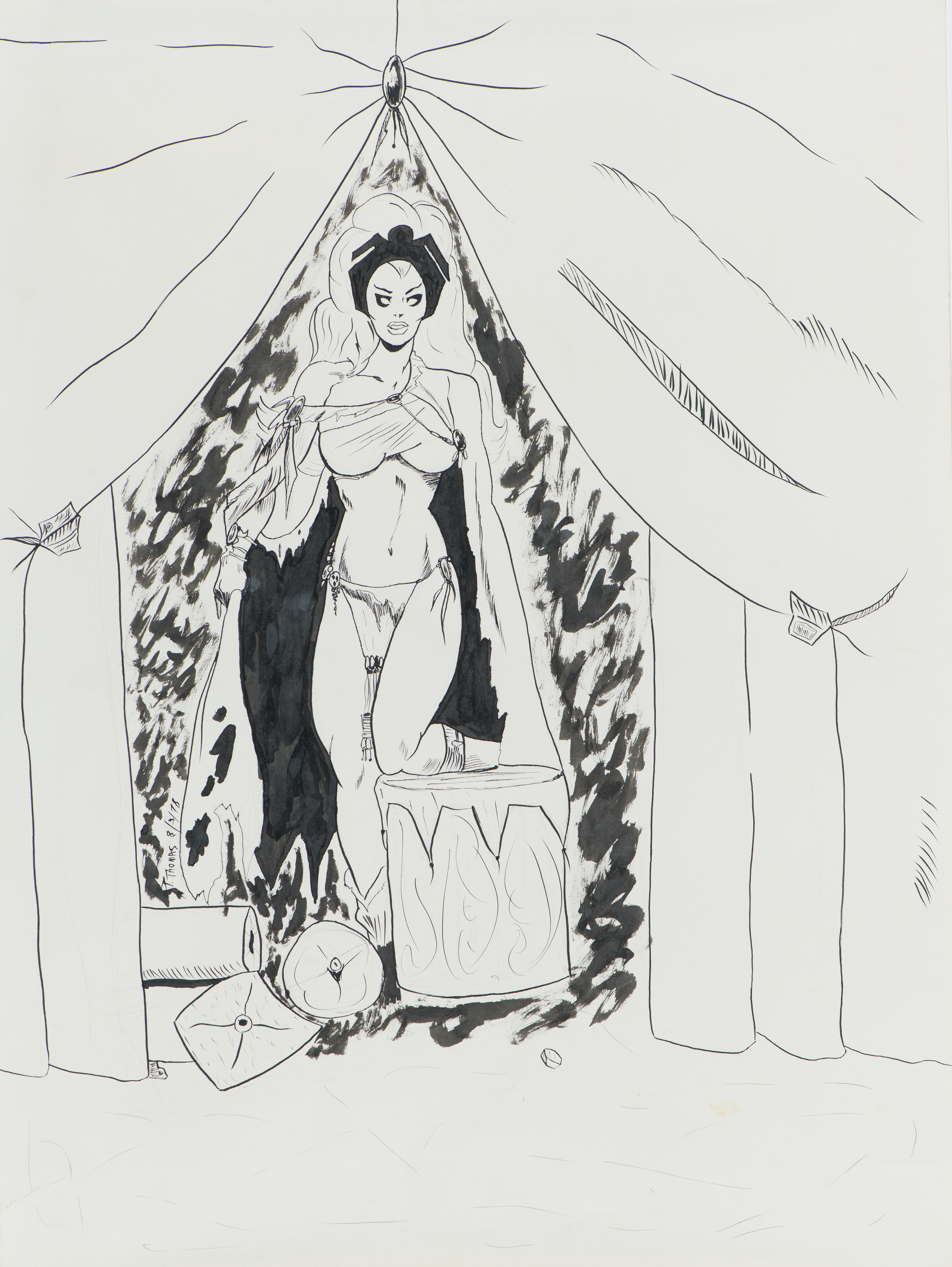
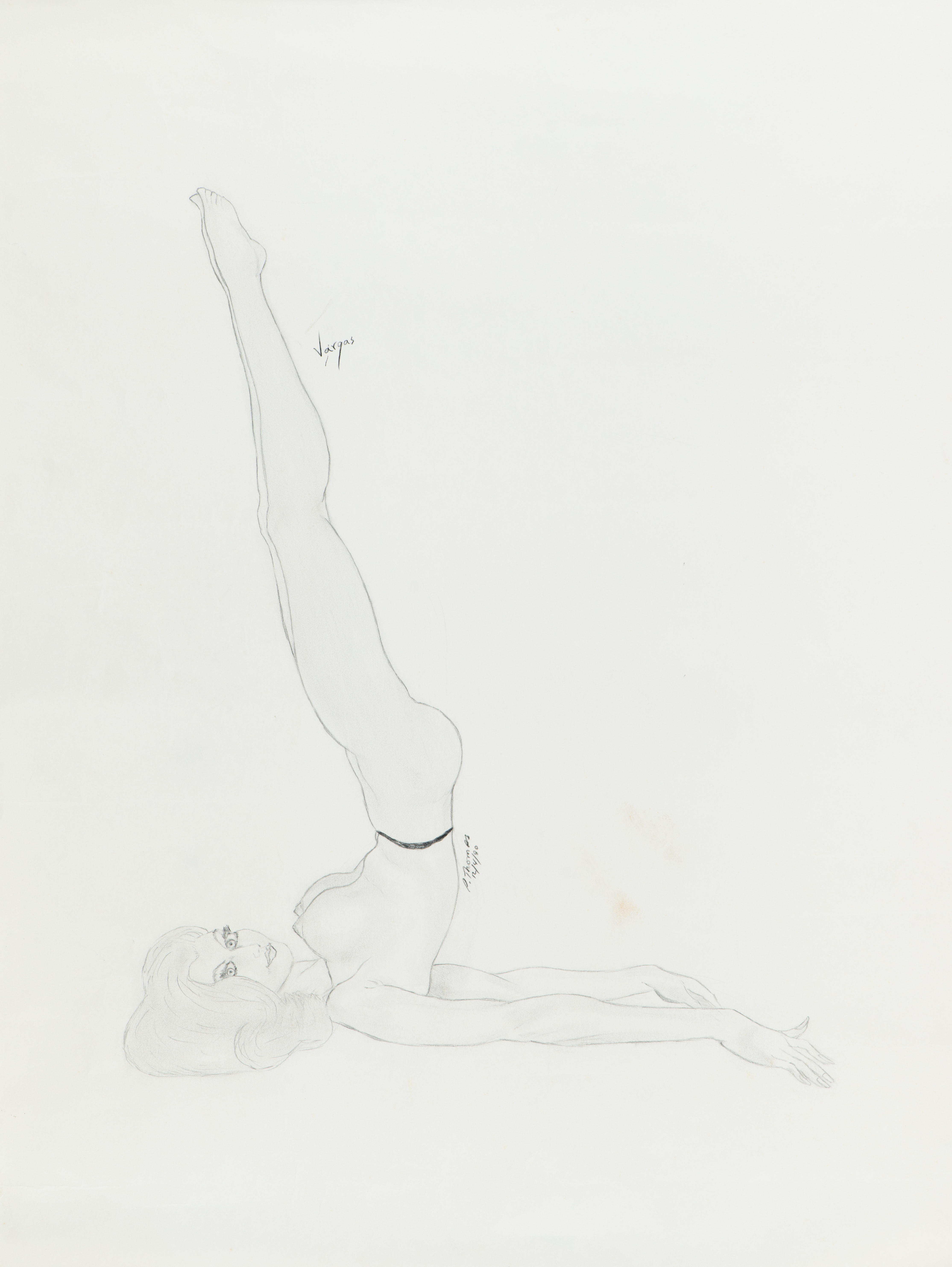
But as all this colored my attempts to be a sexual person, seeking out romantic relationships throughout high school and college, I was also being shaped in how I interacted with the world aesthetically, notably in that I was actively teaching myself visual art by drawing from both comic books and nude photography in the euphemistically named men’s magazines.

One can see a theme in my adolescent artwork:

Storm
Storm from the X-Men

Vargas
I shifted from comic books to men’s magazines and copying the objectifying artwork of Alberto Vargas, popularized in Playboy.

As a teen and young man, I was certainly trapped in very unhealthy but subtle patterns that could only be overcome by gaining critical awareness over my mid-20s into and my mid-30s (when I completed my doctoral program).

Some of that critical awareness was powerfully acquired through my commitment to learning from and teaching important literature such as Alice Walker’s The Color Purple and Margate Atwood’s The Handmaid’s Tale as well as poetry units I taught on Adrienne Rich, Anne Sexton, and Sylvia Plath.

Ultimately, writing an educational biography grounded in feminist theory stands in hindsight as the crowning experience as I approached 40 for a healthy awakening into fully appreciating toxic masculinity, predatory men, objectifying women, the male gaze, and rape culture.

Just as I would explain about my racial awareness, my sexual and gender awareness remains a journey, and as such, I find myself often paralyzed because, as a man, I represent still the potential for abuse through my status, the threat men pose for women in a society that continues to objectify and marginalize females—especially in terms of failing to listen to women who risk telling of their experiences with predatory men and rape culture.

My adult life has been spent as a partner, friend, parent, grandparent, teacher, and coach—all requiring me to monitor my status of power granted by being male and by my professional and familial positions in relationship with females.

As a coach and teacher, I have been (and continue) to be prone to call young women “darling” in casual moments—rightfully prompting some of my closest friends and colleagues who are women to call me on the language, the positioning.

I remain aesthetically drawn to photography and artwork of women nudes—entirely unsure if I can disentangle my toxic past from what I consider non-objectifying appreciation of art.

And so, as I noted above, I stumble toward 60, a man with good intentions who understands that is never enough; I am often reduced to paralysis in how to navigate the world in ways that are equitable and healthy for everyone regardless of race, gender, sexuality, or class.

I am genuinely terrified of ever making any woman/girl feel discomfort because of my masculine presence, my inadvertent gaze, my language, or the implicit threat of my status in relationship to her.

Often these days, I must confront these tensions as I snuggle with my granddaughter who I dearly want to grow up with healthy views of gender and sexuality, who I want to avoid any sort of predatory world.

My daughter was raised without corporal punishment, and now her children have been gifted that same dignity.

I work hard to practice what I preach and feel I make contributions small and even large to a kinder and more compassionate world—a world in which women and children need not ever fear men.

But even the best men walk in the wake of the worst men have given this world—the worst men continue to give to this world, and the women and children who must suffer for that.

Each man must moment by moment examine how he is culpable, where and how he stands in this world in relationship to women and children.

The dilemma of navigating the world as a man is couched in the unearned privilege, the potential for an abuse of unearned power that shouts out “First, do no harm.”

For a man committed to that, however, how does he live a full life without being paralyzed by the worst of being a man, behaviors that often go unpunished and even masked to protect some men from consequences.

How does any man avoid paralysis reading about the Stanford rape case or the stories of women as victims of predatory men?

This remains a rhetorical question for any man with an ethical imperative for his life—not a question for any woman or any child to offer their compassion.

For any man, for each man, this is ours to confront, to answer, and to act.

As long as men hold most of the power that shapes the world, it is ours to build a consensual environment in which human dignity supersedes the brute force of power.

Between acquiescing to the basest of male behaviors and paralysis is the true way, about which Franz Kafka wrote: “The true way is along a rope that is not spanned high in the air, but only just above the ground. It seems intended more to cause stumbling than to be walked upon.”

Pause. Listen. Look carefully before taking any step.


For Further Reading

Experts in the FieldBonnie Nadzam

Roxane Gay, Aimee Bender, and More on Assault and Harassment

The Predatory Men of Academic Creative Writing, John Warner

“He knows, or thinks he knows”: It’s Still a Man’s (Hostile) World

True Detective: It’s Still a Man’s (Hostile) World, pt. 2

Doubling Down (Again) on the White Man’s World

“Gravity”: The Unbearable Lightness of Being a Woman

In the U.S., Where the Female Nipple Is More Dangerous Than a Gun