In addition to the absence of coordination and sufficiency, the programs of the past all have another common failing — they are indirect. Each seeks to solve poverty by first solving something else.
I am now convinced that the simplest approach will prove to be the most effective — the solution to poverty is to abolish it directly by a now widely discussed measure: the guaranteed income.
“I am a writer, nothing more, nothing less,” begins Roxane Gay in the wake of a grand jury decision not to charge Darren Wilson in the killing of Michael Brown, adding, “In the face of injustice, I only have words and words can only do so much.”
On a much smaller scale, I too am a writer—and I am a teacher, Selves inextricable one from the other. My initial response to the grand jury’s inaction has been near paralysis, especially as a writer who mostly offers this blog; it seems appropriate that I shut up, take a moratorium and do as many have requested—listen.
Gay’s “I only have words and words can only do so much” haunts me, haunts me in the context of Martin Luther King Jr.’s words offered above—that tension between “indirect” and “direct” action.
Teaching and writing often feel merely “indirect”—symbolic, impotent, shouting down an empty well.
This is an awful feeling if, like me, you are compelled to be a writer-teacher, a teacher-writer.
Not as a conscious plan (in the way I am a poet), but typical of my twin compulsions to teach and to write, I finally landed at the keyboard this morning, composing to my three fall classes of students an email—such arrogance, such intrusion while these beautiful and wonderful young people slip away from college for a holiday, Thanksgiving.
Being a writer is the perpetual state of hyperawareness of one’s frailty and inadequacy combined with the relentless inevitable, sharing your words with a mostly anonymous audience. A writer’s writer, J.D. Salinger (flawed possibly to the inexcusable) has already captured how I offer my email below to the readers of this blog: “As nearly as possible in the spirit of Matthew Salinger, age one, urging a luncheon companion to accept a cool lima bean” (dedication for Franny and Zooey).
#
[Email to my students]
I do love you all. It is a very special thing to be given the task of teaching, to have students randomly assigned to your care, your responsibility.
Sometimes, that charge is more than I can handle, but I am only human (and aging, slipping into decrepitude, and thus, not as flawed in some ways as in my youth, but flawed in new and different ways).
Especially at Furman, and especially in our teens and 20s, it is easy to miss the world around us (I did mostly, and often, and well past then)—to empathize fully and genuinely with that world, those people unlike us.
So excuse this intrusion on your holiday … and do not feel obligated in any way to care about this now, or instead of turkey, or instead of just doing nothing, or instead of enjoying family or friends or someone you love … no one should deny you any of those things, and especially not me …
And now, teacher-Me: This essay is wonderfully written (what it says, yes, but how it is written, crafted):
And here are some poems of mine pulled out of the rubble of this horrible thing we allow in the US, a callousness about the lives of (especially) young black men:
I think, let us be thankful for we have many people and things that bring us happiness, but could we also find ways to insure that everyone has the opportunities to share the luxury of being thankful?
To you, then, accept as you wish a virtual side-hug, handshake, or your preferred virtual display of affection.
“It is very nearly impossible, after all, to become an educated person in a country so distrustful of the independent mind.”
― James Baldwin, “They Can’t Turn Back”
During my 18 years as a public high school English teacher, I had a standing commitment shared with my students: I taught with my door open.
This may not sound that radical, but I want to offer two points of context: (i) I taught with a colleague who always kept the door locked (and advocated that all other teachers do that also to create a barrier for drop-in visits by administrators), and (ii) I taught in ways not supported by my school as well as allowing student behavior explicitly punishable by school rules (eating and drinking in class, for example).
This context of my years as an English teacher came back to me during my session at the 2014 National Council of Teachers of English. At the end of the session, including Sean Connors (University of Arkansas) and Nita Schmidt (University of Iowa), the audience discussion turned to a tradition in teaching that likely is doing us great harm: teaching with our doors shut as an act of resistance (since we use the shut doors to implement practices counter to mandates).
Let me offer two moments from the history of teaching English before making a call for teaching with our doors open as acts of resistance.
Around 1931-1932, English educator (and 1954 NCTE president) Lou LaBrant taught while working on her doctorate at Northwestern University. In her unpublished memoir housed with her papers at the Museum of Education (University of South Carolina), LaBrant recalled a powerful—and disturbing—situation she encountered with her roommate, a Spanish teacher at her school.
Since the school had a prescriptive curriculum (including required books, etc.) and a standard assessment system based on that curriculum, LaBrant and her roommate fabricated an entire year’s lesson plans to conform to the mandates, but then implemented what LaBrant called progressive practices throughout the year (LaBrant did not require the books provided, allowing choice in reading and writing instead, for example).
In one respect, LaBrant and her roommate represent the all-too-common “shut your door and teach the way you believe.” But the disturbing aspect is that LaBrant’s students scored exceptionally high at the end of the year on the mandated assessment, prompting the administration to highlight how well LaBrant implement the requirements—and thus attributing the students’ success to the prescribed curriculum LaBrant did not implement.
Krashen and Regie Routman have both detailed how problematic “shut your door and teach” can be when we consider literacy policy.
While many blamed whole language as a policy commitment in California for the literacy test score drop in the late 1980s and early 1990s, Krashen explains:
Did teachers change their ways in California? Nobody really knows. There have been no empirical studies comparing methodology in language arts teaching before and after the 1987 committee met. (p. 749)
Routman is more direct:
So while the California framework…recommended the teaching of skills in context (as opposed to isolation), in actuality, the teacher training to empower all teachers to do this successfully was insufficient. In addition, the framework was widely misinterpreted. (p. 19)
At best, then, we can say about whole language implementation in California: (i) we have no firm data on if it was practiced, (ii) few teachers were adequately trained to implement whole language, and (iii) evidence suggests whole language was misunderstood often. Ultimately, California failed whole language, but whole language did not fail California—in part, because so many teachers shut their doors and teach.
This highlights a central tension around teacher agency and professionalism within a culture that demands teachers to be not political, not activists: Implementing mandates is not the work of professionals, notably when teachers and the research base for a field are excluded from how the policies are created within a partisan political arena (that teachers are deterred from entering as professionals).
My solution, then, is that teachers must begin to embrace and embody their professional selves by teaching with the doors open, especially when our practices reject flawed policy and mandates. Additionally, we must make transparent more credible artifacts of students learning, and not simply rely on the high-stakes testing data also used to de-professionalize teachers.
Teaching with our doors open creates agency where the system has denied it; teaching with our doors open offers direct alternatives to the practices we reject, to practices not supported by the evidence of our field; and teaching with our doors open models for our students how professionals behave.
While there is understandable refuge in teaching with our doors closed—historical and current forces that have worked to deny teachers their voices, their professionalism—it will only be through teaching with our doors open that we can both serve our students well and create a lever to reclaim our profession.
While we can never make statistically valid claims about who and what is posted in online comments, I believe those comments represent common beliefs more than we’d like to admit.
Possibly the nastiest and most troubling comments occur when I publish something about race and racism, as in this piece in The State (Columbia, SC) about racial inequity in school discipline and mass incarceration.
Let’s consider some of the failed logic:
“I don’t believe your statistics and here are some statistics that prove my point”—this comment reveals the power of seeking support for a belief someone will never release. What is also interesting is that this approach almost always shifts entirely the discussion, not actually refuting the original statistical evidence: to reject racism in mass incarceration, for example, single-mother birth rates are cited.
Racism denial almost always plays the poverty card, but in the racial inequity of mass incarceration, that point falls flat. Impoverished white males outnumber black males 2 to 1; thus, incarceration is not more significantly a function of poverty than race, since black males outnumber white males 6 to 1 in prison.
Racism denial also has a favorite statistic: black on black crime rates. However, white on white crime rates are about the same as black on black crime rates, both over 80%. In fact, crime in the U.S. is typically within race and by someone the victim knows (often family). If within-race crime rates explained mass incarceration, then blacks and whites would be about equally represented in prisons.
And finally, I have been told by email that I don’t know anything about being a police officer since I have never been a police officer—these denials are by white former officers who, of course, know nothing about being black (using their logic). Much of what I offer about the racism of school discipline and the judicial system is based on the research and lived experienced of blacks, to me a much more credible source of understanding the inequity.
The raw data on school discipline and mass incarceration are undeniable in terms of racial inequity. As I noted, that requires a careful and nuanced consideration of the many reasons that inequity exists. In the case of mass incarceration, Michelle Alexander has offered a detailed examination that uncovers significant racism in who is arrested, how (and if) people are charged, and what sentences are handed down.
Decades of research also shows racial inequity in school discipline and then high and disturbing correlations between school discipline and incarceration rates.
Denial of racism in school discipline and incarceration, from the nasty to the illogical, is embracing school and judicial realities that mis-serve black children and black young adults—and then mis-serves us all.
Asking why these inequities exist so that they can be eradicated is a call for justice, not a plea for anarchy.
An old joke tells of a police officer confronting a man crawling on his hands and knees beneath a streetlight one night. The man explains he is looking for his lost keys. When the officer asks if the man is sure he dropped the keys where he is crawling, the man replies, “No, but the light is better here.”
This joke offers something that is deadly serious about both school discipline and the U.S. judicial and incarceration systems: Males, specifically black males, suffer the brunt of punishment in schools and life because they are disproportionately targeted.
Richland 2’s task force examining inequity of discipline and expulsion for black males reflects a pattern that exists nation-wide. In 2012 the Office of Civil Rights released disturbing data about racial imbalances in school suspensions and expulsions: “African-American students represent 18% of students in the CRDC sample, but 35% of students suspended once, 46% of those suspended more than once, and 39% of students expelled.”
Expulsion and suspension begin as early as pre-kindergarten, also disproportionately affecting males and black students. Along with grade retention, discipline policies strongly predict drop-out rates as well as incarceration in adulthood.
Often called the school-to-prison pipeline, the relationship between school discipline and the judicial system demands attention, such as the task force by Richland 2.
But the public response to this data often includes two misleading claims. First, many directly embrace suspension and expulsion as part of a larger faith in a “do the crime and do the time” mentality. Second, some immediately assume raising concerns about race-based discipline inequity is a call to let students do whatever they want in school.
In order to understand the race problem in school discipline and then how to address those inequities in ways that benefit everyone, let’s consider the current mass incarceration situation in the U.S.
Legal scholar Michelle Alexander has labeled this the New Jim Crow. In her examination of the rise of mass incarceration begun during the Reagan administration, Alexander admits that she began her project rejecting the claim that the judicial system is racially biased against blacks.
However, she discovered ample evidence for race playing a key role in who is arrested and imprisoned as well as what punishments people receive. Two examples are worth highlighting.
Alexander, in fact, details that whites and blacks experience much different routes in the judicial system after being arrested for similar crimes, experiences represented by the drug war noted above.
Next, I want to return to the opening joke because Alexander also shows that police tend to target blacks more often than whites for arrests.
Her most powerful example is that while the police commonly sweep minority and high-poverty neighborhoods for illegal recreational drugs, the police almost never conduct similar sweeps through college campus dorms—where recreational drug use is also likely.
The light, then, being shined results in arrests, but if that light were aimed somewhere else, who is arrested would also change.
The conditions of mass incarceration confronted by Alexander are now being recognized in the disciplinary policies, such as zero tolerance, and outcomes in public schools, where black males are disproportionately suffer the negative consequences that last into adulthood, even though we have no evidence blacks exhibit worse behavior.
Just as research on grade retention and corporal punishment suggest more effective alternatives to both—alternative that do not simply allow failure or harmful behavior—Walter S. Gilliam, psychologist at the Yale School of Medicine, suggests schools treat extreme behavior instead of using punishment, address teacher stress and time spent with children exhibiting extreme behavior, lower student-teacher ratios, maintain better records of disciplinary actions toward children, and implement wrap-around services that address childhood behavior in the home as well as school.
Gender and race inequity exists in school discipline policies; that fact is not an avenue to ignoring bad behavior, but the first step toward seeking ways in which all students succeed in school and then in life.
The puzzle isn’t hard to put together because the pieces are in clear sight and fit together easily, but political, media, and public interest in facing the final picture is at least weak, if not completely absent.
Gerald Bracey (2003) and more directly Gerald Holton (2003) exposed that the stated original intent under the Ronald Reagan administration was to create enough negative perceptions of public education through A Nation at Risk to leverage Reagan’s political goals:
We met with President Reagan at the White House, who at first was jovial, charming, and full of funny stories, but then turned serious when he gave us our marching orders. He told us that our report should focus on five fundamental points that would bring excellence to education: Bring God back into the classroom. Encourage tuition tax credits for families using private schools. Support vouchers. Leave the primary responsibility for education to parents. And please abolish that abomination, the Department of Education. (Holton, n.p., electronic)
The accountability formula spawned after A Nation at Risk swept the popular media included standards, high-stakes testing, and increased reports of pubic school failure.
While the federal report created fertile ground for state-based school accountability, that proved not to be enough for political leaders, who within 15-20 years began orchestrating national versions of education accountability. The result was No Child Left Behind and then Common Core standards and the connected high-stakes tests—both neatly wrapped in bi-partisan veneer.
About thirty years after Reagan gave the commission that created A Nation at Risk the clear message about the need for the public to see public education as a failure, David Coleman, a lead architect of Common Core, exposed in 2011 what really matters about the national standards movement; after joking about having no qualifications for writing national education standards, Coleman explained:
[T]hese standards are worthy of nothing if the assessments built on them are not worthy of teaching to, period. This is quite a demanding charge, I might add to you, because it has within it the kind of statement – you know, “Oh, the standards were just fine, but the real work begins now in defining the assessment,” which if you were involved in the standards is a slightly exhausting statement to make.
But let’s be rather clear: we’re at the start of something here, and its promise – our top priorities in our organization, and I’ll tell you a little bit more about our organization, is to do our darnedest to ensure that the assessment is worthy of your time, is worthy of imitation….
There is no amount of hand-waving, there’s no amount of saying, “They teach to the standards, not the test; we don’t do that here.” Whatever. The truth is – and if I misrepresent you, you are welcome to take the mic back. But the truth is teachers do. Tests exert an enormous effect on instructional practice, direct and indirect, and it‟s hence our obligation to make tests that are worthy of that kind of attention.
The pieces to the puzzle: Education accountability began as a political move to discredit public schools, and next the Common Core standards movement embraced that above everything, tests matter most.
In a move likely to cause political and academic stress in many states, a consortium that is designing assessments for the Common Core State Standards released data Monday projecting that more than half of students will fall short of the marks that connote grade-level skills on its tests of English/language arts and mathematics.
Like Naomi Klein’s disaster capitalism—the consequences of which are being exposed in New Orleans, notably through replacing the public schools with charter schools—the Common Core movement is not about improving public education, but a form of disaster bureaucracy, the use of education policy to insure the perception of educational failure among the public so that political gain can continue to be built on that manufactured crisis.
Yes, disaster bureaucracy is an ugly picture, but it is evident now the accountability movement is exactly that.
Common Core is not some unique and flawed thing, however, but the logical extension of the Reagan imperative to use education accountability to erode public support for public schools so that unpopular political agendas (school choice, for example) become more viable.
The remaining moral imperative facing us is to turn away from political claims of school and teacher failure, away from their repeatedly ineffective and destructive reforms, and toward the actual sources of what schools, teachers, and students struggle under as we continue to reform universal public education: social and educational inequities that have created two Americas and two school systems that have little to do with merit.
Accountability built on standards and high-stakes testing (not Common Core uniquely) is the problem because it is a designed as disaster bureaucracy, not as education reform.
References
Bracey, G. W. (2003). April foolishness: The 20th anniversary of A Nation at Risk. Phi Delta Kappan, 84(8), 616-621.
Holton, G. (2003, April 25). An insider’s view of “A nation at risk” and why it still matters. The Chronicle of Higher Education, 49(33), B13-15. Retrieved March 26, 2010, from OmniFile Full Text Mega database.
Superhero comic book universes (popularly associated with DC and Marvel) have two key advantages over reality: reboots (returning to a hero’s origin and starting again—such as Frank Miller’s reboot of Batman in the mid-1980s and the film rebootings of Spider-Man and X-Men over the past 15 years or so) and alternate universes/realities.
The re-imagining of Spider-Man as bi-racial and Captain America as black are powerful contributions to the superhero genre of comic books—in part for the messages about race and in part because superhero comics have had lingering flaws in terms of race and gender since their beginnings in the 1930s and 1940s.
The irony of these examples is that they represent the power of symbolism in the context of the imaginary commenting on reality.
In reality, however, we are trapped in a mostly linear existence, one that we attempt to qualify with “history repeats itself” or “those who ignore history are doomed to repeating the failures.”
Human advancements are incremental and rarely universal; some women in some places, for example, have achieved some level of equality with men, while many women remain prisoners of horrific misogyny and gruesome social oppression and abuse.
One lesson of the real world, then, may be that we must not allow the pursuit of perfect to keep us from clinging to something, something better, something creeping toward the ideal.
In a country that remains scarred by the inequity of racism, those people in the U.S. who advocate that the election of Barack Obama as the first bi-racial and self-identifying black man is an important symbolic moment in the nation are, I think, entirely justified—notably if we disassociate Obama’s status as president from his policies.
I struggle, however, with that disassociation—notably in terms of military actions/policy and education policy.
Obama’s education policy has continued a failed agenda begun under George W. Bush (an idealized bi-partisan agenda buoyed by the “bi-partisan” instead of credible educational research or authority), and then increased the very worst aspects of that legacy. Obama has now promised that those failures will last past his tenure:
The Obama administration is inviting states to apply to renew their waivers from the No Child Left Behind Act. And according to guidance issued Thursday, these renewed waivers could last all the way through the 2018-2019 school year — locking down some of President Barack Obama’s education policy changes well into the next presidency.
Obama the symbol is undeniably important; Obama as an administration and set of educational policies is a baffling disaster for public education, the teaching profession, and (worst of all) students, specifically impoverished children and children of color.
Secretary of Education Arne Duncan embodies the failed discourse and punitive policies that are indistinguishable from W. Bush’s administration except under Obama, everything that is wrong with the policy has been increased: a greater commitment to standards, more testing, expanded blame placed on teachers, expanded shifting of public to private interests and mechanisms.
Under Obama, the U.S. has continued a scorched-earth policy in warmongering (smart bombs, drones) and in public education policy (school closings, teacher firings).
There is no symbolism there we can recover—only a harsh reality of failure and a legacy we can do without.
South Carolina is a hard-core right-wing state, often leaning Libertarian and almost always contradictory.
SC politicians push school choice while running against a woman’s right to choose. Now we learn that school choice advocacy in SC does not include parents’ right to choose whether or not their children participate in relentless testing.
According to a memo from the SC Department of Education and to district superintendents:
It has come to the attention of the South Carolina Department of Education (SCDE) that opt-out request forms are circulating around the state giving some parents the belief that they can opt their children out of state and federal testing requirements, among other things. With regard to testing, federal and state laws require that all students be included in South Carolina’s state assessment system.
There is no state provision for parents or eligible students (who are age eighteen or older) to opt-out of state-or district-wide testing….
With regard to any requests from parents for a school district to omit their children’s data from any district submission to the SCDE, neither federal nor state law allows a parent to opt-out of federal or state-required data collection processes, which is safeguarded by the SCDE.
While I have written often about the dangers of idealizing parental choice, it is certainly interesting to recognize the contradictory messages right-wing political leadership in SC sends about their own occasional support of choice (which reveals itself to be no real support of choice at all—only when it serves the interests of those leaders).
If you’re afraid they might discover your redneck past There are a hundred ways to cover your redneck past
“Your Redneck Past,” Ben Folds Five
My maternal grandfather’s given name was Harold, but he went by “Slick.” As his first grandchild, however, I christened him “Tu-Daddy”—a child’s twisting of “two,” as in my second father.
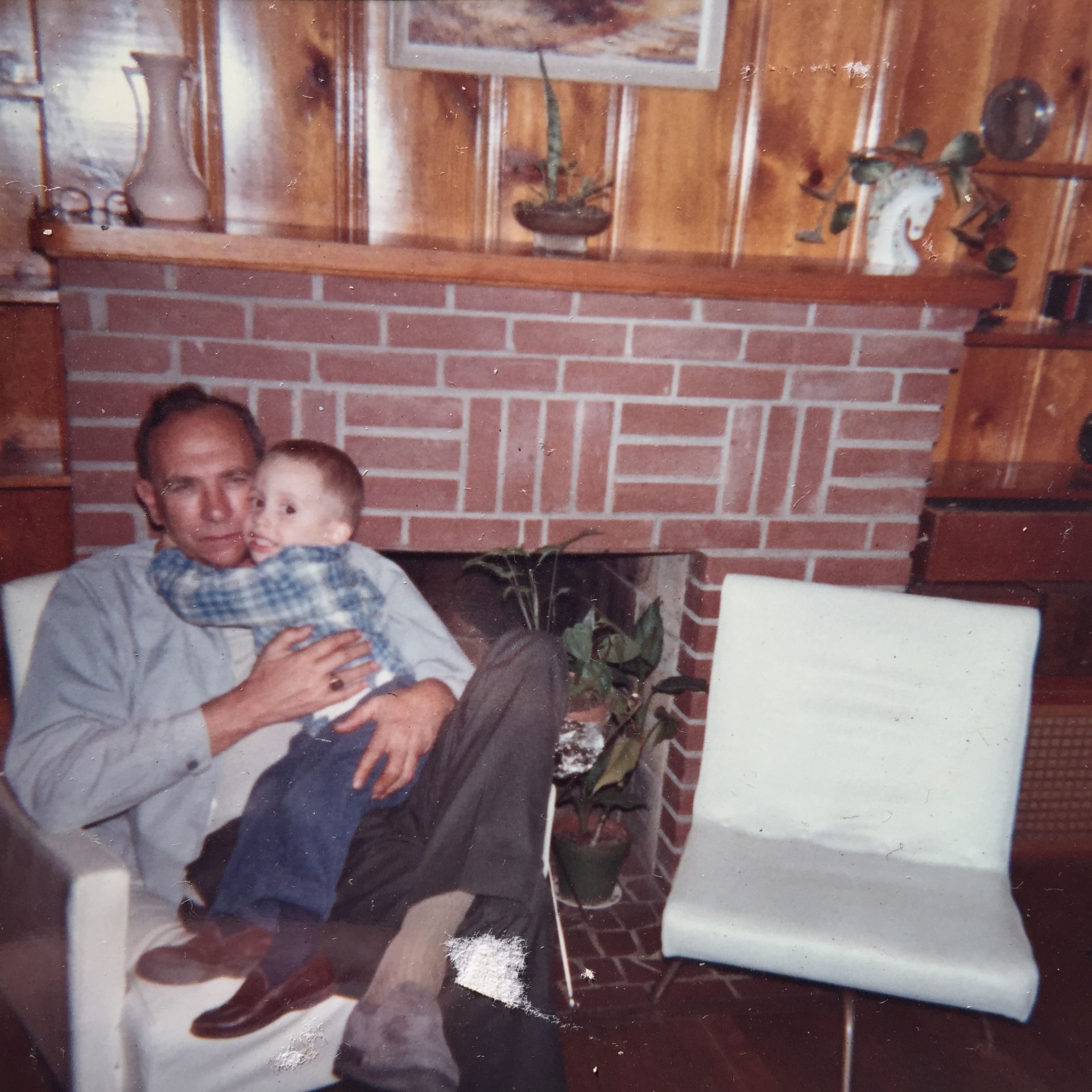
Tu-Daddy holding me as a small child—oddly, with shoes and a shirt on.
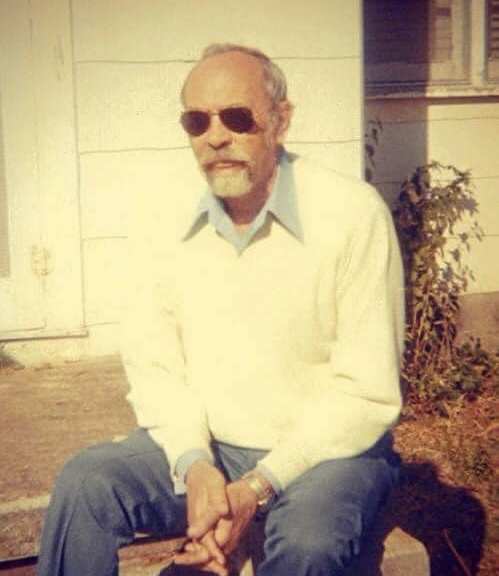
But “two” also captures the two enduring images I have of him: (1) Harold/Slick lost his little finger on his left hand in the machinery of the yarn dyeing mill where he worked in the hills of North Carolina [see note below], and (2) virtually every time I saw him, Harold/Slick was barefoot—typically, sitting outside in nothing except a pair of cut-off jeans, silent and alone.
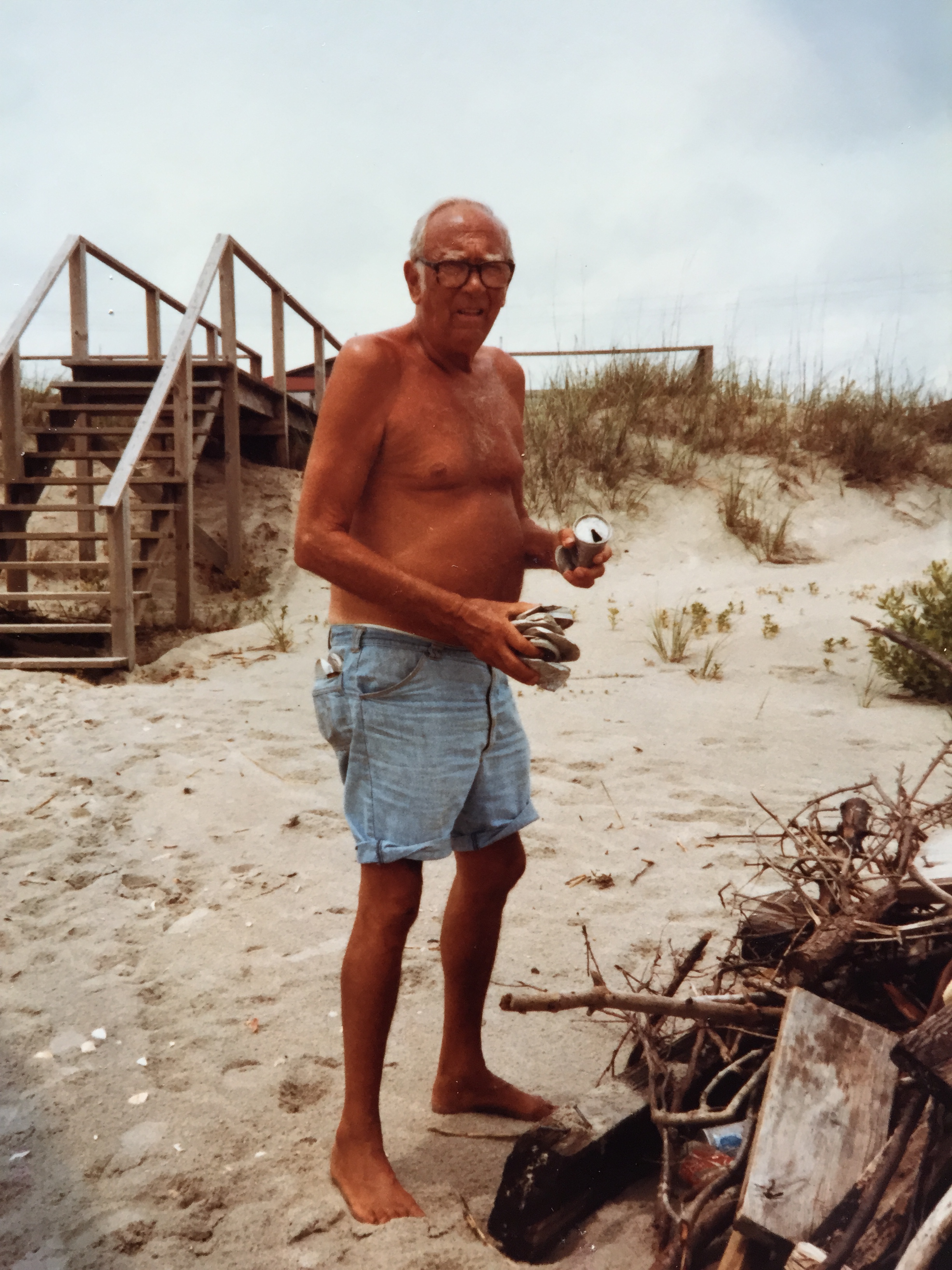
Harold Sowers (Tu-Daddy) collecting beer cans at Myrtle Beach, where he spent winters helping run a hotel.
My name is also connected with “two” because I am a second, named after my paternal grandfather, Paul Lee Thomas, who people in my second hometown of Woodruff, SC, knew only as Tommy. And it was in second grade when my teacher, Mrs. Townsend, sent me into the hallway for arguing with her about my name.
When she took the first role (everyone in Woodruff knew everyone), Mrs. Townsend informed me that I was a junior, named after my father she stated with the assurance of a teacher, but I explained, “No, ma’am, I am named after my grandfather. I am a second.”
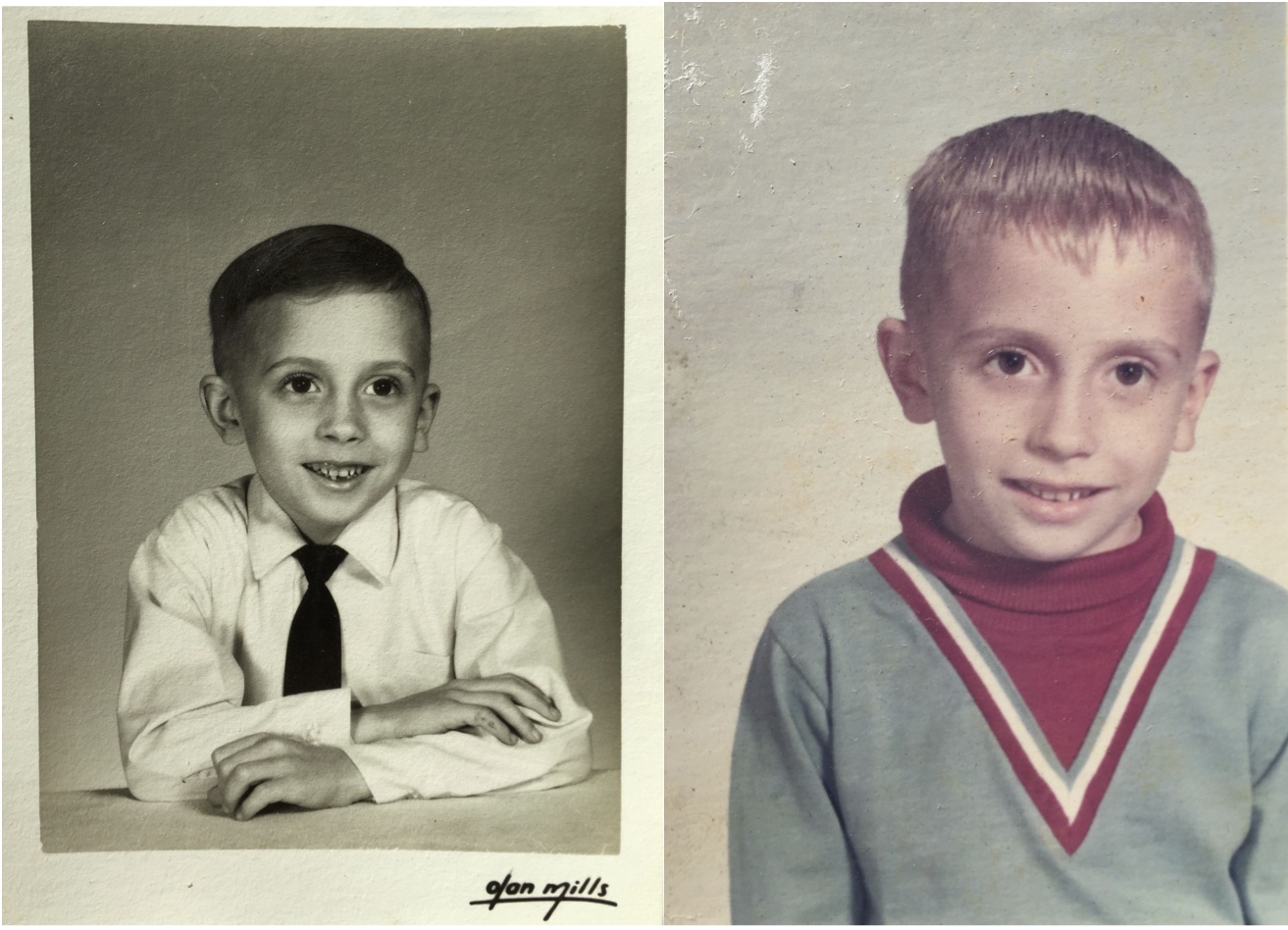
Me, childhood pictures, school picture on the right.
As was the case in my home, in school, children did not argue or correct adults so to the hall I went—although I was right, and she was wrong.
I was already petrified of Mrs. Townsend, a small woman, because I knew her husband, Corporal Townsend, a highway patrolman, whom I had met at my grandfather’s gas station that sat in the middle of town—the sign prominently stating, “Tommy’s 76.”
The yarn mills in the hills of North Carolina to the mill villages of Upstate South Carolina, then, are the fertile soil of my redneck past—working class families sometimes disrupted by alcoholism on one side and mostly living their lives with little or minimal formal education.
•
My mother finished one year of college (after attending 7 high schools because her family constantly moved), and my father graduated junior college (by then already with a full set of false teeth, having lost all his in high school).
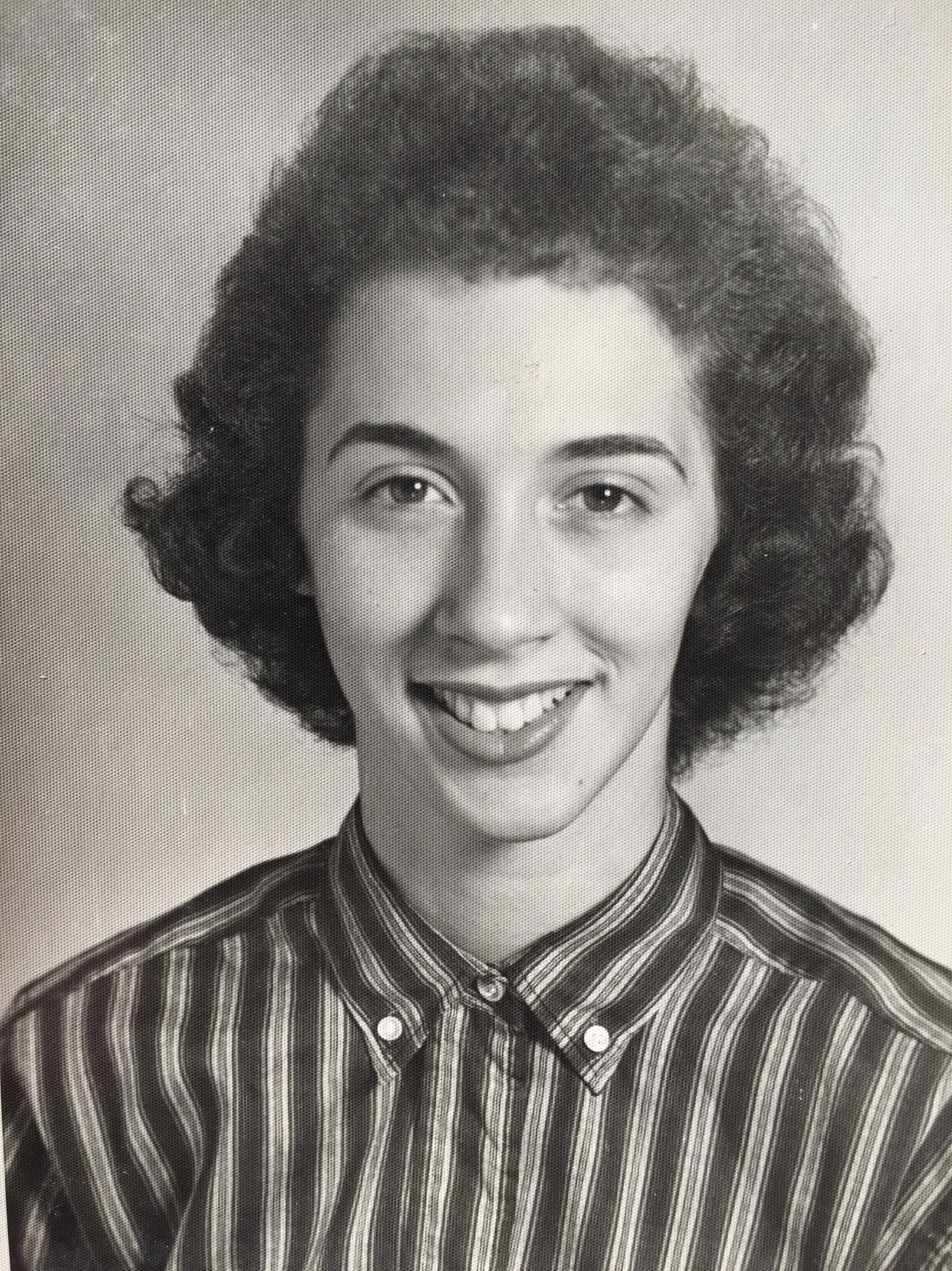
Rose, my mother.
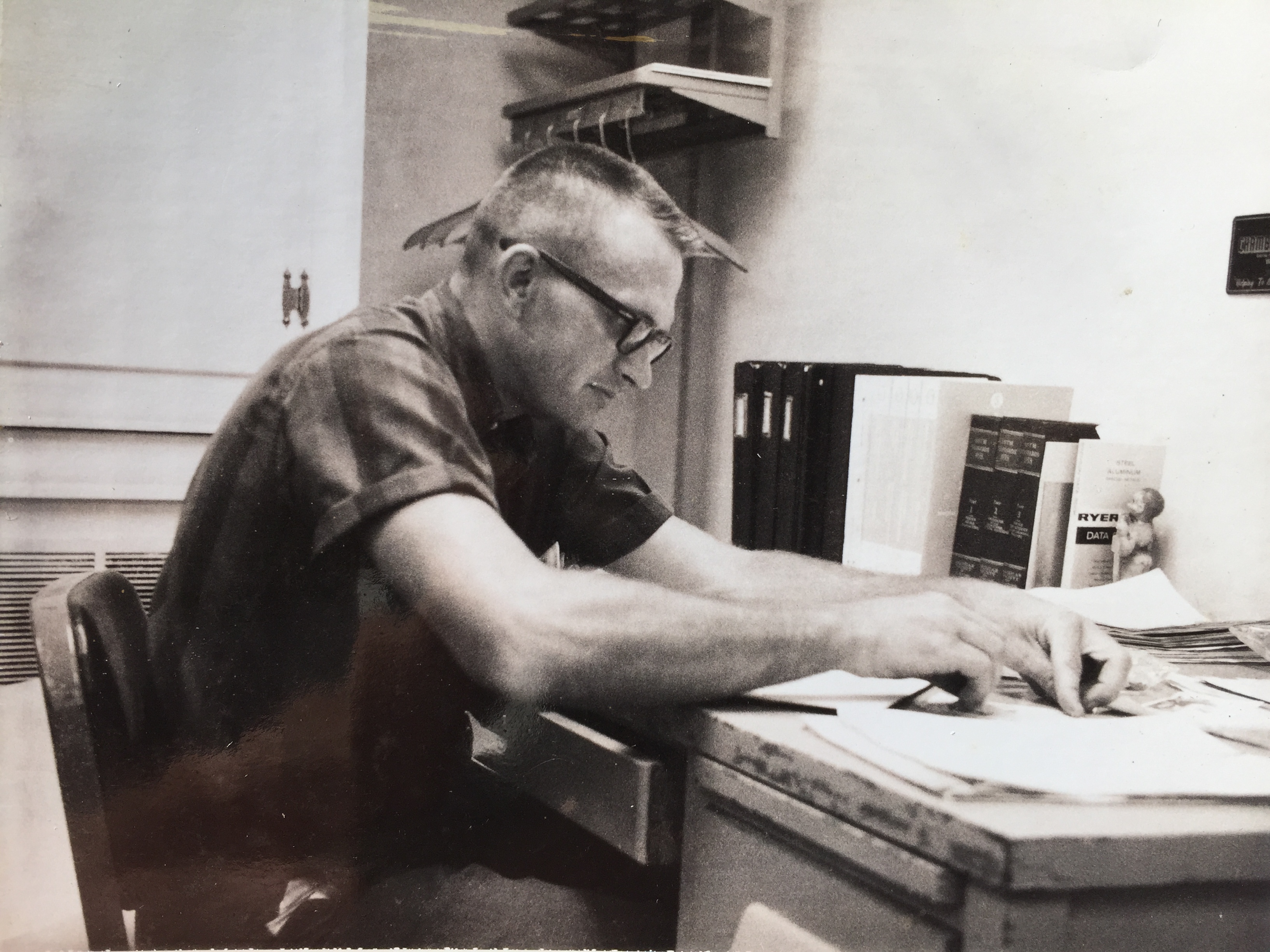
My father as an adult worked in machine shops, quality control, most of my childhood, and often came home with black grease under his fingernails and in the lines of his hands.
Keith, my father.
Even after retiring, my father worked in a machine shop part-time, under the weight of manual labor that taxed his arthritic shoulders (he depended on the kindness of his co-workers who often lifted parts for him).
This working-class upbringing that began for 6 or 7 years in Enoree, SC (nothing more than cross roads at the edge of the Enoree River) and then in Woodruff just to the north (a mill town with a wide main street that if you stood on one end you could see the other and the two stop lights along the way), however, was one of privilege as it was also nearly idyllic because my parents worked relentlessly to provide for my sister and me far above our working-class means.
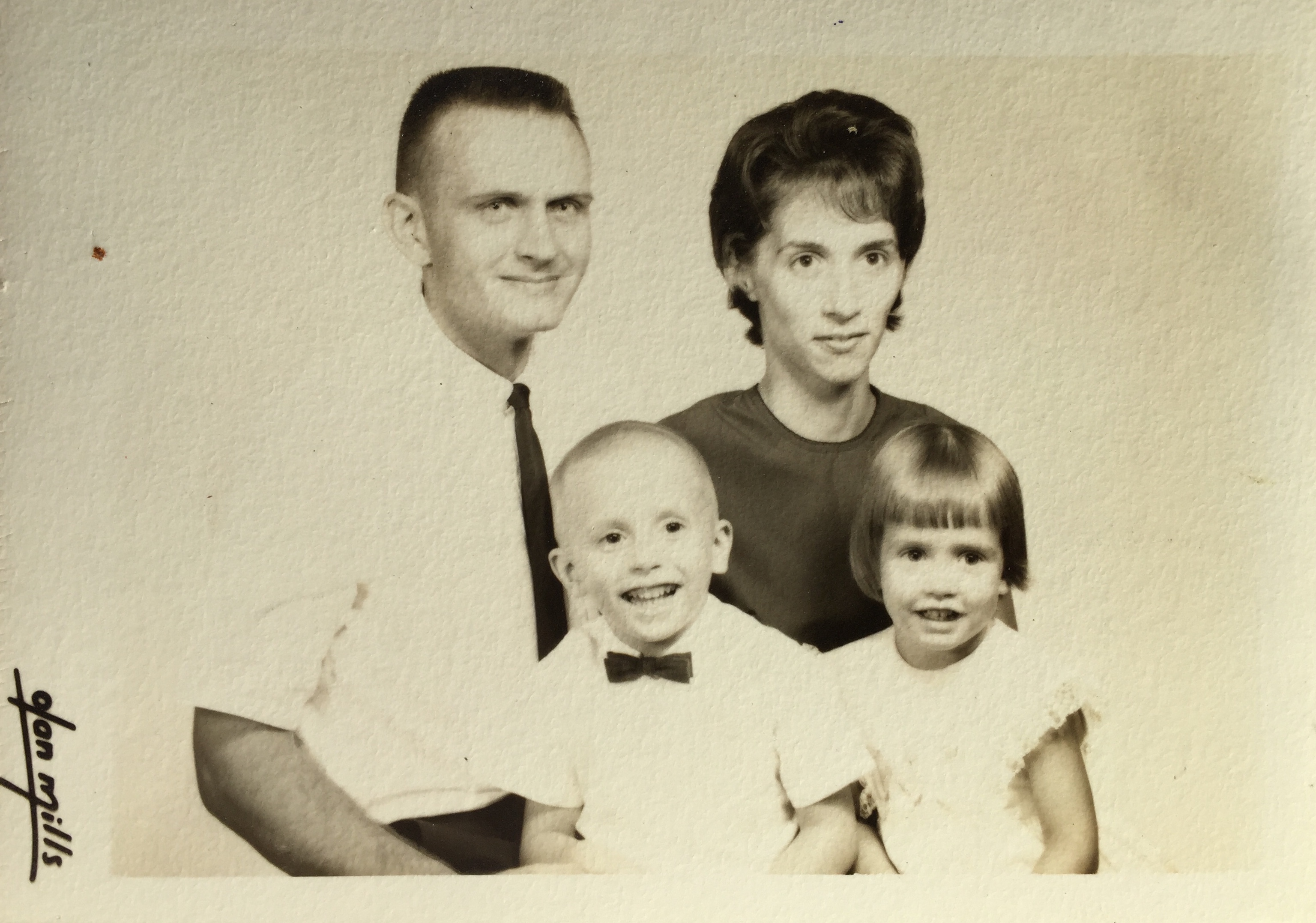
Keith, Rose, Paul, and Eydie Thomas— the family.
The fruits of that work ethic in the 1960s and 1970s by working-class white families benefitted from a racial privilege in the South that working-class and working-poor families in the twenty-first century do not experience—primarily because of the shifts in racial demographics in how class has evolved in my lifetime.
However, my working-class background was real in the sense that my upbringing and eventual (and unusual for my family) series of college degrees resulting in a doctorate (all from state schools) have left me still extremely uncomfortable with affluence and imprinted on me a Southern drawl that many people continue to hold against me.
I am frequently accused of being ungrammatical when I talk (when I have not been), and I have even had students say directly to my face that I don’t sound smart—even though they know I am smart.
When students enter my university office, typically their first comment is—after scanning the entire wall of shelved books that loom over the small space—”Have you read all those books?” That seems unfathomable to these mostly affluent young people who do not suspect that this wall of books represents a very real self-defense mechanism of a permanent redneck.
You are damned right, I do not say, I have read all these books. Instead, I smile, explaining, “Of course, and there are this many more in my library at home.”
Formality, dressing up, fine dining, ceremony—all the trappings of upper-middle- and upper-class normality make me incredibly anxious, still—despite all my formal and informal education, however.
I am the embodiment of a powerful lesson about life: You can leave your redneck past behind, but you cannot erase your redneck past.
•
My formative years of junior and then high school included my uncle, aunts, and mother introducing me to The Firesign Theatre, Richard Pryor, and George Carlin. Concurrent with those revelations, I was wrestling with my desire to be an athlete.
By the age of ten, I had moved with my family from downtown Woodruff to the golf course just outside of town—itself a contradiction as a very redneck country club, including its racially segregating policies (blacks were not allow to join).
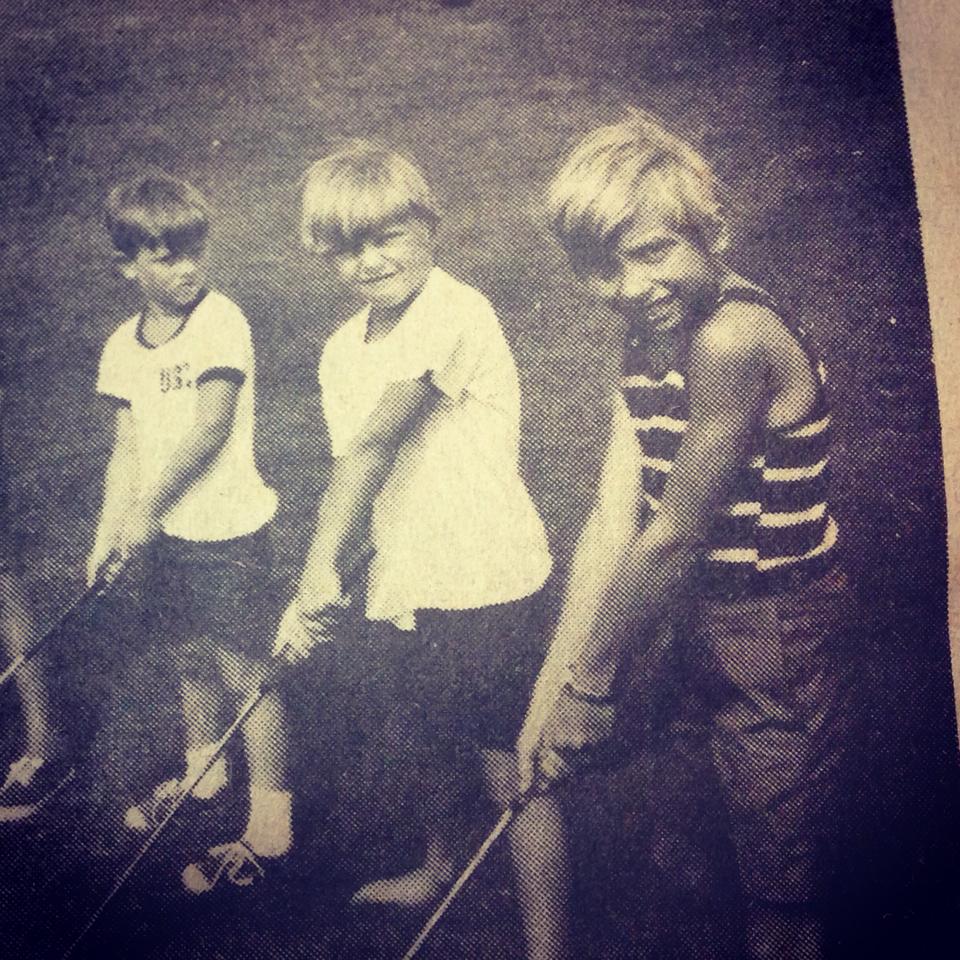
Young redneck golfer, me, sleeveless no less.
I fluctuated, then, between two vastly different athletic worlds as I worked at being a golfer and a basketball player—a very white world coming against a very black world.
I lived on a golf course that excluded blacks, and in my home town, blacks literally lived across the tracks in a neighborhood called Pine Ridge.
In tenth grade, I was the only white player on a 13-person junior varsity basketball team. At that time, I was sitting often in my room listening to Carlin and Pryor comedy albums over and over—perfecting their routines and crafting my own dexterity with the power of profanity.
The gift of swearing (possibly my first defense mechanism to mask my crippling low self-esteem), of course, transferred seamlessly from the basketball court onto the golf course, but basketball courts and golf courses could have easily in the 1970s been two different planets.
Those two different planets, though, were better schools than the school I attended, where I made As and Bs, mostly floundering on the bench of the school basketball teams.
•
My working-class, redneck upbringing had two important features (“two” again): my world was mostly a racist one, and the language I grew up in and with was deeply engrained with what people consider non-standard grammar, vocabulary, and pronunciation.
All of that collided, of course, with the education I was receiving from vinyl 33 1/3 albums that taught me lessons about race, class, and language that I was certainly not hearing in my home, community, or school.
After finishing my undergraduate degree, I returned to Woodruff to teach English (of all things) at the high school where I had graduated just five years before. My students were from Cross Anchor (even smaller then Enoree), Enoree, and Woodruff—the people and places of my early life.
Throughout nearly two decades teaching there, racial tensions remained, and most of my students reflected back at me my tangled history with the English language. We often laughed in those high school classrooms—my students and I. We often laughed at ourselves.
When I read William Faulkner’s As I Lay Dying aloud to my Advanced Placement students, we smiled, we laughed.
When I told them about the local news coverage of a tornado, and the person interviewed saying on air, “I knowed it, I seen it coming, it blowed the trailer off the cinder blocks,” we smiled, we laughed.
Many of the redneck white males I taught reminded me of my two grandfathers—slow moving, suspicious of everyone, and nearly silent.
A less funny joke of those years was that Woodruff was still 1957—frozen in time.
•
A few days ago, my Saturday cycling group took a course that rolled south of Spartanburg (the “city” of my childhood) into Enoree. When I told my friends I had grown up there, most were shocked; typically, I tell everyone I am from Woodruff.
Enoree that Saturday morning looked almost as it had when I was a child—except the mills are all dead, abandoned, just as they are throughout the back streets of Woodruff and all across the Upstate of SC.
I imagine people see poverty and my redneck past when they see Enoree or even Woodruff for the first time, but I certainly don’t.
I see a richness of memories—things I have overcome, things I carry with me still.
I imagine people hear a redneck when I talk aloud, despite my best effort to leave all that behind with book learning (I think of Huck Finn being berated by his abusive father).
These two places of my childhood were gifts, like my parents, precious gifts.
•
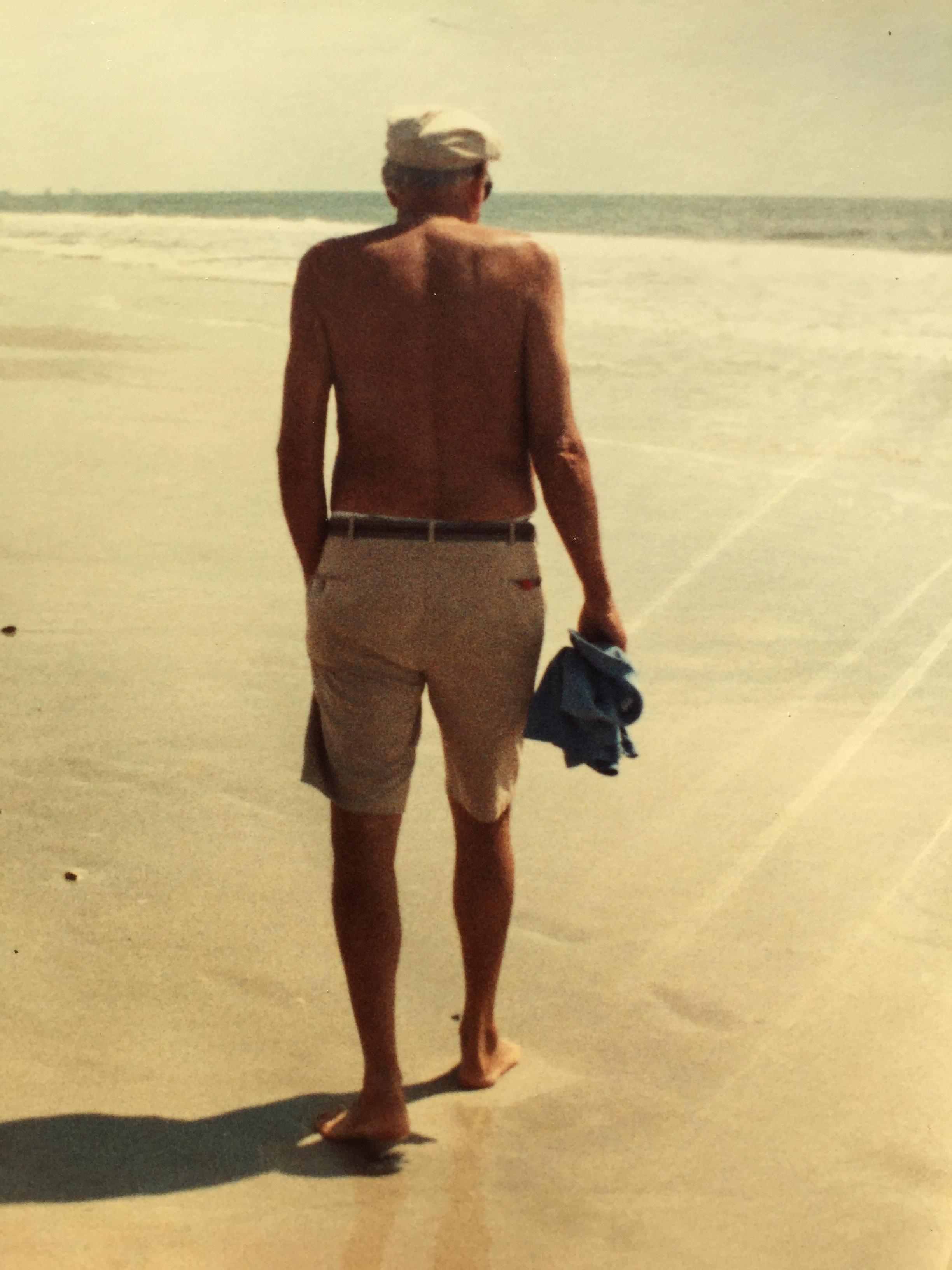
I often think of Tu-Daddy sitting alone, barefoot, turning a deep brown in the summer sun he adored.
Tu-Daddy walking the beach at Myrtle Beach, SC; no shirt, no shoes, and his cap.
Most of my childhood, he and my grandmother (people knew her as “Deed,” but we called her “Granny”) lived on a road named the same as their family name, “Sowers.”
A few acres were all that remained of a vast stretch of land once owned by their family before my grandfather.
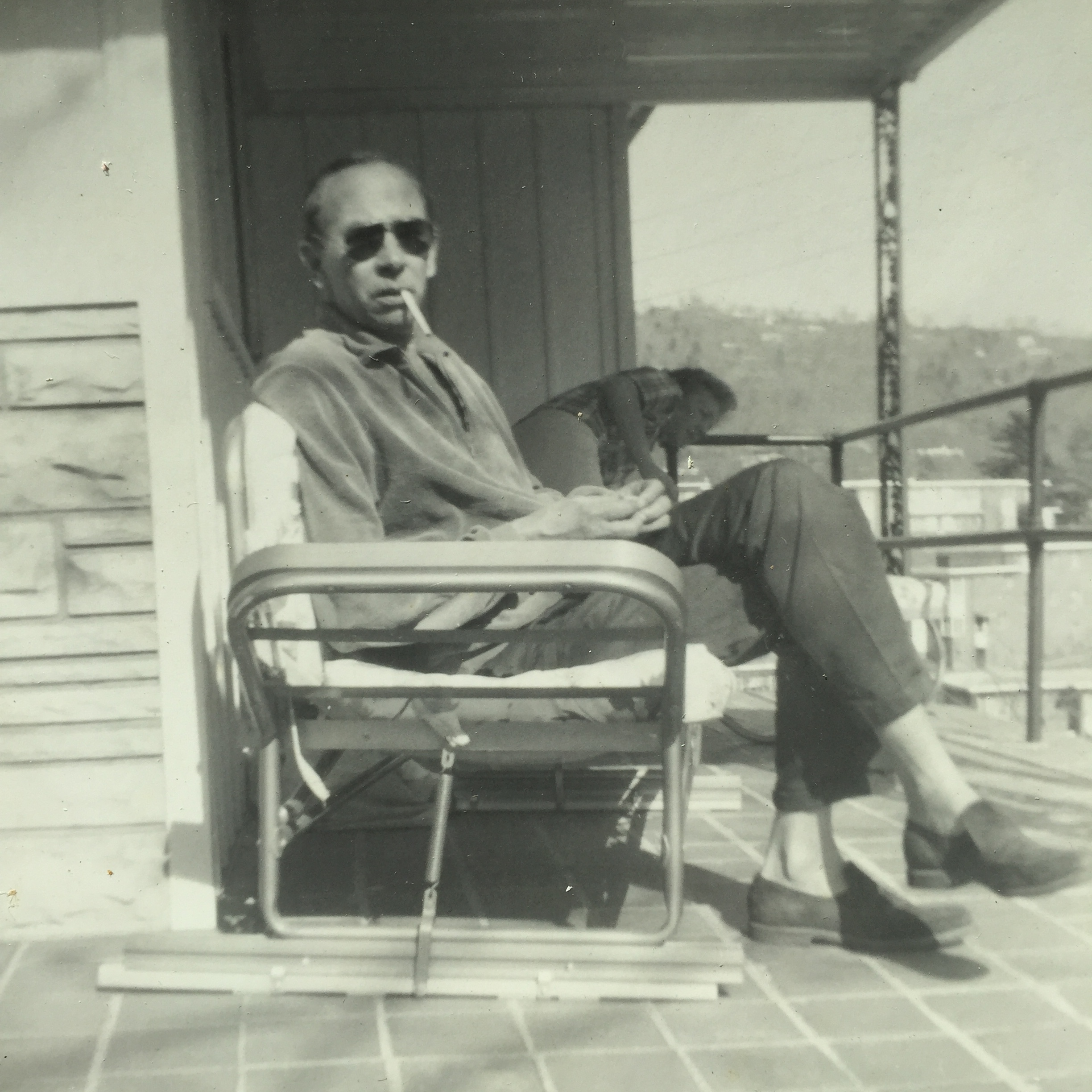
Harold/ Slick—shirt, shoes, no socks, and smoking on the front porch.
I have watched as the world has pulled away from my working-class family. The poor, the working poor, and the working class have become sources of derision (not the friendly laughing at ourselves of my high school classes)—for their financial poverty, for their so-called poverty of language.
Like the two worlds of the golf course and the basketball court of my youth, two worlds have materialized around me as I have buried myself in books as a great escape from my redneck past.
And in the end, I am still that second grader, banished to the hall, embarrassed and frustrated because even when I am right, I feel inadequate, powerless.
I am the second, I think in a whisper, I am the second.
Note
The story of how Tu-Daddy lost the little finger appears to be a jumbled family legend. Several of us (an aunt and a cousin along with me) agree with the version I have in this post—that he lost the finger at work—but my uncle says Tu-Daddy lost the finger working on a running car engine. There seems to have been a serious hand accident at work as well, but the exact details of the lost little finger have a life of their own.
educator, public scholar, poet&writer – academic freedom isn't free



 dr. p.l. (paul) thomas