Category Archives: Education

Post-Katrina New Orleans: Disatser Capitalism Feeds on Poverty and Racism

Drawing from her Hope Against Hope, Sarah Carr asks, Can school reform hurt communities?—focusing on New Orleans:

New Orleans may be the extreme test case, but reforms like these are reshaping public education across the country. The movement is rooted in the notion that “fixing” schools is the strongest lever for lifting communities out of poverty. The criminal justice and health care systems may be broken, living-wage jobs in short supply, and families forced to live in unstable or unsafe conditions. But the buck supposedly stops in the classroom. Thus teachers can find themselves charged with remedying an impossibly broad set of challenges that go far beyond reading at grade level.

Post-Katrina New Orleans represents a crucible for both disaster capitalism and the neoliberal (privatization) agenda driving education reform. After the hurricane devastated New Orleans, the city was swept clean of its teacher workforce (overwhelmingly African Americans constituting a significant percentage of the black middle class), its public schools, and its teachers union so that Paul Vallas could rebuild the school system with charter schools and Teach for American recruits, inexperienced and uncertified teachers who are often white, affluent, and transplants to New Orleans from all across the US. Carr highlights the tensions in this human-made flood of the city:

But most explanations have focused on the radical overhaul of the city’s education system: the expansion of independent charter schools (which more than 80 percent of New Orleans public school children now attend); a greater reliance on alternative teacher training programs like Teach for America; and the increased use of test scores to determine whether educators should keep their jobs and schools should stay open….

This mentality has attracted ambitious, talented young teachers from across the country. But it has also risked turning teaching into a missionary pursuit. At a few of the charter schools I have reported on over the last six years, less than 10 percent of the teachers came from New Orleans or were older than 35. “I think a lot of people who come to New Orleans want to change New Orleanians,” said Mary Laurie, a veteran school administrator and principal of O. Perry Walker High School….

This disconnect can manifest itself in ways both small (as when a teacher fails to recognize a popular New Orleans term, like “beaucoup” for “a lot”) and large (as when a teacher can’t grasp what students are going through at home).

Yet, while New Orleans has become a feast for disaster capitalism (see Archer and Bessie’s graphic journalism here, here, and here), political and public concern for the city and for the greater assault on public education, children and families living in poverty, and teachers remains essentially absent.

In her critical analysis of education reform in New Orleans, Kristen Buras concludes: “Critical research and ongoing activism in multiple spaces are crucial. What is currently happening in New Orleans is not socially conscious capitalism. It is simply unconscionable” (p. 324).

That New Orleans, public schools across the US, teachers, teachers unions, and families in poverty remain under assault while political leadership, advocacy representatives, and the public remain focused on baseless calls for Common Core and next generation testing as well as equally baseless attacks of teacher education exposes some harsh realities about the US: profit and the privilege of wealth matter, but workers, children, and the impoverished do not.

There is simply no other lesson one can draw from New Orleans today.

Education Done To, For, or With Students?

Teachers caution student writers to avoid cliches like the plague, but many cliches harbor enduring truths.

Rearranging the deck chairs on the Titanic is an apt characterization of the rush to adopt and implement Common Core and next-generation assessments—particularly if we ignore the conditions of teaching and learning.

What happens in the classroom and which populations of students have rich learning opportunities are essential factors contributing to student academic growth, regardless of the prescribed standards (new or not) and regardless of which generation spawns the tests.

One way to consider the conditions of teaching and learning in the classroom is to examine the prepositions of teaching: (1) Education done to students, (2) education done for students, and (3) education done with students.

Education done to students. Traditional approaches to teaching and learning as well as the more recent “no excuses” model for schooling are driven by essentially paternalistic assumptions: Learning is reduced to a discrete body of knowledge to be imparted by the teacher and deposited in the student (Freire labeled this the “banking” concept). School becomes a place, then, where teaching is done to students.

Traditionally, education done to students has been common for the youngest students, couched inside an assumption that new learning is acquired best analytically (it isn’t because about 80% of people are global, not analytical thinkers) and in linear/sequential instruction. Direct and isolated grammar and phonics instruction, for example, represent well education done to students in traditional practices. More recently, during the rise of “no excuses” ideology, younger students and students confronting new learning continue to receive an education done to them, but high-poverty and minority students have also joined their ranks as “no excuses” schools tend to serve these populations by reducing schooling to highly structures test-preparation: work sheets, programmatic textbooks, computer-based diagnostic testing, benchmark testing.

As well, increasingly, standards- and test-based accountability has driven education toward static and reduced curriculum, teachers as mere agents of dispensing that fixed curriculum, and students as passive recipients of what is tested is what is taught. In short, education done to students fails everyone.

Education done for students. The progressive yin to the traditional yang* is education done for students. While the practices that characterize education done for students may be rooted in a kind of maternalism, those practices remain distorted by similar goals found in teaching done to students. A key example of the rise of teaching done for students is the work of Wiggins and McTighe, marketed as understanding by design. Central to this concept are some compelling ideas such as teachers being transparent with students about what learning outcomes are expected, lending credibility to the rubric as a mechanism for guiding student work and promoting the appearance of greater validity and reliability to assigning grades to a wide range of assessments (particularly created responses, performances, and products).

With the end chosen by the teacher in mind (the assessment), lesson planning remains focused on what the students must acquire in order to perform. Rubric-driven instruction and assessment do avoid the “gotcha” problem inherent in traditional teaching, but the rubric fails authentic learning because it, again, reduces learning to compliance.

Within a culture of teaching done for students, teachers are encouraged to take great care, for example, in designing writing prompts, with the argument that a well crafted prompt and carefully constructed rubric insure students will write the essays teachers seek. In that context, however, student agency is ignored and student voice is reduced to an observable and identified (for the student) set of criteria on the scoring rubric.

While teaching done for students again disproportionately impacts negatively young and new learners, impoverished students, English language learners, and minority students (in other words, those students most often marginalized by society and schools), a stark example of the failure of teaching done for students lies with the so-called top students, identified as the good-student trap by Scheele:

We come to college with the unspoken anticipation of all that will be done for us. We expect to be made acceptable, valuable, knowledgeable, and finally professional and employable. By graduation, we presume everything will be dazzlingly clear: We will find our calling, brilliantly catapulting us to a guaranteed successful career. This wish, seldom even conscious, lies deep in our hearts. Yet we believe it will happen….

Most of us learned as early as junior high that we would pass, even excel if we did the work assigned to us by our teachers. We learned to ask whether the test covered all of chapter five or only a part of it, whether the assigned paper should be ten pages long or thirty, whether “extra credit” was two book reports on two books by the same author or two books written in the same period. Remember?

We were learning the Formula.

• Find out what’s expected.
• Do it.
• Wait for a response.

And it worked. We always made the grade. Here’s what that process means: You took tests and wrote papers, got passing grades, and then were automatically promoted from one year to the next. That is not only in elementary, junior, and senior high school, but even in undergraduate and graduate school. You never had to compete for promotions, write résumés, or rehearse yourself or even know anyone for this promotion. It happened automatically. And we got used to it….

So what’s the problem? The problem is the danger. The danger lies in thinking about life as a test that we’ll pass or fail, one or the other, tested and branded by an Authority. So, we slide into feeling afraid we’ll fail even before we do-if we do. Mostly we don’t even fail; we’re just mortally afraid that we’re going to. We get used to labeling ourselves failures even when we’re not failing. If we don’t do as well as we wish, we don’t get a second chance to improve ourselves, or raise our grades. If we do perform well, we think that we got away with something this time. But wait until next time, we think; then they’ll find out what frauds we are. We let this fear ruin our lives. And it does. When we’re afraid, we lose our curiosity and originality, our spirit and our talent-our life.

In the end, education done to students and education done for students fail those students since they both ignore the agency of the learner (and the teacher) and allow outcomes that are arbitrary and symbolic to replace authentic demonstrations of understanding grounded in the wants and needs of the learner.

Education done with students. Historically and currently what remains rare is education done with students, a teaching and learning environment for the teacher-student to guide and support the student-teacher (as Freire argues). Education done with students is couched within democratic and liberatory goals, but also is well supported by decades of educational research.

Education done with students shifts the teaching and learning focus away from outcomes (tests), standards, content, and the teacher by honoring each learner as the primary source for teaching and learning.

Briefly, the diverse and student-based research base on best practice shows that education done with students proves to be effective, but incredibly complex, resisting pre-packaged programs and highly efficient testing formats. In fact, stating that best practice, broadly, means that teachers must be expert at adapting instruction to the demonstrated needs of each student sounds simple, if not simplistic.

A clear example of the power of teaching done with students as well as the essentially complex nature of best practice is to examine the charts provided by Zemelman, Daniels, and Hyde at the end of each content-based chapter. Significantly, best practice tends not to discount entirely or solely endorse any practice (the charts contain two columns, headed “increase” and “decrease”); instead, best practice is a collaboration between teacher and student in which the teacher seeks those strategies that the student has demonstrated a need to acquire.

Another powerful aspect of best practice that highlights the need for teaching done with students is the gradual release of responsibility, as Zemelman, Daniels, and Hyde explain: “The idea of gradual release is quite simple: in the most effective lessons, there is a stepwise transfer of responsibility from the teacher to the student” (p. 39). In other words, there is nothing whimsical (letting students do whatever they want, whenever) or haphazard about teaching done with students. In fact, it is quite purposeful, simple in its essence, and incredibly complex, messy, and unpredictable in its application (thus, it remains rare in the classroom).

In the late 1970s and early 1980s, just as the current accountability era consumed public education, education done with students gained momentum through the rise of the National Writing Project and workshop-based writing instruction, made popular by Nancie Atwell and others. Atwell’s workshop approach was controversial then, and remains rare in classrooms today. But the essence of the workshop (which Atwell attributed to Giacobbe)—time, ownership, and response—redefined the roles and agency of the teacher and the students, the nature of the curriculum (student choice within teacher guidance), and what assessments were honored (increased focus on authentic projects, such as original essays by students).

For all its promise, however, much of those initial right steps have been co-opted and consumed by traditional (teaching done to students) and progressive (teaching done for students) practices as education remains entirely focused on raising test scores based on standards.

The rush to adopt new standards and the hyperbole about next generation assessments are, then, rearranging the deck chairs on the Titanic.

Once again, our gaze is poised on the wrong things, a myopic and trivial concern for moving around the same old furniture without regard to the people involved or the iceberg (poverty and social inequity) right there before us certain to prompt yet more cries of crisis.

* Yin and yang are complimentary, not opposites; thus, I use this comparison to support my argument that traditional and progressive approaches to education are essentially the same flawed ideology because they remain trapped inside a single mechanistic paradigm; progressive education appears a bit more child-centered, a bit more kind-hearted, but it isn’t.

Detesting and Degrading or De-Testing and De-Grading?

It began with an idea, a play on words: Children (and increasingly, teachers) detest school because the current test-and-grade paradigm is degrading so why not de-test and de-grade the schools?

With that idea in mind, I contacted Joe Bower, whose stance against grades and tests I followed on Twitter, and we began discussing an idea of an edited volume addressing de-testing and de-grading our schools, a direct confrontation of the current high-stakes accountability movement. We were fortunate to invite Alfie Kohn on board for the introduction and a chapter. From there the book was developed—although we struggled through a few hiccups with publishers, landing at Peter Lang USA.

Since the volume doesn’t preview each chapter, I want to offer below some snippets from each chapter, and invite you to join the authors of this volume in our tribute to the teachers at Garfield High (Seattle, WA) for their courageous stance against MAP testing (to whom the volume is dedicated):

De-Testing and De-Grading Schools: Authentic Alternatives to Accountability and Standardization

Joe Bower and P. L. Thomas, editors

Table of Contents

Introduction: The Roots of Grades-and-Tests, Alfie Kohn:

Most of the contributions to this book focus on problems with either grades or tests. In an article about college admissions published more than a decade ago, however, I suggested that we might as well talk about “grades-and-tests” (G&T) as a single hyphenated entity (Kohn, 2001). There are certainly differences between the two components, but the most striking research finding on the subject is that students’ G&T primarily predicts their future G&T — and little else. It doesn’t tell us much at all about their future creativity, curiosity, happiness, career success, or anything else of consequence.

In fact, the case for the fundamental similarity of grades and tests runs deeper than their limited predictive power. Both are “by their nature reductive,” as P. L. Thomas, co-editor of this volume, observes in his chapter. I would add that both emerge from — and, in turn, contribute to — our predilection for three things: quantifying, controlling, and competing. All of these are defining characteristics of our educational system but also permeate our culture more generally.

Part I: Degrading Learning, Detesting Education: The Failure of High-Stake Accountability in Education

Chapter One: NCLB’s Lost Decade for Educational Progress: What Can We Learn from this Policy Failure?, Lisa Guisbond, Monty Neill, and Bob Schaeffer (FairTest.org):

It is not too late to revisit the lessons of the past ten years and construct a federal law that provides support for equity and progress in all public schools. With that goal in mind, this report first provides an overview of the evidence on NCLB’s track record. Second, it looks at recent efforts at NCLB “reform” and what past evidence says about their likely outcomes. Finally, it points to alternative strategies that could form the basis for a reauthorized federal law that would improve all schools, particularly those serving our most needy students.

Chapter Two: High-stakes Testing Assessment: The Deus Ex Machina of Quality in Education, Fernando F. Padró:

From here on forward the discussion reflects how assessment and quality are used as proxies for each other. The discussion comes more from a higher education viewpoint than a P-12 one, but one reason for this is that higher education is facing many of the same issues and pressures; therefore, the concerns at the macro level are more similar than dissimilar. In other words, it is another way at looking at those external influences impacting education and all aspects of educational activity from early childhood until the brink of formally entering the workforce. While the focus is not always on testing and assessment, the discussion is always about testing and assessment because that is the stock in trade within the quality model that is strongly impacting education.

Chapter Three: Technocratic Groupthink Inflates the Testing Bubble, Anthony Cody:

The sooner this groupthink bubble bursts, the better off we will be. In our classrooms, we must do our best to give our students meaningful opportunities to learn, in spite of the intense pressure to raise test scores. In the public arena, we can help burst the bubble by focusing on the big picture data that shows that in spite of a decade of obsessing over data, there is no evidence that better learning results (Hout & Elliott, 2011). We can help burst the bubble by calling out the self-appointed umpires like NCTQ, the Media Bullpen, and dozens of other test-obsessed advocacy groups that are attempting to overwhelm critical discussion of these issues. And we can support efforts to give voice to other points of view, through organizations that allow parents, teachers and students to raise their voices, without the filtering effect of foundation funding.

Chapter Four: Mean Scores in a Mean World, Lawrence Baines and Rhonda Goolsby:

Today, personnel from state departments of education are about as welcome in public schools as vultures. A wake of vultures seldom attacks healthy animals, but prey upon the wounded or sick. So, when student achievement levels wane, the state sees its role not as helper, but as disciplinarian—to punish a school for allowing its students to post achievement scores below the mean. If a school is contacted by the state, the news inevitably is bad— at best, a public humiliation and at worst, a tumult of teacher and administrator firings in a takeover. Firing people, while enjoyable for select politicians, is a tactic that helps neither student nor teacher.

Chapter Five: Degrading Literacy: How New York State Tests Knowledge, Culture, and Critical Thinking, Julie Gorlewski and David Gorlewski:

In June 1999, New York State anticipated the political and pedagogical movement that has engulfed public schools through the federal legislation entitled No Child Left Behind (USDE, 2003). The state’s education department implemented learning standards meant to drive local district curricula. In addition, the state unveiled a plan to attach the standards to mandatory assessments for students in grades 4, 8, and 11, beginning in the area of English language arts (ELA). Consequences for students and educators were significant and comprehensive. In addition to gauging individual student performance, tests at all levels were designed to measure schools’ progress towards meeting the learning standards and to rank schools according to student achievement. Scores and rankings were to be published and distributed by districts, the state education department, and media outlets; and schools with consistently inadequate scores and unacceptable levels of improvement were threatened with the designation “School Under Regents Review (SURR).” So-called SURR schools would be required to show rapid, significant improvement on standardized assessments or face state takeover (NYSED, 1999). Tests were equally high-stakes for students. In June 1999, passing the commencement level ELA examination (intended for students in grade 11) became a graduation requirement for the high school graduating class of 2000.

Chapter Six: The Aesthetics of Social Engineering: How High Stakes Testing Dehumanizes/Desensitizes Education, Morna McDermott:

Schools in America, at least since the industrial age, have been vehicles of social control. Factory model schools, designed during the industrial era, and guided by the industrial paradigm served that framework through economic, ideological, and political means. Now, just as decades ago, high-stakes testing (HST) is the weapon of choice used by education reformers to manipulate the educational system in ways that benefit their agenda to privatize public; pushing a standardized and highly regulated curriculum (to match with the required tests), increased social engineering (using and tracking student data via the HST for other purposes), and corporate profit (through the development, implementation and evaluation of the HST). One cannot deeply understand the origins or purposes of today’s high stakes tests without examining the social, political, and economic climate in which they exist. High stakes testing is the thread that ties together a larger picture of reform that includes: privatization of public education, replacing public schools with charter schools, enforcing a curriculum which “force feeds” meaningless data to already disempowered and disenfranchised communities, and uses “accountability” to turn data into big profits. Each of these issues, as they interface with testing policies and effects, will be explored in this chapter.

Chapter Seven: Standardized Testing and Boredom at an Urban Middle School, Richard Mora:

While conducting a multi-year, gender study at an urban K-8 school, I witnessed and documented the ground-level impact the push toward greater accountability in public education had on the group of 33 working-class, Latina/o students that I followed. At Romero, as I call the school, standardized test scores served as the ultimate measure of the school’s performance. As a result, entire class periods, hours at time, were dedicated to both district and statewide assessments, with teachers teaching to the test, to the practice tests, and to pre-practice tests. During these tests and the various quizzes and exams their teachers administered, the students had to sit quietly at their desks for long stretches of time, an expectation that proven difficult for most.

Additionally, during the sixth grade, the majority of students I observed had a double math period meant to prepare them for the upcoming state exam. Students found these experiences excruciatingly frustrating and repeatedly summed up their feelings with some variant of the statement, “School is so boring.”

Chapter Eight: Reconciling Student Outcomes and Community Self-Reliance in Modern School Reform Contexts, Brian Beabout and Andre Perry:

Education for African-Americans has historically been linked to the broad movement to improve their lot in life. Ceaselessly, from slavery and Jim Crow, towards full membership in American society, schooling was as much about academic learning as it was for ensuring the sustainability of the community in which the school was situated. Due to both de jure and de facto racial segregation of their communities and public schools, there have historically been high levels of self-determination in schooling for African-Americans (Anderson, 1988). The boundaries of the racial community were often undistinguishable from the geographic communities in which African-Americans lived. Racial uplift became the raison d’être in all sectors of Black society, but education offered a pragmatic focus for community development, political empowerment, and economic enfranchisement. This has meant black teachers, the visible presence of the African-American experience in the curriculum, and significant local decision-making power….

This current pervasiveness of market approaches is reflected in the reform language of state takeover, school turnaround, and reconstitution. As a consequence, since 2001, administrative control of many schools serving students of color has shifted from local educators and elected school boards to the states and the federal government who set the accountability policies and determine student and school accountability rules based on test scores. The following chapter interrogates this facially benign policy of raising student achievement with respect to the potential impact on the legacy self-determination of African-American schooling.

Chapter Nine: The Role of Assessment in Empowering/ Disempowering Students in the Critical Pedagogy Classroom, David Bolton and John Elmore:

Since the focus of teacher education at West Chester University has shifted toward teacher training, Democracy and Education, the one foundations course that students take is often where they learn critical perspectives on education. In this class, students define and examine their own philosophies and beliefs about the purpose of education in democratic society and compare, contrast, reject, and borrow from the philosophies of others. Since one of the stated goals of education at West Chester University is to create public intellectuals, it is critical that that foundations course be as empowering as possible.

Learning to think critically about assessment should be a vital part of this foundations course. If students are critically examining the purpose and content of education, i.e., instruction, then students also must learn to become critical assessors of their students. They must be given the intellectual tools to refocus the debate about assessment, so that assessment is not their master, but is a tool that will empower them as they teach their own students.

Part II: De-Grading and De-Testing in a Time of High-Stakes Education Reform

Chapter TenThe Case Against Grades, Alfie Kohn

Chapter Eleven: Reduced to Numbers: From Concealing to Revealing Learning, Joe Bower:

Since 2006, I have worked to identify and remove things like grading that traditional school has done for so long. And when I share this with others, I receive mixed responses. Some listen intently, nodding their heads in agreement, as if deep down they have always sensed something wrong with what Seymour Papert (1988) described as School with a capital ‘S’ — which is a place that he explains as having a bureaucracy that has its own interests and is not open to what is in the best interest of the children. Unfortunately, when most people close their eyes and think of their Schooling, many have experienced no other kind of School than the one with a capital “S.” Some listen in shock and awe at how school could even function without such things as grading. The people who have a hard time comprehending how children could learn without extrinsic manipulators concern me the most. They are so invested into traditional schooling that they have never questioned its foundation. Unfortunately, some have a distrustful view of the nature of children. Meaning that they believe that without grading there would be nothing to stop children from running amok.

Chapter Twelve: Assessment Technologies as Wounding Machines: Abjection, the Imagination and Grading, John Hoben:

For me the questions surrounding grading are incessant: Do I subtract marks for improper citation style in a paper where a young teacher talks about the death of her father with remarkable insight, wisdom and grace? What grade do I give a teacher who has the courage to write and share her struggles with breast cancer and her fears about leaving her young daughter? Or to a young man who writes about his mother’s struggles with the late stages of multiple sclerosis? Conventional grading gives no consideration to the marks these students should receive for having taught me about grace under fire, about humility and a quiet kind of perseverance instead of “sorting students like so many potatoes” (Kohn, 1994, p. 38). As a quantifying technology which presents teachers with a set of bureaucratic practices for the management of human subjects, grading is a machinery of abjection: a set of technical and administrative practices which works by “casting out” since schooling needs the threat of the wound to maintain its own internal boundaries and hierarchies. More than a simple means of disciplining students and teachers (Foucault, 1995), grading is a mode of schooling the imagination rather than allowing the imagination to radically transform schools. It does this by excluding those who do not fit prescribed models of excellence and teaching us to revile those who do not conform to dominant ways of thinking and being.

Chapter Thirteen: No Testing Week: Focusing on Creativity in the Classroom, Peter DeWitt:

When I entered college, a friend’s parents, who were both teachers, tried to persuade me from entering the field of education, which I found very sad. They were both excellent teachers but they said the profession was changing, and not for the better. I politely smiled and listened to their concerns but I continued down the same path despite their warnings. After working in an after-school program, I knew that I wanted to be an educator. I never forgot the disappointment I felt when those two retired teachers tried to talk me out of entering the profession that they spent so much time in. After seventeen years in education, first as a teacher and then a principal, I understand why they felt the way they did so long ago. However, I still maintain hope that things will get better and strongly believe it is my job as the school leader to help teachers find that love again.

I have come to a crossroads in my career. According to the movie Under the Tuscan Sun, that sounds very Oprah of me. When I began teaching I remember more seasoned teachers stating that if you stay in education long enough you will see the pendulum swing from one side to the other. It is my hope that the pendulum has swung to one very dysfunctional side long enough and will make its way to a side that is based in common sense and sound educational practices before many of us end our careers.

It seems as though policymakers in education want educators to pay attention to research, data and accountability, but they feel that they do not have to play by the same rules. Apparently research, data and accountability only matter when it tells policymakers what they want to hear. Unfortunately, the direction they have been leading education is not good for kids. It is bordering on educational malpractice. Just like the present economic issues in the U.S., education will continue to benefit only the top percentage of kids who can afford it.

Chapter Fourteen: Creating an Ungraded Classroom, Hadley Ferguson:

It is often easy to identify the beginning of an adventure; but where that journey will take you is usually a mystery. That was certainly the case with my adventure into ungrading and using portfolios for assessment. There have been many unexpected twists and turns in the road, unanticipated challenges as well as significant and rewarding successes. When I asked my administration if I could teach an ungraded class, I knew that I was stepping away from the security of my established practice and into a place where all of my skills and knowledge would have to be applied in fresh ways. A new adventure was truly starting. I asked for and was given permission to teach the only ungraded class in an otherwise school with grades. The school was in a time of transition, and teachers had been challenged to experiment with the best strategies for meeting the changing needs of 21st century students. My class, 7th grade history, became a place where learning took place within a new set of standards and expectations. While there were a wide variety of assignments and assessments, none of them was going to end in a grade.

Chapter Fifteen: “Parents Just Want to Know the Grade”: Or Do They?, Jim Webber and Maja Wilson:

Occasionally, someone has the nerve to suggest that grades are overrated, that a focus on them is detrimental, and that everyone might be happier and learn more if we de-emphasized or got rid of them completely. A widely discussed article on Inside Higher Education (Jaschik, 2010) described Cathy Davidson’s efforts to “get out of the grading business.” In her English classes at Duke University, students held regular meetings to decide if their work was acceptable or needed revision. Davidson gave no grades—only descriptive feedback. At the end of the experiment, Davidson declared, “It was spectacular….It would take a lot to get me back to a conventional form of grading ever again.” …

Still, the research accumulates: a study (Pulfrey, Buchs, & Butera, 2011) demonstrated that when students anticipate grades on papers (with or without comments), they become more likely to avoid difficult work than when they anticipate teacher comments without grades. This finding complements Ruth Butler’s (1987) study showing that grades (with or without comments) lead to lower levels of intrinsic motivation and creativity. But suggest that we act on this research—by de-emphasizing or replacing grades in the classroom—and even sympathetic teachers conjure up parent protests: “I’d be the first to get rid of grades and just do writing conferences and narrative feedback! But parents just want to see the grade!”

Chapter Sixteen: De-grading Writing Instruction in a Time of High-stakes Testing: The Power of Feedback in Workshop, P. L. Thomas:

It is now 2012, and I am at the end of my first decade as a college professor of education. After 18 years teaching high school English, a career that was deep in my heart and bones as a teacher of writing, I moved to the university in part as an act of professional and scholarly autonomy. Teaching in education courses, however, has proven to be far less fulfilling and off-kilter to my central concerns with directly addressing human literacy—fostering writers.

After being allowed to teach one section of the university’s introductory English course, I was fortunate that my university re-imagined its curriculum, replacing the two required freshman English courses with two freshman seminars designed to inspire and fuel student engagement in learning. One of the freshman seminars must be writing intensive, and the seminars are taught by professors across departments—not just the English faculty.

This curriculum change has afforded me a unique opportunity to teach a writing-intensive freshman seminar each fall at the university level, where I have the autonomy to implement writing workshop and, most significantly, to de-grade the feedback process of my students crafting their essays. In that context, this chapter opens with a brief discussion of how the writing curriculum has suffered a failed history in K-12 education—almost completely disconnected from the research and craft of composition as a field. Then, I detail my own evolution as a teacher of writing from my high school years as a teacher and into my recent experiences with de-grading the writing classroom for freshmen. I also examine how K-12 teachers of writing are both inhibited in best practices for composition because of the accountability era as well as how those teacher should and can reclaim the teaching of writing for all children.

Chapter Seventeen: One Week, Many Thoughts, Brian Rhode:

Have you ever had the pleasure of watching a school bloom? I have. I watched the walls around me burst into color, like flower petals extending themselves to the great warmth of the spring sun. Splashes of primary shades crawled throughout the school thoroughfares in which I spend my days as a professional. The entrances to classrooms became bustling hives of activity and the productivity was evidenced in the variety of posters, pictures and projects that emerged. Suddenly my small elementary school in upstate NY resembled a field of flowers in the full throws of its spring awakening!

I am certain many of you are asking what possibly ignited such a school-wide explosion of creativity. Quite simply, it was the result of a week without testing. My principal, Dr. Peter DeWitt, had the idea back in the fall of 2011 to give us, as a staff, a much-needed break from the relentless drive of standardized assessment based instruction. As a veteran of the classroom himself, he recognized a way to re-invigorate his teachers by endorsing a respite from the type of instruction that seems to stand in a starkly antagonistic position to the attitudes and beliefs that typically bring people into teaching.

Conclusion: Striving Towards Authentic Teaching for Social Justice, Lisa William-White:

What does it mean to prepare emergent teachers in an era where we bear witness to anti-immigrant discourses and policies; where we see (or even know) scores of people who live in poverty (Measuring Child Poverty, 2012); or where there is widespread bullying of children and youth in schools and communities (From Teasing to Torment, 2005)? What does preparation mean in a country where we have championed education reform since the 1950s; where we extol the importance of literacy and critical thinking; and yet, we further prescribe what constitutes appropriate knowledge, including what content teachers must teach (Common Core State Standards Initiative n.d.)? And, what does this all mean in an era of education deform (Pinar, 2012) – a time of shrinking state budgets, eroding of educational enrichment opportunities for children and youth, rising tuition costs in universities, and where democratic learning spaces in higher education are further undermined by business models for educational decision making?

The Politics of Calling for No Politics

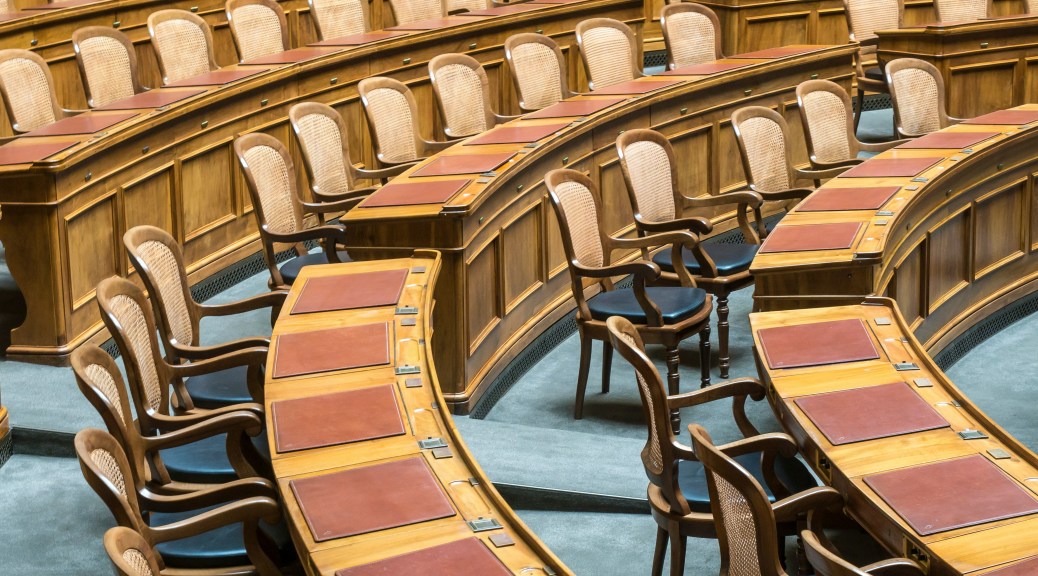
[Header Photo by Hansjörg Keller on Unsplash]

Pussy Riot: A Punk Prayer (HBO Documentaries, 2013) offers a window into the intersections of music, religion, and politics in the context of Vladimir Putin’s Russia:

On Feb. 21, 2012, members of the feminist art collective Pussy Riot, donning their colorful trademark balaclavas, or ski masks, participated in a 40-second “punk prayer protest” on the altar of Moscow’s Christ the Savior Cathedral before being detained. Arrested and tried for trespassing, wearing “inappropriate” sleeveless dresses and disrupting social order, Nadia, Masha and Katia were accused of religious hatred in a trial that reverberated around the world and transformed the face of Russian society.

The film ends with two of the three band members still in prison, their unwavering ethical statements expressed in court haunting viewers along with the sometimes shocking and always confrontational performance art detailed in the backgrounds of these young women.

As I have written before, the expression of political commitments is often denied in certain contexts, notably for educators. The ongoing narrative around Pussy Riot triggers, I suspect, thoughts of the Dixie Chicks, an American country/pop group who watched their fame turn to infamy by a single political comment:

It was 10 years ago this week — as the country was barreling toward war with Iraq — that Natalie Maines, lead singer of the Dixie Chicks, stood in front of a packed house in London and said:

“Just so you know, we’re on the good side with y’all. We do not want this war, this violence. And we’re ashamed the president of the United States is from Texas.”

Especially since the politically charged counter-culture 1960s when US popular music merged with making social and political commentary, musicians and musical groups have capitalized on and suffered under their choices about being political or not. Athens alternative group R.E.M. and California-based CAKE are but two groups who have often worn their politics on their sleeves, both garnering and alienating their fans.

For musicians, the argument runs toward a purist view of entertainment: Just entertain, detractors exclaim. This purist view, ironically, is a political statement, one that determines for all musicians, all artists the singular role of art, a sort of art for art’s sake. A long tradition supports this view, one confronted by John Keats in “Ode on a Grecian Urn”: “‘Beauty is truth, truth beauty,—that is all/Ye know on earth, and all ye need to know.'”

The British Romantics argued for the immutability of art in its pursuit of beauty, even over this life. But other poets have seen quite a different world, and quite a different view of poetry. Andrew Marvell urges his coy mistress: “The grave’s a fine and private place,/But none, I think, do there embrace.”

From Keats to Marvell there is a sexual politics at play, underneath competing views of the roles and purposes of art. A parallel debate exists about the rightful place of politics in the classroom.

Stanley Fish and the Politics of “Academicizing”

Stanley Fish plays the same note over and over in Save the World on Your Own Time, a purist view of being academic: “That’s what intellectual work is all about, the evaluation, not the celebration, of interests, beliefs, and identities” (p. 11). Fish’s view of academics is “simple” (his word) as it entails only bodies of knowledge and analysis of those bodies of knowledge.

Fish also claims his argument that educators must be apolitical in the classroom is a minority view, an assertion that has some credibility at the university level (although not much), but is completely off-base when applied to K-12 teachers. Traditional and current expectations for teachers remain inside a belief that teaching can and should be objective—the teacher persona entirely divested from the politics of the person assuming that role.

In essence, Fish is embracing and even celebrating the phrase “merely academic” as he sees academic pursuits in their purest sense disassociated from the real world.

While I do not want to revisit Fish’s discounting the argument that everything is political (which he deals with multiple times and in a somewhat uneven way), I want to confront two problems I see with continuing to argue that teachers should avoid being political in the classroom.

My first concern lies with Fish’s framing of the purposes of education. His definition of academics is certainly compelling and shared by many, but equally credible educators embrace a different view of education, one couched squarely in and of the world. The social reconstructionists of the early 20th century embraced education as a lever for changing the world. Social justice and critical educators also start with the premise that education is historically bound and inherently political, as Kincheloe (2005) explains:

Thus, proponents of critical pedagogy understand that every dimension of schooling and every form of educational practice are politically contested spaces. Shaped by history and challenged by a wide range of interest groups, educational practice is a fuzzy concept as it takes place in numerous settings, is shaped by a plethora of often-invisible forces, and can operate even in the name of democracy and justice to be totalitarian and oppressive. (p. 2)

To take Fish’s apolitical academic pose in the classroom becomes a political act of maintaining the status quo, the norms, regardless of any instances of injustice. Within Fish’s parameters of fields of knowledge and analysis, the politics of who decides is left unchecked, unacknowledged.

For critical educators, there is a moral imperative to move beyond fixed bodies of knowledge and technical analysis, thus moving toward raising student awareness that some agent(s) of power drive(s) a consensus within a field as an initial step to providing that student opportunities to develop her agency either within that consensus or against it.

In its simplest form, Fish appears comfortable with the disassociated academic environment in which acquisition of content (Freire’s “banking” concept) and analysis are all that a teacher should approach. This appears valid only if Fish’s definition of what academics should be is also embraced.

Thus, my first concern is that Fish has every right to his definition of academics and the role of the teacher within that, but he doesn’t have the right to define academics for me or anyone else.

My argument about the role of the teacher is also couched in a tradition that embraces education as social reconstruction and critical pedagogy, seeking social justice; thus, the role of the teacher is necessarily political.

That brings me to my second concern—Fish’s extended discusion of postmodernism and his dualistic, and distorted, representation of social justice, critical educators.

Fish uses Mark Bracher to represent educators who embrace “everything is political,” and builds to a powerful and somewhat appropriate comment: “In [Bracher’s] view teaching is indoctrination and the only question is, will it be our indoctrination or theirs?” (p. 176).

And it is here I both agree with Fish and have to take exception to him. If his characterization of Bracher is accurate (I’m not going to argue about that), then I agree with Fish and share his concern about anyone who sees teaching as necessarily indoctrination. To conflate “all teaching is political” with “all teaching is indoctrination,” however, is falling into a false and misleading dualistic trap.

I also agree with Fish that the classroom should never be partisan. I have made this argument before, but calling for political teaching is not calling for partisan politics in the classroom:

I will concede and even argue that classrooms, teachers, and education in general should avoid being partisan—in that teachers and their classrooms should not be reduced to mere campaigning for a specific political party or candidate. And this, in fact, is what I believe most people mean (especially teachers) when they argue for education not to be political.

But, especially now, we must stop conflating partisan and political, and come to terms with both the inherent political and oppressive call for teachers not to be political and the inevitable fact that being human and being a teacher are by their nature political.

That said, critical educators reject Fish’s “academicizing” and education as indoctrination; as Kincheloe (2005) clarifies:

Recognition of these educational politics suggests that teachers take a position and make it understandable to their students. They do not, however, have the right to impose these positions on their students [emphasis in original]….

In this context it is not the advocates of critical pedagogy who are most often guilty of impositional teaching but many of the mainstream critics themselves. When mainstream opponents of critical pedagogy promote the notion that all language and political behavior that oppose the dominant ideology are forms of indoctrination, they forget how experience is shaped by unequal forms of power. To refuse to name the forces that produce human suffering and exploitation is to take a position that supports oppression and powers that perpetuate it. The argument that any position opposing the actions of dominant power wielders is problematic. It is tantamount to saying that one who admits her oppositional political sentiments and makes them known to students is guilty of indoctrination, while one who hides her consent to dominant power and the status quo it has produced from her students is operating in an objective and neutral manner. Critical pedagogy wants to know who’s indoctrinating whom. (p. 11)

Embracing political transparency as an educator is rejecting both apolitical posturing and indoctrination.

Ultimately, I do support Fish’s right to his view of education and the role of the teacher, just as I support those musicians and artists who seek entertainment and art for the sake of entertainment and art.

But I remain in solidarity with the Pussy Riots, R.E.M.s, CAKEs, and critical educators who see education as integral to not just life, but a better life—as complicated an endeavor as that is fraught with the possibility that we make in our sincere efforts mistakes.

Being fully human is embracing our essential political nature, and as a teacher, I must be fully human.

ANNOUNCEMENT: An Education Declaration to Rebuild America

I strongly urge everyone interested in US public education to view and endorse the following:

An Education Declaration to Rebuild America

As the declaration states:

Over the past three decades, however, we have witnessed a betrayal of those ideals. Following the 1983 report, A Nation at Risk, policymakers on all sides have pursued an education agenda that imposes top-down standards and punitive high-stakes testing while ignoring the supports students need to thrive and achieve. This approach – along with years of drastic financial cutbacks — are turning public schools into uncreative, joyless institutions. Educators are being stripped of their dignity and autonomy, leading many to leave the profession. Neighborhood schools are being closed for arbitrary reasons. Parent and community voices are being shut out of the debate. And children, most importantly, are being systemically deprived of opportunities to learn.


Imagine 2013

I am no John Lennon, but I think it is appropriate to imagine an education system and an education reform movement that create teaching and learning experiences for all students based on evidence and the experiences and expertise of educators, scholars, and researchers.

So let’s imagine that system, and consider just a few possibilities.

First, what about gathering student feedback on teachers or attempting to evaluate teachers based on pre- and post- test data within a high-stakes accountability environment? Kornell explains about some recent research:

The authors speculate that the more experienced professors tend to “broaden the curriculum and produce students with a deeper understanding of the material.” (p. 430) That is, because they don’t teach directly to the test, they do worse in the short run but better in the long run.

To summarize the findings: because they didn’t teach to the test, the professors who instilled the deepest learning in their students came out looking the worst in terms of student evaluations and initial exam performance. To me, these results were staggering, and I don’t say that lightly.

Next, let’s imagine a reform movement not built on false claims of standards-driven reform for international competitiveness. As Mathis explains:

Standards advocates argue that common standards are necessary for keeping the nation competitive in a global economy. But this brief points out that research does not support this oft-expressed rationale. No studies support a true causal relationship between national standards and economic competitiveness, and at the most superficial level we know that nations with centralized standards generally tend to perform no better (or worse) on international tests than those without. Further, research shows that national economic competitiveness is influenced far more by economic decisions than by test scores.

Let’s imagine reform that seeks to address equity in the lives and schooling of all children, as Holzman clarifies:

Most people, particularly most African-Americans, are familiar with this situation. The question is, then, what is to be done to end disproportionate black poverty?

The common response to the question is a resort to the American doctrine of individual responsibility. Issues of culture, community and psychology are, no doubt, important contributors to differing levels of achievement in education as well as to the disparities in incarceration rates. We are told that young black men should pull up their socks (and their trousers) and simply do better in school and act better in the community. Examples of “beating the odds” and “resiliency” are featured by the media, foundations, community groups and inspirational speakers. These responses are ways of blaming the victims of racism and each in their own manner is a way of maintaining the system of racism. On the other hand, institutional policy decisions are clearly causal, definable and quantifiable and, possibly, given the public will, amenable to change.

The goal, after all, is not for individuals to beat the odds. The goal is to change the odds, or, rather, to change the game.

And let’s imagine a culture of compassion and opportunity, not a “no excuses” mantra that calls for more and tougher, recognizing the harsh realities discovered by Aguero and Beleche:

Estimating the impact of changing school inputs on student performance is often difficult because these inputs are endogenously determined. We investigate a quasi-experiment that altered the number of instructional days prior to a nationwide test in Mexico. Our exogenous source of variation comes from across states and over time changes in the date when the school year started and the date when the test was administered. We find that having more days of instruction prior to examination slightly improves student performance but exhibits diminishing marginal returns. The effects vary along the distribution of resources as determined by a poverty index, with lower improvements in poorer schools. These findings imply a weaker net benefit of policies expanding the length of the school year as they could widen the achievement gap by socioeconomic status.

Is it too much to imagine a reform strategy that doesn’t trap us in a false dichotomy of doing nothing versus doing the wrong thing—such as the false choice of punitive retention of 3rd graders versus just passing them along?:

SC political leadership must not follow Florida’s lead in reading policy or grade retention policy for several reasons, including the following: the “Florida Miracle” has been thoroughly discredited, grade retention has no support in the research that shows retention has no positive outcomes but many negative consequences for children and tax payers, and initiatives such as Just Read, Florida ignore and replace credible literacy policy desperately needed in high-poverty states such as SC.

And finally let’s imagine a public that comes to respect the experience and expertise of educators, life-long public servants, and recognizes the dishonesty and self-serving motives of Rhee, Kopp, Gates, Duncan, et al., who collectively have neither expertise or experience—but most stunning of all, their claims and reform agendas lack evidence, as Camins carefully details:

There are two pillars of Department of Education policy:  increased numbers of charter schools and consequential use of standards-based assessment for promotion and employment decisions. Rather than citing evidence of causal connections to substantive changes in educational inequity, supporters claim state and local adoption of these reforms as progress and accuse critics of defending the status quo.

Education Secretary Arne Duncan has declared many times that he believes in using data. I do too. Several features of that status quo are unarguable. Evidence suggests two conditions that contribute to lower average levels of achievement of poor and lower-middle class students.  First, on average the conditions of their lives mean that compared to their more well off peers, they enter and continue through school with fewer supports for learning and greater stress that impedes learning.  Parents’ socioeconomic status and educational attainment level — in other words poverty — explain a very substantial portion of the variation in students’ level of achievement and predicts future employment and income. Second, teacher experience and expertise are not equally distributed across schools.

I will argue that the pillars of current education reform are more likely to preserve rather than change the status quo. Further, there are alternative policies that are more likely to mediate educational inequity, creating real rather than illusory movement. None of the pillars of reform will address either of these conditions at scale.  Instead, they merely give some students a competitive advantage.   Even if reforms redistribute these benefits or slightly alter the size of the advantaged group, they are still essentially maintaining the status quo, creating the illusion of movement, without fundamental change.

“You, you may say/ I’m a dreamer, but I’m not the only one…”

Ending Exit Exams a Start, But Not Enough

As the first decade of the twenty-first century drew to an end, Frederick Douglass High School (Maryland) stood as a contradiction of social history, education and racial promise, the claimed failures of public schools, and the essential flaws in high-stakes accountability.

Focusing on Douglass High, documentarians Alan and Susan Raymond detail the realities of both day-to-day schooling in a high-poverty, majority-minority public schools and the unintended consequences of No Child Left Behind (NCLB), enacted in 2001 with 100% proficiency requirements mandated for 2014.

Toward the end of the film, a voice-over explains that the accountability guidelines in place during the filming excluded exit exam data from graduation requirements for students, but those test scores were included in NCLB accountability decisions about the school and its administration and faculty. Panning across the test room and the voice-over reveal many students with their heads down during those tests.

While standardized testing has been a key component of education in the U.S. for a century, the accountability movement and the impact of high-stakes testing entered mainstream education in the early 1980s. One of the first uses of high-stakes testing then was the introduction of the exit exam, designed to prevent students from being passed along through the system and thus graduating without what proponents called basic skills. South Carolina was one of the first states to commit fully to the accountability movement, establishing standards, state tests, and linking graduation to exit exams.

In 2013, SC now sits poised to abandon the exit exam: “But S.C high school students would no longer have to pass an exit exam to graduate if a state House bill becomes law–welcome news for the thousands of students who struggle year after year to pass both the test’s math and English sections.”

However, this bill does not mean SC will stop implementing those tests: “But because the test is used to determine whether S.C schools and school districts meet state and federal accountability standards, students still would be required to take the exam.”

Sponsors and supporters of this bill should receive credit for recognizing the inherent flaw in honoring one data point (the exit exam) over years of multiple data points (course grades, course credits, GPA). In fact, deciding to drop student accountability for exit exam scores is justified by decades of data on the SAT, revealing that SAT scores remain less credible evidence of student readiness for college than GPA.

However, ending high-stakes consequences for students taking exit exams doesn’t go nearly far enough. SC, and states across the U.S., must end high-stakes testing and begin focusing reform and resources on the conditions of learning and teaching before outcomes can be evaluated in any valid way.

The current plan is flawed and incomplete in the following ways:

  • Just as NCLB has proven to have unintended and detrimental consequences, maintaining teacher and school accountability on an exam that students themselves have no investment in can lead only to the exact scene depicted in Hard Times ay Douglass High—disengaged students and invalid test data. At the end of the documentary, viewers learn that the state takes over the school and replaces the administration, again based on testing many students had essentially felt no obligation to attempt.
  • High-stakes testing has now been exposed as an ineffective reform policy in education. Continuing down the new standards and new tests path is no longer reform, but digging a deeper hole in the status quo.
  • Holding teachers and schools accountable for the outcomes of students is a misuse of accountability since, as scholar and The New York Times columnist Stanley Fish explains, teachers cannot be “responsible for the effects of [their] teaching, whereas, in fact, [they] are responsible only for its appropriate performance.” In other words, ending student, teacher, and school accountability based on high-stakes tests must be replaced by policies that address the conditions of learning and teaching provided for all students by schools and teachers.
  • Ultimately, high-stakes testing is an inefficient drain on state tax dollars; the testing machine and the constant creation, field-testing, and implementation of high-stakes tests fails to produce valid data, but lines the pockets of the testing industry at the expense of public funds.

Should states end using exit exams and other high-stakes tests as gatekeepers for graduation and grade promotion? Yes.

But the current plan to continue implementing exit exams as accountability data for schools and teachers fails to recognize that the problems are the tests themselves and how they are used.

The era of high-stakes testing itself must end, and in its place, let’s instead invest our time and tax dollars on the conditions of learning and teaching.

ADDENDUM

See the following:

THE EFFECT OF HIGH SCHOOL EXIT EXAMS ON GRADUATION, EMPLOYMENT, WAGES AND INCARCERATION
Olesya Baker
Kevin Lang
Working Paper 19182

Abstract

We evaluate the effects of high school exit exams on high school graduation, incarceration, employment and wages. We construct a state/graduation-cohort dataset using the Current Population Survey, Census and information on exit exams. We find relatively modest effects of high school exit exams except on incarceration. Exams assessing academic skills below the high school level have little effect. However, more challenging standards-based exams reduce graduation and increase incarceration rates. About half the reduction in graduation rates is offset by increased GED receipt. We find no consistent effects of exit exams on employment or the distribution of wages.

Recommended: Educational Documentaries

I teach a May Experience course, The Reel World: The Depiction of Schools on Film. A colleague of mine in the education department and I designed the course before Waiting for “Superman,” but the course is intended as a way to examine how political and public discourse shapes perceptions about public schools as well as policy. The course was revised to include Poverty Studies credit so many of the films explore how education intersects class and race.

This May X, I added the choice of reading either Police in the Hallways: Discipline in an Urban High School, by Kathleen Nolan, or Hope Against Hope: Three Schools, One City, and the Struggle to Educate America’s Children, by Sarah Carr.

The focus of the discussion, however, remains on the eight documentaries below with some annotations about what aspects of education each film highlights. I do recommend all of these films, although each has some limitations as most documentaries do.

Recommended Documentaries on Education:

Corridor of Shame

This documentary focuses on a court case in South Carolina initiated by high-poverty school districts surrounding primarily the I-95 corridor of the state, paralleling the east coast and stretching from the NE to the SE region. The documentary suffers from melodramatic production values (music, slow-motion panning of sad children’s faces), but the essential claim of the film is important for confronting the social inequity that is reflected in educational inequity, particularly in the South. Issues included in the film are school funding, community-based schools, access to high-quality educational opportunities and facilities, teacher assignments related to student characteristics, and state education accountability mechanisms. Some related resources (SC school report cards, poverty indices, related blog posts) to the documentary can be found HERE.

Heart of Stone

Ron Stone stands at the center of this film about an urban high school in New Jersey. The film is solid and interesting—while also creating a good deal of tension and presenting a surprise ending. Many important issues are raised, notably the controversial stance of Stone as principal toward gangs and gang leaders attending the high school. This is an ideal companion to Police in the Hallways and it confronts several important issues about education and education reform—urban schools, high-poverty/majority-minority schools, zero tolerance policies, deficit views of minorities and impoverished children, gang presence and violence, leadership styles, police in schools.

Flock of Dodos

The controversy, teaching evolution in public schools, that will not die—although it has evolved, ironically—is explored by this film that is engagingly personal and often humorous. The Intelligent Design (ID) movement is the approach of the moment for creating debates about if and how evolution should be taught in schools. While the filmmaker is upfront with his allegiances to science, the documentary is fair, almost to a fault as it allows the scientists to show why their expertise is often lost in their arrogance. The film successfully helps viewers navigate the definitions of science, evolution, ID, and creationism; it also confronts the roles of religion, ideology, and politics (specifically the power of school boards) in the “teach the controversy” assertions found among ID advocates. An interesting connection to this documentary is the news coverage of a creationist test given to students in a SC private school.

Little Rock Central: 50 Years Later

These documentaries often soar because of the people allowed to speak for themselves. This excellent HBO film opens with Minnijean Brown Trickey returning to Little Rock Central High, and then it never fails to deliver throughout. I would rate this a must-see among the selections in this course. The film confronts Brown v. Board, separate and unequal, schools within schools, the return of segregation (especially in the South), and the lingering tensions between the ideal and reality of racial harmony. Related pieces on the rise of the segregated South and education reform in the New Jim Crow Era are recommended. Alexander’s The New Jim Crow is also an excellent connection.

Hard Times at Douglass High

When Waiting for “Superman” was released and disproportionately praised in the media, I wrote a piece on this documentary to suggest it is far superior and to ask viewers what these administration and teachers at Douglass High were supposed to do. The focus of this film is No Child Left Behind (NCLB) in the context of a high-poverty, majority minority urban high school. Some of the most significant moments of the documentary are disturbing scenes of violence in the hallways and one female student recounting a fight with an adult male relative. Teachers struggling with the students, including one TFA recruit, are included, and this is also a strength of the film. The film addresses accountability, administrator/faculty relationships, the roles of teachers (especially young teachers), the influence and struggles of parents, the voices of students, the significance of extracurricular activities, and the limitations of school-only reform and accountability under the weight of poverty and racial inequity.

Clearcut

Who controls the money, controls everything—or at least who controls the money wants to control everything. This documentary examines the clash between a family funding scholarships and the science curriculum in a logging community. This is a powerful pairing with Flock of Dodos since both documentaries dramatize the debate over who should determine the curriculum in public schools serving a free society. Clearcut and Flock of Dodos also highlight the culture war that simmers beneath almost all educational controversies. The issues raised in this documentary can be linked to the influence of entrepreneurs in the current reform movement, such as Bill Gates, and the role of school boards is also a central issue, again as in Flock of Dodos.

Prom Night in Mississippi

Morgan Freeman challenges his childhood hometown to integrate the prom, and he’ll foot the bill; this is the focus of an engaging and powerful documentary on the persistence of segregated proms in the twenty-first century. The voices of students, parents, and administrators drive this film, and the intersection of racism and public education takes center stage through those voices. A potential pairing (non-education related) is the documentary The Loving Story about the 1967 Supreme Court case addressing interracial marriage. The 2013 prom integration in Georgia also is a suitable companion to this film.

Grain of Sand

Neoliberalism driving education reform in Mexico is confronted in this documentary, which provides a strong conclusion to the May experience addressing education. Corporations (Walmart, Coca-Cola, Ford), corrupt unions, and President Fox provide a matrix of influential forces shaping and even dismantling public education in Mexico, paralleling the same neoliberal agenda highlighted under George W. Bush and increased under Obama. A combative and disturbing documentary, Grain of Sand forces viewers to consider the value of the Commons and the dangers of privatization. Like Hard Times at Douglass High, this film suggests that accountability reform based on high-stakes testing poses much greater harm than good for schools and students.

—–

A companion video worth pairing with any of the above films is Tupac Shakur at 17 discussing education.

Limes or Leeches: A Thought Experiment about High-Stakes Accountability

History is a powerful teacher—if we are willing to learn.

Many educators and scholars have triggered the truism “Insanity is doing the same thing over and over while expecting different results,” but that argument seems always to fall on deaf ears among our self-chosen education reformers, the media, and the public.

So let’s venture into history and explore a thought experiment: Would you prefer limes or leeches?

Study the history of identifying and treating scurvy, including how British sailors became known as “limeys.”

Now study the history of blood letting, and the use of leeches.

Solutions, history shows, must be built on a clear identification of the problems and then a careful analysis of what those solutions must be.

Limes and citrus fruits proved credible solutions for preventing scurvy—while “[i]n the overwhelming majority of cases, the historical use of bloodletting was harmful to patients.”

High-stakes accountability built on standards and high-stakes testing is the type of insanity found in bloodletting because the overwhelming majority of educational problems have nothing to do with accountability, standards, or testing—not the lack of accountability, standards, or testing, not the quality of accountability, standards, or testing.

Nothing.

In the education of your child, would you prefer limes or leeches? [And now let’s apply that answer to “other people’s children” because “they’re all our children.”]

Let’s stop the bloodletting.

Adrienne Rich: Artist of the Possible and Life among the Ruins

I. Adrienne Rich: Artist of the Possible*

In late November of 2003, I sat on the floor in a crowded luncheon just a few feet and slightly behind Adrienne Rich, speaking and reading her poetry at the annual convention of the National Council of Teachers of English, held that year in San Francisco.

Appropriately, Rich was reading from her upcoming collection, The School among the Ruins, and talking about teaching, teachers, and education. I was struck by many things that day, and eventually I wrote a poem to capture the moment (see below).

As a poet, teacher, reader, and human, I have been deeply and permanently moved and changed by the poetry and essays of Rich, from the genius of “Diving into the Wreck” and “Aunt Jennifer’s Tigers” to the reconsideration of Emily Dickinson in “Vesuvius at Home: The Power of Emily Dickinson” (see On Lies, Secrets, and Silence) to her remarkable and soaring Arts of the Possible, that includes one of the most cited passages in my scholarly works:

Universal public education has two possible—and contradictory—missions. One is the development of a literate, articulate, and well-informed citizenry so that the democratic process can continue to evolve and the promise of radical equality can be brought closer to realization. The other is the perpetuation of a class system dividing an elite, nominally “gifted” few, tracked from an early age, from a very large underclass essentially to be written off as alienated from language and science, from poetry and politics, from history and hope—toward low-wage temporary jobs. The second is the direction our society has taken. The results are devastating in terms of the betrayal of a generation of youth. The loss to the whole of society is incalculable. (p. 162)

For Rich, the human condition is a fact of what is spoken and unspoken:

The study of silence has long engrossed me. The matrix of a poet’s work consists not only of what is there to be absorbed and worked on, but also of what is missing, desaparecido, rendered unspeakable, thus unthinkable. (p. 150)

When I discovered that Rich had passed, I recognized that while she would no longer speak again to us, she would never be unspoken. With her work, Rich remains the artist of the possible.

Woman as Poet: Possibilities

The life and writing of Rich are testaments to and challenges against the hegemonies of gender, marriage, sexuality, and human agency. She lived many lives in her one life, a fact common for women trapped in the expectations of gender that often create burdens that are nearly impossible to carry.

Her early life included marriage and three sons, and then she lived a much different life after separating from her husband, a life often characterized by a sort of radical feminism that celebrated her lesbianism. Her life as a poet/writer paralleled this personal transformation, with Rich acknowledging that her early success as a poet was built on her embracing modernist traditions, leading to her “Aunt Jennifer’s Tigers” being both, according to her, a rejection (somewhat unconsciously) and model of those traditions. The poet Rich, however, became a radical as well, resulting in canon czars such as Harold Bloom marginalizing Rich as merely political—missing entirely Rich’s powerful argument that political is all that poetry and a poet can be: “I take it that poetry—if it is poetry—is liberatory at its core” (Arts of the Possible, p. 116).

Rich’s poetry and her critical work on Dickinson were central parts of my teaching during my nearly two decades as an ELA high school teacher. In fact, one of the most important and influential units I eventually included in the quarter we explored poetry included Rich’s work paired with the poetry of Sylvia Plath and Anne Sexton. Along with these poets, we viewed the film Pleasantville, framing the lives and poetry of Rich (1929-2012), Plath (1932-1963), and Sexton (1928-1974) against the Betty Parker (Joan Allen) character in the film, the TV mother trapped in the norms of 1950s American.

This unit asked students to consider the suicides of Plath and Sexton against the life and poetic transformations of Rich; we also discussed how the film portrayed Betty Parker, both as a model of the norms of 1950s America and the real person trapped under her make up and the oppressive roles of wife and mother (dramatizing the poetry of Rich’s “Aunt Jennifer’s Tigers”: “The massive weight of Uncle’s wedding band/ Sits heavily upon Aunt Jennifer’s hand”).

And for the words Rich brought to my classroom and my life, I am forever in her debt. She validated things I had dared to think but feared to speak. She reminds me daily of the humility that should be at my core, a paradoxical radical humility, a commitment to human dignity and agency that are both threatened by the mere fact of my being a man in a world and society that allows the norm of manhood to oppress and silence.

It is deeply sad to lose Adrienne Rich, and profoundly uplifting to know all that remains forever from her words and her life:

The possibilities that exist between two people, or among a group of people, are a kind of alchemy. They are the most interesting thing in life. The liar is someone who keeps losing sight of these possibilities….

It isn’t that to have an honorable relationship with you, I have to understand everything, or tell you everything at once, or that I can know, beforehand, everything I need to tell you. It means that most of the time I am eager, longing for the possibility of telling you. That these possibilities may seem frightening, but not destructive, to me. That I feel strong enough to hear your tentative and groping words. That we both know we are trying, all the time, to extend the possibilities of truth between us.

The possibility of life between us. (Arts of the Possible, pp. 39-40)

It cannot be coincidence that just a few days before Rich’s death I sat in my office talking with one of my students; I pulled four books of Rich’s from the shelf and recommended her to the student.

The morning after Rich’s passing that student walked into my office with a New York Times article on Rich.

No, this could not be a coincidence, and yes, it must be the bittersweet symmetry of the universe that reminded me during my moments of sadness of the possibilities.

II. Life among the Ruins

Adrienne Rich’s The School Among the Ruins ** confronts the intersection of school and violence, poems written in the time designated as the turn of a century:

Rich cited another catalyst for ‘The School Among the Ruins’ in an e-mail interview from her Santa Cruz home — the school, in Brooklyn, where her son teaches.

“I knew his love for the school, for those children,” she said.

[The volume is s]et during a nonspecific wartime in which children and their teachers are hostages to horror.

We are now faced again with the incomprehensible intersection of children, teachers, schools, and unspeakable violence. It is ours to honor those taken from us by seeking the rational among the irrational.

Seeking the Rational among the Irrational

Let us commit ourselves to a vigilance, to protecting this moment against the petty, against the call to heap irrational upon irrational, against allowing the needed confrontations and discussions to become too narrow.

We must confront our culture of violence and the fetish with guns within that culture of violence, and not just gun control.

We must confront health care access and mental health care access, and not just mental illness.

We must confront our negative national discourse about teachers and schools—that misrepresents the sacred duties of those teachers and schools that are now memorialized in the names of innocent lives lost in an elementary school.

We must admit that we have been too quick to police children, and too slow to protect, cherish, and serve those children—particularly some children, too often “other people’s children.”

To allow the gaze of blame to be focused too narrowly absolves the larger root causes to remain, to thrive, to perpetuate further the ruins.

Words matter, yes, but actions speak louder than words.

How children matter, whose children matter—our commitments daily send messages.

The world we have created is the world we want, or at least the world we allow; as Kingsolver notes:

In the United States, where people like to think that anyone can grow up to be President, we parents are left very much on our own when it comes to the little Presidents-in-training. Our social programs for children are the hands-down worst in the industrialized world, but apparently that is just what we want.

In a poem of mine, I end with the following: “the world was exactly as they expected/ exactly as they knew it to be/ and mostly not as it could have been/ or should have been.”

To build that world out of the ruins requires action, action built on principles, to build monuments of peace and love against violence and destruction.

“What’s Going On,” Marvin Gaye

“…Don’t punish me with brutality
Talk to me
So you can see
What’s going on…”

Recommended

Adrienne Rich @ Poets.org

Adrienne Rich @ Poetry Foundation

Anne Sexton: A Biography, Diane Wood Middlebrook

Anne Sexton @ Poetry Foundation

Sylvia Plath: A Biography, Linda Wagner-Martin

Sylvia Plath @ Poetry Foundation

—-

“upon hearing adrienne rich speak and read her poetry”

P. L. Thomas, 2003

i cannot shake the rush
of my own grandmother—
hair cropped short—
rush over me whenever
i see adrienne rich—

this time—in person—
i felt the hunger to cry
as i watched her—
cane in hand—shuffle on stage
like but not my grandmother—

my chest and eyes welled
again and again from her words—
speaking about teaching
the frailty of teaching
in America—America—

because she knows—
if “knows” means “tastes in the air”
if “knows” means “feels with her blood”—
because she knows
what no one can teach

this mother of us teachers
who lives that which cannot be taught—
the doubling over in pain
from other people’s suffering
that is surely not of this America—

and if i told her
“adrienne, my lives have split
me into pieces, pieces”
she might cry right there
her eyes welled as mine

because it is that knowing
that makes us cry
at the slightest suffering
of any anyone who hurts
and struggles against this whip

called “living”

* Reposted pieces from 2012—Adrienne Rich: Artist of the Possible (March 29, 2012) and Life among the Ruins (December 16, 2012)

** The title of this blog is intended as an allusion to Rich’s work.