About a decade ago, I accepted an invitation from the ACT to review a set of new test questions for their reading section. As a career-long anti-standardized test advocate, after talking with several colleagues, I accepted that an inside view of the process would help me better confront the problems with tests such as the ACT and the SAT.
The process included receiving the test section, taking the test myself (and taking notes), and then being flown to Iowa City to attend a workshop where we walked through each question to help the test designers revise and edit so this section could be added to the implementation of the test.
Some important take aways included discovering that the test designers were almost exclusively experts in test design (not reading or literacy) and confirming that “good test questions” were mostly about if the question creates “spread” (a range of correct and incorrect) in the data and not if the question is a valid assessment of reading ability (whatever that is).
This experience came to mind when I ran across this on Twitter:
This is the remote reading lesson I taught to my kindergartner yesterday. I am a Pulitzer Prize-winning writer, and I could not correctly identify the “main idea” in this passage — though the instructions assured us it was in there. Can you find it? pic.twitter.com/QxNDwvMlcA
A well-educated adult struggling with a kindergartner’s worksheet also reminds me of “Sara Holbrook, the writer who couldn’t answer test questions about her own work,” covered by Peter Greene.
While I think we may need to extend some grace to the teacher who sent this work home during a pandemic, I also think we should confront that this is a quite common way to approach reading and teaching reading—common ways that are deeply flawed.
Both the kindergarten homework and the author puzzled by standardized test questions reflect reading instruction and assessment that are skills-driven—framing the holistic act of reading as a collection of identifiable reading skills such as “main idea.”
A skills approach to teaching and testing reading tends to focus on decoding (phonics), vocabulary, prior knowledge (content), and an array of reading strategies (identifying main idea, predicting, context clues, etc.).
While literacy teachers and scholars tend to agree that these all are valid elements of reading, the debate lies in whether or not teaching and testing them in isolation are valid reflections of the whole act of reading.
The skills approach has some practical advantages in whole-class formal schooling, especially when classes include 25-35 students and when thousands of students are being tested.
In other words, a skills approach is efficient (easy to manage as instruction, and quick and cost-effective as assessment) and it also lends itself to a teacher-centered, authoritative mode of teaching (someone in authority determines the answers, and by their authority, those answers are “correct”).
The skills approach during early literacy development also feeds well into the New Criticism norm of text analysis that is common in middle and high school (re-branded under the Common Core as “close reading”). Reading assessment in standardized testing requires that “right” answers exist neatly in any text and that a systematic form of analysis lends itself to identifying that “right” answer.
But, as the kindergarten and published author examples above demonstrate, the skills approach and the “right” answer view of texts are deeply flawed, and likely work against fostering students as eager, independent, and critical readers.
No sophisticated adult readers sit down to answer a set of multiple-choice questions about a text they have read once they are finished. Those of us who pleasure read are likely to do almost nothing once we have read, or we eagerly find other people who have read the text so we can discuss the experience.
And those conversations are rarely punctuated with “main idea” or “theme,” but mostly about how we felt about the text and all the connections we noticed with our lives or other experiences we have had with all sorts of art—other texts, movies, music, etc.
Here, then, are a few ways we should change how we teach and assess reading, especially with young students.
First, in kindergarten, our focus should be far less on skills and mostly on fostering eager readers. Frankly, there is no urgent need for children this young to correctly interpret any text.
Reading to beginning readers and inviting them to have a wide range of emotional and text-based responses (mostly free of evaluating them for being right or wrong) should replace a skills approach in kindergarten (and likely through the first three or four years of school).
Gradually, we should move toward helping students navigate text in ways that improve their ability to gain valid conclusions from that text, keeping in mind that “meaning” isn’t necessarily fixed and in many cases may be more about contested meaning, not one right answer.
Skills approaches to reading can mostly be justified as efficient, but seeing reading as a set of discrete skills and strategies is, none the less, not reading since it is a holistic act.
As I have noted before, for example, people have large vocabularies from reading extensively, but learning a bunch of isolated vocabulary doesn’t necessarily make a person highly literate. We too often flip the value and consequences of the whole act of reading and identifiable reading skills and strategies.
Next, we must be careful not to teach or test skills for the sake of those skills, but to always keep our focus on the whole text and the reader’s reading experience while acknowledging that skills and strategies are working together in the process of making meaning and reaching critical conclusions about the text.
For example, the kindergarten worksheet is having children find “main idea” as if that is a reasonable or authentic goal (it isn’t) instead of helping students come to understand that text has large meaning (such as main idea and theme) that can be justified through smaller elements in the text (supporting ideas, literary and rhetorical techniques).
Asking students “What do you think is important about this text?” (Or “What did you enjoy in this text?”) is a much better approach that can be followed by “Why do you think that?” (moving them to offer textual support). Here, we are starting with the student (not some skill or predetermined “right” answer) and still fostering careful and purposeful approaches to text.
Finally, the big picture problem with these examples, and why a skills approach is common in the teaching and testing of reading, is that we have created teaching and learning conditions that are counter-educational for literacy growth.
We have chosen efficiency over authentic literacy in the U.S. because we refuse to invest in teaching and learning conditions (low student/teacher ratios, fully funded classrooms and materials) that would support effective teaching and rich learning by our students.
Skills approaches to reading are efficient and manageable, but as the kindergarten example above shows, they simply are not reasonable or authentic.
While I question the periodic cries that the U.S. has a reading crisis, I can attest from 36 years of teaching that we do far too often make young people hate to read—and there are tragic consequences to misreading the main idea about reading in schools.
For 36 years now, I have been teaching people to write; that journey is a large subset of my own being and becoming a writer, an experience that is captured well in an old Nike poster I used to hang on the wall of my high school classroom, proclaiming “There is no finish line.”
For the last decade-plus, I have taught first-year college students to write. While I am teaching writing, however, I also am teaching young people how to do college, how to make the important transition from being a student to being a scholar.
Part of that work is unlearning bad habits from high school embedded in traditional approaches to writing essays.
Here is one of the worst: Many students come to college having followed a narrow writing process in which teachers require students to submit a one-paragraph introduction with a direct thesis statement. Once approved, the student is then released to write an essay that fulfills that approved essay thesis.
This instills in students two incredibly misguided practices. One is writing with a level of certainty that an 18-year-old has yet to reach (particularly on topics about which they have only second-hand knowledge); and another is failing to see drafting and writing as an act of discovery, as a journey to understanding ideas better.
Neither of these lessons from high school serve young people well in their quest of becoming more educated, being a scholar. Scholarship and deep understanding of a field or discipline comes mostly from interrogating ideas, not from grand pronouncements.
Knowledge is living forest; dogma is a rigid stone slowly wearing away to nothing in its resistance to the elements.
This also comes into play when anyone is trying to understand a situation outside their own areas of expertise. As Ballantyne explains about epistemic trespassing:
First, the intellectual characters of trespassers often look unsavoury. Out of their league but highly confident nonetheless, trespassers appear to be immodest, dogmatic, or arrogant [emphasis added]. Trespassers easily fail to manifest the trait of intellectual humility and demonstrate one or another epistemic vice (Whitcomb et al. 2017, Cassam 2016). Second, it’s useful to distinguish between trespassers holding confident opinions and investigating questions in another field [emphasis in original]. I assume it can be epistemically appropriate for people to look into questions beyond their competence, even when it would be inappropriate for them to hold confident opinions.
This is a key distinction (arrogance v. modesty) for an enduring question in the U.S., one that has remained at the forefront of public and political debate since at least the 1940s: Why are students not learning to read?
If we are going to focus on asking questions and not making grand pronouncements, we probably should first interrogate the question, and confirm whether or not students are learning to read in reasonable ways and when they genuinely need to read independently.
Here we have a serious problem because at no period in the U.S. has anyone pronounced reading achievement to be satisfactory; thus, the somewhat bell-shaped curve of reading achievement among school-age students could very likely simply be normal.
Yet, most of us view education as a 100% attainable venture—all students can and should learn to read by X age. This is a valuable ideal, but it certainly isn’t a reasonable measure for any sort of accountability (see the disaster that was No Child Left Behind).
We are left then with an enduring question that I think is valid and worth considering: Why do some students not become eager and critical readers at the same rate as most of their biological peers?
Data for many decades have shown that all sorts of achievement gaps, reading included, are strongly correlated with the socioeconomic status of any student’s parents, home, and community as well as the educational attainment of the parents (notably the mother). [Every administration of the SAT reflects those patterns, for example.]
Especially over the past forty or so years, however, emphasizing the correlation between inequity and academic achievement has been discounted with making “excuses.” Public and political concern for any problem seeks to find individual causes to blame, but Americans tend to balk at systemic explanations for negative outcomes.
When the U.S. declared a reading crisis in the 1940s during WWII, many immediately blamed progressive education, then strongly associated with John Dewey. But there were three practical problems with that blame.
First, as Alfie Kohn has explained, Dewey’s progressive education has never been implemented on any wide scale in the U.S. Despite mainstream arguments to the contrary, formal education in the U.S. has almost always been primarily conservative and traditional.
1. Not many men in the army now have been taught by these newer methods [emphasis in original]. Those few come for the most part from private or highly privileged schools, are among those who have completed high school or college, and have no difficulty with reading.
2. While so-called “progressive” schools may have their limitations, and certainly do allow their pupils to progress at varied rates, above the second grade their pupils consistently show superior ability in reading. Indeed, the most eager critics have complained that these children read everything they can find, and consequently do not concentrate on a few facts. Abundant data now testify to the superior results of purposeful, individualized reading programs [emphasis in original].
3. The reading skills required by the military leaders are relatively simple, and cause no problem for normal persons who have remained in school until they are fourteen or fifteen. Unfortunately the large group of non-readers are drop-outs, who have not completed elementary school, come from poorly taught and poorly equipped schools, and actually represent the most conservative and backward teaching in the United States [emphasis in original]. (pp. 240-241)
Third, and this is possibly the most important point for understanding our current reading crisis, many students were unsuccessful in situations where educators claimed to be practicing progressive education, but in fact, were not.
First, Dewey tended to offer philosophical and theoretical parameters for teaching, but refused to offer models and never templates or programs. This made, ironically, a practitioner of pragmatism (Dewey’s philosophical roots shared with William James) quite impractical for day-to-day teaching and the running of schools.
William Heard Kilpatrick, however, seized the moment and packaged the project method, which did find its way into schools, often ones that claimed to be progressive.
Here comes the real but complicated problem.
In 1931, LaBrant (the subject of my dissertation and a devout Deweyan progressive) launched into the use of the project method in classes where students are supposed to be learning reading and writing:
The cause for my wrath is not new or single. It is of slow growth and has many characteristics. It is known to many as a variation of the project method; to me, as the soap performance. With the project, neatly defined by theorizing educators as “a purposeful activity carried to a successful conclusion,” I know better than to be at war. With what passes for purposeful activity and is unfortunately carried to a conclusion because it will kill time, I have much to complain. To be, for a moment, coherent: I am disturbed by the practice, much more common than our publications would indicate, of using the carving of little toy boats and castles, the dressing of quaint dolls, the pasting of advertising pictures, and the manipulation of clay and soap as the teaching of English literature. (p. 245)
Let’s imagine that some students did not grow as readers or writers if they were crafting, and not reading or writing (as LaBrant argued for over six decades), and let’s also imagine that if there was poor reading growth in these classrooms, people certainly associated that with progressive practices since it was explicitly using the project method.
To untangle this, we need to recognize that as LaBrant admonished, using the project method to craft instead of having students read and write was a misuse and misunderstanding of progressive philosophy.
Neither the project method nor progressivism failed these students, but the misuse of both certainly did.
This pattern has repeated itself at both small and large levels for decades.
The 1980s-1990s reading crisis was blamed on whole language, but almost no one was implementing whole language and the drop in test scores were easily connected to systemic factors such as reduced funding and an influx of English language learners (Emergent Bilinguals).
It is also interesting to investigate the many misuses of the term “best practice” and the instructional strategy literature circles, both important aspects of Harvey “Smokey” Daniels educational work and regrets he has explained in detail about too many people misunderstanding and misapplying the terms and practices.
At a state-level ELA teacher conference many years ago, I listened to Daniels explain that he wishes he could distance himself from the term “best practice” because nothing stopped publishers from slapping the term on any book because publishers knew the concept was in vogue. In short, like Dewey, Daniels was aware that he had no control over whether or not anything labeled “best practice” was in fact best practice (supported by evidence and research).
So this all leads to the blog post’s title: Did balance literacy fail to teach your child to read?
I suspect if you have made it this far and if you have fully interrogated the information I have provided, you can expect that the answer is very unlikely.
Are too many students not acquiring reading at rates we would prefer in the U.S.? Absolutely.
Are identifiable subgroups particularly mis-served in reading in our public schools—students with dyslexia, poor students, students of color, English language learners (Emergent Bilinguals)? Absolutely and inexcusably so.
Have these students who have experienced educational inequity sat in classrooms and schools that have adopted and implement reading programs labeled “balanced literacy”? There is no question this has happened, and continues to happen.
The paradox about blaming balanced literacy is that as a guiding reading philosophy and theory, balanced literacy supports that every student should receive whatever reading instruction the student needs (systematic intensive phonics, reading authentic texts, read alouds, special needs intervention, etc.); therefore, if a student isn’t receiving what they need, then the fault doesn’t lie with balanced literacy—just as Kilpatrick’s project method was being misused in the 1930s.
This may seem like a trivial distinction, but I think it is important because the current “science of reading” movement is laser-focused on blaming balanced literacy and offering a silver-bullet solution, systematic intensive phonics for all students.
This bodes poorly for students because with a false diagnosis, you are likely endorsing a flawed cure.
It is compelling to identify one thing to blame and to embrace a structured single solution, but that is a historically failed strategy.
Over the last few decades, we have no evidence that reading has ever been taught in any sort of uniform way, even in the same school (although analyses from the 1990s showed a positive correlation between whole language classes and higher NAEP reading scores). The causes for low reading achievement are incredibly complex, linked to out-of-school factors as well as teaching and learning conditions in schools.
We should focus more directly on out-of-school factors, but if we insist on in-school only reform to increase reading achievement, we would do better to start with teaching and learning conditions (low student/teacher ratios for struggling students, better funding) and then to abandon lock-step implementation of any reading program (not ones labeled “balance literacy” or ones prescribing systematic intensive phonics for all students).
And the one real reform we refuse to acknowledge or address is making sure every child and young person in the U.S. has access to reading in their homes, communities, and schools. When people wield “science of reading” like a hammer, they fail to acknowledge the enormous research base showing access to texts as the strongest indicator of students acquiring literacy.
In fact, the more things change, the more they stay the same. We are about 80 years late on listening to LaBrant:
An easy way to evade the question of improved living and better schools for our underprivileged is to say the whole trouble is lack of drill. Lack of drill! Let’s be honest. Lack of good food; lack of well-lighted homes with books and papers; lack of attractive, well equipped schools, where reading is interesting and meaningful; lack of economic security permitting the use of free schools—lack of a good chance, the kind of chance these unlettered boys are now fighting to give to others. Surround children with books, give them healthful surroundings and an opportunity to read freely. They will be able to read military directions—and much more. (p. 241)
The president – who repeatedly downplayed the threat early in the global outbreak – has this week been hyping an anti-malarial drug, chloroquine, as a possible therapeutic treatment.
“It may work, it may not work,” he said on Friday. “I feel good about it. It’s just a feeling. I’m a smart guy … We have nothing to lose. You know the expression, ‘What the hell do you have to lose?’”
As has become a common pattern now, these rash and dangerous claims were tempered by an actual expert in medicine:
Yet Trump’s “feeling”, on which he so often relies, was confronted by science when Dr Anthony Fauci, director of the National Institute of Allergy and Infectious Diseases, cautioned that evidence of chloroquine’s benefits against coronavirus is “anecdotal” and it should not be viewed as a miracle cure.
Trump is a cartoonish embodiment of epistemic trespassing, as defined by Nathan Ballantyne:
Epistemic trespassers are thinkers who have competence or expertise to make good judgments in one field, but move to another field where they lack competence—and pass judgment nevertheless. We should doubt that trespassers are reliable judges in fields where they are outsiders.
As the example of Trump above demonstrates—and as Ballantyne notes about Richard Dawkins and Neil deGrasse Tyson—it is quite common for people to trespass into areas of knowledge and expertise outside their own discipline or experiences.
Here, I want to investigate epistemic trespassing first in the Ruby Payne phenomenon, and then to better understand the current “science of reading” version of the Reading War.
Let’s consider epistemic trespassing more fully next.
Epistemic Trespassing: “exemplary critical thinking in one field does not generalize to others”
I don’t want to overwhelm this discussion with too fine an analysis from philosophical and linguistic fields; notably, I am sharing here outside my narrow area of expertise, education, while staying inside a part of my disciplinary expertise (linguistics) and seeking to avoid the very mistakes I am naming here.
This section draws on work by Ballantyne (linked above) and Bristol and Rossano, both of which are detailed and discipline-specific scholarship.
The examples below—Ruby Payne’s popularity as a self-proclaimed expert in poverty and education, and the “science of reading” movement driven by Emily Hanford (journalist) and Mark Seidenberg (cognitive neuroscientist)—will make this brief overview more concrete, I hope.
Everyone has experiences and a wide range of knowledge (what we learn in formal settings and through educational degree and certification, but also what we learn by something like being self-taught, our hobbies, for example).
“We human beings are trespassers at heart,” Ballantyne explains, and we are left then with trying to understand when the trespassing becomes a problem—such as Trump promoting dangerous information through his self-assured style.
As Bristol and Rossano detail, the order of when each speaker makes claims as well as the relationship between or among speakers in terms of common ground (“mutual knowledge, beliefs, and assumptions”) all contribute to if trespassing occurs in the interaction and whether or not the discussion or debate is negatively impacted by that trespassing.
They identify why trespassing is a problem in general discourse as follows:
Taking an authoritative position about domains that are squarely within another’s epistemic territory can be socially unacceptable (consider ‘informing’ or ‘correcting’ someone about their ethnicity, religious beliefs, emotions, or physical sensations). The terms gaslighting and mansplaining used colloquially to describe this type of offensive behavior.
Bristol and Rossano also outline “a four-point list of things that people can typically be assumed to know better than others:”
a. Information obtained through the speaker’s/hearer’s internal direct experience,
b. Information embodying detailed knowledge which falls into the range of the speaker’s/hearer’s professional or other expertise,
c. Information obtained through the speaker’s/hearer’s external direct experience including information verbally conveyed to the speaker/ hearer by others which he/she considers reliable,
d. Information about persons, objects, events and facts close to the speaker/hearer including such information about the speaker/ hearer him/herself
Distinguishing these contexts are incredibly important, I think, when any public debate concerns a body of research in a specific field (such as poverty or reading instruction) and how that intersects with the day-to-day experiences of teachers (see a. and b. above); and then how those overlapping situations are impacted by media and political discussions of the topic (see c. above).
Ballentyne notes that epistemic trespassing is both very common and quite likely necessary for understanding complex problems or experiences. Therefore, I want to add briefly here a few key elements of trespassing that can help understand how that trespassing works against the goals of better understanding.
Making assertive and authoritative claims (without having expertise) is much more problematic than asking questions. But even as a non-expert may be justified in asking those questions, there must be a recognition that disciplinary fields and knowledge already exist (someone with expertise has probably already asked and answered the question).
Ballentyne identifies “three types of problematic trespassing cases, where two different fields share a particular question:”
(a) Experts in one field lack another field’s evidence and skills;
(b) Experts in one field lack evidence from another field but have its skills;
(c) Experts in one field have evidence from another field but lack its skills.
And a final key point from Ballentyne is that “[t]respassers are a crafty bunch, of course, and they may resist reasoning in the way I’ve described.” In short, trespassers often justify their trespassing because of their zeal for the topic and/or their belief that the field they are trespassing on isn’t sufficiently complex for them to need the expertise or background to make claims.
How does that happen? “Sometimes trespassers will have enough knowledge to give them false confidence that they are not trespassers but not enough knowledge to avoid trespassing,” Ballentyne explains, identifying the Dunning-Kruger effect.
Ultimately, while epistemic trespassing is both common and some times unavoidable, “recognizing the risks of trespassing should often encourage greater intellectual modesty” that can lead to greater understanding instead of “bickering over whose perspective is best,” Ballentyne concludes.
Education itself is a hybrid field, and as a result, it is often the target of epistemic trespassing. In fact, a great deal of public discourse around education is left to economists, psychologists, and political scientists.
Next, I discuss two significant examples of why epistemic trespassing is often more harmful than effective—Ruby Payne’s poverty framework and the “science of reading” debate.
The Payne Dilemma
Let’s think carefully about what it means to be a K-12 public school teacher in the U.S. Since I taught in public school for 18 years, I think the following parameters are accurate:
Teachers are expected to have a very wide and deep understanding of a large number of specialized fields.
Teachers are often put into teaching and learning conditions that inhibit effective and excellent teaching and learning.
Teachers are afforded very little professional autonomy, but are often held accountable for implementing mandates and then for outcomes (measurable student learning).
Here is a perfect example.
In the wake of No Child Left Behind’s focus on closing the achievement gap (created by socio-economic and racial inequity), schools and teachers were placed under greater accountability for raising test scores for low-income and so-called racial minority students.
That gap has existed for as long as formal education has existed so in many ways it is fair to say that too little has been done to address why the gap exists. For teachers, however, the public and political responsibility and blame mostly lie with them even though that is a false claim.
The intensified focus of NCLB on the achievement gap created an opportunity for Ruby Payne to promote her poverty framework, a workbook and series of talks and in-service workshops.
Many schools and districts eagerly contracted for her services, and teachers appeared to overwhelmingly embrace her messages and strategies.
Payne’s self-proclaimed expert status to speak on poverty is a particular challenge for collaboratively advancing the conversation underway between educational practitioners, policy makers, and researchers. Although expertise may be derived from more than just conducting scholarly research and following defined academic protocols, such professional standards help ensure certain levels of rigor within particular discussions, and also in gathering the basic information required to compare or replicate studies that collectively might benefit the field. In its current form, Payne has framed an explanation and a conversation about poverty in terms that cannot be engaged by others, but has significant implications for both theory and practice in education.
Payne’s poverty framework is epistemic trespassing (she has no formal expertise in sociology or inequity studies) that has now been challenged by a number of scholars who work in sociology as well as educational inequity (Bomer et al., 2008; Dudley-Marling, 2007; Gorski, 2008; Ng & Rury, 2009).
Payne’s characterizations of people in poverty are mostly offensive stereotypes, and her educational perspective is driven by a deficit perspective of people in poverty as well as teaching and learning; her emphasis is on deficits in students from poverty and how to “fix” those students in the context of middle-class norms.
But the scholars who have contested Payne’s epistemic trespassing have also had to confront that teachers tended to accept her flawed and harmful work; here Bomer et al. explain this uncomfortable dynamic:
Racializing the representations of poverty means that Payne is portraying poor people as people of color, rather than acknowledging the fact that most poor people in the US are white (Roberts, 2004). By doing so, Payne is perpetuating negative stereotypes by equating poverty with people of color. Although there is a correlation between race and class, this does not justify her use of racialized “case studies.”
Payne’s audience of teachers is primarily white, female, and middle class, so their probable shared perspective [emphasis added] makes it likely that such signals will be understood as racial. Given that the truth claims do not explicitly address the relationships between poverty, race, ethnicity, and gender, we are merely pointing out the absence of such considerations from Payne’s work.
Most K-12 teachers are white, middle-class women, like Payne herself. So here are a couple of aspects to this that should be considered.
Years ago, I brought Bomer to speak on Payne’s framework at a state ELA conference for teachers. After he spoke, I watched as a white woman who grew up in poverty vigorously argued with Bomer that Payne is right. Recall Bristol and Rossano: “things that people can typically be assumed to know better than others: a. Information obtained through the speaker’s/hearer’s internal direct experience.”
Now let’s add another key element. Imagine that you are a teacher who has worked tirelessly with high-poverty students throughout your career, been given impossible teaching conditions and little professional autonomy, and then suffered the brunt of the blame because those students are not achieving academically as expected.
Payne was providing teachers a way to shift the unfair blame (from teachers to the so-called “conditions of poverty”) and also appeared to be a compassionate and supportive ally (providing instructional approaches and materials).
While I regret that many teachers failed to critically reject the stereotypes in Payne’s work, in many ways embracing Payne was entirely rational in a seemingly hopeless professional setting.
Given credible information and time, most teachers come to see the problem in Payne’s work. But for many years, those defending Payne rejected criticism primarily based on significant teacher buy-in (see Ballentyne on how people justify epistemic trespassing).
And as Bristol and Rossano noted, since Payne started the conversation on poverty and education before scholars refuted her work, Payne’s epistemic trespassing holds a sort of false expertise and her work continues to be used in schools in the U.S.
The “Science of Reading” as Epistemic Trespassing
A couple of years ago, Emily Hanford, a journalist with no background in teaching or teaching reading, initiated the “science of reading” narrative in the mainstream media. Like Payne, Hanford has a natural appeal for most K-12 teacher.
The persistent claim that the U.S. has a reading crisis is also very similar to the achievement gap dynamic Payne addresses since teachers have little autonomy in teaching reading (guided often by standards, testing, and adopted reading programs) but are the focus of blame when low-income and marginalized students have low reading scores.
Hanford and Mark Seidenberg (cognitive neuroscientist), among others, represent the primary problem with epistemic trespassing in the “science of reading” debate because most of the prominent “experts” are not from the field of literacy, but they tend to justify their trespassing because they can point to the support of teachers and parents of struggling readers (mostly students with dyslexia) as proof that despite their lack of expertise, their claims are accurate.
Often, and especially on social media, advocates for the “science of reading” resort to anecdotes (see Bristol and Rossano’s a. above), which are valid experiences and concerns by parents and teachers, in order to justify the over-simplified generalizations and sweeping policies that the “science of reading” has endorsed.
To understand how complicated the “science of reading” debate has become, I want to end with this context of the debate.
In the wake of the 2017 and 2019 NAEP reading scores, the ground was fertile for yet another cry of “reading crisis.” Teachers have already been through a decade of value-added methods and all sorts of high-stakes teacher accountability, and now, once again, teachers would be the target of blame for low reading scores by students in the most challenging life conditions.
Hanford’s message—teachers aren’t using the “science of reading” because they were never taught the “science of reading” in their teacher education programs—relieved teachers of blame, but also spoke to their frustration. What frustration?
Keeping Bristol and Rossano’s a. in mind, many teachers across the U.S. have labored under misguided lockstep reading programs, two of which have been targeted by “science of reading” advocates as lacking scientific backing (Lucy Calkins’s Units of Study and Fountas and Pinnell’s reading programs).
This has been a perfect storm of misinformation, compounded by parent advocacy for students with dyslexia who appear to have been under-identified and too often not served adequately.
For teachers, it is reasonable to find these arguments compelling: It isn’t you; it is the culture of poverty. It isn’t you, it is your teacher education program and your school’s reading program.
And keeping in mind Ballentyne’s warning about the Dunning-Kruger effect, it is also reasonable that Payne, Hanford, and others feel justified in their epistemic trespassing because they have the vocal support of the very professionals they are seeking to help (don’t underestimate the power of zeal and good intentions).
However, it isn’t reasonable or helpful ultimately when important topics and public policy are driven by the results of epistemic trespassing—and the current “science of reading” movement is another example of that problem.
Advocacy for the “science of reading” is not immediately as dangerous or careless as that worst-case scenario for epistemic trespassing; however, too many states are misreading the reading debate and considering or adopting very harmful reading policies that will hurt students and once again not serve the needs of teachers a professionals.
As the U.S. stumbles toward addressing COVID-19 concurrent with economic concerns connected to the pandemic as well as unrelated international events, such as oil futures, Henry David Thoreau’s “Civil Disobedience,” with its focus on slavery and 1840s America, may seem even less relevant than when many of us were assigned the essay in high school.
But Thoreau’s first few paragraphs capture well the problems with public discourse, notably on social media, about the role of government during a time of national emergency spurred by a pandemic.
Immediately, Thoreau lays out the libertarian grounding of his argument:
I heartily accept the motto,—“That government is best which governs least;” and I should like to see it acted up to more rapidly and systematically. Carried out, it finally amounts to this, which also I believe,—“That government is best which governs not at all;” and when men are prepared for it, that will be the kind of government which they will have.
It is important to recognize here the essential idealism in libertarian thought (and to admit this idealism is little different than the idealism of Marxism/communism that libertarians and other conservatives point to in order to discredit the Left).
In the U.S.—and emphatic on social media—there remains a powerful urge to shout “Damn government!” at every turn. The American narrative includes a blanket demonizing of government (always the Bad Guy) and an uncritical and idealized view of the free market (always the Good Guy).
This is lazy and cartoonish, but an enduring way to navigate the world in this country.
Yet, just a couple paragraphs later, Thoreau makes a key clarification that drives the rest of his essay:
But, to speak practically and as a citizen, unlike those who call themselves no-government men, I ask for, not at once no government, but at once a better government. Let every man make known what kind of government would command his respect, and that will be one step toward obtaining it.
While I have little patience for “no-government men [sic],” Thoreau’s practical call here is compelling across larger political and economic ideologies. I suspect that most of us recognize that humans have yet to reach the level of enlightenment that would allow no government and that since the free market unchecked proves time and again to be at least amoral if not guaranteed to be immoral (tending toward Social Darwinism), we can admit the necessity of government.
The history of the U.S. has also shown that neither local control nor federal control in the workings of government is uniquely effective; for government to be that “better government” a free people likely need tension between local and federal control as well as tension between government and the free market.
As Thoreau demonstrates, we would all be better served with some nuance in how we discuss our expectations not only for better government but also better market dynamics.
In this time of COVID-19, two sets of choices about wording seem particularly important: preferring “publicly funded” to “free” and clarifying criticisms of “this administration” instead of “government.”
Here is one example of how word choices misrepresent the sort of ideological and political choices a free people should make to attain “better government” directly and then a better quality of life for all people: South Korea’s Drive-Through Testing For Coronavirus Is Fast — And Free.
Many experts believe South Korea has responded well to COVID-19, and that response is the work of government. But there is nothing free about the response.
What this situation in South Korea highlights is that publicly funded government can (and should) work well in the service of the people who are providing the public funds.
In democratic countries that draw tax revenue from labor and commerce, the choice for those people is how that public funding is allocated, in whose interest that public money is dedicated.
For the U.S., we as a people generate a tremendous amount of public funding, but political leadership tends toward cavalier spending on the military and the economy (banks, the stock market) while mostly balking at serving the public directly (health care for all, basic income). This is a choice, an ideological one that is countered by the South Korean example above.
But the pandemic has also exposed the consequences of not having health care for all, not protecting hourly workers who must work to be paid (even when sick), of not having robust infrastructures that can survive when stressed.
These lessons are about administrations since they are about how government works as a consequence of these administrations.
For 8 years, I criticized almost daily the education policy and discourse during the Obama administration, practically speaking little different and even often worse than the George W. Bush administration.
That criticism was never about “government schools,” but I was often acknowledging that political and public policy has mostly failed public education—not that public education is itself an inevitable failure.
I would resist a Thoreau version about public education writ large: that when people are ready we will have no public education. But I am in the camp of this version: I ask for, not at once no public education, but at once a better better public education.
Scholars and academics are often seen as “merely academic,” pointy-headed intellectuals who serve no practical purpose. Often, this may be a valid criticism.
But we do have one practical and valuable skill—taking care with the words we use to make nuanced and complex examinations of the world around us.
Especially in the early stages of a pandemic, and then once we reach the other side and begin to reflect on how to build not just a better government but a better world, we must be more precise with our words.
Say “publicly funded” and not “free” to describe the workings of government.
Say “this administration” and not “government” when the criticism is focused on policy changes directly controlled by a specific administration.
We must resist being simplistic, but this is a simple truth: Words matter.
One recurring theme to many K-12 and higher education institutions moving to remote instruction has been “uh-oh” moments concerning challenges not immediately anticipated. One example is that when my university’s professors have been reaching out to students, they have discovered many of their students left for spring break without their textbooks and notes.
Since the university has discouraged any students returning to campus, professors are now faced with revising courses for remote instruction realizing students may not have the necessary materials or the technology needed.
I want here to pull back from the specifics of teachers and students suddenly shifting mid-course into on-line/remote education in order to pose an essential question for teachers at all levels: Who does your instructional labor serve?
When I first started teaching high school English in 1984, my teaching position for the first 18 years of my career, I was laser-focused on being an effective teacher of writing. Much of those first five or six years were mired in my constantly changing what I was doing because I failed to see in student work (their writing) the growth or positive outcomes that justified my labor as a teacher and their labor as learners.
I was very fortunate, I think, to begin my career with that focus on teaching writing because that sort of instruction is necessarily very labor intensive. Responding to essays takes a great deal of time, and writing as well as rewriting essays is also time intensive for students.
Since I hate wasting time, and wasting other people’s time, I have worked for almost forty years to be extremely efficient—lowering labor while increasing positive outcomes.
Because of those patterns to my work as a teacher, when I was asked to switch to remote teaching of my two courses, I made the shift very easily by being very low-tech and simply revising my daily schedules slightly. Much of my instruction leans toward individualized teaching any way, and my courses are heavily text and writing intensive (and much of the reading students need to do is already provided online).
There remain some problems for my courses, but the only real loss we will experience is that my class sessions are mostly discussion based around how students respond in class. I don’t have lectures prepared, and I am not deeply committed to a fixed set of content that we must cover.
My classes are interactive and extemporaneous, demanding a great deal from me but these are topics I have studied and taught for decades.
Here, I want to emphasize that it is my attitude about teaching, learning, and content that makes this shift less stressful for me; I take a Thoreau attitude about my classes in that it is my obligation not to do everything, but to do something well.
Students who complete four years of college will have 16-17 years of formal education. This accumulated series of experiences likely will afford them a wealth of learning that cannot be narrowed to any single course, teacher, or class session.
While many teachers are making the transition from traditional classes to on-line/remote emergency teaching and learning, I suggest that we all reconsider our teaching labor and the teaching/learning efficiency of that labor.
For example, on a Facebook group about this shift, a teacher noted that they had a stack of essays they had hand-graded and needed to return, but would not see students again.
A key part of this problem, to me, is the teacher framed the need to justify grades with the responses on the essays.
I am a non-grader who does not put grades on any assignments but must record a grade for my classes (per university requirements). My stance has long been that my teaching labor must have some direct learning outcomes; therefore, when I spend time responding to student work, I expect students to do something with those responses—typically revise the assignment.
I, therefore, highly discourage marking student work to justify grades since that teaching labor is not serving the student or learning but bracing for an assumed concern not expressed by the students.
As someone noted, teachers can and should always offer to provide justifications for grades to students who request that (I do this through face-to-face conferences, but would adapt to email or video-conferencing under these unique circumstances).
Here, I would stress that a dialogue around grade justification is a more effective and efficient form of teaching labor than meticulously marking assignments, many if not most of which will never be seriously read or considered by students. (This traditional form of teacher labor is mere martyrdom.)
While this one example represents well navigating the relationship between teaching labor and learning outcomes, I think the entire—and urgent—reframing of classes mid-course is a great time to carry some of these revisions into our classes when (and if) we return to some sort of normal face-to-face teaching and learning.
I am a much better teacher than during my first five or six years, but I remain diligent about who my teaching labor serves and about respecting the learning labor of my students.
Setting aside traditional structures such as lectures and grading have allowed me to focus on my teaching, my students, and their learning in ways that better serve all of us. I think students respect that I am critically aware of what we are doing and why in terms of their learning and not simply serving some bureaucratic or traditional expectation.
As we teachers rush to serve our students as best as we can in the coming weeks and months, I hope we will include several sticky notes on the changes we make in desperate times that can become our new—and better—normal on the other side of COVID-19 in 2020.
In the idealism of youth, I came to believe deeply in the power of education to transform not only individuals (as it had done for me) but also society. More than a decade before I discovered my intellectual home, critical pedagogy, I was compelled by John Dewey’s philosophy of education, democracy, and their relationship.
This idealism was tinted with a naive lack of awareness about my own privilege and the corrosive power of systemic inequities driving racism, sexism, classism, and many other social biases. I was raised in a home, community, and region of the country steeped in rugged individualism and bootstrap narratives among working-class (and racist) whites.
Over the course of my first decade-plus of teaching, I certainly could see that I was shaping individual lives, but I grew increasingly skeptical of the revolutionary power of education to transform society.
By the spring of 2005, then, after I had secured my doctorate and moved from K-12 to higher education, I sat in a hotel room in New Orleans watching George Carlin talk about being a non-voter. I recognized that day my skepticism had turned into full-blown cynicism, and I then joined the ranks of non-voters who argued there was little discernible difference between the two major political parties in the U.S.—and that the U.S. had no real organized Left with political power.
I had spent nearly all of my adult life as an impotent voter since I lived in South Carolina, a monolithically Republican state where many Republican candidates run unopposed. Very few people I voted for were ever elected, and almost all of those “for” were in fact more votes “against” Republicans and conservatives.
Soon after I became a non-voter, the U.S. elected Barack Obama. I conceded that Obama’s election had very important symbolic power since he stood as the country’s first Black president, but I spent a great deal of scholarship and public writing criticizing the failures of the Obama administration that were indistinguishable from the George W. Bush era.
The election of Trump, however, and the sudden and awful deaths of both my parents brought into full relief that voting has the most dire consequence, even when the two political parties are nearly identical.
In hindsight, I began to recognize that while Obama’s policies were often inadequate (the Affordable Care Act) and even regressive or harmful (most the of the education agenda), the Obama years did create the atmosphere in which the country became demonstrably more progressive—expanding marriage to gay Americans and allowing the decriminalization/legalizing of marijuana, for example.
But the most profound evidence I witnessed for recognizing the consequences of the democratic process was my parents, lifelong Republicans who voted repeatedly against their own self-interests as working-class and aging (chronically ill) people.
I am not sure if they were avid supporters of Trump, but I am certain they would easily be counted among those more than tolerating Trump, mostly to stick it to the liberals.
I also know that their political commitments brought them early and truly awful deaths in an uncaring system they refused to challenge.
While I am not and have never been a Democrat, I have been more partisan politically active during this primary season, advocating for voting for women as well as calling for anyone with moral grounding to abandon Trump and his Republican base. In the wake of the South Carolina Primary and Super Tuesday, however, I find myself creeping back to the cynicism I recognized in 2005.
I have watched as large groups of people have continued, like my parents, to vote against their self-interests and even against their stated policy commitments. For example, the exit polls from Super Tuesday show the following:
A government plan for all instead of private insurance,
Support/Oppose:
VT: 73%/23%
ME: 69%/28%
TX: 63%/33%
MN: 62%/35%
CO: 57%/36%
CA: 57%/36%
NC: 55%/41%
OK: 53%/43%
TN: 52%/44%
AL: 51%/43%
VA: 52%/45%
MA: 50%/45%@CNN Exit Pollshttps://t.co/sjyDdhHNMahttps://t.co/Xm0GheJTNj
Yet, Joe Biden, distinctly not supporting Medicare for All or anything like universal health care, garnered similar support percentages to the contradictory level of support for abandoning private insurance (which Biden endorses).
Much of these contradictions lie in the South, which I have long described as self-defeating. And even as Biden’s record on race and racism are deeply scarred by his rhetoric and his support for harmful, racist policies (such as mass incarceration and the war on drugs), voters who are Black have significantly supported Biden and reveled on social media that Sanders got burned on Super Tuesday.
My critical pedagogy calls for me to resist fatalism, but the hope expressed in Paulo Freire and others is often very hard to hold onto. As an academic, then, I am left with trying to understand and not simply, once again, to abandon our democratic process.
What are our choices? Here is my analysis as best as I can offer now:
Elizabeth Warren is a Capitalism Idealist (Active). Her position is that we must repair the damage we have done to capitalism. This idealistic view of capitalism holds that when it works properly, capitalism works for all people in a free society, and her belief in capitalism requires an academic (and legal) approach to repair and maintain the best capitalism has to offer (a rising tide lifts all boats).
Joe Biden is a Capitalism Idealist (laissez-faire). His stance is that capitalism will correct itself if leaders are decent people (“decent” as code for idealized paternalism). He and his supporters are arguing not really for policy, but for replacing Trump (not a decent leader) with Biden (because he is, they claim, decent). This position concedes that capitalism needs some sort of moral rudder, but Biden’s “nothing will change” claim reflects his laissez-faire approach to leadership in a capitalist society.
Mike Bloomberg is a Capitalism Individualist (authoritarian like Trump). Billionaires by virtue of their enormous wealth are uniquely qualified to manage capitalism (like a rodeo cowboy who can ride a bull the longest). This perspective also concedes a “bull in the china shop” possibility for capitalism when it isn’t well managed by those with expertise in strong-handed management.
Bernie Sanders is a Social Democrat (but not a socialist). His skepticism of capitalism holds that it is inherently amoral/flawed. Citizens in a democracy must protect themselves against capitalism, and protect capitalism from itself, with robust public institutions. This is a public before private stance.
Barack Obama is a Capitalism Pragmatist. In many ways, his approach to capitalism and leadership is a blend of Warren and Biden’s idealism, but Obama is uniquely likable. Capitalism and government can, it seems, be judiciously guided by charism and personality—as long as the biggest boats enjoying the rising tide are not rocked too much (see Biden).
Smarter people than me in terms of political science have noted that a great deal of voting is driven by fear, both fear cultivated by politicians (see Trump) and existential fear experienced by voters who are more comfortable with the known bad than the unknown that may be better (this includes the worst aspects of racist voters embracing the known of their racial hierarchies).
Sanders and his policies are not as likable as Obama nor as known as Biden’s. Warren has proven in the wake of Hillary Clinton that women have a tremendous hurdle to jump in presidential politics; Kamala Harris and Cory Booker highlighted that race and gender are enormous hurdles as well.
Among these candidates we can see the corrosive impact of fear grounded both in ideology (the unknown and misunderstood specter of “socialism”) and bigotry (sexism and racism).
But there is more as well, I think, in terms of the cult of personality in politics. Too often we become trapped in supporting and voting for candidates while not focusing on policy.
I am weary of participating in the partisan politics of personalities, but I am trying to resolve myself to remain committed to the politics of policy, advocating and using my privilege in the service of the following policies:
Universal single-payer health care
Student loan forgiveness and universal publicly funded K-16 education
Protecting and expanding women’s reproductive rights
Marijuana legalization/decriminalization (reparations to those incarcerated and released)
Ending mass incarceration
Reversing Trumpism
Expanding workers’ rights
I am certain that re-electing Trump works against these commitments, but I am hard pressed to imagine how electing Biden serves them much better.
While I was teaching high school English in rural South Carolina, I became close friends with a colleague; I was English Department chair and also taught Advanced Placement, and he was the chair of history and also taught A.P.
But the strongest bond we shared was our similar life experiences of having been born, raised, and educated in the Deep South. We came to be ideologically quite different (radical, progressive) than how we were raised (traditional, conservative) in redneck and racist homes. And we both quickly attributed this transformation to our educations, although in slightly different ways.
My colleague often noted that when he and his father fought as they grew older and farther apart intellectually (as I did with my father), his father would often end those fights by declaring that the biggest mistake he ever made was sending my colleague to college.
While I did in fact attribute my liberation from all sorts of negative -isms to wonderful and thoughtful professors and classes in my undergraduate education, my colleague actually graduated college mostly unfulfilled, but motivated to self-educate by reading widely and deeply. Yes, college helped his transition, but he did a great deal of his own intellectual soul-searching after he graduated.
Both of us also eventually sought doctoral degrees later in life and then moved on to higher education. As a result of our backgrounds and experiences in K-12 and higher education, I think, I have noticed two important conversations on social media that at first may not to seem related, but they highlight how often the media and the public misread higher education and the larger question of why we have formal education.
One debate is about political alliances in higher education:
Is there any evidence that faculty support Warren and grad students support Sanders? Or is this one of those things where people glom onto an impression of a type and reconstitute it as truth?
Embedded in this question (an interesting and valid one in many ways) is a couple assumption: (1) the monolithic progressive (liberal) professorate, and (2) a hidden class division within academia that avoids the institutional hierarchy of academia (tenure and promotion structures).
Here is an often ignored fun fact about higher education: Professors and contingent faculty are not monolithically progressive, liberal, and/or leftists.
In fact, some disciplines highly influential beyond the academy are the most moderate and conservative—economics, psychology, political science.
But professors are disproportionately among a privileged class due to their academic status in the academy (although how we arrived here does create some tensions, speaking as a working-class academic). That intellectual privilege skews academia toward a very moderate progressive-leaning middle.
Those of us who embrace and practice a genuine leftist or radical approach to academics and life are outliers, often marginalized in ways that publicly marginalized groups are not overtly treated in academia. For example, higher education is quick to give lip service to inclusion for LGBTQ+ individuals and communities but not to openly Marxist professors (and for the record, stating inclusion doesn’t magically create inclusion even in higher education).
The key distinction between academia and the so-called real world, then, is about the norms of discourse in each setting. Yes, higher education is more aggressively complex and progressive in how many topics are discussed and examined. To people outside academia, this discourse norm seems left of mainstream society (I imagine that is a fair assessment) and likely seems more permissive and less traditional.
It is at this tension where misreading academia can be more directly examined. That tension is captured well in this exchange on social media:
College is also a place where you can learn about things that your parents and school boards and state curriculum designers are uncomfortable with. https://t.co/5EwLdHXsHl
Jason Myers is making a case for a utilitarian, or essentially conservative, view of formal education—to prepare anyone for the world as it exists (in the U.S., that is to create workers). Erin Bartram, however, is speaking for a much broader purpose of education, essentially progressive, one that contributed heavily to my colleague’s and my transformation—to foster critical consciousness and autonomous citizens.
There is a similar partisan contrast in terms of perceptions about professors as well:
Misreading academia as uniformly progressive or leftist is grounded in how anyone views the purpose of formal education. Many in the U.S. are ideologically conservative and traditional so anything that seems to challenge that tradition or call for change is viewed skeptically if not cynically.
The current fear-mongering around single-payer health care is an excellent example of how a relatively moderate idea (universal health care) is framed as radical or “socialism” by a conservative culture (media and the public see the status quo as predictable and safe; therefore, change is to be feared).
As a Southerner raised in a conservative home and community, I can attest that formal education has the potential to be transformative—it worked for me—but as someone who is a leftist, I can also attest to the fact that academia is no progressive playground of fair-minded and ideological leftists.
Structures of higher education and the disciplines are too often inequitable and conservative, protective of the status quo even when that reality reflects and perpetuates the worse aspects of society.
Is there more space for equity and inclusion, diversity of radical thought, in higher education? Yes, and when formal education is about interrogating the world, then we are experiencing a more progressive environment. But that is not the norm of higher education because all institutions are prone to self-preservation.
The possibility of education in the pursuit of interrogating the world will always feed the tension between formal education and the so-called real world, leading some to misread higher education for its outlier qualities.
But the greatest tension of all may be at the root of the skepticism among conservatives about higher education (and all formal schooling); education is a debate about who decides what knowledge matters.
For children and young adults, universal public education and public higher education may provide some of the few safe spaces for a young person to discover a rich knowledge base that allows them to rise above indoctrination, bigotry, and uninformed lives.
This is, I admit, as ideal I aspire to as a teacher/professor, something I work hard to nudge my school toward. And simply by hoping a formal education can be a doorway into the life any person wants and deserves, I am that liberal professor people who misread higher education warn you about.
Recently, Gerald Coles confronted the newest round of the Reading War that once again centers phonics instruction. One of Coles’s points is how keeping the education reform gaze on an instructional practice (phonics) allows reform to ignore the more substantial and causal elements surrounding teaching and learning—socio-economic, racial, and gender inequities.
The now four-decades long venture into accountability grounded in standards and high-stakes testing has revealed one paradoxical and often ignored fact: The problems with teaching and learning have almost nothing to do with the presence or quality of high-stakes standards.
Currently, we are seeing a wave of acknowledgements that Common Core now has fallen into that pattern of failure.
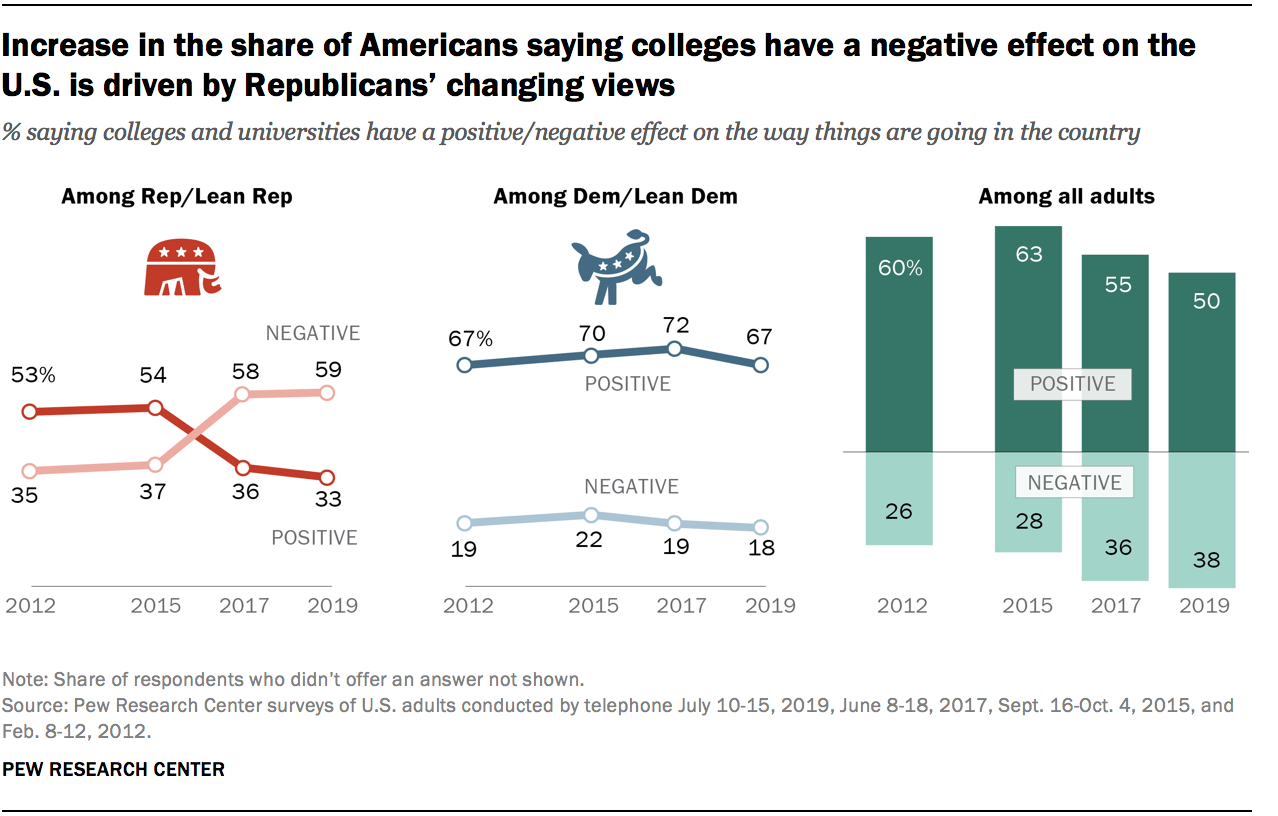
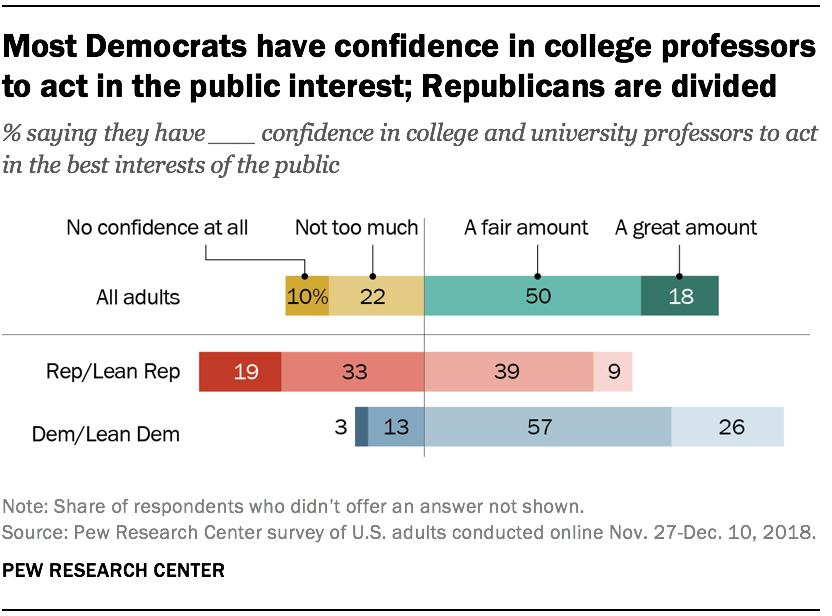
The research base on standards has been consistent in showing that the accountability process fails; see below:



 dr. p.l. (paul) thomas