

The Science of Reading Movement and The Never-Ending Debate: A Conversation with Paul Thomas
Category Archives: education reform
Open Letter to the Biden Administration, USDOE, and Secretary of Education Miguel Cardona
Reporting for NPR in 2018 about A Nation at Risk, Anya Kamenetz noted:
When it appeared in April 1983, the report received widespread coverage on radio and TV. President Reagan joined the co-authors in a series of public hearings around the country.
The report’s narrative of failing schools — students being out-competed internationally and declining educational standards — persists, and has become an entrenched part of the debate over education in the U.S.
What ‘A Nation At Risk’ Got Wrong, And Right, About U.S. Schools
In 2023, writing for The Answer Sheet in The Washington Post, James Harvey explains that the report under Reagan was “gaslighting” for political purposes, and not the clarion call to address education reform that media, the public, and political leaders claimed.
In short, A Nation at Risk was a “manufactured crisis.”
Yet, education reform has become a central part of the political process for governors and presidents since the 1980s, reaching a critical peak under George W. Bush who turned the discredited “Texas Miracle” into groundbreaking and bipartisan federal legislation, No Child Left Behind (NCLB).
In fact, public education in the US has been under an intense public and political microscope for forty years of high-stakes accountability. For educators, that accountability is indistinguishable regardless of the political party in the White House.
The Obama administration in many ways continued and even doubled-down on the crisis/miracle rhetoric found under W. Bush.
At the core of education crisis/miracle rhetoric has been the use and misuse of standardized test data.
For many decades, the media and public fretted over public education based on SAT data (and then ACT data), which represents the central issue of misunderstanding test scores (the College Board warns of not ranking states by SAT averages, yet the media persists) and misusing test data (SAT/ACT tests are designed to predict college success, not evaluate the quality of public education).
With the decrease in the influence of SAT/ACT testing, however, the media, public, and political leaders have focused more on National Assessment of Educational Progress (NAEP) data.
Since 2019, there have been NAEP-inspired claims of educational crisis based on 2019 reading scores, 2022 math scores, and 2022 history/civics scores.
As one powerful example, high-profile media, The New York Times, and journalist, Nicholas Kristof, proclaim:
One of the most bearish statistics for the future of the United States is this: Two-thirds of fourth graders in the United States are not proficient in reading.
Two-Thirds of Kids Struggle to Read, and We Know How to Fix It
However, despite warnings from 2016, Tom loveless explains:
In February, 2023 Bari Weiss produced a podcast, “Why 65% of Fourth Graders Can’t Really Read” and Nicholas Kristof, New York Times columnist, wrote “Two-Thirds of Kids Struggle to Read, and We Know How to Fix It.” Both headlines are misleading. The 65% and two-thirds figures are referring to the percentage of 4th graders who scored below proficient on the last reading test of the National Assessment of Educational Progress (NAEP), administered in 2022.
The problem is this: scoring below proficient doesn’t mean “can’t really read” or “struggling to read.” It also does not mean “functionally illiterate” or identify “non- readers” as some of the more vituperative descriptions on social media have claimed. It doesn’t even mean “below grade level in reading,” one of the milder distortions.
Literacy and NAEP Proficient
Further, scholars Reinking, Hruby and Risko (2023), in fact, assert: “[T]here is no indisputable evidence of a national crisis in reading, and even if there were a crisis, there is no evidence that the amount of phonics in classrooms is necessarily the cause or the solution.”
Two problems currently exist with the stories being told about schools and the education reform movement—the data do not support claims of “crisis” and NAEP perpetuates the “crisis” myth by design.
Touted as the “Nation’s Report Card,” NAEP developed achievement levels that were designed to hold states accountable for having high standards, and as a result, “proficiency” on NAEP is “aspirational” but not representative of “grade-level proficiency.”
The US is now mired in decades of punitive education legislation (standards and high-stakes testing as well as third-grade retention and VAM-based teacher evaluation) that has not worked because the central claim of “crisis” is simply not supported by the evidence.
Especially in the wake of the devastating impact of Covid on public education, students, and teachers, the Biden Administration has the historic opportunity to change direction in US public education reform.
This open letter, then, is an urgent call to do the following:
- Acknowledge and reject the false narratives of manufactured public education “crises” and media-created education “miracles.”
- Declare accountability-based, punitive reform a failure—despite good intentions—and call for equity-based, supportive reform that forefronts the impact of systemic forces outside and inside our public schools.
- Reform dramatically NAEP testing so that test data better supports learning and instruction instead of driving a false story of education crisis (for example, reform the use of NAEP “proficiency” to represent “age-level proficiency”).
US public education has a long and inexcusable history of political negligence in terms of supporting the most vulnerable children in our society; that includes negligence of vulnerable students in our public education system.
Our children and the country deserve robust and substantive education reform, not false stories of failure and misguided blame and punishment.
Regretfully, the last forty years have been a perpetual cycle of manufactured crisis and punitive policy.
The Biden Administration—notably a rhetorical “friend” of education embodied by Dr. Jill Biden—can and should chose a different story about our schools, our students, and our teachers.
As celebrated author James Baldwin urged: “The challenge is in the moment, the time is always now.”

Critically Reconsidering Teacher Education (and NCTQ’s Shoddy Reports): A Reader
In 2018, a simplistic but compelling story was established: Teachers do not know how to teach children to read (60+% are not proficient readers!) because teacher educators have failed to teach the “science of reading” (SOR) in teacher prep programs.
These false narratives about teacher ed, NAEP data, and reading have gained momentum and now drive reading policy and legislation in practically every state in the US.
There is an ironic truism—“a lie can travel halfway around the world while the truth is still putting on its shoes”—most often misattributed to Mark Twain that certainly describes the misguided SOR movement’s central claims wrapped up in the initial mantra that SOR is both simple and settled.
Here are two complicated counter-points that are supported by the full body of evidence:
- Reading instruction can and should be significantly reformed (in the context of addressing wider systemic inequities), but the SOR version of causes and solutions are false.
- Teacher education can and should be significantly reformed , but the SOR version of causes and solutions are false.
I have been a strong advocate for education reform, beginning with my entering the field in 1984, and subsequently a strong advocate for teacher education reform, starting with entering higher education and teacher education in 2002.
In “Of Rocks and Hard Places—The Challenge of Maxine Greene’s
Mystification in Teacher Education,” I wrote about teacher education: “As teacher educators, we are trapped between the expectations of a traditional and mechanistic field and the contrasting expectations of best practice guided by critical pedagogy.”
Below, then, I offer a reader about critically reconsidering teacher education and why the use of NCTQ “reports” are misguided and fail the test of scientific evidence.
Teacher Education
- Of Rocks and Hard Places—The Challenge of Maxine Greene’s
Mystification in Teacher Education - The Fatal Flaw of Teacher Education: “We have met the enemy and he is us.”
- If Teacher Education Is Failing Reading, Where Is the Blame?
- Hoffman, J.V., Hikida, M., & Sailors, M. (2020). Contesting science that silences: Amplifying equity, agency, and design research in literacy teacher preparation. Reading Research Quarterly, 55(S1), S255–S266. Retrieved July 26, 2022, from https://doi.org/10.1002/rrq.353
NCTQ
- NCTQ: “The data was effectively useless”
- Fact-checking Phonics, NRP, and NCTQ
- GUEST POST by Peter Smagorinsky: Response to the new NCTQ Teacher Prep Review
- UPDATED: NCTQ: “their remedies are part of the disease”
- Which Is Valid, SOR Story or Scholarly Criticism?: Checking for the “Science” in the “Science of Reading”
- NEPC Review: 2020 Teacher Prep Review: Clinical Practice and Classroom Management (National Council on Teacher Quality, October 2020)
- NEPC Review: 2018 Teacher Prep Review (National Council on Teacher Quality, April 2018)
- NEPC Review: Learning about Learning: What Every New Teacher Needs to Know (National Council on Teacher Quality [NCTQ])
- Thomas, P.L. (2023, September). NEPC review: Teacher prep review: Strengthening elementary reading instruction. Boulder, CO: National Education Policy Center. https://nepc.colorado.edu/review/teacher-prep
SAT Lessons Never Learned: NAEP Edition
Yesterday, I spent an hour on the phone with the producer of a national news series.
I realized afterward that much of the conversation reminded me of dozens of similar conversations with journalists throughout my 40-year career as an educator because I had to carefully and repeatedly clarify what standardized tests do and mean.
Annually for more than the first half of my career, I had to watch as the US slipped into Education Crisis mode when SAT scores were released.
Throughout the past five decades, I have been strongly anti-testing and anti-grades, but most of my public and scholarly work challenging testing addressed the many problems with the SAT—and notably how the media, public, and politicians misunderstand and misuse SAT data.
See these for example:
- The truth about failure in US schools | Paul Thomas
- Testing capitalism: Perpetuating privilege behind the masks of merit and objectivity, The International Education Journal: Comparative Perspectives, 2013, 12(2), 85–103
- PISA Brainwashing: Measure, Rank, Repeat
- SAT Reboot 2016: “Nonsense It All Is”
Over many years of critically analyzing SAT data as well as the media/public/political responses to the college entrance exam, many key lessons emerged that include the following:
- Lesson: Populations being tested impact data drawn from tests. The SAT originally served the needs of elite students, often those seeking Ivey League educations. However, over the twentieth century, increasingly many students began taking the SAT for a variety of reasons (scholarships and athletics, for example). The shift in population of students being tested from an elite subset (the upper end of the normal curve) to a more statistically “normal” population necessarily drove the average down (a statistical fact that has nothing to do with school or student quality). While statistically valid, dropping SAT scores because of population shifts created media problems (see below); therefore, the College Board recentered the scoring of the SAT.
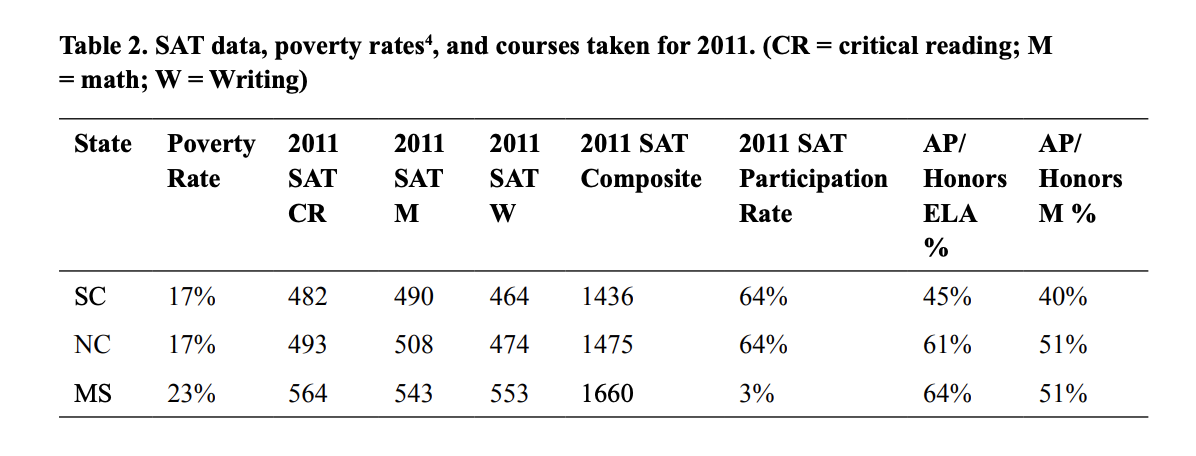
- Lesson: Ranking by test data must account for population differences among students tested. Reporting in the media of average SAT scores for the nation and by states created a misleading narrative about school quality. Part of that messaging was grounded in the SAT reporting average SAT scores by ranking states, and then, media reporting SAT average scores as a valid assessment of state educational quality. The College Board eventually issued a caution: “Educators, the media and others should…not rank or rate teachers, educational institutions, districts or states solely on the basis of aggregate scores derived from tests that are intended primarily as a measure of individual students.” However, the media continued to rank states using SAT average scores. SAT data has always been strongly correlated with parental income, parental level of education, and characteristics of students such as gender and race. But a significant driver of average SAT scores also included rates of participation among states. See for example a comparison I did among SC, NC, and MS (the latter having a higher poverty rate and higher average SAT because of a much lower participation rate, including mostly elite students):
- Lesson: Conclusions drawn from test data must acknowledge purpose of test being used (see Gerald Bracey). The SAT has one very narrow purpose—predicting first-year college grades; and the SAT has primarily one use—a data point for college admission based on its sole purpose. However, historically, media/public/political responses to the SAT have used the data to evaluate state educational quality and the longitudinal progress of US students in general. In short, SAT data has been routinely misused because most people misunderstand its purpose.
Recently, the significance of the SAT has declined, students taking the ACT at a higher rate and more colleges going test-optional, but the nation has shifted to panicking over NAEP data instead.
The rise in significance of NAEP includes the focus on “proficiency” included in NCLB mandates (which required all states to have 100% student proficiency by 2014).
The problem now is that media/public/political responses to NAEP mimic the exact mistakes during the hyper-focus on the SAT.
NAEP, like the SAT, then, needs a moment of reckoning also.
Instead of helping public and political messaging about education and education reform, NAEP has perpetuated the very worst stories about educational crisis. That is in part because there is no standard for “proficiency” and because NAEP was designed to provide a check against state assessments that could set cut scores and levels of achievement as they wanted:
Since states have different content standards and use different tests and different methods for setting cut scores, obviously the meaning of proficient varies among the states. Under NCLB, states are free to set their own standards for proficiency, which is one reason why AYP school failure rates vary so widely across the states. It’s a lot harder for students to achieve proficiency in a state that has set that standard at a high level than it is in a state that has set it lower. Indeed, even if students in two schools in two different states have exactly the same achievement, one school could find itself on a failed-AYP list simply because it is located in the state whose standard for proficient is higher than the other state’s….
Under NCLB all states must administer NAEP every other year in reading and mathematics in grades 4 and 8, starting in 2003. The idea is to use NAEP as a “check” on states’ assessment results under NCLB or as a benchmark for judging states’ definitions of proficient. If, for example, a state reports a very high percentage of proficient students on its state math test but its performance on math NAEP reveals a low percentage of proficient students, the inference would be that this state has set a relatively easy standard for math proficiency and is trying to “game” NCLB.
What’s Proficient?: The No Child Left Behind Act and the Many Meanings of Proficiency
In other words, NAEP was designed as a federal oversight of state assessments and not an evaluation tool to standardize “proficient” or to support education reform, instruction, or learning.
As a result, NAEP, as the SAT/ACT has done for years, feeds a constant education crisis cycle that also fuels concurrent cycles of education reform and education legislation that has become increasingly authoritarian (mandating specific practices and programs as well as banning practices and programs).
With the lessons from the SAT above, then, NAEP reform should include the following:
- Standardizing “proficient” and shifting from grade-level to age-level metrics.
- Ending state rankings and comparisons based on NAEP average scores.
- Changing testing population of students by age level instead of grade level (addressing impact of grade retention, which is a form of state’s “gaming the system” that NAEP sought to correct). NAEP testing should include children in an annual band of birth months/years regardless of grade level.
- Providing better explanations and guidance for reporting and understanding NAEP scores in the context of longitudinal data.
- Developing a collaborative relationship between federal and state education departments and among state education departments.
While I remain a strong skeptic of the value of standardized testing, and I recognize that we over-test students in the US, I urge NAEP reform and that we have a NAEP reckoning for the sake of students, teachers, and public education.
Recommended
Literacy and NAEP Proficient, Tom Loveless
The NAEP proficiency myth, Tom Loveless
Mainstream Media Fails Educational Research (Still)
From CNN: How long you breastfeed may impact your child’s test scores later, study shows.
This sounds really compelling; it fits into a cultural narrative that breast feeding is superior to using baby formula.
This sounds really compelling until about ten paragraphs in and then:
“Though the results are certainly interesting, you have to bear in mind the limitations that inevitably arise in research using observational data from major cohort studies,” McConway added….
The fact that the study was observational means it followed people’s behavior rather than randomly assigning the behavior in question, McConway noted.
Consequently, the results only show a correlation between breastfeeding and test scores — not causation.
“It’s not possible to be certain about what’s causing what,” he said.
How long you breastfeed may impact your child’s test scores later, study shows
Few people will read that far, and even most who do will likely take away a careless claim that the research doesn’t justify.
Therefore, this article should never have been written—similar to many articles about educational research.
One enduring example of media repeating a misunderstanding of educational research is the word gap myth. Media repeat that number of words in children’s vocabulary is connected to economic status (again, this sounds right to most people).
Yet, the Hart and Risley study this myth is based on has been debunked often, and the word gap myth itself is based on flawed logic about literacy [1].
Media has ben shown, in fact, to cover education quite badly, typically overemphasizing think tank research versus university-based research (the former far less credible than the latter) and featuring the voices of non-educators (reformers and innovators) over educators:
- REPORT: Only 9 Percent Of Guests Discussing Education On Evening Cable News Were Educators
- Malin, J. R., & Lubienski, C. (2015). Educational Expertise, Advocacy, and Media Influence. Education Policy Analysis Archives, 23, 6. https://doi.org/10.14507/epaa.v23.1706
- The Research that Reaches the Public: Who Produces the Educational Research Mentioned in the News Media? Holly Kurtz
- The Media and Educational Research: What We Know vs. What the Public Hears, Alex Molnar
Currently, the misinformation campaign, ironically, related to education is the “science of reading” (SOR) movement that repeatedly misrepresents NAEP data, makes claims that have no scientific evidence (relying on anecdote [2]), and repeatedly relies on think tank “reports” (NCTQ, for example) that are also not scientific [3].
A subset of the SOR movement is also grade retention. High-profile coverage of Mississippi has made the exact breast feeding mistake from above: “’It’s not possible to be certain about what’s causing what,’ he said.”
Recently in the NYT, a think-tank funded report on MS grade retention is cited; however, the report itself notes that outcomes cannot be linked to grade retention itself [3].
In short, the report proves nothing about retention—just as the study on breast feeding proves nothing about student achievement.
The breast feeding story, the word gap myth, and the SOR story are all compelling because they sound true, but they are all false narratives that fails educational research—and public education.
[2] Hoffman, J.V., Hikida, M., & Sailors, M. (2020). Contesting science that silences: Amplifying equity, agency, and design research in literacy teacher preparation. Reading Research Quarterly, 55(S1), S255–S266. Retrieved July 26, 2022, from https://doi.org/10.1002/rrq.353
[3] See:
- The Science of Reading and the Media: Is Reporting Biased?, Maren Aukerman
- The Science of Reading and the Media: Does the Media Draw on High-Quality Reading Research?, Maren Aukerman
- The Science of Reading and the Media: How Do Current Reporting Patterns Cause Damage?, Maren Aukerman
- Legislating Phonics: Settled Science or Political Polemics? David Reinking, George G. Hruby, and Victoria J. Risko
- Thomas, P.L. (2022). The Science of Reading movement: The never-ending debate and the need for a different approach to reading instruction. Boulder, CO: National Education Policy Center. http://nepc.colorado.edu/publication/science-of-reading
- On the latest obsession with phonics, David Reinking, Peter Smagorinsky and David Yaden
[3] Scroll to end HERE.

Disaster Reform and Shadow Reading Legislation: The Politics of Reading Crisis pt. 2 [UPDATED]
Republican/conservative education reform has been a subset of disaster capitalism for decades now, most prominently after Hurricane Katrina when Republicans used the natural disaster to dismantle public education and erase the existing teacher workforce in New Orleans.
In 2023, Republicans have continued to manufacture educational crises in order to reform education, where “reform” is a veneer for dismantling education.
The twin conservative attacks on schools include the anti-CRT/curriculum gag order movement and the “science of reading” (SOR) movement—both depending on false claims of educational failures by teachers and public schools.
What flies under the radar is that anti-CRT and reading legislation are being promoted by conservative organizations and ideologies in the form of “model legislation” and fact sheets that are devoid of facts.
In the context of the crisis/miracle narratives about education in the media, among the public, and by politicians, disaster reform has evolved into its own powerful and harmful machine.
Not surprising, a key example comes from Florida and Jeb Bush: ExcelinEd.
The disaster education reform organization is Orwellian in its claims but insidious in its carefully packaged information and templates for policy. The key point here is that the SOR movement as a media and parent advocacy event has now fully been folded into the existing Republican education reform machine that is more about dismantling education than supporting student learning or teacher quality.
In short, the materials about reading presented by ExcelinEd are false but very well designed and compelling to the general public and politician looking for ready-made legislation and effective talking points.
As the NCLB/NRP era showed us with Reading First, however, the entire Bush family is driven by market interests, not a pursuit of democratic education for all.
ExcelinEd offers online a series of PDF resources:
- Policy Summary: Early Literacy
- Comprehensive How-To Guide: Approaches to Implementing Early Literacy Policies
- Fundamental Principles: Early Literacy
- Model Policy: Early Literacy
- Model Policy: Eliminating Three-Cueing
- Fact Sheet: Three-Cueing
The short version of concern here is that nearly all of the information above is misinformation; however, as the SOR movement has shown, most people remain easily targeted by claims of a reading crisis and a set of simplistic blame and solutions.
As I have shown, there simply is no reading crisis in the US, but there is a very long history of political negligence in terms of providing marginalized students and their teachers with the learning and teaching environments as well as social conditions that would support earlier and more developed reading in our students.
Two aspects of the materials above deserve highlighting (again).
First, the Republican commitment to SOR is grounded in doubling-down on punitive policy, grade retention.
The two states identified over and over in the materials above are Florida and Mississippi; however, those states are examples of mirages, not miracles.
ExcelinEd only cites work by Winters [1] to “prove” the effectiveness of grade retention. This strategy is cherry picking “research” by a conservative “scholar” who (surprisingly) only finds positive results for the conservative reform of the day—school choice, charter schools, VAM evaluations of teachers, and now, grade retention.
The research on grade retention is complicated but politically attractive since grade retention (the likely sources of “success” in FL and MS) can raise reading scores in grades 3 or 4, but those “gains” disappear by middle school.
Grade retention distorts the population of students being tested by removing the lowest scoring students and reintroducing older students to grade-level testing. As I have noted before, students achievement can vary significantly by just a month of age difference:

A review of the Florida Model that depends on grade retention has concluded that research does not show whether any short term gains are from retention or additional services. Further, a comprehensive study still notes that grade retention is harmful, especially to marginalized populations of students:
The negative effect of retention was strongest for African American and Hispanic girls. Even though grade retention in the elementary grades does not harm students in terms of their academic achievement or educational motivation at the transition to high school, retention increases the odds that a student will drop out of school before obtaining a high school diploma.
Hughes, J. N., West, S. G., Kim, H., & Bauer, S. S. (2018). Effect of early grade retention on school completion: A prospective study. Journal of Educational Psychology, 110(7), 974–991. https://doi.org/10.1037/edu0000243
A second problematic aspect is the hyper-focus on three-cueing, which fits into the Rufo “caricature” approach to attacking CRT.
Republicans have latched onto the SOR misinformation campaign that perpetuates a cartoon version of three-cueing and fabricates a crisis around claiming that teachers are telling students to guess words instead of using phonics/decoding strategies.
Three-cueing, in fact, is a research-based approach better referred to as “multiple cueing”:

ExcelinEd’s prepackaged misinformation campaign and templates for legislation are yet more proof that the SOR movement is another nail in the coffin of public education, an anti-teacher and anti-public school movement that depends on crisis rhetoric and fulfills the goals of disaster reform driven by Republicans and conservatives who serve the needs of the educational marketplace—not students, or teachers.
[1] UPDATE: Another Mississippi “miracle” article in the NYT highlights grade retention positively, again citing only a new study by Kirsten Slungaard Mumma and Marcus A. Winters.
First, this is a working paper supported by Mississippi Department of Education and the acknowledgements add: “This project was made possible by a grant from ExcelinEd.”
Here are some key additional caveats beyond how biased this report likely is in terms of meeting the ideological aims of ExcelinEd:
- The policy brief concedes: “That said, though the results are distinctly positive for the policy treatment overall, the analysis cannot entirely disentangle the extent to which the observed benefits in ELA are due to the additional year of instruction or to other specific features of the approach Mississippi took to providing literacy-focused supports and interventions to students.”
- In the full working paper, section “2.1 Within-Age vs Within-Grade Comparisons” details a common failure of analyzing grade retention: “Comparing the later outcomes of students retained at a point in time to students in their cohort who were promoted is complicated by the fact that the two groups are enrolled in different grade levels during later years.” The findings of this working paper must be tempered by this fact of the study: “Unfortunately, within-age comparisons of student test scores are not possible in Mississippi because scores on the state’s standardized tests are comparable within grades over time but not across grades.” In other words, as noted above, higher test scores may be the result of students simply being older in a tested grade level, and not because grade retention or any of the services/instructional practices were effective. Again, these “gains” are likely mirages.
Finally, we must wondering why Kristof chose to highlight a flawed and biased think-tank funded report on grade retention instead of this: Following the Letter of the Law: 2020-21 Retention Outcomes Under Michigan’s Read by Grade Three Law.
Westall, Utter, and Strunk find much more problematic outcomes with retention, findings that fit within decades of research:
Early literacy skills are critical to the educational outcomes of young students. Accordingly, 19 states have early literacy policies that require grade retention for underperforming readers at the end of third grade. However, there is mixed evidence about retention’s effectiveness and concerns that retention may disproportionately impact traditionally disadvantaged student groups. Using regressions and a regression discontinuity design, we examine retention outcomes under Michigan’s early literacy law, the Read by Grade Three Law. We find that Black and economically disadvantaged students are more frequently eligible for retention and retained than their peers. While controlling for students’ test performance, particularly their math scores, eliminates this disparity for Black students, it persists for economically disadvantaged students. We show that differences in average math performance, exemption characteristics, district characteristics, and eligibility-induced student mobility across districts do not explain the disparities in the implementation of retention by economic disadvantage status.
Abstract

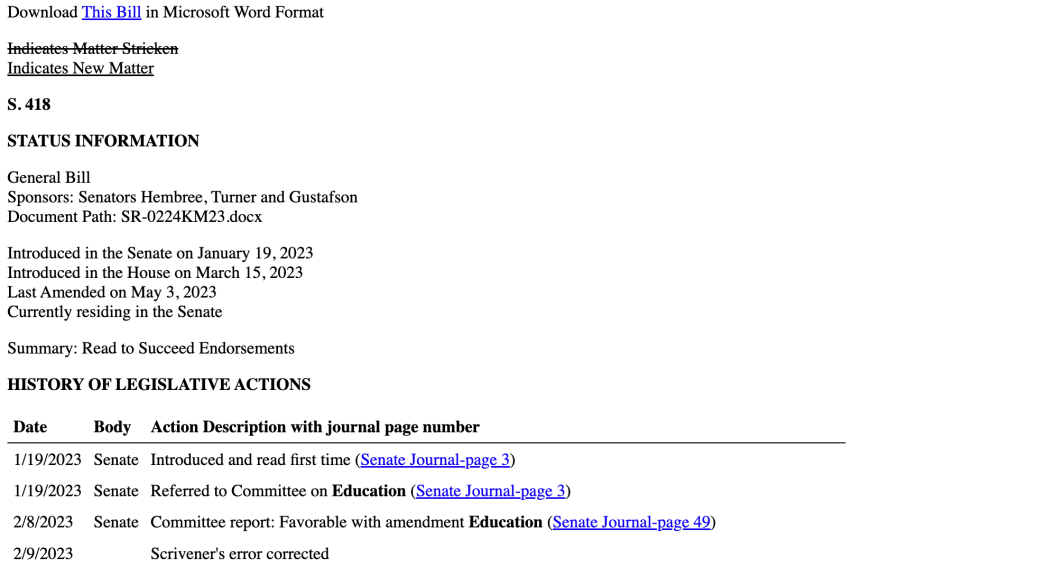
Open Letter: S.418 Reading Bill in SC – Diane Stephens
[This is a detailed rebuttal of S.418, a reading bill in SC, by Diane Stephens, Distinguished Professor Emerita, John E. Swearingen, Sr. Professor Emerita in Education, University of South Carolina]
To members of the House and Senate Education Committees:
On April 19, 2023, I sent you a letter about the success of the South Carolina Reading Initiative (2000-2010). SCRI focused on helping teachers broaden their knowledge base so they could make informed scientifically-based curricular decisions based on student’s strengths and needs. Then I sent a second, shorter letter (see attached), because I thought shorter letters had a better chance of being read. This is my third letter and was based on a close read of S.418. (For your convenience, a copy of this letter, in word, with page numbers is attached as are copies of my first two letters).
Please postpone action on S.418 until there is time for everyone to provide informed feedback.
Meanwhile, here is my informed feedback.
I worked with struggling readers for 48 years. Although each individual is unique, when I listen to them read and ask them about what they read, I’ve learned that readers (K–adult) generally fall into two distinct categories:
Category #1. The reader does not yet accurately use the visual information on the page. For example, the text shows a child about to put a spider in a box. The text is: Sally put a bug in a box. The child read, “Sally put a spider in a box.” The child was attending to some of the print (Sally, put, a, in, a, box) and to the picture (of a spider) but not attending to the word bug. The teacher can subsequently draw attention to the word bug and help the child use their knowledge of sound/symbol relationships to figure out that the word is bug; knowledge the child previously learned from the teacher.
An older student read, “Mr. Baker is a weatherman. He takes a lot about the weather.” However, the text was “He talks a lot about the weather.”
In this case, the student was using four of the letters t, a, k, s and not attending to the l. The teacher can subsequently draw the student’s attention to all the letters and letter sounds in the word.
Category #2: What the student says when reading aloud fluently is an exact match to what is on the page, but the student can neither retell what they read, nor can they answer questions about it.
These students need to learn that reading is supposed to make sense—that they are supposed to be thinking when reading, not just call words. Teachers use a variety of strategies to help with this.
Teachers need autonomy to decide the best way to respond to these two different kinds of readers.
Therefore, while the proposed language for 5-155-110 (2) is:
(2) classroom teachers each school district periodically reassess their curriculum and instruction to determine if they are helping each student progress as a proficient reader and make modifications as appropriate. No PK-5 textbook or instructional materials that employ the three-cueing system model of reading, visual memory as the primary basis for teaching word recognition, or the three-cuing system model of reading based on meaning, structure and syntax, and visual, which is also known as “MSV” should be used in reading instruction
I suggest:
(2) Classroom teachers and school district periodically assesses their curriculum and instruction to determine if they are helping each student progress as a proficient reader and to make modifications as appropriate.
Rationale
Teachers need to be responsible for evaluating their curriculum and instruction. This should not solely be a district responsibility.
As this section it drafted, it implied that there is an instructional method called the three-cueing/MSV and there is not such a method. The information about three-cueing/MSV represents a misunderstanding about three of the cues to which all readers pay attention.
“M” refers to meaning and it is certainly critical that students focus on meaning in order to comprehend. The category #2 student above needed help learning that reading is supposed to make sense. Certainly, legislators do not intend for teachers to stop helping children with comprehension.
“V” stands for Visual. This is also referred to as “phonics” (the relationship between phonemes/sounds and graphemes/letters). The readers in Category #1 needed help paying more attention to the print on the page. Certainly, legislators do not intend for teachers to stop helping children with phonics.
“S” stands for structure/grammar and some students pay so little attention to meaning that they insert words that are grammatically incorrect. For example, if the sentence was “I looked out my window and saw the __ at the bird feeder,” some students might provide the word “black.” Teachers then respond appropriately based on what they know about the person as a reader. Certainly, legislators do not intend for teachers to stop helping children with grammar.
In addition to the above changes, I suggest that:
2. While the proposed language for 59-155-110 (6) is:
(6) classroom teachers receive pre-service and in-service coursework which prepares them to help all students comprehend grade-level texts in foundational literacy skills, structured literacy, and the science of reading; how to analyze data to inform reading instruction; and provide scientifically-based interventions as needed so that all students develop proficiency with literacy skills and comprehension; classroom teachers certified in early childhood, elementary, or special education must complete board approved coursework in foundational literacy skills, structured literacy, and the science of reading or successfully complete the scientifically research-based reading instruction assessment approved by the board
I suggest:
(6) Early childhood, elementary, and special education teachers receive board-approved, scientifically based, pre-service and in-service coursework that prepares them to help all students comprehend grade level texts. This includes instruction in foundational literacy skills, reading assessment (so they know how to analyze data to inform reading instruction), and the reading interventions needed so that all students develop reading proficiency.
Rationale
First, it is not clear to me why the legislature would not want teachers to help all students to comprehend grade level texts, so I suggest that language not be deleted.
Second, the meaning of the term “structured literacy” is not commonly used in the reading research literacy and using it here is unnecessarily confusing. What, for example, would “unstructured literacy” be? See also suggestion for 59-155-120 (13).
Third, “science of reading” is often used to refer to a particular ideology and is not synonymous with “scientifically-based reading research “—research which has been shown in be effective in multiple peer-reviewed studies (see National Reading Panel Report, 2000).
Fourth, this paragraph could be more concise so that the meaning of the section is clearer.
3. While the proposed language for 59-155-120 (4) is:
(4) “Foundational literacy skills” means phonological awareness, phonemic awareness, phonics, fluency, vocabulary, and reading comprehension; this definition of foundational literacy skills specifically excludes the “three-cueing system”, which is any model of teaching students to read based on meaning, structure and syntax, and visual cues, which may also be known as “MSV”.
I suggest:
(4) “Foundational literacy skills” means phonological awareness, phonemic awareness, phonics, fluency and reading comprehension.”
Rationale
For reasons noted above, the wording “this definition of literacy skills excludes the ‘three-cuing system,’ which is any model of teaching students to read based on meaning, structure and syntax, which may also be known as ‘MSV” should be deleted. The “three cuing system” is not a method and certainly the legislature does not intend for teachers to stop helping children with meaning, grammar, and phonics.
4. While the proposed language for 59-155-120 (7) is:
(7) “Reading interventions” means individual or group assistance in the classroom and supplemental support based on curricular and instructional decisions made by classrooms teachers who have proven effectiveness in teaching reading and a literacy endorsement or reading coaches who meet the minimum qualifications established in guidelines published by the Department of Education.
I suggest:
(7) “Reading interventions” means individual or group assistance in the classroom and supplemental support based on curricular and instructional decisions made by classrooms teachers who have proven effectiveness in teaching reading and who have a literacy endorsement or by reading coaches who meet the minimum qualifications established in guidelines published by the Department of Education.
Rationale
These changes clarify the meaning.
5. While 59-155-120 (12) currently offers a definition of Science of Reading as:
“.. the body of research that identifies evidence-based approaches for explicitly and systematically teaching students to read, including foundational literacy skills that enable students to develop reading skills as required to meet state standards in reading.
I suggest instead that the definition of Scientifically-based Reading Research be used instead:
(12) “Scientifically-based reading research” (SBRR) refers to research that appears in peer-reviewed journals of reading and whose findings are consistently established across a substantial number of peer-reviewed studies. SBRR identifies evidence-based approaches for explicitly and systematically teaching students to read, including foundational literacy skills that enable students to develop reading skills as required to meet state standards in reading.
Rationale
“Science of reading” is not equated in the reading research literature as synonymous with “scientifically-based reading research” – although it is used interchangeably in this bill. Using the broadly understood term, scientifically-based reading research (SBRR), clarifies the basis on which decisions about curriculum and instruction should be based and avoids potential confusion.
6. While the proposed language for 59-155-120 (13) is:
(13) “Structured Literacy” means an evidence-based approach to teaching oral and written language aligned to the science of reading founded on the science of how children learn to read and characterized by explicit, systematic, cumulative, and diagnostic instruction in phonology, sound-symbol association, syllable instruction, morphology, syntax, and semantics.
I suggest that (13) be eliminated.
Rationale
“Structured literacy” is not a term commonly used in reading research. The definition provides no new information and using it here is unnecessarily confusing. 59-155-120 (4) already stipulated that foundational literacy skills “means phonological awareness, phonemic awareness, phonics, fluency and reading comprehension.” That seems both clear and sufficient.
7. While the proposed language for 59-155-130 (1) is:
(1) providing professional development to teachers, school principals, and other administrative staff on reading and writing instruction and reading assessment that informs instruction the science of reading, structured literacy, and foundational literacy skills based on the science of reading
I suggest:
(1) providing professional development to teachers, school principals and other administrative staff on scientifically-based reading research on both reading instruction and reading assessment.
Rationale
Teachers need to know about reading assessment so they can adequately address the strengths and needs of their students. And, as noted earlier, in this bill, “science of reading” is treated as the equivalent of scientifically-based reading research (SBRR) and using them interchangeable is a potential source of confusion. SBRR is consistent with the language used in reading research. “Structured literacy” is not commonly used in the reading research literature and using it here is unnecessarily confusing. 59-155-120 (4) already stipulated that foundational literacy skills “means phonological awareness, phonemic awareness, phonics, fluency and reading comprehension.” That seems both clear and sufficient
8. While the proposed language for 59-155-130 (3) is:
(3) working collaboratively with institutions of higher learning offering courses in reading and writing for initial teacher certification in early childhood, elementary, and special education, and those institutions of higher education offering accredited master’s degrees in reading-literacy to design coursework in the science of reading, structured literacy, and foundational literacy skills leading to a literacy teacher add-on endorsement by the State. Institutions of higher learning that offer initial teacher certification in early childhood, elementary, and special education must provide the Department, and publicly report on their website and to all potential teacher candidates, the success rate of the institution’s teacher candidates who attempt the scientifically research-based reading instruction assessment approved by the board required for teacher certification
I suggest:
(3) requiring institutions of higher learning that offer initial scientifically-based reading research teacher certification in early childhood, elementary, and special education to provide the Department, and publicly report on their website and to all potential teacher candidates, the success rate of their teacher candidates on the board approved scientifically-based reading research reading assessment required for teacher certification.
Rationale
Again, the universally accepted meaning of scientifically-based reading research is not the equivalent of the science of reading. “Structured literacy” is not commonly used in the reading research literature and using it here is unnecessarily confusing. 59-155-120 (4) already stipulated that foundational literacy skills “means phonological awareness, phonemic awareness, phonics, fluency and reading comprehension.” That seems both clear and sufficient
9. While the proposed language for 59-155-130 (4) is:
(4) providing professional development in reading grounded in the science of reading, structured literacy, and foundational literacy skills and coaching for already certified reading/literacy coaches and literacy teachers
I suggest:
(4) providing professional development in scientifically-based reading research reading and coaching for already certified reading/literacy coaches and literacy teachers
Rationale
Again, it is preferable to use the commonly accepted term “scientifically-based reading research.” There also seems to be no reason to repeat the terms “structured literacy, and foundational literacy skills”. “Structured literacy” is not commonly used in the reading research literature and using it here is unnecessarily confusing. 59-155-120 (4) already stipulated that foundational literacy skills “means phonological awareness, phonemic awareness, phonics, fluency and reading comprehension.” That seems both clear and sufficient
10. While the proposed language for 59-155-140 (A) (2) is:
(2) The state plan must be based on reading research and proven-effective practices, aligned to the science of reading, structured literacy, and foundational literacy skills and applied to….
I suggest:
The state plan must be based on scientifically-based reading research and applied to . . .
Rationale
Again, the use “scientifically-based reading research” instead of “the science of reading”, is that standard wording used in reading research. “Structured literacy” is not commonly used in the reading research literature and using it here is unnecessarily confusing. 59-155-120 (4) already stipulated that foundational literacy skills “means phonological awareness, phonemic awareness, phonics, fluency and reading comprehension.” That seems both clear and sufficient
11. While the proposed language for 59-155-140 (B) (2) (a) is:
(2) (a) Each district PK-12 5 reading proficiency plan shall document how reading and writing assessment and instruction for all PK-5 students is aligned to the science of reading, structured literacy, and foundational literacy skills
I suggest:
(2) (a) Each district PK-5 reading proficiency plan shall document how reading and writing assessment and instruction for all PK–5 students is aligned with scientifically-based reading research.
Rationale
Same comment regarding scientifically-based reading research, “structured literacy” and the fact that foundational literacy skills have already been defined.
12. While the proposed language for 59-155-140 (B) (2) (f) is:
(2) (f) Each district PK-12 5 reading proficiency plan shall explain how the district will provide teacher training in reading and writing instruction the science of reading, structured literacy, and foundational literacy skills
I suggest:
(2) (f) Each district PK-5 reading proficiency plan shall explain how the district will provide teacher training in reading and writing instruction based on scientifically-based reading research
Rationale
Same comments regarding scientifically-based reading research, the use of the term “structured literacy” and the fact that foundational literacy skills have already been defined.
13. While the proposed language 59-155-160 (5) (D) is:
Retained students must be provided intensive instructional services and support, including a minimum of ninety minutes of daily reading and writing instruction, supplemental text-based foundational literacy skill instruction, and other strategies grounded in the science of reading . . .
I propose:
Retained students must be provided intensive instructional services and support, including a minimum of ninety minutes of daily reading and writing instruction, supplemental foundational literacy skill instruction, and other strategies based on scientifically-based reading research.
Rationale
Same comment regarding scientifically-based reading research, the use of the term “structured literacy” and the fact that foundational literacy skills have already been defined.
15. While the proposed language of 59-155-170 (B) is:.
These practices must be mastered by PK-5 teachers through high-quality training and addressed through well-designed and effectively executed assessment and instruction implemented with fidelity to research scientifically-based instructional practices presented in the state, district, and school reading plans. All PK-5 teachers, administrators, and support staff must be trained adequately in reading comprehension the science of reading, structured literacy, and foundational literacy skills in order to perform effectively their roles enabling each student to become proficient in content area reading and writing.I
I suggest:
These practices must be mastered by PK–5 teachers through high-quality training and addressed through well-designed and effectively executed assessment and instruction implemented with fidelity to scientifically-based instructional practices presented in the state, district, and school reading plans. All PK–5 teachers, administrators, and support staff must be trained adequately in scientifically-based reading research in order to effectively perform their roles and to enable each student to become proficient in content area reading and writing.
Rationale
Same comment regarding scientifically-based reading research, the use of the term “structured literacy” and that foundational literacy skills have already been defined.
With deepest thanks for all the hard work you do,
Diane Stephens, Ph.D.
Distinguished Professor Emerita
John E. Swearingen, Sr. Professor Emerita in Education
University of South Carolina

The Proficiency Trap and the Never-Ending Crisis Cycles in Education: A Reader
The newest NAEP crisis (until the next one) concerns history and civics NAEP scores post-pandemic.
Similar to the NAEP crisis around reading—grounded in a misunderstanding of “proficiency” and what NAEP shows longitudinally (see Mississippi, for example)—this newest round of crisis rhetoric around NAEP exposes a central problem with media, public, and political responses to test data as well as embedding proficiency mandates in accountability legislation.
As many have noted, announcing a reading crisis is contradicted by longitudinal NAEP data:

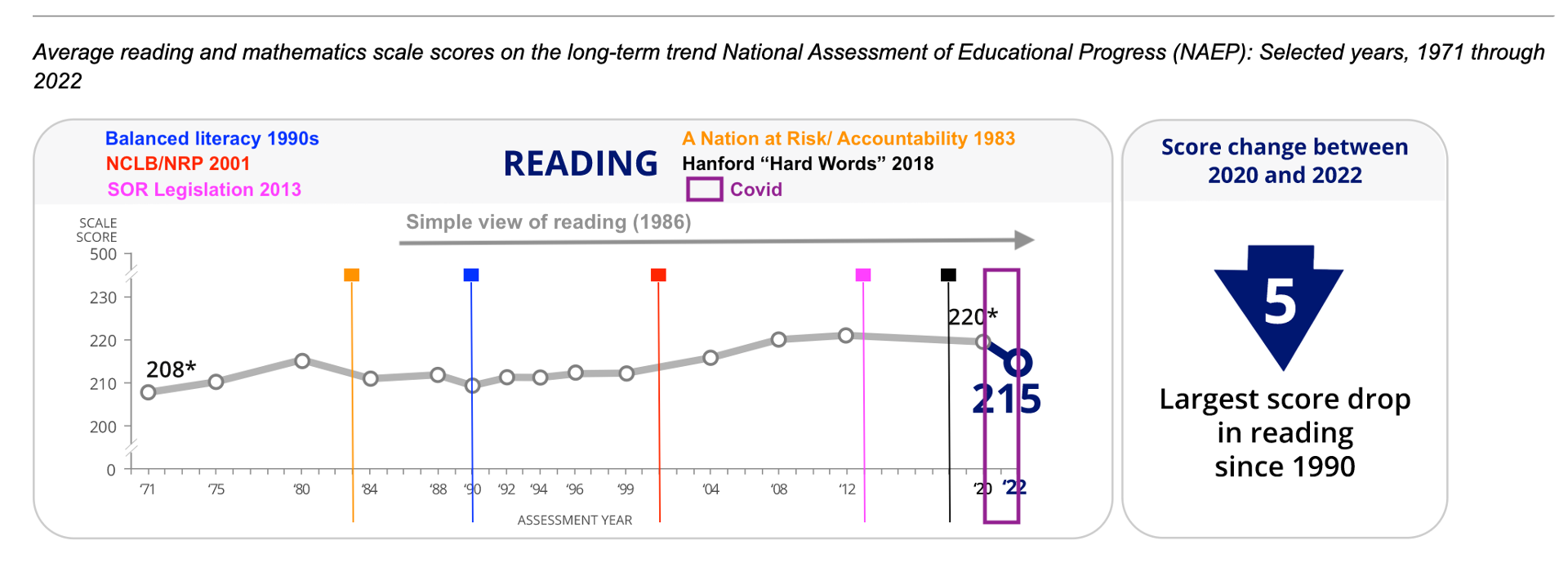
But possibly a more problematic issue with NAEP is confusing NAEP achievement levels with commonly used terms such as “grade level proficiency” (notably as related to reading).
Yet, as is explained clearly on the NAEP web site: “It should be noted that the NAEP Proficient achievement level does not represent grade level proficiency as determined by other assessment standards (e.g., state or district assessments).”
Public, media, and political claims that 2/3 of students are below grade level proficiency, then, is a false claim based on misreading NAEP data and misunderstanding the term “proficiency,” which is determined by each assessment or state (not a fixed metric).
Here is a reader for those genuinely interested in understanding NAEP data, what we mean by “proficiency,” and why expecting all students to be above any level of achievement is counter to understanding human nature (recall the failed effort in NCLB to mandate 100% of student achievement proficiency by 2014):
- Beware Grade-Level Reading and the Cult of Proficiency
- NAEP achievement levels
- What’s A Big Change in State NAEP Scores?, Tom Loveless
- The NAEP proficiency myth, Tom Loveless
- Common Core Testing: Who’s The Real “Liar”?, Jersey Jazzman
- Gaslighting Americans about public schools: The truth about ‘A Nation at Risk’, James Harvey
- No Crisis, No Miracles: The False Narratives of Education Journalism
- Schools Matter: Those Who Cannot Remember the Past
NAEP-mania! 2023: US History and Civics Edition
Way back in the late 1970s, I changed my schedule—either in grade 10 or 11—and found myself in two class periods without my friends; I had been trafficking among the top-ranked students in my class (I graduated number 8 out of about 150 students), but the schedule change put me in a so-called “regular” history class.
The class was taught by a football and track coach. He had a very simple and even elegant instructional strategy.
In the center of the classroom stood an overhead projector. Beside it, daily, he had a designated stack of overheads.
After the first couple classes, he assigned the slowest note taker (or better named, note copier) to sit beside the stack of notes to rotate as that student completed copying.
After one day of this tedium, I rushed to guidance and returned to my original schedule along side my friends.
Something that is rarely discussed in the many public discussions of US education is that history, social studies, civics, and government courses in public schools are disproportionately taught by coaches.
Most coaches are coincidentally teachers—and a few teachers are coincidentally coaches. A significant number of US public school students get begrudging instruction in history, social studies, civics, and government—and that instruction is superficially facts, easy to test (or at least easy to put on tests that are easy to score).
So while Republicans have been dismantling history curriculum and banning books, US students produced our latest NAEP education crisis: Eighth-Graders’ History, Civics Test Scores Hit Record Low, cries the WSJ.
Yet, here is an interesting tidbit (especially for those of us mired in the manufactured reading crisis over the past five years or so):
This relatively flat data line for NAEP history scores should remind you of reading NAEP data:
Despite evidence to the contrary, once again, mainstream media, the public, and political leaders have only two ways to react to anything about US public education—crisis or miracle.
We might anticipate that the drop in US history and civics NAEP scores (despite the obvious connection to Covid, as noted above in NAEP reading) will prompt “science of history” and “science of civics” movements.
But, honestly, those will not materialize because politically the US does not care about history or civics—at least not about the quality of teaching and learning in history or civics.
Politically, we only care about anything that allows a public outrage and melodramatic media response to further prove that students suck, teachers suck, and schools, well, suck.
Similar to the false stories around reading, however, the actual problems with history and civics teaching and learning in the US have little to do with a very bad test (that, we should note, is what NAEP is, a very bad test).
History, social studies, civics, and government courses have for decades been part of an open secret—a set of content eagerly sacrificed to the scholastic sports Gods.
And more recently, history, social studies, civics, and government are the political tool of the Republican Party who wants schooling to indoctrinate children in the fairy tales that maintain the status quo of inequitable power, freedom, and humanity that is the good ol’ U.S. of A.
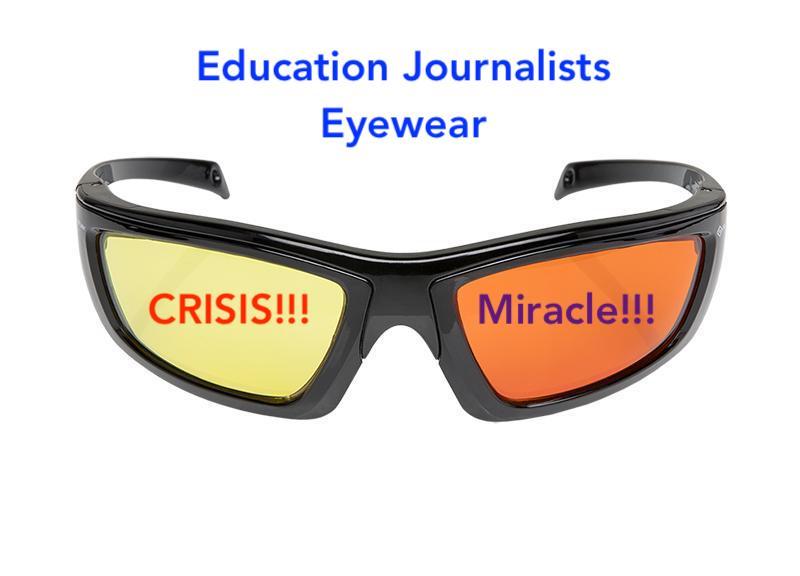
The real purpose of NAEP is to give periodic space to the only way journalists know how to respond to education:
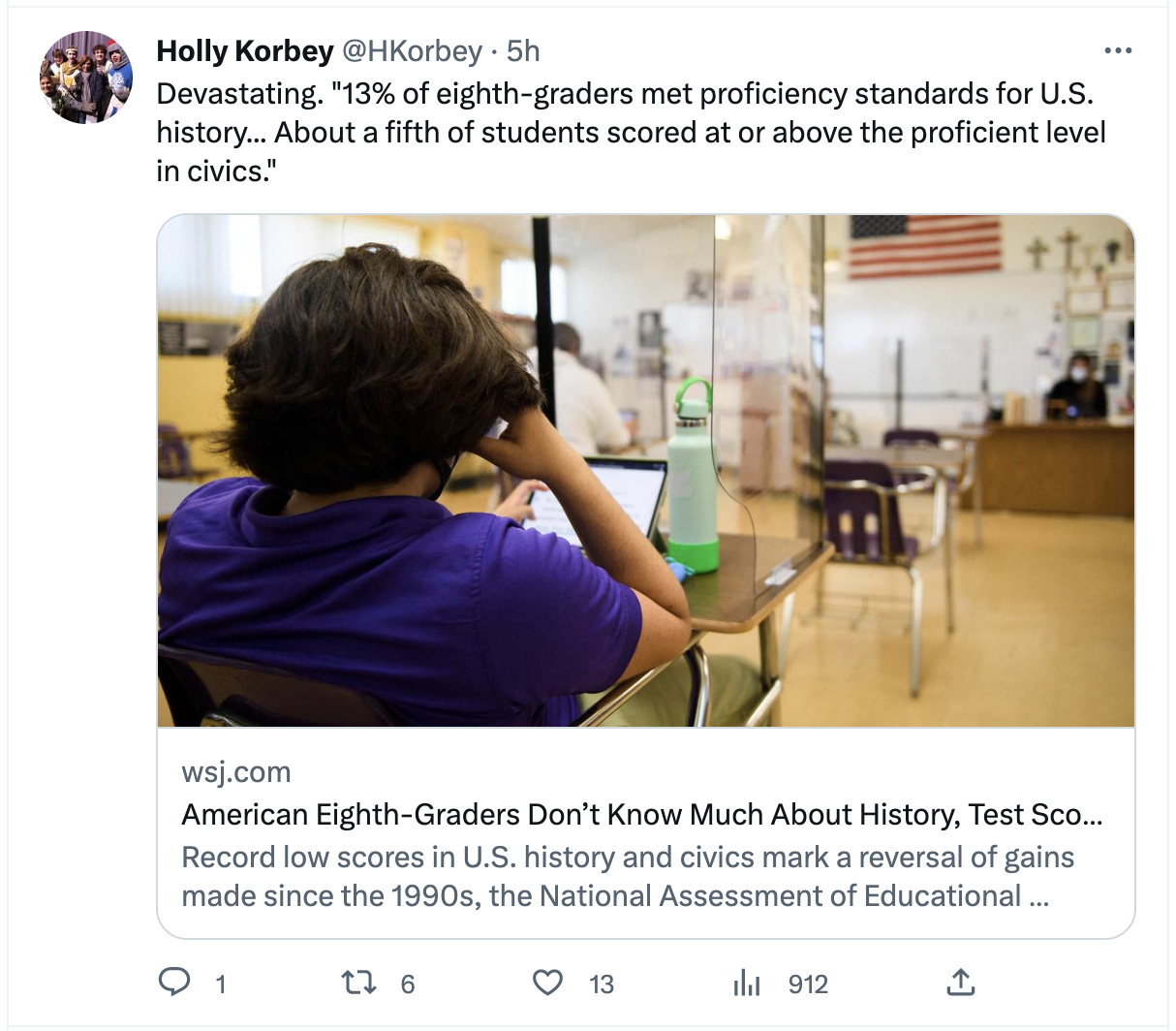
Ironically, that journalists and the public are so easily fooled by this nonsense is the strongest indictment of the failures of US public education.
We all should know better. We all should do better.
But we won’t.
That, by the way, is one predictable lesson of history.

SOR Movement Maintains Conservative Assault on Teachers and Public Schools [Updated]
[Header Photo by Kelly Sikkema on Unsplash]
Although Gerald Bracey and Gerald Holton exposed A Nation at Risk many years ago, James Harvey calling the Reagan-era “report” “gaslighting” is possibly the best way to frame the manufactured crisis that set off five decades of misguided education reform in the US.
The crisis rhetoric of A Nation at Risk has become the norm for how media covers education, how the public perceives public education (mostly “other people’s schools”), and how politicians gain political points.
Harvey notes: “One of the tragedies around ‘A Nation at Risk’ was not simply that it misdiagnosed the problem and put forth ersatz solutions, but that it refused to face up to the financial implications of its argument.”
The elements of that crisis approach to education include the following:
- Teachers are failing students.
- Teacher education is failing teachers and students.
- Public education is failing.
- But this “miracle” school is doing the right thing!
As many scholars have noted, these claims are baseless but made primarily as a political move to dismantle public education and teacher education (and also teachers unions).
The media has now spoken directly into that conservative machine with the “science of reading” (SOR) movement that follows the tired and destructive pattern begun under Reagan in the 1980s.
For example, there is now a clear merging of the SOR movement and conservative politics as well as education market interests—from charter schools to the Bushes and Republican governors:

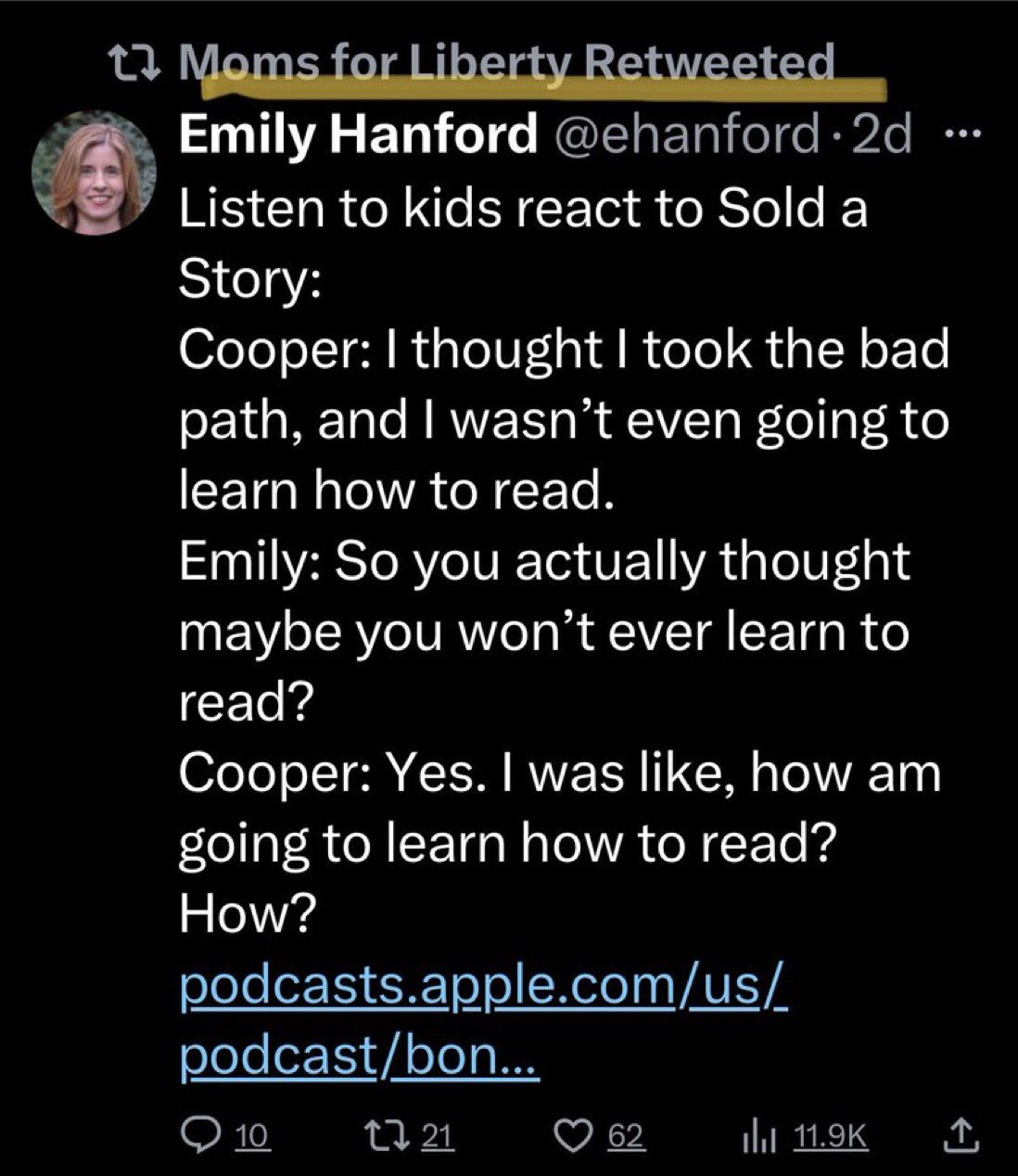

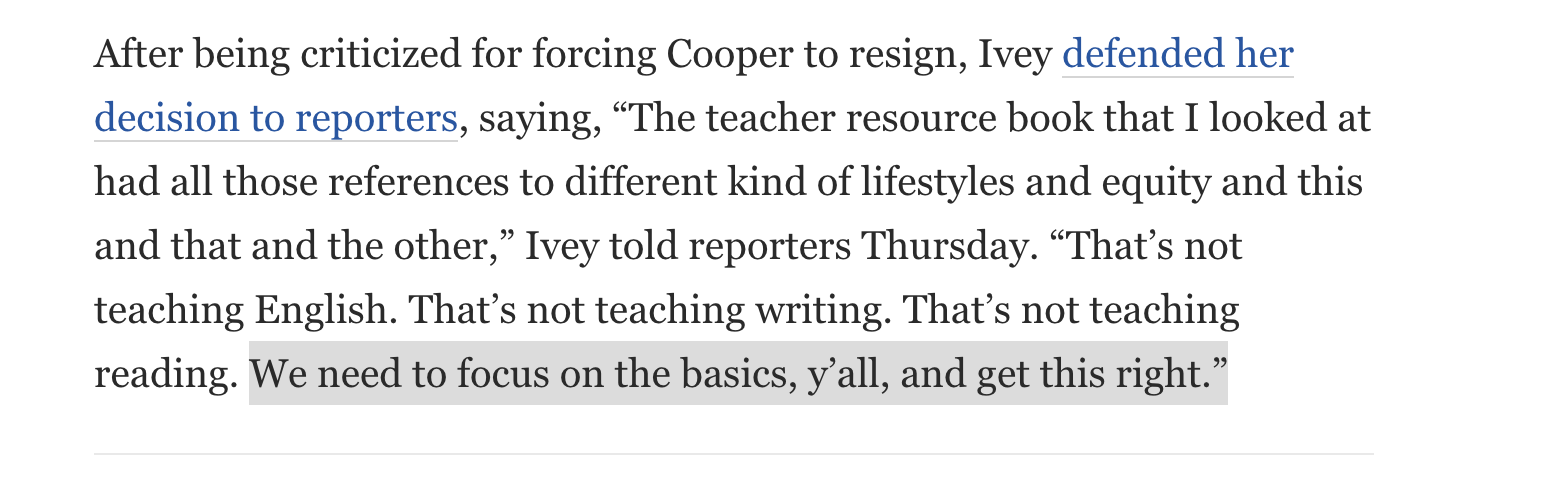


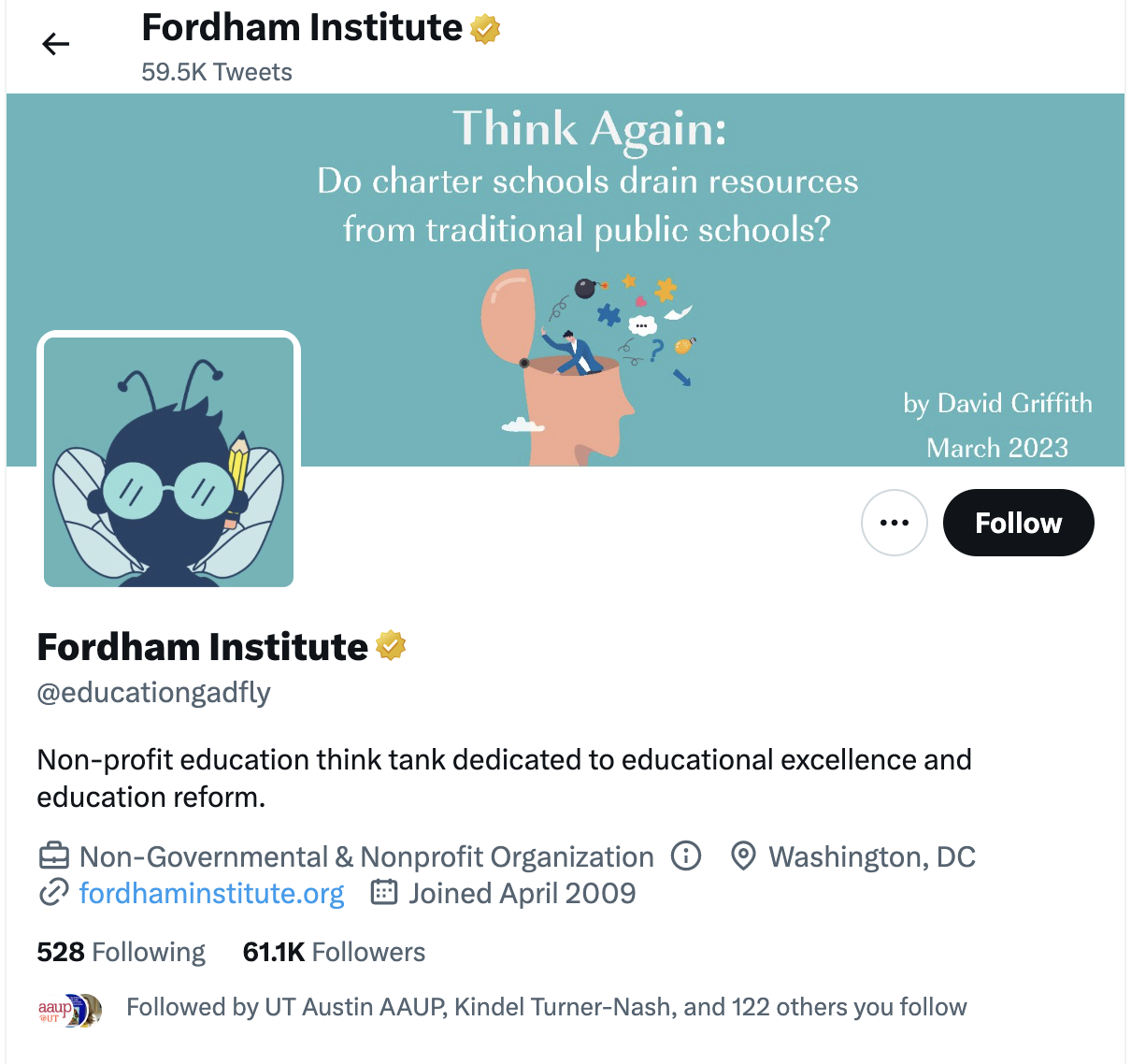


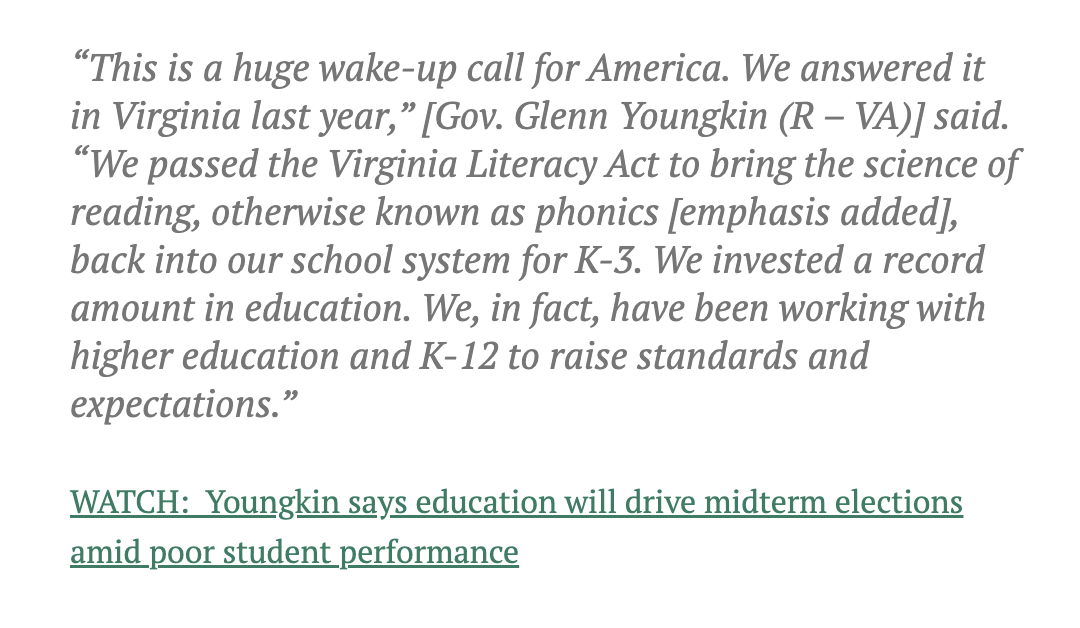
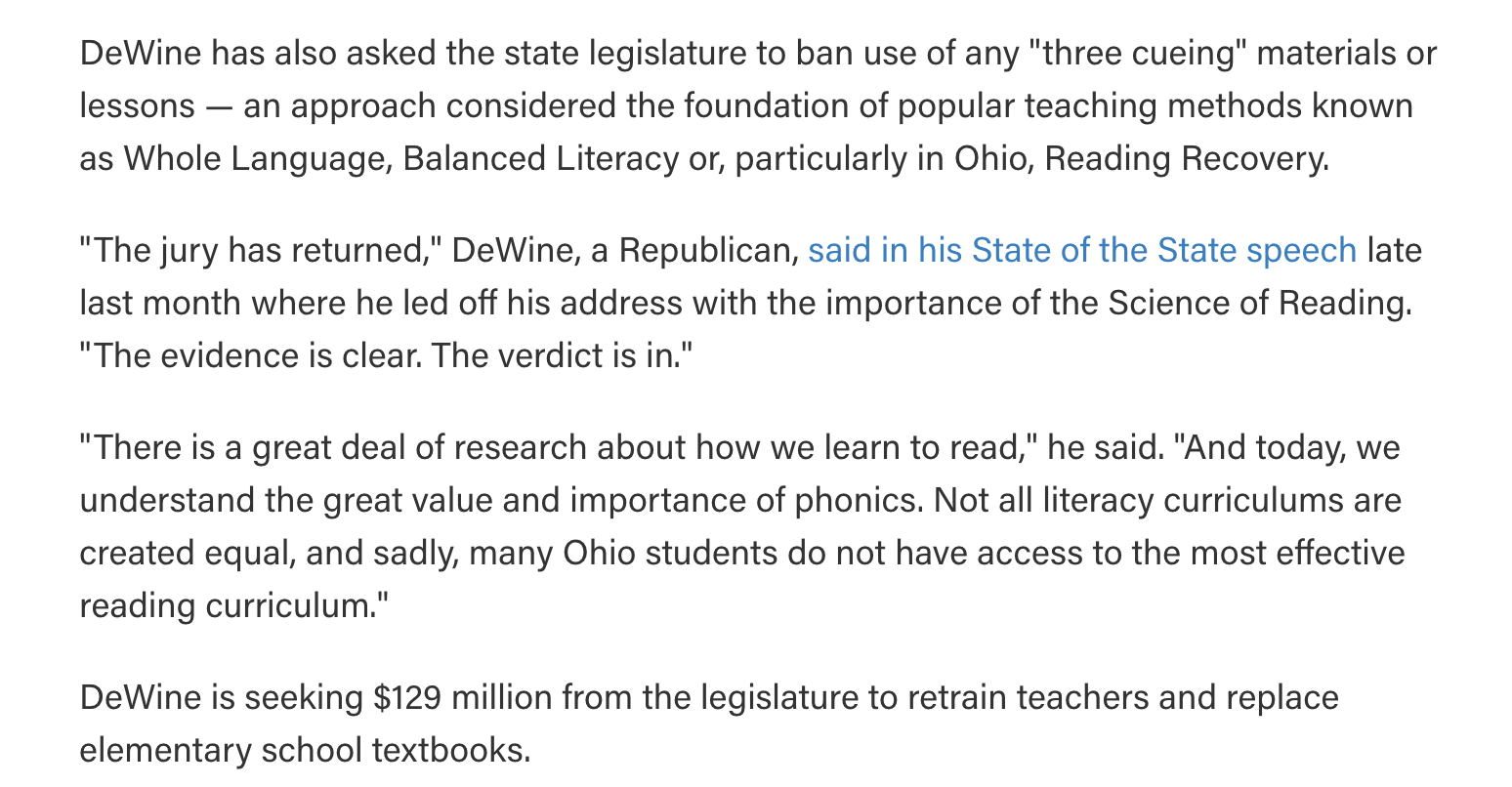
What is very disturbing is that the false claims of crisis and the misguided policy solutions being passed in almost every state now were already exposed twenty years ago by Richard J. Meyer’s Captives of the Script: Killing Us Softly with Phonics:
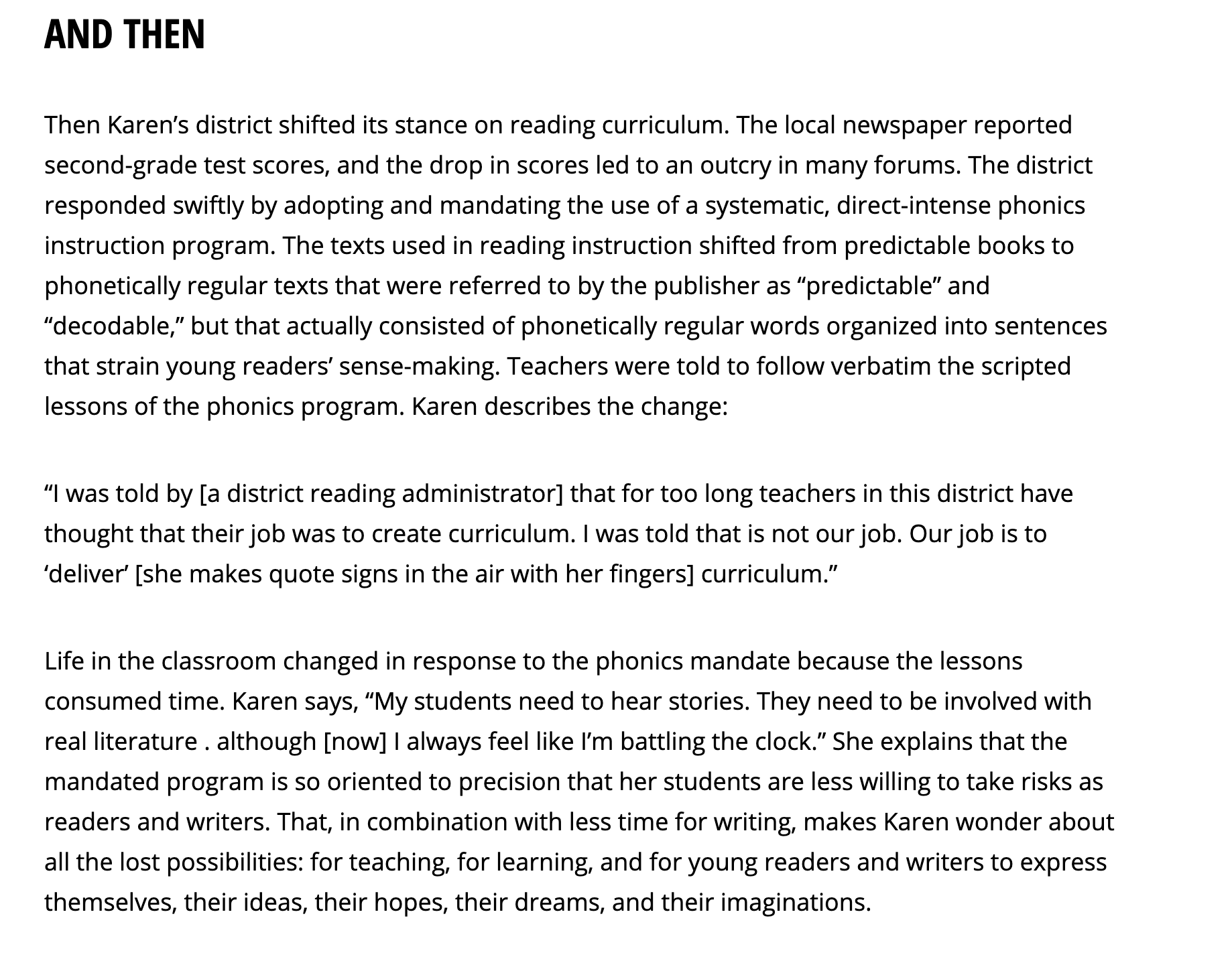

The SOR movement is yet more teacher bashing and school bashing, serving the conservative anti-school agenda of Republicans and market interests that feed off our public schools.
This has never been about reading.
This has never been about serving the needs of children.
This is more partisan politics; this is about conservative ideology at the expense of children, teachers, and public education.
Update May 24, 2023
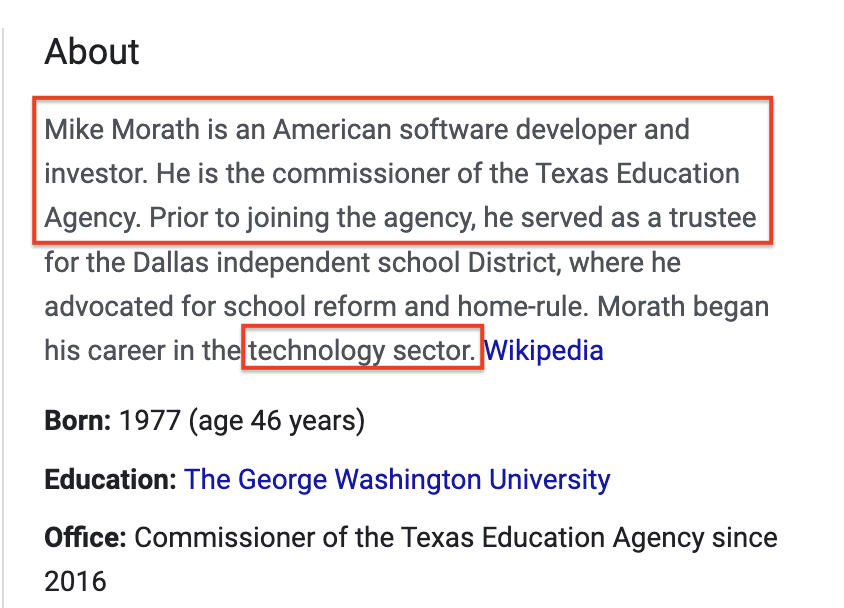
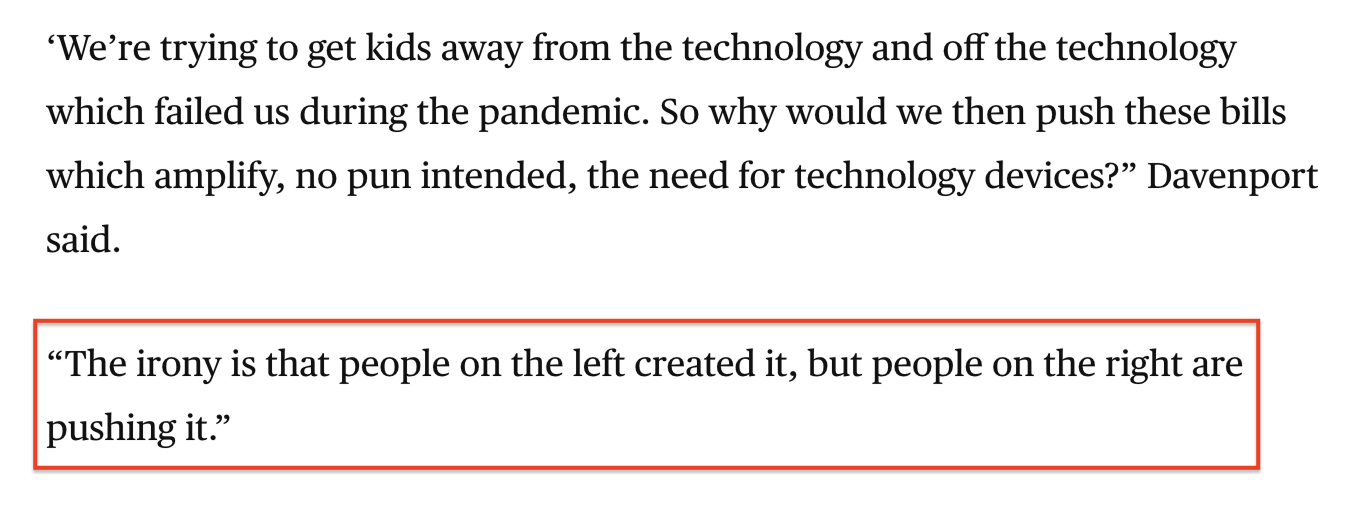
From Texas, more pieces to the puzzle:
‘Woke’ filter? Texas teachers face less creative control under pair of bills
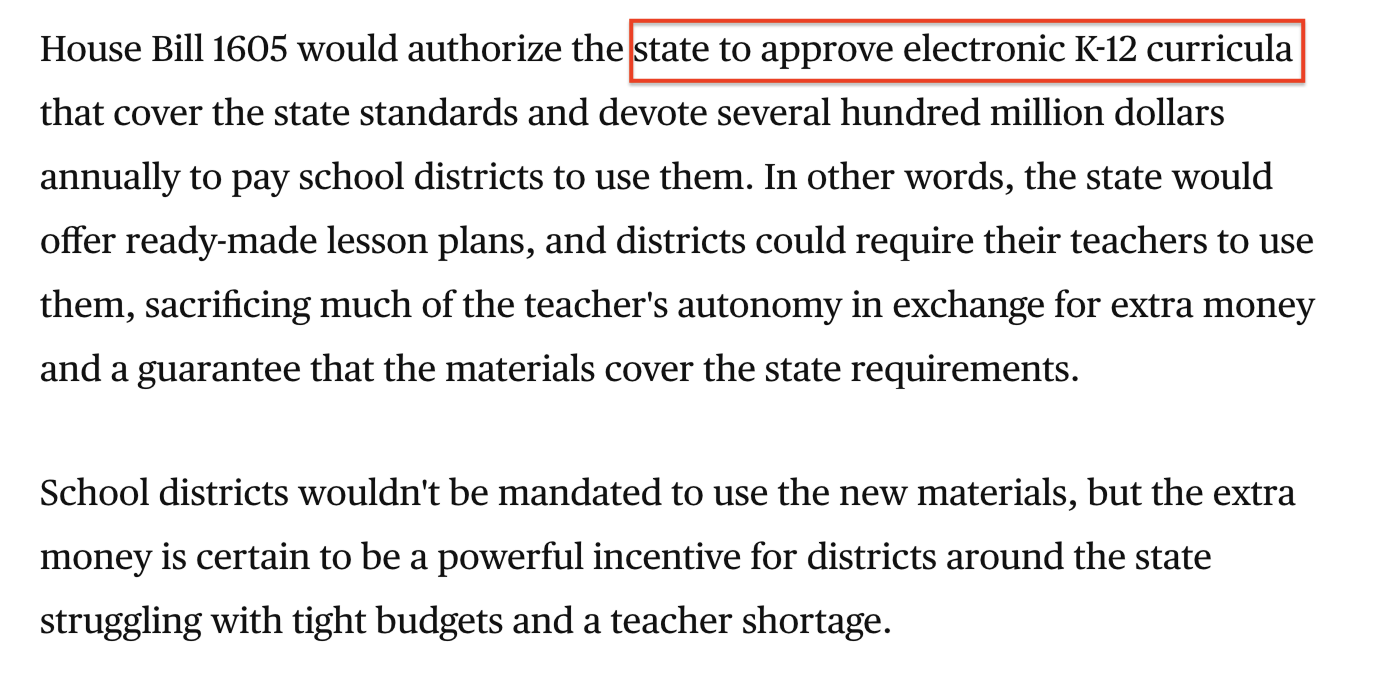


Update July 2, 2023
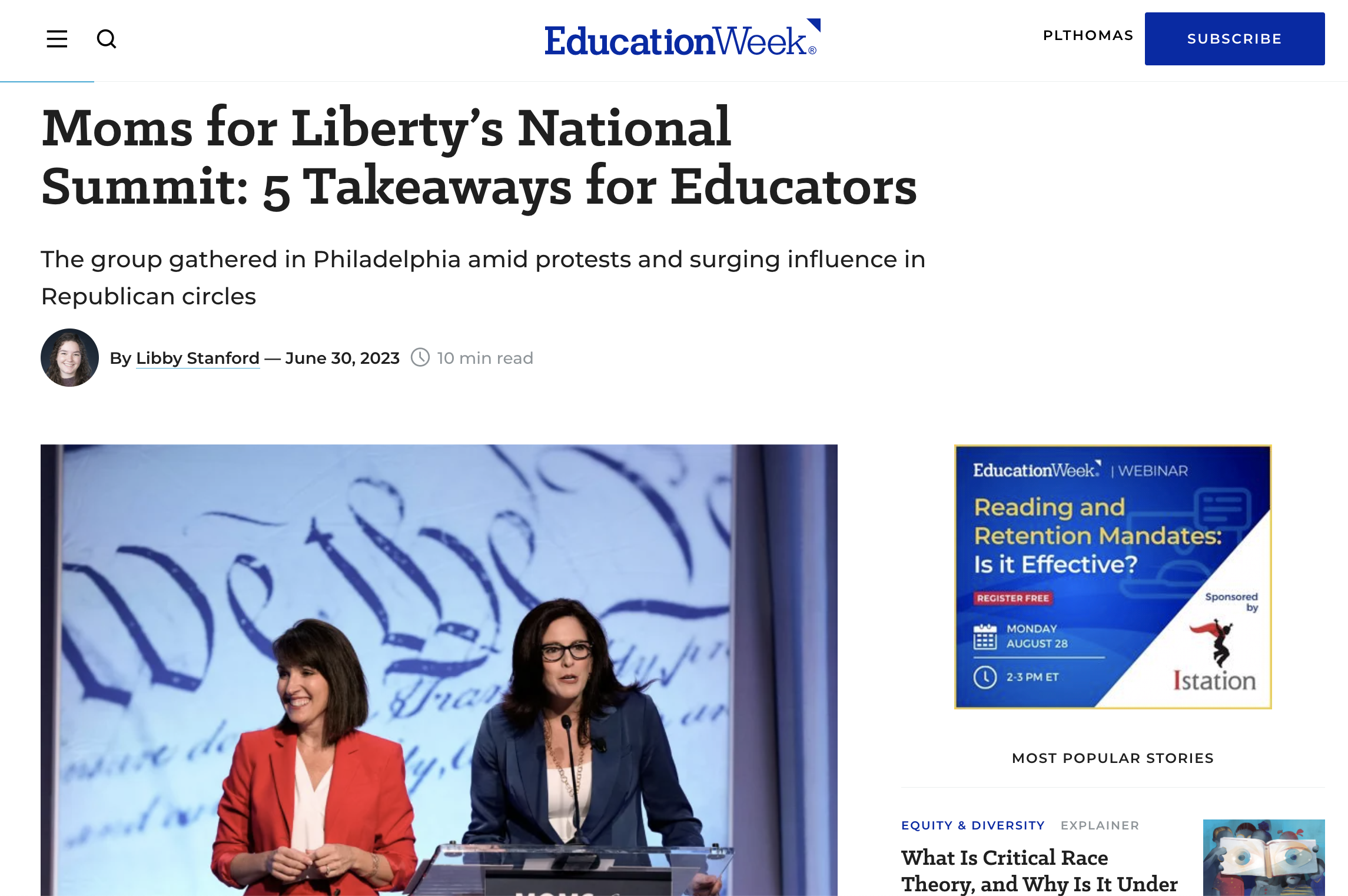
The connection between Moms for Liberty and the SOR movement continue to grow stronger:


Update May 24, 2024
Conservatives continue to double-down on the media misinformation because SOR is a deeply conservative movement grounded in a manufactured crisis.

Recommended
Politics of phonics: How Power, profit and politics guide reading Policies

 dr. p.l. (paul) thomas