Category Archives: education reform

The Great Media-Disciplines Divide

Posting at The South Lawn, Robert Reese, a PhD student in sociology at Duke University, confronts the marginalized role of the disciplines in the popular media:

Like sports, nearly everyone has an opinion on race, but unlike sports, the training of race scholars is often meaningless in the public’s eye. Our knowledge is often attributed to mere opinion rather than theories and facts drawn from years of our own research and untold amounts of meticulous consumption of the work of our predecessors and contemporaries.  We’re taught to take a look at information from all sides and trained to critique data and arguments. But when it’s time to talk about race, our phones simply don’t ring enough and our voices don’t mean enough.

Recently, I have posted about my own experience with sharing my expertise and the research base on sentence diagramming, prompting one comment on Facebook characterizing my input as a “viewpoint.”

In 1947, English teacher and scholar Lou LaBrant acknowledged “the considerable gap between the research currently available and the utilization of that research in school programs and methods.”

Taken together, then, we have a powerful historical and current problem that can be traced to the great media-discipline divide—a “gap,” as LaBrant called it, between the knowledge base of the disciplines and the so-called real worlds of popular media, public opinion, and day-to-day practice in fields such as education.

As I have examined in my call for a critical free press and my open letter to journalists, my primary field of education is trapped in that divide, essentially crippled because of that divide. Thus, Reese’s apt point about race scholars being “meaningless in the public’s eye” captures the parallel pattern found in education—a pattern in which media scrutiny, public opinion, and political leadership are all driven by an adolescent perspective that essentially acts as if the field of education does not exist and then as a result creates conditions (social realities and education policy) within which universal public education cannot be successful.

What do I mean by “adolescent perspective”?

Let me start with my primary and longest (so far) career—teaching high school English for almost two decades in rural South Carolina.

I must confess that i genuinely and deeply adore young people: babies, children, teenagers, and young adults. I have a very special place in my heart as a teacher for high school sophomores, in fact.

But it is the exact same quality found in teens that makes them wonderful and then nearly insufferable. Teens respond to the world with their hearts and souls first, responses completely disconnected from their still-developing brains and their nearly absent ability to be rational.

From second to second, teens appear to be trapped in a sort of bi-polar hell: magically happy to the point of levitation or mortally wounded by something otherwise innocuous.

That bi-polar hell is often reinforced by a belief that she/he has discovered something, thought of something, or is witnessing something that has never yet existed in the universe (there was “O, my, god Prince!” as if Jimi Hendrix and Little Richard had never walked the planet) as well as a nearly paralyzing obsession with fairness.

While teaching adolescents (or children, or young adults) can be incredibly satisfying and invigorating because of their passion, because so much of the world is new to them, Howard Gardner, for example, has detailed well, I think, the foundational divide that occurs between young students and their understanding the disciplines—and how that continues into adulthood:

An expert is a person who comes to understand the world differently. But that is very, very difficult to do and I’m going to argue today that it’s not done very often. …

Later on, I am going to give you evidence that no matter where you look in the curriculum, you will find students who do not understand: physics, mathematics, biology, literature, art. It is ubiquitous.

I witness daily that “ubiquitous”: The powerful and crippling divide between the media, the public, politicians, and students, and the disciplines, or as Gardner states, “experts.”

That divide I have here identified as an adolescent perspective—not to be condescending or harsh (because again I love adolescents), but to highlight the moves that journalists fall prey to in their honorable quest to mediate knowledge for the public, their practice constrained by the journalistic norm of “presenting both sides” and remaining “neutral.”

So I want to end with some friendly tips for the media, especially for education journalists:

  • If you think some issue, practice, or debate in education (or any discipline) is new, take a deep breath and then assume that it is not (likely, it is not). Immediately seek out an expert in the discipline, one that has expertise in the history of the field, and start from there. (Just as a related note: Many rushed to glorify Howard Gardner when he became “hot” for multiple intelligences. In my doctoral program—deeply steeped in the history of education—we were quickly disabused of believing that ideas was “new” because similar ground had been covered many decades before Gardner.)
  • If you think a major issue or practice doesn’t already have a rich and complex research base—and thus it is you who shall examine it for the field—take a deep breath and then realize that (i) the discipline surely has a research base and (ii) idealizing the outsider viewpoint is the most offensive thing you can express to those in a discipline who have spent their lives considering that field carefully. (Note: I am primarily in the field of education, but I taught journalism for 13 years and have been a professional writer, including journalism, for most of my adult life. I confess that I do not have formal training in journalism, but I certainly have credible expertise in that field, enough so to make the claims I do here.)
  • And finally, if you insist on maintaining a commitment to “presenting both sides,” you are guaranteed to misrepresent the disciplines (see, for example, my discussion of sentence diagramming) and you have failed to learn from the disciplines since disciplinary stances are grounded in the body of research, honoring clear and convincing evidence. To present Side X equally with Side Y is to suggest the two sides are equal in credibility and weight (see the Oliver Rule); few issues have such simplistic balance. The disciplines honor positions with the most credibility and weight, driven by evidence (although there is nuance among the disciplines in issues such as what counts as evidence, etc.).

Here, I think, are three simple guidelines for helping close the divide between the media and the disciplines, and thus, between the public and the disciplines—an essential step to implementing policy driven by knowledge bases and not the irrational adolescent perspective that govern our popular and political worlds today.

“Other People’s Children” v. “They’re All Our Children”

Optimism, seeing the light at the end of the tunnel—these are not my proclivities.

And while I wallow in the self-delusion that I am a Skeptic, the truth is that I have long ago slipped over into the abyss of cynicism.

There are moments, however, when I hope.

One such moment was during the Sandy Hook school shooting tragedy—when I wanted desperately to believe that President Obama’s call for seeing every child as “all our children” would resonate against the recurring din of gunfire killing children—but not only the uniquely American slaying of school children but the daily loss of mostly black and brown children and young adults to gunfire in the homes and streets of U.S. inner cities.

But that has not happened. Michael Brown was shot and killed by a police officer, Brown’s body left callously in the street—adding to the seemingly endless cataloguing of similar tragedies. And those tragedies are daily magnified by our collective refusal to see each death in the same way we would see the death of our own children, our collective refusal to see how “other people’s children” live, learn, and die is just as precious as if they were “all our children.”

So my cynicism is driven by the stark realization that if we cannot come together as a community over the shooting of “other people’s children,” how will we ever come together about the less dramatic but just as tragic conditions such as what we allow for the education of “other people’s children”?

The powerful phrase “other people’s children” comes from the work of Lisa Delpit, who confronts the inequity of educational opportunities for minority and impoverished children. Delpit highlights that marginalized students receive disproportionately test-prep and worksheet-driven instruction, unlike their white and affluent peers. While some have claimed her as a champion of traditional practice because her criticisms have included failures by progressives, Delpit counters:

I do not advocate a simplistic “basic skills” approach for children outside of the culture of power. It would be (and has been) tragic to operate as if these children were incapable of critical and higher-order thinking and reasoning. Rather, I suggest that schools must provide these children the content that other families from a different cultural orientation provide at home. This does not mean separating children according to family background [emphasis added], but instead, ensuring that each classroom incorporate strategies appropriate for all the children in its confines.

And I do not advocate that it is the school’s job to attempt to change the homes of poor and nonwhite children to match the homes of those in the culture of power [emphasis added]. That may indeed be a form of cultural genocide. I have frequently heard schools call poor parents “uncaring” when parents respond to the school’s urging, saying, “But that’s the school’s job.” What the school personnel fail to understand is that if the parents were members of the culture of power and lived by its rules and codes, then they would transmit those codes to their children. In fact, they transmit another culture that children must learn at home in order to survive in their communities.

Delpit’s call, however, must be distinguished from not only traditionalists but also popular but flawed programs such as those provided by Ruby Payne, who promotes uncritical teaching of middle class codes to impoverished students. Not grounded in research but driving professional development of teachers in many states across the U.S., Payne’s self-published workbooks and workshops speak to and perpetuate stereotypes of people in poverty and racial minorities. And as Monique Redeaux clarifies:

At first glance, this seems to be the message conveyed by Payne: poor students of color need to be explicitly taught the hidden rules or codes of the middle/upper class in order to be successful in school, work, etc. When examined more closely, this could not be further from the truth. Both terms, the “culture of poverty” (Payne) and the “culture of power” (Delpit) locate the problem in culture—but in different ways/places [emphasis added]. Although Payne and other “culture of poverty” advocates see the problem as residing with the cultural attributes of those living in poverty, the “culture of power” perspective suggests that the middle/upper class hold the power and key to institutional success, partly through their monopolization of educational skills, and that they do all they can to make sure that they and their offspring maintain that power.

When Delpit began her work on “other people’s children” she predicted that her purpose would be misunderstood. People criticized her for “vindicating” teachers who subjected students of color to isolated, meaningless, sub-skills day after day. However, what she was actually advocating when she referred to “skills-based instruction” was the “useful and usable knowledge that contributes to a student’s ability to communicate effectively in standard, generally acceptable literary forms” and she proposed that this was best learned in meaningful contexts. In other words, Delpit argued that both technical skills and critical thinking are essential: a person of color who has no critical thinking skills becomes the “trainable, low-level functionary of the dominant society, simply the grease that keeps the institutions which orchestrate his or her oppression running smoothly.” At the same time, those who lack the technical skills demanded by colleges, universities, and employers will be denied entry into these institutions. Consequently, they will attain financial and social success only within the “disenfranchised underworld.”

The key distinction between Delpit and Payne is the reason why [emphasis added] they believe students should be taught the “hidden rules.” Payne argues that their educational and economic success depend on their being able to conform to the rules of the middle/upper class. While Delpit, too, makes this argument, she does not believe that students should passively adopt an alternate code simply because it is the “way things are,” especially if they want to achieve a particular economic status. Instead, Delpit asserts that students need to know and understand the power realities of this country with the purpose of changing these realities.

We are confronted, then, with the continuing rise in programs funded by the government and supported by a wide range of political, public, and media ideologies and interests that submit only “other people’s children” to teachers produced by alternative pathways (such as Teach For America, but also copycats) and to school structures (usually charter schools, labeled “public” but functioning within a market dynamic) and policies driven by “no excuses” ideologies (such as KIPP, but also numerous copycats) demanding “grit.”

Yet, affluent children, mostly white, find themselves in classrooms with low class size, experienced and qualified/certified teachers, and rich curricula often not linked to the standards-of-the-moment or high-stakes testing—and do not find themselves disproportionately retained, suspended, expelled, or shot while unarmed walking down the street.

Our education dilemma is a subset of our greater cultural dilemma—one that pits our traditional commitments to the rugged individual, Social Darwinism, and consumerism against our potential moral grounding in community and cooperation.

No child should need to depend on the choices her/his parents make, and no parents should be faced with making choices about those foundational things that all humans deserve—one of which is access to the exact same conditions for learning and living that the privileged among us have before them.

Today, the U.S. remains a dog-eat-dog culture that perpetuates and allows one world for “other people’s children” that would never be tolerated for “my child.” A great moral lapse of our time is that we refuse to act in ways that prove “they’re all our children.”

Diagramming Sentences and the Art of Misguided Nostalgia

Having been a serious competitive and recreational cyclist (not “biker”) for all but a handful of years over three decades, I cringe and must bite my tongue every time people refer to their bicycle “seat” (it is a “saddle”). During those years committed to cycling, I have also become well acquainted with the history of the professional sport and a fairly accomplished bicycle mechanic.

I can take apart and assemble a high-end road bicycle, and I know the proper names for all the parts.

All of that knowledge and skill, however, have not made me a better cyclist. And since I have spent those same approximate years also pursuing careers as a writer and teacher (mainly of English, specifically writing), I remain baffled at both recurring arguments found in Juana Summer’s NPR piece and the public responses to it:

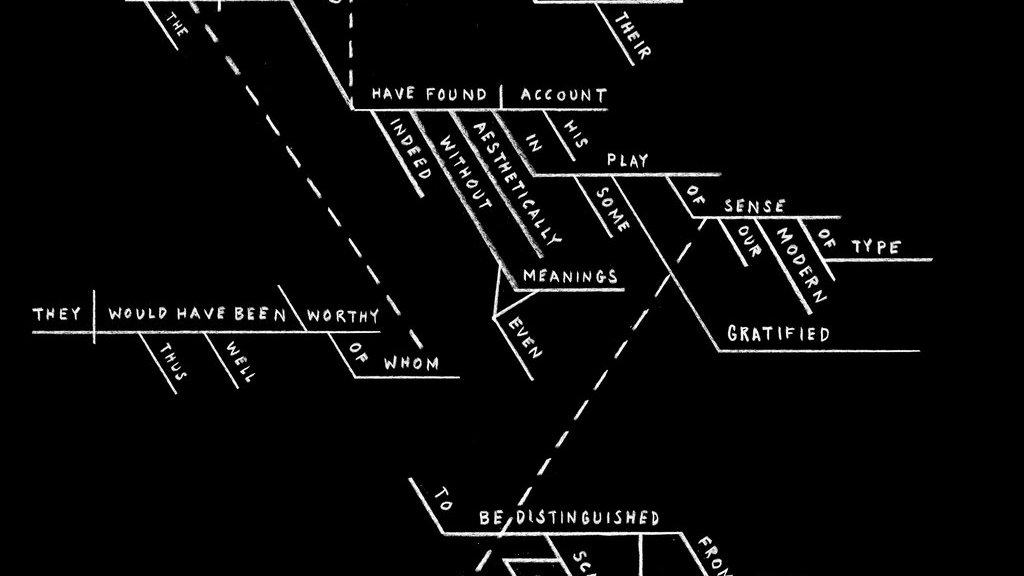
When you think about a sentence, you usually think about words — not lines. But sentence diagramming brings geometry into grammar.

If you weren’t taught to diagram a sentence, this might sound a little zany. But the practice has a long — and controversial — history in U.S. schools.

And while it was once commonplace, many people today don’t even know what it is….

But does it deserve a place in English class today? (The Common Core doesn’t mention it.)

I found this article through Facebook, where the original posting was praising sentence diagramming and many who commented followed suit. Oddly—although not surprising—when I weighed in with a century of research refuting the effectiveness of sentence diagramming for teaching writing, my comments were brushed off as a “viewpoint” and one person even boldly stated that no one could convince her that sentence diagramming wasn’t effective.

During a teaching career—mostly in English—that spanned over six decades and included a term as president of the National Council of Teachers of English (NCTE), Lou LaBrant [1] confronted the grammar debate, including sentence diagramming, in 1952:

Let us admit that in thousands of schoolrooms our teaching of punctuation has concerned sentences no child ever made, errors which adults and publishing houses provided, books which we have spent hours trying to “motivate,” and corrections of so-called “errors” which are approved forms everywhere except in our classrooms. We have wasted hours on diagramming dull sentences when what a sentence calls for is not to be drawn but to be understood. Who understands “Thou shalt not steal” the better for having written not on a slanting line under shalt steal? Our first step is clearing away busy work, meaningless matters, and getting at the problems of speaking about something worth saying and writing with sincerity and zest. Reading is not to be “something I had”; it should be “something I do.”

Six years previous, LaBrant identified the research base examining isolated direct grammar instruction and teaching writing:

We have some hundreds of studies now which demonstrate that there is little correlation (whatever that may cover) between exercises in punctuation and sentence structure and the tendency to use the principles illustrated in independent writing.

In 1953, although there is a danger in her simple phrasing, LaBrant offered an eloquent argument about the job of teaching writing:

It ought to be unnecessary to say that writing is learned by writing; unfortunately there is need. Again and again teachers or schools are accused of failing to teach students to write decent English, and again and again investigations show that students have been taught about punctuation, the function of a paragraph, parts of speech, selection of “vivid” words, spelling – that students have done everything but the writing of many complete papers. Again and again college freshmen report that never in either high school or grammar school have they been asked to select a topic for writing, and write their own ideas about that subject. Some have been given topics for writing; others have been asked to summarize what someone else has said; numbers have been given work on revising sentences, filling in blanks, punctuating sentences, and analyzing what others have written….Knowing facts about language does not necessarily result in ability to use it.

And thus, we come to LaBrant’s most powerful metaphor for teaching writing:

Knowing about writing and its parts does not bring it about, just as owning a blueprint does not give you a house….The end has all along been writing, but somewhere along the way we have thought to substitute mechanical plans and parts for the total. We have ceased to build the house and have contented ourselves with blueprints. Whatever the cost in time (and that is great), and whatever the effort, our students must be taught to write, to rewrite, to have the full experience of translating ideas into the written word. This is a deep and full experience, one to which each in his own way has a right.

At mid-twentieth century, then, LaBrant expressed evidence-based positions on teaching writing (and the ineffectiveness of isolated direct grammar instruction and sentence diagramming) that have been replicated by numerous teachers and scholars for decades—notably the work of Connie Weaver and George Hillocks. Hillocks, for example, has shown that isolated direct grammar instruction has negative consequences on students as writers:

grammar negative
Teaching Writing as Reflective Practice, George Hillocks

NCTE has catalogued the same debates, misunderstandings, and research base: Guideline on Some Questions and Answers about Grammar and Resolution on Grammar Exercises to Teach Speaking and Writing. And despite a cumulative and clear recognition of the effective and ineffective approaches to teaching children to write (see Writing Next), we find articles such as the NPR piece above and the responses I witnessed on Facebook.

And while I don’t suffer the delusion that I can stem the grammar/sentence diagramming debates, I want to offer here some framing clarifications that I think may help both teachers and the public better understand the issues:

  • Isolated direct grammar instruction (including sentence diagramming) is ineffective in general for fostering students as writers. If our goal, however, is to teach grammar, then isolated grammar instruction would be justifiable.
  • And thus, isolated direct grammar instruction fails writing instruction because (i) it too often replaces time better spent reading and writing by students, (ii) it requires a great deal of instruction related to terminology and systems that (a) does not transfer to composition and (b) again consumes huge amounts of classroom time, and (iii) formal and isolated grammar instruction remains decontextualized for students since grammar (like algebra) requires abstract reasoning by children and teens who may have not yet reached the level of brain development necessary to navigate or understand the system at the explicit level.
  • However, the two key points here include the following: we are discussing writing instruction as the primary goal and we are confronting isolated direct grammar instruction. So let me be very clear: No one in literacy suggests not teaching grammar; the question is not if, but how and when. Thus, once students are required and allowed to have rich and extended experiences reading and writing by choice, direct instruction is very effective after those experiences and when anchored in those students’ own demonstrations of language acquisition, misunderstanding, or gaps.
  • Connected to the context and when of direct grammar instruction is the importance of balanced literacy, which calls for literacy teachers to incorporate any practice (including sentence diagramming, including grammar exercises) that helps individual students (which may rub against generalizations found in the research base):
Spiegel
  • And finally, many people have a distorted nostalgia about why they have learned so-called standard English. While people are quick to ascribe harsh and traditional grammar instruction as effective in their own learning, that doesn’t make it so. In fact, many people grew as readers and writers in spite of traditional practices—or what is often the case, they can’t recognize their existing facility for language (often brought from home), which made them good at direct grammar exercises and sentence diagramming, as the actual cause of that success.

So I return to LaBrant, and her plea that teaching young people to write is about goals and weighing what truly matters:

There are many ways of writing English, and the teacher of composition must know, before he thinks of means for teaching, what kind of writing he thinks important to teach. He may be content if the writing is composed of sentences with correct structure, with periods neatly placed, verbs correctly ended, pronouns in the right case, and all attractively placed on the page. I have heard teachers say that if their pupils do all this, and spell with reasonable correctness, they (the teachers) are content. I am willing to admit that a conventional paper, such as is just described, tempts one to be satisfied; but I am not willing to admit that it represents a worth-while aim. As a teacher of English, I am not willing to teach the polishing and adornment of irresponsible, unimportant writing….I would place as the first aim of teaching students to write the development of full responsibility for what they say.

If we seek to teach young people to write, and thus to think, in complex and original ways, we remain confronted by the need to see that writing is learned by writing—just as I have honed my skills as a cyclist by riding a bicycle about 5000 to 10,000 miles annually for most of the last thirty years.

Naming correctly the parts of the bicycle, taking apart and putting together a bicycle—these have not made me a better cyclist. For students as writers, blueprints, still, are not houses, diagramming is not composing.

Simply stated, then: The effective writing classroom must never be absent the direct teaching of grammar (again, not if, but when and how), but the grammar-based classroom has often been and continues to be absent writing by students—and therein is the failure.


Recommended

Teaching the Unteachable, Kurt Vonnegut

[1] See Chapter 7 in Missing Chapters, Lou LaBrant: An Annotated Bibliography, and Lou LaBrant: A Woman’s Life, a Teacher’s Life.

Howard Zinn: “education cannot be neutral on the critical issues of our time”

[Header Photo by Ankush Minda on Unsplash]

24 August 1922—Howard Zinn was born. His life and career spanned the twentieth century and into the first decade of the twenty-first. It is his memoir, You Can’t Be Neutral on a Moving Train: A Personal History of Our Times, for me, that speaks to the enduring power of Zinn’s metaphor, particularly for teachers.

Historically and currently, teacher remain under the demand that their teaching—and even their lives—remain neutral, not political. University professors—such as Zinn—also face disciplinary and public expectations of objectivity, dispassion—their work as public intellectuals either shunned or unrecognized.

In that context, K-12 education and university education suffer the same ultimate failure found in journalism, a flawed pursuit of objectivity, the faux-neutral pose of representing both sides.

So on the day of Zinn’s birth, it continues to be important not only to read and listen to Zinn, but also to act on Zinn, for it is action, after all, that Zinn lived and called for.

“When I became a teacher,” Zinn explains in You Can’t Be Neutral on a Moving Train, “I could not possibly keep out of the classroom my own experiences”:

I have often wondered how so many teachers manage to spend a year with a group of students and never reveal who they are, what kind of lives they have led, where their ideas come from, what they believe in, or what they want for themselves, for their students, and for the world.

Does not the very fact of that concealment teach something terrible—that you can separate the study of literature, history, philosophy, politics, the arts, from your own life, your deepest convictions about right and wrong?

Concealment is a political act, and in the face of the tragedy surrounding the police shooting of Michael Brown, the educational response has been exactly that, concealment. But as poet Adrienne Rich has confronted:

The study of silence has long engrossed me. The matrix of a poet’s work consists not only of what is there to be absorbed and worked on, but also of what is missing, desaparecido, rendered unspeakable, thus unthinkable.

Instead of striking the masked political poses of neutrality, objectivity, and dispassion, Zinn called for transparency:

In my teaching I never concealed my political views: my detestation of war and militarism, my anger at racial inequality, my belief in democratic socialism, in a rational and just distribution of the world’s wealth. I made clear my abhorrence of any kind of bullying, whether by powerful nations over weaker ones, governments over their citizens, employers over employees, or by anyone, on the Right or the Left, who thinks they have a monopoly on the truth.

Having taught in rural Southern public schools for 18 years and then 13 more years in higher education, I can attest that Zinn’s argument is challenged only because of the positions he holds and not because he took positions. You see, in K-12 classrooms, especially in history classes, textbooks, curriculum, and teachers always represented positions by framing as neutral the mainstream perspectives found among them all: a blind allegiance to capitalism, representing the U.S. as a righteous military victor, whitewashing every struggle in the country’s history, celebrating the wealthy and powerful while turning a blind eye to their many sins.

It has never been that our classrooms are neutral, as Zinn confronts, but that our classrooms have been passive passengers on the moving train of social and cultural indoctrination, the sort of indoctrination that benefits the few who have wealth and power built on their privilege at the expense of the many—workers, racial minorities, women, children, and the impoverished.

As Zinn recognized:

This mixing of activism and teaching, this insistence that education cannot be neutral on the critical issues of our time, this movement back and forth from the classroom to the struggles outside by teachers who hope their students will do the same, has always frightened the guardians of traditional education. They prefer that education simply prepare the new generation to take its proper place in the old order, not to question that order.

And although written well before the current education reform movement built on accountability, standards, and high-stakes testing, Zinn’s memoir has identified the Orwellian reality of that movement: Those decrying the status quo are those in service of the status quo. Education reform is the pursuit of maintaining, not reforming.

This call for teaching as activism was join by Zinn’s disciplinary challenge as well:

History can come in handy. If you were born yesterday, with no knowledge of the past, you might easily accept whatever the government tells you. But knowing a bit of history—while it would not absolutely prove the government was lying in a given instance—might make you skeptical, lead you to ask questions, make it more likely that you would find out the truth.

Here, Zinn recognizes both the power of disciplinary knowledge and the concurrent danger of codified disciplinary knowledge (prescriptive standards, curriculum). Zinn’s confrontation, then, speaks to the foundational principles expressed by critical scholar Kincheloe:

Thus, proponents of critical pedagogy understand that every dimension of schooling and every form of educational practice are politically contested spaces. Shaped by history and challenged by a wide range of interest groups, educational practice is a fuzzy concept as it takes place in numerous settings, is shaped by a plethora of often-invisible forces, and can operate even in the name of democracy and justice to be totalitarian and oppressive.

These critical principles replace the dissembling of neutrality in the classroom, as Kincheloe explains:

Recognition of these educational politics suggests that teachers take a position and make it understandable to their students. They do not, however, have the right to impose these positions on their students [emphasis in original]….

In this context it is not the advocates of critical pedagogy who are most often guilty of impositional teaching but many of the mainstream critics themselves. When mainstream opponents of critical pedagogy promote the notion that all language and political behavior that oppose the dominant ideology are forms of indoctrination, they forget how experience is shaped by unequal forms of power. To refuse to name the forces that produce human suffering and exploitation is to take a position that supports oppression and powers that perpetuate it. The argument that any position opposing the actions of dominant power wielders is problematic. It is tantamount to saying that one who admits her oppositional political sentiments and makes them known to students is guilty of indoctrination, while one who hides her consent to dominant power and the status quo it has produced from her students is operating in an objective and neutral manner.

“Critical pedagogy wants to know who’s indoctrinating whom,” Kincheloe concludes. Teaching and history as activism, for Zinn, were moral imperatives, and thus:

From that moment on, I was no longer a liberal, a believer in the self-correcting character of American democracy. I was a radical, believing that something fundamental was wrong in this country—not just the existence of poverty amidst great wealth, not just the horrible treatment of black people, but something rotten at the root. The situation required not just a new president or new laws, but an uprooting of the old order, the introduction of a new kind of society—cooperative, peaceful, egalitarian.

Zinn, activist, radical, speaks to us now, the “us” of any classroom, the “us” charged with the learning and lives of any child:

From the start, my teaching was infused with my own history. I would try to be fair to other points of view, but I wanted more than “objectivity”; I wanted students to leave my classes not just better informed, but more prepared to relinquish the safety of silence, more prepared to speak up, to act against injustice wherever they saw it. This, of course, was a recipe for trouble.

Today on the date of Zinn’s birth, I argue, it is a recipe we must follow.

Complicit: On Facing the Mirror Before Casting Stones

“Let me begin,” admits George J. Sefa Dei in “‘We Cannot Be Color-Blind’: Race, Antiracism, and the Subversion of Dominant Thinking,” “by making clear that I see myself as fully complicit in the discussion that I undertake in this chapter” (p. 25).

As we face large and powerful social forces such as poverty and racism—along with more narrow issues of education—I believe we all must address that first concern of who is complicit.

Let me begin with something that echoes in my mind almost continually, from Oscar Wilde: “But to recommend thrift to the poor is both grotesque and insulting.”

Consider taking that frame and using it many contexts: “But to recommend _____ to  _____ is both grotesque and insulting.”

Also consider who makes such recommendations. For the poor, the affluent and powerful—who do not live up to the same standards they impose—are the who.

Today—at this exact moment—we watch as a white authority structure recommends to a dominantly black community that which is “grotesque and insulting.” And then on a narrower scale, those with power and money recommend to educators that which is “grotesque and insulting.”

So whether we are confronting poverty and racism or education, we all must begin with who is complicit.

People in poverty and African Americans in the U.S. share one disturbing but distinct quality: disproportionately the impoverished and African Americans are excluded from the power structure.

Who, then, is complicit in the existence and tolerance of poverty and racism? It cannot be those without the power; therefore, it must be those with the power.

Inaction is being complicit. Silence is being complicit. There is no political option for being neutral as long as poverty and racism exist. None.

White high school drop-outs and African Americans with some college have the same economic opportunities.

Whites and African Americans use recreational drugs at the same rates, but African Americans are targeted, charged, and incarcerated at much higher rates.

Those born wealthy and not attending college have greater economic power than those born in poverty and completing college.

To be white, to be wealthy—in the U.S. is to be complicit.

Inaction is being complicit. Silence is being complicit. There is no political option for being neutral as long as poverty and racism exist. None.

While I think my field of education is of a magnitude smaller than issues of poverty and race, I must end there because the picture is hard to confront.

And because education is and always will be inextricable from the fight to end poverty and racism; as George J. Sefa Dei concludes, “Antiracism is about changing current processes of schooling and education delivery” (p. 39). We may say the same about poverty.

I have taught high school English for 18 years in rural South Carolina and then been in teacher education for another 13 years. Teachers and teacher educators persistently complain about the bureaucracy of education; it is a relentless refrain among educators.

Recently, I received an email about how to anticipate what may be demanded of us when political regimes, once again, change; the email included: “No other profession has to deal with such crap.”

My response: “No other discipline would put up with that crap.”

Educators are complicit in the crap that is education reform. Inaction is being complicit. Silence is being complicit.

All those scrambling to have a seat at the Common Core table, a table inextricable from the entire reform agenda—unions, administrators, teachers—all are complicit.

It is time to face the mirror, to examine who is complicit.

CALL: DEMOCRACY AND DECENCY: WHAT DOES EDUCATION HAVE TO DO WITH IT?

CALL FOR CHAPTER PROPOSALS

DEMOCRACY AND DECENCY: WHAT DOES EDUCATION HAVE TO DO WITH IT?

EDITORS:

PAUL R. CARR, P. L. THOMAS, BRAD PORFILIO & JUIE GORLEWSKI

PUBLISHER:

INFORMATION AGE PUBLISHING

Democracy can mean a range of concepts, including freedoms, rights, elections, governments, processes, philosophies and a panoply of abstract and concrete notions that can be mediated by power, positionality, culture, time and space. Democracy can also be translated into brute force, hegemony, docility, compliance and conformity, as in wars will be decided on the basis of the needs of elites, or major decisions about spending finite resources will be the domain of the few over the masses, or people will be divided along the lines of race, ethnicity, class, religion, etc. because it is advantageous for maintaining exploitative political systems in place to do so. Often, these frameworks are developed and reified based on the notion that elections give the right to societies, or segment of societies, to install regimes, institutions and operating systems that are then supposedly legitimated and rendered infinitely just simply because formal power resides in the hands of those dominating forces.

The book is interested in advancing a critical analysis of the hegemonic paradigm described above, one that seeks higher levels of political literacy and consciousness, and one that makes the connection with education. What does education have to do with democracy? How does education shape, influence, impinge on, impact, negate, facilitate and/or change the context, contours and realities of democracy? How can we teach for and about democracy to alter and transform the essence of what democracy is, and, importantly, what it should be?

We are particularly interested in the notion of decency in relation to democracy, and underpinned by forms of meaningful, critically-engaged education. Is it enough to be kind, nice, generous and hopeful when we can also see signs of rampant, entrenched and debilitating racism, sexism, poverty, violence, injustice, war and other social inequalities? If democracy is intended to be a legitimating force for good, how does education inform democracy? What types of knowledge, experience, analysis and being are helpful to bring about newer, more meaningful and socially just forms of democracy?

Some of the themes to be explored might include:

  • peace, peace education and democracy
  • media, media literacy and democracy
  • pedagogy and education for democracy
  • curriculum and education for democracy
  • race, anti-racist education and democracy
  • poverty, class and education for democracy
  • environment and ecology within the context of democracy and education
  • the meaning of kindness in relation to democracy and education
  • what is decency within the context of democracy and education?

If you are interested in submitting a chapter, please submit the following to paul.thomas@furman.edu by September 30, 2014:

1)    a 400-word summary of your proposal, including:

  1. title
  2. focus and research questions
  3. the connection to the subject of the book
  4. the theoretical and/or conceptualframework
  5. the major themes to beexplored
  6. other pertinent information

2)    8 keywords for the chapter

3)    a 100-word biography for each author

Process:

1)    Call for Proposals (August 25, 2014)

2)    Receive Proposals (September 30, 2014)

3)    Communicate with contributors regarding decision on proposals (October 15, 2014)

4)    First complete draft of 5,000 words due (January 15, 2015)

5)    Comments from editors regarding first draft to contributors (Februrary 15, 2015)

6)    Final complete draft due to editors (April 1, 2015)

7)    Review by editors, and follow-up with contributors (May 1, 2015)

8)    Liaison with publisher for final editing and proofing (May 15, 2015)

9)    Publication (Summer 2015)

For all other inquiries about this book, please contact Paul R. Carr at prcarr@gmail.com

Revisiting Content and Direct Instruction

It is the 1890s, and educators are concerned that students are not receiving the quality education they deserve—especially if those students plan to attend college. What became known as The Report of the Committee of Ten has now been replicated at varying intervals in the U.S. for 120 years: Competing interests declaring what students learn (and how students learn) as inadequate, and then setting out themselves to identify what students learn (and how students learn) to (i) save the children, (ii) save the country, (iii) save the economy.

This pattern of education reform is best captured, I think, in Herb Kliebard’s The Struggle for the American Curriculum, 1893-1958 because his guiding motif, “struggle,” reveals what is really going on when politicians, educators, researchers, and the public debate (often badly and in conflated ways) content, curriculum, standards, and then instruction.

Although content, curriculum, and standards as terms are different, in the real world, they tend to represent the same urge: Identify the what (knowledge) students should (or must) learn.

Before diving into the content and direct instruction debates, I want to address what is really going on. You don’t have to read George Orwell or Ray Bradbury to know this (although you should*), but the powerful in any society recognize that those who control knowledge (and language is knowledge) ultimately control everything. Thus, to codify what is known, what counts as knowledge, and what facts mean is to establish power.

Howard Zinn has popularized how perspective impacts so-called objective facts in his people’s history of the U.S.; many narratives of history told from the perspectives of losers, workers, and marginalized people become suddenly unrecognizable to those who were raised on traditional textbook renditions committed to celebrating the American Way.

Since the U.S. is mired in a misguided and often distorted debate about national curriculum, I want to return here to what is wrong with the content and direct instruction debates, historically and currently.

Revisiting Content and Direct Instruction

Ron Barnett in The Greenville News announces, “The high school of the future is here”:

George Jetson won’t be dropping his daughter Judy off in a flying bubble capsule, but the New Tech high school programs starting up this month in Greenville County promise to rocket the old educational model straight into the 21st century.

And what does that entail?: “The concept of teachers imparting knowledge on students who passively soak up information from their desks is on its way out at Carolina and J.L. Mann high schools.”

Two schools in Greenville (SC) county have adopted project-based learning, but Barnett offers this qualification: “Actually, project learning isn’t entirely new in the district.”

Actually, project learning isn’t even new to this century because, as Kliebard details, project-based learning grew out of John Dewey’s laboratory schools at the turn of the twentieth century and then the concept was bastardized and popularized throughout the first half of the 1900s, notably by William H. Kilpatrick.

And just for the historical record, project-based learning and an assortment of garbled practices mislabeled “progressive” [1] worked so swimmingly that all hell broke loose in the 1950s and 1960s: Rudolf Flesch fretted over Why Johnny Can’t Read (1955) [2] and Hyman G. Rickover (1962) warned about how the Swiss were kicking the U.S. to the curb because of failing schools.

So let’s start with the central problem driving the never-ending content and direct instruction debates that sound about exactly the same today as they did over 100 years ago: The real issue with content and direct instruction is not if but how, when, and why.

At the core of how these debates both flourish and fail is the straw man, personified by attacks on John Dewey (progressivism) and Paulo Freire (critical pedagogy). Neither Dewey (progressivism) nor Freire (critical pedagogy) reject content or direct instruction, but both demanded that teachers and students re-imagine content (notably that content is not ideologically or politically neutral) and direct instruction.

Content is problematic as a term because many stakeholders in education use it differently. I want to clarify that content in this discussion has two distinctions: disciplinary knowledge (the facts of the disciplines) and disciplinary moves (how the disciplines view artifacts/facts, how the disciplines gather and interpret data, how the disciplines present their examinations of coming to know the world).

For progressive and critical educators, that formal schooling tends toward transferring static disciplinary knowledge to the exclusion of examining and fostering disciplinary moves (especially for marginalized groups of students) is the crux of the debate, compounded by the traditional stance that disciplinary knowledge can be objective. As critical scholars have argued, simply choosing what counts as knowledge is itself a political act.

As well, Dewey argued that since we could never really predict what static disciplinary knowledge students would need in the future, we should be sure to focus much of our energy on fostering disciplinary moves in students; this argument has been reduced to a somewhat silly and simplistic urge to teach “critical thinking,” which is in practice, as it turns out, anything except being critical.

Freire added to Dewey’s quest for instilling disciplinary moves by challenging the simplistic “banking” concept that views content (disciplinary knowledge) as static and non-political—but that challenge did not reject content, but called for ways in which to honor that content.

Both disciplinary knowledge and disciplinary moves, then, are battlegrounds over power—influenced by race, class, gender, and sexuality (among other contexts). As Lisa Delpit has argued, children of color and impoverished children are often fed reduced disciplinary knowledge and excluded from disciplinary moves; thus, our debates about content and direct instruction (as a subset of all instruction) must move toward insuring that all students have equal access to disciplinary knowledge and disciplinary moves, and that all students receive the same quality of instruction (including direct instruction).

No one that I know is calling for no content or no direct instruction. The debate rests with when, how, and why—and those debates are important, and likely inexhaustible.

For me, content (as disciplinary knowledge) and direct instruction are secondary: disciplinary knowledge as a means to the greater ends of disciplinary moves; direct instruction coming after students have engaged in relatively naive and emerging authentic productions of artifacts of learning.

When I teach writing, for example, my students must engage with something worth writing about (disciplinary knowledge), and then after they present early drafts, I must offer direct instruction. My critical teaching of composition, then, is not without content and not without direct instruction.

Ultimately, then, the why is central: So that every student comes to discover for her/himself the disciplinary moves most valuable for reading and then re-reading the world, for writing and re-writing the world (Freire) in order for her/him to act on the world instead of having the world happen to her/him.

Finally, as a critical educator, I practice these beliefs each day with deep and diligent skepticism because, in the end, I could be wrong. And that is what disciplinary moves are all about—the purposeful engaging with the world to better understand it for the self and the larger community.

* Wink, wink, nod, nod …

[1] For a genuinely progressive take-down of the folly found in misguided uses of the project method, please read: 

LaBrant, L. (1931, March). Masquerading. The English Journal, 20(3), 244-246. Stable URL: http://www.jstor.org/stable/803664

That the making of concrete models will keep interested many pupils who would otherwise find much of the English course dull may be granted. The remedy would seem to be in changing the reading material rather than in turning the literature course into a class in handcraft. (p. 246)

[2] And by 2011, ta-da!, “Why Johnny STILL Can’t Read.” [HINT: It’s those damn progressives.]

VAM Remedy Part of Inequity Disease

But their remedies do not cure the disease: they merely prolong it.
Indeed, their remedies are part of the disease.

Oscar Wilde, “The Soul of Man under Socialism”

In Reliability and validity of inferences about teachers based on student test scores (ETS, 2013), Edward H. Haertel draws an important conclusion about value-added methods of evaluating teachers built on standardized tests: “Tests aligned to grade-level standards cannot fully register the academic progress of students far above grade level or far below grade level,” and thus create a “bias against those teachers working with the lowest performing or the highest performing classes,” adding:

High-stakes uses of teacher VAM scores could easily have additional negative consequences for children’s education. These include increased pressure to teach to the test, more competition and less cooperation among the teachers within a school, and resentment or avoidance of students who do not score well. In the most successful schools, teachers work together effectively (Atteberry & Bryk, 2010). If teachers are placed in competition with one another for bonuses or even future employment, their collaborative arrangements for the benefit of individual students as well as the supportive peer and mentoring relationships that help beginning teachers learn to teach better may suffer. (pp. 8, 24)

All of these consequences of high-stakes testing and VAM, then, are likely to impact negatively high-poverty and minority students, who disproportionately score low on such tests.

Matthew Di Carlo’s new examination of VAM in DC reinforces Haertel’s concern:

Specifically, you’ll notice that almost 30 percent of teachers in low-poverty schools receive the highest rating (“highly effective”), compared with just 7-10 percent in the other categories. In addition, just over seven percent of teachers in low-poverty schools receive one of the two lowest ratings (“minimally effective” or “ineffective,” both of which may result in dismissal), versus 18-21 percent in the medium- and high-poverty schools.

So, the relationship between school poverty and IMPACT ratings may not be linear, as the distributions for medium- and high-poverty schools are quite similar. Nevertheless, it seems very clear that IMPACT results are generally better among teachers in schools serving lower proportions of poor students (i.e., students eligible for subsidized lunch), and that the discrepancies are quite large.

High-poverty schools already share some disturbing characteristics, including that they often reflect and perpetuate the inequities found in the homes and communities of the children they serve (see HERE and HERE). But high-poverty schools also struggle to attract and retain experienced and certified/qualified teachers.

And while virtually no one advocates for using VAM in high-stakes policies, mounting evidence shows that VAM is likely to further deter teachers from the schools and students most needing high-quality dedicated teachers.

No Child Left Behind (NCLB) and then Common Core have been sold to the public as policy intended to close the so-called achievement gap (a misnomer for the equity gap; see HERE and HERE)—just as advocates of VAM have attributed school failure to “bad” teachers and VAM as a way to rid schools of those “bad” teachers, again to address the achievement gap.

However, the evidence refutes the rhetoric because accountability built on standards and high-stakes testing, Common Core, and VAM have not and will not address equity, but are likely to increase the exact problems advocates claim they will solve (see Mathis, 2012Hout & Elliot, 2011Haertel, 2013; Di Carlo, 2014).

If left unchecked, VAM as a education reform remedy will prove to be yet another part of the inequity disease.

Preventing Arson Instead of Putting Out Fires

What do the allegory of the river, the science fiction film In Time, and a mainstream examination of living in poverty by an economist and a psychologist reveal for those of us seeking the next phase in our resistance of the education reform agenda in the U.S.?

We need to pull back from a thousand individual examples of how political, media, and public claims about education are failing children and public education. In other words, we need to increase our calls for ending arson and reduce our efforts to put out fires.

The allegory of the river emphasizes the need to address causes for our problems, instead of only tackling over and over the consequences:

The woman replied, “Someone or something is causing these children to fall into the river.  We could be here for years pulling broken bodies from the water.  I am going to walk upstream until I find out what is causing these children to fall in and see if I can do something to stop it!”

Babies tossed in the river, arsonists setting fires—or as Oscar Wilde confronted, “But their remedies do not cure the disease: they merely prolong it. Indeed, their remedies are part of the disease.”

So step one in the next phase is shifting our energy to causes.

Step two includes a recognition that spending a disproportionate amount of our time and energy putting out the fires the education reformers are setting insures the reformers win—just as the majority of people are shackled to their frantic lives artificially by ruling forces in the film In Time.

Teachers and students are now experiencing paralyzing frantic lives—conditions (remedies) labeled “reform” that in fact “deform” (part of the disease).

Focus on causes, reduce our frantic responses, and then the third step, revealed in Scarcity: Committing ourselves to disciplinary evidence addressing large-scale social forces (instead of accusatory stares focused on individuals).

Let’s consider, then, how to move forward, shifting our messages away from putting out fires and toward calling out grand scale failures because politician X or celebrity Y or journalist Z is not a unique or especially flawed example on his or her own.

Politicians, celebrities and journalists are failing the public discourse often, and we cannot express enough that those failures are grounded primarily in their lack of experience and expertise in teaching and education. So we certainly need to continue reminding everyone of those facts: I don’t know politician X or celebrity Y or journalist Z, and I have no way genuinely to examine any of their intentions or essential nature as people (although I have credible suspicions, I think), but I do know they have little to no credibility, and that their claims and policies are misguided.

Today, for example, reveals both our need to continue the resistance (although with a new resolve) and how dangerous our duty remains:

  • The New York Times reports on very disturbing details about a sports-celebrity’s charter school. The lesson here is not specifically the celebrity-athlete or the political figures who allowed the charter to form, but the larger failure: Political, media, and public commitments that ignore expertise and evidence represented by the unwarranted charter school movement.
  • NPR reports on a journalist’s book about teaching, teachers, and teacher effectiveness. The media coverage of that book has also promoted Tom Loveless to refute many of the claims made by the journalist. None of this is an isolated or unique problem because we daily are bombarded by the media and journalists examining education as if educators and researchers have never considered their own field. The result is the public is misguided once again. NPR and the NYT represent journalists covering journalists writing about the disciplines as if the experts in the disciplines simply do not exist; and therein lies the problem.
  • At The Washington Post‘s The Answer Sheet, we learn that grading policies at Princeton are mis-serving students. Education Week adds that at-risk students are also mis-served. These seemingly separate reform fires can be traced to the same arsonist: Our urge to label students and our blind allegiance to grading.

I could go on, and tomorrow will be the same, I suspect: Fires, fires, everywhere fires—ones set by the exact reformers who claim to be here to help us (possibly suggesting another key work of science fiction literature).

We cannot ignore the fires, of course, but we must not allow them to keep us mostly focused on the frantic task of fighting those fires to the exclusion of unmasking the arsons, an unmasking designed to prevent those fires.

GreenvilleOnline: SC should choose Oklahoma, not Florida

SC should choose Oklahoma, not Florida [1]

What do third-grade retention policies based on reading tests and charter schools have in common?

First, they have a great deal of public and political support.

But, second, the research base on these policies has shown repeatedly that they do more to fail students than to achieve any of the lofty goals advocates claim.

South Carolina is a typical example of how education policy not grounded in evidence continues to fail students. For example, charter schools advocacy remains robust but deeply misleading:

We know that choice in education changes lives. We must work together to develop a culture in South Carolina that values education — from our families to funding at the State House. All students deserve access to a high-quality education regardless of their ZIP code, and excellent public charter schools are part of the solution in transforming South Carolina’s future.

This sort of incomplete advocacy [2] is commonplace despite charter schools in SC reinforcing discrediting patterns found across the U.S.:

Charter schools—like grade retention—are politically compelling, but neither effective nor appropriate for the essential problems facing public education.

Nonetheless, SC also models reform on Florida’s third-grade retention and reading policies discredited when reviewed. However, as John Thompson details:

Oklahoma’s Republican Legislature overrode the veto of Republican Governor Mary Fallin, and overwhelmingly rejected another cornerstone of Jeb Bush’s corporate reform agenda. The overall vote was 124 to 21….

Oklahoma’s victory over the test and punish approach to 3rd grade reading is a win-win team effort of national importance. The override was due to an unexpected, grassroots uprising started by parents, joined by superintendents and teachers, organized on social media, and assisted by anti- corporate reform educators and our opposite, Stand for Children, as well as Tea Party supporters, and social service providers who are increasingly coming to the rescue of the state’s grossly underfunded schools.

The rise of grade-retention policy and  charter schools shares the flawed combination of popularity and a solid research base discrediting those policies. Deborah Stipek and Michael Lombardo pose some key points about the need to reject grade-retention policy, points that should guide needed movements against charter schools and other misguided policy:

  • Before policy is implemented, the problem needs to be clearly defined with the research base on the appropriate policies for that problem identified by experts in the field (not political leaders or policy advocates). If, for example, reading achievement is an identified problem in a state, what do we know about grade retention as a policy solution? According to Stipek and Lombardo:

A majority of peer-reviewed studies over the past 30 years have demonstrated that holding students back yields little or no long-term academic benefits and can actually be harmful to students. When improvements in achievement are linked to retention, they are not usually sustained beyond a few years, and there is some evidence for negative effects on self-esteem and emotional well-being.

Moreover, there is compelling evidence that retention can reduce the probability of high school graduation. According to a 2005 review of decades of studies by Nailing Xia and Elizabeth Glennie: “Research has consistently found that retained students are at a higher risk of leaving school earlier, even after controlling for academic performance and other factors such as race and ethnicity, gender, socioeconomic status, family background, etc.”

  • Once we establish the problem and the evidence base on the reform, what concept should guide adopting new policy? Again, about retention, Stipek and Lombardo explain: “Instead of giving children the same treatment that failed them the first time, alternative strategies provide different kinds of learning opportunities.” In other words, policies that reinforce or replicate the identified problems must be ended, and then something different needs to be implemented.

If reading achievement is a problem, grade retention guarantees to cause more harm than good.

If public school segregation and student achievement are problems, charter schools actually fuel segregation and offer about the same student achievement (and even worse) as public schools.

Currently, the public and political leaders rail against failing schools and failing students, but the truth is that public and political support for misguided policy is failing students.

SC needs to choose the sorts of public school policies that will insure that no child and no parent needs to choose the school best for any child. In SC and across the U.S., we need to choose Oklahoma, not Florida.

[1] Op-Ed originally published at The Greenville News, and included here to add hyperlinks for support.

[2] See Review of The Productivity of Public Charter Schools