Category Archives: education

Letter to the Editor: Tennessee Poised to Fail Students

In response to Third grade retention law causing suburban superintendents angst, I submitted the following letter to the editor (published HERE):

While it is increasingly popular across the US to pass third-grade retention laws as part of larger reading policies, often under the guise of the “science of reading,” there are decades of research showing that grade retention is extremely harmful to children, especially minoritized students and students living in poverty.

The National Council of Teachers of English (NCTE), the largest organization of English teachers in the US, “oppose[s] legislation mandating that children, in any grade level, who do not meet criteria in reading be retained” and “oppose[s] the use of high-stakes test performance in reading as the criterion for student retention.”

As well, the National Education Policy Center (Boulder, CO) has issued a policy brief warning that states “[s]hould not adopt ‘ends justify the means’ policies aimed at raising reading test scores in the short term that have longer-term harms (for example, third-grade retention policies).” Further, states “[s]hould not prescribe a narrow definition of ‘scientific’ or ‘evidence-based’ that elevates one part of the research base while ignoring contradictory high-quality research.”

Tennessee must not fall prey to trendy political gimmicks that harm children and do not address the needs of those children learning to read.

Correcting Course on Correctness in English/ELA

My granddaughter is six, in the first grade, and currently in the throes of learning to read—as commanded by formal schooling. Recently, she has shown some of those typical bursts of improvement I have witnessed in learning by young children; those moments give meaning to the word “marvelous.”

In an effort to inject some joy into my granddaughter’s reading journey, I have given her some comic books (a medium that was central to my own journey to being a voracious reader and writer). I was concerned that the text and format of a comic book would be beyond her, but she loves to make her own books, which are heavily picture-oriented to tell stories, so I thought even if she couldn’t read comic books, they would be very appealing to her own hobby.

But what surprised me was when she picked up a graphic novel of Marvel’s Spider-Gwen, she immediately began reading quite well—until she hit very commonly used wording and words that aren’t served well by structured phonics; she stumbled over “gonna” and “wanna,” but was really thrown by “MJ” as the way characters refer to Mary Jane Watson.

Having been taught formally how to read in an environment grounded in correctness, my granddaughter stumbles over the far more prevalent language usage in the real world.

This tension is represented well by the fate of the pronoun “they” (and its forms); “they” for centuries has served in the real-world of speaking English as a gender-neutral singular pronoun even as so-called standard English has persisted in tossing that usage into the “incorrect” bin (although this nonsense is finally losing momentum in formal formats).

For more than a century, the field of English/ELA has resisted real-world language usage and awareness and preferred training children in language acquisition through systems of correctness (phonics rules and grammar rules). Teaching that is grounded in rules and correctness appears to be easier because that approach contributes to control and simplistic forms of assessment and grading, but approaching language through correctness is a dis-service to children and language.

Even though there are increasingly important calls for de-emphasizing correctness in English/ELA, such as the Conference on College Composition and Communication (CCCC)’s call for Black linguistic justice, those of us who teach reading, literature, or writing face an incredibly complex paradox—the challenge of fostering in students a healthy and valid view of language while also raising their awareness of the politics of language (that dialects such as so-called standard English, for example, do carry political weight in the real world even though it shouldn’t).

Boland and Queen address the tyranny of correctness in the real world in their Why grammar mistakes in a short email could make some people judge you. Here they investigate why “readers judged strangers harshly simply because of writing errors”—themselves using language of “correctness” (“errors”).

Every semester when I once again address issues surround formatting (citation styles, submitting assignments), I must confront the tyranny of correctness in terms of not wanting to perpetuate the unhealthy culture of correctness while also wanting my students to be aware of the power of correctness so that they have power over their language use instead of being victims of the “error hunt.”

Here, then, are some of the ever-evolving ways I am trying to navigate the tensions in teaching language against the tyranny of correctness:

  • De-grade correctness and formatting related to language. Removing grades and punishment allows a teacher still to address language use and shifts the focus to editing and away from correcting.
  • Change the language we use about language. I avoid “correct/incorrect,” “right/wrong,” and any reference to “fixing” or “correcting” when I mean “revising” or “editing.”
  • Use minimum expectations that move issues of correctness and formatting outside the more substantive elements of language usage. I often have students submit early drafts to address formatting (such as the working references list for a cited essay) well before submitting the essay for my feedback.
  • Examine all dialects and forms of language as powerful and complex language while also interrogating the politics of dialects, including that “standard English” exists and why it exists. Student awareness about the growing debate to de-center standard English is the least we can do in English/ELA on the path to actually de-centering it.
  • Foster a culture of purposefulness instead of a culture of rules. When we examine, for example, the arcane formatting guidelines involved in formal citation, I try to emphasize not that this or that format is “right,” but that formal writing needs to exhibit purposefulness by the writer as part of their credibility and authority. A submitted essay with two or three fonts and font sizes appears careless, for example, and diminishes the reader’s trust in the purposefulness of the writer.
  • Shift all explorations of language to discovery instead of complying with correctness. This, as I noted about my ploy with my granddaughter, is about the joy and wonder of language usage. Once we set aside corrupted and debasing beliefs about “good” or “bad” language (especially that one dialect is more or less rich than another), we allow students to engage with all language in healthy and complex ways.

I became a reader and writer vey heavily influenced by collecting and reading comic books, where the text is not simply formatted on the page and where artwork provides a substantial percentage of the textual meaning. My granddaughter has been zipping through reading aloud from children’s books or her homework worksheets (often designed to match the culture of correctness). But comic books and even signage have proven that correctness falters in the real world.

For far too long English/ELA classes and teachers have been associated with a hostility toward language (and students) because of a culture of correctness; our fields have also been too often disengaged with the real world, where WandaVision is more compelling than Shakespeare.

If we love language and our students, we must correct course on correctness in English/ELA.

Understanding the “Science of Reading” Movement and Its Consequences: A Reader

MacPhee, D., Handsfield, L.J., & Paugh, P. (2021). Conflict or conversation? Media portrayals of the science of reading. Reading Research Quarterly, TBD. https://doi.org/10.1002/rrq.384

Abstract

In this article, we contend that in media stories on the science or reading, journalists have relied on strategic metaphorical framing to present reading education as a public crisis with a narrow and settled solution. Drawing on data from a critical metaphor analysis of 37 media stories, we demonstrate how frames used in recent media reporting have intensified the reading wars, promoting conflict and hampering conversation among stakeholders and across research paradigms and methodologies. The media have asserted a direct connection between basic research and instructional practice that, without sufficient translational research that attends to a variety of instructional contexts and student populations, may perpetuate inequities. We end with an example of collaboration and a challenge to reframe reading education in ways that center collaboration and conversation rather than conflict.

Conflict or conversation? Media portrayals of the science of reading

Bowers, J. S., & Bowers, P. N. (2021, January 22). The science of reading provides little or no support for the widespread claim that systematic phonics should be part of initial reading instruction: A response to Buckingham. https://doi.org/10.31234/osf.io/f5qyu

Abstract

It is widely claimed that the science of reading supports the conclusion that systematic phonics should be part of initial reading instruction. Bowers (2020) challenged this conclusion after reviewing all the main evidence, and Buckingham (2020a) provided a detailed response where she argues that the evidence does indeed support systematic phonics and criticizes an alternative form of instruction called “Structured Word Inquiry” or (SWI). Here we show that every substantive criticism Buckingham makes is factually incorrect or reflects a fundamental mischaracterization. There is nothing in her article that challenges the conclusions that Bowers (2020) draws regarding systematic phonics, and nothing that challenges the claims we have made in the past regarding SWI. This should not be used to support whole language or balanced literacy, but it should motivate researchers to consider alternative methods that are well motivated on theoretical grounds, such as SWI.

Bowers and Bowers (2021)

Caught in the Crosshairs: Emerging Bilinguals and the Reading Wars (NEPC)

After a relatively quiet phase, the “reading wars” reignited in 2018 in the wake of a flurry of news media coverage sparked by a public radio documentary that argued that students across America were receiving inadequate phonics instruction. More than a dozen states—including Florida, Texas and North Carolina—rushed to react, passing laws requiring pre-service and current teachers to place a greater emphasis on phonics.

Now researchers who study Culturally and Linguistically Diverse (CLD) students are raising questions about the potential impact of these efforts on such students, including emerging bilinguals. …

Continue reading HERE

See Also

Policy Statement on the “Science of Reading” (NEPC)

The Critical Story of the “Science of Reading” and Why Its Narrow Plotline Is Putting Our Children and Schools at Risk

Perspective | Is there really a ‘science of reading’ that tells us exactly how to teach kids to read?

The Talk

Yesterday I had The Talk with two of my classes—my first-year writing seminar and my upper-level writing/research course.

Doing so proved to me once again that you can’t have The Talk too often with young people. Students were under-informed, misinformed, and worst of all, filled with fear.

The Talk, of course, for these classes was about plagiarism.

Two students in separate classes shared what I think is far too common with the emphasis on what to avoid, plagiarism, (a deficit perspective) instead of what to do and why, scholarly/academic citation—one having been “terrified” by a seminar on plagiarism when they were first-year students and the other struggling to express their concern about teachers being too “harsh” (a recognition that their experience with citation was mostly about avoiding punishment).

Despite the differences in class levels, these students were equally hesitant to answer basic questions about the purposes of citation and what constitutes plagiarism; they offered tentative and incomplete answers when I persisted in coaxing responses.

We tended to agree, eventually, that what constitutes plagiarism is a complicated issue. Students, unlike teachers and professors, were quick to argue that citation errors are not plagiarism, and students also place far more emphasis on intent (which among my colleagues is typically rejected out of hand).

The purpose of The Talk yesterday was to help students make some distinctions about reasonable expectations for citation in academic settings as opposed to intimidating students into not plagiarizing. My questions revolved around the purposes of the bibliographies included in cited essays as well as the basic expectations of in-text citations.

In other words, I wanted students to feel more empowered with increased confidence in terms of knowing they were not plagiarizing even when they remained uncertain about the formatting expectations of the style manual they were being required to use (my students typically are using APA in my courses but have backgrounds in MLA).

Approaching citation at the conceptual level (and avoiding the negative approach of “don’t plagiarize”) seeks to help students understand attribution in academic settings.

Some of the key concepts I emphasized include the following:

  • Recognizing that the primary purpose of the bibliographies included in cited writing is to provide enough information so that a reasonable person can locate the source with a minimum of effort. I urge students to start with what information is essential for that purpose and then to attend to the tedious formatting requirements of that information next.
  • Understanding that in-text citation is required to identify appropriate attribution of other people’s ideas and words. I have found that students often focus on attribution for words (quoting) but aren’t as apt to voice the need to cite ideas. (Note: Students are well aware that blunt plagiarism—passing off an entire essay as your own when it isn’t or pasting huge sections of text from Wikipedia into an essay as if they wrote it—is wrong; therefore, they see plagiarism as a situation about intent and characterize most concerns raised by teachers/professors in their cited work as citation errors, not plagiarism.)
  • Recognizing that the primary purpose of in-text citations is to include the essential information required by the style sheet assigned so that a reasonable person knows which source in the list of references is being cited. Here, the issues of citation at the conceptual level overlap with style sheet formatting so we discuss the different thresholds of major citation systems (APA focusing on author name and year as opposed to MLA using only the name).

The discussion of citation at the conceptual level seemed to help students feel more confidence as most of them faced the unfamiliar waters of APA, but we also had to confront the elephant in the room—what I call the gauntlet of academic citation.

I shared with students the harsh truths about plagiarism in higher education.

First, I explained my experience on my university Academic Discipline Committee, where many years ago I came to the realization that my university has no official definition of plagiarism and that professors vary significantly in their definitions of plagiarism as well as how they identify and punish plagiarism across campus (some religiously using Turnitin.com and others never reporting even blunt plagiarism).

Regretfully, this discussion brought students back to fear, but I think they need to be aware of the unpredictable landscape of citation in college so that they can better advocate for themselves. I specifically urged them to seek out an advocate if they find themselves in situations where they think plagiarism is being misidentified in their work.

Next, I explained to students how systems such as Turnitin.com work (another tool for variation in how plagiarism is addressed in different professor’s classrooms) and that these systems are expensive but not as effective as simple Googling.

I also addressed the student’s concern about many professors being too harsh by admitting that academic citation during college is often much more severe than in the real world (where plagiarists become president or serve in the senate) and far more complex than in the real world.

For me, after 37 years of teaching high school and college students writing and the gauntlet of academic citation, I recognized yesterday that we adults fail the citation/plagiarism talk the same way we fail the sex talk—by focusing on what not to do and instilling fear instead of understanding in young people.

This new recognition sits now beside a long-standing Truth I practice and preach about teaching all aspects of writing; there is no one-shot inoculation (or even two-shot inoculation in our age of Covid-19) because writing and the technicalities of citation are complex, things we gradually acquire even as there is simply no finish line.

Instilling fear in young people is a dis-service to them as well as the lessons we hope to teach and the good we believe we are doing for them.

From Dress Codes to Pornography: Miseducating Children on Love and Sex

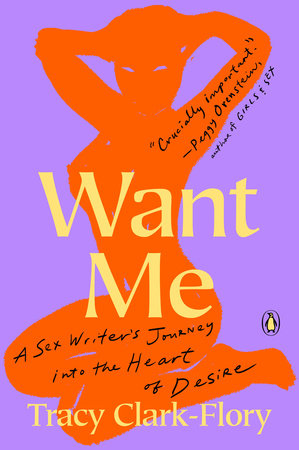
“My first introduction to porn was in middle school watching the ‘scrambled channel’ to catch the few split seconds when the static morphed into a bare butt thrusting,” explains Tracy Clark-Flory, a journalist covering the sex industry, adding: “Officially, I thought of watching porn less as entertainment than instruction, an investigation into men’s desire more than my own.”

Clark-Flory notes that her experience is “typical” for young women, and her evolving lessons around pornography are powerfully framed as she further examines her earliest lessons:

It goes without saying: as I was growing up, no one had talked to me about the sexual politics of power, performance and perspective. No one – not my parents, not my sex ed classes, not the writers of glossy magazine sex advice – had bothered to go beyond basic mechanics and technique. A true sexual education has less to do with diagrams of the human reproductive system than with understanding another organ: the brain.

My porn life: what my years as a sex writer taught me about my desires

Addressing a controversy around the backstory of an American Girl doll with lesbian aunts, James Finn confronts how children are the “big losers” in the lessons they receive about love, sex, and marriage:

When straight people get married, we tell kids the truth — that the bride and groom love each other and want to spend their lives together. Don’t small children love hearing about that? I sure did when I was a kid.

So here’s the the frightening lesson being taught in this American Girl uproar: Straight people marry for love. Gay people marry for sex, and that’s so disgusting we don’t dare talk about it in front of children.

Parents SHOCKED Over Doll’s Lesbian Aunts

Both of these examples are disturbing because they expose the great failure in the U.S. to offer purposeful and healthy education for children on love and sex, leaving most of the lessons children learn to chance and taking place well outside formal schooling or the purview of parents or other caring adults.

Clark-Flory’s experiences framed as “typical” for girls and young women unmask some of the foundational messages that allow and perpetuate male-centric and misogynistic norms that create hostile and unfulfilling environments for many if not most women. Like Clark-Flory, Finn adds the alienating and harmful lessons about “normal” love, sex, and traditions such as marriage.

Even the recent rise in efforts to address pornography in formal education, “porn literacy,” tends to cause even greater harm, Clark-Flory argues, because “the goal is less to foster a thoughtful, nuanced engagement with porn, but rather to reject the medium as ‘fake.'”

“[M]oralizing around sexual behaviors that many people genuinely enjoy,” Clark-Flory concludes, “is counter to the compelling and undeniable truth offered up by porn: sex can be a great many things.”

In mainstream education and parenting in the U.S., we must admit that most teaching about love and sex is either absent or normative (and harmful).

Next to the examples offered by Clark-Flory and Finn, one of the most powerful and pervasive indirect lessons found in formal schooling become even more disturbing—the lessons taught by dress codes.

From the first days of schooling, children are taught that a great deal of who they are as well as their responsibility for other people’s behavior is linked to their clothing. And those lessons are not only harmful but also deeply gendered; research details that dress codes disproportionately impact girls and young women.

The messaging of dress codes are no different than what Finn notes about popular dolls:

Children hear what their parents are saying about American Girl. Nascent queer kids are being injected with self loathing. Kids who will grow up cis and straight are internalizing values of bullying and stigmatizing.

Why would anyone want to teach shaming and bullying to kids? Women marry one another sometimes; that’s just a fact. Same-sex marriage is legal, ordinary, and no more sexual than any other marriage. Kids can handle that reality even if their family practices a faith that doesn’t endorse same-sex marriage.

Parents SHOCKED Over Doll’s Lesbian Aunts

Similar to the normalizing messaging around American Girl dolls recognized by Finn about love, sex, and marriage, dress codes lay the foundation for slut shaming and victim blaming.

Girls are taught early and often that they are responsible for how boys respond to their clothes and their bodies. But boys are learning these lessons also.

The great and awful irony in this dynamic is that the attitudes and practices considered “normal” (and thus right)—such as honoring marriage as a celebration of love by one man and one woman or the respectability politics of dress codes—alienate and miseducate children in ways that lead to unfulfilling and abusive attitudes about love and sex.

Love and sex are central to being fully human—but not in any singular or correct way. Beneath the problems around consent and sexual abuse/assault are the many harmful lessons children are learning daily in their schools, their homes, and their communities.

Children are not incomplete humans, and avoiding lessons around love and sex as well as miseducating children about love and sex denies their humanity along with perpetuating the likelihood that in their lives love and sex will lead to fear, humiliation, and even abuse.

The problems are not pornography or dolls with lesbian aunts; the problems are the adults, themselves trapped in fear and misinformation.

Teaching WandaVision: A Textset on Pastiche [updated]

Early in the semester of my first-year writing seminar, we consider and reconsider openings in essays, an interrogation of students’ experiences with the mechanical “introduction” with the obligatory thesis sentence.

We examine, for example, several Beginnings from Barbara Kingsolver’s essays in High Tide in Tucson and Small Wonder. Two essay beginnings reveal the complexity of student awareness about genre, writing forms, and language/text conventions.

Kingsolver’s “Creation Stories” opens with “June is the cruelest month in Tucson, especially when it lasts until the end of July.” Students always struggle with tone (missing the exaggeration and humor), and completely miss the allusion the T.S. Eliot’s “The Wasteland” (a work itself rich with allusion and historically situated).

I have them consider that their dominant experiences with literary texts in school have been deadly serious, both the texts they have read and the approach taken to those texts (analyzing for deeply serious meaning). Then, I stress the problems with referential texts, such as the use of allusion, since the author is expecting the readers/audience to have the background knowledge needed to recognize the reference and its significance to the texts being addressed.

“Once upon a time, a passing stranger sent me into exile,” Kingsolver begins in her “Jabberwocky.” Immediately, students identify this reference to fairy tales, showing they have a sense of genre that helps guide their expectations as reader (although, as noted above, they also have the “seriousness” baggage cultivated in their formal English courses).

Formal reading and analysis of texts remains mostly in English and literacy courses where students focus on text-based literature (what we once called “print”) and instruction includes techniques such as satire, parody, allusion, and pastiche.

However, most students spend much of their lives with texts that are virtual and in the form of video (film, series, etc.). And in the world outside of formal schooling, referential texts are quite common but depend on pop culture background knowledge—such as the TV series Community.

Before the activity on beginnings, I asked if students were watching the recent series WandaVision, grounded in the Marvel Cinematic Universe (MCU). Very few were watching and many weren’t aware of the series available on Disney+.

WandaVision
Disney/Marvel

When I pulled up the IMDB page of WandaVision and scrolled to a black-and-white trailer for the series, students have no reference point for what the series is doing as pastiche exploring the history of sitcoms in the U.S. reaching back into mid-twentieth century.

However, as I watched the first five episodes, I continually identified matching sets from series I watched growing up as well as homages to sitcom opening credits and theme songs.

WandaVision takes the Easter Egg hook now common in the MCU and carries references several steps farther, turning the series into a powerful lever for moving the MCU forward and a stand-alone homage and critique of pop culture driven by TV and film.

As with Community, WandVision provides a perfect opportunity for rethinking what texts we present to students and how we help students navigate referential media.

Here, then, drawn from the sources below, I want to offer a textset for WandaVision as an exploration of pastiche while highlighting some of the instructional goals that match traditional approaches in English course and some that expand that instruction.

Instructional goals for a WandaVision textset may include the following

  • Introducing or examining techniques such as satire, parody, allusion, and pastiche, focusing on the distinguishing characteristics among these approaches as well as the uses of and limitations to referential texts.
  • Exploring genre and medium conventions grounded in U.S. TV sitcoms since the mid-twentieth century, including the following: bedrooms of TV married couples, conventions of sitcoms (theme music, opening credits, set design, etc.), TV transition from black-and-white to color, sitcom tropes (pregnancy, neighbors, spouse roles, etc.).
  • Rethinking text beyond print and the importance of the binge-series versus traditional films or network TV weekly series.

Source background materials (Marvel comics that serve the MCU; see here):

Avengers (vol. 1): 113, 133-135, Giant Size 4 (1974), 185-187, 253, 254, 675-690

Vision and Scarlet Witch (1982): 1-4

West Coast Avengers (vol. 2, Avengers West Coast vol. 1, vol. 2): 42-49, 52

Avengers Disassembled

House of M

New Avengers: 26

Avengers: Children’s Crusade

Scarlet Witch: Witches’ Road

Vision: The Complete Collections

Avengers: No Road Home

House of X: 1

Empyre X-Men: 1, 4

TV and Film references (pastiche sources through E5):

[TV]

I Love Lucy (1951-1957)

The Honeymooners (1955-1956)

Leave It to Beaver (1957-1963)

The Dick Van Dyke Show (1961-1966)

Bewitched (1964-1972)

I Dream of Jeannie (1965-1970)

The Twilight Zone (195901964)

The Brady Bunch (1969-1974)

The Partridge Family (1970-1974)

The Mary Tyler Moore Show (1970-1977)

The Courtship of Eddie’s Father (1969-1972)

All in The Family (1971-1979)

Charlie’s Angels (1976-1981)

Get Smart (1965-1970)

Mary Hartman, Mary Hartman (1976-1977)

Growing Pains (1985-1992)

Step by Step (1991-1998)

Family Ties (1982-1989)

Full House (1987-1995)

Malcolm in the Middle (2000-2006)

Modern Family (2009-2020)

The Office (2005-2013)

Happy Endings (2011-2020)

[Film]

The Truman Show (1998)

Pleasantville (1998) [See also Viewing Pleasantville in Trumplandia]

The Wizard of Oz (1939)

Blade Runner (1982) [See The ‘WandaVision’ Finale’s ‘Blade Runner’ Reference Will Break Your Heart]

UPDATE: Here’s every TV show that WandaVision is based on (there’s a lot)


Sources

Postmodern Use of Parody and Pastiche

The inescapable postmodernism within television series Community by Sam Shepherd

The 68 Movie References in Community

10 Best Comics To Read With WandaVision!

38 details you may have missed on ‘WandaVision,’ so far

‘WandaVision’: All of the Marvel Easter Eggs and Sitcom References So Far

Breaking Down ‘WandaVision’s TV Sitcom and Genre Influences, Episode by Episode

A Guide To All The Sitcom References In ‘WandaVision’

Who Was the First TV Couple to Sleep in the Same Bed?

See Also

‘WandaVision’ echoes myths of Isis, Orpheus and Kisa Gotami to explain how grief and love persevere

The “Science of Reading”: A Movement Anchored in the Past

One of the defining moments of my first-year writing seminar is my reading aloud the first few paragraphs from A Report from Occupied Territory by James Baldwin.

This essay in The Nation from July 11, 1966, offers students dozens of powerful examples of compelling and purposeful writing, Baldwin at his best. But the circumstances of the essay are what first strike my students.

“There was a great commotion in the streets, which, especially since it was a spring day, involved many people, including running, frightened, little boys,” Baldwin writes. “They were running from the police.”

We note that Baldwin uses “police[men]” five times in the first paragraph, which focuses on people in the Harlem “in terror of the police” because “two of the policemen were beating up a kid.”

Students immediately noted that Baldwin was addressing exactly the same racism grounded in policing that has been the source of social unrest in the U.S. throughout 2020.

In other words, racism in policing in the U.S. is not a recent crisis, but a historically systemic fact of policing.

The more things change, we noted, the more they stay the same.

The history of education in the U.S. is often fascinating and surprising, but it also is like being Phil (Bill Murray) in Groundhog Day—especially when it comes to bandwagons and political and public cries of “crisis.”

Fews aspects of education represent this pattern more than reading, suffering the “science of reading” (SoR) movement since early 2018.

The SoR movement is nothing new, a movement anchored in the past.

But as David Reinking, Victoria J. Risko and George G. Hruby note at The Answer Sheet (The Washington Post), “More worrisome, a majority of states have enacted, or are considering, new laws mandating how reading must be taught and setting narrow criteria for labeling students as reading disabled.”

Reading was declared a crisis in the 1940s because of literacy tests of WWII recruits, throughout the 1950s and 1960s because of Rudolf Flesch’s Why Johnny Can’t Read, in the 1990s because of handwringing over NAEP scores, during the George W. Bush presidency with the National Reading Panel and No Child Left Behind, and, as noted above, over the last couple years because of the SoR movement prompted by the journalism of Emily Hanford.

As my students came to recognize about racism and policing in the U.S., anyone who examines the history and current bandwagon of reading will see that schools, teachers, and students have, like Phil, lived the same day over and over—reading is in crisis and here is the silver-bullet for all students to read.

One must wonder why we never pause to confront that this formula has never resulted in anything other than the same crisis.

And one must acknowledge that something cannot be a movement if it is anchored in doing the same thing over and over while expecting different results.

Take for example The Science of Reading: A Defining Movement.

The Coalition Members include a strong connection to The Reading League, formed in 2016.

Both the website and the League represent the very worst of missionary zeal and good intentions; and they both fail the fact check necessary for claims about a reading crisis and the bandwagon of SoR.

First, The Reading League grounds their concerns in a misguided and false red flag about whole language, as reported on Syracuse.com: “Murray is referring to the large base of research and knowledge that proves scientifically-grounded methodology in teaching reading is more effective than the ‘whole language’ approach most curriculum takes.”

This argument has two significant flaws. First, whole language has been replaced by balanced literacy for decades. And second, the 1990s revealed a discredited assault on whole language and an ignored analysis of by Darling-Hammond that showed a positive correlation between higher NAEP scores and students being in whole language classrooms.

The website, The Science of Reading: A Defining Movement, is complicated to fact check because there seems to be a purposeful effort to appear to be different than the SoR bandwagon by rejecting the term as a “buzzword” and demanding “We must preserve the integrity of reading science.”

Further, in the Preamble to their The Science of Reading: A Defining Guide, one sentence stands out: “We know that our children can be taught to read properly the first time.”

“The first time”?

Literacy and reading are lifelong learning experiences, and this claim raises a genuine red flag about this movement.

But the biggest reveal about the so-called SoR movement is in the definition, where there is a narrow parameter set for “scientifically-based”: experimental/quasi-experimental study design, replication or refinement of findings, and peer-reviewed journal publication.

If that sounds familiar, you have simply awakened to the same day some twenty years ago when the National Reading Panel made the exact same claim—and proved to be a deeply flawed report while the policy implications not only did not improve reading but also became mired in funding corruption with Reading First.

The SoR movement is a bandwagon with its wheels mired in the same muddle arguments that have never been true and silver-bullet solutions that have never worked.

Like Phil, we find ourselves waking up to the same day in reading.

This is no crisis, but it certainly is a tired, old story that needs to be left behind through some other vehicle than a bandwagon.

See Also

Greenville News (SC): SC should not “jump on bandwagon” of “science of reading” movement

Open Letter to SC House and Senate Concerning Bill 3613 [UPDATED]

How to End the Reading War and Serve the Literacy Needs of All Students

The State (SC): Read to Succeed bill would fail reading again in South Carolina

Read to Succeed bill would fail reading again in South Carolina (hyperlink version below and link to The State in title)

Currently, I am in year 37 of teaching in SC, serving as a high school English teacher at Woodruff High for 18 years before moving to teacher education at Furman University for the past 19 years. I entered education in SC in 1984, the first days of the accountability movement in our state.

Despite political leaders changing standards and high-stakes testing multiple times over the past four decades, political and public perception remains convinced that our students are, once again, failing to learn to read.

Bill 3613 is making the same mistake political leaders have been making since the 1980s, tinkering with punitive legislation aimed at our students and teachers while ignoring the overwhelming negative impact of inequity in our students’ homes and communities as well as the harmful negative learning and teaching conditions that persist in our schools.

Read To Succeed, which Bill 3613 seeks to amend, misreads both how students learn to read and how best to teach reading. Reading growth is not simple, and test scores are a stronger measure of poverty and social inequities than the state of student learning or the quality of teaching.

This proposed legislation is yet another example of SC jumping on a flawed educational bandwagon (this time copying Mississippi), the “science of reading” movement that has resulted in harmful educational policy such as increased grade retention, over-screening for dyslexia, and prescribing “one-size-fits all” instruction for students.

The National Council of Teachers of English (NCTE), the largest professional organization for English teachers in the U.S., has issued a strong policy statement rejecting third-grade retention supported by decades of research showing grade retention remains harmful for students. Dorothy C. Suskink also recently posted at NCTE that the “science of reading” movement is deeply misleading in its use of the term “science,” misrepresentation of the National Reading Panel, dependence on discredited reports from the National Council on Teacher Quality, and claims of crisis from NAEP scores.

Prominent literacy scholars David Reinking, Victoria J. Risko and George G. Hruby have also challenged the many flaws in the “science of reading” movement that are now included in Bill 3613. “When the teaching of reading is framed as a war, nuance and common areas of agreement are casualties,” they conclude, adding: “But worse, our children can become innocent victims caught in a no man’s land between those more interested in winning a conflict than in meeting individual needs.”

As has been proven by Read to Succeed so far, the most vulnerable students in our state will be harmed by the policies in this bill the most while political leaders in the state continue to lack the political will and courage to address the root causes of educational challenges across SC—poverty and racial inequity.

I urge political leaders in SC to think differently about our students, our teachers, and our schools; notably, I strongly recommend that we seek ways to create homes, communities, and schools that allow our students to grow and excel in the literacy development.

Continuing to tinker with prescriptive and punitive reading legislation is a dereliction of political and ethical duty; we can and must do better, by doing differently.

LEO’S TV

In the opening weeks of my first-year writing seminar, I introduce students to reading like writers (here and here), emphasizing that we are not reading to write literary analysis (as many of them have done for Advanced Placement Literature) but reading to explore and acquire moves and approaches for effective writing.

Since the first essay assignment is a personal narrative, I provide them with several essay examples and highlight “Peculiar Benefits” by Roxane Gay as a powerful model of what we are trying to accomplish—engaging the reader with personal narrative in order to ask the reader to consider or reconsider some larger idea or argument.

Today I read aloud, as I typically do, the first three paragraphs of the essay from the original online version of Gay’s essay at The Rumpus (many students read Gay’s Bad Feminist, which includes a slightly revised version). We had a robust discussion, and many students were interested in the essay and excited by the writing strategies we highlighted, centered around purposeful writing instead of templates or rules.

Once we ended that discussion, I noted that the three paragraphs included two places that were copyedited for the published essay in Bad Feminist. I asked if any students noticed those examples of what many English teachers and editors would mark as “non-standard” or “errors.”

No student had noticed so I read aloud the two sentences, prompting them to look closely again:

For my brothers and I it was an adventure, sometimes, a chore, and always a necessary education on privilege and the grace of an American passport….

It was hard for a child who grew up on cul-de-sacs, to begin to grasp the contrast between such inescapable poverty alongside almost repulsive luxury and then, the United States, a mere eight hundred miles away, with it’s gleaming cities rising out of the landscape, and the well-maintained interstates stretching across the country, the running water and the electricity.

“Peculiar Benefits,” Roxane Gay

One student noticed that “for my brothers and I” would be edited to “for my brothers and me”; I discussed with the class the common problem of case switching when there are two people versus one. Most people would always choose “for me” and not “for I,” but will choose “for my brothers and I” based on a weird urge to overcorrect likely grounded in being chastised as children for “Me and him went to the store.”

It took a bit more nudging, but eventually they saw the “it’s” that would be edited to “its.” Here I noted that people have an urge to insert the apostrophe with “its” although it is the same form as “his” (which never has an apostrophe added) and “hers”/”theirs” (which occasionally gets the added apostrophe).

The apostrophe works in both possession and contraction, causing people problems in written text never present in spoken language. People never confuse the constructions of “Bob’s car” and “there are two Bobs in our family” when heard aloud—even without the aid of the apostrophe.

My point here was to help students begin to move away from the paralyzing effect of being perfect (avoiding surface “errors”) and to recognize what people are doing when they read.

I shared with them a recent story about my granddaughter, Skylar, who is six and eagerly reads aloud throughout her day whenever she sees text.

A couple weeks ago, I had picked up my granddaughter and grandson (Brees, who is four). While we were driving to my apartment, stopped at a red light, Skylar asked, “Papa, what is L E O S?”

I turned back toward her and noticed a business sign directly out her window. “It’s ‘Leo’s,'” I said. “A name.”

She immediately announced, “Leo’s TV.”

First, I think it is interesting that she seems to have paid no attention to the apostrophe (and there is ample evidence that almost all modern readers of English find little to no value in the apostrophe; hence, it is likely dying as a marker for possession and contractions).

But with the recent phonics-mania and revived advocacy for the “simple view” of reading, it is also a valuable cautionary tale, this experience with a sign.

Of the six letters Skylar was reading, four of them are just saying the letter; if she had tried to decode those two words in any simple way, she would have mangled them greatly.

And imagine if the owner were “Zoe” or “Joe.”

Both the moment with my granddaughter and my first-year writing students demonstrates the holistic nature of literacy—of reading. And frankly, there is nothing simple about it.

For a six-year-old, there is a maze of fonts as well as the use of capitol or lower case lettering all mixed in with dozens of arcane phonics “rules” and exceptions; but for more advanced readers such as my students, even when they have been prompted to use close reading in their literary analysis, they simply do not see many microlevel, isolated elements of text.

Certainly phonemic awareness and patterns are valuable aspects of creating meaning from text. But Skylar often uses a much better technique; ask what you don’t know and blend it with what you do.

So-called standard spelling, punctuation, and grammar have some value for sharing meaning among users of a language, but my students have become nearly immobile as writers because they try to be perfect even as they are discovering and creating meaning with text.

And I have watched Skylar laboriously try to sound out a word, grinding all meaning to a halt. But when I say the word aloud for her, she recognizes it and flies ahead. She often already knows it by sight the next time we come across it.

In the span between being a beginning reader to an independent and expert reader, there is much any person needs to acquire—and little we can predict that “all students” must do along the way. Let’s not fall for the allure of “simple” and certainly let’s not continue leading our students down a path toward paralysis, where meaning goes to die.

Like “Leo,” another three-letter word needs to be always at the forefront of anyone growing as a reader, “joy.”


Greenville News (SC): SC should not “jump on bandwagon” of “science of reading” movement

SC should not “jump on bandwagon” of “science of reading” movement (original with hyperlinks below)

South Carolina is poised with Bill 3613 to continue the historical failures of addressing reading in South Carolina through micromanaging legislation that has not resulted in improving home, community, individual equity or learning outcomes for students living in poverty, Black students, Emergent Bilinguals, or students with special needs.

Currently, I am in year 37 of teaching in SC, serving as a high school English teacher at Woodruff High for 18 years before moving to teacher education at Furman University for the past 19 years. I entered education in SC in 1984, the first days of the accountability movement in our state.

Despite political leaders changing standards and high-stakes testing multiple times over the past four decades, political and public perception remains convinced our schools are failing, and that our students are, specifically, failing to learn to read.

Read To Succeed, which Bill 3613 seeks to amend, was a serious mistake at its inception since it misreads both how students learn to read and how best to teach reading. Reading growth is not simple, and test scores are a stronger measure of poverty and social inequities than the state of student learning or the quality of teaching.

Bill 3613 is making the same mistake political leaders have been making since the 1980s, tinkering with prescriptive legislation aimed at our students and teachers while ignoring the overwhelming negative impact of inequity in our students’ homes and communities as well as the harmful negative learning and teaching conditions that persist in our schools.

This proposed legislation is yet another example of SC jumping on a flawed educational bandwagon (this time copying Mississippi), the “science of reading” movement that has resulted in harmful educational policy such as increased grade retention, over-screening for dyslexia, and prescribing “one-size-fits all” instruction for students.

The National Council of Teachers of English (NCTE), the largest professional organization for English teachers in the U.S., has issued a strong policy statement rejecting third-grade retention supported by decades of research showing grade retention remains harmful for students. Dorothy C. Suskink also recently posted at NCTE that the “science of reading” movement is deeply misleading in its use of the term “science,” misrepresentation of the National Reading Panel, dependence on discredited reports from the National Council on Teacher Quality, and claims of crisis from NAEP scores.

Prominent literacy scholars David Reinking, Victoria J. Risko and George G. Hruby have also challenged the many flaws in the “science of reading” movement that are now included in Bill 3613. “When the teaching of reading is framed as a war, nuance and common areas of agreement are casualties,” they conclude, adding: “But worse, our children can become innocent victims caught in a no man’s land between those more interested in winning a conflict than in meeting individual needs.”

As has been proven by Read to Succeed so far, the most vulnerable students in our state will be harmed by the policies in this bill the most while political leaders in the state continue to lack the political will and courage to address the root causes of educational challenges across SC—poverty and racial inequity.

I urge political leaders in SC to think differently about our students, our teachers, and our schools; notably, I strongly recommend that we seek ways to create homes, communities, and schools that allow our students to grow and excel in the literacy development. Continuing to tinker with prescriptive and punitive reading legislation is a dereliction of political and ethical duty; we can and must do better, by doing differently.