Category Archives: education

The Paradoxes of Dismantling Racism and White Privilege

If you just clicked on a link and are reading this, you are experiencing one of the paradoxes of dismantling racism and white privilege because by writing this and making it available across the Internet, I have centered my whiteness and the voice of (yet another) man.

As a white man, I simultaneously have an ethical obligation to dismantle racism and white privilege (and gender inequity) that sits in contrast to another ethical obligation that I (to cite a group of white men) need to STFU and not occupy the spaces where Black and women’s voices must be centered and embraced.

My scholarship and public work have for many years now been focused on class, gender, and race inequity, especially as they intersect with formal education.

Any credibility in addressing racism and white privilege that I have earned comes from my critical unpacking of my own whiteness and of my racist heritage in my home and community of birth, but I also have manufactured a greater level of racial awareness by reading and listening to Black voices—notably Black artists/writers and Black scholars.

My teaching seeks always to center Black voices and the voices of women, which I have documented by detailing who is included in my syllabi.

However, there I stand in front of my classes, centered by my role of authority, my whiteness, and my being a man with the additional weight of almost 6 decades.

Two situations, one recent and one a year or so ago, have pushed me to continue to wrestle with the paradoxes of my activism dedicated to dismantling racism and white privilege.

More immediately, I have been disturbed to see a blog post discrediting Robin DiAngelo’s White Fragility being shared across social media, often by Black academics and friends. This challenge to DiAngelo’s work, I discovered, comes from a source that is neither credible nor reliable.

The other situation came over a year ago when I was invited to speak on whiteness and racism at a university (in a series of programs that also included DiAngelo before I spoke there).

What these two contexts have in common, I think, is one of the most difficult paradoxes of dismantling racism and white privilege: centering whiteness to de-center whiteness.

If and how any of us dedicated to anti-racism work engage with DiAngelo’s concept of white fragility is itself a problem and a paradox.

I added DiAngelo’s popular book to the choice reading selections in my foundations of education course recently, and the book proved to be popular and effective with my students who tend to be white, privileged, and conservative (or from conservative homes).

Many students confessed that they went into the book not believing in white privilege or systemic racism but that DiAngelo had opened their eyes and changed their minds.

These students also read For White Folks Who Teach in the Hood…and the Rest of Y’all Too by Chris Emdin as well as essays by James Baldwin and Ralph Ellison; they are introduced to bell hooks and Maxine Greene as well.

But there is always a risk of centering white works such as DiAngelo’s since that can imply that Black voices and experiences with racism are valid only when verified by white witnesses or when in proximity to white witnesses.

Black advocates for anti-racism embracing the “don’t read DiAngelo” is coming from, I think, recognizing that risk and from their own experiences where only white voices are allowed in formal education. White witnesses to confirm their lived experiences and white proximity giving credibility to the moment-by-moment stress of their being Black in the U.S.

It is a powerful and important question to ask why white people do not find this credible itself, without white confirmation:

To be a Negro in this country and to be relatively conscious, is to be in a rage almost all the time. So that the first problem is how to control that rage so that it won’t destroy you. (James Baldwin from “The Negro in American Culture,” Cross Currents, XI [1961], p. 205)

As I opened in this post about my white man’s voice, DiAngelo is in fact not only occupying spaces where Black voices are not being read or heard, but also profiting on anti-racism, the capitalism paradox of dismantling racism and white privilege.

Activism, scholarship, and the Market are invariably going to overlap in the U.S., and even as we worship at the alter of capital, we also become skeptical when activists and scholars gain celebrity status or simply earn money from other people’s inequity.

It is inexcusable in the U.S. to ignore that racism has always fueled capitalism and profited almost exclusively white people.

I remain resolute that the primary obligation of anti-racism work dedicated to dismantling racism and white privilege belong to white people. But that drives the paradox of centering whiteness and can perpetuate the muting or erasing of Black voices.

The paradoxes of white people doing anti-racism work cannot deteriorate into fatalism, however.

For white people, awareness of racism, white privilege, white fragility, and the paradoxes of dismantling racism and white privilege as a white person is a first step often wrapped in the paradox of centering whiteness to de-center whiteness.

For far too long, there have been far too many white-only spaces, and the work of anti-racism by white people must seek shared spaces among all races, not just creating but allowing through white absence enough space so that voices do not have to compete and so that whiteness does not justify or regulate whose voice ultimately matters.

RIP, Mr. Harold Scipio

Mr. Harold Scipio was my high school chemistry and physics teacher. He died at 91 on June 11.

PhotoCollage_20200616_084600481
Image provided by Hope Abraham, granddaughter.

I am 59 and am deeply saddened by his passing because he remains a powerful influence on my teaching, many decades after I sat in his classroom and then later taught with him at the same high school I attended.

In an open letter to my students in 2014, I wrote about Mr. Scipio:

Harold Scipio taught me high school chemistry and physics. He was a tall black man, very measured and formal. It is because of Mr. Scipio, I think ultimately along with Lynn Harrill, that I found my way to teaching after thinking I was going to major in physics (that was because of Mr. Scipio, but it was also because I was young and mostly misreading myself and the world).

Mr. Scipio practiced two behaviors that were totally unlike any other teacher I ever had. First, he referred to all of us as Mr. or Miss and our last names, and he explained to us that since we had to call him Mr. Scipio, he should certainly return the courtesy.

In the last days of my senior year at the National Honor Society banquet (Mr. Scipio was a faculty sponsor), as we were cleaning up afterward, he called me Paul, smiled widely, and told me to call him Harold because I was graduating and an adult.

And throughout my junior and seniors years, each time Mr. Scipio would hand out a test or exam, he would quietly gather a wide assortment of lab materials around the room before walking out of the main room and into the back where he washed and returned the materials to the storage shelf.

During every test, Mr. Scipio left the room, sent an unspoken message about not only our very frail and young integrity but also his trust that although we were surely not perfect, that we would ultimately make the right decisions.

I now teach every single day in the wake of Mr. Scipio—often disappointed in myself for failing his lessons about the essential dignity of all people, especially young people, especially students in the care of a teacher.

Teaching isn’t about chemistry or physics, or introductions to education or first year seminars and learning to write.

Teaching is about those becomings and beings that truly matter: becoming and being a citizen of communities grand and intimate, becoming and being the only you that you can be, becoming and being a scholar and student.

In an odd twist of fate, after teaching English for 18 years at that high school, I sat in a restaurant interviewing to move to my current position now as a college professor. As I dined with the department chair and head of graduate education, I looked across the restaurant and saw Mr. Scipio.

I excused myself, walked over, and talked with Mr. Scipio.

He was always a quiet and measured man. He smiled and said he was proud of where I was, what I had accomplished.

Just as he was a key person in my path to becoming a teacher, I took this brief encounter with Mr. Scipio as a subtle message from the universe that making that change was the right path for me.

As an incredibly provincial white guy raised in a racist home and community, I was incalculably fortunate to have been a student of Mr. Scipio for two years as he laid the foundation for me becoming a better person.

I am always in his debt.

Rest in peace, Mr. Scipio.


“Science of Reading” Advocacy Stumbles, Falls

First, the stumble.

Yet another education journalist (also identified as a novelist and historian), Natalie Wexler, has weighed in on the “science of reading” (SoR). Wexler isn’t an educator, and she seems to suffer from the Columbus Syndrome far too common among journalists covering education.

I am not linking to the article, but it has already been updated since Wexler has received strong challenges to her tactics in this over-stated and misleading article

Accompanying the standard misrepresentations about teaching reading in the U.S., Wexler attempts to cast an accusatory shadow—invoking racism—over teaching reading by joining the “science of reading” propaganda movement.

However, Zaretta Hammond set the record straight on Twitter. In brief, Hammond challenges Wexler’s jumbled attempts at calling out racism and misguided references to recent racist police violence as well as implicating Hammond’s work in Wexler’s claims.

As Hammond notes, Wexler’s failure exposes the problems with fanning a Reading War that, once again, keeps our gaze on so-called failed students and failing teachers instead of systemic inequity and racism.

Wexler is wrong about reading and racism, but the criticism her article prompted has only nudged her to retract the racism stumbles, whitewashing her mistakes by apologizing on Twitter and revising her article.

Now, the fall.

One of the most damaging aspects of the “science of reading” movement has been how swiftly advocates of SoR and dyslexia have translated their movement into state-level reading legislation.

While I have been helping literacy educators and activists resist these efforts to change state education laws, some of us saw at least a pause in the SoR momentum with the Covid-19 pandemic, an unfortunate consequence that now seems to have had unintended positive outcomes for education (flawed reading legislation not passing for financial stress prompted by the pandemic).

For example, “A bid to improve Louisiana’s dismal reading skills for its youngest students died near the legislative finish line, leaving backers baffled on just what happened,” writes Will Sentell.

The surprise at this defeat comes, as Sentell explains, because “[t]he proposal, House Bill 559, had led something of a charmed life until it wilted at the end.”

However, as with other state-level reading legislation agendas across the U.S., this bill was grounded in misinformation about reading achievement as well as claims about the “science” they claim is missing in reading instruction.

Advocacy for the SoR has a fatal flaw found in both Wexler’s article and the “charmed” but failed bill in Louisiana—a “rigid refusal” to address first and fully the systemic inequity that is at the root of all educational measurements, including reading achievement.

SoR advocacy is grounded in a deficit lens that sees only individuals (students, teachers) and measures them against very reduced and narrow ideas of what counts as “normal.”

This advocacy also falls victim to silver-bullet solutions, reducing teaching to “all students must” and suggesting that this program is better than that program (without recognizing that the problem is reducing reading instruction to any program).

SoR advocacy is a misuse of “science” and a misunderstanding of human nature and the teaching/learning dynamic.

There is a powerful relationship among measurable reading achievement by students, reading instruction provided students in formal schooling, and the corrosive persistence of racism and systemic inequity in U.S. society and schools—systemic racism and inequity.

Since the SoR playbook is wrong on all of that, as Hammond ends her Twitter thread, “Know the difference.”

See Also

NEW: How to End the Reading War and Serve the Literacy Needs of All Students: A Primer for Parents, Policy Makers, and People Who Care (IAP)

Policy Statement on the “Science of Reading”


All White People Must Confront How the System Only Works in Total Whiteness

I was born in 1961, after Brown v. Board but before the Civil Rights Act.

My childhood in the upstate of South Carolina included the assassination of John F. Kennedy, Martin Luther King Jr., Malcolm X, and Robert Kennedy as well as vivid memories of my mother’s family living through the racial unrest in nearby Asheville, North Carolina and my uncle being shipped off to the Vietnam War.

My parents had been raised in the 1940s and 1950s throughout North and South Carolina; they were among the white Americans who disapproved of King, and I recall vividly my parents’ animosity for Muhammad Ali that sat next to their anger at the mainstream media for bringing down Richard Nixon.

I was born in 1961, but I was baptized and washed daily in whiteness.

I believed in whiteness even as I was conditioned never to see it because my accusatory gaze was trained on blackness, and any racial identity not white.

These were the lessons of my home, my community, my school, and nearly every moment of the media I was consuming through news or entertainment.

My history books, TV shows, movies, novels, and comic books were filled with white saviors—and all that was wrong with the world shaded in darkness, blackness.

By the time I entered college during the fall of Jimmy Carter and the rise of Ronald Reagan, I believed entirely in the reverse racism narrative that buoyed Reagan’s ascent.

Despite the challenges of growing up in a working class family in the South at mid-twentieth century, I had been afforded tremendous privileges of race, gender, and more that, once again, were rendered invisible to me, and in that un-self-aware blindness, I was allowed to pity myself at every perceived disadvantage.

College, however, was a paradox; it was my ticket out of white denial even as it helped intensify my white privilege.

In 2020, I am the small percentage of people with a doctorate, and my salary as a tenured professor places me in a life of comfort and leisure that is well beyond what I have earned, what I deserve by the mere content of my character.

My working-class roots certainly contributed to my work ethic, but they also allowed me to believe the rewards I garnered were mostly about effort, even as white privilege supported me at every turn.

For about 40 years, then, I have been on a journey to confront not only my whiteness but also all whiteness.

Here is what I can confess at this moment on that journey.

Even as I did not create racism and white privilege, even as I have come to denounce the forces at the root of both (the enslavement of Black people, capitalism, etc.), I have daily benefitted from racism and white privilege.

Daily.

Moment by moment.

To be white in the U.S. is never to be neutral about race. Whiteness has a lift and momentum that carry me and all white people unless we actively resist it—and even then, at best, we are applying meager brakes, merely slowing that incessant force.

A person of the rural South, I know in my bones what Southern white poverty and ignorance look and sound like. I know they are real, and I have heard and still hear the voices of that angry whiteness who feel cheated by life, who can only exist in white denial because of the inability to confront their whiteness.

Systemic racism and white privilege can work invisibly to those who benefit from it. The mythologies of America have come out of racism and white privilege, working to maintain them and keep them invisible.

Rugged individualism and individual freedom implore us all to think about the individual person, and maintain a lie about individuality that keeps in place blinders hiding how the system only works in total whiteness.

Whiteness is the most powerful vaccination in the U.S., but like even the best vaccination, it isn’t universally effective.

White people fail, and white people struggle—while some Black people succeed, and some Black people seem to rise effortlessly above the barriers of racism and white privilege.

Confronting racism and white privilege, however, means coming to recognize that when white people fail and struggle, it isn’t because of their whiteness, but in spite of their whiteness.

Black people are daily, moment by moment, living under the weight their blackness because of racism and white privilege.

Despite the ever-trivialized manipulation of King’s “content of their character” message, in the U.S. whiteness trumps character and blackness renders character irrelevant.

In my journey confronting whiteness, then, I cannot be complacent simply in that confronting. White people created racism and white privilege; white people maintain racism and white privilege, both actively and in naive neutrality.

Only white people can dismantle racism and white privilege.

The very things that have allowed my success must be eradicated, and I must lend my hand to the dismantling.

Two acknowledgements sustain me in that quest.

Howard Zinn explored his life through a metaphor for understanding whiteness, warning that you cannot be neutral on a moving train.

And James Baldwin offered possibly the best discrediting of white denial in 1979:

Every white person in this country—and I do not care what he or she says—knows one thing. They may not know, as they put it, “what I want,” but they know they would not like to be black here [emphasis in original]. If they know that, then they know everything they need to know, and whatever else they say is a lie.

The system only works in total whiteness.

The system must change.


The Citation/Plagiarism Trap

[Header Photo by michael podger on Unsplash]

An adult more than a decade out of college and working as a staff member in a local public school contacted me about a discouraging experience in an on-line course for a graduate degree.

This person’s story is one I have encountered quite often over almost four decades of teaching at both the high schools and college levels.

This person received a zero on an assignment, identified as plagiarism by the professor. The problem here is that this student was cited for plagiarism on the assignment, yet the citation strategy flagged is identical to a previous assignment that the same professor gave a 95.

MacBook Pro near white open book
Photo by Nick Morrison on Unsplash

As background, this 30-something student has been required in the first classes of their program to cite using APA, but has received no instruction in that citation format (which they had never used as an undergraduate). During the earlier course, I shared with this person some of the materials I provide students when I require and also give direct instruction and support in proper APA format in my courses.

Throughout the first course and including the first assignment in this second course, the student’s citations have not been flagged as incorrect or as plagiarism.

However, the student described for me the section flagged as plagiarism in the more recent assignment: They copied and pasted from the original source, included the in-text parenthetical citation and bibliography in the references, but did not include quote marks.

It is hard to capture in writing the sound of discouragement I witnessed when I informed this student that this was, in fact, plagiarism because quote marks are always required when using the exact words of a source.

The student immediately explained, “But I did the exact same thing on the last paper and made a 95.”

As I have documented in English Journal, students often have to navigate a gauntlet of different and conflicting expectations for citation as well as shifting parameters for plagiarism across course and professors.

Academic and scholarly requirements for proper citations are more than simple attribution (a reasonable expectation that ideas and words drawn from sources can be easily identified and accessed by a reader) because for students and scholars, citation includes requirements linked to formal stylesheets grounded, often, in disciplinary expectations for those attributions (MLA, APA, Chicago Manual, etc.).

Real-world standards for attribution (such as in journalism) and consequences for plagiarism tend to be quite different than what students and scholars must navigate—creating yet another set of conflicting and contradictory messages for students.

This student also received another layer of mixed messages from plagiarism detection software, which failed to be effective since the student was working from misinformation (what the software flagged hadn’t been identified by any professor as plagiarism).

This situation is deeply frustrating for me because it remains far too common for students but highlights the citation/plagiarism trap that is allowed to persist in many classrooms.

The citation/plagiarism trap for students includes the following:

  • A shifting or absent definition of what constitutes proper citation and plagiarism in any course as well as in the program or school that course serves.
  • A weak or nonexistent connection between assigning/requiring citation formats and direct instruction in using and understanding those formats in connection with a detailed definition of proper citation and plagiarism.
  • A transfer of responsibility for plagiarism detection to (mostly) inadequate software and technology.
  • A culture of detection and punishment that supersedes a culture of teaching and learning.
  • Different and ever-changing citation systems (from course to course and discipline to discipline) that seem arcane and arbitrary to novices.
  • A blurred relationship among proper citation, plagiarism, grammar, and mechanics.

When I explained this situation to a friend who teachers high school ELA, that teacher immediately replied, “O, that student knew better,” because it seems reasonable to expect quote marks around the exact words from a source and common knowledge that students shouldn’t copy/paste from sources.

My experience in this context and with dozens of other students, however, is that what seems reasonable to those of us well-versed in citation and stylesheets is often a maze of equally confusing and capricious requirements for students.

I cannot find any way to see this situation as having value for students; it simply doesn’t serve well why we have expectations for scholarly writing or for fostering students into ethical and skilled scholars and thinkers.

At the core of why this trap is harmful to our charge as teachers of writing and scholarship is in the bulleted list above: many courses create a culture of detection and punishment that supersedes a culture of teaching and learning.

Teaching students to write and cite as scholars is not a one-time inoculation that can be accomplished by simply assigning and requiring a citation stylesheet (and giving students a link to Purdue OWL).

Like the good student trap, the citation/plagiarism trap leads to the very worst lessons we can pass on to our students—mixed messages that perpetuate antagonistic relationships and fails to encourage students to become the sort of ethical and thoughtful people we claim to be seeking.

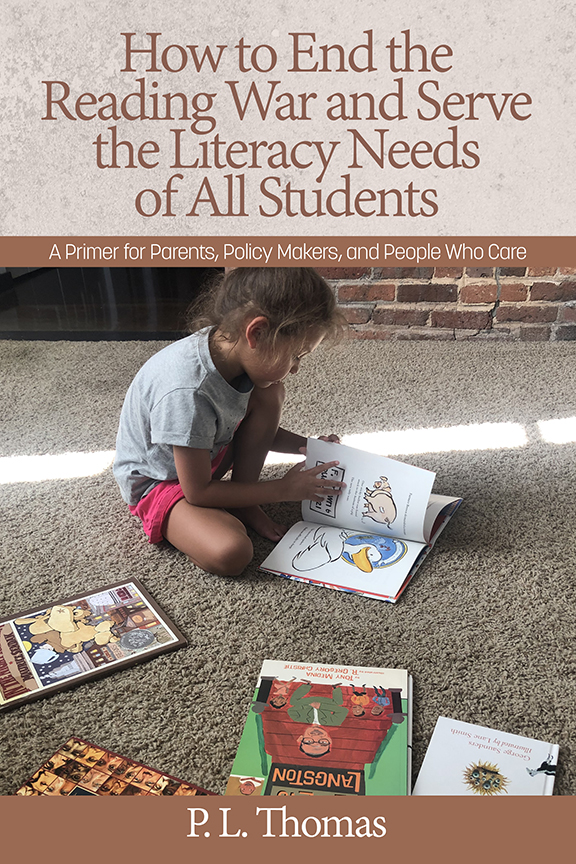
NEW: How to End the Reading War and Serve the Literacy Needs of All Students: A Primer for Parents, Policy Makers, and People Who Care (IAP)

How to End the Reading War and Serve the Literacy Needs of All Students: A Primer for Parents, Policy Makers, and People Who Care (IAP)

amazon

Barnes and Noble

ThomasCase2

[excerpt from Introduction]

How to End the Reading War and Serve the Literacy Needs of All Students: An Overview

The chapters that follow are not intended to document how we should or can teach reading. In fact, there is abundant work that has existed since the early twentieth century to document the many and varied ways we know we should help foster students as readers from the first days of school to the last. As well, this entire book is working well outside being a how-to on teaching reading or a storehouse of research—even as I am advocating that test-driven reading policy and instruction are asking way too little of students and their teachers.

Instead, this is an informative work, focusing on the historical and current Reading War, that builds to a framework for moving beyond that war, and as the subtitle states, serving the literacy needs of all students.

Chapter 1 (A Historical Perspective of the Reading War: 1940s and 1990s Editions) offers a historical overview of crisis responses to reading, focusing on the 1940s (WWII literacy rates of soldiers) and a 1990s report spurred by NAEP. This historical perspective is often missing from media coverage of reading and reading policy debates and decisions made at the federal and state levels.

In Chapter 2 (The Twenty-First Century Reading War: “The Science of Reading,” Dyslexia, and Misguided Reading Policy), I examine the current “science of reading” phenomenon in mainstream media driven by mainstream media, Emily Hanford and Education Week as key examples, but also fueled by dyslexia advocacy, all of which has manifested themselves in education policy such as adopting grade retention based on 3rd-grade test scores and training teachers in the “science of reading.”

Chapter 3 (Misreading Reading: The Good, the Bad, and the Ugly) addresses key concepts and topics that are misunderstood but central to the media coverage of the recent Reading War, such as the following: The National Reading Panel (NRP), reading programs, balanced literacy (BL), whole language (WL), phonics, scientific research, grade retention, teacher education, and teacher autonomy.

Finally, in Chapter 4 (How to End the Reading War and Serve the Literacy Needs of All Students: Shifting Our Deficit Gaze, Asking Different Questions about Literacy), the following reforms needed to end the Reading war will be explored:

  • Social policy must be implemented to address inequity and the homes, communities, and lives of children; these socioeconomic reforms must be viewed as central to reading policy.
  • The mainstream media must abandon Christopher Columbus and both-sides journalism that addresses education/reading.
  • Reading policy must abandon ineffective and hurtful commitments that include standards, high-stakes testing, grade retention, etc.
  • Classroom and school practices must abandon reading programs and silver-bullet approaches to literacy; and teaching must be far more individualized and patient.
  • Evidence-based teaching of reading must expand the meaning of “scientific” and evidence.

In the Conclusion (The Science of Literacy: A 36-Year Journey and Counting), I challenge a narrow view of “science,” especially in terms of education and literacy.

As you read the following chapters, I want you to keep some big-picture concerns in mind: What do we ultimately mean when we talk about teaching children to read? And what does it mean for a student to be able to read?

I want you to consider this story from a high school ELA class discussion on capital punishment. As the teacher led a discussion on the death penalty, a student interjected that Texas currently uses decapitation for the death penalty. The teacher paused, and then suggested that this wasn’t true. The student hurriedly explained it was true, and that he had proof.

The student took out his smartphone, pulling up an article to show the teacher. The article was from The Onion.

Patiently, the teacher informed the student that The Onion is satire, to which the student replied, “No, it isn’t.” Keep in mind that this high school student can pronounce the words in the article; he had read the entire piece.

Are our reading standards, sacred high-stakes tests, and reading programs fostering the sort of students who are critical readers, capable of navigating a complex world better than the student above? Is this Reading War in any way addressing that problem?

Recommended

Policy Statement on the “Science of Reading”

Open Letter: Education Week’s Coverage of the Life, Career, and Death of Ken Goodman

The May 21, 2020 article in Education Week by Stephen Sawchuk fails to honor the remarkable life and career of Ken Goodman on the occasion of his death. Instead, the publication has used this significant loss to the field of literacy as well as the Goodman family and friends for yet another opportunity to perpetuate the misleading narrative about the “science of reading.”

While Ken Goodman spent his life and career dedicated to reading and literacy, leaving behind a legacy of wide-reaching influence through his scholarship and embodying an ethic of kindness and inquiry, the selective use of interviews and incomplete references to research in the EdWeek article construct a distorted and tarnished image of a powerful voice in the field of education.

There is ample room for scholarly debate and disagreement in the complex and still evolving understanding of how children learn to read; however, EdWeek has chosen a solemn moment to continue a single-minded and misguided refrain about the “science of reading”—at the expense of the dignity and respect many know Ken and his family deserve.

Those signed below find the EdWeek coverage both insensitive to Ken and his family, and harmful to the field of literacy and reading.

This is a new low in EdWeek’s role as a high-profile voice in education. By mis-serving Ken and the field of literacy and reading, EdWeek has further eroded the publication’s credibility.

Signed,

Shira Adler
MFA, Founder & CEO Synergy

Richard Allington
Professor Emeritus
University of Tennessee

Marcia Baxter
Literacy Coach Columbia, SC

Laurey Brevig Almirall, EdD
Third grade teacher, Port Washington School District

Delisa Alsup Ed.S
Reading and Literacy Leadership
Instructional Coach

Bess Altwerger
Professor Emerita
Towson University
Former School Board Member, Howard County, MD

Nancy Bailey, Ph.D.
Education Blogger

Kylene Beers, Ed.D.
Literacy specialist and educational consultant
Past-president National Council of Teachers of English;
Recipient of the CEL Leadership Award

Carrie Birmingham
Associate Professor of Education
Pepperdine University

Susi Bostock, Ed.D.
Elementary Education
Half Hollow Hills School District, NY

Dorey Brandt-Finell, Family Advocate and Educational Specialist
David Finell, Principal (retired)

Lois Bridges Ph.D.
VP/Publisher

C. Garth Brooks,
British Columbia Literacy Council of the ILA
Executive Director, LEADER Special Interest Group of the ILA

Sally Brown, Ph.D.
Professor of Literacy Education
Reading Program Director
Department of Curriculum, Foundations, and Reading
Georgia Southern University

Charlotte A. Butler, MAELT
P-20 Literacy Coordinator (retired)

Lucy Calkins
Richard Robinson Professor of Children’s Literature at Teachers College, Columbia University
Founding Director of the Teachers College Reading and Writing Project

Professor Brian Cambourne, B.A. Litt.B (Hons), Ph.D A.M
Principal Fellow University of Wollongong, NSW, Australia

Cecilia Candreva, Ed.D.
Retired Elementary Principal
Franklin Square School District, NY

Rose Anne Casement
Professor Emerita
University of Michigan-Flint

Erika Strauss Chavarria
Spanish Teacher, Howard County MD

Linda Christensen
Director, Oregon Writing Project
Lewis & Clark College
Editor, Rethinking Schools
Editor Rethinking School

Ruby Clayton, Teacher
Indianapolis Public Schools

Gerald Coles,
Education Researcher
Reading the Naked Truth: Literacy Legislation & Lies (Heinemann)

Nancy Creech, Ed.D.
Elementary Teacher & Reading Specialist, Retired

Caryl Crowell, M.Ed, Ed.S.
Retired, Tucson Unified School District

Paul Crowley, PhD
Professor Emeritus
Sonoma State University
Rohnert Park, CA

Joan Czapalay,
Teacher, Educator (Nova Scotia, MSVU)
Parent and Grandparent

Diane DeFord
Professor Emerita and Endowed Professor
University of South Carolina

Benjamin Doxtdator
English Teacher, Education Writer

Corydon Doyle, Ph.D.
English Teacher Mount Sinai UFSD
Adjunct Professor Long Island University

Amy J. Dray
Program Officer
Spencer Foundation

Katie Dredger
Associate Professor
James Madison University

Peter Duckett, PhD
Bahrain Bayan
Kingdom of Bahrain

Carole Edelsky, Ph.D.
Professor Emerita
Arizona State University

Eric W. Eye, M.A.
HS ELA teacher

Amy Seely Flint
Professor
University of Louisville

Barbara Flores, Ph.D.
Professor Emerita
CSU, San Bernardino

Jennifer Flores
Tucson TAWL

Susan Florio-Ruane Ed.D.
Professor Emerita
College of Education
Michigan State University

Alan Flurkey
Professor, Literacy Studies
Department Chair, Specialized Programs in Education
Hofstra University

Salli Forbes, Ph.D.
Professor Emerita and Reading Recovery Trainer
The University of Northern Iowa

David E. Freeman, Ph.D.
Professor Emeritus
The University of Texas Río Grande Valley

Yvonne S. Freeman, Ph.D.
Professor Emerita
The University of Texas Río Grande Valley

Peter H. Fries
Professor emeritus
Central Michigan University

Stefanie Fuhr, MEd

Janet S. Gaffney
Professor, University of Auckland
Professor Emerita, University of Illinois

Andrea Garcia, Ph.D.
Literacy Educator, Mexico

Suzanne Gespass

Carol Gilles, Associate Professor of Reading/Language Arts, Emerita
University of Missouri, Columbia

Debra Goodman
Professor, Hofstra University
President, Center for Expansion of Language and Thinking

Wendy J Trachtman Goodman, MA ED
36 year veteran classroom teacher

Vera Goodman
Teacher and Reading Expert
Creator of The Making Sense Approach to Reading
Calgary, Alberta

Yetta Goodman, Regents Professor Emerita
University of Arizona, College of Education

Helmuth Leal Guatemalan
professional in tourism and activist in improving the techniques of teaching in Guatemala

Kris Gutierrez, University of California, Berkeley

Xenia Hadjioannou, Ph.D.
Associate Professor of Language and Literacy Education
Penn State Harrisburg

Sue Haynes, M.S. ed, M.ed, Literacy Specialist
Author of Creative Mavericks: Beacons of Authentic Learning

Dr. Roxanne Henkin
Professor Emeritus
The University of Texas at San Antonio
Past President
Literacies & Languages for All
Director Emeritus
San Antonio Writing Project

Kathleen A. Hinchman, Professor
School of Education
Syracuse University

Jim Horn, PhD
Professor, Cambridge College

Dr. Mary Howard
Literacy Consultant and Author

Liz Hynes-Musnisky, Ph.D.,
Associate Professor, Department of Critical Reading
Nassau Community College

Ana Christina da Silva Iddings
Professor, Vanderbilt University

Lori Jackson,
Reading Interventionist and Coach

Debra Jacobson

Rosemarie A. Jensen, M.Ed.
UF ProTeach Grad

Bobbi Jentes-Mason, Ph.D.
Professor Emerita
Teacher Education

Nancy J. Johnson, Ph.D.
Professor Emeritus
Western Washington University
Bellingham, WA

Katie Kelly, Ph.D.
Associate Professor of Education
Coordinator of Literacy Graduate Program Furman University

Gary Kilarr
Center for the Expansion of Language and Thinking

Dorothy F. King

Brian Kissel, Ph.D.

Dr. Dick Koblitz
Adjunct Professor at Webster University in St. Louis, Missouri and Saint Louis University
Literacy Consultant

Alfie Kohn
author and lecturer / Belmont, MA

Stephen Krashen
Professor Emeritus
University of Southern California

Lorraine Krause
Retired teacher
Peter Krause
Retired Superintendent of Schools

Tasha Laman

Lester Laminack
Children’s Author
Professor Emeritus Western Carolina University

Christine Leland​
Professor Emerita, Indiana University, Indianapolis

Mitzi Lewison
School of Education
Indiana University

Georgia Leyden, MA in Education, Reading and Language
Retired first grade teacher
Retired lecturer, School of Education, Sonoma State University

Calvin A. Luker
Respect ABILITY Law Center
Co-founder, Our Children Left Behind

Elizabeth Lynch, Ed.D.,
retired elementary school teacher, Brentwood UFSD, NY,
former Adjunct Associate Professor, Dowling College, NY,
Adjunct Assistant Professor, Hofstra University

Gina Margiotta, NBCT
LAUSD

Prisca Martens
Ray Martens

Carmen M. Martínez-Roldán
Associate Professor & Program Director Bilingual Bicultural Education,
Teachers College, Columbia University

Stephanie L. McAndrews

Becky McCraw
Goucher Elementary
Cherokee County Schools

J. Cynthia McDermott

Dr. Theresa McGinnis
Associate Professor, Literacy Studies
Hofstra University

Jeff McQuillan
Independent Researcher

Rick Meyer
Regents’ Professor Emeritus
University of New Mexico

Alexandra Miletta
Ed Blogger

Heidi Mills
Distinguished Professor Emerita
University of South Carolina

Kathryn Mitchell Pierce
Saint Louis University

Luis Moll
Emeritus Professor, University of Arizona
Reading Hall of Fame

Maureen Arnold Morrissey, M.ED.
37 year veteran teacher

Liz Murray, Ed D.

Michele Myers
Clinical Associate Professor
University of South Carolina

Jennifer Ochoa
8th grade English Teacher

Susan Ohanian
Fellow, National Education Policy Center

Mike Oliver, principal
Zaharis Elementary, Mesa Public Schools
“Zaharis Elementary School is standing on the shoulders of Ken Goodman.”

Richard C. Owen, Publisher
Richard C. Owen Publishers, Inc.

Celia Oyler
Professor, Teachers College, Columbia University

Glennellen Pace, PhD, Associate Professor Emerita
Lewis & Clark College Graduate School of Professional Studies
Portland, OR

Karen V. Packard, Ed.D
Retired teacher educator, Title 1 director, reading/language arts specialist and classroom teacher

Johnna Paraiso, EdD
Rutherford County Schools, ESL/ Adult Literacy Educator
Education Professor, Tennessee State University

Nancy Paterson, PhD
Associate Professor (Retired) Literacy Studies
College of Education, Grand Valley State University
Former Chair Middle Section, NCTE

Patricia Paugh
Associate Professor
University of Massachusetts Boston

P. David Pearson
Evelyn Lois Corey Emeritus Professor of Instructional Science
Graduate School of Education
University of California, Berkeley

Erica Ann Pecorale

Ann Peluso
Assistant Superintendent of Curriculum & Instruction (Retired)
West Hempstead School District, NY

Kathleen O’Brien Ramirez, PhD
Universal Multilingual Literacy

Patricia Reed-Meehan, Ed.D.
Literacy Teacher, NYC Department of Education
Adjunct Professor, EECE Queens College

Louann Reid, PhD
Professor of English Education
Chair Department of English
Colorado State University

Lynne Hebert Remson, PhD, CCC-SLP, BCS-F
Speech-Language Pathologist
Small Talk Speech and Language Specialists

Victoria J. Risko
Professor Emerita
Vanderbilt University

Laura Roop, Director
Western Pennsylvania Writing Project
University of Pittsburgh

Elisabeth Costa Saliani, Ph.D.
William Floyd UFSD
20 year teacher of Elementary ENL

Lenny Sánchez
Faculty, Language and Literacy Education
co-Director, Bilingualism Matters @ UofSC
co-Editor, Literacy Research: Theory, Method, and Practice

Sherry Sanden, Ph.D., NBCT alum
Interim Associate Director
Associate Professor, Early Childhood Literacy

Ronda Schlumbohm, M.Ed Reading
Grade 2, Salcha Elementary

Renita Schmidt
Associate Professor Emeritus
University of Iowa

Jean Schroeder

David Schultz, EdD, Retired
Long Island University Riverhead
Mattituck-Cutchogue School District

Sara H. Somerall

Louise Sweeney Shaw, Ed.D.
Associate Professor, Curriculum and Learning
Southern Connecticut State University

Nancy Rankie Shelton, PhD
Professor, UMBC, Literacy Education

Ira Shor
Professor Emeritus
City University of NY Graduate Center

Marjorie Siegel,
Professor, Teachers College, Columbia University

Flory Simon U of A Retired
Co-Director Southern Arizona Writing Project

Yvonne Siu-Runyan, Ph.D.
Professor Emerita, The University of Northern Colorado
Past President, National Council Teachers of English
Boulder, CO

Tracy L. Smiles, Ph.D.
Professor Emerita, Western Oregon University

Melinda Smith, MAEd
Elementary Teacher
Manhasset UFSD, NY

Patricia G Smith Ph.D.,retired
Federation University
Victoria, Australia

Ellen Spitler, PhD
Associate Professor
Metropolitan State University of Denver

Diane Stephens
Professor Emerita
University of South Carolina

Charlotte H. Stocek, Ph.D.

Steven L. Strauss, MD, PhD
Neurologist
Baltimore, Md

Denny Taylor
Distinguished Alumni, Columbia University
Distinguished Scholar, NCRLL
Inducted (2004) Reading Hall of Fame
Founder of Garn Press

Monica Taylor, PhD
Professor, Department of Educational Foundations
Montclair State University

P.L. Thomas, EdD
Professor of Education
Furman University
NCTE’s 2013 George Orwell Award winner

Serena Troiani Ph.D.
Elementary school teacher Port Washington UFSD, NY
Adjunct Assistant Professor Queens College, NY

Dr Jan Turbill FACE
University of Wollongong
Australia

Dr. Jesse P. Turner
Central Connecticut State University

Ruth J. Sáez Vega
Universidad de Puerto Rico
San Juan, Puerto Rico

Meghan Valerio, M.Ed.
Doctoral Student & Graduate Assistant
Curriculum and Instruction, Emphasis in Literacy
Kent State University

Elisa Waingort
Classroom Teacher
Calgary, Alberta
Canada

Judy M. Wallis, Ed.D.
Literacy Author and Consultant
Former Director of Language Arts

Russ Walsh
Adjunct Instructor, Graduate Education
Rider University

Yang Wang
Assistant Professor in Language and Literacy
University of South Carolina

Lois Weiner, Ed.D.
Professor Emerita, NJCU

Steve Wellinski
Associate Professor of Reading Education
Eastern Michigan University

Darlene Westfall, M.ED.
Special Education Teacher

Kathryn F Whitmore, PhD
Professor and Department Chair
Metropolitan State University of Denver
And PROUD student of Dr Kenneth S Goodman

Carolynn E. Wilcox, English Teacher,
Early College of Arvada and Affiliate Professor,
Department of English,
Metropolitan State University of Denver

Jeffery L Williams
Past-President of Reading Recovery Council of North America
K-12 Literacy Coach and Teacher Leader

Joan Wink, Professor Emerita
California State University, Stanislaus

Thomas DeVere Wolsey, EdD
Graduate School of Education
The American University in Cairo

Recommended

Policy Statement on the “Science of Reading”

What Every Parent Should Know about Kenneth S. Goodman

No Need to Catch Up: Teaching without a Deficit Lens

Some jokes work only when spoken aloud, and possibly especially when spoken aloud in certain regions of the country, but this one came to mind recently in the context of the impact of Covid-19 on schooling: “This is the worst use of ‘catch up’ in education since the Reagan administration allowed the condiment to count as a vegetable in school lunches.”

Heinz tomato ketchup bottle in shallow focus photography
Photo by Charisse Kenion on Unsplash

As I noted in a Twitter thread, a common response to schools closing during the spring of 2020 because of the pandemic is an editorial (The Post and Courier, Charleston, SC) declaring, Use summer to figure out how to catch up SC students; they’ll need it.

“How do schools help students catch up after the Covid-19 closures?” is the wrong question, grounded in a deficit lens for teaching and learning also found in concepts such as remediation and grade-level reading.

Traditional formal schooling functions under several inter-related ideologies, some of which are contradictory (consider assumptions about the bell-shaped curve and IQ v. the standards movement that seeks to have all students achieve above a normal standard).

Deficit ideologies depend on norms, bureaucratized metrics, against which identified populations (in education, grade levels linked to biological age) can be measured; the result is a formula that labels students in relationship to the norm. Many students, therefore, are positioned as deficient, labeled with what they lack.

The hand wringing about students falling behind with schools moving to remote teaching and learning during the spring exposes this deficit lens, but it has always been pervasive since the early twentieth century (at least) in U.S. education.

Consider the branding of federal education over the past couple decades—No Child Left Behind (George W. Bush) and Race to the Top (Barack Obama)—the first posing an image of falling behind (and thus the need for some to catch up) and the latter framing education as a race with necessary winners and losers (who, of course, were behind, need to catch up).

These deficit views of teaching and learning—and of teachers and students—are essential to the main structures of formal schooling, management and efficiency.

While it is a conservative mantra that all-things-government (such as public schools) are doomed to failure because it is government, the fundamental problem with public education is, in fact, bureaucracy (a weakness found in publicly funded institutions and the free market [read Franz Kafka, of Dilbert, and watch Office Space and The Office]).

Attempting to house and teach large numbers of students as efficiently as possible with constrained public funds is a guiding (if not the guiding) mechanism for how we teach students—students as widget monitored by quality control.

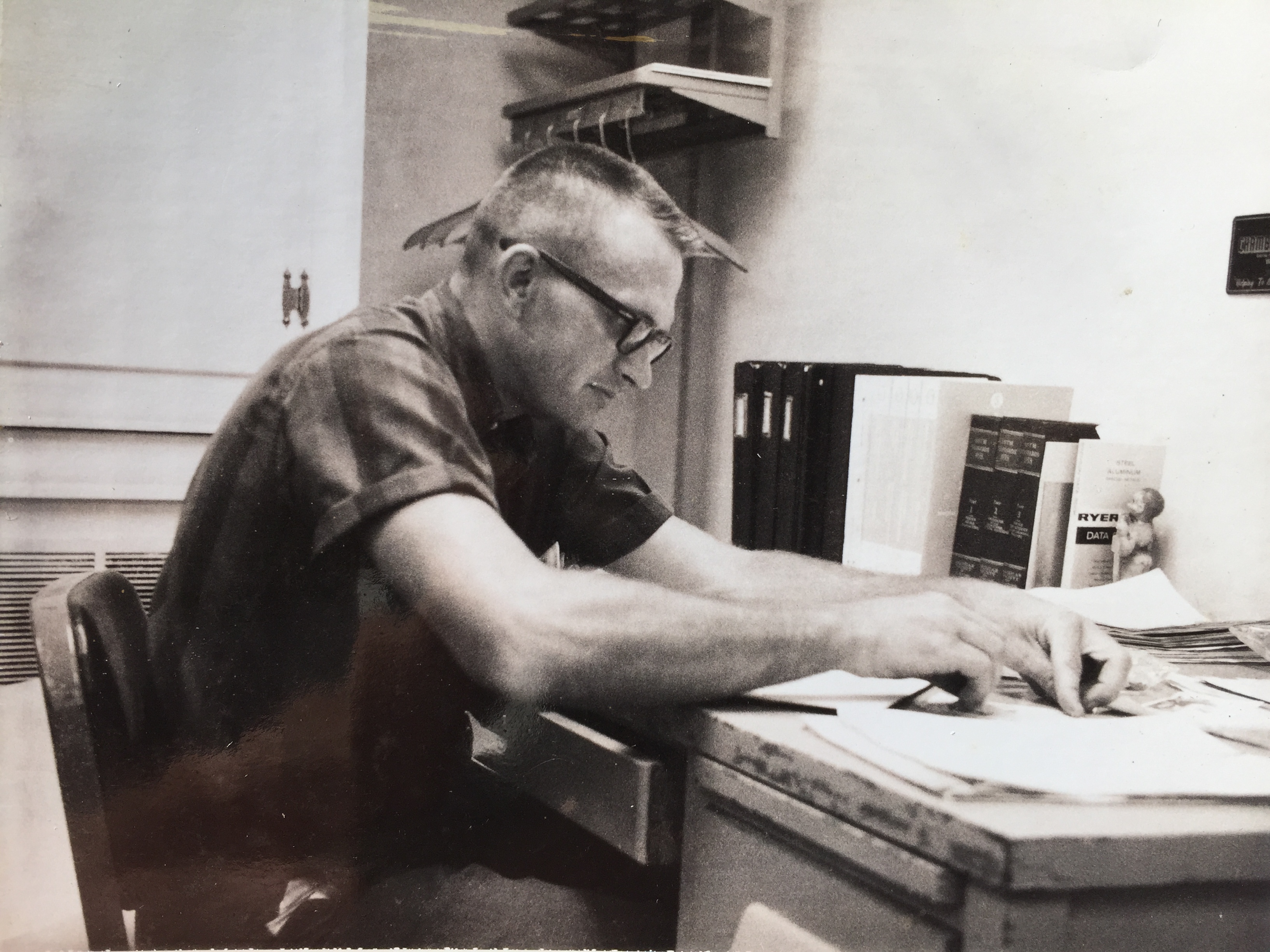
My father, Keith, worked in quality control his entire career. But his work involved machined parts, not human beings.

The manufactured “catch up” dilemma is a subset of that widget/quality control paradigm that can create a perception of efficiency but is antithetical to the complexity of human behaviors such as teaching and learning.

We teachers are tasked daily with a given set of students, traditionally arranged by grade levels that loosely conform to biological ages; however, our schools and our classes also vary significantly by out-of-school factors such as the socioeconomic levels of communities and racial as well as gender demographics that schools house but do not cause.

Putting efficiency and management first often ignores and even works against individual student needs and the corrosive impact of inequity that is embodied by individual and groups of students.

Putting 25-35 students in a classroom, building a highly structured and sequential curriculum, evaluating all students against those standards, and compelling teachers to maintain the same instruction and assessment across every grade level can address the priorities of efficiency and management.

But these deficit-based practices accomplish those goals at the expense of large segments of student populations.

It is counter-intuitive to admit that no such coherent and definable thing really exists as third-grade standards since we have spent forty years determined to create and recreate those standards, to test all students against those standards, and to ignore that “all students will” does not and cannot happen—in this system especially that ignores and perpetuates the inequities our students embody through no fault of their own.

Yet, no such thing as third-grade standards exist as we construct them and as we use them to label and manage students.

Eight- and nine-year-old children are biologically and environmentally incredibly diverse, especially in the ways they learn and respond to the world.

Despite our effort to limit or control human autonomy, even children are compelled to be autonomous; they have some limited ability to want to learn, to choose to comply or not with teacher expectations.

Teaching without a deficit lens is an option, however, possibly even within the system we have; although a new system would be much more preferable.

First, teaching can begin with individual students, focusing on the qualities, strengths, and knowledge they bring to any classroom.

Once a teacher knows the make-up of the abilities among any group of students, the teacher can design new and review material and experiences to provide for all students to incorporate their strengths and interests into acquiring new and better learning. Teachers can accomplish these strength-based lessons around whole-class, small-group, and individualized instruction—concessions to efficiency and management that come after putting students strengths and addressing inequity first.

As a final example of the problem of seeing the Covid-19 impact on education as somehow unique (instead of magnifying existing flaws in the system), consider the concerns raised about inequity in administering the SAT and Advanced Placement (A.P.) tests in modified forms for the remote necessities of the pandemic.

Online and modified SAT and A.P. tests have not created some new inequity; they are the mechanisms of inequity that have always existed and helped drive the deficit lens of public schooling.

Standardized testing has always measured inequity, but that testing has also always perpetuated that inequity by labeling many students as deficient as learners while the metric, in fact, mostly measures disparities in social class, gender, and race.

There is an ugly irony to calling for helping students catch up in the wake of the Covid-19 pandemic. The move to remote teaching and learning is one of the few common experiences among our students, who enjoy or suffer the consequences of privilege and disadvantage whether in school or at home despite a pandemic.

In other words, if we remain trapped in deficit language, students are sharing the same “behindness” of having moved to remote course and having reduced instruction.

Ultimately, trying to help students catch up keeps our judgmental gaze on the student, a deficit lens, in fact. The problem with the impact of the pandemic is the same as before Covid-19 changed our world—inequity.

Pathologizing students further because of the pandemic once again allows the systemic inequities in our communities and schools to be ignored, to remain.

Ketchup was never a valid vegetable in public school lunches, and trying to catch up students in the wake of Covid-19 is yet another way to further malnourish our students.

The Training Wheel Fallacy for Teaching Writing

[Header Photo by Markus Spiske on Unsplash]

The Swamp Rabbit Trail System is a paved multi-use path running from the city of Greenville, South Carolina to Travelers Rest, to the north. As an avid road cyclist, I venture onto the trail occasionally since it runs near my university and allows a somewhat relaxed ride, free of the threat of car traffic (except for the crossings).

Riding a bicycle is often discussed as if it is a universal experience and a skill once learned, never forgotten. As a serious cyclist for well over thirty years, I can attest that observations along the Swamp Rabbit Trail offer a data set that leads to a different theory.

Riding a bicycle requires two essential skills, pedaling and balancing the bicycle. When I see small children and inexperienced cyclists along Swamp Rabbit, I see an oddly similar struggle—cyclists wildly fighting the steering by swinging the handlebars aggressively and pedaling in ways that are counter to gaining momentum and balance.

A stark sign of a less than competent cyclists is the weaving motion as the cyclist approaches, a dramatic contrast to the rail-steady balance of experienced riders. But the oddest thing I see in beginning and inexperienced cyclists is trying to start off by placing one foot on a pedal with the crank arm down and then frantically lifting the other foot to start the pedaling with the crank arm that is up.

That technique is a recipe for disaster, but when successful, those first pedal strokes are combined with some pretty awful weaving that covers the space two or three experienced cyclists could fit into easily.

Holding your line (riding rail straight) and riding without your hands are some of the first skills needed to be a competitive cyclist. I have taken off or changed a significant amount of clothing during hard group rides while continuing to ride at the back of the pack; on a couple of occasions, I have taken a multi-tool out of my saddle pack and adjusted my front derailleur also while continuing to ride at the back of the pack.

Ride for Safety 2018 GB
Ride for Safety 2018

Pedaling smoothly and maintaining proper weight distribution allow the bicycle to remain in a straight line, the natural momentum of rotating wheels. Another counter-intuitive behavior in road cycling is de-weighting your upper body so that you apply less effort into steering.

Beginners and inexperienced cyclists over-steer and over-pedal.

Here is an interesting problem about how most people learn to ride bicycles—the use of training wheels. Training wheels seek to address those essential skills I noted above by allowing new riders to have balance while learning to pedal.

The problem? Pedaling and balancing in cycling are not discrete, separate skills, but symbiotic skills. Learning to ride a bicycle, also, likely requires a different series of learning those skills since the balance is more valuable than the pedaling (and likely harder, at least we intuit that it is harder).

While training wheels are a traditional way to teach children to ride bicycles, balance bicycles are far superior ways to help children acquire balancing skills until they are old enough to pedal (likely much later than we tend to expect children to ride).

Now, as I have discussed before, let’s be clear that riding a bicycle is not like writing. Pedaling and holding a straight line while riding a bicycle is an acquired skill, but is not nearly as complex as it first appears; yet, writing is a creative process that involves dozens of decisions and interrelated skills and content, and is even more complex than we think as beginners.

However, our misconceptions about the teaching/learning dynamic for beginner cyclists as well as beginner students-as-writers are very similar.

The skills and decision process needed to write well are also not discrete, isolated skills that we simply need to acquire one at a time and then somehow integrate; as Lou LaBrant admonished, we learn to write by writing (not by doing skill and drill)—which is similar to the best way to learn to ride a bicycle, by riding a bicycle (without training wheels, possibly in a grass field at first instead of a sidewalk or parking lot).

Traditional approaches to teaching writing that impose templates (five-paragraph essay) and canned moves (“In this essay, I will…,” “In conclusion…”) are grounded in the same urges as teaching children to ride bicycles by using training wheels; however, these traditional approaches are as misguided and harmful as those training wheels.

Riding in large packs of cyclists requires each rider to demonstrate a high level of cycling authority, again grounded in holding a line and behaving in steady and predictable ways even while in high pressure situations (pace intensity increasing, cornering, contributing to a paceline, sprinting, etc.).

Writing authority, whether as a published writer or as a student or academic, also requires demonstrating high-level skills that are much more than the content of the writing (organization, diction, style, and having control of conventional elements of language use [grammar, mechanics, usage]).

Students are better served as writers-to-be if we always allow them to experiment in authentic and holistic contexts while seeking ways to foster essential or foundational concepts (openings, focus, elaboration, cohesion, paragraphing, closings, etc.). There is ample evidence, however, that templates and canned moves are not helpful and may even be harmful (they don’t encourage students to set them aside).

Many people still rush to buy their children bicycles with training wheels, but balance bicycles are beginning to take hold. The teaching of writing needs to make a similar transition.

Depending on templates and canned moves creates the sort of wobbly writers that remind me of my harrowing experiences trying to navigate down the Swamp Rabbit Trail confronting those teetering cyclists who have been mislead that it’s just like riding a bicycle.