Category Archives: education

Everything You Know Is Wrong

My adolescence was profoundly shaped by hours alone in my room listening to comedy albums, memorizing them—George Carlin and Richard Prior. My aunts and uncle also introduced me to the comedy group Firesign Theatre, whose Everything You Know Is Wrong may serve as the ideal message for educators.

Recently, Jessica McCrory Calarco reported in Why rich kids are so good at the marshmallow test:

The failed replication of the marshmallow test does more than just debunk the earlier notion; it suggests other possible explanations for why poorer kids would be less motivated to wait for that second marshmallow. For them, daily life holds fewer guarantees: There might be food in the pantry today, but there might not be tomorrow, so there is a risk that comes with waiting. And even if their parents promise to buy more of a certain food, sometimes that promise gets broken out of financial necessity.

And from Science DailyStudy finds popular ‘growth mindset’ educational interventions aren’t very effective:

A new study co-authored by researchers at Michigan State University and Case Western Reserve University found that “growth mindset interventions,” or programs that teach students they can improve their intelligence with effort — and therefore improve grades and test scores — don’t work for students in most circumstances.

Also consider Will Thalheimer’s People remember 10%, 20%…Oh Really?:

People do NOT remember 10% of what they read, 20% of what they see, 30% of what they hear, etc. That information, and similar pronouncements are fraudulent. Moreover, general statements on the effectiveness of learning methods are not credible—learning results depend on too many variables to enable such precision. Unfortunately, this bogus information has been floating around our field for decades, crafted by many different authors and presented in many different configurations, including bastardizations of Dale’s Cone. The rest of this article offers more detail.

Yet another example is the zombie that will not die, the “word gap”—debunked again in Reexamining the Verbal Environments of Children From Different Socioeconomic Backgrounds, by Douglas E. Sperry, Linda L. Sperry, and Peggy J. Miller:

Abstract

Amid growing controversy about the oft‐cited “30‐million‐word gap,” this investigation uses language data from five American communities across the socioeconomic spectrum to test, for the first time, Hart and Risley’s (1995) claim that poor children hear 30 million fewer words than their middle‐class counterparts during the early years of life. The five studies combined ethnographic fieldwork with longitudinal home observations of 42 children (18–48 months) interacting with family members in everyday life contexts. Results do not support Hart and Risley’s claim, reveal substantial variation in vocabulary environments within each socioeconomic stratum, and suggest that definitions of verbal environments that exclude multiple caregivers and bystander talk disproportionately underestimate the number of words to which low‐income children are exposed.

But let’s not forget higher education: Arthur G. Jago asks Can It Really Be True That Half of Academic Papers Are Never Read?, discovering:

Frustrated, I ended my search for the bibliographic equivalent of “patient zero.” The original source of the fantastical claim that the average academic article has “about 10 readers” may never be known for sure.

So what’s going on as educators and scholars are confronting that everything you know is wrong? I think have some ideas, outlined below:

  • Teachers, notably K-12 educators, are practical to a fault. Teachers want what works in the day-to-day tasks of teaching students (a more than reasonable expectation) but often feel educational philosophy and theory are a waste of their very limited time (again, this time-crunch is a rational response to unreasonable working conditions for most K-12 teachers). The problem with a what works mentality absent a philosophical and theoretical lens is that the wrong basis for determining “works” often guides our practices. As a brief example, many classroom strategies can seem to “work” when students are quiet and complete the assignment, but those may be achieving compliance and not the larger (assumed) academic goal—actually working counter to those goals in fact.
  • Too often teaching can become almost entirely focused on implementing a program (think reading programs or International Baccalaureate) or fulfilling an ideology (think grit and growth mindset) at the exclusion of the instructional goals those programs or ideologies are supposed to achieve. This happens, I think, in part because of the concern for practicality noted above as that is impacted by the historical focus in education on efficiency—what is the easiest and most manageable ways to make this think called teaching and learning happen?
  • Programs and ideologies, however, are often flawed from the beginning because the research they are grounded in is distorted and oversimplified by publishers and advocates. Compounding these oversimplifications and distortions are the media, also complicit in framing complex research in ways that mislead the public and educators. Too often as well, the misconceptions are compelling and robust because they match social norms (stereotypes, biases, cultural myths) more so than reflecting the nuances and limitations of the research. As I have detailed, for example, academic and economic success and failure are far less about any person having or not grit or a growth mindset and more about systemic privilege and disadvantage.
  • Classrooms, teachers, and students are more likely to reflect all aspects of communities and society than to work as change agents for any person or community/society. Teaching and learning, then, become about normalizing, and thus, regardless of what research shows (especially when much of that research is counter to norms), it becomes a tool for the normalizing. One study on the “word gap” by Hart and Risley has become an unexamined fact, not because it is quality research (it isn’t) but because it reinforces cultural myths about social class, deficit ideologies that praise the wealthy and demonize the poor.
  • Teaching and learning are incredibly complex and the consequences of teaching—learning—are rarely easily linked to a single cause (a teacher, a class, a program or ideology) and may not manifest themselves until years later.
  • Too many researchers, consultants, administrators, and teachers become personally, professionally, and financially invested in programs and ideologies—at the expense of everything else, notably students.
  • From K-12 to higher education, teaching and learning are mostly corporatized; in that environment, research, nuance, and uncertainly have no real chance. K-12 schools and universities/colleges are incentivized for many outcomes other than teaching and learning.
  • Educators, the public, and the media embrace contradictory ideas about “scientific” and “research”—simultaneously idealizing and trivializing.

In the big picture, I think the problem of research and evidence as that becomes teaching practices can be better understood through the lens of what is wrong with Teach For America—an organization that very likely has good intentions and invites as well as promotes missionary zeal.

Good intentions are never enough, and missionary zeal is guaranteed to distort everything it touches.

It may well be true that everything you know is wrong, but that doesn’t mean it must stay that way. Good intentions and missionary zeal must be replaced by greater philosophical awareness and the sort of skepticism a critical lens provides.

This is not about fatalism—giving up on research—but about finding a better way forward, one that rejects programs and blanket ideologies and keeps our focus on students and learning along with the promises of formal schooling as a path to equity and justice, not test scores and compliant students.

Reader: False Equivalency, Offensive Language, Racism

False equivalency “simultaneously condemns and excuses both sides in a dispute by claiming that both sides are (equally) guilty of inappropriate behavior or bad reasoning. While the argument appears to be treating both sides equally, it is generally used to condemn an opponent or to excuse ones own position.”

After Roseanne Barr’s sit-com was canceled due to her racist Tweet, some have tried to equate Barr’s racism with, for example, Samantha Bee’s use of “cunt.” A similar dynamic occurred after Michelle Wolf’s routine at the White House correspondent’s dinner.

Another example of false equivalency has been to suggest Barr’s racism and the actions of ABC are about free speech and equivalent to the NFL banning players from protesting racism. These events are not about free speech, but being racist and protesting racism are simply not the same.

All of this can be couched in the false equivalency of most debates and discussions about race and racism that are punctuated by whites who derail the topic with “reverse racism” and “blacks are racists too.”

Here, I list resources for understanding better these debates in order to refute false equivalency:

The Reappropriation of Stigmatizing Labels: Implications for Social Identity, Adam D. Galinsky, Kurt Hugenberg, Carla Groom and Galen Bodenhausen

The semantics of slurs: A refutation of pure expressivism, Adam M. Croom

Appropriating a Slur: Semantic Looping in the African-American Usage of Nigga, Andrew T. Jacobs

‘Cunt’ Should Not Be a Bad Word, Katie J.M. Baker

Laurie Penny: In defence of the “C” word

Reclaiming “Cunt,” “Bitch,” “Slut,” and more

The feminist mistake, Zoe Williams

The Secret History Of The Word ‘Cracker’

Understanding Racism as Systemic and about Power

11-Step Guide to Understanding Race, Racism, and White Privilege

Black people cannot be racist, and here’s why

Response to “Black people cannot be racist, and here’s why”

Reverse Racism, Explained

Why It’s So Hard to Talk to White People About Racism

8 Things White People Really Need to Understand About Race

Complicating “White Privilege”: Race, Poverty, and the Nature of the Knapsack, Paul Gorski

White Privilege and Anti-Racism, Paul Gorski

Language of Closet Racism, Paul Gorski

More on Rejecting Growth Mindset, Grit

When I posted a recent study on growth mindset—Study finds popular ‘growth mindset’ educational interventions aren’t very effective—on my blog Debunked!, growth mindset advocates quickly bristled at the blog title, notably this Tweet:

Several patterns in the subsequent Twitter discussion are worth addressing in a format more detailed than Tweets.

First, I have been a consistent critic of both growth mindset and grit best captured in the following posts:

I immediately shared these posts as part of the discussion—often guided by Wormeli’s thoughtful and welcomed concerns about my stances.

Next, however, many advocates (mostly for growth mindset) offered typical rebuttals, including (1) arguments that both growth mindset and grit in practice are often counter to the intent of Carol Dweck  (growth mindset) and Angela Duckworth (grit), noting that both have raised concerns about those misuses and misconceptions, (2) chastising me for “conflating” growth mindset and grit, and (3) requesting practical alternatives to growth mindset and grit practices.

To the first point, I want to be clear that I am strongly aware of the gender problems inherent in me, a white male academic, challenging Dweck and Duckworth, including critiques that can be and have been viewed as attacking them personally.

I do think it is fair to address the character of those scholars advocating character education for children (see this on Duckworth, for example), but I also have taken care to monitor gender biases inherent in how we police women scholars versus men scholars.

But, while I am aware that both Dweck and Duckworth have raised concerns about the misuses of growth mindset and grit, I contend that both scholars have reaped a great deal of financial and professional capital from that misuse, primarily, and haven’t refused those profits. I find their cautions hollow, then.

I reject the second point—that I conflate growth mindset and grit—and recognize that growth mindset advocates often seek ways to distance themselves from the grit movement and that research has begun to challenge both growth mindset and grit research by Dweck and Duckworth, although far more challenging claims have been made against Duckworth’s research.

In short, I absolutely recognize that growth mindset and grit are not the same, and may not even be on the same level of validity and credibility as research.

However, while I do not conflate the two, I do highlight in my critiques that both are grounded in deficit ideologies: Both growth mindset and grit, I contend, mistake growth mindset/grit as the dominant or even exclusive quality causing success in student learning (ignoring the power of systemic influences) and then create an environment in which some students (too often black, brown, and poor) are defined in deficit terms—that they lack growth mindset/grit.

Yes, growth mindset and grit are unique approaches, but they share the failure of being complicit in deficit practices. And while the science of growth mindset may be more solid than the science of grit, both are prone to the problem of scientific racism—the failure to unpack “high-quality research” for biases.

Now, to the final point, I would recommend Paul Gorski’s work on equity practices, specifically this second edition which directly confronts both growth mindset and grit: Reaching and Teaching Students in Poverty: Strategies for Erasing the Opportunity Gap. Here, also, are some starting points with Gorski’s work:

Ultimately, then, I do reject growth mindset and grit, both as programs that are misused and thus harmful to the students who need formal education the most. I also see little room to justify the research behind either, or to excuse Dweck or Duckworth even when they raise cautions about the misuses.

My concerns are driven by an equity lens that recognizes and confronts the problems masked by narrow views of research and science as well as the myopia inherent in accountability that demands in-school-only approaches to teaching, testing, and reform that tend to be driven by bootstrap ideologies.

Teaching and learning as well as success and failure are incredibly complex. Often in education, our rush to find the key to success and failure in order to improve teaching and learning is ruined by a missionary zeal corrupted by biases—both of which must be confronted and resisted.

Growth mindset and grit fail as overzealous programs, and students are better served by equity practices couched in efforts to alleviate the systemic forces that shape how they live and learn regardless of their character.

Does Your Academic Institution Value Diversity, Equity? (Probably Not)

Several years ago, my university was forced to acknowledge it has a gender problem. As a selective liberal arts university, the institution had already begun addressing its race and diversity problems among students admitted and faculty hired.

Two gender concerns could not be ignored: Women were paid less than men at the same ranks, and faculty attrition was overwhelmingly among women professors, who constitute only about 30% of the faculty.

A gender equity study was commissioned, but when the report was issued, a group of male faculty circulated an open letter challenging the methodology of the report, raising concerns about a lack of empirical data and expressing the need for quantitative versus qualitative methods.

This response certainly had an image problem—white male faculty calling into question a gender equity study—and the concerned faculty did eventually withdraw the letter in deference to the good of the university community.

However, this study and the response illustrate a serious problem in academia, the pervasive power of traditional structures (expectations about what data matter, what types of research matter, and a lingering argument that objectivity can be achieved) to serve as a veneer for entrenched, and thus rendered invisible, sexism, racism, and classism.

A parallel example is when my university seeks to increase the diversity of the faculty, that effort is always contested with “Let’s just hire the best candidate,” again often voiced by white male faculty [1].

“Best,” of course, like quantitative methods and empirical data is a veneer for the embedded biases that have been normalized (and thus seemingly invisible to the power structure itself and those who benefit from the bias).

White and male privilege, then, are institutionalized in higher education (see here and here for ways those privileges exist, again, invisibly to white men). Despite the popular claim that higher education is some liberal indoctrination factory, higher education is incredibly traditional and conservative at its core; only the edges appear liberal.

But, I can feel many wanting to interject, how can calling for high-quality research to address gender equity on campus and expecting candidates for open faculty positions to be the best constitute flawed practices in academia?

Let me often another example, one that calls into question the grounding of those arguments themselves, the claims of fidelity to high standards.

Another traditional practice in higher education is the use of Student Evaluations of Teaching (SET), feedback gathered from students and then used in various ways to evaluate faculty for tenure and promotion.

Notably, a significant body of research [2] has revealed that SET lack validity and negatively impact women, faculty of color, and international faculty (in the U.S.).

Concurrently, the use of SET positively impact the existing and skewed white male faculty at most universities, who disproportionately dominate higher ranks and salaries.

Guess what happens when concerns are raised about SET based on high-quality empirical data and quantitative studies? The same faculty crying foul over gender equity reports and hiring practices toss up their hands and say, “O, well, we have to have something.”

As Colleen Flaherty explains:

While some institutions have acknowledged the biases inherent in SETs, many cling to them as a primary teaching evaluation tool because they’re easy — almost irresistibly so. That is, it takes a few minutes to look at professors’ student ratings on, say, a 1-5 scale, and label them strong or weak teachers. It takes hours to visit their classrooms and read over their syllabi to get a more nuanced, and ultimately more accurate, picture.

For example, my university’s self-evaluation form and the connected chair evaluation directly instructs in the teaching evaluation section: “Give particular emphasis to evidence of teaching quality, which could include numerical results from student opinion survey forms, written comments from student opinion survey forms, and comments from faculty or other consultants visiting your classes.”

“Evidence” is bolded and then the first example is “numerical results from student opinion survey forms.” There are clear biases here that privilege an instrument invalidated by a body of high-quality research—exactly what some faculty deemed missing in our gender equity study.

Junior faculty explain, often in private, that they are aware numerical data from the SET are the most important element of their case for tenure and promotion. As well, our Faculty Status Committee has provided workshops directly detailing which data from those forms are most influential, providing, as the committee claims, ways to distinguish faculty from each other.

Virtually every college and university has a diversity and equity statement and a perpetual formation and reformation of diversity and equity committees.

No statement or committee can make existing institutional sexism, racism, and classism disappear—especially if those words and that work are forced to work within existing biased structures.

“Research is reviewed in a rigorous manner, by expert peers,” writes Flaherty. “Yet teaching is often reviewed only or mostly by pedagogical non-experts: students. There’s also mounting evidence of bias in student evaluations of teaching, or SETs — against female and minority instructors in particular. And teacher ratings aren’t necessarily correlated with learning outcomes.

As long as calls for “high-quality” and “best” to guide policies and practices remain selective—and clearly in the service of the existing inequities and lack of diversity—we must admit the real commitment is not to”high-quality” or “best,” but to the status quo.

While not the only litmus test, a powerful way to determine if your academic institution values diversity and equity is if it continues to implement SET. Almost all do, so the answer remains, probably not.

See Also

Is Your University Racist? Bedelia Nicola Richards


[1] See how “merit” can work in the service of privilege in this reconsideration on Jordan Peterson:

I met Jordan Peterson when he came to the University of Toronto to be interviewed for an assistant professorship in the department of psychology. His CV was impeccable, with terrific references and a pedigree that included a PhD from McGill and a five-year stint at Harvard as an assistant professor.

We did not share research interests but it was clear that his work was solid. My colleagues on the search committee were skeptical — they felt he was too eccentric — but somehow I prevailed. (Several committee members now remind me that they agreed to hire him because they were “tired of hearing me shout over them.”) I pushed for him because he was a divergent thinker, self-educated in the humanities, intellectually flamboyant, bold, energetic and confident, bordering on arrogant. I thought he would bring a new excitement, along with new ideas, to our department.

[2] See:

Blue Scholars

Throughout the early 2000s, a conservative student group at my university was very aggressive—attacking faculty through online forums (using anonymous screen names), creating lists of faculty conservative students should avoid, and sponsoring an inordinate number of Cultural Life Programs (CLP). This group had significant outside (also anonymous) funding as well.

Once, the conservative antagonist Ann Coulter was a sponsored speaker on campus by this group. I mentioned this in a class, noting her lack of credibility, and a student responded with, “But her books have footnotes.”

I think about this exchange often because the student was recognizing the conventions of scholarly work, conventions that are apt to supersede in a superficial way the credibility of the scholarship or the scholar; footnotes denoted for the student credibility—without the student considering whether or not the sources were credible, whether or not the conclusions and claims made by Coulter were credible.

In this era of Trumplandia, the tired but resilient claim that universities are liberal and that conservative scholars are nearly absent or at least ostracized is once again gaining momentum. As well, the resurgence of the oppressed white male has gained momentum.

Those contexts are also driven by calls for free speech, allowing all sides a voice, and mostly superficial arguments about the tension between academic freedom and politically correct speech and concepts such as safe spaces.

Here, the post title, “Blue Scholars,” is not yet another addition to the “quit lit” genre, but an investigation of the race and gender implications of respectability politics in the work of scholars.

Consider the issues raised in these two following Tweets:

The expectations around social scientist Crystal Marie Fleming—the chastising of respectability politics, not what she claims but her prfanity—are quite distinct when compared to calls for civil discourse as a response to Jordan Peterson, a public scholar who has been thoroughly discredited while also being quite popular outside of academia.

Fleming is facing the academic and public stigma about working blue—the use of profanity superseding the content of her discourse. Peterson, a misogynist cloaked in academic garb and discourse, benefits from calls for civil discourse, a subset of respectability politics, because his language and the language of his detractors allow reprehensible ideas a stage more prominent than they deserve.

Fleming’s experience as a scholar parallels Colin Kaepernick’s confronting arguments that his message was not the problem, but how (and when) he was conducting his protests.

Beneath calls for respectability politics and civil discourse, then, are the interests of white and male privilege; the existing power structure always benefits from a demand for resect by default and for civility, the antithesis of protest.

Language and content, as I have examined in terms of stand-up comedy, are always about race, gender, and social class. The how of language, invariably, becomes the focus as soon as any marginalized group becomes confrontational, critical, empowered.

“Don’t speak or write that way” and “Don’t act that way” are always about the status of power—not about right or wrong, credible or baseless.

The criticism leveled at Fleming and the calls for civil discourse to allow Peterson’s vile arguments are windows into the failure of academia, an Ivory Tower trapped still in Medieval paradigms of authority, rhetoric, and deference.

In Kurt Vonnegut’s God Bless You, Mr. Rosewater, the titular character of the novel, Eliot Rosewater, implores:

“Go over to her shack, I guess. Sprinkles some water on the babies, say, ‘Hello, babies. Welcome to Earth. It’s hot in the summer and cold in the winter. It’s round and wet and crowded. At the outside, babies, you’ve got about a hundred years here. There’s only one rule that I know of, babies—:

“‘God damn it, you’ve got to be kind.’” (p. 129)

A moral imperative wrapped in blasphemous language.

I prefer the moral imperative, and I prefer the critical scholar working blue while rejecting the false calls for civility that foster scholars pandering to the worst among us.

If there are words that should give us pause, they are “respect” and “civil discourse”—not the seven words you can’t say on television.

Be Informed, Not Ideological

The Onion has created a dark humor Groundhog Day response to school and mass shootings in the U.S.: ‘No Way To Prevent This,’ Says Only Nation Where This Regularly Happens.

Public discourse and social media discussions suffer from something as predictable after school shootings as well—a fruitless clash of ideological claims, often bereft of evidence or historical context.

As an educator and a scholar, I feel compelled to advocate for safety in our society and our schools; therefore, I routinely address the research base on gun violence and school safety through my Twitter feed, on Facebook, and in my blogging.

Here’s a pattern I witness each time.

I post something about gun violence and school shootings, and someone comments with a claim that the school shootings are the result of a decline in morals, occasionally tossing in a reference to taking God and prayer out of schools (this last part is, by the way, entirely false as forced prayer has been deemed unconstitutional in public schools, but everyone in those schools are free to pray without interference).

This popped up after the shooting in Santa Fe, Texas, so I simply responded by asking what evidence exists that the U.S. was ever a moral/ethical country and thus how do we prove a decline.

The person openly stated that they had no proof, and just believed it to be true—conceding that I had the right to believe whatever I wanted.

Herein is the problem: Most people believe and argue as ideologues, and thus, assume everyone else is arguing as an ideologue also—reducing public and social media debate to little more than a shouting match absence evidence.

The worst extremes of being ideological, for example, are racism and sexism. Racism is the idea that some races are superior to others, and racists, then, impose that idea onto the world instead of drawing conclusions about race from evidence. Sexism functions the same regarding sex/gender.

The ideologue, then, can often be discredited by evidence—except that those functioning by ideology alone refuse to move from being ideological to being informed by that evidence.

Science, often misunderstood, is a discipline designed to build better understanding through a variety of ways of thinking, reasoning:

“In inductive inference, we go from the specific to the general. We make many observations, discern a pattern, make a generalization, and infer an explanation or a theory,” Wassertheil-Smoller told Live Science. “In science, there is a constant interplay between inductive inference (based on observations) and deductive inference (based on theory), until we get closer and closer to the ‘truth,’ which we can only approach but not ascertain with complete certainty.”

We start with some idea—I think this is true about the world, or human behavior—and then we put that idea to a test. The outcome of that testing creates some foundation for anticipating how the world will work, how humans will behave.

However, those ideas grounded in evidence are then always subject to the consequences of further evidence—if the evidence reinforces the idea, it survives; if the evidence contradicts the idea, it must change.

Ideologues, resistant to evidence, become victims to logical fallacies—flawed thinking, for example:

A leading candidate would be “attribution error.” Attribution error leads us to resist attempts to explain the bad behavior of people in the enemy tribe by reference to “situational” factors—poverty, enemy occupation, humiliation, peer group pressure, whatever. We’d rather think our enemies and rivals do bad things because that’s the kind of people they are: bad….

This is attribution error working as designed. It sustains your conviction that, though your team may do bad things, it’s only the other team that’s actually bad. Your badness is “situational,” theirs is “dispositional.”…

Another cognitive bias—probably the most famous—is confirmation bias, the tendency to embrace, perhaps uncritically, evidence that supports your side of an argument and to either not notice, reject, or forget evidence that undermines it.

To refuse continually interrogating our ideas about the world against the evidence is to commit to faulty thinking, attribution error and confirmation bias, for a just a couple of the most powerful ways people become mired in false ideology and resistant to credible ideas.

Being ideological instead of informed has dire consequences. Ideological thinking created a healthcare crisis because patients believed antibiotics cure every sort of illness, and then the medical field made a market error by allowing patient demand to drive bad medical practice.

Antibiotic-resistant disease is the child of ideological over informed behavior.

The gun debate and the pursuit of safety also suffer from ideological flaws.

For example, many people argue for gun ownership, and against gun regulation, because they believe guns in the home protect their family and property.

Two aspects of this argument are important.

First, this argument conflates safety with gun ownership without investigating whether or not this is a fair association.

The personal and family safety—self-defense—argument is both rational and irrational. To desire safety is entirely rational; to cling to guns in that pursuit, once you are informed and not ideological, becomes irrational.

Thus, second, gun ownership for safety has many outcomes more common that self-defense—domestic violence, suicide, and accidental shootings (see research listed here).

At the root of many people being ideological and not informed is our basic human nature; we are causal machines as a pursuit of survival.

Humans are constantly jumping from correlation to causation because we are predisposed to making those inferences at the unconscious level, split-second decisions once necessary to survive.

Consider, again, our rush to make medical claims not based in evidence: People think being cold causes colds; however, colds are the result of the presence of viruses. (It seems worth noting we can experience cold with our senses and viruses are not recognizable to the bare senses.)

Extreme cold can lead to hypothermia, and can reduce our resistance to bacteria and viruses. But cold weather doesn’t cause colds.

To be ideological (and wrong) is easier because there is some seemingly concrete way to jumble correlation with causation; the be informed requires a willingness to step back from what we believe.

As great failures of ideology, then, we demand antibiotics and cling to guns because we have made flawed associations with both in pursuit of perfectly good outcomes—health and safety.

To be informed, and not ideological, means that we must be willing to identify what it is we are trying to understand. And then we must be willing not only to seek out evidence but also to recognize that evidence even as it goes against our initial idea—that which we have always believed.

Negotiating Meaning from Text: “readers are welcome to it if they wish”

[Header Photo by Shelley Pauls on Unsplash]

Yesterday, I finished Jeff VandeMeer’s The Southern Reach Trilogy. As full disclosure, I should add “finally” since I plowed through with glee Annihilation, warmed to Authority after adjusting to the different style/genre and main character, but sputtered through Acceptance out of a sort of self-imposed commitment to finish the trilogy.

On balance, I can fairly say I may have almost no idea what the hell happened in these novels, and I certainly have only some faint urges about what the trilogy means—especially in the sorts of ways we assign meaning in formal scholling such as English courses.

Now only a few years away from 60, having taught for over 30 years, I am afforded something almost no students are allowed: I read entirely by choice, and thus, I can quit any book at any time with no consequences (except my own shame at having not read a book).

I still on occasion highlight and annotate the books I read. But no tests, no papers (except I do often blog about the books I read).

Traditionally, fictional texts and poetry have been reduced in formal schooling—in English courses—to mere vehicles for “guess what the text means,” or more pointedly “guess what the teacher claims the text means.”

Text meaning in English courses, then, is located often in the authority of the teacher, not in the text itself or the student.

As a high school English teacher, I was always careful to avoid propagandizing students toward “the” singular authoritarian meaning of a text, but I also felt compelled to make students fully aware of the traditional expectations (New Criticism, Advanced Placement testing, etc.) of couching all claims of meaning in the text itself.

Students still often balked at how one meaning held credibility and others did not.

One approach to this challenge I used was to ask students to read William Carlos Williams’s “The Red Wheelbarrow,” and then to visualize a wheelbarrow. I went around the room and had the students identify the position of the wheelbarrow in their visualization.

Decoding ‘The Red Wheelbarrow’–The impact of a 16-word poem

I also shared that I always thought of wheelbarrows leaned against a tree because I was chastised growing up about not leaving wheelbarrows so that rain water could accumulate and rust out the tub.

From here, we discussed that the poem gives some details—”red,” “glazed with rain/water”—but nothing about its physical position. Meaning, then, could work from those text details, but students’ visualization of the wheelbarrow was a personal response, not an element for claims of academic meaning.

Here, I also stressed that students should not think the distinction between meaning and personal response meant that their responses did not matter, or mattered less. However, in formal situations such as testing or assigned critical analysis, most assessments would draw an evaluative judgment, honoring text-based meaning over personal response.

Yet, I remain deeply concerned about how formal schooling, especially narrow versions of literary analysis essays and high-stakes testing, erodes and even poisons students’ joy in reading text by continuing to couch text meaning in the authority of the teacher, which is often a proxy for the authority of the critic (and not the author, or the students as readers).

Authors, I often warned my students, did not write their fiction and poetry so teachers could assign them and then have students analyze the text for literary techniques and the ultimate meaning or theme. Many celebrated authors loathed English courses, and equally loathe the literary analysis game.

Author Sara Holbrook, for example, recently confessed I can’t answer these Texas standardized test questions about my own poems:

These test questions were just made up, and tragically, incomprehensibly, kids’ futures and the evaluations of their teachers will be based on their ability to guess the so-called correct answer to made up questions….

Texas, please know, this was not the author’s purpose in writing this poem.

This tyranny of testing supplants not only the authority of students as readers, but also the authority of the writer who constructed the text!

And Hannah Furness reports:

Ian McEwan, the award-winning author, has admitted feeling “a little dubious” about people being compelled to study his books, after helping his son with an essay about his own novel and receiving a C.

McEwan explained:

“Compelled to read his dad’s book – imagine. Poor guy,” McEwan added.

“I confess I did give him a tutorial and told him what he should consider. I didn’t read his essay but it turned out his teacher disagreed fundamentally with what he said.

“I think he ended up with a C+.”

Meaning couched in the authority of the teacher trumps, again, students constructing meaning and the author as an agent of intent.

And finally, consider Margaret Atwood discussing her recently reimagined The Handmaid’s Tale as a serial TV drama:

When I first began “The Handmaid’s Tale” it was called “Offred,” the name of its central character. This name is composed of a man’s first name, “Fred,” and a prefix denoting “belonging to,” so it is like “de” in French or “von” in German, or like the suffix “son” in English last names like Williamson. Within this name is concealed another possibility: “offered,” denoting a religious offering or a victim offered for sacrifice.

Why do we never learn the real name of the central character, I have often been asked. Because, I reply, so many people throughout history have had their names changed, or have simply disappeared from view. Some have deduced that Offred’s real name is June, since, of all the names whispered among the Handmaids in the gymnasium/dormitory, “June” is the only one that never appears again. That was not my original thought but it fits, so readers are welcome to it if they wish.

Having taught The Handmaid’s Tale for well over a decade in A.P. Literature, and also having written a book on Atwood, I felt my stomach drop when I first read this—forcing myself to recall that I had taught as authoritative what Atwood contested: June as the original given name of Offred. The source of that, for me, was a published critical analysis, in fact.

This caution offered by Atwood, I believe, speaks to our English classes, where text is too often reduced to an assignment, to a game of guess what the teacher wants you to say this texts means.

As teachers of English, of course, we have many responsibilities. Making students aware of traditional and text-based expectations for assigning meaning to text is certainly one of those responsibilities.

But this must not be the only ways in which we invite students to read, enjoy, and then draw meaning from text.

Choice in what they read as well as a wide variety of ways for students to respond to text—these must become the expanded set of responsibilities we practice in our classrooms.

Occasionally, if not often, we should as teachers be as gracious as Atwood, providing the space for students to read and then respond with their own athority in a class climate grounded in “readers are welcome to it if they wish.”

Comedy Is Not Pretty: In Black and White

Mix all the colors of light and we see white; the absence of light is black.

Mix all the colors of pigment and we see black; the absence of pigment is white.

This paradox of how we see color often is the source of debate; I’ve heard students complain about being taught different facts in art and physics classes. But it also serves as a useful metaphor for the problem of color as a foundation of race and racism.

When I was young and still discovering and shaping who I am (and necessarily coming to terms with race in the deep South), I was profoundly influenced by stand-up comedians—George Carlin, Richard Pryor, and Steve Martin among the most influential.

Martin’s 1979 comedy album, Comedy Is Not Pretty, is a prescient title for two contemporary stand-up comedians whose routines, viewed together, capture nearly perfectly everything that is wrong with contemporary understanding about race and racism: Dave Chappelle and John Mulaney.

Having recently watched Chappelle’s and Mulaney’s newest specials, I was struck by how many of their bits were similar—both used their wives’ minority status to tread on dangerous material, both depended on meta-jokes based on reactions to their routines, both weaved in political humor with the autobiographical, both worked blue, and each addressed race.

However, these two men and their routines are also profoundly different—Chappelle is very much a black comedian (think Pryor), and Mulaney is very much white (think Jerry Seinfeld).

And I imagine anyone knowing these comedians finds this distinction a bit simplistic, even bordering on crass, but I want to argue here that race becomes the defining element of their work, and as such, exposes a central problem in public discourse about race and racism: Many whites are apt to resist discussions of race and racism with “Why does everything have to be about race?” or “I don’t see color.”

Let’s start with a few clips, a shortened version of Mulvaney’s Trump skit (here on TV, but expanded in his new special) and a couple clips from Chappelle on Netflix:

Mulaney’s political humor is indirect; it is metaphor—in a similar way his profanity is rare and his special includes one direct reference to being white.

Chappelle’s political humor, profanity, and race, by comparison, are direct, even blunt, and pervasive. Consider especially the second clip above.

Because of his whiteness, his privilege, Mulaney is afforded the space of being indirect while Chappelle, even as he acknowledges his wealth privilege, cannot risk these subtleties.

The paradox of race/racism in human behavior is parallel to the paradox of color in light/pigment: For whites, race seems always invisible because white is the norm of U.S. culture (the absence of race is white), but for blacks, race is a constant reality, something always visible (the presence of race is black).

The media rarely identify race for whites, but nearly always do for black and brown people—especially in criminal situations.

Whites, then, watching Mulaney are apt to see the routines as not about race (even though the entire routine is imbued with whiteness) and mostly not political (although, again, his entire routine is a political commentary); those same whites, we can guarantee, would see Chappelle as racial (if not, to misuse the term, racist) and strongly political.

The problem with race/racial/racism as that intersects with political is that everything in human behavior includes both, but the norms make one invisible to the dominant race (white) and omnipresent to the marginalized race (black). And thus, all human behavior is political either by omission (maintaining those norms) or by confrontation (changing the norms).

Mulaney, in his whiteness and the primary state of omission, becomes a seemingly less radical comedian; Chappelle, in his blackness and confrontation, becomes a seemingly more radical comedian.

I include “seemingly” because, as Chappelle acknowledges, both comedians work with wealth privilege—even as Chappelle is not afforded through that to rise about his being black (see his skit about being pulled over by the police while a friend is driving for him).

Almost 40 years past Martin’s visual gag (and he too may seem less political in his whiteness), Chappelle and Mulaney offer by comparison comedy that is not pretty, but is pretty sharp in terms of modeling the lingering problems with race and racism in the U.S.

Draconian: of, relating to, or characteristic of Draco or the severe code of laws held to have been framed by him

Throughout the 1980s and 1990s, I taught high school English in the public high school I had attended. The town and schools were the sort of traditional Southern environments that probably would seem to be caricature or even satire to someone not from the mid- to late twentieth century South.

I had been a very successful student at the school, graduating eighth in my class, but except for a few wonderful and life-changing teachers, I had found school to be mostly something to endure, especially high school as I became more and more recalcitrant.

When I began teaching there, several administrators and many teachers remained from my time as a student; while the traditional norms of the town and school endured—the greatest sources of my discomfort, having realized I was almost entirely unlike what was considered normal—I discovered as a teacher that I simply could not comply with the authoritarian disciplinary codes of the school.

We used a demerit system, and eventually adopted both in-school suspension and an after-school homework detention. Many of the demerit guidelines were automatic penalties—for chewing gum or eating in class, being late, and any restroom visit during class time.

Teachers monitored their doorways and the halls during class changes, and were themselves monitored by administrators for compliance with these rules.

Over nearly two decades, then, these authoritarian (and ridiculous in my view) policies were the source of my constantly being reprimanded for not enforcing the rules. Late students entered my class, usually without disturbance, and took their seats; students also with almost no disruption ate occasionally in class (although one group of students began to organize bringing snacks for their groups and had something nearly akin to a picnic many days during writing workshop).

But the most egregious flaunting of the rules in my classes was my approach to students going to the restroom.

In a school where the principal had his own private restroom in his office, going to the restroom was a manufactured and persistent source of anxiety for students (and even teachers who had very little personal time during the day).

Thus, I never turned students in, but I also created a process in which I had permanent passes on my desk that students simply took before excusing themselves to the restroom—all of which occurred without them having to ask, resembling what some of us may associate with simply leaving class while in college.

Early in my career, part of this commitment to the dignity of my students was grounded in the very real and very publicly difficult process adolescent women face during their periods. No one, I decided, should ever have to fret over going to the restroom, regardless of the need, but my female students were among the ones most appreciative of being able to attend to their needs without question or public announcements.

In fact, my female students began keeping a supply of tampons in my desk; there were times students I had never taught would swing by my room and simply ask to have access to my desk.

This is what I am most proud of about my 18 years teaching high school: I was not perfect, and I certainly can confess to many mistakes, but on balance, students recognized that my room was mostly theirs and it also was mostly a safe haven for their ideas, their words, their genuine selves, and their human dignity.

I must add here that what I am most ashamed of during those years are the times I failed that commitment. I believe I can name all of them, all of the students involved, and I deeply regret my failures.

This came rushing back to me as I have been reading reactions to the “no excuses” unmasking of Noble Network of Charter Schools—the most disturbing example being:

One described an issue raised by others at some Noble campuses, regarding girls not having time to use the bathroom when they get their menstrual periods.

“We have (bathroom) escorts, and they rarely come so we end up walking out (of class) and that gets us in trouble,” she texted. “But who wants to walk around knowing there’s blood on them? It can still stain the seats. They just need to be more understanding.”

At certain campuses, teachers said administrators offer an accommodation: They allow girls to tie a Noble sweater around their waist, to hide the blood stains. The administrator then sends an email to staff announcing the name of the girl who has permission to wear her sweater tied around her waist, so that she doesn’t receive demerits for violating dress code.

Maybe because of my own discomfort as a student, maybe because my years teaching high school confirmed for me that the human dignity of students trumps everything else—everything else—I have been an early and persistent critic of “no excuses” ideologies, prominent in the charter school movement and championed by KIPP.

Because I have been a critic, I have been publicly attacked and falsely demonized in print by “no excuses” advocates and apologists who steadfastly deny the exact problems exposed in the coverage of Noble Network of Charter Schools.

Now, there may seem to be little to compare except for the poverty between student populations in my hometown, mostly white working-class and poor, and the majority-minority students served by “no excuses” charter schools. But I think we should all consider how authoritarian discipline (“no excuses,” zero tolerance, resource officers, metal detectors, suspension/expulsion) are disproportionately implemented with black, brown, and poor students.

At the core of this dynamic is a belief that some children are naturally defective, needing to be corrected, or because of cultural and racial stereotypes, that some children are reared to be defective, also needing to be corrected.

Affluent and mostly white students at elite private schools are exempt from being subjected to “no excuses” ideologies for a reason.

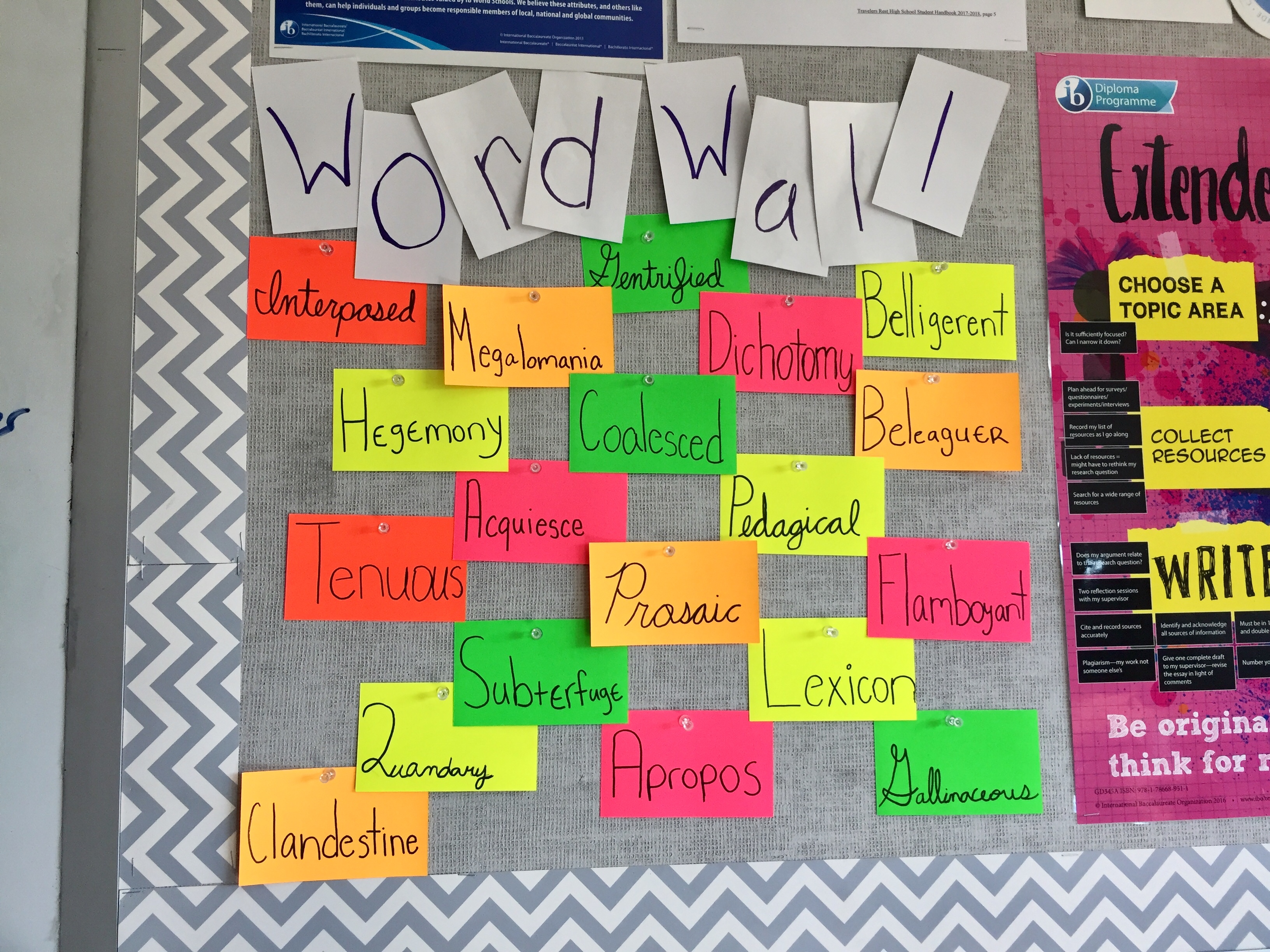
One of my favorite words has always been “draconian” because it fits into that small camp of words that sound like their meaning (“awkward” is among the greatest of these because what is more awkward to English speakers than “wkw”).

Draconian schooling, like draconian parenting, are among the most vile behaviors by adults. Authoritarian adults are petty humans, and their lust for power over those already weaker than them is a reflection on their own pettiness, their own insecurities.

On balance, there is no excuse for “no excuses” practices at any schools, but that is even more significant for our vulnerable students, the ones made vulnerable because of the poverty in their homes and communities, the ones made vulnerable because of the lingering inequities of this country (and the powerlessness of schools to change that), the ones made vulnerable by their sex or gender.

Noble Network of Charter Schools are not outliers; they are a harbinger of everything that is wrong with the charter school movement as well as our failure to create schools—public, charter, or private—that at their core protect the human dignity of all students.

Noble Network of Charter Schools is a real-life allegory confirming a central theme found in Margaret Atwood’s The Handmaid’s Tale, which warns through Offred how authoritarian practices create violent fantasies and behaviors; as one Noble teacher explains: “‘One student says it best,“When you treat us like animals, what do you think we are gonna act like?”’”

There is nothing noble about “no excuses” for our children and teens when the adults behind those practices are themselves above the moral and ethical standards they claim to be demanding of students.

If You Are Grading, You May Not Be Teaching

Throughout my career of about two decades as a high school English teacher and then approaching another two decades in higher education (as a teacher educator and first-year/upper-level writing professor), I have avoided and delayed grading as well as eliminated testing from my classes.

My experiences with first-year and upper-level writing instruction have further confirmed that if you are grading, you may not be teaching.

Specifically, teaching citation and scholarly writing has revealed a problem that directly exposes why grading often works against our instructional goals.

First, let me stress again that the essential problems with grading include how traditional practices (such as assigning grades that are averaged for quarter and/or semester grades that are then averaged for course grades) tend to blur the distinction between summative and formative grades, inhibiting often the important role of feedback and student revision of assignments.

The blurring of formative and summative grades that occurs in averaging, as I have confronted often, deforms teaching and learning because students are being held accountable during the learning process (and thus discouraged from taking risks).

To briefly review the problems with grades and averaging, let me offer again what my major professor argued: Doctors do not take a patient’s temperature readings over a four-day stay in the hospital in order to average them, but does consider the trajectory of those readings, drawing a final diagnosis on the last reading (or readings). Thus, averaging is a statistical move that distorts student growth, deforms the value of reaching a state of greater understanding.

As I have detailed before, consider a series of grades: 10, 10, 85, 85, 85, 85, 85, 85, 100, 100 = 730.

The average is 73, which most teachers would assign, but the mode is 85, and if we note these grades are sequential and cumulative (10 as the first grade in terms of time, and 100 the last grade), a legitimate grade assignment could be 100.

In other words, using the same data, a teacher could assign 73, 85, or 100 to this student, and all can be justified statistically.

But another problem with grades and averaging that speaks to this post is something my students taught me when they complained about their math classes. Several students informed me that they had never passed a single math test, but had passed math courses.

The trick? Students earned bonus points for homework, etc., that were added to each test, on which students never reached a passing score.

This process means that cumulatively students never acquired so-called basic or essential math skills, but passed the courses, resulting in course credit that grossly misrepresented student learning.

Therefore, returning to my claim that grading may not be teaching, when we subtract for so-called errors to assign grades, we are allowing students to move through the learning process without actually learning the element being graded. In most cases, I believe, that strategy is teaching students that the element really doesn’t matter.

This dynamic is particularly corrosive when teaching scholarly writing and citation. Citation is one area of writing that doesn’t have degrees; you either cite fully or you don’t.

Many students, similar to the math students noted above, have never reached any level of proficiency with citing because they have mostly had points deducted for improper citation and then gone on their merry way, never having learned to cite fully.

If citation is essential, to grade and never require mastery of citation have two very negative consequences: (1) students do not attain an essential skill (and may exit formal education without the skill), and (2) students fail to understand the importance of drafting, receiving feedback, and revising.

Academic writing is challenging for developing young writers since it demands complex technical demands (such as citation and document formatting) and high expectations for content and style. Students need years and dozen of experiences reading and writing academic writing across multiple disciplines and varying conventional expectations.

But we cannot expect students to acquire the nuances of citation if we simply grade and never allow or expect them to cite fully and properly as an essential aspect of an academic writing experience.

As I make this case, I want to stress that as writing teachers we are trying to balance expectations for students and provide them low-stakes opportunities to draft with little or no consequences.

Students should have both writing assignments that demand minimum proficiency with key skills such as citation and writing contexts that foster and allow taking risks and working outside conventions.

Grading, I witness daily, inhibits both of those in ways that suggest the non-graded writing class is the best opportunity for students to learn in holistic and authentic ways that reveal themselves in student writing samples.

Because of their experiences being graded, I struggle to help students see that citation, grammar, mechanics, style, and content all work in unison either to support or erode their authority as writers and scholars.

I struggle to break through students resisting the drafting, feedback, revision process because they have been taught to submit instantly perfect work; that their identifiable flaws are the loss of points—not necessary areas to learn, grow, and excel.

As I end my thirty-fourth year teaching, I cannot stress hard enough that if you are grading, you may not be teaching, and your students likely are not learning the very things you value enough to assess.