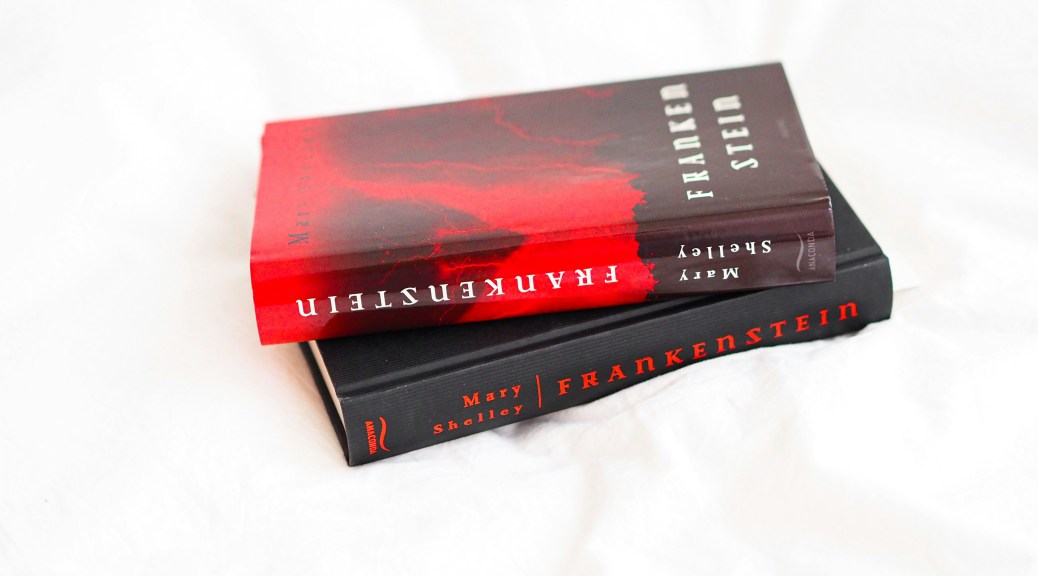
Category Archives: Frankenstein

“Not enough science in the ‘science of reading”’?: Missing the Warnings in Frankenstein, Again

[Header Photo by Laura Chouette on Unsplash]

Science as a field or method is neither a neutral good nor a neutral bad.

Mary Shelley’s Frankenstein powerfully unpacks the moral complications of science in what many believe is the first work of science fiction (which perceptively and critically interrogated science in its early evolution).

Victor Frankenstein embodies the frailties and very human limitations of science as a human behavior. And The Monster animates the horrifying potential dangers of science conducted by morally weak or bankrupt humans.

Consider first the responsibility inherent in The Creator for The Creature (The Monster):

A rich theme running through Mary Shelley’s Frankenstein is responsibility. In a straightforward—even didactic—way, the novel chronicles the devastating consequences for an inventor and those he loves of his utter failure to anticipate the harm that can result from raw, unchecked scientific curiosity. The novel not only explores the responsibility that Victor Frankenstein has for the destruction caused by his creation but also examines the responsibility he owes to him….

Victor experiences the two basic meanings of the word responsibility. He creates the creature (he causes it to exist), and therefore he has at least some responsibility for what the creature goes on to do. As the creature’s maker, Victor also has both a duty to others to keep them safe from his creation and, Mary seems to be saying, a duty to his creation to ensure that his existence is worthwhile. We will turn to these two ideas now—responsibility for and responsibility to.

Traumatic Responsibility, Josephine Johnston

Next, think about the role of science as simply a tool of the scientist, too easily distracted by their own missionary zeal and hubris, and thus, apt to fail to ground their work in moral and ethical boundaries:

Victor’s crime is not pursuing science but in failing to consider the well-being of others and the consequences of his actions. I contend also that Mary’s great work is a tale not about the dangers of a man’s quest for knowledge but about the ethics of his failure to attempt to anticipate and take responsibility for the results of that quest. There is a strong link between Victor’s failure of empathy for his creature and the particular kind of hubris that allows for the discarding of other people’s lives in service to an ambition. This failure of empathy is closely connected to the moral cowardice of refusing to take responsibility for one’s actions or for the outcomes derived from one’s research….

He undertakes his research in a spirit of self-aggrandizement: it’s not knowledge he seeks but power and renown, and this ambition leads him to become far more of a monster than the creature he creates….

As soon as he achieves his obsession, he rejects the accomplishment, and catastrophe results.

Frankenstein Reframed; or, The Trouble with Prometheus, Elizabeth Bear

Science has a long history of being a veneer for human flaws (sexism and racism masked by IQ as a scientific measure, for example) and being literally weaponized for military conquest (Hiroshima and Nagasaki, for example).

The US has a baffling and often contradictory relationship with science since in one context many will reject solid science (Covid vaccinations) and then embrace another “science” in the unchallenged rhetoric of media and political storytelling (the “science of reading” [SOR] movement).

One scientist at the center of the SOR movement, Mark Seidenberg, not only wrote a book on the cognitive science of reading but also has testified and advocated for state reading legislation grounded in SOR.

Seidenberg now seems poised to retreat from The Monster he helped create like Dr. Frankenstein himself.

Back in 2020, writing with co-authors in Reading Research Quarterly, Seidenberg offered an odd confession considering his advocacy for SOR policy: “Our concern is that although reading science is highly relevant to learning in the classroom setting, it does not yet speak to what to teach, when, how, and for whom at a level that is useful for teachers [emphasis added].” [1]

And now in late 2023 after nearly every state has adopted some form of new or revised SOR-based reading legislation, Seidenberg seems to be in full and eager retreat (even as he continues to cling to misinformation about a reading crisis and garbled blame launched at whole language and balanced literacy); he admits there is “[n]ot enough science in the ‘science of reading,'” in fact.

This talk notes that the SOR movement isn’t the same as reading science and even states that the SOR story is overly simplistic and grounded in outdated research (some may notice that many of us in literacy made these same claims in the very beginning of the SOR movement, but we have been repeatedly attacked and discredited).

Now that SOR has “won” and the accountability shoe is on their foot, SOR advocates are laying the groundwork like Seidenberg to avoid any responsibility (sound familiar?); see this from Emily Hanford for EWA, who announced the role of journalists as “watchdogs” who must police the incompetent field of reading teachers:

Hanford encouraged reporters not to write stories two years from now with a simple narrative of whether science of reading failed [2], if test scores don’t suddenly skyrocket. Changing systems is hard, she said. 

Journalists, she said, have control over the narrative. 

“Keep your eyes on this one, and don’t let this one go,” Hanford said. “Reporters did, I think, largely turn away from how kids learn to read. And I think that’s part of how we ended up in the situation we’re in now. We get to be the watchdogs. We get to be the ones who can contribute to what happens.”


SOR is essentially the law of the land and drives what schools are adopting and implementing; therefore, all this backpedaling and caution are likely because the preliminary results are not very promising.

England passed sweeping phonics-centric legislation in 2006, but early research and recent PISA outcomes suggest the promises of systematic phonics for all students are misleading stories at best.

Here in the US, a working paper examining SOR policy in California also shows that claims SOR will result in 90% of students achieving reading proficiency is a story we are being sold (that study reveals about 1/3 of students reached proficiency, the same percentage called a crisis by SOR advocates).

SOR advocates have created a monster in the form of misguided and overly prescriptive reading legislation, a monster stitched together from a series of false stories about a reading crisis, reading programs and theories failing children, and reading teachers not knowing reading science. That monster also includes unrealistic promises that will never be met, and thus, SOR will lead to another reading crisis in five or ten years (just as the NCLB/NRP years led to the SOR reading crisis).

SOR advocates are already running, but they can’t hide.

SOR has many Dr. Frankensteins and many Dr. Frankenstein wanna-be-s who have all created monsters in the form of state legislation based on false stories but with “[n]ot enough science in the ‘science of reading.'”

This is their monster—and their responsibility.


[1] Seidenberg, M.S., Cooper Borkenhagen, M., & Kearns, D.M. (2020). Lost in translation? Challenges in connecting reading science and educational practice. Reading Research Quarterly, 55(S1), S119–S130. https://doi.org/10.1002/rrq.341

[2] Please note that Hanford has made a career doing exactly what she warns other journalists not to do—perpetuate a “simple narrative” about reading failure and the blame for that failure.

More Human than Human: Frankenstein as Enduring Question about What Counts as “Human”

As I have examined, my history with Frankenstein as an enduring myth in pop culture is as patch-work as The Monster and the myth themselves.

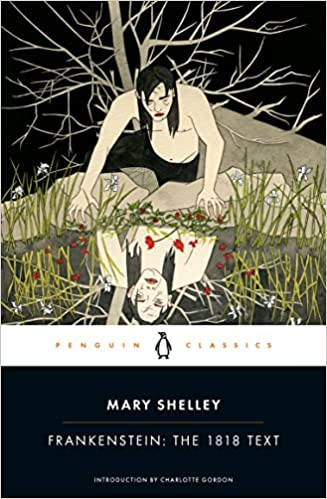
The details of the original novel by Mary Shelley, Frankenstein: Annotated for Scientists, Engineers, and Creators of All Kinds (The MIT Press), have shifted and blurred across three centuries. Most people tend to associate “Frankenstein” with The Monster and not The Creator.

Frankenstein was planted in my psyche by the classic 1931 film starring Boris Karloff and then bolstered by TV’s The Munsters (1964-1966) and one of my most formative fascinations, Young Frankenstein from 1974.

But the most powerful aspect of Frankenstein for my life as a reader and my fascination with pop culture (films, music, and comic books) was how it fits into my fandom for multi-genre works, the blending of science fiction and horror rooted in not just Karloff’s portrayal of The Monster but the original version of The Fly (1958) with Vincent Price.

There is a straight line from those early- and mid-twentieth century horror/SF classics to my favorite works of SF, Alien (1979) and Blade Runner (1982).

I am now preparing a new first-year writing seminar grounded in the question raised by Frankenstein, From Frankenstein to WandaVision: What counts as “human”?

That course preparation is focusing on how to make sure students see the value not only in Frankenstein as cultural myth but also the ways in which humans have sought to create life or some facsimile of human (such as artificial intelligence).

“More human than human” is the branding of the Tyrell Corporation in Blade Runner (1982), and I daily watch people continue to debate on Facebook aspects of replicants—and which characters are or are not replicants—some forty years after the film was released.

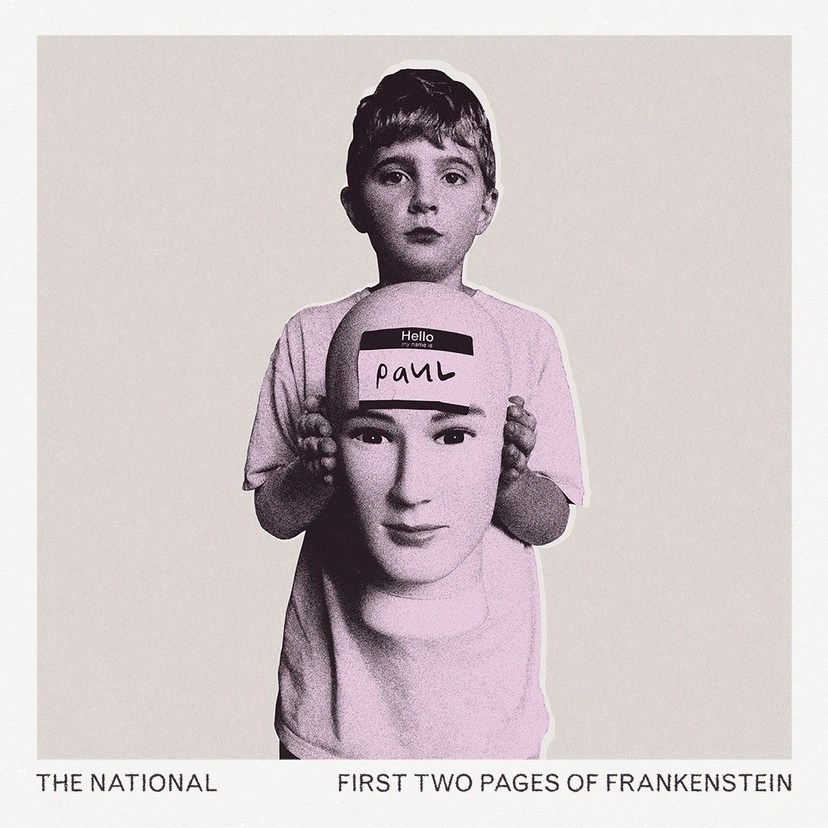
The seeds of this course were planted by the release of The National‘s First Two Pages of Frankenstein, lyrics in Lana Del Rey’s Did you know that there’s a tunnel under Ocean Blvd, and the film, Poor Things (2023).

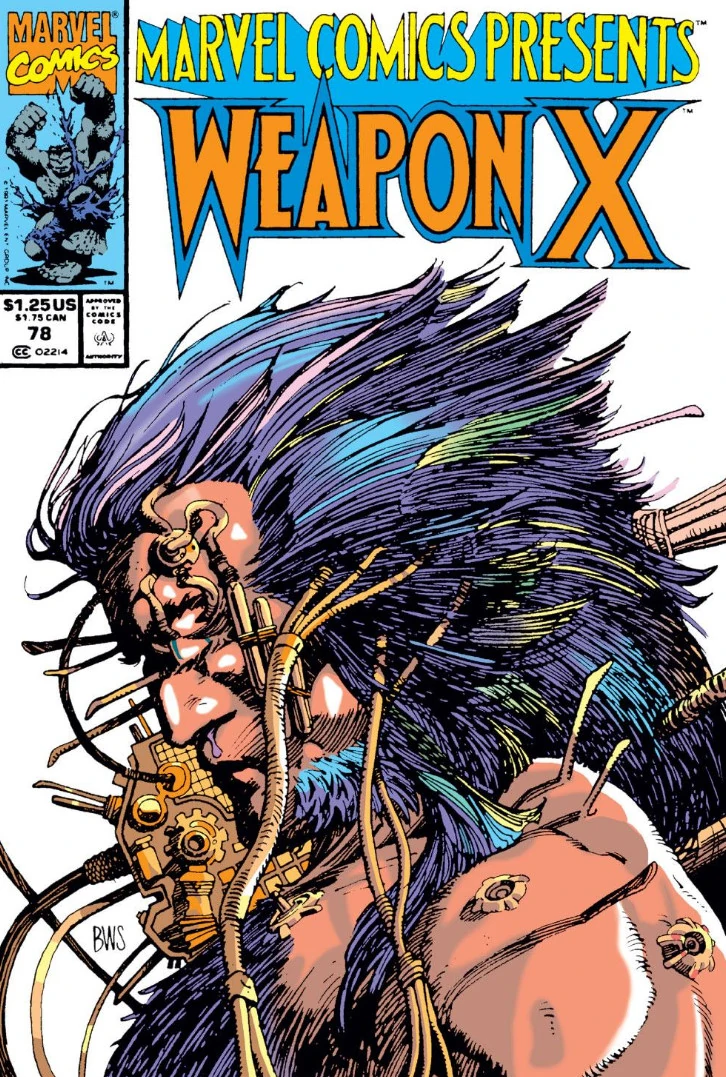
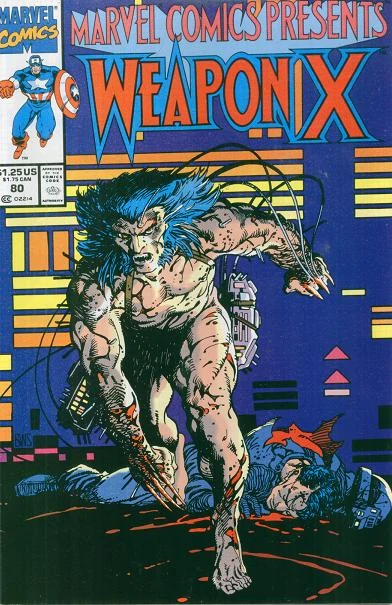
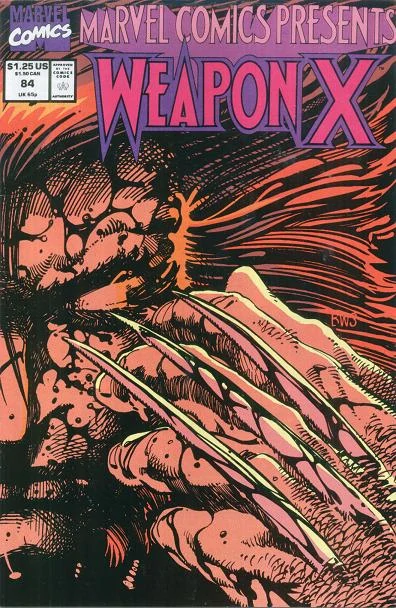
But those elements also triggered how Frankenstein and creating artificial life pervades my comic book world—The Vision (thus WandaVision ), Wolverine (specifically Weapon X), and Deathlok (a character that has blurred with another multi-genre pop culture phenomenon, RoboCop [1987]).

In other words, the text focus on this first-year writing seminar (which is primarily a composition and not a literature course), then, is seeking ways to be provocative and engaging in ways that matter to almost twenty-somethings in 2024; and with the rise of ChatGPT as well as Frankenstein still right in the center of pop culture, I think I have hit the jackpot for an enduring and rich question about what counts as human.

A not exhaustive list so far of potential texts for students to examine include the following:

The annotated Frankenstein and Frankenbook share seven relatively brief and accessible essays that allow anyone (and my students) to interrogate the Frankenstein myth in ways that focus on why that myth and questions about what constitutes being human continue to haunt us.

For a composition course, the essays also provide some context for asking students to rethink the essay itself, especially essays written at the college level and for scholarly purposes.

I want to touch briefly on a couple of those essays here: I’ve Created a Monster! (And So Can You), Cory Doctorow, and Changing Conceptions of Human Nature, Kate MacCord and Jane Maienschein.

One goal of my first-year writing seminars is to have students rethink essay openings (set aside one-paragraph “introduction” for multiple-paragraph “opening”) and move past the one-sentence overstated thesis (preferring to focus readers in a full paragraph and use questions instead of statements).

With that, Doctorow provides not just a thoughtful essay, but a wonderfully engaging opening paragraph:

When it comes to predicting the future, science fiction writers are Texas marksmen: they fire a shotgun into the side of a barn, draw a target around the place where the pellets hit, and proclaim their deadly accuracy to anyone who’ll listen. They have made a lot of “predictions,” before and after Mary Shelley wrote her “modern Prometheus” story about a maker and his creature. Precious few of those predictions have come true, which is only to be expected: throw enough darts, and you’ll get a bull’s eye eventually, even if you’re wearing a blindfold.

I’ve Created a Monster! (And So Can You), Cory Doctorow

Academics, scholars, and students, I argue, can not only write clearly but also well, incorporating techniques often associated with fiction or so-called creative writing; Doctorow’s first sentence soars with technique but also establishes a very important point about how SF is typically misread: “Science fiction does something better than predict the future: it influences it.”

And thus Frankenstein as enduring myth and enduring question about what counts as human.

Another straight line from Shelley’s The Monster to Marvel’s The Vision (and the glorious multi-genre adventure of WandaVision).

The initial reason I thought a first-year writing seminar centering on the Frankenstein myth and the question of what counts as human was the rise of ChatGPT and debates about whether the writing produced by AI is in any way “good,” or to put it more directly, like a human would write.

But I know I needed more, and the essay by Kate MacCord and Jane Maienschein provides two incredibly important contexts.

First, they interrogate whether The Monster is human using a framework from Aristotle, a doorway into helping students confront the value of classic texts and classic thought (something that helps challenge the Urban Legend that higher ed is all Marxism and no classics)

Like Doctorow’s essay as a model for reconsidering the essay opening, MacCord and Maienschein serve as a powerful example of the engaging closing (again a challenge to the vapid traditional guideline that the conclusion should repeat the introduction);

To look more concretely at a topic of current interest, some people claim that embryos have personhood and should be given the legal rights of a human being. In the sense of humanity or personhood explained here, this definition would be an inaccurate assessment of embryos. Embryos are materially of the human type, but they have not yet gone through the process of development and are not yet persons in this sense. Some people like to suggest that embryos are potential persons in that they might, under the right circumstances, become persons. Or to put it biologically, perhaps an embryo or a “monster” that is not a fully formed human might be taken as having the potential to become a human being. But potential is not actual. Most of us have many potentials that we never put into action. It does not make sense to act as if every one of us is already an Olympic star or concert pianist or math genius just because we may each have the potential to become these things. It is the actual that matters. The creature is not an actual human in that he has not developed fully. Even after two centuries, Victor and his not-human creature help inform our understanding of human nature.

Changing Conceptions of Human Nature, Kate MacCord and Jane Maienschein

From a classical examination of whether The Monster is human (they say not) to the very real and current on-going struggle in the US over body autonomy and human agency at the center of the abortion debate—this is the promise of asking students to interrogate what counts as human through the Frankenstein myth.

First-year writing seminars must be about thinking better and more deeply by writing better and more deeply.

I am excited for this course in the spring as my students and I can contribute even more the enduring myth of Frankenstein.

Frankenstein 2023

My relationship with Frankenstein is grounded in two films and my mother’s love of science fiction/horror as a merged genre—the classic 1931 film starring Boris Karloff as The Monster and the now iconic Young Frankenstein from 1974 (a tour-de-force from Mel Brooks, Gene Wilder, Madeline Kahn, Cloris Leachman, Teri Garr, and others).

Now common in pop culture, I associated “Frankenstein” with The Monster because most of the nuance in the source, Mary Shelley’s novel, was erased by adapting a novel into film.

Some of that erasing includes Mary Shelley being fully recognized for a foundational work in the history of science fiction and horror, but the popular jumbling and blurring of Shelley’s creation also erases the more subtle messages and themes of her original work.

Yet it is hard to ignore that the Frankenstein myth/narrative is incredibly enduring in American pop culture.

It is 2023, The National is set to release an album titled First Two Pages of Frankenstein, using the actual first two pages of the novel (cleverly edited) and a brief video of Matt Berninger turning to the viewer with the novel in his hand at the piano to promote the work:

Just a few weeks before the release of The National’s album Lana Del Rey’s Did you know that there’s a tunnel under Ocean Blvd includes these lines:

I know they think that it took somebody else
To make me beautiful, beautiful
As they intended me to be
But they’re wrong
I know they think that it took thousands of people
To put me together again like an experiment
Some big men behind the scenes
Sewing Frankenstein black dreams into my songs
But they’re wrong

“Grandfather please stand on the shoulders of my father while he’s deep-sea fishing”


From Shelley to Del Rey, the intersection of the Frankenstein narrative with the lives and portrayal of women is a fascinating journey, but again, something is powerfully compelling about this story of human arrogance and the essential horror in our imagining a science-fueled future (or present).

These reminders of Frankenstein in 2023 also overlap with the paperback release of Wolverine: Weapon X Deluxe Edition.

Also due mainly to films, Wolverine (as portrayed by Hugh Jackman) has achieved an iconic place in US pop culture, one that parallels in many ways elements found in Shelley’s source material.

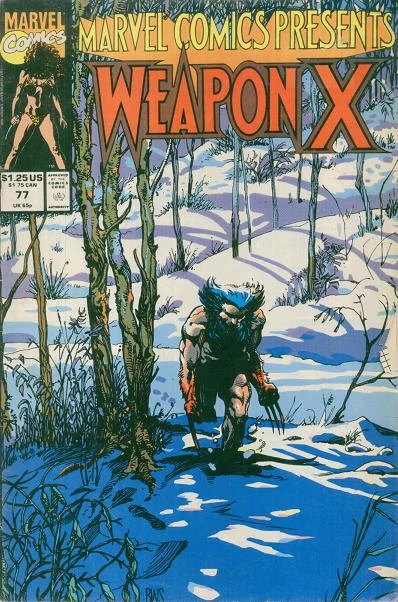
And not as well recognized outside of the comic book world, is Barry Windsor Smith’s brilliant portrayal of Wolverine’s origin story in Weapon X.

My association with Smith is his breakout work on Conan the Barbarian for Marvel in the early 1970s (see here).

Conan the Barbarian #21

By the 1990s, Smith stood out among the rise of the all-star artists working in comic books, like Frank Miller and Todd McFarlane; Smith helped define and represents the recognizable 90s comic book style as well:

The hyper-realism and detailed work of many artists in the 1990s are both era-defining and problematic (see about Rob Liefeld, for example), but Smith remains a highly regarded comic book artist, in part due to his 13-issue run for Marvel Comics Presents featuring Wolverine.

Smith’s arc is a reimagining of the Frankenstein myth, blending the misuse of science with more fantastical elements found in superhero comics. The mutant element of Wolverine/Weapon X helps provide a fresh way to interrogate human dignity and agency since Wolverine (Logan) is The Monster (human-made) and a mutant in this retelling.

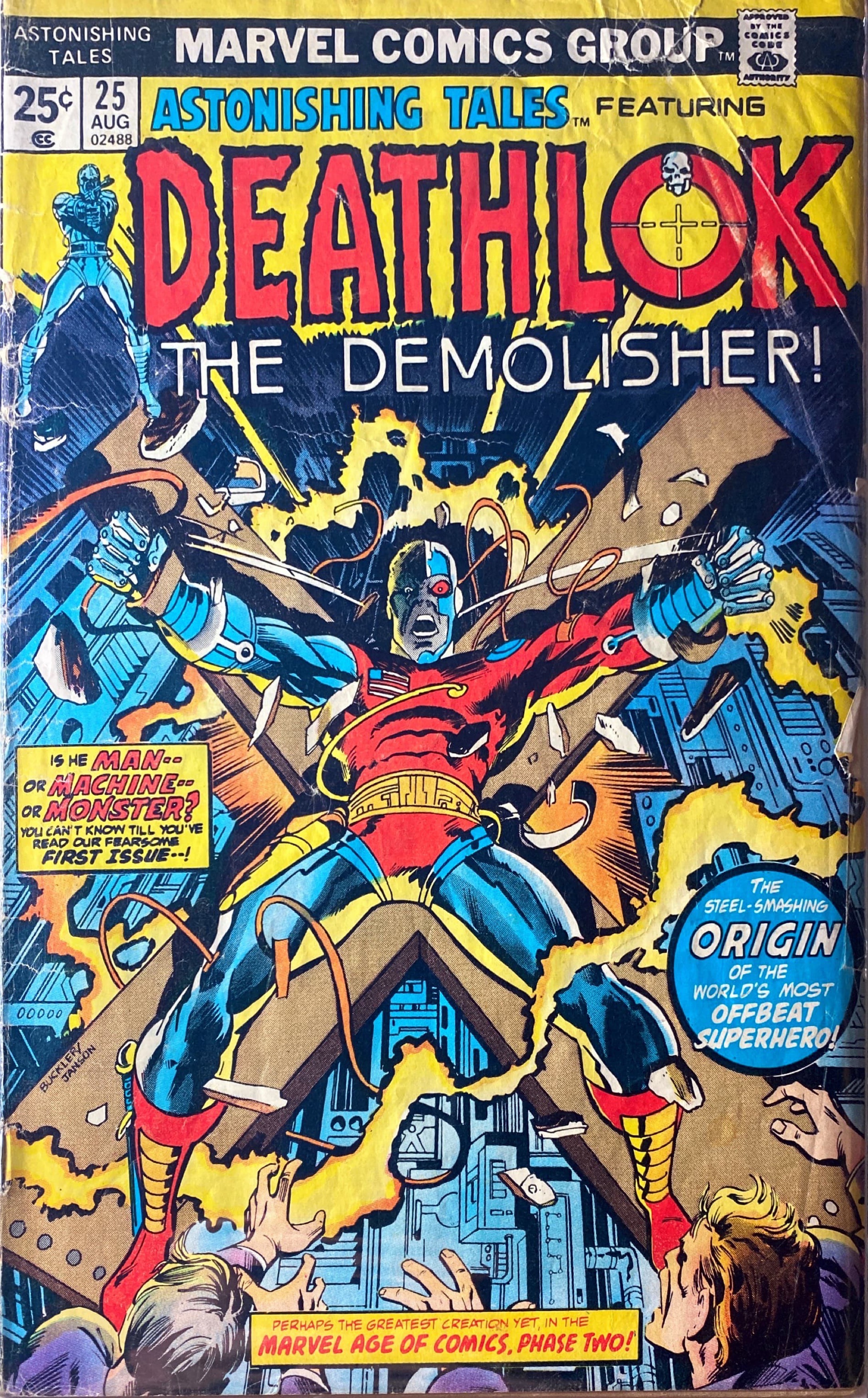
Smith’s Wolverine origin story dramatizes, I think, why science fiction and horror fit perfectly together since the essence of unbridled science threatens both individual agency and cultural stability—paralleled well, I think, by another science-gone-wrong creation from Marvel in the mid-1970s, Deathlok [Astonishing Tales featuring Deathlok 25-28, 30-36, Marvel Spotlight 33 (1974-1977)].

Astonishing Tales 25 (cover by Rich BucklerKlaus Janson and Gaspar Saladino)

Humans have a very complicated relationship with the human intellect, of which science is a key part. The recent Covid epidemic exposed that once again, people struggle with understanding exactly what “science” means—and doesn’t mean.

Contemporary life for many people in 2023 depends heavily on technology, and the allure of science fiction remains strong even as we seem to resist the messages those stories offer.

Whether it is Frankenstein’s Monster or Wolverine, the possibilities of science gone wrong moves us, speaks to our humanity, and offers us a better way.

It is always worth noting Shelley’s subtitle, another thing erased by pop culture—The Modern Prometheus.

Science, it seems, is a key urge of humans to be god or supplant god. And as our recycling of the Frankenstein narrative shows again and again, a quest to be god or deceive god is pure folly, our own arrogance turned against what makes us human.

Wolverine as The Monster should speak to us through the coupling of his immortality (an off-and-on quality in Marvel’s portrayals) with his constant state of suffering—just like Shelley’s original Monster whose sentience should move our hearts and souls as much as our minds.

I am drawn to the chorus in first single released by The National for their new album:

I was so distracted then
I didn’t have it straight in my head
I didn’t have my face on yet or the role or the feel
Of where I was going with it all
I was suffering more than I let on
The tropic morning news was on
There’s nothing stopping me now
From saying all the painful parts out loud

Tropic Morning News

Distracted and suffering like each iteration of The Monster, who, ultimately, is each of us.