Category Archives: literacy

Research Highlights “Science of Reading” Fails Equity, Teacher Autonomy, and Social Media Discourse

[Header Photo by Jansen Yang on Unsplash]

I am currently reading two engaging and often challenging novels—Roberto Bolano’s huge 2666 and Ahmed Saadawi’s Frankenstein in Bagdad.

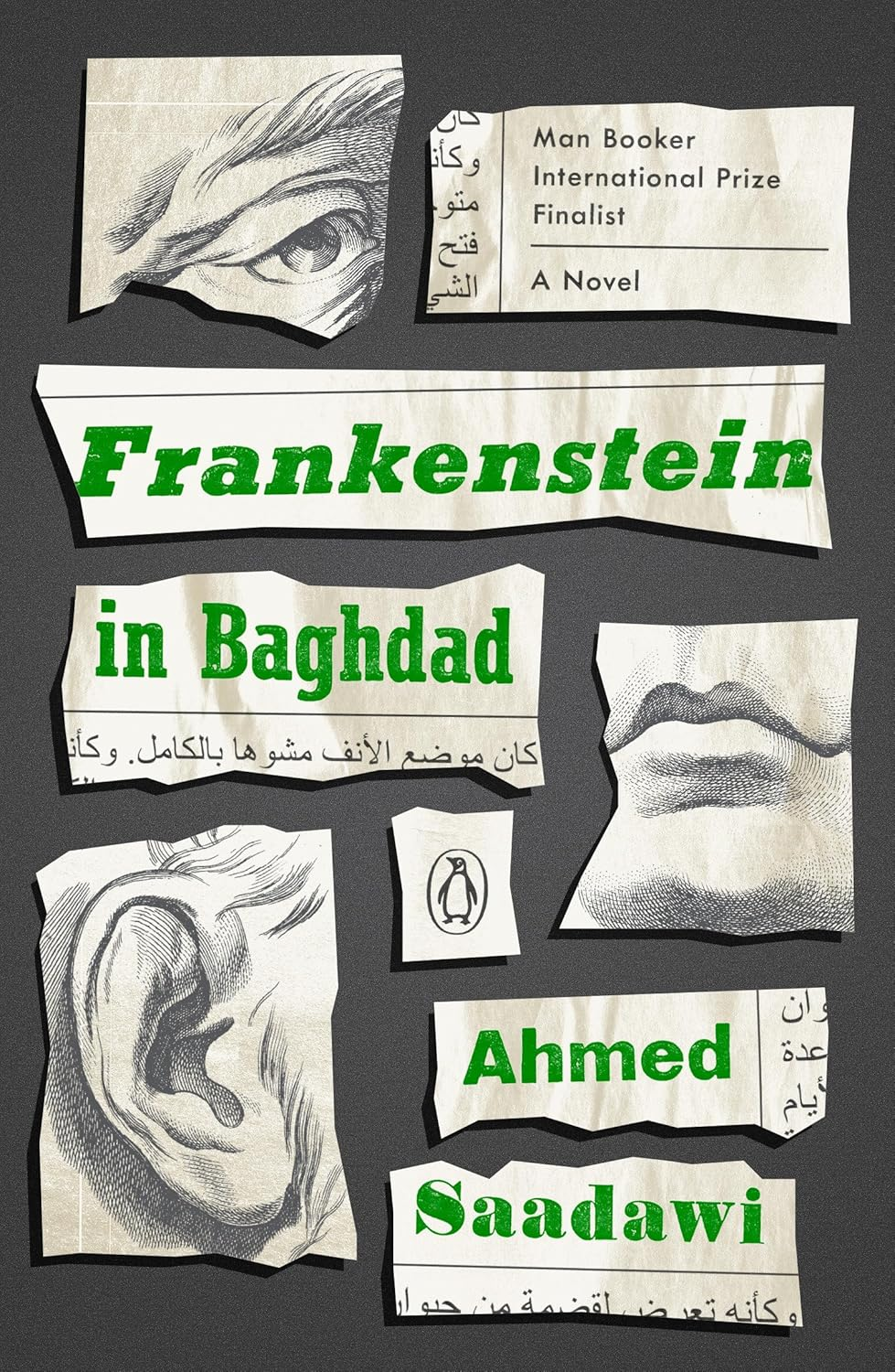
As an avid reader, writer, and teacher of literacy for over 42 years, I am deeply moved by stories, and both of these novels are engaging because they weave stories together while also forcing the reader to critically engage with the act of story telling itself (especially in Saadawi’s monstrous recreation of the Frankenstein myth).

As a writing teacher I seek to foster in my students not only an awareness of the power of story—the importance of vivid details and the narrative mode—but also the ethical implications of the stories we choose to tell as well as the stories we choose to ignore.

In public discourse, however, we are at the mercy of how traditional and social media portray complex and important topics.

Media creators who are successful are vividly aware of the power of story, and my fields of education and literacy, regretfully, suffer the brunt of compelling but misleading stories across all types of media. For media creators, compelling stories often trump accurate and credible stories.

Ironically, at the foundation of the current reading crisis labeled the “science of reading” (SOR) is a podcast, Sold a Story, that research is gradually exposing for being the mechanism for selling a story that is not credible and is in turn causing more harm than good (except for those profiting off the story).

Here are three relatively recent open-access publications that highlight SOR failing equity, teacher autonomy, and social media discourse:

Dimensions of Equity in the Science of Reading Research: A Systematic Review of Actual, Artificial, and Absent Up-Takes of Equity

JaNiece Elzy-Palmer, Alexandra Babino, Tee Hubbard

Abstract

The Science of Reading (SoR) movement is positioned as a pathway to equity in literacy development, yet little is known about how equity is defined and enacted within SoR scholarship. This systematic review examined 36 peer-reviewed studies published between 2014 and 2024 that addressed both SoR and equity. Using a framework of nine equity dimensions, we analyzed how equity was conceptualized and operationalized across this body of research. Findings reveal that only 17% of screened articles (36/211) engaged with equity dimensions in substantive ways. Analysis showed that equity was primarily conceptualized through access (n = 69) and opportunity (n = 83), with most studies giving limited attention to race, power structures, and the systems that uphold inequities. SoR research primarily focused on three student groups: emergent bilinguals, “struggling” readers without disabilities, and students from low socioeconomic backgrounds, while largely employing race-evasive language such as “diverse” or “struggling students.” By contrast, actual uptakes of equity, though limited, were most often found in international contexts where inclusion and representation were embedded through culturally and linguistically responsive adaptations. These findings highlight a persistent disconnect between SoR’s equity claims and its research base, underscoring the need to integrate transformative justice approaches so that equity efforts move beyond access and opportunity toward systemic change in literacy development.

Teacher Autonomy in Text Choices for Elementary Reading Instruction

Allison Ward Parsons, Kristin Conradi Smith, Margaret Vaughn, Holly Klee, Leslie La Croix, Jane Core Yatzeck

Abstract

Reading in elementary school is central to supporting student reading development. However, a gap exists in current research regarding the types of texts that teachers select for reading instruction and the instructional contexts in which that reading occurs. Teachers’ autonomy to select texts and activities for reading instruction is complex and not well understood. In this exploratory study, we surveyed a stratified sample of elementary teachers (n = 1250) in the United States to understand their perceptions of autonomy surrounding text use. Chi-squared analysis results raise questions of autonomy, access, and equity, particularly regarding digital text usage in younger grades and schools with fewer economic resources. Discussion highlights the differences in teacher autonomy regarding text use across school demographics and instructional contexts. Implications for practice and future research are discussed.

The Science of Reading on Social Media: TikTok Content Creators’ Discourse Patterns and Bodies of Knowledge

Lindsey W. Rowe, Sarah Jerasa, Heather Dunham, C. C. Bates, Tobi Pirolla, Meghan J. Malloy

Abstract

The Science of Reading (SOR) has become a public discourse with educational stakeholders, impacting legislative policy, reading content, curricula, and pedagogy across schools. Public engagement in this movement has transpired on social media, including TikTok, where viral content often promotes narrow or binary viewpoints through an authoritative discourse. Using a digital ethnography and walkthrough method, we collected and examined 156 TikTok videos on #ScienceofReading to address the following research questions: (1) What categories of SOR content are present on TikTok? (2) What are the common narrative trends and bodies of knowledge used to promote the SOR conversation on TikTok? Analyses found that SOR-related TikToks fell into four categories: (1) professional content knowledge, (2) direct demonstration, (3) resources and materials, and (4) identity formation. Furthermore, close analysis of all videos related to professional content knowledge gave insight into the narrative trends used by content creators to convey claims (plain speak, stop/start, brain research, rhetorical question, I used to… now I…), as well as the bodies of knowledge content creators drew on to make these claims (research, SOR, theory or scholar, deep personal experience, no source). Finally, implications are discussed for how this public discourse can shape policies that will ultimately impact schools, classrooms, and literacy instruction.


Related

Thomas, P.L. (2025, Spring). Crisis as distraction and erasure: How SOR fails diversity and urban students. Journal of Literacy and Urban Schools (1), 6-23. https://theliteracyandurbanschoolsjournal.com/wp-content/uploads/2025/10/issue-1-journal-of-literacy-and-urban-schools.pdf

Thomas, P.L. (2025). Breaking free of the “war,” “crisis,” and “miracle” cycles of reading policy and practice. In T.A. Price & M. McNulty (eds.), Public spaces, politics, and policy: historical entanglements with irrational momentism (pp. 93-112). Bloomsbury.

Thomas, P.L. (2025, July 28). There is no literacy crisis in the U.S. Here’s what’s really happening. The Washington Post. https://wapo.st/474j758

Thomas, P.L. (2025). Navigating (another) reading crisis as an administrator: Rethinking the “science of reading” movement. Journal of School Administration, Research and Development, 10(1), 38-48. https://ojed.org/JSARD/article/view/6706

Thomas, P.L. (2024, November). We teach English in times of perpetual crisis: For all ELA teachers, “the time is always now.” English Journal, 114(2), 21-26. https://publicationsncte.org/content/journals/10.58680/ej2024114221

Thomas, P.L. (2024, September). We teach English in times of perpetual crisis: The media continue to misread teaching reading and literacy. English Journal, 114(1), 14-19. https://publicationsncte.org/content/journals/10.58680/ej2024114114

Thomas, P.L. (2024, May). Teaching English in the “science of reading” era: We teach English in times of perpetual crisis: Selling a story of reading. English Journal, 113(5), 16-22. https://publicationsncte.org/content/journals/10.58680/ej2024113516

Thomas, P.L. (2024, March). We teach English in times of perpetual crisis: The long (and tedious) history of reading crisis. English Journal, 113(4), 21-26. https://publicationsncte.org/content/journals/10.58680/ej2024113421

Thomas, P.L. (2023, November). Everything you know is wrong: The “science of reading” era of reading legislation. Perspectives and Provocations, (11), 1-17. https://drive.google.com/file/d/12fAfLV1pCh7ZXV-UFsTftFd7y_MLSK-O/view

Compton-Lilly, C., Spence, L.K., Thomas, P.L. & Decker, S.L. (2023). Stories grounded in decades of research: What we truly know about the teaching of reading. Reading Teacher, 77(3), 392-400. https://doi.org/10.1002/trtr.2258

The “Southern Surge” in Reading: Another Media Manufactured Mirage

[Header Photo by Michał Parzuchowski on Unsplash]

Growing up in the South, I was often warned not to beat a dead horse.

A lifelong love of science fiction and fantasy, however, has made me aware of zombie narratives and that sometimes the dead are the living dead.

In my career of literacy, the phonics gambit is just that—a zombie advocacy that just will not die.

The newest media iteration of the phonics gambit has been christened the “Southern surge” in reading, celebrated again in Chalkbeat: The ‘Southern surge’ offers lessons for student learning — but we don’t fully understand it yet.

This “Southern surge” narrative tends to center Mississippi but also includes Florida, Alabama, and Louisiana (the most recent “miracle” state based on an incomplete or misleading use of NAEP scores).

Like many media manufactured narratives, the “Southern surge” in reading falls apart when the data are carefully examined.

While I give the Chalkbeat article some credit for admitting that the so-called “surge” is not fully understood, Barnum—as Hanford did when christening Mississippi a “miracle” in 2019 (“What’s up in Mississippi? There’s no way to know for sure what causes increases in test scores”)—gives the “surge” narrative nearly complete credibility even with the headline hedge and a couple points made then glossed over (“Eighth grade results have been less impressive for these Southern exemplars, though”).

Here are the (likely fatal) flaws in the “surge” narrative:

  • Although Barnum cites an important and comprehensive analysis of reading reform, he fails to acknowledge its most important findings: States adopting reading reform (often popularly associated with Mississippi’s model even when states explicitly do not mimic those reform policies, such as California) has seen short-term test score gains in reading (note that score gains are not necessarily higher reading proficiency); however, while Barnum lists several reading policy components (“third grade retention, phonics-based curriculum, and statewide teacher training”), this study directly states that only retention is associated with higher scores (with the researchers noting their study did not identify why).
  • Barnum notes the drop by Southern states’ grade 8 reading scores, but fails to acknowledge that this data point may suggest that retention is inflating scores, not increasing reading proficiency. Notably states such as Florida and Mississippi have had these reform for over one to two decades without the “surge” appearing in grade 8 data.
  • The retention component also is troubling since these states continue to retain students as high rates. If the other policies were working, we should expect retention numbers to decrease significantly, but they have not.
  • Possibly the most damning ignored data from NAEP, however: Across all states, but including the so-called “surge” states, the race and poverty gaps remain persistent, typically the same as in 1998.

There are statistical realities also being ignored in the “surge” narrative.

Test scores for the lowest performing students are easier to improve that top-scoring students, for example.

But likely more significant is that early literacy test scores are strongly correlated with student biological age (England has almost twenty years of data on phonics checks that show this); therefore, when grade retention removes the lowest scoring students from the testing population (grade 3 retention laws impact grade 4 NAEP testing) and reintroduces them when they are biologically older, the possibility is that scores are being artificially inflated.

Reading “crisis/miracle” narratives and the phonics gambit should be dead horses; these unfounded claims have existed in the US well back into the 1940s, recurring decade after decade.

At best, “we don’t fully understand it yet,” and at worst, too many people profit off this zombie narrative, and children, teachers, and schools will continue to be sacrificed instead of putting these stories in the ground where they belong.


Recommended

The “Science of Reading” Ushers in NAEP Reading Decline: Time for a New Story

Fact Checking “The reading wars are ending. Phonics won.” (Washington Post Editorial Board)

Misunderstanding Mississippi’s Reading Reform: The Need to Resist Copycat Education Reform

The Phonics Gambit: The Zombie Reading Policy that Fails but Won’t Die

Washington Post: There is no literacy crisis in the U.S. Here’s what’s really happening

[Header Photo by Iana Dmytrenko on Unsplash]

Thomas, P.L. (2025, July 28). There is no literacy crisis in the U.S. Here’s what’s really happening. The Washington Post. https://wapo.st/474j758

The evidence/links in the articles:


Recommended

English Journal Series: We Teach English in Times of Perpetual Crisis

Big Lies of Education: Reading Proficiency and NAEP

Three Questions about the Mississippi Reading “Miracle”

1959: “yet students enter college badly lacking in these fundamental skills”

[Header Photo by Austin on Unsplash]

It is 1959, and J. Donald Adams in the New York Times is lamenting the lack of basic skills among college students in the US:

If more parents who were themselves the recipients of a decent education could be made aware of the asinine statements about the teaching of the English language which are being spewed forth by today’s educational theorists, there would be an armed uprising among the Parent-Teacher Associations all over the United States.

Yes, 1959.

And where does the blame lie?

That inheritance is being endangered by various forces operant in our society: by the hucksters of Madison Avenue, by the tiresome circumlocutions of the bureaucrats; by the tortured locutions of the sociologists, psychologists and symbol-haunted critics. However erosive these may be, the root responsibility for the decline in standards of English rests, I think, with the teachers of English in our primary and secondary schools, and even more so, with the teachers of education who produced them. These are the people whom you can chiefly thank for the fact that so many college entrants cannot spell, punctuate, or put together a coherent sentence in their own tongue, let alone any other….

[And] THERE is an organization called the National Council of Teachers of English, whose attitudes and activities constitute one of the chief threats to the cultivation of good English in our schools.

65 years ago, it seems, schools were focusing, alas, on the wrong things:

Today, the emphasis is placed, with unutterable stupidity, upon teaching the things that cannot be taught, the things that have to be learned, by trial and error, by oneself, such as social adjustment. High schools undertake to teach safe driving: you can teach someone to drive, but you cannot teach him to drive safely; the temperamental and emotional factors involved are beyond the reach of the instructor. But reading, spelling, punctuation, grammar and arithmetic can be taught: yet students enter college badly lacking in these fundamental skills, and with the most fragmentary notions of geography and history.

One must wonder how we survived …


H/T Ralph Pantozzi

ILEC Webinars 2024-2025

Dr. Elena Aydarova – “Science of Reading” and the Educational Reform Movement: Actors, Networks, and Agendas

Dr. Paul Thomas – “Science of” Movements as Trojan Horse Education Reforms

Shawna Coppola – Literacy for All: A Framework for Anti-Oppressive Teaching Presented 

Dr. Catherine Compton-Lilly – Centering Readers Means Centering Equity

Dr. Barbara Flores, Dr. Edgar Lampkin, Dr. Jill Kerper Mora, and Dr. Esteban Díaz – Pushing Back Against Science of Reading Mandates: The California Story

Dr. Rachael Gabriel – The Science-Policy Gap: Impacts and Possibilities of Speculative Policy-Making

Dr. Peter Johnston and Kathy Champeau – Just & Equitable Literacy Learning: Developing Children’s Social, Emotional, & Intellectual Lives

Dr. Alan Flurky, Dr. Peter Duckett, and Dr. Maria Perpetua Liwanag – Reading as a Meaning Making Process: Insights from Miscue Analysis

Dr. Andy Johnson – Context Matters: LETRS, SoR Research Standards, and Baloney

Dr. Steven Strauss, Dr. Jill Kerper Mora, Dr. Barbara FRlores, and Dr. Edgar Lampkin — Debunking Science of Reading Neuroscience Claims

Webinar: The Manufactured Crisis: Exposing the False Narrative of Public Education’s “Failure” (A4PEP)

The Manufactured Crisis: Exposing the False Narrative of Public Education’s “Failure”

[Click HERE for recording]

Date & Time

Apr 16, 2025 08:30 PM EST

Description

Join us for a timely and vital conversation on April 16 at 6:30 p.m. ET with Dr. P.L. Thomas, Professor of Education at Furman University. For decades, media and policymakers have pushed a narrative that America’s public schools are “failing.” But who benefits from this story, and who is harmed by it? Dr. Thomas will expose how the education reform industry has fueled a false crisis, undermining trust in public schools while advancing corporate-driven reforms. Drawing on his experience as a teacher, scholar, and national award-winning writer, Dr. Thomas will offer critical insights into how we can challenge disinformation and reclaim a narrative rooted in equity, democracy, and community empowerment.

6:30 pm, April 16

[Click HERE for presentation]

Recommended: Effective practices for literacy teaching

Effective practices for literacy teaching, Colin Harrison, Greg Brooks, P. David Pearson, Sari Sulkunen, Renata Valtin (2025)

In light of the PISA 2022 student results, which showed a decline in performance in basic reading skills across Europe, this report presents a detailed literature review of the most recent European and international research on effective approaches to literacy teaching. It highlights practices that have been properly evaluated and are supported by evidence of impact.

Targeted primarily at policymakers, but also relevant to teachers, parents, and all those contributing to children’s literacy development, the report analyses over 600 studies on effective teaching practices (both pedagogical and content-specific), support programmes, and policies that promote literacy for all children across the EU. It covers different levels of education and takes into account gender perspectives as well as the needs of vulnerable and special needs groups.

Based on the key findings, the authors discuss the teaching of comprehension beyond letters and words (e.g. drawing inferences, judging relevance and trustworthiness), the role of dispositional characteristics such as motivation, metacognition, and world knowledge, and the teaching of digital literacy skills, including critically evaluating online information. Building on these findings, they present 20 research-informed recommendations for policymaking.

“Science” as Bad Faith Bullying

[Header Photo by jesse orrico on Unsplash]

The more things change, the more things stay the same.

Especially in America.

F. Scott Fitzgerald’s The Great Gatsby, set in the 1920s, centers the story on a few rich characters—Tom and Daisy Buchanan, who have “old” money, as well as Jay Gatsby, representing the nouveau riche.

At the cusp of 2024 and 2025, a century later, one page from the novel seems disturbingly relevant:

In this scene, Fitzgerald uses Buchanan to portray the rise of scientific racism in the US. The scientific racism era in the early 20th century is but one of many examples of how “science” can be used by bad faith actors to promote an ideological agenda.

It isn’t his fault, Buchanan seems to suggest, that he is among the superior white Western civilization: “‘It’s all scientific stuff; it’s been proved.'”

In recent years in the US, navigating science, proof, and science skepticism has reach a level of complexity that defies postmodern thought. Simultaneously, we may be living in the most advanced era of scientific knowledge along side a rising and powerful science-skepticism era.

Vaccination deniers, flat Earthers, and Covid conspiracy theorists have increasingly prominent voices and policy influence due to social media, and the Trump era certainly has eroded how most people understand and what counts as “proven” science.

“Science” as Bad Faith Bullying: Education Edition

Concurrent to the larger political and cultural problems with “science” and science-denial, the education reform movement grounded in the early 1980s accountability movement has adopted “science” as a bad faith bullying approach to reform.

The “science of reading” (SOR) movement [1], essentially driven by conservative ideology, exploded around 2018 under the first Trump administration, and now, SOR has spawned a series of “science of” companion movements—the “science of math,” “the science of learning,” etc.

We may have reached peak “science” as bad faith bullying, however, with a law suit against Heinemann and a few reading programs [2] disproportionately attacked and scapegoated by Emily Hanford and much of mainstream media: “The suit alleges ‘deceptive and fraudulent marketing and sale of products and services which are undermining a fundamental social good: literacy.'”

If this weren’t yet another personal attack on a few literacy leaders and potentially significant waste of time and money to navigate the nonsense of this legal move, it would be funny since the SOR movement itself is practicing exactly what the suit accuses Heinemann of doing, “fraudulent marketing and sale of products.”

Let’s start with the foundational argument among SOR advocates that teaching practices must be grounded only in practices supported by experimental/quasi-experimental research published in peer review publications, as argued by The Reading League:

While I think these standards are too narrow for real-world practice, this is in fact the basis upon which SOR advocates (and the substance of the law suit) rest sweeping and misleading claims about a range of discounted practices labeled as either whole language or balanced literacy (SOR advocates both interchange and mischaracterize these terms repeatedly along with misrepresenting other terminology such as “three cueing”).

Further, the SOR movement has adopted an old and inaccurate assertion about “science,” echoing Tom’s “‘it’s been proved.'”

Similar to the reading crisis rhetoric from 1961—when Walcutt announces: “We have said that no further ‘research’ into methods of reading instruction is necessary” (p. 141)—Hanford and Moates proclaimed SOR “settled science” in 2018 (and we must note Moates has a huge market interest in these claims as author of LETRS, see below):

However, the “science” in reading research is not settled, and the SOR movement, as I stated above, is committed to a “deceptive and fraudulent marketing and sale of products and services”; as I have shown repeatedly, the SOR movement is itself grounded in a plan from 2014 to brand “structure literacy” to “help us sell what we do so well.”

That plan has included exaggerated attacks on some reading programs, some literacy leaders, and some literacy practices while simultaneously endorsing different programs and some practices that are also not supported by SOR’s mandate for a narrow type of “science.”

For example, in a literature review of the current status of SOR from 2022, note that practices either ineffective or lacking scientific support include those rejected by SOR and those embraced by SOR; while this lit review identified “three cueing” as not supported by science as SOR advocates claims, it also lists decodable texts and multisensory approaches (such as Orton-Gillingham), practices and programs aggressively supported by SOR advocates and legislation:

That pattern is standard practice in the SOR movement, including the false attack on teacher education and teacher knowledge being used as “science” as bad faith bullying to sell LETRS.

LETRS falls into the “ineffective and currently unsupported” category as well since only a few studies exist, showing no improvement in student reading.

The SOR movement has also adopted slogans not supported by science (95% of students can be proficient readers) and practices that inflate test scores, target and harm marginalized groups of students, but are not supported by research (grade retention, which seems to be the sole SOR policy impacting test scores).

The “science of” era of education reform is not about improving instruction or student learning. The movement uses “science” as a Trojan horse for de-professionalizing teaching and teachers (selling scripted curriculum) while clearing market space for a new round of “fraudulent marketing and sale of products.”

The law suit is another example showing this “science of” education reform movement is more bad faith bullying than a credible avenue to better supporting teachers and better serving students as readers and learners.

Once again, don’t buy it.


[1] See We Teach English in Times of Perpetual Crisis: Selling a Story of Reading (and Literacy) [Webinar Companion Post]: “Also when I address the SOR movement, I am not contesting reading science or valid concerns about reading instruction or reading proficiency by students. I am challenging the media story being sold.”

[2] I reject adopting any reading programs and maintain that the reading-program-merry-go-round is the problem, not the solution to reading achievement.

Recommended

How Media Misinformation Became “Holy Text”: The Anatomy of the SOR Movement

English Journal Series: We Teach English in Times of Perpetual Crisis

Recommended: Elena Aydarova on Science of Reading Reform

Recommended: Dr. Elana Aydarova. Science of Reading Mythologies

2024 NCTE Annual Convention

2024 NCTE Annual Convention

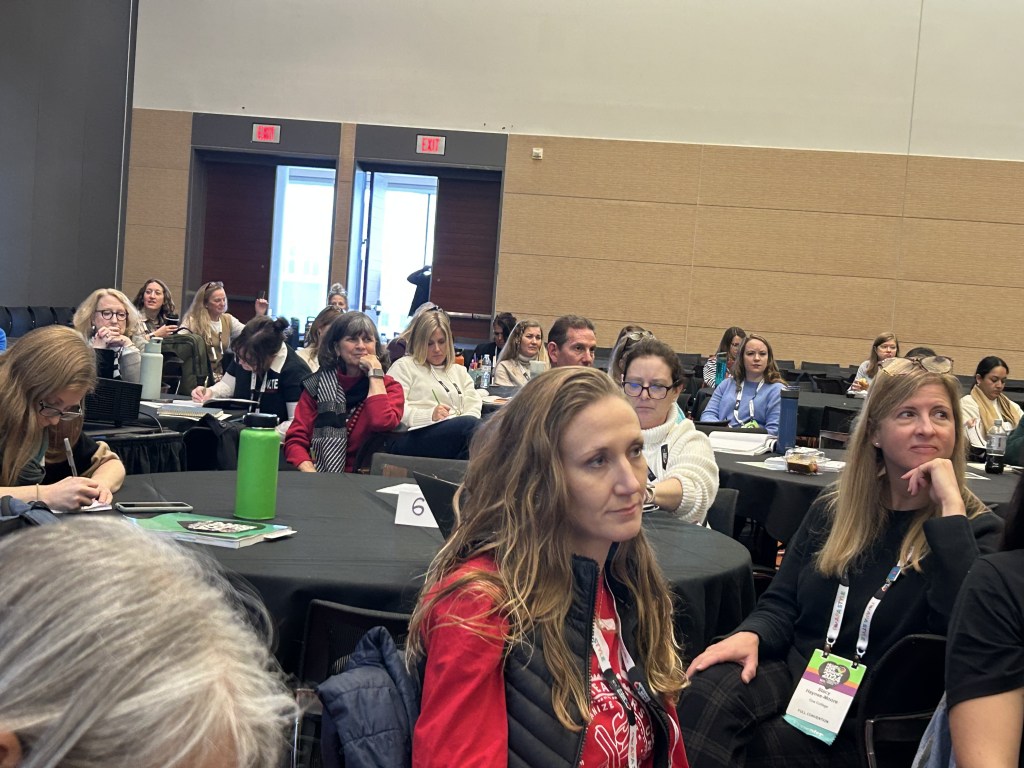
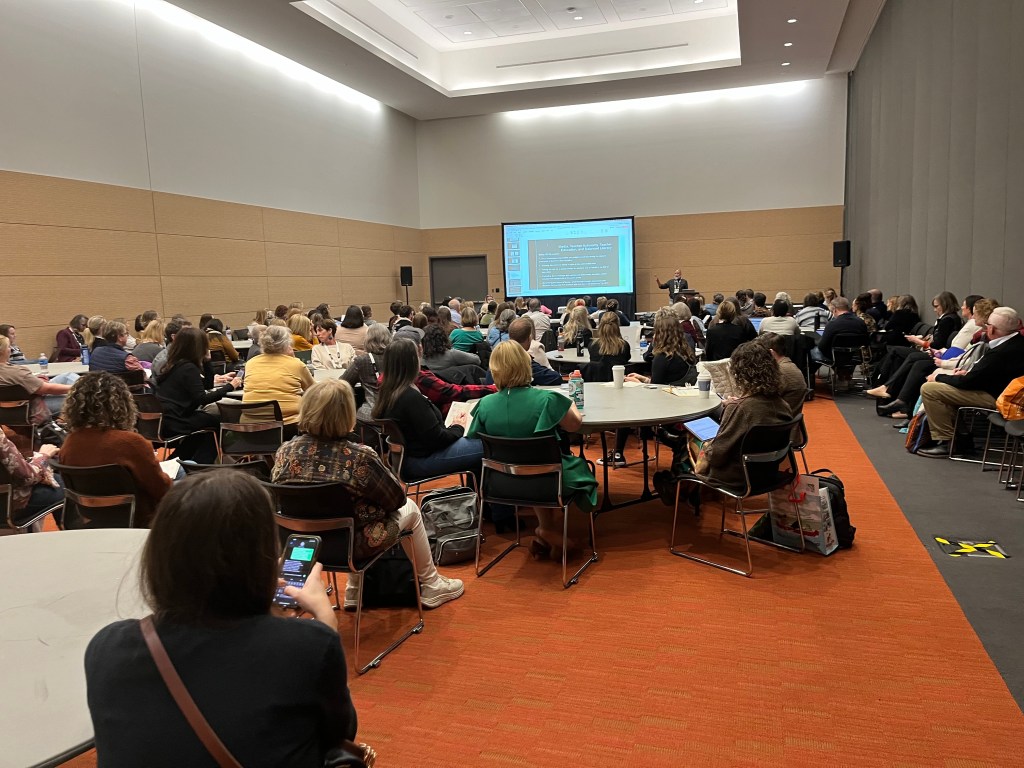
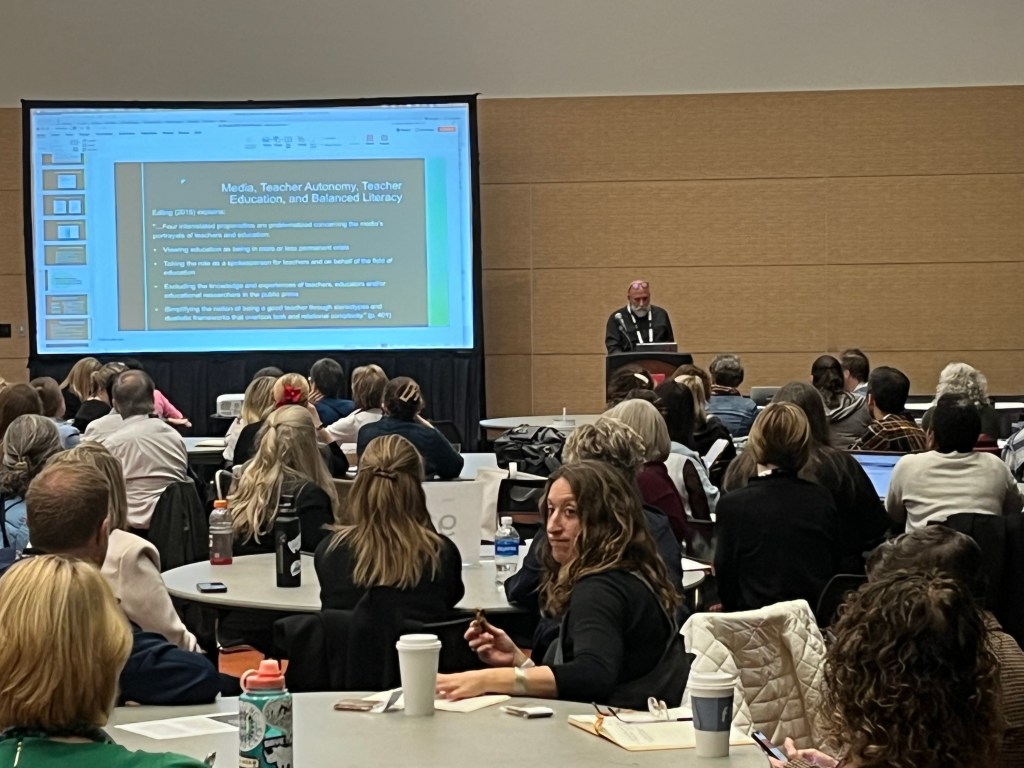
Please join the sessions below.

Also please support Proposed: NCTE Resolution Statement on Teacher Autonomy.

Voting: All NCTE members are invited to attend the Annual Business Meeting, scheduled this year for November 22, 2024, from 5:30–7:00 p.m. ET, and to take part in discussions and vote on resolutions about issues of concern to the profession! Membership must be verified before the start of the meeting.

Sense-of-the-House Motions: These statements reflect the opinion of the majority of members attending the Annual Business Meeting. They may be offered for discussion and action at the Annual Business Meeting. To be considered for deliberation, sense-of-the-house motions must be prepared in writing, must not exceed fifty words, and must be submitted to NCTECommittees@ncte.org, to the attention of the NCTE President or Parliamentarian, by noon ET on the day of the meeting. Such motions, if passed, are advisory to the Executive Committee or other appropriate Council bodies. They do not constitute official Council policy.


Also I am on Bluesky and will be posting there throughout the conference: https://bsky.app/profile/plthomasedd.bsky.social


Recommended

English Journal Series: We Teach English in Times of Perpetual Crisis


11/22/2024

12:30 PM – 1:45 PM EST

Resisting Scripted Curriculum as Erasure: Holding Onto the Heart, Hope, and Humanity of Reading

Room 210 B

Rountables Listing [click for PP]

Roundtable:

Paul Thomas

“Orange: Teaching Reading not Simply Black-and-White” [click HERE for PDF]


11/23/2024

2:45 PM – 4:00 PM EST

Standing for—Indeed, Fighting for—Teacher Professionalism and the Right to Teach Responsively

Room 205 A

Roundtables Listing [click for PP]

Opening Talk:

Paul Thomas

Attacks on Balanced Literacy Are Attacks on Teacher Professionalism [click title to access PP]

The “science of reading” movement has promoted a misleading story about reading through the media—reading proficiency is in crisis because teachers do not know how to teach reading and were not properly prepared by teacher education. This opening talk with argue that attacks on BL are grounded in efforts to deprofessionalize teachers.

Roundtable:

Paul Thomas

Reclaiming BL’s Commitment to Serving Individual Student Needs and Teacher Autonomy [click title to access PP]

Thomas will examine an authentic definition of BL as a reading philosophy that centers serving the individual needs of all students. He will examine also the caricatures of guessing and three cueing (MSV), providing attendees scholarly evidence for accurate characterizations of BL as well as deeper understanding of reading proficiency.

Recommended: Dr. Elana Aydarova. Science of Reading Mythologies

Dr. Elana Aydarova. Science of Reading Mythologies

Episode notes

Dr. Elena Aydarova is an Assistant Professor in the Department of Educational Policy Studies at the University of Wisconsin-Madison and a fellow with the National Education Policy Center. Dr. Aydarova’s research examines the interaction between educational policies, education reforms, and policy advocacy. She is an award-winning author of over 40 publications. Dr. Aydarova received postdoctoral fellowships from the National Academy of Education/Spencer Foundation and the American Association of University Women.

See Also

What You See Is Not What You Get: Science of Reading Reforms As a Guise for Standardization, Centralization, and Privatization | American Journal of Education, Elena Aydarova

Elena Aydarova; “Whatever You Want to Call It”: Science of Reading Mythologies in the Education Reform Movement. Harvard Educational Review 1 December 2023; 93 (4): 556–581. https://doi.org/10.17763/1943-5045-93.4.556

FreshEd #348 – Science of Reading Unpacked (Elena Aydarova) FreshEd