Category Archives: literature

Drama and the Struggling High School Reader

In my current trends in literacy course for our MAT program, I have 7 students across several content areas. Our discussion yesterday confronted how too often teachers (notably ELA teachers) assign texts and reading that discourage students as readers.

One candidate in ELA shared a story of a teacher who declared that most of their students “can’t read Shakespeare” so that teacher has the class listen to an audio recording of the play Macbeth.

I noted that required reading lists often do more harm than good for students as readers and added if I had to choose between required texts that students don’t read or choice texts that students actually read, I always want the latter.

Further, this example triggered a pet peeve of mine about how we teach different forms and genres of writing.

I asked the class what type of text Macbeth is, and they all identified it as a play. I followed up with asking how plays/drama are intended to be experienced, and again, they all noted that plays are written to be viewed, preferably as live performances.

Next, I shared with them recurring experiences I have with my first-year writing students (high-achieving students—disproportionately white and affluent—admitted to a selective liberals arts college).

Often on the first day of class, I ask students what novels they read in high school English, and several students will say A Raisin in the Sun, Hamlet, and such. I then point out that these are plays, and not novels. But the students have mostly read these plays in bound books that look identical to the novels they were assigned.

Also in the first few days, I have students do a writing exercise where they write a mimic passage from a chapter in Sandra Cisneros’s The House on Mango Street, “A House of My Own.” Students are told to mimic the grammar and style of the chapter exactly while changing the content.

The assignment is designed as a first transition to reading like a writer [1] (as opposed to reading text for literary analysis) so that students develop the skills needed to compose and revise with attention to not just what they express but also how they express their messages.

Invariably, several students email me their piece and identify it as their “poem,” despite my noting in class that they are mimicking a prose chapter from a novel.

In other words, very bright and often “A” students demonstrate over and over that they have garbled and often inaccurate knowledge about genre and form—and they learn these flawed lessons in school, typically in English, because of careless approaches to text like the one above concerning Macbeth.

I want to focus here on two aspects, interconnected, about how we teach text to students, particularly in high school.

First, concerning having students listen to or read plays, I always see lessons involving text as essentially lessons in genre awareness, a concept endorsed by Ann Johns instead of genre acquisition (her discussion forefronts composition, but this applies to reading as well):

Russell [and] Fisher (in press) distinguish between two approaches to genre pedagogy, two basic goals for a course or tutorial. The first is GENRE ACQUISITION, a goal that focuses upon the students’ ability to reproduce a text type, often from a template, that is organized, or ‘staged’ in a predictable way. The Five Paragraph Essay pedagogies, so common in North America, present a highly structured version of this genre acquisition approach. …

A quite different goal is GENRE AWARENESS, which is realized in a course designed to assist students in developing the rhetorical flexibility necessary for adapting their socio-cognitive genre knowledge to ever-evolving contexts. …I have concluded that raising genre awareness and encouraging the abilities to research and negotiate texts in academic classrooms should be the principal goals for a novice literacy curriculum (Johns 1997).

This juxtaposition of two quite different goals, genre acquisition and genre awareness, is reminiscent of another pedagogical contrast mentioned by Henry Widdowson years ago (1984) and, later, by Flowerdew (1993): that pedagogies are designed to either TRAIN for specific tasks (i.e., text types) or EDUCATE, to cope with an almost unpredictable future. It is my argument here that education should, in the end, be our goal for novice academic literacy courses, for a genre awareness education will prepare students for the academic challenges
that lie ahead. (pp. 238-239)

Johns, A.M. (2008). Genre awareness for the novice academic student: An on-going quest. Language Teaching, 41(2), 237-252.

Therefore, when I teach a genre or form, I typically invite students to ask questions and develop or refine their internalized rubric for what constitutes that genre or form (or medium): What makes a poem, a poem? What makes a comic book, a comic book? What makes a film, a film? What makes an essay, an essay? etc.

Reading and critical literacy require that the reader come to a text with some awareness of form and genre, and that awareness helps the reader navigate the text for meaning.

Sitting down to read Naomi Shihab Nye’s “Gate A-4,” for example, often challenges people since I have seen it identified and heard students refer to the work as a poem, a story, and a non-fiction essay (it is a prose passage, fictional, in Nye’s Honeybee: Poems & Short Prose).

Finally, we must confront why Macbeth was taught to these students through an audio recording—the conclusion that high school students couldn’t read Shakespeare.

I am deeply skeptical of the rush to identify high school students as struggling readers for several reasons:

  • Many high school students are non-readers and it is too easy to conflate non-readers with struggling readers.
  • Often, even in ELA courses, lessons and assessments are designed in ways that allow students to pass or even excel in a course without having to read [2] (students can access information on novels and plays or simply depend on the teacher to cover everything to be assessed in class, which most teachers do).
  • Students who are non-readers are not necessarily demonstrating they have decoding, vocabulary, or comprehension problems, but that they lack motivation to read texts assigned to them and to perform in ways that are not authentic. Many non-readers in the classroom go home and perform complex and advanced literacy that teachers do not see and traditional schooling does not acknowledge (video and board gaming, binge-watching TV, reading and collecting comic books, reading novels they choose such as YA lit or science fiction and fantasy).
  • Students who “struggle” with assigned texts and performing in ways that are often required in school (narrow analysis and multiple choice testing) may be struggling due to those expectations as well as lacking adequate experience reading (since they have passed courses without reading). I think “struggling” is a misnomer for that phenomenon.

Lou LaBrant warned in 1949, “We should not, under the guise of developing literary standards, merely pass along adult weariness” (p. 276).

And LaBrant (1937) held that belief because “the adolescent has much greater power to read and to think intelligently about reading than the results of our conventional program have led us to believe” (p. 34).

We ask too little of students when we fail to honor the fidelity of genre, form, and medium, but we ultimately fail students when we assume their lack of reading lies in a fault with them (“struggling”) instead of interrogating what we require them to read (or not read) and our reductive approaches to text and literacy.


[1] See here and here.

[2] I saw a former students several years after he was a marginal and combative AP Literature student of mine. He smiled and announced that he expected I would be surprised to know he earn a degree in English in college. Then, he added that he did so without ever reading a book assigned to him.

Sources

LaBrant, L. (1949, May). Analysis of clichés and abstractions. English Journal, 38(5), 275-278. Stable URL: http://www.jstor.org/stable/807545

LaBrant, L. (1937, February 17). The content of a free reading program. Educational Research Bulletin, 16(2), 29–34. Stable URL: http://www.jstor.org/stable/1471836

Reimagining the Teaching of English

Published in The High School Journal (May 1951) by Dorothy McCuskey, a review of Lou LaBrant‘s most comprehensive work on teaching English, We Teach English, concluded: “In short, this is no ‘how to teach’ book. Rather, it is a book which will cause the reader to re-examine the bases of his [sic] teaching methods and the content of his [sic] courses.”

LaBrant was a demanding teacher and scholar with a career as a teacher of English from 1906 until 1971. And one of the defining features of that career was her persistent challenges to how teachers taught the field labeled, then, as “English.”

The field traditionally called “English” has evolved over the years, often at the K-12 level being envisioned as English/Language Arts (ELA) or simply Language Arts.

Nelson Flores, at The Educational Linguist, recently confronted “Language Arts” as a descriptor or teaching English:

Schools often teaches courses called Language Arts. Yet, little actual art happens in most of these classrooms. Instead, language is often treated as a static set of prescriptivist rules that children are expected to master and mimic back to their teacher. This is not an exploration of the art of language. This is linguistic oppression.

How about we actually bring the art of language into Language Arts?

Concurrent with this post from Flores, I argued that students must unlearn to write in order to write well at the college level and shared on Twitter the baggage students bring to college, what they must unlearn:

Having been a high school English teacher for almost two decades and then a teacher educator focusing on ELA and a first-year composition professor for an additional two decades, I carry on LaBrant’s tradition of mostly swimming against the tide of tradition in terms of what counts as “teaching English.”

Students majoring in the humanities, specifically English, has declined significantly—”History is down about 45 percent from its 2007 peak, while the number of English majors has fallen by nearly half since the late 1990s”—prompting many colleges and universities to reconsider and even cut those majors and departments.

We are well past time, I think, the need to reimagine the teaching and fields of English/ELA for K-16.

At one level, English/ELA includes a complex challenge since teachers and professors in that singular field/discipline are often tasked with addressing a wide range of content included in literature and literacy (reading/writing). Bluntly put, teaching English/ELA is a herculean, nearly impossible task.

If we teachers of English/ELA are to be successful in covering literature and literacy K-16, any success found in our students is necessarily cumulative over many, many years. This is no trivial point, and not mere metaphor, but when teaching or learning literature and literacy, there is no finish line.

While I firmly believe we must distinguish between the teaching of literature and literacy, specifically between teaching literature and composition/writing, I also recognize that the myriad aspects of literacy are inherently recursive, symbiotic: learning to read is learning to write; learning to write is learning to read.

For people learning to teach, for example, high school English/ELA (courses that are designed to address both literature and literacy [reading/writing]), majoring in English often proves to be inadequate since English as a discipline at the university level tends to be literature based, often very narrow in course content (an entire semester on William Butler Yeats, for example).

Yes, English majors tends to write a great deal, but writing literary analysis or even so-called creative writing does not prepare a person to teach writing. In higher education, English (literature) and composition are distinct and separate fields.

To emphasize my point, when I was teaching American literature for high school students and as I teach first-year writing at my university, bringing texts into class has completely different purposes; it isn’t that both sets of students aren’t learning reading and writing in the courses, but that we are interrogating texts for significantly distinct purposes.

Literary analysis and reading like a writer are complex but different behaviors for students with different purposes and outcomes.

In fact, literary analysis is a discipline-based type of writing that demands unique moves and conventions than other discipline-based writing, such as in history, psychology, or the sciences.

I spent 18 years teaching high school English and have spent a bit longer now preparing candidates to teach high school English/ELA. I can attest without hesitation that expectations for K-12 English/ELA are excessive, inherently impossible.

While I don’t want to linger on the problems with teaching math, I do want to note that math tends to acknowledge the unique aspects within the field since students take sequences and more clearly delineated courses (geometry, Algebra I, Algebra II, calculus, etc.) that have mathematical principles in common throughout while maintaining the distinct features of each course.

With math (and the sciences), we recognize that a geometry teacher may be ill equipped to teach algebra (or a chemistry teacher, ill equipped to teach biology), but we tend to see English/ELA teachers as a monolithic monstrosity.

Somehow, with only a bachelors degree and at the tender age of 22, I was deemed capable of teaching American and British literature as well as writing to my high school students, but college professors several years older than that and armed with doctoral degrees are hired in English departments to teach Elizabethan drama (and such candidates often wave off requests that they take on first-year composition as well since, well, they aren’t trained to do that).

Sure, professors at the college level teach outside their specialities, but this is seen as a stretch, and not the norm or ideal. And when professors are tasked to work outside their areas of specialization, outcomes are often disappointing (my university decided years ago any professor could teach first-year writing—until it became abundantly clear that that is certainly not true).

Since a significant percentage of my college teaching load is now first-year and upper-level writing, I witness the harm done to students at the K-12 level and the inadequacies at the university level for writing instruction, historically a shunned cousin of the field of English since, I think, composition is viewed as mere teaching (and we all know the status of the field of education in academia).

Students need and deserve in K-16 schooling courses and teachers/professors properly equipped to teach both literature and literacy (specifically writing), but not simultaneously.

English/ELA must be reimagined as a complex field with symbiotic but distinct elements that require time and patience for both teaching and learning—and a much greater respect for the complexity and difficulty involved in teaching any of those different areas.

Writing in 1939 about the experimental program at the Ohio State University High School, LaBrant posed a similar argument:

That not all teachers are, however, equally skilled in assisting with all phases of language experiences, as, for example with personal or creative writing or with leisure reading; and consequently that students need a so-called “English” teacher who will assume certain specialized responsibilities and who will, in addition, study the general language growth of individual students and classes, and see that, as far as possible, adequate and balanced growth takes place. (p. 269)

An English Program Based on Present Needs

At OSU, the University School recognized that a team of teachers with unique training and strengths needed to work together in order to address that “language growth and study are to be expected in all phases of school experience”—not simply laid at the feet of the English teacher.

It’s 2021, and “we teach English” needs to mean something more complex than it does currently, something similar to a nearly forgotten experiment in the early twentieth century where LaBrant practiced what she preached.

Correcting Course on Correctness in English/ELA

My granddaughter is six, in the first grade, and currently in the throes of learning to read—as commanded by formal schooling. Recently, she has shown some of those typical bursts of improvement I have witnessed in learning by young children; those moments give meaning to the word “marvelous.”

In an effort to inject some joy into my granddaughter’s reading journey, I have given her some comic books (a medium that was central to my own journey to being a voracious reader and writer). I was concerned that the text and format of a comic book would be beyond her, but she loves to make her own books, which are heavily picture-oriented to tell stories, so I thought even if she couldn’t read comic books, they would be very appealing to her own hobby.

But what surprised me was when she picked up a graphic novel of Marvel’s Spider-Gwen, she immediately began reading quite well—until she hit very commonly used wording and words that aren’t served well by structured phonics; she stumbled over “gonna” and “wanna,” but was really thrown by “MJ” as the way characters refer to Mary Jane Watson.

Having been taught formally how to read in an environment grounded in correctness, my granddaughter stumbles over the far more prevalent language usage in the real world.

This tension is represented well by the fate of the pronoun “they” (and its forms); “they” for centuries has served in the real-world of speaking English as a gender-neutral singular pronoun even as so-called standard English has persisted in tossing that usage into the “incorrect” bin (although this nonsense is finally losing momentum in formal formats).

For more than a century, the field of English/ELA has resisted real-world language usage and awareness and preferred training children in language acquisition through systems of correctness (phonics rules and grammar rules). Teaching that is grounded in rules and correctness appears to be easier because that approach contributes to control and simplistic forms of assessment and grading, but approaching language through correctness is a dis-service to children and language.

Even though there are increasingly important calls for de-emphasizing correctness in English/ELA, such as the Conference on College Composition and Communication (CCCC)’s call for Black linguistic justice, those of us who teach reading, literature, or writing face an incredibly complex paradox—the challenge of fostering in students a healthy and valid view of language while also raising their awareness of the politics of language (that dialects such as so-called standard English, for example, do carry political weight in the real world even though it shouldn’t).

Boland and Queen address the tyranny of correctness in the real world in their Why grammar mistakes in a short email could make some people judge you. Here they investigate why “readers judged strangers harshly simply because of writing errors”—themselves using language of “correctness” (“errors”).

Every semester when I once again address issues surround formatting (citation styles, submitting assignments), I must confront the tyranny of correctness in terms of not wanting to perpetuate the unhealthy culture of correctness while also wanting my students to be aware of the power of correctness so that they have power over their language use instead of being victims of the “error hunt.”

Here, then, are some of the ever-evolving ways I am trying to navigate the tensions in teaching language against the tyranny of correctness:

  • De-grade correctness and formatting related to language. Removing grades and punishment allows a teacher still to address language use and shifts the focus to editing and away from correcting.
  • Change the language we use about language. I avoid “correct/incorrect,” “right/wrong,” and any reference to “fixing” or “correcting” when I mean “revising” or “editing.”
  • Use minimum expectations that move issues of correctness and formatting outside the more substantive elements of language usage. I often have students submit early drafts to address formatting (such as the working references list for a cited essay) well before submitting the essay for my feedback.
  • Examine all dialects and forms of language as powerful and complex language while also interrogating the politics of dialects, including that “standard English” exists and why it exists. Student awareness about the growing debate to de-center standard English is the least we can do in English/ELA on the path to actually de-centering it.
  • Foster a culture of purposefulness instead of a culture of rules. When we examine, for example, the arcane formatting guidelines involved in formal citation, I try to emphasize not that this or that format is “right,” but that formal writing needs to exhibit purposefulness by the writer as part of their credibility and authority. A submitted essay with two or three fonts and font sizes appears careless, for example, and diminishes the reader’s trust in the purposefulness of the writer.
  • Shift all explorations of language to discovery instead of complying with correctness. This, as I noted about my ploy with my granddaughter, is about the joy and wonder of language usage. Once we set aside corrupted and debasing beliefs about “good” or “bad” language (especially that one dialect is more or less rich than another), we allow students to engage with all language in healthy and complex ways.

I became a reader and writer vey heavily influenced by collecting and reading comic books, where the text is not simply formatted on the page and where artwork provides a substantial percentage of the textual meaning. My granddaughter has been zipping through reading aloud from children’s books or her homework worksheets (often designed to match the culture of correctness). But comic books and even signage have proven that correctness falters in the real world.

For far too long English/ELA classes and teachers have been associated with a hostility toward language (and students) because of a culture of correctness; our fields have also been too often disengaged with the real world, where WandaVision is more compelling than Shakespeare.

If we love language and our students, we must correct course on correctness in English/ELA.

Normality in Sayaka Murata

What is normal? Are you normal? Am I normal?

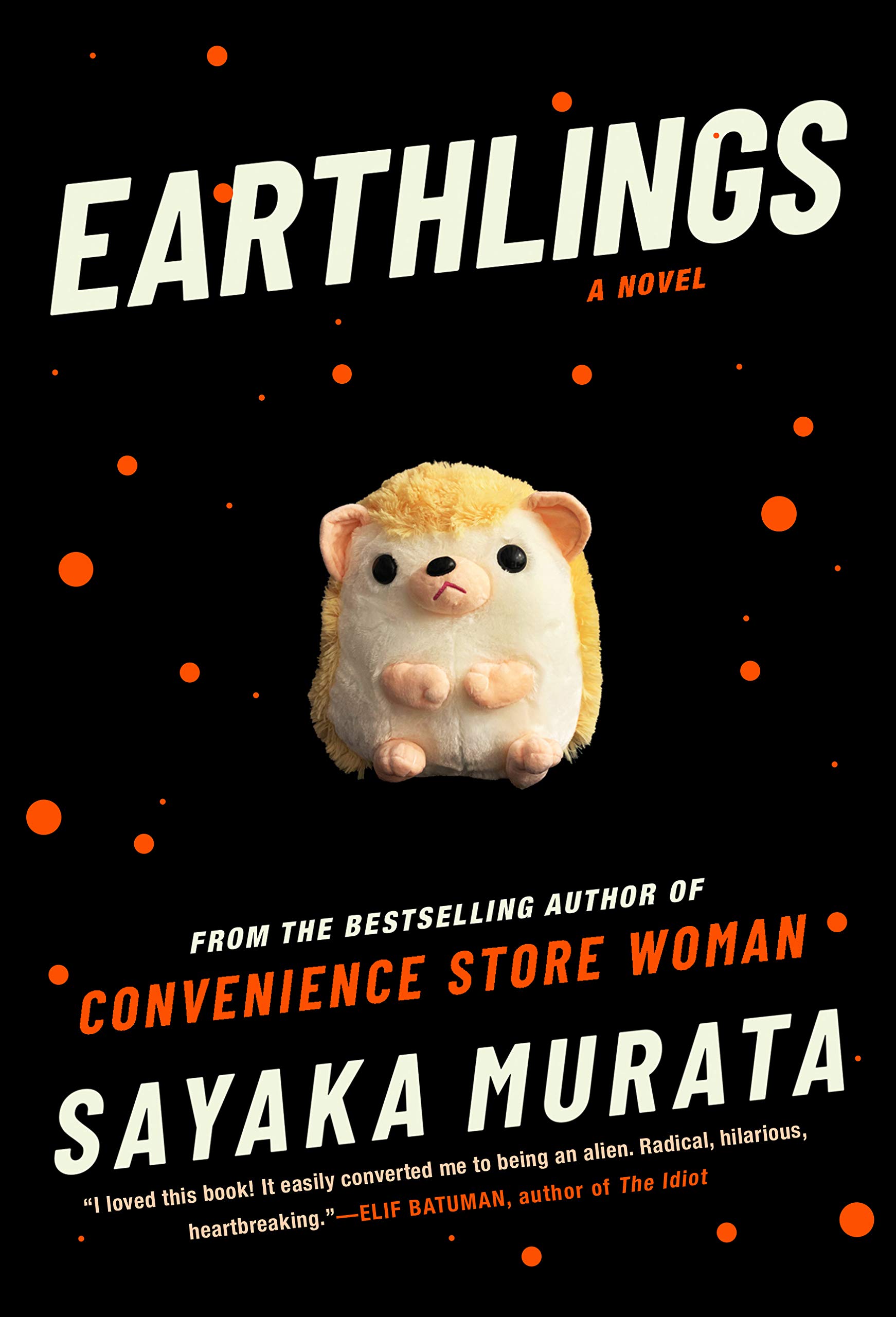
“Normality was contagious, and exposure to the infection was necessary to keep up with it,” explains Natsuki in Sayaka Murata’s Earthlings.

Earthlings: A Novel: Murata, Sayaka, Takemori, Ginny Tapley: 9780802157003:  Amazon.com: Books

If we accept that “normal” describes what is typical, and thus, what we may expect in any circumstance, then the novels of Murata are themselves not normal.

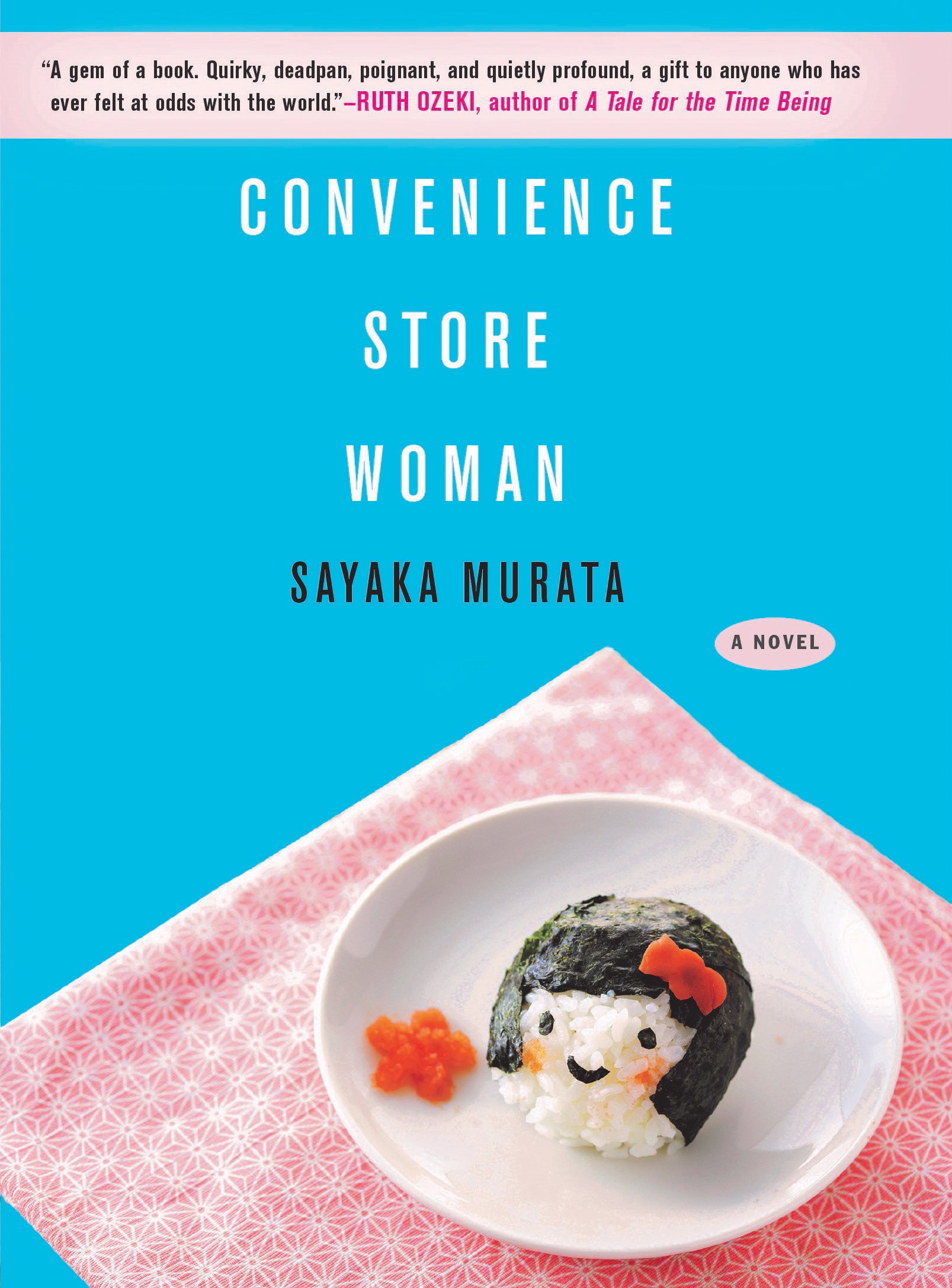
And the central characters in both Earthlings and Convenience Store Woman are certainly not normal either.

Amazon.com: Convenience Store Woman: A Novel (9780802128256): Murata,  Sayaka, Tapley Takemori, Ginny: Books

Having focused for the last couple of years on fiction in translation (see links below)—prompted in part by my scholarly and personal interest in Haruki Murakami—I think part of the appeal of fiction from other cultures, crafter originally in languages other than my native English, is that the works confront and challenge my perceptions of normal, even though my critical ideology always calls on me to question, to step back, and to reconsider the assumptions of being human.

However, Murata’s work has shaken me to the core, although in a different way than my recent journey through three novels by Ryu Murakami (below); both authors leave me confused about my responses to their graphic violence and matter-of-fact explorations of the decidedly taboo (child sexual assault, incest, and cannibalism, for example, in Murata).

But while Ryu Murakami crafts tension around both horrific violence by serial murderers and the ever-present threat of violence (readers can likely never again ignore the possibility of severed feet), Murata’s tensions are existential, and while far more dramatic than day-to-day human anxiety, any reader who lives with the existential dread of simply being alive must interrogate their empathy for Keiko (Convenience Store Woman) and Natsuki.

I read Earthlings first, mesmerized by the first third of the novel focusing on Natsuki at 11 years old and in the early stages of puberty. However, this opening is no coming-of-age narrative seeking to reach some sort of universal appeal.

Yes, some of the first two chapters is somewhat quirky explorations of what almost everyone understands about being an adolescent—especially Natsuki’s feeling alienated from her family, particularly her antagonistic mother—but Natsuki being the victim of sexual assault (far too common for young women throughout the world) turns even more disturbing because her confession of the abuse is callously dismissed by her mother and ultimately because Natsuki at 11 enacts a surrealistic revenge that leaves the reader, again, conflicted.

The rest of the novel is Natsuki as an adult, in her 30s, and here we see many of the same powerful motifs found in Convenience Store Woman, where Keiko is also a woman in her 30s.

Murata offers readers characters explicitly aware that they are not normal, but who are along a spectrum of navigating their world-views against either the urge to become normal or finding a way to exist in the so-called normal world as an alien (with sufficient ambiguity about whether that is literal, delusional, or metaphorical).

From casual interest in incest and gleeful cannibalism to choosing a single life as a career part-time convenience store worker, the plot elements of Murata’s novels shatter expectations about tone as well as anyone’s confidence in their own sense of normality.

It isn’t enough to say that Murata seems to show that there really is no such thing as “normal”—except for the power of normalization to seem real.

Murata pushes even further, toward the implication of normal as entirely arbitrary; “normal,” if we dare to be critical, becomes most harmful in human experiences when it becomes “right.”

Normal people marry and have children. Normal people seek out careers and center the focus of their lives on those careers.

And since these are the right things to do, this is how anyone can be fully human.

The harm, of course, is that those who choose not to marry, have children, and center their lives on their careers are choosing the wrong path—and are in effect not fully human.

This brings me to the ultimate overwhelming weight of Murata’s novels—the burden of normal on children and women as well as the role of normal in the sexual and physical violence pervading the lives of children and women.

Yes, there are cartoonishly surreal moments in Murata that prod a smile, but everything in her worlds is tinted by the inevitability of the disease of normality and the futility of a single human’s desire simply to be herself, her true and full self.

See Also

Found in Translation

The Diving Pool: Three Novellas, Ogawa, Yoko

The Housekeeper and the Professor, Yoko Ogawa

Revenge: Eleven Dark Tales, Ogawa, Yoko

Hotel Iris: A Novel, Yoko Ogawa

The Memory Police: A Novel, Ogawa, Yoko

Breasts and Eggs, Kawakami, Mieko

Piercing, Murakami, Ryu

Audition, Murakami, Ryu

In the Miso Soup, Murakami, Ryu

Convenience Store Woman, Sayaka Murata

Earthlings, Sayaka Murata

A Man, Hirano, Keiichiro

The Naked Eye, Tawada, Yoko

What Should Students Do with Text?: From Interpretation to Interrogation

Over the first week or so of my first-year writing seminars, I carefully explain to students that the course is not an English class, but a composition class.

Most students have experienced writing assignments primarily in English classes and often anchored to literary analysis (interpreting fiction and poetry grounded in New Criticism or “close reading” assumptions about analysis).

In our composition class, we explore many texts, but are mostly examining non-fiction and the essay form. A guiding structure I used with high school students (including those preparing to take Advanced Placement exams in literature) and continue to use in first-year writing is to ask the following questions when engaging with text:

  • What is the author saying or arguing?
  • How is the author making that case?
  • Why does it matter to the reader?

The transition I am addressing for composition courses is away from literary analysis, interpreting text, and toward reading like a writer, interrogating text (something my students encounter in John Warner’s The Writer’s Practice).

However that same transition should also occur in literary analysis since traditional interpretation tends to focus on a static and misguided view of meaning—such as the “close reading” argument that meaning exists only in the four corners of that text.

Texts in a composition course that focuses on students as essay writers tend to serve as models for the writer’s craft as well as how to create and maintain the writer’s authority (specially in scholarly writing). I often tell students to mine those models of the essay for the “how” in the the three questions above—rhetorical strategies, literary techniques, organizational structure, etc.

Too often, I have noticed that traditional interpretation of fiction and poetry does not serve students well who are likely to navigate college in ways that never ask them to interpret fiction and poetry but that do require them to construct original essays that investigate and interrogate complex ideas, disciplinary knowledge across many disciplines, and non-fiction texts.

As just one example of the high school/college disconnect I have highlighted often, students tend to leave high school believing they should have MLA citation memorized only to discover a vast array of citation styles and the expectation that they know how to use the style guide assigned (and not memorize formatting).

One way to bridge the disconnect between high school English and first-year writing as well as writing expectations in college is implementing interrogation instead of interpretation at all level.

Reading like a writer in a composition course (see here and here) matches well experiences interrogating literature (fiction and poetry) since the larger concept is not identifying a fixed meaning, but considering and contesting many aspects of the text—such as writer intent, writer craft, and the role of the reader in creating meaning.

For example, consider Lavina Jadhwani’s approach to Shakespeare: Dismantling Anti-Black Linguistic Racism in Shakespeare.

In an interview, Jadhwani explains:

I spent a long time thinking Shakespeare’s plays were inaccessible to me: Either I didn’t have the “right” training or I wasn’t in the “right” circle. I wasn’t getting invited to direct them. I spent a long time feeling like I wasn’t worthy, and I think a lot of people feel that way.

This experience, I think, comes from how Shakespeare is taught, the focus on so-called objective interpretation of text that ignores the role of the reader as well as the many historical contexts of any text.

More specifically, Jadhwani explains how to approach Shakespeare through an anti-blackness lens (interrogating):

The document I created started with the word that starts with an “n” and means miserly. I don’t use that word, and I don’t see a reason for it. If you are a Black artist who has a different relationship to that word and feel like you want to reclaim it or use it in a certain way, I say, “Go for it.” As a non-Black artist, I only know the harm that word does, and “miserly” is just as good. It’s clearer. It scans. There’s no reason not to use it.

If there’s an instance where the word “slave” does harm and the word “knave” doesn’t, I think you can change it. I don’t know if that word did harm to Shakespeare’s audiences, but it can to ours. In an instance like that, I believe that making a substitution is actually closer to honoring Shakespeare’s original intention.

Further, this approach moves away from seeing any text as the ends, the goal, of instruction, and moves the text to a means to a much richer range of goals.

For example, Jadhwani’s anti-blackness guide invites students to consider and reconsider “cancel culture,” the historical context of Shakespeare’s language and Elizabethan culture, and their contemporary association with language, race, and racism.

To interrogate Shakespeare is to ask far more of teachers and students than the traditional interpretation process that restricts students to the text and evaluates the student against a singular and authoritarian meaning.

Even as high school English remains primarily courses in literature (with an emphasis on fiction and poetry), students need a much better foundation for writing in college or in the workplace. I am not rejecting the value of fiction and poetry or writing literacy analysis.

Literature and composition goals are different, and both valid. But we should find ways that those goals are symbiotic and not in conflict.

To achieve that, students should be invited to interrogate and not simply interpret text with their own reading and writing goals in mind.

Misreading the Main Idea about Reading

About a decade ago, I accepted an invitation from the ACT to review a set of new test questions for their reading section. As a career-long anti-standardized test advocate, after talking with several colleagues, I accepted that an inside view of the process would help me better confront the problems with tests such as the ACT and the SAT.

The process included receiving the test section, taking the test myself (and taking notes), and then being flown to Iowa City to attend a workshop where we walked through each question to help the test designers revise and edit so this section could be added to the implementation of the test.

Some important take aways included discovering that the test designers were almost exclusively experts in test design (not reading or literacy) and confirming that “good test questions” were mostly about if the question creates “spread” (a range of correct and incorrect) in the data and not if the question is a valid assessment of reading ability (whatever that is).

This experience came to mind when I ran across this on Twitter:

A well-educated adult struggling with a kindergartner’s worksheet also reminds me of “Sara Holbrook, the writer who couldn’t answer test questions about her own work,” covered by Peter Greene.

While I think we may need to extend some grace to the teacher who sent this work home during a pandemic, I also think we should confront that this is a quite common way to approach reading and teaching reading—common ways that are deeply flawed.

Both the kindergarten homework and the author puzzled by standardized test questions reflect reading instruction and assessment that are skills-driven—framing the holistic act of reading as a collection of identifiable reading skills such as “main idea.”

A skills approach to teaching and testing reading tends to focus on decoding (phonics), vocabulary, prior knowledge (content), and an array of reading strategies (identifying main idea, predicting, context clues, etc.).

While literacy teachers and scholars tend to agree that these all are valid elements of reading, the debate lies in whether or not teaching and testing them in isolation are valid reflections of the whole act of reading.

The skills approach has some practical advantages in whole-class formal schooling, especially when classes include 25-35 students and when thousands of students are being tested.

In other words, a skills approach is efficient (easy to manage as instruction, and quick and cost-effective as assessment) and it also lends itself to a teacher-centered, authoritative mode of teaching (someone in authority determines the answers, and by their authority, those answers are “correct”).

The skills approach during early literacy development also feeds well into the New Criticism norm of text analysis that is common in middle and high school (re-branded under the Common Core as “close reading”). Reading assessment in standardized testing requires that “right” answers exist neatly in any text and that a systematic form of analysis lends itself to identifying that “right” answer.

But, as the kindergarten and published author examples above demonstrate, the skills approach and the “right” answer view of texts are deeply flawed, and likely work against fostering students as eager, independent, and critical readers.

No sophisticated adult readers sit down to answer a set of multiple-choice questions about a text they have read once they are finished. Those of us who pleasure read are likely to do almost nothing once we have read, or we eagerly find other people who have read the text so we can discuss the experience.

And those conversations are rarely punctuated with “main idea” or “theme,” but mostly about how we felt about the text and all the connections we noticed with our lives or other experiences we have had with all sorts of art—other texts, movies, music, etc.

Here, then, are a few ways we should change how we teach and assess reading, especially with young students.

First, in kindergarten, our focus should be far less on skills and mostly on fostering eager readers. Frankly, there is no urgent need for children this young to correctly interpret any text.

Reading to beginning readers and inviting them to have a wide range of emotional and text-based responses (mostly free of evaluating them for being right or wrong) should replace a skills approach in kindergarten (and likely through the first three or four years of school).

Gradually, we should move toward helping students navigate text in ways that improve their ability to gain valid conclusions from that text, keeping in mind that “meaning” isn’t necessarily fixed and in many cases may be more about contested meaning, not one right answer.

Skills approaches to reading can mostly be justified as efficient, but seeing reading as a set of discrete skills and strategies is, none the less, not reading since it is a holistic act.

As I have noted before, for example, people have large vocabularies from reading extensively, but learning a bunch of isolated vocabulary doesn’t necessarily make a person highly literate. We too often flip the value and consequences of the whole act of reading and identifiable reading skills and strategies.

Next, we must be careful not to teach or test skills for the sake of those skills, but to always keep our focus on the whole text and the reader’s reading experience while acknowledging that skills and strategies are working together in the process of making meaning and reaching critical conclusions about the text.

For example, the kindergarten worksheet is having children find “main idea” as if that is a reasonable or authentic goal (it isn’t) instead of helping students come to understand that text has large meaning (such as main idea and theme) that can be justified through smaller elements in the text (supporting ideas, literary and rhetorical techniques).

Asking students “What do you think is important about this text?” (Or “What did you enjoy in this text?”) is a much better approach that can be followed by “Why do you think that?” (moving them to offer textual support). Here, we are starting with the student (not some skill or predetermined “right” answer) and still fostering careful and purposeful approaches to text.

Finally, the big picture problem with these examples, and why a skills approach is common in the teaching and testing of reading, is that we have created teaching and learning conditions that are counter-educational for literacy growth.

We have chosen efficiency over authentic literacy in the U.S. because we refuse to invest in teaching and learning conditions (low student/teacher ratios, fully funded classrooms and materials) that would support effective teaching and rich learning by our students.

Skills approaches to reading are efficient and manageable, but as the kindergarten example above shows, they simply are not reasonable or authentic.

While I question the periodic cries that the U.S. has a reading crisis, I can attest from 36 years of teaching that we do far too often make young people hate to read—and there are tragic consequences to misreading the main idea about reading in schools.


See Also

Negotiating Meaning from Text: “readers are welcome to it if they wish”

LaBrant, L. (1937, February 17). The content of a free reading programEducational Research Bulletin, 16(2), 29–34.


The Unforgettable Yoko Ogawa

My experience with Yoko Ogawa’s The Memory Police was filled with moments of disorientation that matched at a much smaller level the events of the novel, set on an unnamed island where the inhabitants suffer through a series of disappearances under the surveillance of the Memory Police.

First, I was drawn to the stunning cover and a description promising a stark work of science fiction.

Since I received a hardback copy and the inside flap claims the novel is a “stunning new work,” I began reading the work as exactly that—a newly published novel by a young writer.

Yet, as I read, the genre wasn’t so neatly clearcut, and I soon learned the novel is from 1994, the English translation being new, but Ogawa, now in her late 50s, has a celebrated career in Japan.

“I sometimes wonder,” the narrator begins, “what was disappeared first—among all the things that have vanished from the island” (p. 3). And from there, the novel proceeds ominously but softly, or subtly, in a voice and a story that do prove to be stark but defy a simple label of science fiction; at turns it reads as fantasy, and then as fable or allegory.

For a book centered on the provocative act of disappearing, I was drawn as well to how much is not there to begin with. Character names and place names are missing or sparse. But I also felt off balance, disoriented, by the mismatch between the patient and soft narration against the foreboding doom of the disappearances, some of which seem minor although the loss and the ever-present threat of the Memory Police render all of the disappearances life-altering.

Reading Ogawa for the first time reminded me of Haruki Murakami, Albert Camus’s The Stranger, and Philip K. Dick—although I quickly warmed to seeing the novel as purely a work by Ogawa. In some ways there is a sense of detachment and very slow development I find often Murakami, and may be shared qualities of Japanese narrative.

Broadly, Ogawa’s fable is a powerful reflection of Camus’s existential message from The Stranger: “after a while you could get used to anything” (p. 77). However, in Ogawa’s allegorical nightmare, that concept is both proven and stretched almost beyond comprehension by the end of the novel.

It is the similarity with Philip K. Dick that sits strongest with me, though. Like Dick, Ogawa creates a pervasive sense of foreboding and fatalism in the lives of the characters. The totalitarian reality of The Memory Police is similar to many of Dick’s works as well as Margaret Atwood’s The Handmaid’s Tale and The Testaments, but Ogawa keeps the reader detached from and uninformed about the facts of that oppressive society.

Also similar to Dick, Ogawa investigates human nature, including what makes anyone human—or in this case, what can a human lose and still remain human (similar to a motif in Kazuo Ishiguro’s Never Let Me Go).

Another sparse aspect of the novel is plot, but as a reader, I was fully engaged with the characters; Ogawa’s careful and delicate portrayal of friendship and intimacy suggests that at least one key component of being fully human is our community with others.

The Memory Police begins calmly and persistently, but it never really reaches a boil or fever pitch, ultimately fading to the end more so than disappearing suddenly as is the case within the narrative. The novel, in fact. ends with the word “disappear,” and I was left filled and emptied simultaneously.

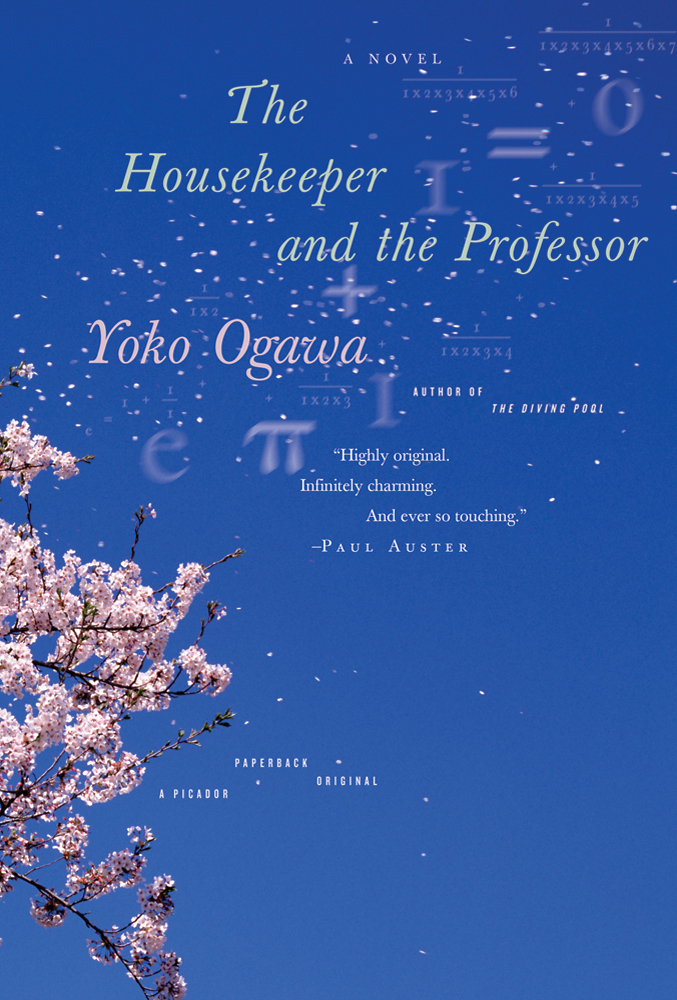
While reading this novel, I ordered four more of Ogawa’s works, and immediately began The Housekeeper and the Professor, where I found a rhythm that feels distinctly Ogawa’s.

Image result for the housekeeper and the professor"

While this slim novel reads as literacy fiction with a touch of allegory, absent many of the conventions of genre fiction, Ogawa once again deals with memory. In The Memory Police, characters not only have material disappearances, but over time, most of the characters no longer remember what has been lost—except for the rare few who become targets of the Memory Police.

Recall becomes dangerous, and suggests those with their memories intact have power that the omnipresent Memory Police are charged with erasing.

The premise of The Housekeeper and the Professor is not fantastical, but it is exceptional; the Professor of the title is an aging mathematical genius who, after an accident, has only 80 minutes at a time of memory along with his memory of his life prior to 1975.

Since his short-term memory constantly resets, his sister-in-law, alone as his caretaker, is challenged to keep a housekeeper employed to manage his life.

Ogawa builds on this unusual circumstance a really sweet and beautiful narrative about the housekeeper, her young son (dubbed Root by the Professor), and the Professor. The characters are often gentle and kind souls, often delicate, in spite of the odd nature of the Professor’s life and their tenuous relationships.

The story is often quirky, and Ogawa manages several moments of real tension on much smaller levels than in The Memory Police, but palpable tension none the less.

Although not essential knowledge for the reader, this novel’s use of mathematical principles is the motif that holds the story together, more weighty than the low profile of the plot and the slow development of the themes and characterizations. For the Professor and eventually the housekeeper and her son, math is beautiful and fascinating.

In Ogawa’s work, memory as that blends with all human relationships seems to be an essential element of being fully human, but in The Housekeeper and the Professor, readers also witness something about our basic humanity, for example in how the Professor interacts with and teaches Root:

Among the many things that made the Professor an excellent teachers was the fact that he wasn’t afraid to say “we don’t know.” For the Professor, there was no shame in admitting you didn’t have the answer, it was a necessary step toward the truth. It was as important to teach us about the unknown or the unknowable as it was to teach us what had already been safely proven. (p. 63)

That last sentence, I think, is a wonderful description of my experience reading Ogawa, which now continues with her collected three novellas, The Diving Pool.

Recommended Works in English Translation

Haruki Murakami

After the Winter, Guadalupe Nettel

The Plotters, Un-su Kim

The Transmigration of Bodies, Yuri Herrera

Signs Preceding the End of the World, Yuri Herrera

Kingdom Cons, Yuri Herrera

The Vegetarian, Han Kang

The White Book, Han Kang

The Polyglot Lovers, Lina Wolff