Category Archives: memoir

Rednecks, Hillbillies, and Crackers

Before my father graduated high school, he had a full set of false teeth. Finding—and later being able to afford—dentures that fit well were an important part of his life for sixty years.

Once his health began to deteriorate nearly as precipitously as his bank account in the last several years, that final set of dentures, lower quality and cost, made him look even less like himself than the disorienting transformation from aging and ill health—both making him enlarge, barrel-chested and swollen, as he simultaneously shrank in stature.

My father was a rough and rambunctious 1950s redneck growing up, losing teeth a few at a time from playing sports and the occasional fight. His dentist eventually decided to pull the last few and fit him with false teeth.

My mother, my sister, and I, then, never knew my father when he had teeth.

This was part of my 1960s childhood, a redneck life in Upstate South Carolina, my father’s home town. It seems fair to say that my mother was, as a North Carolinian raised mostly in Lexington and Lumberton, a hillbilly of sorts.

But theirs was no mixed marriage.

In fact, it took me many years, and well after I had moved out, to recognize the nuances of my parent’s slightly different Southern drawls and vocabulary. Both of my grandfathers had been painfully quiet men, although my maternal grandfather was equally painful in the slowness of his speech when he did (rarely) speak.

So I needed some distance to begin to acknowledge that this SC/NC couple had families who were often as unlike as like each other.

When my parents died a couple years ago, with those deaths shrouded in the ugliest possible consequences of an inadequate and inhumane healthcare system, I was pushed further into more fully and openly interrogating my redneck past.

Recently, I have been confronted, first, with Season 2 of Mindhunter focusing on the Atlanta child murders and the series’s characterization of KKK members, Georgia crackers, and next, with Ozark‘s fascination with distinguishing between rednecks and hillbillies.

Over the years, I have been exasperated often with the portrayal of white Southerners in the media, entertainment, and even popular memoirs (such as Hillbilly Elegy and Blood Done Signed My Name).

Those representations range along a spectrum of cartoonish to romanticized that deeply distorts both the humanity of those of us from the South as well as the many serious flaws that do persist among poor and working-class white Southerners.

As a lifelong Southern redneck who grew into social awareness and continues to wrestle with that redneck past against a deeply held moral imperative toward social justice, I am constantly faced with a paradox—seeking ways to defend the accurate, complex, and often deeply flawed white Southern characterization while in no way defending its historical and current racism, sexism, and homophobia.

I cannot express often enough the tragedy that is the self-defeating South.

With this newest focus by the two series above on redneck, hillbilly, and cracker, I have been thinking about my toothless father and the ugly stereotype of the toothless redneck/hillbilly/cracker.

The broader stereotype of white southerners is that we talk grammatically incorrect (therefore, we are stupid) and we are often poor.

These stereotypes expose deficit and misguided perceptions of both language and poverty, but it is the “toothless” slur that draws my attention now.

I hear fairly often about poor Southern whites that they have less sense than teeth, or something like that. And while watching Ozark fumble through their interest in distinguishing between rednecks and hillbillies, I have for the first time more clearly considered how damning the “toothless” slur is.

Being toothless among the poor has its roots in all sorts of inequity, mostly that poor and working-class Americans too often do not have access to affordable healthcare (including dental) or healthy food.

The “toothless” slur ignores that inequity but certainly reinforces the rugged individual myth: If only poor white trash would take care of their teeth!

Toothlessness is their shame, both cosmetic and as a sign of carelessness (if not the real ugly floor of all poverty shaming, laziness).

More recently than this Southern stereotype, this shaming of rednecks regardless of region, is the toothless meth addict, a characterization again grounded in shaming and perpetuating that the addict is solely to blame for the consequences of the addiction.

Watching both Mindhunter and Ozark, I think of my immediate family as well as the many, many rednecks of my life lived in SC. But I also have come to think very often of my toothless father.

With his better quality dentures and his crewcut, my father struck the pose of the handsome, hardworking white man of the mid-twentieth century South. He also believed in all of the great American myths about rugged individualism and pulling yourself up by the bootstraps as well as the ugliest racist and classist narratives that were ever-present in his community.

My father and mother did everything they could to maintain the veneer that they had no past in being poor and they were not working-class, but middle-class.
IMG_0716
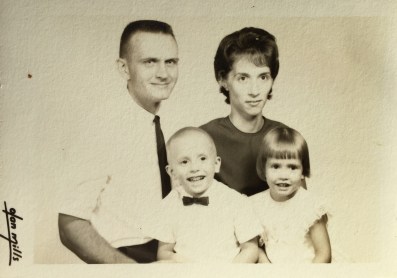
Keith, Rose, Paul, and Eydie Thomas— the family.

Their paradox was that they did in fact have a hand in their own disturbing dying days that were greatly accelerated and worsened by a harsh society and inhumane government that they endorsed until their last breaths.

It feels too much like a Poe short story, my being sometimes haunted by my father’s last pair of dentures that made him look cartoonish and pitiful, only a faint glimmer of the man I knew as a child. A powerful and all-too-happy young man who grew into massive forearms and a constant refrain of “If I was any better, I couldn’t stand it” to anyone who asked how he was doing.

Until that last pair of dentures, I had lived with a different image, one recreated by the telling of stories by my father.

When I was very young, my father was play-wrestling with my mom (they were very playful young adults, together and with my sister and me). My mom feigned that she was in distress and called for me to help her.

Just a child, I ran over and kicked hard at my father’s head. He turned away untouched, covertly removed his false teeth, and then rolled back to confront me with a huge toothless grin.

I screamed and cried, as my father told the story, while my mom and dad laughed.

This was my childhood, but I cannot tolerate the romanticizing of white Southerners anymore than I can stomach the petty stereotypes driven by poverty shaming.

I have loved my parents and family very deeply while also being very angry at them and my hometown for all the hatred and the self-defeating politics.

Over the last few years, the media have become obsessed with struggling whites all across the U.S. Many are rednecks, hillbillies, and even crackers.

There is so much white fragility on display that I recognize now even more deeply how whites resist equity and hard truths in the U.S. while always hiding behind a very large and starkly white banner. Maybe “Christian nation” or simply “U.S.A.”

Or the most disturbing and red “Make America Great Again.”

Yes, there are distinctions among rednecks, hillbillies, and crackers—but those really do not matter as much as what they have in common, an inordinate power linked to their being white and an irrational anger toward a world finding ways to expose those privileges so that we can end them.

And walking through that world, I am the son of a toothless redneck.

Once Racist: More on My Redneck Past

There is so much about the U.S. in the story of Kyle Kashuv.

Kashuv as a teenager has had thrust upon him a complex and accidental fame. First, he gained recognition by being among the high school student survivors of the Parkland, Florida school shooing.

Next, Kashuv filled a partisan political niche by being the face of conservative activist students after that school shooting—an event that spawned a rise in what has been characterized in the U.S. as left-wing political activism by a number of his classmates.

And now, Kashuv is the face of consequences: He was first accepted in Harvard and then that acceptance was rescinded.

Conservatives across the country have rushed to express outrage, focusing on arguments that his actions (documented and repeated racist language) occurred while he was still young; these defenses of Kashuv have often been absent the fact that colleges, and Harvard, have rescinded acceptances for similar reasons in the past (with little media fanfare) and that the nature of all college admission is judging applicants for their behavior while only in their teens.

By the logic of apologists for Kashuv, Harvard—and all colleges—are irresponsible for admitting or rejecting students for the grades they earned and the accomplishments they achieved while teenagers.

But the larger problem with how conservatives have rushed to defend Kashuv is that it is grounded in a plea for license, not freedom.

Kashuv has not been denied his freedom to express racist language and bigoted ideology; Kashuv has not been denied the opportunity to rise above these deplorable displays of calloused youthful indiscretion (if that is what it was); and Kashuv has not been denied access to a college education.

While it may seem harsh due to his age and his notoriety, Kashuv is simply experiencing consequences. To be free to speak and believe in the U.S. is not, ideally, also freedom from consequences.

As I watched this debate play out on social media, I noticed several people share that when they were teens, they knew racist language and slurs were wrong, and they refused to use them.

For me, however, I have quite a different confession—one that the following Tweeted video well documents in a context far different than my upbringing in the 1960s and 1970s in South Carolina:

These children above both knew the terror of their language and their actions, and they seem almost gleeful in the boldness of their hatred. This video in many ways feels like the evidence of Kashuv’s behavior, which he frames as “private” and “immature.”

In my home and community of Upstate South Carolina, everyone knew racial slurs and racist behavior were dehumanizing and, essentially, wrong. But whites of all social classes and statuses persisted in using the language (casually and often in whites-only situations) and held the N-word in their pockets when the moment arrived to wield it against a black person.

Except in rare circumstances, you see, there were virtually no negative consequences for our casual and aggressive racism; in fact, among whites, racial slurs and behavior gained a person status.

Whites pridefully told stories of putting black people in their places—retelling in vivid detail the exchange so that racial slurs were fore-fronted in the retelling.

When I was in my late teens, I worked as an assistant in a golf pro shop at the country club where my parents built their dream home; this was the urge of proximity my working-class parents aspired to as an unconscious rejection of being just working-class in the good ol’ U.S. of A.

The private golf club was all-white, as detailed in the by-laws, but the people living on the course and the members were mostly just the rednecks of my hometown no matter how hard they pretended to be otherwise.

One morning while I was in the pro shop, one of the grounds crew workers was milling around and decided to teach me something: “Want to know where [racial slur] come from?”

We were alone, and he was an adult. But I was pretty sure I didn’t want to hear what was coming, but his question was just a formality.

He explained in detail that when Cain killed Able, and Cain was banished from the Garden, Cain mated with apes. And the result was the black race. And he had learned this himself in church. Sunday school.

He quoted scripture.

The problem with this moment in my life is that my only real response—all remaining private in my thoughts—was that I knew I wasn’t that ignorant. But thinking myself better than this man did nothing to dissuade me from my casual racism couched in my family and my community (among many whites who actually did not reject this man’s outlandish Garden of Eden version of races).

So here is my story of privilege, of the grand comfort I was allowed because I was a white young man and a good student, smart.

I attended junior college, and then I was a commuter at a satellite campus of the state university—never even considering a selective college in my home state much less something a rarified as Harvard or Duke. I was first-generation and my parents, despite their aspirations, could not have afforded more than what I did (college never cost my family more than hundreds of dollars a semester).

Here is the white male privilege part, and why I am not an apologist for Kashuv having his acceptance revoked—even as I freely admit my own behavior probably trumped his in many ways.

At junior college on a lesser level and then during my last two-and-a-half years as an undergrad, I was allowed the space to realize that an entire world and set of ideologies existed unlike my home and community—specifically that many well-educated people were actively not racist, sexist, or homophobic.

These new contexts and my journey with professors and literature (Ralph Ellison, Alice Walker, Richard Wright, Langston Hughes) allowed me to choose to be a better person, to face my bigotry spawned by my home and community in order to be a more humane, to be fully human.

Four decades later I am deeply embarrassed by who I was for those first couple of decades of my life. In fact, I spend a good deal of my work as a teacher and writer seeking ways to confront that past by advocating for equity for all humans.

But there really is nothing I can do that pays the debt, that changes my history.

As I watch the sound and fury surrounding Kashuv, however, I can say without hesitation that he is being afforded a privilege I was not; Kashuv is being held accountable and this is happening early enough that he can right his ship if he so wishes.

He will suffer very little loss from this, but he can benefit—as white men often do—on the other side of being a truly calloused young man who is blind to his advantages.

There is far too little difference between my truly unforgivable youth and Kashuv’s more recent “private” and “immature” racism.

Neither, however, is the least bit funny, and neither is a case of how the U.S. should honor freedom.

Language and behaviors must have consequences in order to protect everyone’s humanity against the privileging of some people’s humanity.


45s

My dad drank Crown Royal and collected the purple bags the bottles came in. My dad and mom both smoked, mom preferring Kool brand with the green logo.

This was the 1960s, but with my parents it was the sort of 1960s left over from the 1950s. Not the hippie era yet; that was my mom’s sisters and brother, living then in Asheville among race riots.

We lived until about 1967 or 1968 in a rental house just outside of Enoree, South Carolina, near Kilgore and just south of Woodruff—what would become my hometown once we moved to another rental house near all the schools before our permanent home my parents built by 1971 at the golf course just north of Woodruff.

The Enoree house had a barn as a garage and sat across the street from Lefty’s, a beer joint that shuttered up on Sundays so men could watch 8mm stag films projected on a hanging sheet. My dad went some times.

This was the home where our family dog, a collie named Sonny, was hit and killed by a car, and my dad had to bury it somewhere in nearby woods while the rest of us sat in the house and cried.

This was the home where on rare snow days we had violent and relentless snowball fights.

This was the home where we had tea fights, an open invitation for anyone to toss a cup of tea in a family member’s face starting the tea fight that often ended with my dad bringing the hose in the house to end the tiny war.

This was the home where we played olly olly oxen free, dividing as we often did during card games—me with mom and my sister with dad—to toss a ball over the house for the other team to catch

And this was the home where my mom and dad shagged and slow danced to 45s, my dad drinking Crown Royal, and mom and dad both smoking.

My dad was a stereotypical macho working-class white man reared in the 1950s. But when they danced he was completely unself-conscious as he moved gracefully and with flair, singing along with some of his favorite songs—almost all Motown.

“I don’t like you, but I love you,” Dad would sing, his hand in mom’s as he spun her around the wood floors of that home with sliding glass doors looking out into the backyard.

“You’ve Really Got a Hold on Me” came on while I was sitting at a local taphouse recently, and as often happens now when I hear one of those songs played on 45s during my childhood, my mom and dad dancing in their sock feet on a hardwood floor flooded over me.

They were a kind of beautiful, my dad thin and wearing a crew cut and mom a bit more than early Mary Tyler Moore. I liked seeing them sway, hand in hand, and that, I think, was my first lesson in being in love, of being truly and deeply intimate.

In college, my parents had to hide their marriage and romance so my dad would say “You tickle me, nut” for “I love you.” I think watching my parents dance was also a code for “I love you.”

We were never an affectionate family. My parents showed love with things and money—very 1950s American. They worked hard to have stuff, so their children could have stuff.

The American way.

And I loved those 45s of my childhood. That may have been the first trigger of my urge to collect, the 45s and all the different colored labels just about the time I started collecting Hot Wheels die-cast cars and years before I would become a full-fledged collector, amassing 7000 Marvel comic books throughout the 1970s.

All those beautiful scratchy songs over cheap record players. The Temptations, The Supremes, Otis Redding, Smokey Robinson and the Miracles, The Drifters.

And Marvin Gaye. God, I still can barely move when I hear Marvin Gaye.

But my parents dancing and my dad singing to “You’ve Really Got a Hold on Me” have a deeply special place somewhere in my being. Those lyrics were so my dad—and so confusing for a child of five or six.

I have an argument with a friend about dancing. I think dancing is very intimate, something for couples, while the friend just doesn’t see it that way.

The last few times I heard one of the songs my parents danced to I began to realize that my parents taught me, showed me a very intimate thing that I will take to my grave.

My parents in their 20s dancing in sock feet on hardwood floors to 45s that my sister and I would change for them.

My dad drinking Crown Royal, and my mom and dad smoking, twirling and intertwined as young marrieds in love.

And I saw something like that again after my mom’s stroke, after my dad died sitting beside her in a care facility.

Mom had a photocopy framed picture of dad from then, black and white with dad in his crew cut. And she wanted it near, but cried and called for “Daddy” after he died and in those last months before she died too.

Mom lost the ability to speak and write just before she lost Dad, but I think she may have become lost as I do some times in memories of them dancing to those 45s back in the Enoree days that they worked so hard to leave behind for their own house.

There at the end I watched her and I knew my dad’s voice singing “You really got a hold on me” was more than a song.

Domestic Tuesday

My life as a voracious reader began in childhood, but matured at some point in early adolescence as obsessive. That early obsession was grounded in collecting and reading Marvel comic books as well as science fiction novels—early Michael Crichton, Larry Niven and Jerry Pournelle, and Arthur C. Clarke.

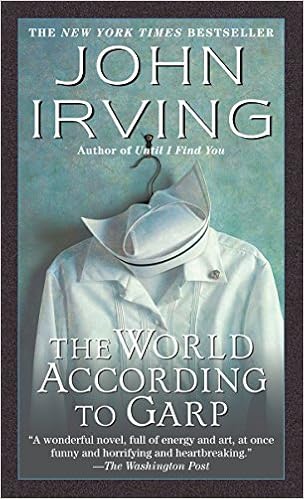
I have steadily plowed through my reading life discovering and then devouring new writers. In my last couple years as an undergraduate English education major, I was in my John Irving phase, spurred by falling madly in love with his The World According to Garp.

Naive and often clueless, I was a twenty-something who hoped to be a writer, and desired more than anything a deep and unique love. My idealizing falling in love and marrying was compounded with idealizing Garp’s life as a stay-home husband/father.

While I have read most of Irving’s novels, and loved quite a few, it has been years since I read Garp and realize I may now find much of the novel, and Garp’s domestic self, far more problematic. However, while I have never become the novelist and fiction writer I had planned, my life as an academic and writer has included domestic elements that I genuinely enjoy.

Since I teach most often on a Monday, Wednesday, Friday schedule, I have for many years remained home to write and work on Tuesdays and Thursdays. Also starting more than four years ago, I have been a caregiver for, first, my granddaughter, and now my grandson on Tuesdays.

Whether I have been home to write and work or to watch my grandchildren, I spend part of my time washing dishes and washing, drying, and folding laundry. Some days I also make a trip to the grocery store.

Laundry, while being a chore, also provides a bit of zen for me. I find a certain peace in folding and hanging up clothing the way I prefer.

As a man, I recognize the absurdity of finding peace in the sort of domestic chores society has imposed onto women, that many marginalize as “women’s work.” It is a sort of absurdity that could easily ignore that women historically and currently often must navigate a professional life as well as their domestic obligations in a way that men can drift into and out of—or even avoid—without much consequence.

One of my favorite, although heavy, units I taught while a high school English teacher included using the film Pleasantville as an entry point (focusing on the TV mother character) into exploring women poets—Adrienne Rich, Sylvia Plath, and Anne Sexton—in terms of how their status as women impeded on their work as poets.

As I have shuffled back and forth between writing and doing the laundry, I have more than once paused against the awareness that Plath’s life overwhelmed her as wife, mother, poet. An awareness of the millions of women who have suffered and now suffer the same fate without the spotlight we shine on the celebrity-tragedy of Plath.

There is a convergence here since my mother was the most important influence on the reader I became, the writer I would become because of that reader life steeped in science fiction and comic books, and since my mother imprinted on me an indelible image of the domestic life of women.

shallow focus photography of brown clothes pins
I will always associate my mother with clothes pins, the bucketful in the laundry room where she hid hundreds of dollars at the bottom. (Photo by Caspar Camille Rubin on Unsplash)

My mother, Rose, was a child of the 1950s, and she spent much of her life caring for her siblings, and then her own children before later running a daycare. Even when she worked outside the home, my mother did the laundry, cooked, and provided the bulk of the childcare; she also handled the bills—and quite frankly it seems did everything.

And as Caralena Peterson explores about women academics, my mother appeared to do everything extremely well and nearly effortlessly.

Today, as my iPhone reminds me, is my father’s birthday and my parents’ anniversary. They died about six months apart less than two years ago.

My parents were very 1950s, very Southern and white. They were also uncritical embodiments of gender stereotypes and obligations.

Hard work matters, I believe because of them, for the sake of making the effort, and I do find some tranquility and sense of accomplishment in doing things the right way, or at least a purposeful way.

Like carefully folding each piece of clothing because each piece of clothing—whether yours or someone else’s—deserves that moment of purpose.

Part of the celebration around Irving’s Garp, which eventually led to a film starring Robin Williams, revolved around his provocative topics, but the novel also spurred a conversation about Garp as domestic husband.

In no small part, the public discussion equated “domesticated” with “emasculated.” A man without a job was no man.

This was a long time ago when I was far less aware, but I don’t really think that conversation interrogated that Garp as a man still had a decision. A decision that women are often not easily allowed.

I often find the sink filled with dirty dishes, and the dishwasher storing clean dishes—from when I started the cycle. Whether late at night before bed or first thing in the morning, I often make that right.

Putting away clean dishes. Filling the dishwasher and starting another cycle.

This seems simple; some would be compelled to compliment my helping out.

But this is not some other person’s chore. This is something I choose to do, in part because it brings me a calm to set things right.

It is, however, a decision I can make. It is my remaining privilege as a man.

Today as my grandson plays, and as I write, do some work, I cycle through washing and drying all the dirty clothes, folding them warm and clean smelling on the day my father was born, the day my parents were married 59 years ago.


Recommended

Stop Assuming That I’m Just Writing About Myself by Kathryn Vandervalk

Cat Person, Kristen Roupenian

Pledge, Anton DiSclafani

Death Takes a Lifetime, and then a Year

& how the last
time I saw you

“Maps,” Yesenia Montilla

wareshoals
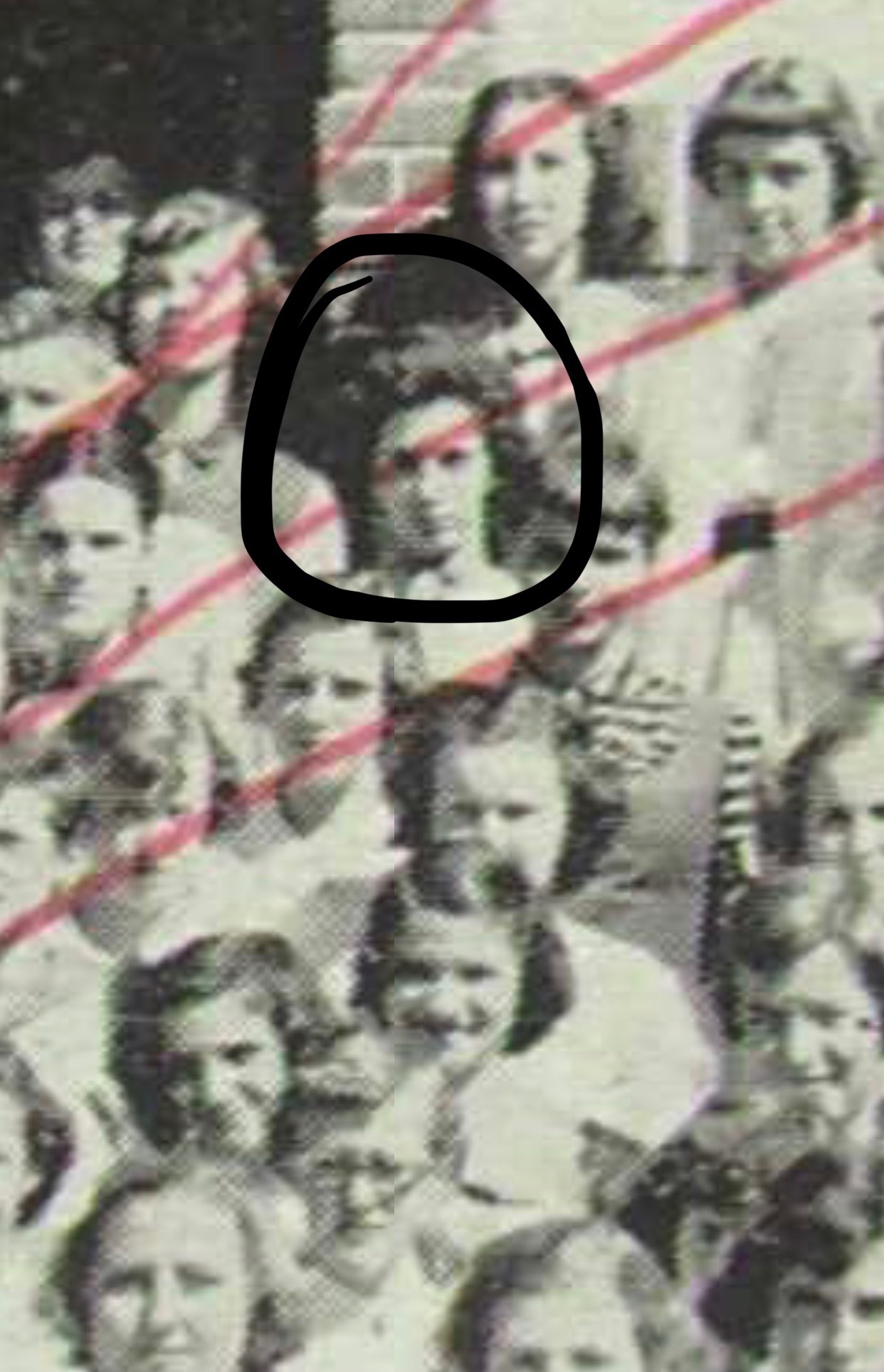
My nephew Steven found this yearbook picture of my mother, Rose (circled), from Ware Shoals High (South Carolina).

Mid-afternoon on 7 January 2019, my oldest nephew Steven (on my side of the family, we call him Tommy) texted that he needed to meet with my middle nephew, Kendall, and me. He had checks and forms for each of us to sign.

This was the final probate meeting for my mother’s and father’s estate—although having grown up working-class, I find that term more than misleading.

None of us anticipated what eventually transpired that afternoon: The probate court transferred all of my father’s matters (he died several months before my mother) to my mother, and then her probate was settled with their will dispersed as they planned.

Pressed for time, I met Steven (Tommy) in the parking lot of Best Buy just 10 minutes or so from my house. We hugged, and he handed me a check and the form I had to sign as well as find someone to witness the transaction.

Steven had medical power-of-attorney and was the executor of the will so he wasn’t allowed to sign the form, which in legalese confirmed that I was receiving my share of the will, all of my mom’s accounts and such having been fairly and fully disclosed.

My nephew offered to let me see anything if I was concerned, although he had meticulously shared every possible detail and artifact throughout the long, arduous process over the year-plus since my mother died of stage 4 lung cancer discovered a few months after she suffered a debilitating stroke.

I waved him off and said simply, “I trust you.”

And I do. He is a good and careful person, especially when it comes to my parents, his grandparents, and like my other two nephews, he loved my parents genuinely, more like parents than grandparents.

Since my parents raised those three grandchildren, my nephews split equally with me the remnants of my parents’ lives. There are some messy and uncomfortable details underneath that, but in the end, my parents made the consequences of their deaths about as simple and direct as possible. And anyone who could quibble chose not to do so.

On a Monday afternoon in January—the birth month of my father and me as well as the month my parents were married—those remnants were quartered after about 13 months of the state (in this case, South Carolina) prolonging the end of their lives by keeping their estate open to the public for anyone wishing to make a claim against it.

So I deposited the check and I signed the form, asking a staff person in my department to sign as a witness to the obvious fact that I am well aware of what now constitutes my parents’ lives.

|||

Over the Xmas holiday break, I sat with a few friends at a favorite taproom watching Hoarders. I am not a fan of reality TV, and this show in particular makes me very uncomfortable.

I am beyond skeptical about capitalism and consumerism; I also have an unhealthy (but functioning) dose of OCD, enough to understand hoarding (I am a collector, the socially acceptable form of hoarding), to empathize with being victim of ones own compulsions.

Several episodes ran as we talked, watched, and drank beer throughout the afternoon. Yes, I found myself mesmerized, equal parts fascinated and horrified at these lives swallowed in mountains of acquired stuff that both defined and paralyzed these people.

Episode after episode documented the inevitable: What hoarders had deemed essential—that which they could not part with—was ultimately tossed by volunteers wearing gloves, protective suits, and face masks into large waste dumpsters.

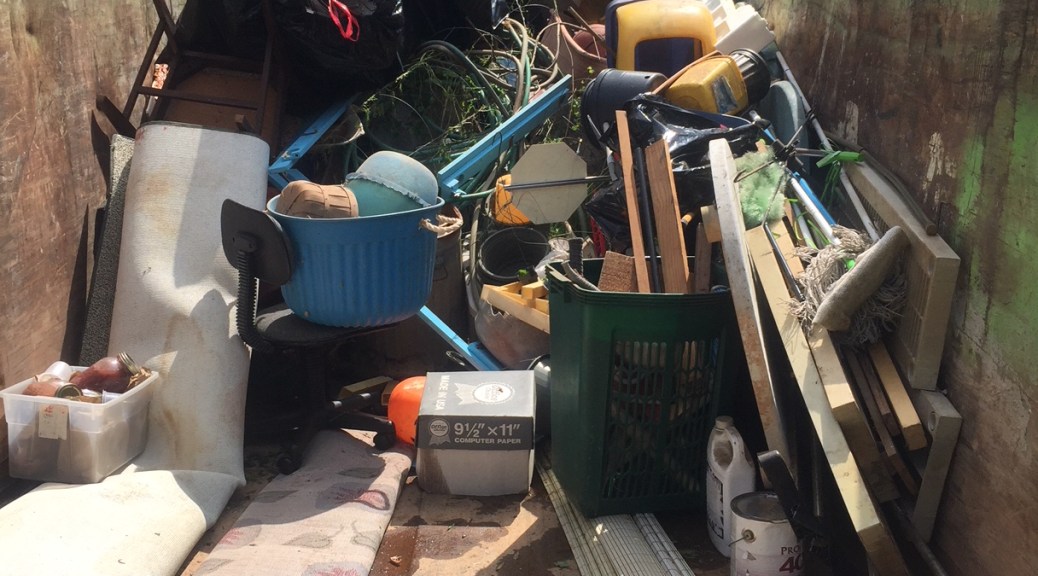
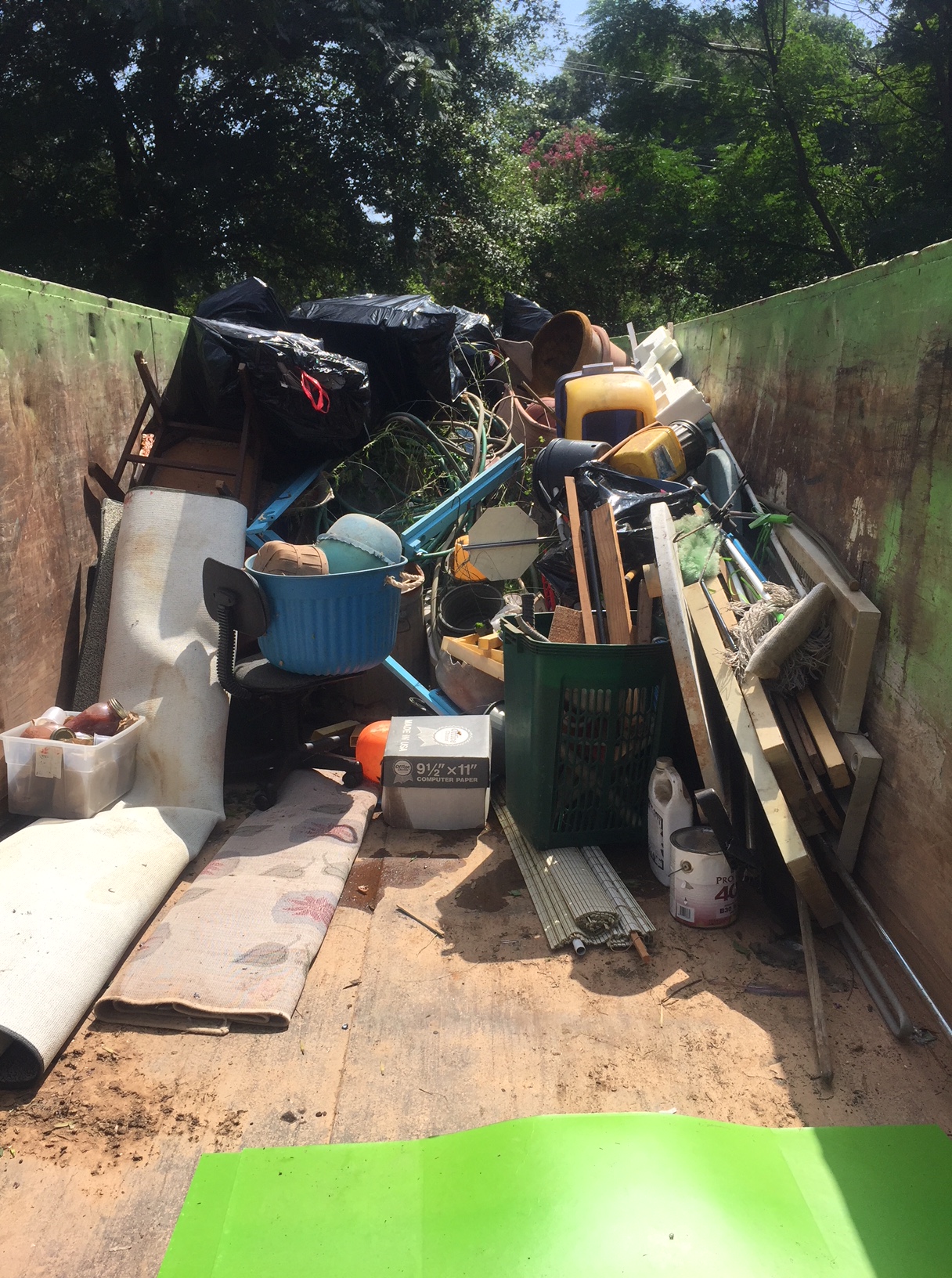
This past summer, it took some coaxing, but my nephews and I eventually rented a waste dumpster, dragging and tossing a huge portion of my parents’ lives into it sitting ominously in their driveway. Their precious house had to be emptied so that we could sell it.

My parents’ lives reduced to trash for the landfill and then 4 checks as detailed by their will—the final material, financial, and legal remnants of two lives lived until they died followed by the state mandating another year before their deaths could be officially over.

Death takes a lifetime, and then a year.

|||

The final check I received was a bit more than I had expected. I now contemplate what to do with the money, in some ways wondering what last ways I could make gestures that would please my parents if they could witness the scattering of their lives like my mom’s ashes we spread at Myrtle Beach.

Those dollars and her ashes, in fact, haunt me as I weigh them against two people’s lives and their living bodies. The balance is disturbingly out of kilter.

My mom just an oddly dense box of ashes. My parents’ entire lives just 4 checks spread among checking accounts as so much electronic data.

It all feels very heavy. It all numbs me with the unbearable lightness of being.

|||

Several years ago, when I came to my university, first-year students were assigned a common book to read over the summer before entering college. Once the selection was Blood Done Sign My Name by Timothy B. Tyson.

While several colleagues gushed over the memoir, I found myself mostly irritated, at the gushing itself but also the book. My problem was grounded in not finding anything remarkable about Tyson’s experiences because it was a South I knew first-hand and lives I found familiar.

But it was also a collection of experiences I was still trying to move beyond—if not understand and reconcile with my current self in some way.

I have little patience with poor and working-class white-folk narratives. I am particularly critical of the Othering of rednecks from the South—like exotic zoo animals or museum displays.

It is not as though, I want to yell, that I used to be that redneck. I am that redneck.

I just have a doctorate. I am allowed to live my life in the mostly rarified air of academia. Unlike my father who could barely raise his arms because of his arthritic shoulders.

In fact, you could see my father’s life of manual labor in his giant gnarled hands and fingers, in the stooped, shuffling man sitting in a wheel chair the day he died beside my mother, him simply needing to go to the bathroom.

Writing about the most recent poor-white-folk memoir, J.D. Vance’s Hillbilly Elegy, Stanley Greenberg argues:

The book’s cascading errors begin with its failure to appreciate how exceptional Appalachian white history and culture actually are, and how dangerous it is to equate Vance’s hillbillies with today’s white working class. Yet that is the equation Vance makes at the very beginning of his memoir.

I think I have loathed Vance’s thinly masked conservative screed far more than Tyson’s romanticizing because I am a few years older and I have weathered the actual demise of the embodiments of my struggling—my parents who I have loved deeply while also having to recognize them for all their very troubling flaws.

|||

Things pass, like all humans.

Some times we feel things deeply, too much, and we let ourselves cry, or laugh, or even shout.

But the human machine cannot maintain that level of response to this world. It’s just too much to care all the time.

Some of my friends, after watching Hoarders, wanted to rush home and purge. At least one did. But all of us, given a few days, simply went back to consuming, the sort of socially acceptable collecting that makes us fully human in the good ol’ U.S. of A.

Mom and Dad—because my nephews and I decided to reduce their home, our home, to money—left behind that which allows me to consume, buy more stuff. The allure is goddam powerful.

Turn a small portion of my parents’ house into a new bicycle or an iPhone upgrade.

I am lost in this and the realization we are merely human, doing the best we can even though that often falls quite short:

Death takes a lifetime, and then a year.

Pecan Pie

A friend ordered an appetizer before dinner a few nights ago, Brussels sprouts. I asked what was on them, and she said, “Chopped pecans. Here,” pushing the plate toward me to confirm.

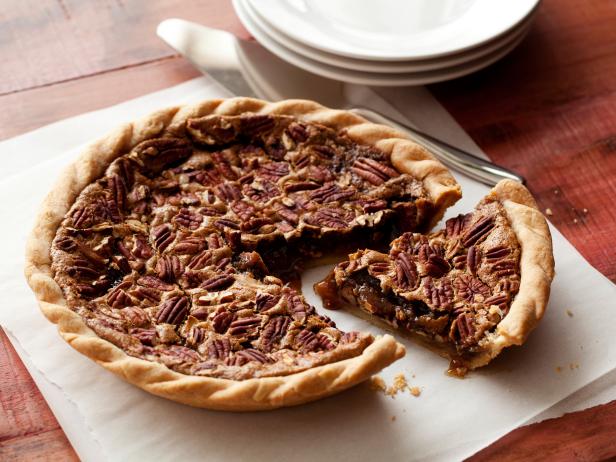
I hadn’t expected chopped pecans on Brussels sprouts, but since we are approaching Thanksgiving and the Christmas season, my mind took another unexpected turn: Suddenly I was struck by the realization that I would never again have a pecan pie made by my mother who died about eleven months ago from stage 4 lung cancer discovered a few months after suffering a stroke and witnessing my father’s death just a couple weeks after the stroke.

Maple Pecan Pie

My mother was from North Carolina, mostly the central hills of the state from Lexington to Salisbury, Spencer, and Concord. My father grew up and always lived in my home town of Woodruff, South Carolina, in the upstate, the foothills.

I learned to distinguish between my parents’ Southern drawls once I lived away from home for a while. As my father did, I grew up pronouncing “pecan” with two hard syllables—PEE-CAN—the last rhyming with “man,” not “con.”

And once I was permanently on my own, my mother began focusing even more heavily on pleasing me with food if she could coax me to visit. My father, however, had come to recognize my favored status when I was a teen. Supper began to feature both what I preferred and when I would be home (after basketball practice, and such).

When I talked to my parents by phone, my father would usually joke that I needed to visit so he could have a good meal.

Children of the 1950s, my mother and father always spent way too much money showing everyone in the family their love. Holidays were manically overdone, especially Christmas, with gifts and food.

Fall and winter were a flurry for my parents who were overgrown children at Halloween; they carried that glee through the new year as well.

Thanksgiving in my home kicked off Christmas season with decorating the house and putting up the tree, all of which stayed up until New Year’s Day. I grew up thinking these traditions were universal because we had made it all so regimented and the holidays simply pervaded everything in our lives for well over a month, late November into January each year.

I also developed an affection for pies—sweet potato, pumpkin, and pecan—as holiday food. My mom often made them from scratch.

Her pecan pie was wonderful even though it was always a challenge to make well. Some were a disaster, according to her, but I never noticed.

Crunchy on the outside then deliciously sweet at the center, her pecan pie was about the only thing that could compete fresh out of the oven with her just-made sweet tea that bordered on being syrup.

As my parents aged, and both struggled with heart issues for many years, they clung to the holidays, but Halloween soon became too much for them. For many years, they dressed up and dozens of children came by for my mom dressed as Mother Goose requiring a rhyme for candy.

Thanksgiving and Christmas also gradually dwindled—the meals no longer made by my mother, even the pies, and the gifts becoming fewer, the cash cards holding less and less.

My parents died with almost no money and mostly their house to represent their legacy, their shot at the American Dream.

Even during those last years, years I really didn’t see as last, when I visited on Thanksgiving and Christmas, my mother always steered me to the vegetable tray—she made sure there were red, yellow, and green peppers, and carrots—and she always bought pies, pecan as well as potato or pumpkin, or some times all three.

I struggled for many years with the reality of my infirm parents against my stunted conception of them, the idealized mother and father who existed for much of my life.

But I also struggled against my parents clinging to a certain fixed image of me—especially my mom always trying to feed me those pies even as I nearly never ate pies in my adult life, except to please her at Thanksgiving and Christmas.

When I did my obligatory visits on those holidays, I had to try all the pies, and grazed throughout the visit from the vegetable tray. And then my mother would wrap up pie to take home—and I almost never ate them despite her frail gestures of “I love you.”

In those moments, I couldn’t rise out of the trap of my own life to see everything clearly, to appreciate that every single thing in life is fragile.

Even a pecan pie. Especially the last pecan pie.

There will always be a last time, and we almost never know that until afterward, until it is too late to appreciate the last time as we should.

I used to teach Thornton Wilder’s Our Town, and watching it in front of students presented the same problem I had with other plays, Tennessee Williams’s The Glass Menagerie and Arthur Miller’s Death of a Salesman. These works always make me cry.

Emily dies young in Our Town, in childbirth, but realizes she can return to rewatch some of her life. The Stage Manager warns her against it, and she does find the experience painful, lamenting: “I can’t look at everything hard enough.”

Then she asks, “Do any human beings ever realize life while they live it—every, every minute?” And the Stage Manager replies, “No—Saints and poets maybe—they do some.”

I love this scene in the play, and I hate it.

It breaks my heart.

I sat in the restaurant, the faint taste of pecan in my mouth, fighting the urge to cry because I had suddenly realized my mother would never again make a pecan pie for the holidays.

I talked about it briefly, withholding tears.

But I am not really sure what else to do with it. I am aware we all will likely be too busy with our lives to really look at our living, to fully see what matters in the moment.

And then the last time will be behind us.

We missed it. We will always miss it.

NCTE 2018 – Houston, TX

Find all the PowerPoints for the presentations below HERE.

Please consider attending the following sessions if you are attending NCTE 2018 in Houston TX this November:

(C.28) The Intersection of Literacy, Sport, Culture, and Society

Date: Friday, November 16, 2018
Time: 9:30 a.m.-10:45 a.m.
Location: 340 AB

Running and Non-Fiction: Haruki Murakami’s What I Talk about When I Talk about Running

P.L. Thomas, Furman University (Greenville, SC)

Strecher, M.C., & Thomas, P.L. (Eds.) (2016). Haruki Murakami: Challenging authors. Netherlands: Sense Publishers.


(E.24) Navigating the Similarities and Differences of Writing at the Secondary and College Levels

Date: Friday, November 16, 2018
Time: 12:30 p.m.-1:45 p.m.
Location: 351 D

Bridging the Writing Gap: Centering Student Voices in High School and College Writing

P.L. Thomas, Furman University (Greenville, SC)

Kristen Marakoff, Travelers Rest High School (Travelers Rest, SC)

Writing and Teaching Writing: By Topics


(F.32) Raising Voices through Critical Media Literacy in a Fake News, Post Truth America

Date: Friday, November 16, 2018
Time: 2:00 p.m.-3:15 p.m.
Location: 340 AB

An Educator’s Primer: Fake News, Post-Truth, and a Critical Free Press

P.L. Thomas, Furman University (Greenville, SC)

Goering, C., & Thomas, P.L., eds. (2018). Critical media literacy and fake news in post-truth America. Boston, MA: Brill.


(H.11) Teaching the Canon in 21st Century Classrooms

Date: Saturday, November 17, 2018
Time: 8:00 a.m.-9:15 a.m.
Location: Grand Ballroom B

Teaching the Canon in 21st Century Classrooms 

Cleaning the Kitchen the Last Time

When my parents died in June and then December of 2017, they left a meager inheritance to my three nephews and me. The greatest bulk of that is their home, which we moved into when I was 10 in 1971.

My young parents, younger sister, and I lived in rented houses in Enoree and Woodruff, South Carolina before they bought the largest lot on the newly built Three Pines Country Club just north of Woodruff.

Scraping by and paying off the lot, my parents wrangled a local contractor to build their dream house in his spare time. The loan was more than they could handle and a bit less than a car loan for me much of my adult life.

The house they left behind was, then, the house I associate with my formative years, having lived there in some way into my early twenties. Even when newly married, I lived there briefly, and after I did move out, my three nephews all grew up in that house with my parents providing a great deal of their rearing.

So the four of us—and on Saturday my former brother-in-law as well—spent this past weekend doing the final herculean push to clean the yard and the house for selling.

We had begun this journey trying to account for all my parents’ stuff many months ago, and I have been wrestling with watching their life being reduced to so much trash.

There is, however, a finality to this past weekend. The yard has been rendered nearly barren (compared to the jungle my parents spawned), and the house is almost entirely emptied—much of that waiting in the driveway, a dumpster filled with lives now past.

IMG_5562

Throughout Saturday and Sunday, the task was overwhelming, physically demanding since it seemed that no matter what we hauled to the dumpster even more appeared to be hauled away.

But until late in the day Sunday, I had not found the experience the emotional hurdle that a best friend anticipated when he offered to help.

The unexpected, I suppose, must be unexpected.

I showed up Saturday after a morning cycling ride not really prepared for the day of work in the yard; my mind had convinced me that I would help inside. Once the scope and weight of the task at hand—having the house ready to sell by the end of the weekend—struck everyone, we were past midday Saturday and had resigned ourselves to the only way to finish was simply to throw everything remaining away.

So after working outside all day Saturday, I returned early Sunday morning with the same stubborn resolve to clean the inside of the house.

I began vacuuming the side porch, and although I was summoned out a few times to help the remaining loads to be packed into the dumpster, I then moved to each room of the house, vacuuming floors again and again.

A few hours after lunch and some unanticipated impromptu pest control, we could see the light at the end of the tunnel. Last on the list was scrubbing down the bathrooms and the kitchen.

I vacuumed the front rooms and kitchen, saving them for last since we were tracking through them during the day, and moved to cleaning counter tops in the two bathrooms, ending with the kitchen.

And then the unexpected.

As I wiped the counter and sink in the kitchen, my youth flooded over me, and I had to pause in order to restrain a powerful urge to cry.

One of the great joys of my life was simple. We were a breakfast-for-supper family, a treat we allowed ourselves a few times a month.

I grew up, in fact, thinking that French toast was mainly a vehicle for bacon—not a cross between breakfast and confections. French toast began in my mother’s kitchen with frying an enormous pile of bacon, the grease then recycled for cooking the pile of French toast as well as a side of scrambled eggs.

For most of my life, I ate French toast without syrup and butter—certainly no powdered sugar or syrupy fruit toppings.

But none of this is why I felt a sudden urge to cry.

I don’t recall when it began, but I was tasked in the family with cleaning up after supper. I washed the dishes and cleaned the entire kitchen, diligently.

My mother heaped praise on me for being so meticulous; it was something I did well, and gave me status in the family.

I still feel something soothing about the process of making the kitchen space tidy, clean.

Mid-afternoon yesterday, with Clorox wipes in hand and leaning against the kitchen sink, I felt suddenly heavy, as if I was holding up my entire life lived in that house. I was cleaning my mother’s kitchen for the last time.

Tears made it no farther than the edge of my eyes, blurring my contacts as I breathed against that weight of memory and loss. I gathered myself, wiped the sink, and then moved on to the bar where I had stood day after day in my brace for scoliosis to draw from comic books throughout my teens years.

“The bar is clean,” I told my nephews when they came into the kitchen, “but it is so stained and nicked, it doesn’t look like it.” They mentioned the oven hood, equally clean and terribly stained as well.

My oldest nephew had used the Magic Eraser on the bar, he said, but it still looked dirty.

Some things are indelible, I think, like the sudden realization you are cleaning the kitchen for the last time.

All of us are back at our separate lives today, and that dumpster filled to the rim awaits a truck that will carry all of my parents’ life turned trash to a landfill to be buried.

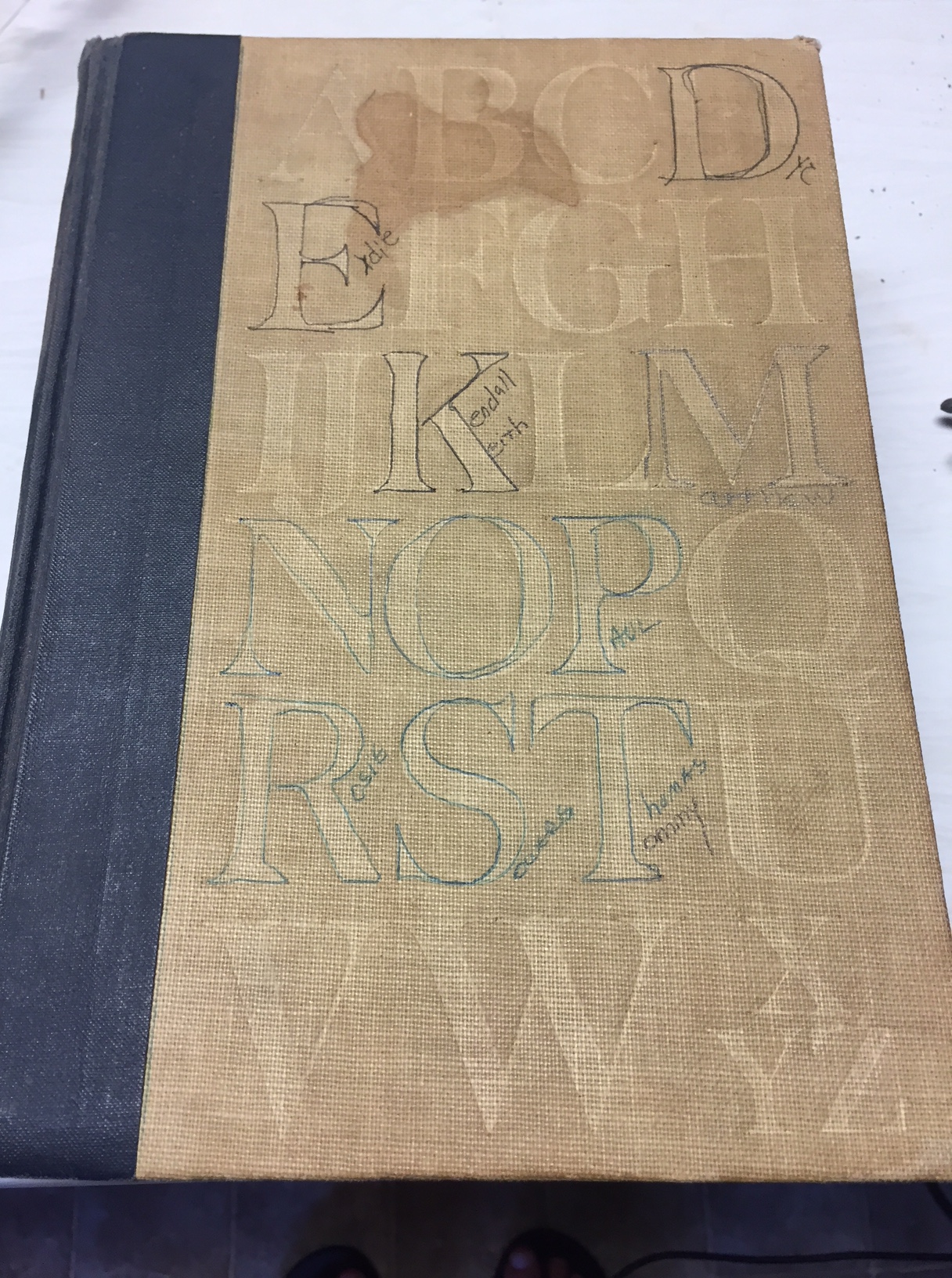
I left with my baptism certificate and the family dictionary, family names scribbled on the cover since the 1960s.

IMG_5556

At some point, too, this will be just trash. Someone else’s problem, maybe even something to fret over before tossing it into a dumpster.

Later in the day Sunday, my nephews took new flowers and a small urn of my mother’s ashes to my father’s grave. I didn’t go.

I had spent the weekend in a kind of graveyard already. I had grunted and sweated toward a sort of stasis that might allow someone else to own this house and land of my parents’ blood, sweat, and tears.

Nothing prepares you for the feelings that rush over you, cleaning the kitchen for the last time.

I am afraid I will never forget. I am afraid I will forget.

Why I Am Not a Christian

She was a fool, and so am I, and so is anyone who thinks he sees what God is Doing, [writes Bokonon].

Cat’s Cradle, Kurt Vonnegut

Born and raised in the Bible Belt, I have almost six decades of experience with the social anxiety associated with confessing that I am not a Christian.

Image result for bible belt
Gallop data from 2011.

The paradox of this anxiety, I suppose, is that the particular type of Christianity I have lived among in South Carolina is strongly grounded in witnessing and being very cheerfully public about one’s faith. “Let us pray” not as invitation but as directive.

As a public school teacher for 18 years, I was under the added weight of fearing that I would be outed in ways that threatened me socially and professionally. But when I moved to higher education, I really felt no more comfort in expressing my lack of faith—even as I was often directly asked by students, even though it was a professionally safe place to be honest.

In fact, it has always been far easier to share with students my communist/socialist/Marxist leanings than to say simply, “I am an atheist.”

The personal recognition wasn’t an easy journey, but during college, including reading and re-reading Bertrand Russell’s “Why I Am Not a Christian” and a significant amount of existential philosophy, I came to terms with ethical and moral groundings as well as being entirely comfortable with those ideals being in no way connected to God or organized religion.

Since my college years overlapped with the rise of the Moral Majority and Religious Right, that disconnect wasn’t even complicated. The most passionately Christian people of my community growing up and then the most vocal Christians in the public and political spheres of the Reagan era confirmed for me that I had zero interest in such anger, hatred, and most of all, hypocrisy.

I have taken comfort instead throughout my adult life in literature—works such as Margaret Atwood’s The Handmaid’s Tale and Kurt Vonnegut’s Cat’s Cradle, which directly interrogate all the ways I find religion, and Christianity, more apt to be a bludgeoning device than a balm.

Religious text as a tool for authority, religion as the opiate of the masses—as Emily Dickson wrote as a contemporary of Karl Marx:

Much Gesture, from the Pulpit –
Strong Hallelujahs roll –
Narcotics cannot still the Tooth
That nibbles at the soul –

In 2018, with Donald Trump courting and maintaining the passionate support of the religious right, specifically evangelicals across the South, and with the South Carolina summer primaries in which Republicans run aggressive TV ads shouting “100% pro-life” and images of candidates in front of NRA rallies and holding (even shooting) guns, I have never been more confident in why I am not a Christian.

During this time of Trumplandia, as well, one of the most devout and moral people I know happens to be a Muslim—whose faith is routinely and grossly demonized by Trump and his Christian base.

Christianity is rarely about love and charity, but often about tribalism and the calculated use of higher authority to maintain or gain power.

The narrator in Kurt Vonnegut’s Mother Night argues:

“There are plenty of good reasons for fighting,” I said, “but no good reason ever to hate without reservation, to imagine that God Almighty Himself hates with you, too. Where’s evil? It’s that large part of every man that wants to hate without limit, that wants to hate with God on its side. It’s that part of every man that finds all kinds of ugliness so attractive.

“It’s that part of an imbecile,” I said, “that punishes and vilifies and makes war gladly.”

As I grow older, it becomes more and more imperative that I seek a moral and ethical life—something I equally recognize as incredibly hard to achieve as a mere human among humanity, as we are all so flawed, so fragile, so unwilling to sacrifice and risk in the name of the hypothetical Other, the faceless and nameless human we choose either to treat as our brother/sister or to leave mostly ignored in the basement closet.

Christianity, I fear, too often allows the worst in us to thrive instead of inspiring us to be the loving community we are capable of being.

Love, community, and holding sacred all humans’ dignity—these are what matter to me, and why I am not a Christian.

My Life in Trumplandia Began in 1961

My first jobs were at the country club where my mother worked and on the golf course where we lived—a working-class family of rednecks who saw building a house there as making it, achieving the American Dream.

On rainy and cold days, all the pro shop and greens-keeping workers mulled around the club house. I vividly recall one of those days when a member of the grounds crew explained to me in careful detail that black people (he preferred the racial slur) were the consequence of Cain being banished for murdering Abel and then mating with apes.

It’s biblical, he proclaimed.

This experience, I must emphasize, was not an outlier. This was normal for my life, having been born in 1961 in Woodruff, South Carolina.

Such blatant and casual racism was pervasive among my white family, friends, and community.

So Roseanne Barr’s recent racist Twitter rant and the entire rise of Trumplandia—these are not in any way shocking while they are incredibly burdensome, a heaviness that will never approach the weight carried by those who are the targets of racism and bigotry but that certainly drags me closer and closer to fatalism.

I also know fatalism quite well.

In my late teens and throughout college and young adulthood, my relationship grew increasingly antagonistic with my father, often punctuated with heated arguments spurred by his racism.

Over years of arguing, I simply gave up, became a quiet and passive visitor to my parents’ house. Increasingly, I called fewer and fewer times; I visited almost exclusively on required holidays.

The ennui was the tension between the natural love felt for parents—and the incredible debt I felt to the many sacrifices they made for me—and the inexcusable ideologies my parents espoused, often relentlessly.

My parents were Nixon apologists, faithful Republican voters their entire lives.

They also were increasingly strapped for money, and their last decades were characterized by heart disease and just surviving the consequences of being working-class children of the 1940s-1950s (smoking and eating as many Southerners did).

My parents were the poster-couple for self-defeating politics, decades before the mainstream media became obsessed with understanding the disenfranchised white voter. And finally, my parents paid the ultimate cost for grounding their political and economic lives in racism.

At the very least, a healthcare system connected to universal insurance and a robust social safety net would have extended my parents’ lives, lives that ended very badly and with their life’s earnings nearly exhausted.

The house that represented their achieving the American Dream is the very last thing remaining—a depressing monument to their stubborn self-defeating ideologies, their racism.

Our last decade together is the most depressing. My daughter dated, married, and then had a daughter with a black man.

I am now the grandfather of two biracial grandchildren.

It wasn’t a hard decision, but it was hard—to give up on your parents as you recognized this family of yours deserved your complete devotion. Passive and silent were none the less complicit.

Everyone in my immediate family, except me, became entirely estranged from my parents as I attempted to meet some extreme minimum obligations as my father’s health deteriorated dramatically, and then my mother had a stroke.

The last six months of my parents’ lives thrust them once again into the center of my life, the fatalism to which I had resigned myself set aside as their reduced circumstances demanded we all recognize their essential humanity despite their own role in having come to these unnecessary and desperate ends.

No one wants to admit their parents are flawed or even horrible people—just as most white people do not want to admit they are complicit in white privilege and racism.

My parents’ deaths during the beginning of the Trump administration carry an awful symbolism in the same way my parents’ house does now as we rummage through all my parents’ stuff—throwing away most of it—in preparation to sell this crumbling statue dwarfed by the desert of their tarnished beliefs.

I carry in my 57 years another layer of exhaustion at the mainstream media trying to understand Trump voters—white angst grounded in the racism that social norms refuse to acknowledge—and the current wrestling with Barr, including some who are calling for explaining her rant as somehow connected to her mental health.

That layer of exhaustion has the face of the grounds crew member explaining to me that black people came from Cain mating with an ape; it has the face of hundreds of white people in my family, my community.

I do not need anyone to explain this to me. It is my life.

A life already well acquainted with fatalism resting against love and deep appreciation, a life rendered heavy, nearly too heavy to carry, certainly too heavy to move.

Yes, I gave up on changing my parents’ minds, shaking their souls in the name of human dignity as I looked into the eyes of my grandchildren.

How, then, to make strangers see the inhumanity in their racism, see their hatred and bigotry as self-defeating as well as entirely unwarranted?

Fatalism is a powerful narcotic.

Recommended

Prejudiced, Hateful and Degreed: PhD’s, racial dissonance, and the culture of indifference in academia | Think Piece

Who Me?

Jordan Peterson’s Ignorance of Postmodern Philosophy