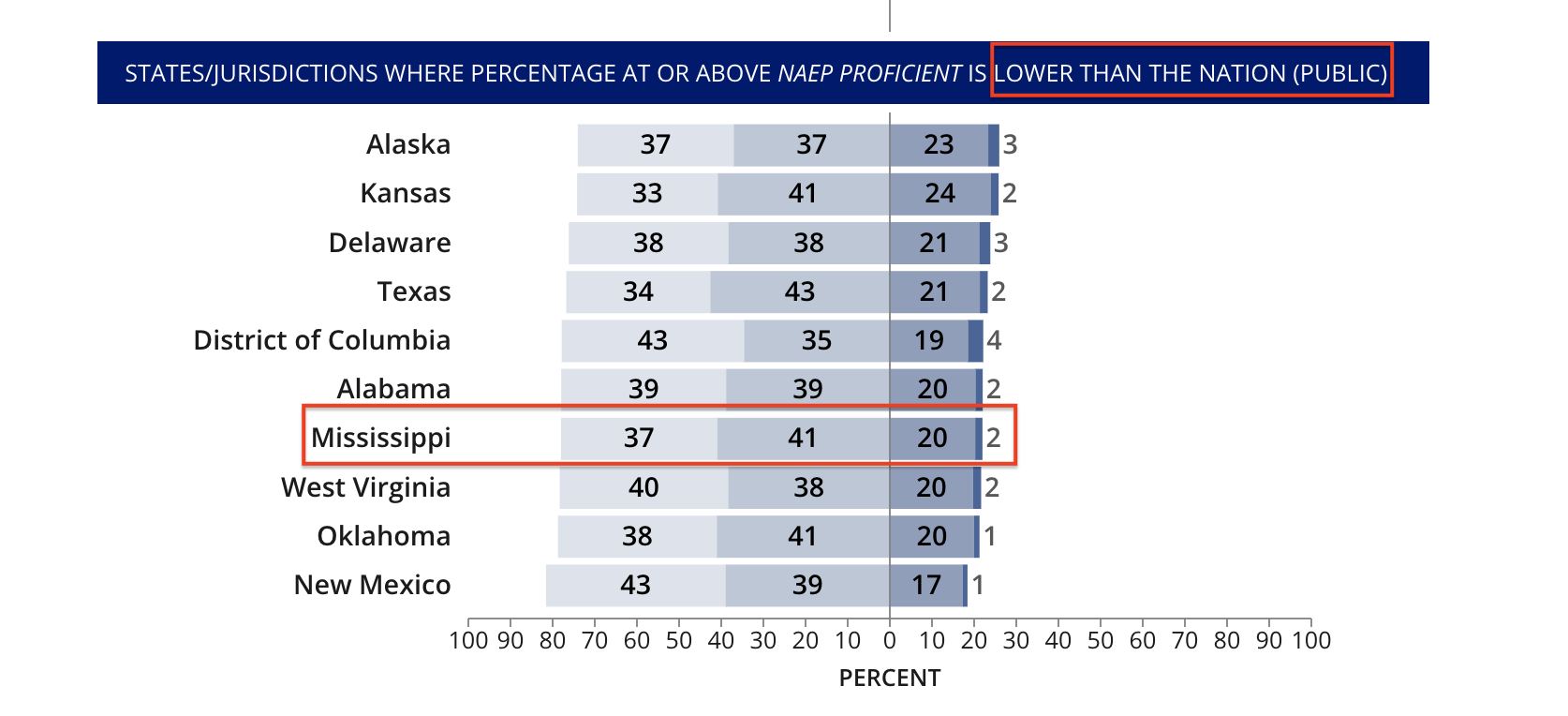
Regretfully, Kids Count shows more about how good intentions are not enough and that our public and political focus on education remains grounded in deficit ideology and misinformation linked to NAEP testing.
And then, note the deficit perspective for ranking states based on NAEP proficiency:
Imagine if this report focused first on NAEP “basic” and above? And then identified students at or above basic?
Kids Count is yet another part of the manufactured crisis in education that serves negative portrayals of students, teachers, and public schools—and ultimately the education reform industry.
Yet, this report and its negative as well as misleading use of data must make us ask: If kids count, why do we persist in ranking and vilifying those children and the people spending their lives serving them in our schools?
“Human development is an important component of determining a nation’s productivity and is measured in employee skills identified by employers as critical for success in the modern global economy,” claims Thomas A. Hemphill, adding:
The United States is obviously not getting a sufficient return on investment in elementary and secondary education, as it has mediocre scores in mathematics literacy and declining scores for science literacy for 15-year-old students surveyed in 2022. The only significant improvement for 15-year-olds is in reading, where the United States finally entered the top 10 in 2022.
If these educational trends continue, the United States will not have an adequate indigenous workforce of scientists, engineers and technologists equipped to maintain scientific and technological leadership and instead will become perpetually reliant on scientifically and technologically skilled immigrants. We must demand that elementary and secondary education systems reorient efforts to significantly improve mathematical and scientific teaching expectations in the classroom.
However, for decades, evidence has shown that there is no causal link between international rankings of student test scores and national economic competitiveness.
This Big Lie is purely rhetorical and relies on throwing statistical comparisons at the public while drawing hasty and unsupported causal claims from those numbers.
Bracey offers this from researchers on the relationship between international education rankings and economic competitiveness:
Such countries [highest achieving] “do not experience substantially greater economic growth than countries that are merely average in terms of achievement.”
The researchers then lay out an interpretation of their findings that differs from the causal interpretation one usually hears:
“We venture, here, the interpretation that much of the achievement ‘effect’ is not really causal in character. It may be, rather, that nation-states with strong prodevelopment policies, and with regimes powerful enough to enforce these, produce both more economic growth and more disciplined student-achievement levels in fields (e.g., science and mathematics) perceived to be especially development related. This idea would explain the status of the Asian Tigers whose regimes have been much focused on producing both economic growth and achievement-oriented students in math and science.”
“From our study, the main conclusion is that the relationship between achievement in science and mathematics in schoolchildren and national economic growth is both time and case sensitive. Moreover, the relationship largely reflects the gap between the bottom third of the nations and the rest; the middle of the pack does not much differ from the rest. . . . Much of the obsession with the achievement ‘horse race’ proceeds as if beating the Asian Tigers in mathematics and science education is necessary for the economic well-being of other developed countries. Our analysis offers little support for this obsession. . . .
“Achievement indicators do not capture the extent to which schooling promotes initiative, creativity, entrepreneurship, and other strengths not sufficiently curricularized to warrant cross-national data collection and analysis. Unfortunately, the policy discourse that often follows from international achievement races involves exaggerated causal claims frequently stress- ing educational ‘silver bullets’ for economic woes. Our analyses do not offer defini- tive answers, but they raise important ques- tions about the validity of these claims. In an era that celebrates evidence-based policy formation, it behooves us to carefully weigh the evidence, rather than use it simply as a rhetorical weapon.”
A key point to note here is Bracey is writing in 2007, and the OpEd above is March 2024. The Big Lie about international education rankings and economic competitiveness is both a lie and a lie that will not die.
I strongly recommend Tom Loveless exposing a similar problem with misrepresenting and overstating the consequences of NAEP data: Literacy and NAEP Proficient.
Bracey offers a brief but better way to understand test data and economic competitiveness: “education is critical, but among the developed nations differences in test scores are trivial.”
Instead of another Big Lie, the US would be better served if we tried new and evidence-based (not ideological) ways to reform our schools and our social/economic structures.
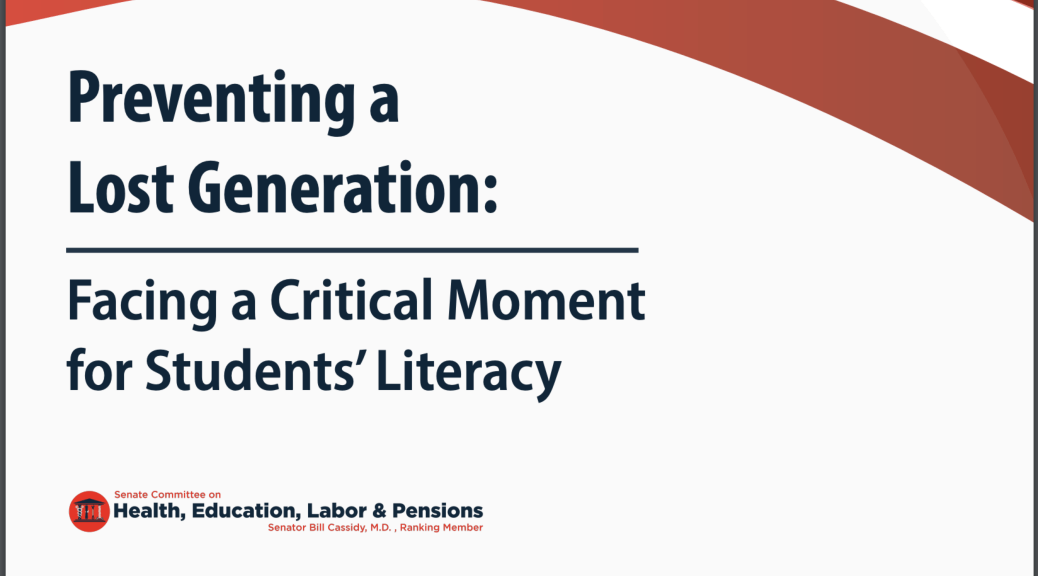
“The 2022 NAEP results show that the average reading score for fourth graders is lower than it has been in over 20 years. For eighth and twelfth graders, average scores are at about a 30-year low,” states Senator Bill Cassidy (R-LA) in his new literacy report, adding, “The 2022 NAEP LongTerm Trend assessment for nine-year-old students showed average reading scores not seen since 1999.”
Cassidy’s alert about a reading crisis fits into dozens and dozens of media articles announcing crises and failures among students, teachers, and public schools all across the US. Typical of that journalism was Nicholas Kristof in the New York Times about a year ago:
One of the most bearish statistics for the future of the United States is this: Two-thirds of fourth graders in the United States are not proficient in reading.
Reading may be the most important skill we can give children. It’s the pilot light of that fire.
Yet we fail to ignite that pilot light, so today some one in five adults in the United States struggles with basic literacy, and after more than 25 years of campaigns and fads, American children are still struggling to read. Eighth graders today are actually a hair worse at reading than their counterparts were in 1998.
One explanation gaining ground is that, with the best of intentions, we grown-ups have bungled the task of teaching kids to read. There is growing evidence from neuroscience and careful experiments that the United States has adopted reading strategies that just don’t work very well and that we haven’t relied enough on a simple starting point — helping kids learn to sound out words with phonics.
As I have noted, education and reading crises have simply been a fact of US narratives since A Nation at Risk. But as I have also been detailing, these claims are misleading and manufactured.
Based on NAEP data—similar to Cassidy’s report—Shakeel and Peterson offer a much different view of student achievement in the US, notably about reading achievement:
This analysis demonstrates that the current reading crisis is manufactured, exclusively rhetorical and ideological, generating profit for media, politicians, and commercial publishers.
In short, the manufactured crises are distractions from the other contrarian truth about education as highlighted in the analysis from NPE:
This educational grading from NPE is unique because it doesn’t grade students, teachers, or public school, but holds political leadership accountable for supporting universal public education and democracy. The standards for these grades include the following:
Privatization Laws: the guardrails and limits on charter and voucher programs to ensure that taxpayers and students are protected from discrimination, corruption, and fraud.
Homeschooling Laws: laws to ensure that instruction is provided safely and responsibly.
Financial Support for Public Schools: sufficient and equitable funding of public schools.
Freedom to Teach and Learn: whether state laws allow all students to feel safe and thrive at school and receive honest instruction free of political intrusion.
These two examples come from contrasting ideologies, yet they offer contrarian truths about public schools and student achievement that would better serve how we talk about schools and student achievement as well as how we seek ways in which to reform those schools in order to better serve those students and our democracy.
Thomas, P.L. (2022). The Science of Reading movement: The never-ending debate and the need for a different approach to reading instruction. Boulder, CO: National Education Policy Center. http://nepc.colorado.edu/publication/science-of-reading
Accordingly, when policymakers explore new guidelines, they would be wise to do the following:
• Be wary of overstatements and oversimplifications within media and public advocacy, acknowledging concerns raised but remaining skeptical of simplistic claims about causes and solutions.
• Attend to known influences on measurable student reading achievement, including the socioeconomics of communities, schools, and homes; teacher expertise and autonomy; and teaching and learning conditions.
• Recognize student-centered as an important research-supported guiding principle but also acknowledge the reality that translating such research-based principles into classroom practice is always challenging.
• Shift new reading policies away from prescription and mandates (“one-size-fits-all” approaches) and toward support for individual student needs and ongoing teacher-informed reform.
In rethinking past efforts and undertaking new reforms, policymakers should additionally move beyond the ineffective cycles demonstrated during earlier debates and reforms, avoid ing specific mandates and instead providing teachers the flexibility and support necessary to adapt their teaching strategies to specific students’ needs. Therefore, state policymakers should do the following:
• End narrowly prescriptive non-research-based policies and programs such as:
o Grade retention based on reading performance. o High-stakes reading testing at Grade 3. o Mandates and bans that require or prohibit specific instructional practices, such as systematic phonics and the three-cueing approach. o A “one-size-fits-all” approach to dyslexia and struggling readers.
• Form state reading panels, consisting of classroom teachers, researchers, and other literacy experts. Panels would support teachers by serving in an advisory role for teacher education, teacher professional development, and classroom practice. They would develop and maintain resources in best practice and up-to-date reading and literacy research.
On a more local level, school- and district-level policymakers should do the following:
• Develop teacher-informed reading programs based on the population of students served and the expertise of faculty serving those students, avoiding lockstep implementation of commercial reading programs and ensuring that instructional materials support—rather than dictate—teacher practice.
• Provide students struggling to read and other at-risk students with certified, experienced teachers and low student-teacher ratios to support individualized and differentiated instruction.
U.S. Senator Bill Cassidy, M.D. (R-LA) has released a report on literacy that opens with yet another example of misrepresenting NAEP reading scores to manufacture a reading crisis for political gain: “Two-thirds of America’s fourth and eighth graders are not proficient in reading.”
The report is an embarrassing recycling of the media misinformation campaign about reading in the US.
In fact, most of the footnotes cite news articles (including the Washington Times, a conservative outlet that lacks credibility) and conservative think tanks (ExcelinEd, Fordham). [1]
Notably missing are citations to scientific research on reading or credible analyses of NAEP data.
Responses are needed and can be sent to Literacy@help.senate.gov by April 5, 2024.
Good intentions are not enough and government policy on education has done more harm than good since A Nation at Risk. We can do better, and we should. But we must start with accurate claims and credible solutions.
A school for students with dyslexia continues to stay open despite two F grades from the BESE, Louisiana’s Board of Elementary and Secondary Education. The Louisiana Key Academy is run by Senator Bill Cassidy (R-LA) and his wife, Laura. Both are physicians. Neither are specialists in reading disorders, although they have a child with dyslexia.
Some Big Lies of Education start with journalists (even at the biggest of media outlets).
“One of the most bearish statistics for the future of the United States is this: Two-thirds of fourth graders in the United States are not proficient in reading,” wrote Nicholas Kristof in The New York Times.
Kristof’s piece in 2023 can be traced back to a similar claim by Emily Hanford in 2018: “More than 60 percent of American fourth-graders are not proficient readers, according to the National Assessment of Educational Progress, and it’s been that way since testing began in the 1990s,” including a surprisingly ineffective graphic:
The student reading proficiency Big Lie grounded in misrepresenting or misunderstanding NAEP is likely one of the most complicated Big Lies of Education.
In media and political rhetoric, first, the terms “reading proficiency” and “grade level reading” are commonly jumbled and used inappropriately as synonyms.
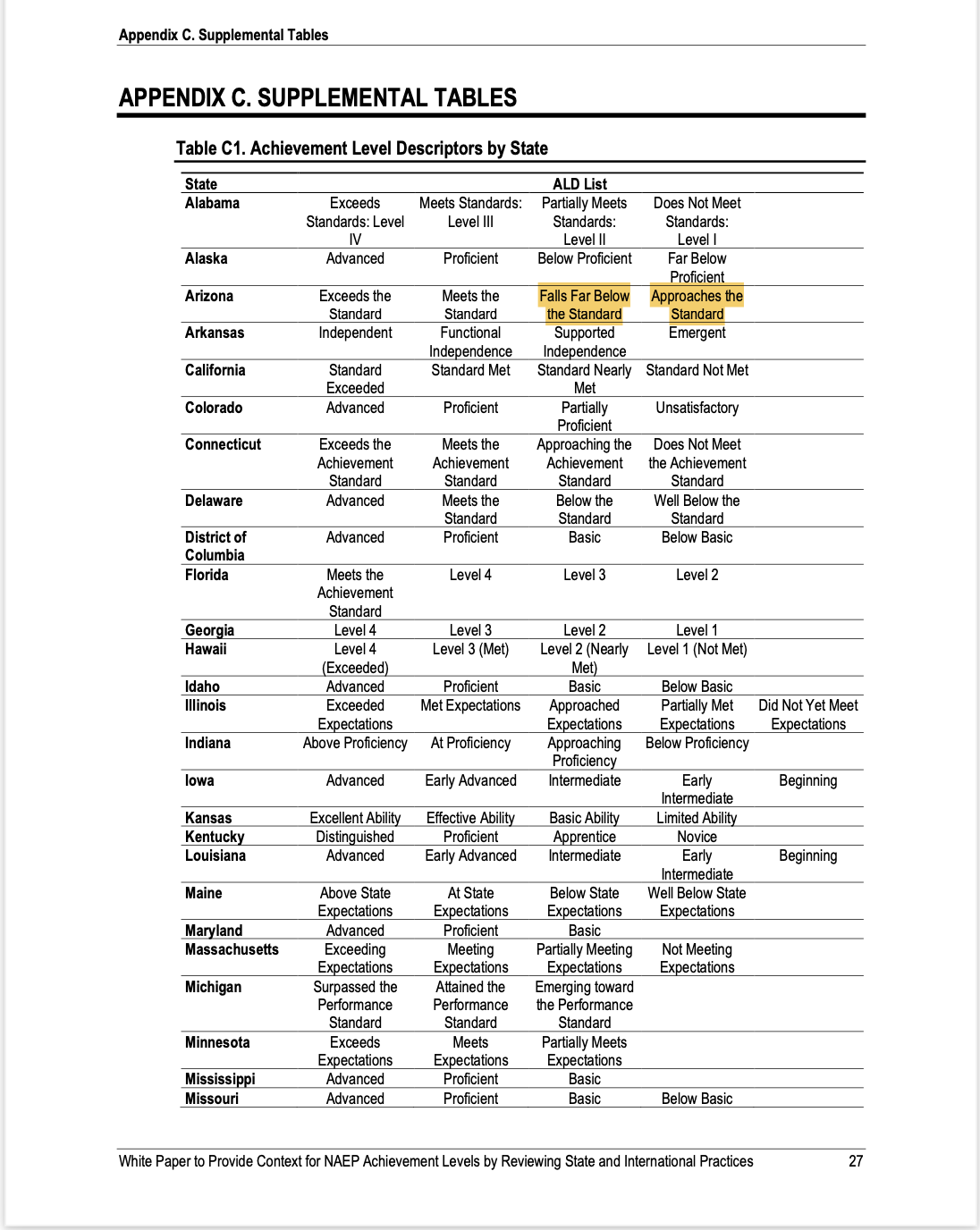
Achievement levels such as “basic” and “proficient,” used in NAEP for reading, are misleading and complicated for most people not familiar with technical terminology.
NAEP “basic” is approximately grade level (although even that claim is problematic since no standard exists in the US for “proficient” or “grade level”), and “proficient” on NAEP is high:
Rosenberg, B. (2004, May). What’s proficient? The No Child Left Behind Act and the many meanings of proficiency. Washington, DC: American Federation of Teachers. https://files.eric.ed.gov/fulltext/ED497886.pdf
NAEP testing and data are normative, measuring what a general population is achieving (not individual students), and as noted above, NAEP “proficient” is aspirational.
Hanford’s and Kristof’s Big Lie, then, is a combination of blurring NAEP achievement levels with grade level reading achievement and manufacturing a reading crisis with that misinformation.
Ironically, NAEP grade 4 reading scores for a decade show that 2/3 of students are reading at or above grade level, the inverse of the false crisis claims of the media:
The Big Lie about reading proficiency and NAEP help perpetuate the Big Lie about educational crisis, but it also masks the more complicated truths: the US has no standard metric for assessing the national reading achievement of students, and focusing on manufactured reading crises distracts reformers from addressing what we can identify—inequitable access to reading proficiency among minoritized and marginalized populations of students.
I recommend the following to understand the essential failure, the Big Lie, of using NAEP to manufacture a crisis around reading proficiency in the US:
Rosenberg, B. (2004, May). What’s proficient? The No Child Left Behind Act and the many meanings of proficiency. Washington, DC: American Federation of Teachers. https://files.eric.ed.gov/fulltext/ED497886.pdf
Forty Years of Failure: When Caricature Drives Education Reform in Post-Truth America
P.L. Thomas
Reporting for NPR about A Nation at Risk, Anya Kamenetz (2018) noted:
When it appeared in April 1983, the report received widespread coverage on radio and TV. President Reagan joined the co-authors in a series of public hearings around the country.
The report’s narrative of failing schools — students being out-competed internationally and declining educational standards — persists, and has become an entrenched part of the debate over education in the U.S.
Years later, writing for The Answer Sheet in The Washington Post, James Harvey (2023) explains that the report under Reagan was “gaslighting” for political purposes, and not the clarion call to address education reform that media, the public, and political leaders claimed. In short, A Nation at Risk was a “manufactured crisis” (Berliner & Biddle, 1997).
Yet, education reform has become a central focus of the political agendas for governors and presidents since the 1980s, reaching a critical peak under George W. Bush who turned the discredited “Texas Miracle” (Haney, 2000) into groundbreaking and bipartisan federal legislation, No Child Left Behind (NCLB). In fact, public education in the US has been under an intense public and political microscope over forty years of high-stakes accountability. For educators, that accountability is indistinguishable regardless of the political party in the White House. The Obama administration in many ways continued and even doubled down on the crisis/miracle rhetoric found under W. Bush (Thomas, 2015).
Below, I examine how the current 40-plus year cycle of accountability reform in education represents the power of fake news and post-truth rhetoric to shape not only our perceptions of education, students, and teachers but also the policies and practices we implement in our schools to the detriment of teaching and learning. The following false narratives—fake news since these stories are nested in and perpetuated by the media and political rhetoric—are interrogated: the use of caricature in criticism of education, A Nation at Risk, reading crises, student reading proficiency and National Assessment of Educational Progress (NAEP) testing, balanced reading, the “science of reading” (SOR) and phonics advocacy, teacher knowledge and teacher education, and the crisis/miracle cycles of education criticism and reform.
Who controls the stories is central to who maintains power in the US. Public beliefs are created by the stories media and political rhetoric offer regardless of the facts or credibility in those stories. In education, fake news has been central to those stories well before the popular consideration of “fake news” and “post-truth” associated with Trump era politics.
Fake News, Post-Truth, and the Accountability Era of Education Reform as Caricature
“Fake news” as a term has an interesting history and represents how words and terms often shift in their meaning when they expand out from a narrow technical meaning to popular usage; also, once a word enters popular usage, we are wasting a great deal of energy if we persist in arguing “That’s not what the word means” (a good example being “epitome”).
However, “fake news” originally referred to online news stories that were intentionally fabricated to drive clicks and revenue; these stories were almost entirely false and often included provocative images and headlines—and the creators typically removed these false stories when revenue traffic dwindled. Once “fake news” entered the media and popular discourse, the term broadly identified false claims in news or public/political speech; eventually, during the Trump era, Trump and other conservatives co-opted the term as a paradoxical weapon, calling anything “fake news” that contradicted their ideological agendas (Goering & Thomas, 2018).
Because of these developments, we are in a post-truth era in which using the term “fake news” can mean either exposing false claims or masking false claims behind rhetorical histrionics. None the less, we must pull back from this current and convoluted status of “fake news” to place how we arrived here and to avoid framing either “fake news” or “post-truth” as an essentially Trump-based phenomenon. Consider, for example, how mainstream media has worked historically and currently in terms of shaping public narratives not grounded in valid evidence.
In 2017, the New York Times published an article shaming poor people for their grocery shopping habits (O’Connor, 2017), speaking into the “Food Stamp Fables” that were immediately debunked by a scholar of public service who cited and corrected the journalist’s misrepresentation of a USDA report (Soss, 2017). Further, the NYT’s article is eerily like a parody article in The Onion (Woman a leading authority, 2014) that offers an excellent window into how popularly held beliefs allow compelling stories to trump evidence, facts, and valid claims (Thomas, 2019a). There is a long history of media and political rhetoric speaking into and perpetuating false stories to appease and attract their customers and their voters.
Although the sections below examine in detail how the “science of reading” (SOR) education reform movement reflects the power of “fake news” to drive public perception and policy, that movement is paralleled by another powerful example of narratives, especially false stories, in media, public, and political discourse—the book banning and anti-CRT (Critical Race Theory) movement. At the core of book and curriculum bans is the use of “caricature”:
We put “CRT” in quotation marks throughout this report because so often the conflict campaign’s definition of “CRT” (like its description of actual K–12 practice) is a caricatured distortion by loud opponents as self-appointed “experts.” The conflict campaign thrives on caricature — on often distorting altogether both scholarship and K–12 educators’ efforts at accurate and inclusive education, deeming it (and particularly K–12 efforts to discuss the full scope of racism in our nation) wholly inappropriate for school. (Pollock & Rogers, et al., 2022, p. vi)
From Rush Limbaugh to Christopher Rufo (Beauchamp, 2023), conservative pundits have refined a strategy that involves misidentifying a term or phenomenon without credible evidence, but then moving quickly to attacking that misidentification as factual. This ideological use of “caricature” is a subset of “fake news” that is extremely effective, especially over the four decades of high-stakes education reform.
A Nation at Risk: The Original Manufactured Crisis
Ground zero of the use of caricature/fake news to drive public opinion about education and then a constantly recurring cycle of education reform (initially at the state level and then the federal level with NCLB) is the Reagan-era report, A Nation at Risk. What that report represents, however, is not credible evidence that US education was an international failure or that the US was on the precipice of collapse due to a crumbling education system, but a blueprint for politicizing education and education reform for partisan gain.
Many scholars have discredited A Nation at Risk as political propaganda, an effort by Reagan to shift public opinion in support of conservative agendas (school choice, prayer, etc.) regardless of the evidence about educational quality in public schools (Bracey, 2003; Holton, 2003). Over the past 20-plus years as well, A Nation at Risk has been characterized as a “manufactured crisis” (Berliner & Biddle, 1997) and “gaslighting” (Harvey, 2023). In short, announcing that the US was a “nation at risk” due to educational failures was both an extremely compelling story for media, public, and political consumption and a series of claims that represent the power of fake news to mask and even erase more nuanced and credible explanations for education quality as well as needed educational reform.
Although the report has been repeatedly discredited, the story has established a recurring belief that public schools, teachers, and students are failing as a crisis level in the US; further, we have entered several decades of perpetual reform. The narrative created by A Nation at Risk has some enduring elements:
Educational failure is grounded in the educational system itself, and thus, education reform has been in-school-only reform policies.
Identifying systemic societal, community, and home influences on measurable student learning is rejected as using poverty/inequity as an “excuse.”
Teachers are simultaneously the most important factor in education and the agents of failure due to poor training and/or low expectations for marginalized student populations.
The rhetoric is grounded in crisis/miracle binary.
Policies tend to be one-size-fits all solutions to overstated and unsupported problems.
A Nation at Risk has become the education “fake news” reform template, then, for a (never-ending) series of education crises that politicians must address.
The discussion to follow details how the SOR movement depends on and perpetuates that “fake news” template, as outlined by Aukerman (2022a):
From how much of the media tells it, a war rages in the field of early literacy instruction. The story is frequently some version of a conflict narrative relying on the following problematic suppositions:
a) science has proved that there is just one way of teaching reading effectively to all kids – using a systematic, highly structured approach to teaching phonics;
b) most teachers rely instead on an approach called balanced literacy, spurred on by shoddy teacher education programs;
c) therefore, teachers incorporate very little phonics and encourage kids to guess at words;
d) balanced literacy and teacher education are thus at fault for large numbers of children not learning to read well.
And as I have documented (Thomas, 2022b), the following elements of the media SOR story are misleading or “fake news”:
The US has a reading crisis because of reading programs not aligned with SOR and based in balanced literacy instead.
SOR is settled science that is reflected in NRP reports and the simple view of reading (SVR).
Students have not been afforded systematic phonics instruction that must be implemented for all students before they can comprehend or even “love” to read.
The reading crisis includes misidentifying and under-serving students with dyslexia, who represent a large percentage of students struggling to read at grade level.
The evidence of a reading crisis is NAEP data.
Next, the repeated reading crisis, our reading proficiency myths, and the nearly universal misunderstanding of NAEP data are examined in the context of education reform as “fake news.”
Perpetual Reading Crisis, Reading Proficiency Myths, and Misunderstanding NAEP
Since at least the 1940s (Thomas, 2022b), phonics-centered caricatures of a reading crisis have been compelling for the media, the public, and more recently political leaders; yet, “there is no indisputable evidence of a national crisis in reading, and even if there were a crisis, there is no evidence that the amount of phonics in classrooms is necessarily the cause or the solution” (Reinking, Hruby, & Risko, 2023). Even though no evidence exists to justify a reading crisis, major media outlets have repeated the same inaccurate claim over and over to manufacture that crisis: 60% (or more) students are not reading at grade level (see Hanford, 2018, and Kristof, 2023b, for examples).
While claiming the US has a reading crisis has been based in several “fake news” causes over the past eight or nine decades—progressive education, whole word readers, whole language, etc.—the current focus of a crisis in the SOR movement is NAEP data and the misleading achievement levels used for reading. NAEP uses “proficient” for student reading well above grade level and “basic” for what may be common across state-level measurements of grade level reading (Loveless, 2016, 2023; Rosenberg, 2004; Scale scores, 2021). As a result, SOR advocates claiming a reading crisis imply and directly state that 60-70% of students aren’t proficient readers based on the long-time trend of students scoring only about 35% at NAEP reading proficiency in reading. Historically that data point is relatively flat (so not a crisis) and is not a reflection of students reading at grade level (ironically, using NAEP fairly would mean claiming that about 60-70% of students are at or above grade level reading).
But more troubling than using NAEP reading data as “fake news” to manufacture a reading crisis is a rarely admitted fact about reading in the US: There is no standard measure of grade level reading; therefore, we genuinely have no real idea what the status of reading proficiency is in the US. We do know that reading achievement, like all measures of student learning, are significantly correlated with race and socioeconomics. Yet, we remain focused on grade-level reading, specifically grade 3, and misrepresenting test data because the reading crisis itself is far more lucrative for the media and political leaders than genuinely addressing reading or educational quality.
The caricature as “fake news” in the SOR movement is possibly most extreme, however, in the media’s targets of blame for the manufactured reading crisis—balanced literacy, three cueing, guessing, and reading programs (specifically programs by Lucy Calkins and Fountas and Pinnell).
Scapegoating Balanced Literacy and Reading Programs
The genesis of the intensified media-based reading crisis (Hanford, 2018) established both the manufactured reading crisis and a convoluted blame game that gradually included false claims that balanced literacy (identified primarily as lacking phonics instruction while depending on three cueing and prompting children to guess at words) and specific reading programs (Calkins’ Units of study and Fountas and Pinnell’s programs that constituted only a fraction of programs implemented in the US) were failing children as readers (see for example, Goldstein, 2022; Hanford, 2020).
Throughout mainstream media and among many political leaders—like how whole language was misrepresented in the 1990s (Krashen 2002a, 2002b)—SOR advocates offer descriptions of balanced literacy that range from oversimplification to outright misinformation. Balanced literacy is a philosophy of language acquisition that seeks to serve individual student needs, honor teacher autonomy, and neither prescribe nor ban any literacy practice that would serve a student’s needs (Spiegel, 1998). None the less, SOR advocates have blamed balanced literacy as the primary source of the reading crisis while also reducing balanced literacy to overly simplistic characteristics that include reductive definitions of three cueing and guessing.
Three cueing is better identified as multiple cueing, and despite SOR claims, multiple cueing has a wealth of research supporting the practice. However, SOR advocates, the media, and political leaders have successful created the “fake news” that three cueing is most of what balanced literacy entails and that it is essentially having students guess at words through looking at pictures instead of decoding:
This rally against multiple-cueing systems models has been reiterated by scholars (Paige, 2020) and journalists (Hanford, 2018, 2019, 2020). Although it may be true that as readers become more proficient, they attend less to illustrations, this does not negate the role that illustrations play in helping young students learn to attend to meaning while reading. In short, drawing students’ attention to illustrations is one means of helping them attend to the stories and information presented in texts. Learning to attend to meanings that emerge while reading is essential for understanding both the simple and increasingly complicated texts that students encounter as they become skilled readers. Describing multiple-cueing systems models as having students draw on “partial visual cues to guess at words (Adams, 1998; Rayner & Pollatsek, 1989; Solman & Stanovich, 1992; Stanovich, 1986)” (Paige, 2020, p. 13) misrepresents these models and ignores the important role of illustrations as tools for learning to access and monitor meaning construction. (Compton-Lilly, Mitra, Guay, & Spence, 2020, p. S187).
Connected to this caricature of three cueing is the SOR attack on guessing.
Ken Goodman (1967) established the roots of how SOR advocates can construct their caricature of balanced literacy as “guessing” when he identified “reading [as] a psycholinguistic guessing game”:
It involves an interaction between thought and language. Efficient reading does not result from precise perception and identification of all elements, but from skill in selecting the fewest, most productive cues necessary to produce guesses which are right the first time. The ability to anticipate that which has not been seen, of course, is vital in reading, just as the ability to anticipate what has not yet been heard is vital in listening. (p. 127)
While Goodman noted later that “guessing” may have not been the best choice, whole language proposed a theory of reading that valued holistic meaning making over decoding every word. And while the pervasiveness of whole language in K-12 education, I think, is greatly overstated, elements of holistic and workshop approaches certainly impacted practice and informed what would later be called “balanced literacy.”
The problem with “guessing” is the same as the problem with “theory”; both have very specific meanings in technical usage (as Goodman did) and quite different (and often negative) meanings in day-to-day use. And when theory/philosophy is translated into practice, it is entirely possible, even likely, that some practitioners misunderstand and misuse “guessing.” But it is quite a huge leap, as the SOR movement has done, to announce that we have a unique reading crisis now that can be traced to teacher education teaching “guessing” and a couple reading programs that rely exclusively on “guessing.”
In this context, the most problematic aspect of cause and effect in the manufactured reading crisis is the “fake news” that two reading programs—Calkins’s Units of Study and programs by Fountas and Pinnell—are the primary if not singular causes of that crisis. This campaign has resulted in Teachers College and Calkins parting ways (Calkins forming her own new entity) and several states effectively banning the use of these programs (Goldstein, 2022; Hanford, 2020). Reading programs across the US over several decades have varied greatly, not only in the programs themselves but also in their implementation; and over those decades, reading proficiency has remained relatively flat. Further, there simply is no research currently that draws any clear causal relationship on a national scale of reading programs and student reading proficiency.
Declaring balanced literacy and specific reading programs associated (often falsely) with balanced literacy as failing children as readers is simply “fake news” in the same way that media and political leaders demonized whole language throughout the 1980s and 1990s (and even after Ken Goodman’s death).
Bad Teachers Redux
Writing during a peak bad teacher movement in the US, Adam Bessie (2010) explains about the bad teacher stories represented by Michelle Rhee and perpetuated by the Obama administration and Bill Gates:
The myth is now the truth.
The Bad Teacher myth, [Bill] Ayers admits, is appealing, which is why it’s spread so far and become so commonly accepted. Who can, after all, disagree that we “need to get the lazy, incompetent teachers out of the classroom?” Even Ayers agrees that he, like all of us, “nods stupidly” along with this notion. As a professor at a community college and former high school teacher, I nod stupidly as well: I don’t want my students held back, alienated, or abused by these Bad Teachers.
This myth is also seductive in its simplicity. It’s much easier to have a concrete villain to blame for problems school systems face. The fix seems easy, as well: all we need to do is fire the Bad Teachers, as controversial Washington, DC, school chancellor superstar Michelle Rhee has, and hire good ones, and students will learn. In this light, Gates’ effort to “fix” the bug-riddled public-school operating system by focusing on teacher development makes perfect sense. The logic feels hard to argue with: who would argue against making teachers better? And if, as a teacher, you do dare to, you must be “anti-student,” a Bad Teacher who is resistant to “reforms,” who is resistant to improvements and, thus, must be out for himself, rather than the students. (n.p.)
Bessie concludes, “The only problem with the Bad Teacher myth, as anyone involved with education is intimately aware of, is that problems in education are anything but simple,” and ultimately, in 2023, these myths are not supported by the evidence, but are yet another example of “fake news” and caricature.
The bad teacher myth in 2023 is grounded in caricature and anecdotes (Hoffman, Hikida, & Sailors, 2020) that are very compelling but ultimately not only lack credible evidence (Valcarcel, Holmes, Berliner, & Koerner, 2021) and logic, but also cause far more harm than good in terms of reforming education, serving student needs, or recruiting and retaining high quality teachers. The bad teacher myth in the SOR movement sits within the “fake news” that students today are uniquely underperforming in reading achievement, yet the bad reading teacher myth is perpetuated by misrepresenting reading achievement through incomplete messages around NAEP reading data (noted above).
Again, as Bessie (2010) acknowledged over a decade ago, the real problems with education, teaching, and learning are very complex and far larger than pointing fingers at teachers as “villains.” For most of the history of US education, student reading achievement has been described as “failing,” and vulnerable student populations (minoritized races, impoverished students, students with special needs such as dyslexia, and MLLs) have always been underserved.
The ignored issues with teacher quality related to student reading proficiency is that those vulnerable students are disproportionately sitting in class with early-career and uncertified teachers who are struggling with high student/teacher ratios. Are too many students being underserved? Yes, but this is a historical fact of US public education not a current crisis. Are low student achievement and reading proficiency the result of bad teachers? No, but these outcomes are definitely correlated with bad teaching/learning conditions and bad living conditions for far too many students (Benson, 2022).
As a foundational element of “fake news,” the myth of the bad teacher is a lie, a political and marketing lie that will never serve the needs of students, teachers, or society. Teacher and school bashing, shouting “crisis”—these have been our responses to education over and over, these are not how we create a powerful teacher workforce, and these will never serve the needs of our students who need great teachers and public education the most. The myth of the bad teacher is a Great American Tradition in terms of the power of “fake news” to drive popular and political perceptions and ultimate policy.
The Crisis/Miracle Cycle that Never Ends
Finally, the “fake news” template in education reform begun with A Nation at Risk as a manufactured crisis relies on a duality of crisis/miracle. For the last forty years of educational crisis, the media has perpetuated several educational “miracles” that have all been debunked as “mirages” (Thomas, 2016)—the Texas “miracle,” the Chicago “miracle,” the Harlem “miracle,” to name the most high-profile examples. In the SOR movement, the media has perpetuated the “miracle” of this moment, Mississippi (Hanford, 2019), despite, again, there being essentially no credible research showing a causal relationship between Mississippi’s 2019 NAEP gains in grade 4 and policy changes (Thomas, 2019a, 2022b).
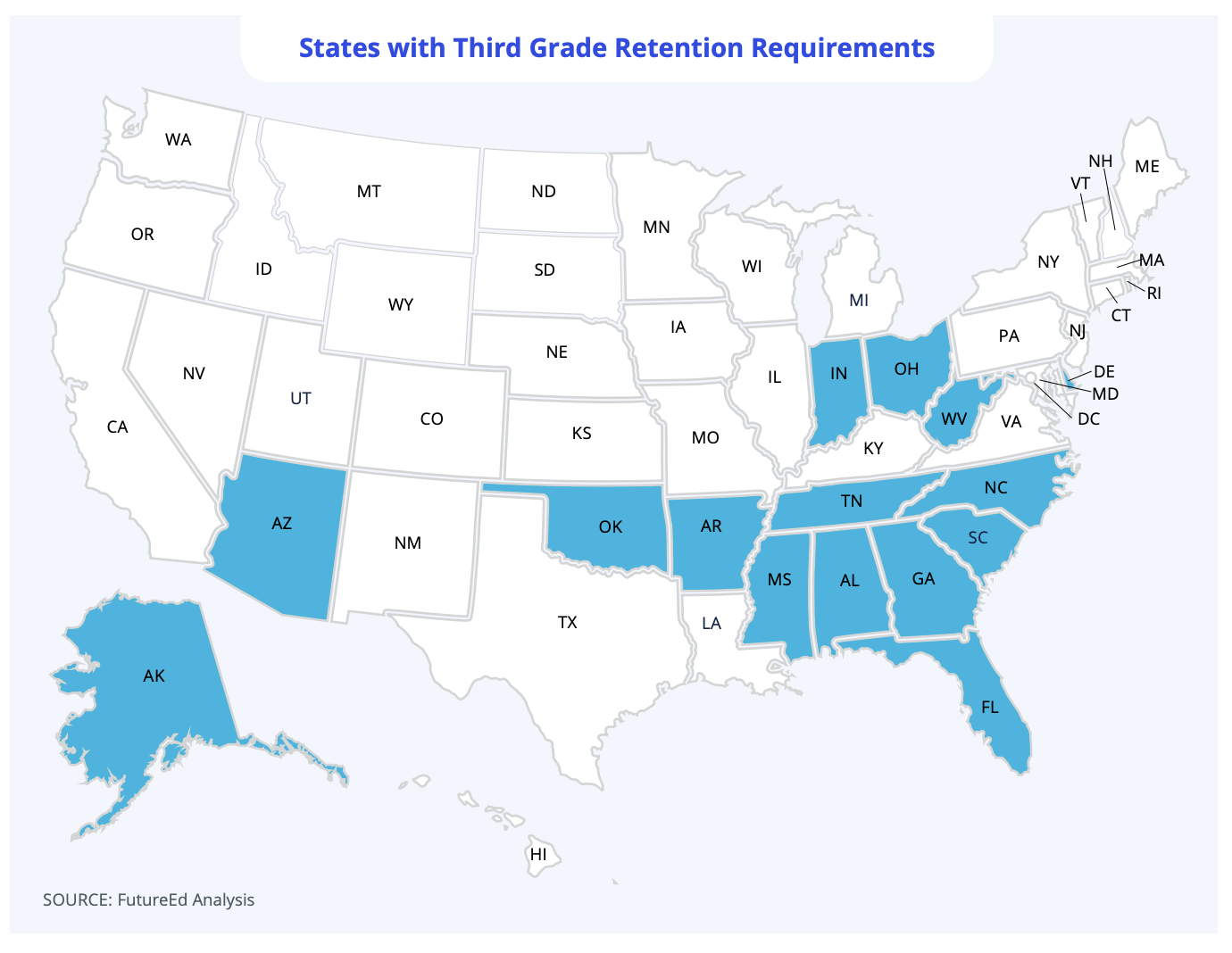
The media has persisted, however, to make dramatic and unsupported claims that Mississippi’s outlier grade 4 reading scores on NAEP in 2019 prove that SOR reading policies directly cause improved student reading proficiency even in the face of high populations of Black and impoverished students. The problems with claims of “miracle” lie in the likely distorting impact of grade retention (a similar dynamic as seen in Florida for decades) and disregarding that Mississippi, again like Florida, has a significant drop in reading scores in grade 8 even after enough years of policy implementation (over a decade) impacting those students (Thomas, 2022a).
Further, reducing Mississippi’s reading score improvements on NAEP lacks the appropriate historical context that notes the states steady score improvement over three decades, well before any SOR legislation or practices and excessive grade retention. In short, like claims of a reading crisis; the failures ascribed to balanced literacy, three cueing, and reading programs; and reading teachers as well as teacher educators, the claim of a Mississippi “miracle” is frankly absent any credible evidence, especially scientific evidence. The “fake news” dynamic of education reform includes manufactured crises and manufactured miracles.
Although we associate “fake news” with the most recent cycles in national politics, education reform in the US into its fifth decade reflects that same grounding in caricature and ideological misinformation. In politics and education reform, “fake news” serves the powerful as well as the political and market interests of those perpetuating misinformation. As a result, students, teachers, and our democracy lose, and we squander the resources needed to examine credibly how well or not our students are reading and what we can and should do better to serve the needs of every single student.
Bracey, G. W. (2003). April foolishness: The 20th anniversary of A Nation at Risk. Phi Delta Kappan, 84(8), 616-621.
Compton-Lilly, C.F., Mitra, A., Guay, M., & Spence, L.K. (2020). A confluence of complexity: Intersections among reading theory, neuroscience, and observations of young readers. Reading Research Quarterly, 55(S1), S185-S195. https://doi.org/10.1002/rrq.348
Goering, C., & Thomas, P.L., eds. (2018). Critical media literacy and fake news in post-truth America. Boston, MA: Brill.
Hoffman, J.V., Hikida, M., & Sailors, M. (2020). Contesting science that silences: Amplifying equity, agency, and design research in literacy teacher preparation. Reading Research Quarterly, 55(S1), S255–S266. https://doi.org/10.1002/rrq.353
Holton, G. (2003, April 25). An insider’s view of “A Nation at Risk” and why it still matters. The Chronicle Review, 49(33), B13.
Pollock, M., & Rogers, J., et al. (2022, January). The conflict campaign: Exploring local Experiences of the campaign to ban “Critical Race Theory” in public K-12 education in the U.S., 2020-2021. UCLA’s Institute for Democracy, Education, and Access. https://idea.gseis.ucla.edu/publications/the-conflict-campaign/
Reinking, D., Hruby, G.G., & Risko, V.J. (2023). Legislating phonics: Settle science of political polemic? Teachers College Record. https://doi.org/10.1177/01614681231155688
Rosenberg, B. (2004, May). What’s proficient? The No Child Left Behind Act and the many meanings of proficiency. Washington, DC: American Federation of Teachers. https://files.eric.ed.gov/fulltext/ED497886.pdf
Spiegel, D. (1998). Silver bullets, babies, and bath water: Literature response groups in a balanced literacy program. The Reading Teacher, 52(2), 114-124. www.jstor.org/stable/20202025
Thomas, P.L. (2015). Ignored under Obama: Word magic, crisis discourse, and utopian expectations. In P. R. Carr & B. J. Porfilio (Eds.), The phenomenon of Obama and the agenda for education: Can hope (still) audaciously trump neoliberalism? (pp. 45-68). Charlotte, NC: Information Age Publishing.
Thomas, P.L. (2016). Miracle schools or political scam? In W.J. Mathis & T.M. Trujillo, Learning from the Federal Market-Based Reforms: Lessons for ESSA (pp. 223-232). Charlotte, NC: IAP.
Thomas, P.L. (2019a). The ethical dilemma of satire in an era of fake news and the brave new world of social media. In K.H. Turner (ed.), The ethics of digital literacy: Developing knowledge and skills across grade levels (pp. 171-177). Lanham, MD: Rowman & Littlefield Publishers.
Thomas, P.L. (2022b). The Science of Reading movement: The never-ending debate and the need for a different approach to reading instruction. Boulder, CO: National Education Policy Center. http://nepc.colorado.edu/publication/science-of-reading
Valcarcel, C., Holmes, J., Berliner, D. C., & Koerner, M. (2021). The value of student feedback in open forums: A natural analysis of descriptions of poorly rated teachers. Education Policy Analysis Archives, 29(79). https://doi.org/10.14507/epaa.29.6289
Cliches become cliches often because they do capture a truth, and “fish don’t know they are in water” may sound trite, but the saying captures well our five decades of education reform in the US.
Since A Nation at Risk under Ronald Reagan and then reinforced and expanded under George W. Bush (with Rod Paige and Margaret Spelling as Secretaries of Education), education reform in the US has been grounded in neoliberal ideology, the foundational beliefs of Republicans and conservatives.
“Neoliberalism” is a challenging term. First, it is hard to define, and second, the use of the word “liberal” has two contrasting meanings in the US—”liberal” as in “classic liberalism” is “conservative” or politically “right,” yet in common usage “liberal” is typically associate with “progressive” or politically “left.”
However, to simplify, in education reform, we can fairly interchange “neoliberal” with “conservative” and “Republican”—even though, as I want to discuss here, it is incredibly important to understand that neoliberal education reform is embraced and perpetuated by both Republicans and Democrats.
Look at the education reform landscape since the 1980s to understand.
A Nation at Risk established the neoliberal education reform playbook: manufacture an education crisis; declare that students, teachers, and public schools are failing; and mandate accountability policies to “fix” students, teachers, and schools (in-school reform only).
Insiders exposed that Reagan gave marching orders to the committee that created A Nation at Risk; Reagan wanted the US to embrace school choice (neoliberalism is a market ideology) and to “put prayer back in schools” (although voluntary prayer has always been allowed in public education, Reagan and Republicans depended on culture wars).
A key component of neoliberal education reform is the buy-in of the media. Until decades later, after numerous scholars discredited the report as a “manufactured crisis,” the media uncritically declared US education—teachers and students—failures.
And thus we set out on several cycles of the same accountability reform grounded in new standards, new tests, and new political mandates.
Governors scrambled to show they took education seriously, and George W. Bush in Texas turned his role as education reform governor into a launching pad for the White House.
Here is another key element.
Although Bush claimed a Texas “miracle,” again as with A Nation at Risk, after the political success and media as well as public buy-in, scholars showed that the “miracle” was a “mirage” (or better yet, a lie).
None the less, Bush took Paige into his administration and No Child Left Behind (NCLB) was modeled in the Texas “miracle”/”mirage”—and just as Democrats rushed to embraced Reagan’s lie, Democrats joyfully made NCLB one of the most prominent federal bi-partisan accomplishments in recent US history.
Few things show how pervasive neoliberal (Republican/conservative) education reform has become the water to the fish (education) than the Barack Obama/Arne Duncan education era.
Instead of ushering in a progressive or critical response to the Bush education policy, Obama/Duncan doubled down—fueling the draconian value-added method era of teacher evaluation, launching the deceptive and austere education career of Michelle Rhee, and supercharging the charter school movement (a “school-choice lite” movement that fulfills the market beliefs of neoliberalism).
At 40 years since A Nation at Risk, all we have to show for the constant reform in education is a series of claims of “crisis” and a smattering of “miracles”—both of which are always manufactured.
SOR has its roots firmly in NCLB and the National Reading Panel (SOR cites the NRP report as much or more than any other evidence)—the peak of neoliberal education reform.
SOR was also fueled throughout the 2000s by the Florida model, which depends heavily on grade retention and laser-focusing on grade 3 reading.
Around 2013, states began to revisit or reimagine reading legislation, but in 2018, the media supercharged the SOR movement, echoing the “manufactured crisis” approach of A Nation at Risk.
Notably, the “manufactured crisis” of the SOR movement is firmly grounded in NAEP testing; first, the media misrepresents NAEP data, and second, NAEP is purposefully designed (the test is a neoliberal tool) to create the veneer of failure by students, teachers, and schools.
NAEP allows media and political leaders to shout that 2/3 of students are not proficient in reading even though that claim isn’t what most people think.
Therefore, at its core, the SOR movement is another neoliberal education reform movement, a tool of Republican/conservative ideology and politics.
SOR has the student/teacher/school failure rhetoric, the “miracle” that is a “mirage,” the eager and uncritical compliance of the media, and the compelling use of standardized tests data (NAEP). But most importantly to understand how SOR is neoliberal education reform, the policies are repackaging Jeb Bush’s Florida model, emphasizing punitive reading policies such as grade retention.
However just like all the other neoliberal education reform since the 1980s, it will not work because it isn’t designed to work.
We are only 20 years since NCLB/NRP which mandated scientifically based reading instruction, yet there is a reading crisis?
Here is the dirty little secret about neoliberal education reform: It is a distraction for political gain.
Neoliberalism keeps the public’s gaze on individuals (students, teachers) and away from systemic forces; SOR wants people to believe that a couple reading programs are to blame for reading failures instead of poverty and inequity.
And the neoliberal attacks in SOR on people are yet another swipe at progressive and critical educators.
Like fish, many educators cannot see they are willing participants in neoliberal education reform; almost all Democrats cannot see they are willing participants in neoliberal education reform.
Fish don’t know they are in water, but with the SOR movement (and whatever crisis comes next), the better analogy may be lobsters in a slowing boiling pot.
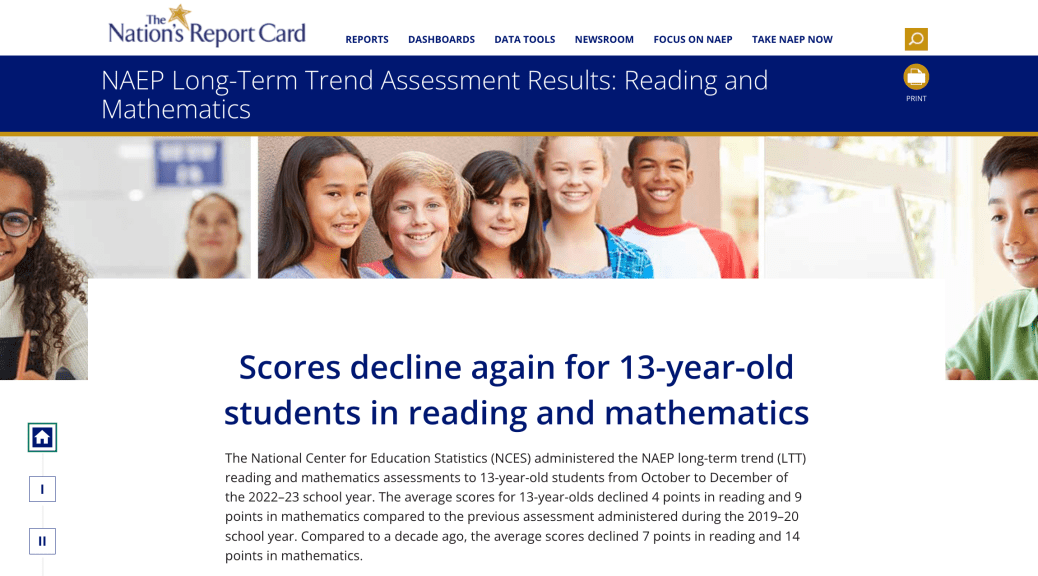
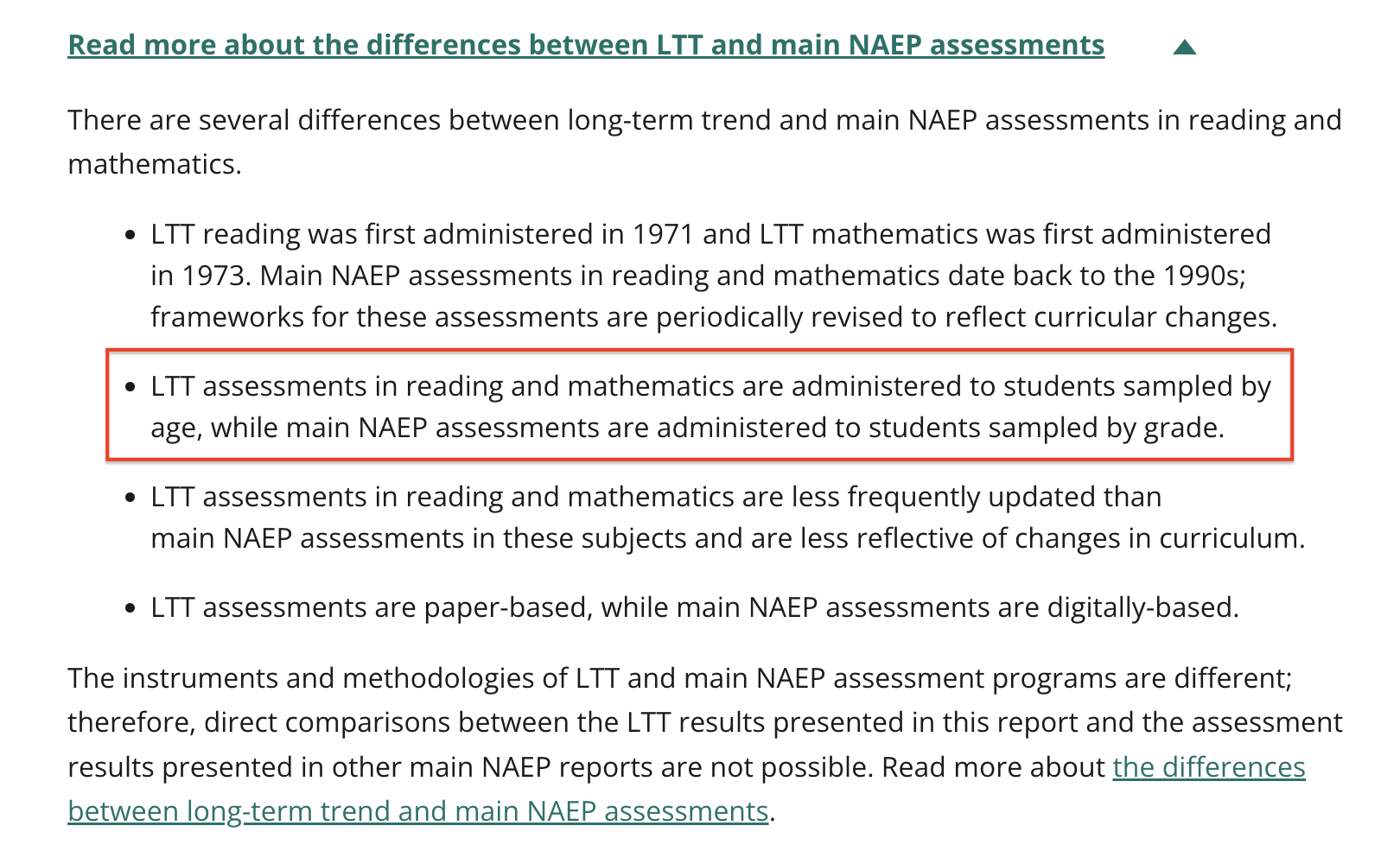
The LTT is different than regularly reported NAEP testing, as explained here:
As I will highlight below, it is important to emphasize LTT is age-based and NAEP is grade-based.
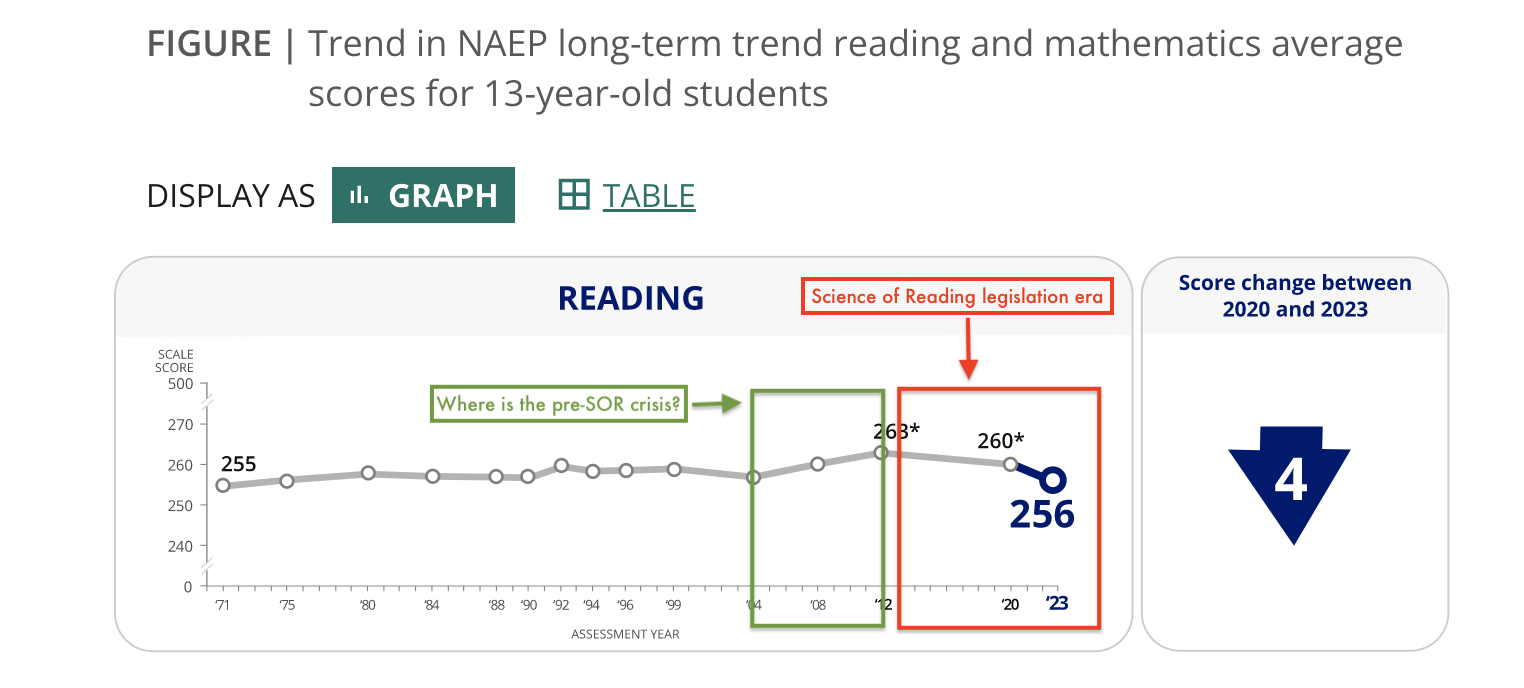
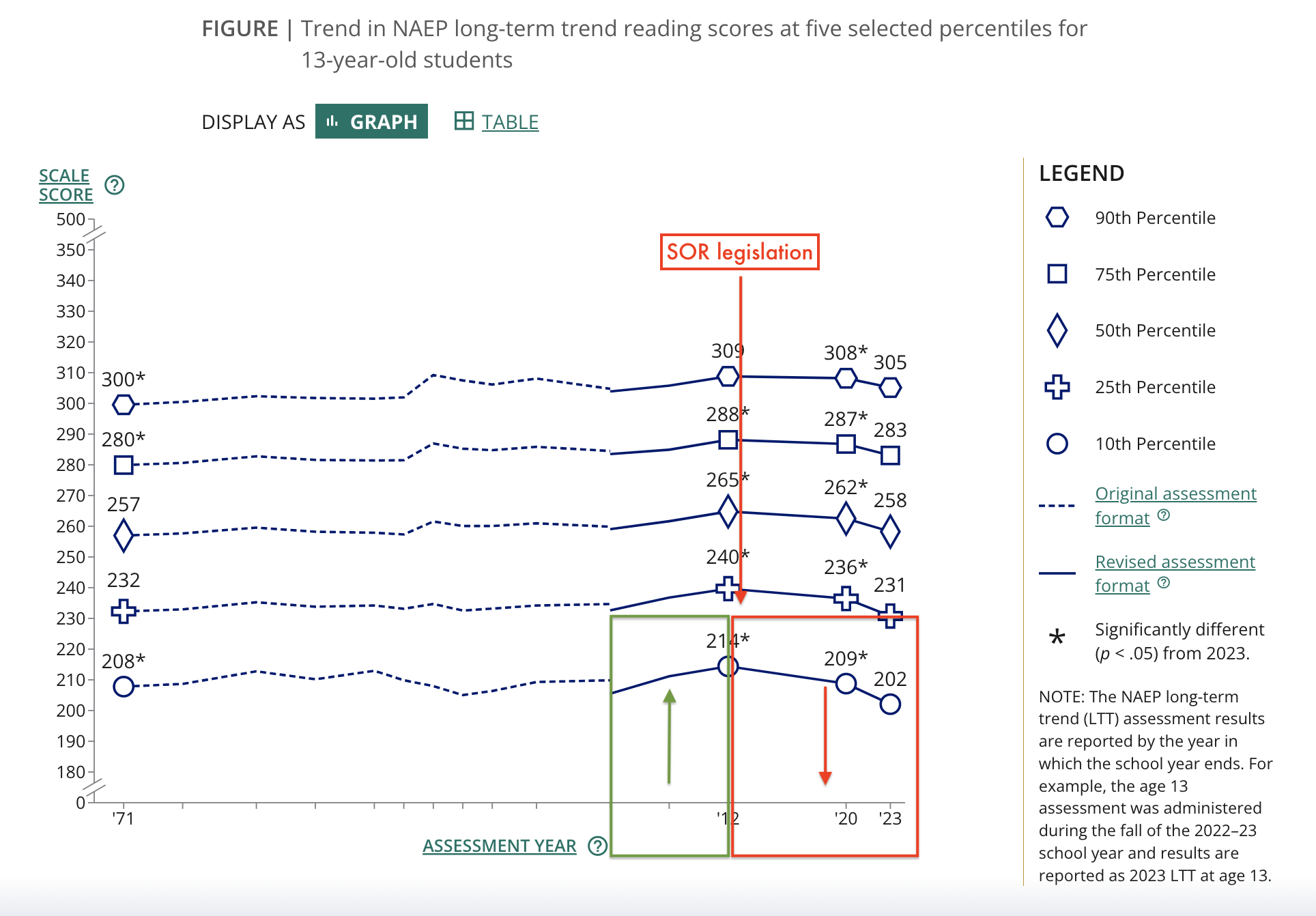
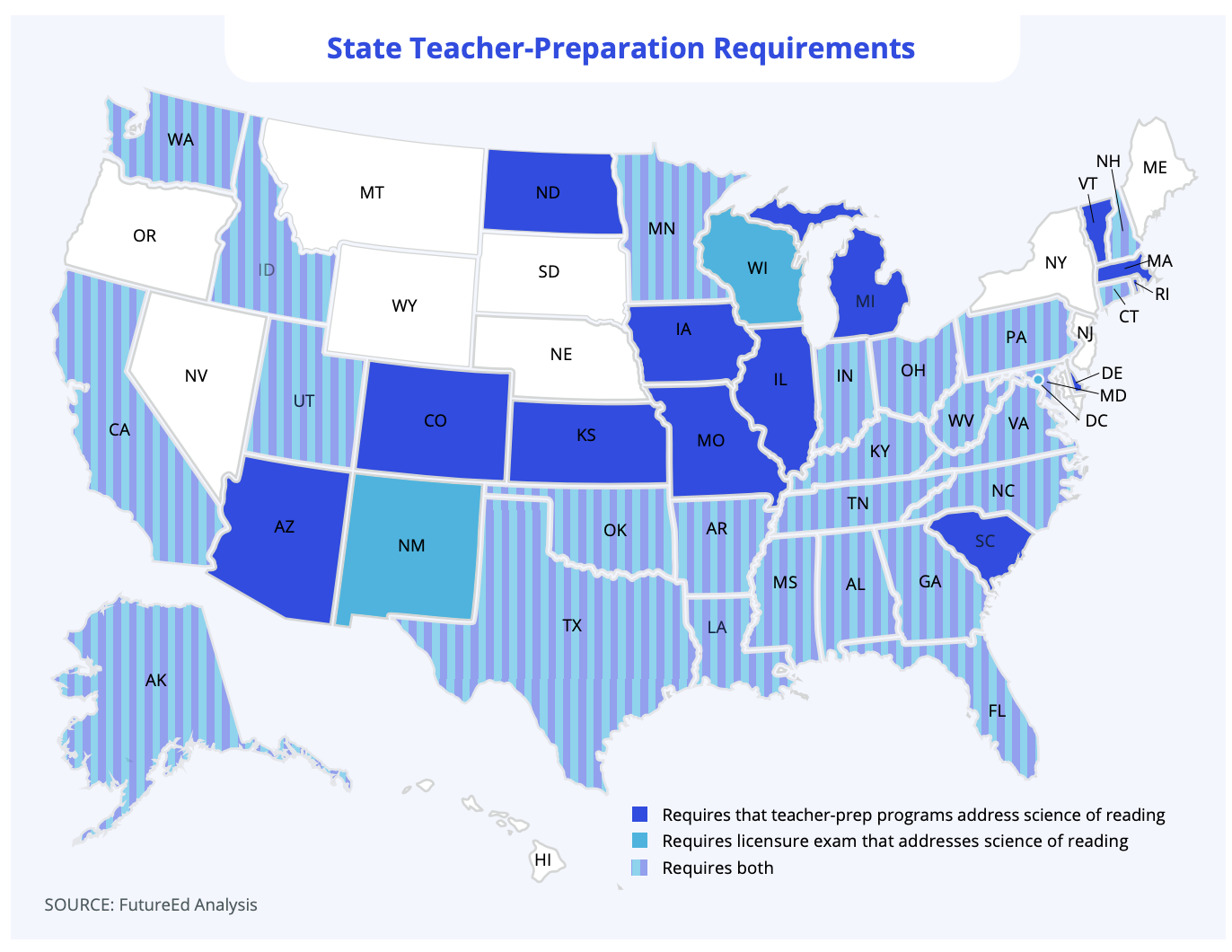
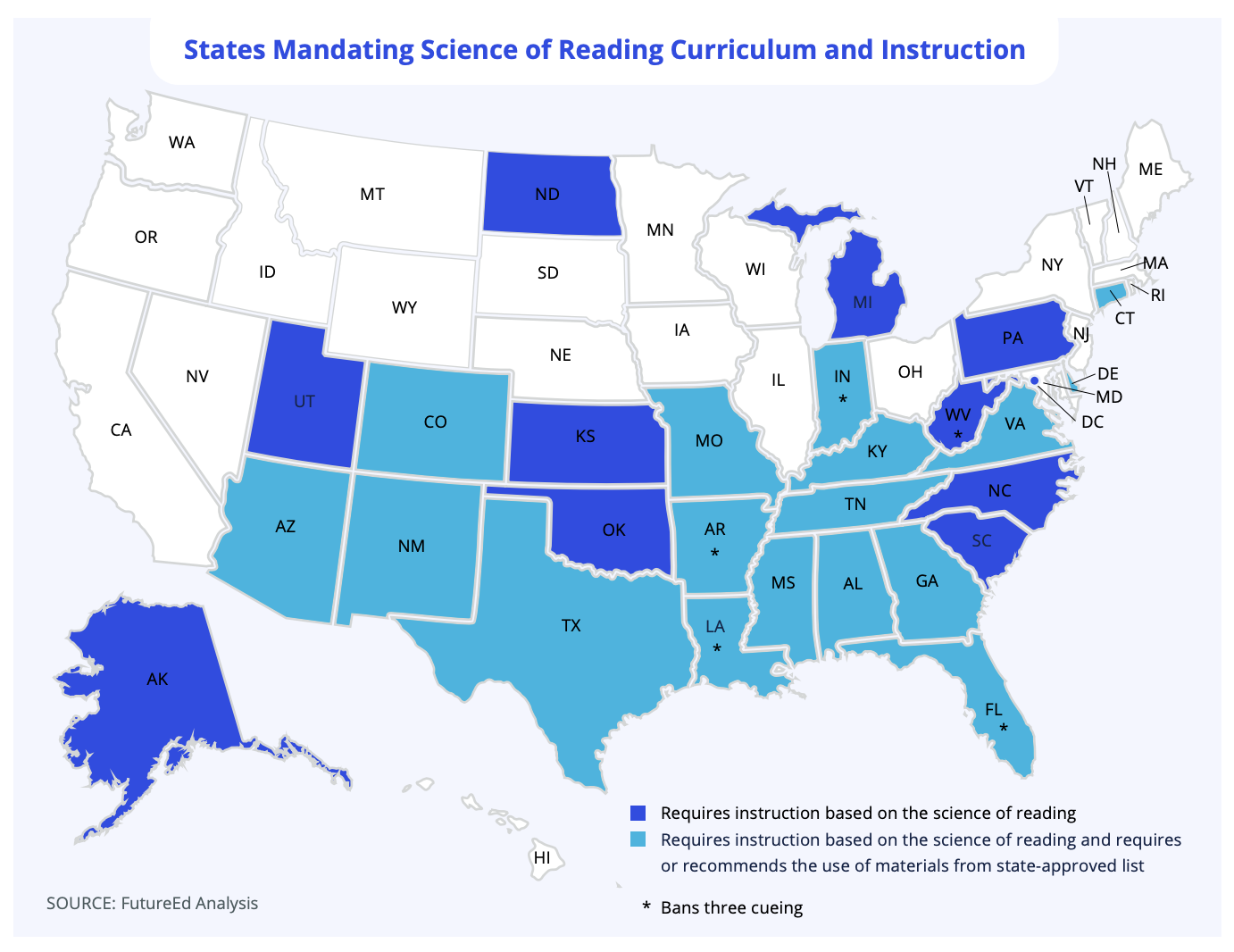
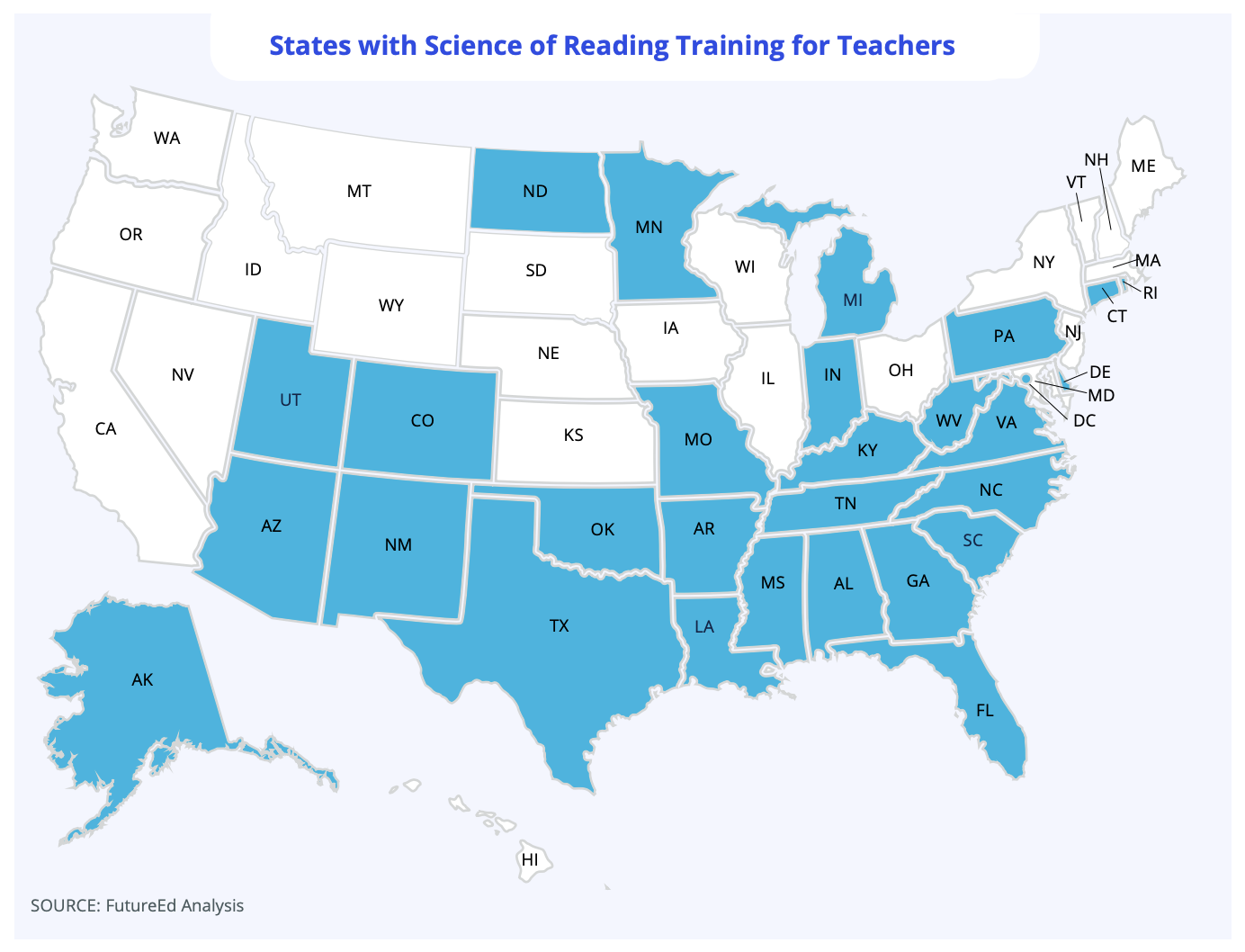
LTT assesses reading for 13-year-old students, and by 2023, these students have experienced school solidly in the “science of reading” (SOR)-legislation era, which can be traced to 2013 (30+ states enacting SOR legislation and growing to almost every state within the last couple years [1]).
Being age-based (and not impacted by grade retention), the trends tell a much different story than the popular and misleading SOR movement.
Consider the following [2]:
Here is the different story:
There is no reading crisis.
Test-based gains in grades 3 and 4 are likely mirages, grounded in harmful policies and practices such as grade retention.
Age 13 students were improving at every percentile when media and politicians began crying “crisis,” but have declined in SOR era, notably the lowest performing students declining the most.
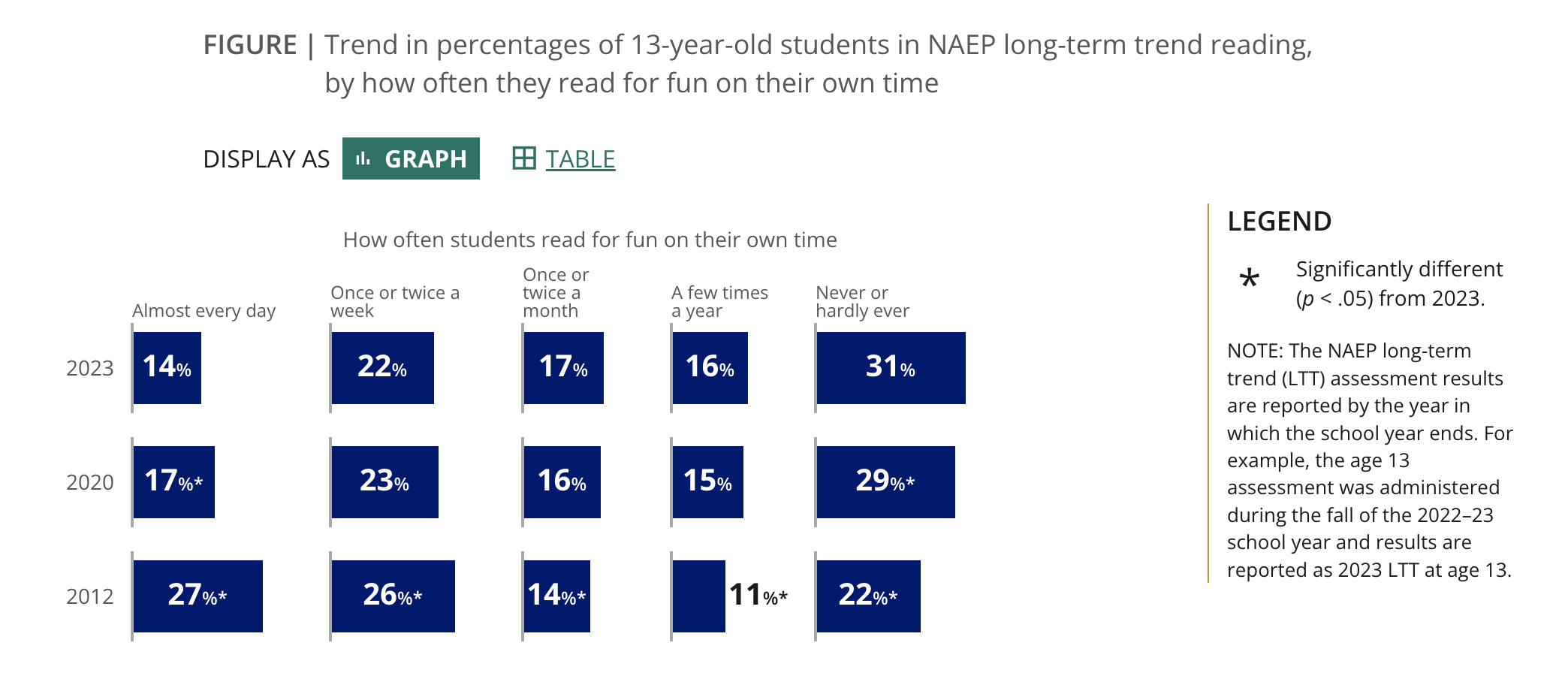
Reading for fun and by choice have declined significantly in the SOR era (a serious concern since reading by choice is strongly supported by research as key for literacy growth).
Here are suggested readings reinforced by the LTT data:
The US has been sold a story about reading that is false, but it drives media clicks, sells reading programs and materials, and serves the rhetorical needs of political leaders.
Students, on the other hand, pay the price for false stories.
[1] Documenting SOR/grade-three-intensive reading legislation, connected to FL as early as 2002, but commonly associated with 2013 as rise of SOR-labeled legislation (notably in MS):
Cummings, A. (2021). Making early literacy policy work in Kentucky: Three considerations for policymakers on the “Read to Succeed” act. Boulder, CO: National Education PolicyCenter. Retrieved May 18, 2022, from https://nepc.colorado.edu/publication/literacy
Cummings, A., Strunk, K.O., & De Voto, C. (2021). “A lot of states were doing it”: The development of Michigan’s Read by Grade Three law. Journal of Educational Change. Retrieved April 28, 2022, from https://link.springer.com/article/10.1007/s10833-021-09438-y
Collet, V.S., Penaflorida, J., French, S., Allred, J., Greiner, A., & Chen, J. (2021). Red flags, red herrings, and common ground: An expert study in response to state reading policy. Educational Considerations, 47(1). Retrieved July 26, 2022, from https://doi.org/10.4148/0146-9282.2241
Reinking, D., Hruby, G.G., & Risko, V.J. (2023). Legislating phonics: Settle science of political polemic? Teachers College Record. https://doi.org/10.1177/01614681231155688
Thomas, P.L. (2022). The Science of Reading movement: The never-ending debate and the need for a different approach to reading instruction. Boulder, CO: National Education Policy Center. http://nepc.colorado.edu/publication/science-of-reading
[2] Despite claims of a “miracle” MS grade 8 NAEP in reading remains at the bottom after a decade of SOR legislation:
Reporting for NPR in 2018 about A Nation at Risk, Anya Kamenetz noted:
When it appeared in April 1983, the report received widespread coverage on radio and TV. President Reagan joined the co-authors in a series of public hearings around the country.
The report’s narrative of failing schools — students being out-competed internationally and declining educational standards — persists, and has become an entrenched part of the debate over education in the U.S.
In 2023, writing for The Answer Sheet in The Washington Post, James Harvey explains that the report under Reagan was “gaslighting” for political purposes, and not the clarion call to address education reform that media, the public, and political leaders claimed.
Yet, education reform has become a central part of the political process for governors and presidents since the 1980s, reaching a critical peak under George W. Bush who turned the discredited “Texas Miracle” into groundbreaking and bipartisan federal legislation, No Child Left Behind (NCLB).
In fact, public education in the US has been under an intense public and political microscope for forty years of high-stakes accountability. For educators, that accountability is indistinguishable regardless of the political party in the White House.
At the core of education crisis/miracle rhetoric has been the use and misuse of standardized test data.
For many decades, the media and public fretted over public education based on SAT data (and then ACT data), which represents the central issue of misunderstanding test scores (the College Board warns of not ranking states by SAT averages, yet the media persists) and misusing test data (SAT/ACT tests are designed to predict college success, not evaluate the quality of public education).
With the decrease in the influence of SAT/ACT testing, however, the media, public, and political leaders have focused more on National Assessment of Educational Progress (NAEP) data.
Since 2019, there have been NAEP-inspired claims of educational crisis based on 2019 reading scores, 2022 math scores, and 2022 history/civics scores.
As one powerful example, high-profile media, The New York Times, and journalist, Nicholas Kristof, proclaim:
One of the most bearish statistics for the future of the United States is this: Two-thirds of fourth graders in the United States are not proficient in reading.
However, despite warnings from 2016, Tom loveless explains:
In February, 2023 Bari Weiss produced a podcast, “Why 65% of Fourth Graders Can’t Really Read” and Nicholas Kristof, New York Times columnist, wrote “Two-Thirds of Kids Struggle to Read, and We Know How to Fix It.” Both headlines are misleading. The 65% and two-thirds figures are referring to the percentage of 4th graders who scored below proficient on the last reading test of the National Assessment of Educational Progress (NAEP), administered in 2022.
The problem is this: scoring below proficient doesn’t mean “can’t really read” or “struggling to read.” It also does not mean “functionally illiterate” or identify “non- readers” as some of the more vituperative descriptions on social media have claimed. It doesn’t even mean “below grade level in reading,” one of the milder distortions.
Further, scholars Reinking, Hruby and Risko (2023), in fact, assert: “[T]here is no indisputable evidence of a national crisis in reading, and even if there were a crisis, there is no evidence that the amount of phonics in classrooms is necessarily the cause or the solution.”
Two problems currently exist with the stories being told about schools and the education reform movement—the data do not support claims of “crisis” and NAEP perpetuates the “crisis” myth by design.
The US is now mired in decades of punitive education legislation (standards and high-stakes testing as well as third-grade retention and VAM-based teacher evaluation) that has not worked because the central claim of “crisis” is simply not supported by the evidence.
Especially in the wake of the devastating impact of Covid on public education, students, and teachers, the Biden Administration has the historic opportunity to change direction in US public education reform.
This open letter, then, is an urgent call to do the following:
Acknowledge and reject the false narratives of manufactured public education “crises” and media-created education “miracles.”
Declare accountability-based, punitive reform a failure—despite good intentions—and call for equity-based, supportive reform that forefronts the impact of systemic forces outside and inside our public schools.
US public education has a long and inexcusable history of political negligence in terms of supporting the most vulnerable children in our society; that includes negligence of vulnerable students in our public education system.
Our children and the country deserve robust and substantive education reform, not false stories of failure and misguided blame and punishment.
Regretfully, the last forty years have been a perpetual cycle of manufactured crisis and punitive policy.
The Biden Administration—notably a rhetorical “friend” of education embodied by Dr. Jill Biden—can and should chose a different story about our schools, our students, and our teachers.
As celebrated author James Baldwin urged: “The challenge is in the moment, the time is always now.”
educator, public scholar, poet&writer – academic freedom isn't free














 dr. p.l. (paul) thomas