Category Archives: reading

Navigating Choice Reading with High-Stakes Accountability in Mind

As long as we have had formal education in the U.S., we have had a fair amount of public crisis discourse about how students can’t read, and we persist in committing to classroom practices that often contradict our stated goals of creating eager and proficient readers among our students.

One of my arguments about how we fail reading in our schools is that virtually all K-3 students are eager to read, but very few high school students maintain that same joy; what those students have in common are 10+ years in school, where reading goes to die.

English educator and researcher Lou LaBrant began in the 1920s and 1930s producing what we would call today action research showing the essential power of choice in reading to foster both eager and proficient readers.

In the subsequent years, research on reading has confirmed over and over that access to books in the home and choice in reading are the most powerful ways to achieve the kind of literacy we often lament is missing in our young people.

During the most recent accountability era, when high-stakes testing has become king, students are increasingly schooled in scoring well on test-reading, and as a result, they are taught to hate reading. We may well have today a much greater problem in the U.S. with people who hate to read, who don’t read, than who can’t read.

And that fact is the fault of formal schooling.

The source of this dilemma is high-stakes accountability grounded in testing. As a high school English teacher throughout the 1980s and 1990s, I taught in South Carolina, an early adopter of standards and testing, and I also taught in the Advanced Placement program.

After attending my local Writing Project and finishing my dissertation on LaBrant to complete and EdD, I became resolved to seek ways to honor choice reading and my obligations to prepare students for testing. I documented that adventure with my AP students in English JournalWhen Choice Failed—Or Did It?

When I saw a recent post, AP English and Choice Reading, I was prompted to revisit some of the key elements of how all teachers can remain committed to powerful and research-based literacy practices such as choice while also meeting our obligations during high-stakes accountability.

My short version is what I always say about good writing instruction: If we practice rich and authentic reading practices, students will be even better equipped when faced with narrow and reductive test-reading than if they had only test-prep reading instruction.

The fundamental shift that must occur in order for any teacher to make choice reading work in real world demands of the classroom is to let go of seeing any text as the goal of instruction and to recognize our literacy goals are broader than any details about that text.

In other words, we must not seek to make our students experts on The Scarlet Letter, nothing more than fostering trivia knowledge, but seek to use any novel in the pursuit of all literacy moves (including critical literacy) and to foster genre, medium, and form awareness.

If we believe people should read novels, we must seek ways to invite students to read any novel in order to grow more proficient in that practice, to grow more eager and joyous as well.

As I detailed in EJ in 2003, instead of doing assigned whole-class novels and plays in AP Literature, I allowed students to explore the provided list of writers from the College Board/AP as well as the identified works over the years on the AP Literature test.

From that narrowed and purposeful range of works, we developed broad categories within which students chose works to facilitate whole-class discussions even as students were reading different works.

For example, we had units grounded in black writers and female writers, but we also included Shakespeare and modern U.S. drama categories in order to prepare well for the AP test.

I call this tethered choice because students become active and informed participants in both choosing what they read and keeping that choice tethered to instructional goals and accountability demands.

Choice reading is powerful and accountability is a reality for both students and teachers; however, these two facts do not have to become a regrettable choice for teachers.

If we teachers can embrace the eagerness and joy all children bring to school and then become facilitators for helping those students remain avid readers who recognize the formal obligations of schooling, our reading classrooms can honor both choice reading and achieve the sorts of measurable outcomes demanded by accountability.
A Reader for Trumplandia

My dad predicted Trump in 1985 – it’s not Orwell, he warned, it’s Brave New World, Andrew Postman

‘It will be called Americanism’: the US writers who imagined a fascist future, Sarah Churchwell

George Orwell’s ‘1984’ Is Suddenly a Best-Seller, Kimiko de Freytas-Tamura

Orwell’s “1984” and Trump’s America, Adam Gopnik

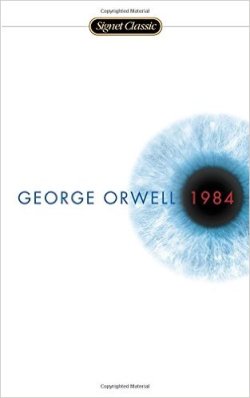
1984, George Orwell

31besgg4t3l-_sx311_bo1204203200_

The Orwell essay that’s even more pertinent than “1984” right now, Maxwell Strachan

Politics and the English Language, George Orwell

Uneasy About the Future, Readers Turn to Dystopian Classics, Alexandra Alter

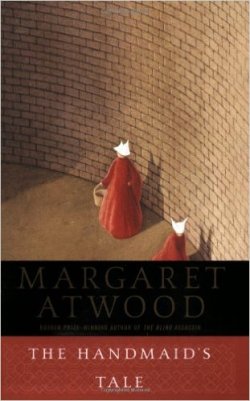
The Handmaid’s Tale, Margaret Atwood

51ettpwhyfl-_sx309_bo1204203200_

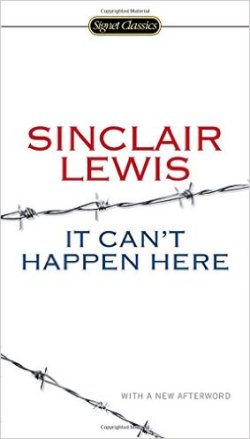
It Can’t Happen Here, Sinclair Lewis

41t-9lej7cl-_sx281_bo1204203200_

Newt Gingrich: Margaret Thatcher is the real model for the Trump presidency

V for Vendetta, Alan Moore and David Lloyd

51cvjz0nhbl-_sx332_bo1204203200_

1987’s “Document” feels especially applicable to America in 2017, Annie Zaleski

On Jan. 20, Paste ran a clever article titled “An Inaugural Day Message via the Words of R.E.M.” The piece creates a narrative about politics and life by jumbling together and rearranging phrases culled from the Athens, Georgia, band’s song lyrics. Workload-wise, the 2400-word piece is impressive; mixing and matching sentiments from a 30-plus-year career certainly isn’t easy….

The last record R.E.M. released via I.R.S. Records — and the first LP the band recorded with producer Scott Litt — “Document” addresses the corrupting nature of money; political witch hunts concerning free speech; circumstances that are both bewildering and unprecedented; and economic and employment oppression. Appropriately, the record’s music is glinting and electrified, and nods to post-punk, folk, funk and fiery rock ‘n’ roll….

In 2003, Stipe admitted that “Disturbance at the Heron House” is his “take” on George Orwell’s “Animal Farm.”…

“That song is so fucking political, and it’s so appropriate to what’s going on right now,” he told Filter. “Like, the kind of arrogance that some of the policy makers and world leaders are carrying with them right now is, I think, reflective of the very worst of the United States. It’s that teenage arrogance, as a young country, the know-it-all-kind of thing. That makes me crazy.”

R.E.M. – Disturbance At The Heron House (see also here)

Animal Farm, George Orwell

41ekgymybll-_sx322_bo1204203200_

Additional Recommended Texts

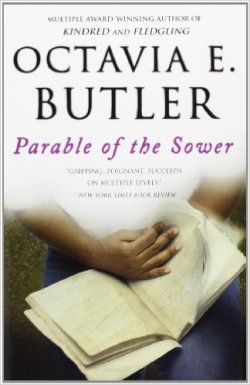
Parable of the Sower, Octavia E. Butler

51x9j2wzrwl-_sx322_bo1204203200_

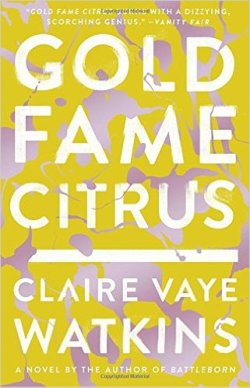
Gold Fame Citrus, Claire Vaye Watkins

51x8-rvshpl-_sx319_bo1204203200_

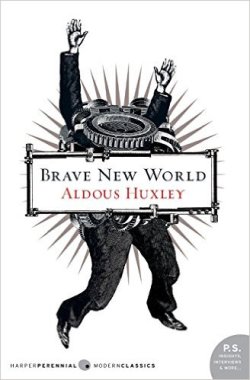
Brave New World, Aldous Huxley

51rah7c2nxl-_sx326_bo1204203200_

Readers, Writers, Teachers, and Students: “the pointlessness of so much of it”

I wonder who I would have been, without those shelves, without those people and those places, without books.

I would have been lonely, I think, and empty, needing something for which I did not have words.

“Four Bookshops,” The View from the Cheap Seats: Selected Nonfiction, Neil Gaiman

After 18 years as a public high school English teacher and then 14 years and counting as a university professor (many years of which teaching first-year writing along with teacher education), I was sitting a couple weeks ago in our second workshop designed to help university professors teach writing, and I had an epiphany about teaching writing that I believe has helped me understand better why the teaching of writing remains so contentious.

Both the formal teaching of reading and writing—notably at the secondary and undergraduate levels—is conducted by one of two essential groundings: teaching literacy as a reader and/or writer versus teaching literacy as a hyper-student/teacher [1].

While my teaching and advocacy for teaching rests solidly in the former, I am not here suggesting one is better than the other, but that these two perspectives are at the core why discussing and confronting so-called “best practices” often comes off as a heated debate instead of a productive conversation.

I have noted often that many English majors, including those certifying to teach secondary English and those who attain doctorates to teach at the university level, are prepared to teach a very narrow version of literary criticism—mostly addressing fiction and poetry, and mostly through analysis of literary technique and writer’s craft. (See this interesting argument for close reading of multicultural texts that, I believe, recommending close reading by rejecting close reading.)

During the accountability era when what we teach and what students learn have been reduced to how students are tested, reading and writing have been reduced to artificial (as in how we address them in school and how we test them) forms: reading snippets of text to answer multiple choice questions (no real-world readers do this), writing from a prompt in order to be assessed by a rubric and/or against an anchor paper (at best a bastardization of real-world writing, but honestly, again, no real-world writers do this).

I will not explore this fully here, but we cannot ignore as well how the commodification of education has eroded the authenticity of reading and writing. Textbooks and teaching materials feed the accountability dynamic narrowly but also speak to viewing reading and writing as students and teachers, not as readers and writers.

A Case for Readers and Writers in Formal Schooling

I am currently reading Neil Gaiman’s The View from the Cheap Seats: Selected Nonfiction, and this adventure in a writer’s-writer offering essay after essay about his love affair with books, writers, libraries, and genre is both a pure joy for me as reader and writer as well as yet another journey into trying to understand better the teaching of reading and writing.

Gaiman is an incredibly successful writer who cannot resist constantly reminding his readers how his life as a writer grew from his love affair with books and writers, how bookstores and libraries were his sanctuaries.

His is also a testament to the power of a wide variety of genres and media in the life of avid readers and writers.

“The Pornography of Genre, or the Genre of Pornography” and “What the [Very Bad Swearword] Is a Children’s Book, Anyway? The Zena Sutherland Lecture” are powerful essays about the importance of teaching literacy as readers and writers (and thus at least tempering teaching literacy as hyper-students/teachers) but also about how literacy is a journey, not something to be acquired or mastered.

To focus on the second essay noted above, Gaiman shares a story of his telling a joke to a fellow eight-year-old, a joke including the word “fuck”; the controversy that followed, including the friend’s parents removing that child from the private school, taught Gaiman “two very important lessons”:

The first was that you must be extremely selective when it comes to your audience.

And the second is that words have power.

This essay on children’s literature is also about children, as Gaiman explains:

Children are a relatively powerless minority, and, like all oppressed people, they know more about their oppressors than their oppressors know about them.

And then, Gaiman confronts formal schooling—reinforcing something I have found to be a pattern among some of the most well regarded writers (I have written and edited a number of books on writers, focusing often on Kurt Vonnegut):

For the record, I don’t think I have ever disliked anything as long or as well as I disliked school: the arbitrary violence, the lack of power, the pointlessness of so much of it….

My defense against the adult world was to read everything I could. I read whatever was in front of me, whether I understood it or not.

I was escaping. Of course I was—C.S. Lewis wisely pointed out that the only people who inveigh against escape tend to be the jailers. [1]

And here is where I believe the tension I noted earlier comes into play.

Again, I am not arguing here that teaching literacy as a reader/writer is necessarily better than teaching literacy as a hyper-student/teacher, but I am extremely concerned that the latter dominates formal schooling to an extreme that is harmful to both literacy and basic human dignity and agency.

Gaiman’s essays, however, shout to those of us who teach literacy that formal schooling and teaching literacy as hyper-students/teachers stood between Gaiman and works such as his wonderful The Ocean at the End of the Lane, that Gaiman has become a gifted and treasured writer in spite of his formal education (like Louise DeSalvo, Gaiman honors the coincidental lessons of libraries and bookstores).

I am fairly certain now that lumping all sorts of literacy instruction into a course called “English” is a really bad idea—teaching literary analysis is often at odds with fostering a love of reading, but being a teacher of reading and/or literature is simply not the same thing as teaching writing.

So much of my antagonism about how we teach literacy isn’t at us teachers so much as at the system itself—how formal schooling too often is rightly analogized as prison, how many of us have excelled in many ways in spite of our education.

As a lover of books, libraries, and bookstores; as a writer who views nearly every moment of this life through writer’s eyes; as someone who, like Gaiman, remains moment by moment aware of the “powerlessness” and “helplessness” of being a child or teen, of being a student—I make the case often that the teaching of literacy—reading and writing—needs less school- and test-only versions of reading and writing, but much more authentic reading and writing.

At the end of his contemplation on what makes a book for children (or adults), Gaiman returns to a point he makes early in the talk: “But then, you do not come to authors for answers. You come to us for questions. We’re really good at questions”

And it is here that I think we have a better way for formal schooling—the pursuit of questions with the joy and wonder of a child.

And I’ll thus end with a question: What value is there in rules, tests, templates, and requirements if in the end our classrooms have resulted in children seeking ways to escape “the pointlessness of so much of it”?


[1] Many if not most teachers and professors are hyper-students, having excelled at and achieved within formal schooling where literacy is reduced to tests, templates, and narrow views of what counts as “good” and “bad” language and texts. Once anyone has excelled in that culture, it is difficult to view it critically or to reject it for what avid readers and writers would call “authentic” literacy.

[2] On Science Fiction, C.S. Lewis:

They are as refreshing as that passage in E. M. Forster where the man, looking at the monkeys, realizes that most of the inhabitants of India do not care how India is governed. Hence the uneasiness which they arouse in those who, for whatever reason, wish to keep us wholly imprisoned in the immediate conflict. That perhaps is why people are so ready with the charge of ‘escape’. I never fully understood it till my friend Professor Tolkien asked me the very simple question, ‘What class of men would you expect to be most preoccupied with, and most hostile to, the idea of escape?’ and gave the obvious answer: jailers. The charge of Fascism is, to be sure, mere mud-flinging. Fascists, as well as Communists, are jailers; both would assure us that the proper study of prisoners is prison. But there is perhaps this truth behind it: that those who brood much on the remote past or future, or stare long at the night sky, are less likely than others to be ardent or orthodox partisans.

Teaching Literacy, Not Literacy Skills

Through the lens of having been a teacher/professor, published writer, and recreational/competitive cyclist for over thirty years, several high school experiences are now illustrative of larger facts about the tension between teaching discrete skills versus fostering holistic performances.

In high school, I made As in math and science courses, but typically received Bs in English—and the source of that lower grade was poor scores on vocabulary tests. I balked at studying, found the process laborious and a waste of my time (better spent reading, collecting, and drawing from my comic book collection or reading the science fiction novels discouraged by my English teachers).

Throughout high school, I also worked frantically to be a good athlete, focusing on basketball. I wore ankle weights 24/7, including jumping rope hundreds of times each night with the weights on.

Despite my efforts and desire, I made the teams, but sat on the bench throughout high school.

Two aspects of that seem important: A track/football coach used to deride my ankle weight efforts by saying, “The only good those will do you is if you are in an ankle weight race”; and I could often be the best or near the best on any of my basketball teams when we had free throw shooting contests in practice.

Today, I feel safe claiming I have an unusually large vocabulary, and my career is deeply driven by by advanced literacy. In fact, I just completed teaching a graduate course in literacy.

All of this is gnawing at me because I have been watching a discussion on the NCTE Connected Community about vocabulary instruction. This thread reminds me of the recurring posts about grammar instruction.

During my graduate class, vocabulary and spelling were nearly a daily topic—along with concerns about “teaching grammar.”

Next week, I co-lead a Faculty Writing Fellows seminar for college professors who are exploring teaching writing at the university level (most of whom are outside of traditional disciplines for teaching writing). We will spend a great deal of time addressing and discussing the same concern: how to teach grammar.

As someone who loves to read and write, who lives to read and write—and as a teacher and writer—it makes my soul ache to confront how English teachers and English classes are often the sources of why children and adults loathe reading and writing.

But I also know intimately about that dynamic because in many ways that was me; I left high school planning to major in physics, only discovering I am a writer and teacher once I was in college.

And to this day I can see that damned vocabulary book we used in high school.

So when I became a high school English teacher, and faced throughout my early years what teachers continue to face today, I was determined that if I had to do vocabulary (required by the department and implicit in assigning students tax-payer-funded vocabulary books), I was going to find some way to do it as authentically as possible.

From those early years before I abandoned vocabulary instruction entirely and even accomplished as department chair having grammar and vocabulary texts not issued to students but provided as classroom sets to teachers who requested them, I recall a really important moment: A student wrote a sentence with the word “pensive” from the week’s vocabulary list—The girl’s boyfriend was very pensive when he bought her flowers.

The student was going through the motions of completing my inauthentic assignment (writing original sentences from the vocabulary list each week instead of doing the textbook exercises) that I thought was better and had simply looked at the one-word definition offered, “thoughtful.”

In fact, despite trying to make isolated vocabulary instruction authentic, I spent a great deal of time explaining to students that people didn’t use this word or that word the way the student had—although for them, the sentence seemed perfectly credible.

So what does all this mean?

Formal literacy instruction from K-5 through middle school into high school and even college is mostly failing our mission because we have fallen victim to an efficiency and analytical model of what literacy is and how to acquire so-called advanced literacy.

Two of the best examples of this skills plague are the obsession with prescriptive/isolated grammar instruction and the Queen Mother of literacy scams, the “word gap.”

The “word gap” persists despite the inherent flaws in the one research study driving it because most people have been lulled into believing the literacy-skills-equal-literacy hoax. [Think the Great Hooked on Phonics Scam that lures parents into believing that reading aloud is reading.]

Reducing literacy to and teaching discrete skills has been embraced in formal education because of the cult of efficiency that won out in the early decades of the education wars. That cult of efficiency was successful because classroom management has always overshadowed pedagogy in public schooling and also because the testing and textbook industries discovered there was gold in them there hills of schools.

Textbooks, worksheets, and multiple choice tests are certainly a soma of structure for the teacher and student alike—but they ain’t literacy.

Literacy is holistic, and the skills plague kills literacy.

Here, now, I want to make two important points about the skills plague.

First, we have made a serious mistake in flipping how people acquire so-called literacy skills such as vocabulary and grammatical dexterity.

As Stephen Krashen argued on the NCTE Connected Community thread, while it is true that highly literate people have large vocabularies and often great grammatical dexterity, they have come to those skills by reading and writing a great deal, in authentic ways.

But the efficiency cult has taken the fact that highly literate people have large vocabularies, for example, and flipped that to mean that we simply need to fill up students with words (usually arcane) or train them in root words, prefixes, and suffixes to create presto! literate humans.

Let me stress here that turning the holistic-to-discrete-skills pattern around is not only hogwash but also detrimental hogwash to our goals of literacy.

And so my second point is this: Students continue to spend inordinate amounts of time on harmful skills activities that would be better spent doing the holistic acts of reading and writing—holistic acts that would in fact accomplish the skills growth we claim we are seeking.

We know, as well, that student are not writing (for example) nearly enough—neither in amount of essays or length of essays—because teachers and students are overwhelmed with accountability mandates grounded in the efficiency model.

Let me end with my graduate course.

For 24 graduate students, all teachers, who had only reading and written assignments in the course (no tests, worksheets, or textbooks), I responded to over 320 drafts of three written assignments in a four-week period.

I highlighted this for the class to note that authentic literacy instruction committed to holistic approaches to literacy is not efficient, but it is incredibly time consuming and difficult.

I am 55 and I can see the vocabulary books in high schools that I still loathe—but I don’t recall a single word from that experience.

I am 55 and I still recall the day I sat listening to R.E.M.’s “You Are the Everything,” which made me fall in love with the word “eviscerate.”

I can also picture in my mind the words I highlighted as I read—words I didn’t know or also fell in love with as a writer—even recently when I was nudged to reconsider “decimate” in World War Z.

I remain angry and sad that the work we do as English teachers continues to create classrooms in which students have their love for reading and writing eviscerated instead of celebrated.


See Also

Try It Tuesday: Cite the Research that Drives Your Practice

It’s finally time to stop correcting people’s grammar, linguist says

Accidence Will Happen: The Non-Pedantic Guide to English Usage, Oliver Kamm

To High School English Teachers (and All Teachers)

All teachers are incredibly important, but high school English teachers will always have a special place in my heart.

I am in my fourth decade as an educator, spending almost two decades as a public high school English teacher (many years coaching and teaching/advising journalism/newspaper as well) and now in my second decade as a teacher educator (primarily working with future secondary ELA teachers) and a first year writing instructor.

Significant in my teaching journey are being in my area National Writing Project (Spartanburg Writing Project) and then serving as a lead co-instructor in that same project for a couple years.

Concurrent with my career as an educator, I have been a serious and published writer for about thirty years. And of course I have been madly in love with books of all kinds since before memory.

I write this specifically to my colleagues who are high school English teachers, but all teachers really, out of my greatest respect for teacher professionalism, importance, and autonomy—as well as my deepest commitment, the sacredness of every single student who enters any teacher’s classroom.

While at times this may read as scolding, preaching, or prescribing, I am seeking here to invite every teacher to do what I have done my entire career—stepping back from practice as often as possible, checking practice against my most authentic and critical goals, and then changing that practice if those do not match.

I am fortunate that my students often contact me, email or Facebook are common, and generally they are too kind. Typically, they reach out to thank me for preparing them as writers, and few things could make me prouder to be a teacher.

But these moments are tempered at times because they are speaking from decades ago—during years when I now know my practice was off, sincere but flawed.

So I come to teachers with this invitation from many years thinking hard about teaching literacy, focusing on writing, and being a serious writer myself. These thoughts are informed by years teaching English, years teaching young people to be teachers, and years teaching other teachers as well as observing practicing teachers in the field.

I have been fortunate recently to teach four young women who have secured their first teaching jobs as English teachers. Working with them has impacted me profoundly because they are wonderful additions to our field, but also they have encountered a field and practicing teachers who have routinely discouraged them and me about who teaches and how we teach English.

Michelle Kenney’s The Politics of the Paragraph coming in the wake of two separate debates about the use of “they” as a singular gender-free pronoun (see my The Politics of Teaching Grammar) along with my current literacy graduate course has all spurred me to the thoughts below—this rising concern about how English teachers impact our students as free people and as literate people.

My lessons also are strongly shaded by the history of the field of education broadly and English teaching narrowly as I have come to understand both through the lens of Lou LaBrant. Teaching and teachers have been profoundly and negatively impacted by eternal forces for a century at least, and those corrosive forces have been intensified during the recent thirty-plus years of accountability driven by standards and high-stakes testing.

Now, then, I offer this invitation to consider lessons I have learned about teaching English:

  • Begin with and remain true to authentic literacy, and then comply with standards and testing mandates within that greater commitment. Our planning and practice must start with our students’ literacy being sacred—seeking ways to foster eager readers and writers who still must often demonstrate literacy proficiency in the worst possible settings. This is not a call to be negligent, but to be dedicated to the power of literacy first and bureaucracy second.
  • Forefront your expertise and professionalism 24/7. Teachers have never received the professional respect we deserve, and during the accountability era, our professionalism has been even further eroded by shifting all the authority for how and what we teach to standards and high-stakes test. Our expertise and professionalism are our only weapons for demanding the authority for teaching be with us—not bureaucratic mandates, or commercial programs. Every moment of our lives we are teachers, and every moment we are representing our profession.
  • Teach students—not programs, standards, test-prep, or your discipline. Especially at the high school level, and particularly during the accountability era, we are apt to lose sight of our central purpose in teaching English—our students.
  • Resist teaching so that students acquire fixed content and instead foster students as ongoing learners. Recently one of my teacher candidates attended a course in which fellow English teachers were adamant they needed students to learn to cite using MLA by memory. My former student resisted this, suggesting that students should understand citation broadly and then be equipped to follow the ever-changing and different citation guides they will encounter as college students and beyond. This exemplifies a central flaw in teaching English that views learning as acquiring fixed content. Read Lou LaBrant’s New Bottles for New Wine (1952), in which she implores: “Do our students know that our language is changing, that it is the product of all the people, each trying to tell what is in his mind? Do they understand their own share in its making and re-creation?” (p. 342).
  • Become and remain a student of language. What is your background in the history of the English language? How much linguistics have you studied? For me, a key shift in teaching English was embracing a descriptive grammarian stance informed by linguistics and the history of the language. This allows me to view student language use as part of that history, and helps me focus on teaching students to play with language and then to edit and revise their writing, instead of focusing on “correcting.” This is central to having a low-stakes classroom that sees language as investigation.
  • Reject deficit views of language and students. The prescriptive grammarian comes from a history that linked language use with people’s character—a false link. While ideas such as the “word gap” is compelling, it is both false (based on one flawed study) and counter to what we know about literacy and power. Language changes, and claims about “correctness” are always more about power than either language development or literacy. Please read James Baldwin’s If Black English Isn’t a Language, Then Tell Me, What Is? and Ralph Ellison’s What These Children Are Like.
  • Foster genre awareness in students while interrogating authentic texts (and rejecting artificial writing templates). As Kenney details, writing templates may prepare students for artificial demonstrations of literacy (high-stakes tests), but they ultimately fail authentic writing and literacy goals. Published writing nearly never follows the 5-paragraph essay template, and the whole thesis idea is equally rare in published writing. Students as writers need to be eager readers who are encouraged to mine that reading constantly for greater genre awareness about how any writer makes a piece what the writer is seeking to accomplish. What is an Op-Ed? A memoir? Investigative journalism? A feature story on an Olympic athlete? The essay form, even in academia, is a question, not a template. Please read Ann John’s Genre awareness for the novice academic student: An ongoing quest and Neil Gaiman’s “The Pornography of Genre, or the Genre of Pornography” (it is clean, I promise, and from his collection, The View from the Cheap Seats).
  • Be a dedicated reader and writer yourself. While I argue above for being a professional educator 24/7, I caution here about allowing our teacher Selves to erase our literate Selves. My voracious reading life and my co-career as a writer are invaluable and inseparable from my being an effective teacher. Our reading and writing lives keep us grounded in our authentic goals eroded by accountability.
  • Choice, joy, and kindness. Writing in 1949, LaBrant warned: “On the other hand, we should not, under the guise of developing literary standards, merely pass along adult weariness” (p. 276). How often have we allowed prescription and standards-based, test-prep instruction to instill in our students a distaste for reading and writing? If we demand all students read Shakespeare or The Scarlet Letter, and then most of them come to hate reading, if we hammer the five-paragraph essay into students who wish never to write again, what have we accomplished?

And to offer an umbrella under which my invitation to my lessons rest, I believe we must heed John Dewey:

What avail is it to win prescribed amounts of information about geography and history, to win ability to read and write, if in the process the individual loses his own soul: loses his appreciation of things worth while, of the values to which these things are relative; if he loses desire to apply what he has learned and, above all, loses the ability to extract meaning from his future experiences as they occur? (Experience and Education, p. 49)

Weekend Quick Takes June 25-26

Read Julian Vasquez Heilig’s What other universities should learn from UT, and note especially this:

Not discussed in the current ruling, but I believe relevant, is that Fisher did not fall below a bright line by which whites were rejected and minorities admitted. As reported in The Nation, UT-Austin offered admission “to some students with lower test scores and grades than Fisher. Five of those students were Black or Latino. Forty-two were white.” Additionally, “168 black and Latino students with grades as good as or better than Fisher’s who were also denied entry into the university that year.”

It is unfortunate that Fisher believed wrongly, in spite of factual evidence and data to the contrary, that she was discriminated against because she was white. In fact, by pursuing a case where the data was very clear on this point, she continued the insecurity and insidiousness of racial prejudice that has unfortunately permeated our society for centuries.

Also see his co-authored Actuating equity?: Historical and contemporary analyses of African American access to selective higher education from Sweatt to the Top 10% Law


There may be many cracks in Maintaining the Charter Mirage: Progressive Racism, including Paul Hewitt’s A modest proposal for charter schools; consider this:

Now that I have established myself as an opponent of charter schools I have a proposal for the Walton family and charter school proponents everywhere. I propose that you go against my friend’s admonition that we need public schools for charters to succeed. If charter schools are so good, let’s make every school in the current school district a charter school. Let’s dissolve the traditional school board and have them become trustees of school facilities. Let’s take all the existing school facilities and have charter school groups nationwide bid through proposals to take over and run that school. State law may need to be altered a little for this grand experiment. For example, no student living in the current school boundaries could transfer to a school in another neighboring school district. This would ensure that the charters serve all students in the community including the special education, English language learners, and at-risk children to ensure that no child could be “pushed out.”

Just imagine, every school would be a charter school and parents could have their choice of schools for their child. The traditional lottery system would be used at each school, and if the parent wasn’t lucky enough to get their first choice they could go to their second or third. Because the population of the entire school district would be involved there could be no discrimination and all students, even the at-risk, would be served. The traditional creaming of top students that is the major criticism of charters would be eliminated. This would be a completely free-market school choice system.

The double irony to this confrontation as (mostly) satire is that transforming all public schools into charter schools has already occurred—in New Orleans; see Endgame: Disaster Capitalism, New Orleans, and the Charter Scam.

And while edureformers continue to mislead political leaders and the public about such turnover/turnarounds, New Orleans is but one example of how these market-based reforms have proven to be utter failures.


In 1949, former NCTE president and English teacher/educator Lou LaBrant argued: “Our language programs have been set up as costume parties and not anything more basic than that” (p. 16).

In 2016, former NCTE president and esteemed educator and activist Joanne Yatvin confronts the same disturbing dynamic in her Too Little and Too Late.

Regretfully, Yatvin’s powerful refuting of the National Reading Panel, at the base of No Child Left Behind, was mostly ignored by political leaders and the public. Yet, she is once again ringing a bell that must be heard:

To the Editor:

As a retired educator, still deeply involved with the teaching of reading and writing, I was dismayed to read that the Portland Public schools are still tied to one-size-fit all commercial materials for teaching reading and considering combining pieces from several of them to make a new program. By this time experienced teachers should have learned that each child learns to read in his own time frame and in his own way, and that real literature and non-fiction are far better tools than anything concocted by commercial publishers.

Learning to read is not all that difficult when children are given interesting and well-written books for group activities and allowed to choose books that appeal to them to read on their own. It also helps when adults read aloud interesting books with illustrations on a regular basis. That is how children learn vocabulary and begin to understand the world outside their own homes and neighborhoods. Reading poetry helps too, because of the repeated word sounds and lines.

Over all, we should remember that reading and writing have been around for many centuries, and that the people who wanted and needed to use those skills found them easy to learn– often without a teacher, and certainly without any breakdown into separate skills, workbook exercises, or tests.

Sincerely yours,
Joanne Yatvin

The entire accountability reform movement driven by ever-new standards and ever-new high-stakes tests benefits mostly the education market—not students, not teachers.

In fact, as my current graduate literacy course has revealed to me, teachers both recognize the negative impact of required reading programs and materials and feel powerless to set those materials aside in order to implement what their children actually need.


I entered the field of education fueled by the belief that traditional schooling needed to be reformed. I am a public school advocate, but I also recognize that traditional public schools have served white middle-class and affluent children well (even though, as I can attest, that population often excels in spite of traditional schooling) while mostly failing vulnerable populations of students, specifically black, brown, and poor children.

My fellow pro-public school friends have been proudly sharing Jack Schneider’s America’s Not-So-Broken Education System.

While both Schneider and those sharing his piece are, I am certain, driven by good intentions, I must caution that such defenses of public schools suffer from whitewashing—a not-so-subtle middle-class lens that fails to adequately emphasize the racist and classist policies entrenched in public schools.

Public education as a social reform mechanism has not happened; public schools more often than not reflect and perpetuate the very worst aspects of our society.

If I may, I believe those of us who are adamant about supporting public education are committed to the potential, the promise that public education could be or should be something better, at the very least a model of equity if not a lever for equity.


Related to the above concern, access to experienced and certified teachers is a key aspect of both how our public schools have failed and how we are currently committed to the very worst aspects of education reform (for example, Teach For America and value-added methods for teacher evaluation).

Derek Black has compiled a powerful and important examination of Taking Teacher Quality Seriously.

See the abstract:

Although access to quality teachers is one of the most important aspects of a quality education, explicit concern with teacher quality has been conspicuously absent from past litigation over the right to education. Instead, past litigation has focused almost exclusively on funding. Though that litigation has narrowed gross funding gaps between schools in many states, it has not changed what matters most: access to quality teachers.

This Article proposes a break from the traditional approach to litigating the constitutional right to education. Rather than constitutionalizing adequate or equal funding, courts should constitutionalize quality teaching. The recent success of the constitutional challenge to tenure offers the first step in this direction. But the focus on teacher tenure alone is misplaced. Eliminating tenure, without addressing more important fundamental challenges for the teaching profession, may just make matters worse. Thus, this Article argues for a broader intervention strategy. When evaluating claims that students have been deprived of their constitutional right to education, courts should first ensure that states equally distribute existing quality teachers, regardless of the supply. Courts should then address state policies that affect the supply of teachers, which include far more than just salaries. When those remedies still prove insufficient to ensure access to quality teachers, courts must ensure that the removal of ineffective teachers is possible.


And a perfect companion for your weekend reading comes from 1969: “Bullshit and the Art of Crap -Detection” by Neil Postman.

Here’s just a taste:

Thus, my main purpose this afternoon is to introduce the subject of bullshit to the NCTE. It is a subject, one might say, that needs no introduction to the NCTE, but I want to do it in a way that would allow bullshit to take its place alongside our literary heritage, grammatical theory, the topic sentence, and correct usage as part of the content of English instruction. For this reason, I will have to use 15 minutes or so of your time to discuss the taxonomy of bullshit. It is important for you to pay close attention to this, since I am going to give a quiz at the conclusion.

Reclaiming “Direct Instruction”

After I posted two blogs on authentic literacy instruction (see here and here), several readers tripped over my use of the term “direct instruction.”

Before examining the value in that term (and what it means), let me offer a couple of anecdotes.

While I was teaching high school English, a colleague teaching math had a classroom directly across from my room, separated by a court yard. With, I think, equal parts joking and judgment, that teacher used to say often, “I wish I could teach while sitting at my desk.”

Not unimportant here is the distinct pedagogical differences among math and English teachers—one that I believe we can fairly say is a tension between math teachers being teacher-centered and sequential while English teachers can lean more often toward student-centered and workshop approaches (although my caveat here is that English teachers can be some of the most traditional teachers I have ever met).

In my story above, the math teacher’s comment is an excellent example of the confusion over “direct instruction.” Yes, many people see direct instruction as lecture—thus, mostly if not exclusively teacher-centered with students relatively passive.

For this colleague, my students working in a writing workshop with me responding to drafts, conferencing, and the other purposeful elements of workshopping did not meet her definition of “teaching.”

Another illustrative story involves my daughter.

Her second grade teacher was a colleague of my wife, who teaches PE at the primary school. One day in passing my daughter’s second grade teacher told my wife that my daughter had been doing extremely well on her spelling tests until she began intensive and direct phonics instruction. Since then, she noted, my daughter’s spelling grades had suffered significantly.

This second example represents the ultimate failure of a narrow view of teaching having to be a certain limited type of direct instruction.

Now, when I use the term “direct instruction,” as one person perfectly commented about my blog post, I am addressing purposeful and structured or organized instruction, but I am not using the term as only teacher-centered practices.

To be direct, or purposeful, then, I see teaching as an act with several goals: curricular (including standards and high-stakes tests addressing those standards), disciplinary, and student-centered.

In any given class, teachers must address all three, but pedagogically, teachers often have some degree of autonomy over how to address these goals.

As I champion “direct instruction,” I am cautioning against placing curriculum and discipline above student, but I am also calling for building all instruction on some evidence of need.

Curriculum guides and standards justify a need; the discipline (ELA as literacy, literature, and composition) justifies a need; and students come to all courses with needs.

“Direct instruction,” then, is purposeful and organized teaching targeting one or all of these needs.

As a critical constructivist, I maintain that we must start with allowing students to produce artifacts demonstrating what they know, what they don’t know, and what they are confused about in the context of our curricular and disciplinary obligations.

Direct instruction is simply teaching with purpose to address those needs.

A failed view of direct instruction is grounded in covering the curriculum or the obligations of the discipline regardless of the students in the course.

Teaching algebra sequentially, likely with the textbook determining the structure, in order to document that you taught algebra; teaching a phonics program, again, in order to document that you taught reading—this is the failure of a narrow view of “direct instruction” that supplants the needs of the students with the needs of curriculum and the discipline.

If and when a child is spelling and decoding well, to go over phonics is a waste of time, but also very likely harmful—just as many studies of isolated grammar instruction show students becoming more apt to make “errors” after the instruction.

So here we can begin to unpack that the problem is not with “direct,” but with “isolated.”

The problem is with teaching the discipline, teaching a program, teaching to the standards and/or high-stakes tests instead of teaching students.

I am advocating for direct instruction built primarily on student needs—purposeful and structured lessons designed after gathering evidence of student strengths, weaknesses, and confusions.

And I must stress that my argument here is wonderfully confronted and unpacked by Lisa Delpit, who came to this debate because she recognized the other side of the coin I haven’t addressed yet: so-called student-centered practices that cheat students (mostly our vulnerable populations of students) by misunderstanding the role of direct instruction, by misreading progressive and critical practices as “naturalistic” or unstructured.

Writing and reading workshop are not about giving students free time to read and write; workshops are about time, ownership, and response that is purposeful and structured.

Student-centered practices are not about letting children do whatever the hell they want.

As Delpit has addressed, that isn’t teaching, and it certainly cheats students in similar ways that bullheaded and narrow uses of teacher-centered practices harm students.

If a teacher isn’t guided by needs and grounding class time in purpose, that teacher isn’t teaching.

But until you have a real breathing student in front of you, you cannot predict what that direct (purposeful) instruction will (should) look like.

Ultimately, I believe narrow uses of the term “direct instruction” are designed to shame student-centered and critical educators.

I refuse to play that game because I am directly (purposefully) teaching when I place the needs of my students before but not exclusive of the needs of the curriculum and the discipline.

And, yes, while I also hope someday more teachers can teach while sitting at their desks, I am more concerned about how we can come to embrace teaching as purposeful and structured without reducing it to a technocratic nightmare for both teachers and students.

Everyone Learns to Read from Direct Instruction

Once Diane Ravitch posted my blog about the harm third-grade retention based on high-stakes tests of reading and reading levels do to literacy, I received some of the typical feedback I expect about reading instruction from those mired in the cult of phonics and a misguided obsession with direct instruction.

First, online and social media comments are often problematic because some (maybe many) people are simply seeking an opportunity to say what they want regardless of what is being addressed in the original blog post or Tweet. Setting up a straw man to hold forth on a pet peeve wasn’t created by social media, but it sure is fertile ground for that approach.

Next, let me be clear that when I shared my opening personal narrative of how I was raised in a supportive home that taught me my literacy skills I was in no way endorsing or suggesting that I am the beneficiary of a naturalistic approach to learning reading.

And let me go further: Speaking and listening are natural human behaviors, unless there are biological or other traumas or barriers; however, reading and writing are artificial, human created. And thus, everyone learns to read from direct instruction.

Just for effect, let’s do that again: everyone learns to read from direct instruction.

My mother did read alouds, sight words, and guided reading—just to name some strategies—and, yes, she was teaching me directly reading, even though she was a layperson.

For those of us raised in privilege, direct instruction can often appear to be naturalistic, and acquiring the most essential aspects of learning to read can also appear to be spontaneous. But none of that is true, and we all require direct instruction of reading (and writing) for many years of our lives as both literacy skills can never be finished.

The debate is not about if we offer all children direct instruction in reading, then, but how and why.

Isolated, intensive phonics direct instruction, we know, can be detrimental to reading growth for many children, yet some children find it very helpful.

The same can be said of isolated, intensive grammar direct instruction.

That is the beauty and calling of whole language—not to banish or idealize any approaches to literacy direct instruction, but to honor literacy acquisition over any set approach or program.

In other words, we must seek for each student the array of direct instruction in reading that best suits her/his needs and insure that she/he develops into not only a proficient reader, but an eager reader.

When direct instruction of reading is drudgery (such as completing a program or worksheet), as I and others have noted, it does far more harm than good.

Certainly, children coming from poverty, children living in homes with primary languages other than English, special needs students—these are populations that will challenge teachers more than children living in privilege. But not because some children (read “privileged”) acquire reading naturally and “other people’s children” need reading programs and isolated intensive direct instruction.

The human capacity for language is amazing, but it is not shielded from Maslow’s hierarchy of needs. The scarcity in the lives of many children inhibits the luxury of learning to read and write in homes that have survival needs or disturbances that genuinely trump their ability to gain formal language skills.

We must stop mistaking the advantages of privilege for “smart” and for “natural acquisition of language skills.” And we must stop predicting that all vulnerable populations of students need the very worst types of inauthentic direct instruction in the name of basic skills.

To be honest, there are no basic or foundational skills in whole performances such as reading and writing—although reducing reading and writing to technocratic parts facilitates efficient but often counter-effective instruction.

The reading wars are trivialized by creating the straw man argument that some of us are against direct instruction while others are for it—especially when the nasty implication that some are against direct instruction are doing so knowingly cheating some students of needed reading instruction.

I am for direct instruction of reading because there is no other option for teaching reading. However, I am fully committed to direct instruction only in the service of student needs and honoring the sanctity of reading as a full and wonderful human behavior.

I don’t teach reading programs. I don’t teach phonics.

I do teach students to read, and to love that reading in the service of their own lives and not to excel on a test.

NOTE: Since this post has spurred even more comments, many about “my child learned to read without direct instruction,” I must add that reading is not merely decoding. Yes, some children quite easily seem to be able to read aloud, and I suspect many parents believe they just learned it on their own. But simple decoding is not reading, and as I note above, reading is a complex process that we continue to learn and develop for years of formal schooling. The path to critical literacy is shaped by a wide range of strategies and we all receive direct instruction on that journey.

Formal Schooling and the Death of Literacy

My privilege is easily identified in my being white and male, but it is the story of my life that better reveals my enormous privilege established by my mother when I was a child.

I entered formal schooling with such a relatively high level of literacy and numeracy that from those first days I was labeled “smart”—a misnomer for that privilege.

From Green Eggs and Ham to Hop on Pop, from canasta to spades, from Chinese checkers to Scrabble—games with my mother and often my father were my schooling until I entered first grade. And none of that ever seemed to be a chore, and none of that involved worksheets, reading levels, or tests.

Formal schooling was always easy for me because of those roots, but formal schooling was also often tedious and so much that had to be tolerated to do the things I truly enjoyed—such as collecting, reading, and drawing from thousands of comic books throughout my middle and late teens. I was also voraciously reading science fiction and never once highlighting the literary techniques or identifying the themes or tone.

During my spring semester, I spend a great deal of time observing pre-service English/ELA teachers, and recently I had an exchange on Twitter about the dangers of grade retention, notably connected to third-grade high-stakes testing.

And from those, I have been musing more than usual about how formal school—how English/ELA teachers specifically—destroy literacy, even when we have the best of intentions.

From the first years of K-3 until the last years of high school, students have their experiences of literacy murdered by a blind faith in and complete abdication to labeling text by grade levels and narrow approaches to literary analysis grounded in New Criticism and what I call the “literary technique hunt.”

Misreading the Importance of Third-Grade Reading

As I have addressed often, reading legislation across the U.S. is trapped in a simplistic crisis mode connected to research identifying the strong correlation between so-called third-grade reading proficiency and later academic success.

Let’s unpack that by addressing the embedded claims that rarely see the light of day.

The first claim is that labeling a text as a grade level is as valid as assigning a number appears. While it is quite easy to identify a text by grade level (most simply calculate measurables such as syllables per word and words per sentence), those calculations entirely gloss over the relationship between counting word/ sentence elements and how a human draws meaning from text—key issues such as prior knowledge and literal versus figurative language.

A key question, then, is asking in whose interest is this cult of measuring reading levels—and the answer is definitely not the student.

This technocratic approach to literacy can facilitate a certain level of efficiency and veneer of objectivity for the work of a teacher; it is certainly less messy.

But the real reason the cult of measuring reading levels exists is the needs of textbook companies who both create and perpetuate the need for measuring students’ reading levels and matching that to the products they sell.

Reading levels are a market metric that are harmful to both students and teaching/learning. And they aren’t even very good metrics in terms of how well the levels match any semblance of reading or learning to read.

The fact is that all humans are at some level of literacy and can benefit from structured purposeful instruction to develop that level of literacy. In that respect, everyone is remedial and no one is proficient.

Those facts, however, do not match well the teaching and learning industry that is the textbook scam that drains our formal schools of funding better used elsewhere—almost anywhere else.

Remaining shackled to measuring and labeling text and students murders literacy among our students; it is inexcusable, and is a root cause of the punitive reading policies grounded in high-stakes testing and grade retention.

The Literary Technique Hunt

By middle and high school—although we continue to focus on whether or not students are reading at grade level—we gradually shift our approach to text away from labeling students/ texts and toward training students in the subtle allure of literary analysis: mining text for technique.

Like reading levels, New Criticism’s focus on text in isolation and authoritative meaning culled from calculating how techniques produce a fixed meaning benefits from the veneer of objectivity, lending itself to selected-response testing.

And thus, the great technique hunt, again, benefits not students, but teachers and the inseparable textbook and testing industries.

The literary technique hunt, however, slices the throat of everything that matters about text—best represented by Flannery O’Connor:

I prefer to talk about the meaning in a story rather than the theme of a story. People talk about the theme of a story as if the theme were like the string that a sack of chicken feed is tied with. They think that if you can pick out the theme, the way you pick the right thread in the chicken-feed sack, you can rip the story open and feed the chickens. But this is not the way meaning works in fiction.

When you can state the theme of a story, when you can separate it from the story itself, then you can be sure the story is not a very good one. The meaning of a story has to be embodied in it, has to be made concrete in it. A story is a way to say something that can’t be said any other way, and it takes every word in the story to say what the meaning is. You tell a story because a statement would be inadequate. When anybody asks what a story is about, the only proper thing is to tell him to read the story. The meaning of fiction is not abstract meaning but experienced meaning, and the purpose of making statements about the meaning of a story is only to help you experience that meaning more fully.

In other words, “A poem should not mean/But be,” as Archibald MacLeish explains.

Texts of all genres and forms are about human expression, about the aesthetic possibilities of creativity.

No writer, like no visual artist, writes in order to have the words or artwork replaced by the reductive act of a technocratic calculating of meaning through the algebra of New Criticism.

To continue the hokum that is “reading level” and to continue mining text for techniques—these are murderous practices that leave literacy moribund and students uninspired and verbally bankrupt.

The very best and most effective literacy instruction requires no textbooks, no programs, and no punitive reading policies.

Literacy is an ever-evolving human facility; it grows from reading, being read to, and writing—all by choice, with passion, and in the presence of others more dexterous than you are.

Access to authentic text, a community or readers and writers, and a literacy mentor—these are where our time and funds should be spent instead of the cult of efficiency being sold by textbook and testing companies.

Today in “Don’t Believe It”

More often than not, mainstream media and think tanks produce claims about education that are without credibility.

Sometimes the source is also lacking credibility, but many times, the source has good intentions.

Today in “Don’t Believe It,” let’s consider both types.

First, NCTQ—a think tank entirely lacking in credibilityissued a report claiming that teacher education is lousy, basing their claims on a fumbled review of textbooks assigned and course syllabi.

Don’t believe it because NCTQ bases the claims on one weak study about what every teacher should know, and then did a review of textbooks and syllabi that wouldn’t be allowed in undergraduate research courses.

See the full review here.

Next, despite genuinely good intentions, Kecio Greenho, regional executive director of Reading Partners Charleston, claims in an Op-Ed for The Post and Courier (Charleston, SC) that South Carolina’s Read to Succeed, which includes provision for third-grade retention based on high-stakes test scores, “is a strong piece of legislation that gives support to struggling readers by identifying them as early as possible.”

Don’t believe it because Read to Succeed is a copy-cat of similar policies across the U.S. that remain trapped in high-stakes testing and grade retention, although decades of research have shown retention to be very harmful to children.

See this analysis of Read to Succeed, the research base on grade retention, and the National Council of Teachers of English’s resolution on grade retention and high-stakes testing.

When you are confronted with claims about education, too often the source and the claim are without merit, but you have to be aware that those with good intentions can make false claims as well.