
No Excuses for Advocacy Masquerading as Research

“I guess irony can be pretty ironic sometimes.”

Commander Buck Murdock (William Shatner), Airplane 2: The Sequel

A rallying mantra of politicians, education reform advocates, and many charter schools is “no excuses”—a mask for an ideology steeped in classism and racism and targeting mostly black, brown, and poor children.

In the spirit of Commander Buck Murdock, we now have ample evidence that there should be no excuses for the pattern of advocacy masquerading as research used to justify “no excuses” charter schools.

First, let me remind everyone of a 2007 report on school choice from Wisconsin Policy Research Institute (WPRI), which promotes itself as Wisconsin’s free-market think tank.

Despite the study finding choice ineffective, George Lightbourn introduced the report as a Senior Fellow, admitting:

The report you are reading did not yield the results we had hoped to find. We had expected to find a wellspring of hope that increased parental involvement in the Milwaukee Public Schools (MPS) would be the key ingredient in improving student performance.

And later on the WPRI web site (although no longer available online), Lightbourne emphasized:

So that there is no misunderstanding, WPRI is unhesitant in supporting school choice [emphasis added]. School choice is working and should be improved and expanded. School choice is good for Milwaukee ‘s children.

For many, if not most, school choice advocates, ideology trumps evidence.

In the more narrow commitment to charter schools as a market mechanism and then “no excuses” charter schools specifically, the evidence is overwhelming that not only think tanks but also university departments have relinquished academic freedom for masking advocacy as research.

The latest can be found in No Excuses Charter Schools: A Meta-Analysis of the Experimental Evidence on Student Achievement from the Department of Education Reform (University of Arkansas)—founded and funded by the pro-choice Walton family.

In a review of the report, Jeanne M. Powers finds:

The working paper reviewed here seeks to assess the extent to which “No Excuses” charter schools raise student achievement in English language arts and math and thereby close the achievement gap. The paper defines such schools as having: a) high academic standards, b) strict disciplinary codes, c) extended instructional time, and d) targeted supports for low-performing students. From their meta-analysis of 10 quasi-experimental studies , the authors concluded students who attended No Excuses charter schools had average achievement gains of 0.16 standard deviations in English language arts and 0.25 in mathematics. While conceding that charter schools with lotteries and No Excuses charter schools are not representative of all charter schools, the authors did not address whether or how students who apply to lottery charter schools might not be representative of all charter school students. They also did not address the possible relevance of student attrition for the individual studies’ findings and their own analysis. As a result, the claim that No Excuses schools can close the achievement gap substantially overstates their findings. Moreover, the report’s relatively small sample of schools concentrated in Northeast Coast cities suggests the current research base is too limited to draw conclusions about the effectiveness of No Excuses charter schools.

This is not, however, an isolated situation, as I have documented, so I offer below the full record:

Bankrupt Cultural Capital Claims: Beware the Roadbuilders, pt. 3

For the Record: Should We Trust Advocates of “No Excuses”?

Pulling a Greene: Why Advocacy and Market Forces Fail Education Reform [Redux]

The Charter Sham Formula: Billionaires + Flawed “Reports” + Press Release Media = Misled Public

Buying the Academy, Good-Bye Scholarship

Criticizing KIPP Critics

When a “Visit” Trumps Expertise and Experience: A New Deal

The Rise of the Dogmatic Scholar: “A Cult of Ignorance” pt. 2
Beware Reports Claiming “No Excuses”

American Sniper: A Reader

The popularity of the film American Sniper is often punctuated with something like “You know, it’s a true story.”

Occasionally, I hear “based on a true story,” but I have learned that the general public has only a loose understanding of genre (such as memoir or film based on a true story); for example, consider the controversy surrounding A Million Little Pieces once it was endorsed and then refuted by Oprah Winfrey.

One of the ways in which I teach writing to first year college students is that we focus on adaptation in order to examine issues related to genre awareness as well as factual truth (often the domain of nonfiction) versus Universal Truth (typically associated with fiction and poetry).

Both the popularity and Oscar attention focused on American Sniper are worth highlighting as a whitewashing of the already skewed ultra-patriotism in the U.S. But the film as adaptation of memoir also highlights the tension created when we consider a work as a piece of art in the context of the larger socio-political issues that work addresses or exists within (a U.S. film for a mostly U.S. audience building sympathy for the soldier-as-sniper versus the carnage of war, the collateral damage and loss of life among a foreign people to the targeted audience).

It is possible to admire a film as a fine work of art while also recognizing that the work of art has failed in some real and important ways related to messages, both intended and implied. I have felt that tension when examining the poetry of e.e. cummings against his life, for example.

Here, then, I offer a place to start a critical viewing and consideration of the film American Sniper (to be updated as warranted):

American Sniper: The Autobiography of the Most Lethal Sniper in U.S. Military History, Chris Kyle

Pat Tillman (11/6/76 – 4/22/04): A Decade of Forgetting

The Controversial True Story Behind ‘American Sniper’, Michael Hoinski

American Sniper feeds America’s hero complex, and it isn’t the truth about war, Alex Horton

The real American Sniper was a hate-filled killer. Why are simplistic patriots treating him as a hero?, Lindy West

The Legend of Chris Kyle, Michael J. Mooney

Is American Sniper historically accurate?, Alex von Tunzelmann

‘American Sniper’ Is Almost Too Dumb to Criticize, Matt Taibbi

7 Big Lies ‘American Sniper’ Is Telling America, Zaid Jilani

‘American Sniper’: American Hero or American Psycho?, Sonali Kolhatkar

Death of an American sniper, Laura Miller

“American Sniper” and the culture wars: Why the movie’s not what you think it is, Andrew O’Hehir

“American Propagander”: Six Ways Paul Rieckhoff’s “American Sniper” Column Deeply Bothers This US Veteran, Emily Yates

American Sniper illustrates the west’s morality blind spots, Gary Younge

Killing Ragheads for Jesus, Chris Hedges

I was an American sniper, and Chris Kyle’s war was not my war, Garett Repenhagen

American Sniper perpetuates Hollywood’s typical Arab stereotypes, Michael Green

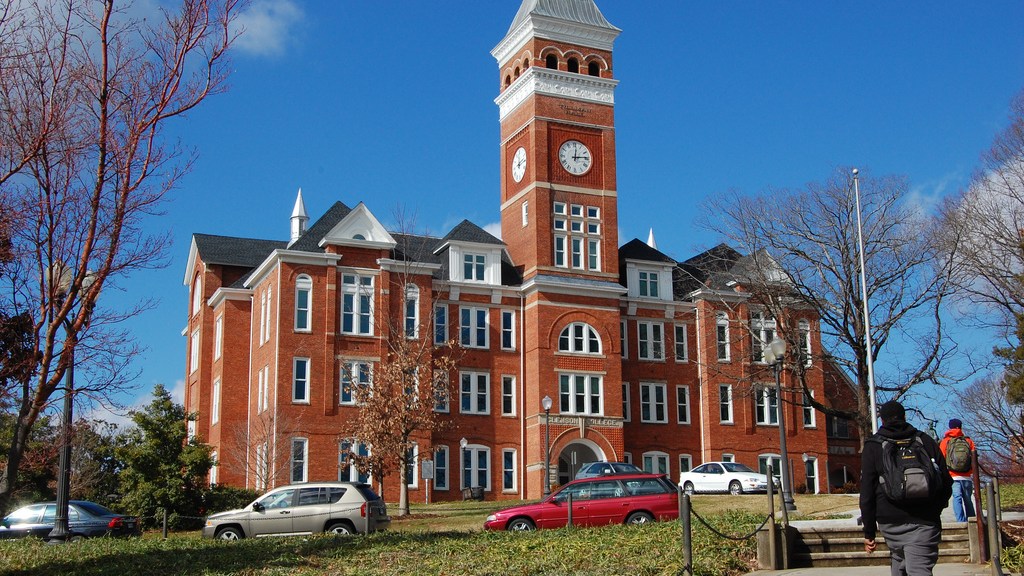
Clemson’s Tillman Hall and the Tragedy of Southern Tradition

[Header image is licensed under the Creative Commons Attribution 2.0 Generic license.]

Any real change implies the breakup of the world as one has always known it, the loss of all that gave one an identity, the end of safety. And at such a moment, unable to see and not daring to imagine what the future will now bring forth, one clings to what one knew, or thought one knew; to what one possessed or dreamed that one possessed. Yet, it is only when a man is able , without bitterness or self-pity, to surrender a dream he has long cherished or a privilege he has long possessed that he is set free—he has set himself free—for higher dreams, for greater privileges.

“Faulkner and Desegregation,” James Baldwin, Nobody Knows My Name 

Whether you are from the South—as I am, approaching my 54th year in the area where I was born—or not, here is how you can come to understand the South: Read William Faulkner’s “A Rose for Emily,” James Baldwin’s “Faulkner and Desegregation,” and M.E. Bradford’s “Faulkner, James Baldwin, and the South.”

In the shocking ending to “A Rose for Emily,” the town (that community and place so sacred to Faulkner, as Bradford emphasizes) and the reader discover that Emily has spent much of her life sleeping with the corpse of her mysteriously vanished lover. Not to be overly simplistic, but in that scene, Emily is the South and her act is the cancerous core of what best captures that region’s ideological commitment—cling to the corpse of tradition no matter what.

It is the steadfast clinging that matters, not the thing itself.

Baldwin’s response to Faulkner’s call for Southern blacks to be patient about integration at mid-twentieth century deftly dismantles the inherent contradictions, the incessant paternalism, and the disturbing lack of awareness embodied by Faulkner himself. While Faulkner seems oblivious to the message in his own work, Baldwin, a black man from Harlem, the North, echoes the warning of “A Rose for Emily”:

[S]o far from trying to correct it, Southerners, who seem to be characterized by a species of defiance most perverse when it is most despairing, have clung to it [emphasis added], at incalculable cost to themselves, as the only conceivable and as an absolutely sacrosanct way of life. They have never seriously conceded that their social structure was mad. They have insisted, on the contrary, that everyone who criticized it was mad.

Further, Baldwin’s understanding of the South remains as perceptive now as when he originally confronted Faulkner:

It is apparently very difficult to be at once a Southerner and an American….It is only the American Southerner who seems to be fighting, in his own entrails, a peculiar, ghastly, and perpetual war with all the rest of the country….

The difficulty, perhaps, is that the Southerner clings to two entirely antithetical doctrines, two legends, two histories….

The Southern tradition, which is, after all, all that Faulkner is talking about, is not a tradition at all: when Faulkner evokes it, he is simply evoking a legend which contains an accusation. And that accusation, stated far more simply than it should be, is that the North, in winning the war, left the South only one means of asserting its identity and that means was the Negro.

And finally to grasp fully the South, Bradford’s apologist reading of Faulkner (punctuated with “We in the South”) as well as a distinct misreading of Baldwin offers the full shape that characterizes the South: Faulkner as embodiment, Emily as metaphor, Baldwin as moral witness, and Bradford as contorted intellectual justification.

However, in the South, this is never merely academic or something past. 

Clemson’s Tillman Hall and the Tragedy of Southern Tradition

It is currently being recreated in the Tillman Hall debate at Clemson University—not as a unique case, but a representative one, Clemson University in its founding, its physical plant, and the myriad names with which it is associated

Tillman Hall at Clemson University bears the name of a former South Carolina governor, Benjamin Tillman, who “established an agricultural school that would become Clemson College, as well as Winthrop College.”

Those not from the South likely find these recurring tensions unfathomable, notably the never-ending battles about the Confederate flag that remains on the capitol grounds after decades flying atop the Statehouse.

The Faulkner-Baldwin-Bradford dynamic detailed above is now being played out by students calling for renaming Tillman Hall, faculty voting to support renaming, administration appearing to call for patience, and then a counter-protest supporting the tradition of the hall’s name.

“Yes, But…”

Apologists for tradition in the South, like Bradford for Faulkner, expose the contradictory mindset confronted by Baldwin. Those who rush to add “yes, but…” in defense of Tillman, for example, are likely to interject the “yes, but…” strategy to refute Martin Luther King Jr.

“Yes, but” Tillman was governor and if not for him, no Clemson!

“Yes, but” King was a socialist and adulterer.

As a life-long Southerner, I have witnessed these patterns regularly throughout my life. It is the logic of the South.

I am a child of the South, the Bible Belt where “spare the rod, spoil the child” dominates “turn the other cheek.”

Again, as Baldwin recognized, the South clings like Emily not to tradition but to the fabricated legend. And it is there that the hypocrisy of “yes, but…” is fully exposed.

Apologists for Tillman cling to Tillman’s ill-gotten status during his life, a status reflecting the most dehumanizing qualities of the South during Reconstruction and the early twentieth century.

Critics of Tillman, however, recognize that his racism outweighs any so-called accomplishments.

Will Moredock notes as one example:

Tillman went to the U.S. Senate in 1895, where he remained until his death in 1918. He used the Senate floor and the Chatauqua circuit to become the nation’s loudest and most famous proponent of white supremacy, or in his own words, “preaching to those people the gospel of white supremacy according to Tillman.”

“It’s true, South Carolinians would do well to remember Tillman’s legacy,” argues Paul Bowers, addressing directly the naming of Tillman Hall:

But we shouldn’t honor it, which is exactly what we’re doing by keeping his name on a building at a public university….

It’s another thing entirely for it to be named after Tillman, a progenitor and perpetuator of American apartheid who led lynch mobs during Reconstruction and boasted about it until his dying day.

To honor Tillman as well as many others like him is to make Emily’s mistake—clinging to a corpse that should be buried beneath a marker, not to honor but to remind us of all that we must not embrace again.

Apologists for tradition are emboldened by those calling for patience, like Faulkner, who prompted Baldwin to punctuate his essay with urgency:

But the time Faulkner asks for does not exist— and he is not the only Southerner who knows it. There is never time in the future in which we will work out our salvation. The challenge is in the moment, the time is always now.


Recommended

Ben Tillman and the Reconstruction of White Supremacy, Stephen Kantrowitz

Reviewed by Bruce Palmer

Lynching in America: Confronting the Legacy of Racial Terror, Equal Justice Initiative

Lynching as Racial Terrorism, NYT Editorial Board

lynching

Liberal Hollywood?: A Reader

With the current Oscar nominations being scrutinized as a mostly white/male celebration, I want to highlight that the recurring bashing of “liberal Hollywood” in the U.S. is being exposed as a false culture war similar to the bashing of “liberal/progressive public schools.”

Since the U.S. is governed and ruled by an essentially conservative elite (if you have power, you are almost always conservative in that you seek ways to keep the status quo that affords you that power), as I have discussed before, Kurt Vonnegut’s Cat’s Cradle is a brilliant fictional account of how those in power manufacture social battles to maintain control of the public.

Hollywood is not liberal or progressive; it is commercial.

Public schools are not liberal or progressive; they are traditional institutions of enculturation, governed by a white, middle-class ideal that is the type of fiction we often find in Hollywood.

The Oscar nominations reveal, then, that Hollywood is not a liberal demon, but a mirror of the essential inequity that remains in the U.S.—inequity of race, class, and gender.

Please consider:

Oscar Voters: 94% White, 76% Men, and an Average of 63 Years Old

The Oscars celebrates white men. What about the rest of us?

The Whitest Oscars Since 1998: Why the ‘Selma’ Snubs Matter

“Gravity”: The Unbearable Lightness of Being a Woman

True Detective: It’s Still a Man’s (Hostile) World, pt. 2

Both the popularity and Oscar attention focused on American Sniper are worth highlighting as a whitewashing of the already skewed ultra-patriotism in the U.S.; thus, also consider:

Pat Tillman (11/6/76 – 4/22/04): A Decade of Forgetting

The Controversial True Story Behind ‘American Sniper’

American Sniper feeds America’s hero complex, and it isn’t the truth about war, Alex Horton

The real American Sniper was a hate-filled killer. Why are simplistic patriots treating him as a hero?, Lindy West

The Legend of Chris Kyle

Education Journalism Deserves an F: A Reader

On the local evening news, a story ran recently about closing down a popular segment of a relatively new rail trail to work on the crumbling infrastructure of pipes crossing beneath the trail and nearby roads.

As part of the story, the on-air reporter chatted with two women who frequently walk along the trail each morning, but will now be diverted. The reporter ended the segment by asking those two women their opinions of replacing the pipes—both nodding in agreement while endorsing the work.

Watching this, I recognized everything wrong with journalism in the U.S. The story was breezy and relevant, but I had to wonder what authority two random women walking down a rail trail had to be credible voices about the need for infrastructure work in the area.

My disappointment in journalism, notably education journalism, has been documented regularly in my blogging over the past two-plus years. And the recent national debate about police behavior and accountability has now intersected with my own work refuting the national teacher-bashing more and more common during the Obama administration as well as my persistent challenges to education journalism.

The tension is between supporting the institutions of public education, criminal justice, journalism, and unions as well as the individual people who work in those fields or situations, but being deeply concerned that we are mostly failing each of those in systemic ways.

It is possible, then, I think, to strongly criticize education journalism as failing its duty while not necessarily indicting each and every education journalist.

That said, education journalism is quite flawed, mired in a lack of knowledge about the history, practice, and research in education, trapped like a bug in amber in the compulsion to air “both sides” equally of every issue.

Here, then, I offer a reader to that concern:

No Excuses for Advocacy Masquerading as Research

Education Writers Association: Independent Bloggers Need Not Apply, Anthony Cody

O, Free Press, Where Art Thou?

Invoking “Oliver Rule (Expanded)” for Education Reform Debate

U.S. and Education Reform Need a Critical Free Press

My Open Letter to Journalists: A Critical Free Press, pt. 2

See Also

Ed Writers – Try looking beyond propaganda & press releases for success stories

CALL: Chapters for revised volume, De-Testing and De-Grading Schools (Peter Lang USA)

Classroom teachers, researchers, and de-testing/de-grading advocates are encouraged to contact me about a revised volume for Peter Lang USA: De-Testing and De-Grading Schools: Authentic Alternatives to Accountability and Standardization.

Synopsis of original volume from 2013:

A century of education and education reform along with the last three decades of high-stakes testing and accountability reveals a disturbing paradox: Education has a steadfast commitment to testing and grading despite decades of research, theory, and philosophy that reveal the corrosive consequences of both testing and grading within an education system designed to support human agency and democratic principles.

This edited volume brings together a collection of essays that confronts the failure of testing and grading and then offers practical and detailed examinations of implementing at the macro and micro levels of education teaching and learning free of the weight of testing and grading. The book explores the historical failure of testing and grading; the theoretical and philosophical arguments against testing and grading; the negative influence of testing and grading on social justice, race, class, and gender; and the role of testing and grading in perpetuating a deficit perspective of children, learning, race, and class.

The chapters fall under two broad sections: Part I: «Degrading Learning, Detesting Education: The Failure of High-Stake Accountability in Education» includes essays on the historical, theoretical, and philosophical arguments against testing and grading; Part II: «De-Grading and De-Testing in a Time of High-Stakes Education Reform» presents practical experiments in de-testing and de-grading classrooms for authentic learning experiences.

Original Table of Contents:

Contents: Alfie Kohn: Introduction: The Roots of Grades-and-Tests – Lisa Guisbond/Monty Neill/Bob Schaeffer: NCLB’s Lost Decade for Educational Progress: What Can We Learn from This Policy Failure? – Fernando F. Padró: High-Stakes Testing Assessment: The Deus ex Machina of Quality in Education – Anthony Cody: Technocratic Groupthink Inflates the Testing Bubble – Lawrence Baines/Rhonda Goolsby: Mean Scores in a Mean World – Julie A. Gorlewski/David A. Gorlewski: De-grading Literacy: How New York State Tests Knowledge, Culture, and Critical Thinking – Morna McDermott: The Corporate Model of Schooling: How High Stakes Testing Dehumanizes Education – Richard Mora: Standardized Testing and Boredom at an Urban Middle School – Brian R. Beabout and Andre M. Perry: Reconciling Student Outcomes and Community Self-Reliance in Modern School Reform Contexts – David L. Bolton/John M. Elmore: The Role of Assessment in Empowering/Disempowering Students in the Critical Pedagogy Classroom – Alfie Kohn: The Case Against Grades – Joe Bower: Reduced to Numbers: From Concealing to Revealing Learning – John Hoben: Outside the Wounding Machine: Grading and the Motive for Metaphor – Peter DeWitt: No Testing Week: Focusing on Creativity in the Classroom – Hadley J. Ferguson: Journey into Ungrading – Jim Webber/Maja Wilson: Moving Beyond «Parents Just Want to Know the Grade!» – P. L. Thomas: De-grading Writing Instruction in a Time of High-Stakes Testing: The Power of Feedback in Workshop – Brian Rhode: One Week, Many Thoughts – Lisa William-White: Conclusion: Striving toward Authentic Teaching for Social Justice.

Most of the original chapters will be updated and revised, but a few are unable to work on the revised volume project. Thus, we should have room for 2-4 new chapters.

Please send proposals ASAP, and we are requiring full drafts by July 31, 2015, to submit the revised volume by September 15, 2015.

Chapters must be in APA citation/style format and about 6000 words maximum; both practical and research/theoretical cases highlighting de-testing and de-grading classrooms are needed.

Email me with proposals or questions: paul.thomas@furman.edu


Two Bad Options Justify Neither: MLK 2015

Whether on the day of his birth (January 15) or the national holiday date, taking special time to recall and honor Martin Luther King Jr. remains vital in the U.S. since we continue to be trapped in the swamp of racial inequity as well as the fog of denying racism.

However, along with remembering and praising, we must also protect against continuing to reduce King to the stereotype of the passive radical, a characterization that serves the ineffective status quo of the politics of privilege in this so-called land of the free and home of the brave.

“In the treatment of poverty nationally, one fact stands out,” King notes in Where Do We Go From Here?, “there are twice as many white poor as Negro poor in the United States,” continuing:

Therefore I will not dwell on the experiences of poverty that derive from racial discrimination, but will discuss the poverty that affects white and Negro alike….

At no time has a total, coordinated and fully adequate program been conceived. As a consequence, fragmentary and spasmodic reforms have failed to reach down to the profoundest needs of the poor.

In addition to the absence of coordination and sufficiency, the programs of the past all have another common failing — they are indirect. Each seeks to solve poverty by first solving something else.

I am now convinced that the simplest approach will prove to be the most effective — the solution to poverty is to abolish it directly by a now widely discussed measure: the guaranteed income.

Earlier in this century this proposal would have been greeted with ridicule and denunciation as destructive of initiative and responsibility. At that time economic status was considered the measure of the individual’s abilities and talents. In the simplistic thinking of that day the absence of worldly goods indicated a want of industrious habits and moral fiber.

In 2015, we are likely served well to be guided by the radical King who rejected the status quo, particularly the status quo of reform (poverty, education, etc.) bound to dualistic thinking and indirect approaches.

This is profoundly important in the context of how we are perversely dedicated to accountability-based education reform that is heralded as the primary mechanism for eradicating poverty—despite both accountability and education’s ability to erase poverty being demonstrably false promises.

For example, let’s consider the charter school formula:

Since public school X is failing to address the needs of high-poverty and minority students, we must embrace charter school Y.

Step one, which I suggest we rarely do, is to examine the initial premise: Is public school X failing to serve those students or is public school X unable to achieve utopian goals in overwhelming circumstances that are not being addressed?

Step two, if we determine that initial premise is true, is then to examine the validity of the effectiveness of charter school Y.

Since a great deal of the charter school movement is both targeting high-poverty/minority students and embracing “no excuses” ideologies and practices for those students, this second step must include considerations of not only credible claims of “serving better” but also at what costs to the dignity and humanity of the students.

Complicating this process is that high-poverty/minority parents often appear to choose charter schools over their apparently failing assigned public schools.

As I have examined before, here is what I believe we should confront when facing the fabricated choice between a failing public school and a “no excuses” charter schools:

[Michelle] Alexander [in The New Jim Crow] explains about the effectiveness of the war on drugs: “Conservatives could point to black support for highly punitive approaches to dealing with the problems of the urban poor as ‘proof’ that race had nothing to do with their ‘law and order’ agenda” (p. 42).

This last point – that African Americans seem to support both the war on crime and “no excuses” charter schools – presents the most problematic aspect of charges that mass incarceration and education reform are ultimately racist, significant contributions to the New Jim Crow.

For example, [Sarah] Carr [in Hope Against Hope] reports that African American parents not only choose “no excuses” charter schools in New Orleans, but also actively cheer and encourage the authoritarian policies voiced by the schools’ administrators. But Alexander states, “Given the dilemma facing poor black communities, it is inaccurate to say that black people ‘support’ mass incarceration or ‘get-tough’ policies” because “if the only choice that is offered blacks is rampant crime or more prisons, the predictable (and understandable) answer will be ‘more prisons'” (p. 210).

New Orleans serves as a stark example of how this dynamic works in education reform: Given the choice between segregated, underfunded and deteriorating public schools and “no excuses” charters – and not the choice of the school environments and offerings found in many elite private schools – the predictable answer is “no excuses” charters.

The radical King who rejected the status quo of racism as well as the status quo of political thought and practice, I believe, would also reject the false duality of “segregated, underfunded and deteriorating public schools and ‘no excuses’ charters,” would reject the hollow claim that continuing to dig the same school accountability hole is the best way to eradicate poverty.

Two bad options justify neither.

The U.S. has a moral obligation to do public education right—for the good of all—and to end poverty and racism, as King demanded, directly.

Rank (adjective) – having a strong, unpleasant smell

For many years, the College Board would release average SAT scores with the states ranked by those averages. While the media would rush to make claims about those rankings as well as how average SAT scores changed from one year to the next, educational researchers and scholars often fought a losing battle trying to explain the flaws with such rankings and with making many of the claims about relative educational quality the media, politicians, and the public embraced.

More recently, however, even the College Board warns that no one “[should] rank or rate teachers, educational institutions, districts or states solely on the basis of aggregate scores derived from tests that are intended primarily as a measure of individual students.” [1]

Yet, many continue to rank and draw rash conclusions despite that warning because in the U.S. rankings of all kinds are extremely popular—from our sports to our schools and then almost everything else.

The U.S. obsession with ranking seems as much a love/hate relationship as anything; notably how we both seek always a better way to rank sports teams (consider the new playoff format for college football) and constantly argue and complain about those rankings.

What we tend to fail to do is question the act of ranking itself or acknowledge what it is that rankings do reveal—the latter being that any ranking reveals more about who is doing the ranking and why than what the ranking claims to accomplish.

Researcher Gerald Bracey has warned about ranking:

In any ranking, while someone gets to rank first, someone must rank last….In order to properly judge a rank, you need to know something about the context in which it occurs. (p. 59)

A key point here is that ranking imposes a judgment of relative quality on people and situations even though such judgments may be either irrelevant or terribly misleading. To explain this, Bracey refers to Olympic athletic events (placing fourth in an Olympic event is losing, although that athlete may be fourth best in the world at the sport), but with my methods students, while addressing assessment, I discuss identifying the top runners out of a group of students.

Unlike administering selected-response testing, identifying the best (and worst) runners can be accomplished under ideally authentic conditions—running a race. But to return to Bracey’s point about “context,” even though determining the best and worst runners can be authentic doesn’t mean that the process is without bias that impacts directly the resulting rankings.

If we take 30 runners, and ask them to run the 40-yard dash we are likely to get a much different ranking than if we ask them to run a marathon. In other words, who decides and what conditions create the metrics used for ranking render all attempts at ranking deeply biased and relative to a certain setting, and in many ways less useful than they appear.

By changing the parameters of determining “best runner,” we change who ranks where, and we must also acknowledge that a runner who places first in one class (and labeled “best”) may place last if moved to another class.

Concurrent with the newly formed college football national championship playoffs (resulting from decades of using a variety of systems to rank and determine only two teams to play for that championship each year—a deeply unsatisfying process), Education Week released its annual Quality Counts ranking of state educational quality and a edu-scholar public influence ranking first offered in 2010.

At the risk of sounding petty [2], I want to note that although I do not appear on the edu-scholar ranking and since the metrics for that ranking are made public, I would easily rank in the second 100 due to my Klout score, google Scholar metric, book publications, and frequent publishing and citing in international, national, state, and local media.

While I am not lobbying here, my own case highlights that it is likely dozens of other scholars have the same situation, and that despite the intent behind the rankings (to recognize often ignored within the academy public work by academics), the act of reducing people or work to metrics and then ranking is often counter-productive to the intended goals.

Should we increase the value placed on public work by academics and scholars? Yes. But labeling and ranking public work by scholars does more harm than good.

Should we shine a bright light on educational quality of schools and states in order to improve that quality? Yes. But labeling and ranking schools and states does more harm than good.

Just as we need to set aside accountability, standards, and high-stakes testing as our only approach to education reform, we need to stop our incessant race to rank in all educational contexts.

Rankings (labeling in order to sort), I contend, are not only poor ways to accomplish those goals, but the act of ranking itself is likely harmful to those goals—much in the same way SAT data have been misinterpreted for years, not because of the data but because of the urge to use that data to rank.

The urge to rank NCAA college basketball teams and then funnel all that into March Madness may in fact be a vibrant and mostly harmless way to do sport and entertainment.

But as Gerald Bracey (as an active researcher and public scholar) warned over and over, ranking is mostly a harmful and flawed exercise in the world of education. And since much of education in the U.S. is publicly funded and necessarily a part of the political process, many times rankings are more about political agendas than genuinely seeking to recognize accomplishments or prompt reform.

Ranking, as I noted about grades in education, are almost always accomplishing more harm than good, and thus, ranking is the worst possible process to advocate for or achieve laudable goals, especially in the context of education and scholarship.

[1] Gerald Bracey often stressed that we must never use an assessment or data set for purposes other than the ones for which they were designed.

[2] To clarify and for full disclosure, I do not need the edu-scholar ranking since I am an associate professor with tenure currently applying for full professor at my university. My university recognition and status are unlikely to be impacted by the ranking, although many of us on the faculty are currently calling for greater acknowledgment of public work by professors. My reason for using myself as an example is because I have the metrics and because a large number of junior faculty not as secure as I am are the ones likely being mis-served by rankings.

USDOE: When in a Hole, Keep Digging

The U.S. Department of Education ended 2014 with another (and predictable) reach into education reform, proposing new policy for teacher education.

Reviewing the reform initiative for NEPCKevin K. Kumashiro has drawn several disturbing (and predictable) conclusions:

This review considers the evidentiary support for the proposed regulations and identifies seven concerns: (1) an underestimation of what could be a quite high and unnecessary cost and burden; (2) an unfounded attribution of educational inequities to individual teachers rather than to root systemic causes; (3) an improperly narrow definition of teacher classroom readiness; (4) a reliance on scientifically discredited processes of test-based accountability and value-added measures for data analysis; (5) inaccurate causal explanations that will put into place a disincentive for teachers to work in high-needs schools; (6) a restriction on the accessibility of federal student financial aid and thus a limiting of pathways into the teaching profession; and (7) an unwarranted, narrow, and harmful view of the very purposes of education.

While acknowledging the nearly complete failure of this new USDOE proposal to reform teacher education is crucial, that may not be as important as also highlighting the pattern of ineptitude now shaping the Obama education legacy.

The elements of that legacy share several qualities that confirm my call for invoking the Reagan directive to abolish the USDOE:

  • Using federal initiatives and funding to leverage policy and practices in K-12 and higher education: Race to the Top, opting out of NCLB, tuition-free community college.
  • Endorsing, funding, and imposing policies, practices, and organizations that significant bodies of research either refute or reveal to be mostly speculative or no more effective than existing practices or structures: value-added methods of evaluating teachers, schools, or programs; new standards; new high-stakes tests; charter schools (and other choice mechanisms); Teach for America; third-grade retention based on high-stakes tests.
  • Masking social and educational root problems as well as “scientifically discredited” policy commitments behind Orwellian political discourse (utopian claims about teacher impact and educational attainment, parental choice; framing racist and classist structures [charter schools] and ideologies [‘no excuses,” “grit”] as “the civil rights issue of our time”).

Instead of identifying and confronting the social and educational inequity overburdening K-12 public education, schools, teachers, and students—and then promoting research-based policy addressing those inequities—the USDOE is content with maintaining the status quo of keeping the Obama education legacy at the bottom of a very deep hole begun by others and doggedly continuing to dig.

These facts have now existed well beyond a decade, and thus, are not about individual people (elected or appointed) or a political party.

This is a failed approach to government mandated instead of publicly funded universal public education.

The burden now facing the public is about both triggering the democratic process and embracing publicly funded universal public education as central to preserving that democracy.

The rhetoric and policy flowing from the USDOE are in the service of something other than either education in the name of democracy or the public good.

We all must shine light on those facts and demand different.

educator, public scholar, poet&writer – academic freedom isn't free