Media and Political Misreading of Reading (Again): NYC Edition [UPDATE]

NYC Mayor Eric Adams is proving to be an unreliable source on just about anything he mentions. Adams seems more interested in crying false “crisis” for political gain than doing the hard work of political leadership.

First, crime:

With context and data, Adams’s claim is more than “a very strange thing”; it is simply false, political fearmongering:

Next, reading and dyslexia:

Mayor Eric Adams announced Thursday the details of a plan to turn around a literacy crisis in New York City and, in particular, to serve thousands of children in public schools who may have dyslexia, an issue deeply personal to the mayor, who has said his own undiagnosed dyslexia hurt his academic career.

Mayor Adams Unveils Program to Address Dyslexia in N.Y.C. Schools

Unfortunately, neither Adams nor the NYT will receive the sort of public correcting for the nonsense in this article, but Lola Fadulu’s coverage of Adams’s dyslexia program is just as much political fearmongering as Adams’s misrepresentation of crime.

In fact, media, parents, and political leaders have been following a similar and misleading playbook for several years now—one that Fadulu and Adams demonstrate so perfectly it could read as parody:

Currently, there is a well-organized and active contingent of concerned parents and educators (and others) who argue that dyslexia is a frequent cause of reading difficulties, affecting approximately 20% of the population, and that there is a widely accepted treatment for such difficulties: an instructional approach relying almost exclusively on intensive phonics instruction. Proponents argue that it is based on “settled science,” which they refer to as “the science of reading” (SOR). The approach is based on a narrow view of science and a restricted range of research focused on word learning and, more recently, neurobiology, but pays little attention to aspects of literacy like comprehension and writing or dimensions of classroom learning and teacher preparation.

An Examination of Dyslexia Research and Instruction With Policy Implications, Peter Johnston and Donna Scanlon

That misleading playbook includes the following:

  • “School officials plan to screen nearly all students for dyslexia.” Universal screening for dyslexia is a crisis response to a false crisis. Johnston and Scanlon explain: “Good first instruction and early intervention for children with a slow start in the word reading aspect of literacy reduces the likelihood they will encounter serious difficulty. Thus, early screening with assessments that can inform instruction is important. Screening for dyslexia, particularly with instructionally irrelevant assessments, offers no additional advantage [emphasis added].”
  • “School leaders are requiring school principals to pivot to a phonics-based literacy curriculum, which literacy experts say is the most effective way to teach reading to most children.” Systematic phonics for all students, and specifically for students identified with dyslexia, is an old and false solution for students struggling with reading, per Johnston and Scanlon: “Evidence does not justify the use of a heavy and near-exclusive focus on phonics instruction, either in regular classrooms or for children experiencing difficulty learning to read (including those classified as dyslexic [emphasis in original].”
  • “New York is facing a literacy crisis: Fewer than half of all third to eighth graders and just 36 percent of Black and Latino students were proficient on the state reading exams administered in 2019, the most recent year for which there is data.” The NYT helped fuel the newest round of “reading crisis” in the U.S. with an over-reaction to 2019 NAEP reading scores, but the cold hard truth is that marginalized students have never been equitably served in NYC schools or anywhere in the U.S. as any point in history. (See how the reading crisis around NAEP is misrepresented HERE.)
  • “It is difficult to say how many children have dyslexia in the city because the department hasn’t been able to systematically identify them, said Carolyne Quintana, the deputy chancellor for teaching and learning. But she noted that national figures estimate that one in five children have dyslexia.” Dyslexia advocacy and political responses to dyslexia are misrepresenting dyslexia by overstating how common dyslexia is (some credible experts suggest dyslexia isn’t even a credible label for reading, in fact), and are ignoring that no common definition for dyslexia exists. “Definitions of dyslexia vary widely, and none offer a clear foundation—biological, cognitive, behavioral, or academic—for determining whether an individual experiencing difficulty with developing word reading skill should be classified as dyslexic,” Johnston and Scanlon conclude.
  • “Naomi Peña said she has four children with dyslexia, and is one of several parents who helped launch the Literacy Academy Collective, an advocacy group.” Parental advocacy groups addressing dyslexia have had direct impact on reading and dyslexia policy across the U.S.; however, that impact has overwhelmingly prompted misguided legislation and policy. Writing about similar political responses to dyslexia in Tennessee, Allington raises a key concern: “What I find most disturbing about the recent Tennessee dyslexia law is the absence of any input from the Literacy Association of Tennessee (LAT) as well as the absence of members of the Dyslexia Advisory Council drawn from the membership of LAT.”
  • “The additional support includes more intensive instruction steeped in the Orton-Gillingham approach [1], which teaches reading with more hands-on methods that break down words into smaller, more digestible parts.” While the larger push for systematic phonics instruction for all students is misguided, advocates for dyslexia often focus on Orton-Gillingham specifically. Yet, as the International Literacy Association (ILA) shows: “As yet, there is no certifiably best method for teaching children who experience reading difficulty (Mathes et al., 2005). For instance, research does not support the common belief that Orton-Gillingham–based approaches are necessary for students classified as dyslexic (Ritchey & Goeke, 2007; Turner, 2008; Vaughn & Linan-Thompson, 2003).”
  • “Under the new plan, school officials will require principals, who can choose their curriculums, shift toward a reading program that is based in reading science. Many currently use one developed by Lucy Calkins, an academic at Teachers College, Columbia University, that has repeatedly come under fire.” The dyslexia movement is part of a larger “science of reading” movement that overemphasizes the role of systematic phonics but also attacks popular reading programs across the U.S. See How to Navigate Social Media Debates about the “Science of Reading” [UPDATED] for a thorough examination of the flaws with misusing the term “science.” See also A Response to EdReports’ Assessment of Units of Study for Teaching Reading, Writing and Phonics.

Media and political leaders as well as parent advocates are trapped in a false belief about reading and dyslexia—paralleling the public misunderstanding about crime rates.

Do students struggling to read, especially marginalized students, deserve to be better served in our schools? Absolutely, whether they are diagnosed with dyslexia or not.

But NYC’s plan is political fearmongering, not good policy or practice.

Political leaders would be well served to heed Johnston and Scanlon’s guidelines, including these:

Although there are likely heritable dimensions to reading and language difficulties, there is no way to translate them into implications for instructional practice….

Legislation (and district policies) aligned with the SOR perspectives on dyslexia will necessarily require tradeoffs in the allocation of resources for teacher development and among children having literacy learning difficulties. These tradeoffs have the potential to privilege students experiencing some types of literacy learning difficulties while limiting instructional resources for and attention available to students whose literacy difficulties are not due (exclusively) to word reading difficulties.

An Examination of Dyslexia Research and Instruction With Policy Implications, Peter Johnston and Donna Scanlon

[1] Current research does not support O-G as more effective than other, and less expensive, methods; see here and these recent studies/overviews:

Johnston, P., & Scanlon, D. (2021). An examination of dyslexia research and instruction with policy implications. Literacy Research: Theory, Method, and Practice70(1), 107. Retrieved July 26, 2022, from https://doi.org/10.1177/23813377211024625

International Literacy Association. (2016). Research advisory: Dyslexia. Retrieved July 26, 2022, from https://www.literacyworldwide.org/docs/default-source/where-we-stand/ila-dyslexia-research-advisory.pdf

Hall, C., et al. (2022, September 13). Forty years of reading intervention research for elementary students with or at risk for dyslexia: A systematic review and meta-analysis. Reading Research Quarterly. Retrieved October 17, 2022, from https://doi.org/10.1002/rrq.477

Stevens, E. A., Austin, C., Moore, C., Scammacca, N., Boucher, A. N., & Vaughn, S. (2021). Current state of the evidence: Examining the effects of Orton-Gillingham reading interventions for students with or at risk for word-level reading disabilities. Exceptional Children87(4), 397–417. https://doi.org/10.1177/0014402921993406

Recommended

Policy Statement on the “Science of Reading” (NEPC)

Fact Checking the “Science of Reading”: A Quick Guide for Teachers

Thomas, P.L. (2020). How to end the Reading War and serve the literacy needs of all students: A primer for parents, policy makers, and people who careCharlotte, NC: Information Age Publishing.
Resignation

NOTE: Below is a real letter of resignation, specific details redacted in order to protect the teacher. The teacher was early career, and this represents the state of the field of teaching in SC and across the US.


[Principal],

Please accept this document as notification of my resignation, effective June 6, 2022.

While I have appreciated my tenure as a teacher in [district], I feel it’s in my best interests and also my moral responsibility to reject any further offers of employment from [district]. I have been disappointed by several of my interactions with administration, both in [school] and at the district office. I pride myself in advocating for the teaching profession and for the needs of teachers, because I understand the essential democratic importance of education. It has been difficult to feel alone in that work of advocacy, and worse to have to justify myself, and I feel compelled to move into a profession that is better positioned to hear the concerns of its professionals and react meaningfully.

I was especially and painfully disappointed by [district]’s reaction to the fearmongering of South Carolina’s governor over the presence of Black and queer narratives in our libraries and curricula. [District]’s response, to call the texts “pornography” and then to remove them from all choice spaces, was wrong. Not only was it a breach of trust between the district and already vulnerable teachers, and not only did it add a significant amount to the (already impossible) teacher workload, but it will effectively end reading all but canonized texts, as those are the only texts that it is likely three teachers would have read and can approve per the new district guidelines for selection of texts. The district’s choices will serve primarily to keep students from reading and certainly to keep students from reading texts that they would enjoy; the policies the district has created are antithetical to our supposed goals of creating life-long, enthusiastic readers.

I also know that much of the concern over texts driving the changes in [district] is cloaked in a veneer of concern about “obscenities.” I think it’s important to challenge that concern and call it out for what it is: bigotry. No one is concerned about the suggestive material in Shakespeare, or Fitzgerald, or Steinbeck. We seem to be deeply concerned, however, when the authors are a part of or are speaking to a marginalized community. Providing texts that acknowledge the realities of our students along all axes of identity is best practice, but we are only allowed, effectively, to provide best practice opportunities for students whose identities fit an Evangelical agenda. Where is this concern when we force Black students to read racial slurs in To Kill a Mockingbird, or Huckleberry Finn, or The Great Gatsby? We do not censor these books because we recognize that while they contain sensitive and disturbing material, they have something of value to offer our students. We seem incapable of seeing that same value in works who empathize with marginalized people, and insistent on reading that empathy as an attack on traditional values.

[District]’s selective censorship is a failure to support significant portions of our community who already experience systemic inequities; we compound the damage already done to our marginalized students by not allowing them to see themselves in books, which then further erodes the trust that our communities place in us to make every child in our care feel seen and understood. I would ask anyone in the district who is in a position to advocate for teachers at the state level to read the National Council of Teachers of English’s (NCTE) position on censorship of texts. NCTE has multiple position statements affirming students’ right to read, and have expressly condemned the very types of censorship policies [district] is now implementing, as has every other national professional organization for teachers.

When teachers challenged this censorship and the removal of a district-approved book list in a faculty meeting and pointed out that most of the works students read in class contain “obscenities,” the response, that “Shakespeare was okay because most students don’t understand the language” deeply disturbed me, because my job, of course, is to help students understand the language. Our job as teachers and English teachers specifically is to clarify; to give students the ability to see more clearly and critically the world around them. When a minority of the community screams loudly enough that they do not want students to see, do not want students to learn, do not want students to have access to reality, entertaining their concerns and appeasing them is not harmless; it does violence to students whose humanity is now being denied, to teachers and staff members whose identities are among the disparaged, and to every student who loses an opportunity to see the world from a different perspective. Even worse, we are not just removing these texts from the spaces where students can engage and receive support from a professional in critical conversation (the classroom) but we are removing them from all spaces, even choice spaces such as the library. Students deserve to see themselves in the texts around them, and to have their identities treated with care and seriousness, not as problems to be ignored or wished away.

As a final note on [districts]’s political censorship: many of the texts that have been challenged are taught in courses that are meant to replace college level courses, such as Advanced Placement courses and International Baccalaureate courses. Teachers have an obligation to provide the same level of complexity and rigor in their classrooms that those students would receive if they were in college, as the course is for college credit. The idea that students from our district will receive expurgated versions of collegiate education to appease a small subset of parents and community members should anger everyone, because all of us have to live in and with the ramifications of a community where the citizens are losing access to quality education.

The current climate of teaching in [district] is a microcosm of the state of our profession in South Carolina, and it has made my job, especially over the last two years, infinitely more challenging and stressful. The work of teaching is vital, and I sincerely hope that the administration of [district] is willing to do better in the work of advocating to protect the professional integrity of their employees than they have shown themselves willing to do previously. In particular, the wave of bills and policies currently under review at the state level, such as the affirmation of our existing no promo homo laws and the new parental trigger laws, will succeed only in creating a climate of fear and censorship in the classroom and in moving the authority of education out of the hands of educators and into the hands of parents. These bills are an existential threat to public education. Because the viability of our democracy is contingent upon having informed and educated citizens, it is not hyperbole to say that these bills are an existential threat to democracy. Students have a right to receive a quality education regardless of, and often in spite of, their parent’s beliefs. Our students deserve better than what [district] and the State of South Carolina are currently willing to provide for them. Teachers also deserve better. Teachers, however, have the choice to leave the profession. A critical examination of the expectations we place on and the miracles we expect of teachers is in order. I will continue to watch this examination with hope and idealism, but I can no longer do it from anywhere but the gallery seats.

Sincerely,

[Teacher]


See Also

Lehre Ist Tot

Mother’s Day 2022

There are sayings about power that seem true.

Power corrupts.

Absolute power corrupts absolutely.

But, I think, these are mere shiny rhetoric because the truth is much uglier.

Power reveals who a person truly is.

Most power in the U.S. remains in the hands of men, white men. And we routinely hear male politicians invoke the “I have a mother” or “I have a daughter” to justify the truly horrible things they do to the detriment of women and girls.

Yes, we have mothers. But that doesn’t guarantee anything, any more than having power guarantees that having that privilege means the power will be used in the service of those without power.

For all her very human flaws, my mother was wonderful to me. Far from perfect, often wonderful, formative, of course, and ever-present in my being, even (or maybe especially since) after she died.

I am not stooping to the petty and dishonest “since I have a mother” argument, but I cannot in good conscience do anything other than advocate for complete body autonomy, complete human dignity and freedom for all women and girls in part because of the life my mother lived—especially her early life in the 1940s, 1950s, and 1960s.

And then my life with her in the 1960s and 1970s as I grew up—watching her daily live the reduced life of women, even as she enjoyed the privileges of being white and having the advantages that came with being working class in the South.

As elected officials—often white men and then occasionally joined by white women working anti-woman adjacent—continue to dismantle the autonomy and freedom of women in a country that shamelessly claims to be the “land of the free and the home of the brave,” I am emboldened by the weight of my own mother sitting there in the knots of my being that I daily try to ease.

She did give me life and she also passed on our shared anxieties—the racing mind, the never-ending “what if” thinking, the erosion of our bodies because our minds simply will not leave us be.

Motherhood is not the defining feature of womanhood.

Motherhood is the defining feature of motherhood.

Dishonoring womanhood is spitting in the face of all that defines womanhood, including motherhood.

Power reveals who people truly are.

In the U.S. in 2022, that truth should shame us all.


the philosophy of gerunds (my mother is dying)

my mother has returned to where she began

wisteria (like a photograph)

Clothespin Bucket

Cleaning the Kitchen the Last Time

2022: On Fear and Anxiety

“This one’s like your mother’s arms when she was young and sunburned in the ’80s/ It lasts forever”

“I’ll Still Destroy You,” The National

My Open Letters: 5 May 2022

Dear 20-Somethings:

First, speaking as a person in his 60s, I am sorry for this country being dismantled in front of you, the country you are entering as the newest wave of adults.

I spent my 20s in the 1980s, the Reagan era, the lingering era of AIDS. That was not the country or world that I wanted. My youth was, in fact, a time that inspired in part Margaret Atwood’s The Handmaid’s Tale and Alan Moore’s V for Vendetta.

My youth, too, was spent with an awareness of the tyranny of the Right, the authoritarian conservative threat that was poised to slip into fascism.

But I also know, adults tend not to listen to the young—children, teens, 20-somethings. Having been a teacher across five decades, I have spent a great deal of my life with young people because I genuinely love young people.

Young people are hope.

Young people represent promises that the rest of us have failed to honor.

Over the last 20 years teaching college, I have watched as young people in their late teens and early 20s have shifted. I am not a “kids today” person; I don’t believe young people are somehow worse now than in some manufactured good old days.

I am routinely stunned at how much smarter young people are now than when I was young.

But I am also aware young people don’t vote; like me, young people are often cynical that the system will work for them.

I have never been a member of a political party.

Republicans are morally bankrupt, and Democrats are spineless. Like W.E.B. Du Bois and George Carlin, I was a non-voter for many years myself.

But the rise of Trump changed that for me. I have conceded that all we have is an imperfect system. The great paradox is that we must use the imperfect system to create a better one.

We—and by “we” I mean not just Americans but humanity—need young people to be the change we failed to be.

My students have often groaned when I turn to literature, but I cannot think of anything better than this to explain the situation before us: “The best lack all conviction, while the worst/ Are full of passionate intensity” (“The Second Coming,” William Butler Yeats).

Can you be the best with passionate intensity in the name of a kinder world, a world where we guarantee freedom and the pursuit of happiness to all, instead of leveraging our power to deny, to demonize, and to hate?


Dear RNC:

You are the party of censorship.

You are the party of hate.

You are, ultimately, the party of lies.

There is no saving that party, but Republicans must not be allowed to spread that hatred in the name of righteousness.

You are spitting in the faces of the idealized Founding Fathers you idolize. You spend your time in office denying freedom to people not like you (white men).

There is no question for you. You are power-hungry authoritarians.

This is who you are.


Dear Anti-Abortion Advocates:

I do not believe that the anti-abortion movement is about pro-life. I do not believe the anti-abortion movement is about babies or children.

I recognize the anti-abortion movement as a forced-birth movement that is anti-women.

But I am willing to be wrong, to admit I am wrong, and to join with those of you who genuinely want to reduce unwanted births, and thus, abortions.

Criminalizing abortion and women does not reduce abortion. Criminalizing abortion and women only increases unsafe abortions and increases violence and death for women.

There are, however, kind and even Christ-like ways to reduce dramatically unwanted pregnancies and abortion:

  • Call for universal healthcare.
  • Call for fully publicly funded contraception.
  • Call for comprehensive sex education.
  • Demand that all the promises of life, liberty, and the pursuit of happiness are extended regardless of gender.

If you choose punishment, you are anti-woman, not anti-abortion.

If you choose punishment, you are abdicating any moral authority you believe you have.

I do not believe that the anti-abortion movement is about pro-life. I do not believe the anti-abortion movement is about babies or children.

So far, you have proven me right. Can you prove me wrong?


Dear White Women:

A majority of white women voted for Trump. Twice.

White women voted for a man on record laughing about sexual assault, a man credibly accused of sexual assault across his entire life, including a former wife.

But even worse than that, by remaining loyal to the Republican Party, white women are complicit in anti-women legislation, and an anti-woman Supreme Court.

Margaret Atwood, a white woman who has been recently criticized for her own faults, held up to the world the horror of women being complicit in the patriarchy.

It is a terrible thing to blame a victim, which Atwood dramatizes often in her novel in powerful and disturbing ways. It is a terrible thing to blame a victim, as Adrienne Rich captures in a poem:

And it is a shallow thing to demand that the oppressed rise up to change an oppressive world.

Although men are the problem, white men, white women have entrenched themselves so deeply in the power of white men that being complicit demands that white women join with the rest of us to say “No, this is not the country we want.”

Can you set aside your selfishness, your security, and do the right thing?


Dear DNC:

The world is on fire, and you want my money?

The world is on fire, and you have refused to even drive the firetruck out of the station, much less use the firehose in some sort of effort to end this nightmare.

You see the world being on fire as a political opportunity for you.

How is that different than the RNC setting the world on fire as a political opportunity for them?

I am not a “both sides” thinker. I cannot act as if the DNC and RNC are equally failing our country, failing humanity.

But the DNC is failing everything that matters.

Cancel student loan debt.

Codify Roe v. Wade.

Pass progressive legislation.

Can you act in a way that ends this raging fire, or are you content to simply shout, “The world is burning (so send us your donations)”?

I know that Republicans will aggressively continue being horrible humans, but I do not trust that Democrats are willing to do the right thing because the world being on fire creates political opportunities for both parties.

Just as Republicans are Republicans first, power mongers, Democrats seem trapped in that same conservative mindset.

Can you be Americans first, or better yet, humans first?

National Days of Teaching Truth: May 2022

See a listing of 31 texts for May HERE (add in comments any text you will be teaching and a date; I will add to the sheet)

May 1: “Help me”

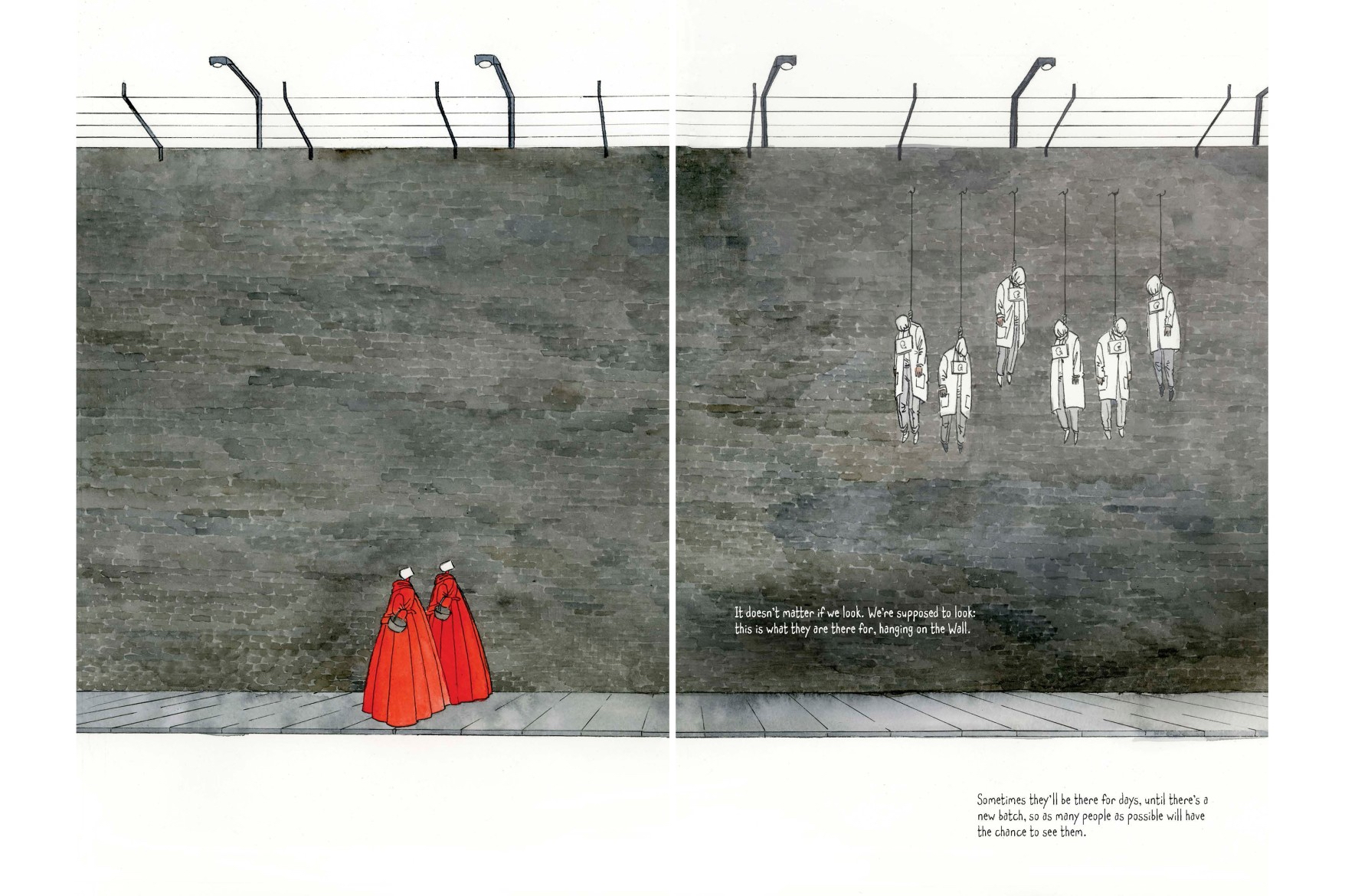
The Handmaid’s Tale (Graphic Novel): A Novel by Margaret Atwood and Renee Nault

The Handmaid’s Graphic Tale

The Handmaid’s Tale, Margaret Atwood

May 2

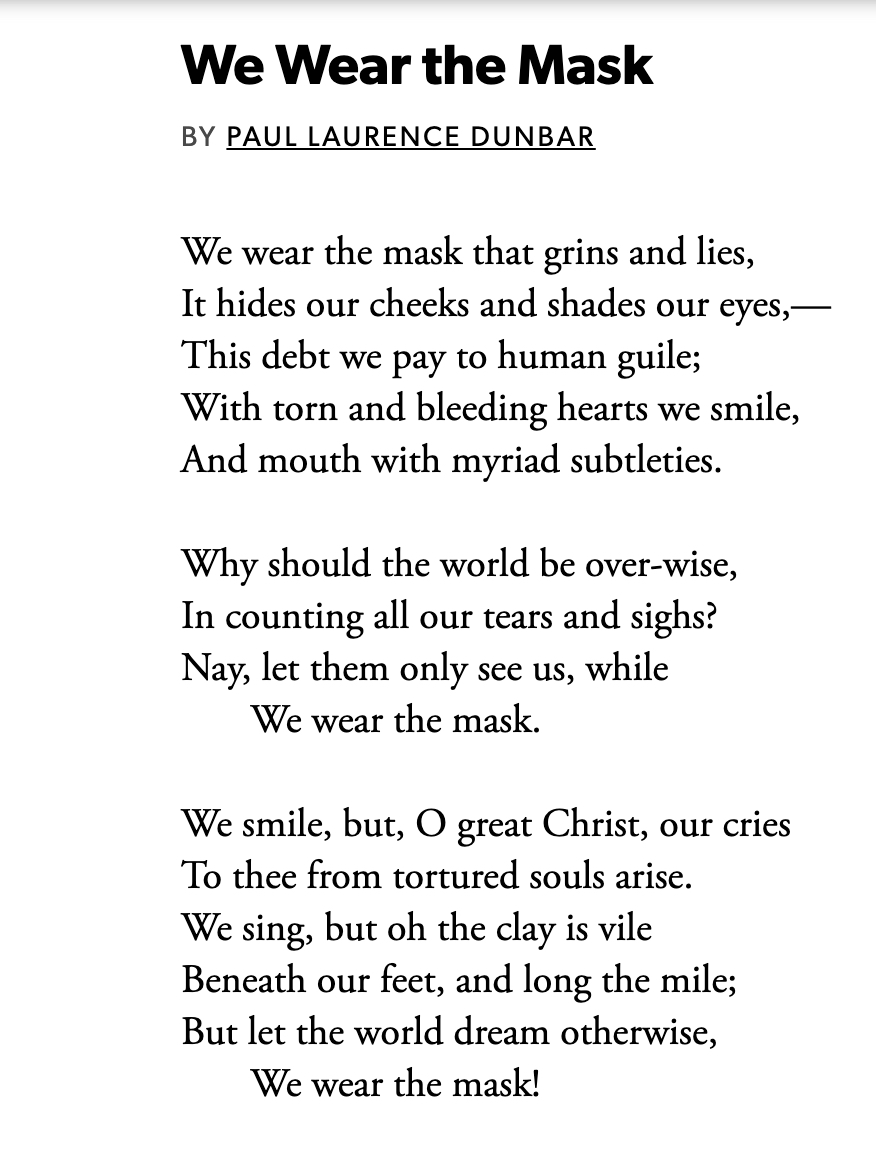
“We Wear the Mask,” Paul Laurence Dunbar

National Days of Teaching Truth to Power

May 3

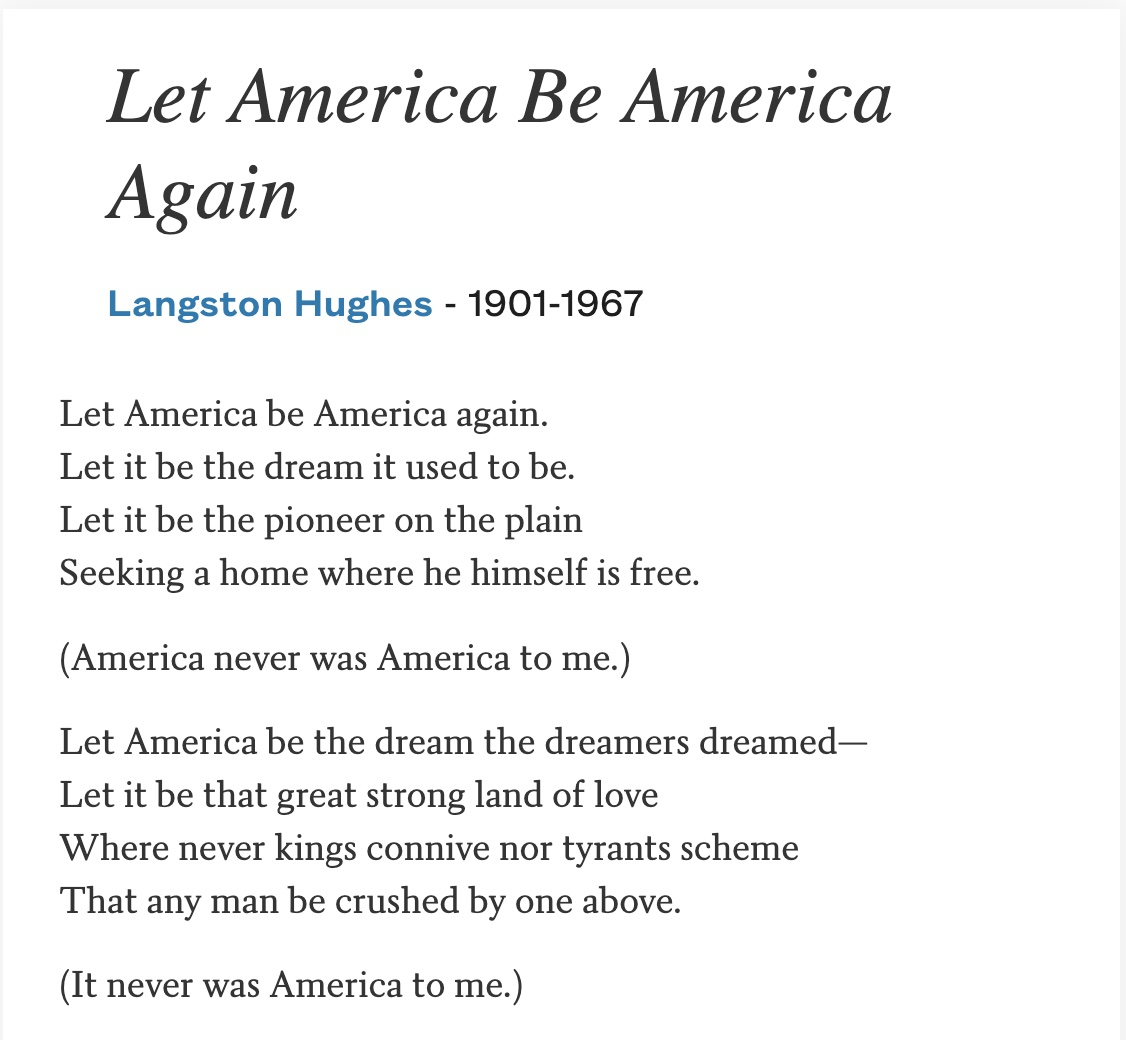
“Let America Be America Again,” Langston Hughes

Listening to Langston Hughes about “Make America Great Again”

May 4

You Can’t Be Neutral on a Moving Train: A Personal History of Our Times, Howard Zinn

Recommended

Red Clocks by Leni Zumas

May 5

Karl Marx: ten things to read if you want to understand him

Karl Marx (b. 5 May 1818)

The Soul of Man under Socialism, Oscar Wilde

May 6

The Transformation of Silence into Language and Action, Audre Lorde

May 7

Gender Queer: A Memoir, Maia Kobabe

What to Do When Your Kid Is Reading a Book That Makes You Uncomfortable

May 8

Letter from a Region in My Mind, James Baldwin

May 9

Mississippi Goddam, Nina Simone

May 10

Why our future depends on libraries, reading and daydreaming, Neil Gaiman

May 11

Vision: The Complete Collection

A Vision of Being Human: “Am I normal?”

May 12

Final Words of Advice/ “Where do we go from here?” 1967), Martin Luther King Jr.

George Carlin (May 12, 1937 – June 22, 2008)

May 13

“Peculiar Benefits,” Roxane Gay

May 14

Maus, Art Spiegelman

May 15

The Mis-Education of the Negro, Carter Godwin Woodson

May 16

“Diving into the Wreck,” Adrienne Rich (b. 16 May 1929)

May 17

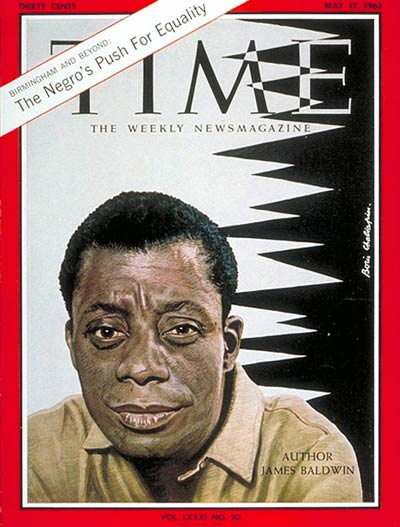
“A Report from Occupied Territory,” James Baldwin

Time Magazine (James Baldwin, 17 May 1963)

May 18

Malcolm X press conference on deadly police raid in Los Angeles (footage excerpt, 1962)

May 19

A Raisin in the Sun, Lorraine Hansberry (b. 19 May 1930)

Malcolm X (born Malcolm Little, later Malik el-Shabazz; May 19, 1925 – February 21, 1965)

Caribbean Matters: On Malcolm X’s birthday, remember that his mother’s Caribbean roots shaped him

May 20

“Harlem,” Langston Hughes

May 21

We Real Cool: Black Men and Masculinity, bell hooks

White Lies, Black Incarceration, and the Promise of Reading in Prison

May 22

“We Real Cool,” Gwendolyn Brooks

May 23

Woman in the Nineteenth Century, Margaret Fuller (b. 23 May 1810)

May 24

You Want a Confederate Monument? My Body Is a Confederate Monument, Caroline Randall Williams

May 25

Statement to the Court, Eugene V. Debs

Kurt Vonnegut letter on censorship

May 26

What These Children Are Like, Ralph Ellison

May 27

All Boys Aren’t Blue, George M. Johnson

May 28

The Soul of Man under Socialism, Oscar Wilde

May 29

If Black English Isn’t a Language, Then Tell Me, What Is?, James Baldwin

May 30

“Incident,” Countee Cullen (b. 30 May 1903)

Banning the N-word on campus ain’t the answer — it censors Black professors like me, Vershawn Ashanti Young

May 31

“I Sing the Body Electric,” Walt Whitman (b. 31 May 1819)

“Science of Reading” Media Advocacy Continues to Mislead

Here is something you will never see:

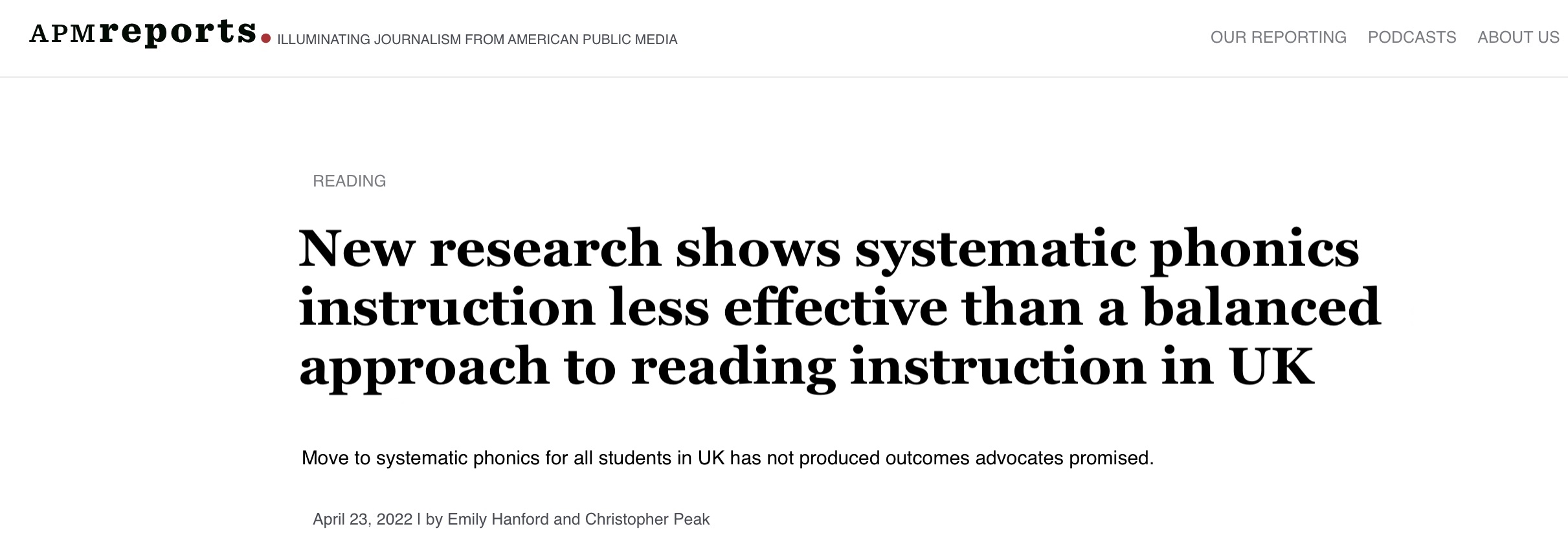
But here is an actual headline:

Both studies (not-yet peer reviewed reading recovery study here, and peer-reviewed UK study here), by the way, are extremely important to anyone genuinely concerned about reading instruction. As a matter of fact, Reading Recovery has issued a thoughtful response to the research in the second, real, headline.

Since Emily Hanford established herself as the “science of reading” journalist in 2018, one would imagine that she would be fully invested in the full story of research on teaching reading. And of course, one would be wrong.

The “science of reading” movement is an ideological movement, not concerned about evidence or even reading achievement by students. There are phonics programs to sell and careers to boost.

When people complain about bias, one aspect of bias often ignored is that all media determine what to cover and what not to cover (Hanford covers anything that seems to further the “science of reading” propaganda, and ignores anything that challenges it). In the case above, the research on reading recovery is easy to twist into the “science of reading” agenda, but the research from the UK is a whole different matter.

To be fair, both studies raise some important questions, but probably do not prove any agenda conclusively. Why is reading achievement in the UK stagnant despite mandating systematic phonics for all students since 2006? Why do students receiving reading recovery intervention seem to score lower than other students over time (in similar ways to grade retention outcomes) in longitudinal studies?

These are damn good questions. And simply asking them is a step in the right direction—recognizing there are no simple answers to teaching or learning how to read.

Yet, they are questions that media and political leaders are unlikely to ask much less answer. Because too many people are invested in the “science of reading” propaganda machine, including Hanford.

Her recent co-authored piece, New research shows controversial Reading Recovery program eventually had a negative impact on children, follows a predictable pattern found in her New York Times mis-reporting on Mississippi’s 2019 NAEP scores: Make an overstated implication about the “science of reading” while including a slight hedge in the article after the Big Claim. See my unmasking here.

We can learn a few lessons from all this.

One is that if you have to lie or distort, you may not have a credible argument (see Hanford’s “science of reading” propaganda).

But a more valuable lesson is that we must have a much more nuanced and complex awareness about what it means to teach and learn reading. While I think many reading recovery teachers are doing important and effective work, we cannot have a simplistic faith that something with the “reading recovering” stamp is universally perfect.

As much as we would hope otherwise, there is no silver bullet.

That realization, however, should temper our understanding of the “science of reading” movement, an agenda that is paralyzed by its missionary zeal—and its persistent misinformation campaign that puts its agenda ahead of real concerns about effective teaching and learning.

Media advocates for the “science of reading,” Hanford and Natalie Wexler, for example, are doing far more harm than good because of their blind advocacy.

Journalists and politicians should not be determining how children learn to read. However, the public is often mislead by sensationalistic media coverage, such as that by Hanford—Mississippi Miracle! (well, “There’s no way to know for sure”), and Reading Recovery is a failure! (but … who knows?).

Here is a lesson: Don’t believe everything you read.

Here is a much harder lesson: Worry about what you don’t get to read.

The Friends We Never Had

While I am more than deeply skeptical about the supernatural world, I had a few weeks ago what I can call only a premonition.

My partner and I were sitting at a local brewery, and I had this sudden and random thought: A former more-than-friend contacting me more than a decade after ghosting me to tell me a mutual friend had died.

Both people in that thought are people I have had no contact with for many years, although I once considered one of them (the one I imagined finding out had died) my best friend.

In no more than thirty minutes from that thought, I had a chilling real experience: I put down a book I was reading, glanced through Facebook on my phone, and saw a post that the person I had once considered my best friend had just died.

I was quite disoriented, and shared the whole event—premonition—with my partner, who asked how I was feeling.

To be honest, it took several days for me to work through and confront how I felt, both about the premonition event itself and of course the death of a person I had once considered my best friend.

There is more, of course, to why this entire situation bothered me, disoriented me.

The person who ghosted me made a statement to me that would prove to be about the last thing they ever told me; they said about the person who I once considered my best friend: “He is not your friend.”

Among the many parts of our parting that were messy and painful, even though that was over ten years ago, I remain haunted by the sincerity of that message despite the layers of doubt about that relationship I had to navigate.

Being ghosted means being left without full closure, but this ghosting also left me with a puzzle I never was able to piece together.

Without any real evidence, I believe that warning—that he wasn’t my friend. However, I can’t shake the need to understand that even as I have made complete peace with both the ghosting and the reality that someone I considered my best friend was in fact a friend I never had.


I am not religious and I have a very strong aversion to tradition and formality (anxiety reflexes, I think); therefore, death always puts me in awkward public corners.

My parents died within 6 months of each other only a few years ago. Being the dutiful son in the way people expected, the normal way, added to the weight of their deaths for me. Their deaths overlapped my mother’s sudden stroke and debilitation so by the time they died, I was drained in ways that were far beyond simply having to live through the sudden health decline and deaths of your parents.

I was completely at peace with what I wanted and could do during those months with and for my parents in terms of I know that my parents were and would have been the very first people to understand and not judge my abnormal responses and behavior.

I don’t play expected roles well. I am deeply attracted to people who do not expect or want me to play roles as a result.


That brings me back to friendship.

My partner has noticed that I am prone to referring to several people as “someone I used to consider my best friend.” In fact, my life’s highway seems to be littered with those folk.

That phrase is not one of bitterness but one of an awareness that comes with having lived into my sixth decade.

Today, I still stumble a bit when I refer to someone and tag that with “my best friend”—even though I have come to a place where I have created a space for embracing that designation in a way that resists idealizing and seeks to honor how someone has demonstrated to me their degree of friendship.

The path to resenting someone you once called your best friend is paved with your own projections, your own hope or want for that person to be your “best friend.”

The best kind of best friend is one that you realize after “best friend” has already just happened naturally over time.

I think I am in a place where I can enjoy someone else for who they are, without expectations of them being anything other than who they are. Some of that, again, comes with age and can only occur when we are as comfortable with ourselves as is humanly possible.

I suspect no one can ever be entirely comfortable with themselves, but we can come close if we are willing to look hard at who we are in our bones and still like/love ourselves.

Idealism is a delusion. Blunt recognition of Self and others is a gift, a liberation, an opportunity to recognize someone as your “best friend” without the traps of either word—”best” need not be exclusionary and “friend” must not be an obligation.

I have again and again over the years found a sort of solace in the work of Kurt Vonnegut, someone who too seemed out of kilter with this world but gleefully willing to look hard at himself and that world. Vonnegut always felt like he was able to provide some soothing but dark words of wisdom, almost as if he were an old soul all his life.

“And I urge you to please notice when you are happy, and exclaim or murmur or think at some point, ‘If this isn’t nice, I don’t know what is,’” he wrote in A Man Without a Country, quoting his Uncle Alex.

The more I think about friendship, the more I believe this is the key to happy friendships—enjoying all the nice in the moment regardless of anything else.


I sit here left with a quandary about whether I did, in fact, have a premonition. Could the person who I once considered my best friend cast himself into the universe in such a way that something like my soul sensed it?

Is there something beyond our traditional awareness that keeps some of us forever intertwined?

Once ghosted, are we forever haunted?

And just what in the hell do we do with those friends we never had?

Resisting Efficiency in Literacy Instruction

“Third grade reading proficiency matters—enormously,” declares Mike Schmoker in How to Make Reading Instruction Much, Much More Efficient for Education Week.

When I saw this piece from 2019 pop up on my social media feed this week, I immediately noticed the subheading: “Scaling back small-group instruction would have dramatic improvements in literacy.”

Since Schmoker’s article fell solidly in the current “science of reading” crisis rhetoric and misguided reading policy being passed across the U.S., it certainly was poised to create even more harmful classroom level decisions for students and teachers.

Two aspects of this argument are compelling and misguided—the standard but false appeal to “third grade reading proficiency” and the prioritizing of “efficiency” for making instructional decisions.

Of course there are well documented correlations between third grade reading achievement and later negative educational outcomes for students (low reading achievement correlated with dropping out and low overall academic achievement, for example), but the traditional response to those correlations has resulted in over-reactions that do far more harm than good.

One of the worst over-reactions has been states adopting grade retention based on third grade reading assessments—despite grade retention having a causal relationship with students dropping out.

Doubling down on practices that increase students dropping out to address misunderstanding the research on third grade reading achievement is a profound failure in logic.

Some of the motivation for making these policy mistakes is that U.S. cultural norms are too often grounded in punishment. Many affluent and privileged people embrace the concept of grade retention as a way to insure that children are taught lessons about achievement and effort, but they also embrace punitive measures because they suspect grade retention, for example, will only impact “other people’s children.”

There is more than a little bit of racism and classism in the urge to embrace punitive schools and aggressive policing and legal systems.

But another source of making terrible policy decisions, especially about reading, is the core of Schmoker’s argument—determining instructional practices by prioritizing efficiency.

Although an enduring Urban Legend criticizes U.S. public education as essentially progressive (which it isn’t, and has never been), scholar Herb Kliebard detailed that by the early twentieth century U.S. public education had become driven by efficiency.*

One powerful example of that commitment is the use of standardized testing, primarily multiple choice tests that can be quickly scored, such as the SAT and most state-level accountability testing.

Despite decades of research showing that standardized testing is often a weak measure of learning, is most strongly correlated with status (socioeconomic, racial, gender), and creates inequity, standardized testing has persisted in the U.S. because it is more efficient than what we tend to call authentic assessment—essays, performances, projects, etc.

In fact, our blind commitment to efficiency is so strong that when we do use authentic assessment we now demand highly structured rubrics to insure that the grading is efficient (which erases the authentic nature of the assignment).

Formal education in the U.S. has structures that, of course, create the need for “efficiency”—grade levels around biological age and courses provided through a format that requires one teacher to serve the largest number of students possible (in K-12, typically 1 to 25-35, but university-level ratios can be 1 to hundreds of students).

Although universal education is a public good, we are bound by market forces when providing education for all children.

I do recognize that efficiency must be one concern for instructional practices, but I have witnessed across five decades of teaching since the 1980s that we overemphasize efficiency, especially in literacy instruction.

For 18 years as a high school English teacher, I struggled within a system demanding efficiency while attempting to teach writing authentically—a workshop method requiring students to write multiple drafts that I provided ample feedback on throughout the process.

This experience was physically and mentally exhausting; I left K-12 education with my right wrist in a brace from writing on about 4000+ essays per year for almost two decades.

Could I have implemented something identified as writing instruction more efficiently (and less taxing for me)? Of course.

But that would have been a lie (many efficient approaches, such as direct grammar instruction, is simply not writing instruction) and would have cheated my students.

Teaching first-year writing at the college level has further cemented my awareness that efficiency is extremely harmful for writing instruction effectiveness.

For example, teaching 100-125 students at a time (more efficient and the reality of high school English teaching) is far less effective than my current obligation to classes as small as 5 students and semester loads including no more than 3 or 4 dozen students (less efficient, more effective).

So this brings me back to the misguided “scaling back small-group instruction.”

As long as we are committed to current teacher/student ratios (one-on-one tutoring/mentoring is, of course, the ideal teaching/learning context), the best instructional approach to managing effectiveness and efficiency is balancing the whole-class, small-group, and individual instructional practices.

If anything, most K-12 teachers need to reduce whole-class instruction and increase small-group and individual instruction.

Why? Whole-class instruction is often the least effective of the three, particularly with writing instruction. For example, my first-year writing students continue to struggle with whole-class assignments and instruction but thrive in our face-to-face conferencing (even in comparison to the individualized instruction they receive from my comments on their essays).

But also, small-group and individualized instruction can often be, ironically, more efficient because that instruction is targeting identified need and allows student choice (instead of the teacher making all decisions for students).

Even the best whole-class instruction is addressing only some students’ needs. And another irony of whole-class instruction is that it tends to more effective after students have submitted authentic artifacts of learning that they are then required to revise (as opposed to giving great deal of instruction up front before students perform).

The ugly truth about prioritizing efficiency is that we are valuing coverage of prescribed instruction over student need or student learning.

Finally, we must acknowledge that teaching conditions are learning conditions. Current teacher/student ratios of 1/25-35 are cheating teachers and students. Yes, we should address those teaching/learning conditions.

But until that political commitment occurs, we must support teachers managing well the tension between effective and efficient. The trick, despite Schmoker’s claim, is maintaining our commitments to small-group and individualized instruction that targets identified student needs.

In fact, we we pull aside the curtain of efficiency, we discover that whole-class instruction as effective is a mirage.


Recommended

Callahan, R. E. (1962). Education and the cult of efficiency: A study of the social forces that have shaped the administration of the public schools. Chicago: The University of Chicago Press.

Was There Really a Social Efficiency Doctrine? The Uses and Abuses of an Idea in Educational History, Thomas Fallace and Victoria Fantozzi (2013) (H/T Jennifer Binis)

*NOTE: From Fallace and Fantozzi: “For Callahan (1962) and Kliebard (1995), social efficiency educators diverted progressive education away from the democratic ideas of John Dewey and Harold Rugg” (p. 145). As a critical scholar of the history of education (curriculum and instruction), I think we must make distinctions between the scholarly world (philosophy and theory) and the “real world” of day-to-day education. While I agree with the claim above, I also understand that nuanced and complex philosophy/theory often finds its way into practice in reductive and distorted ways (consider “behaviorism,” “whole language,” “progressivism,” etc.). My argument here is not about the actual social efficiency movement, but that some of the elements of that movement have manifested themselves in powerful and enduring ways (consciously and unconsciously) in how we “do” education in the U.S., one of which is prioritizing “efficiency” in harmful ways. My best example, again, is standardized, multiple-choice testing.

educator, public scholar, poet&writer – academic freedom isn't free