Drama and the Struggling High School Reader

In my current trends in literacy course for our MAT program, I have 7 students across several content areas. Our discussion yesterday confronted how too often teachers (notably ELA teachers) assign texts and reading that discourage students as readers.

One candidate in ELA shared a story of a teacher who declared that most of their students “can’t read Shakespeare” so that teacher has the class listen to an audio recording of the play Macbeth.

I noted that required reading lists often do more harm than good for students as readers and added if I had to choose between required texts that students don’t read or choice texts that students actually read, I always want the latter.

Further, this example triggered a pet peeve of mine about how we teach different forms and genres of writing.

I asked the class what type of text Macbeth is, and they all identified it as a play. I followed up with asking how plays/drama are intended to be experienced, and again, they all noted that plays are written to be viewed, preferably as live performances.

Next, I shared with them recurring experiences I have with my first-year writing students (high-achieving students—disproportionately white and affluent—admitted to a selective liberals arts college).

Often on the first day of class, I ask students what novels they read in high school English, and several students will say A Raisin in the Sun, Hamlet, and such. I then point out that these are plays, and not novels. But the students have mostly read these plays in bound books that look identical to the novels they were assigned.

Also in the first few days, I have students do a writing exercise where they write a mimic passage from a chapter in Sandra Cisneros’s The House on Mango Street, “A House of My Own.” Students are told to mimic the grammar and style of the chapter exactly while changing the content.

The assignment is designed as a first transition to reading like a writer [1] (as opposed to reading text for literary analysis) so that students develop the skills needed to compose and revise with attention to not just what they express but also how they express their messages.

Invariably, several students email me their piece and identify it as their “poem,” despite my noting in class that they are mimicking a prose chapter from a novel.

In other words, very bright and often “A” students demonstrate over and over that they have garbled and often inaccurate knowledge about genre and form—and they learn these flawed lessons in school, typically in English, because of careless approaches to text like the one above concerning Macbeth.

I want to focus here on two aspects, interconnected, about how we teach text to students, particularly in high school.

First, concerning having students listen to or read plays, I always see lessons involving text as essentially lessons in genre awareness, a concept endorsed by Ann Johns instead of genre acquisition (her discussion forefronts composition, but this applies to reading as well):

Russell [and] Fisher (in press) distinguish between two approaches to genre pedagogy, two basic goals for a course or tutorial. The first is GENRE ACQUISITION, a goal that focuses upon the students’ ability to reproduce a text type, often from a template, that is organized, or ‘staged’ in a predictable way. The Five Paragraph Essay pedagogies, so common in North America, present a highly structured version of this genre acquisition approach. …

A quite different goal is GENRE AWARENESS, which is realized in a course designed to assist students in developing the rhetorical flexibility necessary for adapting their socio-cognitive genre knowledge to ever-evolving contexts. …I have concluded that raising genre awareness and encouraging the abilities to research and negotiate texts in academic classrooms should be the principal goals for a novice literacy curriculum (Johns 1997).

This juxtaposition of two quite different goals, genre acquisition and genre awareness, is reminiscent of another pedagogical contrast mentioned by Henry Widdowson years ago (1984) and, later, by Flowerdew (1993): that pedagogies are designed to either TRAIN for specific tasks (i.e., text types) or EDUCATE, to cope with an almost unpredictable future. It is my argument here that education should, in the end, be our goal for novice academic literacy courses, for a genre awareness education will prepare students for the academic challenges
that lie ahead. (pp. 238-239)

Johns, A.M. (2008). Genre awareness for the novice academic student: An on-going quest. Language Teaching, 41(2), 237-252.

Therefore, when I teach a genre or form, I typically invite students to ask questions and develop or refine their internalized rubric for what constitutes that genre or form (or medium): What makes a poem, a poem? What makes a comic book, a comic book? What makes a film, a film? What makes an essay, an essay? etc.

Reading and critical literacy require that the reader come to a text with some awareness of form and genre, and that awareness helps the reader navigate the text for meaning.

Sitting down to read Naomi Shihab Nye’s “Gate A-4,” for example, often challenges people since I have seen it identified and heard students refer to the work as a poem, a story, and a non-fiction essay (it is a prose passage, fictional, in Nye’s Honeybee: Poems & Short Prose).

Finally, we must confront why Macbeth was taught to these students through an audio recording—the conclusion that high school students couldn’t read Shakespeare.

I am deeply skeptical of the rush to identify high school students as struggling readers for several reasons:

  • Many high school students are non-readers and it is too easy to conflate non-readers with struggling readers.
  • Often, even in ELA courses, lessons and assessments are designed in ways that allow students to pass or even excel in a course without having to read [2] (students can access information on novels and plays or simply depend on the teacher to cover everything to be assessed in class, which most teachers do).
  • Students who are non-readers are not necessarily demonstrating they have decoding, vocabulary, or comprehension problems, but that they lack motivation to read texts assigned to them and to perform in ways that are not authentic. Many non-readers in the classroom go home and perform complex and advanced literacy that teachers do not see and traditional schooling does not acknowledge (video and board gaming, binge-watching TV, reading and collecting comic books, reading novels they choose such as YA lit or science fiction and fantasy).
  • Students who “struggle” with assigned texts and performing in ways that are often required in school (narrow analysis and multiple choice testing) may be struggling due to those expectations as well as lacking adequate experience reading (since they have passed courses without reading). I think “struggling” is a misnomer for that phenomenon.

Lou LaBrant warned in 1949, “We should not, under the guise of developing literary standards, merely pass along adult weariness” (p. 276).

And LaBrant (1937) held that belief because “the adolescent has much greater power to read and to think intelligently about reading than the results of our conventional program have led us to believe” (p. 34).

We ask too little of students when we fail to honor the fidelity of genre, form, and medium, but we ultimately fail students when we assume their lack of reading lies in a fault with them (“struggling”) instead of interrogating what we require them to read (or not read) and our reductive approaches to text and literacy.


[1] See here and here.

[2] I saw a former students several years after he was a marginal and combative AP Literature student of mine. He smiled and announced that he expected I would be surprised to know he earn a degree in English in college. Then, he added that he did so without ever reading a book assigned to him.

Sources

LaBrant, L. (1949, May). Analysis of clichés and abstractions. English Journal, 38(5), 275-278. Stable URL: http://www.jstor.org/stable/807545

LaBrant, L. (1937, February 17). The content of a free reading program. Educational Research Bulletin, 16(2), 29–34. Stable URL: http://www.jstor.org/stable/1471836
Black Widow: Underestimating and Hypersexualizing Women in the Marvel Universe

As a teen I had two experiences that have shaped my entire life, being diagnosed with scoliosis (resulting in wearing a full-body brace throughout high school) and subsequently falling in love with comic books and science fiction.

This was the 1970s, and I was captivated by a much different Marvel Universe than people recognize now with the rise of the MCU.

As a comic book collector and fan of superhero comics, I was drawn to Spider-Man (of course), but I also developed an affinity for so-called second-tier characters and sidekicks.

One of my favorite characters was the Falcon, who shared the cover title with Captain America starting with issue 134 and lasting until issue 222:

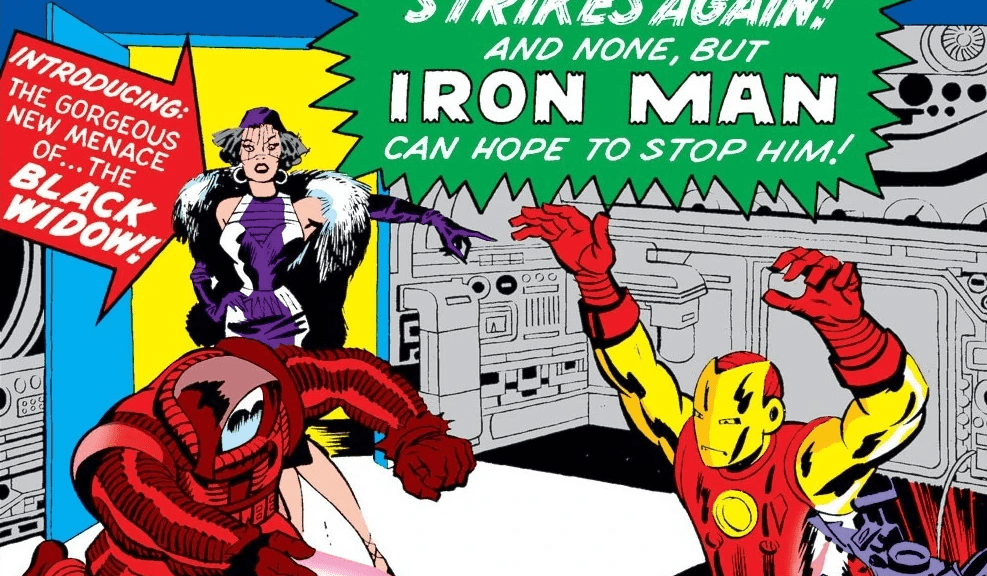
The most enduring characters, however, were Daredevil and Black Widow, who co-titled Daredevil from issue 92 until issue 107:

In the MCU era, Black Widow is associated with the Avengers, but for me, the connection is Daredevil.

Also, in the MCU, Black Widow has suffered a double death—her character killed off (and then given an after-the-fact solo film), and the high-profile actor playing the role, Scarlett Johansson, breaking ties with Disney and Marvel.

The end of the Johansson/Black Widow run in the MCU often contrasts with the jumbled ways Marvel has handled Black Widow in the comic books (see below where Black Widow has had 8 volumes, often running only 3 issues, with a total of 50 issues and running) beginning with her introduction in 1964.

But there is one significant similarity, identified by Johansson in an article for Salon:

All of that is related to that move away from the kind of hyper-sexualization of this character and, I mean, you look back at ‘Iron Man 2’ and while it was really fun and had a lot of great moments in it, the character is so sexualized, you know? Really talked about like she’s a piece of something, like a possession or a thing or whatever — like a piece of ass, really. And Tony even refers to her as something like that at one point.

Scarlett Johansson says Black Widow was hypersexualized when first entering the MCU

Consider as one extreme case, the MAX series from 2002:

But this reductive hypersexualization goes back to the 1960s and 1970s as well, with the artwork of Gene Colan:

Brown confronts that hypersexualization and exoticizing marginalized (by race and/or gender) characters are standard practices in superhero comics:

Black women in the media, especially within the superhero genre, are still constructed as exotic sexual spectacles, as erotic racial “Others.”… Female superheroines…are primarily depicted as scantily clad and erotically posed fetish objects. (pp. 134, 135)

Black Comics: Politics of Race and Representation

Black Widow, although white, fits into the pattern of hypersexuality and othering as exotic (her Russian and mysterious as well as isolated background). Brown’s recognition that female superheroes are often reduced to “purely symbolic images,” especially noting “the way that superheroines are portrayed as sexual objects on comic book covers” (p. 144):

“[T]he superhero genre of comic books continues to reply heavily on stereotypes of all kinds,” Brown concludes—and throughout her solo career in Marvel comics, Black Widow represents the irony found directly in a central motif of her characterization:

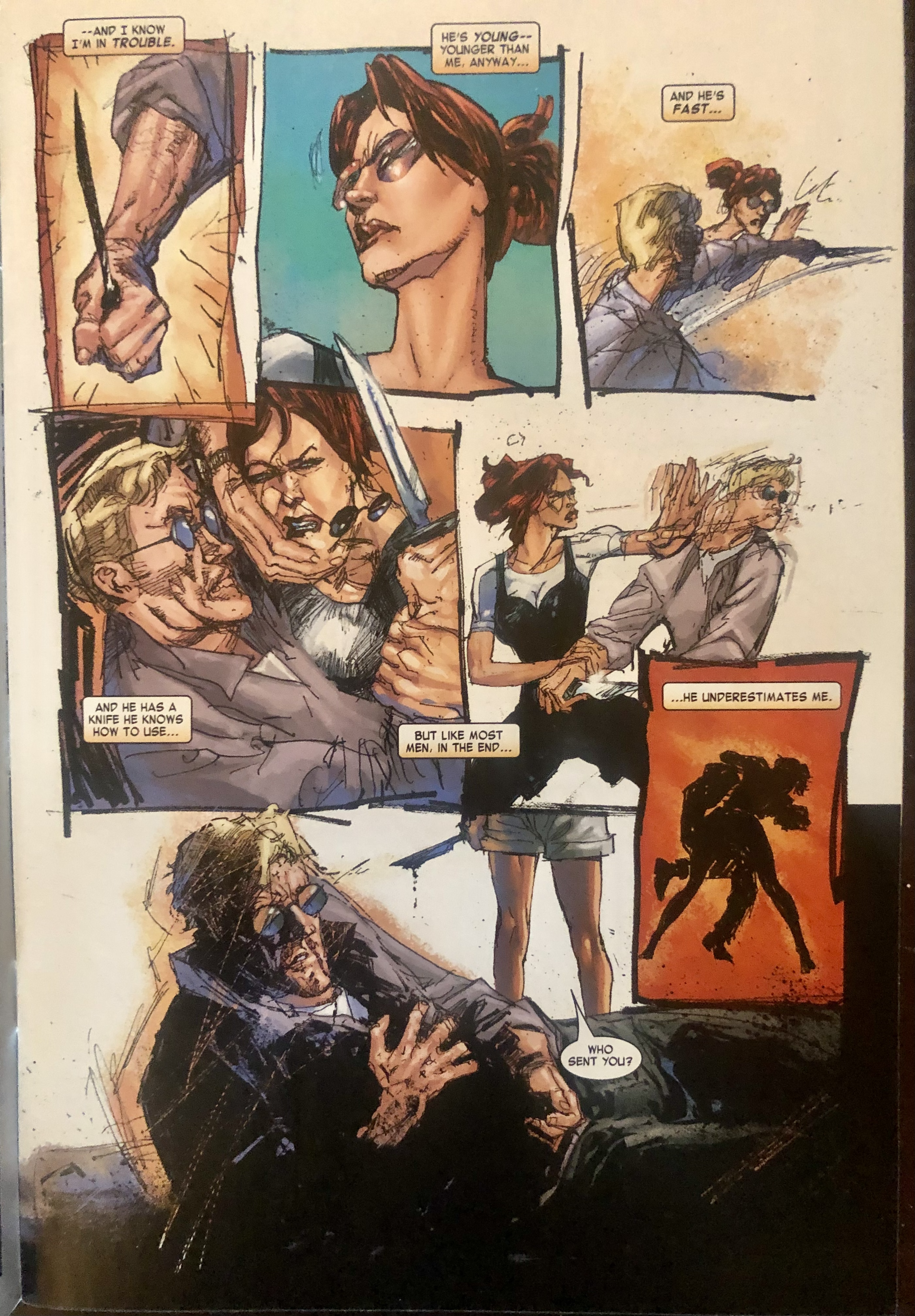
“But like most men, in the end,” Natalia Romanova observes, “he underestimates me.”

Throughout her years in the print Marvel Universe, Black Widow has far too often been underestimated by the (mostly) men who write her story and draw her life into action—men hypersexualizing and Othering her along the way.

There is another layer to these problems, however, since there have been and currently are powerful and far less problematic versions of Black Widow along the way; regardless of the quality, it seems, of how creative teams deal with Black Widow, the Men (the Industry) continue to underestimate, and fail the character.

The current run, volume 8, has been a stellar and beautiful rendering of Black Widow, not surprisingly in the hands of women—Kelly Thompson (writer), Elena Casagrande (artist), and others:

Black Widow v8 issue 5 (cover artist: Adam Hughes)

There remains a noir quality to this version of Black Widow, and certainly, Black Widow continues to be sexual and physically compelling. But the rich humanity and complexity of being Black Widow / Natalie Grey (Natasha Romanoff) is more fully realized in this volume, often to critical acclaim.

With the track record behind the character of Black Widow, time will ultimately tell if Marvel and superhero comics can finally stop underestimating this character, can allow the full and complex humanity to exist beyond the reductive hypersexualizing.

Black Widow represents that too many have failed superhero comics even though comic book universes allow a nearly endless opportunity to imagine and reimagine again and again.

Doing it right, I believe in that too.


Sources

Jeffrey A. Brown, “Panthers and Vixens: Black Superheroines, Sexuality, and Stereotypes in Contemporary Comic Books,” in Black Comics: Politics of Race and Representation, ed. Sheena C. Howard and Ronald L. Jackson II (New York: Bloomsbury Academic, 2013).

Appendix: Black Widow Comics, an Overview

Black Widow

Vol. 1 (1999) – Grayson, Jones “Itsy-Bitsy Spider”

Vol. 2 (2001) – Grayson, Rucka, Hampton

Graphic Novels V1-2:

Black Widow MAX (2002) – Rucka

Vol. 3 (2004-2005) – Morgan, Sienkiewicz, Parlov

Graphic Novel V3:

Vol. 4 (2010-2011) – Liu, Acuna, Swierczynski, Garcia

Graphic Novel V4:

Vol. 5 (2014-2015) – Edmondson, Noto

Graphic Novel V5:

Vol. 6 (2016-2017) – Waid, Samnee

Graphic Novel V6:

Vol. 7 (2019) – Soska, Armentaro

Graphic Novel V7:

Web of Black Widow (2019-2020) – Houser, Mooney

Graphic Novel:

Vol. 8 (2020- ) – Thompson, Casagrande, De Latorre

Graphic Novel V8:

Black Widow by Kelly Thompson Vol. 1: The Ties That Bind

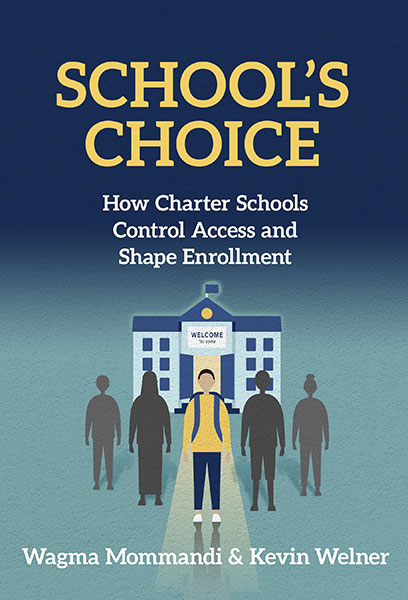
Recommended: School’s Choice: How Charter Schools Control Access and Shape Enrollment (TCP)

School’s Choice: How Charter Schools Control Access and Shape Enrollment

School’s Choice 9780807765814

Wagma Mommandi, a former public-school teacher, is a PhD candidate in education policy at the University of Colorado Boulder School of Education. 

Kevin Welner is a professor and the director of the National Education Policy Center, which is housed at the CU Boulder School of Education.

Access issues are pivotal to almost all charter school tensions and debates. How well are these schools performing? Are they segregating and stratifying? Are they public and democratic? Are they fairly funded? Can apparent successes be scaled up? Answers to all these core questions hinge on how access to charter schools is shaped. This book describes the incentives and pressures on charter schools to restrict access and examines how charters navigate those pressures, explaining access-restricting practices in relation to the ecosystem within which charter schools are created. It also explains how charters have sometimes responded by resisting the pressures and sometimes by surrendering to them. The text presents analyses of 13 different types of practices around access, each of which shapes the school’s enrollment. The authors conclude by offering recommendations for how states and authorizers can address access-related inequities that arise in the charter sector. School’s Choice provides timely information on critical academic and policy issues that will come into play as charter school policy continues to evolve.

Book Features:

  • Examines how charter schools control who gains and retains access.
  • Explores policies and practices that undermine equitable admission and encourage opportunity hoarding.
  • Offers a set of policy recommendations at the state and federal level to address access-related issues.

Beware the Roadbuilders 2021

I entered the classroom as a high school English teacher in Upstate South Carolina in the fall of 1984, coinciding with the start of the high-stakes accountability movement in my home state as well as across the U.S.

Many people identify the Nation at Risk report under Ronald Reagan as ground zero for the accountability movement that entrenched patterns of school reform lasting until today—ever-changing standards, ever-changing high-stakes tests, and a never-ending refrain that schools are failing.

George W. Bush brought state-level education reform/accountability to the federal level with the bi-partisan No Child Left Behind, and then Barack Obama doubled down on the same basic concepts and approaches despite decades of accountability measures not working.

As a result, when I entered the world of blogging and public commentary during Obama’s administration, I found two enduring and powerful metaphors for the essential flaws of the accountability/education reform movement.

One is from Oscar Wilde: “But their remedies do not cure the disease: they merely prolong it. Indeed, their remedies are part of the disease.”

And the other is inspired by a scene from Alice Walker’s The Color Purple, detailed in a letter from Nettie to Celie:

The first thing I should tell you about is the road. The road finally reached the cassava fields about nine months ago and the Olinka, who love nothing better than a celebration, outdid themselves preparing a feast for the roadbuilders who talked and laughed and cut their eyes at the Olinka women the whole day. In the evening many were invited into the village itself and there was merrymaking far into the night. I think Africans are very much like white people back home, in that they think they are the center of the universe and that everything that is done is done for them. The Olinka definitely hold this view. And so they naturally thought the road being built was for them [emphasis added]. And, in fact, the roadbuilders talked much of how quickly the Olinka will now be able to get to the coast. With a tarmac road it is only a three-day journey. By bicycle it will be even less. Of course no one in Olinka owns a bicycle, but one of the roadbuilders has one, and all the Olinka men covet it and talk of someday soon purchasing their own.

Well, the morning after the road was “finished” as far as the Olinka were concerned (after all, it had reached their village), what should we discover but that the roadbuilders were back at work. They have instructions to continue the road for another thirty miles! And to continue it on its present course right through the village of Olinka. By the time we were out of bed, the road was already being dug through Catherine’s newly planted yam field. Of course the Olinka were up in arms. But the roadbuilders were literally up in arms. They had guns, Celie, with orders to shoot!

It was pitiful, Celie. The people felt so betrayed! They stood by helplessly—they really don’t know how to fight, and rarely think of it since the old days of tribal wars—as their crops and then their very homes were destroyed. Yes. The roadbuilders didn’t deviate an inch from the plan the headman was following. Every hut that lay in the proposed roadpath was leveled. And, Celie, our church, our school, my hut, all went down in a matter of hours. Fortunately, we were able to save all of our things, but with a tarmac road running straight through the middle of it, the village itself seems gutted.

Immediately after understanding the roadbuilders’ intentions, the chief set off toward the coast, seeking explanations and reparations. Two weeks later he returned with even more disturbing news. The whole territory, including the Olinkas’ village, now belongs to a rubber manufacturer in England. As he neared the coast, he was stunned to see hundreds and hundreds of villagers much like the Olinka clearing the forests on each side of the road, and planting rubber trees. The ancient, giant mahogany trees, all the trees, the game, everything of the forest was being destroyed, and the land was forced to lie flat, he said, and bare as the palm of his hand.

The Color Purple

From this, I drew a conclusion that has served as a guiding metaphor for my criticism of the education reform movement and the title of one of my books, Beware the Roadbuilders: Literature as Resistance (Garn Press): “Beware the roadbuilders. They are not here to serve you, they are on their way to bulldoze right over you.”

I have come back to this metaphor as both ongoing criticism and confirmation that accountability is a failed approach to education reform.

One element of the tension between the accountability/education reform movement and those of us committed to education and social reform grounded in equity (and not accountability) is the shared acknowledgement that universal public education has a long history of failing marginalized and oppressed populations of students, reflecting the larger failures of communities, states, and the broader U.S. to serve marginalized and oppressed people.

It is 2021, and in my home state of SC, the metaphor I have depended on is being vividly and callously brought to reality:

The dismantling of Black communities for state and federal highways is not just a thing of the past. It’s happening now a few miles north of Charleston with the proposed West I-526 Lowcountry Corridor, at a time when President Biden and his transportation secretary have vowed to stop it.

South Carolina is proposing to sweep aside dozens of homes, and potentially hundreds of people, to widen a freeway interchange choked with traffic in this booming coastal region. The $3 billion project is expected to begin about two years after the plan becomes final. …

Under the state’s preferred proposal for the interchange upgrade, 94 percent of people and structures that would be displaced live in environmental justice communities mostly composed of Black and Brown residents.

Black people are about to be swept aside for a South Carolina freeway — again

It is 2021, and I must reach the same conclusion I drew in 2014: Beware the roadbuilders. They are not here to serve you, they are on their way to bulldoze right over you.


Recommended

‘White Men’s Roads Through Black Men’s Homes’: Advancing Racial Equity Through Highway Reconstruction, Deborah N. Archer

Abstract

Racial and economic segregation in urban communities is often understood as a natural consequence of poor choices by individuals. In reality, racially and economically segregated cities are the result of many factors, including the nation’s interstate highway system. In states around the country, highway construction displaced Black households and cut the heart and soul out of thriving Black communities as homes, churches, schools, and businesses were destroyed. In other communities, the highway system was a tool of a segregationist agenda, erecting a wall that separated White and Black communities and protected White people from Black migration. In these ways, construction of the interstate highway system contributed to the residential concentration of race and poverty, and created physical, economic, and psychological barriers that persist.

Today, the interstate highway system is on the verge of transformational change as aging highways around the country are crumbling or insufficient to meet growing demand and must be rebuilt or replaced. The possibility of significant infrastructure development offers an opportunity to redress some of the harm caused by the interstate highway system, to strengthen impacted communities, and to advance racial equity. Still, there is a risk that federal, state, and local highway builders will repeat the sins of the past at the expense of communities of color whose homes, businesses, and community institutions again stand in the path of the bulldozers. Moreover, there is reason to believe that traditional civil rights laws, standing alone, are insufficient to redress the structural and institutional racism that shaped the interstate highway system and continues to threaten communities of color as the highways are rebuilt.

This Article is the first in the legal literature to explore in depth the racial equity concerns and opportunities raised by modern highway redevelopment. It also builds upon the work of legal scholars who advocate for addressing systemic racial inequality by requiring that policymakers conduct a thorough and comprehensive analysis of how a proposed action, policy, or practice will affect racial and ethnic groups. The Article concludes by proposing a way forward for highway redevelopment projects: requiring jurisdictions to complete comprehensive racial equity impact studies prior to any construction. Racial equity impact studies have been used or proposed in various contexts to reform racialized institutions and structures. This Article argues that highway redevelopment projects should join this growing list.

Archer, Deborah N., ‘White Men’s Roads Through Black Men’s Homes’: Advancing Racial Equity Through Highway Reconstruction (February 18, 2020). 73 Vanderbilt Law Review 1259 (2020), NYU School of Law, Public Law Research Paper No. 20-49, Available at SSRN: https://ssrn.com/abstract=3539889

Indoctrination by Omission

While attacks on Critical Race Theory (CRT) by Republicans and conservatives have many different claims, one consistent element of these attacks is misinformation.

One of those false associations can be found at the persistently misleading Discovery Institute (infamous for stoking the evolution debate): Critical Race Theory – The Marxist Trojan Horse writes Walter Myers III for the “institute.”

Recently I gave a presentation for a learning in retirement session at my university—The 1619 Project:  Should we “reframe” our country’s history to include the consequences of slavery?”

In the opening of the presentation I explain what CRT is, focusing on the Big Lie of the attacks by assuring everyone that CRT is not taught in K-12 schools.

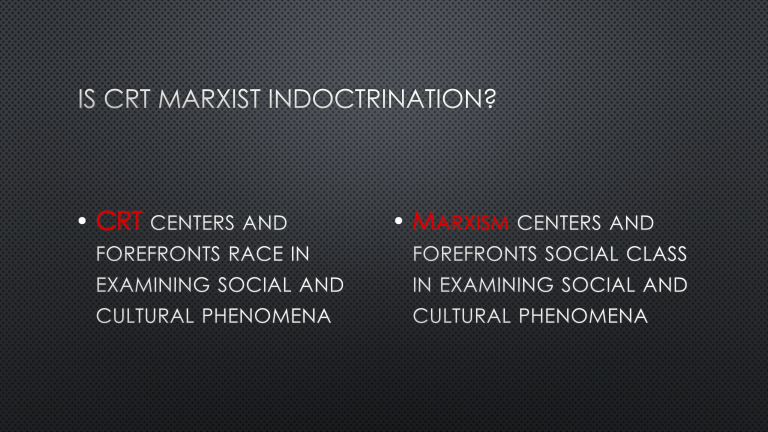
But I also focused on the claim that CRT is Marxist indoctrination:

While some overlap does exist among CRT scholars and Marxist scholars, there often is considerable tension between the focus on centering race and centering social class.

While this slide sparked some important dialogue among the audience, I had begun the presentation (not planned) by noting that the session began with a short video that included a dramatic reading that included the phrase “black-on-black crime.”

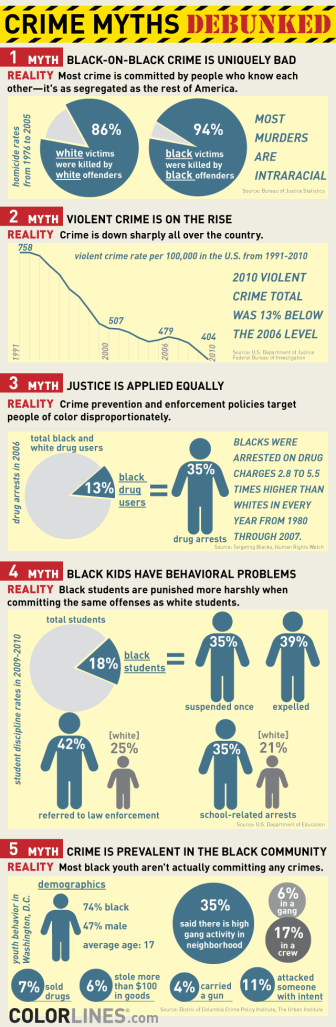
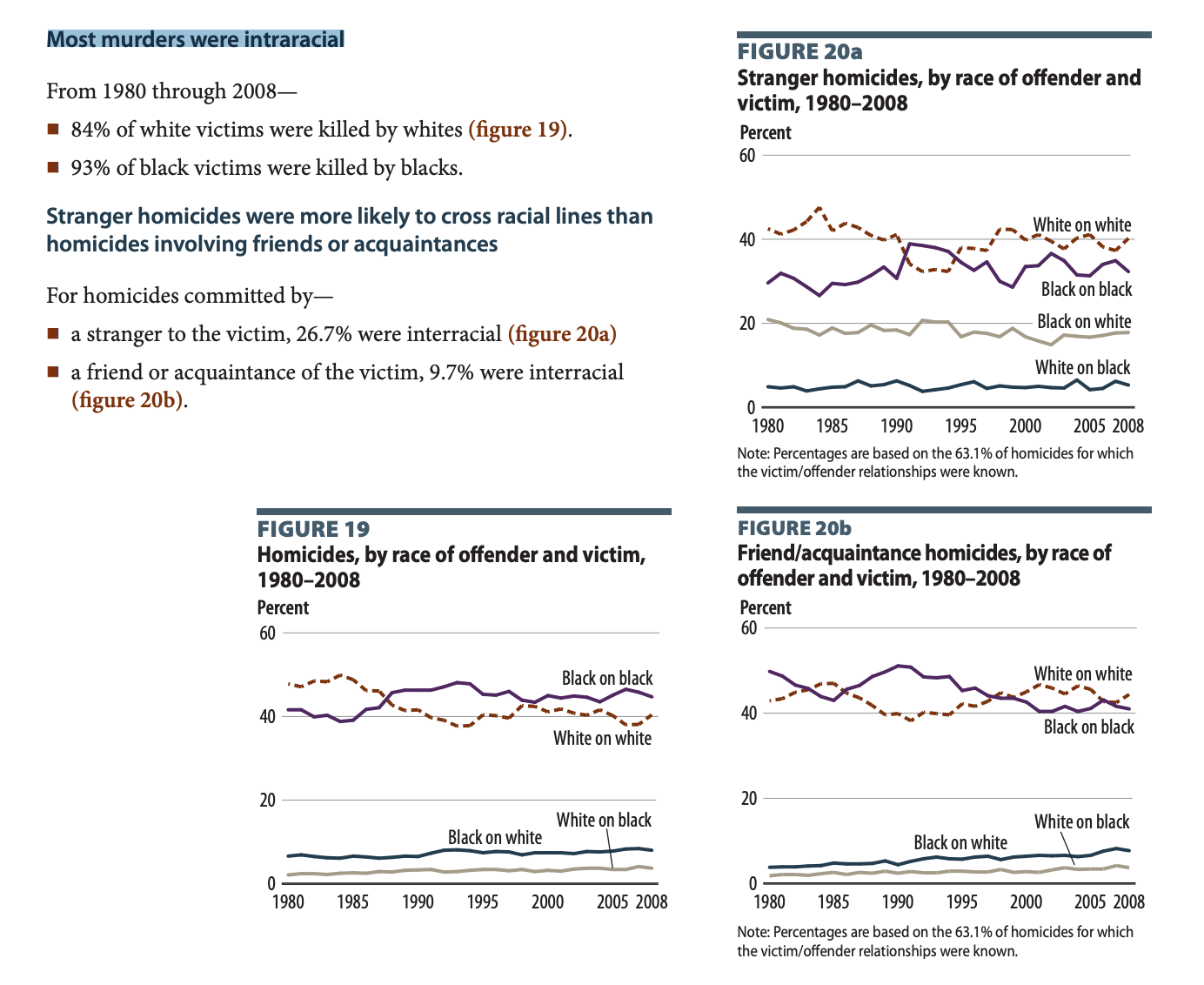
I noted that while crime in the U.S. is overwhelmingly within race—the white-on-white crime rate is about the exact same as the black-on-black rate—media, public, and political discourse only utters “black-on-black crime.”

This is indoctrination by omission, and this phenomenon in education raises an important question:

Similar to what I have raised before—Who’s indoctrinating whom?—”Are we worried about ideology or just one ideology?” is an important question to confront, and we are left with only one real answer.

Conservatives are seeking ways to indoctrinate students within the parameters of their ideology; therefore, the attacks on CRT and the 1619 Project are not calls for academic freedom, the marketplace of ideas, or even “both sides.”

Republicans and conservatives are seeking indoctrination by omission.

As I responded to the Tweet above, I noted that since I teach many students with private religious K-12 schooling, I regularly am asked to “go over” evolution because these very bright and high-achieving students were never taught evolution in biology while attending private religious schools.

Whether its our schooling or our political, media, or public discourse, what is not spoken is just as powerful as what is spoken.

Poet Adrienne Rich writes in her “Arts of the Possible,” the eponymous essay of her 2001 collection of essays:

The matrix of a poet’s work consists not only of what is there to be absorbed and worked on, but also of what is missing, desaparecido, rendered unspeakable, thus unthinkable. It is through these invisible holes in reality that poetry makes it way—certainly for women and other marginalized subjects and for disempowered and colonized peoples generally, but ultimately for all who practice art at any deep levels. The impulse to create begins—often terribly and fearfully—in a tunnel of silence.

On Lies, Secrets, and Silence: Selected Prose 1966-1978

In the Bizarro world of conservative thought, simply exposing students to ideas that do not conform to a narrow conservative ideology is a type of indoctrination.

Republicans are trying to control K-12 and higher education in ways that honor mythologizing/idealizing the past and speaking of U.S. history and day-to-day realities of the U.S. through aspirational language—from “Founding Fathers” to “the U.S. is not a racist country.”

Ultimately, what offends Republicans/conservatives about academic freedom and critical approaches to history, literature, etc., is that being critical is inherently a challenge to power and a rejecting of indoctrination.

There is no such thing as objective history, no such thing as de-politicized “facts.”

Contemporary historians are well aware that history tends to be written by the winners, by those with power and authority, and that these versions of history are in the interests of those with that power and authority.

Current attacks on CRT have included direct attacks on the work of Howard Zinn, who popularized seeing history from the perspectives of the losers and marginalized.

Returning to the Tweet above, conservatives are not angry that Zinn’s history is ideological, but that Zinn’s history challenges their singular ideology of mythologizing, idealizing, and aspiring to the detriment of marginalized populations in the U.S.

If we in the U.S. genuinely value individual freedom, each child and young adult deserves education grounded in academic freedom, and academic freedom requires that we attend to not only what is taught but also what is omitted.

K-12 and higher education are not indoctrinating children and teens, certainly not into Marxist ideology, but Republicans/conservatives are endorsing indoctrination by omission—something that if we want to be aspirational is not very American.


Recommended

Conceptualizing color-evasiveness: using dis/ability critical race theory to expand a color-blind racial ideology in education and society

Moving from “All Students Must” to “Each Student Deserves”

Since publishing my book, How to End the Reading War and Serve the Literacy Needs of All Students, that examines the current “science of reading” (SoR) version of the Reading War, I have given several interviews and presentations on that work.

I have also continued to blog about the movement, and in all of these experiences, I am forced to rethink and think more complexly through what I know and understand about the SoR movement as well as how to teach reading and literacy.

The most recent interview, by literacy expert Sam Bommarito, proved to be an enlightening experience on several levels.

First, Sam’s experience and expertise in the field of literacy were a welcomed change from being interviewed by generalists and journalists because his questions dove directly into the core of the issues surrounding SoR and those questions challenged me to think more deeply and carefully.

Our exchange between people with similar levels of expertise on the subject allowed (or even required) us to focus on how best to offer any viewers nuanced but clear explanations of a deeply complex topic; as I noted (and emphasize often now), the evidence on teaching reading is not simple, and not settled.

But the larger take-away for me after the interview was that Sam’s third question—Does it make any sense to effectively ban selected practices found in balanced approaches to reading, e.g., reading recovery, workshop teaching or guided reading?—prompted me to explain in greater detail a core concept that grounds a fundamental reason I reject the SoR movement.

Whether I am addressing literacy specifically or teaching pedagogy broadly, I have relied for many years on the best practice concepts expressed by Zemelman, Daniels, and Hyde.

Each chapter in their book (now in its fourth edition) ends with a chart that suggests instructional practices that teachers should increase or decrease; for example, on writing instruction (download sample here):

Key to note is that best practice is grounded in broad and diverse bodies of research on teaching and learning, and that best practice philosophy neither requires nor bans any specific instructional approach; whether a teacher uses any pedagogy is directly linked to student need (not a prescription form some authority such as standards or an adopted program).

When SoR advocates call for “all students must” (for example, systematic intensive phonics for all students and universal screening for dyslexia), they are misrepresenting what we know about teaching and learning: There is no universal silver bullet for “all students.”

Best practice structures promote research and evidence as a spectrum, a range of practices for every teacher’s toolbox; best practice also recommends that instruction begin with individual students, their demonstrated known, unknown, and misconceptions.

If we think carefully about decoding and direct instruction in phonics and phonemic awareness, teachers will face a wide diversity of students in any class in terms of where they are in their reading development; in short, there simply is no situation where “all students must” serves students well.

Literacy is not simple, and literacy development is not linear, sequential, or systematic.

For example, most people do not accumulate vocabulary in order to be able to read, but develop their vocabulary by reading.

Context (in terms of so-called literacy skills) and engagement are extremely important when students are developing their literacy; regretfully, many misguided movements during the history of the Reading War have eroded an essential aspect of literacy that must be honored—literacy as holistic.

Here, we must address a fundamental paradox in the SoR movement.

Several different kinds of advocacy are fueling the SoR movement—from parents advocating for greater awareness of dyslexia to Black and poor parents advocating for under-/un-served populations of students to advocates for the needs of emerging bilingual students.

The common denominator here is a genuine concern for the under-/un-served student, a pervasive belief that for a number of reasons, too many students are being failed by the system itself (although some elements of the SoR movement are also directly blaming teachers and teacher educators for those failures).

The paradox is that the aggressive advocacy behind the SoR movement is driving an all-or-nothing silver-bullet approach to teaching reading, which will mis-serve students as much or more than the current conditions of teaching and learning in U.S. public schools.

So this leads me to Sam’s effort to bridge the divisions in the Reading War (something I am far more skeptical about, as I address in Sam’s question 5: Cambourne and Crouch recently said we should stop using the Reading Wars metaphor and replace it with the metaphor of the Reading Quilt- with different “sides” adding different pieces to the quilt. Do you see any hope for that point of view? Do you see hope for an end to the divisive discourse?  Do you see hope for ending the reading wars? [13:20]).

I am no fan of compromise (as I explain in the interview) but I think we do have common ground in terms of two beliefs: (1) Far too many students are being under-/un-served in our current K-12 public school system (notably in their literacy), and (2) the under-/un-served are disproportionately marginalized and vulnerable populations of students (Black students, poor students, emerging bilinguals, students with special needs).

Not a compromise, but my modest proposal is that all of us concerned with reading and literacy among K-12 students need to set aside the “all students must” mandate and commit instead to “each student deserves.”

“All students must” be screened for dyslexia is a guaranteed disaster for students (consider the over-diagnosing of ADHD as one example), but “each student deserves” access to ample books and other texts in their homes and schools fulfills what we know about literacy development without being overly simplistic or harmful.

Each student deserves whatever teaching and learning experiences they need and want in order to grow and develop at the rate unique to them (not some manufactured and artificial “grade level” proficiency).

This commitment shifts our instruction and assessment gaze away from compliance to a reading program or to a set of prescribed standards and toward the demonstrated needs and wants of each student who enters any classroom.

The ultimate irony here is that the whole language (WL), reading/writing workshop, and balanced literacy (BL) movements (all falsely demonized since the 1990s) offer that exact commitment along with very high standards for teacher expertise (each of us in charge of any student must have a very complex toolbox for teaching and also must be prepared to individualized instruction).

Again, as I stated in the interview, WL, workshops, and BL did not fail our students, but we have certainly failed the core commitment of those movements—serving the learning needs of each student.

What we know about teaching reading is not simple or settled, but I think we can and must all agree that instead of falling prey to the overly simplistic and harmful “all students must,” a better way forward is a resolute commitment to “each student deserves.”


Individual Behavior and Community Safety: Cycling Edition

More than 30 years ago, I ventured into road cycling as a hobby. I rode alone for a couple years before discovering a vibrant cycling community in my home town.

In the mid-/late 1980s, most of the organized group rides started at the local bike shop (just down the street from where I lived) or the downtown YMCA.

When I started joining these rides, most of the cyclists were veteran and highly skilled cyclists—and friends. In those days, nearly no one talked to new riders, and worst of all, I started most of these rides desperately struggling to stay with the group.

None the less, within a few miles, I was dropped, left to ride alone the rest of the route. When I returned to the start, everyone had already left.

I am not sure why I (or any other new rider) kept at it, but I did.

Over the next twenty years, I gradually developed into a solid rider, and then, one of the stronger riders leading group rides and pushing the pace on the more intense rides and cycling races or events.

During that time, group riding also changed. More rides were offered for different abilities, and the rides in general were more likely to encourage and foster new cyclists into the cycling community.

My lessons in group cycling came from a few elite riders who took the drill sergeant approach to whip me into shape. But “shape” in cycling is more than fitness since how any individual cyclist behaves impacts the dynamics and safety of the entire group.

Cycling is very regimented (expected behaviors) for both the efficiency and the safety of the group.

As with many other activities, Covid has significantly impacted group cycling in my home town, and I have been away from group riding for well over a year, until recently.

Joining my group rides again included a significant number of new riders—often struggling with their fitness and how to ride in an organized group ride.

This reintroduction has made me think about the larger Covid situation: Individual behavior in group cycling is a necessary element in the safety of the group in the same way that masking and vaccinations are about both individual and community health.

We have restrictions, as well, on individual driving of cars (speed limits, bans on impaired driving) for both individual and community safety, for example, which is also the same dynamic as masking and vaccinations for Covid—or having the fitness and the skill to ride in an organized recreational cycling group ride.

Learning to ride in a cycling group, then, is a lesson in the importance of individual behavior for community safety.

For anyone new to group cycling (specifically recreational cycling), here are some of those behaviors:

  • Avoid abrupt changes in speed or direction. Direction and pace are incredibly important for cycling groups, and thus, consistent speed and direction help a group move efficiently but they also make the group safer. Most cycling groups (due to state laws) ride two abreast, and any sudden changes in speed or direction have rippling effects throughout the group. Changes in speed or direction should have a reason (change in terrain, turn on the course, or potholes, for example), and should be accompanied by verbal and hand signaling (more on that later). Hold your line and maintain as compact spacing as you can (developing better spacing skills as you gain fitness and experience).
  • Don’t be that guy. Here is one of the best guidelines for group cycling: If you are doing something different than everyone else, you are probably doing something wrong—and dangerous. Don’t dart in front of an oncoming car, don’t ride three abreast, don’t leave large gaps, don’t cross the yellow line—the examples are endless, but for a new or inexperienced rider, a great strategy is to watch the veteran riders, and do as they do.
  • Positioning matters. New cyclists often gravitate to the back of the group, which is a bad decision. The larger the group, the more inconsistent the group is the farther back you are. The back of a large group is often very hard for a new rider who still lacks enough fitness because the back has more slowing and accelerating than the first half or two-thirds of the group—where new riders should position themselves.
  • Balance matters. Another mistake new riders make is positioning on the bicycle; your weight should be mostly on your sit bones and pedals—not on the handle bars. Before joining a group ride, new riders should have a good bike fit and should be able to ride comfortably with their hands resting lightly (de-weighted) on the handle bars. Leaning heavily on the handle bars makes a bicycle unstable; while it is counter-intuitive, rotating wheels are very stable and track straight ahead, unless you hit something on the road or disturb that momentum.
  • Head up, eyes forward. When new cyclists become taxed, stressed, because of still-developing fitness, they often drop their head and eyes; this is extremely dangerous. Another problem is that many recreational rides are also social so people chat. When cycling, resist making eye contact when talking to the person next to you. It is really simple: Head up, eyes forward.
  • Know your place. If you are new to a group, and unfamiliar with the course, you should stay off the front until you know the course. Also, you must know the expectations of the ride (most rides identify a level such as A, B, or C based on overall speed, etc.) and how the group plans to handle group dynamics (no-drop ride, for example, or what the group does if someone has a flat or mechanical). Watch, listen, and ask questions, and as noted above, don’t be that guy.
  • Understand group and paceline dynamics. Many recreational cycling groups will use a pretty relaxed paceline with two riders taking longer pulls at the front before rolling off and two other riders taking turns. Because cyclists use open roads, some groups choose for both riders to pull off to the left and drop back single-file (what we tend to do in my community) while others use the one rider dropping off on both sides approach. Simply put, know the expectations. The same applies for more aggressive pacelines that have a continual rotation (typically with the right line pulling through and the left dropping back; although technically the through and back line can [should] be determined by wind direction). In all cases, riders pulling and/or pulling through must maintain a consistent effort (don’t accelerate the group, don’t dart through on a pull, and don’t half-wheel the rider beside you in the two-by-two method). The key here for new riders is know the expectations and then watch the experienced riders so that you can mimic their behavior.
  • Communicate, communicate, communicate. Cycling is a highly verbal sport. Always alert the group to turns, dangers in the road conditions, problems with other riders, and the proximity of cars. New riders should listen and learn how the local riders alert each other (including whether or not hand signals are the norm, etc.). An important rule is if you hear messaging from the front, pass it back, and if you hear messaging from the back, pass it forward.

Even if you aren’t a cyclist, this post is about the problem with seeing the rights of the individual and the needs of the community as an either/or proposition. The reality is that individual behavior is always a factor in community dynamics.

Asking a new cyclist to conform to the dynamics of a cycling group is not a denial of the individual rights of that cyclist but acknowledging that individual development is linked to the dynamics of the group—just as the safety of any individual cyclist is linked to the safety of the group.

If a rider doesn’t want to conform to group expectations, then that rider is always free to ride alone.

Group cycling is an incredibly powerful thing that allows very strong and experienced riders to participate with weaker inexperienced riders; and both benefit from the experience.

For many years, I participated in a 220-240-mile ride from the upstate of South Carolina to destinations along the coast of SC and Georgia. The key to this ride was a coherent group that worked in ways that benefitted the weaker and less experienced riders. Almost every year, everyone completed the ride—a truly remarkable feat for groups of 10-20 riders experiencing an 11-14-hour day of riding.

These rides were individual and group accomplishments that demonstrate a truism that fits more than cycling: Individual behavior is inseparable from community safety.

Republicans Embrace “Three Kinds of Lies: Lies, Damned Lies, and Statistics”

Misattributed quotes can still be valid, and such is the case with the often repeated, “There are three kinds of lies: lies, damned lies, and statistics,” typically associated with Mark Twain (possibly the first person to attribute the saying to the wrong person).

Statistics are a powerful kind of lie because data allow people to state factually true statistics that still mislead or distort the topic being addressed.

Republicans and conservatives have used the statistical lie often as a dog whistle for their racist base. Two of those issues are fatal police shootings and black-on-black crime.

Let’s look at how these statistical lies work.

Republicans and conservatives are apt to note the raw numbers on fatal police shootings broken down by race:

Yes, police shoot and kill more white people per year than Black people, but a statistical fact of this data is that there are about 5 times as many white people in the U.S. as there are Black people; therefore, for this data set to be equitable, about 5 times more white people would be killed than Black people (note that the difference is only about twice as many).

Thus, a better statistic is the rate of fatal police killings by race:

Therefore, fatal police shootings are racially imbalanced (Black people shot and killed at about 2.5 times higher rate than white people), if not racist.

In the case of fatal police shootings, then, the raw data are both accurate and misleading when trying to understand racial inequity.

A much more insidious use of statistics is the overuse of black-on-black crime in media, public, and political discourse.

Black-on-black crime rates are extremely high, often at a 90%+ rate.

But there is almost no media, public, or political rhetoric around the white-on-white crime rate, which is about statistically the same (high 80% rate). [1]

Crime rates are almost entirely within races in the U.S. (see p. 13 from the U.S. Department of Justice [2]) because the country is still strongly racially and economically stratified.

While highlighting the very high black-on-black crime rate is factually correct, omitting that most crime is intraracial makes that emphasis misleading, and another dog whistle for racists.

But Republicans aren’t stopping there; consider the Lt. Governor of Texas who has now blamed Black Texans for being unvaccinated and causing the newest Covid spike:

However, as you may suspect, there are problems with this claim:

Once again, Republicans are using the statistical lie as a dog whistle for racist constituents.

Many racial groups are under-vaccinated, and there certainly is a significant issue with vaccine hesitancy and resistance among Black Americans, but the sheer numbers in Texas make Patrick’s careless and racist claim more than preposterous.

Further, raw data on low vaccination rates among races also ignore causes for those rates. Black Americans are disproportionately poor and live in areas were vaccine access has been weak or even suppressed.

There is ample evidence that political leaders have always cherry-picked statistics and data to promote agendas, but there is also ample evidence that Republicans target statistics as part of their larger strategy to court their racist base.

Patrick’s most recent egregious use of the statistical lie is further proof that Trump did not create the Republican Party as a party of lies, but he certainly helped the strategy gain momentum.


[1] See data here:

crime_myths

[2] See:

LitCon 2022: The State of the Reading War: Not Simple, Not Settled [UPDATE]

Announcement

LitCon: National K-8 Literacy & Reading Recovery Conference (January 29 – February 5, 2022, Columbus, OH)

Session Type: Spotlight Continued Engagement Session

Schedule:  Thurday, February 3, 2022, 4:00 pm – 4:45 pm est

Session Strand:  Reading Recovery

Session Title:  TBD

Description:  

Topics: 

Presenters:  Sam Bommarito and Paul Thomas


Featured Speaker

The State of the Reading War: Not Simple, Not Settled

Download PP HERE

P.L. Thomas

Session Type: Featured Session

Schedule:  Thursday, February 3, 2022, 5:00 pm – 6:00 pm est

Session Strand:  Leadership in Literacy

Session Title:  FS21 – The State of the Reading War: Not Simple, Not Settled

Description:  A new round of the Reading War embraces the “simple” view of reading, arguing that the “science of reading” is settled. This session interrogates the “science of reading” movement by placing it in historical context and refuting its central claims based on a more complex view of reading and science.

Topics: Equity in Education, Literacy Leadership, Reading

Presenters:  Paul Thomas

Recommended Reading

Science Supports Balance, Not Intensive Phonics, for Teaching Reading

Fact Checking the “Science of Reading”: A Quick Guide for Teachers [Updated]

How to Navigate Social Media Debates about the “Science of Reading”

Reading as Comprehension and Engagement: On the Limitations of Decoding

Podcast: Educational Movements and Trends

Talking Points: A Conversation with Paul Thomas

The “Science of Reading”: A Reader for Educators

How Do We Know?: Not Simple, Not Settled

Dismantling the “Science of Reading” and the Harmful Reading Policies in its Wake [UPDATED]

Understanding the “Science of Reading” Movement and Its Consequences: A Reader

Policy Statement on the “Science of Reading” (NEPC)

How to End the Reading War and Serve the Literacy Needs of All Students

educator, public scholar, poet&writer – academic freedom isn't free