Teaching WandaVision: A Textset on Pastiche [updated]

Early in the semester of my first-year writing seminar, we consider and reconsider openings in essays, an interrogation of students’ experiences with the mechanical “introduction” with the obligatory thesis sentence.

We examine, for example, several Beginnings from Barbara Kingsolver’s essays in High Tide in Tucson and Small Wonder. Two essay beginnings reveal the complexity of student awareness about genre, writing forms, and language/text conventions.

Kingsolver’s “Creation Stories” opens with “June is the cruelest month in Tucson, especially when it lasts until the end of July.” Students always struggle with tone (missing the exaggeration and humor), and completely miss the allusion the T.S. Eliot’s “The Wasteland” (a work itself rich with allusion and historically situated).

I have them consider that their dominant experiences with literary texts in school have been deadly serious, both the texts they have read and the approach taken to those texts (analyzing for deeply serious meaning). Then, I stress the problems with referential texts, such as the use of allusion, since the author is expecting the readers/audience to have the background knowledge needed to recognize the reference and its significance to the texts being addressed.

“Once upon a time, a passing stranger sent me into exile,” Kingsolver begins in her “Jabberwocky.” Immediately, students identify this reference to fairy tales, showing they have a sense of genre that helps guide their expectations as reader (although, as noted above, they also have the “seriousness” baggage cultivated in their formal English courses).

Formal reading and analysis of texts remains mostly in English and literacy courses where students focus on text-based literature (what we once called “print”) and instruction includes techniques such as satire, parody, allusion, and pastiche.

However, most students spend much of their lives with texts that are virtual and in the form of video (film, series, etc.). And in the world outside of formal schooling, referential texts are quite common but depend on pop culture background knowledge—such as the TV series Community.

Before the activity on beginnings, I asked if students were watching the recent series WandaVision, grounded in the Marvel Cinematic Universe (MCU). Very few were watching and many weren’t aware of the series available on Disney+.

WandaVision
Disney/Marvel

When I pulled up the IMDB page of WandaVision and scrolled to a black-and-white trailer for the series, students have no reference point for what the series is doing as pastiche exploring the history of sitcoms in the U.S. reaching back into mid-twentieth century.

However, as I watched the first five episodes, I continually identified matching sets from series I watched growing up as well as homages to sitcom opening credits and theme songs.

WandaVision takes the Easter Egg hook now common in the MCU and carries references several steps farther, turning the series into a powerful lever for moving the MCU forward and a stand-alone homage and critique of pop culture driven by TV and film.

As with Community, WandVision provides a perfect opportunity for rethinking what texts we present to students and how we help students navigate referential media.

Here, then, drawn from the sources below, I want to offer a textset for WandaVision as an exploration of pastiche while highlighting some of the instructional goals that match traditional approaches in English course and some that expand that instruction.

Instructional goals for a WandaVision textset may include the following

  • Introducing or examining techniques such as satire, parody, allusion, and pastiche, focusing on the distinguishing characteristics among these approaches as well as the uses of and limitations to referential texts.
  • Exploring genre and medium conventions grounded in U.S. TV sitcoms since the mid-twentieth century, including the following: bedrooms of TV married couples, conventions of sitcoms (theme music, opening credits, set design, etc.), TV transition from black-and-white to color, sitcom tropes (pregnancy, neighbors, spouse roles, etc.).
  • Rethinking text beyond print and the importance of the binge-series versus traditional films or network TV weekly series.

Source background materials (Marvel comics that serve the MCU; see here):

Avengers (vol. 1): 113, 133-135, Giant Size 4 (1974), 185-187, 253, 254, 675-690

Vision and Scarlet Witch (1982): 1-4

West Coast Avengers (vol. 2, Avengers West Coast vol. 1, vol. 2): 42-49, 52

Avengers Disassembled

House of M

New Avengers: 26

Avengers: Children’s Crusade

Scarlet Witch: Witches’ Road

Vision: The Complete Collections

Avengers: No Road Home

House of X: 1

Empyre X-Men: 1, 4

TV and Film references (pastiche sources through E5):

[TV]

I Love Lucy (1951-1957)

The Honeymooners (1955-1956)

Leave It to Beaver (1957-1963)

The Dick Van Dyke Show (1961-1966)

Bewitched (1964-1972)

I Dream of Jeannie (1965-1970)

The Twilight Zone (195901964)

The Brady Bunch (1969-1974)

The Partridge Family (1970-1974)

The Mary Tyler Moore Show (1970-1977)

The Courtship of Eddie’s Father (1969-1972)

All in The Family (1971-1979)

Charlie’s Angels (1976-1981)

Get Smart (1965-1970)

Mary Hartman, Mary Hartman (1976-1977)

Growing Pains (1985-1992)

Step by Step (1991-1998)

Family Ties (1982-1989)

Full House (1987-1995)

Malcolm in the Middle (2000-2006)

Modern Family (2009-2020)

The Office (2005-2013)

Happy Endings (2011-2020)

[Film]

The Truman Show (1998)

Pleasantville (1998) [See also Viewing Pleasantville in Trumplandia]

The Wizard of Oz (1939)

Blade Runner (1982) [See The ‘WandaVision’ Finale’s ‘Blade Runner’ Reference Will Break Your Heart]

UPDATE: Here’s every TV show that WandaVision is based on (there’s a lot)


Sources

Postmodern Use of Parody and Pastiche

The inescapable postmodernism within television series Community by Sam Shepherd

The 68 Movie References in Community

10 Best Comics To Read With WandaVision!

38 details you may have missed on ‘WandaVision,’ so far

‘WandaVision’: All of the Marvel Easter Eggs and Sitcom References So Far

Breaking Down ‘WandaVision’s TV Sitcom and Genre Influences, Episode by Episode

A Guide To All The Sitcom References In ‘WandaVision’

Who Was the First TV Couple to Sleep in the Same Bed?

See Also

‘WandaVision’ echoes myths of Isis, Orpheus and Kisa Gotami to explain how grief and love persevere

The “Science of Reading”: A Movement Anchored in the Past

One of the defining moments of my first-year writing seminar is my reading aloud the first few paragraphs from A Report from Occupied Territory by James Baldwin.

This essay in The Nation from July 11, 1966, offers students dozens of powerful examples of compelling and purposeful writing, Baldwin at his best. But the circumstances of the essay are what first strike my students.

“There was a great commotion in the streets, which, especially since it was a spring day, involved many people, including running, frightened, little boys,” Baldwin writes. “They were running from the police.”

We note that Baldwin uses “police[men]” five times in the first paragraph, which focuses on people in the Harlem “in terror of the police” because “two of the policemen were beating up a kid.”

Students immediately noted that Baldwin was addressing exactly the same racism grounded in policing that has been the source of social unrest in the U.S. throughout 2020.

In other words, racism in policing in the U.S. is not a recent crisis, but a historically systemic fact of policing.

The more things change, we noted, the more they stay the same.

The history of education in the U.S. is often fascinating and surprising, but it also is like being Phil (Bill Murray) in Groundhog Day—especially when it comes to bandwagons and political and public cries of “crisis.”

Fews aspects of education represent this pattern more than reading, suffering the “science of reading” (SoR) movement since early 2018.

The SoR movement is nothing new, a movement anchored in the past.

But as David Reinking, Victoria J. Risko and George G. Hruby note at The Answer Sheet (The Washington Post), “More worrisome, a majority of states have enacted, or are considering, new laws mandating how reading must be taught and setting narrow criteria for labeling students as reading disabled.”

Reading was declared a crisis in the 1940s because of literacy tests of WWII recruits, throughout the 1950s and 1960s because of Rudolf Flesch’s Why Johnny Can’t Read, in the 1990s because of handwringing over NAEP scores, during the George W. Bush presidency with the National Reading Panel and No Child Left Behind, and, as noted above, over the last couple years because of the SoR movement prompted by the journalism of Emily Hanford.

As my students came to recognize about racism and policing in the U.S., anyone who examines the history and current bandwagon of reading will see that schools, teachers, and students have, like Phil, lived the same day over and over—reading is in crisis and here is the silver-bullet for all students to read.

One must wonder why we never pause to confront that this formula has never resulted in anything other than the same crisis.

And one must acknowledge that something cannot be a movement if it is anchored in doing the same thing over and over while expecting different results.

Take for example The Science of Reading: A Defining Movement.

The Coalition Members include a strong connection to The Reading League, formed in 2016.

Both the website and the League represent the very worst of missionary zeal and good intentions; and they both fail the fact check necessary for claims about a reading crisis and the bandwagon of SoR.

First, The Reading League grounds their concerns in a misguided and false red flag about whole language, as reported on Syracuse.com: “Murray is referring to the large base of research and knowledge that proves scientifically-grounded methodology in teaching reading is more effective than the ‘whole language’ approach most curriculum takes.”

This argument has two significant flaws. First, whole language has been replaced by balanced literacy for decades. And second, the 1990s revealed a discredited assault on whole language and an ignored analysis of by Darling-Hammond that showed a positive correlation between higher NAEP scores and students being in whole language classrooms.

The website, The Science of Reading: A Defining Movement, is complicated to fact check because there seems to be a purposeful effort to appear to be different than the SoR bandwagon by rejecting the term as a “buzzword” and demanding “We must preserve the integrity of reading science.”

Further, in the Preamble to their The Science of Reading: A Defining Guide, one sentence stands out: “We know that our children can be taught to read properly the first time.”

“The first time”?

Literacy and reading are lifelong learning experiences, and this claim raises a genuine red flag about this movement.

But the biggest reveal about the so-called SoR movement is in the definition, where there is a narrow parameter set for “scientifically-based”: experimental/quasi-experimental study design, replication or refinement of findings, and peer-reviewed journal publication.

If that sounds familiar, you have simply awakened to the same day some twenty years ago when the National Reading Panel made the exact same claim—and proved to be a deeply flawed report while the policy implications not only did not improve reading but also became mired in funding corruption with Reading First.

The SoR movement is a bandwagon with its wheels mired in the same muddle arguments that have never been true and silver-bullet solutions that have never worked.

Like Phil, we find ourselves waking up to the same day in reading.

This is no crisis, but it certainly is a tired, old story that needs to be left behind through some other vehicle than a bandwagon.

See Also

Greenville News (SC): SC should not “jump on bandwagon” of “science of reading” movement

Open Letter to SC House and Senate Concerning Bill 3613 [UPDATED]

How to End the Reading War and Serve the Literacy Needs of All Students

The State (SC): Read to Succeed bill would fail reading again in South Carolina

Read to Succeed bill would fail reading again in South Carolina (hyperlink version below and link to The State in title)

Currently, I am in year 37 of teaching in SC, serving as a high school English teacher at Woodruff High for 18 years before moving to teacher education at Furman University for the past 19 years. I entered education in SC in 1984, the first days of the accountability movement in our state.

Despite political leaders changing standards and high-stakes testing multiple times over the past four decades, political and public perception remains convinced that our students are, once again, failing to learn to read.

Bill 3613 is making the same mistake political leaders have been making since the 1980s, tinkering with punitive legislation aimed at our students and teachers while ignoring the overwhelming negative impact of inequity in our students’ homes and communities as well as the harmful negative learning and teaching conditions that persist in our schools.

Read To Succeed, which Bill 3613 seeks to amend, misreads both how students learn to read and how best to teach reading. Reading growth is not simple, and test scores are a stronger measure of poverty and social inequities than the state of student learning or the quality of teaching.

This proposed legislation is yet another example of SC jumping on a flawed educational bandwagon (this time copying Mississippi), the “science of reading” movement that has resulted in harmful educational policy such as increased grade retention, over-screening for dyslexia, and prescribing “one-size-fits all” instruction for students.

The National Council of Teachers of English (NCTE), the largest professional organization for English teachers in the U.S., has issued a strong policy statement rejecting third-grade retention supported by decades of research showing grade retention remains harmful for students. Dorothy C. Suskink also recently posted at NCTE that the “science of reading” movement is deeply misleading in its use of the term “science,” misrepresentation of the National Reading Panel, dependence on discredited reports from the National Council on Teacher Quality, and claims of crisis from NAEP scores.

Prominent literacy scholars David Reinking, Victoria J. Risko and George G. Hruby have also challenged the many flaws in the “science of reading” movement that are now included in Bill 3613. “When the teaching of reading is framed as a war, nuance and common areas of agreement are casualties,” they conclude, adding: “But worse, our children can become innocent victims caught in a no man’s land between those more interested in winning a conflict than in meeting individual needs.”

As has been proven by Read to Succeed so far, the most vulnerable students in our state will be harmed by the policies in this bill the most while political leaders in the state continue to lack the political will and courage to address the root causes of educational challenges across SC—poverty and racial inequity.

I urge political leaders in SC to think differently about our students, our teachers, and our schools; notably, I strongly recommend that we seek ways to create homes, communities, and schools that allow our students to grow and excel in the literacy development.

Continuing to tinker with prescriptive and punitive reading legislation is a dereliction of political and ethical duty; we can and must do better, by doing differently.

LEO’S TV

In the opening weeks of my first-year writing seminar, I introduce students to reading like writers (here and here), emphasizing that we are not reading to write literary analysis (as many of them have done for Advanced Placement Literature) but reading to explore and acquire moves and approaches for effective writing.

Since the first essay assignment is a personal narrative, I provide them with several essay examples and highlight “Peculiar Benefits” by Roxane Gay as a powerful model of what we are trying to accomplish—engaging the reader with personal narrative in order to ask the reader to consider or reconsider some larger idea or argument.

Today I read aloud, as I typically do, the first three paragraphs of the essay from the original online version of Gay’s essay at The Rumpus (many students read Gay’s Bad Feminist, which includes a slightly revised version). We had a robust discussion, and many students were interested in the essay and excited by the writing strategies we highlighted, centered around purposeful writing instead of templates or rules.

Once we ended that discussion, I noted that the three paragraphs included two places that were copyedited for the published essay in Bad Feminist. I asked if any students noticed those examples of what many English teachers and editors would mark as “non-standard” or “errors.”

No student had noticed so I read aloud the two sentences, prompting them to look closely again:

For my brothers and I it was an adventure, sometimes, a chore, and always a necessary education on privilege and the grace of an American passport….

It was hard for a child who grew up on cul-de-sacs, to begin to grasp the contrast between such inescapable poverty alongside almost repulsive luxury and then, the United States, a mere eight hundred miles away, with it’s gleaming cities rising out of the landscape, and the well-maintained interstates stretching across the country, the running water and the electricity.

“Peculiar Benefits,” Roxane Gay

One student noticed that “for my brothers and I” would be edited to “for my brothers and me”; I discussed with the class the common problem of case switching when there are two people versus one. Most people would always choose “for me” and not “for I,” but will choose “for my brothers and I” based on a weird urge to overcorrect likely grounded in being chastised as children for “Me and him went to the store.”

It took a bit more nudging, but eventually they saw the “it’s” that would be edited to “its.” Here I noted that people have an urge to insert the apostrophe with “its” although it is the same form as “his” (which never has an apostrophe added) and “hers”/”theirs” (which occasionally gets the added apostrophe).

The apostrophe works in both possession and contraction, causing people problems in written text never present in spoken language. People never confuse the constructions of “Bob’s car” and “there are two Bobs in our family” when heard aloud—even without the aid of the apostrophe.

My point here was to help students begin to move away from the paralyzing effect of being perfect (avoiding surface “errors”) and to recognize what people are doing when they read.

I shared with them a recent story about my granddaughter, Skylar, who is six and eagerly reads aloud throughout her day whenever she sees text.

A couple weeks ago, I had picked up my granddaughter and grandson (Brees, who is four). While we were driving to my apartment, stopped at a red light, Skylar asked, “Papa, what is L E O S?”

I turned back toward her and noticed a business sign directly out her window. “It’s ‘Leo’s,'” I said. “A name.”

She immediately announced, “Leo’s TV.”

First, I think it is interesting that she seems to have paid no attention to the apostrophe (and there is ample evidence that almost all modern readers of English find little to no value in the apostrophe; hence, it is likely dying as a marker for possession and contractions).

But with the recent phonics-mania and revived advocacy for the “simple view” of reading, it is also a valuable cautionary tale, this experience with a sign.

Of the six letters Skylar was reading, four of them are just saying the letter; if she had tried to decode those two words in any simple way, she would have mangled them greatly.

And imagine if the owner were “Zoe” or “Joe.”

Both the moment with my granddaughter and my first-year writing students demonstrates the holistic nature of literacy—of reading. And frankly, there is nothing simple about it.

For a six-year-old, there is a maze of fonts as well as the use of capitol or lower case lettering all mixed in with dozens of arcane phonics “rules” and exceptions; but for more advanced readers such as my students, even when they have been prompted to use close reading in their literary analysis, they simply do not see many microlevel, isolated elements of text.

Certainly phonemic awareness and patterns are valuable aspects of creating meaning from text. But Skylar often uses a much better technique; ask what you don’t know and blend it with what you do.

So-called standard spelling, punctuation, and grammar have some value for sharing meaning among users of a language, but my students have become nearly immobile as writers because they try to be perfect even as they are discovering and creating meaning with text.

And I have watched Skylar laboriously try to sound out a word, grinding all meaning to a halt. But when I say the word aloud for her, she recognizes it and flies ahead. She often already knows it by sight the next time we come across it.

In the span between being a beginning reader to an independent and expert reader, there is much any person needs to acquire—and little we can predict that “all students” must do along the way. Let’s not fall for the allure of “simple” and certainly let’s not continue leading our students down a path toward paralysis, where meaning goes to die.

Like “Leo,” another three-letter word needs to be always at the forefront of anyone growing as a reader, “joy.”

Greenville News (SC): SC should not “jump on bandwagon” of “science of reading” movement

SC should not “jump on bandwagon” of “science of reading” movement (original with hyperlinks below)

South Carolina is poised with Bill 3613 to continue the historical failures of addressing reading in South Carolina through micromanaging legislation that has not resulted in improving home, community, individual equity or learning outcomes for students living in poverty, Black students, Emergent Bilinguals, or students with special needs.

Currently, I am in year 37 of teaching in SC, serving as a high school English teacher at Woodruff High for 18 years before moving to teacher education at Furman University for the past 19 years. I entered education in SC in 1984, the first days of the accountability movement in our state.

Despite political leaders changing standards and high-stakes testing multiple times over the past four decades, political and public perception remains convinced our schools are failing, and that our students are, specifically, failing to learn to read.

Read To Succeed, which Bill 3613 seeks to amend, was a serious mistake at its inception since it misreads both how students learn to read and how best to teach reading. Reading growth is not simple, and test scores are a stronger measure of poverty and social inequities than the state of student learning or the quality of teaching.

Bill 3613 is making the same mistake political leaders have been making since the 1980s, tinkering with prescriptive legislation aimed at our students and teachers while ignoring the overwhelming negative impact of inequity in our students’ homes and communities as well as the harmful negative learning and teaching conditions that persist in our schools.

This proposed legislation is yet another example of SC jumping on a flawed educational bandwagon (this time copying Mississippi), the “science of reading” movement that has resulted in harmful educational policy such as increased grade retention, over-screening for dyslexia, and prescribing “one-size-fits all” instruction for students.

The National Council of Teachers of English (NCTE), the largest professional organization for English teachers in the U.S., has issued a strong policy statement rejecting third-grade retention supported by decades of research showing grade retention remains harmful for students. Dorothy C. Suskink also recently posted at NCTE that the “science of reading” movement is deeply misleading in its use of the term “science,” misrepresentation of the National Reading Panel, dependence on discredited reports from the National Council on Teacher Quality, and claims of crisis from NAEP scores.

Prominent literacy scholars David Reinking, Victoria J. Risko and George G. Hruby have also challenged the many flaws in the “science of reading” movement that are now included in Bill 3613. “When the teaching of reading is framed as a war, nuance and common areas of agreement are casualties,” they conclude, adding: “But worse, our children can become innocent victims caught in a no man’s land between those more interested in winning a conflict than in meeting individual needs.”

As has been proven by Read to Succeed so far, the most vulnerable students in our state will be harmed by the policies in this bill the most while political leaders in the state continue to lack the political will and courage to address the root causes of educational challenges across SC—poverty and racial inequity.

I urge political leaders in SC to think differently about our students, our teachers, and our schools; notably, I strongly recommend that we seek ways to create homes, communities, and schools that allow our students to grow and excel in the literacy development. Continuing to tinker with prescriptive and punitive reading legislation is a dereliction of political and ethical duty; we can and must do better, by doing differently.

Adapting Elizabeth May’s “Trash Drafting” for Students-as-Writers

Science fiction and fantasy author Elizabeth May recently offered a really excellent Twitter thread about “trash drafting.”

As a writer and teacher of writing, I was particularly drawn to the final Tweet in the thread:

This emphasis on the proper place of editing in the writing process (attending to surface features later rather than earlier) reminded me of a dictum from Lou LaBrant (1946) that drives much of how I teach writing: “As a teacher of English, I am not willing to teach the polishing and adornment of irresponsible, unimportant writing [emphasis added]…. I would place as the first aim of teaching students to write the development of full responsibility for what they say” (p. 123).

While I recognize that it is impossible to separate cleanly meaning from expression and conventions, writers and students-as-writers need to focus the greatest weight of their attention on making meaning as they discover through drafting what they want and need to express.

In fact, many students struggle with the blank page under the paralysis of the tyranny of correctness and perfection. Relieved of being perfect or correct while drafting—creating and developing a yet unknown meaning—is crucial for students learning to write well.

And thus, as I have thought further about May’s Tweets, I am now even more drawn to “trash drafting” in that this metaphor highlights an option often ignored by students—the right (and even need) to abandon (trash) a draft of an essay.

Abandonment in writing and reading is rarely allowed and almost never encouraged; I think this is true because of an odd economy of student work linked to grading. Teachers and their students feel an irrational need to account for all artifacts produced by students, disregarding that final products are likely where the focus should be.

Trash drafting acknowledges some key and often missing concepts essential for effective writing instruction.

First, drafts of writing are valuable as a process toward a public draft (for students, toward a draft to be submitted for feedback and/or evaluation), but exact elements of those drafts need not be in that final version intact, or verbatim.

Trash drafting, I think, is an effective metaphor that better captures the hardest aspects of discovery drafting (specifically for students, abandonment).

Process portfolios, however, can provide structures that allow students to display the trash drafts without those drafts bearing the weight of assessment/evaluation; students can receive blanket credit for drafting (a check, etc.) without fear of points being deducted, without the pressure of correctness/perfection.

Another key element of May’s thread is that she has control of the trash drafts in terms of what she eventually submits for feedback. Students are rarely afforded this level of control, purpose, and autonomy.

Trash drafting places the responsibility for drafting on the student (when the draft is seen by someone else) and not the teacher, helping shift the role of the student toward being a writer.

For example, one of the most harmful traditional approaches to the writing process in formal schooling is requiring students to submit a draft introduction and thesis before they are allowed to draft the essay. This structure ignores the value of trash/discovery drafting, and it creates yet another tyranny for the student—the need to write the essay approved even if during the drafting the student realizes a better and different essay.

As a first-year writing professor, I always start essay conferences by asking if this is the essay the student wants to revise; if it is not, we abandon, and brainstorm a replacement essay.

Since May is a professional writer and novelist, I have been thinking about how trash drafting looks in the formal class setting where students are more often than not writing nonfiction essays.

As one option for drafting and brainstorming I suggest allowing or encouraging struggling writers to produce a trash draft that is an essay about the essay the student is considering.

For example, starting as rudimentary as “In this essay, I want to …”. As well the teacher should suggest that the student include some musing about ways to open the essay, examples or evidence to include, and how to end the essay.

This approach has no pressure for grading, correctness, and it allows the students a space and process for writing to a place where the student can draft the actual essay.

It is important for teachers of writing to recognize and value that the act of writing is the act of thinking. Trash/discovery drafts may not produce the text of an essay, but they are likely to crystalize the thinking a student needs in order to write well.

Again, as LaBrant argues:

All writing that is worth putting on paper is creative in that it is made by the writer and is his own product…. Again there may be those who will infer that I am advocating no correction, no emphasis on form. The opposite is really true. The reason for clarity, for approved usage, for attractive form, for organization, lies in the fact that these are means to the communication of something important. (p. 126)

LaBrant, L. (1946). Teaching high-school students to writeEnglish Journal, 35(3), 123–128. Stable URL: http://www.jstor.org/stable/806777

Many will view May as a “creative writer” and ignore, see LaBrant above, that all writing is creative—and thus idiosyncratic in how it comes to be.

Embracing May’s trash drafting and reinforcing a healthier approach to correctness and perfection are likely to improve both how we teach writing and the writing our students choose eventually to submit for our feedback.

Open Letter to SC House and Senate Concerning Bill 3613 [UPDATED]

I am contacting you with an urgent caution about Bill 3613 and the historical failures of addressing reading in South Carolina through micromanaging legislation that has not resulted in improving home, community, individual equity or learning outcomes for students living in poverty, Black students, Emergent Bilinguals, or students with special needs.

Currently, I am in year 37 of being an educator in SC, serving as a high school English teacher at Woodruff High for 18 years before moving to teacher education at Furman University for the past 19 years. I entered education in SC in 1984, the first days of the accountability movement in our state.

Despite changing standards and high-stakes testing multiple times over the past four decades, political and public perception remains convinced our schools are failing, and that our students are, specifically, failing in reading achievement.

Read To Succeed was a serious mistake at its inception since it misreads both how students learn to read and how best to teach reading. Reading growth is not simple, and test scores are a stronger measure of poverty and social inequities than the state of student learning or the quality of teaching.

Bill 3613 is making the same mistake political leaders have been making since the 1980s, tinkering with prescriptive legislation aimed at our students and teachers while ignoring the overwhelming negative impact of inequity in our students’ homes and communities as well as the harmful negative learning and teaching conditions that persist in our schools.

I am attaching a full statement and a resource list that includes powerful and valuable recommendations from important national organizations (NCTE, ILA, NEPC) who have addressed how best to reform our schools in order to serve all students and to foster literacy in effective and compelling ways.

Please read and consider the resources I have provided, notably the nearly exhaustive collection of research on grade retention and NCTE’s Position Statement strongly rejecting grade retention as reading policy; below I highlight the should not/should recommended with research support from NEPC (see the resource list below):

  • Should not fund or endorse unproven private-vendor comprehensive reading programs or materials.[i]
  • Should not adopt “ends justify the means” policies aimed at raising reading test scores in the short term that have longer-term harms (for example, third-grade retention policies).[ii]
  • Should not prescribe a narrow definition of “scientific” or “evidence-based” that elevates one part of the research base while ignoring contradictory high-quality research.[iii]
  • Should not prescribe a “one-size-fits-all” approach to teaching reading, addressing struggling readers or English language learners (Emergent Bilinguals), or identifying and serving special needs students.
  • Should not prescribe such a “one-size-fits-all” approach to preparing teachers for reading instruction, since teachers need a full set of tools to help their students.
  • Should not ignore the limited impact on measurable student outcomes (e.g., test scores) of in-school opportunities to learn, as compared to the opportunity gaps that arise outside of school tied to racism, poverty, and concentrated poverty.[iv]
  • Should not prioritize test scores measuring reading, particularly lower-level reading tasks, over a wide range of types of evidence (e.g., literacy portfolios and teacher assessments[v]), or over other equity-based targets (e.g., access to courses and access to certified, experienced teachers), always prioritizing the goal of ensuring that all students have access to high-quality reading instruction.
  • Should not teacher-proof reading instruction or de-professionalize teachers of reading or teacher educators through narrow prescriptions of how to teach reading and serve struggling readers, Emergent Bilinguals, or students with special needs.
  • Should not prioritize advocacy by a small group of non-educators over the expertise and experiences of K-12 educators and scholars of reading and literacy.
  • Should not conflate general reading instruction policy with the unique needs of struggling readers, Emergent Bilinguals, and special needs students.

And therefore:

  • Should guarantee that all students are served based on their identifiable needs in the highest quality teaching and learning conditions possible across all schools:
    • Full funding to support all students’ reading needs;
    • Low student/teacher ratios;[vi]
    • Professionally prepared teachers with expertise in supporting all students with the most beneficial reading instruction, balancing systematic skills instruction with authentic texts and activities;
    • Full and supported instructional materials for learning to read, chosen by teachers to fit the needs of their unique group of students;
    • Intensive, research-based early interventions for struggling readers; and
    • Guaranteed and extensive time to read and learn to read daily.
  • Should support the professionalism of K-12 teachers and teacher educators, and should acknowledge the teacher as the reading expert in the care of unique populations of students.
  • Should adopt a complex and robust definition of “scientific” and “evidence-based.”
  • Should embrace a philosophy of “first, do no harm,” avoiding detrimental policies like grade retention and tracking.[vii]
  • Should acknowledge that reading needs across the general population, struggling readers, Emergent Bilinguals, and special needs students are varied and complex.
  • Should adopt a wide range of types of evidence of student learning.
  • Should prioritize, when using standardized test scores, longitudinal data on reading achievement as guiding evidence among a diversity of evidence for supporting instruction and the conditions of teaching and learning.
  • Should establish equity (input) standards as a balance to accountability (output) standards, including the need to provide funding and oversight to guarantee all students access to high-quality, certified teachers; to address inequitable access to experienced teachers; and to ensure supported, challenging and engaging reading and literacy experiences regardless of student background or geographical setting.
  • Should recognize that there is no settled science of reading and that the research base and evidence base on reading and teaching reading is diverse and always in a state of change.
  • Should acknowledge and support that the greatest avenue to reading for all students is access to books and reading in their homes, their schools, and their access to libraries (school and community).[viii]

I urge political leaders in SC to think differently about our students, our teachers, and our schools; notably, I strongly recommend that we seek ways to create homes, communities, and schools that allow our students to grow and excel in the literacy development.

Continuing to tinker with prescriptive and punitive reading legislation is a dereliction of political and ethical duty; we can and must do better, by doing differently.

Resources for reconsidering Bill 3613

National Professional Organizations/ Research

National Council of Teachers of English: Resolution on Mandatory Grade Retention and High-Stakes Testing

International Literacy Association: Research Advisory: Dyslexia

National Education Policy Center: Policy Statement on the “Science of Reading”

Grade Retention Research (current listing of research on grade retention)

Recommended Reading

Is there really a ‘science of reading’ that tells us exactly how to teach kids to read? (PDF)

The Critical Story of the “Science of Reading” and Why Its Narrow Plotline Is Putting Our Children and Schools at Risk (NCTE)

Fact Checking the “Science of Reading”: A Quick Guide for Teachers

Fact-checking Phonics, NRP, and NCTQ

Beware Grade-Level Reading and the Cult of Proficiency

UPDATED 23 February 2020: Mississippi Miracle or Mirage?: 2019 NAEP Reading Scores Prompt Questions, Not Answers

SC Fails Students Still: More on Grade Retention and Misreading Literacy

“Science of Reading” Advocacy Stumbles, Falls

Confirmed: SC Implementing Retain to Impede

IAP || Book || How to End the Reading War and Serve the Literacy Needs of All Students

P.L. (Paul) Thomas

Professor, Education

Furman University

24 January 2021


[i] This is true even when the program is generally understood to be of high quality. See Gonzalez, N. (2018, November 26). When evidence-based literacy programs fail. Phi Delta Kappan, 100(4), 54-58. Retrieved March 15, 2020, from LINK

See also International Reading Association (2002). What is evidence-based reading instruction? Retrieved March 15, 2020, from LINK

Office of the Inspector General. (2006). The Reading First program’s grant application process. Final inspection report. Washington, DC: US Department of Education. Retrieved March 15, 2020, from LINK

[ii] See the sources linked at Thomas, P.L. (2014). Grade Retention Research. Radical Eyes for Equity. Retrieved March 15, 2020, from LINK

[iii] See resources linked at Thomas, P. L. (2020). Understanding the “Science of Reading”: A Reader. Radical Eyes for Equity. Retrieved March 15, 2020, from LINK

[iv] Carter, P.L. & Welner, K.G. (Eds) (2013). Closing the opportunity gap: What America must do to give all children an even chance. New York, NY: Oxford University Press.

Reardon, S.F., Weathers, E.S., Fahle, E.M., Jang, H., & Kalogrides, D. (2019). Is separate still unequal? New evidence on school segregation and racial academic achievement gaps (No. 19-06). CEPA Working Paper. Retrieved March 15, 2020, from LINK

[v] Valencia, S.W. (1998). Literacy Portfolios in Action. San Diego, CA: Harcourt Brace. Retrieved March 15, 2020, from LINK

Strunk, K.O., Weinsten, T.L., & Makkonen, R. (2014). Sorting out the signal: Do multiple measures of teachers’ effectiveness provide consistent information to teachers and principals?. Education Policy Analysis Archives, 22(100). Retrieved March 15, 2020, from LINK

Lavigne, D.A.L., & Good, D.T.L. (2020). Addressing teacher evaluation appropriately. APA Division 15 Policy Brief Series, 1(2). Retrieved March 15, 2020, from LINK

[vi] Schanzenbach, D.W. (2014). Does class size matter? Boulder, CO: National Education Policy Center. Retrieved March 15, 2020, from LINK

[vii] Atteberry, A., LaCour, S.E., Burris, C., Welner, K.G., & Murphy, J. (2019). Opening the gates: Detracking and the International Baccalaureate. Teachers College Record, 121(9), 1-63.

See also the sources linked at Thomas, P.L. (2014). Grade retention research. Radical Eyes for Equity. Retrieved March 15, 2020, from LINK

[viii] Fryer, R., & Levitt, S. (2004). Understanding the black-white test score gap in the first two years of school. The Review of Economics and Statistics, 86(2), 447-464.

Lance, K.C., & Kachel, D.E. (2018). Why school librarians matter: What years of research tell us. Phi Delta Kappan, 99(7), 15-20. Retrieved March 15, 2020, from LINK

Krashen, S. (2013). Access to books and time to read versus the common core state standards and tests. English Journal, 21-29. Retrieved March 15, 2020, from LINK

MLK and “the Guaranteed Income”

[Header Photo by Katie Harp on Unsplash]

“President-elect Joe Biden will seek to increase the federal minimum wage to $15 an hour as part of his relief bill,” reported Alina Selyukh for NPR.

Across social media, people began doing calculations of what $15/hour translates into for annual salaries, and here are a couple responses from white Christian conservatives:

McChristian, personifying the relationship between a McNugget and real chicken, seems to be aware that teachers are underpaid, but lacks any Christian compassion for other workers also being underpaid (such as minimum-wage workers often constituting the working poor and living without healthcare or retirement—or job security).

Rachel, hollow mouthpiece for the equally vapid TPUSA, doesn’t just lack compassion; she also lacks any grasp of basic facts, embodying not only the hypocrisy of the Christian conservative movement but also the complete misunderstanding of how the free market works.

Note that “[r]aising wages for fast-food workers to $15 an hour would lead to a noticeable but not substantial increase in food prices, according to a new study by Purdue University’s School of Hospitality and Tourism Management,” as reported by Sally French at Market Watch.

Social media, as well, was quick to point out that in areas such as DC and the San Francisco Bay, where the minimum wage is already $15 and above, Taco Bell burritos remain below $4 at the most expensive.

In the U.S., we are well beyond the point of needing to acknowledge that there is nothing Christian or honest about the conservative movement in the U.S.

And few times a year are more likely to expose that than Martin Luther King Jr. Day—when those on the Right scramble to cherry-pick one or two quotes from MLK to wave in front of their hypocrisy and lies.

The debate about the $15/hour minimum wage (as well as college debt relief and universal healthcare) is an ideal opportunity to examine the MLK that almost everyone in mainstream America chooses to ignore.

brown concrete statue during daytime
Photo by Clay Banks on Unsplash

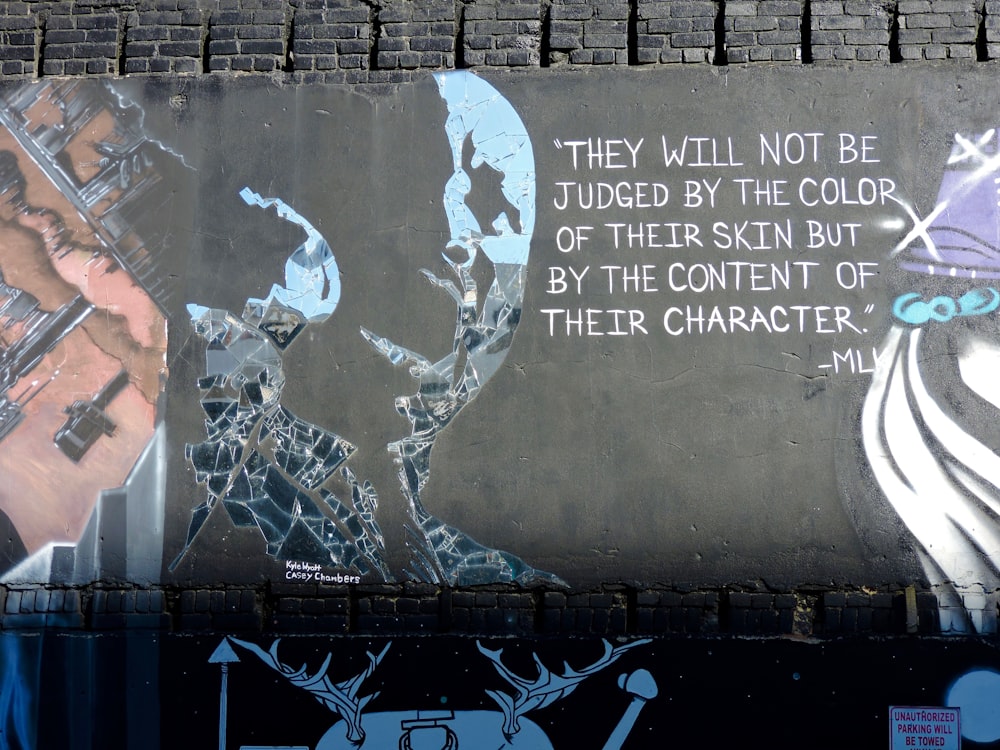
A couple favorite mis-uses and distortions of appropriating MLK is, first, characterizing King as a “passive radical” in order to violence-shame groups or paint a distorted “both sides” false equivalency between right-wing white nationalism and social justice advocates focusing on race and racism, and second, plastering the “content of their character” quotes everywhere to perpetuate the colorblind argument that, in fact, is itself racist.

text
Photo by LeeAnn Cline on Unsplash

Rare is the reference to King who strongly rejected the Vietnam War, but almost entirely absent from the public consciousness in the U.S. is King’s 1967 work, Where Do We Go from Here: Chaos or Community?

Here, King offers his criticism of the standard approach to eradicating poverty (approaches that persist in 2021):

Up to recently we have proceeded from a premise that poverty is a consequence of multiple evils:

• lack of education restricting job opportunities;

• poor housing which stultified home life and suppressed initiatives;

• fragile relationships which distorted personality development.

The logic of this approach suggested that each of these causes be attacked one by one. Hence a housing program to transform living conditions, improved educational facilities to furnish tools for better job opportunities, and family counseling to create better personal adjustments were designed. In combination these measure were intended to remove the causes of poverty.

Wealth and Want

King was confronting that U.S. political will could only admit indirect ways to address poverty—despite, as King pointed out, that more whites than Black people suffered under the weight of economic inequity.

“In addition to the absence of coordination and sufficiency, the programs of the past all have another common failing — they are indirect. Each seeks to solve poverty by first solving something else,” King noted, adding: “I am now convinced that the simplest approach will prove to be the most effective — the solution to poverty is to abolish it directly by a now widely discussed measure: the guaranteed income.”

Not only did King call for a guaranteed income, he asserted the essential need to be direct:

We are likely to find that the problems of housing and education, instead of preceding the elimination of poverty, will themselves be affected if poverty is first abolished. The poor transformed into purchasers will do a great deal on their own to alter housing decay. Negroes, who have a double disability, will have a greater effect on discrimination when they have the additional weapon of cash to use in their struggle.

Wealth and Want

Unlike McChristian and Rachel above, MLK as a progressive, as a Leftist (often slurred as a “communist”), understood the foundational need in a capitalist society that all people have capital:

Beyond these advantages, a host of positive psychological changes inevitably will result from widespread economic security. The dignity of the individual will flourish when the decisions concerning his life and in his own hands, when he has the assurance that his income is stable and certain, and when he know that he has the means to seek self-improvement. Personal conflicts between husband, wife and children will diminish when the unjust measurement of human worth on a scale of dollars is eliminated.

Wealth and Want

But King was profoundly aware of the problems with “minimum” wages, arguing about the guaranteed income:

Two conditions are indispensable if we are to ensure that the guaranteed income operates as a consistently progressive measure.

• First, it must be pegged to the median income of society, not the lowest levels of income. To guarantee an income at the floor would simply perpetuate welfare standards and freeze into the society poverty conditions.

• Second, the guaranteed income must be dynamic; it must automatically increase as the total social income grows. Were it permitted to remain static under growth conditions, the recipients would suffer a relative decline. If periodic reviews disclose that the whole national income has risen, then the guaranteed income would have to be adjusted upward by the same percentage. Without these safeguards a creeping retrogression would occur, nullifying the gains of security and stability.

Wealth and Want

King makes a purely Christian argument about economic policy in a capitalist democracy that should and could center human dignity and equity over greed:

The curse of poverty has no justification in our age. It is socially as cruel and blind as the practice of cannibalism at the dawn of civilization, when men ate each other because they had not yet learned to take food from the soil or to consume the abundant animal life around them. The time has come for us to civilize ourselves by the total, direct and immediate abolition of poverty.

Wealth and Want

The Right is wrong about what it means to be Christian.

The Right is wrong about what makes democracy and capitalism work for people and not against human dignity.

And the Right over the next few days will once again be offensively wrong about MLK.

One-Time
Monthly
Yearly

Make a one-time donation

Make a monthly donation

Make a yearly donation

Choose an amount

$5.00
$15.00
$100.00
$5.00
$15.00
$100.00
$5.00
$15.00
$100.00

Or enter a custom amount

$

Your contribution is appreciated.

Your contribution is appreciated.

Your contribution is appreciated.

DonateDonate monthlyDonate yearly

MLK Jr. Day Reader 2021

Photo by History in HD on Unsplash

From 1984 until 2002, 18 years, I taught high school English in the town and school where I grew up and graduated, moving into the classroom of my high school English teacher, Lynn Harrill, where I had sat as a student just six years earlier.

My first few years were overwhelming and at times terrifying; I taught five different preparations—managing fifteen different textbooks—and several of the classes were filled to capacity, 35 students packed into the room.

Throughout those two decades spanning the 1980s and past the 1990s, I was a student-centered teacher who had a wonderful relationship with my students—lots of mutual love and respect. However, there was always some tension between me and white redneck boys.

Again, these white redneck boys were who I had been growing up, and even the least aware among them likely sensed deep down inside that I knew who they were.

One of the worst days of my teaching career—sitting among having to confront a student gunman and returning to school after three children burned down the school building—included the actions of one white redneck boy.

A significant sub-unit of my nine-week non-fiction unit included walking students through the concept of civil disobedience, starting with Emerson and Thoreau but spending far more time on a mini-unit in Black history grounded in ideas and texts by Marcus Garvey, Booker T. Washington, W.E.B. Du Bois, Malcolm X, and Martin Luther King Jr.

We capped off that unit with Gandhi, but the grounding text of this nine weeks was always King’s “Letter from Birmingham City Jail” paired with different excerpts from Malcolm X.

One day as I was passing out King’s “Letter” (I always provided students their own copies of texts to annotate and keep), a white redneck boy slapped the handout off his desk and announced, “I ain’t reading that [N-word].”

In many ways, this was a defining moment for me as a teacher and a human. I was very aware that I had Black students in the room and that this teenager was much larger and angrier than was safe for me or the classroom of students.

I calmly returned the handout to the desk, my hand firmly on the paper while I leaned toward the student, and I said without hesitation that he would read the essay and that he would never utter that word in class again.

It seems odd to me now, but that is exactly what happened as I continued handing out the essay before we began reading and discussing the essay as a class.

This is no after-school special, and I never had any sort of deep conversation with that student—and I suspect he never changed his beliefs, except keeping his bigotry to himself, at least in my class.

I do suspect that for him and others in the classroom, I was the first white man to take a stand against racism and racist language that they had ever experienced.

It is embarrassing to admit, but that unit was a huge risk for me throughout my 18 years teaching. It even prompted not-so-veiled attacks from local preachers during sermons that my students attended on Sunday mornings (oddly, Southern Baptists seemed very offended by students studying Gandhi, who they dismissed as “not a Christian”).

There are many things I would change about my first two decades of teaching, being charged with the learning of hundreds of teenagers; there are many things I did inexcusably wrong, things for which I remain embarrassed and wish I had the power to return to those moments in order to make amends.

But that sub-unit, and specifically how I taught MLK and what works of his I exposed students to, is important still to me because we did not read “I Have a Dream,” and we did not mythologize MLK as a passive radical, rejecting the whitewashing far too common with King’s ideas and life.

I also exposed students to a wide range of Black writers and thinkers, emphasizing the importance of recognizing Malcolm X and taking his arguments seriously.

None the less, I could have done better—and even today in 2021, King’s life and legacy are woefully mis-served, especially in classrooms (as well as crossing the lips of politicians who cannot even for one day practice an iota of the ideals of King).

Here, then, is a reader for serving King better and expanding the voices and ideas with which we invite our students to engage:

Martin Luther King Jr., “The Drum Major Instinct” Sermon

Final Words of Advice/ “Where do we go from here?” (1967), Martin Luther King Jr.

The Trumpet of Conscience, Martin Luther King Jr.

“Letter from Birmingham City Jail,” Martin Luther King Jr.

Read This Before Co-Opting MLK Jr., Jose Vilson

The Revisionist’s Martin Luther King Jr., “I Have A Dream For Most Of Us,” Jose Vilson

Harlem, Langston Hughes

Let America Be America Again, Langston Hughes

The Forgotten, Radical Martin Luther King Jr., Matt Berman

James Baldwin: “the time is always now”

“Every white person in this country…knows one thing,” James Baldwin (1979) (incl. What Can a Sincere White Person Do? Malcolm X)

James Baldwin from “The Negro and the American Promise”

They Can’t Turn Back, James Baldwin

A Report from Occupied Territory, James Baldwin

“Peculiar Benefits,” Roxane Gay

You Want a Confederate Monument? My Body Is a Confederate Monument, Caroline Randall Williams

Lockridge: “The American Myth,”James Baldwin

If Black English Isn’t a Language, Then Tell Me, What Is? James Baldwin

“The Baldwin Stamp,” Adrienne Rich

Black Body: Rereading James Baldwin’s “Stranger in the Village,” Teju Cole

The Transformation of Silence into Language and Action, Audre Lorde

Bayard Rustin (March 17, 1912 – August 24, 1987): A Reader

The Mis-Education of the Negro, Carter Godwin Woodson

Nina Simone on the Role of the Artist

One-Time
Monthly
Yearly

Make a one-time donation

Make a monthly donation

Make a yearly donation

Choose an amount

$5.00
$15.00
$100.00
$5.00
$15.00
$100.00
$5.00
$15.00
$100.00

Or enter a custom amount

$

Your contribution is appreciated.

Your contribution is appreciated.

Your contribution is appreciated.

DonateDonate monthlyDonate yearly

Republicans Usher in the Land Free from the Truth: Free Speech v. Free Markets

We know of course there’s really no such thing as the “voiceless.” There are only the deliberately silenced, or the preferably unheard.

Arundhati Roy: The 2004 Sydney Peace Prize lecture

Labeled as “surreal” by Emilia Petrarca, Marjorie Taylor Greene (R – Georgia) wore as “censored” face mask while speaking from the floor on Congress.

First, we must recognize that statistically no one in the U.S. has the sort of access to a bully pulpit that a member of Congress has (535 out of 330 million people), and then, we must consider whether Greene is incredibly dishonest, spectacularly ignorant, or both.

After the insurrection at the Capitol by rightwing domestic terrorists supporting Trump—and emboldened by Trump and many Republicans in office—conservatives and Republicans across the U.S. have evoked “censorship,” “First Amendment,” and “freedom of speech” tirades in response to Trump being banned from several social media platforms as well as many Republicans losing followers on those platforms.

Here is the disturbing thing that Greene represents among conservatives and Republicans: There appears to be the same sort of dishonesty/ignorance running rampant because there is essentially no relationship between private businesses and free speech guaranteed in the Constitution since the First Amendment is about the role of government in protected speech.

Let’s not forget very recent history when Republicans and conservatives scrambled to support the right of companies not to serve or even hire LGBTQ+ individuals (recall the wedding cake).

Private companies banning anyone is not an issue of free speech grounded in the First Amendment since government plays no role in that, and (ironically), anyone losing Twitter followers is a consequence of market forces, how the free market works.

In the jumbled surreal-reality of Republicans, it seems they want some entity (the government?) to monitor the free market so that all voices are heard—regardless of truth and irrespective of inciting violence (seemingly now, conservatives support yelling “Fire!” in a crowded theater).

As a writer, I have been submitting letters to the editor and Op-Eds to local, state, and national media for decades; most of those submissions are rejected. Is that censorship? A denial of freedom of speech? A breech of my First Amendment rights?

Of course not.

It is the free market—as right-wingers would say, the marketplace of ideas.

There are some really important and likely disorienting elements to this jumbled message created by Republicans and conservatives.

One seems to be why does Greene (and Trump, et al.) lie and misrepresent to the American public as agents of the government with impunity? In other words, what is the role of truth in governing?

Free speech and the First Amendment have continued to be areas of debate in the U.S. in terms of inciting violence and pornography, and we must admit that free speech is not a clear-cut or absolute thing even when recognizing only the role of government.

The level of lies and disinformation under Trump, I think, now calls for a serious interrogation of what free speech allows in those contexts—especially in terms of elected and appointed members of the government.

It seems obvious that agents of government must not incite violence or promote false information.

When people with power (from the wealthy to police to elected officials, including the president) function above truth and the law, it is unlikely that free speech matters for anyone.

A second element that is being almost entirely ignored because of the lies and ignorance on the Right is the question of free speech and the free market; in other words, we are not confronting the role played by private companies in whose voice is amplified and whose voice is muted or ignored.

Twitter bans and people losing followers on Twitter are not the purview of government, and both exist in the mechanics of the free market—which many of us on the Left have warned are amoral dynamics.

Supply and demand left unchecked has nothing to do with ethical or moral concerns. There is a demand for child sex trafficking, for example, and without government intervention (a moral/ethical imperative), it would flourish within the parameters of those consumers.

Many aspects of the U.S. function this way without being so immediately disgusting and inhuman—and thus, remain unchecked.

Those of us on the Left, as well, recognize the amoral aspect of the market and therefore call for universal healthcare, for example, since market forces are inappropriate for determining who does and does not receive medical care.

Trump sycophants such as Greene are backing themselves into some complicated ideological and political corners since their outrage over social media is challenging the efficacy of the free market (misidentified as free speech because of their dishonesty/ignorance).

While I see no hope that Republicans have any interest in the truth—or freedom of speech—I think that this nonsense from the Right offers yet another opportunity for people in the U.S. to reconsider the relationship between government/democracy and capitalism.

Despite a related lie from the Right, we Leftists are rarely calling for full-blown socialism or communism; we are, however, arguing that far too much of human dignity and freedom is left to the free market—such as healthcare—and the whims of the states—such as women’s reproductive rights.

Should we be concerned that Twitter and Facebook banned Trump, and that Parler was de-platformed?

I suspect we should, but not because these events have violated the First Amendment.

The problem is us and the lack of political will in the U.S. to reconsider our overblown commitments to the free market at the expense of democracy and truth as well as life, liberty, and the pursuit of happiness.

educator, public scholar, poet&writer – academic freedom isn't free