Almost immediately, I noticed some disturbing patterns on social media when the U.S. began directly responding to the Covid-19 pandemic several weeks ago.
The “Covid-19 is a hoax” and “Covid-19 is no worse than the flu” posts on Facebook immediately appeared (and have mostly disappeared), but what is more concerning is that very garbled and oversimplified posts also appeared and continue to flourish.
Ground Zero of garbled and oversimplified social media posts, I think, was arguments over the danger of Covid-19 that focused on death rates (percentage of deaths among those testing positive for the virus). Focusing on this one stat (a complicated data point because it is skewed by if and when people are tested, a serious failure of this pandemic event) greatly misrepresented the why of the unique danger Covid-19 presents.
Most people missed the “novel” terminology (many corona viruses exist, but a “novel,” thus new, version distinguishes Covid-19) and subsequently rushed past the very complex set of reasons this pandemic is not like the flu or other reasons people die daily in the U.S. and throughout the world.
The real threats posed by Covid-19 include the unknown (death rates, who is at-risk, etc.), but also some very significant knowns—likelihood that medical facilities will be overwhelmed, creating greater death rates for Covid-19, the flu, and other situations that normally could be addressed; the complicated and difficult to manage spread of the virus (by asymptomatic people); strategies that work such as “flattening the curve.”
As the U.S. moves into a second month of social distancing, there is more known each day about the virus, and subsequently, there are also more data on how we are managing the virus as well.
Changing information has always been a feature of science and of being evidence-driven. Changing information has always deterred many people from listening to science and evidence-driven policy.
This is a deadly paradox for dealing with a pandemic.
It seems reasonable to acknowledge that science/evidence-denial is incredibly dangerous and inexcusable in a well-informed and so-called advanced society (recognizing that the idealism about the U.S. is not well supported by evidence on lingering inequities).
But a potentially as harmful dynamic is science/evidence evangelism, which is quickly becoming forms of shaming. Two of the most recent forms of shaming concern social distancing and wearing face masks.
As with Covid-19 broadly, the science/evidence on social distancing and face masks is complicated, but slightly different.
Data drawn from cell phones has created a state-by-state and city-by-city ranking of who is practicing social distancing and who isn’t. However, that data exist doesn’t mean that any data set proves what people immediately assume.
Raw movement data by cell phone use doesn’t control for rural versus urban settings, doesn’t control for socioeconomic status of the users (who can and cannot “choose” not to work), and doesn’t control for essential versus nonessential movement.
A common problem in science/evidence is that data can be less valid and credible depending on how that data are interpreted and displayed; also, when messages are made public is incredibly important.
Cell data were immediately used to rank and shame states and cities (thus, this message will likely endure), but once the data and messages gained traction, a more nuanced and less shaming message has emerged:
In cities across America, many lower-income workers continue to move around, while those who make more money are staying home and limiting their exposure to the coronavirus, according to smartphone location data analyzed by The New York Times.
Although people in all income groups are moving less than they did before the crisis, wealthier people are staying home the most, especially during the workweek. Not only that, but in nearly every state, they began doing so days before the poor, giving them a head start on social distancing as the virus spread, according to aggregated data from the location analysis company Cuebiq, which tracks about 15 million cellphone users nationwide daily.
Jennifer Valentino-DeVries, Denise Lu and Gabriel J.X. Dance add:
The data offers [sic] real-time evidence of a divide laid bare by the coronavirus pandemic — one in which wealthier people not only have more job security and benefits but also may be better able to avoid becoming sick. The outbreak is so new that the relationship between socioeconomic status and infection rates cannot be determined, but other data, including recent statistics released by public health officials in New York City, suggests [sic] that the coronavirus is hitting low-income neighborhoods the hardest.
The data are less about compliance and more about socioeconomic inequity and the false (idealized) myth of “choice” in the U.S. That choice is less about inherent character in people and more about privilege and anyone’s birth lottery.
Social distance shaming is rooted in misunderstanding and oversimplifying data as well as careless data displays, such as charts and graphs.
More recently, since WHO and the CDC have begun to re-address guidelines on wearing masks, there is more mask shaming, which demonstrates once again that science and evidence are often complicated, but the media and lay people are apt to rush to oversimplifications, especially those who are science/evidence evangelists.
Similar to the initial message about the dangers of Covid-19 examined in the opening, what I understood about wearing face masks as the pandemic spread in the U.S. was not what most people said then or now; whether or not healthy or asymptomatic people (no evidence of exposure) should wear surgical masks or N95 masks was based on supply (low) and ranking who needed those most (medical workers), not about the effectiveness of wearing the masks.
People who interpreted the initial message as “masks do not protect healthy people” (an oversimplification grounded in truth) eventually recognized the contradiction as that sat against “healthcare workers need masks.”
The shift is now occurring whereby officials appear to be suggesting that everyone wear surgical masks, even prompting guides for making them at home. But the original science/evidence is not being honored in this either, especially as people begin to mask shame in the same ways that they are social distance shaming.
Seeking out the evidence on wearing masks is walking into a topic that may be even more complicated than a pandemic itself, but there is one really sobering fact that gets glossed over time and again:
Surgical Masks
Surgical masks (see Image 1) are loose, single use cloth masks designed to provide protection against large droplets, splashes or sprays of bodily or other hazardous fluids. These types of masks experience leakage around the edges when the user inhales, and do not provide a reliable level of respiratory protection against smaller airborne particles. The primary recommended medical function of these types of disposable masks is for infected individuals who want to decrease the risk of transmitting the disease to others in their vicinity, and they are not a substitute for a respirator mask and their primary function is not to protect the wearer of the mask [emphasis added].
Surgical Mask
Since the U.S. has made no effort to address the supply/need element in access to masks, and since the evidence on wearing basic masks is complicated (above), the move to mask shaming may have very negative consequences such as a false sense of security (prompting more socializing and working against social distancing) and stimulating unhealthy behavior (more face touching, reusing unsanitary masks).
Science and evidence are powerful and essential parts of creating public policy and especially of mandated and voluntary human behavior during a health crisis.
Yet, once again, we have ample evidence that neither the fatalism of denial nor the evangelism of shaming is the proper way to navigate science and evidence because science/evidence is more often than not very complicated and always in a state of evolution.
Heymann said masks could create a false sense of security that could end up putting people at greater risk. Even with the mouth and nose fully covered, the virus can still enter through the eyes.
“People think they are protected when they are not,” he said. “Healthcare workers, in addition to the masks, wear visors too, to protect the eyes.”
Another concern is that people may contaminate themselves when they adjust, remove and dispose of their masks.
Among the pantheon of white-man art, including the Coen brothers and David Lynch for me, the creators of Better Call Saul offer a finely crafted and deeply flawed series that is really hard not to look at and enjoy.
This prequel to Breaking Bad shares many of the strengths (beautifully and finely filmed, nuanced and morally ambiguous characters) and most of the flaws (centering whiteness, ignoring or running roughshod over brown and black characters) with its source. As I am nearing the end of the series on Netflix (with the newest season on AMC), I often find Saul better than the original, in part because I think it unpacks extremely well being a lawyer against the moral ambiguity of many compelling characters (even as I have no real expertise in whether or not the series captures the law in any sort of valid way).
Saul fits into my fascination with moral ambiguity, notably Andy Sipowicz in NYPD Blue as one example. But I have to admit that I am primarily drawn to how well made the series is; as TV, it is just damned compelling to look at. (I often find myself seeing comic book panels, still camera shots that do as much as the acting or dialogue.)
As I noted above, I have this affection for Lynch and the Coen brothers, although I would put the creators of Saul closer to the latter.
Well into my 20s and my young teaching and writing career, I was an uncritical (and self-contradictory) devotee of a sort of John Gardner “craft idealism” that had too much grounding in modernism and white-man art arguments that posed craft over (for example) diversity of characters and voices in the name of “universal”—a humanities/fine art veneer like “objectivity” to protect the status of white men.
In those formative years, I wasn’t paying very close attention to the tension among my love and admiration for Ernest Hemingway, Alice Walker, John Gardner, Ralph Ellison, e.e. cummings, Langston Hughes, and Adrienne Rich (just to offer a brief array).
I recognized some of that tension directly, then, in Season 3, Episode 10, Lantern, of Saul, when Kim Wexler, hyper-ambitious romantic partner of Jimmy/Saul, is left injured after a car accident.
Wexler, distracted by her newest client’s case while driving on a dangerous highway, crosses three lanes of traffic and crashes into rocks on an embankment. After returning home battered and with a broken right arm, the law office assistant, Francesca, brings Wexler her law files and has rearranged her schedule so that Wexler can salvage a deadline with the new client and maintain her commitment to her main client.
We watch as Wexler immediately drops into her Type A self-sacrificing persona. But Wexler pauses, freezes in fact, before telling Francesca to cancel the new client rescheduling and push forward her commitments with her main client.
The next time we see them together, Francesca is on her cell talking to the new client, and recommending a different law firm, while Wexler grabs a couple handfuls of DVDs.
Later when Jimmy/Saul returns to the newly relaxed Wexler on her couch, Kim asks Jimmy what he wants to watch next, handing him Monty Python before musing about watching To Kill a Mockingbird, “again.”
Jimmy and Kim then have what I imagine to be a conversation with a much different meaning than intended.
In the popular consciousness, the film Mockingbird is an iconic moment for the actor Gregory Peck but also a window (like the novel it is based on) into the white savior narrative that few in the U.S. are willing or able to confront.
There is much to unpack in Wexler saying she was motivated as a child to be Atticus Finch, but to the show’s credit, Kim does make fun of her idealism when she responds to Jimmy’s dig about becoming a lawyer to change the world; she acknowledges she is working herself almost literally to death to make a successful local bank into a successful regional bank.
Again, where I think Saul excels is in the many types of lawyers the show explores, knocking the sort of idealistic and hokey shine off the Finch iconic lawyer myth.
Yet, Saul for all the craft and care isn’t much different than Mockingbird for its inability to avoid possibly the most common flaw in pop culture in the U.S., centering whiteness.
While Walter White in Break Bad can be seen as something of a twisted Finch white savior, Jimmy/Saul is certainly not that, but remains the center of a morally ambiguous and morally corrupt world where lawyers, police, and the Mexican cartel all intersect in ways that do not leave anyone in the best of light—even Jimmy/Saul’s Finch-like brother, Chuck.
By comparison, Saul is far more aware of and attentive to black and brown characters; on balance, characterization, along with camera work, is an admirable craft in both series, I think.
The Salamanca/Fring dichotomy is fascinating and tense even as those who watched Break Bad know where these men’s lives are leading.
Saul is rich with allusion and references as yet another hallmark of craft-focused art; yet, even as we may enjoy and value this craft, I think we must remain vigilant to set that aside and recognize that while care is taken in many of the elements of making a series, there is enough carelessness to take the series to task.
Mike and Nacho are fascinating ancillary characters (although many of these types of characters often feel as important as Jimmy/Saul)—the former yet another centered white man and the latter, a powerful example of the type of diversity that deserves more than it receives.
With Saul, I am torn, but I think it unintentionally makes a case against itself (the use of Mockingbird, for example) that suggests centering whiteness is a feature and a flaw of this sort of film-making craft, but to acknowledge that doesn’t mean this flaw has to be fatal.
For nearly twenty years now, I have been examining misconceptions about and misrepresentations of “scientific” as it relates to what evidence supports teaching practices and school policy. The problem that I confront over and over is complicated since scientific evidence absolutely does matter in making large and small educational decisions, and educators and policy-makers must remain vigilant in monitoring who determines what “science” matters in those processes.
For example in the early 2000s, the National Reading Panel as a major component of No Child Left Behind was charged with examining the scientific evidence behind how to teach reading. Along with the problems exposed after NRP released their findings, I raised red flags about handing over what science matters from disciplinary structures to bureaucratic/political mandates.
At least one concern raised about the conclusions of NRP is that this bureaucratic body made a contested decision about which studies met the bar of “scientific,” a debate that has existed for some time in academia and research broadly as well as in each discipline.
For the most part, NRP’s decision does reflect a traditional bias for quantitative research and experimental/quasi-experimental methods, but that decision effectively erased a huge body of evidence about how to teach reading.
More recently, I have confronted a similar dynamic in the “science of reading” movement. With the release of a policy statement attempting to call for resisting the problems with both the media narrative and the state-level reading policies that narrative is driving, many of the challenges to the policy reflect why debates around “science” are doomed regardless of anyone’s intent.
First, “science” is a term used in many different ways, particularly important is to recognize that scholars and scientists often mean something quite different than the general public, the media, or political leaders.
I show students the documentary Flock of Dodos, a rambling film that explores the incessant debate over teaching evolution in public schools that does an excellent job exposing the really jumbled communication among evolutionary scientists, the media, and the public.
For students, I ask them to consider people who say they do not “believe” in evolution because it is “just a theory.” We unpack both the inappropriate verb (“believe” is incompatible with science; faith v. empirical evidence) but also that the general public confuses “theory” with “hypothesis,” which is an important distinction for scientists (similar to the correlation/cause confusion).
In the documentary, in fact, the scientists admit that “fact” is a better word than “theory” for discussing evolution with the lay public because a scientific theory is the conclusion made from the scientific process and the accumulation of evidence, proof.
Next, however, much that humans know about the world and human experience is still being examined; therefore, most scientists see “facts” as ways to guide us in any moment while also leaving the door open for more evidence, some supporting what we know or some that may change our knowledge base in small or even significant ways.
Evolutionary science and climate change science are extremely compelling bodies of science, but neither is likely finished, or settled. Science, in fact, is buoyed in great part by those who are willing to continue to test and replicate the science most of them are comfortable with extolling as “fact.”
This nuance is typically too complicated for the lay public, resulting in some who see science as the fist of God and some who think “you can make research mean anything.” Both extremes are harmful for science and humanity.
My concerns about the “science of reading” narrative and the resulting reading policy being considered and adopted by states are that the narrative itself makes a case for a far too narrow view of “science” (similar to NRP, which advocates and the media routinely cite) and wield “settled” in ways that remind me of how people in the South reference God and the Bible to shut down anyone challenging authority.
One aspect of the current Covid-19 pandemic, then, that I have been following is how the media, political leaders, and the public have interacted with the science of medicine during the U.S.’s response to this health crisis.
Not insignificant, as one example, in this situation is the governor of Georgia two months into the spread of the pandemic in the U.S. saying that he just learned in the last 24 hours that people who are asymptomatic can spread Covid-19, something that has been widely reported in media.
Here are some ways that the Covid-19 pandemic offers lessons on “science”:
The evolving official messages (WHO, CDC) on people wearing face masks reflect that science is often complicated, but that the media and political leaders rush to oversimplify. With face masks in short supply in the U.S., the initial message suggesting that healthy people not wear masks reflected making decisions based on the relationship between supply and demand—not that masks made no difference for healthy people (although if you read carefully, the evidence about face mask effectiveness is far from settled and often contradictory). As WHO and the CDC change their recommendations, people, I think, will see “science” as arbitrary, missing the context for the initial and revised recommendations.
State and international comparisons of data have been a powerful lesson about how data are gathered, how any statistic is calculated and defined, and how data are displayed on charts and graphs. Rates and percentages have been tossed around in ways that are mind boggling and disorienting. I highly recommend this tutorial for navigating statistics and graphic representations of that data. I also suggest taking a critical view of the recent cell phone data used to identify which states are complying with social distancing. Pappas warns “the numbers should be taken with a grain of salt,” after sharing: “‘Travel distance is one aspect, but of course people can travel far without meeting a soul or travel 50 feet and end up in a crowd — so we know that the real world picture can be quite complex,'” Waller noted.”
How Covid-19 is spread, how vaccines and tests to detect viruses are created and implemented, how different viruses can or cannot be compared, and how any virus remains active on surfaces and in changing weather have all been very complex and much debated topics in the media—reflecting the importance of how the media report complicated scientific information. Science is often held hostage to the quality of the reporting, and journalists tend to be ill equipped to understand any and all complex fields of specialization.
Nothing new, of course, but the Covid-19 pandemic emphasizes the importance of relying on credible sources and information outlets and also the problem with social media and meme culture that allows the spread of easily disputed false information. With the rise of Trump and this health crisis, however, at least there are far more opportunities for people accessing fact-checking web sites.
In real time, we are witnessing where compelling science intersects with science that is in-process, nowhere close to settled. The Covid-19 pandemic should teach us that science is incredibly important while also being imperfect and often inadequate. Nothing, not tests or vaccines, is 100% despite some wanting science to be black-and-white in its conclusions.
Another lesson is that the relationship between experts (academics, scientists, doctors) and the lay public as that is facilitated by the media often works in ways that detract from the potential for science to serve us all well.
Covid-19 is a life-or-death matter, yet even with that urgency, ultimately we must acknowledge that science is not a hammer, but given the skeptical respect and space it deserves, science could be our best opportunity for a better world.
While this poetry exchange remains anchored to the dead-white-man problem with the canon many of us have experienced in formal schooling, I think it also speaks to, when allowed, that poetry is a genuinely powerful and relevant human form of expression that is more often than not harmed by traditional teaching.
National Poetry Month, April 2020, falls in the midst of a world-wide pandemic that has disrupted almost all formal schooling across the U.S. and much of the world, but social media suggests that poetry not only persists, it thrives.
Poet Tara Skurtu, for example, launched the International Poetry Circle through her Twitter account, and the response from poets video recording poetry readings has accelerated beyond her capacity to manage them.
When given the opportunity, poetry is its own best teacher, and when readers are allowed, poetry matters.
Even though I came to recognize my own calling and journey as a poet during my first year of college, I was during that same period having a terrible experience with Emily Dickinson, who I loathed because of formal schooling but came to love many years later as a teacher while exploring her life and work on my own.
By my junior year of college, I had made the transition from considering a major in physics or architecture to committing to English education. It was a hard and long journey for me to find my life in words because schooling was often in my way.
I entered teaching high school English determined to teach well, but also determined to open the door to literature and writing for my students in ways that weren’t often allowed for me (except for the occasional teacher who was working against the traditions of schooling).
The two seemingly endless challenges I faced, however, were that my own early efforts at teaching well proved to be as counter-productive to fostering a love of reading and writing as so-called traditional methods and that students hated, for example, writing and poetry so deeply because of their experiences over nine or ten years I was facing the most uphill of uphill battles.
I taught Albert Camus’s “The Myth of Sisyphus” for many years in conjunction with his The Stranger; I also had a poster of Sisyphus hanging on my classroom wall.
Like Sisyphus I taught poetry each year with good intentions and great care, only to have the students remain stoically anti-poetry.
Teaching poetry was my rock, but I was not happy.
Then on Twitter this morning, I was reminded of when my teaching poetry turned a corner:
Eventually, I shifted my entire poetry unit, spanning a quarter of the academic year, to a series of lessons grounded in the lyrics and music of the Athens, Georgia based alternative band R.E.M. And I discovered that my students were drawn to the poetry of James Dickey, who at the time taught at the University of South Carolina.
In the late 1980s, our high school was destroyed by arson, and once the school was rebuilt, we made a large print of Dickey’s “For the Last Wolverine,” had Dickey sign it, and hung it prominently in the entrance of our new library.
Dickey himself was from Georgia, and I think students found his rural poetry set in nature and dealing with animals concrete and accessible. He was very readable and students tended to feel a sense of comfort with their understanding of these poems.
Although Dickey, like many white men of the twentieth century, poses problems as a flawed man, I will always have a warm place in my teacher heart for how my students embraced these poems; we had many good days reading and discussing these poems by Dickey (along with “Deer among Cattle” and “For the Last Wolverine”):
There is a complicated paradox to formal schooling since the structure is an ideal way to bring young people into the beauty and wonder of language, but the demands of mass education for structured outcomes tend to ruin those experiences with beauty and wonder.
And despite having similar problems as the dead-white-man tradition of schooling, social media shows us that poetry links us, poetry can stabilize and soothe us when the world is too much with us.
If and when we return to some brave new world on the other side of the Covid-19 pandemic, something we will then call “normal,” I hope those of us who are charged with teaching language and poetry will be able to hold onto the beauty and wonder of poetry in ways that guide us as we invite students to join in.
I think that when I read Dickey’s poems aloud—”I wave, like a man catching fire”—just as when I read Faulkner aloud, there was something about my deeply Southern voice and Dickey’s very Southern poetry that resonated with my Southern students.
Poetry as us, us as poetry.
I miss those days, and regret it took me several years to allow those times that now sit in my heart fondly.
Most of my life, I have been an outside person, but never much of a nature person. I am drawn, you see, to the sun more so than the natural world because, in part, I am allergic to much of that natural world.
I have been thinking a lot about this during the current Covid-19 pandemic and the expectations of social distancing and staying, mostly, at home (which means indoors).
My childhood throughout the 1960s and 1970s occurred in the South where my working-class parents practiced under the expectation that children played outside if the weather in any way made that possible. In fact, my sister and I gleefully raced outside much of our childhood.
I recall very fondly playing pick-up sports in the large field near our rented house in Woodruff, South Carolina (the field on the property of the adjacent junior high school) and the variety of make-believe adventures we neighborhood children constructed in the large field on the other side of the house that stored giant mounds of gravel.
Once we moved to the house my parents built on the town golf course, Three Pines, I was ten and soon found refuge in the huge expanse of woods surrounding our large lot as well as spending a great deal of my life playing golf or outdoors pick-up basketball.
My entire adult life has been spent as a recreational cyclist, riding for many hours each week on the roads and trails around upstate South Carolina and the mountains of North Carolina.
One of the great ironies of my life is that when I was a child my parents often wanted to go driving in the mountains of NC (along the highway where my parents spent their secret honeymoon after a hushed marriage at the courthouse), but I fought these trips with the sort of pettiness children excel in showing; as an adult, I have ridden my bicycle thousands of times along those same roads.
It is in my cycling life, I think, that I can best describe the dichotomy of being an outdoor person but not a nature person.
One of the more common cycling loops we did for many years throughout the spring (and more) included climbing up Hogback Mountain near Tryon, NC. The climb is anywhere from 3-5 miles of climbing depending on the turn-around point (and the paved road has been extended over the years of doing this ride).
Once just before starting the ride with a cyclist I hadn’t done the climb with before, he said that he loved riding Hogback because of the view at the top. I immediately said, “What view?” You see, I really never saw the climb as a way to see the view or take in the surroundings because it was a physically and psychologically demanding feat.
But I worshipped every chance I had to be outside, to be in the sunshine for hours at a time.
With our brave new world of social distancing and commitments to staying at home, I have had an unexpected shift in how I view the natural world.
A week or so ago, I noticed the large amount of wisteria in the area. I wrote a poem about that, but I have continued to see and think about the blossoming of spring all around us while most of us have our heads and our minds focused on an invisible virus, a pervasive threat that is not just beyond our senses but may actually disrupt our senses of taste and smell.
As with forms of socializing, the recommendations and mandates restricting groups to fewer than 3 people have brought to an end group cycling, something that has been at the center of my adult life as well.
So my lifelong need to be outside has taken on a new form and a new importance.
Each day, a friend and I schedule one outdoor activity, road cycling, mountain biking, or a walk/hike. Instead of a hobby or a form of leisure, these have transformed into a necessity, an elixir against the terror of the pandemic and the claustrophobia of social distancing and staying home.
But as the world wakes up around us this spring, the world available to us is shrinking. In my home state, all the state parks have closed—no hiking or mountain biking trails left open.
Since road cycling alone or in pairs is less safe than larger groups, mostly, we had been mountain biking and walking/hiking a great deal. And all while flowers and trees are bursting to life and everything has a dull yellow layer of pollen announcing the coming of spring to the South.
Wisteria and Dogwood trees are going about their usual business, oblivious to Covid-19, social distancing, or stay-at-home mandates. Pollen dusts everything in sight while we sit inside staring at our variety of screens.
Nature without the interference of humans will persist as nature. In Margaret Atwood’s post-apocalyptic Oryx and Crake, Snowman, believing himself the last human, witnesses just that:
The buildings that didn’t burn or explode are still standing, though the botany is thrusting itself through every crack. Given time it will fissure the asphalt, topple the walls, push aside the roofs. Some kind of vine is growing everywhere, draping the windowsills, climbing in through the open windows and up the bars and grillwork. Soon this district will be a thick tangle of vegetation. If he postponed the trip much longer the way back would have become impassable. It won’t be long before all visible traces of human habitation will be gone. (pp. 221-222)
Early in the move to social distancing, we drove the hour to Dupont forest to hike. The hiking trails to waterfalls are always popular, but on this trip, the crowd was disturbing since we were confronted with a dilemma—the need to be outside and our commitment to avoiding large groups of people, particularly strangers.
Regretfully, this experience was an omen of the new restrictions that now ban anyone hiking those exact trails, just as most of our mountain biking trails are now officially closed.
Covid-19 is exposing some of our greatest urges and weaknesses as humans. We desire community, socializing, but we are often our own worst enemies, especially when the greatest threat to our safety is unseeable and each other.
For me, the new reality has forced me to rethink my relationship with the outdoors I have cherished my entire life, a new recognition of the natural world.
As we were cycling laps around a park in my hometown, a friend and I talked about my new fascination with wisteria and we both acknowledged not really knowing the names of trees and plants all coming to bloom around the lake at the center of this park.
It seems a different kind of important now to see the various plants and trees individually, and to know their names.
That day we were climbing Hogback I recall now that I did pause at the top, I did look at the view, and I had to agree it was more than worth my time to not just look, but really see the view from above the trees and across the valley.
The release of the joint statement (National Education Policy Center and Education Deans for Justice and Equity) on the “science of reading” version of the current Reading War held, I hoped, great promise for at least slowing a very harmful process. I also briefly crossed my fingers that the statement could ease some of the discord and help key figures in the debate find that there is more common ground than disagreement.
I commented several times on the post and even offered a discussion by email. Willingham did respond to my comments and the exchange was civil, but alas, fruitless.
The crux of Willingham’s concerns about the statement seems to be:
I think the statement is pretty confused, as it conflates issues that ought to be considered separately. This statement is meant to be about the science of reading, so much of the confusion arises from a failure to understand or appreciate the nature of science, how basic science applies to applied science, and the scientific literature on reading.
This is a misreading of the policy; I think that misreading is in part prompted by Diane Ravitch’s framing of the statement with “There is no Science of Reading,” which Willingham references in his first paragraph.
To clarify, Ravitch’s framing is misleading, and Willingham has failed to grasp the purpose of the statement, directly identified by NEPC:
All students deserve equitable access to high-quality literacy and reading instruction and opportunities in their schools. This will only be accomplished when policymakers pay heed to an overall body of high-quality research evidence and then make available the resources necessary for schools to provide our children with the needed supports and opportunities to learn. This joint statement from NEPC and the Education Deans for Justice and Equity provides guiding principles for what any federal or state legislation directly or indirectly impacting reading should and should not do.
This statement is a policy statement that raises a long-overdue red flag about a complicated process: Mainstream media have created a narrative that teachers have failed to use the “science of reading” because teacher education has failed to teach that, preferring balanced literacy instead. This narrative also claims the “science of reading” is settled and that the research base justifies systematic intensive phonics instruction for all students, a claim being used to endorse and implement misguided reading legislation across the U.S. [1]
Willingham has missed that nuanced and complex focus of the statement and spends the blog post mostly challenging issues that simply do not exist in the statement itself, primarily complaining that the statement has a fundamental misunderstanding of “science” (“The distinction between basic and applied science ought to be fundamental to any discussion of the science of reading”).
Since a key element of the statement raises that exact issue, this extended complaint is itself, to use Willingham’s language, “confused.”
A couple of important points lie beneath the unfortunate consequence of the topic of teaching reading continuing to be a fruitless debate (what the statement is explicitly seeking to end).
First, the teaching of reading as a subset of the field of education has historically and now currently been over-run with epistemic trespassing; psychology, economics, and political science routinely encroach on education as if the discipline itself has no scholarship or scholars.
Some of this trespassing has to do with disciplinary hierarchies linked to distinctions between quantitative and qualitative research (often veneers for academic sexism), but some of the trespassing is simply disciplinary bullying.
While I completely agree with Willingham that anyone making claims about the “science of reading” should understand “science,” he has failed to acknowledge an equally important requirement—understanding reading and literacy.
As Nathan Ballantyne examines carefully, having robust and critical skills in one field, psychology, does not necessarily equip a scholar for transferring those skills to another field, especially (as Willingham notes himself) into a field grounded in real-world practice such as education, teaching children to read.
Willingham and Mark Seidenberg, both psychologists, are two of the main scientists cited in the “science of reading” narrative in mainstream media, and two of its defenders (although as scholars, they both tend to offer far more caveats and nuance than advocates who are journalists).
They, however, lack a background in teaching literacy, and while their research is quite valuable, as the statement notes, narrow types of “scientific” are ultimately incomplete evidence for day-to-day teaching.
No one is arguing there is no “science of reading,” but the ham-fisted claims about “settled” science and the misuse of “science” to support flawed reading policy are inexcusable.
But here is a much more problematic part of this continued debate. Willingham represents not only epistemic trespassing, but also has explicitly discredited all educational researchers, suggesting journalists as more credible:
Believing something because someone else believes it rather than demanding and evaluating evidence makes you sound either lazy or gullible. But we yield to the authority of others all the time. When I see my doctor I don’t ask for evidence that the treatments he prescribes are effective, and when an architect designed a new deck for my house I didn’t ask for proof that it could support the weight of my grill and outdoor furniture. I believed what they told me because of their authority.
I think education researchers don’t speak with that kind of authority and (apparently unlike Sanden) I don’t think we deserve it. I can point to two key differences between a doctor (or architect, or accountant, or electrician, etc) and education researchers.
He adds later, “Anyone can take the title ‘education researcher.’”
As someone with an EdD and who straddles two different fields, education and English, I can assure you that this sort of disciplinary bullying is still common in the academy. Education is routinely dismissed as mere occupational preparation, and English is framed as one of the impractical fields in the impractical humanities.
This sort of disrespectful finger pointing, I think, must be unmasked since any time someone points a finger, several are pointing back as well.
In modern times, the science of psychology is facing a crisis. It turns out that many studies in psychology—including many highly cited studies—do not replicate. In an era where news is instantaneous, the failure to replicate research raises important questions about the scientific process in general and psychology specifically. People have the right to know if they can trust research evidence. For our part, psychologists also have a vested interest in ensuring that our methods and findings are as trustworthy as possible.
Psychology, then, like economics feels justified trespassing on other fields, possibly to deflect from the needed critical inspection of their own field. It seems one reason psychology has a crisis in the quality of their science is a pattern of defensiveness:
When findings do not replicate, the original scientists sometimes become indignant and defensive, offering reasons or excuses for non-replication of their findings—including, at times, attacking those attempting the replication. They sometimes claim that the scientists attempting the replication are unskilled or unsophisticated, or do not have sufficient experience to replicate the findings. This, of course, might be true, and it is one possible reason for non-replication.
I have been in the field of literacy for 36 years, and in academia for 18 years. I am quite certain there are no pure fields and no fields that can be discounted as cavalierly as Willingham does about “education scholars” and education research (I recommend Bracey on the problems with educational research and how it is interpreted, by the way).
I also have directly admitted that epistemic trespassing is always problematic, but many topics may in fact necessitate such trespassing. Understanding and teaching reading does in fact benefit from a wide range of disciplinary evidence (as the statement asserts).
But no topic benefits from academia’s most petty traditions, including disciplinary hierarchies and bullying.
If expertise in science deserves respect (and it certainly does), then expertise in literacy and teaching reading also deserve respect—and neither should be handed over to journalism as the arbiter of those fields or to politicians who have the power of policy.
Those of us in the academy who often are discounted for being in an Ivory Tower should have higher standards for our own behavior, but there is much work yet to be done to eradicate hierarchies and pettiness even among the so-called well educated.
Let’s keep in mind that although getting the science right is certainly important, we are in this to get the reading right, and that is the focus of the statement that some are misreading.
[1] See the following to help construct the narrative:
Schwartz, S. (2019, December 3). The most popular reading programs aren’t backed by science. Education Week. Retrieved from https://www.edweek.org/ew/articles/2019/12/04/the-most-popular-reading-programs-arent-backed.html
About a decade ago, I accepted an invitation from the ACT to review a set of new test questions for their reading section. As a career-long anti-standardized test advocate, after talking with several colleagues, I accepted that an inside view of the process would help me better confront the problems with tests such as the ACT and the SAT.
The process included receiving the test section, taking the test myself (and taking notes), and then being flown to Iowa City to attend a workshop where we walked through each question to help the test designers revise and edit so this section could be added to the implementation of the test.
Some important take aways included discovering that the test designers were almost exclusively experts in test design (not reading or literacy) and confirming that “good test questions” were mostly about if the question creates “spread” (a range of correct and incorrect) in the data and not if the question is a valid assessment of reading ability (whatever that is).
This experience came to mind when I ran across this on Twitter:
This is the remote reading lesson I taught to my kindergartner yesterday. I am a Pulitzer Prize-winning writer, and I could not correctly identify the “main idea” in this passage — though the instructions assured us it was in there. Can you find it? pic.twitter.com/QxNDwvMlcA
A well-educated adult struggling with a kindergartner’s worksheet also reminds me of “Sara Holbrook, the writer who couldn’t answer test questions about her own work,” covered by Peter Greene.
While I think we may need to extend some grace to the teacher who sent this work home during a pandemic, I also think we should confront that this is a quite common way to approach reading and teaching reading—common ways that are deeply flawed.
Both the kindergarten homework and the author puzzled by standardized test questions reflect reading instruction and assessment that are skills-driven—framing the holistic act of reading as a collection of identifiable reading skills such as “main idea.”
A skills approach to teaching and testing reading tends to focus on decoding (phonics), vocabulary, prior knowledge (content), and an array of reading strategies (identifying main idea, predicting, context clues, etc.).
While literacy teachers and scholars tend to agree that these all are valid elements of reading, the debate lies in whether or not teaching and testing them in isolation are valid reflections of the whole act of reading.
The skills approach has some practical advantages in whole-class formal schooling, especially when classes include 25-35 students and when thousands of students are being tested.
In other words, a skills approach is efficient (easy to manage as instruction, and quick and cost-effective as assessment) and it also lends itself to a teacher-centered, authoritative mode of teaching (someone in authority determines the answers, and by their authority, those answers are “correct”).
The skills approach during early literacy development also feeds well into the New Criticism norm of text analysis that is common in middle and high school (re-branded under the Common Core as “close reading”). Reading assessment in standardized testing requires that “right” answers exist neatly in any text and that a systematic form of analysis lends itself to identifying that “right” answer.
But, as the kindergarten and published author examples above demonstrate, the skills approach and the “right” answer view of texts are deeply flawed, and likely work against fostering students as eager, independent, and critical readers.
No sophisticated adult readers sit down to answer a set of multiple-choice questions about a text they have read once they are finished. Those of us who pleasure read are likely to do almost nothing once we have read, or we eagerly find other people who have read the text so we can discuss the experience.
And those conversations are rarely punctuated with “main idea” or “theme,” but mostly about how we felt about the text and all the connections we noticed with our lives or other experiences we have had with all sorts of art—other texts, movies, music, etc.
Here, then, are a few ways we should change how we teach and assess reading, especially with young students.
First, in kindergarten, our focus should be far less on skills and mostly on fostering eager readers. Frankly, there is no urgent need for children this young to correctly interpret any text.
Reading to beginning readers and inviting them to have a wide range of emotional and text-based responses (mostly free of evaluating them for being right or wrong) should replace a skills approach in kindergarten (and likely through the first three or four years of school).
Gradually, we should move toward helping students navigate text in ways that improve their ability to gain valid conclusions from that text, keeping in mind that “meaning” isn’t necessarily fixed and in many cases may be more about contested meaning, not one right answer.
Skills approaches to reading can mostly be justified as efficient, but seeing reading as a set of discrete skills and strategies is, none the less, not reading since it is a holistic act.
As I have noted before, for example, people have large vocabularies from reading extensively, but learning a bunch of isolated vocabulary doesn’t necessarily make a person highly literate. We too often flip the value and consequences of the whole act of reading and identifiable reading skills and strategies.
Next, we must be careful not to teach or test skills for the sake of those skills, but to always keep our focus on the whole text and the reader’s reading experience while acknowledging that skills and strategies are working together in the process of making meaning and reaching critical conclusions about the text.
For example, the kindergarten worksheet is having children find “main idea” as if that is a reasonable or authentic goal (it isn’t) instead of helping students come to understand that text has large meaning (such as main idea and theme) that can be justified through smaller elements in the text (supporting ideas, literary and rhetorical techniques).
Asking students “What do you think is important about this text?” (Or “What did you enjoy in this text?”) is a much better approach that can be followed by “Why do you think that?” (moving them to offer textual support). Here, we are starting with the student (not some skill or predetermined “right” answer) and still fostering careful and purposeful approaches to text.
Finally, the big picture problem with these examples, and why a skills approach is common in the teaching and testing of reading, is that we have created teaching and learning conditions that are counter-educational for literacy growth.
We have chosen efficiency over authentic literacy in the U.S. because we refuse to invest in teaching and learning conditions (low student/teacher ratios, fully funded classrooms and materials) that would support effective teaching and rich learning by our students.
Skills approaches to reading are efficient and manageable, but as the kindergarten example above shows, they simply are not reasonable or authentic.
While I question the periodic cries that the U.S. has a reading crisis, I can attest from 36 years of teaching that we do far too often make young people hate to read—and there are tragic consequences to misreading the main idea about reading in schools.
For 36 years now, I have been teaching people to write; that journey is a large subset of my own being and becoming a writer, an experience that is captured well in an old Nike poster I used to hang on the wall of my high school classroom, proclaiming “There is no finish line.”
For the last decade-plus, I have taught first-year college students to write. While I am teaching writing, however, I also am teaching young people how to do college, how to make the important transition from being a student to being a scholar.
Part of that work is unlearning bad habits from high school embedded in traditional approaches to writing essays.
Here is one of the worst: Many students come to college having followed a narrow writing process in which teachers require students to submit a one-paragraph introduction with a direct thesis statement. Once approved, the student is then released to write an essay that fulfills that approved essay thesis.
This instills in students two incredibly misguided practices. One is writing with a level of certainty that an 18-year-old has yet to reach (particularly on topics about which they have only second-hand knowledge); and another is failing to see drafting and writing as an act of discovery, as a journey to understanding ideas better.
Neither of these lessons from high school serve young people well in their quest of becoming more educated, being a scholar. Scholarship and deep understanding of a field or discipline comes mostly from interrogating ideas, not from grand pronouncements.
Knowledge is living forest; dogma is a rigid stone slowly wearing away to nothing in its resistance to the elements.
This also comes into play when anyone is trying to understand a situation outside their own areas of expertise. As Ballantyne explains about epistemic trespassing:
First, the intellectual characters of trespassers often look unsavoury. Out of their league but highly confident nonetheless, trespassers appear to be immodest, dogmatic, or arrogant [emphasis added]. Trespassers easily fail to manifest the trait of intellectual humility and demonstrate one or another epistemic vice (Whitcomb et al. 2017, Cassam 2016). Second, it’s useful to distinguish between trespassers holding confident opinions and investigating questions in another field [emphasis in original]. I assume it can be epistemically appropriate for people to look into questions beyond their competence, even when it would be inappropriate for them to hold confident opinions.
This is a key distinction (arrogance v. modesty) for an enduring question in the U.S., one that has remained at the forefront of public and political debate since at least the 1940s: Why are students not learning to read?
If we are going to focus on asking questions and not making grand pronouncements, we probably should first interrogate the question, and confirm whether or not students are learning to read in reasonable ways and when they genuinely need to read independently.
Here we have a serious problem because at no period in the U.S. has anyone pronounced reading achievement to be satisfactory; thus, the somewhat bell-shaped curve of reading achievement among school-age students could very likely simply be normal.
Yet, most of us view education as a 100% attainable venture—all students can and should learn to read by X age. This is a valuable ideal, but it certainly isn’t a reasonable measure for any sort of accountability (see the disaster that was No Child Left Behind).
We are left then with an enduring question that I think is valid and worth considering: Why do some students not become eager and critical readers at the same rate as most of their biological peers?
Data for many decades have shown that all sorts of achievement gaps, reading included, are strongly correlated with the socioeconomic status of any student’s parents, home, and community as well as the educational attainment of the parents (notably the mother). [Every administration of the SAT reflects those patterns, for example.]
Especially over the past forty or so years, however, emphasizing the correlation between inequity and academic achievement has been discounted with making “excuses.” Public and political concern for any problem seeks to find individual causes to blame, but Americans tend to balk at systemic explanations for negative outcomes.
When the U.S. declared a reading crisis in the 1940s during WWII, many immediately blamed progressive education, then strongly associated with John Dewey. But there were three practical problems with that blame.
First, as Alfie Kohn has explained, Dewey’s progressive education has never been implemented on any wide scale in the U.S. Despite mainstream arguments to the contrary, formal education in the U.S. has almost always been primarily conservative and traditional.
1. Not many men in the army now have been taught by these newer methods [emphasis in original]. Those few come for the most part from private or highly privileged schools, are among those who have completed high school or college, and have no difficulty with reading.
2. While so-called “progressive” schools may have their limitations, and certainly do allow their pupils to progress at varied rates, above the second grade their pupils consistently show superior ability in reading. Indeed, the most eager critics have complained that these children read everything they can find, and consequently do not concentrate on a few facts. Abundant data now testify to the superior results of purposeful, individualized reading programs [emphasis in original].
3. The reading skills required by the military leaders are relatively simple, and cause no problem for normal persons who have remained in school until they are fourteen or fifteen. Unfortunately the large group of non-readers are drop-outs, who have not completed elementary school, come from poorly taught and poorly equipped schools, and actually represent the most conservative and backward teaching in the United States [emphasis in original]. (pp. 240-241)
Third, and this is possibly the most important point for understanding our current reading crisis, many students were unsuccessful in situations where educators claimed to be practicing progressive education, but in fact, were not.
First, Dewey tended to offer philosophical and theoretical parameters for teaching, but refused to offer models and never templates or programs. This made, ironically, a practitioner of pragmatism (Dewey’s philosophical roots shared with William James) quite impractical for day-to-day teaching and the running of schools.
William Heard Kilpatrick, however, seized the moment and packaged the project method, which did find its way into schools, often ones that claimed to be progressive.
Here comes the real but complicated problem.
In 1931, LaBrant (the subject of my dissertation and a devout Deweyan progressive) launched into the use of the project method in classes where students are supposed to be learning reading and writing:
The cause for my wrath is not new or single. It is of slow growth and has many characteristics. It is known to many as a variation of the project method; to me, as the soap performance. With the project, neatly defined by theorizing educators as “a purposeful activity carried to a successful conclusion,” I know better than to be at war. With what passes for purposeful activity and is unfortunately carried to a conclusion because it will kill time, I have much to complain. To be, for a moment, coherent: I am disturbed by the practice, much more common than our publications would indicate, of using the carving of little toy boats and castles, the dressing of quaint dolls, the pasting of advertising pictures, and the manipulation of clay and soap as the teaching of English literature. (p. 245)
Let’s imagine that some students did not grow as readers or writers if they were crafting, and not reading or writing (as LaBrant argued for over six decades), and let’s also imagine that if there was poor reading growth in these classrooms, people certainly associated that with progressive practices since it was explicitly using the project method.
To untangle this, we need to recognize that as LaBrant admonished, using the project method to craft instead of having students read and write was a misuse and misunderstanding of progressive philosophy.
Neither the project method nor progressivism failed these students, but the misuse of both certainly did.
This pattern has repeated itself at both small and large levels for decades.
The 1980s-1990s reading crisis was blamed on whole language, but almost no one was implementing whole language and the drop in test scores were easily connected to systemic factors such as reduced funding and an influx of English language learners (Emergent Bilinguals).
It is also interesting to investigate the many misuses of the term “best practice” and the instructional strategy literature circles, both important aspects of Harvey “Smokey” Daniels educational work and regrets he has explained in detail about too many people misunderstanding and misapplying the terms and practices.
At a state-level ELA teacher conference many years ago, I listened to Daniels explain that he wishes he could distance himself from the term “best practice” because nothing stopped publishers from slapping the term on any book because publishers knew the concept was in vogue. In short, like Dewey, Daniels was aware that he had no control over whether or not anything labeled “best practice” was in fact best practice (supported by evidence and research).
So this all leads to the blog post’s title: Did balance literacy fail to teach your child to read?
I suspect if you have made it this far and if you have fully interrogated the information I have provided, you can expect that the answer is very unlikely.
Are too many students not acquiring reading at rates we would prefer in the U.S.? Absolutely.
Are identifiable subgroups particularly mis-served in reading in our public schools—students with dyslexia, poor students, students of color, English language learners (Emergent Bilinguals)? Absolutely and inexcusably so.
Have these students who have experienced educational inequity sat in classrooms and schools that have adopted and implement reading programs labeled “balanced literacy”? There is no question this has happened, and continues to happen.
The paradox about blaming balanced literacy is that as a guiding reading philosophy and theory, balanced literacy supports that every student should receive whatever reading instruction the student needs (systematic intensive phonics, reading authentic texts, read alouds, special needs intervention, etc.); therefore, if a student isn’t receiving what they need, then the fault doesn’t lie with balanced literacy—just as Kilpatrick’s project method was being misused in the 1930s.
This may seem like a trivial distinction, but I think it is important because the current “science of reading” movement is laser-focused on blaming balanced literacy and offering a silver-bullet solution, systematic intensive phonics for all students.
This bodes poorly for students because with a false diagnosis, you are likely endorsing a flawed cure.
It is compelling to identify one thing to blame and to embrace a structured single solution, but that is a historically failed strategy.
Over the last few decades, we have no evidence that reading has ever been taught in any sort of uniform way, even in the same school (although analyses from the 1990s showed a positive correlation between whole language classes and higher NAEP reading scores). The causes for low reading achievement are incredibly complex, linked to out-of-school factors as well as teaching and learning conditions in schools.
We should focus more directly on out-of-school factors, but if we insist on in-school only reform to increase reading achievement, we would do better to start with teaching and learning conditions (low student/teacher ratios for struggling students, better funding) and then to abandon lock-step implementation of any reading program (not ones labeled “balance literacy” or ones prescribing systematic intensive phonics for all students).
And the one real reform we refuse to acknowledge or address is making sure every child and young person in the U.S. has access to reading in their homes, communities, and schools. When people wield “science of reading” like a hammer, they fail to acknowledge the enormous research base showing access to texts as the strongest indicator of students acquiring literacy.
In fact, the more things change, the more they stay the same. We are about 80 years late on listening to LaBrant:
An easy way to evade the question of improved living and better schools for our underprivileged is to say the whole trouble is lack of drill. Lack of drill! Let’s be honest. Lack of good food; lack of well-lighted homes with books and papers; lack of attractive, well equipped schools, where reading is interesting and meaningful; lack of economic security permitting the use of free schools—lack of a good chance, the kind of chance these unlettered boys are now fighting to give to others. Surround children with books, give them healthful surroundings and an opportunity to read freely. They will be able to read military directions—and much more. (p. 241)
The president – who repeatedly downplayed the threat early in the global outbreak – has this week been hyping an anti-malarial drug, chloroquine, as a possible therapeutic treatment.
“It may work, it may not work,” he said on Friday. “I feel good about it. It’s just a feeling. I’m a smart guy … We have nothing to lose. You know the expression, ‘What the hell do you have to lose?’”
As has become a common pattern now, these rash and dangerous claims were tempered by an actual expert in medicine:
Yet Trump’s “feeling”, on which he so often relies, was confronted by science when Dr Anthony Fauci, director of the National Institute of Allergy and Infectious Diseases, cautioned that evidence of chloroquine’s benefits against coronavirus is “anecdotal” and it should not be viewed as a miracle cure.
Trump is a cartoonish embodiment of epistemic trespassing, as defined by Nathan Ballantyne:
Epistemic trespassers are thinkers who have competence or expertise to make good judgments in one field, but move to another field where they lack competence—and pass judgment nevertheless. We should doubt that trespassers are reliable judges in fields where they are outsiders.
As the example of Trump above demonstrates—and as Ballantyne notes about Richard Dawkins and Neil deGrasse Tyson—it is quite common for people to trespass into areas of knowledge and expertise outside their own discipline or experiences.
Here, I want to investigate epistemic trespassing first in the Ruby Payne phenomenon, and then to better understand the current “science of reading” version of the Reading War.
Let’s consider epistemic trespassing more fully next.
Epistemic Trespassing: “exemplary critical thinking in one field does not generalize to others”
I don’t want to overwhelm this discussion with too fine an analysis from philosophical and linguistic fields; notably, I am sharing here outside my narrow area of expertise, education, while staying inside a part of my disciplinary expertise (linguistics) and seeking to avoid the very mistakes I am naming here.
This section draws on work by Ballantyne (linked above) and Bristol and Rossano, both of which are detailed and discipline-specific scholarship.
The examples below—Ruby Payne’s popularity as a self-proclaimed expert in poverty and education, and the “science of reading” movement driven by Emily Hanford (journalist) and Mark Seidenberg (cognitive neuroscientist)—will make this brief overview more concrete, I hope.
Everyone has experiences and a wide range of knowledge (what we learn in formal settings and through educational degree and certification, but also what we learn by something like being self-taught, our hobbies, for example).
“We human beings are trespassers at heart,” Ballantyne explains, and we are left then with trying to understand when the trespassing becomes a problem—such as Trump promoting dangerous information through his self-assured style.
As Bristol and Rossano detail, the order of when each speaker makes claims as well as the relationship between or among speakers in terms of common ground (“mutual knowledge, beliefs, and assumptions”) all contribute to if trespassing occurs in the interaction and whether or not the discussion or debate is negatively impacted by that trespassing.
They identify why trespassing is a problem in general discourse as follows:
Taking an authoritative position about domains that are squarely within another’s epistemic territory can be socially unacceptable (consider ‘informing’ or ‘correcting’ someone about their ethnicity, religious beliefs, emotions, or physical sensations). The terms gaslighting and mansplaining used colloquially to describe this type of offensive behavior.
Bristol and Rossano also outline “a four-point list of things that people can typically be assumed to know better than others:”
a. Information obtained through the speaker’s/hearer’s internal direct experience,
b. Information embodying detailed knowledge which falls into the range of the speaker’s/hearer’s professional or other expertise,
c. Information obtained through the speaker’s/hearer’s external direct experience including information verbally conveyed to the speaker/ hearer by others which he/she considers reliable,
d. Information about persons, objects, events and facts close to the speaker/hearer including such information about the speaker/ hearer him/herself
Distinguishing these contexts are incredibly important, I think, when any public debate concerns a body of research in a specific field (such as poverty or reading instruction) and how that intersects with the day-to-day experiences of teachers (see a. and b. above); and then how those overlapping situations are impacted by media and political discussions of the topic (see c. above).
Ballentyne notes that epistemic trespassing is both very common and quite likely necessary for understanding complex problems or experiences. Therefore, I want to add briefly here a few key elements of trespassing that can help understand how that trespassing works against the goals of better understanding.
Making assertive and authoritative claims (without having expertise) is much more problematic than asking questions. But even as a non-expert may be justified in asking those questions, there must be a recognition that disciplinary fields and knowledge already exist (someone with expertise has probably already asked and answered the question).
Ballentyne identifies “three types of problematic trespassing cases, where two different fields share a particular question:”
(a) Experts in one field lack another field’s evidence and skills;
(b) Experts in one field lack evidence from another field but have its skills;
(c) Experts in one field have evidence from another field but lack its skills.
And a final key point from Ballentyne is that “[t]respassers are a crafty bunch, of course, and they may resist reasoning in the way I’ve described.” In short, trespassers often justify their trespassing because of their zeal for the topic and/or their belief that the field they are trespassing on isn’t sufficiently complex for them to need the expertise or background to make claims.
How does that happen? “Sometimes trespassers will have enough knowledge to give them false confidence that they are not trespassers but not enough knowledge to avoid trespassing,” Ballentyne explains, identifying the Dunning-Kruger effect.
Ultimately, while epistemic trespassing is both common and some times unavoidable, “recognizing the risks of trespassing should often encourage greater intellectual modesty” that can lead to greater understanding instead of “bickering over whose perspective is best,” Ballentyne concludes.
Education itself is a hybrid field, and as a result, it is often the target of epistemic trespassing. In fact, a great deal of public discourse around education is left to economists, psychologists, and political scientists.
Next, I discuss two significant examples of why epistemic trespassing is often more harmful than effective—Ruby Payne’s poverty framework and the “science of reading” debate.
The Payne Dilemma
Let’s think carefully about what it means to be a K-12 public school teacher in the U.S. Since I taught in public school for 18 years, I think the following parameters are accurate:
Teachers are expected to have a very wide and deep understanding of a large number of specialized fields.
Teachers are often put into teaching and learning conditions that inhibit effective and excellent teaching and learning.
Teachers are afforded very little professional autonomy, but are often held accountable for implementing mandates and then for outcomes (measurable student learning).
Here is a perfect example.
In the wake of No Child Left Behind’s focus on closing the achievement gap (created by socio-economic and racial inequity), schools and teachers were placed under greater accountability for raising test scores for low-income and so-called racial minority students.
That gap has existed for as long as formal education has existed so in many ways it is fair to say that too little has been done to address why the gap exists. For teachers, however, the public and political responsibility and blame mostly lie with them even though that is a false claim.
The intensified focus of NCLB on the achievement gap created an opportunity for Ruby Payne to promote her poverty framework, a workbook and series of talks and in-service workshops.
Many schools and districts eagerly contracted for her services, and teachers appeared to overwhelmingly embrace her messages and strategies.
Payne’s self-proclaimed expert status to speak on poverty is a particular challenge for collaboratively advancing the conversation underway between educational practitioners, policy makers, and researchers. Although expertise may be derived from more than just conducting scholarly research and following defined academic protocols, such professional standards help ensure certain levels of rigor within particular discussions, and also in gathering the basic information required to compare or replicate studies that collectively might benefit the field. In its current form, Payne has framed an explanation and a conversation about poverty in terms that cannot be engaged by others, but has significant implications for both theory and practice in education.
Payne’s poverty framework is epistemic trespassing (she has no formal expertise in sociology or inequity studies) that has now been challenged by a number of scholars who work in sociology as well as educational inequity (Bomer et al., 2008; Dudley-Marling, 2007; Gorski, 2008; Ng & Rury, 2009).
Payne’s characterizations of people in poverty are mostly offensive stereotypes, and her educational perspective is driven by a deficit perspective of people in poverty as well as teaching and learning; her emphasis is on deficits in students from poverty and how to “fix” those students in the context of middle-class norms.
But the scholars who have contested Payne’s epistemic trespassing have also had to confront that teachers tended to accept her flawed and harmful work; here Bomer et al. explain this uncomfortable dynamic:
Racializing the representations of poverty means that Payne is portraying poor people as people of color, rather than acknowledging the fact that most poor people in the US are white (Roberts, 2004). By doing so, Payne is perpetuating negative stereotypes by equating poverty with people of color. Although there is a correlation between race and class, this does not justify her use of racialized “case studies.”
Payne’s audience of teachers is primarily white, female, and middle class, so their probable shared perspective [emphasis added] makes it likely that such signals will be understood as racial. Given that the truth claims do not explicitly address the relationships between poverty, race, ethnicity, and gender, we are merely pointing out the absence of such considerations from Payne’s work.
Most K-12 teachers are white, middle-class women, like Payne herself. So here are a couple of aspects to this that should be considered.
Years ago, I brought Bomer to speak on Payne’s framework at a state ELA conference for teachers. After he spoke, I watched as a white woman who grew up in poverty vigorously argued with Bomer that Payne is right. Recall Bristol and Rossano: “things that people can typically be assumed to know better than others: a. Information obtained through the speaker’s/hearer’s internal direct experience.”
Now let’s add another key element. Imagine that you are a teacher who has worked tirelessly with high-poverty students throughout your career, been given impossible teaching conditions and little professional autonomy, and then suffered the brunt of the blame because those students are not achieving academically as expected.
Payne was providing teachers a way to shift the unfair blame (from teachers to the so-called “conditions of poverty”) and also appeared to be a compassionate and supportive ally (providing instructional approaches and materials).
While I regret that many teachers failed to critically reject the stereotypes in Payne’s work, in many ways embracing Payne was entirely rational in a seemingly hopeless professional setting.
Given credible information and time, most teachers come to see the problem in Payne’s work. But for many years, those defending Payne rejected criticism primarily based on significant teacher buy-in (see Ballentyne on how people justify epistemic trespassing).
And as Bristol and Rossano noted, since Payne started the conversation on poverty and education before scholars refuted her work, Payne’s epistemic trespassing holds a sort of false expertise and her work continues to be used in schools in the U.S.
The “Science of Reading” as Epistemic Trespassing
A couple of years ago, Emily Hanford, a journalist with no background in teaching or teaching reading, initiated the “science of reading” narrative in the mainstream media. Like Payne, Hanford has a natural appeal for most K-12 teacher.
The persistent claim that the U.S. has a reading crisis is also very similar to the achievement gap dynamic Payne addresses since teachers have little autonomy in teaching reading (guided often by standards, testing, and adopted reading programs) but are the focus of blame when low-income and marginalized students have low reading scores.
Hanford and Mark Seidenberg (cognitive neuroscientist), among others, represent the primary problem with epistemic trespassing in the “science of reading” debate because most of the prominent “experts” are not from the field of literacy, but they tend to justify their trespassing because they can point to the support of teachers and parents of struggling readers (mostly students with dyslexia) as proof that despite their lack of expertise, their claims are accurate.
Often, and especially on social media, advocates for the “science of reading” resort to anecdotes (see Bristol and Rossano’s a. above), which are valid experiences and concerns by parents and teachers, in order to justify the over-simplified generalizations and sweeping policies that the “science of reading” has endorsed.
To understand how complicated the “science of reading” debate has become, I want to end with this context of the debate.
In the wake of the 2017 and 2019 NAEP reading scores, the ground was fertile for yet another cry of “reading crisis.” Teachers have already been through a decade of value-added methods and all sorts of high-stakes teacher accountability, and now, once again, teachers would be the target of blame for low reading scores by students in the most challenging life conditions.
Hanford’s message—teachers aren’t using the “science of reading” because they were never taught the “science of reading” in their teacher education programs—relieved teachers of blame, but also spoke to their frustration. What frustration?
Keeping Bristol and Rossano’s a. in mind, many teachers across the U.S. have labored under misguided lockstep reading programs, two of which have been targeted by “science of reading” advocates as lacking scientific backing (Lucy Calkins’s Units of Study and Fountas and Pinnell’s reading programs).
This has been a perfect storm of misinformation, compounded by parent advocacy for students with dyslexia who appear to have been under-identified and too often not served adequately.
For teachers, it is reasonable to find these arguments compelling: It isn’t you; it is the culture of poverty. It isn’t you, it is your teacher education program and your school’s reading program.
And keeping in mind Ballentyne’s warning about the Dunning-Kruger effect, it is also reasonable that Payne, Hanford, and others feel justified in their epistemic trespassing because they have the vocal support of the very professionals they are seeking to help (don’t underestimate the power of zeal and good intentions).
However, it isn’t reasonable or helpful ultimately when important topics and public policy are driven by the results of epistemic trespassing—and the current “science of reading” movement is another example of that problem.
Advocacy for the “science of reading” is not immediately as dangerous or careless as that worst-case scenario for epistemic trespassing; however, too many states are misreading the reading debate and considering or adopting very harmful reading policies that will hurt students and once again not serve the needs of teachers a professionals.
educator, public scholar, poet&writer – academic freedom isn't free

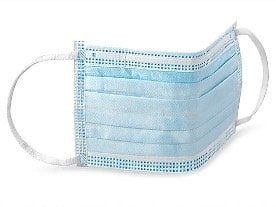






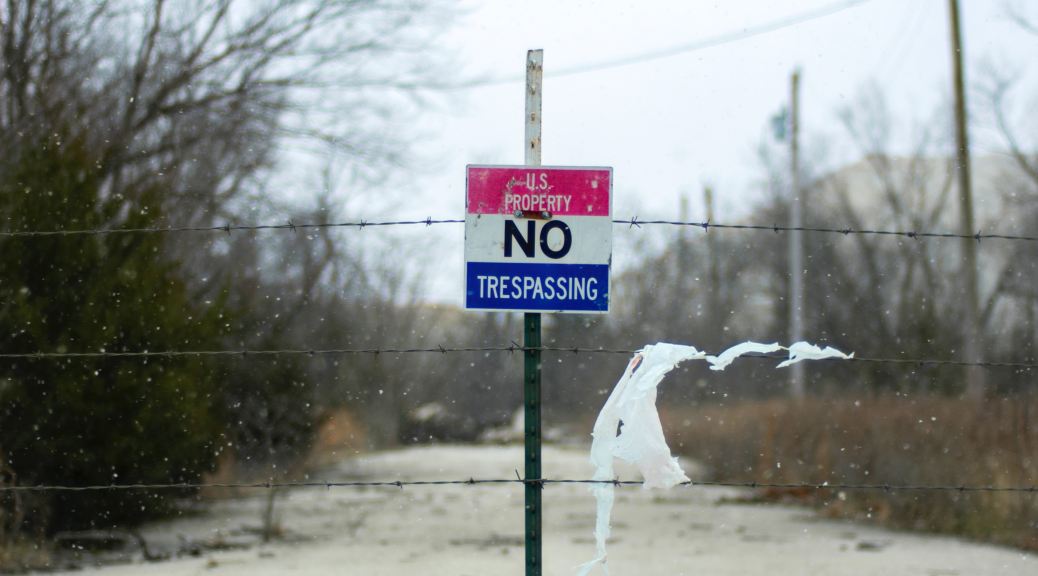
 dr. p.l. (paul) thomas
.jpg)