Tag Archives: book-review

Myrtle Wilson as MAGA Allegory

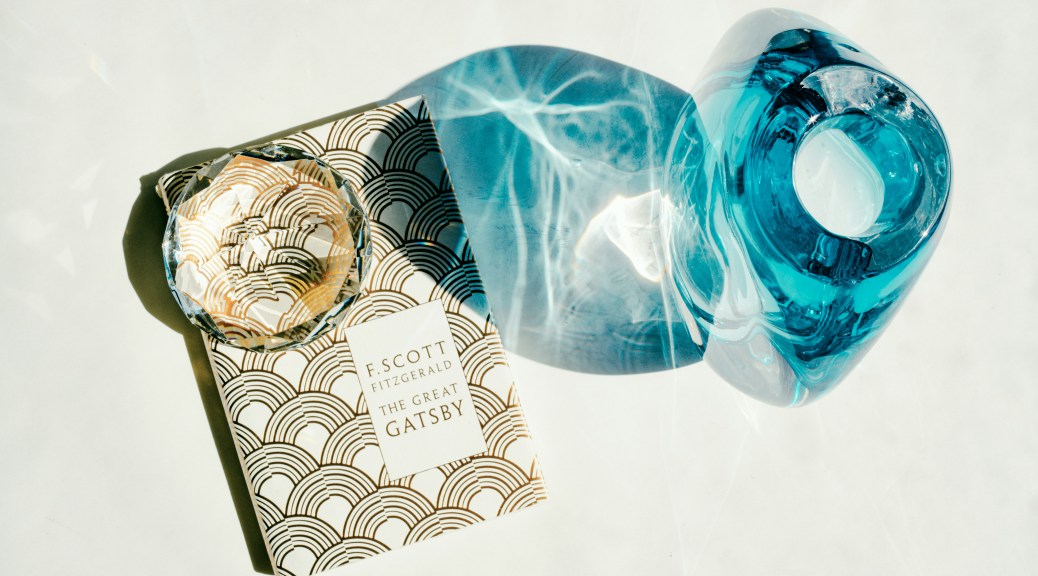
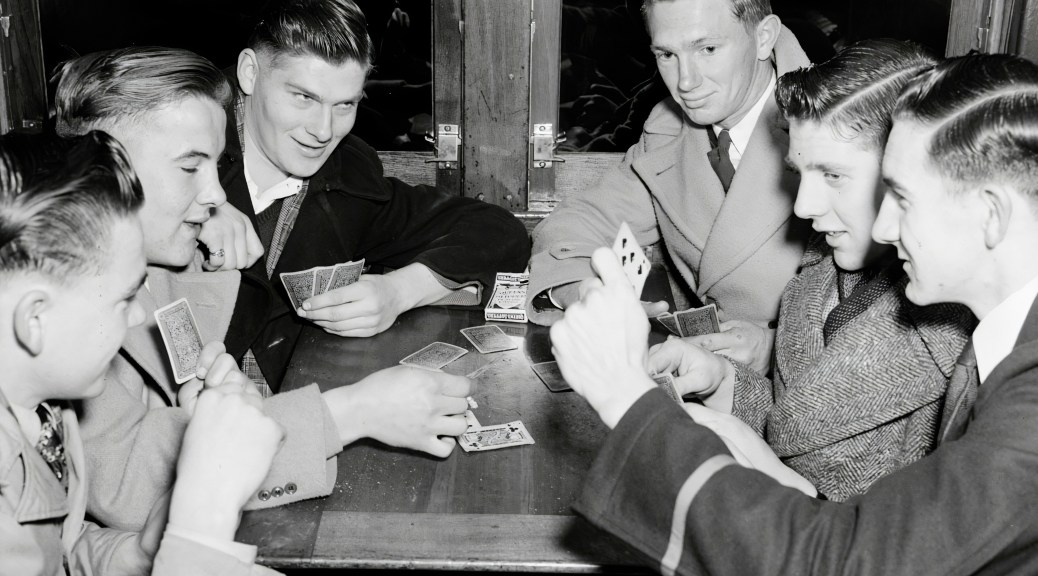
[Header Photo by Girl with red hat on Unsplash]

As a “good student” in high school and through college, I dutifully worked my way through the so-called major writers, mostly American writers of the early twentieth century such as Hemingway, Faulkner, and, yes, Fitzgerald.

I spent almost two decades teaching American literature in high school, including dozens of class sessions on The Great Gatsby, which I have noted isn’t one of my favorites.

However, The Great Gatsby has proven to be a wonderful literary allegory on the US in the 2020’s, a century after its setting.

Tom and Daisy, for example, are a disturbing characterization of the very “careless people” who are now destroying the country—the Trump era often referred to MAGA for the darkly ironic slogan lifted from Reagan, Make America Great Again.

One of my key lessons when I taught the novel, however, was asking students to focus on the character Myrtle Wilson, Gatsby’s lover and a woman disillusioned into believing she had joined the affluent class.

The gathering where Nick Carraway, the novel’s narrator who is star-struck by Gatsby, meets Myrtle includes some of the most important scenes in the story.

Myrtle attempts to perform as a now-rich woman, embarrassing herself in the eyes of the reader.

One key scene is her excoriating her husband George:

“I married him because I thought he was a gentleman,” she said finally. “I thought he knew something about breeding, but he wasn’t fit to lick my shoe.”

At that gathering also, Tom hits Myrtle violently: “Making a short deft movement, Tom Buchanan broke her nose with his open hand.”

And at that scene, I prompted students to note the difference in how Tom treats Daisy, who regularly taunts him in front of guests including Gatsby.

Readers never see Tom physically abusing Daisy (although he is abusing in other ways).

Combined these elements of Myrtle as a character reveal that by rejecting her working class realities, she is rejected herself; Myrtle is a self-defeating character similar to MAGA and similar to how poor Southerners have voted against their own self interest for decades (always voting conservative regardless of party).

And then one of the most coldly gruesome scenes is when Daisy hits and kills Myrtle with Gatsby’s car.

The scene is sparse, almost told with journalistic distance. Myrtle is slaughtered, sacrificed and seemingly forgotten.

Mangled and dead, Myrtle is the carnage left in the wake of calloused affluence.

Myrtle is MAGA.

NEPC: Celebrating and Remembering David Berliner

Celebrating and Remembering David Berliner

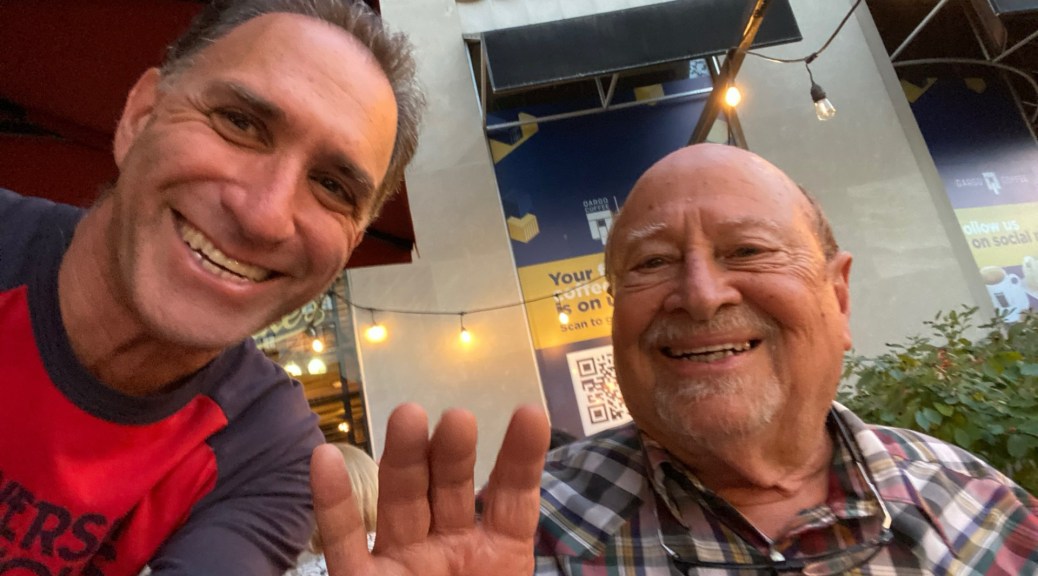
Education scholar, leader, wit, gadfly, mentor, father, friend and NEPC Fellow David C. Berliner died September 26th, 2025. He was 87.

As an academic who specialized in educational psychology, Berliner received many of the most prestigious accolades awarded to those in his field. He was elected to the National Academy of Education and the International Academy of Education, and he was given award after award: the E.L. Thorndike Award in educational psychology, the AERA’s Distinguished Contributions Award and its Outstanding Public Communication of Education Research Award, the Friend of Education award of the NEA, and the Brock Prize in Education Innovation. He served as president of AERA and Dean of the College of Education at Arizona State University. He taught at universities around the nation and the world.

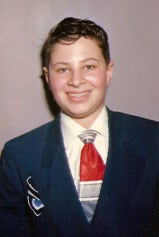
David’s Bar Mitzvah, 1951

Although he excelled in the Ivory Tower, Berliner was probably best known as a public intellectual who intrepidly pushed back against lawmakers and education policy that flew in the face of research and (quite frequently) common sense. This work is represented, for instance, in his general-interest books The Manufactured Crisis (1996, co-authored with Bruce Biddle), Collateral Damage (2007, co-authored with Sharon Nichols), and 50 Myths and Lies that Threaten America’s Public Schools (2014, co-authored with Gene Glass).

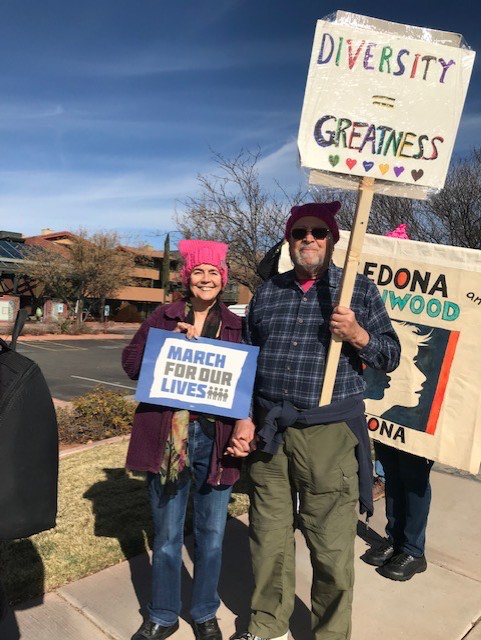
David and Ursula, March For Our Lives

“In the raging battle over school reform, David wanted to fight—and fight he did,” said NEPC’s Alex Molnar.

In books, articles, op-eds, and speeches, he relentlessly exposed the lies and hypocrisy of neoliberal school reform advocates and the danger posed by their market-based vision of public education. He fought hard but he was a joyous warrior—dancing would have definitely been allowed at David’s revolution! I have never met anyone more full of life. I will miss you terribly, my friend.

David and Ursula

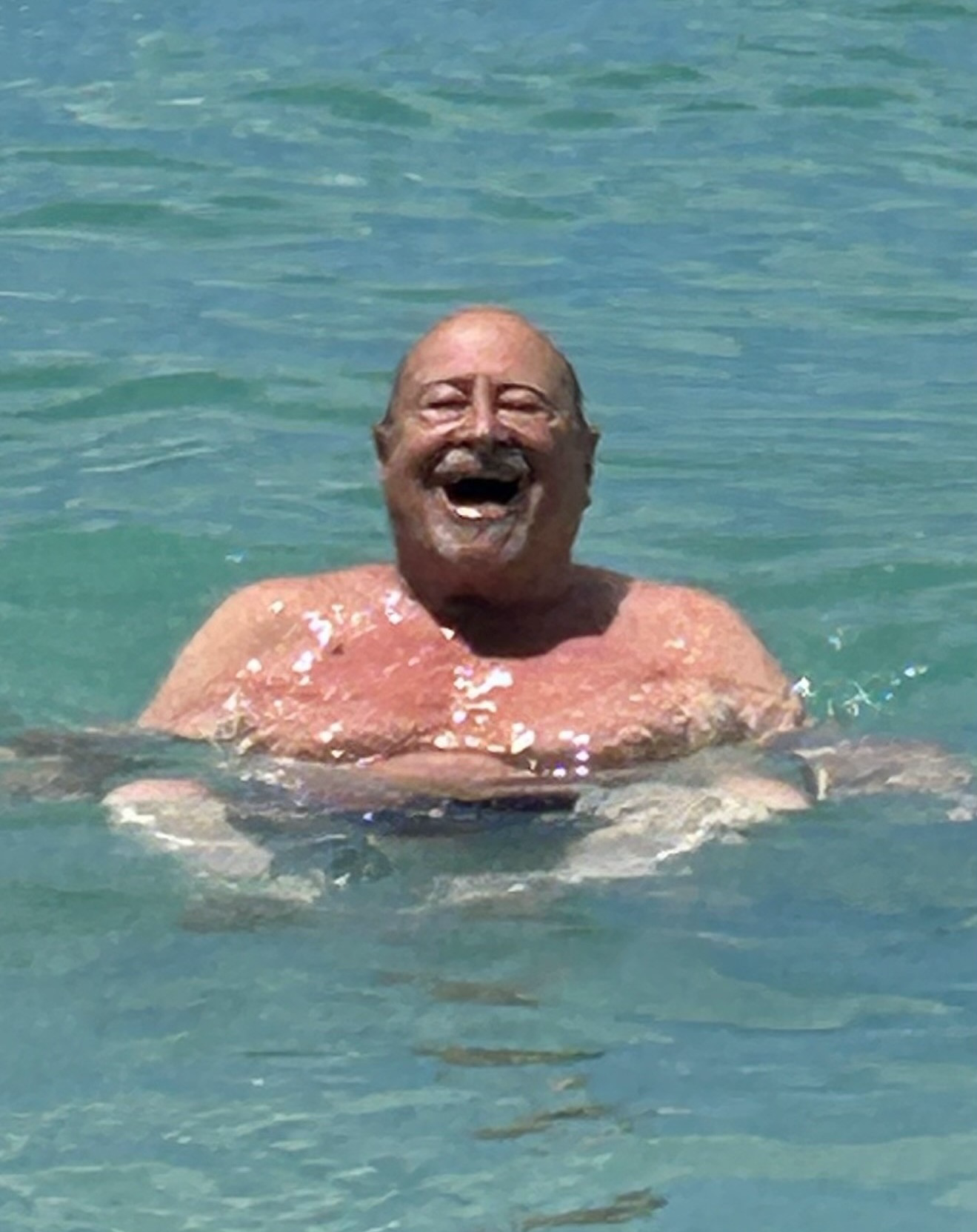
David enjoying the waters of Hawaii, 2025

The 200-plus articles, reports, chapters, and books Berliner authored during his lifetime ranged from scholarly writings on psychology, pedagogy, and assessment to accessible books that used plain language to explain how education research was applied—and misapplied—in the real world. He remained prolific to the end, publishing a book of 19 personal and reflective essays, Public Education for Our Nation’s Democracy: Commentaries on Schooling in America, the month he passed away.

“David was an acerbic critic of the past two+ decades of what was called ‘education reform,’” his friend, the education scholar Diane Ravitch, wrote upon his death.

David laughed at the nonsensical but heavily funded plans to ‘reform’ education by imposing behaviorist strategies on teachers, as if they were robots or simpletons. David had no patience with the shallow critics of America’s public schools. He respected the nation’s teachers and understood as few of the critics did, just how valuable and under-appreciated they were.

Although his work grappled with serious topics, David was known for his lighthearted approach. He was our enthusiastic host of The Bunkum Awards, a satirical “honor” that NEPC used to bestow on the most appalling educational think-tank reports of the year. The videos, which are from 2013 and 2014, are still fun to watch, as David joyfully skewers the award recipients.

2014 Bunkum Awards

David also took great joy in the simple pleasures of life, from sunsets to seltzers to real honest-to-goodness New York City bagels, especially when enjoyed with his many friends, his children and grandchildren, and his beloved wife, Ursula Casanova.

David and Kevin in 2023

At an online memorial held October 4th in his honor, the word repeatedly used to describe him was “mensch.” “Just thinking of David always made my heart smile,” said NEPC’s Kevin Welner. “His presence among us, effusing decency and empathy, was a reminder of why we’re here on earth.”

“He was a great guy, in so many ways,” his daughter BethAnn Berliner told us. “We’ve heard from people how he was a giant in the field, a scholar, a teacher, a mentor, and an advocate. But to me, he was just dad and that was far greater.”

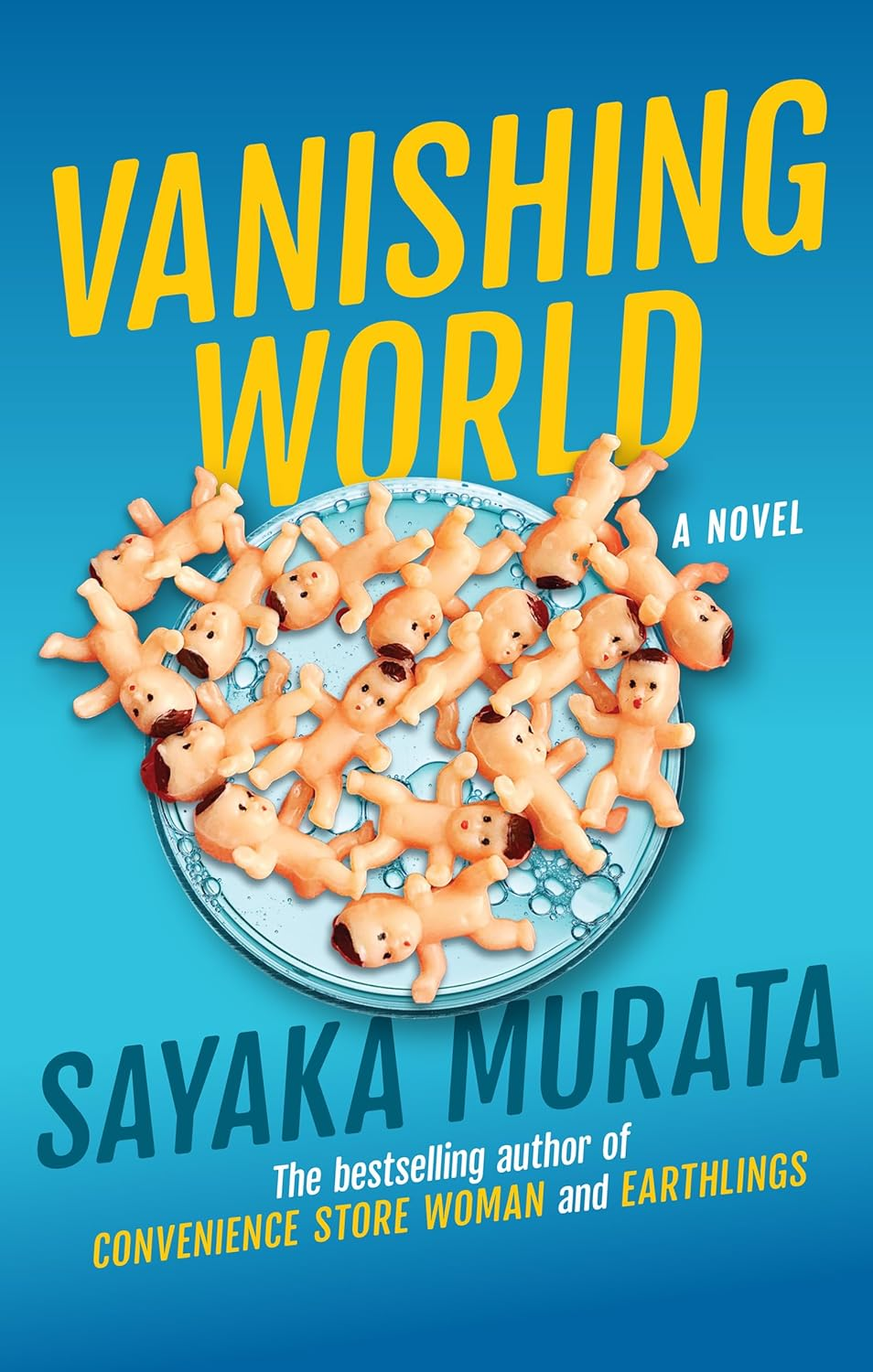
Sayaka Murata’s Vanishing World, or “Fuck Everybody”

I want to defy
The logic of all sex laws

“Sexx Laws,” Beck

I recently cited Bertrand Russell, a philosopher who I read during college. But I also came back to read a biography of Russell in the 1990s during my doctoral program, when I was writing an educational biography for my dissertation.

I was in my mid-30s by then and had left my early 20s search for what I believed mostly behind. As I discovered by becoming a biographer, unmasking any person is quite shocking, and Russell seemed much frailer, less resolute once I saw the whole man.

Russell, you see, had espoused a free love ideology, but putting his beliefs into practice proved much different than advocating for those beliefs.

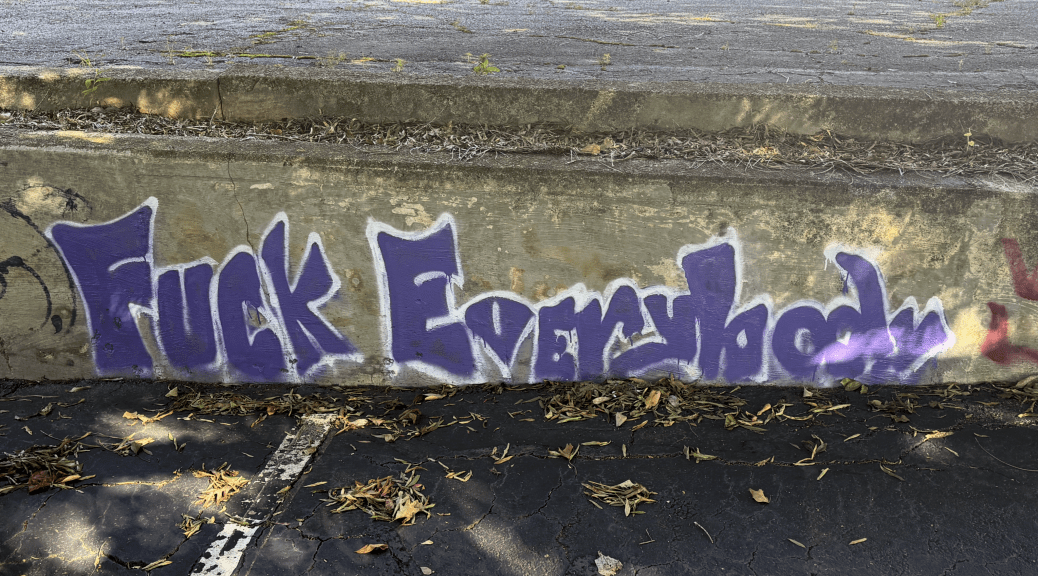
I think Russell was lurking there in my mind when I saw this graffiti recently:

I snapped a picture with my phone and posted a snarky “Free love or anger?” caption across social media.

Sexual liberation, free love, polyamory, etc., are all fascinating to me because I find these concepts both powerfully compelling and (as witnessed in Russell’s own life) incredibly difficult to realize in lived experiences.

Too often, I think, what should be issues of sexual liberation—more needed by women—is a tactic by men to leverage some space or justification for men’s infidelity; further, these progressive ideas about love and sex tend to hit a wall with men’s inability to be possessive in relationships.

Another interesting example is the creator of DC’s Wonder Woman, William Moulton Marston, who is featured in Jill Lepore’s The Secret History of Wonder Woman.

Marston is often credited with weaving feminist ideals into Wonder Woman, and he also practiced polyamory—living and having children with his wife Elizabeth Holloway Marston and partner Olive Byrne, an arrangement that also included Marjorie Wilkes Huntley from time to time.

Again, the reality behind the ideal revealed that these women made much of Marston’s work possible, and likely did some significant amount of that work.

Who did these progressive ideas about women, sex, and relationships benefit?

Marston reminded me of another foundational author in my life, D.H. Lawrence who expressed and portrayed in his fiction a belief that men needed a woman for his intellectual partner and another for his sexual partner.

These are, of course, just a few examples of how the real world manufactures normal, how individuals navigate that normal or find ways to forge their own normal.

And thus, that blunt graffiti two-words also sit just as I was reading and finishing Sayaka Murata’s Vanishing World.

Sayaka Murata’s Vanishing World: Another Examination of Normal

Like Haruki Murakami, Sayaka Murata is a Japanese writer who draws me in with what reads like literary fiction but is heavily tinged with something like science fiction, or fantasy, or magical realism.

Murata’s works, such as her newest novel Vanishing World, falls into what Margaret Atwood calls speculative fiction. Both Murata and Atwood include elements that are speculative science, but much of these created other worlds seem disturbingly normal, or at least not so much different from the world we live in now.

And similar to her Convenience Store Woman and Earthlings, Vanishing World draws the reader into another engaging and surprising examination of normal.

Amane, the main character, lives in the cusp of an old world where procreation is achieved through intercourse (her parents, to Amane’s discomfort, produce Amane through sex), and the brave new world of procreation only through artificial insemination.

In fact, the new normal is that husband and wife are family, and thus, any sexual contact is deemed incest, taboo.

There are some surprises, twists, and disturbing developments, but all in all, Murata forces the reader to think deeply about sex and gender roles, what makes normal “normal.”

The end is disorienting and powerful (similar to Earthlings), bringing the entire work into stark focus.

“Men and women were now all the same,” Amane acknowledges, “all wombs in service of the human race.”

And just pages from the end, Amane argues with her mother: “‘And you aren’t brainwashed, Mom? Is there any such thing as a brain that hasn’t been washed? If anything, it’s easier to go insane in the way best suited for your world?'”

This speculative world of Murata is about humans making normal “fuck nobody,” a sort of extreme puritanical alternate world that renders human nature unnatural—or at least, no longer normal.

The Great Gatsby at 100: Failing Students and America

Teaching high school English has a Groundhog Day dynamic that people who have not taught may never consider.

Over my 18-year career as a teacher of high school English, I taught some works of literature more times than I’d like to admit. But let me also note that I often taught some works of literature several times a day and then year after year.

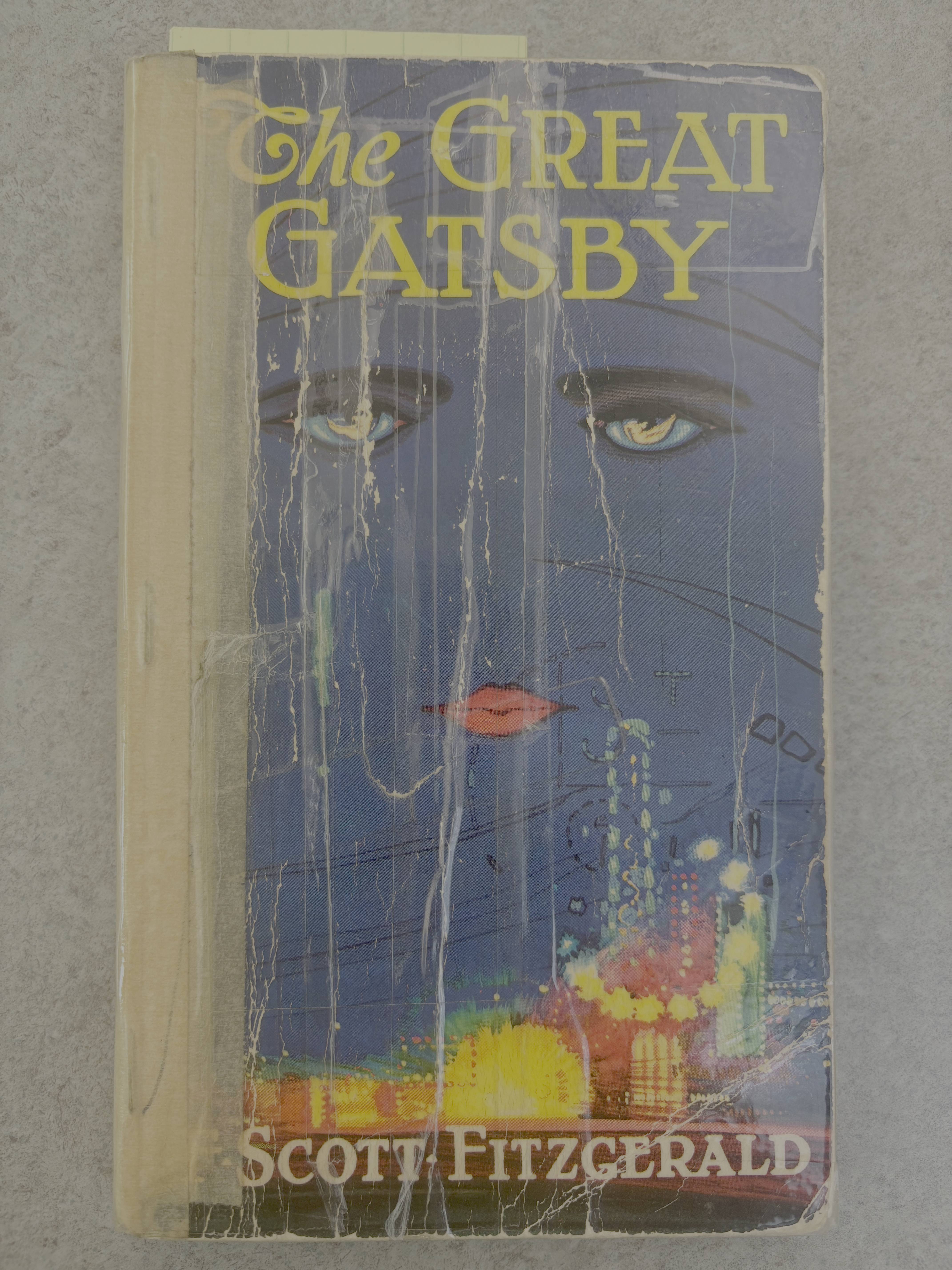
One of those works—that I in some ways loathe—is F. Scott Fitzgerald’s The Great Gatsby, which turned 100 this week in 2025.

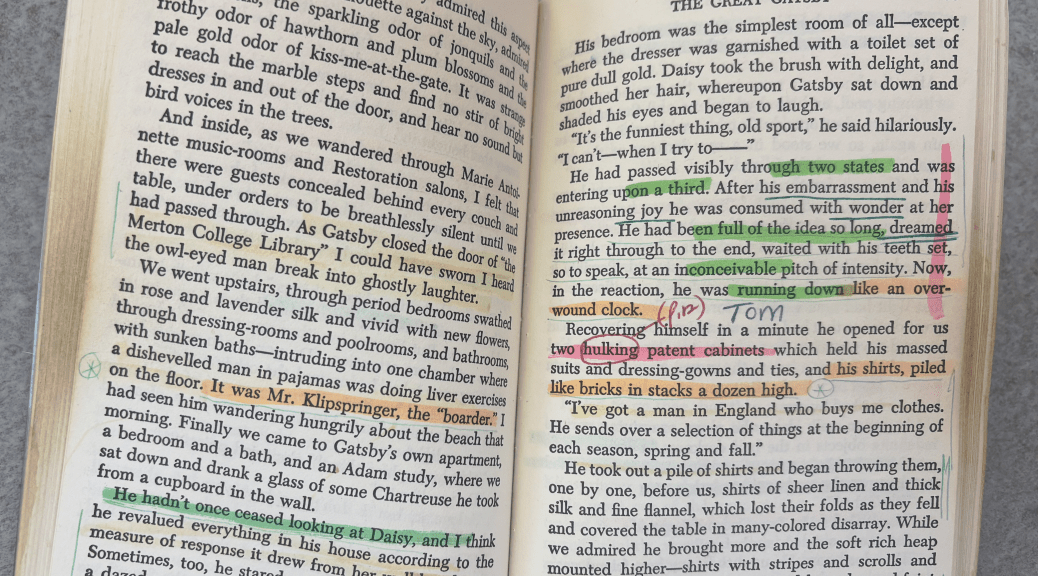
My well-worn teaching copy of The Great Gatsby used to teach high school English from 1984 until 2002.

Setting aside my own skepticism about the canon and requiring all students to read certain so-called “classics,” among the American literature works I was required to teach year after year after year—The Great Gatsby, The Scarlet Letter, The Crucible, and The Sun Also Rises at the core of those required lists—I must admit that Gatsby was often the most accessible for students (easy to read and the Robert Redford film was a great supplement to the unit).

I prefer Hemingway as a writer to Fitzgerald, but I prefer student choice and more diverse and contemporary works as well.

However, a century on and many students in the US still read and study Gatsby in high school along with a fairly conservative list of works from the slightly expanding canon of American literature.

My point here is not to crucify Gatsby or Fitzgerald or modernist literature (lots there that is worth interrogating), but to confront that how secondary (and college) teachers teach along with how students read and learn from Gatsby in traditional and reductive ways that cheat the novel, cheat students, and ultimately cheat the democratic purposes of public education in a (for now) free country.

“Gatsby Believed in the Green Light”

In a bit of ironic symbolism, if you want to see (literally) my concern about the cultural failure of Gatsby, click here: The Empire State Building is turning into a green light for The Great Gatsby’s centennial (See also It’s Gatsby’s World, We Just Live in It).

This act, of course, is a nod to the color imagery running through Gatsby, culminating in the penultimate paragraph of the novel:

Gatsby believed in the green light, the orgiastic future that year by year recedes before us. It eluded us then, but that’s no matter—tomorrow we will run faster, stretch out our arms farther … And one fine morning—

This reductive and figurative language approach to what this novel shows the reader is about more than the often mechanical way students are required and taught to analyze text (more on that next); while teachers, students, and then the public often “get” that Gatsby is about the American Dream, too often that becomes completely disconnected from the novel itself.

Partly, that happens because that next-to-the-last paragraph can become a sort of idealistic doubling-down on the American Dream that Fitzgerald pretty clearly dismantles over fewer than 200 pages.

When I taught Gatsby, in fact, I required students to read John Gardner’s bi-centennial essay, “Amber (Get) Waves (Your) of (Plastic) Grain (Uncle Sam),” where he makes a distinction that is often missed when studying Gatsby:

That idea—humankind’s inalienable right to life, liberty, and the pursuit of happiness—coupled with a system for protecting human rights—was and is the quintessential American Dream. The rest is greed and pompous foolishness—at worst, a cruel and sentimental myth, at best, cheap streamers in the rain. (p. 96)

Taking Gardner’s figurative language, then, Gatsby’s American Dream (a sort of singular obsession with wealth and Daisy) is just “cheap streamers in the rain,” what has for the most part replaced the essential American Dream—life, liberty, and the pursuit of happiness.

Fitzgerald’s own life being sold to the capitalism of Jazz Age America, both in his relentless production of short stories for income and his alcoholism and partying, sits behind the fictional dramatization of what America had become, what America kept becoming, and how America now has nearly fully erased “life, liberty, and the pursuit of happiness” for “filthy lucre” (as D.H. Lawrence warned just a year after Gatsby was published).

Two dynamics are at play here, I think.

The first is most students like Gatsby because it is short and easy to read (notably more so than reading Edgar Allan Poe or Nathaniel Hawthorne, for example); students also enjoy the melodramatic plot of the novel centered on partying, violence, and adultery.

The second is my larger concern—how we traditionally teach literature in high school through a narrow and distorted New Criticism lens.

Not to wander to deep into the weeds of literary criticism and classroom pedagogy, but most of us can recognize how often high school English classes become “guess what the English teacher wants you to say about this text”—and that guess often includes some literary technique, what I call the “literary technique hunt.”

For high school teachers and students, then, Gatsby become likes most texts being studied—a vehicle for identifying techniques.

Students begin what amounts to an Easter egg hunt; there’s lots of green and yellow (gold) throughout the novel (hint: money), and the job students have is to find the color and identify the symbolism. (It’s how we ruin poetry, for example.)

About mid-way through the novel, Daisy encounters Gatsby’s “‘beautiful shirts'” (her own Easter egg hunt), and readers encounter the green light:

“If it wasn’t for the mist we could see your home across the bay,” said Gatsby. “You always have a green light that burns all night at the end of your dock.”…

Now it was again a green light on a dock. His count of enchanted objects had diminished by one.

I want to emphasize here, I am not blaming high school English teachers necessarily because the “literary technique hunt” is a consequence of how formal public education has been reduced to testing (easier to test students finding and identifying literary terms than having them do complex analysis of texts) and teachers and schools are expected to be non-political.

The reductive New Criticism of high school English classes seems objective, then, and offers what appears to be a fixed way to assess students.

It is frustrating, however, that Gatsby is reduced to color imagery and symbolism while most of the racism and bigotry are skirted over or ignored entirely.

“They Were Careless People, Tom and Daisy”

Not that I want to “save” Gatsby on its centennial anniversary, but I am particularly invested in literature and how we teach it (and how we often ruin it for students)—and I am also deeply committed to the role of literature/literacy in our democracy, which is currently in Hospice.

But if we could set aside our reductive New Criticism approaches, and then shift our focus away from Nick and Gatsby and toward Tom and Daisy, we could make Gatsby work for our students and for this country that we seem uninterested in saving.

In the last pages, Nick explicates Tom, and Daisy:

I couldn’t forgive him or like him, but I saw that what he had done was, to him, entirely justified. It was all very careless and confused. They were careless people, Tom and Daisy—they smashed up things and creatures and then retreated back into their money or their vast carelessness, or whatever it was that kept them together, and let other people clean up the mess they made … .

Fitzgerald showed us 100 years ago that America was a wasteland, a product of “vast carelessness.”

Because of our idealism, “our rigid refusal to look at ourselves,” we have chosen to walk to the precipice of America no more.

We seem eager and even gleeful to have chosen “cheap streamers in the rain.”

This is not who we have become, this is who we always were.


Recommended

‘No one had the slightest idea what the book was about’: Why The Great Gatsby is the world’s most misunderstood novel

Gatsby’s Secret

What Every White Person in the US Knows: 2025

[Header Photo by Walid Hamadeh on Unsplash]

Here are two texts that may not immediately appear to be saying something similar about the state of the US in 2025.

Let’s start with On Language, Race and the Black Writer by James Baldwin (Los Angeles Times, 1979):

Every white person in this country—and I do not care what he or she says—knows one thing. They may not know, as they put it, “what I want,” but they know they would not like to be black here. If they know that, then they know everything they need to know, and whatever else they say is a lie.

And then, just a few years later, there is Margaret Atwood’s The Handmaid’s Tale, specifically the closing “Historical Notes” where readers learn about the context behind how Gilead comes about.

At a satirical symposium in Gileadean studies dated June 25, 2195, the keynote, Professor James Darcy Pieixoto, explains that context:

Men highly placed in the regime [of Gilead] were thus able to pick and choose among women who had demonstrated their reproductive fitness by having produced one or more healthy children, a desirable characteristic in an age of plummeting Caucasian birthrates, a phenomenon observable not only in Gilead but in most northern Caucasian societies of the time.

The reasons for the decline are not altogether clear to us. Some of the failure to reproduce can undoubtedly be traced to the widespread availability of birth control of various kinds, including abortion, in the immediate pre-Gilead period. Some infertility, then, was willed, which may account for the differing statistics among Caucasians and non-Caucasians.

…But whatever the causes, the effects were noticeable, and the Gilead regime was not the other one to react to them at the time. Rumania, for instance, had anticipated Gilead in the eighties by banning all forms of birth control, imposing compulsory pregnancy tests on the female population, and linking promotion and wage increases to fertility.

What are these texts from over four decades ago telling us about the current political and cultural state of the US during the era of Trump/MAGA?

White Americans, notably the white political and cultural leaders, are openly concerned about the low birthrate among white people. And thus, restricting and banning abortion have swept much of the country after the overturning of Roe v. Wade. [1]

Not that long ago, mainstream thinkers believed Roe v. Wade and abortion rights were safe in the US; people raising concerns were considered alarmists.

Now, as Republicans and conservatives seem to be coming after birth control next, we cannot hesitate as we did before the dismantling of women’s rights came as we should have known it would.

In the passage from the “Historical Notes,” we have a key point about the birthrates of white people falling against the rise of birthrates about other races.

And thus, the connection to Baldwin’s confronting “every white person in this country—and I do not care what he or she says—knows one thing. … [T]hey would not like to be [B]lack here.”

Not to speak for or over Baldwin, but to help us tease out this connection in 2025, white fear in the US is fear not singularly grounded in race but ultimately fueled by the fear of becoming a minority.

We must next consider fully Baldwin’s recognition that for white people, Black people and the consequences of their minority status in the US are a mirror for who white people are—more so than any commentary on Black people themselves.

For all the histrionics denying white privilege, white people know one thing—that white people as the majority, that white people with the balance of power, used that majority status and power to the detriment of any and all minorities.

If and when white people become the minority, they fear that they will then suffer the same consequences of minority status that white people have imposed on other races in the US.

White people cannot fathom a world in which majority and minority statuses do not result in some winning because others are losing.

The Great Whitewashing is upon us—one foreseen by Baldwin and Atwood.

One that is coming to fruition before our eyes.

What every white person knows may destroy everything for everyone.

What each white person does now will tell everyone everything we need to know.


[1] See Things Fall Apart for Women (Again): Leni Zumas’s Red Clocks


A Man’s World (pt. 3): Gaiman Edition

[Header Photo by Museums of History New South Wales on Unsplash]

I am currently reading Haruki Murakami’s newest novel, The City and Its Uncertain Walls. In some ways, the story is not as typical of his other novels (I have read all of his work and co-edited a volume on him).

However, this novel maintains a recurring aspect of his works—men who have lost or been left by women (directly expressed in his short story collection Men Without Women).

Reading this novel comes after I recently submitted a chapter on Murakami expanded from a blog post about his 2017 story collection; in that, I address concerns about whether Murakami’s fiction slips too often into sexism and objectifying women.

While the questions about how Murakami deals with women in his fiction creates tension in me as a reader and scholar, I am more disturbed and struggle much more with the men writers and creators who persist in proving that they mistreat, abuse, and assault women in their (sometimes mostly) secret lives.

My reading and fandom life is littered with men writers I once admired but now find it hard to appreciate their work because of their failings as men, as humans—Woody Allen, J.D. Salinger, e.e. cummings, Cormac McCarthy, and Neil Gaiman (see several posts below addressing these men).

The debate about where the line is between a person’s creative work and their personal lives has a long history—and many people disagree about being able to respect that work while acknowledging or even rejecting the personal flaws (and much worse).

For example, Ryunosuke Hashimoto frets about Murakami: “The negative image that has been associated with Murakami is so frequently spotted on social media as a consequence of the new generational standard that one wrong cancels out all of the good that is contained in a work.”

The recent revelations about McCarthy and Gaiman seem to rise far above “one wrong” into predatory patterns and abhorrent abuse.

Concurrent with reading the seemingly late mainstream coverage of Gaiman in Vulture, I have been watching the series House for the first time (while my partner is re-watching one of her favorite series).

House is challenging us in similar ways, considering how much the problems with the episodes weigh against the compelling aspects of the show.

To me, House tries to be topical but can fall cartoonishly flat, such as Spin (S2E6) about a professional cyclist. The cycling and discussions around cheating (EPO and blood doping) are wildly bad, especially the scene of actual bicycle racing.

But we also had just watch Skin Deep (S2E13) a day before the Gaiman article dropped in Vulture.

Skin Deep, for me, has many of the flaws found in the Spin episode, likely from trying to hard to address then-current controversies.

The episode covers a great deal of controversial topics—sexualizing and objectifying young women (the main character is a 15-year-old supermodel), sexual abuse (the father admits sex with his daughter), and then the disturbing big reveal (the young woman is discovered to be intersex with cancerous testes).

Dr. House’s behavior is glib, offensive, and disturbing, including misinformation and not-so-subtle bigotry.

Re-watching Friends, Seinfeld, and The Office has left us cringing as well.

So from what to do about Gaiman’s work to navigating Murakami and series such as House, I remain troubled about where the line is between the creative works and the flawed to despicable humans, those men.

I also must stress that we are in a political moment where the consequences for being a sexual predator or committing sexual assault are being lessened, even erased. The rights of women are being eroded; yes, it is more and more a man’s world, a world hostile and calloused to the lives of girls and women.

The Gaiman moment is an(other) opportunity to say there is a line, it has been crossed, and there must be consequences.

There are thousands of wonderful creative works by people who do not have these transgressions, these failures to respect the humanity of others, hanging over them and their works.

I’ll keep watching House, and I am pretty comfortable with how I understand and appreciate Murakami (and I could be wrong). But Gaiman deserves consequences of a magnitude from which he will not recover as an artist—and others will (maybe) learn as well.


See Also

“He knows, or thinks he knows”: It’s Still a Man’s (Hostile) World

True Detective: It’s Still a Man’s (Hostile) World, pt. 2

Flawed Men Artists and Their Crumbling Art

The Woody Allen Problem Is Our Problem

Recommended: Larcenet’s Graphic Adaptation of McCarthy’s The Road

Recommended: Larcenet’s Graphic Adaptation of McCarthy’s The Road

Note

Although a Vanity Fair article has framed Augusta Britt as Cormac McCarthy’s “muse,” Moira Donegan argues in The Guardian that McCarthy, in fact, groomed and took advantage of Britt.

Below, while I discuss positively McCarthy’s work and adaptations of that work, I want to acknowledge the serious concerns being raised about McCarthy as a person. He represents yet another problem with confronting deeply flawed and even abusive people against the context of what many believe are praiseworthy accomplishments.


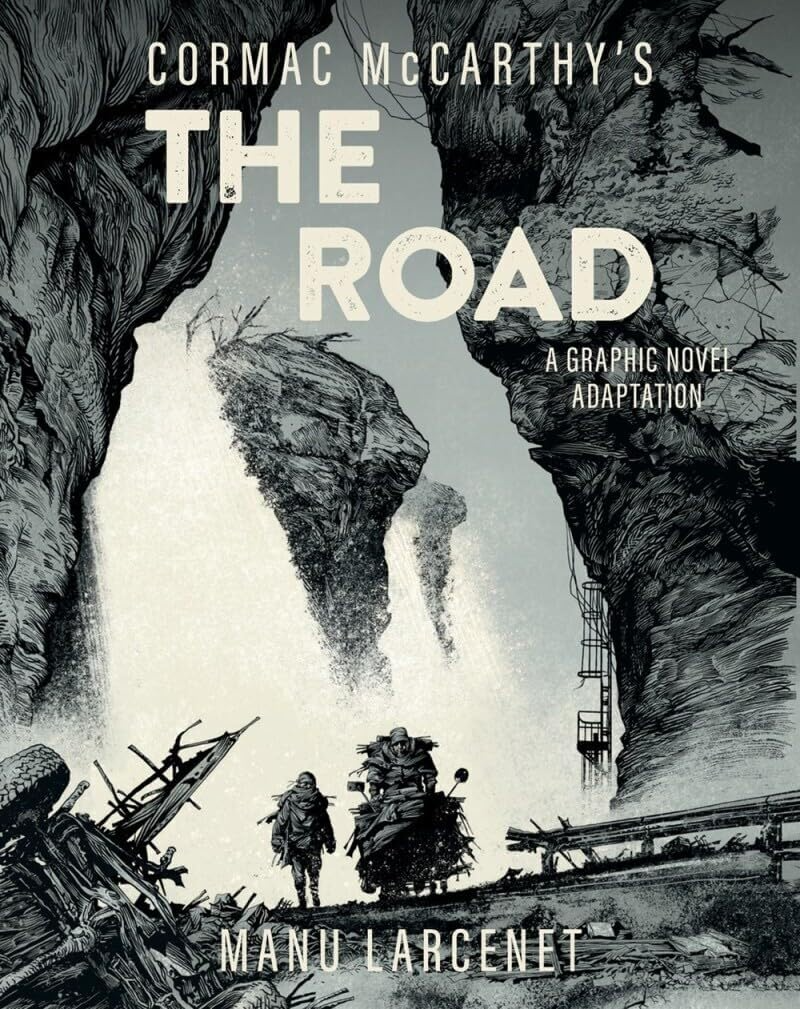
Larcenet’s Graphic Adaptation of McCarthy’s The Road

Cormac McCarthy’s novel The Road won the Pulitzer Prize in 2007. Then in 2009, it was adapted into a major film starring Viggo Mortensen and Charlize Theron.

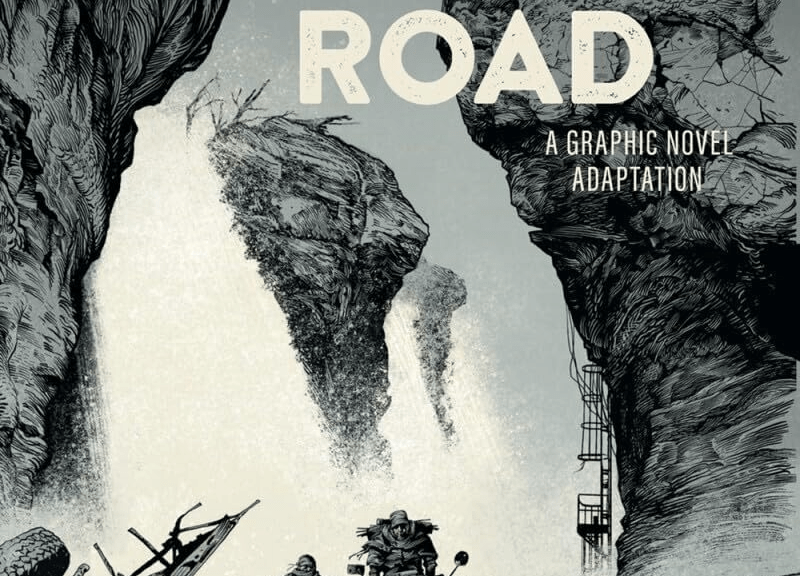
Now, published in 2024, a third version of the novel is available, Manu Larcenet’s graphic adaptation.

As Mike Roe notes in his review:

Larcenet made a personal appeal to McCarthy to allow him to adapt “The Road.” Praising its atmosphere, Larcenet wrote, “I enjoy drawing the snow, the chilling winds, the dark clouds, the sizzling rain, tangles and snags, rust, and the damp and the humidity. I draw violence and kindness, wild animals, dirty skin, pits and stagnant water.”

McCarthy’s novel is a stark post-apocalyptic narrative that seemed perfect for both film and now a graphic adaptation. It isn’t that McCarthy’s text isn’t enough; it is that the humanity and inhumanity of this cold barren world become even more painful for the viewer and reader through the different visual media.

Roe adds about the connection between text and graphic depiction:

“I have no other ambitions but to draw your words,” Larcenet wrote. “The magical part of being an illustrator is to find a silent line to draw with every word. These lines could support yours without distorting them. At least, that’s the goal if this project should come to fruition.”

Since The Road has already been made into a film, some may wonder why this graphic novel version is needed:

“On top of that, I’ve been racking my brain to avoid any reference to the movie adaptation,” Larcenet wrote to McCarthy. “I usually write my own comics, one of which (‘Blast’) shares common themes with your book. But I didn’t write ‘The Road’; I really wish I had! I sincerely thank you for allowing me to put my pencil down where your pen went.”

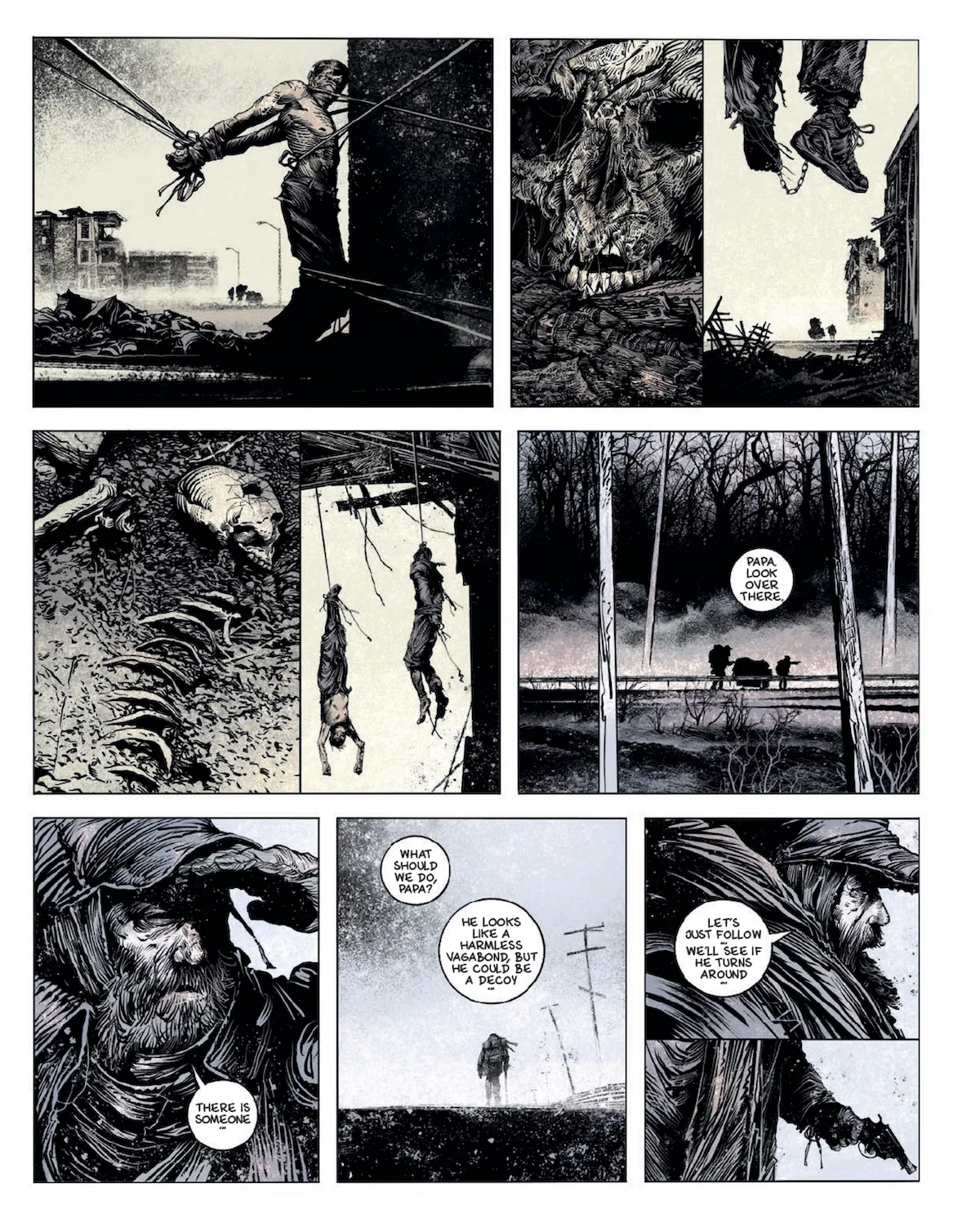
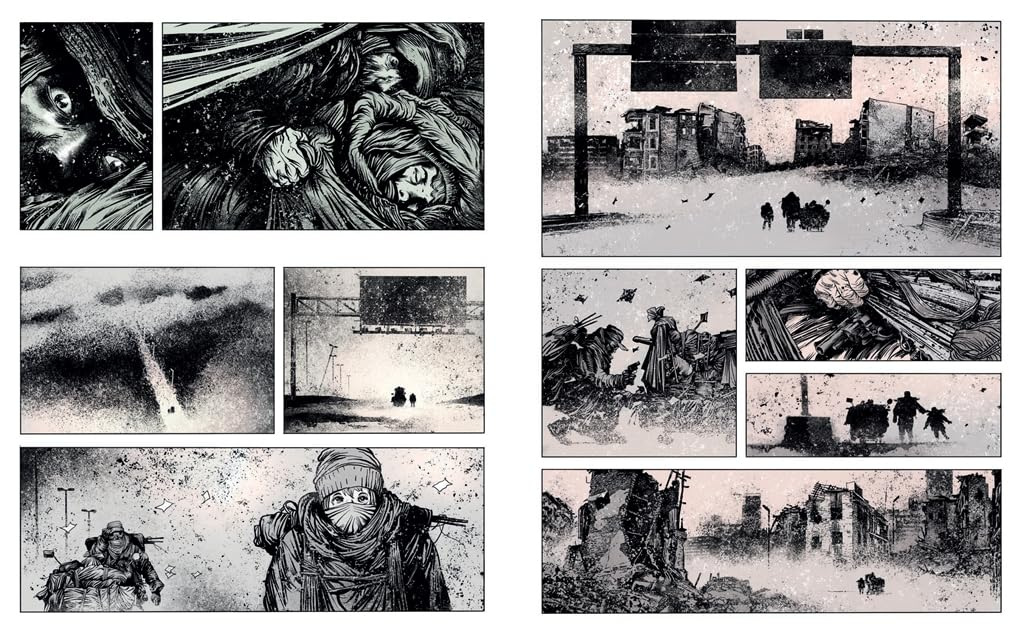
Appropriately, then, Larcenet’s adaptation is sparse in wording (many panels and pages are wordless), yet highly detailed in the mostly black-and-white artwork, augmented with subtle washes of coloring. The result is page after page that is mesmerizing and horrifying:

See Roe’s review at The Wrap for exclusive pages from the adaptation.
See amazon preview for additional pages.

So why do we need yet another version of The Road?

I have read the novel and seen the film, but as a life-long comic book collector, I of course ordered Larcenet’s adaptation. But, frankly, I did so as a collector, thinking I would glance through the book because I do love sequential art.

Then, I found myself reading, lingering on pages and panels. Over a couple sittings, yes, I read the entire adaptation.

I cried. I paused because the story is often overwhelming.

This is the same and a different experience than the novel and the film.

I can’t say we need another version of McCarthy’s novel, but I do say we have been gifted by this beautiful and haunting graphic adaptation.

And since the narrative itself examines the good guys/bad guys dynamic through a child who has had his innocence ripped from him by a calloused world, we too must confront this duality in reality as we try to navigate the flawed artist and the art we love.