On the first day of spring classes, I mentioned to one of my first-year writing seminar classes that I now live just a few minutes from my first college, Spartanburg Methodist College (SMC).
I currently live in a converted mill, one among many empty mills or mills transformed into apartments in the area around SMC, which began as a mill college.
It was in the beautiful rock building, the first-year dorm for young men, on the third floor where I recall vividly writing my first real poem; it was prompted by a combination of having read e.e. cummings in my speech class with Mr. Brannon and watching students throw a Frisbee on the lawn in front of my dorm.
That was spring of 1980, some 46 years ago. I have been a poet and writer since.
At SMC, also, I was invited by a literature professor, Dean Carter, to tutor for the course, and so, there I also discovered that I am a teacher.
Teacher and writer have been wonderful twin avocations for a redneck who grew up in the South, lived through the 1960s and 1970s as a child and teen.
College saved my life, or more specifically, saved my soul.
It is in college where I started becoming a better person. Shedding the racism and other bigotries I was raised in, both my home and my community.
I have not ventured very far physically, but I have traveled a great distance in my mind and my heart.
Starring Charlton Heston, Soylent Green was released in 1973 and set in 2022. Heston, in fact, starred in several classic science fiction films and is the face on some of the most memorable scenes and lines in cinema, including the Big Reveal in Soylent Green:
This film perfectly demonstrates the cross-genre power of blending science fiction and horror, usually a sort of slow boil horror pervading everything else in the film.
Heston starred in Planet of the Apes, but also Omega Man, released a couple years before Soylent Green. Omega Man is very much a slow boil film that emphasizes being terrifyingly alone as a human (also a key motif of Planet of the Apes).
Watching the first season of Pluribus, I was reminded of these classic science fiction films because of the motifs shared as well as some disturbing direct connections (more of that below). The main character, Carol, plays the role of “last human” similar to the Heston films above.
The horror here is not only losing her own humanity but also the end of all humanity.
Pluribus has been criticized by some as being too slow, but for me, that pace is essential for the dread that Carol feels, the existential angst that is her character even though for much of the first season she feels relatively safe because of the strict moral code exhibited by the infected (all but about a dozen are infected or dead).
I find that lens compelling and see the show as an allegory of religion, a dark satire of black-and-white moral codes and missionary zeal.
Season 1 builds to a Big Reveal in the final episode; that reveal depends strongly on the core elements of the show as an allegory of religion:
The infected view all life as sacred, likely speaking into the extreme “pro-life” movement that has successfully banned and even criminalized abortion.
That view of all life as sacred creates for the infected a paradox about their own survival, resulting in one of the most horrifying elements of the show; they consume HDP (human-derived protein) created from deceased humans.
And the infected are both happy and certain that everyone must join them in that happiness; their relentless niceness and efforts to convert the few remaining uninfected (their moral code requires the remaining humans must consent to the conversion) often feels like some parts Jehovah’s Witnesses and some parts Hare Krishnas.
One of the most well crafted aspects of the show, I think, is Carol proves again and again that she is a miserable human, and possibly a not very endearing person (even before the infection).
The obvious tension of the show, then, is that the infected are eerily and resolutely happy in contrast with Carol’s not-so-subtle perpetual state of misery and anger.
Carol’s seething rage, in fact, threatens the infected in dramatic ways that seem far worse than the power the infected have to convert her (again, she is ostensibly safe due to the moral code of their needing her consent).
This happy motif is far more complex than a clever element to create plot and tension.
Like the religious happiness running through major religions (being religious, the argument goes, brings happiness and contentment to the believers), however, I see the infected as miserable people unable to acknowledge or confront that their happiness is a veneer.
Concurrent with the release of Pluribus, the year 2025 has demonstrated the misery and even hate lurking beneath those most vocal about being religious.
The Trump agenda has knocked down the wall separating church and state with the consequences being anything except happiness for all.
The infected’s moral code seems naive and even a bit silly at first, but there is a Stepford Wives vibe lurking throughout, with both the HDP and final episodes exposing that, yes, this is an alien invasion of the horror kind.
The infected seem the product of some distant higher power, and they, like fundamentalists, have fixed moral codes and an insatiable missionary zeal.
The infected know what is best for everyone.
Few things are more horrifying than their certainty always offered with a smile.
Pluribus isn’t a show about happiness; it is an allegory summarized in a cliche—misery loves company.
Pluribus is a science fiction series that moves very slowly, often beautifully, and echoes other post-apocalyptic films.
While we were watching S1E7, The Gap, my partner recognized parallels with I Am Legend (and that sparked for me The Omega Man).
The series fits into my favorite type of science fiction, often films that dramatize the existential dread of the human condition through stark settings and extreme isolation—The Andromeda Strain and 2001: A Space Odyssey, for example.
The Gap, for me, solidifies the core motifs of the series through Carol Sturka’s simmering rage against her painful loneliness. But the focus in S1E7 on Manousos intensifies the existential motif through his stubbornly self-defeating trek—a quasi-Sisyphean pilgrimage (with a clever twist on Chekhov’s gun).
My journey to existentialism has an unusual origin (a seed planted in the rich soil of my childhood introduction to science fiction films by my mother)—Billy Joel’s “The Stranger” and “My Life.”
Carol’s loss of her partner, her excruciating loneliness in the wake of that loss, and then her growing attraction to Zocia reminded me of Joel’s songs that deeply impacted my teen years before I started reading and studying existential philosophy on my own in college:
Did you ever let your lover See the stranger in yourself?
And:
They will tell you you can’t sleep alone in a strange place Then they’ll tell you you can’t sleep with somebody else Ah, but sooner or later, you sleep in your own space Either way, it’s okay, you wake up with yourself.
Carol and Manousos are desperately clinging to their humanity while simultaneously experiencing and dramatizing the most horrifying aspects of that humanity—precarity.
Creators of science fiction often have to remind people that post-apocalyptic narratives are less warnings of what may come to be and more slightly exaggerated reflections of how things are.
Like Carol and without the impact of an alien virus, we humans are all completely alone—we always wake up with ourselves—and we long for being with others, often a special other, a monogamous other.
One of my favorite authors bristled at being called a science fiction writer, Kurt Vonnegut, but his works often did include key elements of science fiction such as aliens, time travel, total destruction of humanity, and yes, those existential elements of human loneliness and even fatalism.
But Vonnegut offers an interesting tension in his thematic grounding; he used his fiction to advocate for our potential to embrace our full humanity, our kindness, and the need to form and cultivate communities, extended families.
Vonnegut’s humanism and socialism sit just beneath the surface of his narratives that tend to darkly satirize the dehumanizing systems that people both create and tolerate. Player Piano is a brutal satire of corporate America decades before The Office or Office Space.
Some aspects of human precarity are inevitable, our bodies are prone to disease and they age inevitably to death.
And, yes, we often find our anxieties picking at the scab of our mortality.
But in Pluribus, death is at the edges in many ways (Helen dies and that sparks Carol’s intense loneliness). The focus of the story, however, is the fierce anger and determination of Carol to maintain and save her and everyone’s humanity, a determination seen in Manousos turned up a few notches.
Then there is the other precarity, the one created by systems, the one those systems need so that precarity is cultivated in horrible and dehumanizing ways.
Our Sisyphean existence in the US is dutifully and daily playing our roles as workers, and that role is carefully constructed to be a precarious one.
If we don’t work, we don’t eat.
If we lose our jobs, we lose healthcare, retirement, and frankly, our humanity.
Most people in capitalism cannot define themselves without their jobs. And few things bring more shame that losing a job.
It is subtle, but in S1E8, Charm Offensive, Carol and Zocia become lovers; the next morning, Carol writes again, returning to her job as a writer.
Few things are wasted in Pluribus—Manousos is warned about the spikes on the trees, and Zocia tells Carol “we” are excited she is writing again when Carol lies that she is.
Nothing is wasted, like the title of S1E1, We Is Us.
The paradox of the human condition, our precarity, e pluribus unum.
As a “good student” in high school and through college, I dutifully worked my way through the so-called major writers, mostly American writers of the early twentieth century such as Hemingway, Faulkner, and, yes, Fitzgerald.
I spent almost two decades teaching American literature in high school, including dozens of class sessions on The Great Gatsby, which I have noted isn’t one of my favorites.
However, The Great Gatsby has proven to be a wonderful literary allegory on the US in the 2020’s, a century after its setting.
Tom and Daisy, for example, are a disturbing characterization of the very “careless people” who are now destroying the country—the Trump era often referred to MAGA for the darkly ironic slogan lifted from Reagan, Make America Great Again.
One of my key lessons when I taught the novel, however, was asking students to focus on the character Myrtle Wilson, Gatsby’s lover and a woman disillusioned into believing she had joined the affluent class.
The gathering where Nick Carraway, the novel’s narrator who is star-struck by Gatsby, meets Myrtle includes some of the most important scenes in the story.
Myrtle attempts to perform as a now-rich woman, embarrassing herself in the eyes of the reader.
One key scene is her excoriating her husband George:
“I married him because I thought he was a gentleman,” she said finally. “I thought he knew something about breeding, but he wasn’t fit to lick my shoe.”
At that gathering also, Tom hits Myrtle violently: “Making a short deft movement, Tom Buchanan broke her nose with his open hand.”
And at that scene, I prompted students to note the difference in how Tom treats Daisy, who regularly taunts him in front of guests including Gatsby.
Readers never see Tom physically abusing Daisy (although he is abusing in other ways).
Combined these elements of Myrtle as a character reveal that by rejecting her working class realities, she is rejected herself; Myrtle is a self-defeating character similar to MAGA and similar to how poor Southerners have voted against their own self interest for decades (always voting conservative regardless of party).
And then one of the most coldly gruesome scenes is when Daisy hits and kills Myrtle with Gatsby’s car.
The scene is sparse, almost told with journalistic distance. Myrtle is slaughtered, sacrificed and seemingly forgotten.
Mangled and dead, Myrtle is the carnage left in the wake of calloused affluence.
Education scholar, leader, wit, gadfly, mentor, father, friend and NEPC Fellow David C. Berliner died September 26th, 2025. He was 87.
As an academic who specialized in educational psychology, Berliner received many of the most prestigious accolades awarded to those in his field. He was elected to the National Academy of Education and the International Academy of Education, and he was given award after award: the E.L. Thorndike Award in educational psychology, the AERA’s Distinguished Contributions Award and its Outstanding Public Communication of Education Research Award, the Friend of Education award of the NEA, and the Brock Prize in Education Innovation. He served as president of AERA and Dean of the College of Education at Arizona State University. He taught at universities around the nation and the world.
David’s Bar Mitzvah, 1951
Although he excelled in the Ivory Tower, Berliner was probably best known as a public intellectual who intrepidly pushed back against lawmakers and education policy that flew in the face of research and (quite frequently) common sense. This work is represented, for instance, in his general-interest books The Manufactured Crisis (1996, co-authored with Bruce Biddle), Collateral Damage (2007, co-authored with Sharon Nichols), and 50 Myths and Lies that Threaten America’s Public Schools (2014, co-authored with Gene Glass).
David and Ursula, March For Our Lives
“In the raging battle over school reform, David wanted to fight—and fight he did,” said NEPC’s Alex Molnar.
In books, articles, op-eds, and speeches, he relentlessly exposed the lies and hypocrisy of neoliberal school reform advocates and the danger posed by their market-based vision of public education. He fought hard but he was a joyous warrior—dancing would have definitely been allowed at David’s revolution! I have never met anyone more full of life. I will miss you terribly, my friend.
David and Ursula
David enjoying the waters of Hawaii, 2025
The 200-plus articles, reports, chapters, and books Berliner authored during his lifetime ranged from scholarly writings on psychology, pedagogy, and assessment to accessible books that used plain language to explain how education research was applied—and misapplied—in the real world. He remained prolific to the end, publishing a book of 19 personal and reflective essays, Public Education for Our Nation’s Democracy: Commentaries on Schooling in America, the month he passed away.
“David was an acerbic critic of the past two+ decades of what was called ‘education reform,’” his friend, the education scholar Diane Ravitch, wrote upon his death.
David laughed at the nonsensical but heavily funded plans to ‘reform’ education by imposing behaviorist strategies on teachers, as if they were robots or simpletons. David had no patience with the shallow critics of America’s public schools. He respected the nation’s teachers and understood as few of the critics did, just how valuable and under-appreciated they were.
Although his work grappled with serious topics, David was known for his lighthearted approach. He was our enthusiastic host of The Bunkum Awards, a satirical “honor” that NEPC used to bestow on the most appalling educational think-tank reports of the year. The videos, which are from 2013 and 2014, are still fun to watch, as David joyfully skewers the award recipients.
2014 Bunkum Awards
David also took great joy in the simple pleasures of life, from sunsets to seltzers to real honest-to-goodness New York City bagels, especially when enjoyed with his many friends, his children and grandchildren, and his beloved wife, Ursula Casanova.
David and Kevin in 2023
At an online memorial held October 4th in his honor, the word repeatedly used to describe him was “mensch.” “Just thinking of David always made my heart smile,” said NEPC’s Kevin Welner. “His presence among us, effusing decency and empathy, was a reminder of why we’re here on earth.”
“He was a great guy, in so many ways,” his daughter BethAnn Berliner told us. “We’ve heard from people how he was a giant in the field, a scholar, a teacher, a mentor, and an advocate. But to me, he was just dad and that was far greater.”
I am writing this as someone who is solidly on the Left, and not in the misleading way often expressed in the US where the Left really doesn’t exist in any substantial way. I fit into what would be seen as the Left in Europe or Scandinavian countries.
But my being on the Left is mostly about my scholarly view of the world, although, of course, that impacts how I navigate a very conservative country where ideologies of the Right are seen as the norm.
I also believe in nonviolence so I am very uncomfortable with current narratives that the Left is violent, and somehow uniquely violent.
I reject perpetuating and glorifying violence; I reject celebrating violence; and I strongly reject the violent gun culture of the US that is also tolerated as the norm.
I do not consider violence on or from the Left to be of the Left (although that is rare when compared to violence from the Right). Violence is a distortion of Leftist values and commitments.
As well, I do not feel any kinship with or endorse in any way the many celebrities that conservatives in the US describe as representative of the Left—such as Stephen Colbert and Jimmy Kimmel, who now have come to represent both the Left and concerns being raised about government censorship of the Left.
Colbert and Kimmel, to me, are vapid Hollywood, the performance of progressivism that is relatively common within celebrity culture. There is nothing radical in vapid Hollywood progressivism, and to be blunt, many celebrities who believe they are performing progressivism and activism are perpetuating conservative norms of the US.
I was born into, raised in, and continue to live in a very conservative state, South Carolina, and my upbringing in the rural Upstate was steeped in Southern Baptist religion and blunt racism, sexism, and homophobia.
Who I became by my second year of college and who I continue to evolve into—this Self is a person of the nonviolent Left, again nothing resembling the caricature and demonizing of the Left occurring today.
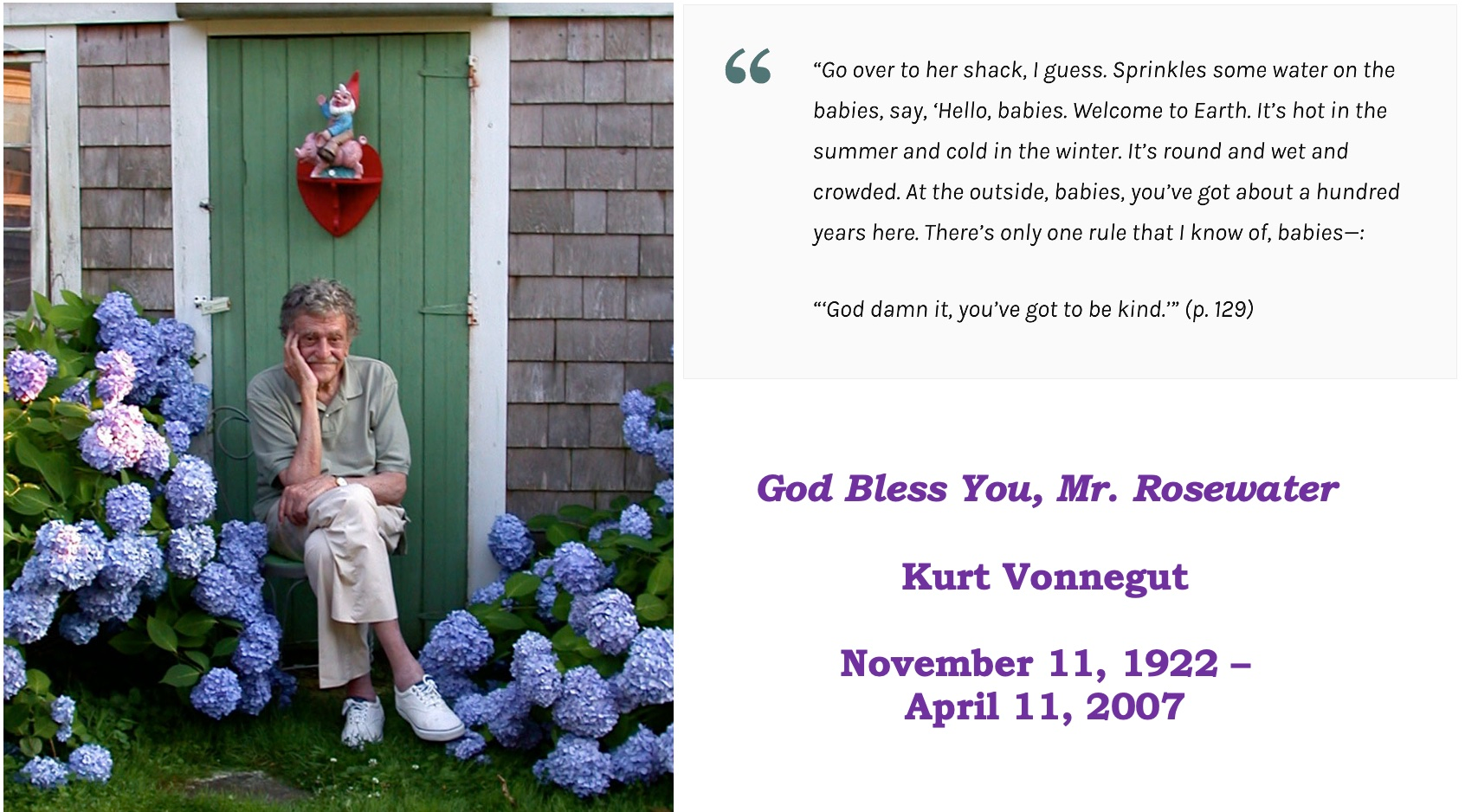
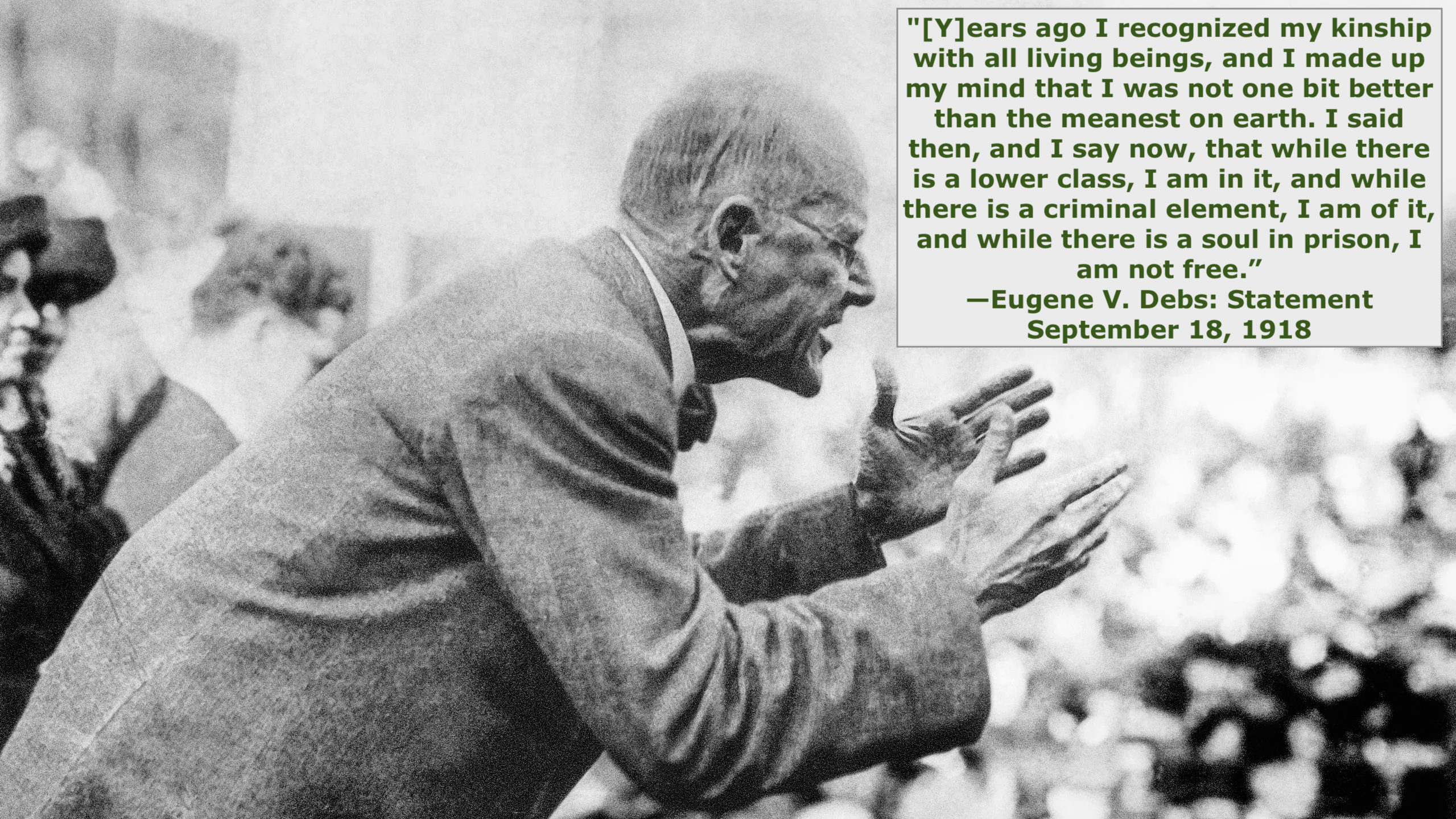
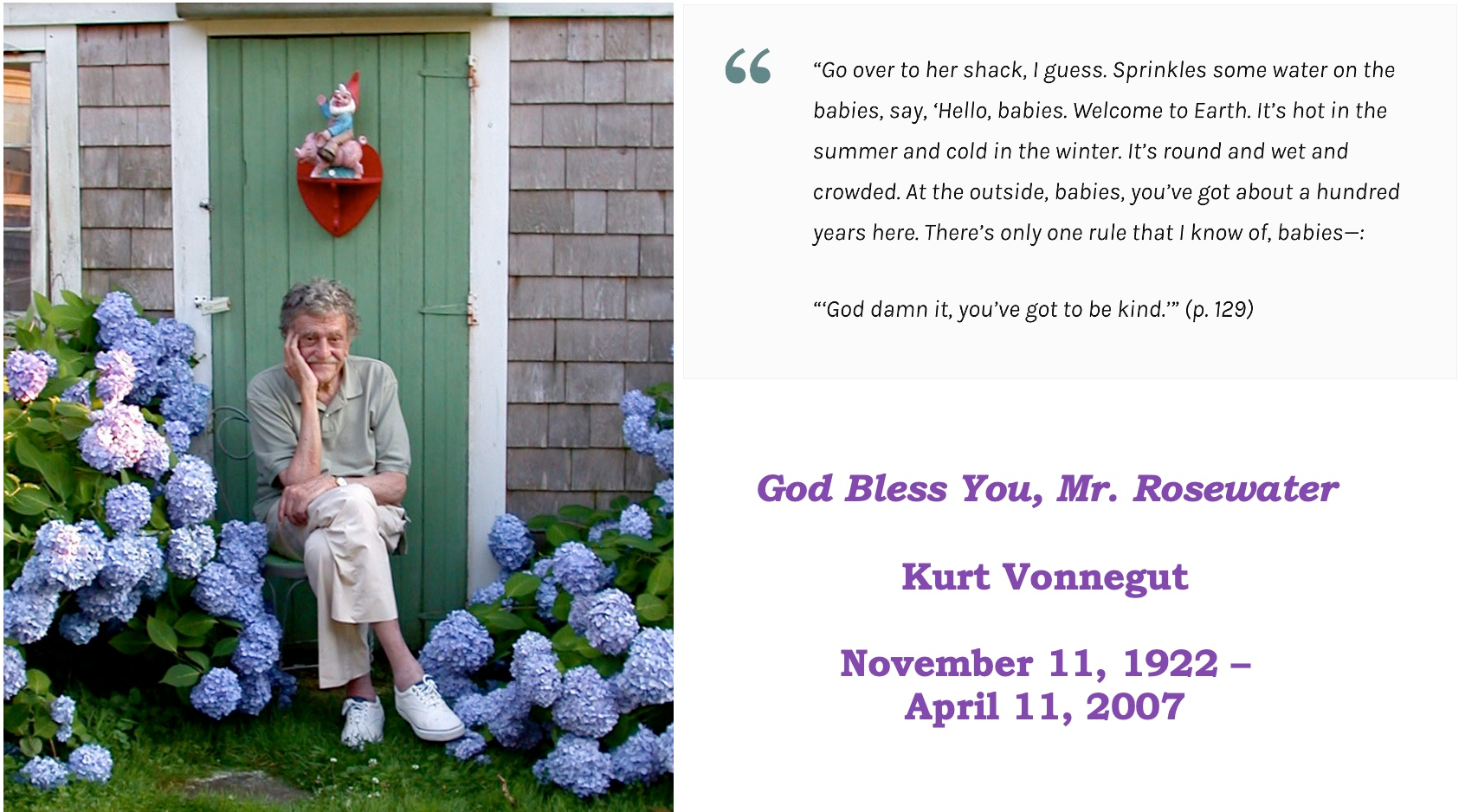
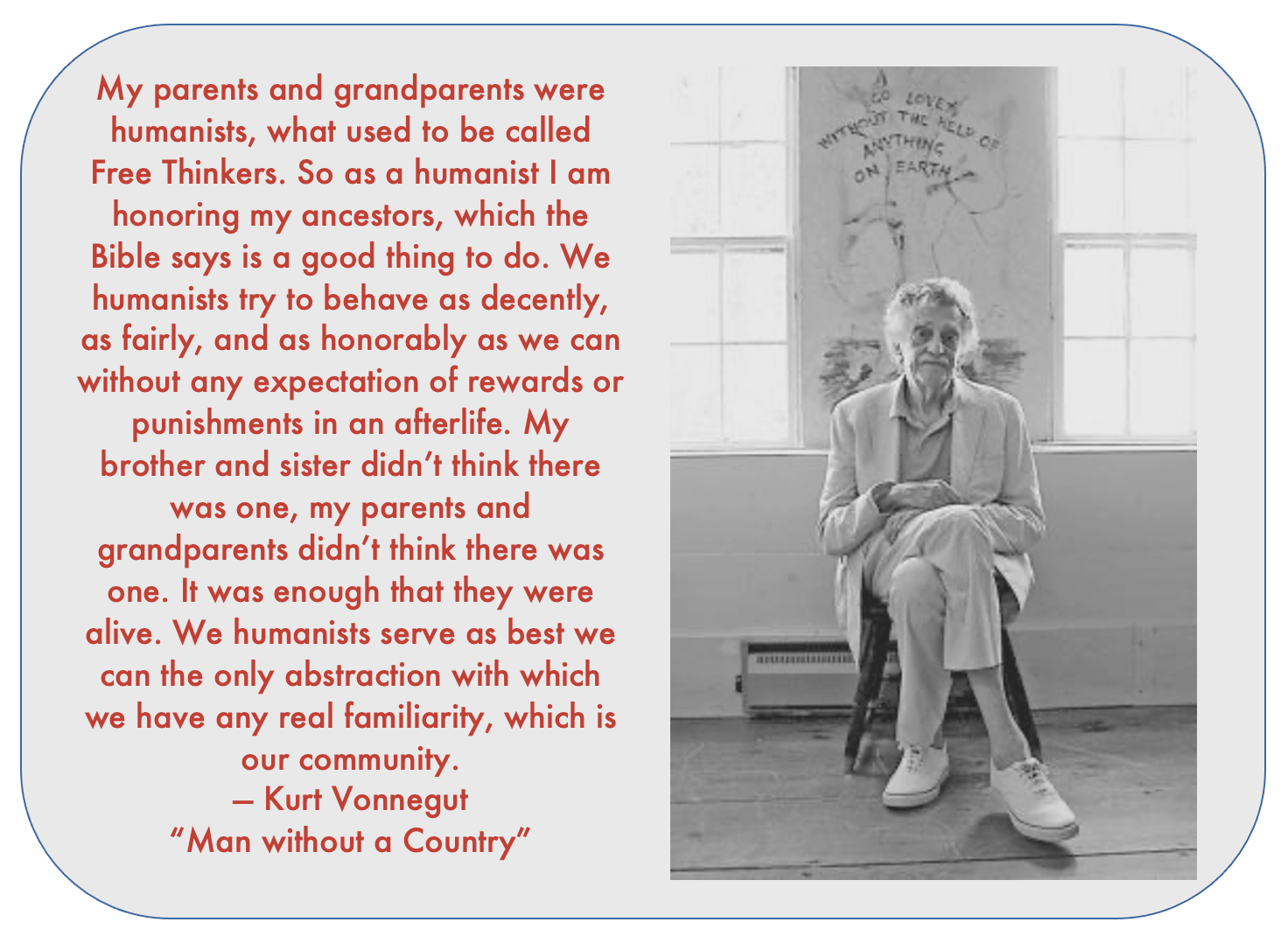
The Left I recognized in myself is grounded in the writing of Kurt Vonnegut, who was profoundly shaped by his Midwestern roots—free thinking and humanism. Vonnegut also was inspired by and introduced me to Eugene V. Debs, one of the most prominent socialists in US history.
I have never found a better way to express what I believe, what constitutes my moral compass, than the words written and spoken by Debs and Vonnegut:
And it is because of these words that I cannot say that I love America—because we have struggled as a country to meet these ideals—but I can say proudly that I love the promise of America, these words that I think are about the most poetic and beautiful promise humans can pursue, as expressed by writer John Gardner:
That idea—humankind’s inalienable right to life, liberty, and the pursuit of happiness—coupled with a system for protecting human rights —was and is the quintessential American Dream. The rest is greed and pompous foolishness—at worst, a cruel and sentimental myth, at best, cheap streamers in the rain.
But this wonderful promise—”humankind’s inalienable right to life, liberty, and the pursuit of happiness—coupled with a system for protecting human rights”—remains unfulfilled because we have failed to truly practice these ideals, we have been negligent about making this promise real—even when we are repeatedly reminded, as MLK expressed:
Moreover, I am cognizant of the interrelatedness of all communities and states. I cannot sit idly by in Atlanta and not be concerned about what happens in Birmingham. Injustice anywhere is a threat to justice everywhere. We are caught in an inescapable network of mutuality, tied in a single garment of destiny. Whatever affects one directly, affects all indirectly. Never again can we afford to live with the narrow, provincial “outside agitator” idea. Anyone who lives inside the United States can never be considered an outsider anywhere within its bounds.
Vonnegut, we must note, was profoundly shaped by being a prisoner of war, and both Debs and MLK were jailed for their moral causes.
We should acknowledge, then, that we all are prisoners of our negligence, our failure to create a safe society, a willingness to simply live with mass and school shootings, and the rising political tide that seeks to take away some people’s access to life, liberty, and the pursuit of happiness.
And the alternative, the path toward honoring the promise, is not even that difficult: “We humanists try to behave as decently, as fairly, and as honorably as we can without any expectation of rewards or punishments in an afterlife.”
Decently. Fairly. Honorably.
As Vonnegut was apt to quip, like a Christian nation.
And yet: “While there is a soul in prison, I am not free.”
I recently cited Bertrand Russell, a philosopher who I read during college. But I also came back to read a biography of Russell in the 1990s during my doctoral program, when I was writing an educational biography for my dissertation.
I was in my mid-30s by then and had left my early 20s search for what I believed mostly behind. As I discovered by becoming a biographer, unmasking any person is quite shocking, and Russell seemed much frailer, less resolute once I saw the whole man.
Russell, you see, had espoused a free love ideology, but putting his beliefs into practice proved much different than advocating for those beliefs.
I think Russell was lurking there in my mind when I saw this graffiti recently:
I snapped a picture with my phone and posted a snarky “Free love or anger?” caption across social media.
Sexual liberation, free love, polyamory, etc., are all fascinating to me because I find these concepts both powerfully compelling and (as witnessed in Russell’s own life) incredibly difficult to realize in lived experiences.
Too often, I think, what should be issues of sexual liberation—more needed by women—is a tactic by men to leverage some space or justification for men’s infidelity; further, these progressive ideas about love and sex tend to hit a wall with men’s inability to be possessive in relationships.
Another interesting example is the creator of DC’s Wonder Woman, William Moulton Marston, who is featured in Jill Lepore’s The Secret History of Wonder Woman.
Marston is often credited with weaving feminist ideals into Wonder Woman, and he also practiced polyamory—living and having children with his wife Elizabeth Holloway Marston and partner Olive Byrne, an arrangement that also included Marjorie Wilkes Huntley from time to time.
Again, the reality behind the ideal revealed that these women made much of Marston’s work possible, and likely did some significant amount of that work.
Who did these progressive ideas about women, sex, and relationships benefit?
Marston reminded me of another foundational author in my life, D.H. Lawrence who expressed and portrayed in his fiction a belief that men needed a woman for his intellectual partner and another for his sexual partner.
These are, of course, just a few examples of how the real world manufactures normal, how individuals navigate that normal or find ways to forge their own normal.
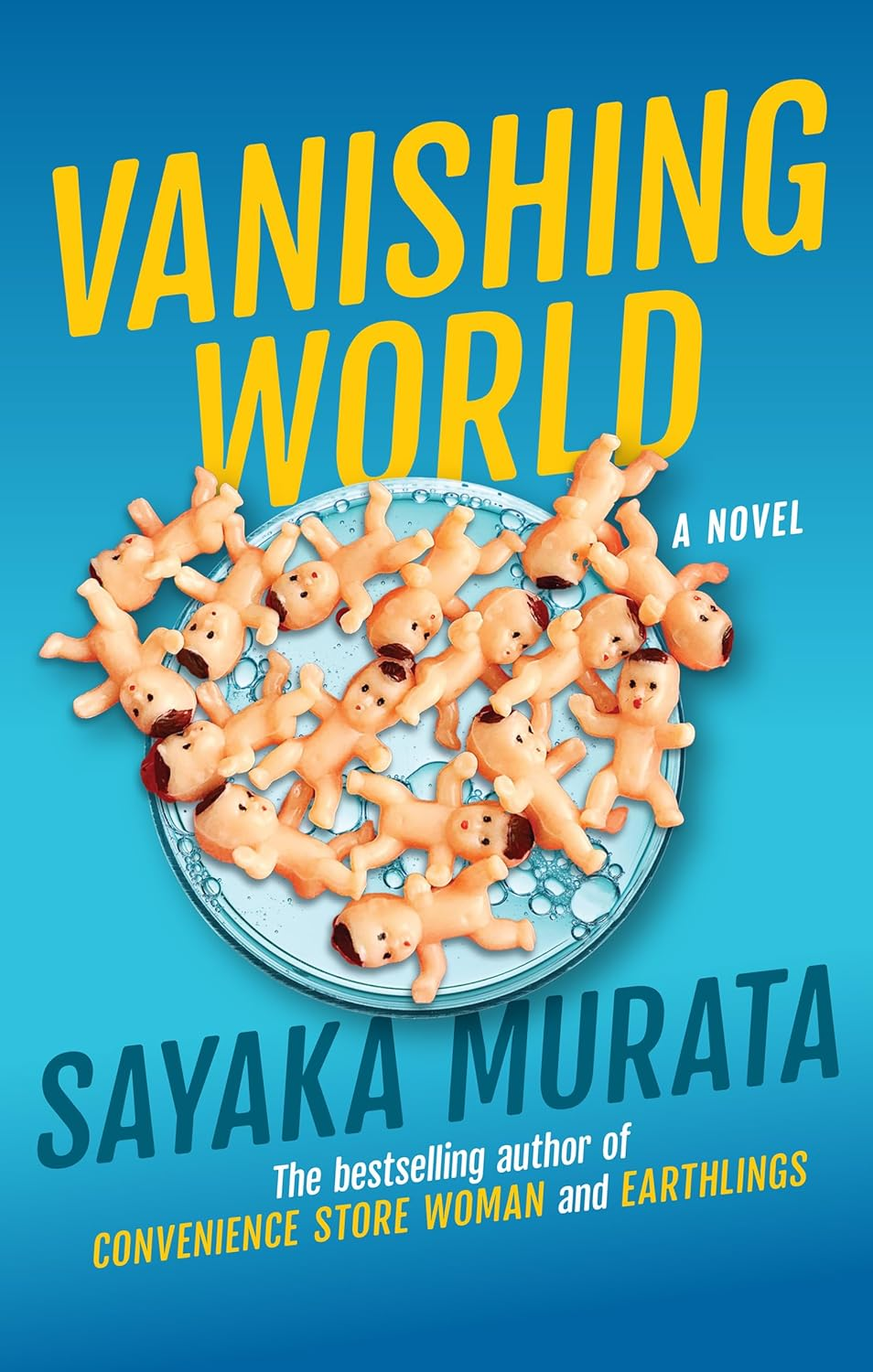
And thus, that blunt graffiti two-words also sit just as I was reading and finishing Sayaka Murata’s Vanishing World.
Sayaka Murata’s Vanishing World: Another Examination of Normal
Like Haruki Murakami, Sayaka Murata is a Japanese writer who draws me in with what reads like literary fiction but is heavily tinged with something like science fiction, or fantasy, or magical realism.
Murata’s works, such as her newest novel Vanishing World, falls into what Margaret Atwood calls speculative fiction. Both Murata and Atwood include elements that are speculative science, but much of these created other worlds seem disturbingly normal, or at least not so much different from the world we live in now.
And similar to her Convenience Store Woman and Earthlings, Vanishing World draws the reader into another engaging and surprising examination of normal.
Amane, the main character, lives in the cusp of an old world where procreation is achieved through intercourse (her parents, to Amane’s discomfort, produce Amane through sex), and the brave new world of procreation only through artificial insemination.
In fact, the new normal is that husband and wife are family, and thus, any sexual contact is deemed incest, taboo.
There are some surprises, twists, and disturbing developments, but all in all, Murata forces the reader to think deeply about sex and gender roles, what makes normal “normal.”
The end is disorienting and powerful (similar to Earthlings), bringing the entire work into stark focus.
“Men and women were now all the same,” Amane acknowledges, “all wombs in service of the human race.”
And just pages from the end, Amane argues with her mother: “‘And you aren’t brainwashed, Mom? Is there any such thing as a brain that hasn’t been washed? If anything, it’s easier to go insane in the way best suited for your world?'”
This speculative world of Murata is about humans making normal “fuck nobody,” a sort of extreme puritanical alternate world that renders human nature unnatural—or at least, no longer normal.
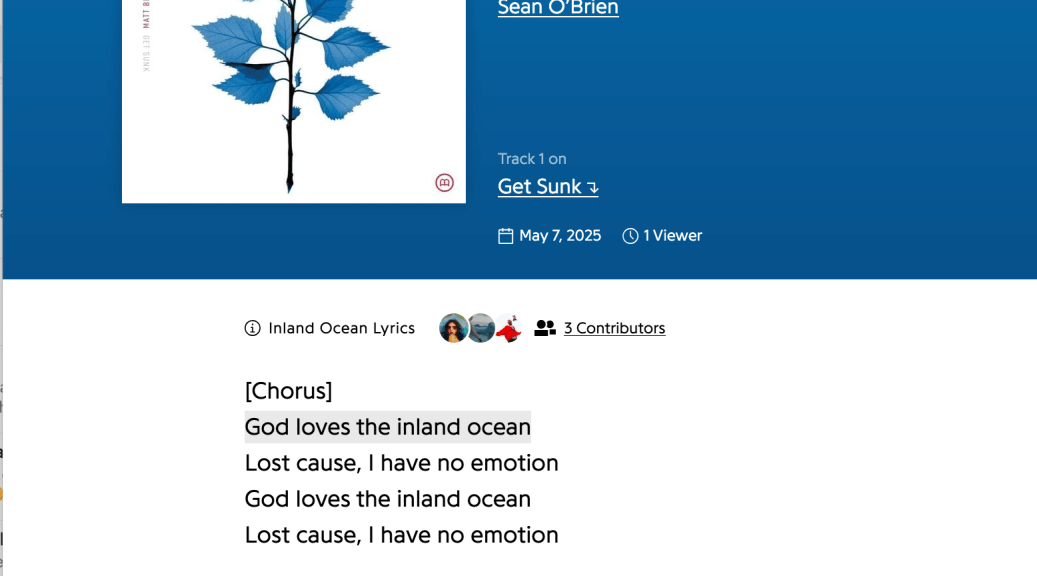
[Header image via Genuis, lyrics by Matt Berninger]
As I have noted often, over my forty-plus years teaching students to write, a few patterns remain constant, one of which is students lacking genre awareness.
On the first day of class, I often ask students what novels they read in high school English, and invariably, students include The Crucible or simply say “Shakespeare.”
They read these plays in book form, and have conflated anything in book form with “novel.”
Also, they mostly are experienced in being students who write, not writers.
So I spend a great deal of time and effort in my writing courses helping students become engaged with authentic writing practices, specifically fostering stronger writing purposes (and understanding writing forms/genres) and processes.
As a fan of The National and lead singer/lyricist Matt Berninger, I was particularly struck by this new interview [1] as Berninger begins promoting his second solo album, Get Sunk:
I think this interview is a really wonderful and brief entry point to discussing writer purpose and process (note that Berninger does use some profanity and references pot smoking).
Berninger is an endearing and quirky as his lyrics. And while he may seem flippant at first (“I’ll start fucking around with stuff”), he makes some very sophisticated and accessible observations about purposeful writing and the importance of the writing process (he has begun scribbling lyrics on baseballs instead of his standard journal, for example).
When the interviewer mentions his favorite lyric from Boxer (The National), Berninger offers a brief window into the importance of being a reader as well as the recursive nature of texts: “I stole that from Jonathan Ames.”
Berninger’s lyrics often pull from books, authors, and other song lyrics. Here is an ideal place to discuss with students the conventions of allusion and references as that creates tension with plagiarism (a great opportunity to tie in so-called canonized writers such as Marianne Moore and T.S. Eliot).
But the core comments I think students need to hear and then practice in the writing are about understanding different writing purposes/forms:
I do think songwriting is a very specific kind of thing…. It’s not—there’s poetry and there’s songwriting…. And I think they’re as different as like swimming and ice skating…. It’s like it’s still just words or just water but they’re totally different things.
This distinction and metaphor are powerful because they acknowledge the complexity of choosing and writing in different ways, for different purposes, and for different audiences.
Berninger also talks about his use of scribbling on baseballs for writing ideas. While quirky, this really captures the writing process in an authentic way (not the scripted way often taught in school).
As a teacher of writing and a writer (as well as avid reader), I want students to be fully engaged as writers—not as students performing a stilted essay for the teacher/professor.
We want for our students a sense of purpose, a demonstration of intent, an awareness of form and audience, and ultimately, a writing product of their choosing and for their purposes.
And in the era of intensified AI, I want to stress that AI has no place in these goals because students need and deserve opportunities to experience all of these aspects of brainstorming, drafting, and presenting a final product.
It may seem crude, careless, and flippant, but if we listen carefully, Berninger’s “fucking around” demonstrates the power and complexity of being a writer—and thus, being a teacher of writing.
[1] I highly recommend this blog post on Bon Iver/Justin Vernon as a companion to the Berninger interview.
Teaching high school English has a Groundhog Day dynamic that people who have not taught may never consider.
Over my 18-year career as a teacher of high school English, I taught some works of literature more times than I’d like to admit. But let me also note that I often taught some works of literature several times a day and then year after year.
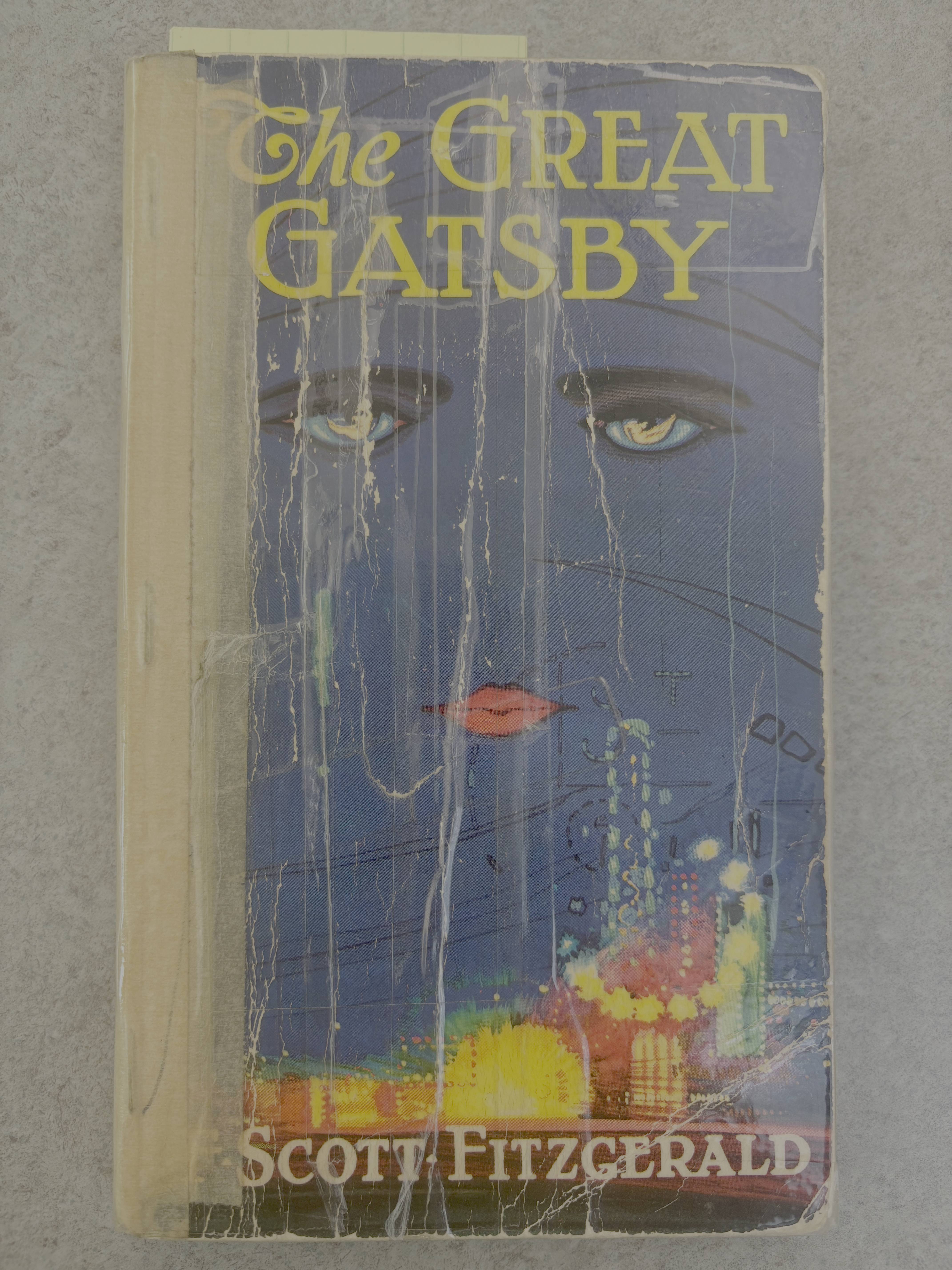
One of those works—that I in some ways loathe—is F. Scott Fitzgerald’s The Great Gatsby, which turned 100 this week in 2025.
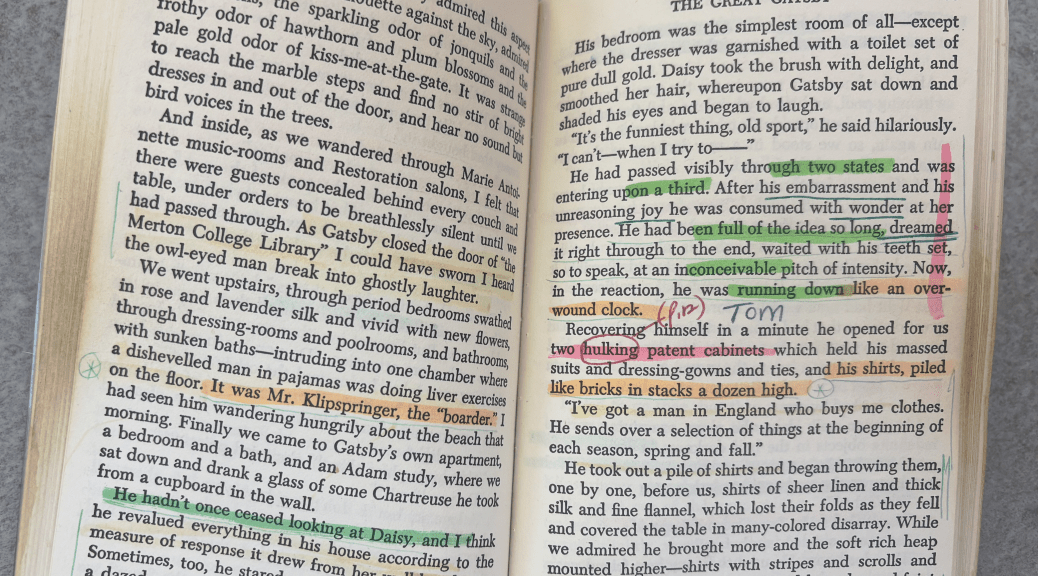
My well-worn teaching copy of The Great Gatsby used to teach high school English from 1984 until 2002.
Setting aside my own skepticism about the canon and requiring all students to read certain so-called “classics,” among the American literature works I was required to teach year after year after year—The Great Gatsby, The Scarlet Letter, The Crucible, and The Sun Also Rises at the core of those required lists—I must admit that Gatsby was often the most accessible for students (easy to read and the Robert Redford film was a great supplement to the unit).
I prefer Hemingway as a writer to Fitzgerald, but I prefer student choice and more diverse and contemporary works as well.
However, a century on and many students in the US still read and study Gatsby in high school along with a fairly conservative list of works from the slightly expanding canon of American literature.
My point here is not to crucify Gatsby or Fitzgerald or modernist literature (lots there that is worth interrogating), but to confront that how secondary (and college) teachers teach along with how students read and learn from Gatsby in traditional and reductive ways that cheat the novel, cheat students, and ultimately cheat the democratic purposes of public education in a (for now) free country.
This act, of course, is a nod to the color imagery running through Gatsby, culminating in the penultimate paragraph of the novel:
Gatsby believed in the green light, the orgiastic future that year by year recedes before us. It eluded us then, but that’s no matter—tomorrow we will run faster, stretch out our arms farther … And one fine morning—
This reductive and figurative language approach to what this novel shows the reader is about more than the often mechanical way students are required and taught to analyze text (more on that next); while teachers, students, and then the public often “get” that Gatsby is about the American Dream, too often that becomes completely disconnected from the novel itself.
Partly, that happens because that next-to-the-last paragraph can become a sort of idealistic doubling-down on the American Dream that Fitzgerald pretty clearly dismantles over fewer than 200 pages.
That idea—humankind’s inalienable right to life, liberty, and the pursuit of happiness—coupled with a system for protecting human rights—was and is the quintessential American Dream. The rest is greed and pompous foolishness—at worst, a cruel and sentimental myth, at best, cheap streamers in the rain. (p. 96)
Taking Gardner’s figurative language, then, Gatsby’s American Dream (a sort of singular obsession with wealth and Daisy) is just “cheap streamers in the rain,” what has for the most part replaced the essential American Dream—life, liberty, and the pursuit of happiness.
Fitzgerald’s own life being sold to the capitalism of Jazz Age America, both in his relentless production of short stories for income and his alcoholism and partying, sits behind the fictional dramatization of what America had become, what America kept becoming, and how America now has nearly fully erased “life, liberty, and the pursuit of happiness” for “filthy lucre” (as D.H. Lawrence warned just a year after Gatsby was published).
Two dynamics are at play here, I think.
The first is most students like Gatsby because it is short and easy to read (notably more so than reading Edgar Allan Poe or Nathaniel Hawthorne, for example); students also enjoy the melodramatic plot of the novel centered on partying, violence, and adultery.
Not to wander to deep into the weeds of literary criticism and classroom pedagogy, but most of us can recognize how often high school English classes become “guess what the English teacher wants you to say about this text”—and that guess often includes some literary technique, what I call the “literary technique hunt.”
For high school teachers and students, then, Gatsby become likes most texts being studied—a vehicle for identifying techniques.
Students begin what amounts to an Easter egg hunt; there’s lots of green and yellow (gold) throughout the novel (hint: money), and the job students have is to find the color and identify the symbolism. (It’s how we ruin poetry, for example.)
About mid-way through the novel, Daisy encounters Gatsby’s “‘beautiful shirts'” (her own Easter egg hunt), and readers encounter the green light:
“If it wasn’t for the mist we could see your home across the bay,” said Gatsby. “You always have a green light that burns all night at the end of your dock.”…
Now it was again a green light on a dock. His count of enchanted objects had diminished by one.
I want to emphasize here, I am not blaming high school English teachers necessarily because the “literary technique hunt” is a consequence of how formal public education has been reduced to testing (easier to test students finding and identifying literary terms than having them do complex analysis of texts) and teachers and schools are expected to be non-political.
The reductive New Criticism of high school English classes seems objective, then, and offers what appears to be a fixed way to assess students.
It is frustrating, however, that Gatsby is reduced to color imagery and symbolism while most of the racism and bigotry are skirted over or ignored entirely.
“They Were Careless People, Tom and Daisy”
Not that I want to “save” Gatsby on its centennial anniversary, but I am particularly invested in literature and how we teach it (and how we often ruin it for students)—and I am also deeply committed to the role of literature/literacy in our democracy, which is currently in Hospice.
But if we could set aside our reductive New Criticism approaches, and then shift our focus away from Nick and Gatsby and toward Tom and Daisy, we could make Gatsby work for our students and for this country that we seem uninterested in saving.
In the last pages, Nick explicates Tom, and Daisy:
I couldn’t forgive him or like him, but I saw that what he had done was, to him, entirely justified. It was all very careless and confused. They were careless people, Tom and Daisy—they smashed up things and creatures and then retreated back into their money or their vast carelessness, or whatever it was that kept them together, and let other people clean up the mess they made … .
Fitzgerald showed us 100 years ago that America was a wasteland, a product of “vast carelessness.”
Arthur Young graduated from high school with honors. However, as an adult, he was illiterate.
Literacy expert Helen Lowe featured Young and concluded:
Arthur could not read, even at a primer level. He could not drive a car, because he could not pass the test for a driver’s license; he could not read the street signs or traffic directions. He was unable to order from the menu in a restaurant. He could not read letters from his family and he could not write to them. He could not read the mixing directions on a can of paint or the label on a shipment of sheet rock. He had been cheated.
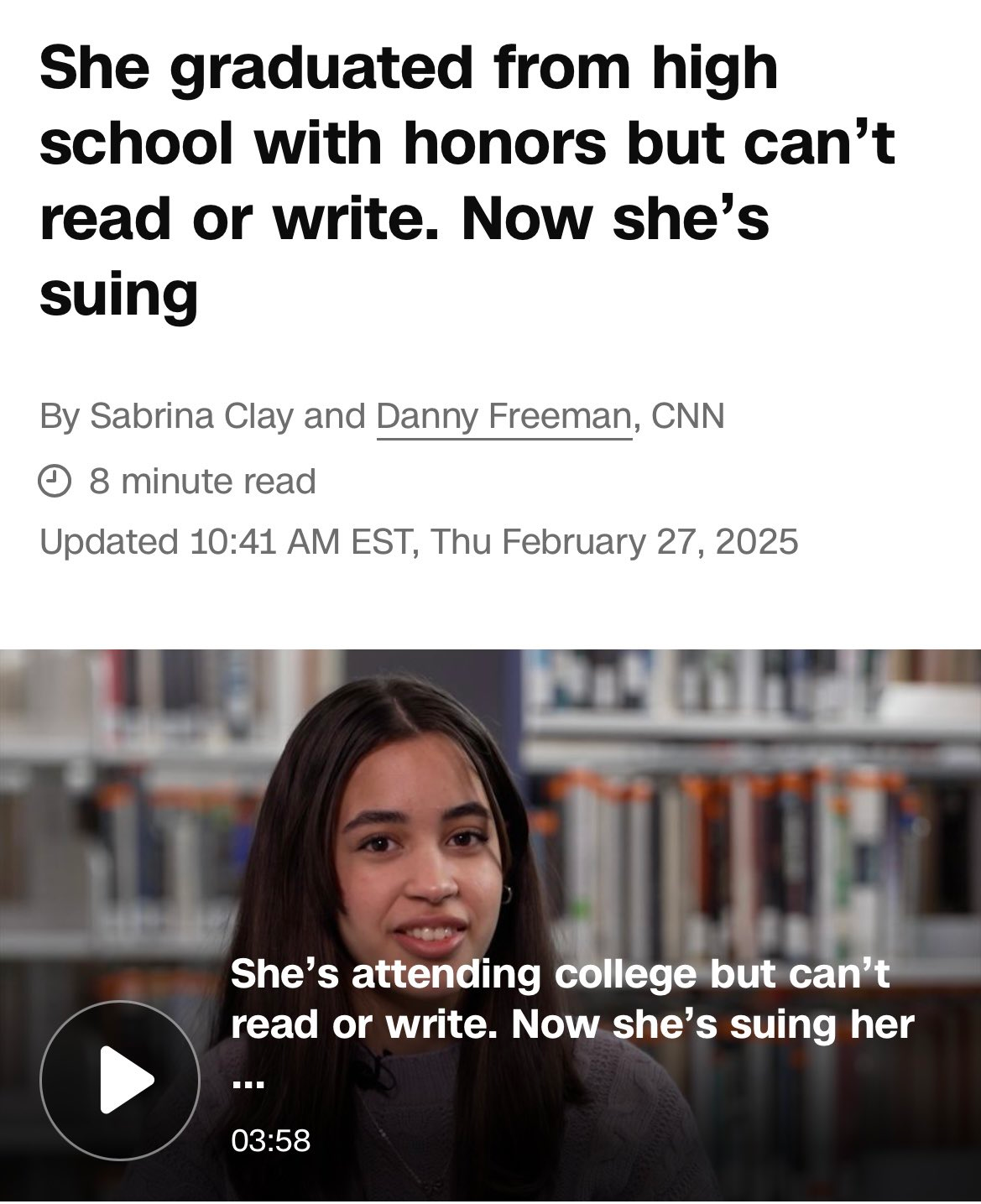
This story may be shocking but also sounds disturbingly familiar to a recent story on CNN:
This young woman, of course, has also been “cheated.”
Both problematic stories seven decades apart are outlier narratives that are both inexcusable failures but are not evidence of any generalizations about education, teaching, or literacy.
Stated bluntly, outliers can never lead to any sort of generalizations.
One of the great failures of public discourse and policy around reading and literacy in the US has been perpetual crisis rhetoric used to drive ideological agendas about what counts as literacy and how best to teach children and young adults to read and write.
If you had a time machine, you could visit any year over the past century in the US and discover that “kids today” can’t and don’t read because the education system is failing them.
These histrionic stories are compelling because they often include real children and adults whose lives have been reduced because of their illiteracy or inadequate literacy.
Ideally, of course, no person in the richest and most powerful country in the world should ever be cheated like that.
But here is the paradox: These outlier stories are distractions from doing the reform and work needed to approach all children and adults being literate.
Once again, reading test data for decades has shown exactly the same reality as all other forms of tests of student learning (math, science, civics, etc.): Over 60% of test scores are causally linked to factors beyond the walls of schools—access to healthcare, food security, housing security, access to books in the homes and communities, and thousands of factors impacting the lives and learning of children.
At best, teacher impact on measurable student literacy is only about 1-14%.
Yet, year after year, decade after decade, the US focuses on teacher quality, curriculum and standards, reading programs, and reading test scores without acknowledging or addressing the overwhelming impact of out-of-school factors on people acquiring the literacy they need and deserve to live their full humanity.
The two stories seven decades apart from above are likely far more complicated than any coverage could detail; the are both compelling and upsetting human stories that deserve our attention, in order to address their individual tragedies as well as taking greater care that others do not suffer the same fate.
However, misreading outlier distractions is not the way to honor that these people have been cheated.
Two things can be true at once: Outlier stories are heartbreaking and inexcusable; however, they prove nothing beyond the experiences they detail.
CNN uses outlier stories for traffic and profit.
Literacy ideologues use outlier stories to drive their agendas as well as to feed the education market.
We are all cheated, once again, when we play the outlier distraction game and refuse to acknowledge and address the crushing realities of inequity in the lives and learning of children.
Each child matters, and all children matter.
Yet, only the adults have the political and economic power to make that a reality.
educator, public scholar, poet&writer – academic freedom isn't free
















 dr. p.l. (paul) thomas