Tag Archives: education

De-Testing and De-Grading Schools (Peter Lang USA)

De-Testing and De-Grading Schools (Peter Lang USA)

Joe Bower and P. L. Thomas, editors

[Preview and order at amazon]

De-Testing and De-Grading SchoolsBook synopsis

A century of education and education reform along with the last three decades of high-stakes testing and accountability reveals a disturbing paradox: Education has a steadfast commitment to testing and grading despite decades of research, theory, and philosophy that reveal the corrosive consequences of both testing and grading within an education system designed to support human agency and democratic principles.

This edited volume brings together a collection of essays that confronts the failure of testing and grading and then offers practical and detailed examinations of implementing at the macro and micro levels of education teaching and learning free of the weight of testing and grading. The book explores the historical failure of testing and grading; the theoretical and philosophical arguments against testing and grading; the negative influence of testing and grading on social justice, race, class, and gender; and the role of testing and grading in perpetuating a deficit perspective of children, learning, race, and class.

The chapters fall under two broad sections: Part I: «Degrading Learning, Detesting Education: The Failure of High-Stake Accountability in Education» includes essays on the historical, theoretical, and philosophical arguments against testing and grading; Part II: «De-Grading and De-Testing in a Time of High-Stakes Education Reform» presents practical experiments in de-testing and de-grading classrooms for authentic learning experiences.

Contents

Contents: Lisa Guisbond/Monty Neill/Bob Schaeffer: NCLB’s Lost Decade for Educational Progress: What Can We Learn from This Policy Failure? – Fernando F. Padró: High-Stakes Testing Assessment: The Deus ex Machina of Quality in Education – Anthony Cody: Technocratic Groupthink Inflates the Testing Bubble – Lawrence Baines/Rhonda Goolsby: Mean Scores in a Mean World – Julie A. Gorlewski/David A. Gorlewski: De-grading Literacy: How New York State Tests Knowledge, Culture, and Critical Thinking – Morna McDermott: The Corporate Model of Schooling: How High Stakes Testing Dehumanizes Education – Richard Mora: Standardized Testing and Boredom at an Urban Middle School – Brian R. Beabout/Andre M. Perry: Reconciling Student Outcomes and Community Self-Reliance in Modern School Reform Contexts – David L. Bolton/John M. Elmore: The Role of Assessment in Empowering/Disempowering Students in the Critical Pedagogy Classroom – Alfie Kohn: The Case Against Grades – Joe Bower: Reduced to Numbers: From Concealing to Revealing Learning – John Hoben: Outside the Wounding Machine: Grading and the Motive for Metaphor – Peter DeWitt: No Testing Week: Focusing on Creativity in the Classroom – Hadley J. Ferguson: Journey into Ungrading – Jim Webber/Maja Wilson: Moving Beyond «Parents Just Want to Know the Grade!» – P. L. Thomas: De-grading Writing Instruction in a Time of High-Stakes Testing: The Power of Feedback in Workshop – Brian Rhode: One Week, Many Thoughts.

About the author(s)/editor(s)

Joe Bower is a teacher in Red Deer, Alberta, Canada. He spent 10 years teaching grade eight language arts and science in a middle school, and is now a special education teacher in a childrens psychiatric assessment unit. Follow his work at http://www.joebower.org and @joe_bower.

P. L. Thomas, Associate Professor of Education (Furman University, Greenville SC), taught high school English in rural South Carolina before moving to teacher education. He is currently a column editor for English Journal (National Council of Teachers of English) and series editor for Critical Literacy Teaching Series: Challenging Authors and Genres (Sense Publishers). Follow his work at https://radicalscholarship.wordpress.com/ and @plthomasEdD.

Series

Counterpoints: Studies in the Postmodern Theory of Education. Vol. 451
General Editor: Shirley R. Steinberg

Recommended: Educational Documentaries

I teach a May Experience course, The Reel World: The Depiction of Schools on Film. A colleague of mine in the education department and I designed the course before Waiting for “Superman,” but the course is intended as a way to examine how political and public discourse shapes perceptions about public schools as well as policy. The course was revised to include Poverty Studies credit so many of the films explore how education intersects class and race.

This May X, I added the choice of reading either Police in the Hallways: Discipline in an Urban High School, by Kathleen Nolan, or Hope Against Hope: Three Schools, One City, and the Struggle to Educate America’s Children, by Sarah Carr.

The focus of the discussion, however, remains on the eight documentaries below with some annotations about what aspects of education each film highlights. I do recommend all of these films, although each has some limitations as most documentaries do.

Recommended Documentaries on Education:

Corridor of Shame

This documentary focuses on a court case in South Carolina initiated by high-poverty school districts surrounding primarily the I-95 corridor of the state, paralleling the east coast and stretching from the NE to the SE region. The documentary suffers from melodramatic production values (music, slow-motion panning of sad children’s faces), but the essential claim of the film is important for confronting the social inequity that is reflected in educational inequity, particularly in the South. Issues included in the film are school funding, community-based schools, access to high-quality educational opportunities and facilities, teacher assignments related to student characteristics, and state education accountability mechanisms. Some related resources (SC school report cards, poverty indices, related blog posts) to the documentary can be found HERE.

Heart of Stone

Ron Stone stands at the center of this film about an urban high school in New Jersey. The film is solid and interesting—while also creating a good deal of tension and presenting a surprise ending. Many important issues are raised, notably the controversial stance of Stone as principal toward gangs and gang leaders attending the high school. This is an ideal companion to Police in the Hallways and it confronts several important issues about education and education reform—urban schools, high-poverty/majority-minority schools, zero tolerance policies, deficit views of minorities and impoverished children, gang presence and violence, leadership styles, police in schools.

Flock of Dodos

The controversy, teaching evolution in public schools, that will not die—although it has evolved, ironically—is explored by this film that is engagingly personal and often humorous. The Intelligent Design (ID) movement is the approach of the moment for creating debates about if and how evolution should be taught in schools. While the filmmaker is upfront with his allegiances to science, the documentary is fair, almost to a fault as it allows the scientists to show why their expertise is often lost in their arrogance. The film successfully helps viewers navigate the definitions of science, evolution, ID, and creationism; it also confronts the roles of religion, ideology, and politics (specifically the power of school boards) in the “teach the controversy” assertions found among ID advocates. An interesting connection to this documentary is the news coverage of a creationist test given to students in a SC private school.

Little Rock Central: 50 Years Later

These documentaries often soar because of the people allowed to speak for themselves. This excellent HBO film opens with Minnijean Brown Trickey returning to Little Rock Central High, and then it never fails to deliver throughout. I would rate this a must-see among the selections in this course. The film confronts Brown v. Board, separate and unequal, schools within schools, the return of segregation (especially in the South), and the lingering tensions between the ideal and reality of racial harmony. Related pieces on the rise of the segregated South and education reform in the New Jim Crow Era are recommended. Alexander’s The New Jim Crow is also an excellent connection.

Hard Times at Douglass High

When Waiting for “Superman” was released and disproportionately praised in the media, I wrote a piece on this documentary to suggest it is far superior and to ask viewers what these administration and teachers at Douglass High were supposed to do. The focus of this film is No Child Left Behind (NCLB) in the context of a high-poverty, majority minority urban high school. Some of the most significant moments of the documentary are disturbing scenes of violence in the hallways and one female student recounting a fight with an adult male relative. Teachers struggling with the students, including one TFA recruit, are included, and this is also a strength of the film. The film addresses accountability, administrator/faculty relationships, the roles of teachers (especially young teachers), the influence and struggles of parents, the voices of students, the significance of extracurricular activities, and the limitations of school-only reform and accountability under the weight of poverty and racial inequity.

Clearcut

Who controls the money, controls everything—or at least who controls the money wants to control everything. This documentary examines the clash between a family funding scholarships and the science curriculum in a logging community. This is a powerful pairing with Flock of Dodos since both documentaries dramatize the debate over who should determine the curriculum in public schools serving a free society. Clearcut and Flock of Dodos also highlight the culture war that simmers beneath almost all educational controversies. The issues raised in this documentary can be linked to the influence of entrepreneurs in the current reform movement, such as Bill Gates, and the role of school boards is also a central issue, again as in Flock of Dodos.

Prom Night in Mississippi

Morgan Freeman challenges his childhood hometown to integrate the prom, and he’ll foot the bill; this is the focus of an engaging and powerful documentary on the persistence of segregated proms in the twenty-first century. The voices of students, parents, and administrators drive this film, and the intersection of racism and public education takes center stage through those voices. A potential pairing (non-education related) is the documentary The Loving Story about the 1967 Supreme Court case addressing interracial marriage. The 2013 prom integration in Georgia also is a suitable companion to this film.

Grain of Sand

Neoliberalism driving education reform in Mexico is confronted in this documentary, which provides a strong conclusion to the May experience addressing education. Corporations (Walmart, Coca-Cola, Ford), corrupt unions, and President Fox provide a matrix of influential forces shaping and even dismantling public education in Mexico, paralleling the same neoliberal agenda highlighted under George W. Bush and increased under Obama. A combative and disturbing documentary, Grain of Sand forces viewers to consider the value of the Commons and the dangers of privatization. Like Hard Times at Douglass High, this film suggests that accountability reform based on high-stakes testing poses much greater harm than good for schools and students.

—–

A companion video worth pairing with any of the above films is Tupac Shakur at 17 discussing education.

First Name and then Act

If we cannot even name the reality we claim we want to change, then we will never change that reality.

—–

There are two points that I make in my scholarship and public writing that are certain to prompt reactions from both friends and foes that suggest I may have just run down someone’s grandmother with a bus:

Let me try once again to clarify both that these claims are true and necessary to name in order to change.

“Poverty is destiny” is a normative [1] fact of the United States. For most children, the social class they are born into predicts the trajectory of their lives, independent of their self-worth, effort, and all sorts of other factors we are more likely to associate with the individual child.

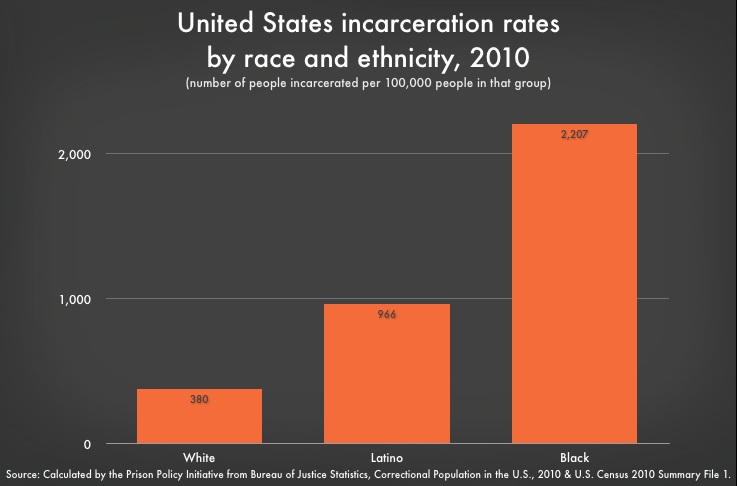
That this is a normative statement includes a concession that outliers exist (some people fall out of and rise above the social class of their births), but outliers do not discredit a normative statement just as we must caution against making an outlier status the rubric for normalized behavior. In other words, that African American men have scaled to the presidency and supreme court stands as outliers against the disproportionate number of AA men incarcerated in our country:

Michelle Alexander has embodied the need to name in order to change by confronting the normative facts of mass incarceration as well as the indisputable fact that mass incarceration is the New Jim Crow, thus racist.

And Sean Reardon has now offered a powerful case that “poverty and affluence are destiny”:

Here’s a fact that may not surprise you: the children of the rich perform better in school, on average, than children from middle-class or poor families. Students growing up in richer families have better grades and higher standardized test scores, on average, than poorer students; they also have higher rates of participation in extracurricular activities and school leadership positions, higher graduation rates and higher rates of college enrollment and completion….

In the 1980s, on an 800-point SAT-type test scale, the average difference in test scores between two such children would have been about 90 points; today it is 125 points. This is almost twice as large as the 70-point test score gap between white and black children. Family income is now a better predictor of children’s success in school than race….

We are still talking about this despite decades of clucking about the crisis in American education and wave after wave of school reform.Whatever we’ve been doing in our schools, it hasn’t reduced educational inequality between children from upper- and lower-income families….

The income gap in academic achievement is not growing because the test scores of poor students are dropping or because our schools are in decline….

It may seem counterintuitive, but schools don’t seem to produce much of the disparity in test scores between high- and low-income students. We know this because children from rich and poor families score very differently on school readiness tests when they enter kindergarten, and this gap grows by less than 10 percent between kindergarten and high school. There is some evidence that achievement gaps between high- and low-income students actually narrow during the nine-month school year, but they widen again in the summer months….

The more we do to ensure that all children have similar cognitively stimulating early childhood experiences, the less we will have to worry about failing schools. This in turn will enable us to let our schools focus on teaching the skills — how to solve complex problems, how to think critically and how to collaborate — essential to a growing economy and a lively democracy.

Alexander and Reardon are naming normative facts—ones that many all along the ideological spectrum not only refuse to do themselves, but rush to silence others who do name in order to change.

If the patterns of mass incarceration and “no excuses”/”zero tolerance” schools and policies even impacted privileged white males proportionately in the U.S., the outcry would be deafening.

The current and historical racially disproportionate and negative patterns of the U.S. penal and judicial systems and the rise of highly segregated “no excuses” charter schools and “zero tolerance” urban public schools must be named and then we must act t change that which is racist, that which is classist, that which is sexist.

Refusing to name, refusing to act guarantees poverty will remain destiny and the current education reform movement will continue to mirror the New Jim Crow of mass incarceration.

If you are uncertain about the messages our culture sends about race, view the video below:

This Is The Worst Thing I Have Ever Heard A Child Say

[1] “Normative” is being expressed as “typical,” that which can fairly be called “normal” in the sense of mode and/or more than half of a population exists in that condition.

The Bully Politics of Education Reform

America is a bully nation.

America is the embodiment of might-makes-right. When another country (USSR) invades Afghanistan, America is filled with righteous indignation, but when America invades Afghanistan, well, all is right with the world.

America has bred the bully tactic of vigilantism in the sanctified Petri dish of law (Stand Your Ground), and the result is the person with the gun is the law while the victim’s innocence is extinguished along with the person’s life.

To mask the bully culture of the U.S., bullying is confronted as a school-based problem among children (note the distraction of the R rating in the documentary on bullying addressed by Nancy Flanagan and Douglas Storm). Yet, the exact ruling class who denounces bullying among children are themselves bullies.

So there is no surprise that the current education reform movement is characterized by bully politics.

NCTQ: Teaching Teachers a Lesson

In the mid-1800s, public education was called a “’dragon. . .devouring the hope of the country as well as religion. [It dispenses] ‘Socialism, Red Republicanism, Universalism, Infidelity, Deism, Atheism, and Pantheism—anything, everything, except religion and patriotism,’” explains Jacoby (2004, pp. 257-258). Bullying public education, then, has long roots, at least stretching back to the threat of universal public schooling detracting from the Catholic church’s control of education in the nineteenth century.

From there, the bullying of public schools continued, judging the quality of our public schools based on drop-out rates (Get adjusted, 1947). We must recognize that the demonizing of public schools and the condemnation of school quality are the way we talk about and view schools in the U. S. as popular discourse and understanding, but this historical badgering of schools has evolved recently into a more direct and personal attack on teachers.

While it appears we cringe when children bully each other, we have no qualms about inexpert, inexperienced, and self-proclaimed education reformers bullying an entire profession.

While the bullying can be witnessed in the discourse coming from Secretary of Education Arne Duncan, former-chancellor Michelle Rhee, and billionaire-reformer Bill Gates, one of the most corrosive and powerful dynamics embracing bully politics is the rise of self-appointed think-tank entities claiming to evaluate and rank teacher education programs. A key player in bully politics is the National Council on Teacher Quality (NCTQ).

NCTQ represents, first, the rise of think tanks and the ability of those think tanks to mask their ideologies while receiving disproportionate and unchallenged support from the media.

Think tanks have adopted the format and pose of scholarship, producing well crafted documents filled with citations and language that frame ideology as “fair and balanced” conclusions drawn from the evidence.

Nothing could be farther from the truth.

NCTQ grew out of the Thomas B. Fordham Foundation and the Education Leaders Council (ELC), which is associated with the Center for Education Reform, securing in the process unsolicited federal funds (over $9 million under George W. Bush).

In short, NCTQ is not an unbiased and scholarly enterprise to evaluate and reform teacher education. NCTQ is a right-wing, agenda-driven think tank entity determined to marginalize and discredit teacher education in order to promote a wide range of market-based ideologies related specifically to public education.

Further, and powerfully connected to the bully politics of NCTQ, is the association between NCTQ and U.S. News & World Report. In other words, NCTQ lacks educational and scholarly credentials and credibility, but gains its influence and power through direct and indirect endorsements from government, the media, and entrepreneurs (re: Gates foundation and funding).

NCTQ has released one report on student teaching. and a self-proclaimed national review of teacher preparation programs is scheduled for June 2013.

How, then, is this bully politics?

In both reports, NCTQ contacts departments and colleges of education with a simple but blunt request: Cooperate with us or we’ll evaluate you however we can, and publish our report regardless. These requests demand extensive data from the departments and colleges, and then subject these programs to standards and expectations designed by NCTQ completely decontextualized from the departments and colleges being “evaluated” against those standards. In other words, the basis for NCTQ’s evaluations have not been vetted by anyone for being credible. A department or college could very well be rated high or low and that rating mean little since the department or college may or may not consider the criteria of any value.

In fact, the first report by NCTQ has been reviewed (most think tank reports receive tremendous and uncritical coverage without review, and when reviewed, those reviews tend to receive almost no media coverage), confirming that NCTQ produces biased and careless work. Benner’s review concludes, in part:

The NCTQ review of student teaching is based upon the assumption that it is not only possible, but also worthwhile and informative to isolate student teaching from the totality of a teacher preparation program. This notion is in direct conflict with the perspective that effective teacher education programs avoid the isolation of pedagogy and classroom management content, offering such knowledge and skills within a learning environment centered upon a clinical experience.

The sample of programs cannot be characterized as representative based on any statistical standard or recognized sampling technique. The problems include disproportionate samples, artificial restrictions, selection bias toward the weakest programs within universities, lack of clarity regarding sample size, and unsound selection procedures for the sample-within-sample. The problems with data collection include how the ratings were derived, how site visit destinations were selected and how the site visits were used in the data analysis, and how principals were surveyed and/or interviewed.

Limitations in the development and interpretation of the standards, sampling techniques, methodology, and data analysis unfortunately negate any guidance the work could have offered the field and policy makers. However, the fact that this particular review is ill-conceived and poorly executed does not mean that all is well in teacher education. The education of future teachers can be greatly improved by increased selectivity of the students admitted into teacher preparation programs, strengthened clinical experiences woven into the study of teaching and learning, increased demand for teachers to have strong content knowledge and understanding of content-specific instructional strategies, and stricter enforcement of program approval standards.

NCTQ, espcially in its relationship with the media, appears more concerned about creating an appearance of failure within tecaher education than with genuinely addressing in a scholarly way what works, what doesn’t work, and how to reform teacher education.

The bully depends on status—the weight of appointment, designation—and the threat of wielding that power regardless of credibility. The bully depends on repetition and volume of claims over the confirmation of evidence or logic.

The current education reform movement is in the hands of bullies and in the vortex of bully politics. Left unchecked, bullying is incredibly effective for the benefit of the bullies and detrimental to everyone else.

Calling out the bullies, however, is possible and even relatively simple since the bully has nothing genuine to stand on.

In the long run, truth trumps bullying, but truth cannot win in the cloak of silence and inaction.

The States: More Bully Politics of Education Reform

From South Carolina to New Jersey to Wisconsin—and all across the U.S.—universal public education is under assault by the bully politics of education reform.

In my home state of South Carolina, Governor Haley and Superintendent Zais, neither of whom have experience or expertise in education, are seeking to attack unions (although SC is a non-union, right-to-work state), increase education testing through adopting Common Core State Standards (CCSS), deprofessionalize teachers through new accountability and merit-pay schemes, and cripple public schools by endorsing expanded choice initiatives.

Tractenberg details a similar pattern in New Jersey:

Gov. Chris Christie wastes no opportunity to trash Newark’s public schools. His assaults continued recently at a national school choice conference, where he and odd-couple partner Mayor Cory Booker were featured speakers.

Aside from Christie’s well-known penchant for confrontation, there are two big problems with his attacks.

First, he insists on citing “facts” that are either flat-out wrong or cherry-picked to emphasize the worst in Newark’s schools. An education expert recently questioned why those promoting school choice often use the best charter schools to characterize all charter schools and the worst regular public schools to characterize all those schools.

The situation is even more grim in Wisconsin, home of the relentless Governor Walker:

Walker is the archetypical bully. He has plenty of insecurities as a possible suspect in a John Doe case and as a college dropout–which necessitates his attacks on the ‘liberal’ academics. Self-esteem issues explain his need to repeatedly remind us how ‘courageous’ he has been and how he is like Ronald Reagan. Walker, like most bullies, yearns for status—which explains his national speaking tour.  Most blatantly bullying is Walker’s ‘divide and conquer’ management style (openly advertised to one of his billionaire campaign donors).

No group is better skilled at handling bullies, like Walker, than public educators. Teachers have much experience managing bullies in schools. We are trained in anti-bullying tactics. We have intervened in bullying situations and we advise our students on how to counter bullying. It is now time for Wisconsin’s teachers to embrace what we teach our students.

Steve Strieker, then, calls for a response in Wisconsin that every educator should heed: “Public educators must not be bystanders to Walker’s bullying.” Part of the action educators must take is to identify the hypocrisy and lack of credibility coming from the current leaders in the call to reform schools along “no excuses” and corporate ideologies.

Bully Bravado Masks Inexperience, No Expertise, and Hypocrisy

Presidents, Secretaries of Education, Governors, and State Superintendents of Education historically and currently have used their bully pulpits to speak to and directly influence public education in the U.S. and in each state. In the twenty-first century, billionaires, millionaires, athletes, and celebrities have increasingly joined those political leaders by adopting education as their hobby. Among all of these elites, several patterns expose their combined failure to understand the problems facing and solutions needed for education—despite their elitist status that allows them power and prestige in the education debate. Those patterns expose these leaders’ hypocrisy and lack of credibility and include the following:

• Most of these leaders experienced educational advantages unlike the schools they hope to create by dismantling public schools. Bill Gates, Arne Duncan, and Mitt Romney, for example, enjoyed the luxury of low student-teacher ratios, but claim class size doesn’t matter (although class size does matter). The hypocrisy of the “no excuses” reformers reveals that these people living in privilege have a different standard for other people’s children.

• Most of these leaders have never taught a day in their lives, and have no background in education other than their appointments and self-proclamations as educators. Sal Khan—like Duncan, Gates, and the governors across the nation—for example, has been anointed “educator” and “innovator” without having ever taught, without holding any degrees in education.

• Most of these leaders have either a weak or nonexistent grasp on the current knowledge and research-base for teaching and learning. Further, like Christie, when these reformers call on evidence, they either cherry-pick, distort, or misrepresent the data. Recently, Superintendent Zais (SC) discounted paying teachers for years of experience or advanced degrees since, as he claimed, those two characteristic do not correlate positively with higher student test scores. But Zais does endorse merit pay, value-added methods of teacher evaluation, charter schools, and vouchers/tuition tax credits—all of which have the same correlation with higher student test scores as his claim about experience and advanced degrees.

With these patterns in mind, educators must consider directly the situation in Wisconsin, where a recall highlights the power of action, and possibly highlights yet again the negative influence of passive educators.

Wisconsin, along with SC and New Jersey, is not just one state in the union, but a very real crucible of democracy. Educators and citizens across the U.S. must not ignore that an attack on public schools, public school teachers, and public school students is an attack on democracy.

Democracy is not just an ideal, it is an act of the individual fully committed to the community.

References

Get adjusted. (1947, December 15). Time.

Jacoby, S. (2004). Freethinkers: A history of American secularism. New York: Henry Holt and Company.

Note

Reposting of two separate blogs from 2012—The Bully Politics of Education Reform and The States: More Bully Politics of Education Reform

The (Lingering) Bill Gates Problem in School Reform

In his Washington Post Op-Ed (28 February 2011), Bill Gates builds to this solution to education reform*:

“What should policymakers do? One approach is to get more students in front of top teachers by identifying the top 25 percent of teachers and asking them to take on four or five more students. Part of the savings could then be used to give the top teachers a raise. (In a 2008 survey funded by the Gates Foundation, 83 percent of teachers said they would be happy to teach more students for more pay.) The rest of the savings could go toward improving teacher support and evaluation systems, to help more teachers become great.”

Gates also includes his own foundation’s survey to give his claims the appearance of evidence-based reform (although he misrepresents even that), but this claim, as well as the continuing free pass Gates and other education hobbyists and celebrities receive from the media and the public (see the softballs tossed to Gates in an interview at Newsweek, for example), proves to reveal several ironic lessons in education reform:

Wealth and celebrity do not equal expertise. The United States is a celebrity culture, and we revere wealth because we aspire to wealth. Why do we listen to Dr. Phil and Dr. Oz? Because Oprah endorsed them—not because they offered the public credible expertise in their fields. The current education reform debate is being driven by wealth, celebrity, and life-long bureaucrats—not by the expertise and experience of millions of teachers, scholars, and researchers who have credible evidence about the problems that face our public education system and the likely solutions that would move us closer to the promise of that system in our democracy.

Calls for accountability tend to come from those outside and above that accountability. As I will discuss later, the role of evidence is interesting and disturbing in the claims made by the new reformers, including Gates. A central part of the push to hold teachers accountable is tying teacher pay to evidence, but when these claims are made, Gates and others are never required to show any evidence themselves about their claims. As well, billionaires, millionaires, celebrities, and politicians all exist in lives in which they are less often held accountable for their actions when compared to the vast majority of Americans.

Teaching and learning are not the simple transmission of a set body of knowledge from an authoritarian teacher and to a passive classroom of students. The smoldering charges that our schools are overburdened by “bad” teachers, and thus we need to improve our teaching core, has distracted us from considering first exactly what the teaching/learning process should look like in universal public education system built to support a free people and a democracy.

The new reformers have framed teaching as both the most important element in educational outcomes (although evidence refutes that simplistic claim) and a simple act of transmitting knowledge to a large group of students to raise test scores linked to national standards.

If we need the best and the brightest and if teachers alone can overcome the weight of poverty, then reducing teaching to a service industry contradicts internally an argument that is also easily disproved since both initial claims are false. Teaching and learning are messy, idiosyncratic, and nearly impossible to measure or trace to single points of causation.

The political and corporate elite as well as the general U.S. public simply do not respect teachers and do not value education. The United States, as the wealthiest and most powerful country in the history of humanity, has and can make anything happen we want. We move forward with wars when we decide we should, we bail out failing banks when we feel we should, we make a whole host of celebrities wealthy when we want (and we never hold them accountable for their egregious lack of respect for anything), and we could eradicate childhood poverty and support fully a vibrant and world-class education system–if we wanted to. But we don’t.

Evidence doesn’t matter, but it should. As the first point above suggests, the public seems content with celebrity and wealth, but skeptical of evidence. I have had dozens of experiences offering public commentary on education, citing extensively why I hold the positions I do, but one of the most common replies I receive is, “Anybody can make research say whatever they want.” While I empathize with the sentiment, this belief is flawed because it oversimplifies the research debate in the same way that the new reformers oversimplify the education reform debate. The truth about research is that one study is interesting, but that one study proves little.

Once research has been peer-reviewed, while no guarantee, that study gains credibility. Then, as research builds to a body of peer-reviewed research with clear patterns, we reach safe ground for public claims and policy (see this about charter schools, for example). Neither cherry-picking studies to advance an agenda nor being cavalier and cynical about research is conducive to advancing humanity through our greatest gifts as human — our minds.

Poverty is the unspoken and ignored weight on education outcomes, and while U.S. public education needs significant reforms, education reform will never succeed without the support of social reforms addressing childhood poverty and income equity.

This final ironic lesson from a billionaire holding forth repeatedly on education reveals its problem by the obvious complexity of the statement itself. The sentence is too much for our sound-bite culture that politicians feel compelled to appease. While we revel in making international comparisons to demonize our schools (falsely), we fail to acknowledge international evidence of how to address school reform.

Let me suggest two international approaches we should be considering, both from the Joseph Rowntree Foundation (UK)—a compilation of evidence on the impact of poverty on educational success and adetailed consideration of wide-scale social and education reform.

In 2013, again, U.S. political leaders and the public appear disgusted with a public education system, but this sentiment has been with us since the Committee of Ten declared education inadequate in the 1890s. We must, then, come to terms with two facts: (1) We must drop Utopian claims about education because education is not the sole key to overcoming social failures, but a single element in the larger working of our society, (2) claims of crisis in education are misleading since the problems we are considering (student outcomes and drop-out rates, for example) are patterns that have existed for over a century.

Many are arguing that the new reformers must be valued since they are creating a debate about education and rattling the cage of an entrenched status quo that is failing. I find this argument weak since we have no evidence that inexpert celebrity claims are resulting in a close consideration of what is truly wrong with our schools and what should be pursued to create the world-class schools we claim we want.

In fact, this current round of school bashing and calls for accountability and reform are an intensifying of the exact same failed solutions we have tried for three decades–all the while ignoring the genuine problems and the weight of evidence for what reforms would work

And this leads to a question I have: If Bill Gates had no money, who would listen to him about education reform? No one–the same as who should listen to him now.

* Reposting of original piece from The Answer Sheet (March 2, 2011). See why Gates remains a lingering problem at Jersey Jazzman.

Baldwin and Woodson: Lingering Legacy of Failing Education System

I am currently drafting a chapter on schools as prisons (a product of zero tolerance and “no excuses” ideologies and policies), and along with the words of James Baldwin being relevant today—

The truth is that the country does not know what to do with its black population now that the blacks are no longer a source of wealth, are no longer to be bought and sold and bred, like cattle; and they especially do not know what to do with young black men, who pose as devastating a threat to the economy as they do to the morals of young white cheerleaders. It is not at all accidental that the jails and the army and the needle claim so many, but there are still too many prancing around for the public comfort. Americans, of course, will deny, with horror, that they are dreaming of anything like “the final solution”—those Americans, that is, who are likely to be asked: what goes on in the vast, private hinterland of the American heart can only be guessed at, by observing the way the country goes these days. (Baldwin, 1998, pp. 432-433) [1]

—so are the words of Carter Godwin Woodson:

[T]he educational system as it has developed both in Europe and America [is] an antiquated process which does not hit the mark even in the case of the needs of the white man himself….The so-called modern education, with all its defects, however, does others so much more good than it does the Negro, because it has been worked out in conformity to the needs of those who have enslaved and oppressed weaker people….The same educational process which inspires and stimulates the oppressor with the thought that he is everything and has accomplished everything worth while, depresses and crushes at the same time the spark of genius in the Negro by making him feel that his race does not amount to much and never will measure up to the standards of other peoples. The Negro thus educated is a hopeless liability of the race. (pp. 4-5) [2]

[1] Baldwin, J. (1998). James Baldwin: Collected essays. New York, NY: The Library of America. Originally published in 1972, No Name in the Street.

[2] Woodson, C. G. (1933). The mis-education of the negro. New York, NY: Tribeca Books.

Seeking Common Ground?

A few years after I joined my university, following 18 years as an English teacher at a rural SC public high school, the faculty ventured into the task of reforming the curriculum and academic calendar. The changes included a revised set of general education requirements, a first year seminar model, and a significant shift in the calendar from three terms and Monday-Friday class sessions to a more traditional fall/spring semester format with an optional May experience and M/W/F or T/Th class sessions.

The university now has experienced several years of the new curriculum and calendar, and is poised to assess how well the changes have been implemented. One concern among faculty and administration rests with the first year seminars. Currently, our students are required to take one first year seminar (FYS) and one first year seminar that is writing intensive (FYW).

Anecdotal and gathered evidence suggests a wide range of how the FYS/W courses are being implemented—some are strong examples of the intended goals of the seminars and how effective they can be, but many miss the goals and appear ineffective. A recent survey also shows that faculty are mixed on the effectiveness of the FYS/W courses for our curriculum and students.

As a writing teacher, I was an early and eager supporter of the move toward first year seminars, especially since that curricular change opened the door for faculty across disciplines to teach FYW classes (I am in the education department, and thus had not been teaching writing for the university since freshman writing had been under the English department). I have taught an FYW each of the academic years of the new curriculum, and have worked as closely as possible with the university to support the effectiveness of writing instruction in those courses.

This current academic year, I have chaired our faculty FYS Oversight Committee, and then was recently asked to take on a small administrative role to guide the assessment and implementation of our first year seminars. One of my first tasks has been to draft and share a common experience document [1] with FYS/W faculty in order to start a conversation about what experiences we believe are essential for FYS/W courses and how to insure all students have these experiences and how to support faculty teaching the courses.

Some of the responses from my colleagues have included strong concerns about attempts to “look over professors’ shoulders” and “dictating” what and how professors teach. When I received those responses, I have been forced to consider a powerful and important tension that now faces me in my roles as an academic at my university and as a public intellectual who spends a great deal of my time engaging in the public sphere about public education policy—a tension that required me to check myself for the very hypocrisy I have claimed about public education reformers.

The question I have asked myself: How can I justify my early and consistent rejecting of Common Core State Standards (CCSS) against my role within my university advocating for common experiences within out FYS/W courses in order to insure all students receive the highest quality education we can offer?

On the surface, the motivation for CCSS in K-12 public schools and common experiences in our FYS/Ws appear to be the same: Identify and implement standard expectations for a commonality of educational experiences by all students.

Setting aside my deep skepticism about the sincerity of those advocating for CCSS, especially at their inception, I can concede only that similarity, and I believe that my experience at the university level with changing and then implementing the curriculum offers the current failed K-12 education reform movement some key lessons about how to reform the reform movement.

Seeking common ground among educational settings must include the following paradigm shifts away from the accountability/corporate model and toward an academic/collegial model:

  • Curriculum change and implementation at the university level are grounded in professor expertise, professor autonomy, and academic freedom. These foundational beliefs provide the central tension necessary for genuine education reform. As Tierney explains, K-12 public school teachers are denied these essentials—and thus current education reform fails:

“In this country, we lurch back and forth between efforts to professionalize and efforts to infantilize public-school teachers, and have been doing so since the beginning of public schools in America. Neither kind of effort accords teachers much respect. Because teachers are chiefly employed by local governments  (unlike doctors or lawyers who are typically employed in private enterprise), there has always been a tendency on the part of some groups of people to try to exert greater central control over teachers, not believing them to be professionals who can be left to do their jobs according to their own judgment. When those skeptics hold sway, the ‘solutions’ they impose favor quantitative/metrics-based ‘accountability,’ top-down management, limitations on teachers’ autonomy, and the substitution of external authority (outside measurers and evaluators) for the expertise of educators themselves.”

  • Thus, curriculum and pedagogical changes as well as on-going evaluation of those changes are prompted and driven by faculty, in collegial (not authoritarian) partnership with administration.
  • Course development and approval are conducted by the faculty. Professors design the courses they teach, propose them to the departments and faculty committees, and then the entire faculty approves those courses.
  • Curriculum change remains “in house,” in that the changes are related to the unique mission of the university and outside political and corporate influences are essentially absent from the process (notably the influence of commercial interests related to textbooks, resources, and testing).
  • Curriculum change and the subsequent evaluation of the implementation are necessarily slow. A great deal of public deliberation (at faculty meetings and committee meetings) went into the initial changes, and that process has continued into the evaluation of the implementation.
  • A constant refrain through the change process has been: Who are our students and how well are we serving them? This is another “in house” element that honors the belief that faculty knows best the students they teach.
  • The pursuit of “common,” “challenging,” “foundational,” and “essential” is not conflated with rote standardization. In other words, faculty are both aware of and honor that a common experience may look different among the faculty teaching the seminars while students still receive high-quality common experiences. For example, our FYWs seek to provide foundational writing instruction for all our students, but the ways in which that can be achieved are varied since each professor must articulate the common experiences for the 12 students in that particular FYW (again “common” is not rote sameness).
  • Absent in the reform and implementation are issues of bureaucratic accountability or concerns about high-stakes testing.

Let me note here, however, that I am not trying to paint the university curriculum change process as some sort of ideal: We now know that despite the deliberateness of the initial process, we likely still moved too quickly, particularly in implementing the first years seminar program, and too often the practical elements of change (for example, having the necessary FYS and FYW courses, all new to the curriculum) overshadowed the issues of insuring faculty were prepared to teach the courses and that courses were being implemented as proposed.

Ultimately, however, I have a great deal of optimism about the curricular change and ongoing efforts to maintain high quality in our courses at my university, but remain deeply skeptical (even cynical) of and nearly hopeless about the failed mechanisms of current K-12 educational changes.

While I am not yet convinced, as Tierney is, that the accountability/corporate reform movement is on its last legs, I am convinced that the model I have noted above is one way that we can and should reform the reform movement.

[1] See a model of common experiences detailed at Cornell University.

The Ignored Arm of the Commons and the Invisible Hand of the Market

Education Week has posted a new report on charter school funding, the blog titled “Charter Schools’ Funding Lags, Study Finds”:

Charter school students receive about $4,000 less in per-pupil funding than their regular public school peers according to an analysis of five regions across the U.S., a new report has found.

The report, conducted by the University of Arkansas and funded by the Walton Family Foundation, compared per-pupil funding rates between charter and regular public schools in Denver, Los Angeles, Milwaukee, Newark, and the District of Columbia from 2007-2011.

The Walton Family Foundation has been a major backer of school-choice, including charters and private school vouchers. (The Walton Family Foundation also supports coverage of parent empowerment issues at Education Week.)

…Many of the same researchers that conducted the Ball State University study participated in the University of Arkansas research.

What should anyone make about a report coming from the Department of Education Reform Walmart housed at the public University of Arkansas?

First, the charter school movement, good or bad, depends on the existence of public schools—a fact of the Commons often ignored.

The Invisible Hand of the Market sits at the end of the Ignored Arm of the Commons.

Try running your great new business without public streets and highways, public law enforcement, or public schools educating the vast majority of workers and consumers in the U.S.

As Bruce Baker has shown [1], the charter shuffle and its dependence on public schools must never be discounted; note this graphic:

Figure 1. The General Model

—–

As Kelvin Smythe notes:

The education situation is dire, western economies are struggling, with one of its manifestations being the rich and powerful acting to undermine public schools. Charter schools not being about charter schools is emblematic of that dire situation.

Charter schools and charter school reports coming from thinly veiled free market think tanks housed inside public universities are about unfairly discrediting public schools and the wider Commons as well as misrepresenting the power and importance of the free market.

The Invisible Hand of the Market can never conduct its magic without a powerful but Ignored Arm of the Commons to guide it.

[1] See also COMPARING CHARTER SCHOOL AND LOCAL PUBLIC DISTRICT FINANCIAL RESOURCES IN NEW YORK, OHIO, AND TEXAS, Baker & Wiley (2012); and FISCAL DISPARITIES AND PHILANTHROPY AMONG NEW YORK CITY CHARTER SCHOOLS, Baker & Ferris (2011)

Where Is Our “Sense of Decency”?

Before teaching The Crucible in my American literature courses during my two decades as a high school English teacher in rural Upstate South Carolina, I played the students R.E.M.s “Exhuming McCarthy,” which “makes an explicit parallel between the red-baiting of Joe McCarthy‘s time and the strengthening of the sense of American exceptionalism during the Reagan era, especially the Iran-Contra affair” (Wikipedia).

The song includes an audio from the McCarthy hearings, including this soundbite of Joseph Welch confronting Joe McCarthy:  “Let us not assassinate this lad further, Senator….You’ve done enough. Have you no sense of decency, sir, at long last? Have you left no sense of decency?”

Part of The Crucible unit asked students to examine how societies continue to repeat the basic flaws of abusing power and oppressing powerless groups of people. Despite the lessons of the Witch Trials and the Red Scare/McCarthy Era (with the Japanese Internment in between), Americans seem hell-bent on doubling down on policies and practices that are authoritarian, hypocritical, and simply mean—especially if those policies can be implemented by people with power onto the powerless.

Current education reform needs a McCarthy hearing, and we need to confront those driving those reforms with “You’ve done enough. Have you no sense of decency, sir, at long last? Have you left no sense of decency?”

For example, consider the following:

History is replete with evidence that the ends do not justify the means.

While there remains great political and public support for grade retention, for example, a huge body of evidence shows that retention negatively impacts students retained, taxpayers, and peers not retained—all for mixed results of short-term test scores.

The only justification for grade retention is giving the appearance of being tough (raising a key question about how tough any adult is for lording him/herself over a child).

Americans’ puritanical roots are some of our worst qualities, and especially where children and other marginalized groups are concerned, Americans need to regain our sense of decency.

We would be well advised to begin with how we reform our schools.

Just Say No to Just Read, Florida, South Carolina

“Nearly 3,000 of South Carolina’s third-graders who struggle with reading could be held back if the state adopts a plan that would require students to read at or near grade level,” Jamie Self reports in The State (“Education leaders: Florida holds key to SC literacy fix,” March 31, 2013), adding later,

Under Peeler’s bill, 2,886 SC third-graders scored low enough on a 2012 reading test to be held back a year — more than four times the 584 third-graders held back in 2012. The number reflects only the lowest-scoring readers, about 27 percent of the more than 10,500 third-graders who scored as not reading on grade level….

SC schools chief Mick Zais supports the plan to hold back struggling third-graders and would like to see a similar track for seventh graders, his spokesman Jay Ragley said.

SC Senate Majority Leader Harvey Peeler, R-Cherokee, has introduced the bill modeled on Just Read, Florida, part of a grade-retention policy widely promoted by Jeb Bush as one aspect of the larger so-called “Florida Miracle.”

SC political leadership must not follow Florida’s lead in reading policy or grade retention policy for several reasons, including the following: the “Florida Miracle” has been thoroughly discredited, grade retention has no support in the research that shows retention has no positive outcomes but many negative consequences for children and tax payers, and initiatives such as Just Read, Florida ignore and replace credible literacy policy desperately needed in high-poverty states such as SC.

First, SC political leadership and the public must acknowledge what low reading test scores represent and the negative consequences of basing policy on test data:

  • All standardized test scores, including reading scores, are overwhelmingly a reflection of home, community, and school inequities more so than direct and clear evidence of holistic reading ability by children. Low reading scores by third graders in SC are signals of a high-poverty state, first and foremost.
  • Reading test scores are often poor evidence of real-world and holistic reading ability. Standardized tests of reading are typically skills-based and/or complicated by other student skills imbedded in the test format (for example, having students write on a reading test blurs the evidence on reading and writing proficiencies).
  • High-stakes test-based decisions for grade retention, instructional programs, and instructional practices—especially in literacy—have a clear negative impact on the quality of instruction as well as the quality of learning opportunities children who need education the most are likely to receive:

In too many places, however, graduation and promotion tests are putting many students at sharply increased risk of suffering the serious, well-documented harm associated with grade retention and denial of high school diplomas. Those at greatest risk include the very populations—students of color, students with disabilities, English-language learners, and low-income students—whom standards-based reform could potentially help the most. (Heubert, 2002/2003)

Second, SC political leadership and the public must acknowledge that the “Florida Miracle”—like the “Texas Miracle,” the “Harlem Miracle,” and the “Chicago Miracle”—has been thoroughly discredited as incomplete data, misrepresented accomplishments, or outright failures.

A brief review of credible examinations of the “Florida formula” include strong cautions about both the claims of success and the use of Florida as a model of reform.

Matthew Di Carlo acknowledges mixed results, but cautions using the formula to drive policy:

That said, the available evidence on these policies, at least those for which some solid evidence exists, might be summarized as mixed but leaning toward modestly positive, with important (albeit common) caveats. A few of the reforms may have generated moderate but meaningful increases in test-based performance (with all the limitations that this implies) among the students and schools they affected. In a couple of other cases, there seems to have been little discernible impact on testing outcomes (and/or there is not yet sufficient basis to draw even highly tentative conclusions). It’s a good bet – or at least wishful thinking – that most of the evidence is still to come.

In the meantime, regardless of one’s opinion on whether the “Florida formula” is a success and/or should be exported to other states, the assertion that the reforms are responsible for the state’s increases in NAEP scores and FCAT proficiency rates during the late 1990s and 2000s not only violates basic principles of policy analysis, but it is also, at best, implausible. The reforms’ estimated effects, if any, tend to be quite small, and most of them are, by design, targeted at subgroups (e.g., the “lowest-performing” students and schools). Thus, even large impacts are no guarantee to show up at the aggregate statewide level (see the papers and reviews in the first footnote for more discussion)….

Whether we like it or not, real improvements at aggregate levels are almost always slow and incremental. There are no “miracles,” in Florida or anywhere else. The sooner we realize that, and start choosing and judging policies based on attainable expectations that accept the reality of the long haul, the better.

Julian Vasquez Heilig identifies the error of focusing on apparent increases in 3rd to 4th grade reading scores and associating them with policy:

Cloaking Inequity examined the purported test score miracle earlier here. In 4th grade, Florida improved over the last decade and was position in the top ten nationally, but as you move up the grade levels, the longer student stay in Florida schools, the worse their performance relative to the nation. I also discussed the official Florida scholarship evaluation in Florida that showed their scholarship (aka neovoucher) program had not increased the achievement of program participants.

Third, all evidence on grade retention reveals only negative consequences for children (academic and emotional) and tax payers, the public. [1]

Alfie Kohn notes that accountability “get tough” attitudes are masking the need for policy to be built on evidence:

The same get-tough sensibility that has loosed an avalanche of testing has led to a self-congratulatory war on “social promotion” that consists of forcing students to repeat a grade. The preponderance of evidence indicates that this is just about the worst course of action to take with struggling children in terms of both its academic and social-psychological effects. And the evidence uniformly demonstrates that retention increases the chance that a student will leave school; in fact, it’s an even stronger predictor of dropping out than is socioeconomic status.

Some of the well-documented effects of grade retention include the following:

Retained students are more likely to be male, younger than classmates, from a lower socio-economic class, black or Hispanic, a behavior problem and immature (Karweit, 1991).

Research shows a large correlation between dropouts and retention….

Controlled studies do not support the benefits claimed for extra-year programs (i.e., transitional first, pre-kindergarten) and negative side effects occur just as they do for retention in later grades….

Empirical research shows retention does not improve the achievement of children as measured by tests of basic skills. No significant positive long-term effect is evident. Studies indicate retention is either ineffective or harmful, with more negative than positive effects….

Retention imposes an economic burden of financing an extra year of schooling….

Children attach stigma, stress, and shame to retention.

Kevin Welner states directly and clearly that no policy decisions should include grade retention, specifically citing Florida’s policies:

Let’s use grade retention to illustrate. States across the U.S. are adopting mandates requiring that  third graders with low reading scores repeat the grade. The ‘leave the student back’ policy is being heavily marketed by the Foundation for Excellence in Education, an organization created by former Florida governor Jeb Bush. But retaining students is not a new idea. It’s an experiment that’s been tried on and off for generations, and it’s been studied for almost that long.

The overarching message from research in this area is that retaining a low-scoring third grader will not help her do better than a similar classmate with similar scores who is moved along to fourth grade, but she will be more likely to eventually drop out.

Viewed from a taxpayer perspective, retaining a student will likely have one of two outcomes:

1. She may drop out, meaning she will pay about $60,000 less in taxes over her lifetime, be more likely to commit crimes, and be more likely to depend on government assistance; or

2. She may complete high school, at a cost of an extra year of school – about $10,000. If retention had a substantial payoff, paying for an extra year of school would be worthwhile (although it nationally adds up to billions of dollars each year). But there’s no benefit. With grade retention, we are paying more and getting a worse outcome.

That’s the evidence. It’s what we have learned (or should have learned) from decades of  experience. Grade retention can be expected to have the same destructive results in 2012 as it did when it was tried ten or twenty or forty years ago – or any of the years in between. Yet our lawmakers do the same thing over and over again, each time expecting different results.

Allensworth (2005) found that retention based on test scores at the elementary level contributed to higher drop-out rates; this study is particularly important to evaluating the long-term impact of the Florida formula as well as any state considering implementing similar policies that focus on short-term test scores while ignoring long-term consequences.

Grade retention fails students retained, fails taxpayers, and as Gottfried (2013) has shown, fails the non-retained classmates of students retained:

This research has brought to the foreground a new dimension of the analysis relating to grade retention, as well as peer effects. In essence, by demonstrating a pervasive negative effect of retained classmates, as derived from multiple quasi-experimental methods on a panel data set of urban schoolchildren, this study corroborates the predominant conclusions of prior research on retention. Namely, this practice of grade retention is associated with negative outcomes (Allen et al. 2009; Holmes 1989; McCoy and Reynolds 1999; Meisels and Liaw 1993; Reynolds 1992; Roderick and Nagaoka 2005). The unique contribution of this study is that the negative outcomes of this schooling practice are not restricted to the retained students themselves; rather, this study has found that retention can affect the academic outcomes for other members of the classroom. Moreover, this study has also facilitated an opportunity for urban educational experiences to be further delineated and for policy implications of this practice to be more thoroughly discussed.

Finally, SC political leadership needs to address in authentic and effective ways the very real literacy challenges faced by our high-poverty students. Modeling SC educational policy on Florida, however, would achieve only what Kohn has identified as policy insuring more non-readers.

Credible reading policy in SC would include the following:

  • Create and implement social policy that addresses poverty and job creation/stability in the historically high-poverty areas of the state. Children living in high-poverty homes and communities are “doubly disadvantaged” in ways that cannot be overcome by schools alone and that are too often reflected in and perpetuated by community-based schools and failed educational policies such as Florida’s Just Read, Florida.
  • Reading and literacy achievement should be evaluated through holistic, classroom-based mechanisms, not high-stakes testing. Increasing high-stakes test scores in reading may have the unintended consequence of producing both misleading data and further eroding the literacy proficiency of high-poverty, minority, special needs, and ELL students. Test-based evaluations of students, teachers, schools, and policy tend to create conditions that ask less of everyone, not more.
  • Reading proficiency is of little value if students are non-readers due to punitive and skills-based school policy. Reading is a holistic and unpredictable human behavior that must be fostered over many years and through strategies that appear “too simple”—increase children’s access to books in their homes, increase children’s access to books in school, provide students extended opportunities to read by choice during the school day, address adult and community literacy
  • Reading proficiency and creating life-long, eager readers will never be achieved by reading policies or programs, particularly pre-packaged commercial programs. Teachers and parents can and should foster reading and all literacy, but ultimately children cannot be bribed, forced, or punished into being readers.

As Welner concludes in his consideration of education reform:

To be clear, “social promotion” – the movement of students from grade to grade with no meaningful intervention for those who fall behind – is also not supported by research evidence. Instead, as proven approaches to address the problem of early reading gaps, research supports high-quality early-childhood education, intensive early reading interventions, and smaller class sizes in early grades for at-risk students. These are all less costly and more effective than grade retention.

Evidence supports grade promotion combined with these sorts of interventions, and it clearly cautions against a systemic use of grade retention, even retention combined with additional academic support.

A reckless disregard of evidence is harmful. It leads to the waste of precious resources: our tax dollars and our children themselves. And grade retention is only one example of the larger problem.

SOURCES

“Florida Miracle” 

Review of Closing the Racial Achievement Gap, Madhabi Chatterji

Water into Wine?, Julian Vasquez Heilig

Lurking in the Bushes, Julian Vasquez Heilig

Parsing the Florida “Miracle,” Diane Ravitch

The Test-Based Evidence on the “Florida Formula,” Matthew Di Carlo

Editorial: Florida needs no advice from Jeb Bush on education policy, Jac Versteeg

Review of Getting Farther Ahead by Staying Behind, Derek C. Briggs

How Jeb Bush’s school reforms really played out in Florida, interview with Sherman Dorn

Grade Retention: U.S.

Third Grade Reading Policies, Rose (2012)

Education in Two Worlds: Follow Up to “50 Myths & Lies,” Gene V. Glass

A second myth we see as dangerous has that quality because of what it reveals about too many of America’s politicians and school leaders: it reveals both their ignorance and their cruelty! This is the myth that leaving a child back in grade who is not doing well academically is good for the child. It provides the child with “the gift of time” to catch up. We believe that only ignorant and cruel people would support such a policy, although it is law in about a dozen states, including Arizona and Florida. First of all, a large and quite consistent set of research studies, many of excellent quality, point out that for the vast majority of the children retention in grade has either no benefit, or is detrimental. Only rarely does retention benefit the child who was left back. So the research overwhelming suggests that those who recommend retention are likely to be ignorant. Second, an important piece of the rationale for retention policies is that if you cannot read well by third grade you are more likely to be a school failure. But reading expert Stephen Krashen disputes this, citing research on 12 young students with serious reading problems, dyslexics all. Eleven of the twelve did not learn to read well until they were between 10 and 12 years of age, and one did not learn to read until he was in 12th grade. Among these slow learners, all of whom would have been left back in Florida and Arizona, were nine who published creative scholarly works, and one who became a Nobel laureate. So not doing well by third grade does not determine one’s destiny. Third, the research informs us that retention policies are disproportionately directed at those who are poor, male, English language learners, and children of color. Middle class white children are rarely left back. Fourth, a retention decision changes family dynamics. Parents and siblings change in their treatment of, and aspirations for, the child identified by the school as having “flunked.” Of course, the schools do not say a child is dumb. Instead they offer the children and the families “the gift of time” to catch up. But the world interprets that gift more cruelly. Fifth, being left back is associated with much higher rates of dropping out before completion of high school. Thus, the social costs of this policy go way up since these children are more likely to need assistance in living because of poor wage earning capacity, and there is also the greater likelihood of a higher incarceration rate for people that do not finish school and cannot find decent work. Sixth, when surveyed, children left back say it feels as bad as losing a parent or going blind. It is an overwhelmingly negative event in the lives of the vast majority of the retained children, so leaving them back is cruel as well as a reflection of the ignorance of those who promote these policies. Seventh, and finally, the same costs expended for an extra year of education for the child who is held back, say eight thousand dollars, could more profitably be spent on a more beneficial treatment than repetition of a grade. A certified reading specialist, working twice a week as a tutor throughout the school year and for some part of the summer, would have greater success in improving a child’s academic performance. There is no more powerful treatment than tutoring, and in this case it is cheaper and more humane than is flunking a child. For the seven reasons given, we can think of no education policy that reflects worse on America’s politicians and educators than the policy of retaining students in grade.

Hold Back to Move Forward? Early Grade Retention and Student Misbehavior, Umut Özek

Test-based accountability has become the new norm in public education over the last decade. In many states and school districts nation-wide, student performance in standardized tests plays an important role in high-stakes decisions such as grade retention. This study examines the effects of grade retention on student misbehavior in Florida, which requires students with reading skills below grade level to be retained in the 3rd grade. The regression discontinuity estimates suggest that grade retention increases the likelihood of disciplinary incidents and suspensions in the years that follow. The findings also suggest that these adverse effects are concentrated among economically disadvantaged students

Retaining Students in Grade A Literature Review of the Effects of Retention on Students’ Academic and Nonacademic Outcomes, Nailing Xia, Sheila Nataraj Kirby (2009)

Our review of these 91 studies indicates that grade retention is associated with gender, race, SES, age for grade, student mobility, family and parental characteristics, prior academic achievement, prior behavioral and socioemotional development, and student health. Converging evidence suggests that grade retention alone is not an effective intervention strategy for improving academic and longer-term life outcomes. In general, retention does not appear to benefit students academically. Although some studies have found academic improvement in the immediate years after retention, these gains are usually short-lived and tend to fade over time. Past research has consistently shown that retained students are at significantly increased risk of dropping out of school. Although only a few studies have examined the effects of retention on postsecondary outcomes, the available evidence suggests negative effects on enrollment in postsecondary education and on employment outcomes in adulthood. Overall, the literature indicates mixed findings on attitudinal, socioemotional, and behavioral outcomes among the retained students….Our review found fruitful avenues of research, most notably the impact of supportive interventions (such as early identification of at-risk students, academic instructional services provided in and out of school, and different types of intervention strategies) on proximal and future student outcomes.

The Spillover Effects of Grade-Retained Classmates: Evidence from Urban Elementary Schools, Michael A. Gottfired, American Journal of Education 119 (May 2013)

Retention, Social Promotion, and Academic Redshirting: What Do We Know and Need to Know?, Nancy Frey, Remedial and Special Education, volume 26, number 6, November/December 2005, pages 332-346

The evidence gathered in the last 30 years on the practice of retention suggests that it is academically ineffective and is potentially detrimental to children’s social and emotional health. The seeds of failure may be sown early for students who are retained, as they are significantly more likely to drop out of high school. Furthermore, the trajectory of adverse outcomes appears to continue into young adulthood, when wages and postsecondary educational opportunities are depressed.

Dropout Rates after High-Stakes Testing in Elementary School: A Study of the Contradictory Effects of Chicago’s Efforts to End Social Promotion, Elaine M. Allensworth, Educational Evaluation and Policy Analysis, Vol. 27, No. 4 (Winter, 2005), pp. 341-364

Alternative to Grade Retention, Jimerson, Pletcher, and Kerr (2005)

Given the accumulating evidence that grade retention is an ineffective and possibly harmful intervention, it is imperative that school administrators advocate for “promotion plus” policies that depend on effective, evidence-based interventions. The issue for secondary school educators is twofold. Not only must educators determine whether retention is appropriate for a given student, they also need to address the negative academic, social, and emotional consequences for students who were retained in earlier grades. Very often the student’s original difficulties persist, or more likely worsen, as their school career progresses.

Winning the Battle and Losing the War, Jimerson, Anderson, and Whipple (Psychology in the Schools, Vol. 39(4), 2002)

Considering the results of this review of research examining the association between grade retention and high school dropout and other reviews of research addressing the efficacy of grade retention (Holmes, 1989; Jimerson, 2001a, 2001b; Smith & Shepard, 1987, 1988), we must move beyond the use of grade retention as an intervention strategy and attempt to implement those strategies research has demonstrated to be effective (Jimerson, 2001a). Educational professionals, researchers, parents, and policymakers would be remiss to overlook the implications of research that demonstrate the association between grade retention and school dropout. Furthermore, a new imperative has emerged, where the onus is on programs training future educational professionals to disseminate the results of the recent research presented in this review. It is crucial that we transcend limited solutions and begin to consider student developmental and achievement trajectories in order to reinforce and strengthen pathways that promote social and cognitive competence and lead to academic success.

Does Retention (Repeating a Grade) Help Struggling Learners?

Some stakeholders in Florida believe that the “hard line in the sand” created by mandatory, test-based retention created a motivational difference in teachers and parents…, since it is thought that many of the same learning supports were being provided to struggling students prior to the policy. This may be the case for test score gains close to the retention year, but given the well-known longer-term negative effect of retention on drop-out rates (e.g., Allensworth, 2005) as well as the assured delayed entry into the workforce, Florida’s evidence falls far short of even suggesting that retention is the only or best way to motivate a real positive difference for struggling students, nor has it contradicted the overwhelming evidence against retention prior and since.

What Doesn’t Work, Smith and Shepard (Phi Delta Kappan, October 1987)

The Lesson of the Cupcakes: Fixing Schools by Resisting Gimmicks and Heeding Evidence, Kevin Welner

Exploring the Association Between Grade Retention and Dropout, Jimerson, et al. (The California School Psychologist, Vol. 7, pp. 51-62, 2002)

Ultimately, the research is unequivocal in identifying that grade retention does not appear to address the needs of these students at risk of academic failure. Findings from this study should not be misinterpreted as an indication that retention was an effective intervention strategy for the retained students who did not drop out of high school. There is a need for further research comparing the retained students who completed high school with matched comparison groups of similarly low achieving but socially promoted students. This study highlights the association of early socio-emotional and behavioral adjustment and high school dropout among a group of retained students. These findings have direct implications for school psychologists and other educational professionals. In particular, rather than focusing on the unsupported academic intervention of grade retention, it is time to implement prevention and intervention programs that have been empirically demonstrated to meet the needs of these students in facilitating both positive academic success and socio-emotional adjustment.

Grade Retention: A Flawed Education Strategy, Xia and Glennia (part 1)

Decades of research suggest that grade retention does not work as a panacea for poor student performance. The majority of research fails to find compelling evidence that retention improves long-term student achievement. An overwhelmingly large body of studies have consistently demonstrated negative academic effects of retention. Contrary to popular belief, researchers have almost unanimously found that early retention during kindergarten to grade three is harmful, both academically and emotionally. [2] Many studies find that retention does not necessarily lead to increased work effort among students as predicted.

Cost-Benefit Analysis of Grade Retention, Xia and Glennia (part 2)

Grade Retention: The Gap Between Research and Practice, Xia and Glennia (part 3)

The majority of published studies and decades of research indicate that there is usually little to be gained, and much harm that may be done through retaining students in grade. Yet, many educators continue to use retention as a way to improve student achievement and claim that it produces positive results. The consequence is while a growing body of studies show that retention does not improve academic performance and has a number of negative side effects, more and more states and school districts have adopted retention policy in an effort to enhance the educational accountability.

Synthesis of Research on Grade Retention, Shepard and Smith (Educational Leadership, May 1990)

Grade Retention [a synthesis]

Social Promotion – In Comparison to Grade Retention, Advantages and Disadvantages, Different Perspectives, Jere Brophy

Meta-analysis of Grade Retention Research: Implications for Practice in the 21st Century, Shane R. Jimerson (School Psychology Review, 2001, Volume 30, No. 3, pp. 420-437)

A Synthesis of Grade Retention Research: Looking Backward and Moving Forward, Shane R. Jimerson (The California School Psychologist, Vol. 6, pp. 47-59, 2001)

In looking backwards at the retention research and previous reviews and meta-analyses, a consistent theme emerges—grade retention is not an empirically supported intervention. As reflected in the results of the three meta-analyses described above, the confluence of results from research during the past century fails to demonstrate achievement, socioemotional, or behavioral advantages of retaining students. Moreover, the research consistently demonstrates that students who are retained are more likely to drop out of high school.

Evaluating Kindergarten Retention Policy, Hong and Raudenbush (September 2006)

First, Do No Harm, Jay P. Heubert (Educational Leadership, December 2002/January 2003)

The Facts on Education: Should Students Be Allowed to Fail Grades?

Holding Kids Back Doesn’t Help Them, Deborah Stipek and Michael Lombardo

Grade Retention and Social Promotion, National Association of School Psychologists

For children experiencing academic, emotional, or behavioral difficulties, neither repeating the same instruction another year nor promoting the student to the next grade is an effective remedy. (p. 5)

Grade Retention: International

Early Academic Performance, Grade Repetition, and School Attainment in Senegal: A Panel Data Analysis (Senegal)

Grade retention and educational attainment (Belgium)

Grade retention and its association with school misconduct in adolescence (Flemish)

This study represents one of the few to investigate the effect of grade retention on students’ school-disruptive behavior in adolescence. It is unique in addressing multilevel issues in this line of research. First, it has shown that it is important to distinguish grade retention at different educational levels. While we find evidence that primary school retention may be associated with less misconduct in adolescence, we establish that secondary school retention may give rise to deviance in adolescence. Moreover, we address the important role of schools’ retention composition, finding that students attending schools with more retainees are more likely to be deviant, although this composition does moderate negative retention effects. Together with previous literature on the effectiveness of grade retention, we advocate the abandonment of this intervention, especially at the secondary level.

See Demanet and Van Houtte’s cites:

In many countries, the practice of grade retention is widespread (Switzerland: Bonvin, Bless, & Schuepbach, 2008; Germany:  Ehmke, Drechsel, & Carstensen, 2010; US:  Jimerson, 2001; Lorence & Dworkin, 2006; Canada:  Pagani, Tremblay, Vitaro, Boulerice, & McDuff, 2001; Belgium:  Juchtmans et al., 2011; Van Petegem & Schuermans, 2005). Proponents believe that giving students ‘‘the gift of time’’ will put them back on track for normal educational growth. Ensuing the popularity of this strategy, a rich body of research has developed to test its effectiveness. The practice has some positive effects on students’ cognitive growth (Alexander, Entwisle, & Dauber, 1994), but these remain mainly short term (Jimerson & Ferguson, 2007; Meisels & Liaw, 1993) and occur only when special help is provided to retained children. In fact, in recent decades many studies have condemned grade retention as an ineffective practice to improve student learning (see, e.g., Bonvin et al., 2008; Jimerson, 2001; McCoy & Reynolds, 1999; Pagani et al., 2001).

Relation of Academic History and Demographic Variables to Grade Retention in Lebanon

[1] See Krashen, S. (2013, May). Need Children Read ‘Proficiently’ by Grade Three? Language Magazine.

[2] Deborah A. Byrnes, and Kaoru Yamamoto, 1985, “Academic Retention of Elementary Pupils: An Inside Look,” Education, 106(2), 208-14; Peg Dawson, 1998, “A Primer on Student Grade Retention: What the Research Says,” NASP Communique, 26(8); Shane R. Jimerson et al., 1997, “A Prospective, Longitudinal Study of the Correlates and Consequences of Early Grade Retention,” Journal of School Psychology, 35(1), 3-25; Panayota Y. Mantzicopoulos, 1997, “Do Certain Groups of Children Profit from Early Retention? A Follow-Up Study of Kindergartners with Attention Problems,” Psychology in the Schools, 34(2), 115-27; Samuel J. Meisels and Fong-Ruey Liaw, 1993, “Failure in Grade: Do Retained Students Catch Up?” Journal of Educational Research, 87(2), 69-77; Judy Temple, Arthur Reynolds and Suh-Ruu Ou, 2001, “Grade Retention and School Dropout: Another Look at the Evidence,” The CEIC Review, 10(5), 5-6 & 21; Charles L. Thompson and Elizabeth K. Cunningham, 2000, “Retention and Social Promotion: Research and Implications for Policy,” Eric Clearinghouse on Urban Education Digest, 161, 1-5; Deneen M. Walters and Sherry B. Borgers, 1995, “Student Retention: Is It Effective?” School Counselor, 42(4).