Tag Archives: Fiction

Myrtle Wilson as MAGA Allegory

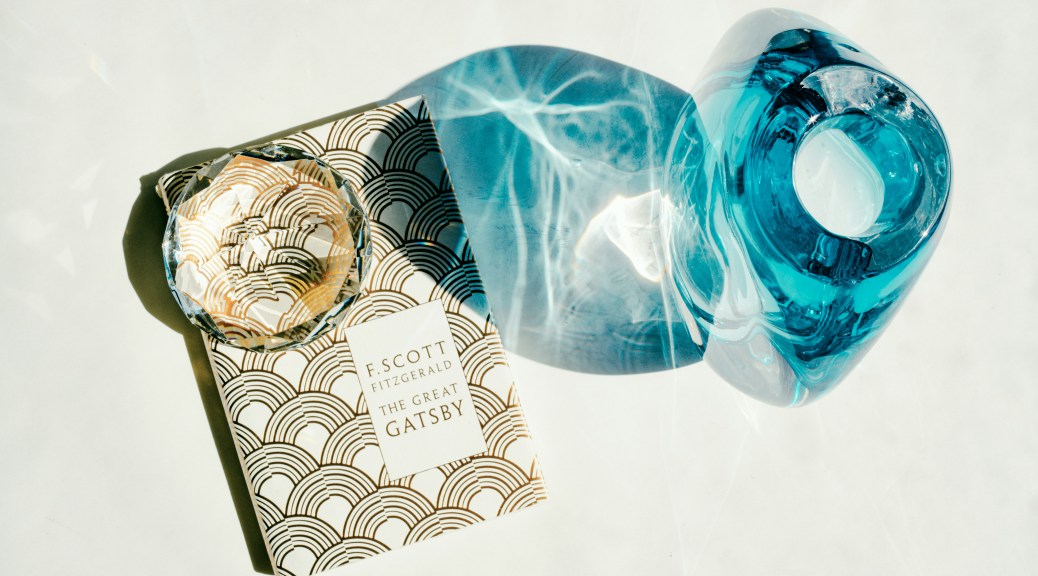
[Header Photo by Girl with red hat on Unsplash]

As a “good student” in high school and through college, I dutifully worked my way through the so-called major writers, mostly American writers of the early twentieth century such as Hemingway, Faulkner, and, yes, Fitzgerald.

I spent almost two decades teaching American literature in high school, including dozens of class sessions on The Great Gatsby, which I have noted isn’t one of my favorites.

However, The Great Gatsby has proven to be a wonderful literary allegory on the US in the 2020’s, a century after its setting.

Tom and Daisy, for example, are a disturbing characterization of the very “careless people” who are now destroying the country—the Trump era often referred to MAGA for the darkly ironic slogan lifted from Reagan, Make America Great Again.

One of my key lessons when I taught the novel, however, was asking students to focus on the character Myrtle Wilson, Gatsby’s lover and a woman disillusioned into believing she had joined the affluent class.

The gathering where Nick Carraway, the novel’s narrator who is star-struck by Gatsby, meets Myrtle includes some of the most important scenes in the story.

Myrtle attempts to perform as a now-rich woman, embarrassing herself in the eyes of the reader.

One key scene is her excoriating her husband George:

“I married him because I thought he was a gentleman,” she said finally. “I thought he knew something about breeding, but he wasn’t fit to lick my shoe.”

At that gathering also, Tom hits Myrtle violently: “Making a short deft movement, Tom Buchanan broke her nose with his open hand.”

And at that scene, I prompted students to note the difference in how Tom treats Daisy, who regularly taunts him in front of guests including Gatsby.

Readers never see Tom physically abusing Daisy (although he is abusing in other ways).

Combined these elements of Myrtle as a character reveal that by rejecting her working class realities, she is rejected herself; Myrtle is a self-defeating character similar to MAGA and similar to how poor Southerners have voted against their own self interest for decades (always voting conservative regardless of party).

And then one of the most coldly gruesome scenes is when Daisy hits and kills Myrtle with Gatsby’s car.

The scene is sparse, almost told with journalistic distance. Myrtle is slaughtered, sacrificed and seemingly forgotten.

Mangled and dead, Myrtle is the carnage left in the wake of calloused affluence.

Myrtle is MAGA.

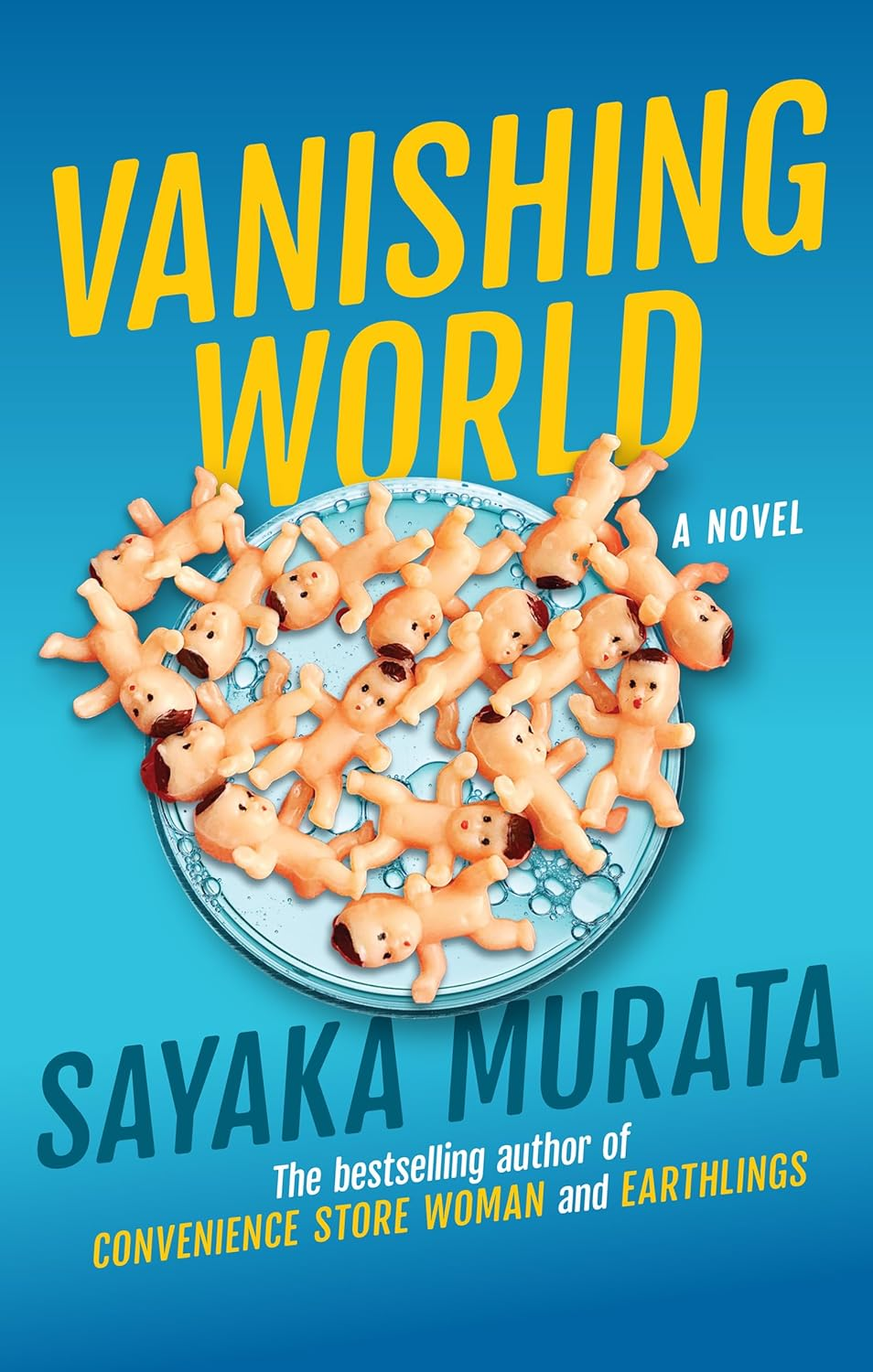
Sayaka Murata’s Vanishing World, or “Fuck Everybody”

I want to defy
The logic of all sex laws

“Sexx Laws,” Beck

I recently cited Bertrand Russell, a philosopher who I read during college. But I also came back to read a biography of Russell in the 1990s during my doctoral program, when I was writing an educational biography for my dissertation.

I was in my mid-30s by then and had left my early 20s search for what I believed mostly behind. As I discovered by becoming a biographer, unmasking any person is quite shocking, and Russell seemed much frailer, less resolute once I saw the whole man.

Russell, you see, had espoused a free love ideology, but putting his beliefs into practice proved much different than advocating for those beliefs.

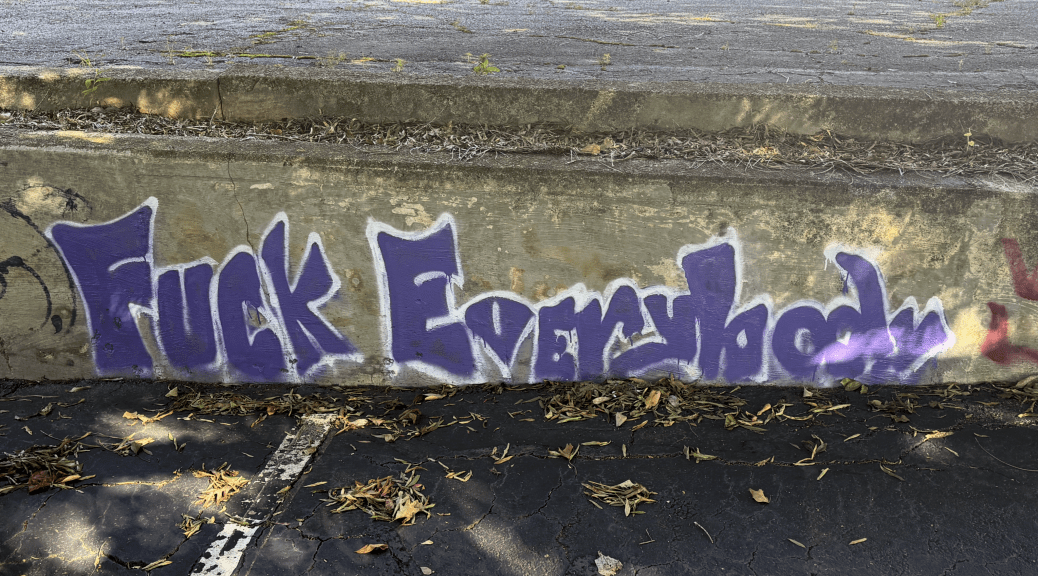
I think Russell was lurking there in my mind when I saw this graffiti recently:

I snapped a picture with my phone and posted a snarky “Free love or anger?” caption across social media.

Sexual liberation, free love, polyamory, etc., are all fascinating to me because I find these concepts both powerfully compelling and (as witnessed in Russell’s own life) incredibly difficult to realize in lived experiences.

Too often, I think, what should be issues of sexual liberation—more needed by women—is a tactic by men to leverage some space or justification for men’s infidelity; further, these progressive ideas about love and sex tend to hit a wall with men’s inability to be possessive in relationships.

Another interesting example is the creator of DC’s Wonder Woman, William Moulton Marston, who is featured in Jill Lepore’s The Secret History of Wonder Woman.

Marston is often credited with weaving feminist ideals into Wonder Woman, and he also practiced polyamory—living and having children with his wife Elizabeth Holloway Marston and partner Olive Byrne, an arrangement that also included Marjorie Wilkes Huntley from time to time.

Again, the reality behind the ideal revealed that these women made much of Marston’s work possible, and likely did some significant amount of that work.

Who did these progressive ideas about women, sex, and relationships benefit?

Marston reminded me of another foundational author in my life, D.H. Lawrence who expressed and portrayed in his fiction a belief that men needed a woman for his intellectual partner and another for his sexual partner.

These are, of course, just a few examples of how the real world manufactures normal, how individuals navigate that normal or find ways to forge their own normal.

And thus, that blunt graffiti two-words also sit just as I was reading and finishing Sayaka Murata’s Vanishing World.

Sayaka Murata’s Vanishing World: Another Examination of Normal

Like Haruki Murakami, Sayaka Murata is a Japanese writer who draws me in with what reads like literary fiction but is heavily tinged with something like science fiction, or fantasy, or magical realism.

Murata’s works, such as her newest novel Vanishing World, falls into what Margaret Atwood calls speculative fiction. Both Murata and Atwood include elements that are speculative science, but much of these created other worlds seem disturbingly normal, or at least not so much different from the world we live in now.

And similar to her Convenience Store Woman and Earthlings, Vanishing World draws the reader into another engaging and surprising examination of normal.

Amane, the main character, lives in the cusp of an old world where procreation is achieved through intercourse (her parents, to Amane’s discomfort, produce Amane through sex), and the brave new world of procreation only through artificial insemination.

In fact, the new normal is that husband and wife are family, and thus, any sexual contact is deemed incest, taboo.

There are some surprises, twists, and disturbing developments, but all in all, Murata forces the reader to think deeply about sex and gender roles, what makes normal “normal.”

The end is disorienting and powerful (similar to Earthlings), bringing the entire work into stark focus.

“Men and women were now all the same,” Amane acknowledges, “all wombs in service of the human race.”

And just pages from the end, Amane argues with her mother: “‘And you aren’t brainwashed, Mom? Is there any such thing as a brain that hasn’t been washed? If anything, it’s easier to go insane in the way best suited for your world?'”

This speculative world of Murata is about humans making normal “fuck nobody,” a sort of extreme puritanical alternate world that renders human nature unnatural—or at least, no longer normal.

Writing Purpose and Process: “there’s poetry and there’s songwriting” (Matt Berninger)

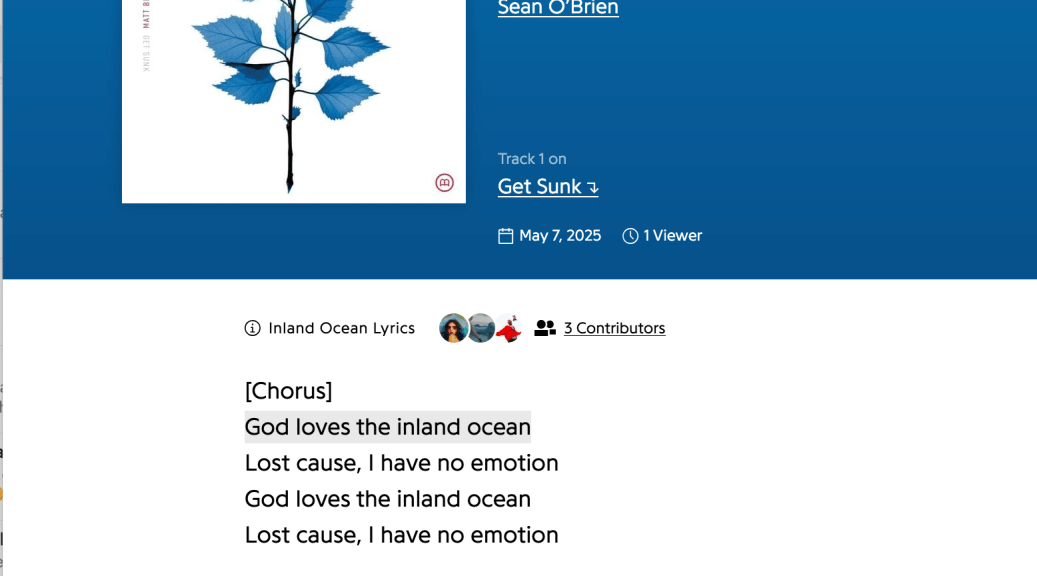
[Header image via Genuis, lyrics by Matt Berninger]

As I have noted often, over my forty-plus years teaching students to write, a few patterns remain constant, one of which is students lacking genre awareness.

On the first day of class, I often ask students what novels they read in high school English, and invariably, students include The Crucible or simply say “Shakespeare.”

They read these plays in book form, and have conflated anything in book form with “novel.”

Also, they mostly are experienced in being students who write, not writers.

So I spend a great deal of time and effort in my writing courses helping students become engaged with authentic writing practices, specifically fostering stronger writing purposes (and understanding writing forms/genres) and processes.

As a fan of The National and lead singer/lyricist Matt Berninger, I was particularly struck by this new interview [1] as Berninger begins promoting his second solo album, Get Sunk:

I think this interview is a really wonderful and brief entry point to discussing writer purpose and process (note that Berninger does use some profanity and references pot smoking).

Berninger is an endearing and quirky as his lyrics. And while he may seem flippant at first (“I’ll start fucking around with stuff”), he makes some very sophisticated and accessible observations about purposeful writing and the importance of the writing process (he has begun scribbling lyrics on baseballs instead of his standard journal, for example).

When the interviewer mentions his favorite lyric from Boxer (The National), Berninger offers a brief window into the importance of being a reader as well as the recursive nature of texts: “I stole that from Jonathan Ames.”

Berninger’s lyrics often pull from books, authors, and other song lyrics. Here is an ideal place to discuss with students the conventions of allusion and references as that creates tension with plagiarism (a great opportunity to tie in so-called canonized writers such as Marianne Moore and T.S. Eliot).

But the core comments I think students need to hear and then practice in the writing are about understanding different writing purposes/forms:

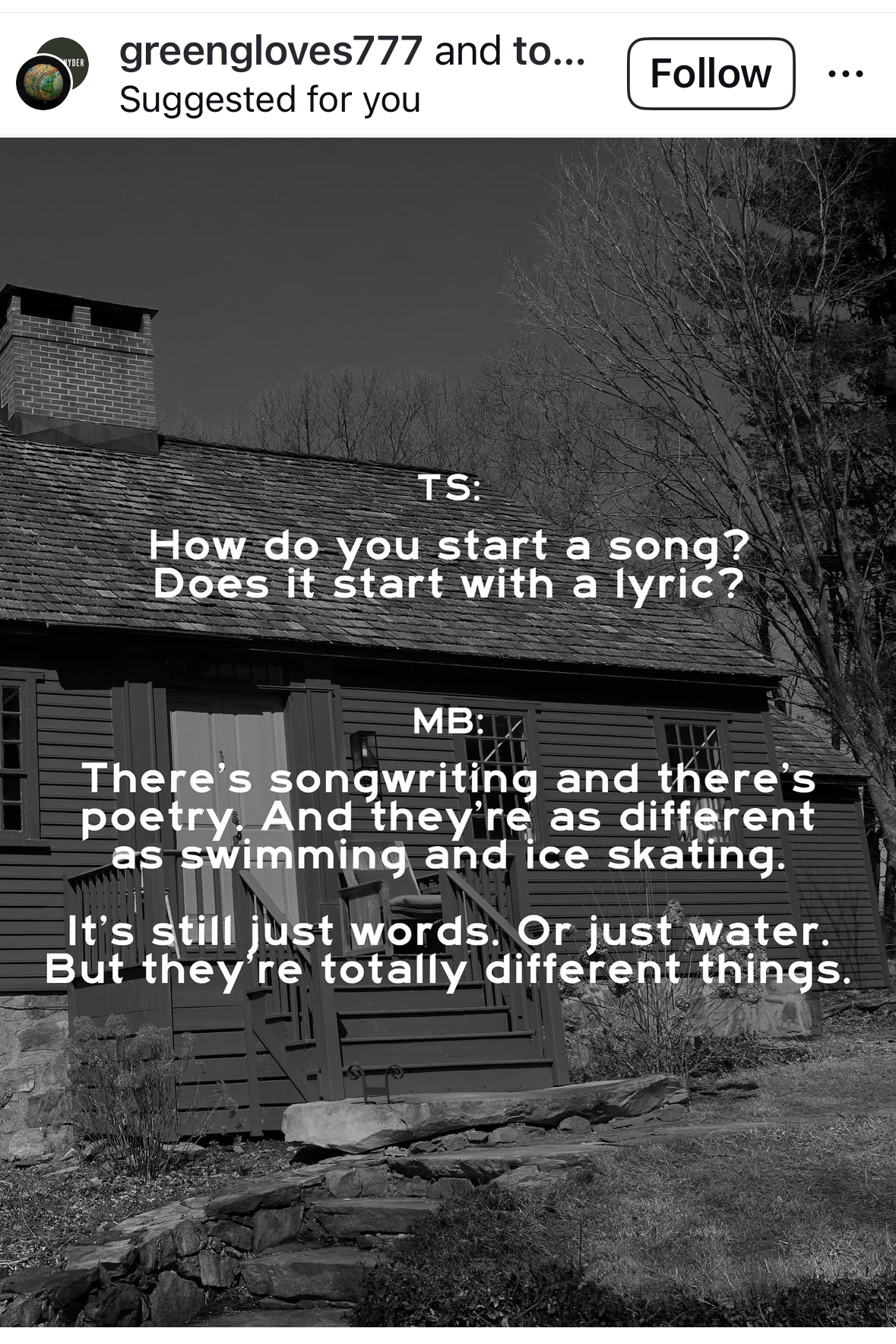
I do think songwriting is a very specific kind of thing…. It’s not—there’s poetry and there’s songwriting…. And I think they’re as different as like swimming and ice skating…. It’s like it’s still just words or just water but they’re totally different things.

This distinction and metaphor are powerful because they acknowledge the complexity of choosing and writing in different ways, for different purposes, and for different audiences.

Berninger also talks about his use of scribbling on baseballs for writing ideas. While quirky, this really captures the writing process in an authentic way (not the scripted way often taught in school).

As a teacher of writing and a writer (as well as avid reader), I want students to be fully engaged as writers—not as students performing a stilted essay for the teacher/professor.

We want for our students a sense of purpose, a demonstration of intent, an awareness of form and audience, and ultimately, a writing product of their choosing and for their purposes.

And in the era of intensified AI, I want to stress that AI has no place in these goals because students need and deserve opportunities to experience all of these aspects of brainstorming, drafting, and presenting a final product.

It may seem crude, careless, and flippant, but if we listen carefully, Berninger’s “fucking around” demonstrates the power and complexity of being a writer—and thus, being a teacher of writing.


[1] I highly recommend this blog post on Bon Iver/Justin Vernon as a companion to the Berninger interview.

See my posts on The National.

A Man’s World (pt. 3): Gaiman Edition

[Header Photo by Museums of History New South Wales on Unsplash]

I am currently reading Haruki Murakami’s newest novel, The City and Its Uncertain Walls. In some ways, the story is not as typical of his other novels (I have read all of his work and co-edited a volume on him).

However, this novel maintains a recurring aspect of his works—men who have lost or been left by women (directly expressed in his short story collection Men Without Women).

Reading this novel comes after I recently submitted a chapter on Murakami expanded from a blog post about his 2017 story collection; in that, I address concerns about whether Murakami’s fiction slips too often into sexism and objectifying women.

While the questions about how Murakami deals with women in his fiction creates tension in me as a reader and scholar, I am more disturbed and struggle much more with the men writers and creators who persist in proving that they mistreat, abuse, and assault women in their (sometimes mostly) secret lives.

My reading and fandom life is littered with men writers I once admired but now find it hard to appreciate their work because of their failings as men, as humans—Woody Allen, J.D. Salinger, e.e. cummings, Cormac McCarthy, and Neil Gaiman (see several posts below addressing these men).

The debate about where the line is between a person’s creative work and their personal lives has a long history—and many people disagree about being able to respect that work while acknowledging or even rejecting the personal flaws (and much worse).

For example, Ryunosuke Hashimoto frets about Murakami: “The negative image that has been associated with Murakami is so frequently spotted on social media as a consequence of the new generational standard that one wrong cancels out all of the good that is contained in a work.”

The recent revelations about McCarthy and Gaiman seem to rise far above “one wrong” into predatory patterns and abhorrent abuse.

Concurrent with reading the seemingly late mainstream coverage of Gaiman in Vulture, I have been watching the series House for the first time (while my partner is re-watching one of her favorite series).

House is challenging us in similar ways, considering how much the problems with the episodes weigh against the compelling aspects of the show.

To me, House tries to be topical but can fall cartoonishly flat, such as Spin (S2E6) about a professional cyclist. The cycling and discussions around cheating (EPO and blood doping) are wildly bad, especially the scene of actual bicycle racing.

But we also had just watch Skin Deep (S2E13) a day before the Gaiman article dropped in Vulture.

Skin Deep, for me, has many of the flaws found in the Spin episode, likely from trying to hard to address then-current controversies.

The episode covers a great deal of controversial topics—sexualizing and objectifying young women (the main character is a 15-year-old supermodel), sexual abuse (the father admits sex with his daughter), and then the disturbing big reveal (the young woman is discovered to be intersex with cancerous testes).

Dr. House’s behavior is glib, offensive, and disturbing, including misinformation and not-so-subtle bigotry.

Re-watching Friends, Seinfeld, and The Office has left us cringing as well.

So from what to do about Gaiman’s work to navigating Murakami and series such as House, I remain troubled about where the line is between the creative works and the flawed to despicable humans, those men.

I also must stress that we are in a political moment where the consequences for being a sexual predator or committing sexual assault are being lessened, even erased. The rights of women are being eroded; yes, it is more and more a man’s world, a world hostile and calloused to the lives of girls and women.

The Gaiman moment is an(other) opportunity to say there is a line, it has been crossed, and there must be consequences.

There are thousands of wonderful creative works by people who do not have these transgressions, these failures to respect the humanity of others, hanging over them and their works.

I’ll keep watching House, and I am pretty comfortable with how I understand and appreciate Murakami (and I could be wrong). But Gaiman deserves consequences of a magnitude from which he will not recover as an artist—and others will (maybe) learn as well.


See Also

“He knows, or thinks he knows”: It’s Still a Man’s (Hostile) World

True Detective: It’s Still a Man’s (Hostile) World, pt. 2

Flawed Men Artists and Their Crumbling Art

The Woody Allen Problem Is Our Problem

Recommended: Larcenet’s Graphic Adaptation of McCarthy’s The Road

Recommended: Larcenet’s Graphic Adaptation of McCarthy’s The Road

Note

Although a Vanity Fair article has framed Augusta Britt as Cormac McCarthy’s “muse,” Moira Donegan argues in The Guardian that McCarthy, in fact, groomed and took advantage of Britt.

Below, while I discuss positively McCarthy’s work and adaptations of that work, I want to acknowledge the serious concerns being raised about McCarthy as a person. He represents yet another problem with confronting deeply flawed and even abusive people against the context of what many believe are praiseworthy accomplishments.


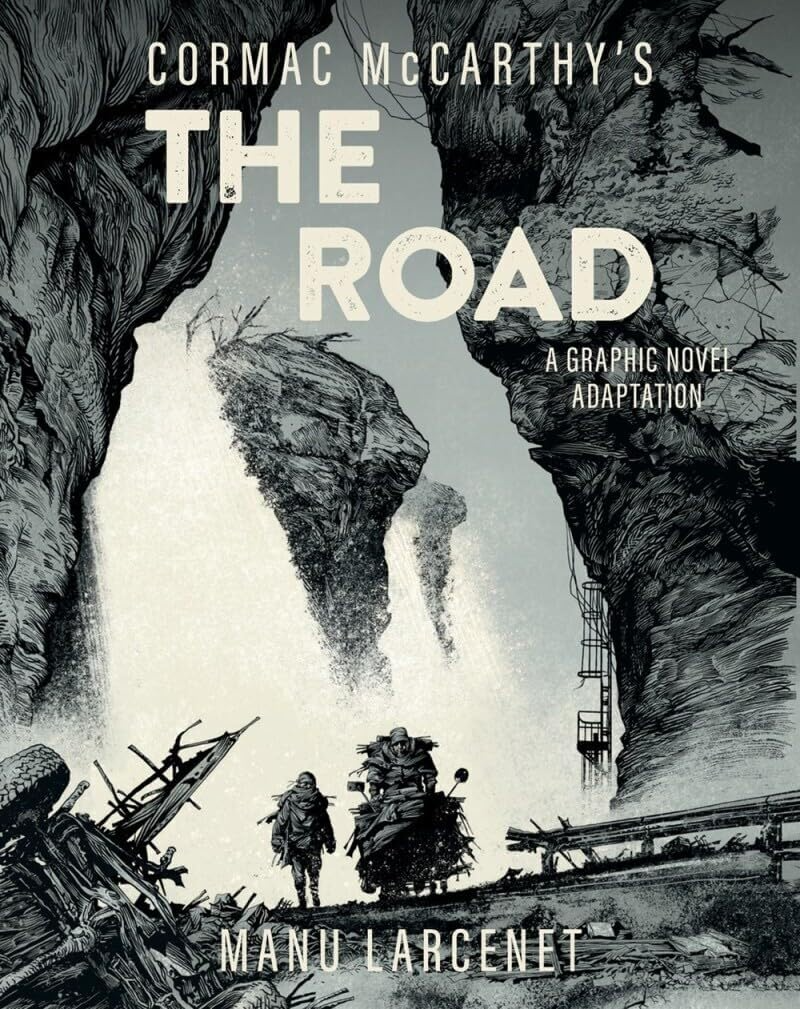
Larcenet’s Graphic Adaptation of McCarthy’s The Road

Cormac McCarthy’s novel The Road won the Pulitzer Prize in 2007. Then in 2009, it was adapted into a major film starring Viggo Mortensen and Charlize Theron.

Now, published in 2024, a third version of the novel is available, Manu Larcenet’s graphic adaptation.

As Mike Roe notes in his review:

Larcenet made a personal appeal to McCarthy to allow him to adapt “The Road.” Praising its atmosphere, Larcenet wrote, “I enjoy drawing the snow, the chilling winds, the dark clouds, the sizzling rain, tangles and snags, rust, and the damp and the humidity. I draw violence and kindness, wild animals, dirty skin, pits and stagnant water.”

McCarthy’s novel is a stark post-apocalyptic narrative that seemed perfect for both film and now a graphic adaptation. It isn’t that McCarthy’s text isn’t enough; it is that the humanity and inhumanity of this cold barren world become even more painful for the viewer and reader through the different visual media.

Roe adds about the connection between text and graphic depiction:

“I have no other ambitions but to draw your words,” Larcenet wrote. “The magical part of being an illustrator is to find a silent line to draw with every word. These lines could support yours without distorting them. At least, that’s the goal if this project should come to fruition.”

Since The Road has already been made into a film, some may wonder why this graphic novel version is needed:

“On top of that, I’ve been racking my brain to avoid any reference to the movie adaptation,” Larcenet wrote to McCarthy. “I usually write my own comics, one of which (‘Blast’) shares common themes with your book. But I didn’t write ‘The Road’; I really wish I had! I sincerely thank you for allowing me to put my pencil down where your pen went.”

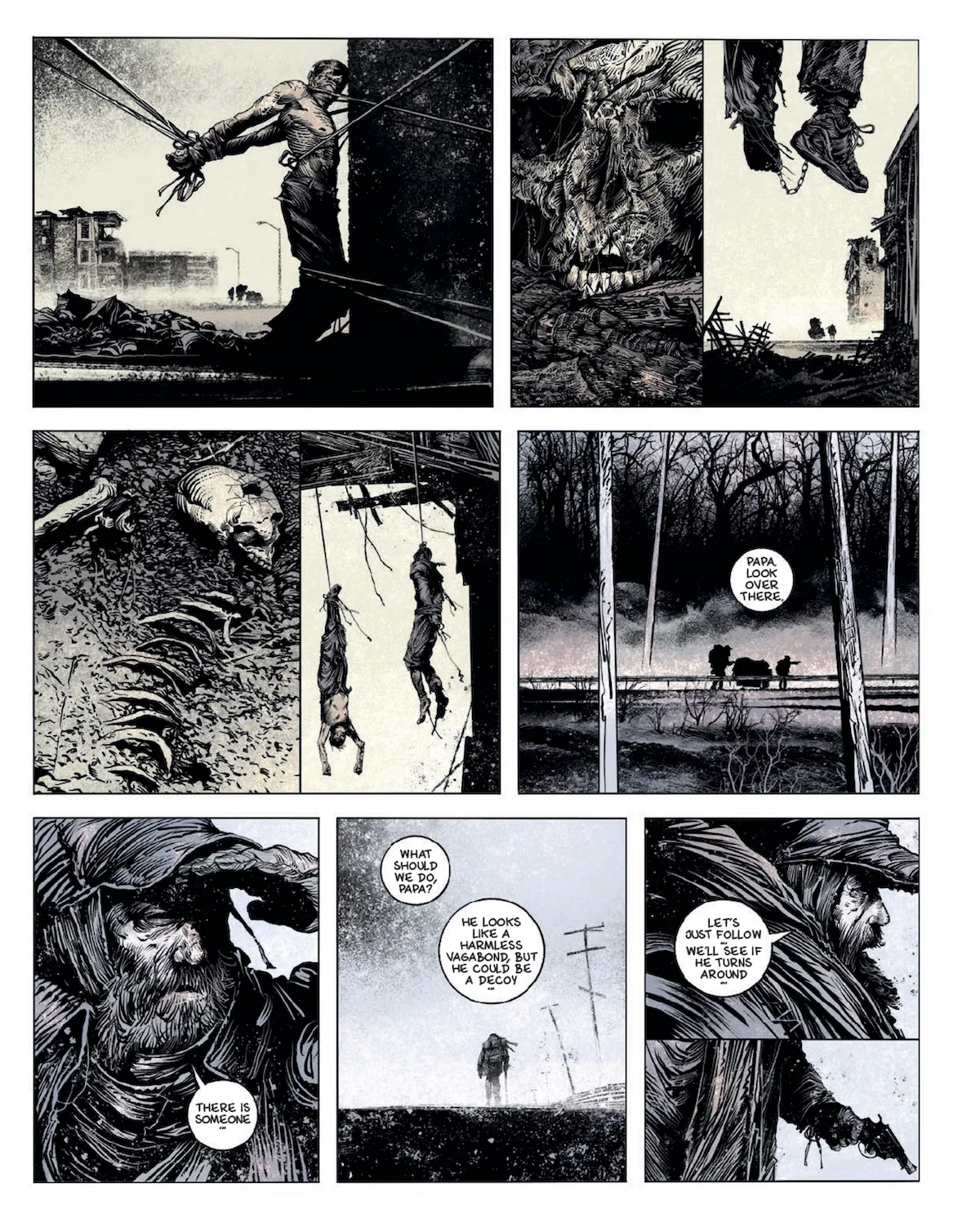
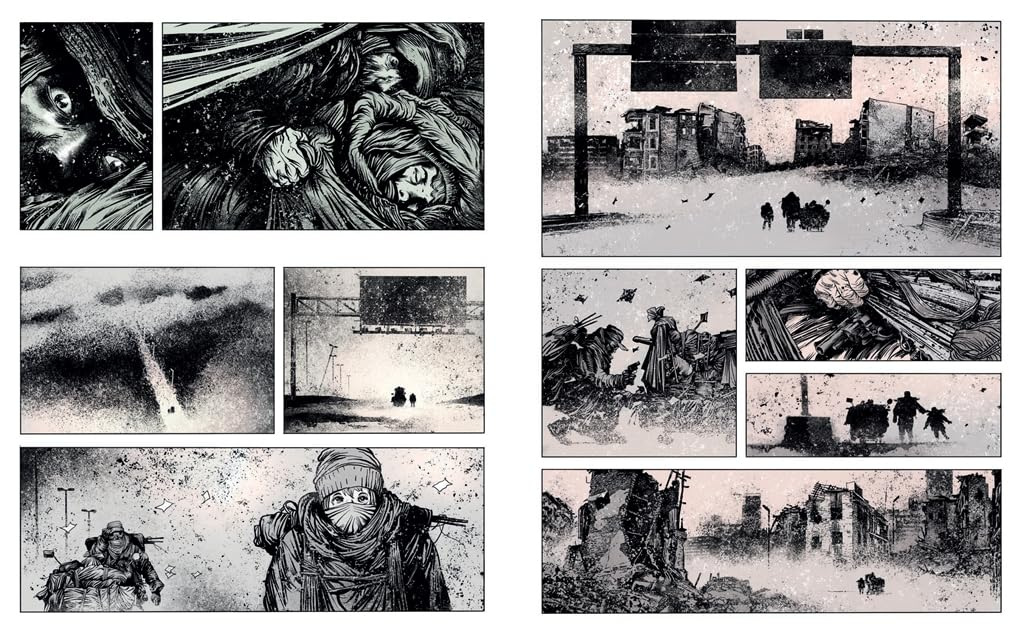
Appropriately, then, Larcenet’s adaptation is sparse in wording (many panels and pages are wordless), yet highly detailed in the mostly black-and-white artwork, augmented with subtle washes of coloring. The result is page after page that is mesmerizing and horrifying:

See Roe’s review at The Wrap for exclusive pages from the adaptation.
See amazon preview for additional pages.

So why do we need yet another version of The Road?

I have read the novel and seen the film, but as a life-long comic book collector, I of course ordered Larcenet’s adaptation. But, frankly, I did so as a collector, thinking I would glance through the book because I do love sequential art.

Then, I found myself reading, lingering on pages and panels. Over a couple sittings, yes, I read the entire adaptation.

I cried. I paused because the story is often overwhelming.

This is the same and a different experience than the novel and the film.

I can’t say we need another version of McCarthy’s novel, but I do say we have been gifted by this beautiful and haunting graphic adaptation.

And since the narrative itself examines the good guys/bad guys dynamic through a child who has had his innocence ripped from him by a calloused world, we too must confront this duality in reality as we try to navigate the flawed artist and the art we love.

Almost Story: Normal (Fiction)

[Header Photo by Mike Benna on Unsplash]

“I’m okay. My son’s on his way.”

Joyen heard his father say as he walked up behind him sitting on a bench beside the rail trail he walked every late morning before having an early lunch.

Chicken salad sandwich and fruit. Or twice baked potato soup. When it was colder he’d order decaf and off the brunch menu. Minus any bacon with a soft grunt.

“Race?” The officer was a short, very round Black woman leaning forward and trying to determine if his father was, in fact, okay.

“No race. He was normal.”

Joyen thought the officer’s vest and gun were a bit much for the type of policing she did. He couldn’t stop staring at the gun.

The three of them were still and silent for several moments.

“No. Race.” The officer was tapping her stylus on her tablet when Joyen realized what his father said.

“Dad. Was he white?”

“He was white,” his father said as if Joyen had been there the entire time.

Joyen’s eyes drifted back to the gun as his father gave more description and the officer’s stylus tapped across the screen.

Dark orange hoodie. Black sweat pants. Dirty canvas shoes. The bicycle was way too small for the person who knocked his father down.

His father said that as he was falling he heard the person yell, laughing, “Fuck you, old man!”

“Well, I think I know this person, Mr.—” The officer tapped the tablet screen to scroll up on her form. “King. Mr. King. I’m afraid that’s everything she owns. It was a woman. She has problems.”

Joyen forced himself to look away from the gun. He stepped more to his father’s side and noticed the small knot forming on his father’s temple. Turning purple.

The scrape was glistening. Bloody. A red trickle zigzagged down the wrinkles around his father’s eye.

Joyen turned back to the officer still tapping on her tablet. Over her shoulder, he saw his father’s red ball cap in the grass by the trail.

Neither the officer nor his father had mentioned it.

A crow was pecking through the grass just past the hat.

“Dad.” Joyen rested two fingers on the bone joint of his father’s slumped shoulder. “I don’t think you are okay.”


See Also

Almost Stories