For example, third-grade retention states such as Mississippi and Florida had exceptional NAEP reading scores among fourth-graders but scores fell back into the bottom 25 percent of all states among eighth-graders
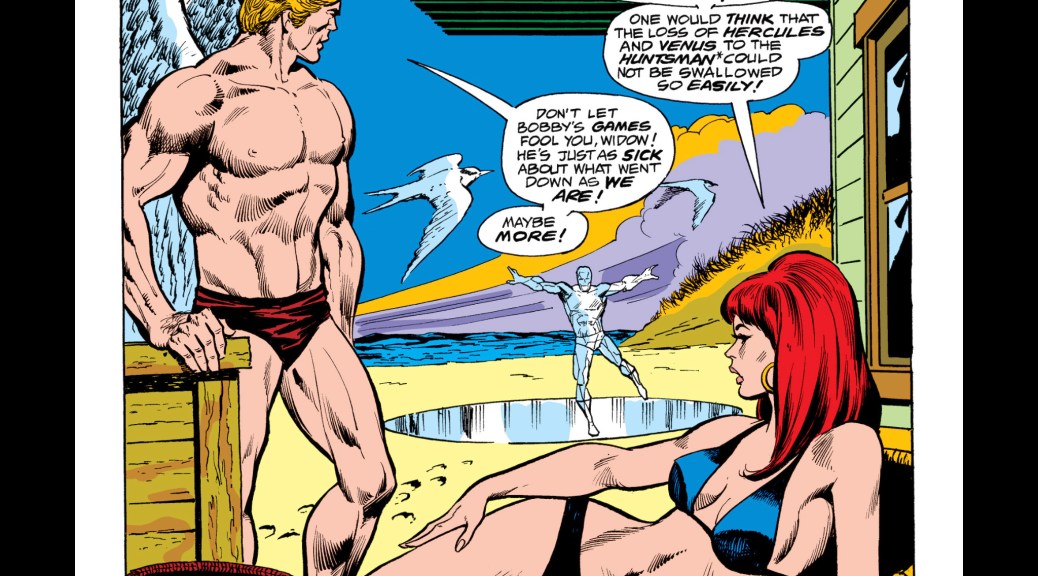
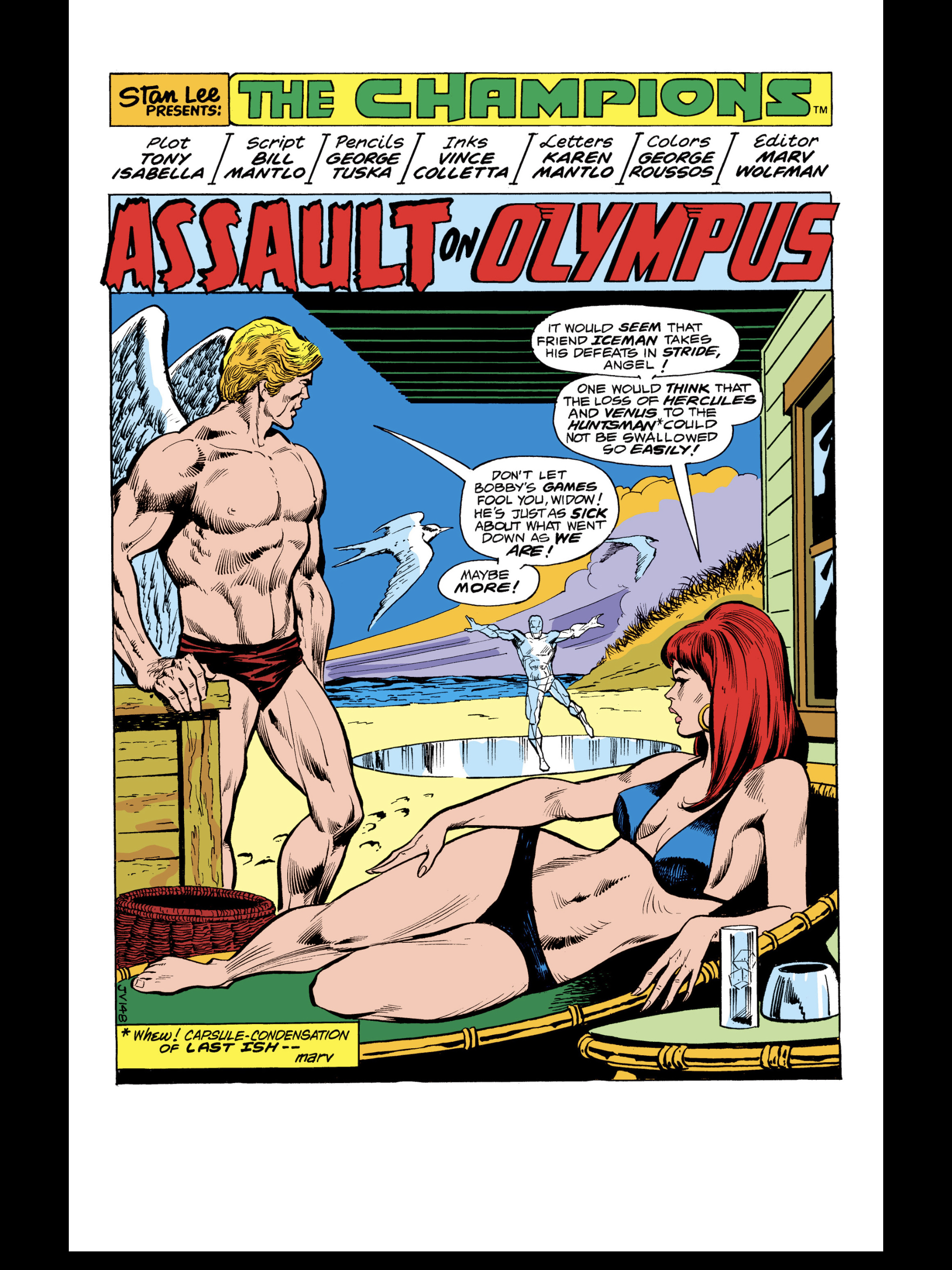
[Header (The Champions v.1, 3, George Tuska pencils, Vince Colletta, inks) and all images used under Fair Use unless otherwise identified]
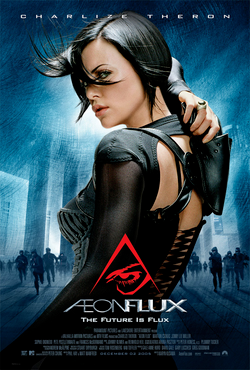
Scarlett Johansson and Charlize Theron are two of the most successful and highly regarded celebrities in contemporary pop culture. These two women have been in the news recently in ways that seem at first contradictory.
However, just a few days before that accomplishment, Theron, as reported by Zack Sharf, “called out a Hollywood double standard when it comes to action movies. The Oscar winner…said studios often give female actors just one shot to have an action movie hit. When it comes to men, however, they can have a box office flop but still land multiple follow-up projects.”
One of Johansson’s highest profile characters, Marvel’s Black Widow, offers a window into how Theron’s criticism remains valid even in the context of Johansson’s success.
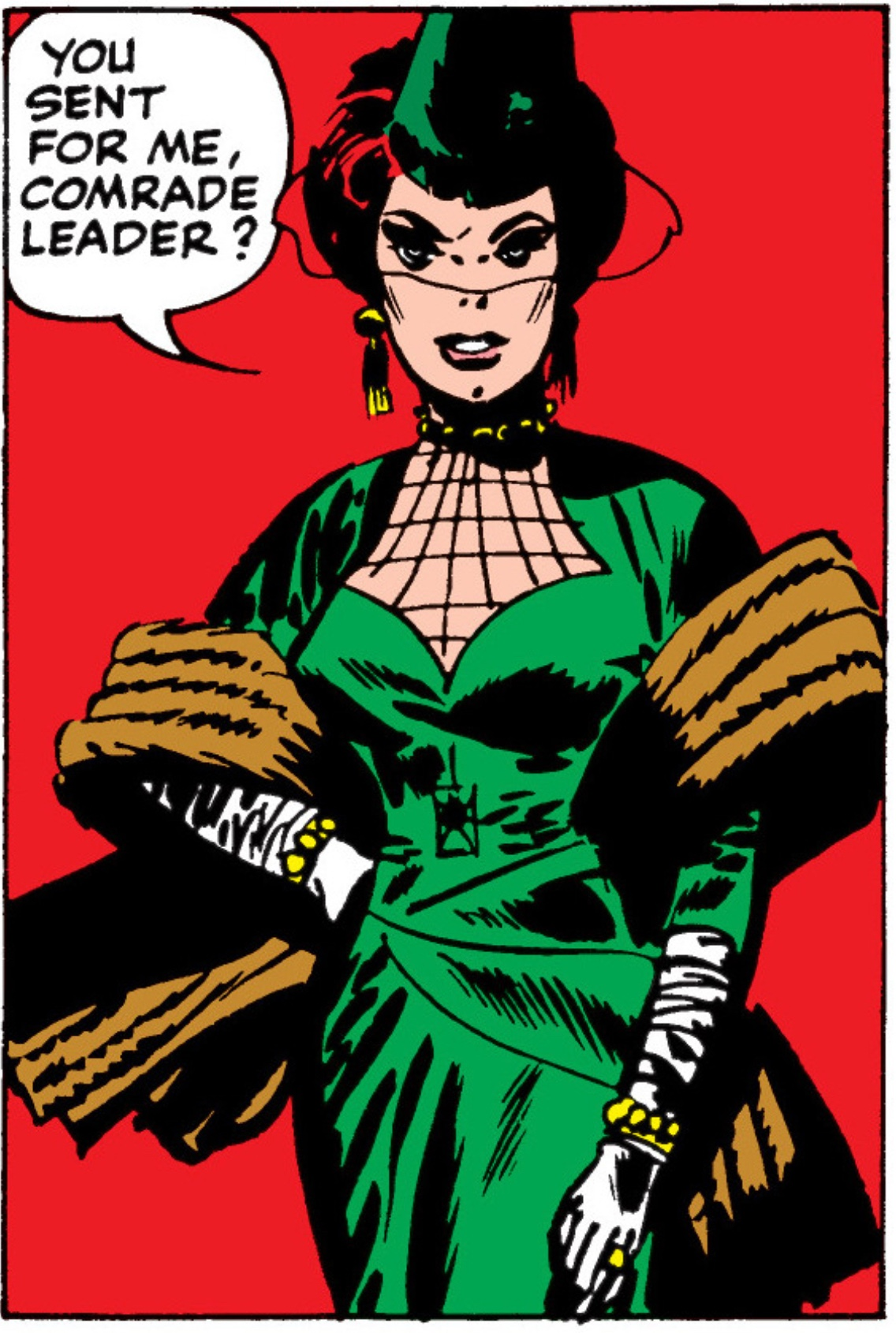
Black Widow first appeared in 1964, nearly unrecognizable to today’s fans as a foil to Iron Man in Tales of Suspense 52. This origin portrays Black Widow in a different color costume on the cover than in the interior, but she is mostly a one-dimensional Cold War temptress.
Tales of Suspense (v1) 52, writers Stan Lee and N. Korok (Don Rico), artist Don Heck
Over the next 60 years, Marvel’s stewardship of Black Widow reflects the ongoing fate of women in pop culture—being underestimated and hypersexualized.
Notably, Theron’s criticism focuses on action roles, as covered by Sharf:
“Yeah, it’s harder. That’s known,” Theron said when asked about gender disparity in the action genre. “Action films with female leads don’t get greenlit as much as the ones with male leads. I think the thing that always frustrates me is the fact that guys will get a free ride.”
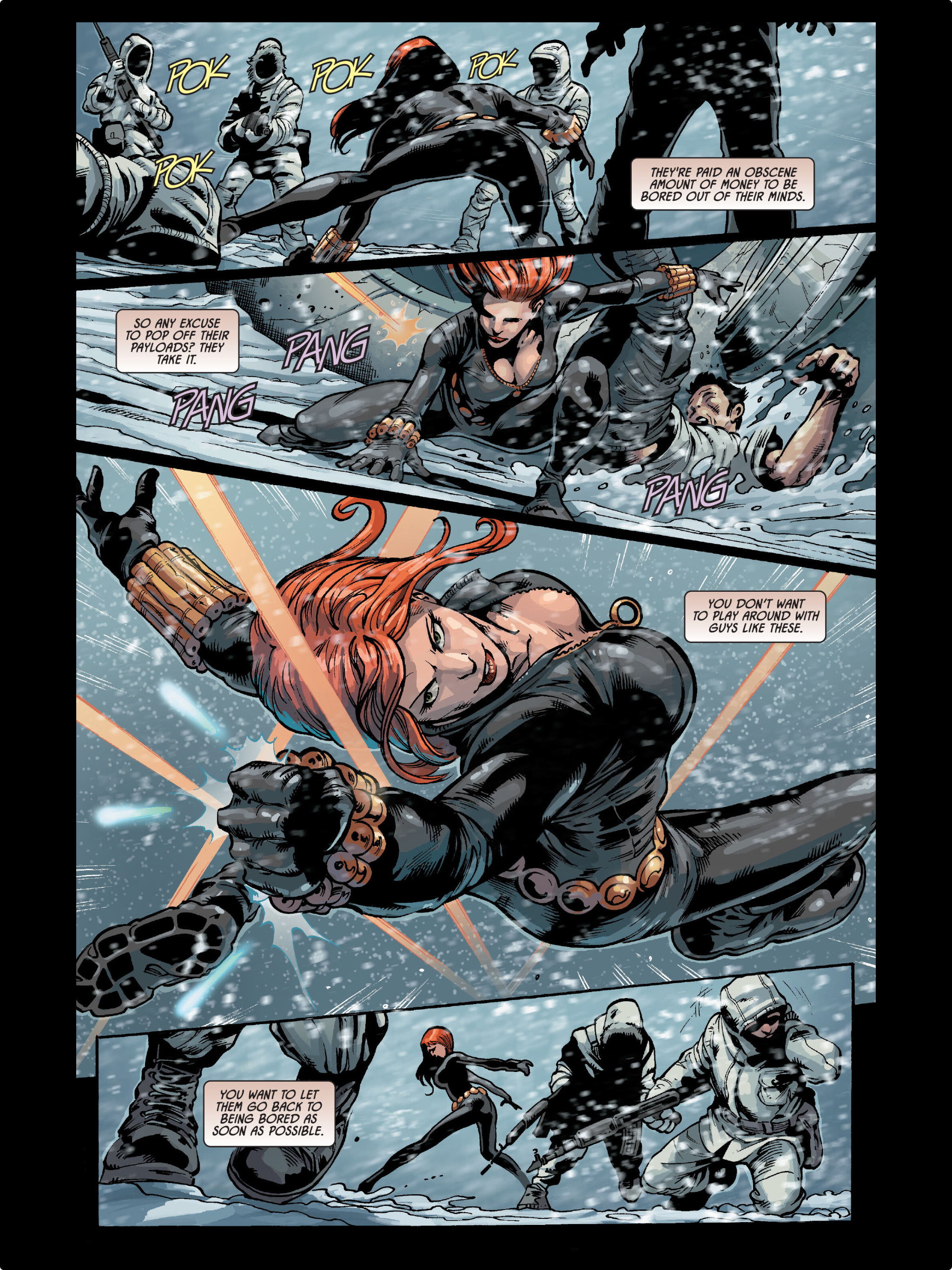
In my book-length analysis of Marvel’s Black Widow in print comic books across seven decades, one of the key themes of Natasha Romanov’s characterization is directly stated by Nat in issue 1 of volume 3, by the creative team of Richard K. Morgan and Bill Sienkiewicz: “He’s young—younger than me, anyway. And he’s fast. And he has a knife he knows how to use. But like most men in the end, he underestimates me.”
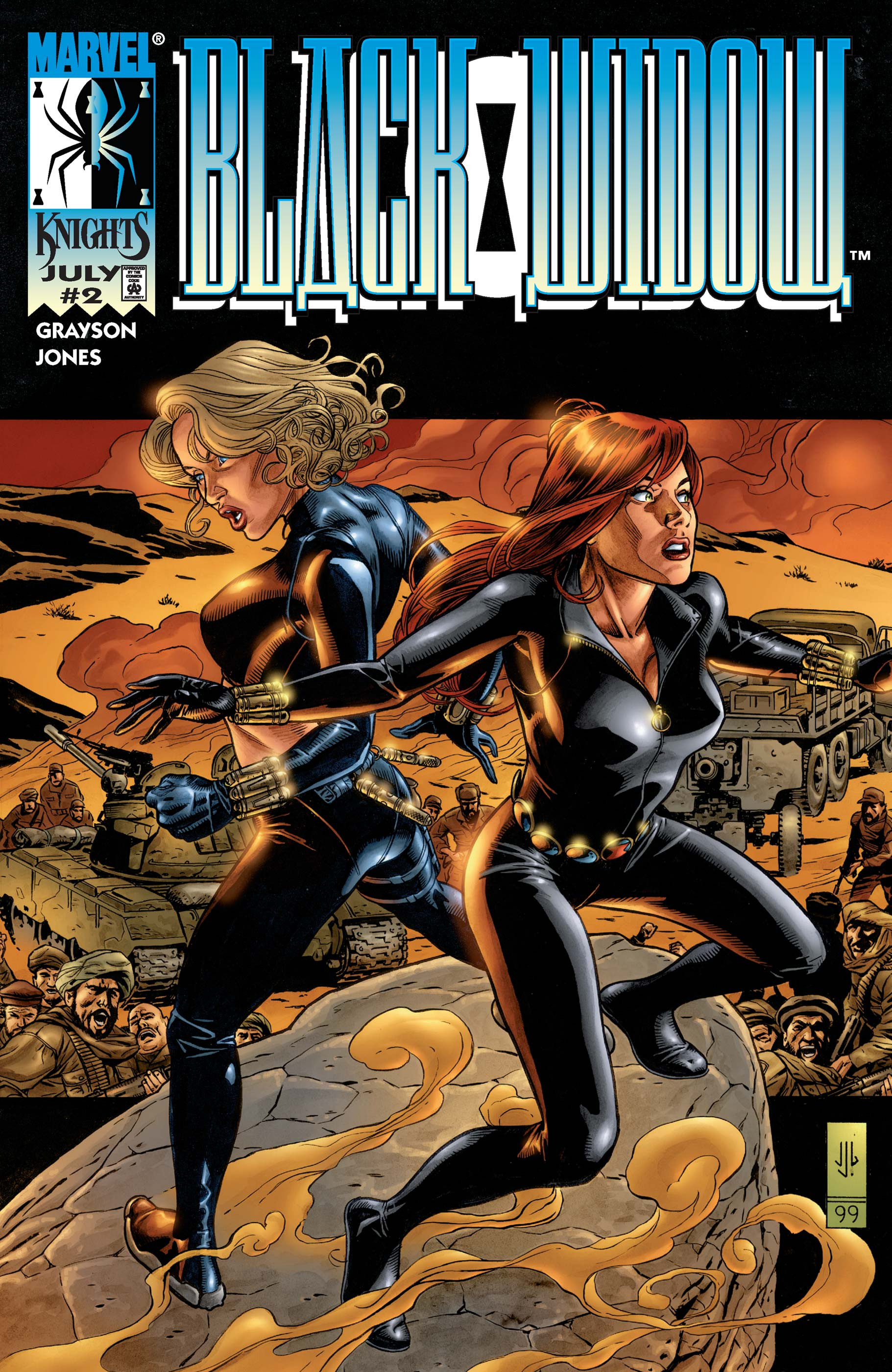
For current fans of the MCU, Black Widow/Nat as portrayed by Johansson may seem like a much larger character than has been portrayed in the comic books. Marvel has committed to 8 solo-title volumes, although most have been extremely brief. Black Widow has had one 20-issue run, and the critically praised last series, volume 8, only survived 15 issues despite an all-star creative team of women—Kelly Thompson, Elena Casagrande, and Jordie Bellaire.
Superhero comic books and films represent a key tension in pop culture among market forces, fans, and social biases such as sexism.
Theron, I think, is making a valid point that is reflected in Nat’s acknowledgement above; pop culture remains mostly controlled by men—the funders, the creators, and the fan base—who continue to underestimate women as characters and creators.
“[T]alked about … Like a Piece of Ass, Really”
Johansson as Black Widow/Nat entered the MCU in Iron Man 2, and with hindsight, it seems to be a huge understatement that Marvel underestimated the power of both Johansson and Black Widow for the Avengers and MCU.
Johansson, in fact, has addressed that Black Widow was hypersexualized:
All of that is related to that move away from the kind of hyper-sexualization of this character and, I mean, you look back at ‘Iron Man 2’ and while it was really fun and had a lot of great moments in it, the character is so sexualized, you know? Really talked about like she’s a piece of something, like a possession or a thing or whatever — like a piece of ass, really. And Tony even refers to her as something like that at one point.
Unfortunately, this early objectification of Black Widow in the MCU is comic book accurate since many of the depictions of the character in the print comic books has been for the male gaze.
For women characters and creators, then, Black Widow represents that women are often underestimated because they are hypersexualized.
While it seems likely that pop culture will continue to reflect society—especially the worst of society—instead of changing culture for the better, it seems there can be a time and place that pop culture resists underestimating and hypersexualizing women.
Honoring Women in Superhero Comics, Pop Culture, and Beyond
I think volume 8 of Black Widow by the creative team of Thompson and Casagrande represents the power of women creators working with complex women characters. And Kelly Sue DeConnick’s Wonder Woman Historia: The Amazons at DC matches that excellence with a classic superhero.
These, none the less, are outliers, and it seems likely derivative women characters (such as She-Hulk), hypersexualizing and underestimating women characters, and giving women creators work as tokenism will persist at the Big Two, Marvel and DC.
Women as victims of sexism are not responsible for changing these realities from a position of less power; however, Johansson and Theron are providing important voices as well as demonstrating their exceptional roles in pop culture.
The irony is that what Theron labels “risk” seems more bankable than yet another film propping up an aging white man paired with a woman half his age—even as we acknowledge that Johansson with a woman writer/director made that work also.
“Did you write this?” I once asked a sophomore in my advanced English class. The student was one of three siblings I would teach, and their mother was a colleague of mine in our English department.
With students and my own daughter, I have asked questions like that one often, and I always knew the answer. The question was an opportunity for the student to confront what I already knew.
This student, you see, had turned in a cited essay that her older sister had turned in just a few years earlier. I had the paper in my files, and since I immediately recognized it, I had the copy with her sister’s name on the cover page waiting for her reply.
English and writing teachers especially, but all teachers are constantly seeking ways to insure students do their own work.
As long as there have been students, teachers, and formal schooling, however, students have sought ways to pass off writing and reading that they, in fact, had not done.
This student cold-face lied, and I handed her the paper by her sister.
Something like that has occurred several times over my forty-plus years of teaching.
A non-traditional aged woman in a night composition class for a local junior college became enraged when I asked her “Did you write this?”
I had been reading her writing for several weeks, and this essay she submitted wasn’t her work. There was no doubt and no need to prove it.
She became loud and angry, steadfast in her claim the writing was hers. After that night, I never saw her again.
Several years ago in my first-year writing seminar, a basketball player submitted a teammate’s essay from a few semesters earlier. The essay rang a bell, and after a search on my laptop, I found the original essay on my hard drive.
Plagiarism and passing off other people’s work as their own have not been rampant throughout my career, in part because I have implemented reading and writing workshop in courses. Students have been reading and writing in front of me for decades.
Lots of cheating can been avoided by daylight and surveillance.
Part of the workshop approach, as well, stresses for students that the reading and writing processes are acts of learning; further, the emphasis on process helps lessen the importance of the product as a mechanism for acquiring a grade.
“It ought to be unnecessary to say that writing is learned by writing; unfortunately there is need,” wrote Lou LaBrant in 1953. LaBrant then continued and this may sound familiar:
Again and again teachers or schools are accused of failing to teach students to write decent English, and again and again investigations show that students have been taught about punctuation, the function of a paragraph, parts of speech, selection of “vivid” words, spelling—that students have done everything but the writing of many complete papers. Again and again college freshmen report that never in either high school or grammar school have they been asked to select a topic for writing, and write their own ideas about that subject. Some have been given topics for writing; others have been asked to summarize what someone else has said; numbers have been given work on revising sentences, filling in blanks, punctuating sentences, and analyzing what others have written….Knowing facts about language does not necessarily result in ability to use it. (p. 417)
Over the seventy-plus years since LaBrant’s article, students have written original texts far too rarely; in fact, as writers and students in general, students sit in classrooms where the teacher does much of the work the student should be doing as part of learning.
Writing prompts and rubrics have done far more harm to students as writers than any technology work around, but technology has also joined in the fun over those eight decades.
ChatGPT and other forms of AI are the current miracle/crisis forms of technology in education. Seemingly, many people in education, surprisingly, are jumping on the AI bandwagon, much like the coding wave and cellphone bans.
You see, we are trapped in a love/hate binary with technology in education that too often isn’t based in evidence.
Tech and AI products like Grammarly and Turnitin.com have ridden high waves of use despite both products, to be blunt, just being very poor quality. Grammarly gives really bad writing advice, and Turnitin.com is less effective detecting plagiarism than a simple (and free) Google search.
The broader technology problem in education, which parallels the AI problem, is that technology in education is often like a microwave; something can be completed quicker but the product is either hard to stomach or simply ruined.
A recent study, in fact, shows that students using AI to draft tend to produce very similar texts that are shallow at best. Further, students who use AI to compose struggle to recall any of their writing.
Why? Let’s invoke LaBrant again: Writing is learned by writing.
Better worded, we should think of “writing” as composing. Composing is the art of simultaneously creating meaning, developing understanding, and drafting communication in words, sentences, and paragraphs.
AI generating functional text in some real-world contexts may be a time saver, a net positive. But for students, scholars, and writers, using AI at any point of the composing process is a new form of plagiarism.
Let me be clear, this is about the composing process because AI has long been useful for surface editing; grammar and spell check is not cheating, and AI can relieve the writer some of the burden of editing (a role humans often play for other people in the world of writing an publishing).
Maybe AI will prove valuable in many ways for humans, but AI that does for students the very behaviors students must perform to learn is never justified—just as teachers doing the work for students has never been justified.
“As citizens we need to be able to write and to understand the importance and difficulty of being honest and clear. We will learn to do this by doing it,” LaBrant offers bluntly.
“Did you write this?” is an enduring question between teacher and student.
In 2025, using AI is just as damning as putting your name on your sister’s essay before turning it in as your own.
So that’s why you cannot spell “plagiarism” without “AI.”
I recently cited Bertrand Russell, a philosopher who I read during college. But I also came back to read a biography of Russell in the 1990s during my doctoral program, when I was writing an educational biography for my dissertation.
I was in my mid-30s by then and had left my early 20s search for what I believed mostly behind. As I discovered by becoming a biographer, unmasking any person is quite shocking, and Russell seemed much frailer, less resolute once I saw the whole man.
Russell, you see, had espoused a free love ideology, but putting his beliefs into practice proved much different than advocating for those beliefs.
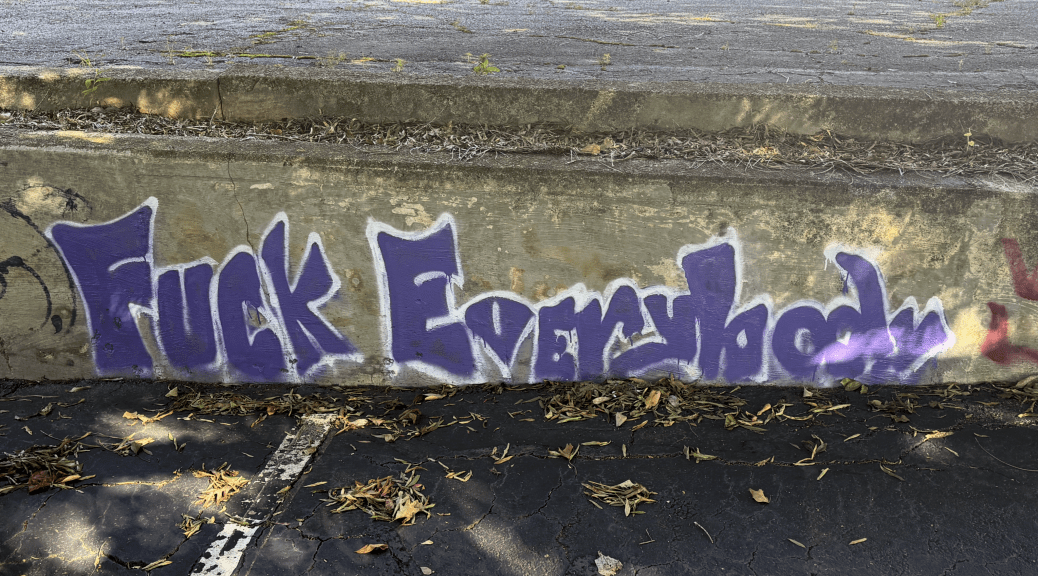
I think Russell was lurking there in my mind when I saw this graffiti recently:
I snapped a picture with my phone and posted a snarky “Free love or anger?” caption across social media.
Sexual liberation, free love, polyamory, etc., are all fascinating to me because I find these concepts both powerfully compelling and (as witnessed in Russell’s own life) incredibly difficult to realize in lived experiences.
Too often, I think, what should be issues of sexual liberation—more needed by women—is a tactic by men to leverage some space or justification for men’s infidelity; further, these progressive ideas about love and sex tend to hit a wall with men’s inability to be possessive in relationships.
Another interesting example is the creator of DC’s Wonder Woman, William Moulton Marston, who is featured in Jill Lepore’s The Secret History of Wonder Woman.
Marston is often credited with weaving feminist ideals into Wonder Woman, and he also practiced polyamory—living and having children with his wife Elizabeth Holloway Marston and partner Olive Byrne, an arrangement that also included Marjorie Wilkes Huntley from time to time.
Again, the reality behind the ideal revealed that these women made much of Marston’s work possible, and likely did some significant amount of that work.
Who did these progressive ideas about women, sex, and relationships benefit?
Marston reminded me of another foundational author in my life, D.H. Lawrence who expressed and portrayed in his fiction a belief that men needed a woman for his intellectual partner and another for his sexual partner.
These are, of course, just a few examples of how the real world manufactures normal, how individuals navigate that normal or find ways to forge their own normal.
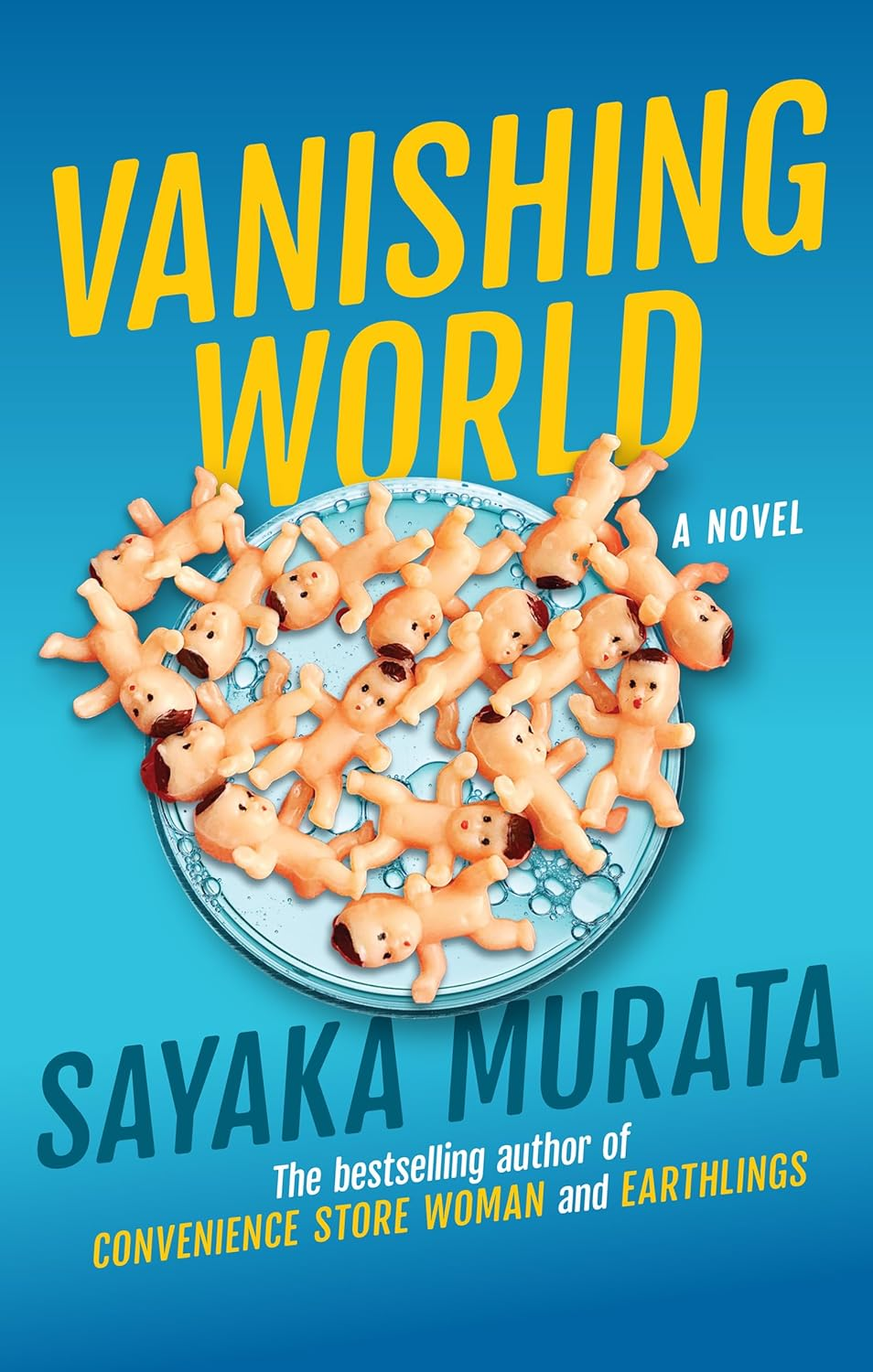
And thus, that blunt graffiti two-words also sit just as I was reading and finishing Sayaka Murata’s Vanishing World.
Sayaka Murata’s Vanishing World: Another Examination of Normal
Like Haruki Murakami, Sayaka Murata is a Japanese writer who draws me in with what reads like literary fiction but is heavily tinged with something like science fiction, or fantasy, or magical realism.
Murata’s works, such as her newest novel Vanishing World, falls into what Margaret Atwood calls speculative fiction. Both Murata and Atwood include elements that are speculative science, but much of these created other worlds seem disturbingly normal, or at least not so much different from the world we live in now.
And similar to her Convenience Store Woman and Earthlings, Vanishing World draws the reader into another engaging and surprising examination of normal.
Amane, the main character, lives in the cusp of an old world where procreation is achieved through intercourse (her parents, to Amane’s discomfort, produce Amane through sex), and the brave new world of procreation only through artificial insemination.
In fact, the new normal is that husband and wife are family, and thus, any sexual contact is deemed incest, taboo.
There are some surprises, twists, and disturbing developments, but all in all, Murata forces the reader to think deeply about sex and gender roles, what makes normal “normal.”
The end is disorienting and powerful (similar to Earthlings), bringing the entire work into stark focus.
“Men and women were now all the same,” Amane acknowledges, “all wombs in service of the human race.”
And just pages from the end, Amane argues with her mother: “‘And you aren’t brainwashed, Mom? Is there any such thing as a brain that hasn’t been washed? If anything, it’s easier to go insane in the way best suited for your world?'”
This speculative world of Murata is about humans making normal “fuck nobody,” a sort of extreme puritanical alternate world that renders human nature unnatural—or at least, no longer normal.
educator, public scholar, poet&writer – academic freedom isn't free




 dr. p.l. (paul) thomas
