Persistent Straw Man Claims about Literacy Skills: Grammar Edition

[Header Photo by Anthony on Unsplash]

Since the “science of reading” (SOR) has now expanded into a “science of learning” (SOL) movement, the same problems among SOR advocates have appeared among SOL advocates—misinformation and misunderstanding about teaching and learning combined with a bait-and-switch approach that offers anecdotes as if they prove the so-called “science,” for example:
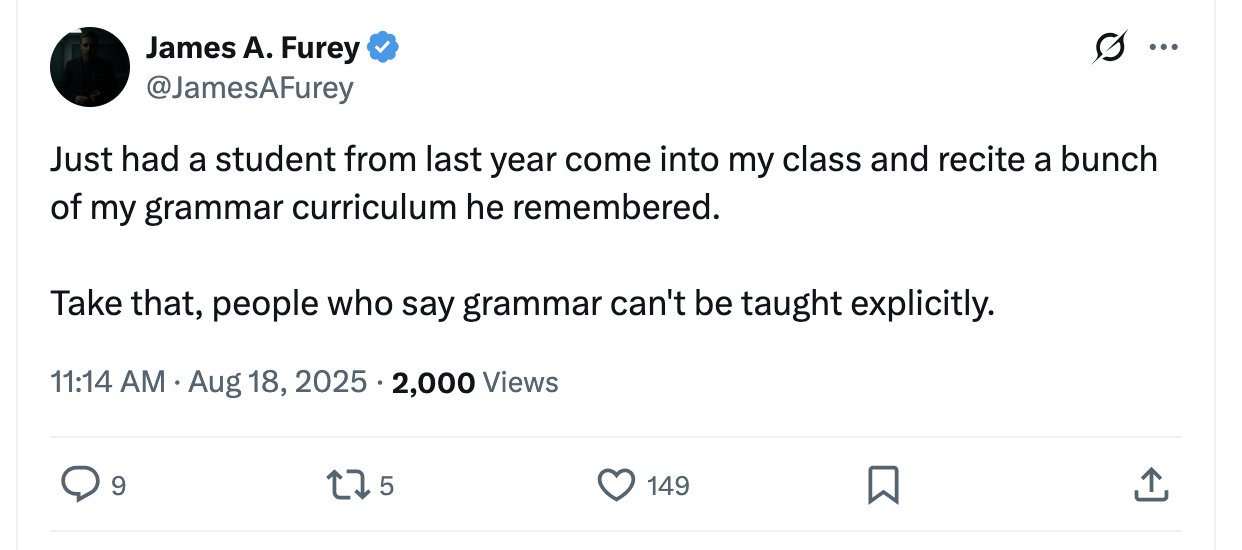
There is so much wrong with this that it is mind boggling, but let’s focus on, first, this is merely an anecdote, which proves nothing except that it happened.

Second, that direct instruction can be effective for students demonstrating simple recall is not very shocking; in fact, many would recognize that direct instruction/recall is asking far too little of students, especially in literacy instruction.

At one point in my education, I could name all the presidents in order as well as all the state capitals. It would have been better if I had developed a more sophisticated understanding of the presidency and the political realities of the US.

Through direct instruction over a brief amount of time, I can say one word, “inside,” and my poodle will happily trot into our apartment. I didn’t let her discover that; direct instruction produced pretty reliable recall in that sweet dog.

But she isn’t smarter; she is well trained.

Here, then, I am going to expand some on a third point: Furey clearly does not understand the issue he seems to be attacking, grammar instruction (with the implied agents being woke progressives who worship at the alter of discovery learning).

Let’s start by acknowledging Stephen Krashen’s explanation of “three different views of phonics”:

Intensive Phonics. This position claims that we learn to read by first learning the rules of phonics, and that we read by sounding out what is on the page, either out-loud or to ourselves (decoding to sound). It also asserts that all rules of phonics must be deliberately taught and consciously learned.

Basic Phonics. According to Basic Phonics, we learn to read by actually reading, by understanding what is on the page. Most of our knowledge of phonics is subconsciously acquired from reading (Smith, 2004: 152)….

Zero Phonics. This view claims that direct teaching is not necessary or even helpful. I am unaware of any professional who holds this position.

Furey seems to be posting a Gotcha! aimed at what he believes is a Zero Grammar view so let me follow Krashen’s lead and clarify: “I am unaware of any professional who holds this position.”

The Big Irony of a “science of” advocate attacking a straw man position on grammar is that there is pretty solid body of research/science on grammar instruction (note that many people use “grammar” to encompass grammar, mechanics, and usage).

To understand the research on direct (and isolated) grammar instruction, we first must clarify our instructional goal. If a course is a grammar course, and the goal is for student to acquire grammar knowledge, then some or even a significant amount of direct instruction can be justified and effective.

Even in the context of teaching students to acquire distinct grammar knowledge, however, many would caution against viewing grammar as “rules” and instead would encourage seeing grammar as a set of contextualized conventions that also carry some degree of power coding.

For example, subject/verb usages are a feature of so-called standard English, and some dialects can be identified by varying from those standards. It is important to acknowledge that one is not “right” or “better” linguistically, although the so-called standard forms tend to carry some cultural or social capital. And there may be cultural/social negative consequences for using dialects considered not standard.

As an analogy, direct (isolated) grammar instruction can be effective for teaching students grammar knowledge just as having students diagram sentences can be effective for teaching students how to diagram sentences.

The problem is when we make our instructional goal teaching students to write with purpose and with awareness of language conventions (grammar, mechanics, usage).

There is a long and deep research base reaching back into the early 1900s showing that direct (isolated) grammar instruction fails to transfer into student writing and can even have negative outcomes for the quality and amount of student writing.

For example, LaBrant (1946) noted: “We have some hundreds of studies now which demonstrate that there is little correlation (whatever that may cover) between exercises in punctuation and sentence structure and the tendency to use the principles illustrated in independent writing” (p. 127).

This does not mean “do not teach grammar,” but does mean that direct grammar instruction needs to in the context of student writing.

Students who are writing by choice and with purpose are much more likely to engage with and understand (and thus apply) language conventions (grammar, mechanics, usage) than when we directly teach those in isolation.

So let me be clear: Teaching students to write without direct instruction would be inexcusable, but teaching grammar through direct and isolated instruction is malpractice when our goal is teaching writing.

Here, then, are some ways to insure direct grammar instruction in the context of student writing is effective:

  • Establish direct instruction of grammar in context based on student writing and demonstration of need. This can be effective for both individual student writing conferences and whole-class instruction (if most student demonstrate the same needs).
  • Recognize that some language conventions are abstractions that may be difficult to grasp for students at early stages of brain development; holding students accountable for usage should be tempered by their development (see Weaver below).
  • Avoid the “error hunt” (see Weaver below) and do not frame language conventions as “right/wrong” or revising and editing as “correcting.” The goal is language convention awareness and purposeful writing by students.
  • Avoid traditional grammar textbook and exercises. Prefer instead research-based direct instruction that transfers to writing such as sentence combining and lessons on the history of the English language (see Style below).
  • Adopt either a workshop approach to writing or integrate workshop elements (choice, time, and feedback) into the course.
  • Forefront and help students understand that revising writing is their primary responsibility as writers in order to communicate as well as possible; however, editing (addressing language conventions) is a part of that process, although it may be delayed until a piece is worthy of editing and before publishing or submitting. As LaBrant (1946) cautioned: “I am not willing to teach the polishing and adornment of irresponsible, unimportant writing” (p. 123).
  • The surface features of student writing need not be perfect when writing is part of a course. Seeking perfect surface features can and often is a goal for published writing.

As this discussion shows, another failure of the “science of” movement is the urge to attack caricatures and to oversimplify.

Teaching grammar is not a simple thing to address, and, again, I will note using Krashen, there simply is no credible professional saying teachers should not teach grammar. In fact, no credible educator would reject direct instruction of grammar as long as that instruction is in the context of student writing.

LaBrant (1947) made an assertion about teaching almost 80 years ago that may sound familiar: “A brief consideration will indicate reasons for the considerable gap between the research currently available and the utilization of that research in school programs and methods” (p. 87).

I have always regarded this as accurate, and have repeated the claim myself for decades.

Straw man fallacies, caricature, and anecdotes, I fear, are not the path to making this less true.

The “science of” movement is failing here, and the consequences are to the detriment of students and teachers who deserve better.


Recommended

Teaching Writing as Journey, Not Destination

Teaching High-School Students to Write (1946), Lou LaBrant

Research in Language (1947), Lou LaBrant

The Individual and His Writing (1950), Lou LaBrant

Writing Is Learned by Writing (1953), Lou LaBrant

Inducing Students to Write (1955), Lou LaBrant

Writing Is More than Structure (1957), Lou LaBrant

Blueprints or Houses? Lou LaBrant and the Writing Debate, P.L. Thomas [access HERE]

Revisiting LaBrant’s “Writing Is More than Structure” (English Journal, May 1957), P.L. Thomas

Teaching Grammar in Context, Connie Weaver

Style: Lessons in Clarity and Grace, 12th Edition, Joseph M. Williams, Joseph Bizup

The Writer’s Practice: Building Confidence in Your Nonfiction Writing, John Warner

This Ain’t Another Statement! This is a DEMAND for Black Linguistic Justice! (CCCC)
The Reading Proficiency Bait-and-Switch: Manufacturing Crisis for Profit [SC Update]

[Header Photo by Ines Kopu on Unsplash]

First, the bait.

As I have detailed, the mainstream media, education reformers and pundits, and politicians repeat a misleading claim that US students are not “proficient” readers, and thus, we are experiencing a reading crisis.

The bait in this misinformation is almost always misrepresenting NAEP scores. Again, the confusion and misinformation is grounded in NAEP’s achievement levels that use “proficient” as an aspirational goal for students that is well above grade-level reading as measured on state assessments of reading, as I recently explained:

The disconnect lies with the second benchmark, “proficient.” According to the NAEP, students performing “at or above the NAEP Proficient level … demonstrate solid academic performance and competency over challenging subject matter.” But this statement includes a significant clarification: “The NAEP Proficient achievement level does not represent grade level proficiency as determined by other assessment standards (e.g., state or district assessments).”

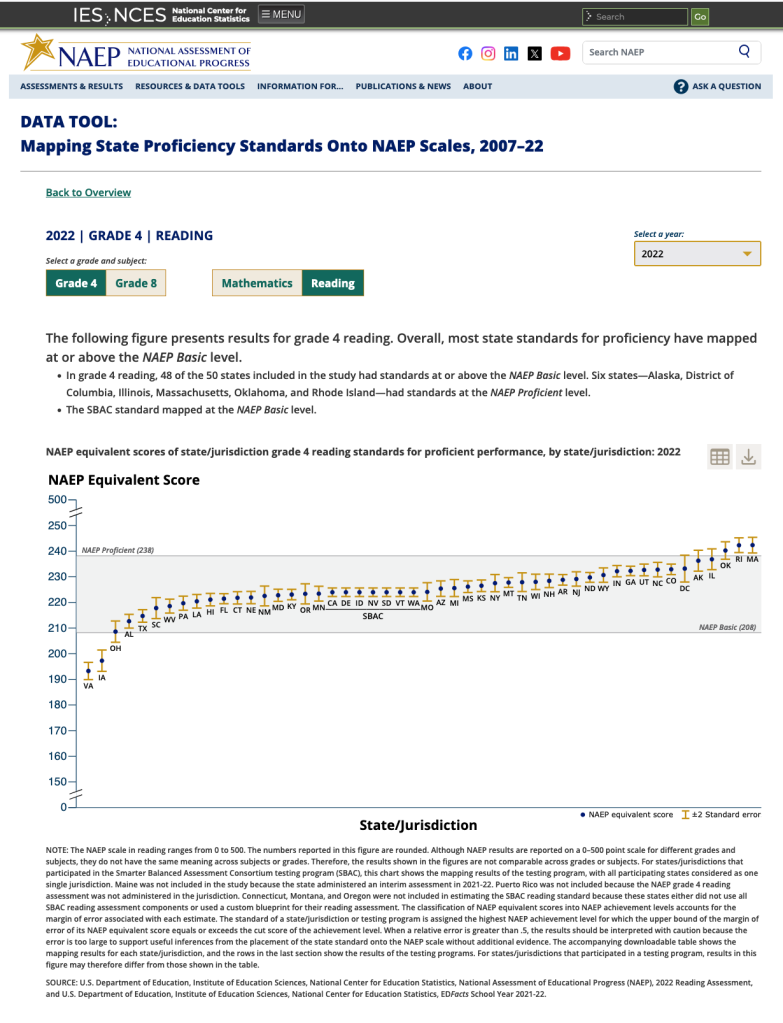
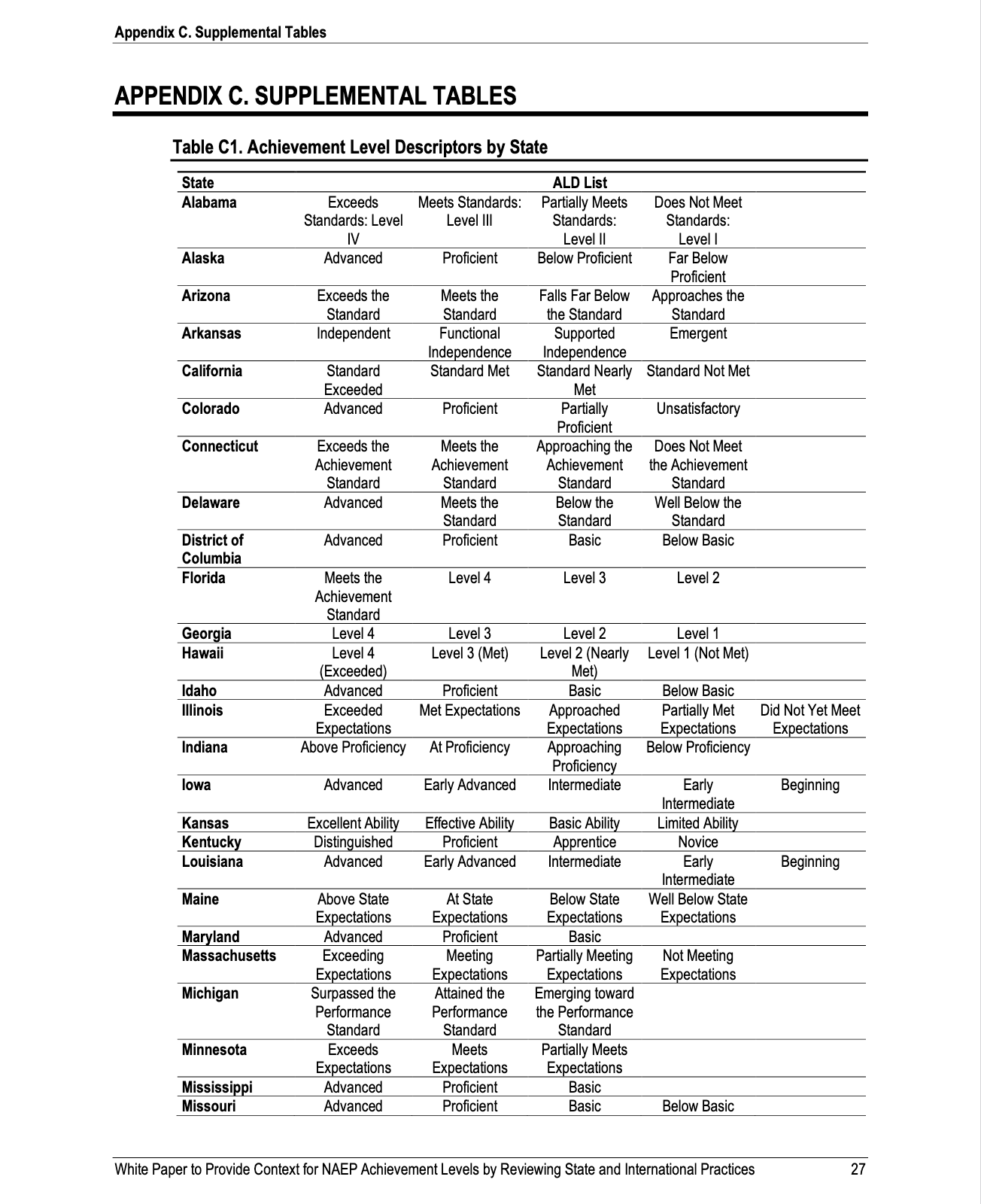
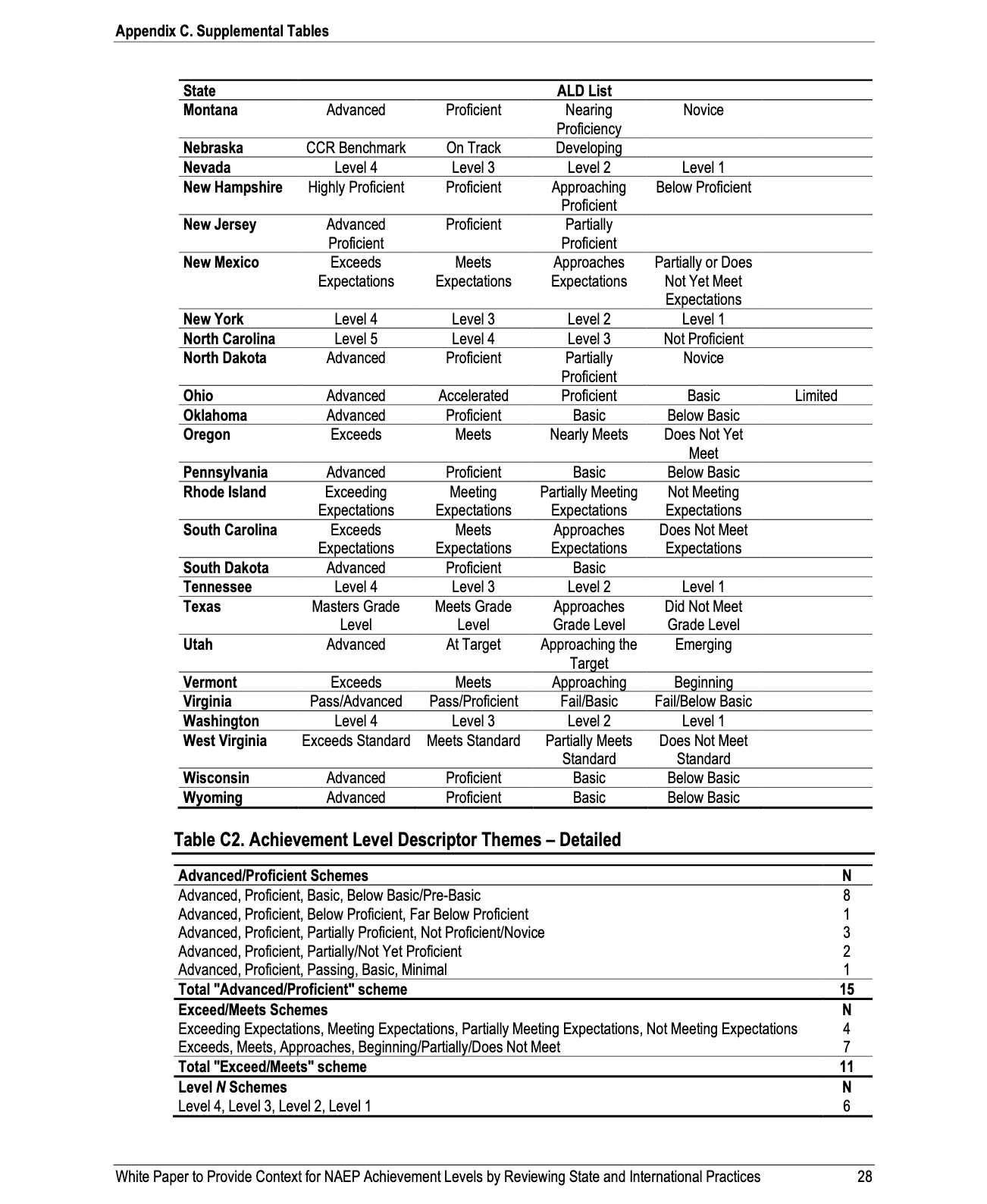
NAEP provides a correlation that shows almost all states set “proficient” at the NAEP basic level:

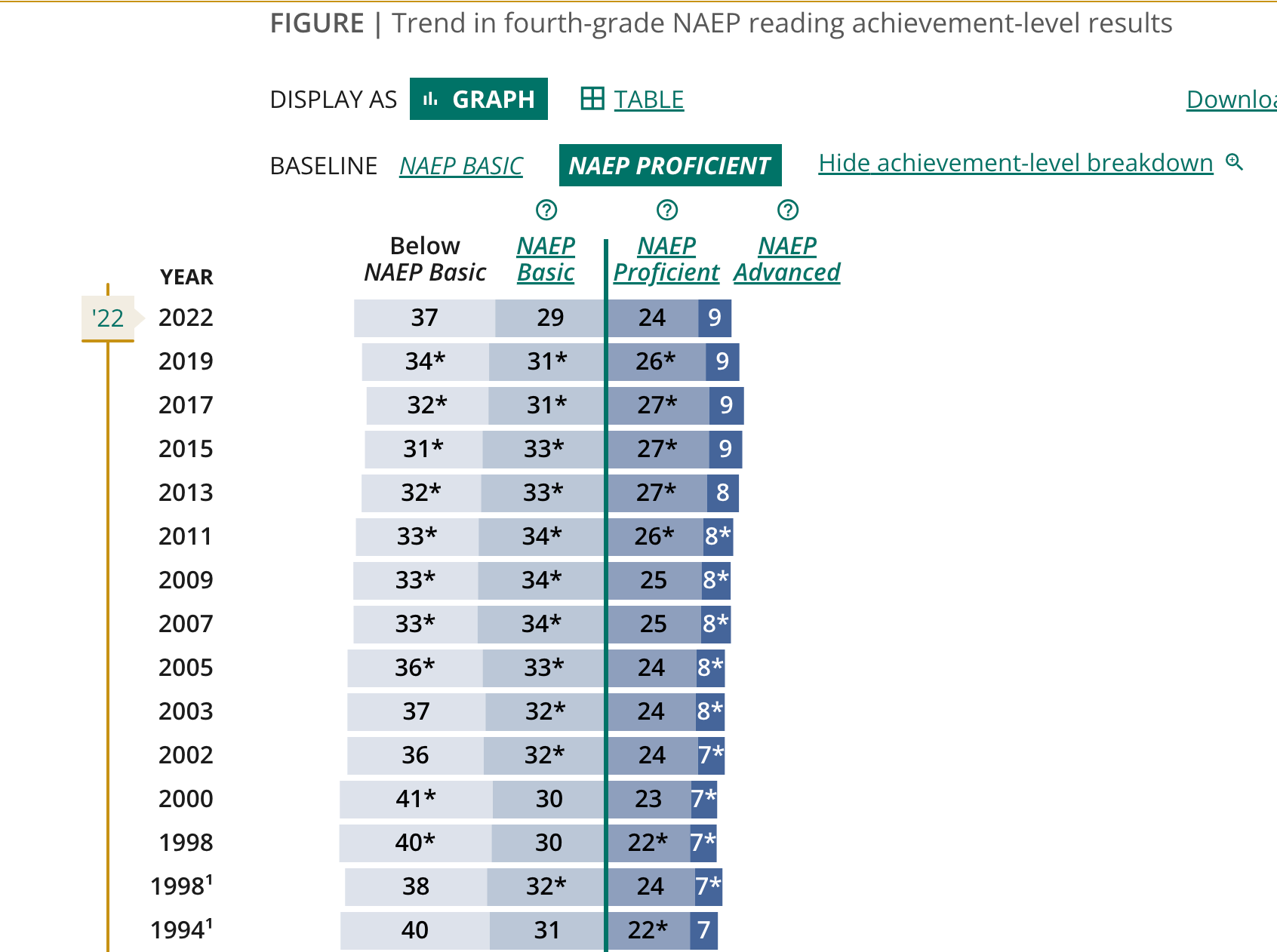
The bait, however, manufactures the perception of a crisis by making claims about NAEP proficient—2/3 of students are not proficient—that at least exaggerates the state of reading achievement among students:

Next, the switch.

Since about 2012, most states have revised or introduced new reading legislation grounded in the “science of reading” (SOR); in other words, states have made significant political and financial investments in both that there is a reading crisis and that the reforms will improve student reading achievement.

Mississippi, for example, has been christened a “miracle” and many states are rushing to copy their reforms despite a lack of research or evidence about the impressive grade 4 reading scores (which disappear by grade 8). [See three questions that need to be answered about MS.]

Many states are also beginning to adjust their proficiency cut scores [1], complicating any claims of reform being effective versus a misleading change in how students are labeled:

Wisconsin isn’t the only state that recently instituted changes that effectively boost proficiency rates. Oklahoma and Alaska recently made similar adjustments. New York lowered passing or “cut” scores in reading and math last year, while Illinois and Colorado are considering such revisions.

Now, here is the switch.

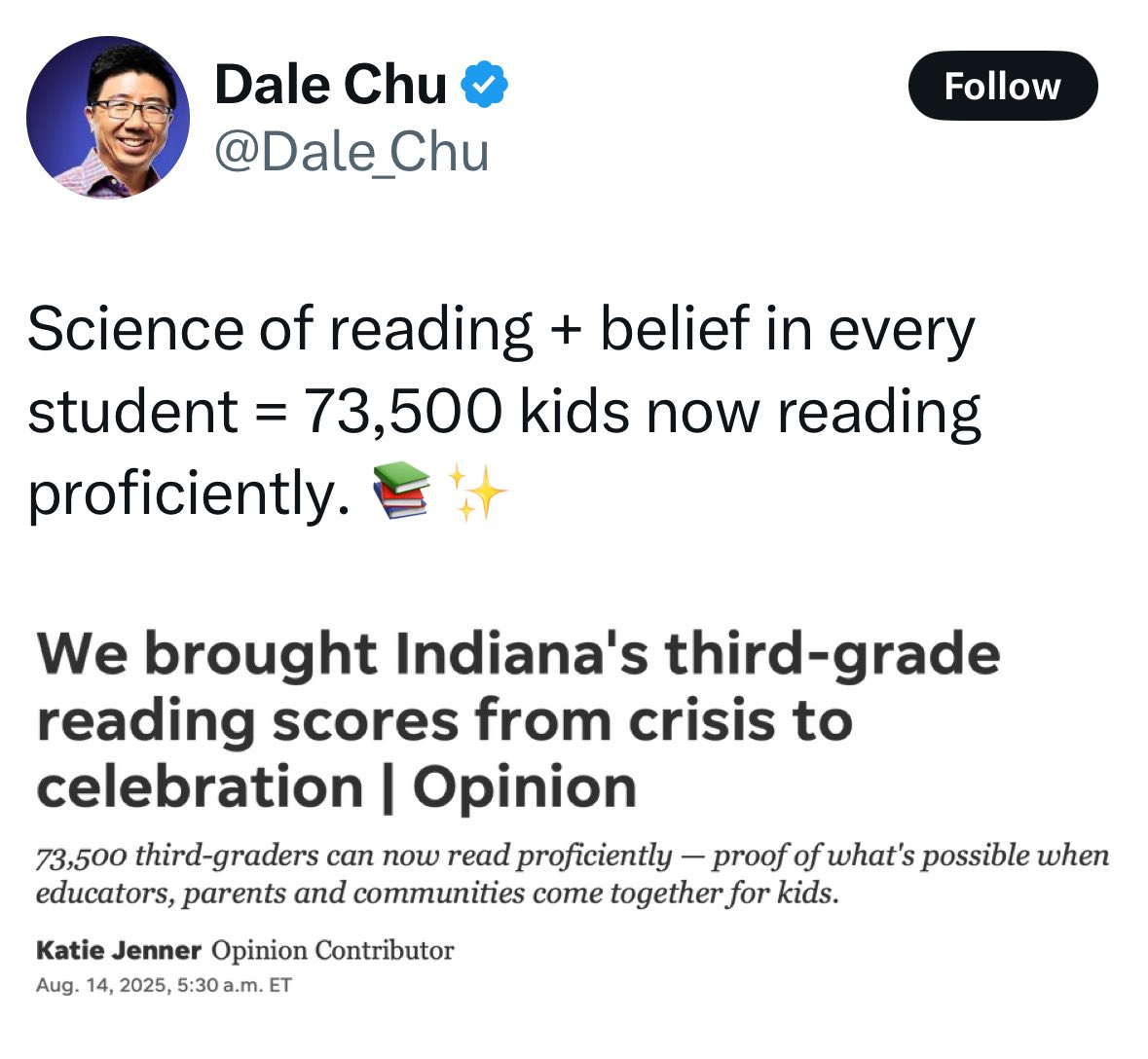
SOR advocates use the proficient level of NAEP to manufacture a crisis, but then celebrate state-level proficiency (that correlates with NAEP basic) to make claims that the SOR reforms are working:

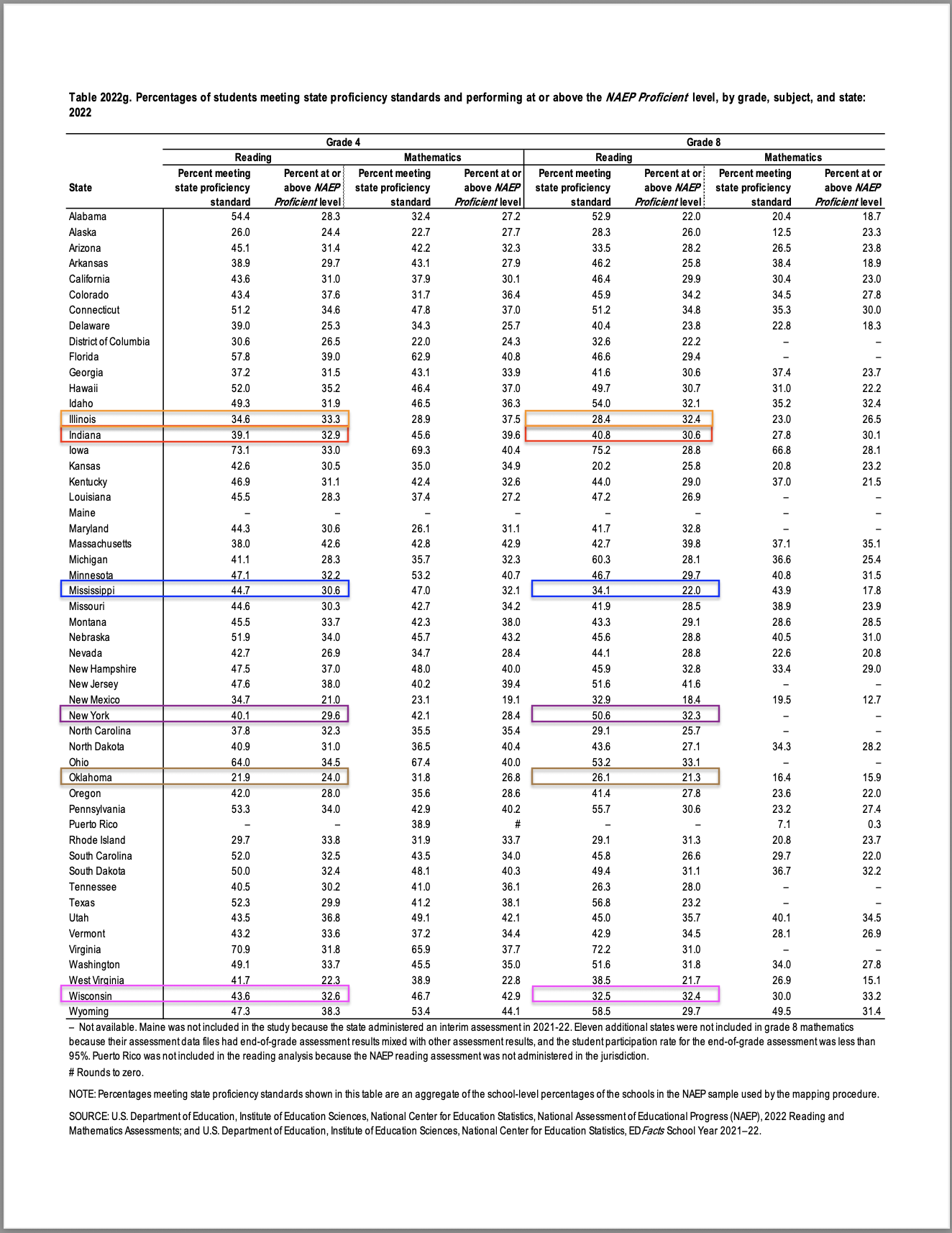
Here are some fun facts, however, about Indiana and other states: These state proficiency gains are equal to NAEP basic, which, again, SOR advocates refuse to acknowledge when discussing the state of reading the US today; note the correlations below of states with NAEP proficient (appears to be nothing to celebrate, right, if we accept the original bait that NAEP proficient is the correct standard?):

While I do maintain that crisis rhetoric isn’t an effective approach to education reform—especially when that crisis is built on misinformation and misunderstanding test data—I will concede there is a reading reform crisis driven by market, political, and ideological agendas among the adults who seem more interested in scoring gotcha points and profiting off reform than improving student reading.

First, the most current evidence available suggests that reading reform that appears to raise test scores in the short term only is primarily driven by grade retention, not changing reading programs, teacher training, or instruction.

Next, recent research again reveals “63% of the variance in test performance was explained by social capital family income variables that influence the development of background knowledge,” leading the researchers to argue:

The influence of family social capital variables manifests itself in standardized test results. Policy makers and education leaders should rethink the current reliance on standardized test results as the deciding factor to make decisions about student achievement, teacher quality, school effectiveness, and school leader quality. In effect, policies that use standardized test results to evaluate, reward, and sanction students and school personnel are doing nothing more than rewarding schools that serve advantaged students and punishing schools that serve disadvantaged students.

One of the political purposes of NAEP is to hold states accountable for state assessments. If you look carefully at the correlation above, students moving from one state to another would result in that student being labeled differently in terms of reading achievement [2].

Despite the negative responses to my argument, I maintain that the US needs a common standard for age-level reading that includes clear achievement levels that can support valid reading reform and develop a data base that better reflects if reform produces higher student achievement.

We cannot and should not be shouting “crisis” because we do not have the data to draw any valid conclusions about the overall state of reading in the US.

What we do have is permanent reform for the market and political benefit of those perpetuating crisis rhetoric and selling solutions.

The current state of NAEP and state testing allows rampant market and political manipulation of claims about reading and reading reform.

To maintain permanent crisis and reform, many are willing to sacrifice students, teachers, and public schools.

I am not.


[1] For some background on changes to how tests measure student achievement, I recommend exploring the controversial and often misunderstood re-centering of the SAT.

[2] State achievement levels vary widely:


Update

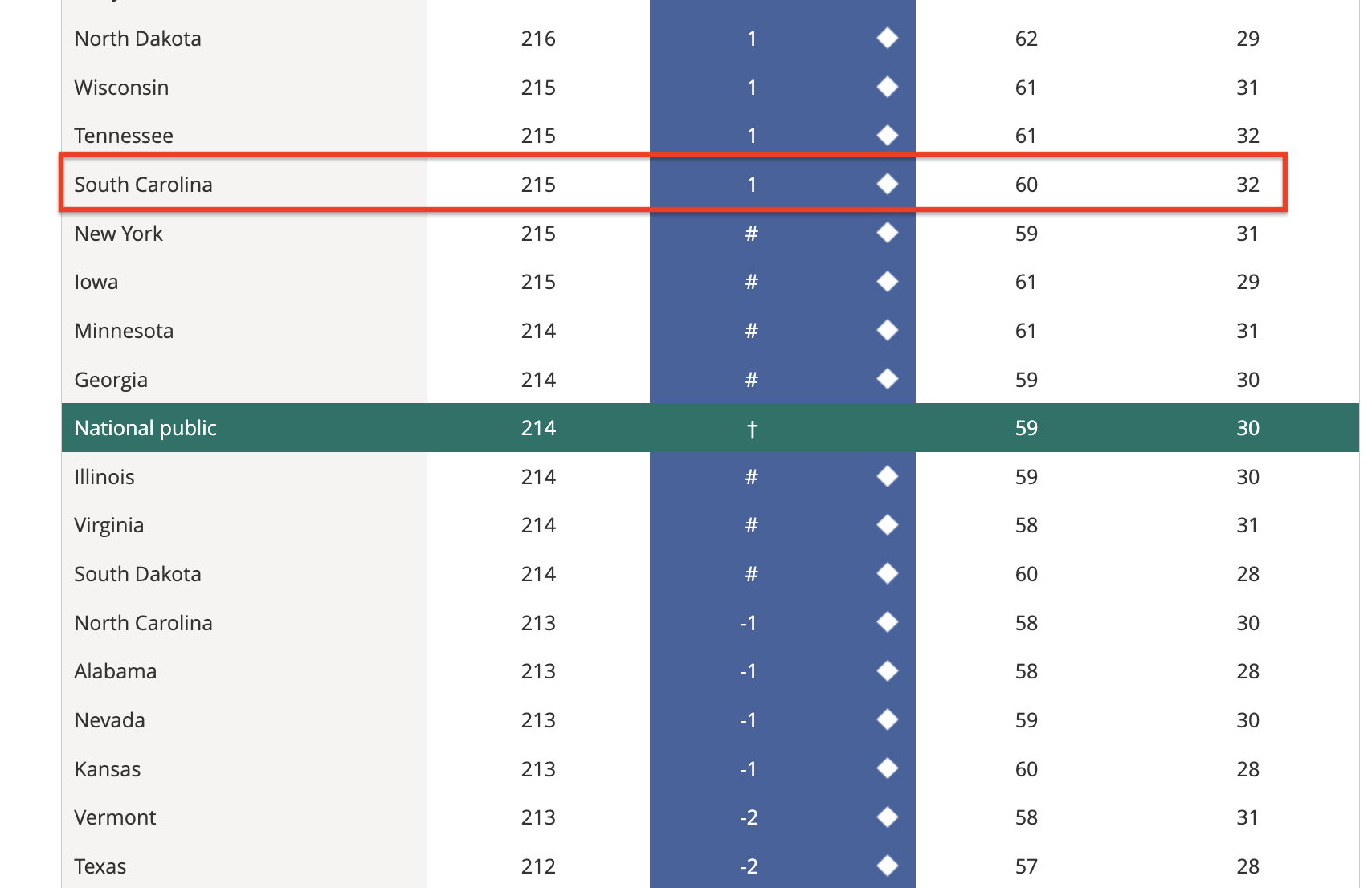
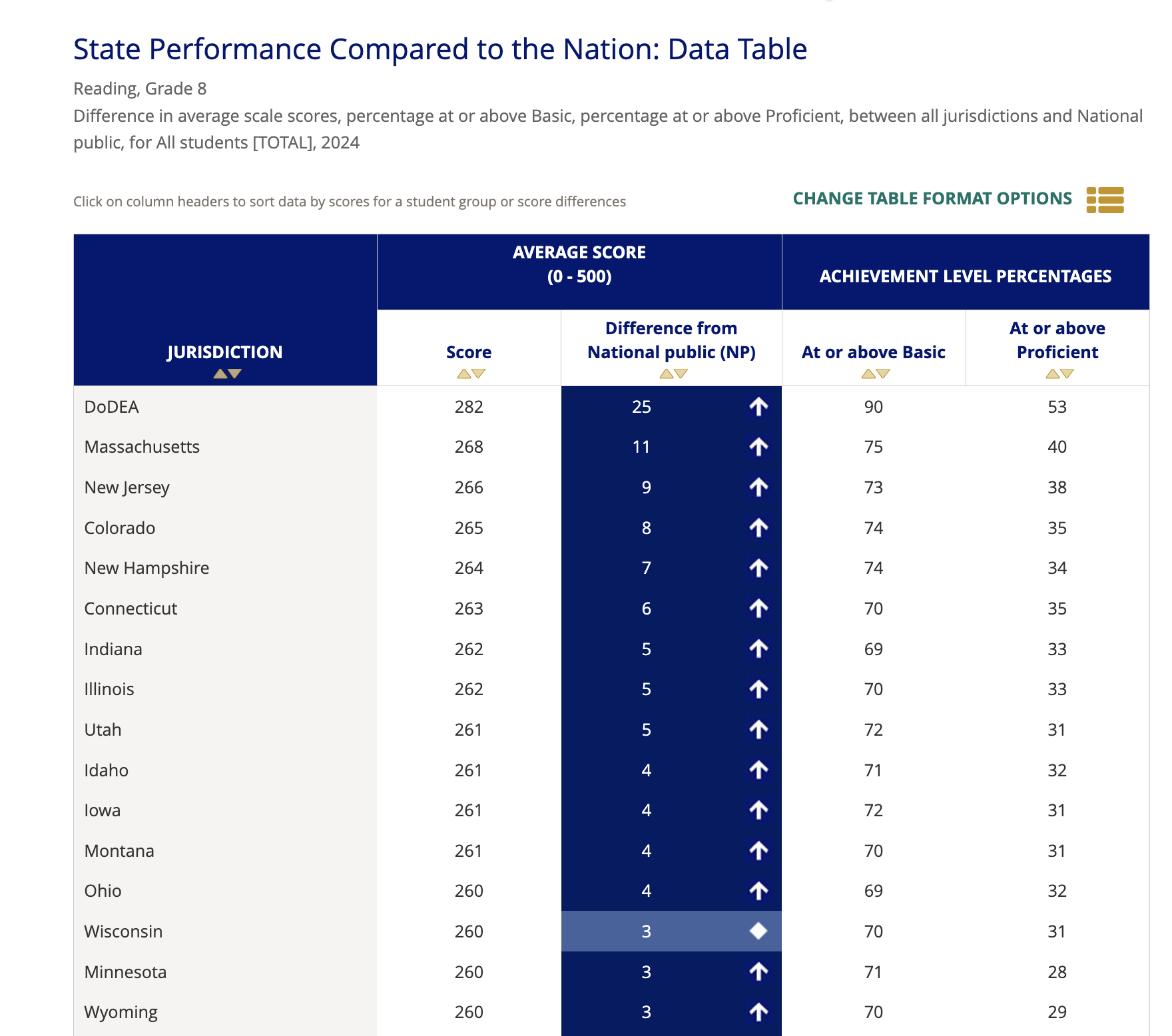
The reading proficiency bait-and-switch has come to South Carolina (another grade retention state that has much lower grade 8 reading scores than grade 4; see below):

This is more partisan political grandstanding, but the grandstanding in on incredibly thin ice.

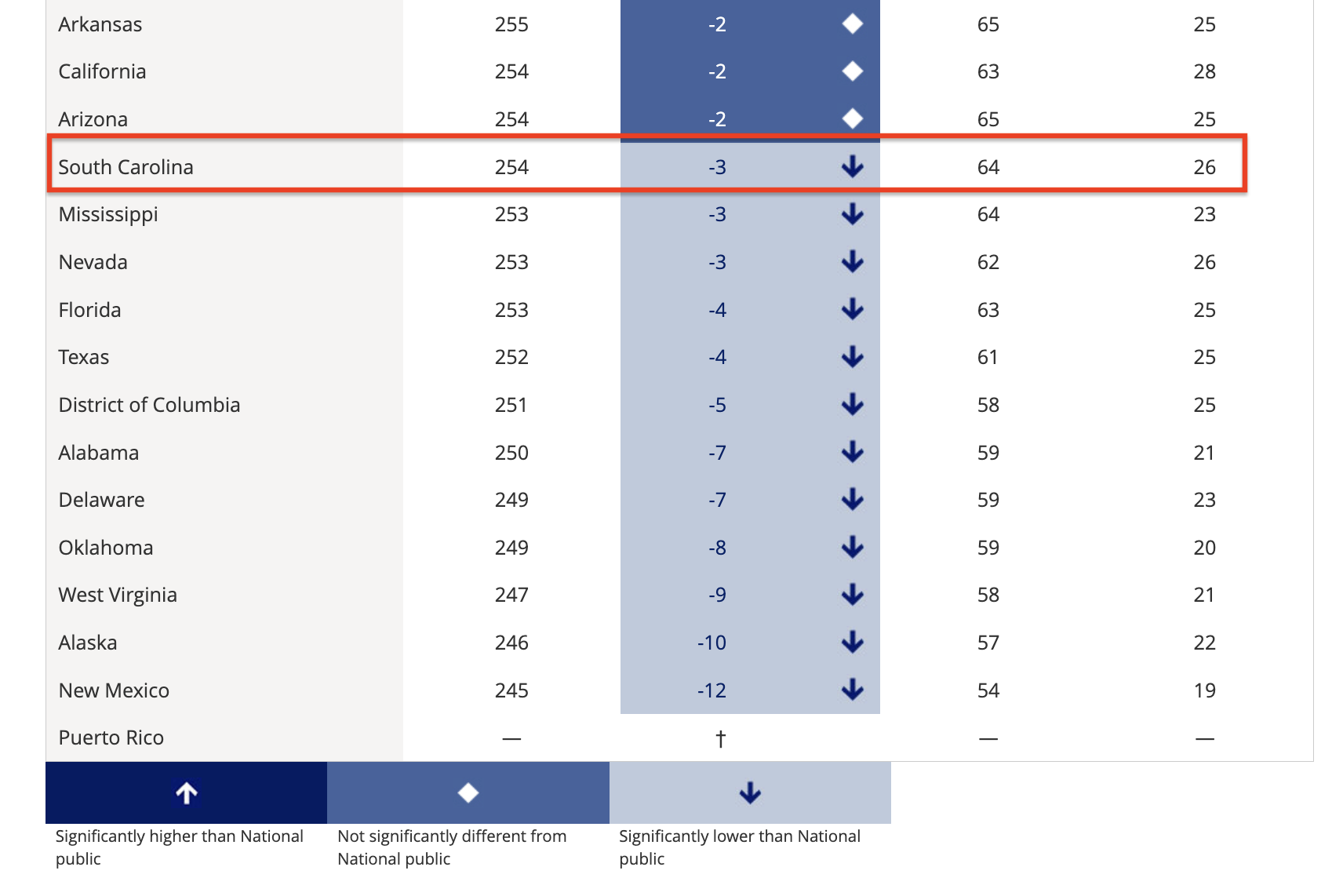
SC, like IN above, sets state reading proficiency in the NAEP basic range; however, note that SC is toward the lower end of basic (see the correlations above).

SC sits just above the national average in grade 4 reading (2024), but like MS and FL, the impact of grade retention seems to be in play because by grade 8, SC falls down toward the bottom, again similar to MS and FL:

Why I Reject Crisis Rhetoric about Reading and Education: My Agenda

[Header Photo by Mick Haupt on Unsplash]

When I had my OpEd on the manufactured reading crisis and NAEP misinformation published in The Washington Post, I anticipated that SOR advocates would continue their misinformation campaign, including targeted attacks on me that repeat false claims and innuendoes (“hidden agenda”).

I do find it a bit odd that my OpEd claims have ruffled so many feathers because, to be blunt, the OpEd is pretty moderate and factual. For those not interested in reading the piece, here is the TL;DR:

  • Many SOR advocates and education reformers misrepresent or misunderstand NAEP data and achievement levels, reading “proficiency” and “grade level,” reading programs, and reading theories. I call for accurate and honest discourse and claims.
  • The wide range of achievement levels between NAEP and state accountability testing should be standardized, and in my informed opinion, that should be a shift to a standard for age-level reading proficiency.
  • Many states have chosen as reading policy to implement third-grade mandatory retention based on state testing, and current research shows that SOR-based reform is only raising test scores in the short term when states have retention. Grade retention disproportionately impacts Black and brown students, poor students, multilingual learners, and students with special needs; as well, retention is punitive with many negative consequences. I caution states against choosing grade retention since it likely distorts test data and does not contribute to authentic achievement gains.

However, most of the negative responses to this commentary that I have seen focuses on one element—my rejecting crisis rhetoric about reading.

Since I began teaching in 1984, I have worked as an educator entirely in the post-A Nation at Risk era of high-stakes accountability education reform.

I reject crisis rhetoric about reading and education for the following reasons:

  • The test-score gap by race and socioeconomic status is not unique to reading; all standardized testing exposes that gap regardless of content area. There is no unique gap in reading.
  • Reading and education crisis have been declared every moment over the past 100 years (at least), and thus, I maintain that the current status of education in the US is the norm that our society has chosen to accept. That norm, by the way, is something I have worked diligently to change for over 40 years as an educator and scholar.
  • “Crisis” in reading and education is manufactured to feed the reform industry, and not to improve teaching or learning. Two things can be true at once: Education reformers manufacture hyperbolic stories about education and reading crisis to maintain a culture of perpetual reform (for market and political/ideological reasons), and the US public education and social safety net are historically and currently grossly negligent about the serving individual needs of all students (notably those vulnerable populations most negatively impacted by test-based gaps).
  • “Crisis” reform in the US has created a culture of blame for students, teachers, and public education that distracts from the evidence on the primary sources for low test scores and test-based gaps. Over 60% of those test scores and thus that gap is causally driven by out-of-school factors. Current research suggests that test-based evaluations of schools and students have failed and must be replaced for most effective reform.
  • There simply is no settled evidence that the US has a “crisis” in reading or that any specific reading program or reading theory has contributed significantly to low student reading proficiency. As well, there simply is no monolithic settled body of science or research on how to teach reading that supports a one-size-fits-all reading program or theory (such as structured literacy); there is a century of robust and complex research on teaching reading that can and should be better implemented in day-to-day classroom instruction; however, the greater causes for ineffective instruction and inadequate student achievement are, again, out-of-school factors and a failure to provide students and teachers the learning/teaching conditions necessary for better outcomes.

Again, to be clear, the US does not currently have the data to make any sort of valid claim about reading proficiency in the US. The only verifiable claim we can or should make is that there is clearly an opportunity gap grounded in race and socioeconomic status as well as ample evidence that multilingual learners and students with special needs are far too often neglected in our schools.

As I argue in the commentary, we need better data, and we need a more honest and nuanced public discourse about reading and education that is not corrupted by market and political/ideological agendas.

Further, journalists, politicians, and even parents should not be controlling the discourse or the reform in reading and education.

Yes, they are and should be stakeholders with a voice in a democracy, but ultimately, education is a profession that has never had autonomy—and I suspect that is because more that 7 out of 10 educators are women (notably even higher in the early grades when students are first taught to read).

I do not—like many in the SOR and education reform movements—have a “hidden agenda.”

I have never and would never sell a reading or education program. I have never and would never endorse any program or theory or ideology. I provide the vast majority of my work for free, open-access publications and my blog.

Over 40+ years, I have presented many dozens of times with well over 90% of that for free or at my own expense.

I am a critical educator and scholar, and I have never been paid to make any claims or to endorse any organization. My published and spoken work is mine and mine only.

I am fortunate to be a university-based scholar, and thus, I have academic freedom and am beholden to no one except me.

My agenda?

I work to support the professional autonomy of teachers so that the individual needs of students can be fully served in our public education system.

And thus, my agenda includes calling out misinformation, identifying the market and political/ideological agendas driving permanent education reform, and providing for all stakeholders counter-evidence to the crisis story being sold.

Since I am an older white man with university tenure in the US, I am not much impacted by the persistent lies and distortions about me and my “hidden agenda”; however, those lies and distortions are in the service of other people maintaining the education reform gravy train that feeds their bank accounts and political/ideological agendas.

Here is another TL;DR version of my WaPo commentary: If you have to misinform or lie to make your argument, you likely do not have a valid argument.

SOR advocates and education reformers are mostly misinforming and outright fanning the flames of crisis to promote their own agendas.

Suggesting I have a “hidden agenda” is a whole lot of projection.

We can and should do better in our rhetoric and our claims.

We can and should create better systems of assessment and thus better data.

We can and should reform reading and education in ways that address the lives of our students as well as the learning and teaching conditions of our schools.

Punishing thousands of Black, brown, and poor students with grade retention because we are addicted to permanent education reform is inexcusable; test-based grade retention is not reading reform.

The accountability era of education reform begun in the early 1980s has never worked, except to perpetuate constant cycles of crisis/reform.

There is no reading or education crisis.

There is a culture of political negligence in the US that has existed for many decades—that culture is grounded in rugged individualism and bootstrapping myths of the US that are contradicted by (ironically) scientific evidence and research.

Students and teachers (mostly women) are not broken beings that need to be fixed.

Students and teachers reflect the negative systemic forces that somehow we as a society refuse to acknowledge or reform.

I should not be surprised that in the Trump/MAGA era there are many people offended by a call for honest and accurate rhetoric about reading, education, students, teachers, and schools.

I think those people being offended says more about them than me.


Recommended

Big Lies of Education

English Journal Series: We Teach English in Times of Perpetual Crisis